
Gemini vs Claude vs GPT (2026): Six-Model Buyer Guide



Compare Argon, Opus 5.5, Sonnet 5.5, Fable 5.1, GPT-6.1 Sol and Astra on verified pricing, access and developer evaluation criteria.
Gemini vs Claude vs GPT (2026): Six-Model Buyer Guide
What good is a benchmark-leading AI model if your engineering team cannot access it? Gemini vs Claude vs GPT in 2026 is a procurement decision before it is a leaderboard contest: choose models you can deploy, then test whether their capabilities justify their total production cost.
That distinction matters on September 30, 2026. According to CNBC’s reporting that day, Google unveiled Gemini 4 Argon with improvements in coding, cybersecurity, and complex professional work—but initially launched access to selected cybersecurity partners. VentureBeat reported on September 30 that broader availability was planned “as soon as possible,” rather than identifying an immediate general-release date. For engineering leads, an announced capability and an available production dependency are two different things.
The technical claims also deserve attention. AlphaSignal reported on September 30, 2026, that Gemini 4 Argon supports a maximum output of one million tokens, up from 64,000. That is an output ceiling, not a context-window measurement—and neither number alone establishes whether a model can reliably complete your repository migration, investigation, or document-generation workflow. Larger outputs can expand what is possible while also increasing review effort and potential spending.
How should engineering leads compare these six models?
This buyer guide examines Gemini 4 Argon, Claude Opus 5.5, Claude Sonnet 5.5, Claude Fable 5.1, GPT-6.1 Sol, and GPT-6 Astra through the questions that determine a purchasing decision:
- Access: Can your team obtain production access now, or does rollout eligibility constrain adoption?
- Task fit: Which model deserves evaluation for coding, reasoning, tool use, and long-running workflows?
- Economics: What happens to cost when retries, lengthy outputs, caching, and human review enter the calculation?
- Operational fit: How will you assess latency, failure handling, integration effort, and deployment requirements?
- Evidence quality: Which conclusions rest on published specifications, vendor claims, or your own reproducible tests?
The aim is not to manufacture a universal winner—or assume that every named model has equally complete public documentation. Missing or unconfirmed specifications should remain unknown, not become convenient comparison-table estimates. You will learn how to build a shortlist, design workload-specific evaluations, and separate promising announcements from purchase-ready evidence.
As of September 2026, CallMissed’s OpenAI-compatible developer AI API offers one API key and one balance across 139 models, illustrating the broader shift toward evaluating multiple models without rebuilding every integration.
The practical takeaway: buy for the workload and access conditions you have—not for the headline you hope will translate into measurable production value.
Which should you choose? Shortlist accessible models, then select by coding success, grounded answers and cost per successful task
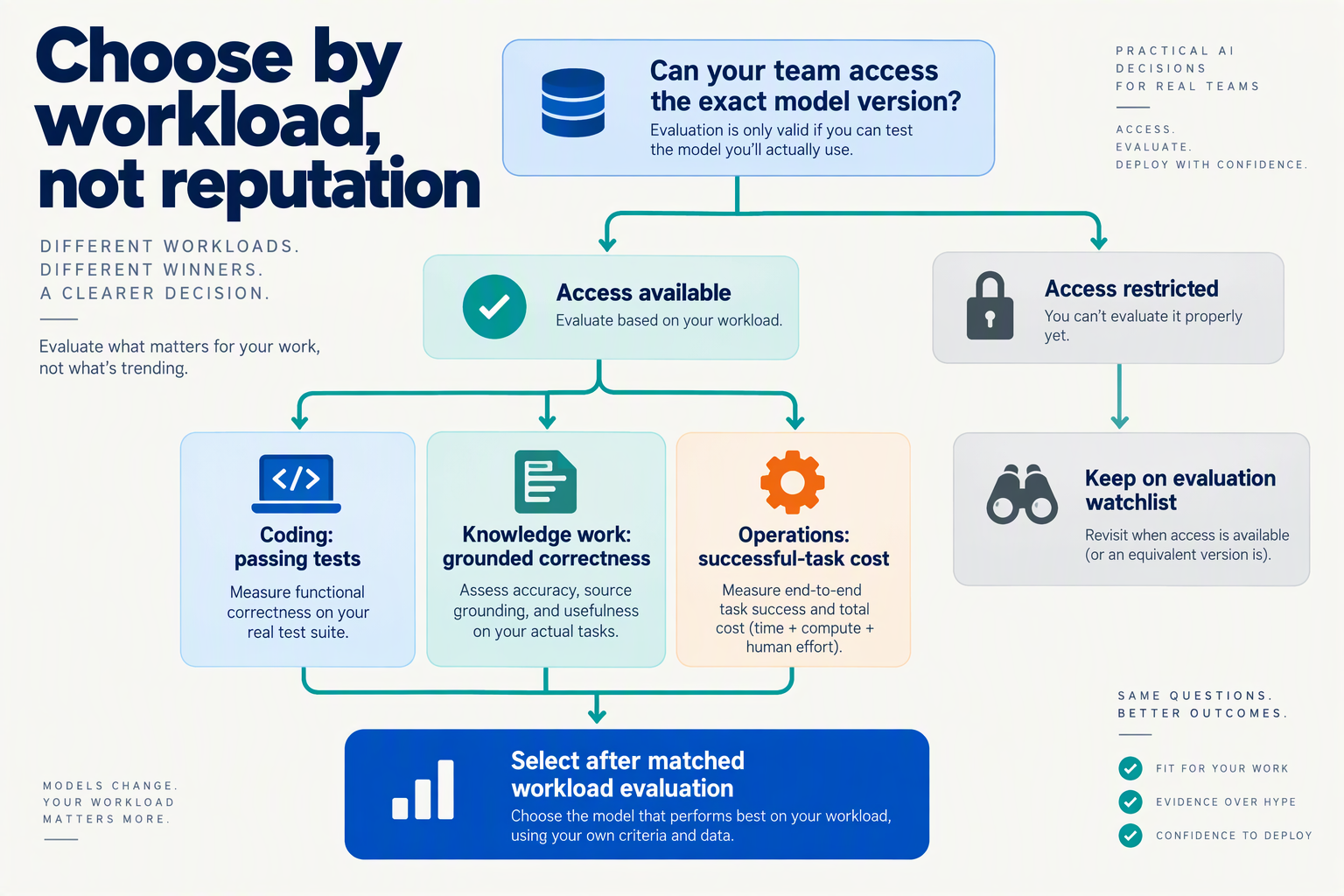
As of September 30, 2026, these six official models belong in the comparison—but an official release does not guarantee access for your account. Shortlist the models you can actually call, then choose by coding success, grounded-answer quality, and cost per successful task, not model-family reputation.
Gemini vs Claude vs GPT: six-model quick comparison
Prices below are US dollars per million tokens. Cached-input prices refer to reads; cache-write charges, where listed, are separate. Suggested workloads are evaluation starting points, not a performance ranking.
| Model | Release and access status | Input / output | Cached input | Workload to evaluate |
|---|---|---|---|---|
| Gemini 4 Argon | Google announced September 30; limited Fairwind access. Confirm eligibility before planning deployment. No public API model identifier is provided here. | $2 / $10 introductory; announced later pricing $4 / $20 | $0.10 for eligible cached input at introductory pricing—a 95% discount | Coding and documentation-grounded tasks, if your team has access |
Claude Opus 5.5 — claude-opus-5-5 | Anthropic released September 22; verify availability for your account and deployment route | $4 / $20 | $0.20 | Difficult repository changes and multi-step tool workflows |
Claude Sonnet 5.5 — claude-sonnet-5-5 | Anthropic released September 28; verify account access | $2 / $10 | $0.20 | Routine coding, document Q&A, and repeated production tasks |
Claude Fable 5.1 — claude-fable-5-1 | Anthropic released September 1; verify account access | $10 / $50 | $0.25 | High-value tasks where an improvement in accepted results could justify the higher unit price |
GPT-6.1 Sol — gpt-6.1-sol | Official OpenAI model announced September 29; verify account access | $2 / $10, Standard tier, ≤272K input tokens | $0.10 | Coding, grounded answers, and tool-based workflows at the lower listed OpenAI price point |
GPT-6 Astra — gpt-6-astra | Official OpenAI API model; verify account access | $10 / $50, Standard tier, ≤272K input tokens | $1.00 | High-value tasks where fewer failures or less review could offset the higher unit price |
Official references: Google launch announcements, Anthropic launch announcements and API release notes, plus OpenAI API pricing and changelog.
Check pricing conditions before budgeting. Argon’s introductory-price expiry is unspecified; do not assume the launch rates are permanent. Its cached-input discount applies only to eligible cached tokens. For the listed OpenAI Standard tier, cache writes cost $2.50 per million tokens for Sol and $12.50 for Astra. Confirm the applicable rates for requests above the 272K-input-token threshold rather than extrapolating this table.
Which models should you test first?
Start with access and workload economics, not a presumed winner:
- For a lower-unit-price baseline: Compare accessible Argon, Sonnet 5.5, and Sol on the same tasks. Their listed input/output rates match at introductory or Standard pricing, but their cache terms and successful-task costs may differ.
- For difficult coding or tool workflows: Add Opus 5.5, Fable 5.1, and Astra to test whether better completion rates or reduced human review justify their higher prices.
- For documentation-grounded answers: Test every accessible candidate against the same evidence. Require correct answers, supporting citations, and appropriate abstention when information is missing.
Keep an inaccessible model on a watchlist rather than making it a production dependency. For Argon specifically, do not guess an API identifier or assume broader availability from the launch announcement.
How should you measure coding success and grounded answers?
Use a controlled evaluation drawn from your actual application:
- Coding success: Give each model identical repository snapshots, instructions, and tool permissions. Accept a patch only when it passes relevant tests, satisfies requirements, and survives review.
- Grounded answers: Supply identical documentation, including conflicting evidence and deliberately missing information. Score correctness, citation support, and appropriate refusal to invent an answer.
- Operational completion: Hold tool access and retry budgets constant. Record failed calls, tool errors, completion time, and human review minutes.
Freeze model versions and evaluation conditions wherever possible. Keep cold-cache and warm-cache runs separate so cache behavior does not obscure the comparison.
How do you calculate cost per successful task?
Token prices are not task costs. A cheaper model can become more expensive if it needs longer outputs, repeated attempts, or extensive review.
Calculate:
Cost per successful task = total workflow cost ÷ accepted completions
Include input, output, cache reads and writes, paid tools, retries, failed attempts, and human review in the numerator. Define acceptance criteria before running the evaluation, and report completion rate alongside cost per success.
The selection rule is straightforward: verify access, enforce quality thresholds, then compare successful-task economics. The table establishes a pricing and availability shortlist—not evidence that any one model wins your workload.
What changed by September 30, 2026—and how will primary sources establish exact versions and access?
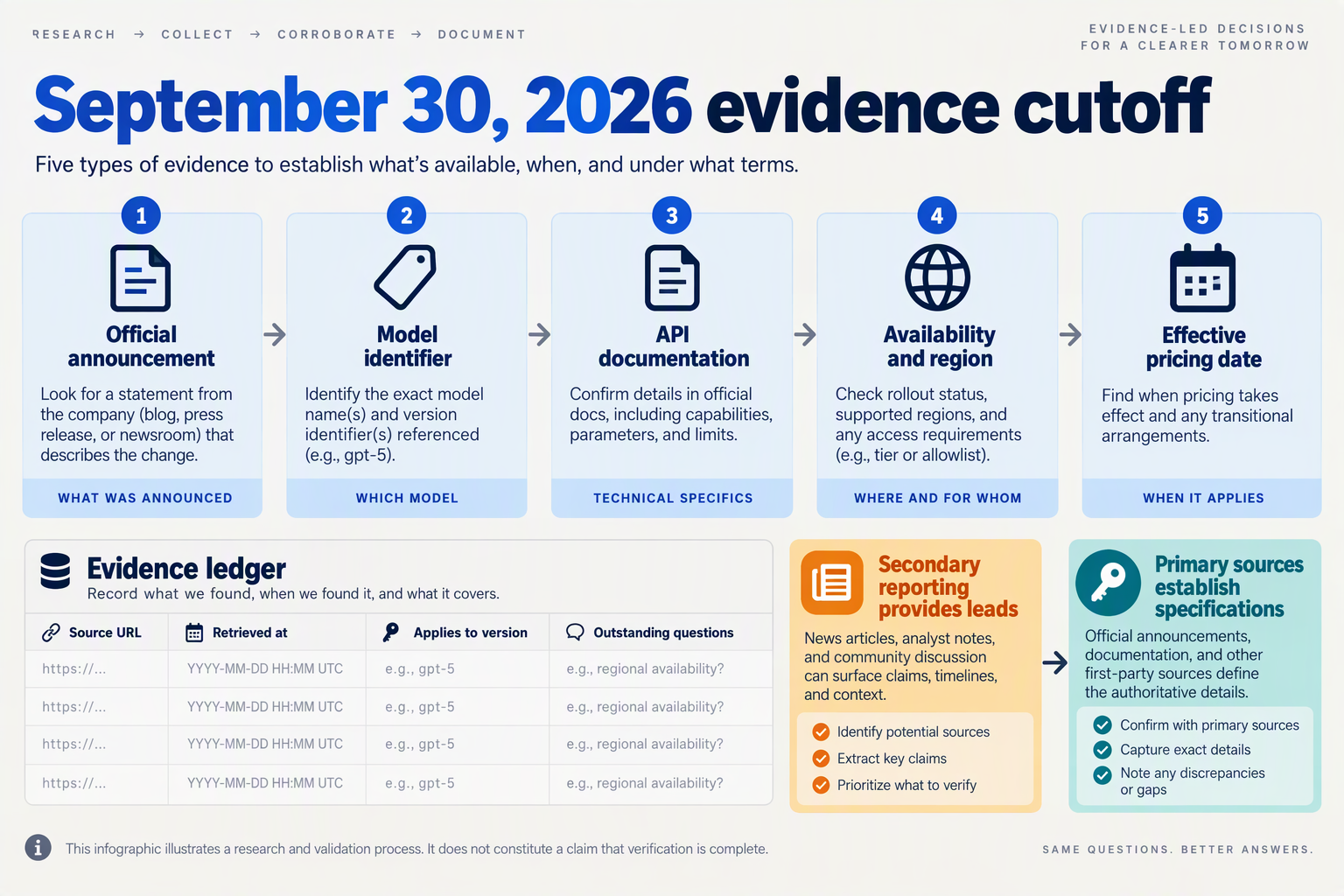
By September 30, 2026, the material change is Gemini 4 Argon’s announced, staged rollout—not verified general availability across all six models. Exact versions and purchasing eligibility must be established from vendor release notes, API documentation, pricing pages, and account-level access checks; the supplied coverage does not provide that primary-source evidence for every candidate.
What changed in the September 30 announcements?
The rollout sequence matters more than the announcement label. In its September 30, 2026 coverage, The Next Web reported that paid API customers and Google AI Ultra subscribers were next after the initial cybersecurity-partner rollout. That describes an intended sequence, not proof that an engineering team’s production account can invoke Gemini 4 Argon.
VentureBeat’s September 30, 2026 report adds that Google was participating in the U.S. government’s voluntary pre-release model access process before wider release. Its quoted availability target—“as soon as possible”—should therefore remain a rollout statement, not become a procurement deadline.
For the six-model decision guide, maintain separate evidence records for:
- Google Gemini 4 Argon
- Anthropic Claude Opus 5.5, Claude Sonnet 5.5, and Claude Fable 5.1
- OpenAI GPT-6.1 Sol and GPT-6 Astra
The supplied context does not establish official model identifiers, release dates, or access terms for the five Anthropic and OpenAI candidates. Their inclusion in this guide is not confirmation of availability.
Which primary sources establish the exact model version?
Use a three-step verification process before running comparative evaluations:
- Confirm the product identity. Locate the vendor announcement and model documentation. Record the public name, exact API model identifier, release date, and whether the identifier is a fixed snapshot or a moving alias.
- Confirm the deployment surface. Check whether access applies to a consumer subscription, developer API, cloud platform, or restricted partner program. Access through one surface does not establish access through another.
- Confirm your account’s entitlement. Make a minimal authenticated request from the intended production project. Preserve the requested model identifier, returned model metadata where available, timestamp, and any permission error.
This creates a reproducible version-and-access manifest. A successful demonstration in a vendor interface is weaker procurement evidence than a successful request using your own deployment credentials.
How should engineering leads handle unverified specifications and prices?
Keep reported figures separate from approved budgeting inputs. As of September 30, 2026, Kantan.News reports Gemini 4 Argon starting prices of $2 per million input tokens and $10 per million output tokens, plus a 95% cached-input discount; these remain secondary-source figures pending confirmation against official pricing documentation.
If that discount applies to the stated input rate, the arithmetic produces $0.10 per million cached-input tokens. That is a conditional calculation—not a verified billable rate—and excludes any additional charges or eligibility conditions.
Apply the same discipline to every specification:
- Label evidence vendor-documented, secondary-reported, or locally-tested.
- Timestamp captures and tests September 30, 2026, including the time zone.
- Leave unsupported prices, limits, regions, and service commitments unknown.
- Recheck documentation immediately before procurement approval.
The purchasing gate is straightforward: an exact identifier, documented commercial terms, and demonstrated account access. Without all three, a model belongs on the monitoring list rather than in a committed production architecture.
How do Gemini 4 Argon, Claude Opus 5.5, Claude Sonnet 5.5, Claude Fable 5.1, GPT-6.1 Sol and GPT-6 Astra compare? Exact IDs, access, context/output limits, reasoning, tools and price tiers—with primary-source citations
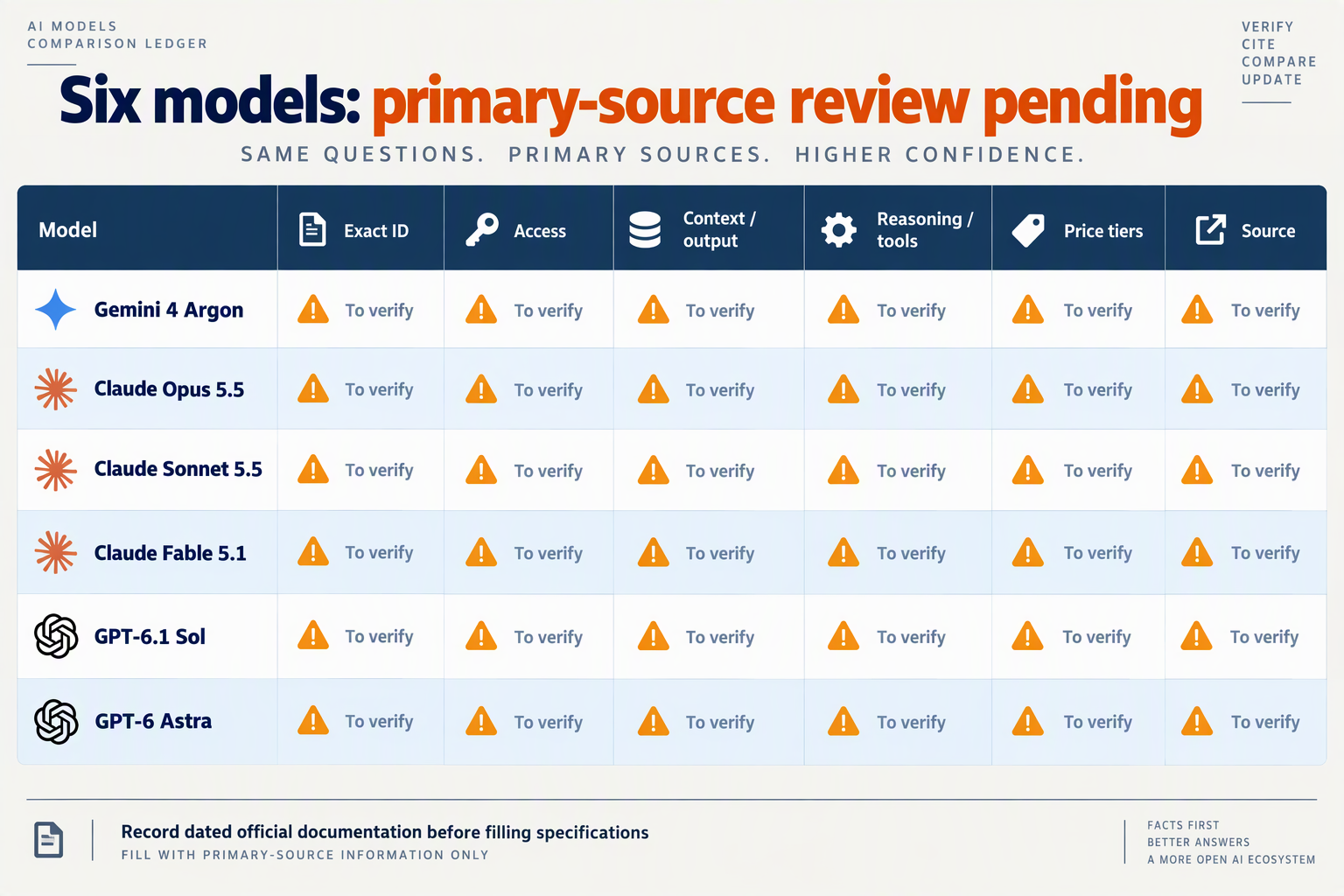
These six models cannot yet be compared on a fully primary-source-verified basis using the supplied research. As of September 30, 2026, the evidence includes secondary reporting about Gemini 4 Argon, but no vendor model cards, API references, or pricing pages establishing exact specifications for all six models.
The table therefore separates reported information from specifications not established by the supplied sources. “Not verified” does not mean unavailable or unsupported; it means an engineering lead should not treat that field as a confirmed purchasing input.
| Model and exact API ID | Access | Context / maximum output | Reasoning and tools | Price tiers |
|---|---|---|---|---|
| Gemini 4 Argon — ID not verified | Selected cybersecurity partners, according to CNBC, September 30, 2026 | Context not verified; 1M-token output reported, not primary-source verified | Coding and complex-work improvements reported; reasoning controls and tool interfaces not verified | Starting rates reported; official tiers not verified |
| Claude Opus 5.5 — ID not verified | Not verified in supplied sources | Neither limit verified | Controls and tool support not verified | Not verified |
| Claude Sonnet 5.5 — ID not verified | Not verified in supplied sources | Neither limit verified | Controls and tool support not verified | Not verified |
| Claude Fable 5.1 — ID not verified | Not verified in supplied sources | Neither limit verified | Controls and tool support not verified | Not verified |
| GPT-6.1 Sol — ID not verified | Not verified in supplied sources | Neither limit verified | Controls and tool support not verified | Not verified |
| GPT-6 Astra — ID not verified | Not verified in supplied sources | Neither limit verified | Controls and tool support not verified | Not verified |
Which Gemini 4 Argon specifications are reported, rather than verified?
AlphaSignal reported on September 30, 2026, that Google DeepMind’s Gemini 4 Argon has a maximum output of one million tokens, compared with 64,000 tokens previously. That report does not establish the model’s context window, endpoint-specific limits, or whether the ceiling applies to every access tier.
Kantan.News’s supplied launch report lists Gemini 4 Argon starting prices of $2 per million input tokens and $10 per million output tokens, plus a 95% cached-input discount; these figures remain unconfirmed against a primary pricing page as of September 30, 2026.
Under those reported rates, a request using 100,000 uncached input tokens and 20,000 output tokens would cost $0.40 before any separately billed services. That is a conditional budgeting example—not an official quote.
VentureBeat reported on September 30, 2026, that broader Gemini 4 Argon availability was planned “as soon as possible.” The Next Web reported that paid API customers and Google AI Ultra subscribers were next, but the supplied excerpt establishes neither a release date nor account-level eligibility.
What primary-source evidence should engineering leads require?
Before approving any model in this Gemini vs Claude vs GPT shortlist, collect a dated vendor evidence pack:
- Exact API identifier: Confirm the callable model string, version policy, and whether an alias can change underlying versions.
- Access and limits: Record account eligibility, supported regions, context capacity, maximum output, and endpoint-specific restrictions.
- Reasoning and tools: Verify reasoning controls, function calling, structured outputs, and any hosted tools independently.
- Complete pricing: Capture input, output, cached-input, reasoning-token, and tool charges where applicable.
Also distinguish:
- Consumer subscription access from production API access.
- Model capabilities from features supplied by an SDK or orchestration layer.
- Published limits from performance demonstrated on your workload.
The procurement rule is straightforward: do not infer capability, availability, or price from a model’s name. Keep unresolved fields open until vendor documentation and an account-level test support them.
Which model fits coding agents? Evaluate repository fixes, tool execution, security review and long-running workflows
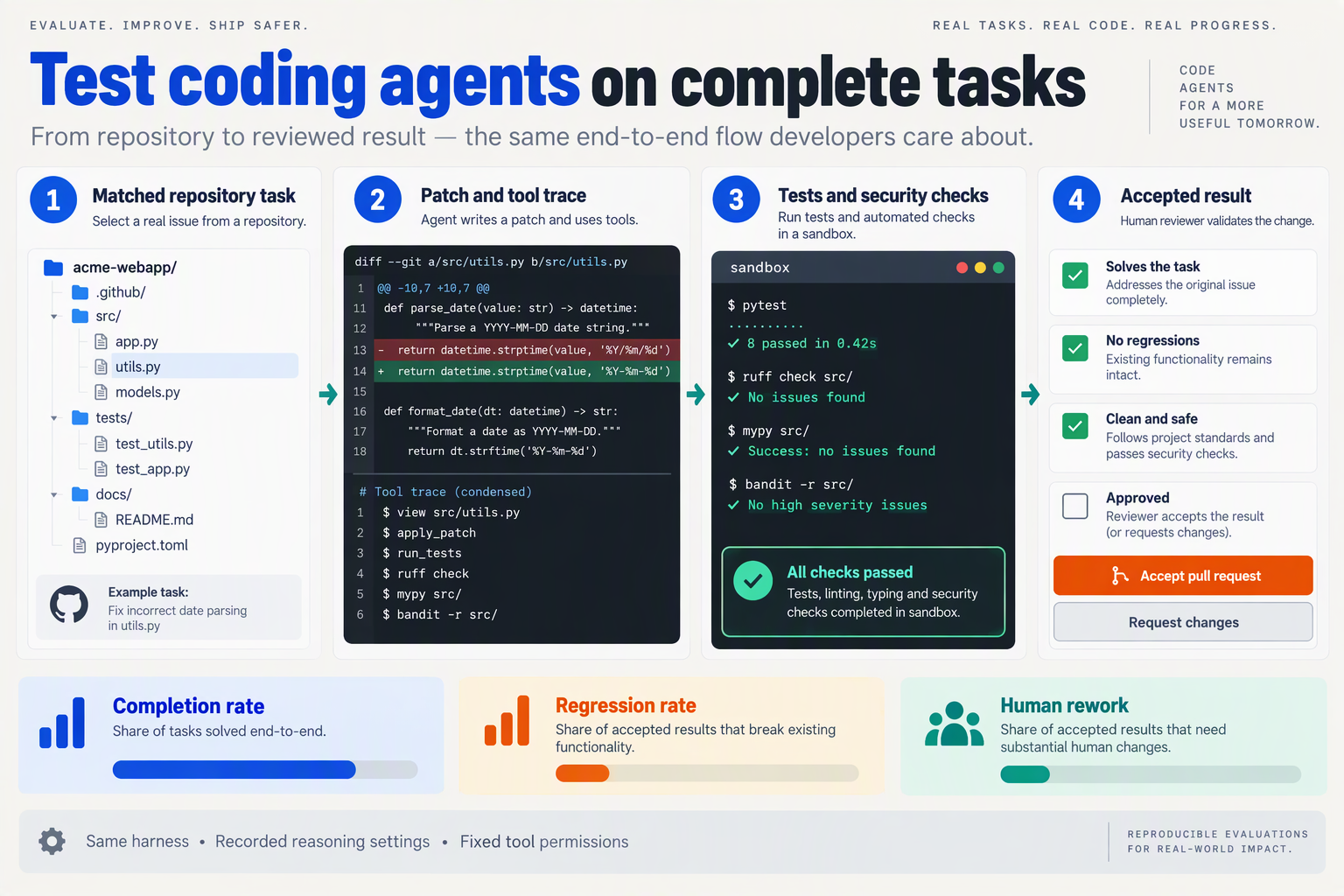
No evidence-backed coding winner emerges across these six models from the supplied reporting as of September 30, 2026. Gemini 4 Argon warrants evaluation for complex software workflows, but engineering leads should select a coding agent by verified repository outcomes, safe tool execution, and recoverability—not by model name or generated code volume.
Which models should enter your coding-agent evaluation?
For Gemini 4 Argon, the available evidence supports a targeted trial rather than an unconditional production recommendation. The Next Web reported on September 30, 2026, that Google describes Argon as built for long, complex software workflows. That is a vendor capability claim, not an independently measured repository-fix success rate.
AlphaSignal reported on September 30, 2026, that Google’s internal results included more than 300 TiB of datacenter memory freed by Argon agents. This is a concrete operational example, but it does not establish performance on your application stack, test suite, or deployment process.
For Claude Opus 5.5, Claude Sonnet 5.5, Claude Fable 5.1, GPT-6.1 Sol, and GPT-6 Astra, the supplied research contains no verified coding-agent scores or tool-execution specifications. Keep all five as evaluation candidates where access is confirmed; do not infer quality, speed, or cost from their naming tiers.
How should you test repository fixes and tool execution?
Use the same agent harness, repository snapshot, permissions, and resource budget for every candidate. Otherwise, you risk comparing orchestration differences rather than models.
Build a small, reproducible evaluation around four task types:
- Repository fixes: Give each agent a historical bug report with the original patch withheld. Require a minimal diff, passing tests, and a regression test that fails before the fix.
- Cross-file changes: Test an interface migration spanning implementation, callers, configuration, and documentation. Check for missed dependencies and unnecessary rewrites.
- Tool execution: Introduce a failed build or malformed tool response. Assess whether the agent diagnoses the failure rather than repeatedly issuing the same command.
- Long-running workflows: Interrupt a migration midway, then resume from saved state. Verify that the agent preserves constraints and identifies unfinished work.
Track accepted fixes, regressions, tool errors, total spend, and reviewer minutes. A patch that passes tests but requires extensive human cleanup should not count as equivalent to a review-ready change.
What makes a coding agent suitable for security review?
A security-review agent must produce verifiable findings, not merely persuasive explanations. Seed a sandbox repository with known vulnerabilities and harmless lookalikes; require file locations, exploitation prerequisites, remediation, and a test demonstrating the fix.
Evaluate these failure modes explicitly:
- False positives: Does the agent flag safe code as vulnerable?
- Missed findings: Does the agent overlook the seeded defects?
- Unsafe execution: Does the agent attempt network access, secret extraction, or destructive commands without authorization?
Treat repository comments, issue descriptions, and tool output as untrusted input. Permission boundaries should remain outside the model’s control.
How should you choose a production coding-agent stack?
Choose the model that meets your workload’s acceptance criteria with manageable review effort and reliable recovery. A bounded bug-fix assistant and an autonomous migration agent need different approval gates.
As of September 2026, CallMissed’s OpenAI-compatible developer AI API supports function calling, structured outputs, caller-chosen fallback models, and usage and request logs. Those capabilities can support a comparative harness, but they do not establish availability of these six specific models or guarantee coding performance.
Start with supervised patches; expand autonomy only after repeatable results.
Which model fits knowledge-work agents? Separate correct answers, wrong answers and abstentions
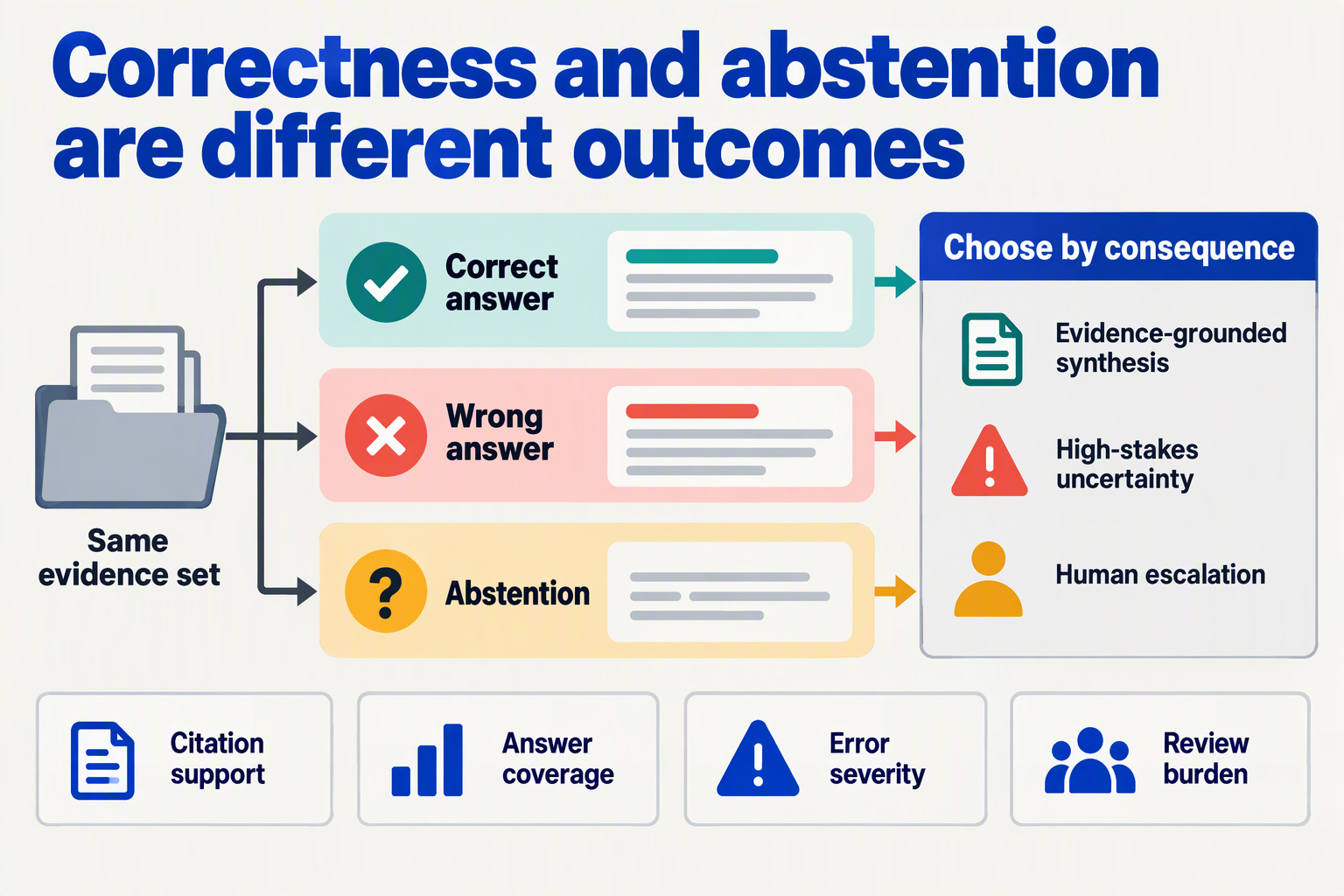
Choose a knowledge-work model by measuring correct answers, wrong answers, and abstentions separately, not by counting completed tasks alone. For Gemini 4 Argon, Claude Opus 5.5, Claude Sonnet 5.5, Claude Fable 5.1, GPT-6.1 Sol, and GPT-6 Astra, the evidence provided does not establish a defensible winner on this three-way assessment as of September 30, 2026.
What counts as a correct knowledge-work answer?
A knowledge-work agent must produce an answer that is supported, current, and actionable. A polished summary can still fail if it cites an obsolete policy, overlooks a contract exception, or presents an unsupported inference as fact.
Build your evaluation around tasks your team actually delegates:
- Document synthesis: Reconcile conflicting versions of a procurement policy.
- Research: Answer a market question using dated, attributable evidence.
- Operational decisions: Determine whether an invoice qualifies for approval.
- Tool-assisted work: Retrieve a customer record and propose an update without changing unrelated fields.
For each task, define the required evidence, acceptable conclusions, and prohibited actions before testing. Score the final answer and any tool actions separately: a correct explanation does not excuse an incorrect database update.
Why should wrong answers and abstentions have separate scores?
Wrong answers create risk; abstentions create unfinished work. Combining them into one failure category hides the trade-off engineering leads need to manage.
Consider this illustrative test, not a published model benchmark: two models each receive 100 procurement questions.
- Model A: 80 correct answers, 15 wrong answers, five abstentions.
- Model B: 75 correct answers, five wrong answers, 20 abstentions.
Model A completes more work correctly, but Model B produces fewer incorrect answers. Among answered questions, Model A achieves 84.2% accuracy, while Model B achieves 93.8% accuracy.
Neither automatically wins. Model B may suit consequential approvals with human escalation; Model A might suit low-risk drafting where reviewers routinely check outputs. Also distinguish justified abstentions—missing evidence or authorization—from unnecessary refusals on answerable tasks.
What does the available evidence establish about these six models?
According to CNBC’s September 30, 2026 reporting, Google describes Gemini 4 Argon as improving “complex professional work.” The Next Web reported on September 30, 2026 that Google positions Argon for long, complex workflows.
Those statements justify investigating Argon for knowledge-work agents; they do not establish its unsupported-answer rate, abstention quality, or reliability on your documents. The provided context supplies no comparable three-way results for Claude Opus 5.5, Claude Sonnet 5.5, Claude Fable 5.1, GPT-6.1 Sol, or GPT-6 Astra. Keep those measurements unknown until tested.
How should engineering leads run the evaluation?
- Create three task groups: answerable questions, deliberately unanswerable questions, and questions requiring clarification.
- Keep conditions consistent: use equivalent evidence, permissions, tool access, and scoring rules across accessible models.
- Require traceable support: check whether cited passages actually justify each material claim.
- Measure operational outcomes: record correct completion, wrong answers, justified abstentions, unnecessary abstentions, reviewer time, and cost per accepted result.
As of September 2026, CallMissed’s developer AI API supports structured outputs and usage and request logs—useful building blocks for collecting consistent evaluation records, without implying that every model named here is available through it.
The buying decision should follow your error budget: reward supported completion, penalize consequential mistakes, and preserve a reliable route to human review.
How much will each model really cost? Separate launch prices, cached-input rates, price tiers and successful-task cost
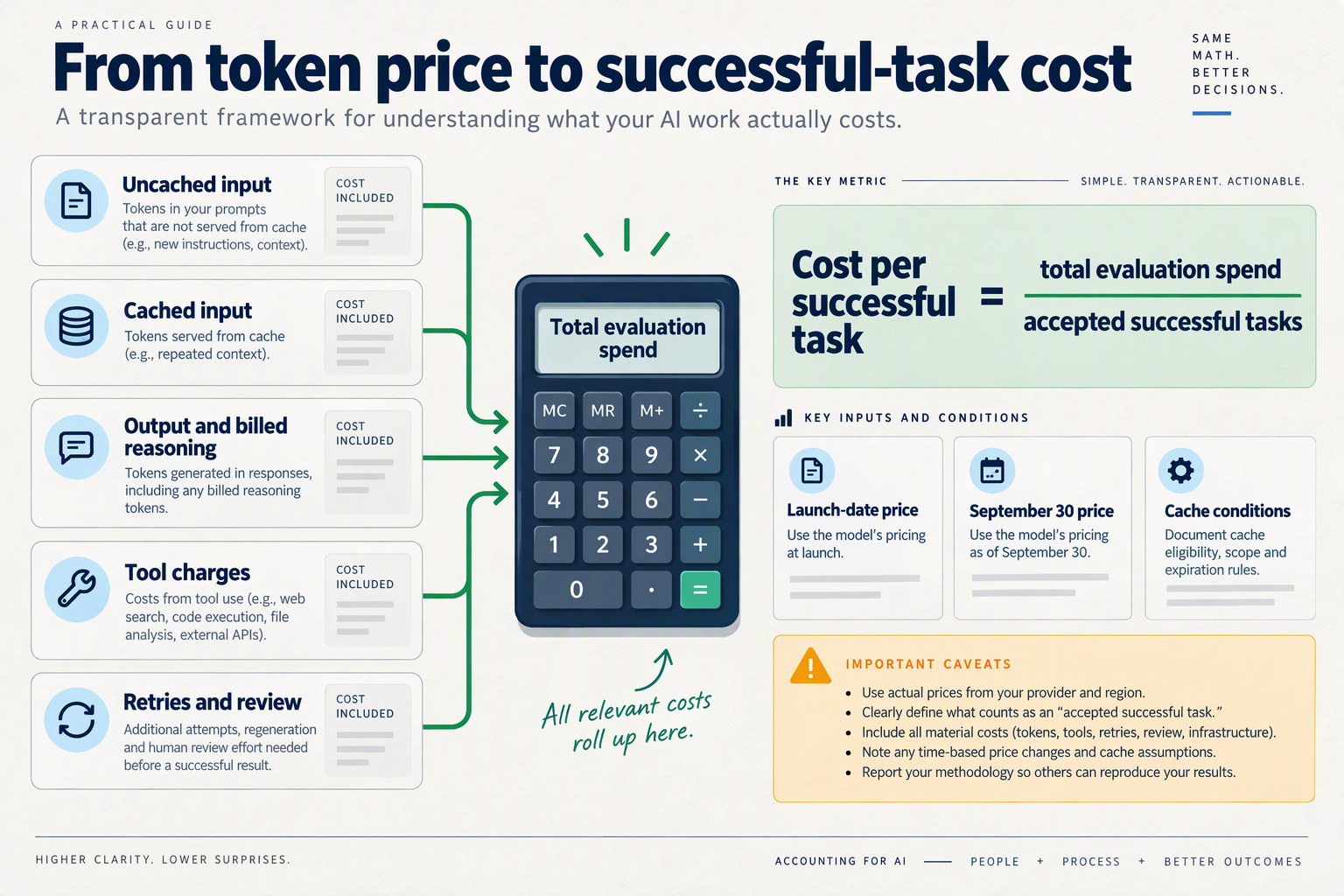
The available evidence supports a reported starting price for Gemini 4 Argon—not a verified six-model price ranking as of September 30, 2026. Compare launch rates separately from cached-input rates, workload-dependent tiers, and cost per successfully completed task; otherwise, a cheap token rate can conceal expensive retries and review.
What prices are documented for the six models?
As of September 30, 2026, Kantan.News reports Gemini 4 Argon starting prices of $2 per million input tokens and $10 per million output tokens, with a 95% discount on cached input. Treat these as reported launch prices, not proof that your account can access those rates.
The supplied evidence does not establish prices for the other five models. “Unknown” here means unverified in this guide’s evidence, not necessarily unpublished.
| Model | Input / million tokens | Output / million tokens | Cached input / million tokens |
|---|---|---|---|
| Gemini 4 Argon | $2 starting rate, reported | $10 starting rate, reported | $0.10, calculated from reported discount |
| Claude Opus 5.5 | Unverified | Unverified | Unverified |
| Claude Sonnet 5.5 | Unverified | Unverified | Unverified |
| Claude Fable 5.1 | Unverified | Unverified | Unverified |
| GPT-6.1 Sol | Unverified | Unverified | Unverified |
| GPT-6 Astra | Unverified | Unverified | Unverified |
Before procurement, obtain a dated provider price sheet covering the exact model identifier, endpoint, region, and service tier. Do not substitute an older model’s pricing because its name looks similar.
How much could cached input actually save?
Using Kantan.News’s reported rates as of September 30, 2026, Gemini 4 Argon’s implied cached-input price is $0.10 per million tokens: $2 × 5%.
Consider an illustrative request with 20,000 uncached input tokens, 80,000 cached input tokens, and 4,000 output tokens:
- Without caching: input costs $0.20; output costs $0.04; total $0.24.
- With the reported discount: input costs $0.048; output costs $0.04; total $0.088.
- Calculated request-level saving: approximately 63.3%, not 95%.
The distinction matters: the discount applies to eligible cached input, not the whole invoice. Confirm cache eligibility, minimum lengths, retention charges, and actual cache-hit rates before budgeting.
Which price tiers should engineering leads verify?
A “starting price” is not a complete tariff. For each candidate, ask whether the provider applies:
- Context-length tiers: Does a larger prompt change input or output rates?
- Service tiers: Do priority processing or asynchronous execution carry different charges?
- Additional meters: Are tools, search, cache storage, or reasoning tokens billed separately?
- Commercial terms: Do commitments, regional endpoints, or negotiated contracts change the effective price?
These are procurement checks, not confirmed features or surcharges for all six models.
How do you calculate successful-task cost?
Use total attributable spend ÷ tasks that pass your acceptance criteria, including failed attempts, retries, tool charges, and human review.
For an illustrative September 2026 evaluation, suppose 100 initial attempts cost $8, 20 retries cost $1.60, and 30 minutes of review at $60/hour costs $30. If 90 tasks pass, successful-task cost is $39.60 ÷ 90 = $0.44, rather than the apparent $0.08 per initial attempt.
Evaluate all six models against the same acceptance rubric. The purchasing question is not “Which tokens are cheapest?” but “Which accessible model delivers an accepted result at the lowest sustainable total cost?”
Why might Arena preferences and an Intelligence Index disagree—and what do sourced experts actually establish?
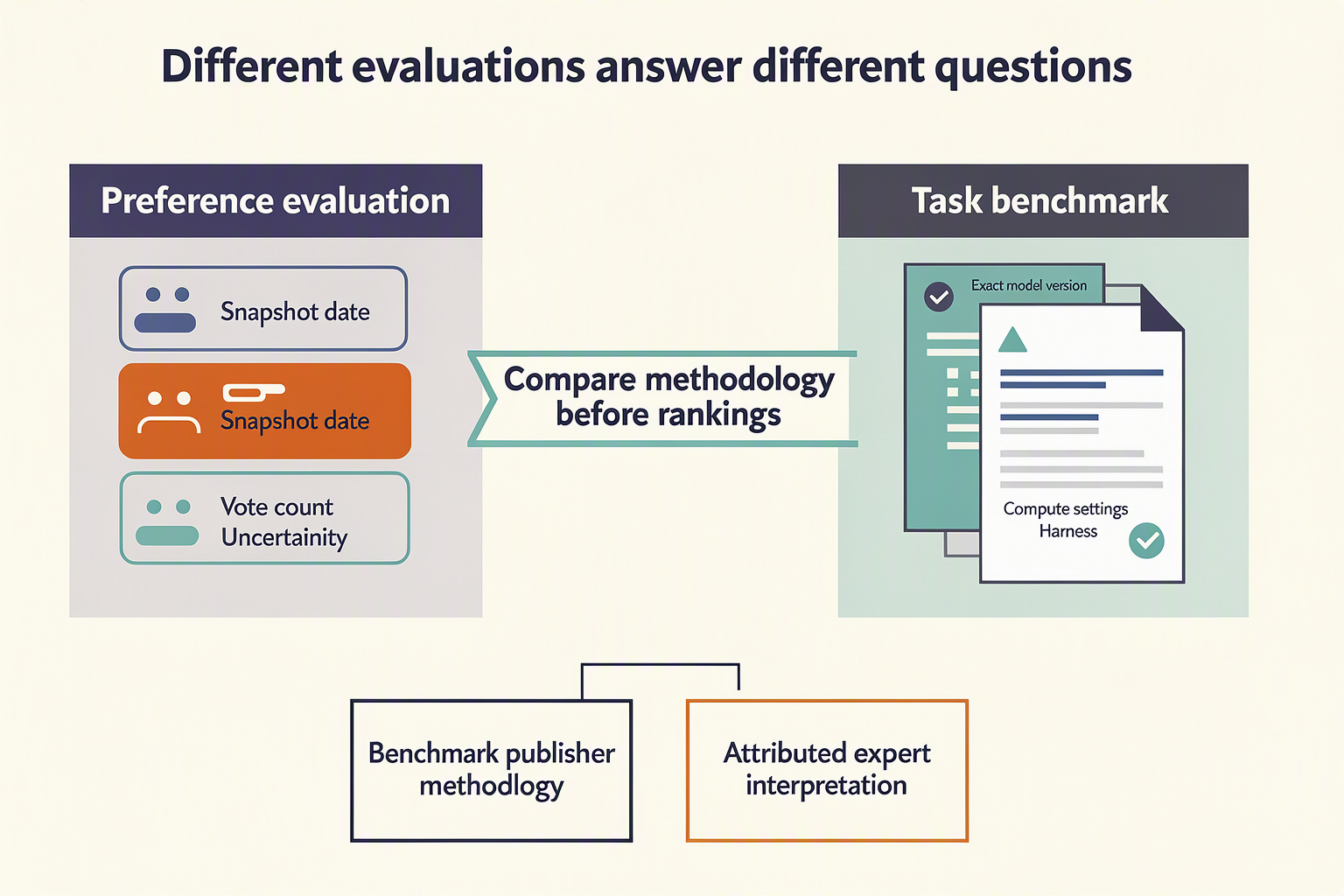
Arena preferences and an Intelligence Index can disagree because they measure different outcomes: which response people prefer versus performance on a defined set of tests. As of September 30, 2026, the supplied reporting does not establish a verified, comparable Arena ranking and Intelligence Index score for all six models—so it cannot support a universal winner.
Why can human preferences differ from benchmark scores?
A preference leaderboard typically reflects judgments between responses to submitted prompts. A benchmark index aggregates results across selected tests, with its conclusions shaped by task selection, weighting, scoring, and evaluation settings. Before comparing either, check the actual methodology rather than assuming every leaderboard follows the same protocol.
Several mechanisms can produce disagreement:
- Presentation versus correctness: A clear, polished answer may attract preferences without being more accurate on objectively scored tasks.
- Different task distributions: Conversational prompts may reward different capabilities from repository-level coding, quantitative reasoning, or tool execution.
- Evaluation configuration: Reasoning budgets, system prompts, available tools, and output limits can change results.
- Aggregation choices: A composite score can conceal weaknesses in the specific task your application depends on.
For an engineering lead, neither measure is inherently irrelevant. Preference evidence helps assess user-facing experience; task-based evaluations help assess measurable execution. Neither automatically establishes production reliability.
What do the sourced experts actually establish about Gemini 4 Argon?
The available sources establish an announcement, a restricted rollout, and reported capability claims—not a reproducible six-model purchasing verdict.
According to CNBC’s September 30, 2026 reporting, Google described Gemini 4 Argon as offering major improvements in coding, cybersecurity, and complex professional work. That establishes what Google announced; it does not independently quantify those improvements against Claude Opus 5.5, Claude Sonnet 5.5, Claude Fable 5.1, GPT-6.1 Sol, or GPT-6 Astra.
The Next Web reports that Google DeepMind executive Koray Kavukcuoglu called Argon the company’s “next era of frontier intelligence,” in the announcement covered by the supplied September 2026 context. This is an attributable executive assessment, not an independent benchmark finding.
AlphaSignal’s September 30, 2026 coverage reports internal outcomes including 40% quantum subroutine gains and more than 300 TiB of datacenter memory freed by Argon agents. Those examples suggest potentially valuable specialized applications, but the supplied excerpts do not provide baselines, evaluation protocols, or replication details. They therefore do not establish equivalent gains for your software team.
VentureBeat’s September 30, 2026 headline describes Google as retaking the benchmark lead. Without the underlying scores and methodology in the supplied context, that headline should remain an attributed report—not become a precise ranking invented for this guide.
How should buyers resolve conflicting leaderboard signals?
Use disagreement to identify what needs testing, rather than averaging unlike scores:
- Verify comparability. Confirm exact model versions, evaluation dates, settings, sample sizes, and uncertainty where reported.
- Match the evidence to the workload. For a coding agent, prioritize correct changes and passing tests; for an assistant, assess usefulness alongside factual accuracy.
- Run paired production-like evaluations. Give accessible candidates identical inputs, tools, and acceptance criteria, then record failures, review time, and total cost.
- Document unresolved evidence. Mark missing scores or inaccessible models as unverified, not inferior.
The purchasing question is not “Which leaderboard is right?” It is “Which measurement predicts success for this deployment?” That distinction keeps the Gemini vs Claude vs GPT decision grounded in evidence rather than reputation.
What should your team test first? A six-model workload rubric with acceptance gates and conditional selection rules
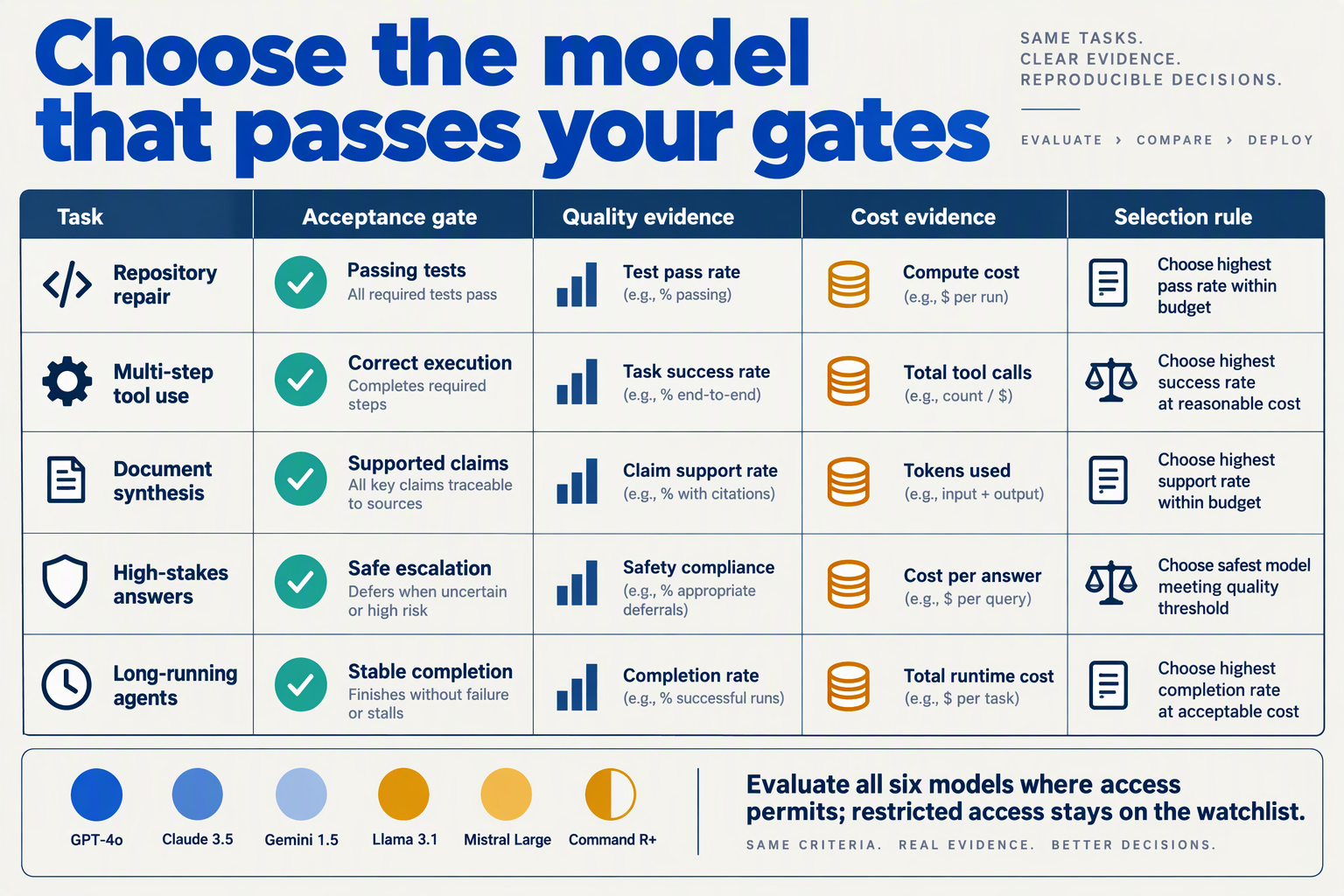
Test accessible models on your highest-volume production workload first, then evaluate harder tasks where better answers could offset higher costs. Use the six-model rubric below as a September 30, 2026 evaluation plan—not a capability ranking: workload assignments are starting hypotheses, and selection depends on measured results.
What should each of the six models prove before selection?
The acceptance gates below are proposed engineering targets, not published model scores or vendor guarantees. Adjust them to your risk tolerance before testing, and let every accessible candidate compete on the same workload where practical.
| Model | First workload to test | Proposed acceptance gate | Conditional selection rule |
|---|---|---|---|
| Gemini 4 Argon | Authorized security investigation and repository repair | Confirm access; pass all critical security tests; produce reproducible evidence | Evaluate only with approved access; select if verified repairs justify total cost |
| Claude Opus 5.5 | Ambiguous, multi-step architecture decisions | At least 90% rubric compliance; zero unsupported critical assumptions | Select if reduced expert rework outweighs additional spending |
| Claude Sonnet 5.5 | Routine pull-request fixes and test generation | At least 95% required tests pass; zero critical regressions | Select if cost per accepted patch meets budget |
| Claude Fable 5.1 | Requirements synthesis and technical documentation | At least 95% required facts preserved; zero invented requirements | Select if factual fidelity and editing effort beat your baseline |
| GPT-6.1 Sol | Stateful tool workflows with recoverable failures | At least 95% end-to-end completion; zero unauthorized actions | Select if recovery works within latency and spending limits |
| GPT-6 Astra | Interactive assistance and structured extraction | At least 99% schema validity; p95 latency within your SLO | Select if valid, useful responses meet your service budget |
Do not interpret these assignments as verified specializations. The supplied research does not establish comparative performance, pricing, or production availability for the five Claude and GPT candidates; verify their identities, documentation, and access before scheduling evaluations.
Gemini 4 Argon’s security-oriented test has a clearer evidence basis: CNBC reported on September 30, 2026, that Google initially launched Gemini 4 Argon to selected cybersecurity partners. That supports an access-gated security evaluation, not an assumption that ordinary API customers can deploy it.
How should your team run a fair model evaluation?
Create a shared evaluation pack before viewing results. For a September 2026 pilot, a practical starting design is 50 representative tasks per workload, including ordinary cases, ambiguous inputs, and deliberate failures; this is a suggested sample, not a statistically conclusive benchmark.
- Freeze the inputs: Keep task descriptions, available tools, permissions, and expected outcomes consistent.
- Record configuration: Save model identifiers, test dates, prompts, token limits, and retry policies.
- Score blindly: Have reviewers assess outputs without seeing model names.
- Measure complete workflows: Include failed attempts, tool expenses, and human correction time—not just successful response costs.
Compare cost per accepted outcome, alongside completion rate and p95 latency. A cheap response that requires substantial repair may be an expensive production choice.
Which failures should disqualify a model?
Separate hard safety gates from negotiable performance targets:
- Reject: Unauthorized actions, exposed secrets, fabricated critical evidence, or destructive changes.
- Retest: Recoverable timeouts, invalid formatting, or missed noncritical requirements after configuration changes.
- Select conditionally: A model that passes safety gates and meets workload-specific quality, latency, and budget targets.
Finally, test failures and fallback behavior explicitly. The purchasing decision should follow reproducible workload evidence—not the most impressive isolated demonstration.
What must happen before deployment? Access checks, matched evaluations and approval gates

Hold publication and production deployment until primary-source verification, matched workload evaluations, and manual approval are complete. As of September 30, 2026, the supplied evidence does not establish a publication-ready, six-model comparison of Gemini 4 Argon, Claude Opus 5.5, Claude Sonnet 5.5, Claude Fable 5.1, GPT-6.1 Sol, and GPT-6 Astra.
This is an evidence gate, not a verdict on model quality. A promising candidate can remain on the evaluation shortlist while unsupported specifications, rankings, and purchasing recommendations remain unpublished.
What primary sources must be checked before publication?
Create a claim-to-source register covering every model, with the official document, verification date, exact model identifier, and reviewer attached to each material claim. Secondary reporting can identify questions to investigate; it should not substitute for vendor documentation when confirming production specifications.
For example, Kantan.News reports Gemini 4 Argon pricing of $2 per million input tokens, $10 per million output tokens, and a 95% cached-input discount in the supplied September 30, 2026 context. Treat those figures as reported, not procurement-verified, until an official pricing page confirms the applicable endpoint, conditions, and effective date.
Verify these items for all six candidates:
- Identity and availability: Official model name, API identifier, release status, eligible accounts, regions, and access restrictions.
- Technical limits: Context window, maximum output, supported modalities, tool interfaces, and endpoint-specific constraints.
- Commercial terms: Token prices, caching rules, quotas, data handling, and contractual requirements.
- Benchmark provenance: Dataset version, configuration, tool access, scoring method, and whether results were independently reproduced.
The provided context lacks primary documentation for the five named Anthropic and OpenAI candidates. Leave their unresolved fields unknown rather than inferring specifications from naming conventions.
What makes model evaluations genuinely comparable?
Run matched evaluations against the same versioned task set, with equivalent tool permissions, input materials, and acceptance criteria. Document unavoidable differences instead of concealing them inside a single leaderboard score.
Use a reproducible sequence:
- Freeze the workload: Select representative coding, reasoning, and tool-use tasks with reviewer-approved expected outcomes.
- Record configurations: Capture model identifiers, prompts, sampling settings, reasoning controls, token ceilings, and timeout policies.
- Measure complete outcomes: Track correctness, successful tool execution, elapsed time, total spend, retries, and human correction effort.
- Review failures: Separate unsupported access, infrastructure errors, invalid outputs, and substantive task failures.
- Preserve evidence: Retain permitted logs, scoring rubrics, reviewer decisions, and test dates.
AlphaSignal reported on September 30, 2026, that Gemini 4 Argon’s maximum output increased from 64,000 to one million tokens. That reported ceiling warrants testing long-output completeness and review burden; it does not establish task accuracy or a context-window size.
As of September 2026, CallMissed’s OpenAI-compatible developer AI API provides usage and request logs and caller-chosen fallback models. Those capabilities can support evaluation instrumentation, but the fact sheet does not verify availability of these six specific candidates.
Who must approve deployment and the final guide?
Require named sign-off from the engineering evaluation owner, security or privacy reviewer, and editorial fact-checker. Procurement or legal should approve commercial and contractual claims where relevant.
VentureBeat reported on September 30, 2026, that broader Gemini 4 Argon availability was planned “as soon as possible.” That wording is not a committed general-release date.
Release the guide only when every recommendation has traceable evidence and every unresolved claim is removed or explicitly qualified. Authorize deployment separately, after confirming actual account access, workload acceptance criteria, monitoring, and rollback readiness. Until then, hold publication—not the investigation.
Frequently Asked Questions
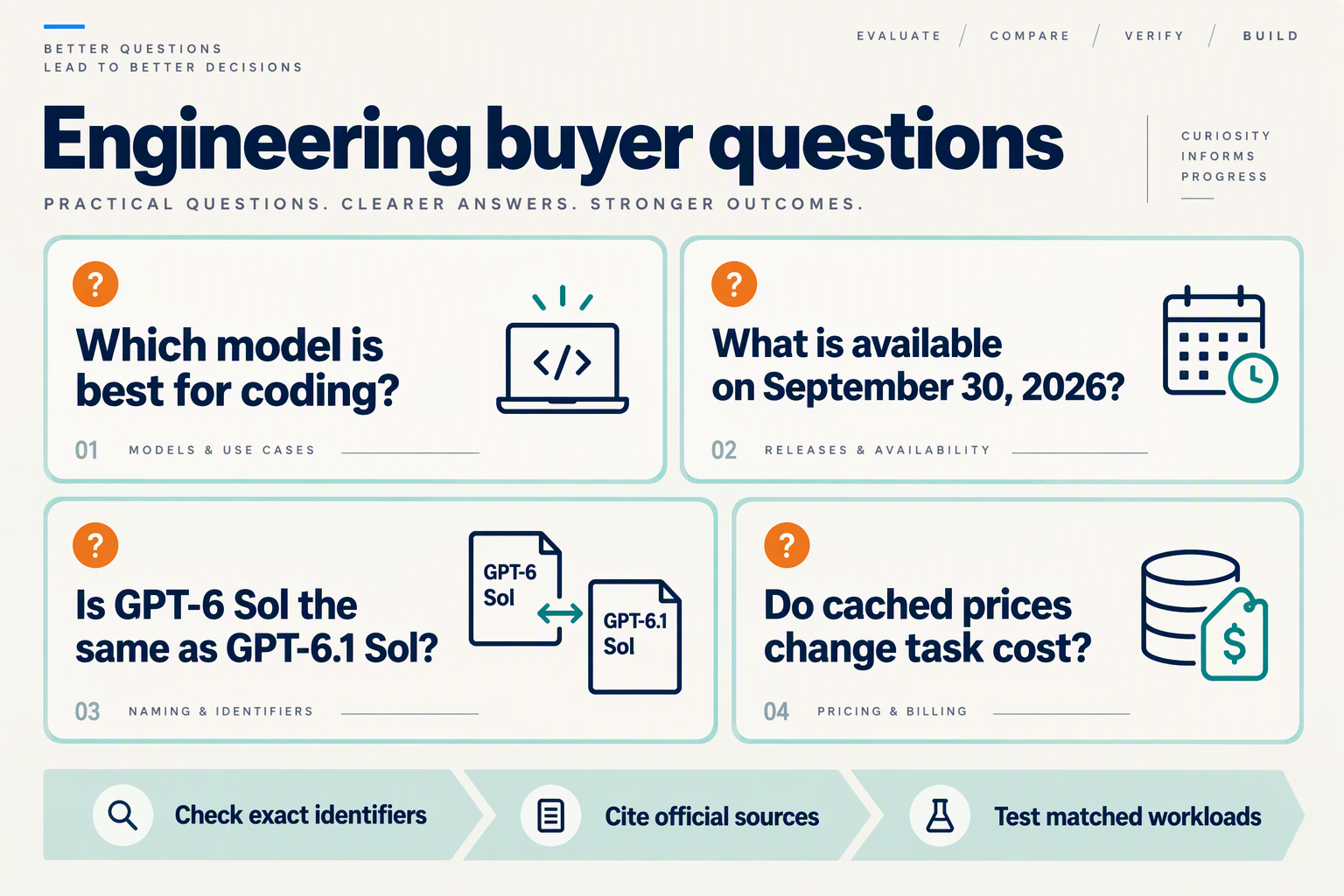
In Gemini vs Claude vs GPT, which model is best for coding?
Which Gemini, Claude, and GPT models are available today, September 30, 2026?
Is GPT-6 Sol the same model as GPT-6.1 Sol?
Do cached token prices reduce the total cost of an AI coding task?
In Gemini vs Claude vs GPT, does a larger token limit mean better performance?
How should engineering leads evaluate multiple AI models before buying?
Conclusion
The right choice in Gemini vs Claude vs GPT is the model your team can access, validate, and operate economically—not simply the model leading a benchmark. As of September 30, 2026, this six-model buyer guide is best treated as a framework for purchasing decisions, not a declaration of one universal winner.
For Gemini 4 Argon, Claude Opus 5.5, Claude Sonnet 5.5, Claude Fable 5.1, GPT-6.1 Sol, and GPT-6 Astra, four principles should shape your shortlist:
- Confirm access before committing engineering time. CNBC reported on September 30, 2026, that Gemini 4 Argon initially launched to selected cybersecurity partners. An announcement may justify investigation, but it does not establish that your team can make the model a production dependency. Apply that distinction consistently across all six candidates.
- Evaluate task fit rather than transferring leaderboard results into purchasing assumptions. Test coding, reasoning, tool use, and long-running workflows against representative work your engineers actually perform. A repository migration and a document-generation task require different evidence; neither should be selected solely because a model performs well elsewhere.
- Calculate total production cost, not just token spending. Include retries, caching, lengthy outputs, human review, and integration effort. AlphaSignal reported on September 30, 2026, that Gemini 4 Argon’s maximum output increased from 64,000 to one million tokens. That figure describes an output ceiling—not a context window, guaranteed reliability, or an assurance that generating more text delivers more value.
- Keep uncertainty visible. Separate published specifications, vendor claims, and reproducible internal results. Missing access details or unconfirmed specifications should remain unknown, rather than becoming estimates that make a comparison table look complete. Assess latency, failure handling, and deployment requirements before moving from evaluation to commitment.
What should engineering leads watch next?
Watch for broader production availability and evidence that announced capabilities translate into repeatable workload improvements. VentureBeat reported on September 30, 2026, that Gemini 4 Argon’s broader availability was planned “as soon as possible”; that wording is a reason to monitor the rollout, not assume a release date.
As access conditions and documentation evolve, revisit the shortlist without discarding your evaluation criteria. The durable advantage is a repeatable selection process: the same workloads, clear acceptance thresholds, and an honest accounting of operational costs.
For teams exploring this multi-model approach, CallMissed’s OpenAI-compatible developer AI API, as of September 2026, offers one API key and one balance across 139 models. Explore CallMissed as an integration option—not as confirmation that these six candidates are available through its catalogue.
Which accessible model can demonstrate the strongest production value on your team’s next real workload?
Related Reading
- Gemini 4 vs Claude Fable 5.1: Argon Buyer Guide (2026)
- Claude Fable 5.1 vs GPT-6 Astra: 2026 Buyer’s Guide
- Gemini 4 vs GPT-6 Astra: September 30, 2026 Review Draft
Sources
Discussion
Related Posts


Ready to automate customer conversations?
Launch AI voice agents and WhatsApp bots with CallMissed — one API, 22+ Indian languages.