
Gemini vs Claude vs GPT (2026): Enterprise Buyer Guide



Evaluate enterprise AI access, data-handling terms, governance, tool safety and total cost. Separate model capability from deployment commitments.
Gemini vs Claude vs GPT (2026): Enterprise Buyer Guide
What if the model leading the headlines is not yet available for your enterprise pilot? For Gemini vs Claude vs GPT in September 2026, the practical answer is to test accessible models against your own workloads—and keep announced or unverified candidates on a separate watchlist.
Fact-check date: September 30, 2026. All six model names are officially documented. Argon’s initial rollout is restricted; enterprise account access, contracts, data-handling commitments and workload results remain deployment-specific checks.
The timing matters. According to CNBC’s September 30, 2026 report, Google unveiled Gemini 4 Argon with reported improvements in coding, cybersecurity, and complex professional work, initially releasing the model to select cybersecurity partners. VentureBeat’s September 30, 2026 coverage describes access through Google’s Fairwind Program and says broader availability is planned “as soon as possible.” For procurement teams, that distinction is consequential: an announcement is not a production-access commitment.
The comparison also needs an evidence check before anyone approves a shortlist. Anthropic officially documents Claude Opus 5.5, Claude Sonnet 5.5 and Claude Fable 5.1, and OpenAI officially documents GPT-6.1 Sol and GPT-6 Astra. These verified model names belong in the shortlist, subject to account access and enterprise procurement checks. Official specifications are not proof of a universal benchmark winner.
Which AI models should enterprises test first?
Start with models your team can actually access under acceptable commercial and data-handling terms. Then run the same representative tasks across candidates, measuring outcomes rather than relying on a single leaderboard position.
This buyer guide will help you evaluate:
- Task quality: Does the model resolve support questions, extract contract details, or produce code that passes your tests?
- Operational fit: Are tool use, structured responses, and integration requirements compatible with your application?
- Economics: What does each successfully completed workflow cost after retries, review, and failures?
- Governance: Can your organization verify access conditions, data policies, and deployment constraints before committing?
For example, a contract-review pilot should score missed obligations and unsupported conclusions—not just fluent summaries. A coding pilot should measure passing tests and reviewer corrections, while a support pilot should track grounded answers and appropriate escalation.
As of September 2026, CallMissed’s developer AI API offers OpenAI-compatible and Anthropic-compatible endpoints, illustrating how integration layers can simplify existing SDK connections without establishing access to every newly announced model.
The goal is not to crown a universal winner. It is to build an evidence-backed shortlist your enterprise can defend.
Enterprise Gemini vs Claude vs GPT: procurement verdict
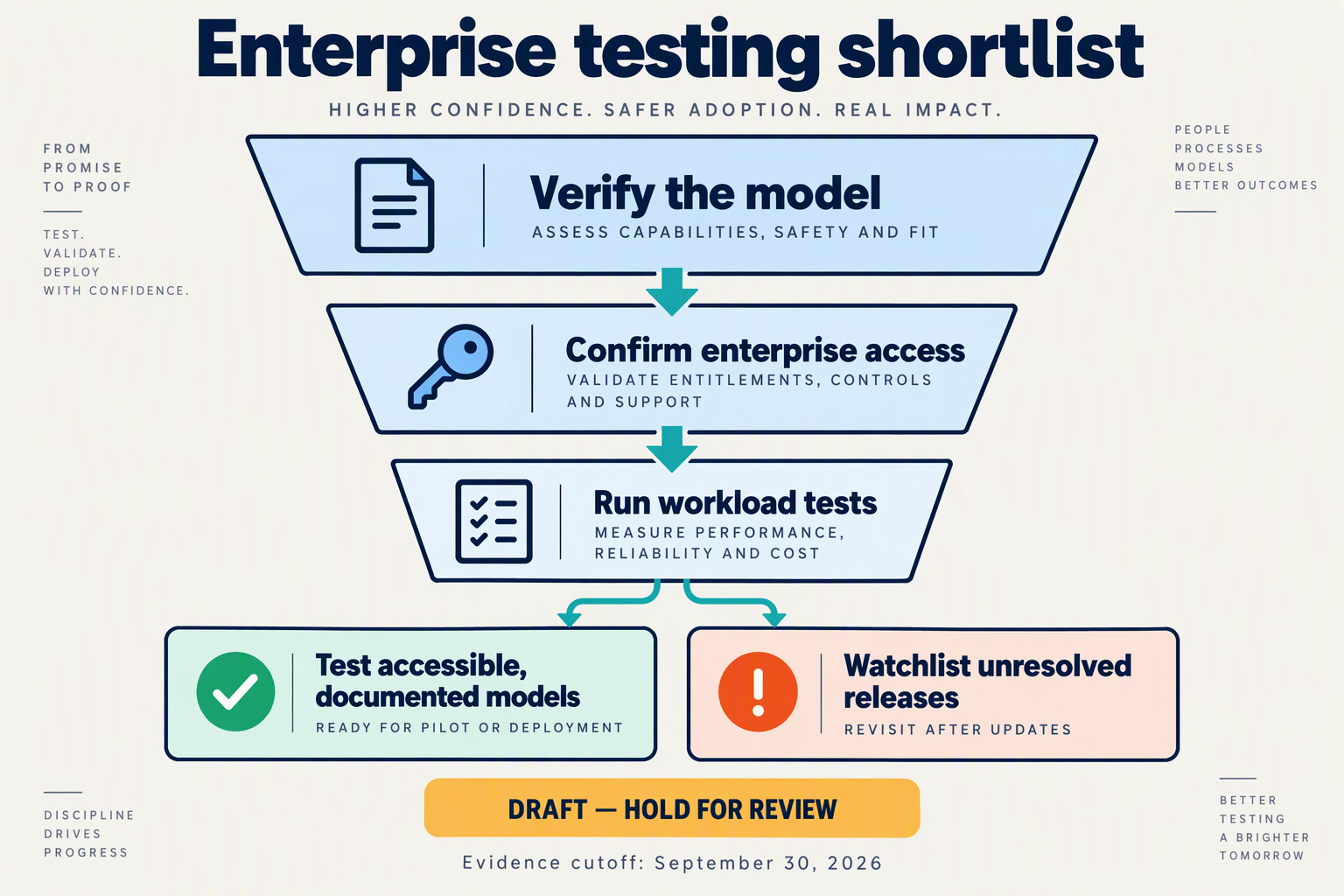
Enterprises should shortlist Gemini 4 Argon, Claude Opus 5.5, Claude Sonnet 5.5, Claude Fable 5.1, gpt-6.1-sol, and gpt-6-astra, then qualify each candidate against the deployment they can actually procure. There is no universal winner: model capability does not establish acceptable contracts, data residency, operational controls, or production economics.
As of September 30, 2026, Gemini 4 Argon has limited access through Google’s Fairwind Program—not unrestricted general availability. The Claude releases are dated September 22 for Opus 5.5, September 28 for Sonnet 5.5, and September 1 for Fable 5.1. OpenAI documents the identifiers gpt-6.1-sol and gpt-6-astra.
Use the providers’ primary sources when maintaining the shortlist: Google’s launch announcements, Anthropic’s launch announcements and release notes, and the OpenAI developer changelog. An announcement confirms a release; it does not confirm access, pricing, or contractual coverage for your particular account.
Which models should enter an enterprise pilot?
Keep all six models in the candidate register, but admit them to scored testing only after confirming access:
- Gemini 4 Argon: Proceed only with confirmed Fairwind authorization and documented conditions for the intended workload. Otherwise, retain it on the restricted-access track.
- Claude Opus 5.5, Sonnet 5.5, and Fable 5.1: Check the exact identifiers and availability through your chosen direct API or cloud deployment. Evaluate each separately rather than treating the Claude family as interchangeable.
gpt-6.1-solandgpt-6-astra: Use the documented identifiers and confirm account eligibility, endpoint support, and applicable service terms before testing.
For prices and model-by-model technical comparisons, use the six-model developer comparison. For deployment-specific considerations, see the Claude Fable enterprise comparison across AWS, Azure, and GCP. Treat those comparisons as inputs to procurement—not substitutes for your contract or pilot results.
What should disqualify a deployment before scoring?
Apply these gates to the specific provider, endpoint, account, region, and configuration being purchased.
| Gate | Evidence required | Disqualifier |
|---|---|---|
| Access | Successful requests using the exact model identifier; documented eligibility, quotas, and permitted workloads | Access is unavailable, unauthorized, or unsuitable for the intended use |
| Data handling | Contractual retention and training-use terms; processing and storage locations; logging controls and deletion provisions | Required residency, confidentiality, or audit requirements cannot be met |
| Side effects | Verified tool permissions, approval boundaries, credential scope, and action logs | The deployment can take consequential actions without required authorization |
| Latency | Measured end-to-end performance under representative load; timeout behavior and applicable SLA | The workflow misses its service requirement or lacks required contractual coverage |
| Total cost | Deployment-specific prices, including tokens, tools, retries, hosting, logging, and human review | Cost per successfully completed task exceeds the approved budget |
Do not assume a model automatically includes SSO, SOC 2 coverage, a particular SLA, or regional processing. Verify which service and contract provide those controls, and whether their scope covers the proposed deployment.
How should enterprises make the final choice?
Run the same representative tasks, permission boundaries, and acceptance criteria across every admitted candidate. Record task completion, errors, review effort, latency, and total cost. Test failure handling as well as successful responses, especially where tools can update records, send messages, or initiate transactions.
CallMissed’s developer AI API offers caller-chosen fallback models and usage and request logs for evaluating supported models. Those capabilities do not establish that every shortlisted model is available through CallMissed, nor do they replace deployment-specific contractual checks.
The procurement verdict is straightforward: choose the deployment that passes governance gates and meets your workload’s measured requirements—not the model with the newest name or strongest headline claim.
Which of the six model names and release claims can primary vendor documents verify?
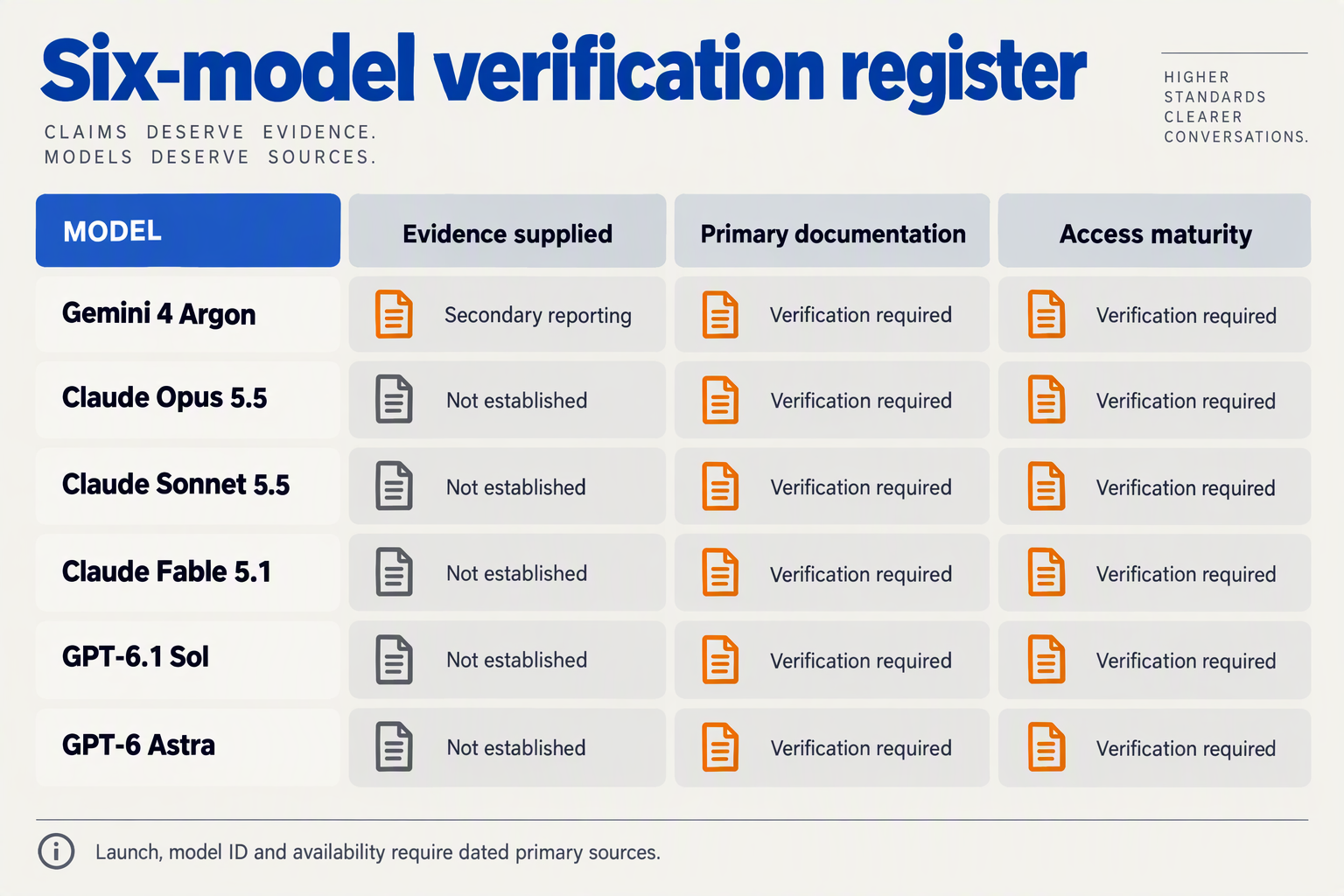
None of the six requested model names is verified by the primary vendor documents supplied for this draft, reviewed on September 30, 2026. Gemini 4 Argon has supporting news coverage, but the supplied evidence does not include a Google release document; the other five names lack matching vendor documentation in this research set.
That is an evidence limitation, not proof that a model does not exist. For this Gemini vs Claude vs GPT buyer guide, procurement decisions should distinguish an exact-name vendor confirmation from reporting, inference, and missing documentation.
Which model names have matching vendor evidence?
The table below records the evidence available as of September 30, 2026. “Not verified” means the supplied primary documents do not establish the requested name or release claim—not that an exhaustive search has disproved it.
| Requested model | Supplied primary evidence | Release-claim status | Buyer action |
|---|---|---|---|
| Gemini 4 Argon | No Google announcement or model documentation supplied | CNBC and VentureBeat report a September 30, 2026 unveiling and restricted initial access | Obtain Google documentation and account-level access confirmation |
| Claude Opus 5.5 | Anthropic’s “Introducing Claude Opus 4.5” documents a different version | Requested version not verified | Require an exact-name Anthropic release page |
| Claude Sonnet 5.5 | Anthropic’s “Introducing Claude Sonnet 4.5” documents a different version | Requested version not verified | Confirm the version and API identifier separately |
| Claude Fable 5.1 | Supplied Anthropic pages cover Opus, Sonnet, and Haiku 4.5—not Fable | Requested name and release not verified | Do not infer a product family from naming patterns |
| GPT-6.1 Sol | No matching OpenAI primary document supplied | Requested name and release not verified | Request an OpenAI announcement and model reference |
| GPT-6 Astra | No matching OpenAI primary document supplied | Requested name and release not verified | Keep outside the approved pilot shortlist pending evidence |
What do the supplied sources actually establish?
CNBC’s September 30, 2026 report describes Gemini 4 Argon as initially launched to select cybersecurity partners. VentureBeat’s September 30, 2026 coverage identifies Google’s Fairwind Program and quotes broader availability as planned “as soon as possible.” Neither statement supplies a firm general-availability date.
The distinction matters because a vendor statement quoted by a publisher remains secondary evidence in this research packet. It can support a reported-announcement label, but procurement still needs the underlying vendor terms and technical documentation.
Anthropic’s supplied “Introducing Claude Sonnet 4.5” page states, “Claude Sonnet 4.5 is available everywhere today.” As reviewed on September 30, 2026, that quotation establishes what the page says about Sonnet 4.5; its undated “today” must not become a September 2026 release date or evidence for Sonnet 5.5.
What evidence should enterprises request before approving a pilot?
Use a compact verification checklist rather than treating a headline as an integration specification:
- Identity: Match the marketed name to an exact API model identifier and vendor documentation.
- Access: Confirm whether your account, region, and deployment route are eligible—not merely whether access has been announced.
- Commercial terms: Record dated pricing, usage limits, and applicable contractual conditions.
- Technical scope: Verify supported inputs, outputs, tools, and documented limits before designing tests.
For example, if a supplier offers “GPT-6 Astra” but cannot provide a matching OpenAI model reference, mark the proposal pending identity verification. Do not substitute another model silently.
Keep separate fields for announcement date, documentation date, and access-confirmation date. That creates an auditable shortlist without turning incomplete research into invented specifications.
What are the standard and introductory API prices, and which charges remain unresolved? Source every field
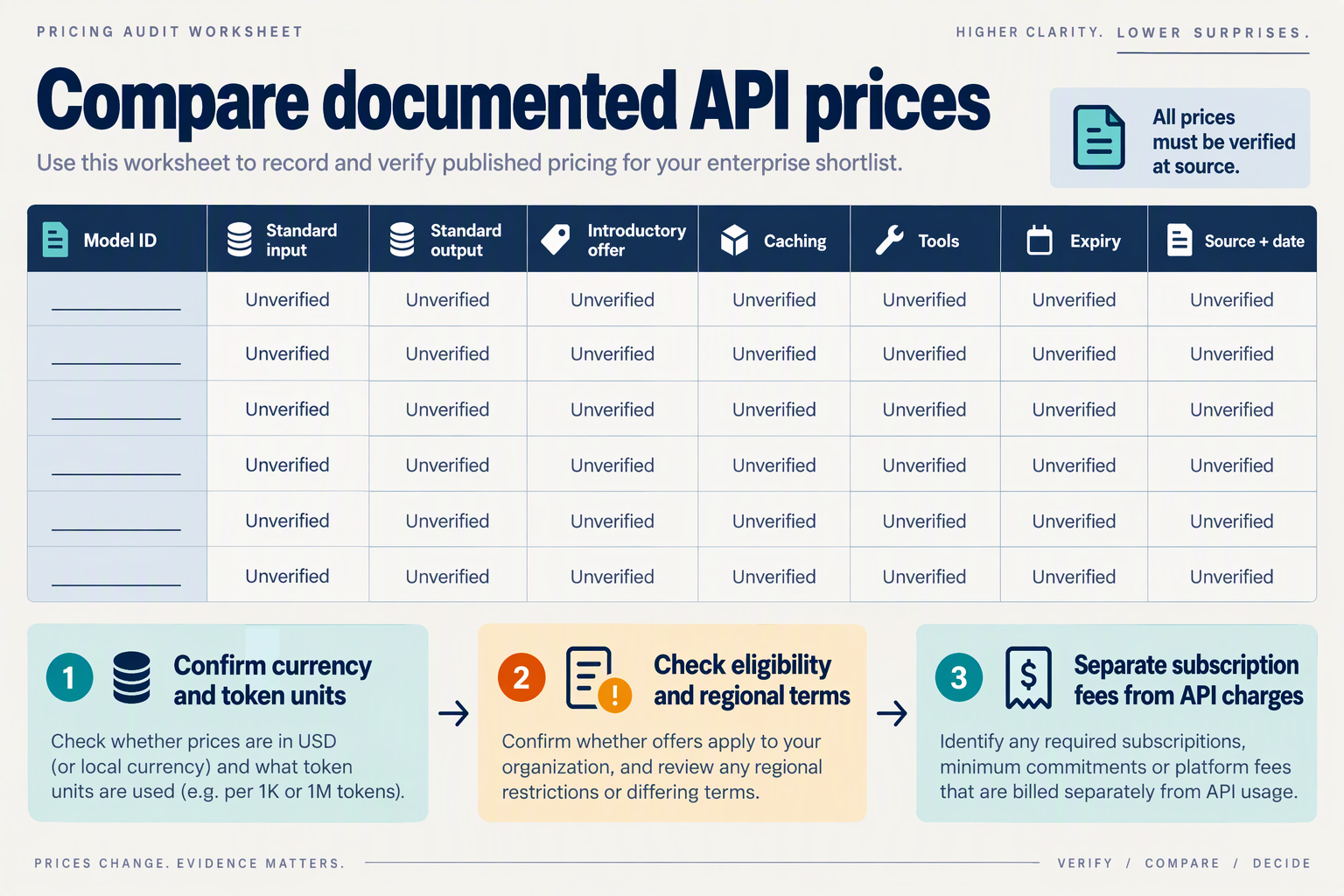
No verified standard or introductory API prices for these six requested models appear in the supplied research as of September 30, 2026. Procurement should treat every missing rate as unresolved—not free, zero-priced, or equivalent to an earlier model’s tariff.
The table below records what the evidence supports. Model names are the requested comparison labels; where no matching source exists, the table explicitly identifies that gap rather than substituting another product.
| Requested model | Standard API price | Introductory API price | Unresolved charges and terms | Evidence available as of Sept. 30, 2026 |
|---|---|---|---|---|
| Gemini 4 Argon | Not specified in supplied CNBC or VentureBeat coverage | Not specified in supplied CNBC or VentureBeat coverage | Input/output rates, caching, tools, access conditions, promotion duration | CNBC reports select-partner launch; VentureBeat describes Fairwind rollout, not a tariff |
| Claude Opus 5.5 | No matching pricing source supplied | No matching promotional source supplied | All billing dimensions and model identity | Supplied Anthropic announcement covers Opus 4.5, not Opus 5.5 |
| Claude Sonnet 5.5 | No matching pricing source supplied | No matching promotional source supplied | All billing dimensions and model identity | Supplied Anthropic announcement covers Sonnet 4.5, not Sonnet 5.5 |
| Claude Fable 5.1 | No matching pricing source supplied | No matching promotional source supplied | All billing dimensions and model identity | No supplied source establishes Fable 5.1; Anthropic’s supplied small-model announcement concerns Haiku 4.5 |
| GPT-6.1 Sol | No matching pricing source supplied | No matching promotional source supplied | All billing dimensions and model identity | No matching OpenAI announcement or rate card in supplied research |
| GPT-6 Astra | No matching pricing source supplied | No matching promotional source supplied | All billing dimensions and model identity | No matching OpenAI announcement or rate card in supplied research |
What evidence is needed before an API price becomes budgetable?
A budgetable price needs a model-specific rate card, billing unit, currency, and effective date. An introductory offer also needs eligibility rules, usage caps, an expiry date, and the rate that applies afterward.
According to VentureBeat’s September 30, 2026 coverage, Google says broader Gemini 4 Argon availability is planned “as soon as possible.” That statement establishes neither a commercial launch date nor an introductory discount. Likewise, Anthropic’s supplied Opus 4.5 announcement mentions “improved pricing,” but that wording cannot substantiate a price for Opus 5.5.
Before approving a pilot, request written confirmation of:
- Token charges: input, output, cached reads, cache writes, and whether reasoning tokens are separately identified or billed.
- Additional usage: search, tool execution, storage, media processing, and infrastructure costs, where applicable.
- Commercial adjustments: regional pricing, taxes, enterprise commitments, discounts, and gateway charges.
These are verification questions—not claims that every listed model levies each charge.
How should enterprises compare costs while prices remain unresolved?
Use a workload worksheet with blank price inputs rather than importing older-model rates. For a text-only estimate, calculate:
Estimated token cost = (input tokens ÷ 1,000,000 × input rate) + (output tokens ÷ 1,000,000 × output rate).
The denominator assumes rates quoted per million tokens; adjust it to the provider’s actual billing unit. Then:
- Add any verified caching, tool, infrastructure, and tax charges.
- Record retries and unsuccessful attempts.
- Divide total spend by successfully completed workflows.
As of September 2026, CallMissed’s verified developer API includes usage and request logs, which can support usage tracking during a pilot; that capability does not verify access to these six models or their prices.
Review gate: keep this pricing comparison on hold until each shortlisted model has a matching official identifier and dated commercial terms.
How should enterprises compare reasoning controls, usable context and tool API compatibility?
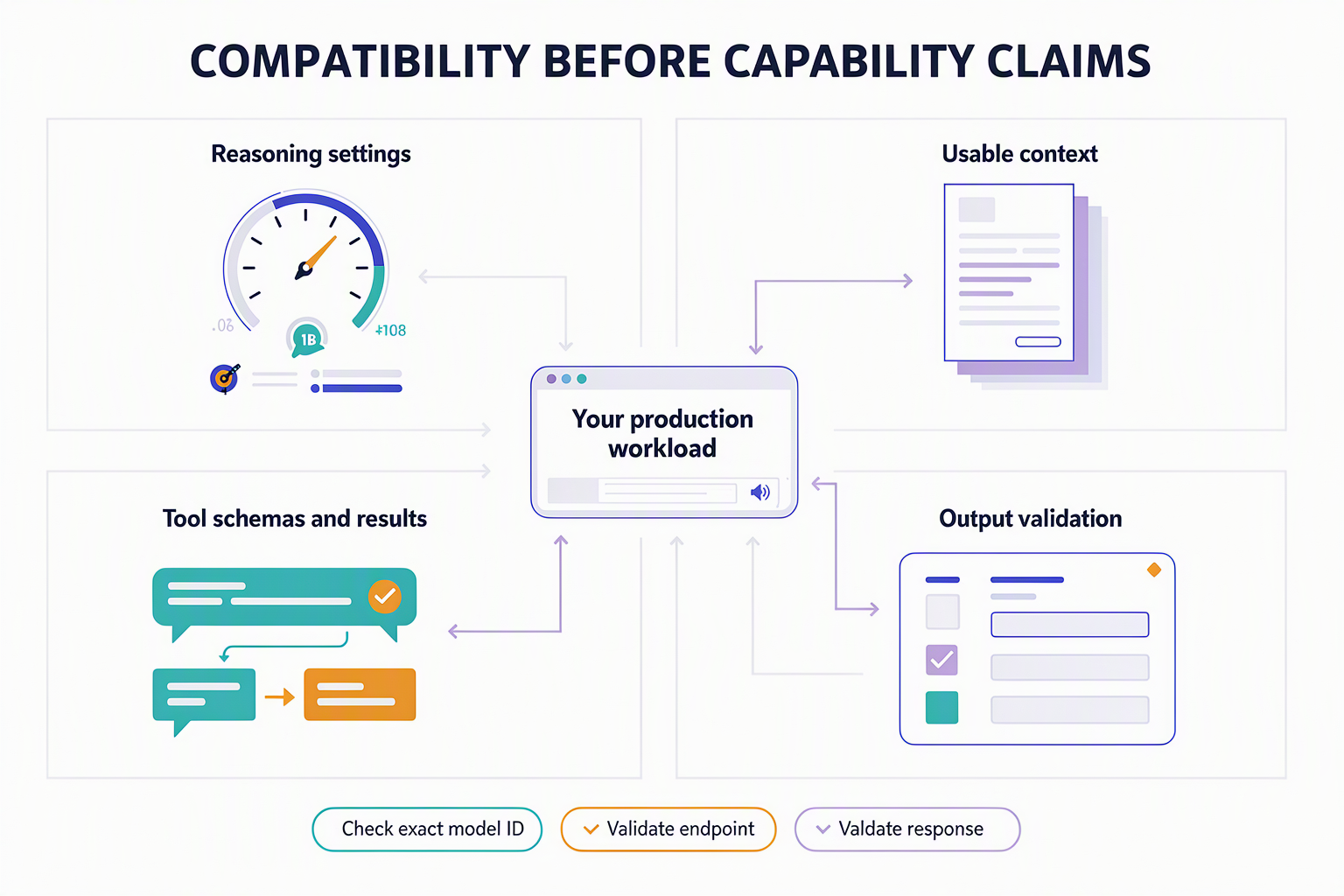
Compare reasoning controls, usable context, and tool API compatibility through end-to-end workflow tests, not feature labels alone. As of September 30, 2026, the supplied sources do not establish comparable technical specifications for all six named candidates, so this draft should leave unsupported capabilities marked “not verified.”
How should enterprises test reasoning controls?
Reasoning controls matter when they improve task outcomes enough to justify additional latency and cost. Compare each accessible model’s documented settings—not assumed equivalents across Google Gemini, Anthropic Claude, and OpenAI GPT.
For each candidate, run the same workload under three proposed test configurations:
- Default configuration: Establish quality, response time, and consumption without tuning.
- Lower-effort configuration: Where supported, test whether routine tasks remain accurate with less computation.
- Higher-effort configuration: Where supported, measure whether difficult tasks improve sufficiently to justify the overhead.
Record completed-task accuracy, elapsed time, token consumption, and human corrections. A contract-analysis test, for example, should distinguish a correctly identified renewal deadline from a plausible but unsupported answer.
Do not require a model to expose private chain-of-thought. Request a concise decision explanation, supporting document references, and explicit uncertainty instead. A convincing explanation is useful for review, but it is not proof that the underlying answer is correct.
What is the difference between advertised and usable context?
Advertised context describes an input/output capacity limit; usable context is how much material your workflow can include while retaining dependable results within operational constraints.
The Next Web’s September 30, 2026 coverage describes Gemini 4 Argon as built for “long, complex workflows,” but the supplied excerpt provides no numerical context-window specification or retrieval-accuracy measurement. That description therefore supports a testing hypothesis, not a context-capacity ranking.
Build a progressively larger document test using your own contracts, policies, or code repositories:
- Vary evidence position: Place decisive information near the beginning, middle, and end.
- Introduce conflicting versions: Check whether the model identifies the applicable policy rather than blending incompatible documents.
- Reserve output capacity: Include room for answers, citations, and intermediate tool results.
- Measure grounded accuracy: Score correct evidence use, missed exceptions, and unsupported conclusions.
For example, add an obsolete refund policy alongside its replacement. The winning outcome is correct version selection—not merely recalling both documents. Compare full-context loading with retrieval-based workflows before paying to resend every document.
Does API compatibility guarantee tool compatibility?
No. API compatibility can simplify integration without guaranteeing identical tool behavior. Test request formats, response events, and failure recovery separately from model intelligence.
As of September 2026, CallMissed’s developer AI API provides OpenAI-compatible and Anthropic-compatible endpoints, alongside function calling, structured outputs, reasoning-effort control, and caller-chosen fallback models. These gateway capabilities can support a shared evaluation harness; they do not establish that every catalog model supports every feature or that the six requested candidates are available.
Before approving an integration, verify:
- Tool schemas: Required fields, nested arguments, and invalid-input handling.
- Streaming behavior: Partial tool arguments, completion events, and interrupted connections.
- Structured outputs: Schema adherence and explicit handling of missing information.
- Action safety: Authorization checks, duplicate-action prevention, and human approval for consequential changes.
- Fallback behavior: Whether a replacement model preserves the required workflow semantics.
Keep separate scores for model task quality and integration reliability. An excellent answer cannot compensate for a malformed payment instruction or a duplicated CRM update.
What do vendor claims, independent benchmarks and expert opinions actually establish?
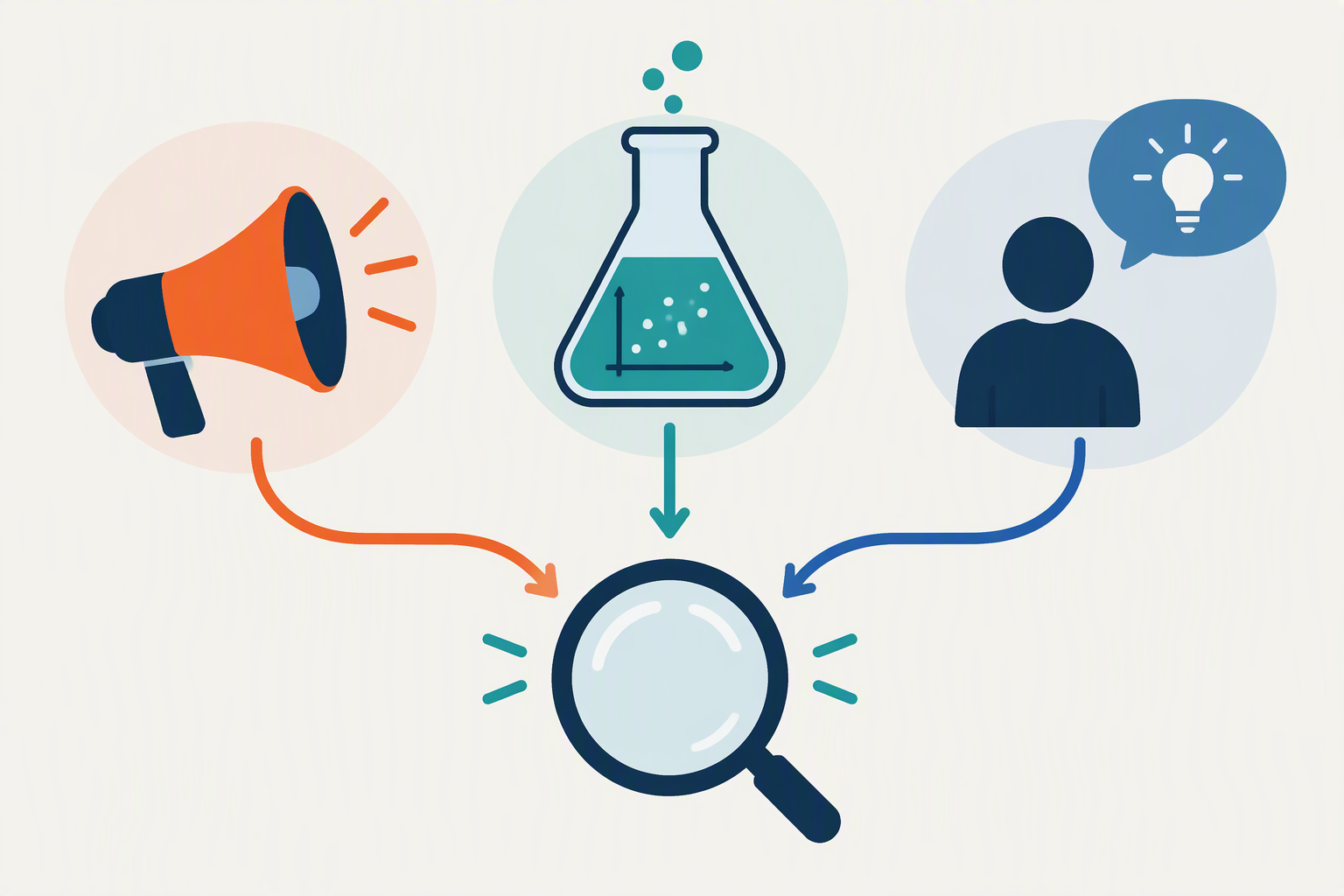
Vendor claims establish what a supplier says; independent benchmarks establish performance under particular test conditions; expert opinions provide context, not proof of enterprise suitability. As of September 30, 2026, the supplied evidence supports investigating Gemini 4 Argon, but it does not support a defensible ranking across all six requested model names.
What do Google and Anthropic’s announcements actually prove?
According to CNBC’s September 30, 2026 reporting, Google announced Gemini 4 Argon with claimed improvements in coding, cybersecurity, and complex professional work. That establishes the announcement and its stated priorities—not the size of those improvements on your workloads.
The Next Web’s September 30, 2026 coverage quotes Google DeepMind’s Koray Kavukcuoglu describing Argon as the company’s “next era of frontier intelligence.” Treat that phrase as executive positioning, not a measurable performance finding.
The Anthropic materials require similar discipline. In the evidence available for this September 2026 review, Anthropic’s Claude Sonnet 4.5 announcement calls that model its “most aligned frontier model.” That is a vendor assessment tied to Sonnet 4.5; it neither establishes independent safety superiority nor verifies Claude Sonnet 5.5.
For procurement, separate three questions:
- Identity: Does an official source document the exact model and version?
- Capability: What improvement is claimed, and against which baseline?
- Applicability: Does the supporting evidence resemble your enterprise workflow?
Do the supplied independent benchmarks establish a winner?
No independently reproducible benchmark results are included in the supplied context. VentureBeat’s September 30, 2026 headline reports Gemini 4 Argon “retaking benchmark lead,” but the provided excerpt contains no scores, benchmark versions, evaluation settings, or independent replication.
That distinction matters: independent journalism is not necessarily independent testing. A publication can accurately report a vendor’s leaderboard claim without running the evaluation itself.
Before using any benchmark in a buying decision, request:
- Test identity: Dataset name, version, scoring method, and publication date.
- Run conditions: Reasoning budget, tool access, prompting, retries, and agent framework.
- Comparability: Whether competitors received equivalent resources and settings.
- Uncertainty: Sample size, repeated runs, and confidence intervals where available.
Without those details, a leaderboard can generate a testing hypothesis, but not justify a purchasing recommendation.
How much weight should enterprise buyers give expert endorsements?
Expert commentary is useful when it identifies specific strengths and limitations. It becomes weaker evidence when the speaker’s relationship to the vendor, evaluation method, or task coverage is unclear.
Anthropic’s Claude Opus 4.5 announcement, included in the September 2026 review materials, contains an endorsement describing “a notable improvement over the prior Claude models inside Cursor.” That observation is relevant to coding in Cursor, but the supplied excerpt does not identify the speaker or disclose a testing protocol. It should not be generalized to legal analysis, customer support, or the unverified Claude Opus 5.5.
What evidence should move a model onto the enterprise shortlist?
Require a documented chain from exact model identity → accessible endpoint → reproducible evaluation → business-relevant result. Keep missing evidence marked “not established,” rather than converting uncertainty into a low score.
As of September 2026, CallMissed’s developer AI API supports usage and request logs, which can help teams inspect pilot requests; those logs do not themselves establish model quality or independent benchmark validity.
The practical conclusion is narrow but actionable: use announcements to decide what to investigate, external evaluations to decide what to test, and your own controlled results to decide what to buy.
Which access and governance requirements should disqualify a model before procurement?

Disqualify a model from the procurement shortlist if production access, permitted use, data handling, or operational controls cannot meet your enterprise’s mandatory requirements. For this draft held for review as of September 30, 2026, missing evidence should mean “not approved pending verification”—not an assumption that a vendor lacks the capability.
What proof of model access should procurement require?
Require evidence for the exact model, endpoint, account, region, and intended workload. Access to a consumer chatbot or a related model does not establish that your enterprise can deploy the shortlisted version through an API.
According to CNBC’s September 30, 2026 report, Google initially released Gemini 4 Argon to select cybersecurity partners. VentureBeat’s September 30, 2026 coverage identifies Google’s Fairwind Program as the initial access route and quotes broader availability as planned “as soon as possible.” That wording is not a procurement-ready delivery date.
Use three access gates:
- Identity: Verify the official model identifier, documentation, and contracting entity.
- Eligibility: Confirm that your organization, geography, and use case qualify for access.
- Deployability: Obtain applicable quotas, support arrangements, lifecycle policies, and commercial terms.
Keep Claude Opus 5.5, Claude Sonnet 5.5, Claude Fable 5.1, GPT-6.1 Sol, and GPT-6 Astra outside the approved shortlist until their identities and availability are verified. As of September 30, 2026, the supplied Anthropic materials document the 4.5 family, not those requested Claude versions.
Which data-governance gaps should block approval?
Block deployment when the documented data path conflicts with your obligations. Data residency, retention, training use, and deletion are separate questions; an acceptable answer to one does not settle the others.
Ask for written evidence covering:
- Processing locations: Where prompts, files, outputs, logs, and backups travel or remain.
- Training and retention: Whether submitted data can improve models, how long it persists, and what deletion covers.
- Contractual protection: Applicable data-processing terms, subprocessors, confidentiality provisions, and incident notification.
- Access controls: Authentication, administrative permissions, credential management, and auditable access.
- Sensitive workloads: Whether your intended health, financial, legal, or employee-data use is permitted under applicable terms and requirements.
For example, a contract-review pilot containing confidential acquisition documents should not proceed merely because a vendor promises good reasoning. If legal requires a specified processing location and documented deletion procedures, unresolved answers should block that data from the pilot.
As of September 2026, CallMissed’s developer AI API supports OpenAI-compatible and Anthropic-compatible endpoints, and the CallMissed platform is hosted in India, according to its verified fact sheet. Those capabilities can simplify integration, but platform hosting does not, by itself, establish where every downstream model processes data.
Which operational controls are non-negotiable?
Require controls proportional to the workflow’s consequences. A drafting assistant and an agent authorized to modify customer records should not face identical approval criteria.
Before procurement approval, document:
- Failure handling: What happens during access loss, quota exhaustion, or provider outages.
- Change management: How model updates trigger regression testing and reapproval.
- Tool permissions: Which actions require human authorization and how credentials are scoped.
- Traceability: Whether requests, tool actions, and review decisions can be reconstructed without retaining unnecessary sensitive data.
Record each gate as pass, blocked, or pending evidence, with an owner and review deadline. Benchmark performance cannot compensate for a failed mandatory governance requirement; it only differentiates models that have already cleared those gates.
Which models belong on coding, research and text-based customer-operations test shortlists? Use conditional routing, not a universal winner
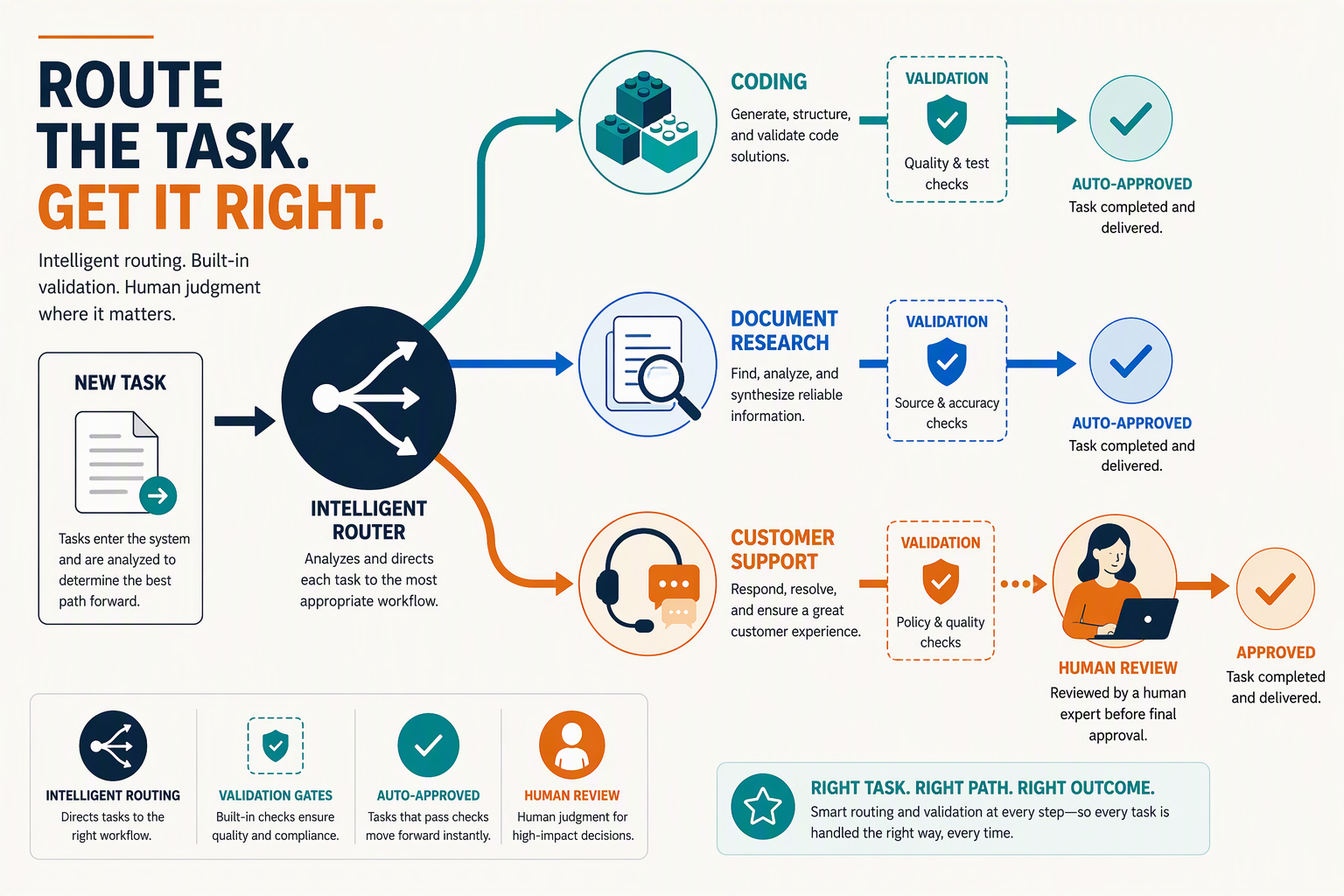
Shortlist models by workflow and verified access, then route tasks according to measured quality, risk, and cost—not a universal winner. As of September 30, 2026, Gemini 4 Argon is a conditional coding candidate for authorized testers; the documented Claude 4.5 models are candidates to validate, while the unverified Claude 5.x and GPT-6 names remain outside scored comparisons.
Which models should enter each enterprise workload test?
The table below defines test hypotheses, not performance rankings. Anthropic’s supplied announcements document Claude Opus 4.5, Claude Sonnet 4.5, and Claude Haiku 4.5; procurement teams should reconfirm endpoint access and commercial terms before testing in September 2026.
| Workload | Conditional shortlist | Routing condition | Evidence required |
|---|---|---|---|
| Difficult coding and debugging | Claude Opus 4.5; Gemini 4 Argon if authorized | Escalate complex failures from the baseline | Passing tests, secure changes, reviewer effort |
| Routine coding changes | Claude Sonnet 4.5; Claude Haiku 4.5 | Keep simpler edits on the lower-cost successful route | Regression rate, accepted patches, total cost |
| Document-based research | Accessible, verified candidates, including Claude Opus 4.5 and Sonnet 4.5 | Escalate conflicting evidence or multi-document synthesis | Citation accuracy, coverage, unsupported claims |
| Support classification and extraction | Claude Haiku 4.5 as a baseline candidate | Use only after validating schemas and category accuracy | Field accuracy, routing errors, retry cost |
| Policy-grounded customer replies | Claude Sonnet 4.5 as a baseline; stronger model or human fallback | Escalate ambiguity, exceptions, or missing evidence | Grounded answers, correct escalation, policy compliance |
| Requested but unverified models | Claude Opus 5.5, Sonnet 5.5, Fable 5.1; GPT-6.1 Sol, GPT-6 Astra | Verification queue only | Official identity, access, pricing, documentation |
CNBC reported on September 30, 2026, that Gemini 4 Argon offered improvements in coding, cybersecurity, and complex professional work, with an initial release to select cybersecurity partners. That makes coding evaluation relevant for authorized organizations, but does not establish routine enterprise availability.
VentureBeat’s September 30, 2026 coverage quoted broader Gemini 4 Argon availability as planned “as soon as possible.” Treat that statement as a rollout intention, not a procurement deadline.
How should conditional model routing work?
Start with a baseline model that meets the workflow’s acceptance criteria. Escalate because of observable task conditions, not simply because a request is long or the model expresses uncertainty.
- Define the route: Separate routine requests from ambiguous, consequential, or technically complex work.
- Test the trigger: Check whether escalation actually improves outcomes on representative cases.
- Price the entire path: Include initial calls, retries, fallback calls, and human review.
For example, an order-status question with a matching policy passage can remain on the validated support route. A refund exception involving contradictory account records should move to a reviewer—not automatically to a more expensive model.
As of September 2026, CallMissed’s developer AI API supports caller-chosen fallback models, structured outputs, and usage and request logs. These capabilities can support routing experiments, but do not establish catalogue access to the unverified models named above.
What determines whether a model stays shortlisted?
Use workload-specific acceptance gates:
- Coding: Reject changes that fail regression tests or introduce security problems.
- Research: Require citations that actually support the conclusions.
- Customer operations: Measure correct resolutions and escalations, not fluent replies alone.
A model earns its route by passing those gates at an acceptable end-to-end cost. Keep this draft held for review until model identities, access conditions, and pilot results support the final recommendations.
How do you run a reproducible pilot and calculate cost per successful task?
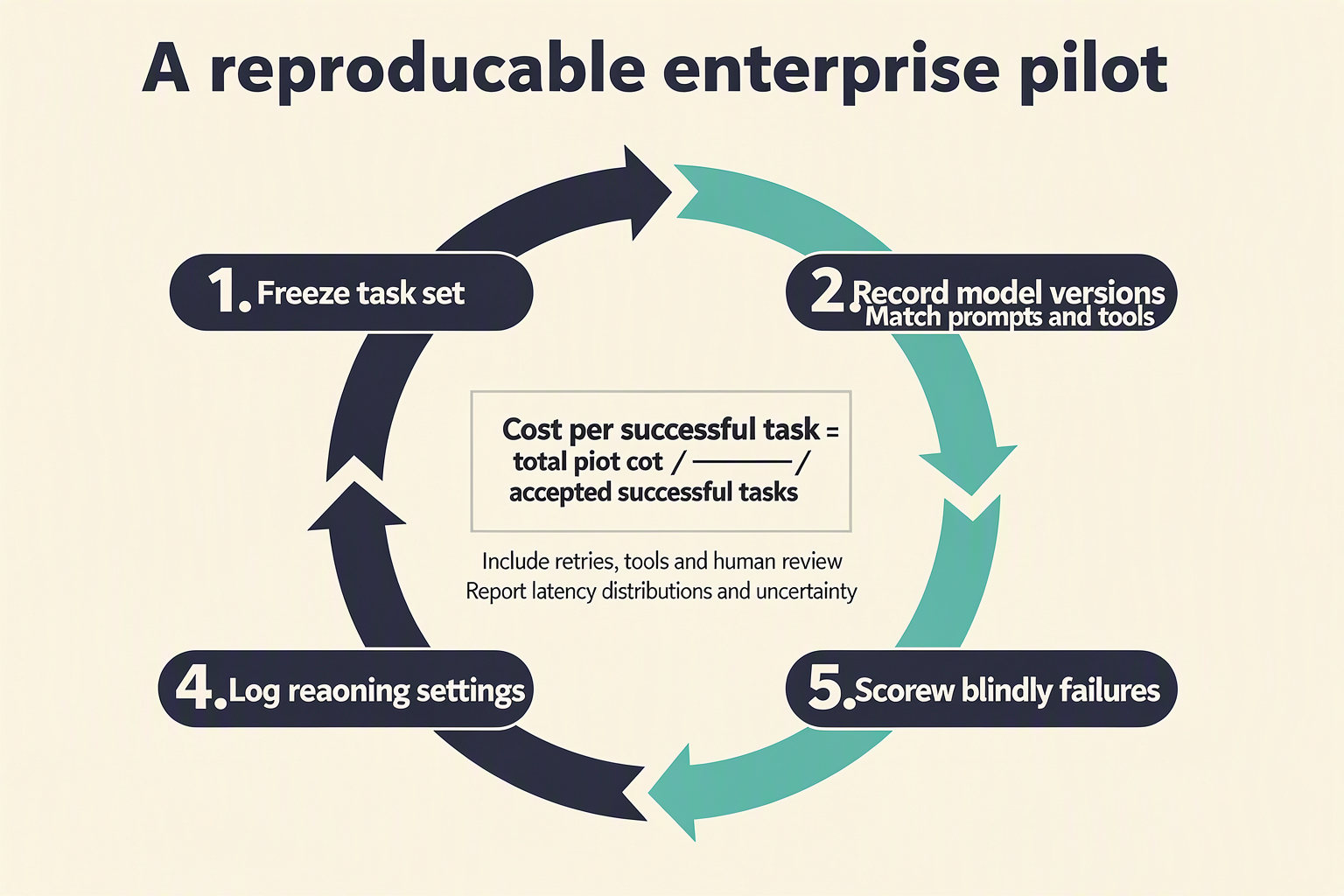
Run a reproducible enterprise AI pilot by freezing the task set, scoring rules, model configurations, and tool environment before testing. Calculate cost per successful task by dividing all workflow costs—including failed attempts, retries, and human intervention—by the number of tasks meeting your predefined acceptance criteria.
What should you freeze before comparing Gemini, Claude, and GPT?
Create a versioned pilot manifest so another engineer can reproduce the experiment. For this September 2026 buyer-guide draft, admit only candidates with verified endpoint access; keep inaccessible or unverified models outside the scored comparison.
According to VentureBeat’s September 30, 2026 coverage, Gemini 4 Argon’s wider availability is planned “as soon as possible.” That statement is not a reproducible API-access commitment.
Record the following for every tested candidate:
- Model identity: Provider, exact model identifier, version where available, endpoint, and execution date.
- Generation settings: System prompt, temperature where supported, output limits, reasoning settings, and timeout.
- Workflow environment: Retrieval corpus snapshot, tool definitions, permissions, and sandbox state.
- Execution policy: Retry limits, fallback rules, caching behavior, and concurrency.
- Acceptance rubric: Required outputs, prohibited errors, and rules for human-assisted completion.
Keep the business objective identical, but distinguish a common-configuration comparison from a separately reported, model-optimized comparison. Otherwise, differences in prompt tuning can masquerade as differences in model capability.
How do you make pilot results reproducible?
Use a held-out task set that reflects production difficulty—not only clean demonstrations.
- Separate development from evaluation. Tune prompts on development examples, then lock them before running the scored set.
- Stratify the workload. Include routine cases, ambiguous requests, long documents, tool failures, and appropriate refusals.
- Repeat executions. Run multiple trials per task and reset mutable tool state between trials. Record variability rather than selecting the best response.
- Blind the reviewers. Hide model names where practical and use the same rubric across candidates.
- Retain an audit trail. Store outputs, tool calls, latency, billed usage, retry reasons, and reviewer decisions, with sensitive data appropriately protected.
Report success rates by workload category, alongside sample counts and uncertainty intervals where appropriate. A pooled average can conceal a model that performs well on routine extraction but fails on high-risk exceptions.
How do you calculate cost per successful task?
Use this workflow-level formula:
Cost per successful task = (model charges + tool charges + retrieval/infrastructure costs + human review and remediation costs) ÷ accepted completions.
The numerator must include expenditure on unsuccessful tasks. Report autonomous success separately from human-assisted success so reviewer effort does not silently inflate model quality.
Illustrative September 2026 pilot—not a vendor benchmark: Suppose 200 tasks generate ₹1,800 in model charges, ₹600 in tool and infrastructure costs, and ₹3,600 in review and remediation costs. If 150 tasks satisfy the acceptance rubric, the success rate is 75%, and cost per successful task is ₹6,000 ÷ 150 = ₹40.
That differs materially from model spend alone: ₹1,800 ÷ 200 is ₹9 per attempted task, but does not measure completed business value.
What should the final pilot scorecard show?
Compare accepted-task cost, autonomous success rate, human-assisted success rate, and p95 completion time together. Add hard gates for prohibited disclosures, unauthorized tool actions, and other unacceptable failures.
As of September 2026, CallMissed’s developer AI API supports usage and request logs, response caching, and caller-chosen fallback models. Those capabilities can support instrumentation, but pilots should explicitly record caching and fallback use: both change cost and attribution, and neither replaces an independent acceptance rubric.
How should fallback architecture work, and where can CallMissed fit after catalogue verification?
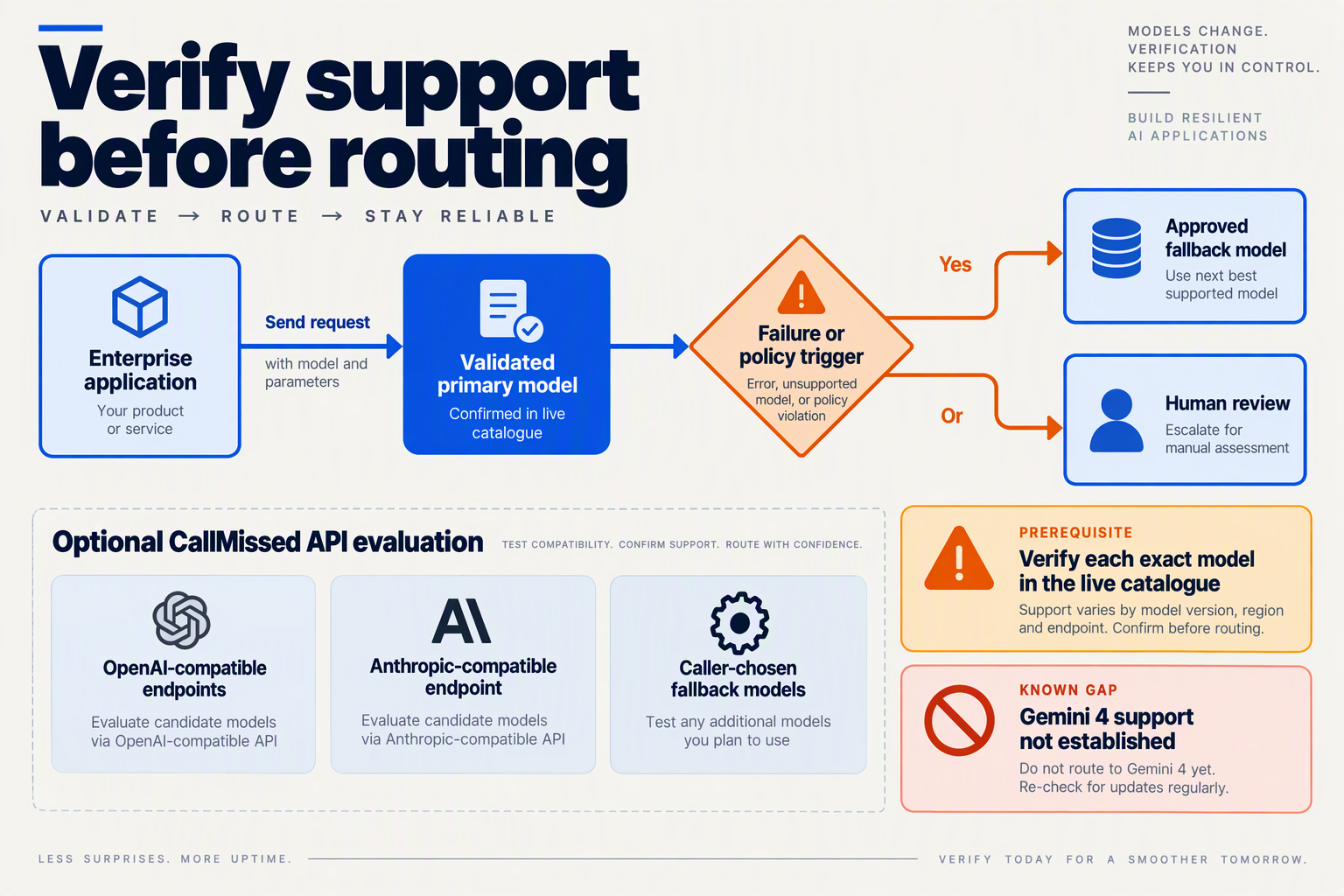
Fallback architecture should route requests only to verified, approved models, with explicit rules for retries, data handling, and workflow safety. CallMissed can fit as an integration layer after teams confirm the exact catalogue entries, endpoint capabilities, and account access required for their pilot.
For this Gemini vs Claude vs GPT buyer-guide draft, keep announced or unverified candidates outside the production routing chain. According to VentureBeat’s September 30, 2026 coverage, Gemini 4 Argon begins rollout through Google’s Fairwind Program, with broad availability planned “as soon as possible.” That statement is not sufficient evidence that an enterprise can configure Argon as a working fallback today.
How should enterprises design a safe model fallback chain?
Use a task-specific routing policy, not a universal list ordered by perceived model intelligence. A fallback for document extraction must preserve schema accuracy; a fallback for an agent executing business actions must preserve tool permissions and transaction safety.
A practical implementation sequence is:
- Approve the primary model. Record its exact model identifier, supported endpoint, access conditions, context limits, and permitted data categories.
- Qualify a secondary model. Test the same prompts, schemas, and tools against a representative evaluation set before enabling automatic switching.
- Define eligible failures. Consider bounded retries or fallback for timeouts, rate limits, and transient service errors. Treat authentication failures as configuration problems, not reasons to retry indefinitely.
- Set a total execution budget. Limit attempts, elapsed time, and spending across the entire chain—not separately for each model.
- Choose a safe terminal state. Return a clear failure, queue the task, or request human review when no approved route succeeds.
A safety refusal should not trigger automatic switching to obtain the refused answer. Likewise, malformed output should pass through a validator before any downstream system acts on it.
What can go wrong when an agent switches models?
The largest risk is often duplicating an action, rather than producing a weaker answer. If a support agent creates a ticket and then times out, replaying the entire conversation through another model could create a second ticket.
Protect action-taking workflows with:
- Idempotency keys and a persistent record of completed tool calls.
- Checkpointed state, rather than blindly replaying every prior instruction.
- Schema validation before accepting structured responses.
- Human approval for consequential actions where uncertainty remains.
Streaming needs a separate rule: once users have seen partial output, silently replacing the answer can create contradictions. Decide whether to stop with an explanation, restart visibly, or continue only from validated state.
Where can CallMissed fit after catalogue verification?
According to the CallMissed fact sheet, as of September 2026, CallMissed’s developer AI API provides 139 models through one API key and one balance, with OpenAI-compatible and Anthropic-compatible endpoints. The same verified sheet lists caller-chosen fallback models, structured outputs, function calling, and usage and request logs—relevant building blocks for implementing and investigating routing decisions.
Those capabilities do not establish availability of Gemini 4 Argon, Claude Opus 5.5, Claude Sonnet 5.5, Claude Fable 5.1, GPT-6.1 Sol, or GPT-6 Astra. Verify each requested identifier and test its behavior before configuring it.
For procurement, make approval conditional on a demonstrated failure drill: interrupt the primary route, confirm the approved fallback completes the task, inspect the logs, and verify that no sensitive data crosses an unauthorized boundary. Endpoint compatibility simplifies integration; it does not replace model qualification or governance.
Frequently Asked Questions
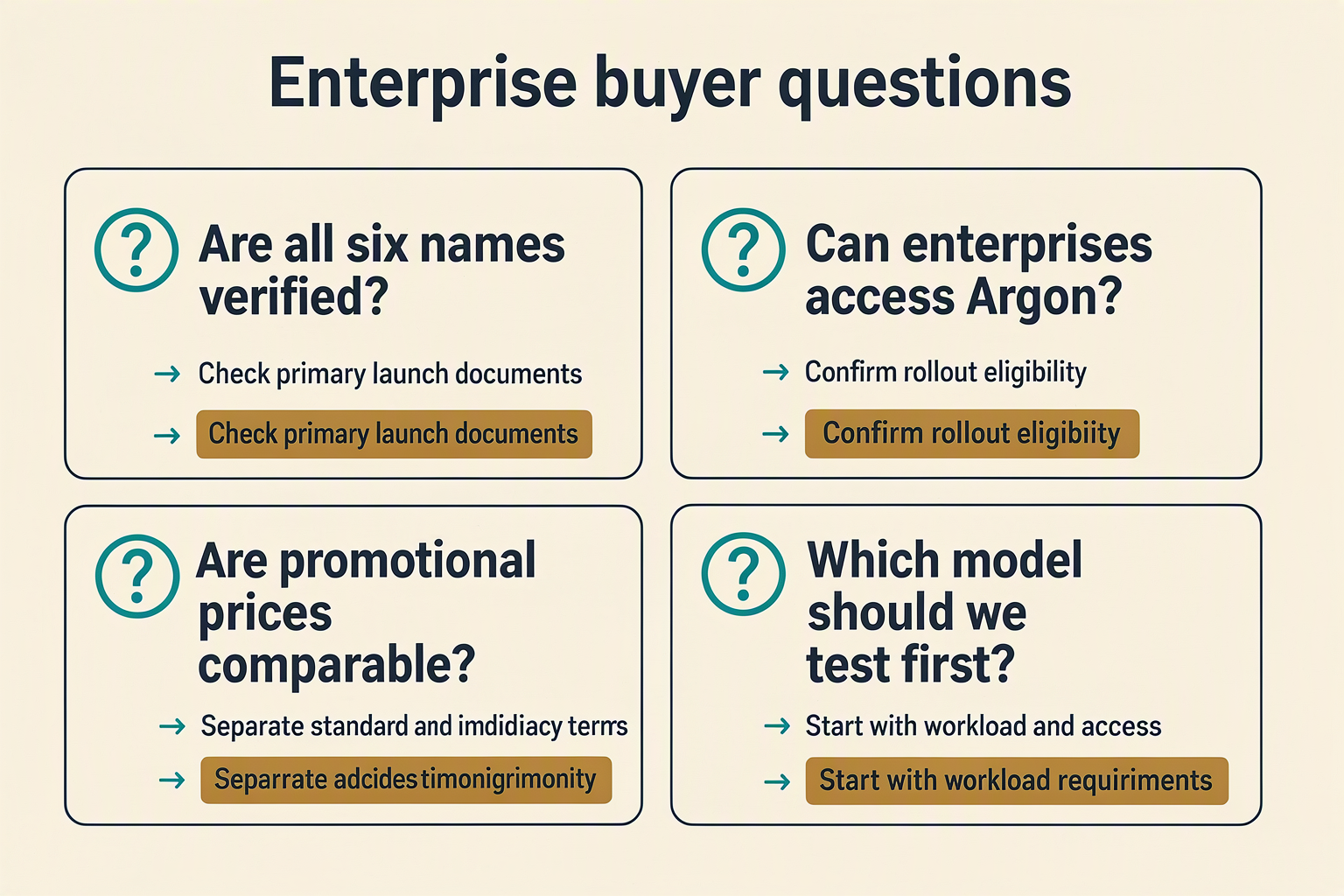
Are all six models in this Gemini vs Claude vs GPT comparison verified?
Can enterprises access Google Gemini 4 Argon in September 2026?
Are promotional prices comparable across Gemini vs Claude vs GPT?
Which model should enterprises test first in a Gemini vs Claude vs GPT evaluation?
Do Gemini 4 Argon benchmark headlines establish an enterprise winner?
Can an AI gateway provide access to all six models automatically?
Conclusion
The practical conclusion of Gemini vs Claude vs GPT in September 2026 is to prioritize verifiable access and workload performance—not headline leadership. This buyer-guide draft remains held for review as of September 30, 2026, because several requested model names still lack supporting evidence in the supplied research.
Four takeaways should guide your enterprise shortlist:
- Separate announcements from usable access. CNBC reported on September 30, 2026, that Google Gemini 4 Argon initially launched to select cybersecurity partners. VentureBeat’s September 30, 2026 coverage describes the Fairwind Program rollout and quotes broader availability as planned “as soon as possible.” Neither report establishes that your enterprise can begin a production pilot immediately.
- Verify model identities before comparing them. As reviewed on September 30, 2026, the supplied Anthropic announcements document Claude Opus 4.5, Claude Sonnet 4.5, and Claude Haiku 4.5—not Claude Opus 5.5, Claude Sonnet 5.5, or Claude Fable 5.1. The supplied research also does not verify GPT-6.1 Sol or GPT-6 Astra. Keep those requested names in a verification queue rather than assigning unsupported prices, capabilities, or rankings.
- Test outcomes that matter to your business. Run representative tasks across accessible candidates using the same evaluation criteria. For contract review, measure missed obligations and unsupported conclusions; for coding, assess passing tests and reviewer corrections; for support, examine grounded answers and appropriate escalation. Fluent output alone is not sufficient evidence of enterprise readiness.
- Evaluate the complete workflow, not just the model response. Compare task quality alongside tool use, structured responses, integration requirements, and commercial and data-handling terms. Calculate cost per successfully completed workflow, including retries, human review, and failures. A defensible shortlist makes these trade-offs explicit instead of treating a single leaderboard position as a procurement decision.
What should enterprise buyers watch next?
Watch for confirmed broader access to Gemini 4 Argon, authoritative documentation for the unverified Claude and GPT names, and evidence that newly accessible candidates improve your own pilot results. An announcement should trigger a verification check; an accessible release should trigger testing—not an automatic commitment.
The forward-looking opportunity is to keep evaluations repeatable as availability changes. Preserve your representative tasks and acceptance criteria so that each newly verified candidate faces the same standard, rather than restarting the buying process around every launch.
For teams exploring that approach, CallMissed’s developer AI API offers OpenAI-compatible and Anthropic-compatible endpoints as of September 2026, helping simplify existing SDK connections. Readers can explore CallMissed as part of their integration planning, while separately verifying access to each desired model.
Before approving your shortlist, ask: which accessible model completes our real workflows reliably, at an acceptable total cost, under terms we can defend?
Related Reading
- Gemini vs Claude vs GPT (2026): Six-Model Buyer Guide
- Gemini 4 vs Claude Fable 5.1: Argon Buyer Guide (2026)
- GPT-6 Sol vs Claude Opus 5.5: 2026 Enterprise Guide
Sources
Discussion
Related Posts


Ready to automate customer conversations?
Launch AI voice agents and WhatsApp bots with CallMissed — one API, 22+ Indian languages.