
Claude Opus 5.5 vs GLM 5.3: 2026 Developer Guide


Compare verified availability, costs, context, coding, agents, multilingual support, privacy and deployment before choosing a 2026 model.
Claude Opus 5.5 vs GLM 5.3: 2026 Developer Guide
What if the most important finding in a Claude Opus 5.5 vs GLM 5.3 comparison is that the exact models cannot yet be verified from the supplied first-party evidence? As of September 2026, Anthropic’s published material in this research set confirms Claude Opus 5, not Claude Opus 5.5, while no first-party Zhipu source supplied here confirms GLM 5.3’s specifications, price, or release status.
That uncertainty is not a footnote; it is the first decision criterion for teams choosing a reasoning model to edit repositories, call APIs, browse, operate terminals, and complete long-running agentic tasks. A model name circulating in search results is not enough to establish production availability, stable pricing, context limits, data handling, or service-level terms.
What is actually verified?
There is still a meaningful baseline. Anthropic says Claude Opus 5 is its strongest tested Opus model on a trading benchmark and reaches that result with “roughly a seventh of the reasoning tokens,” according to Anthropic’s Opus 5 announcement reviewed in September 2026. Anthropic also reported that Claude Opus 4.7 improved 14% over Opus 4.6 on complex multi-step workflows while producing one-third as many tool errors, showing why version changes can materially affect agent reliability.
Those figures do not automatically transfer to Opus 5.5, and they reveal nothing about GLM 5.3. This guide therefore separates confirmed facts, vendor claims, and missing data instead of filling specification gaps with assumptions.
What will developers be able to compare?
- Availability and economics: verified API access, token pricing, rate limits, and whether a model can be deployed directly, through a cloud marketplace, or through an aggregation layer.
- Capability and control: context windows, coding quality, tool calling, multilingual performance, reasoning controls, privacy terms, observability, and ecosystem maturity.
- Testing discipline: a reproducible evaluation design using identical prompts, repositories, tools, budgets, retry policies, and success criteria for both models.
For infrastructure context, CallMissed, an AI developer API hosted in India, offers an Anthropic-compatible /v1/messages endpoint and lists Zhipu among its model makers; as of September 2026, its catalogue spans 136 models under one API key and balance. That kind of gateway can simplify controlled side-by-side tests, but it does not substitute for confirming the exact model identifier and provider terms.
By the end, you will have a defensible framework for deciding whether either candidate is production-ready—and a checklist for pausing procurement when availability, pricing, context, privacy, or benchmark evidence remains unpublished or independently unverified by either vendor.
Which model should developers choose? Neither until Opus 5.5 and GLM 5.3 are officially verified
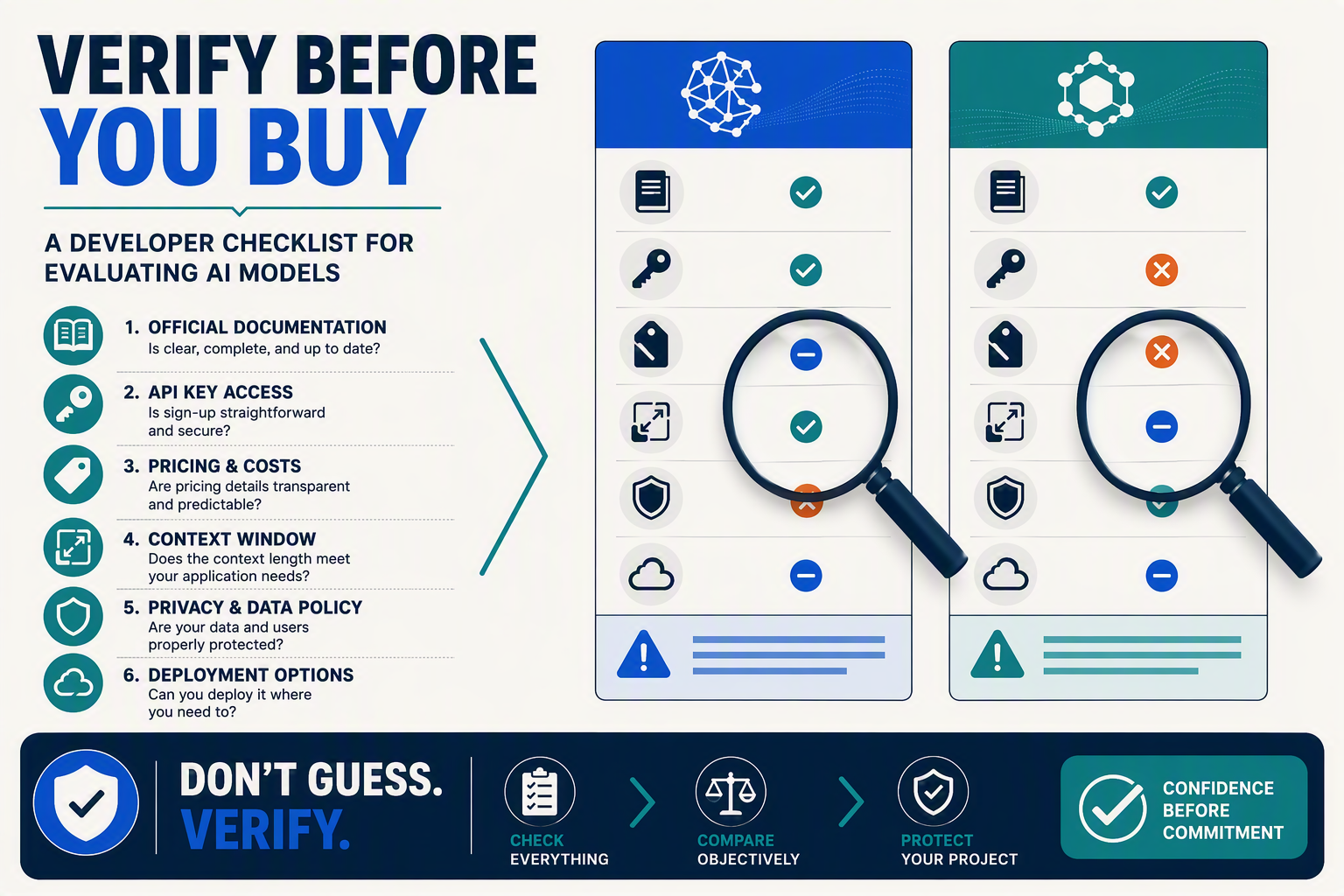
Developers should choose neither Claude Opus 5.5 nor GLM 5.3 for production procurement until the exact model identifiers, API availability, pricing, limits, and provider terms are officially verified. As of September 2026, the supplied first-party evidence confirms Anthropic’s Claude Opus 5 but not Opus 5.5, while it provides no first-party Zhipu documentation establishing GLM 5.3’s release status or specifications.
Why is an unverified model name a deployment risk?
A model name is not a deployable product specification. Search snippets, third-party leaderboards, and references to variants such as GLM-5.3-Flash cannot confirm that a provider offers the exact model through a stable production API.
Before approving either candidate, developers need first-party documentation covering:
- Canonical model ID: the exact string accepted by the API, including dated or versioned aliases.
- Availability: public API, restricted preview, cloud marketplace, self-hosted weights, or regional access.
- Economics: input, output, cached-token, reasoning-token, and tool-related charges.
- Technical limits: context window, maximum output, supported modalities, rate limits, and concurrency.
- Operational terms: data retention, training policies, regional processing, service-level commitments, and deprecation notice.
- Agent controls: structured outputs, tool schemas, parallel calls, retry behavior, reasoning budgets, and prompt caching.
Missing information in any of these categories can invalidate a cost model or architecture—even when benchmark results appear attractive.
Can Claude Opus 5 evidence be applied to Opus 5.5?
No. Claude Opus 5 results should be treated as evidence about Opus 5, not an undocumented Opus 5.5 release. Anthropic said in its Claude Opus 5 announcement reviewed in September 2026 that Opus 5 was its strongest tested Opus model on the company’s trading benchmark and used “roughly a seventh of the reasoning tokens.”
Anthropic’s version history also illustrates why developers should not extrapolate between releases:
- Anthropic reported in 2026 that Claude Opus 4.7 improved complex multi-step workflow performance by 14% over Opus 4.6 while producing one-third as many tool errors.
- Anthropic said Claude Opus 4.8 was the only model to complete every case end-to-end in the evaluation described in its announcement, outperforming earlier Opus models and GPT-5.5 at cost parity.
- Anthropic describes Claude Sonnet 5 as capable of planning, browser use, terminal operation, and extended agentic work, but those Sonnet 5 claims do not establish Opus 5.5 capabilities.
Version-specific changes can affect tool reliability, token consumption, safety behavior, latency, and total cost. A nearby model is therefore a useful test baseline, not a factual substitute.
What should developers do while verification is pending?
Use a gated evaluation process:
- Request first-party model cards, API documentation, pricing pages, and privacy terms for both exact versions.
- Reject aliases that silently route to another model unless the provider documents routing and version pinning.
- Prototype with verified models such as Claude Opus 5, clearly labeling results as provisional rather than “Opus 5.5” benchmarks.
- Freeze the evaluation harness—prompts, repositories, tools, token budgets, retries, timeouts, and scoring rules—before testing GLM 5.3.
- Delay production selection until both candidates can be tested under equivalent, documented conditions.
For this LLM comparison in 2026, “not yet verifiable” is a valid engineering conclusion. It prevents speculative specifications from becoming production dependencies.
What is actually verified about Claude Opus 5.5, Claude Opus 5, GLM 5.3 and GLM-5.3-Flash?
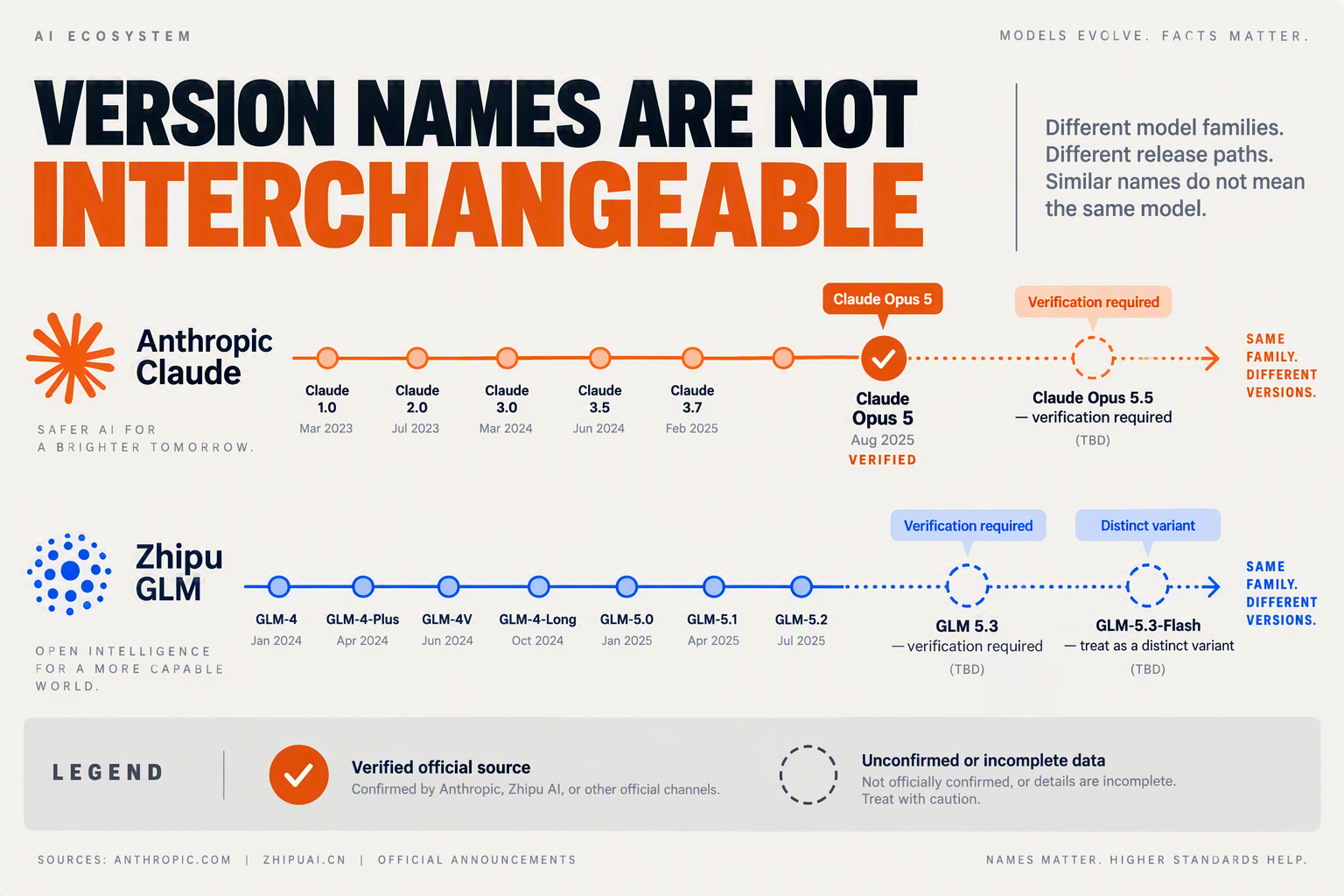
As of September 2026, the supplied first-party evidence verifies Claude Opus 5, but it does not verify a model called Claude Opus 5.5. The supplied research also contains no first-party Zhipu AI documentation establishing the specifications, release status or pricing of GLM 5.3 or GLM-5.3-Flash.
Is Claude Opus 5.5 officially verified?
No—not from the evidence available for this comparison. None of the supplied Anthropic sources announces Claude Opus 5.5, identifies an Opus 5.5 model ID or documents its API availability.
Developers should therefore treat “Claude Opus 5.5” as unverified, rather than assuming it is a newer or renamed version of Claude Opus 5. The evidence does not support claims about its:
- Release date or regional availability
- Input or output pricing
- Context window
- Coding and agentic benchmarks
- Tool-use features
- Deployment options or privacy controls
A search-result title or third-party comparison is not sufficient to establish that a model is generally available. Production decisions should require an official announcement, current API documentation and a dated pricing page.
What does Anthropic verify about Claude Opus 5?
Anthropic’s first-party announcement verifies Claude Opus 5 as a named model. Anthropic describes Claude Opus 5 as “the strongest Opus model we’ve tested on our trading benchmark” and says it reaches that result “using roughly a seventh of the reasoning”; however, the supplied excerpt does not identify the comparison baseline, so that efficiency statement should not be generalized to other workloads.
The supplied evidence does not provide enough information to state Claude Opus 5’s model ID, token prices, context limit or exact API availability. Those fields must remain not established here, even though the model itself is verified.
Which earlier Claude claims provide useful context?
The supplied Anthropic research supports several model-specific claims, but they must not be attributed to Opus 5 or a hypothetical Opus 5.5:
- Claude Opus 4.7: Anthropic reports a 14% improvement over Opus 4.6 on its cited complex, multi-step workflow evaluation, with fewer tokens and approximately one-third as many tool errors.
- Claude Opus 4.8: Anthropic says Opus 4.8 was the only model to complete every case end-to-end in the evaluation discussed in its announcement and that it exceeded prior Opus models and GPT-5.5 at cost parity. This is an evaluation-specific claim, not proof of universal superiority.
- Claude Sonnet 5: Anthropic describes Sonnet 5 as its most agentic Sonnet model to that point, capable of planning, using tools such as browsers and terminals, and running agentic workflows.
These claims establish Anthropic’s broader direction in coding and tool use, but they cannot fill missing Opus 5.5 specifications.
Are GLM 5.3 and GLM-5.3-Flash verified?
No first-party Zhipu AI evidence for either version was supplied. Consequently, this section cannot verify whether GLM 5.3 or GLM-5.3-Flash is released, API-accessible, open-weight, regionally restricted or commercially priced.
Nor should GLM-5.3-Flash be presented as equivalent to GLM 5.3, a faster serving tier or a lower-cost variant without official documentation. CallMissed’s September 2026 developer API catalogue names Zhipu among its model makers, but that fact alone does not verify either GLM version or its specifications. Until primary documentation is available, a Claude Opus 5.5 vs GLM 5.3 comparison should mark both requested versions as unverified, not manufacture a feature-by-feature verdict.
How do verified availability, pricing, context and capabilities compare?
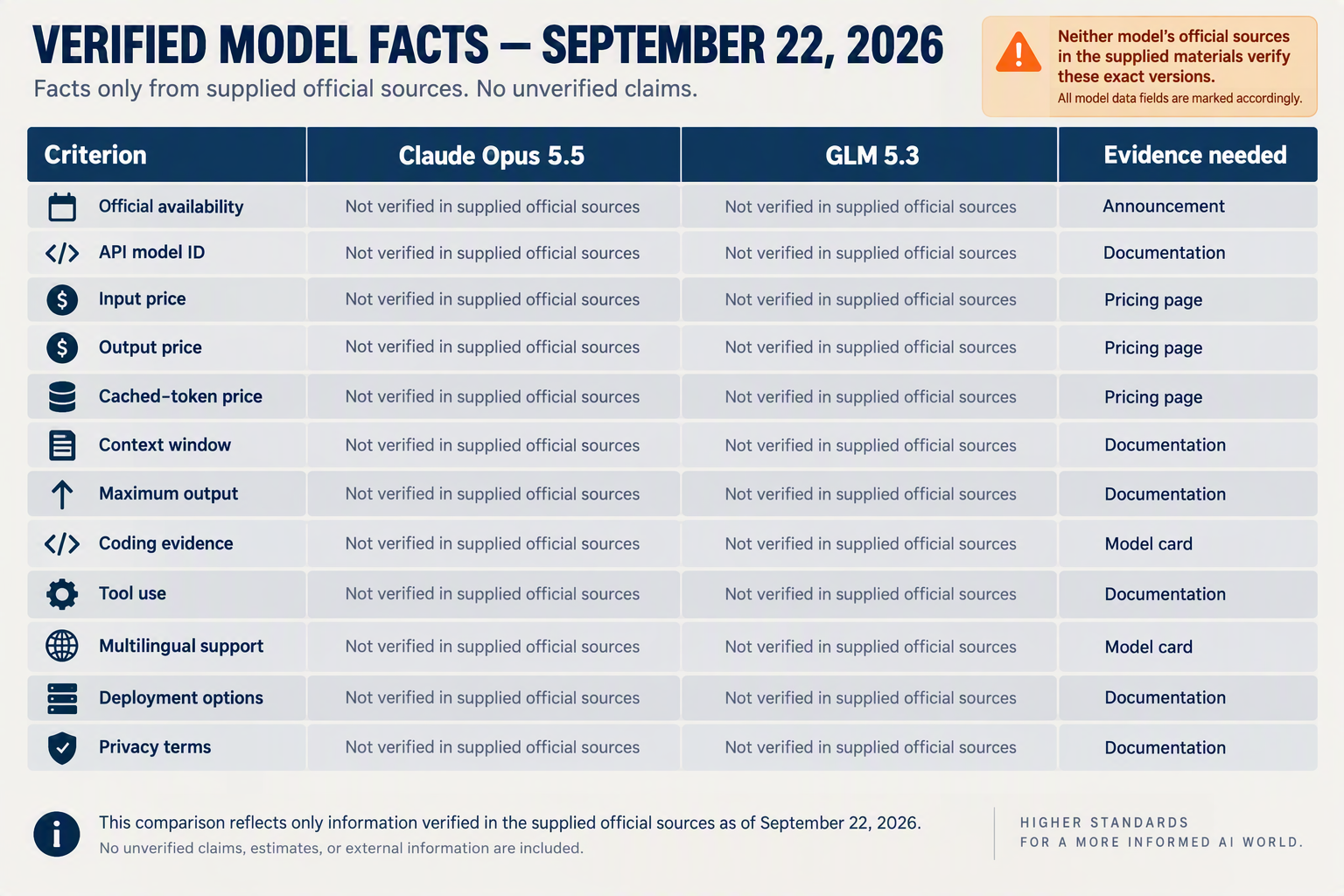
The supplied evidence does not verify either Claude Opus 5.5 or GLM 5.3 as an exact, generally available model version as of September 22, 2026. Developers should therefore treat pricing, context-window, benchmark and deployment comparisons for these names as unconfirmed rather than extrapolating from Claude Opus 5, earlier Claude models or GLM-5.3-Flash.
What does the verified Claude Opus 5.5 vs GLM 5.3 comparison show?
| Comparison point | Claude Opus 5.5 | GLM 5.3 | Developer implication |
|---|---|---|---|
| Exact-version first-party verification | Not verified in supplied evidence. Anthropic’s supplied announcement verifies Claude Opus 5, not Opus 5.5. | Not verified in supplied evidence. No first-party GLM 5.3 announcement was supplied. | Do not assume either exact version exists or is production-ready. |
| API availability | Not verified in supplied evidence. | Not verified in supplied evidence. | Require an official model ID, API documentation and successful test request before integration. |
| Pricing | Not verified in supplied evidence. Claude 3.5 Sonnet’s historical price of $3 per million input tokens and $15 per million output tokens cannot be transferred to Opus 5.5. | Not verified in supplied evidence. | Model cost projections would be speculative without exact input, output, cache and tool-use rates. |
| Context window | Not verified in supplied evidence. | Not verified in supplied evidence. | Avoid designing retrieval or long-document workflows around an assumed token limit. |
| Rate limits | Not verified in supplied evidence. | Not verified in supplied evidence. | Production capacity cannot be compared without account-tier and endpoint-specific limits. |
| Coding and reasoning | Not verified for Opus 5.5. Anthropic describes Opus 5 as its strongest tested Opus model on a trading benchmark, but that result does not establish Opus 5.5 performance. | Not verified in supplied evidence. | Run identical repository-level and reasoning evaluations once exact models are accessible. |
| Tool use and agentic work | Not verified for Opus 5.5. Supplied material mentions tool-capable Claude Sonnet 5 and earlier Opus versions, but those claims are not transferable. | Not verified in supplied evidence. | Test function selection, argument validity, recovery and multi-step completion separately. |
| Multilingual capability | Not verified in supplied evidence. | Not verified in supplied evidence. | Include relevant languages, code-switching and domain terminology in evaluation sets. |
| Deployment options | Not verified in supplied evidence. | Not verified in supplied evidence. | Confirm hosted API, cloud marketplace, regional hosting and self-deployment options directly. |
| Privacy and data handling | Not verified in supplied evidence. | Not verified in supplied evidence. | Review retention, training-use, residency and enterprise-control terms before sending sensitive data. |
| Ecosystem maturity | Not verifiable for this exact version. Anthropic has documented APIs and multiple named Claude releases, but that does not prove Opus 5.5 support. | Not verifiable for this exact version. | Check SDK, observability, structured-output and gateway support against exact model IDs. |
How should developers evaluate these unverified model versions?
Use a verification gate before benchmarking: require an official product page, documented model identifier, dated pricing page and live API response. Then compare both models with the same prompts, context, reasoning budget, tools, retry policy and temperature.
A multi-model gateway can make that test harness easier to maintain. As of September 2026, CallMissed’s developer AI API provides OpenAI-compatible and Anthropic-compatible endpoints across 136 models, with caller-selected fallbacks, structured outputs, function calling, usage logs and request logs; however, those gateway capabilities do not independently verify availability of Claude Opus 5.5 or GLM 5.3.
How should Opus 5.5 vs GLM 5.3 coding, reasoning and agentic benchmarks be tested?
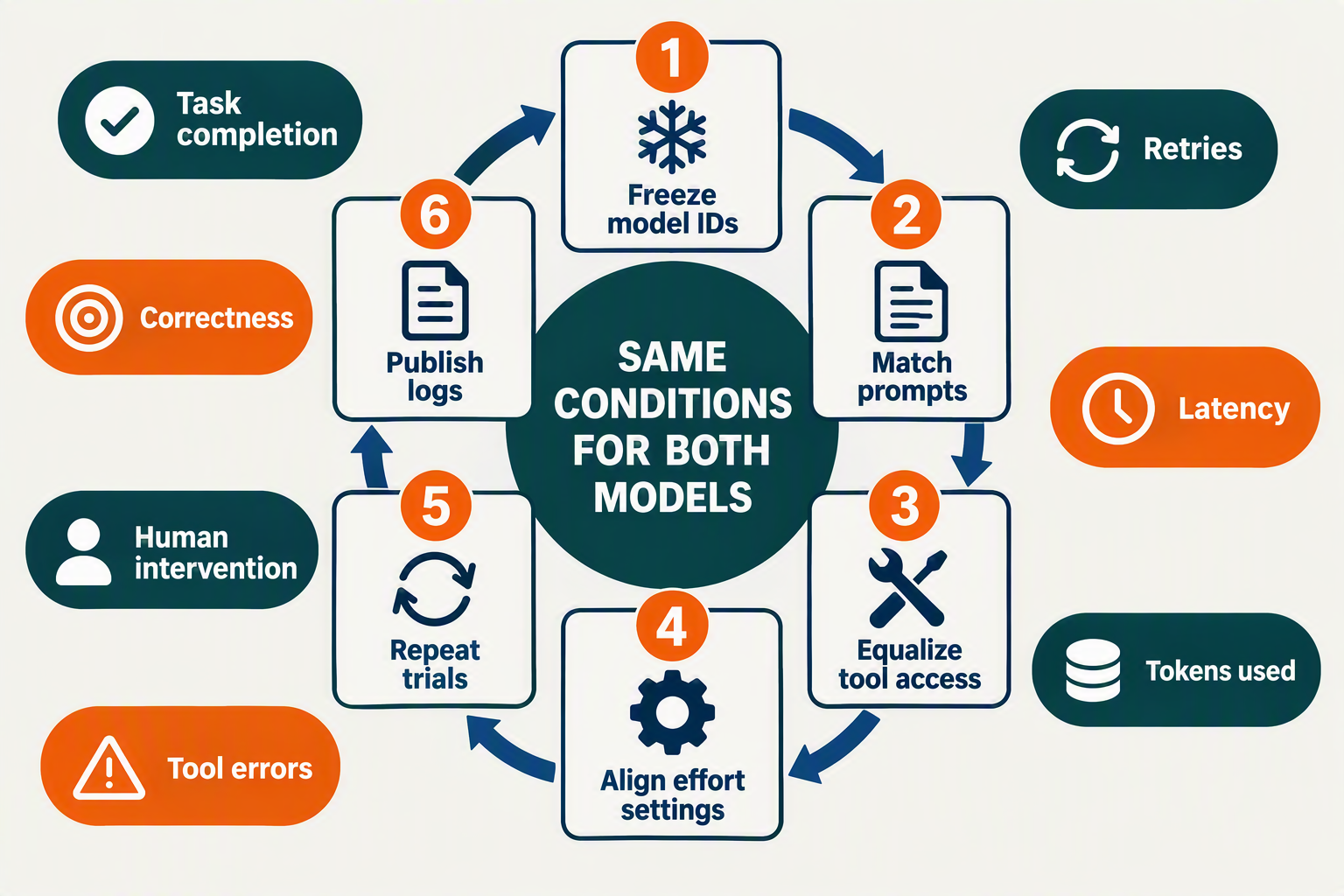
The Claude Opus 5.5 vs GLM 5.3 evaluation should not begin until both exact model versions, stable model IDs, public availability and provider terms are verified. As of September 2026, the supplied sources document Anthropic announcements for Claude Opus 5 and earlier versions, but they do not establish comparable specifications or access terms for the exact Opus 5.5 and GLM 5.3 pairing.
What must be verified before testing Opus 5.5 and GLM 5.3?
Create a dated evidence sheet using first-party model cards, API documentation and pricing pages. Record:
- Pinned model ID and revision, not a floating alias such as “latest.”
- Provider, region, API endpoint and access tier.
- Context window, maximum output and supported tool-calling format.
- Input, output, cached-token, search and tool-use prices.
- Data-retention, training-use and zero-retention terms.
- Reasoning controls, sampling defaults and deployment restrictions.
Anthropic describes Claude Opus 5 as its strongest Opus model on an internal trading benchmark, but that vendor-specific statement is not evidence about Opus 5.5 or GLM 5.3. If either exact version cannot be independently called under documented terms, label the comparison not yet testable rather than substituting another model.
How should coding and reasoning tasks be controlled?
Use identical, version-controlled test packages for both models:
- Run the same prompts, system instructions, repositories, dependency locks and hidden tests.
- Start every coding task from a fresh container and the same Git commit.
- Give both models equal browser, terminal, file-editing, search and test-runner access.
- Match token, monetary, wall-clock and tool-call budgets.
- Fix temperature, maximum output and reasoning effort where equivalent controls exist; document unavoidable differences.
- Apply one retry policy—for example, one retry only for provider errors, never for an incorrect answer.
Coding suites should include bug repair, feature implementation, refactoring, test generation and secure-code review. Reasoning suites should cover auditable mathematics, constraint satisfaction, long-context retrieval and planning, with contamination-resistant or newly authored problems.
How should agentic task completion be scored?
Judge the result, not writing style or an unobservable chain of thought. Use a preregistered scoring rubric:
- Task completion: hidden tests passed or objective goal achieved.
- Correctness: output validity and absence of regressions.
- Tool reliability: successful calls, malformed arguments and recovery rate.
- Efficiency: tokens, tool calls, elapsed time and total provider cost.
- Autonomy: number and duration of human interventions.
- Safety: prohibited actions, secret exposure or sandbox escape attempts.
Log every intervention—including clarification, approval, credential entry and manual recovery. A task requiring human repair must not receive the same autonomy score as an unattended completion.
How can the benchmark remain secure and reproducible?
Run untrusted code in disposable containers with CPU, memory, process and network limits. Use synthetic credentials, allowlisted domains, read-only benchmark fixtures and scrubbed logs; never expose production secrets or customer data.
Capture request IDs, model IDs, timestamps, prompts, responses, tool traces, token usage, latency and billed cost. Gateways can simplify consistent instrumentation: CallMissed’s OpenAI-compatible and Anthropic-compatible API, as documented in September 2026, provides usage and request logs, bring-your-own provider keys and caller-selected fallbacks. Fallbacks must be disabled during this benchmark so another model cannot silently complete a run.
Repeat each task at least five times in randomized order, report medians and confidence intervals, and publish failures alongside successes. Only then can developers distinguish stable capability from one-off sampling variance.
What does each model really cost after caching, retries, latency and failed agent runs?
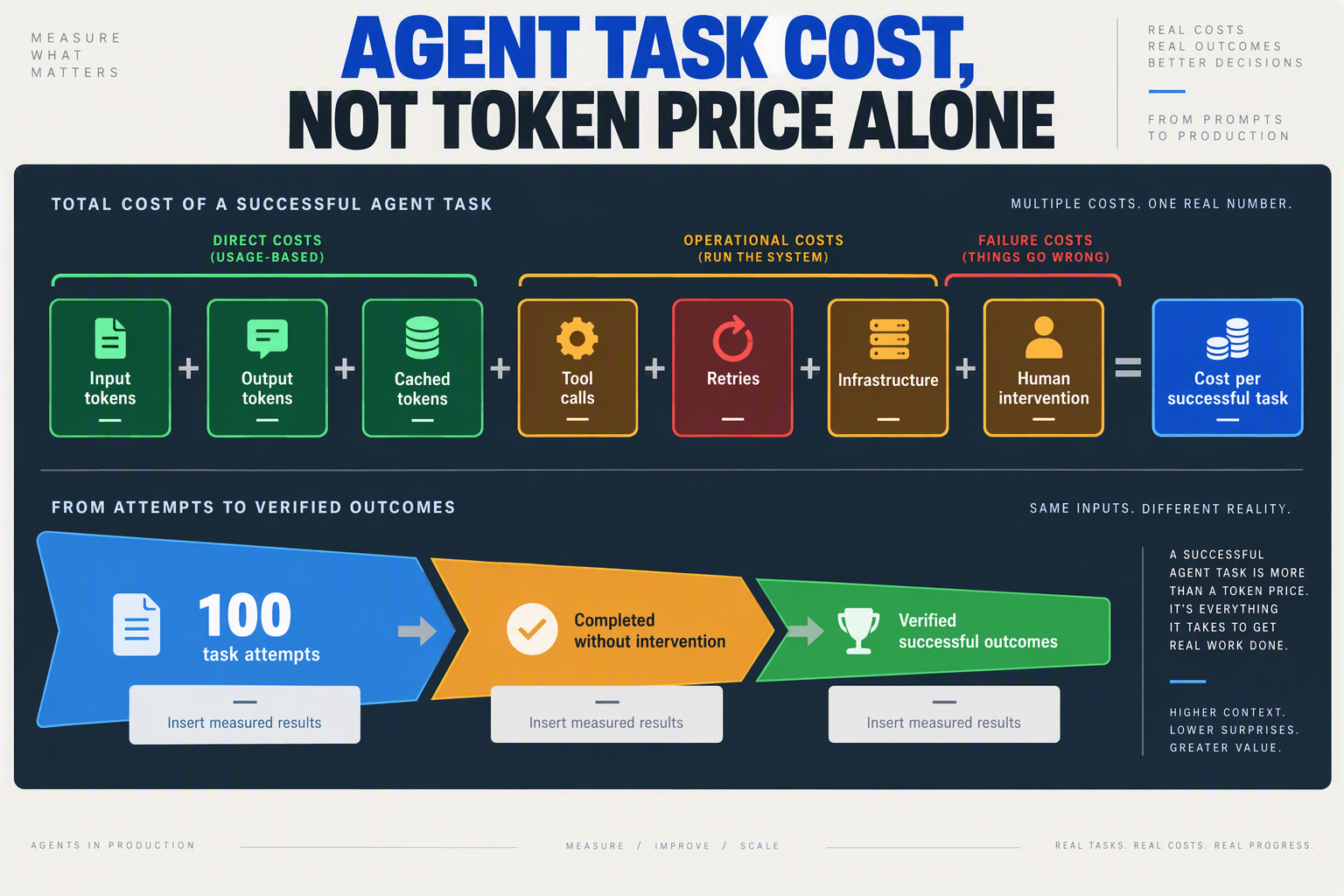
The real cost of an agentic model is cost per successfully completed task, not its advertised token rate. The supplied evidence does not verify Claude Opus 5.5 or GLM 5.3 pricing, cache policies, context limits, reasoning-token accounting or latency as of September 2026, so a defensible numeric winner cannot be named.
How should developers calculate total model cost?
Use documented prices from the exact provider, model version, region and billing plan being tested. For each run, calculate:
Run cost = input tokens + output tokens + reasoning tokens + cache writes + cache reads + tool calls + external infrastructure
Each token category should be multiplied by its applicable per-token rate. Do not assume that hidden reasoning tokens are free, cached tokens receive a discount, or cache writes and reads have identical prices unless the provider documentation explicitly confirms those terms.
External infrastructure can include:
- Web search, browser or retrieval charges
- Code sandboxes and compute time
- Vector database, storage and network egress
- Third-party API calls
- Voice, telephony or carrier charges, when an agent handles calls
- Observability, evaluation and security services
For example, CallMissed’s developer API offers web search at one credit per search as of September 2026, while its voice-agent phone carriage is billed separately. Those charges illustrate why model tokens alone do not represent an application’s complete operating cost.
How do retries and failed agent runs change the comparison?
Measure cost at the task level with this formula:
Cost per successful task = total cost of all attempts ÷ number of accepted completions
A cheap first attempt can become expensive if it repeatedly generates invalid JSON, calls the wrong tool, exceeds a timeout or requires human correction. Track at least:
- Attempts per accepted result
- Tool-call errors and unnecessary calls
- Timeouts, rate-limit retries and provider failures
- Tokens consumed before failure
- Human-review and remediation time
- Tasks abandoned without a usable result
Previous Anthropic disclosures show why these variables matter, but they cannot be treated as Claude Opus 5.5 evidence. Anthropic reported that Claude Opus 4.7 improved complex multi-step workflow performance by 14% over Opus 4.6 while using fewer tokens and producing one-third as many tool errors. Anthropic also said Claude Opus 5 used roughly one-seventh of the reasoning on its trading benchmark, but that result does not establish Opus 5.5 pricing, latency or production reliability.
How should caching and latency be tested?
Run identical workloads with cold-cache and warm-cache phases. Record cache eligibility, write cost, read cost, retention period, invalidation behavior and the percentage of prompts that actually achieve a cache hit. A nominal cache discount has little value when prompts change frequently or cached prefixes expire before reuse.
Latency should be converted into business cost rather than compared as an isolated average. Measure:
- Time to first token
- Time to first valid tool call
- End-to-end completion time
- P50, P95 and P99 latency
- Timeout and successful-completion rates
Platforms such as CallMissed, the OpenAI- and Anthropic-compatible AI gateway, support usage and request logs, caller-chosen fallback models and response caching as of September 2026. Regardless of gateway, compare Claude Opus 5.5 and GLM 5.3 using the same prompts, tools, retry policy, reasoning settings and acceptance tests. Until verified model-specific documentation is available, the correct conclusion is “insufficient evidence,” not a speculative price winner.
Which model is stronger for multilingual work, deployment, privacy and ecosystem maturity?
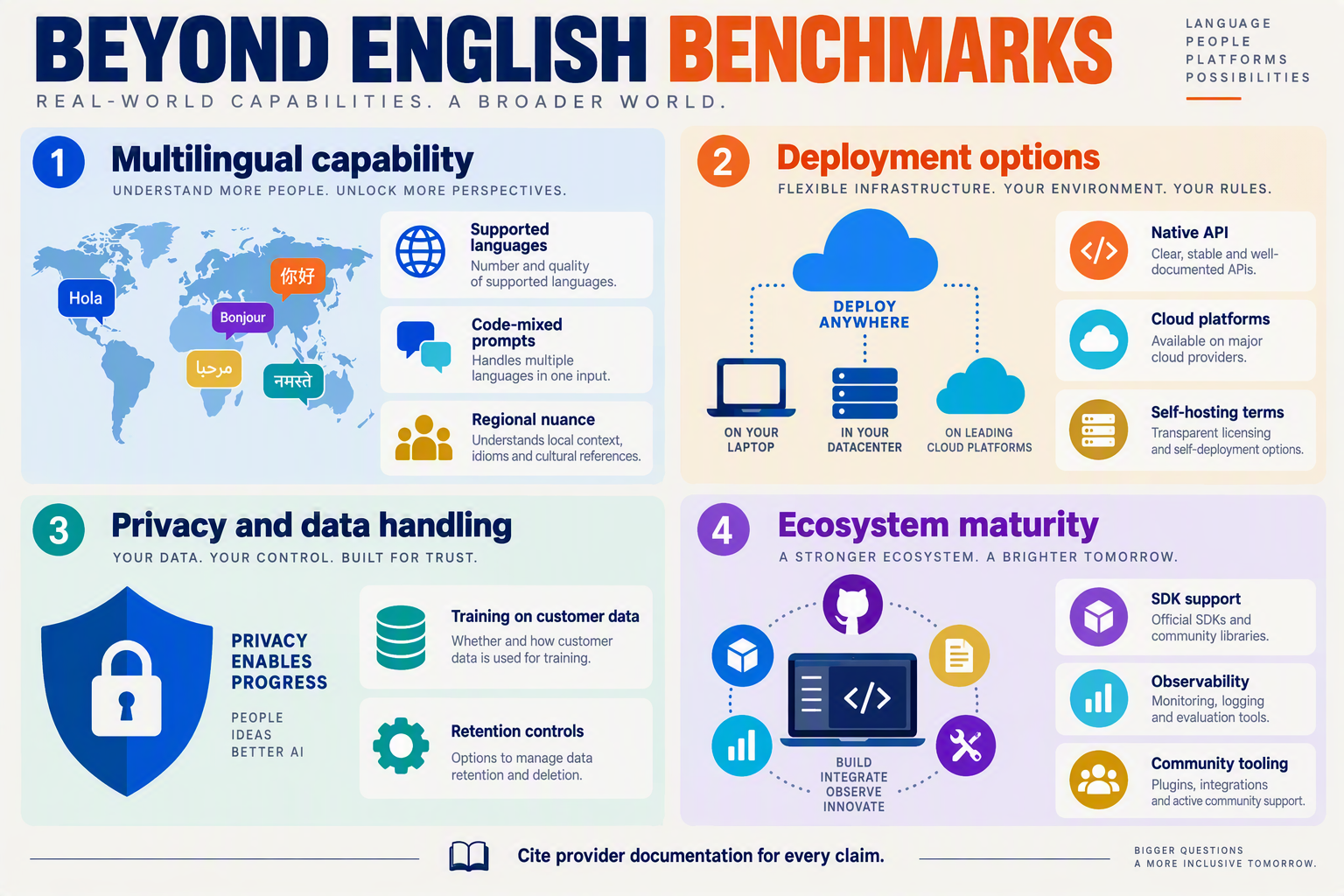
The supplied research does not support a defensible winner between Claude Opus 5.5 and GLM 5.3 for multilingual work, deployment flexibility, privacy, or ecosystem maturity. As of September 2026, buyers should treat these dimensions as unverified for the exact model versions until Anthropic and Zhipu publish—or contractually provide—version-specific documentation.
Which model is stronger for multilingual applications?
No supplied first-party source establishes the supported languages, code-switching quality, translation accuracy, tokenizer efficiency, or culturally localized performance of Claude Opus 5.5 or GLM 5.3. Anthropic’s announcements for Claude Opus 5, Claude Opus 4.8, or other Claude releases cannot be treated as evidence for Claude Opus 5.5; model-family reputation does not prove exact-version behavior.
Developers should run representative evaluations covering:
- Native-language instructions and responses
- Translation in both directions
- Mixed-language prompts and code-switching
- Retrieval over multilingual documents
- Tool arguments containing non-Latin text
- Safety behavior across languages
- Long-context accuracy for each target language
Report quality, tool-call validity, latency, and token consumption separately. A model can write fluent prose yet fail when extracting localized dates, preserving names, or generating schema-valid tool calls.
What deployment options are verified?
The research provided here does not establish exact-version availability through first-party APIs, cloud marketplaces, private endpoints, dedicated capacity, regional hosting, or on-premises deployment. It also does not confirm whether GLM 5.3 weights are downloadable or self-hostable, or whether Claude Opus 5.5 is offered in every channel associated with other Claude models.
Do not infer deployment rights from a model name, an earlier release, or third-party catalogue listings. Obtain written confirmation of the exact model identifier, version-pinning policy, deprecation notice period, supported regions, quotas, service limits, and whether fine-tuning or private networking is available.
For teams that need to evaluate multiple providers behind one integration, CallMissed’s OpenAI-compatible and Anthropic-compatible developer API offers access to 136 models from makers including Anthropic’s ecosystem peers and Zhipu (GLM), using one API key and balance as of September 2026. Catalogue access still should not be interpreted as proof that these two exact versions are available.
What privacy and data-governance facts are missing?
The supplied sources do not verify data-retention periods, prompt or output training terms, zero-retention eligibility, encryption controls, subprocessors, audit certifications, residency guarantees, or deletion procedures for either exact version. Privacy terms may also differ by consumer product, API, cloud partner, enterprise contract, and region.
A security review should distinguish model capability from the service that hosts it. The same model can carry different privacy obligations depending on the deployment channel.
What should procurement teams request before choosing?
Collect these first-party documents for Claude Opus 5.5 and GLM 5.3:
- Model card and release notes identifying the exact model and release date.
- API documentation covering context limits, tools, structured output, rate limits, and version pinning.
- Deployment matrix listing regions, clouds, private networking, dedicated capacity, weights, and self-hosting rights.
- Pricing schedule and SLA, including cached tokens, tool charges, batch pricing, and support terms.
- Data-processing addendum stating retention, training use, deletion, residency, and subprocessors.
- Security package containing independent audit reports, encryption details, incident procedures, and access controls.
- Lifecycle policy covering updates, retirement timelines, and migration support.
- Multilingual evaluation evidence plus permission to conduct an internal benchmark.
Until those materials are available, ecosystem maturity is also unproven for the exact releases. Count maintained SDKs, framework integrations, observability support, regional partners, production references, and release stability—rather than relying on brand familiarity or evidence from earlier versions.
What do official model cards and independent experts actually say?

The supplied evidence does not support a definitive Claude Opus 5.5 vs GLM 5.3 comparison. As of September 2026, the material contains Anthropic announcements for Claude Opus 5, Opus 4.8, Opus 4.7 and Sonnet 5, but it contains no supplied official model card for Claude Opus 5.5 or Zhipu GLM 5.3.
What do the official first-party announcements establish?
The available first-party sources document nearby Anthropic releases rather than the exact models under comparison:
- Anthropic describes Claude Opus 5 as the strongest Opus model it tested on its internal trading benchmark, reportedly reaching that result with roughly one-seventh of the reasoning used by the comparison configuration. This is an Anthropic-authored claim, not an independent finding.
- Anthropic says Claude Opus 4.8 completed every case end to end in the company’s evaluation and outperformed earlier Opus models and GPT-5.5 at cost parity.
- Anthropic reports that Claude Opus 4.7 improved by 14% over Opus 4.6, used fewer tokens and produced approximately one-third as many tool errors in Anthropic’s multi-step workflow testing.
- Anthropic positions Claude Sonnet 5 as an agentic model capable of planning, browser use and terminal operation.
These announcements provide useful historical signals about Anthropic’s emphasis on reasoning efficiency, coding and tool-driven workflows. However, they cannot establish Opus 5.5 pricing, context length, availability, privacy terms or benchmark performance. A product announcement is also not automatically a complete model card: developers need evaluation methodology, limitations, safety analysis and deployment documentation.
What do third-party search references prove?
The supplied search results are discovery references, not independent evidence. Every relevant result shown points to an Anthropic-controlled announcement; no Zhipu AI release page, GLM 5.3 technical report, API documentation or pricing page is included.
Search-result snippets can be truncated, outdated or stripped of experimental qualifications. Consequently, they should not be used to infer that Claude Opus 5.5 or GLM 5.3 is generally available—or that “GLM-5.3-Flash” and “GLM 5.3” are interchangeable product names—without first-party documentation confirming the model identifiers.
What would count as a credible independent evaluation?
No independent benchmark results or expert consensus are supplied here. A valid LLM comparison in 2026 should disclose enough information for another developer to reproduce the result, including:
- Exact model IDs and test dates, because providers may update aliases or serving configurations.
- Identical prompts and datasets, with contamination controls and separate public and private test sets.
- Inference settings, including temperature, reasoning effort, token limits, system prompts and number of trials.
- Agent environment parity, including the same browser, terminal, tools, permissions, timeouts and retry budgets.
- Complete cost accounting, covering input, output, cached and reasoning tokens as well as tool-call charges.
- Statistical reporting, including sample size, variance, failure rates and confidence intervals.
- Language-specific testing, rather than treating English coding benchmarks as proof of multilingual quality.
Until official documentation and reproducible independent tests are available, claims that either model wins on coding, agentic work, price or multilingual capability should be labelled unverified, not presented as fact.
Which model fits your workload and procurement constraints?
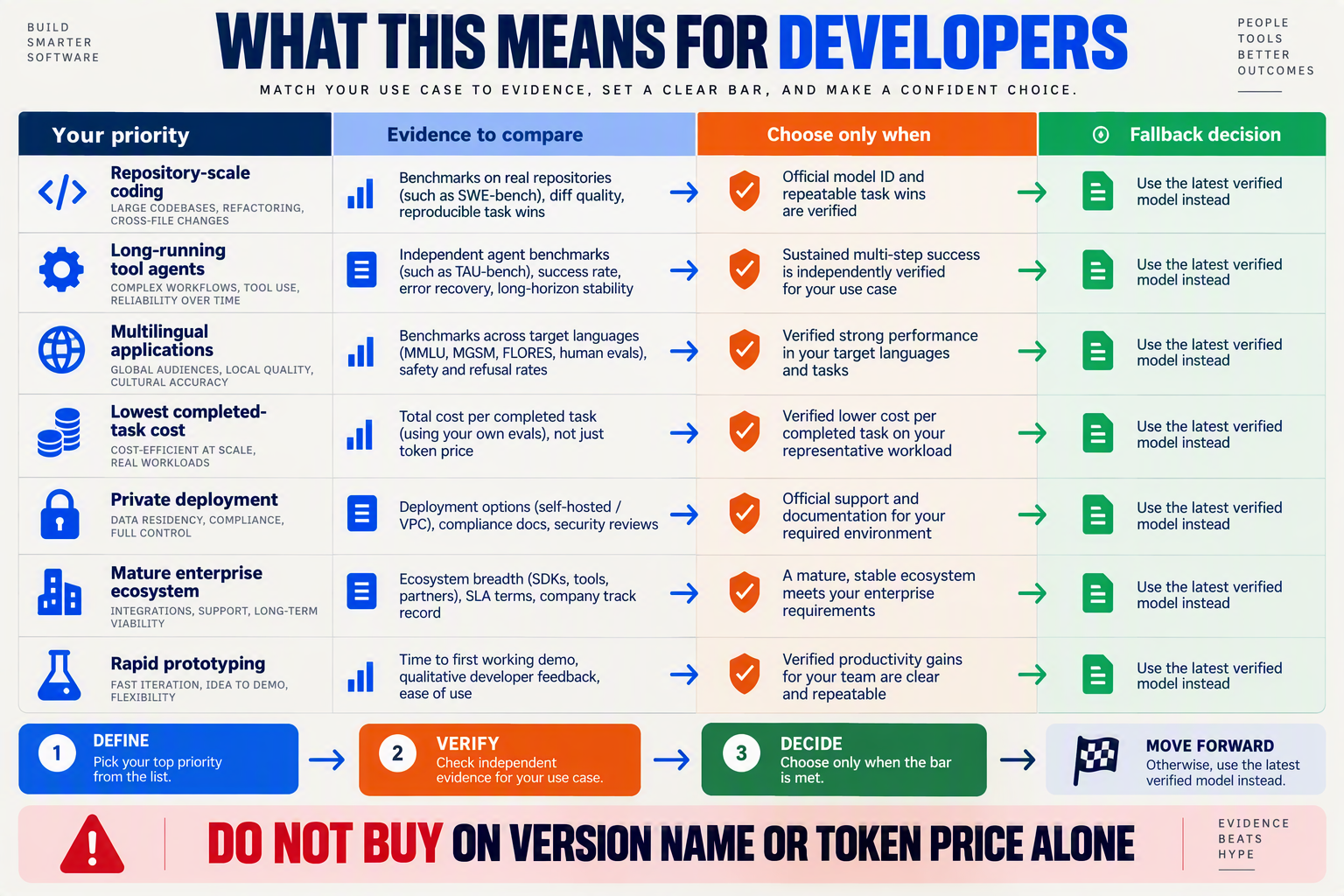
Neither Claude Opus 5.5 nor GLM 5.3 should receive production approval until its exact model identifier, availability, pricing, context window, deployment terms and data-handling policy are verified. As of September 2026, the defensible approach is to defer the final decision while using a currently documented model only for provisional, workload-specific testing.
Which model should you shortlist for each workload?
| Workload or constraint | Claude Opus 5.5 decision | GLM 5.3 decision | Required procurement gate |
|---|---|---|---|
| Regulated or privacy-sensitive use | Defer decision | Defer decision | Verify data residency, retention, training use, subprocessors, audit terms and regional availability in signed documentation. |
| Coding agents | Use a verified Claude baseline only for provisional testing | Use a verified GLM baseline only for provisional testing | Run repository-level tests with identical tools, token budgets, retry limits and human review; do not transfer results between model versions. |
| High-volume, cost-sensitive tasks | Defer until official input, output, caching and tool-call prices are published | Defer until equivalent prices and rate limits are confirmed | Model total workflow cost, including failed calls, retries, long outputs, search and execution—not headline token prices alone. |
| Multilingual work | No exact-version recommendation | No exact-version recommendation | Test the languages, scripts, code-switching patterns and regional terminology used in production; English benchmarks are insufficient. |
| Self-hosting or private-cloud deployment | Do not assume weights or self-hosting rights are available | Do not assume weights or self-hosting rights are available | Require an official licence, downloadable artefact, hardware profile, quantisation guidance and commercial-use terms. |
| Ecosystem integration | Test against a verified Anthropic-compatible baseline | Test against a verified Zhipu/GLM baseline | Confirm SDK compatibility, structured output, streaming, tool schemas, observability and fallback behaviour with the exact model ID. |
Why is “defer decision” the responsible choice?
The supplied evidence confirms an official Anthropic announcement for Claude Opus 5, but it does not establish specifications for Claude Opus 5.5. Anthropic describes Claude Opus 5 as its strongest tested Opus model on a trading benchmark and says it used roughly one-seventh of the reasoning associated with the comparison cited in that announcement; those results cannot be attributed to an unverified Opus 5.5 release.
Version transfer is especially risky for agents. Anthropic reported that Claude Opus 4.7 improved 14% over Opus 4.6 while producing one-third as many tool errors, demonstrating that adjacent releases can differ materially. Likewise, Anthropic’s historical $3 per million input tokens and $15 per million output tokens for Claude 3.5 Sonnet cannot be reused as Opus 5.5 pricing.
No supplied primary source establishes exact GLM 5.3 pricing, context capacity, benchmark scores, licence or deployment options as of September 2026. Search-result mentions of “GLM-5.3-Flash” are not substitutes for a vendor model card or API pricing schedule.
How should developers run provisional tests?
Use a verified baseline and keep conclusions explicitly version-bound:
- Freeze prompts, tools, temperature, reasoning effort and maximum output.
- Measure task completion, tool errors, unsupported claims, latency and total cost.
- Test data-retention controls before sending confidential code or customer records.
- Record exact model IDs and dates because aliases may change.
For integration experiments, CallMissed’s developer AI API supports Anthropic-compatible endpoints and lists both Anthropic and Zhipu among its model makers as of September 2026. Its single API covers 136 models, which can simplify provisional cross-provider testing, but teams should still confirm that each exact target model is listed before treating it as available.
Frequently Asked Questions
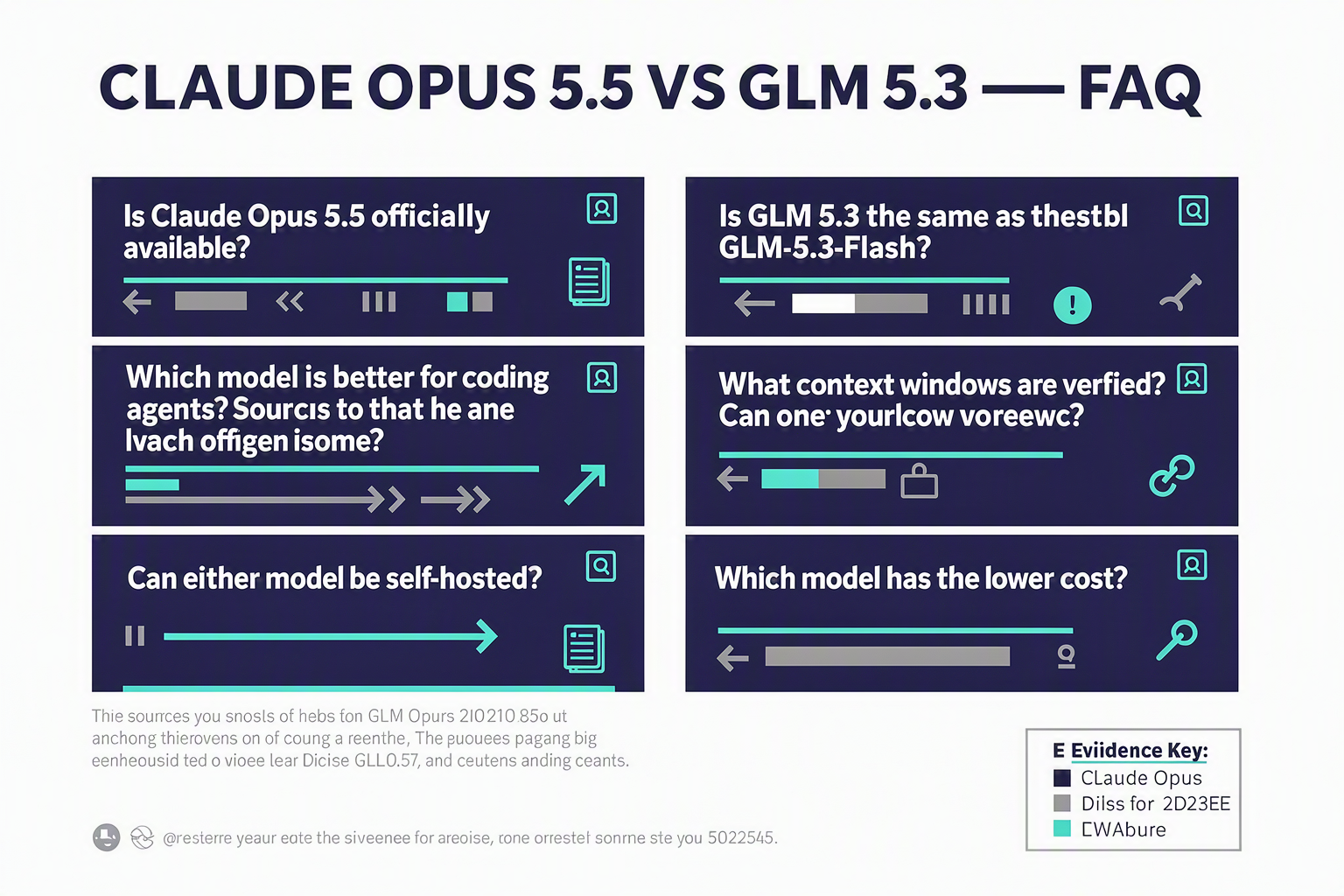
Is Claude Opus 5.5 available in September 2026?
Is GLM 5.3 the same model as GLM-5.3-Flash?
Is Claude Opus 5.5 or GLM 5.3 better for coding and agentic work?
What context windows do Claude Opus 5.5 and GLM 5.3 support?
Can Claude Opus 5.5 or GLM 5.3 be self-hosted?
Which costs less, Claude Opus 5.5 or GLM 5.3?
Conclusion
The Claude Opus 5.5 vs GLM 5.3 comparison has no defensible winner yet. As of September 2026, the supplied first-party evidence verifies Anthropic’s Claude Opus 5—not Opus 5.5—and provides no official Zhipu documentation confirming GLM 5.3’s exact availability or specifications.
- Do not procure by model name alone. Confirm canonical API identifiers, release status, context and output limits, regional availability, rate limits, and deprecation terms.
- Demand complete cost and privacy documentation. Input, output, cached-token, reasoning, and tool-use charges can materially change production economics, while retention and training policies affect compliance.
- Treat Claude Opus 5 only as a baseline. Anthropic reported in 2026 that Opus 5 used “roughly a seventh of the reasoning tokens” on its trading benchmark, but that result cannot be transferred to an undocumented Opus 5.5.
- Run an equal-condition evaluation once both versions are confirmed. Use identical prompts, tools, datasets, reasoning settings, retry policies, and scoring criteria for coding, agentic reliability, multilingual performance, latency, and cost.
Watch for official model cards, pricing pages, privacy terms, stable API IDs, and provider-backed benchmark details. Developers can also explore CallMissed, an AI communication platform and developer API supporting multiple model makers through OpenAI- and Anthropic-compatible endpoints. When verified releases arrive, will your evaluation measure benchmark appeal—or production reliability?
Related Reading
- Claude Opus 5 Migration Guide: API Pricing for 2026
- Claude Opus 5.5 vs GPT-6 Astra: 2026 Comparison
- Claude Fable 5.1 vs Opus 5.5: Verified Comparison Guide
Sources
Discussion
Related Posts


Ready to automate customer conversations?
Launch AI voice agents and WhatsApp bots with CallMissed — one API, 22+ Indian languages.