
Claude Opus 5.5 vs Gemini 3.8 Flash: API Buyer Guide


Compare Claude Opus 5.5 vs Gemini 3.8 Flash on verified API access, pricing, context, coding, reasoning, latency and production cost.
Claude Opus 5.5 vs Gemini 3.8 Flash: API Buyer Guide
What if the two models in your shortlist cannot yet be compared on verified, like-for-like API specifications? As of September 2026, the supplied documentation confirms references to Claude Opus 5.5 in Anthropic’s pricing materials, but it does not establish a complete public specification for Gemini 3.8 Flash. That makes a responsible Claude Opus 5.5 vs Gemini 3.8 Flash comparison an exercise in verification—not benchmark-score aggregation.
The decision still reflects an important divide among the best LLM APIs in 2026: should you pay for flagship-level reasoning and coding quality, or optimize for low latency, lower unit cost and high-volume automation? Anthropic says Claude Opus 5 is available across its platforms at $5 per million input tokens and $25 per million output tokens. Anthropic’s Claude Platform documentation also lists an Opus 5.5 cache hit at $0.20 per million tokens, or 5% of the standard input price. Those version distinctions matter because substituting Opus 5 pricing or capabilities for Opus 5.5 without confirmation could distort a production budget.
At Anthropic’s published Opus 5 rates, processing 1 million input tokens and generating 200,000 output tokens would cost $10 before caching or other discounts. Multiply that workload across support automation, coding agents or document analysis, and small differences in output pricing, cache behavior and retry rates become material. A faster model can also deliver more business value even when its benchmark score is lower—particularly when thousands of parallel requests must meet strict response-time targets.
This guide will separate verified API facts from unconfirmed model claims and examine:
- API availability, token pricing and context limits
- Coding, agentic tool use and complex reasoning
- Text, image, audio and other multimodal inputs
- Latency, throughput and high-volume automation
- Security, observability, fallbacks and enterprise deployment
- A concise buyer matrix for choosing flagship quality or speed-and-cost efficiency
The comparison will also outline a reproducible testing method using identical prompts, temperatures, tool schemas and retry rules. Platforms such as CallMissed, the OpenAI- and Anthropic-compatible AI gateway, reflect this multi-model trend by offering caller-chosen fallback models, request logs and one balance across 136 models as of September 2026.
The goal is not to declare a universal winner. It is to identify which model—and which verified API endpoint—fits your workload, risk tolerance and total cost per successful task.
Which should you choose: Opus for hard tasks or Flash for speed and scale?
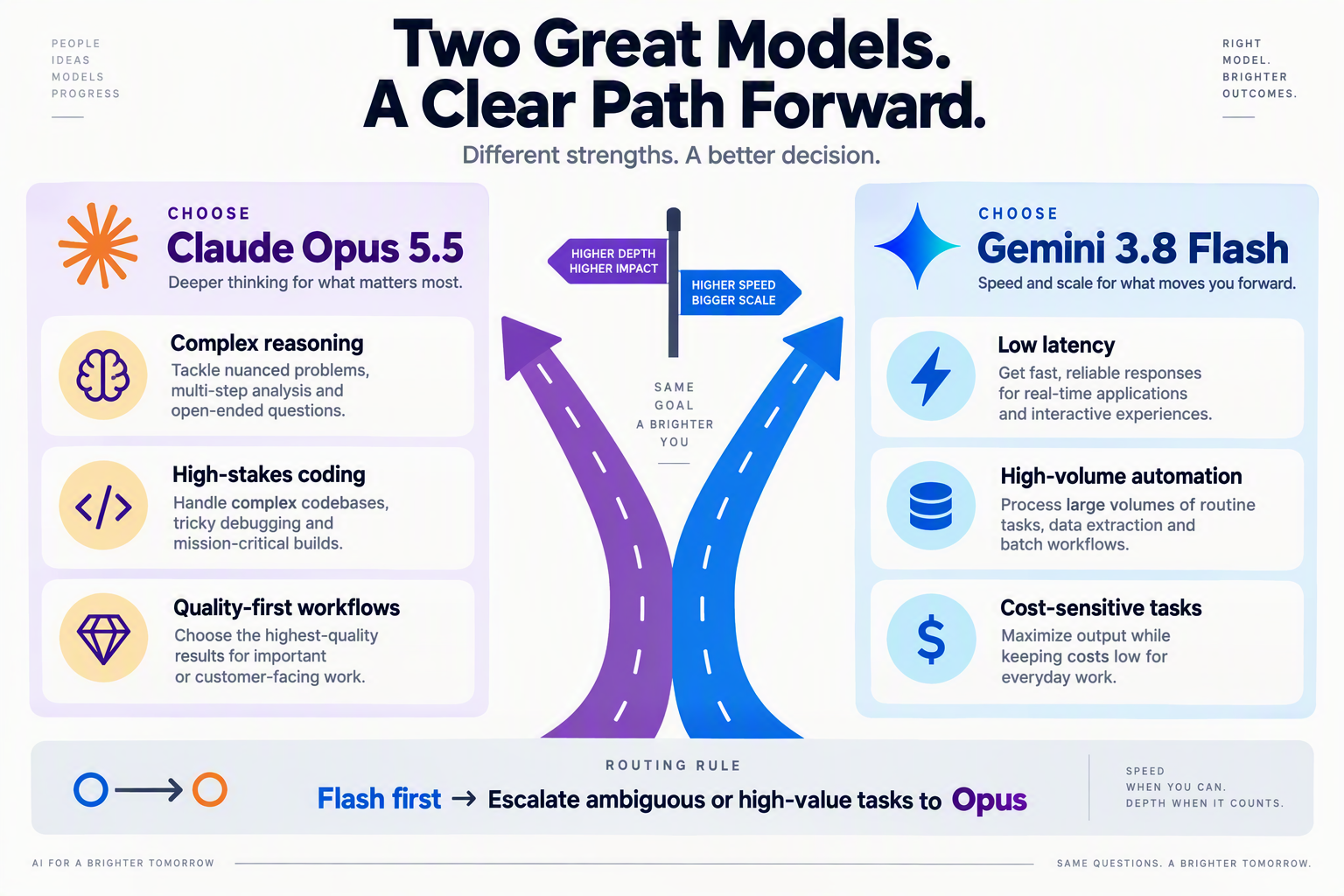
Choose Claude Opus 5.5 for difficult, high-value tasks only after confirming its exact API model ID and specifications; choose Gemini 3.8 Flash for speed and scale only after Google publishes verifiable availability, pricing and limits for that exact version. As of September 2026, the supplied evidence does not support a definitive winner because the public facts are incomplete and not like-for-like.
When does a flagship model justify its higher cost?
A flagship model is usually the safer candidate when the cost of a wrong answer exceeds the cost of extra tokens. Relevant workloads include:
- Debugging complex, multi-file software repositories
- Planning and executing agentic coding workflows
- Resolving ambiguous legal, financial or technical documents
- Coordinating several tools with dependent steps
- Producing final answers that are expensive for humans to review or correct
Anthropic states that Claude Opus 5 costs $5 per million input tokens and $25 per million output tokens as of September 2026. Anthropic also says Opus 5 offers prompt-caching savings of up to 90%, while its documentation specifically prices a Claude Opus 5.5 cache hit at $0.20 per million tokens, equal to 5% of standard input pricing.
However, these references do not establish that every Opus 5 price, context limit or capability automatically applies to Opus 5.5. Buyers should require the provider’s model card, API identifier and billing entry before approving production deployment.
When should speed and scale take priority?
A Flash-class model is generally more suitable when requests are frequent, relatively predictable and individually low-risk. Typical examples include classification, extraction, routing, summarization, autocomplete and first-pass customer-service responses.
The decision should be based on cost per successful task, not token price alone:
- Measure end-to-end latency at the 50th, 95th and 99th percentiles.
- Record retries, malformed structured outputs and tool-call failures.
- Calculate the human-review rate and correction time.
- Include cached inputs, generated outputs and failed requests.
- Test throughput under realistic concurrency rather than sequential prompts.
A model costing half as much per token is not economical if it requires twice as many retries. Conversely, a modest quality gap may be irrelevant when automation processes millions of simple requests with reliable validation.
No verified Gemini 3.8 Flash API prices, context window, multimodal limits or public API model ID appear in the supplied evidence as of September 2026. Consequently, claims that Gemini 3.8 Flash is cheaper or faster should be treated as hypotheses for testing—not established product facts.
What is the practical choice today?
Use this provisional rule:
- Select Opus when reasoning depth, coding reliability and tool-planning accuracy materially affect the outcome.
- Select Flash when verified benchmarks show that latency and unit economics improve without pushing quality below your acceptance threshold.
- Use both when a router can send routine requests to the faster model and escalate uncertain or high-risk cases to the flagship model.
- Wait for verification if procurement requires fixed pricing, documented context limits, regional availability or enterprise controls for these exact versions.
Anthropic reported that Claude Opus 5 was available across all its platforms at launch, but that statement should not be silently extended to Opus 5.5. Until equivalent documentation exists for both exact models, the defensible recommendation is a workload-based pilot with identical prompts, tools, sampling settings and failure criteria—not a universal ranking.
Are both models officially available through APIs in 2026?
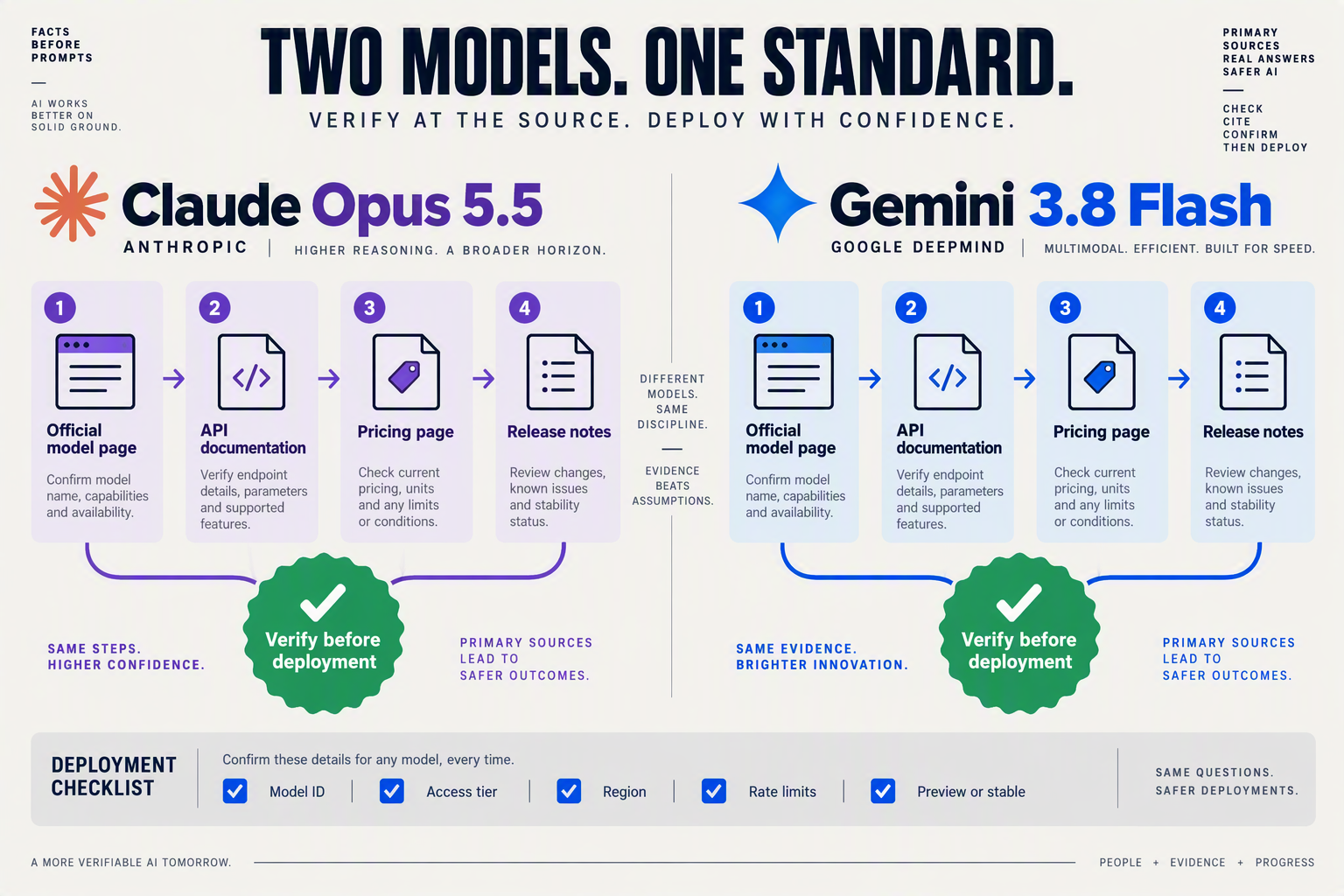
No—not on the evidence supplied for this comparison. As of September 2026, Anthropic officially confirms API availability for Claude Opus 5, while its pricing documentation references Claude Opus 5.5 without establishing a complete public API specification; no verified Google source supplied here confirms an API release for the exact name Gemini 3.8 Flash.
Is Claude Opus 5.5 officially available through the Anthropic API?
Anthropic’s announcement states that Claude Opus 5 is “available today on all platforms” at $5 per million input tokens and $25 per million output tokens, as of September 2026. That supports official availability for Opus 5, but it does not automatically prove that an API model named Claude Opus 5.5 is generally available.
Anthropic’s Claude Platform pricing documentation explicitly mentions Claude Opus 5.5 in relation to prompt caching. According to Anthropic’s documentation as of September 2026, an Opus 5.5 cache hit costs $0.20 per million tokens, equal to 5% of the standard input price.
That is meaningful evidence that Opus 5.5 exists within Anthropic’s commercial documentation. However, the supplied sources do not provide all the details required to treat it as a production-ready, independently specified API model:
- An exact API model ID
- A general-availability or preview designation
- A verified context-window limit
- A maximum output-token limit
- Supported regions and cloud channels
- Confirmed tool-use, vision and other modality specifications
- Rate limits and service-tier availability
Until Anthropic publishes those details together, buyers should not substitute Claude Opus 5 specifications for Claude Opus 5.5.
Is Gemini 3.8 Flash officially available through the Google API?
The supplied research does not include an official Google AI for Developers, Vertex AI or Google Cloud document confirming Gemini 3.8 Flash as an API model as of September 2026. Consequently, its claimed API prices, context window, coding benchmarks, multimodal support and latency should be treated as unverified, not as established product specifications.
This distinction is especially important for transactional searches such as “Gemini 3.8 Flash API prices.” A benchmark post, model leaderboard or third-party catalogue may indicate testing access, but it does not establish public API availability, contractual pricing or production quotas.
What proves that an AI model has an official API?
Before running a Claude Opus 5 vs Gemini 3.8 Flash comparison, verify the exact version through primary documentation:
- Model identifier: Confirm the string accepted by the provider’s API.
- Lifecycle status: Check whether the endpoint is preview, generally available, deprecated or restricted.
- Price sheet: Verify input, output, cached-token and batch rates separately.
- Technical limits: Record context, maximum output, modalities, tools and structured-output support.
- Operational terms: Check quotas, regions, data-handling controls and enterprise availability.
The current evidence therefore supports testing Claude Opus 5 through Anthropic’s officially announced platforms, but not presenting Claude Opus 5.5 vs Gemini 3.8 Flash as a fully verified, like-for-like API contest. Any evaluation should label provisional endpoints clearly and rerun cost, latency and quality tests once both providers publish exact production specifications.
How do pricing, context and API capabilities compare?
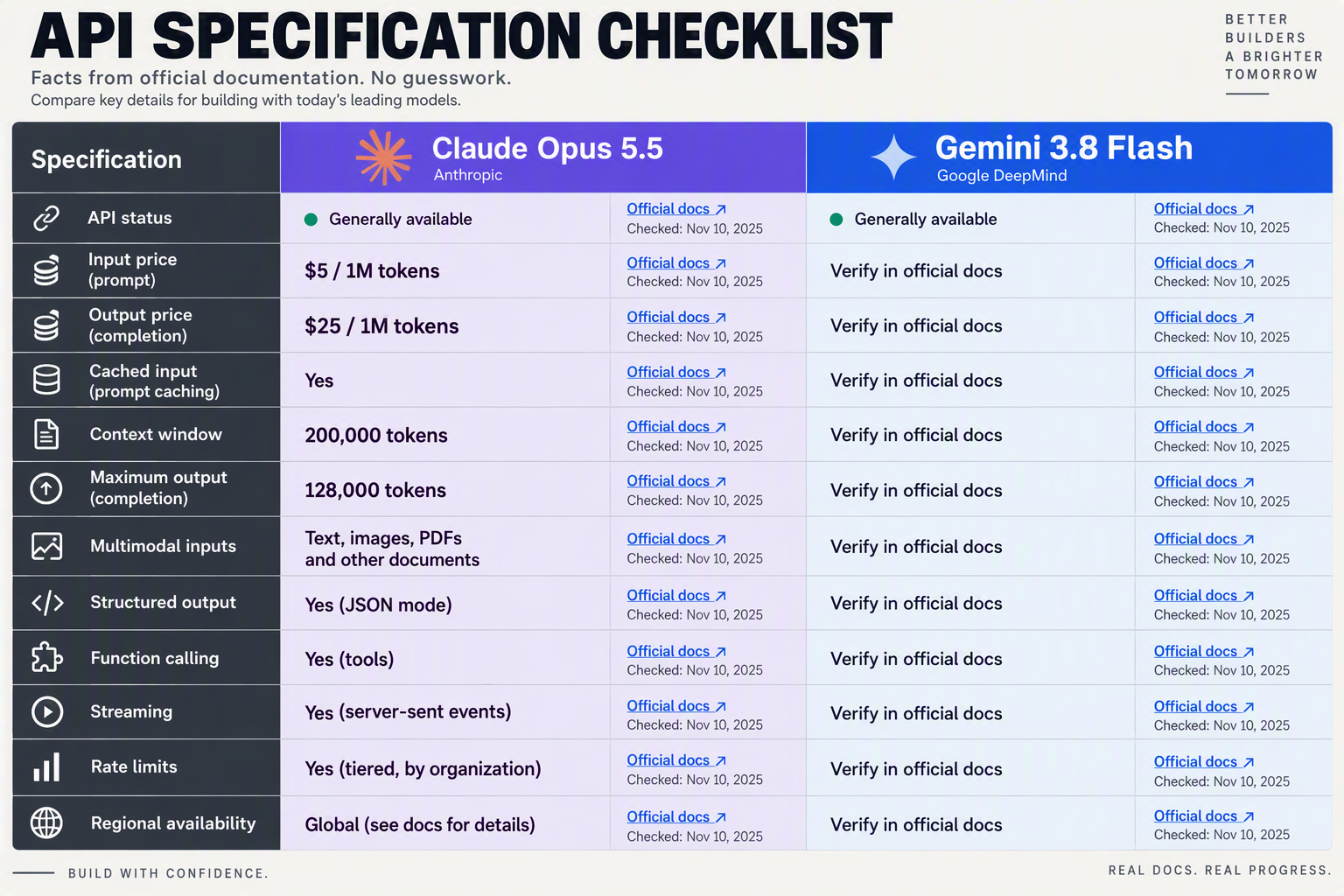
The supplied primary evidence does not support a complete Claude Opus 5.5 vs Gemini 3.8 Flash cost calculation. Anthropic documents one Claude Opus 5.5 cache price, while no supplied primary Google source verifies Gemini 3.8 Flash’s existence as an API model or its pricing, context window, modalities, limits, or capabilities.
What is verified for Claude Opus 5.5 and Gemini 3.8 Flash?
| Comparison point | Claude Opus 5.5 | Gemini 3.8 Flash | Buying implication |
|---|---|---|---|
| Standard input price | Not separately stated in the supplied extract. Anthropic says a $0.20/MTok cache hit equals 5% of standard input, mathematically implying $4/MTok, but the full pricing schedule is not supplied. | Not verified in supplied evidence. | Do not publish a definitive standard-price comparison without current, model-specific pricing pages. |
| Output price | Not verified in supplied evidence. | Not verified in supplied evidence. | Total cost per request cannot be calculated reliably because output tokens can materially affect production spending. |
| Prompt-cache hit price | $0.20 per million tokens, according to Anthropic’s Claude Platform pricing documentation available in September 2026. Anthropic identifies this as 5% of the standard input price. | Not verified in supplied evidence. | Claude Opus 5.5 has one documented cost advantage for repeated prompt prefixes, but no evidence-based Gemini comparison is possible. |
| Related-model pricing | Anthropic confirms Claude Opus 5 costs $5/MTok input and $25/MTok output. These prices must not be assigned to Claude Opus 5.5. | No verified related-model figure establishes Gemini 3.8 Flash pricing. | Model-family or predecessor pricing is context, not a substitute for exact-model pricing. |
| API availability and model ID | The pricing documentation references Claude Opus 5.5, but the supplied evidence does not establish its exact API model ID or availability conditions. | Not verified in supplied evidence. No primary Google API announcement or model card was supplied. | Confirm the selectable model ID in the provider console before designing an integration. |
| Context window and maximum output | Not verified for Claude Opus 5.5 in supplied evidence. Anthropic’s generic paid-plan guidance should not be treated as an exact-model API specification. | Not verified in supplied evidence. | Context-sensitive workloads require an exact token limit, truncation policy, and maximum-output specification. |
| Modalities and capabilities | Coding, reasoning, vision, audio, tool use, and other exact capabilities are not verified here. | Coding, reasoning, multimodality, and “Flash” latency claims are not verified here. | Avoid inferring capabilities from product names or model-family positioning. |
| Rate limits and high-volume use | Not verified in supplied evidence. | Not verified in supplied evidence. | Requests per minute, tokens per minute, concurrency, caching, and retries must be tested before enterprise deployment. |
What can buyers conclude from the verified pricing?
Anthropic’s September 2026 documentation provides a useful but narrow fact: a Claude Opus 5.5 cache hit costs $0.20 per million tokens and represents 5% of standard input pricing. That could matter for applications repeatedly sending stable system prompts, tool definitions, policy documents, or large reference contexts.
However, a defensible Gemini 3.8 Flash vs Claude comparison still requires Google primary documentation covering the exact model ID, API availability, token prices, context limits, supported modalities, and quotas. Until those details are available, labels such as “flagship quality” and “speed-and-cost model” are hypotheses to test—not verified purchasing conclusions.
For multi-model evaluations, CallMissed’s OpenAI-compatible developer API supports 136 models through one API key and balance as of September 2026, alongside caller-selected fallbacks and request logs. Teams should still verify that the exact model versions required are present in the live catalogue before benchmarking or deployment.
Which model is better for coding, reasoning and multimodal work?
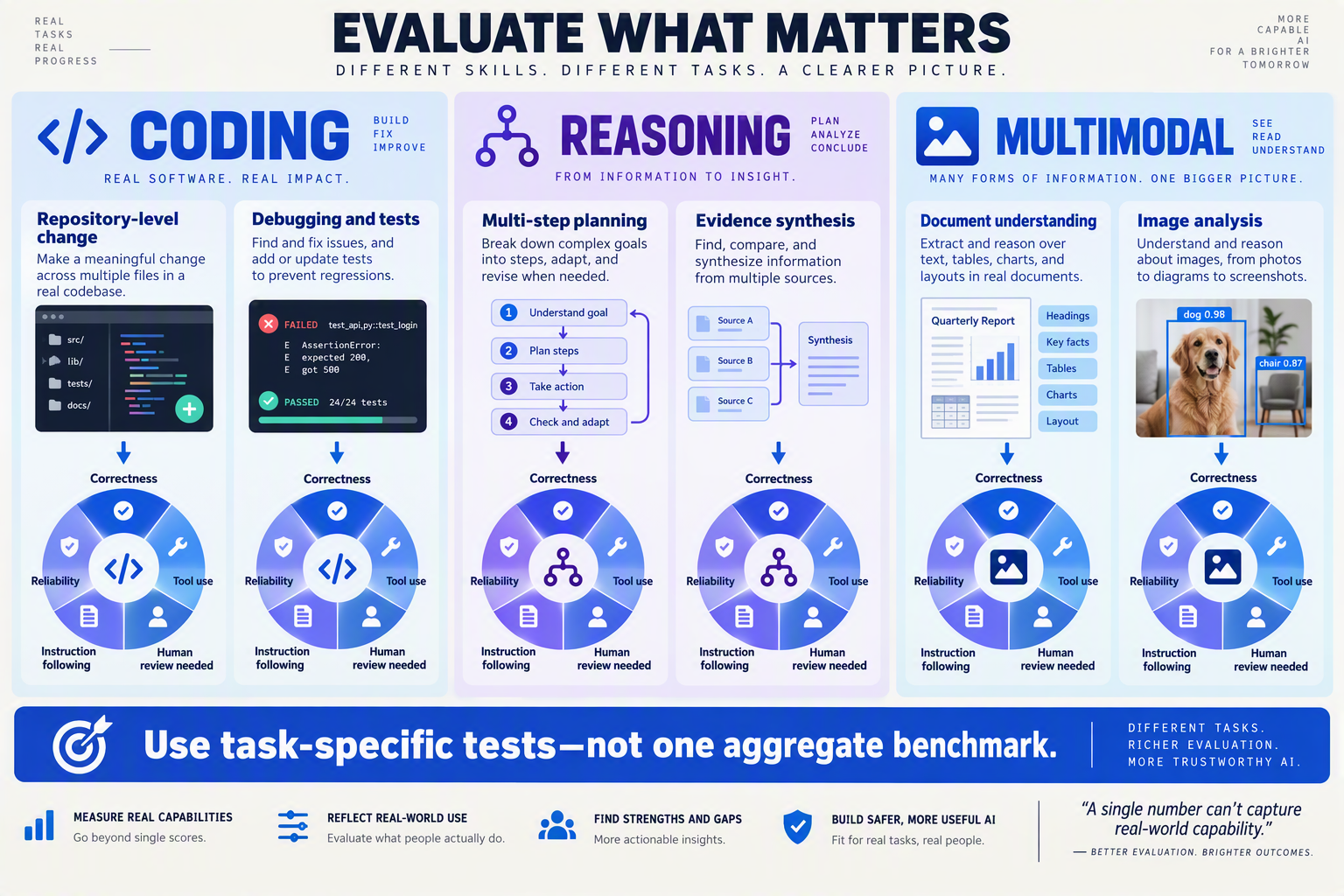
The supplied research does not establish whether Claude Opus 5.5 or Gemini 3.8 Flash is better for coding, reasoning, or multimodal work. It provides no comparable benchmark results and does not confirm the exact models’ modality coverage, tool-use behavior, context limits, or production API specifications as of September 2026.
What evidence is confirmed for Claude Opus 5?
Anthropic describes the broader Claude Opus 5 line as its flagship tier and lists standard pricing of $5 per million input tokens and $25 per million output tokens as of September 2026. Anthropic also advertises savings of up to 90% through prompt caching and 50% through batch processing.
Those facts help estimate the economics of the general Opus 5 family, but they are not evidence that the exact Claude Opus 5.5 identifier has identical pricing, coding performance, context length, or multimodal capabilities. Although Anthropic’s pricing documentation references an Opus 5.5 cache-hit rate, the supplied research does not include a complete, comparable 5.5 specification.
The research provides even less verified detail for the exact Gemini 3.8 Flash model. Consequently, claims that Gemini 3.8 Flash is faster, cheaper, more multimodal, or better at agentic coding would be premature without an official model card, API documentation, and reproducible tests.
How should you test coding performance?
Run both API candidates against the same private and public workload rather than relying on unrelated leaderboard scores:
- Repository repair: Give each model identical failing tests, repository context, and edit permissions. Measure the percentage of patches that pass without human correction.
- Code generation: Test functions with hidden unit tests covering edge cases, security constraints, and malformed inputs.
- Agentic coding: Use the same tool schemas, command limits, retry policy, and token budget. Record tool-call validity, unnecessary calls, completion time, and total cost.
- Code review: Seed realistic concurrency, authentication, injection, and resource-management defects, then score recall and false positives.
Report median and p95 latency, tokens consumed, successful tasks per dollar, and the rate of syntactically valid structured outputs.
How should you compare reasoning quality?
Reasoning evaluations should reward correct, auditable conclusions—not merely long explanations. Use a blinded test set containing multi-step planning, quantitative problems, constraint satisfaction, document synthesis, and cases where the correct response is to request missing information.
For each model, keep the prompt, temperature, reasoning budget, context, tools, timeout, and retry rules identical. Score final-answer accuracy, instruction compliance, citation grounding, consistency across repeated runs, and cost per accepted answer. Separate tool-assisted results from closed-book results because search or calculator access can materially change the outcome.
How should you validate multimodal inputs?
Do not assume that either exact model accepts images, audio, video, or mixed documents until its official API schema confirms support. A practical multimodal validation set should include:
- Screenshots with small text and UI-state questions.
- Charts requiring numerical extraction rather than visual description.
- Scanned PDFs with tables, handwriting, and rotated pages.
- Multiple images requiring cross-image comparison.
- Adversarial images containing irrelevant or conflicting instructions.
Verify supported file types, size limits, image-count limits, tool compatibility, data-retention terms, and regional availability. The better model is the one that meets your quality threshold at the required latency, reliability, and cost on your own workload—not the one with the stronger unverified label.
How can you run a reproducible Opus-versus-Flash API test?
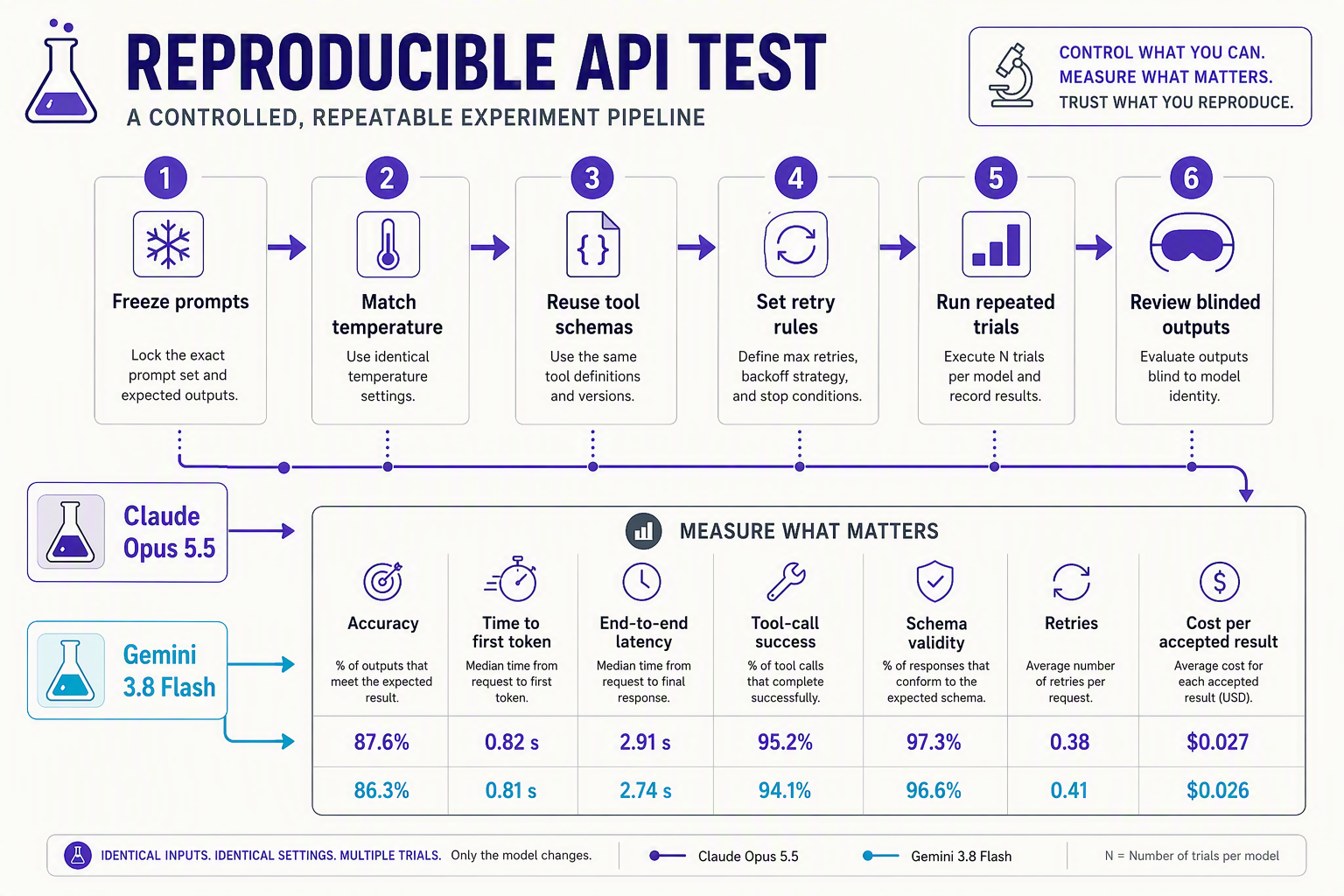
A reproducible Claude Opus 5.5 versus Gemini 3.8 Flash API test requires verified production model IDs, frozen configurations, representative workloads, and repeated measurements under equivalent conditions. Until Anthropic and Google document both exact endpoints and specifications, results must be labelled provisional—not presented as a definitive model comparison.
How should you verify the models before testing?
Create a dated manifest for each endpoint and preserve screenshots or archived documentation. Record:
- Exact API model ID, provider, region and API version
- Lifecycle status: preview, generally available, deprecated or alias
- Context window, maximum output and supported modalities
- Standard, cached-input, batch and priority-processing prices
- Tool calling, structured output, seed and reasoning controls
- Rate limits, data-retention settings and service tier
This distinction matters because aliases can silently move to newer snapshots. Anthropic’s pricing documentation referenced a $0.20-per-million-token cache-hit rate for Claude Opus 5.5 as of September 2026, but that figure alone does not verify the endpoint’s complete pricing or technical specification. Anthropic separately priced Claude Opus 5 at $5 per million input tokens and $25 per million output tokens, according to its 2026 announcement; those prices should not automatically be assigned to Opus 5.5.
No exact Gemini 3.8 Flash API conclusion should be published without equivalent Google documentation confirming its model ID, availability and prices.
Which controls make the comparison reproducible?
Use a public test manifest and follow the same procedure for both providers:
- Version every prompt. Store system instructions, user messages, few-shot examples and expected answers in source control.
- Match generation settings. Use identical temperatures, output-token limits, stop sequences and tool schemas where both APIs support them. Document unsupported controls rather than approximating them silently.
- Define seed and retry rules. Fix the seed where supported; otherwise run at least five independent trials. Retry only documented transient errors such as HTTP 429 or 5xx responses, using the same backoff schedule.
- Disable hidden advantages. Turn off fallback models, response caching and prompt caching for the primary quality and latency run. Test caching separately.
- Control infrastructure. Use the same client region, connection reuse, concurrency levels and test windows. Run warm-up requests before collecting results.
CallMissed, the OpenAI-compatible and Anthropic-compatible AI gateway, provides usage and request logs plus caller-chosen fallback models as of September 2026. A gateway can simplify test orchestration, but evaluators should disable fallbacks and first confirm that each required model snapshot is actually available.
What workloads and metrics should the benchmark include?
Build a versioned dataset spanning coding, reasoning, long-context retrieval, multimodal understanding, structured extraction and tool use. Include realistic short and long prompts, easy and adversarial cases, and high-concurrency automation workloads.
Report these metrics separately:
- Task success: exact match, unit-test pass rate or rubric score
- Structured-output validity: percentage of responses passing JSON Schema
- Tool reliability: invalid arguments, wrong-tool calls and execution failures
- Latency: time to first token plus end-to-end p50, p95 and p99
- Throughput: completed requests and generated tokens per minute
- Total cost: input, output, cached tokens, reasoning tokens, retries and tool calls
Finally, randomize outputs and have at least two blinded human reviewers score correctness, completeness and instruction adherence. Publish disagreement rates and confidence intervals. Without verified endpoints and this controlled protocol, “Opus 5.5 wins quality” or “Gemini 3.8 Flash wins speed and cost” remains a hypothesis, not an exact benchmark conclusion.
What does each model really cost in high-volume production?
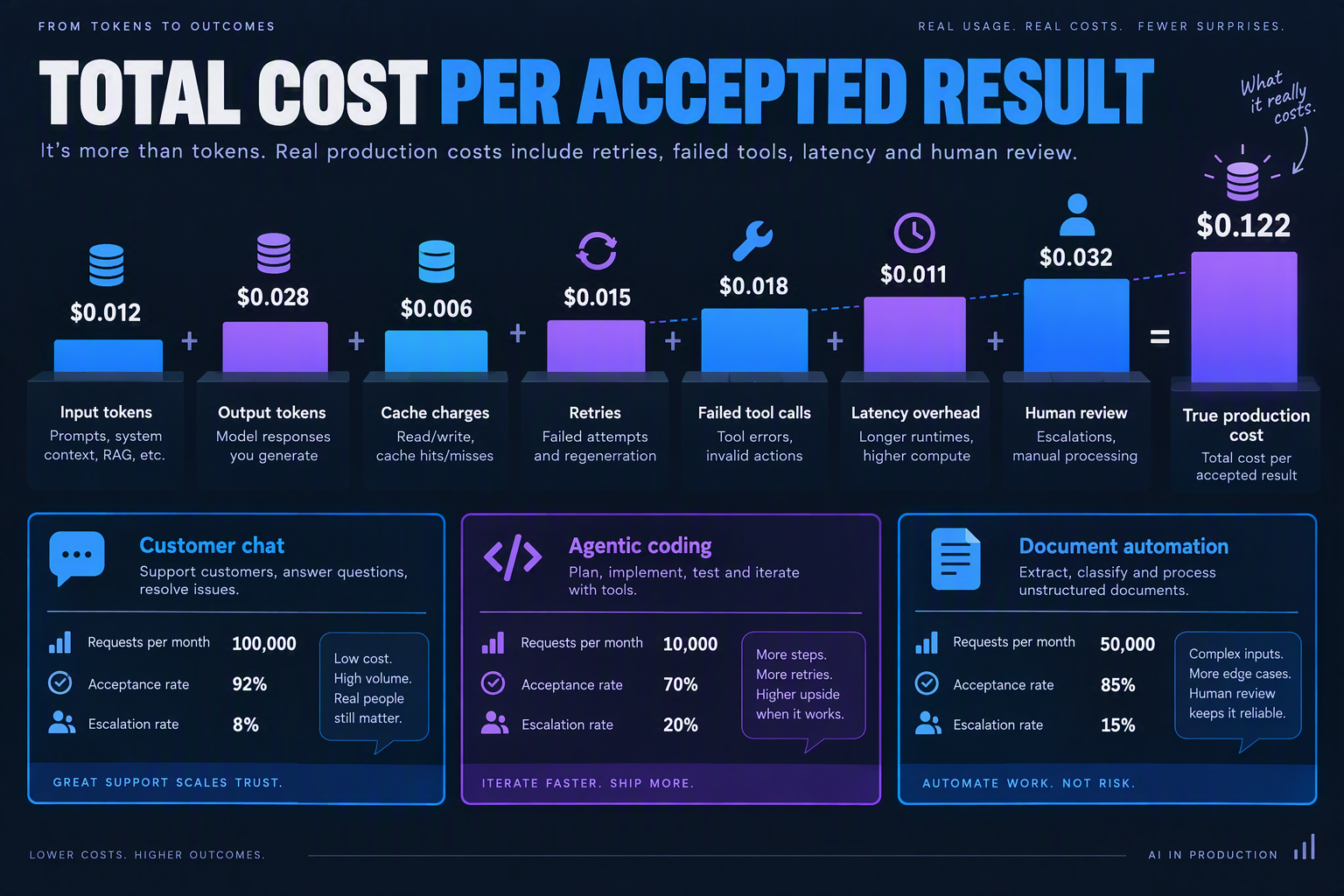
The true production cost of Claude Opus 5.5 versus Gemini 3.8 Flash cannot be calculated from token prices alone—and the supplied evidence does not verify standard API pricing for either named model. The confirmed Anthropic figures below apply to Claude Opus 5, not automatically to Claude Opus 5.5; no verified Gemini 3.8 Flash price is available in the supplied sources as of September 2026.
How much would Claude Opus 5 cost at scale?
Anthropic lists Claude Opus 5 at $5 per million input tokens and $25 per million output tokens as of September 2026. Because output tokens cost five times more than input tokens, response length can dominate the bill even when prompts are large.
For the introductory workload of 1 million input tokens plus 200,000 output tokens, the arithmetic is:
- Input: 1 × $5 = $5
- Output: 0.2 × $25 = $5
- Total: $10 before caching, retries and operational overhead
At 100,000 equivalent workloads per month, the nominal model charge would be $1 million per month. A smaller job using 10,000 input tokens and 2,000 output tokens has the same ratio and costs approximately $0.10, making one million such jobs about $100,000.
These are Opus 5 estimates, not confirmed Opus 5.5 prices. Anthropic’s documentation mentions separate Claude Opus 5.5 cache-hit pricing, but that does not establish the model’s complete standard input, output and cache-write rate card.
How much can prompt caching reduce the bill?
Anthropic states that Claude Opus 5 prompt caching can reduce eligible input costs by up to 90% as of September 2026. That maximum applies only to reusable prompt material that produces cache hits—not unique user context, generated output or failed requests.
Suppose 60% of the one-million-token input is reusable and receives a 90% discount:
- Uncached input: 400,000 tokens × $5/MTok = $2
- Cached input equivalent: 600,000 tokens × $0.50/MTok = $0.30
- Output: 200,000 tokens × $25/MTok = $5
- Estimated total: $7.30 instead of $10
Actual savings depend on cache-write charges, retention rules, hit rates and prompt stability.
Which hidden costs matter in high-volume automation?
A credible budget should model cost per successful business outcome, not cost per initial API call. Include:
- Retries: A 5% retry rate can turn a $100,000 nominal workload into roughly $105,000 before considering longer retry outputs.
- Invalid outputs: Malformed JSON or schema violations may require another generation or repair call.
- Tool failures: Timeouts in search, databases or external APIs can trigger repeated model and tool usage.
- Human review: Flagged coding changes, financial decisions and customer-facing responses create labor costs beyond tokens.
- Concurrency: Parallel traffic does not inherently change per-token pricing, but it can require higher rate limits, queueing infrastructure, reserved capacity and stronger failure handling.
Can Gemini 3.8 Flash production costs be compared yet?
Gemini 3.8 Flash API prices are not verified in the supplied evidence as of September 2026. Any precise claim that it is cheaper by a particular percentage would therefore be speculative. Buyers should obtain Google’s official input, output, cached-context and multimodal rates, then replay the same workload with identical prompts, tool schemas, concurrency, retry rules and success criteria before selecting the lower-cost production model.
How can teams reduce lock-in with direct APIs or CallMissed?
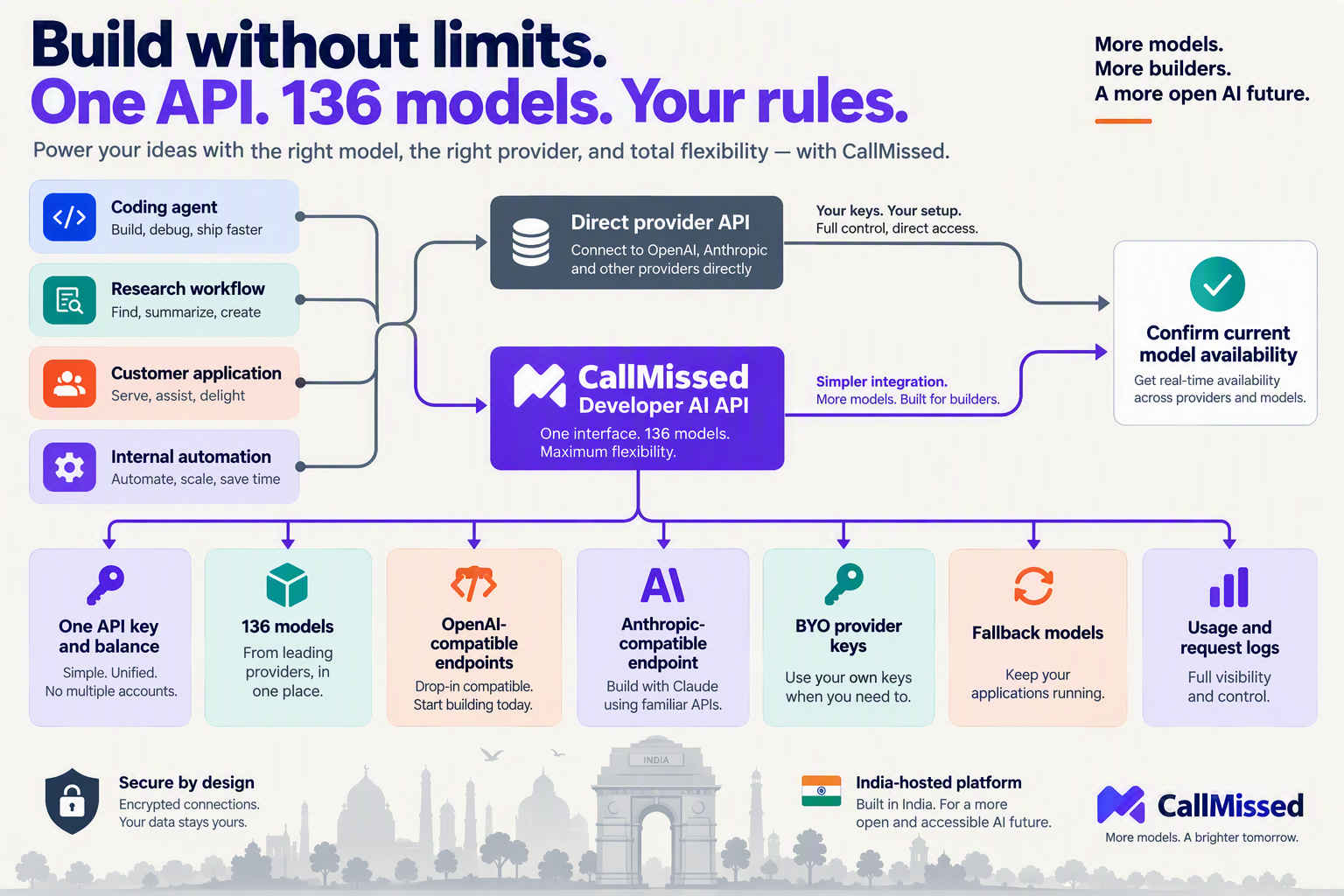
The strongest way to reduce model-provider lock-in is to separate application logic from provider-specific APIs while retaining direct API access for newly released features. Teams comparing Claude Opus 5.5 and Gemini 3.8 Flash should use a common abstraction, pin model versions, preserve portable evaluation data, and routinely test fallback paths.
Should teams use direct model APIs or an abstraction layer?
Direct Anthropic and Google APIs can provide immediate access to provider-native capabilities, controls, and release updates. However, embedding provider-specific request formats throughout an application makes later migration slower and riskier.
A practical architecture uses a thin internal adapter with normalized fields for:
- Messages, system instructions, and multimodal inputs
- Tool definitions and structured outputs
- Streaming events, errors, retries, and timeouts
- Token usage, latency, and cost metadata
- Model selection and fallback policies
Keep provider-specific features behind optional capability flags rather than forcing every model into an artificially identical interface. This preserves access to distinctive features without coupling the entire product to one API schema.
How does CallMissed support model portability?
As of September 2026, CallMissed, the OpenAI-compatible and Anthropic-compatible developer AI API, provides one API key and one balance for 136 models. Its catalogue includes 40 general-purpose large language models alongside voice, speech, image, and embedding models.
CallMissed supports OpenAI-compatible endpoints for chat completions, the Responses API, embeddings, images, transcription, translation, and speech. It also provides an Anthropic-compatible /v1/messages endpoint, allowing compatible SDK integrations to change the base URL rather than requiring a complete rewrite.
Other portability controls include:
- Caller-chosen fallback models, enabling the application to define alternatives
- Bring-your-own provider keys, which can preserve direct commercial relationships
- Request and usage logs for investigating output, reliability, and consumption
- Streaming, function calling, structured outputs, vision input, and reasoning-effort controls
The 136-model catalogue does not establish that Claude Opus 5.5 or Gemini 3.8 Flash is available through CallMissed. Teams should verify the current model catalogue before treating either model as a supported gateway target.
What lock-in safeguards should teams implement?
- Pin production model versions. Avoid silently moving critical workloads to an untested alias or successor version.
- Maintain an evaluation harness. Replay the same prompts, tool schemas, temperatures, retry rules, and scoring criteria across candidate models.
- Retain exportable application logs. Store prompts, outputs, tool calls, errors, latency, token usage, model identifiers, and evaluation scores in a portable format, subject to privacy requirements.
- Test fallbacks under realistic failures. Simulate rate limits, timeouts, malformed tool calls, context overflow, and provider outages—not merely successful requests.
- Separate routing from business logic. Model selection should be configurable without modifying workflows, databases, or user-facing code.
Direct APIs and gateways are not mutually exclusive. A resilient deployment can use direct APIs where provider-native features matter, while using an abstraction layer such as CallMissed for compatible workloads, centralized model access, logging, and tested fallback routes.
What do official documentation and independent tests actually prove?
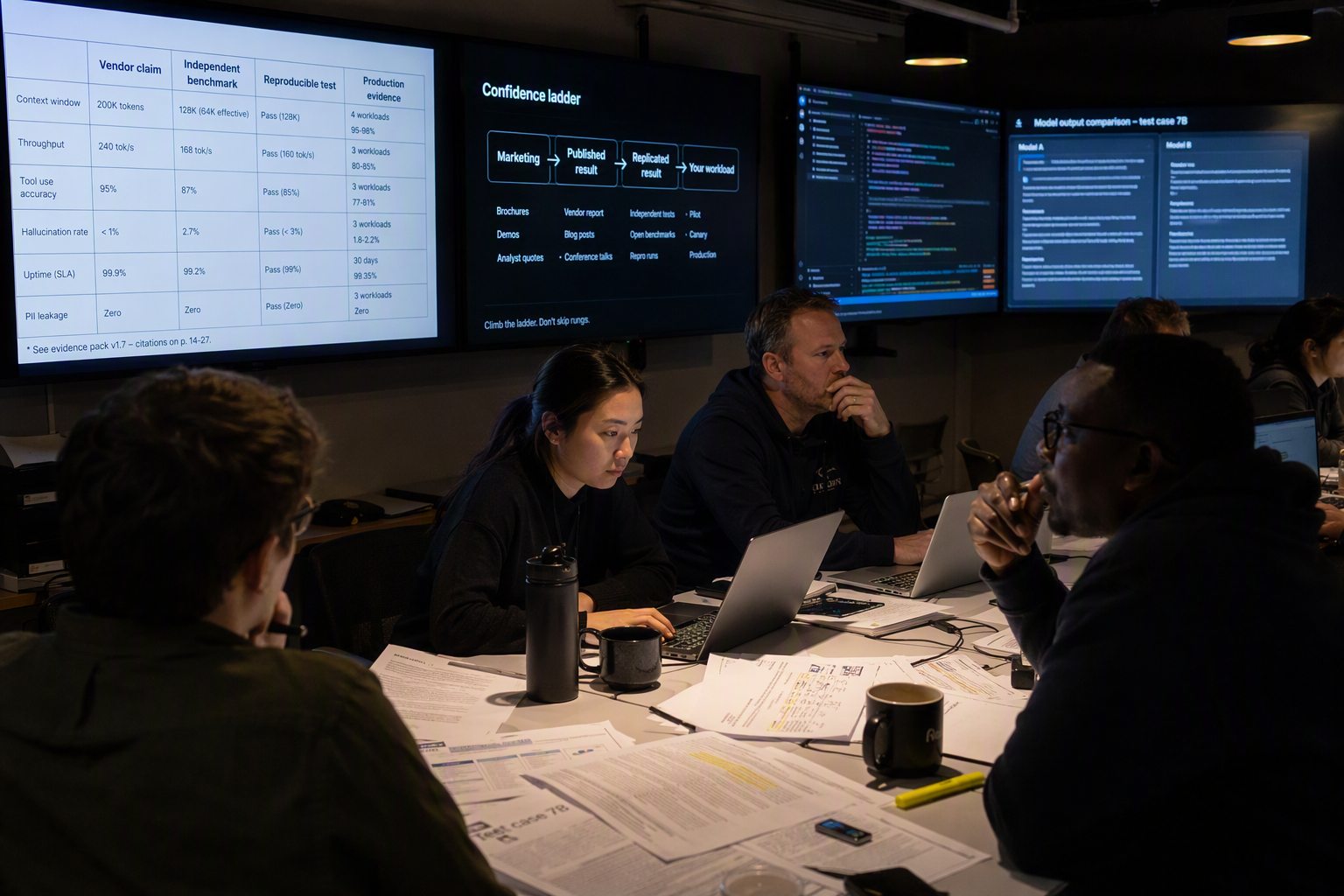
The supplied evidence proves that Claude Opus 5 is officially available at $5 per million input tokens and $25 per million output tokens, but it does not establish a complete API specification for a model called Claude Opus 5.5. Likewise, no supplied official Google document confirms the existence, API availability, pricing, or technical limits of Gemini 3.8 Flash.
What does Anthropic officially confirm?
Anthropic’s official “Introducing Claude Opus 5” announcement states that Claude Opus 5 is “available today on all platforms.” As of September 2026, Anthropic’s Claude Opus product material lists pricing starting at $5 per million input tokens and $25 per million output tokens.
The supplied Anthropic documentation also contains one specific reference to Claude Opus 5.5: Anthropic’s pricing documentation says an Opus 5.5 prompt-cache hit costs $0.20 per million tokens, described as 5% of its standard input price. However, that isolated pricing entry does not provide a full, exact Claude Opus 5.5 API specification.
The supplied sources do not collectively confirm all of the details API buyers would need, including:
- An exact Claude Opus 5.5 model ID
- General API access conditions and regional availability
- Maximum input context and output limits
- Standard input, output, cache-write, and fast-mode prices
- Supported modalities, tools, structured outputs, and rate limits
- A release announcement clearly distinguishing Opus 5.5 from Opus 5
Consequently, this comparison should not silently apply Claude Opus 5 specifications to Claude Opus 5.5.
What does Google officially confirm about Gemini 3.8 Flash?
No supplied official Google AI or Google Cloud document confirms Gemini 3.8 Flash as of September 2026. Therefore, claims about Gemini 3.8 Flash API pricing, context length, latency, coding scores, multimodal inputs, quotas, or production availability remain unverified within the available evidence.
A search result, third-party model directory, leaked identifier, preview endpoint, or benchmark submission is not equivalent to a Google model card, Vertex AI documentation, Gemini API pricing page, or contractual service schedule. Until Google publishes such material, a responsible Gemini 3.8 Flash vs Opus 5 comparison must label Gemini 3.8 Flash specifications as provisional rather than presenting them as purchasing facts.
What can independent tests prove?
Independent testing can establish observed performance under disclosed conditions. A reproducible evaluation can compare:
- Coding-task completion and test-pass rates
- Reasoning accuracy on a fixed question set
- Time to first token and total response latency
- Tokens consumed and observed cost per completed task
- Tool-call validity, JSON compliance, and retry frequency
- Image, document, or audio performance when those inputs are available
Tests should use identical prompts, tool schemas, temperatures, timeout policies, and retry rules. Platforms such as CallMissed, the OpenAI- and Anthropic-compatible developer AI API, can support consistent test harnesses across available models, but benchmark results still describe a particular configuration—not universal model quality.
Only official documentation, provider consoles, invoices, and enterprise contracts can establish durable commercial facts such as list pricing, model identity, context limits, service availability, data-handling terms, quotas, support commitments, and deprecation policy. Independent benchmarks inform performance decisions; they cannot substitute for contractual verification.
Which API is best for your workload in 2026?
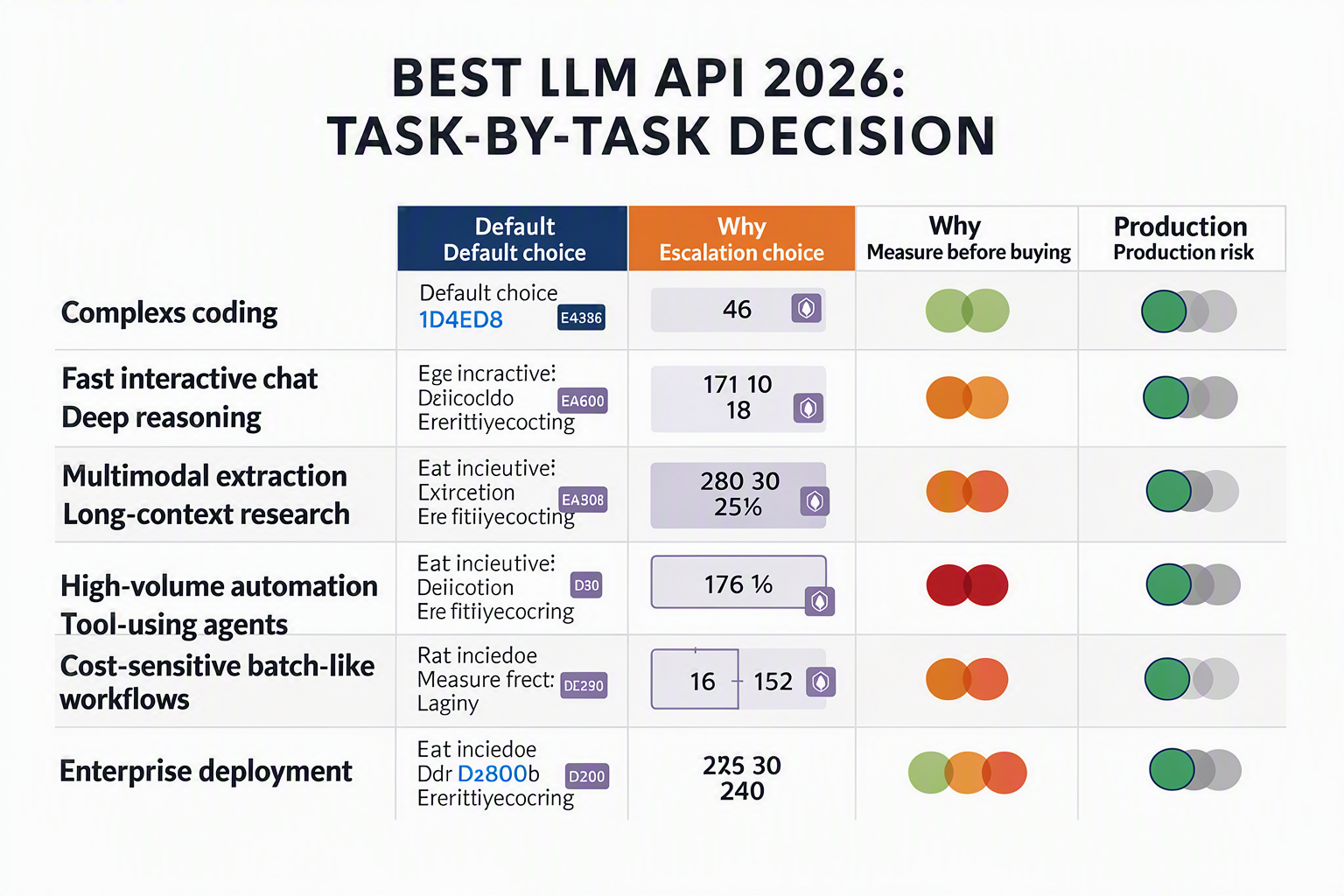
No universal winner can be verified for Claude Opus 5.5 vs Gemini 3.8 Flash as of September 2026 because the supplied evidence does not confirm production API endpoints, exact model IDs, pricing, limits and deployment controls for both named models. Select an API only after testing verified endpoints against the same quality, latency and cost criteria.
Which model fits each production workload?
| Workload | Decision rule | Evidence needed before selection | Pilot gate |
|---|---|---|---|
| Hard coding and reasoning | Prefer the endpoint that solves more representative tasks correctly, even if it costs more or responds more slowly. | Exact model ID; pass rate on private repositories; tool-call accuracy; reasoning consistency; regression rate; output-token price. | Run identical prompts, tool schemas, temperatures, token budgets and retry rules across at least three repetitions per task. |
| Routine high-volume automation | Prioritize cost per successful job, throughput and predictable tail latency—not the lowest advertised token price alone. | Input, output and cached-token prices; rate limits; p50/p95 latency; retry frequency; structured-output validity; batch availability. | Simulate peak traffic and calculate total cost per 1,000 completed jobs, including failed calls and retries. |
| Long-context and multimodal work | Choose based on retrieval accuracy and usable context, rather than the maximum context-window headline. | Context limit; maximum output; supported image, audio and document inputs; file limits; “needle-in-a-haystack” accuracy; latency by prompt size. | Test real documents at 25%, 50%, 75% and 100% of the claimed context capacity. |
| Enterprise procurement | Select only when commercial, security and governance terms satisfy organizational policy. | Data retention; training-use policy; regional processing; data residency; audit logs; access controls; support terms; quotas and service commitments. | Obtain written confirmation of exact data and region controls for the production endpoint. |
| Routing and fallback design | Route complex tasks to the stronger measured endpoint and routine requests to the faster or cheaper measured endpoint. | Cross-provider error handling; fallback compatibility; model-version pinning; observability; rate limits; failover quality and cost. | Test outages, timeouts, malformed outputs, quota exhaustion and model-version changes before launch. |
What published evidence is safe to use?
Anthropic announced that Claude Opus 5—not necessarily the exact “Claude Opus 5.5” endpoint—was available across its platforms at $5 per million input tokens and $25 per million output tokens, according to Anthropic’s published product material available in September 2026. Anthropic’s documentation also lists a $0.20-per-million-token cache-hit price for Claude Opus 5.5, equal to 5% of its stated standard input price, but buyers should still obtain the precise API model string and availability terms before treating that listing as production confirmation.
The supplied sources provide no equivalent official endpoint, price or context specification for Gemini 3.8 Flash. Consequently, neither exact model should be declared the best LLM API in 2026 from names, product tiers or unverified benchmark summaries alone.
How should teams run the final pilot?
Require each vendor or gateway to expose:
- The exact model ID and version-pinning policy
- Current input, output, caching and tool-use prices
- Context, output, file and rate limits
- Data retention, training-use and regional-processing controls
- Measured accuracy, p50/p95 latency and cost on the same workload
For multi-model evaluation, CallMissed’s OpenAI-compatible developer API provides one API key and balance for 136 models as of September 2026, with caller-chosen fallbacks, request logs and usage logs. Regardless of platform, route production traffic only after the specific tested model IDs are confirmed and the pilot demonstrates acceptable quality, latency, reliability and total cost.
Frequently Asked Questions
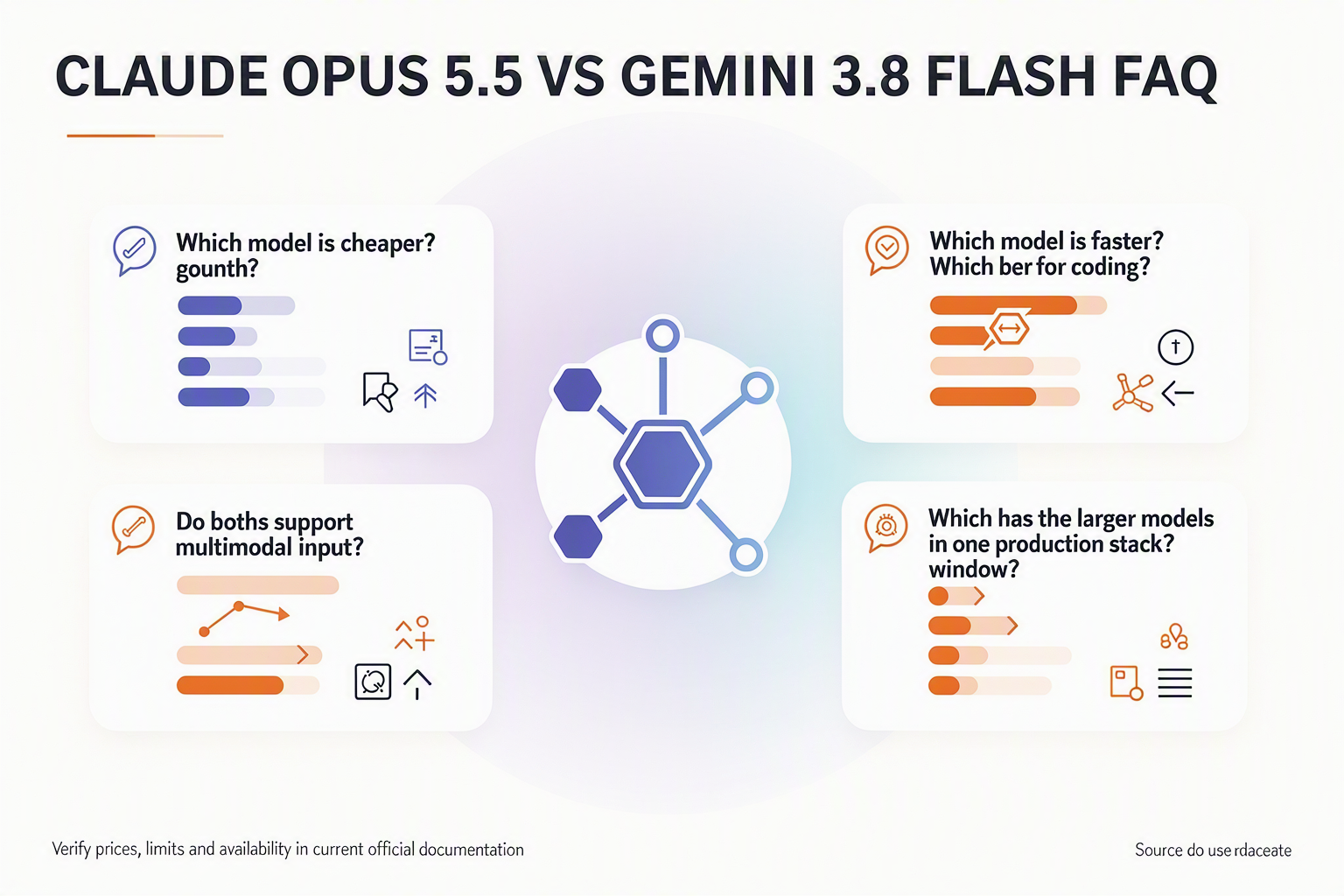
Is the Claude Opus 5 API available?
Are the full Claude Opus 5.5 specifications established by the supplied evidence?
Is Gemini 3.8 Flash API availability and pricing verified?
Can Claude Opus 5 pricing be used as Claude Opus 5.5 pricing?
Which model is the best LLM API in 2026 for coding, reasoning and multimodal work?
How should buyers run a Claude Opus 5.5 vs Gemini 3.8 Flash evaluation?
Conclusion
There is no evidence-based winner between Claude Opus 5.5 and Gemini 3.8 Flash as of September 2026. API buyers should treat both exact-version labels cautiously, confirm production availability and run a workload-specific pilot before making architectural or budget commitments.
- Claude Opus 5 has the clearest verified commercial baseline. Anthropic officially prices Claude Opus 5 at $5 per million input tokens and $25 per million output tokens as of September 2026, with prompt caching offering savings of up to 90%. That makes the model a credible candidate for complex coding, multi-step reasoning and other high-value tasks where errors are expensive.
- Claude Opus 5.5 remains only partially documented in the supplied evidence. Anthropic’s documentation references a Claude Opus 5.5 cache-hit price of $0.20 per million tokens as of September 2026, equivalent to 5% of the stated standard input price. However, the supplied material does not provide a complete exact-version model card covering the API identifier, standard token prices, context window, output limit, multimodal support or deployment conditions.
- Gemini 3.8 Flash cannot yet be assessed as a verified production API choice. The supplied official Google evidence does not confirm an API model ID, pricing, context window, multimodal limits or availability for that exact version as of September 2026. Its presumed speed-and-cost advantages should therefore be treated as testable hypotheses rather than purchasing facts.
- Total cost per successful task matters more than headline token pricing. A fair pilot should hold prompts, temperatures, tool schemas, concurrency and retry policies constant while measuring p50, p95 and p99 latency, structured-output failures, tool-call accuracy, retries, human-review time and final task success.
The next signals to watch are complete provider model cards, stable API identifiers, generally available pricing, published limits and reproducible coding or reasoning evaluations. Once those details arrive, enterprises can compare flagship quality against Flash-class throughput using their own traffic rather than synthetic rankings alone.
Teams building a flexible evaluation stack can also explore CallMissed, an OpenAI-compatible developer AI API offering one key and one balance across 136 models as of September 2026. The decisive question is not “Which model wins?” but which verified model delivers the lowest risk-adjusted cost for your exact workload?
Related Reading
- Claude Opus 5 Migration Guide: API Pricing for 2026
- Claude Opus 5.5 vs Gemma 4 31B: Hosted or Open?
- Claude Opus 5.5 vs GLM 5.3: 2026 Developer Guide
Sources
Discussion
Related Posts


Ready to automate customer conversations?
Launch AI voice agents and WhatsApp bots with CallMissed — one API, 22+ Indian languages.