
Claude Opus 5.5 API Pricing, Features and Guide


Get verified Claude Opus 5.5 API pricing, model ID, context limits, setup steps, use cases, migration advice and production caveats.
Claude Opus 5.5 API Pricing, Features and Guide
What if a flagship AI model delivered nearly the same performance as a newer mid-tier model while costing 40% less than its own predecessor? Anthropic says Claude Opus 5.5 does exactly that: released on September 22, 2026, it performs at the level of Claude Fable 5.1 on most work while reducing typical running costs by about 40% compared with Claude Opus 5.
That combination makes Claude Opus 5.5 API pricing, features and access immediately relevant to developers deciding whether premium intelligence still justifies a premium bill. Anthropic introduced Opus 5 only on July 24, 2026, so the rapid arrival of Opus 5.5 also shows how quickly model economics and capability tiers are changing. A model name alone no longer tells teams enough: production decisions now depend on verified token prices, context limits, tool use, coding reliability, availability and operational constraints.
This guide separates confirmed facts from assumptions. It explains:
- What Claude Opus 5.5 is and how it fits within Anthropic’s Claude portfolio
- Its official release and availability status as of September 2026
- Verified API pricing, context-window details and access methods
- Features relevant to coding, agents, deep research and everyday knowledge work
- Practical limitations, safety considerations and workload trade-offs
- How to decide whether Opus 5.5—or a faster, lower-cost model—is appropriate for a particular application
The timing matters beyond price. Anthropic’s September 2026 materials describe Claude Opus 5.5 as its most capable Opus model for everyday work and highlight more natural communication, while the accompanying system card documents the safety evaluation behind the release. Anthropic also says the model launches with preserved thinking, an anti-distillation safeguard first introduced with Claude Fable 5.1—an important consideration for organizations assessing both capability and governance.
For developers who prefer a unified integration layer, CallMissed’s OpenAI-compatible and Anthropic-compatible API provides one key and balance across 138 models, including models from Anthropic and other major makers, as of September 2026. The sections ahead focus on the evidence needed to evaluate Claude Opus 5.5 clearly: what Anthropic has actually announced, what the API costs, where the model is strongest and where implementation teams should remain cautious.
Is Claude Opus 5.5 officially released and available as of September 29, 2026?
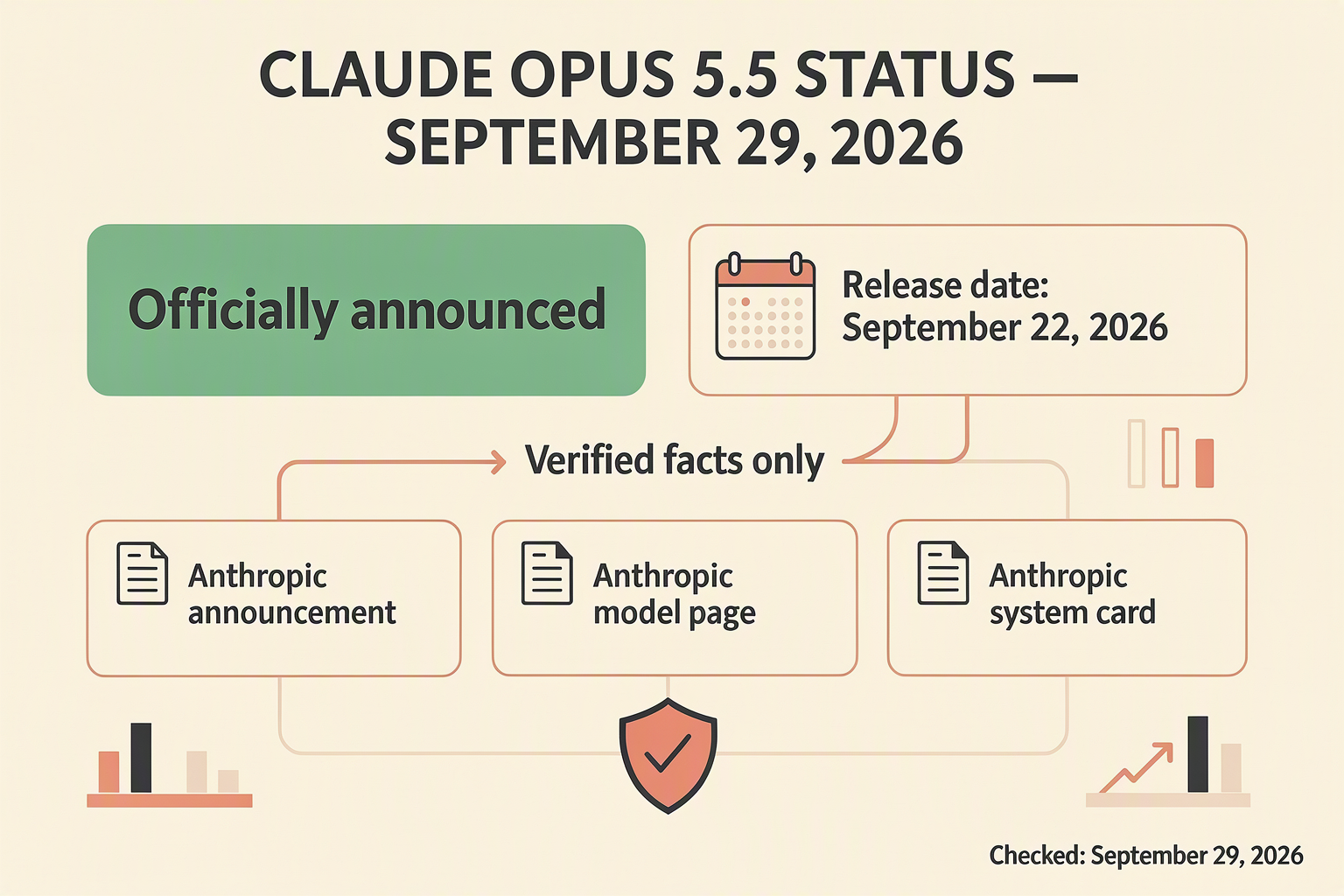
Yes. Anthropic officially released Claude Opus 5.5 on September 22, 2026. As of September 29, 2026, it is available through the Anthropic API under the model ID claude-opus-5-5. This is a production release, not a rumored model, preview or future announcement.
What confirms the Claude Opus 5.5 release?
Anthropic’s first-party launch announcement and model documentation confirm:
- Release date: September 22, 2026
- API model ID:
claude-opus-5-5 - Context window: 1 million tokens
- Maximum output: 128,000 tokens
- API pricing: $4 per million input tokens and $20 per million output tokens
- Thinking mode: Always-on adaptive thinking
Together, these details establish that Claude Opus 5.5 is officially released, documented and accessible through Anthropic’s API.
When was Claude Opus 5.5 released?
The official Claude Opus 5.5 release date is September 22, 2026. Therefore, the model had been publicly available for one week as of September 29, 2026.
The relevant timeline is:
- September 22, 2026: Anthropic launched Claude Opus 5.5
- September 29, 2026: Claude Opus 5.5 remains officially released and available through the Anthropic API
What are the officially verified specifications?
Anthropic documents Claude Opus 5.5 with the following core specifications:
| Specification | Claude Opus 5.5 |
|---|---|
| Model ID | claude-opus-5-5 |
| Context window | 1 million tokens |
| Maximum output | 128,000 tokens |
| Input price | $4 per million tokens |
| Output price | $20 per million tokens |
| Thinking | Always-on adaptive thinking |
| Primary focus | Long-running agentic coding and knowledge work |
The combination of a 1-million-token context window and 128,000-token maximum output is intended for tasks that require extensive source material, sustained reasoning or long generated results.
What is Claude Opus 5.5 designed for?
Anthropic positions Claude Opus 5.5 for long-running agentic coding and knowledge work. Relevant use cases include:
- Working across large software repositories
- Executing extended coding and debugging workflows
- Analyzing lengthy collections of documents
- Producing substantial technical or research outputs
- Handling multi-step tasks that require sustained context
- Supporting agents that use tools over longer-running workflows
Its always-on adaptive thinking means reasoning behavior is built into the model’s operation rather than exposed only as an optional mode.
Does availability mean every provider offers it?
No. The confirmed conclusion is that Claude Opus 5.5 is released and available directly through Anthropic’s API as claude-opus-5-5. Availability through third-party gateways, cloud platforms, regional services or specific subscription plans should be checked separately.
Before implementation, verify:
- That your account can access
claude-opus-5-5 - Whether a third-party provider supports the exact model ID
- Provider-specific regional restrictions and rate limits
- Any additional platform fees or modified pricing
- Whether the full context and output limits are available through that access route
As of September 29, 2026, there is no ambiguity about the core status: Claude Opus 5.5 is an officially released Anthropic model with documented API access, specifications and pricing.
Which developments define the Claude 5.5 launch timeline?
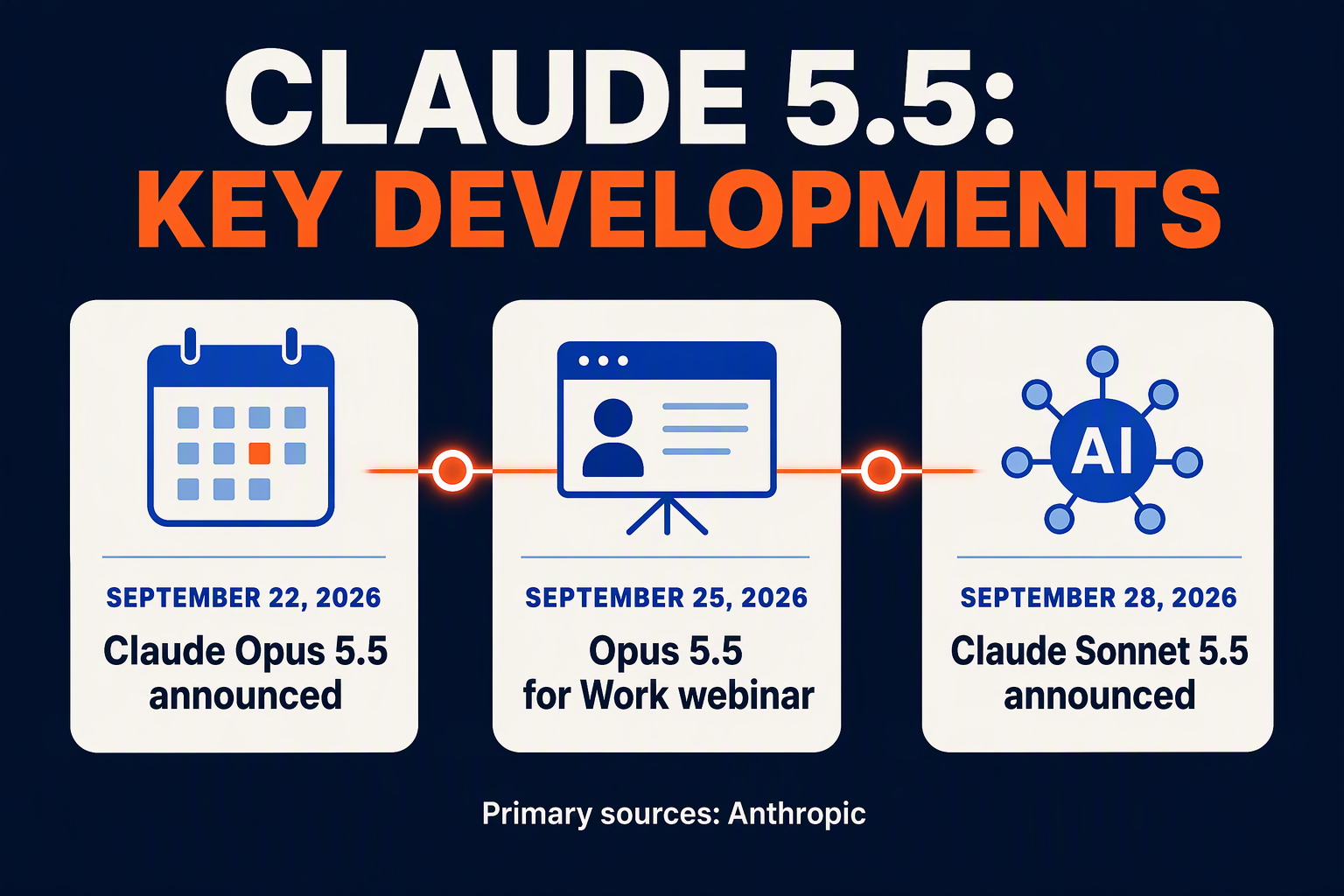
The Claude 5.5 launch timeline moved from Claude Opus 5 to Claude Opus 5.5 in just 60 days, followed by work-focused guidance and the expansion of the 5.5 family. The defining developments are Anthropic’s September 22 release, its accompanying safety documentation, preserved-thinking safeguard and subsequent Claude Sonnet 5.5 launch.
What happened during the Claude Opus 5.5 launch?
| Date | Development | Verified source | Why it matters |
|---|---|---|---|
| July 24, 2026 | Anthropic introduced Claude Opus 5 | Anthropic Claude Opus product page | Established the direct predecessor and baseline for Opus 5.5’s cost comparison |
| September 22, 2026 | Claude Opus 5.5 officially launched | Anthropic announcement | Confirmed release rather than a preview, leak or unverified model name |
| September 22, 2026 | Anthropic published the Claude Opus 5.5 System Card | Anthropic system card | Documented capability and safety evaluations accompanying deployment |
| September 22, 2026 | Opus 5.5 launched with preserved thinking | Anthropic launch announcement | Extended the anti-distillation safeguard introduced with Claude Fable 5.1 |
| September 25, 2026 | Anthropic hosted Opus 5.5 for Work | Anthropic webinar listing | Positioned the model for everyday organizational work and more natural communication |
| September 28, 2026 | Anthropic released Claude Sonnet 5.5 | Anthropic announcement | Expanded Claude 5.5 into a family rather than leaving “5.5” as an Opus-only designation |
Why is the 60-day release interval significant?
Anthropic’s product page dates Claude Opus 5 to July 24, 2026, and Claude Opus 5.5 to September 22, 2026—a gap of exactly 60 days. That unusually short interval means buyers should treat major model names as rapidly changing operational choices, not long-lived procurement categories.
The 5.5 update also changed the value calculation. Anthropic stated on September 22, 2026, that Claude Opus 5.5 performs at the level of Claude Fable 5.1 on most work while costing 40% less to run than Claude Opus 5. This is a vendor-reported comparison, so teams should still benchmark their own prompts, tools and output requirements before migrating production workloads.
Which launch details affect enterprise evaluation?
The release was more than a model checkpoint. Three developments deserve separate attention:
- Deployment evidence: The dated announcement and product listing establish that Claude Opus 5.5 was publicly released, while the system card shows that safety evaluation accompanied the launch.
- Anti-distillation controls: Anthropic’s September 2026 launch materials say preserved thinking is intended to make illicit distillation harder by protecting sensitive reasoning-related information.
- Portfolio context: Anthropic announced Claude Sonnet 5.5 on September 28, 2026, calling it the second model in the Claude 5.5 family. Consequently, references to “Claude 5.5” should specify Opus 5.5 or Sonnet 5.5, because the family name no longer identifies one model.
What does this timeline not confirm?
The timeline verifies release sequence, positioning and documented safeguards, but it does not by itself establish workload-specific quality, context limits, token pricing or API identifiers. Those details require separate confirmation from Anthropic’s technical and pricing documentation; release-day marketing claims should not be substituted for application-level testing.
How much does Claude Opus 5.5 API pricing cost in real workloads?
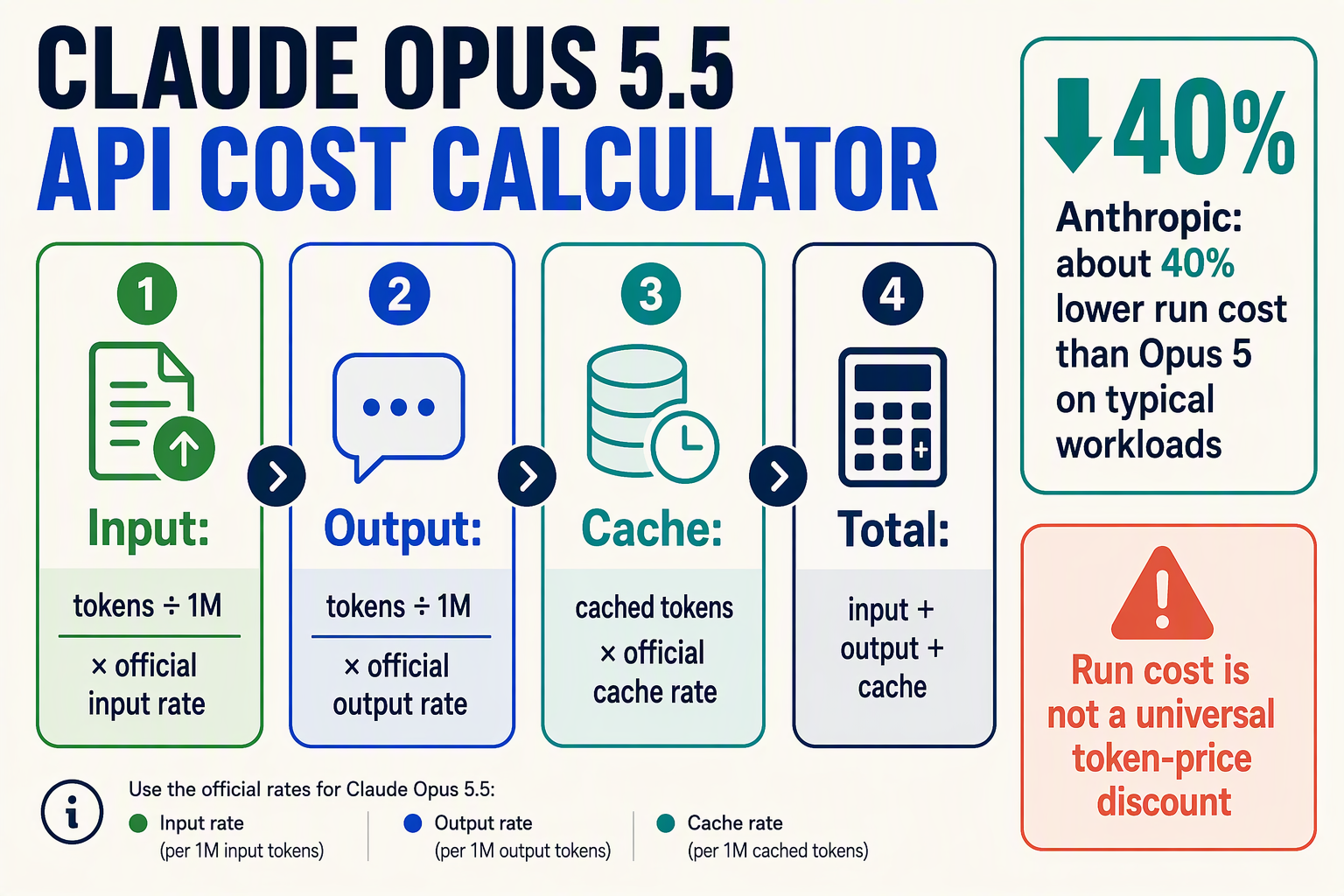
Anthropic says Claude Opus 5.5 costs about 40% less to run than Claude Opus 5 on typical workloads, meaning a comparable workload would cost roughly 60% of its previous amount. However, the September 2026 launch sources provided here do not publish verified per-million-token input, output or cache rates, so an exact token-level API price should not be inferred.
What does the 40% cost reduction mean for an existing workload?
Anthropic stated on September 22, 2026 that Claude Opus 5.5 “costs 40% less to run than Opus 5” while performing at the level of Claude Fable 5.1 on most work. Anthropic’s September 25, 2026 Opus 5.5 webinar describes the reduction more cautiously as “about 40%” on typical workloads.
Teams can therefore create an initial budget estimate using:
Estimated Opus 5.5 cost = comparable Opus 5 cost × 0.60
The following calculations are illustrative projections—not official Anthropic price quotes:
| Example real-workload profile | Previous Opus 5 cost | Estimated Opus 5.5 cost | Estimated saving |
|---|---|---|---|
| Small coding evaluation | $10 | About $6 | About $4 |
| Daily document-analysis jobs | $100 | About $60 | About $40 |
| Production coding assistant | $500 | About $300 | About $200 |
| Multi-step research agents | $1,000 | About $600 | About $400 |
| Enterprise workflow deployment | $10,000 | About $6,000 | About $4,000 |
For example, an agentic coding workflow that previously generated a $1,000 Opus 5 bill would provisionally be budgeted at about $600 with Opus 5.5, assuming comparable requests, outputs, tools and retry behavior.
Why can the real Claude Opus 5.5 API bill differ?
The 40% figure is a typical-workload comparison, not a guarantee that every application’s invoice will fall by precisely 40%. Real expenditure depends on how the model behaves inside the complete system.
Important variables include:
- Prompt size: Repeatedly sending repositories, documents or long conversation histories increases processed input.
- Output length: Code generation and detailed research reports can produce substantially more output than classification tasks.
- Agent loops: Tool calls, verification steps and retries may cause one user request to trigger multiple model requests.
- Model behavior: A more capable model could finish work in fewer attempts, but that must be measured rather than assumed.
- Traffic patterns: Peak request volume, failed jobs and duplicate processing can change monthly costs even when unit prices remain stable.
How should teams verify API costs before production?
Use a measured evaluation rather than applying the headline percentage to traffic forecasts alone:
- Replay a representative workload containing short, long and tool-using requests.
- Record total input, output and repeated-request volume, not merely the number of user sessions.
- Compare task success and total cost per completed job against Claude Opus 5 or a lower-cost model.
- Confirm current unit rates in Anthropic’s official API pricing documentation before approving a production budget.
The most useful metric is cost per successful task, not cost per request. Anthropic’s September 2026 claim makes Claude Opus 5.5 economically promising, but production savings remain workload-dependent until token rates and measured usage are combined.
What features and context limits does Anthropic officially document?
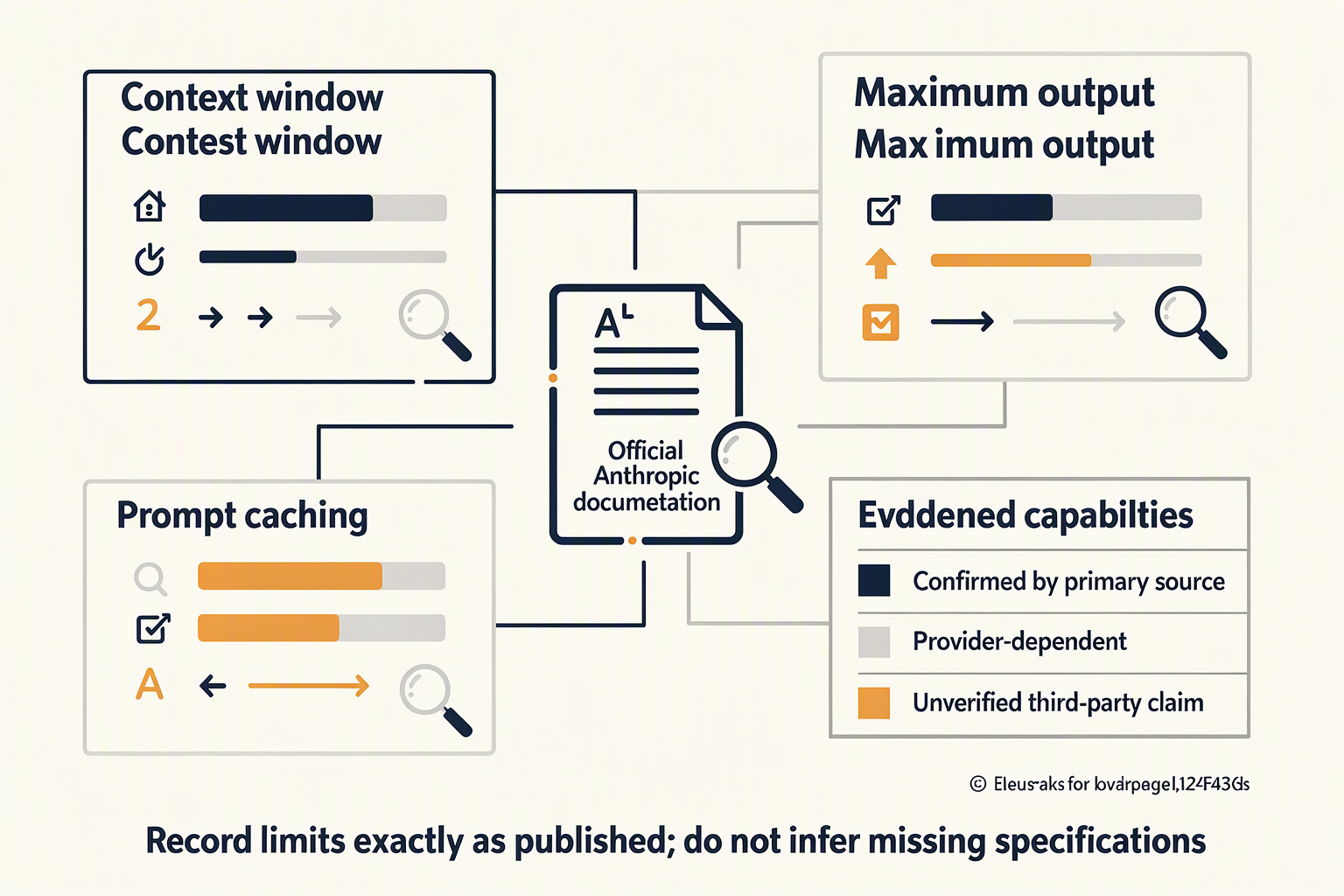
Anthropic officially documents Claude Opus 5.5 as a flagship model for everyday work with more natural communication and a security feature called preserved thinking. However, the official materials available for this guide do not specify a numerical context-window or maximum-output limit, so no token figure should be treated as verified as of September 29, 2026.
Which Claude Opus 5.5 features has Anthropic confirmed?
Anthropic’s September 2026 announcement and related materials confirm a focused set of capabilities and release characteristics:
- Everyday-work capability: Anthropic described Claude Opus 5.5 as its “most capable Opus model for everyday work” in its September 25, 2026 webinar listing.
- More natural communication: Anthropic’s September 25, 2026 webinar states that Claude Opus 5.5 “communicates more naturally,” although the supplied materials do not quantify that improvement with a named conversational benchmark.
- Strong performance across general work: Anthropic said on September 22, 2026 that Claude Opus 5.5 performs at the level of Claude Fable 5.1 on most work. “Most work” is broad wording, not a guarantee of parity on every task, language or benchmark.
- Preserved thinking: Anthropic’s September 22, 2026 announcement says Opus 5.5 launches with preserved thinking, the anti-distillation safeguard introduced with Claude Fable 5.1.
- Documented safety evaluation: Anthropic published the Claude Opus 5.5 System Card on September 22, 2026, providing first-party documentation of its safety and capability assessments.
Preserved thinking should not automatically be interpreted as a larger reasoning-token allowance, a visible chain of thought or an expanded context window. Anthropic explicitly presents it as an anti-distillation safeguard intended to make illicit extraction of model capabilities more difficult.
What is the Claude Opus 5.5 context window?
Anthropic’s supplied Opus 5.5 announcement, product-page listing, webinar description and system-card excerpt do not state an exact context-window size. They also do not provide a verified maximum output-token limit.
That distinction matters because three separate limits are often conflated:
- Context window: The combined token budget available for instructions, conversation history, uploaded material, tool results and generated output.
- Maximum input: The amount of content an application may send after accounting for system prompts and other request components.
- Maximum output: The upper bound on tokens the model can generate in one response.
Until Anthropic identifies these values in its model documentation or API reference, developers should avoid copying limits from Claude Opus 5, Claude Fable 5.1 or another Claude model. Models in the same family do not necessarily share identical operational limits.
How should teams verify context limits before deployment?
Production teams should confirm the active limits against Anthropic’s API documentation and the exact model identifier exposed to their account. A practical validation process is to:
- Check the model’s official API reference for input and output token ceilings.
- Test progressively larger requests in a non-production environment.
- Reserve output capacity rather than filling the entire context with input.
- Measure token use after adding system instructions, tool definitions and retrieved documents.
- Record the verified limit alongside the model version and verification date.
As of September 29, 2026, the defensible conclusion is straightforward: Claude Opus 5.5’s qualitative features are documented, but its numerical context and output limits are not established by the official source material supplied here.
How do you access the Claude Opus 5.5 API, model ID and Fast Mode?
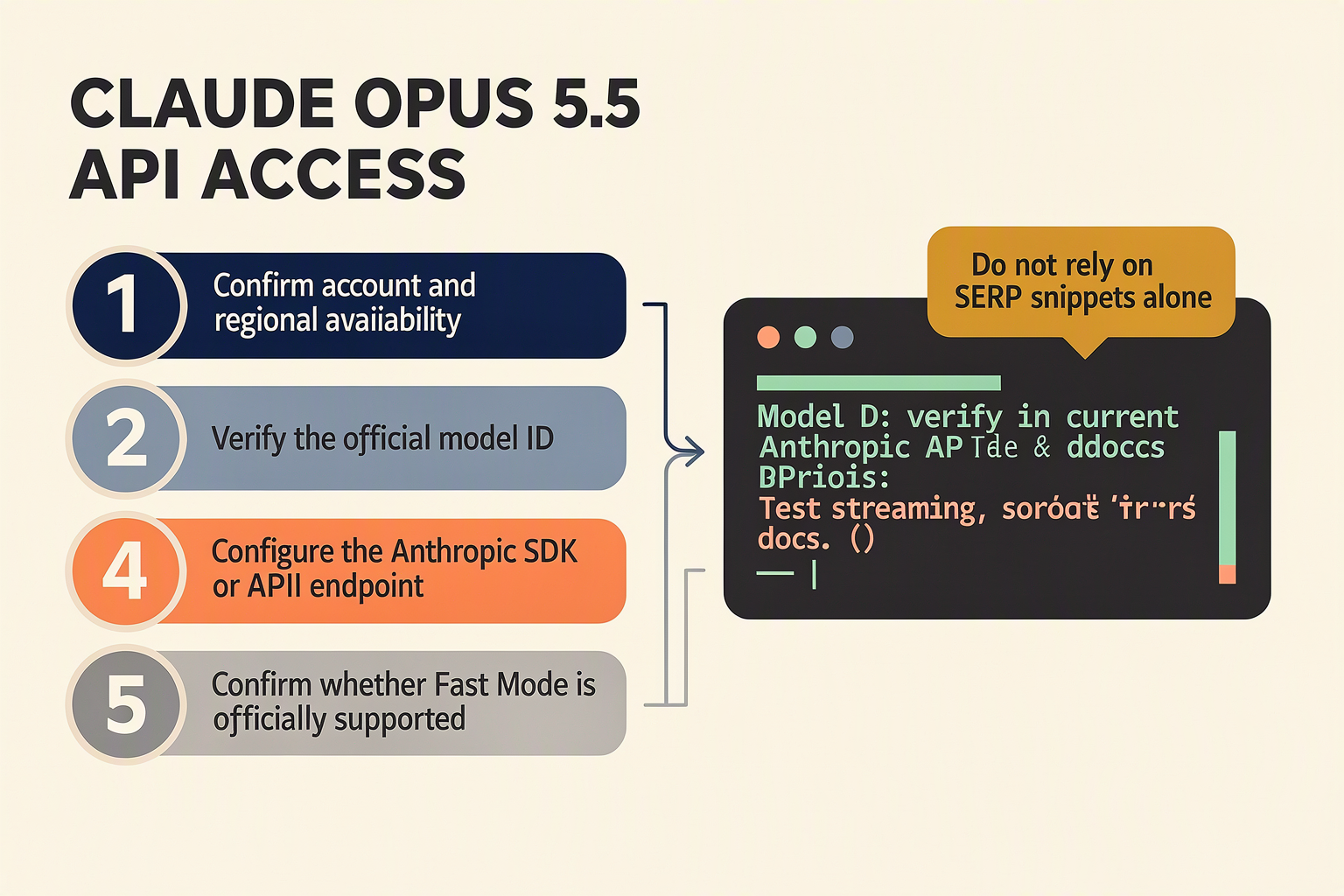
Developers can access Claude Opus 5.5 through Anthropic’s API, but they should copy the exact model ID and Fast Mode settings from Anthropic’s current console or documentation rather than infer them from the product name. As of September 29, 2026, the supplied first-party announcement confirms the model’s release, but it does not expose a verified model-ID string or establish that “Fast Mode” is a separate model.
What is the verified Claude Opus 5.5 model ID?
A model ID is the machine-readable identifier sent in an API request; it is not necessarily identical to the marketing name “Claude Opus 5.5.” Anthropic’s September 22, 2026 product announcement names Claude Opus 5.5 and confirms that it “performs at the level of Claude Fable 5.1 on most work,” but the provided announcement extract does not specify the production API identifier.
Therefore, developers should obtain the ID from one of these authoritative locations:
- The model selector in the Anthropic Console
- Anthropic’s current Models API or API documentation
- The deployment catalogue of an approved cloud provider, if using one
- A unified gateway’s live model catalogue
Avoid guessing identifiers such as claude-opus-5-5 or adding an assumed date suffix. A syntactically plausible but nonexistent ID will fail at runtime, while an alias may behave differently from a dated, pinned version.
How do you call Claude Opus 5.5 through the Anthropic API?
Once Anthropic has enabled the model for the account, call the standard Messages API and insert the verified identifier:
curl https://api.anthropic.com/v1/messages \
  -H "x-api-key: $ANTHROPIC_API_KEY" \
  -H "anthropic-version: 2023-06-01" \
  -H "content-type: application/json" \
  -d '{
    "model": "'"$CLAUDE_OPUS_5_5_MODEL_ID"'",
    "max_tokens": 1024,
    "messages": [
      {
        "role": "user",
        "content": "Review this migration plan and identify operational risks."
      }
    ]
  }'
For production deployments, keep the model ID in an environment variable or configuration service rather than hard-coding it. Teams should also log the resolved model identifier, token usage, request latency and errors so that aliases or account-level changes do not silently alter application behavior.
What is Claude Opus 5.5 Fast Mode?
The provided Anthropic sources do not define Fast Mode, publish a Fast Mode parameter or confirm a separate Fast Mode model ID as of September 29, 2026. Consequently, developers should not treat unverified names, screenshots or third-party flags as part of Anthropic’s supported API contract.
“Fast Mode” could potentially refer to several technically different mechanisms:
- A service tier that prioritizes request processing
- A latency-optimized inference setting
- A separate model endpoint or alias
- A Claude application interface option rather than an API feature
- A provider-specific deployment setting
Those possibilities have different pricing, capacity and output implications. Confirm whether Fast Mode changes token prices, rate limits, model behavior or availability before enabling it.
Anthropic said on September 25, 2026 that Claude Opus 5.5 costs about 40% less than Opus 5 on typical workloads, but that statement should not be interpreted as Fast Mode pricing. Until Anthropic publishes explicit Fast Mode documentation, the defensible implementation is to use the standard Opus 5.5 endpoint, benchmark latency under realistic concurrency and treat any acceleration option as provider-specific.
Which coding, agentic and business use cases suit Opus 5.5 best?

Claude Opus 5.5 is best suited to complex, high-value work where reasoning quality, natural communication and multi-step execution matter more than achieving the lowest possible cost or latency. Its strongest candidates include repository-scale coding, tool-using agents, deep research and consequential business-document workflows, although teams should validate each use case with their own evaluations.
Which coding tasks are a good fit for Claude Opus 5.5?
Claude Opus 5.5 is a strong candidate for difficult software-engineering tasks that require sustained reasoning across multiple files or constraints. Anthropic’s Claude Opus product history describes Claude Opus 5, released July 24, 2026, as delivering stronger coding; Anthropic says Opus 5.5 performs at the level of Claude Fable 5.1 on most work as of September 22, 2026.
Practical coding workloads to test include:
- Repository analysis: tracing dependencies, explaining unfamiliar architecture and locating likely sources of defects.
- Multi-file implementation: planning and applying coordinated changes across application code, tests and configuration.
- Debugging and review: examining logs, reproducing failure paths and identifying security or reliability concerns.
- Migration planning: translating legacy components, updating frameworks and documenting compatibility risks.
- Test generation: creating edge cases, integration tests and regression checks from requirements or existing code.
Do not judge coding suitability from a single generated function. A useful evaluation should measure test pass rate, regression frequency, tool-call accuracy, review acceptance and total cost per completed task.
When should teams use Opus 5.5 for agentic workflows?
Opus 5.5 makes the most sense when an agent must plan, use tools, inspect results and recover from errors over several steps. Examples include coding agents that navigate repositories, research agents that synthesize multiple documents, and operational assistants that gather information before preparing a human-approved action.
Preserved thinking is also relevant to agent deployments. Anthropic stated on September 22, 2026 that Opus 5.5 launched with preserved thinking, an anti-distillation safeguard introduced with Claude Fable 5.1. This is a security control rather than proof that every autonomous workflow will be reliable.
Production agents should still use:
- Restricted tool permissions and allowlisted actions.
- Human approval for payments, deployments or irreversible changes.
- Structured outputs with schema validation.
- Execution limits, retries and complete audit logs.
- Task-specific evaluations for prompt injection and failure recovery.
Which business workflows benefit most from Opus 5.5?
Anthropic called Claude Opus 5.5 its “most capable Opus model for everyday work” in its September 25, 2026 webinar listing and highlighted more natural communication. That positioning makes the model particularly relevant to business tasks where readers expect coherent analysis rather than short, formulaic answers.
Strong candidates include:
- Deep research with source comparison and uncertainty tracking.
- Executive briefs that turn lengthy material into decisions, risks and next steps.
- Spreadsheet analysis requiring explanation of trends, anomalies or assumptions.
- Presentation development from research notes, reports and stakeholder requirements.
- Contract or policy review as decision support, with qualified human review.
- Complex customer communications that require context-sensitive, natural wording.
When is Opus 5.5 unnecessary?
A premium Opus model may be excessive for classification, extraction, simple summaries, FAQ responses, autocomplete or high-volume routing. Anthropic reported on September 28, 2026 that Claude Sonnet 5.5 runs more than 30% faster than Sonnet 5 and costs up to 30% less for most work, making it an important alternative to benchmark.
The practical rule is simple: use Opus 5.5 when its higher-quality output measurably reduces retries, review time or costly errors—not merely because it occupies Anthropic’s flagship tier.
How does Opus 5.5 compare with Opus 5, Sonnet 5.5 and other production models?
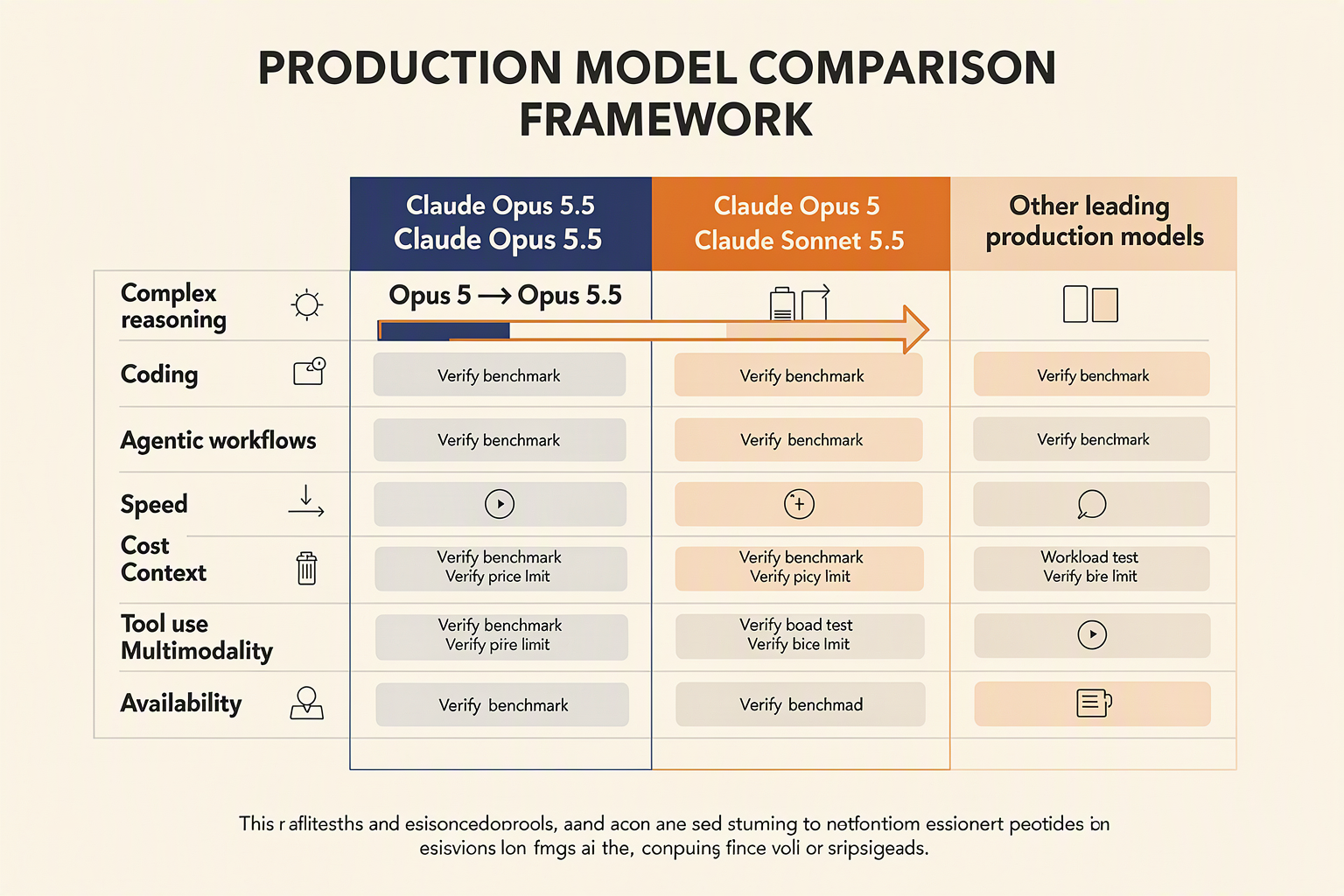
Claude Opus 5.5 is the premium choice for complex, high-stakes work, while Claude Sonnet 5.5 is positioned for faster and more economical production throughput. Anthropic’s published comparisons support these broad roles, but they do not establish that either model wins every workload; teams should benchmark their own prompts, tools and latency requirements.
What is the practical difference between Claude Opus 5.5 and other Claude models?
| Model | Released | Verified comparative claim | Likely production fit |
|---|---|---|---|
| Claude Opus 5.5 | Sep. 22, 2026 | Fable 5.1-level performance on most work; about 40% lower typical running cost than Opus 5 | Complex coding, agents, research and high-value knowledge work |
| Claude Opus 5 | Jul. 24, 2026 | Anthropic described it as a step-change for the Opus tier | Existing deployments requiring regression testing before migration |
| Claude Sonnet 5.5 | Sep. 28, 2026 | More than 30% faster than Sonnet 5; costs up to 30% less for most work | High-volume applications balancing capability, speed and cost |
| Claude Sonnet 5 | Before Sep. 28, 2026 | Baseline for Anthropic’s Sonnet 5.5 speed and cost comparisons | Stable existing workloads pending an upgrade evaluation |
| Claude Fable 5.1 | Before Sep. 22, 2026 | Anthropic says Opus 5.5 performs at its level on most work | Reference point for evaluating Opus 5.5 capability |
| Claude Opus 4.5 | Earlier generation | Anthropic highlighted coding, agents, computer use and deep research at launch | Legacy applications that have not yet migrated |
Anthropic stated on September 22, 2026, that Claude Opus 5.5 performs at the level of Claude Fable 5.1 on most work and costs 40% less to run than Claude Opus 5. That is a vendor-level summary rather than a guarantee for every prompt category.
Anthropic stated on September 28, 2026, that Claude Sonnet 5.5 runs more than 30% faster than Sonnet 5 and costs up to 30% less for most work. “Up to” and “typical workloads” matter because token usage, caching, tool calls and reasoning settings can change actual cost.
Should developers choose Opus 5.5 or Sonnet 5.5?
Choose Claude Opus 5.5 when an incorrect answer, weak plan or failed tool sequence costs more than additional inference. Examples include repository-scale debugging, sophisticated agent planning, consequential document analysis and complex research synthesis.
Choose Claude Sonnet 5.5 when responsiveness and request volume dominate, such as:
- Interactive assistants with tight latency targets
- High-volume extraction, classification or summarization
- Coding copilots where users expect rapid iteration
- Agent steps that are routine, reversible or easy to validate
A strong production architecture can also route by task difficulty: Sonnet 5.5 handles routine requests, while ambiguous or failed cases escalate to Opus 5.5. This often produces a better cost-quality balance than sending every request to the premium model.
How should teams compare Claude with non-Anthropic production models?
Do not select a model from announcement language alone. Run a representative evaluation that measures:
- Task success, including factual correctness and instruction adherence
- Agent reliability, including valid tool calls and recovery from failures
- End-to-end latency, not merely token-generation speed
- Total cost per completed task, including retries and long reasoning traces
- Operational constraints, such as context limits, regional availability and safety behavior
Anthropic’s September 2026 system cards provide useful safety evidence, but production testing remains essential. The most suitable model is the one that meets a workload’s measured quality threshold at an acceptable latency and total cost—not necessarily the newest or largest model.
What limitations, safety findings and expert evidence should buyers examine?
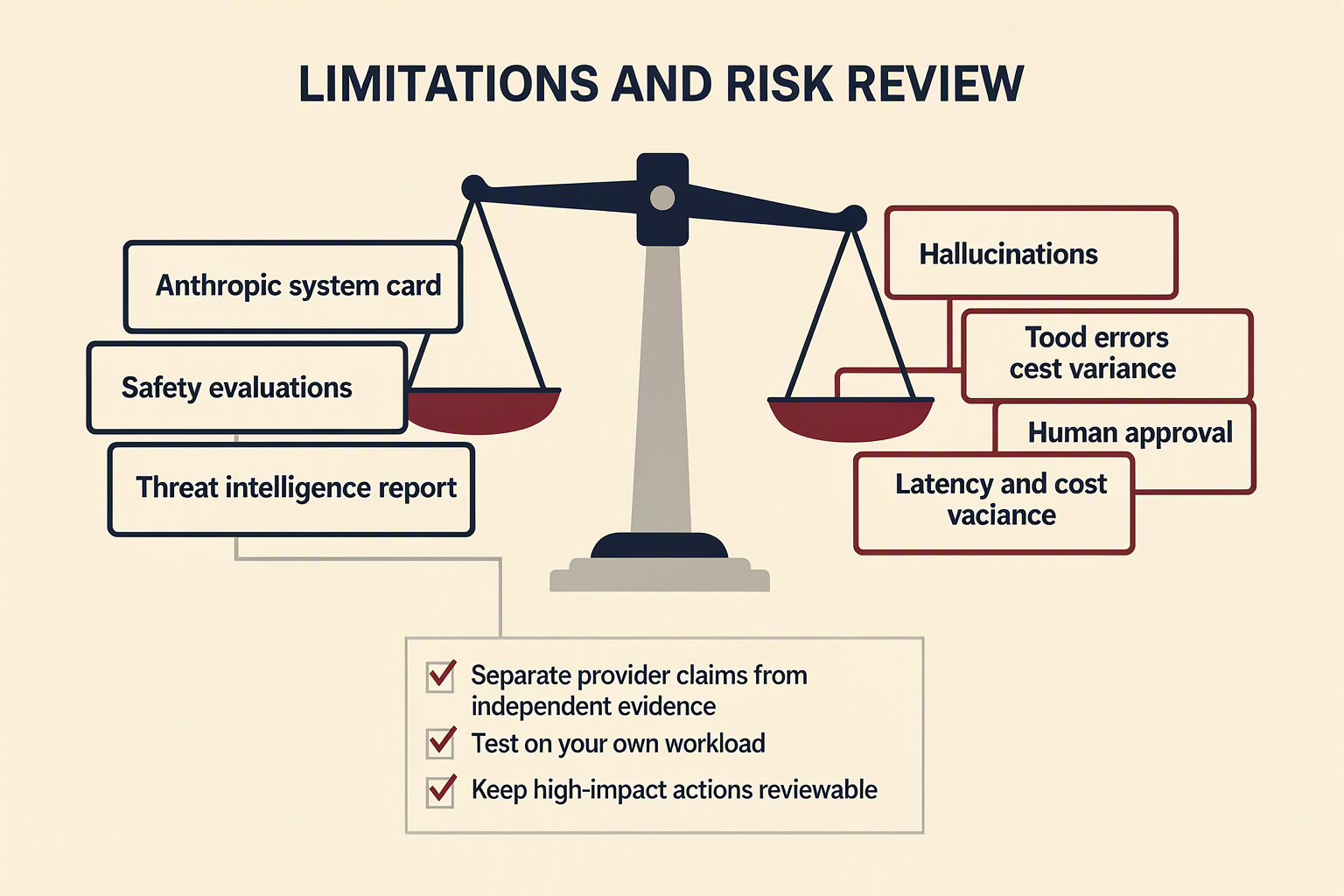
Claude Opus 5.5 should be treated as a high-capability model requiring workload-specific validation, not as an error-free authority. Buyers should examine Anthropic’s September 22, 2026 system card, distinguish vendor claims from independent evidence, and test accuracy, autonomy, security and cost under realistic production conditions.
What does Anthropic’s system card establish?
Anthropic published the Claude Opus 5.5 System Card on September 22, 2026, providing first-party evidence about capability and safety evaluations performed before release. A system card improves transparency, but it is not an independent certification or a guarantee that every deployment will behave safely.
One notable finding concerns Anthropic’s measures of AI-enabled research progress. Anthropic reports that Claude Opus 5.5 was “above the historical trend line” on its refit AECI measure but “on trend with the Claude Mythos models,” which Anthropic did not interpret as another acceleration beyond the slope change previously observed for Mythos models.
Procurement and governance teams should review:
- Which evaluations were conducted internally versus externally
- Whether test prompts resemble the organization’s actual workflows
- How safeguards perform during long, multi-step tool use
- Whether results cover relevant languages, jurisdictions and risk domains
- What monitoring, escalation and rollback controls the deployment requires
Which marketing claims need careful interpretation?
Anthropic said on September 22, 2026 that Opus 5.5 performs at the level of Claude Fable 5.1 “on most work.” “Most work” is not a universal benchmark: buyers still need task-level evidence for coding, document analysis, research, customer communication and agentic automation.
Similarly, Anthropic’s claim that Opus 5.5 costs about 40% less to run than Opus 5 on typical workloads describes typical usage rather than every prompt pattern. Actual expenditure can vary with input length, output length, reasoning settings, retries, tool calls, caching and failed agent trajectories.
Anthropic also described Opus 5.5 as its “most capable Opus model for everyday work” during its September 25, 2026 webinar. That is a vendor characterization, so it should be supplemented with reproducible evaluations and, where available, independent expert testing.
What operational limitations should buyers test?
Even a flagship model can produce plausible but incorrect answers, misunderstand ambiguous instructions or take inappropriate actions when granted tools. Before production deployment, teams should test:
- Factual reliability: Require citations and verify whether cited material supports each conclusion.
- Coding correctness: Run generated code through tests, static analysis, dependency scanning and human review.
- Agent control: Restrict tool permissions, spending limits, writable systems and maximum action depth.
- Prompt-injection resistance: Test malicious instructions embedded in webpages, emails, PDFs and retrieved documents.
- Consistency: Repeat representative tasks to measure variance rather than trusting one successful demonstration.
- Human oversight: Define approval gates for payments, data deletion, external messages and other consequential actions.
Does preserved thinking remove safety risk?
No. Anthropic says Claude Opus 5.5 launched with preserved thinking, an anti-distillation safeguard first introduced with Claude Fable 5.1, following illicit distillation activity documented in Anthropic’s September 2026 threat-intelligence report. The control is intended to make extraction of model capabilities more difficult; it does not eliminate hallucinations, prompt injection, data-governance failures or unsafe tool execution.
The strongest buying evidence is therefore a combination of Anthropic’s system card, independent evaluation and an internal pilot using production-like data. Organizations should document failure thresholds and rollback criteria before granting Opus 5.5 meaningful autonomy.
What does Claude Opus 5.5 mean for developers and business buyers?
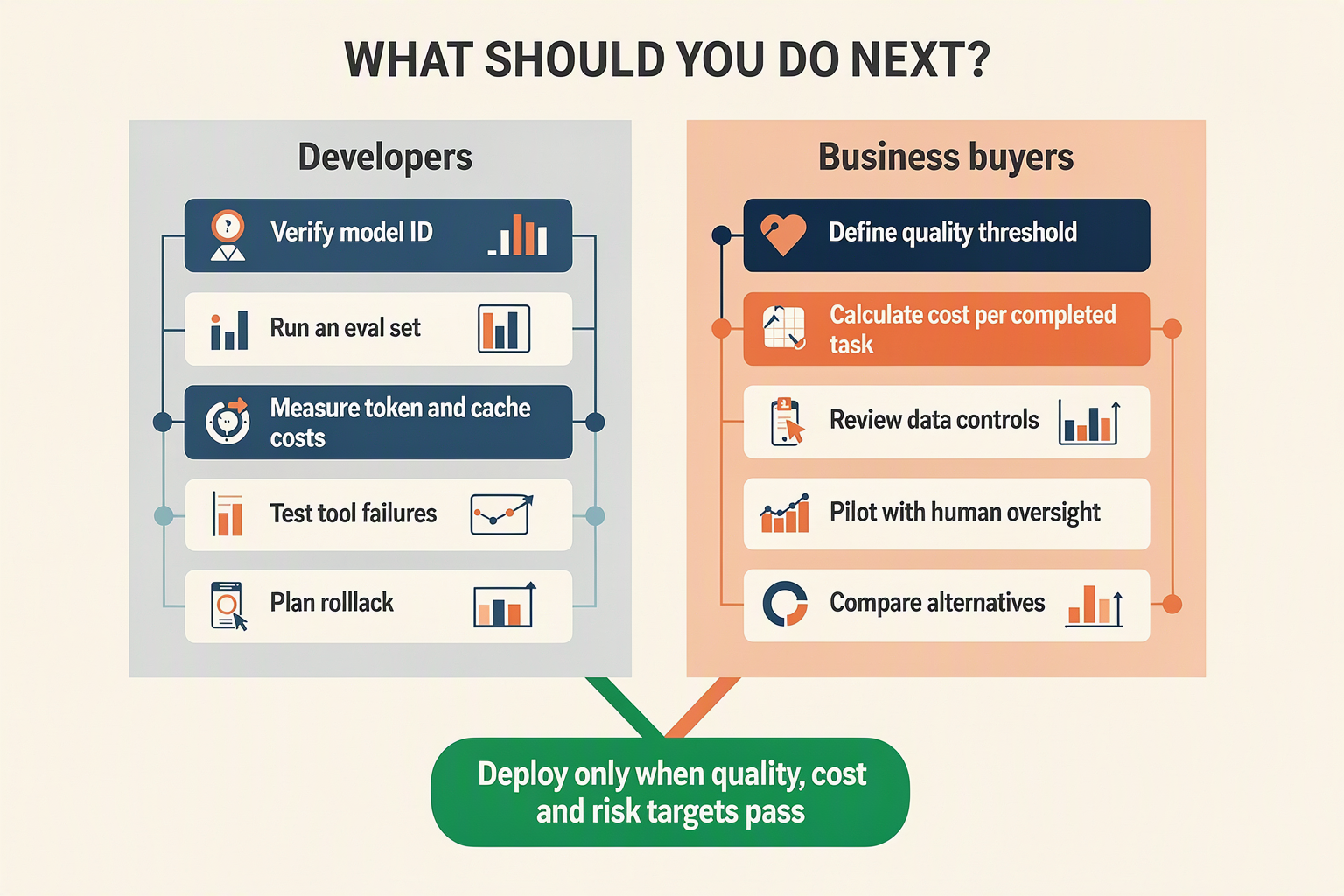
Claude Opus 5.5 makes premium-model procurement less about buying the highest tier by default and more about measured value per completed task. Developers should evaluate reliability, tool-use behavior and total token consumption, while business buyers should compare productivity gains with governance and operating costs.
How should teams interpret Claude Opus 5.5?
| Decision area | What the evidence shows | Practical action |
|---|---|---|
| Model economics | Anthropic said on September 22, 2026, that Opus 5.5 costs about 40% less to run than Opus 5 on typical workloads. | Recalculate unit economics using complete tasks, not price per token alone. |
| Capability tier | Anthropic said on September 22, 2026, that Opus 5.5 performs at the level of Claude Fable 5.1 on most work. | Benchmark both models on representative prompts before standardizing. |
| Coding and agents | Opus remains Anthropic’s premium tier for complex work, but model-level claims do not guarantee application reliability. | Test repository navigation, tool selection, recovery from failures and code-review accuracy. |
| Everyday business work | Anthropic’s September 25, 2026, webinar called Opus 5.5 its “most capable Opus model for everyday work” and highlighted more natural communication. | Pilot research, document analysis, presentations and high-stakes drafting with human review. |
| Lower-cost alternatives | Anthropic announced on September 28, 2026, that Claude Sonnet 5.5 runs 30%+ faster and costs up to 30% less for most work than Sonnet 5. | Route routine, latency-sensitive work to Sonnet and reserve Opus for harder cases. |
| Security and governance | Anthropic launched Opus 5.5 with preserved thinking, the anti-distillation safeguard introduced with Fable 5.1. | Review the system card, logging requirements and internal AI-risk controls before deployment. |
What changes for application developers?
The lower operating cost strengthens the case for using Opus-class intelligence in workflows where a failed answer creates expensive rework. Examples include multi-file code changes, long-running agents, complex tool sequences and research synthesis, although each must be validated against production data.
Developers should measure:
- Task success rate: Did the model complete the objective without intervention?
- Effective cost: Include input, output, retries, tool calls and failed runs.
- Latency distribution: Track median and tail latency rather than one average.
- Agent reliability: Test invalid tool arguments, unavailable services and ambiguous instructions.
- Regression risk: Pin model versions where possible and rerun evaluations before upgrades.
A 40% reduction relative to Opus 5 does not automatically produce a 40% lower application bill. Longer outputs, additional reasoning, retries or unnecessary tool calls can offset the model-level saving.
For multi-model systems, CallMissed’s developer API supports Anthropic-compatible /v1/messages endpoints and provides one key and balance across 138 models as of September 2026. Teams should still confirm that the required Claude version is listed in the current catalogue before designing production routing around it.
What should business buyers ask before purchasing?
Procurement teams should require a workload-specific pilot rather than relying exclusively on launch benchmarks:
- Define measurable outcomes such as analyst hours saved, accepted code changes or resolved cases.
- Compare Opus 5.5 with Sonnet 5.5 and the organization’s existing model.
- Include review time, integration work and compliance controls in total cost.
- Examine Anthropic’s September 22, 2026, Claude Opus 5.5 System Card for documented evaluation and safety considerations.
- Establish escalation paths for sensitive, irreversible or customer-facing decisions.
The central implication is clear: Claude Opus 5.5 makes advanced capability more economically accessible, but disciplined routing and evaluation—not the Opus label—determine whether it delivers business value.
Frequently Asked Questions
What is Claude Opus 5.5, and when was it released?
Is Claude Opus 5.5 officially available or still in preview?
How much does the Claude Opus 5.5 API cost?
What is the context-window size of Claude Opus 5.5?
Is Claude Opus 5.5 good for coding, AI agents and deep research?
What are the main limitations and safety considerations of Claude Opus 5.5?
Conclusion
What are the key takeaways on Claude Opus 5.5?
Claude Opus 5.5 is a confirmed, production-available flagship model aimed at teams that need premium reasoning, coding and agentic capabilities without automatically accepting the cost profile of the previous Opus generation. Its value depends on matching those capabilities—and its documented limitations—to the right workload.
- The release is official: Anthropic launched Claude Opus 5.5 on September 22, 2026, just two months after Claude Opus 5 debuted on July 24, 2026. Anthropic’s announcement, product page and system card confirm its availability as of September 29, 2026.
- Economics are central to the upgrade: Anthropic states that Claude Opus 5.5 performs at the level of Claude Fable 5.1 on most work while costing approximately 40% less to run than Claude Opus 5 on typical workloads. Teams should still model costs against their actual input volume, output length, context usage and request patterns rather than relying on headline savings alone.
- Its strongest fit is demanding work: Claude Opus 5.5 is most relevant for complex coding, multi-step agents, deep research and sophisticated knowledge work. Faster or less expensive models may remain more economical for classification, extraction, short-form generation and high-volume routine requests.
- Production readiness requires more than model quality: Developers should evaluate context limits, tool behavior, reliability, safety controls and failure handling under representative workloads. Anthropic’s September 2026 system card provides the appropriate starting point for reviewing safeguards, while preserved thinking adds an anti-distillation measure first introduced with Claude Fable 5.1.
What should developers watch next?
The rapid sequence from Claude Opus 5 in July to Opus 5.5 in September suggests that capability tiers and model economics will keep shifting quickly. Watch for updated API documentation, regional and platform availability, changes to token pricing, independent evaluations and evidence of how Opus 5.5 behaves in long-running agent workflows.
A model-routing strategy can reduce dependence on any single capability or price tier. As of September 2026, CallMissed provides OpenAI-compatible and Anthropic-compatible endpoints with one API key and balance across 138 models, giving developers a practical way to explore models from multiple makers without rebuilding every integration.
The decisive question is not whether Claude Opus 5.5 is powerful, but whether its added intelligence produces measurable value in your specific application. Which real production task will you benchmark first?
Related Reading
- Claude Opus 5.5 API Pricing & Migration Guide
- Claude Opus 5 Migration Guide: API Pricing for 2026
- GPT-6 Sol vs Claude Opus 5.5: Pricing & API Comparison
Sources
Discussion
Related Posts



Ready to automate customer conversations?
Launch AI voice agents and WhatsApp bots with CallMissed — one API, 22+ Indian languages.