Claude Fable 5.1 Prompting and Migration Guide for Developers



Learn Claude Fable 5.1 prompting, API migration, agent design, testing, rollback, caching, and cost controls from official guidance.
Claude Fable 5.1 Prompting and Migration Guide for Developers
What changes when an AI model becomes more capable at long-running agentic work—but communicates less while it works? That is one of the practical questions behind Claude Fable 5.1 prompting, because Anthropic says the model produces fewer user-facing updates between tool calls unless developers explicitly request progress reporting.
Anthropic launched Claude Fable 5.1 (claude-fable-5-1) on September 1, 2026, positioning it as the successor to Claude Fable 5 for long-running agentic coding and knowledge work, according to the Claude Platform release notes. Anthropic’s model-selection documentation describes Claude Fable 5.1 as its most capable widely released model and recommends it for demanding reasoning and long-horizon agentic workloads. For engineering teams, this makes migration more than a model-ID replacement: prompts, agent loops, observability controls, tool contracts, and cost assumptions may all need retuning.
The timing matters because production agents increasingly operate across many steps rather than generating a single response. A coding agent may inspect a repository, delegate research to subagents, modify files, execute tests, diagnose failures, and summarize the final result. Small behavioral differences—including when the model calls tools, how it allocates effort, and whether it reports intermediate progress—can compound across that workflow.
Cost architecture also deserves attention. A prompt-cache hit on Claude Fable 5.1 costs $0.25 per million tokens, or 2.5% of the standard input price, according to Anthropic’s 2026 pricing documentation. That discount can make stable system instructions, tool definitions, repository maps, and reusable context economical to cache. However, Anthropic notes that applicable pricing multipliers can stack, so teams should monitor actual usage rather than extrapolating from headline token rates alone. Deployment planning must also account for availability: Anthropic’s service-tier documentation lists Claude Fable 5.1 as unsupported on Priority Tier as of September 2026.
This Claude Fable 5.1 migration guide will show developers how to:
- Select and tune effort settings for latency, cost, and reasoning depth.
- Design resilient long-horizon agents and subagent delegation.
- Make tool schemas, tool-use instructions, and progress updates explicit.
- Manage growing context with compaction, retrieval, summaries, and prompt caching.
- Identify migration pitfalls when moving from Fable 5 to Fable 5.1.
- Build regression evaluations, canary releases, rollback paths, and cost alerts.
- Apply reusable, safe prompt patterns without copying Anthropic’s documentation.
OpenAI-compatible multi-model gateways such as CallMissed reflect the same infrastructure trend by giving developers one endpoint for testing models, fallbacks, speech, images, and search.
The goal is not merely to make Fable 5.1 respond. It is to make the model behave predictably inside a production system—under real tools, long contexts, failure conditions, budgets, and user expectations.
How should developers prompt and migrate to Claude Fable 5.1?
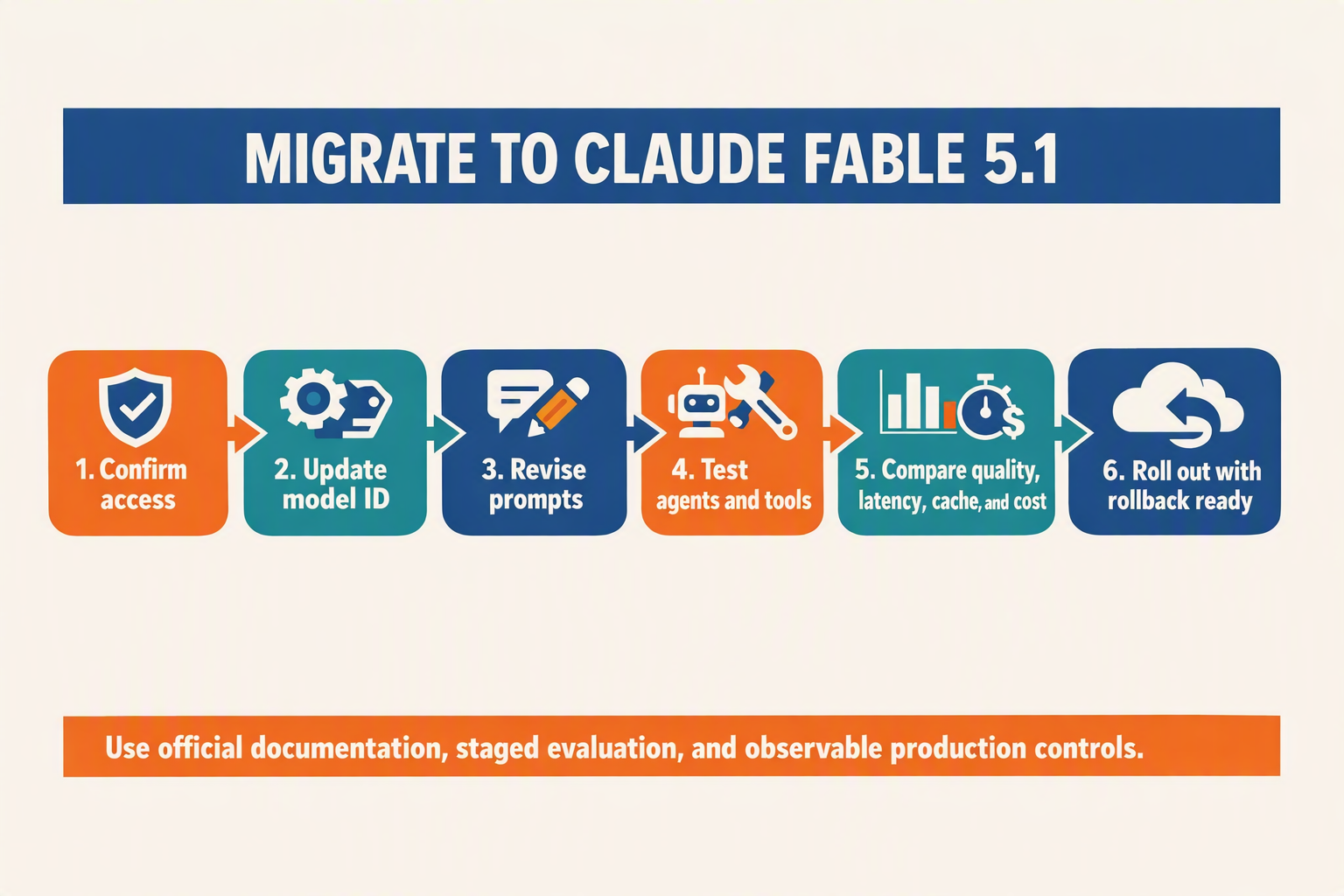
Developers should migrate to Claude Fable 5.1 (claude-fable-5-1) as a behavioral and operational upgrade, not a model-name substitution. As of September 5, 2026, the safest sequence is to pin the model ID, run shadow evaluations, retune effort and progress-update instructions, validate tool schemas, test subagent behavior, monitor cache usage, preserve rollback, and compare cost per successful task.
Recommended migration sequence
- Pin
claude-fable-5-1. Use an explicit model ID in test and production configurations so model changes are intentional, traceable, and reversible. - Replay representative workloads in shadow mode. Compare Fable 5 and Fable 5.1 on completion quality, acceptance-test pass rate, latency, token consumption, tool calls, retries, and user-visible updates.
- Retune prompts and effort. Make planning, progress reporting, validation, stopping conditions, and escalation rules explicit. Select the lowest effort setting that reliably meets each workload’s quality target.
- Validate every tool contract. Check tool descriptions, required arguments, schemas, error responses, retry limits, permissions, and handling of irreversible actions.
- Test delegation and subagents. Give delegated tasks clear deliverables and fixed token, time, step, or tool-call budgets. Confirm that failures and partial results return to the parent agent cleanly.
- Review context and caching. Remove duplicated logs and obsolete instructions, verify cache boundaries, and measure cache reads separately from cache writes and uncached input.
- Canary production traffic and preserve rollback. Retain the previous model configuration, prompts, routing rules, and evaluation thresholds until Fable 5.1 meets release criteria under real traffic.
- Compare cost per successful task. Total token cost alone can be misleading. Include retries, failed runs, tool usage, latency, and acceptance-test results in the comparison.
Retune prompts for observable progress
Anthropic launched Claude Fable 5.1 on September 1, 2026 as the successor to Claude Fable 5 for demanding reasoning, long-running agentic coding, and knowledge-work workflows. Anthropic’s first-party guidance indicates that Fable 5.1 may provide fewer user-facing updates between tool calls unless the prompt explicitly requests them.
Effective Claude Fable 5.1 prompting should therefore specify when the model must communicate. For a long-running agent, require updates after planning, at material milestones, when a tool fails, before a retry or irreversible action, when blocked, and after final validation.
A migration-oriented instruction can be concise:
Inspect the available context and state any important assumptions. Create a brief plan, then execute it with the provided tools. Report progress after planning, after each material milestone, when a tool fails, and before retrying or taking an irreversible action. Stop and escalate when permissions, required information, or retry limits prevent safe completion. Validate the result against the acceptance criteria before returning the final answer.
Do not ask for updates after every trivial action. Excessive status messages increase output usage and can make traces harder to review. Tune update frequency to task duration, risk, and user expectations.
Evaluate behavior with shadow and replay tests
Before changing production routing, replay traces that represent both normal traffic and known failure modes. A useful Claude Fable 5.1 prompting evaluation set should include:
- Repository-scale coding tasks with automated tests
- Multi-stage research or document-analysis workflows
- Long tool chains with dependent calls
- Malformed tool responses and transient failures
- Missing permissions or incomplete context
- Tasks that should stop rather than retry
- Subagent delegation, timeout, and partial-result scenarios
- Long contexts containing duplicated or outdated instructions
Score both versions against the same acceptance criteria. Track task success, factual or test-based correctness, unnecessary edits, tool-call accuracy, retry count, latency, input and output tokens, cache usage, and the quality of progress updates. A prompt should not be promoted merely because it is shorter or cheaper if it reduces successful completion.
Validate tools and subagents explicitly
Tool schemas should be precise enough that the model does not need to infer required arguments or error semantics. Define allowed values, required fields, retryable versus terminal errors, authorization boundaries, idempotency expectations, and confirmation requirements for destructive operations.
Subagents need similarly explicit boundaries. Give each delegated task an independently verifiable deliverable, the minimum necessary context, and a fixed budget. Test whether the parent agent correctly incorporates successful output, detects incomplete work, and handles timeout or failure without repeatedly delegating the same task.
Monitor cache economics separately
Anthropic’s pricing documentation lists Claude Fable 5.1 cache reads at $0.25 per million tokens. That rate applies to cache hits; it is not the price for cache writes or standard uncached input. Record these categories separately:
- Uncached input tokens
- Cache-write tokens
- Cache-read tokens
- Output tokens
- Tool calls and external-service costs
- Retries and failed runs
- Successful task completions
Then calculate total cost per accepted result. Better caching can reduce input expense, but it does not guarantee a cheaper workflow if the new configuration generates more output, calls more tools, or retries more often.
Canary, monitor, and retain rollback
Move from shadow testing to a limited canary only after offline thresholds pass. Monitor quality, latency, error rates, tool failures, token usage, cache-hit rate, and cost per successful task by workload. Anthropic’s service-tier documentation listed Fable 5.1 as unsupported on Priority Tier in September 2026, so teams dependent on that tier should verify current availability, fallback routing, capacity, and timeout behavior before increasing traffic.
Keep the prior model and prompt bundle deployable throughout the rollout. Define automatic rollback thresholds for acceptance-test regressions, elevated tool errors, latency, runaway retries, or cost increases. Production-ready Claude Fable 5.1 prompting combines explicit instructions with measured effort, controlled tools, representative evaluations, transparent cost accounting, and a rollback path that has been tested before launch.
Why did Anthropic introduce Fable 5.1, and when is it the right model to use?
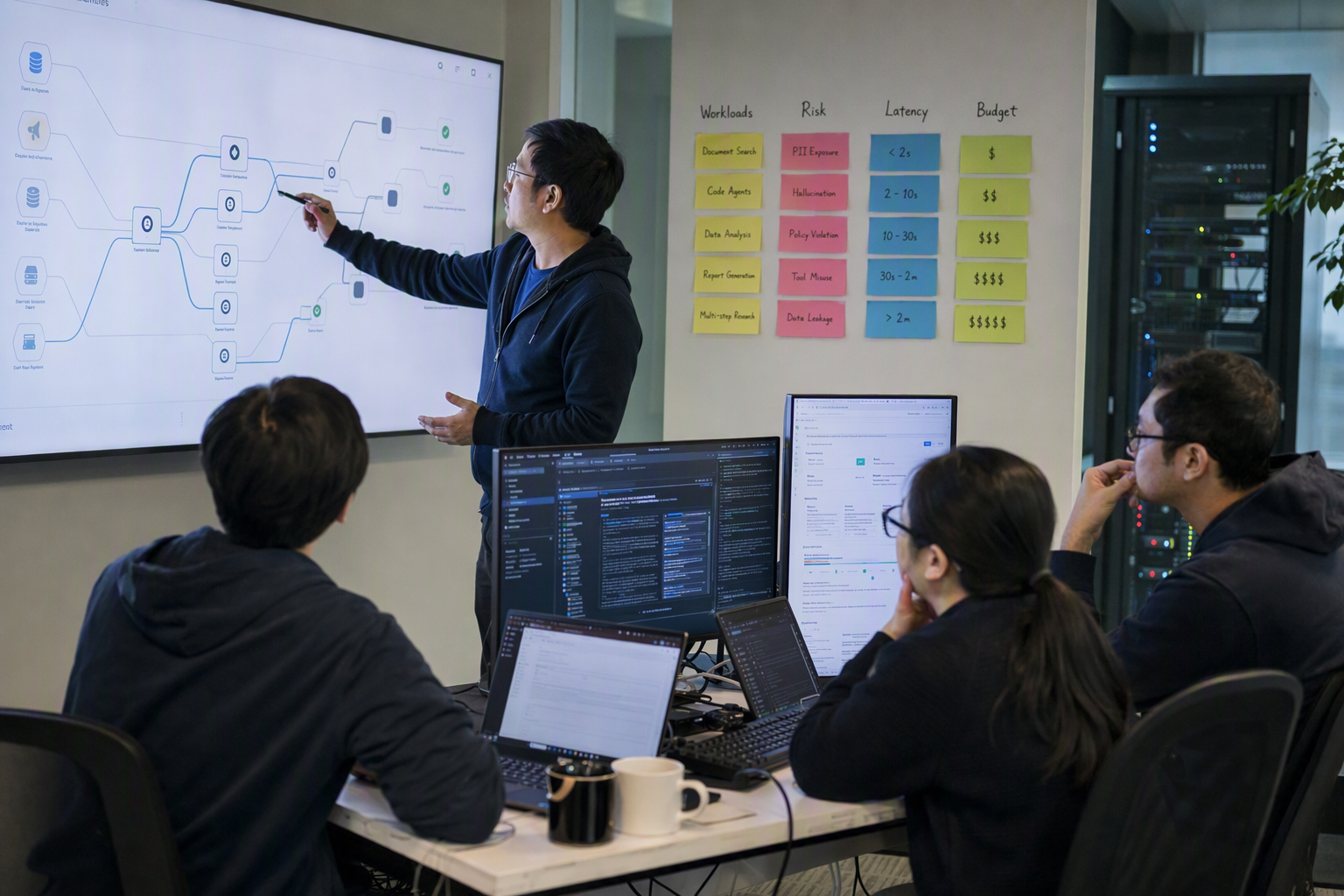
Anthropic introduced Claude Fable 5.1 to strengthen sustained reasoning and execution across long-running coding and knowledge-work agents. It is the right choice when task completion depends on coordinating many interdependent steps—not simply producing a strong one-shot answer.
The capability gap Fable 5.1 addresses
Traditional model selection often optimizes for response quality, latency, or token cost per request. Agentic systems add another requirement: reliability over an extended trajectory. A model must maintain objectives, interpret tool results, recover from failures, and decide what to do next without drifting from the original task.
Anthropic’s Claude Platform release notes state that Claude Fable 5.1 was launched on September 1, 2026, as the successor to Claude Fable 5 for long-running agentic coding and knowledge work. Anthropic’s model-selection documentation further describes claude-fable-5-1 as its most capable widely released model, with stronger long-running agentic coding capabilities than Fable 5.
That positioning makes Fable 5.1 particularly relevant to workflows such as:
- Exploring a large codebase before planning and implementing a change.
- Running tests, interpreting failures, editing files, and testing again.
- Delegating bounded research or implementation tasks to subagents.
- Synthesizing evidence distributed across documents, tools, and retrieved context.
- Completing multi-stage operational workflows with explicit approval boundaries.
- Maintaining a coherent objective through numerous tool calls and state transitions.
The improvement should not be interpreted as “use Fable 5.1 everywhere.” Anthropic’s models overview recommends starting with Claude Opus 5 for most workloads, while reserving Claude Fable 5.1 for demanding reasoning and long-horizon agentic work.
A practical model-selection test
Choose Fable 5.1 when several of the following conditions apply:
- The task is long-horizon. Success requires planning, execution, verification, and correction rather than a single generation.
- Tool decisions are consequential. The agent must select tools, construct valid arguments, and respond intelligently to tool output.
- The environment is dynamic. Repository state, search results, logs, or external systems can change during execution.
- Delegation improves throughput. Independent subtasks can be assigned to specialized subagents and later reconciled.
- The cost of losing task coherence is high. Restarting a failed trajectory would waste substantial compute or human review time.
A smaller or more general-purpose model may remain preferable for classification, extraction, short summaries, simple transformations, and latency-sensitive interactions. Teams should route by workload complexity instead of migrating every endpoint indiscriminately.
When Fable 5.1 may be the wrong operational fit
Model capability is only one deployment constraint. Before adopting Fable 5.1, verify:
- Service requirements: Anthropic’s service-tier documentation lists Fable 5.1 as unsupported on Priority Tier as of September 2026.
- Interaction design: Anthropic’s prompting guidance says Fable 5.1 produces fewer user-facing updates between tool calls, so applications requiring visible progress must request those updates explicitly.
- Economics: Long trajectories can accumulate input, output, tool, and context-management costs even when individual actions appear inexpensive.
- Evaluation readiness: Existing Fable 5 prompts and agent loops should be regression-tested rather than assumed to transfer unchanged.
In short, migrate to Claude Fable 5.1 when trajectory quality matters more than optimizing a single response—and when the surrounding agent architecture can manage tools, context, observability, cost, and recovery deliberately.
What changed from Fable 5 to Fable 5.1?
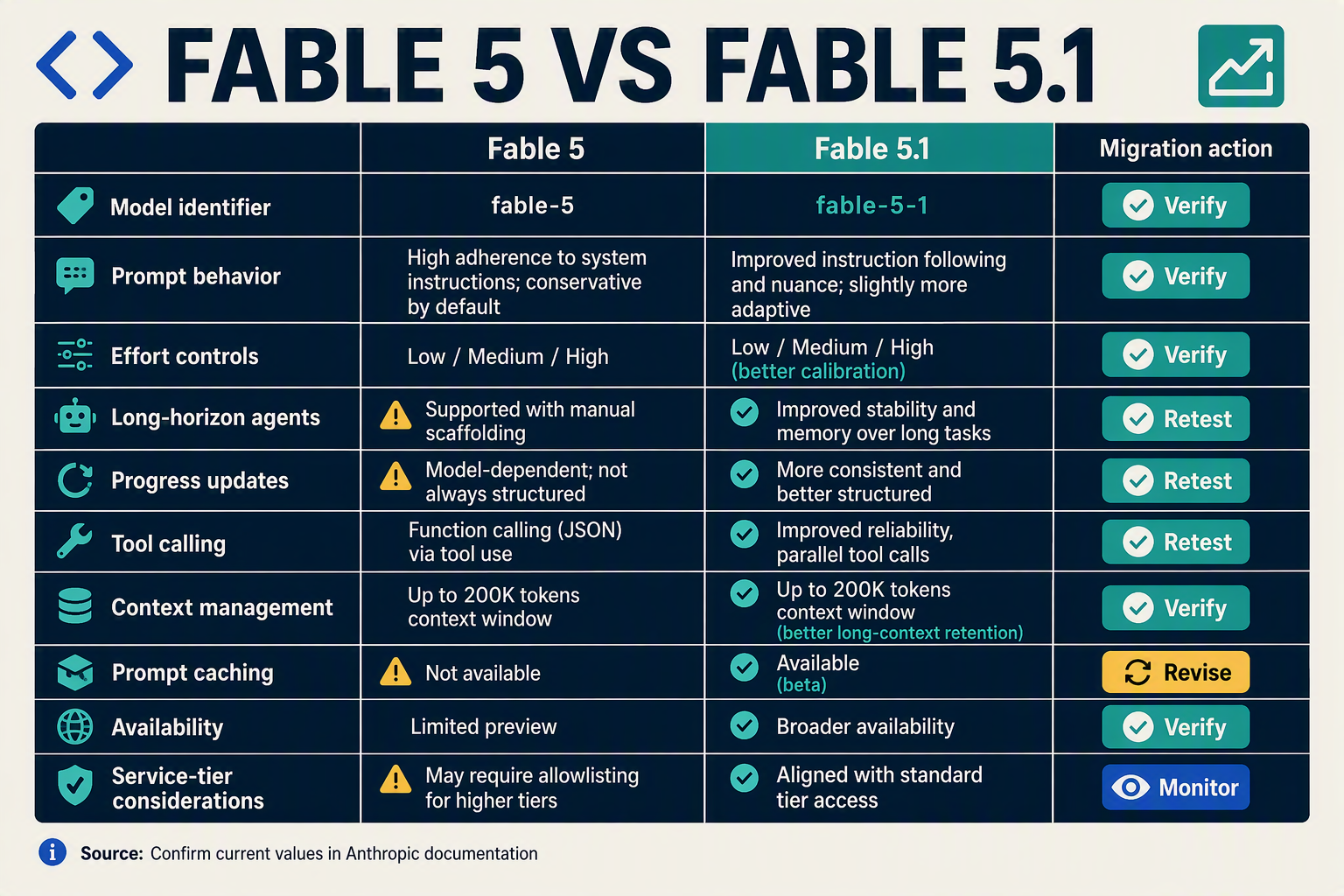
Claude Fable 5.1 is an evolutionary successor focused on stronger long-running agentic performance, not a drop-in behavioral clone of Fable 5. The most consequential prompting change is that Fable 5.1 emits fewer user-facing updates during tool-driven work, requiring developers to specify progress-reporting behavior explicitly.
Fable 5 versus Fable 5.1
| Area | Fable 5 behavior | Fable 5.1 change | Migration action |
|---|---|---|---|
| Model selection | Previous Fable generation | Uses claude-fable-5-1 | Change the model ID behind a feature flag |
| Long-horizon agents | General agentic execution | Stronger long-running coding and knowledge work | Test multi-step completion, recovery, and stopping |
| Progress updates | Existing prompts may produce more intermediate narration | Fewer user-facing messages between tool calls | Define update frequency and required milestones |
| Effort control | Existing effort assumptions | Workloads may respond differently across effort levels | Benchmark quality, latency, and token use per setting |
| Tool orchestration | Existing tool prompts and schemas | More capable agentic behavior can alter call sequences | Validate arguments, retries, permissions, and limits |
| Context and subagents | Existing summaries and delegation rules | Longer workflows increase context-management demands | Set delegation budgets, compaction triggers, and handoffs |
Anthropic’s model-selection documentation describes Claude Fable 5.1 as its most capable widely released model and recommends it for demanding reasoning and long-horizon agentic workloads. That positioning indicates improved capability, but it does not guarantee that every existing Fable 5 prompt will produce the same output structure, tool sequence, latency, or cost.
The biggest visible prompting difference
Anthropic’s prompting best-practices documentation says Claude Fable 5.1 has a tendency to write fewer user-facing updates between tool calls during agentic work. For an unattended backend job, that may reduce unnecessary narration; for an interactive coding assistant, it can make a healthy run appear stalled.
Add an explicit reporting contract rather than asking the model to “keep me updated”:
- Report after repository inspection, planning, implementation, and testing.
- Report immediately when blocked by missing access or ambiguous requirements.
- Keep routine updates to two or three sentences.
- Do not expose hidden reasoning; summarize actions, evidence, and next steps.
- End with changed files, tool results, unresolved risks, and validation status.
This is an observability requirement, not merely a writing preference. Progress events can drive user interfaces, timeout extensions, audit trails, and human-approval checkpoints.
Capability improvements require control-plane retesting
Stronger agency can change how a task is completed even when the final answer remains correct. When teams migrate to Claude Fable 5.1, regression suites should therefore inspect trajectories as well as outputs:
- Tool calls: Were the correct tools selected with schema-valid arguments?
- Subagents: Was delegation necessary, bounded, and accurately summarized?
- Context: Did the agent preserve constraints after retrieval or compaction?
- Effort: Did higher settings produce enough quality improvement to justify their latency and token cost?
- Termination: Did the workflow stop after success instead of continuing unnecessary exploration?
Anthropic publishes a dedicated migration guide for Claude Fable 5.1 and Claude Mythos 5.1. Developers should treat that official guide as the source of truth for endpoint-level compatibility, while using canary traffic and replay evaluations to detect application-specific behavioral changes.
How should effort settings and prompts be adapted for Claude Fable 5.1?
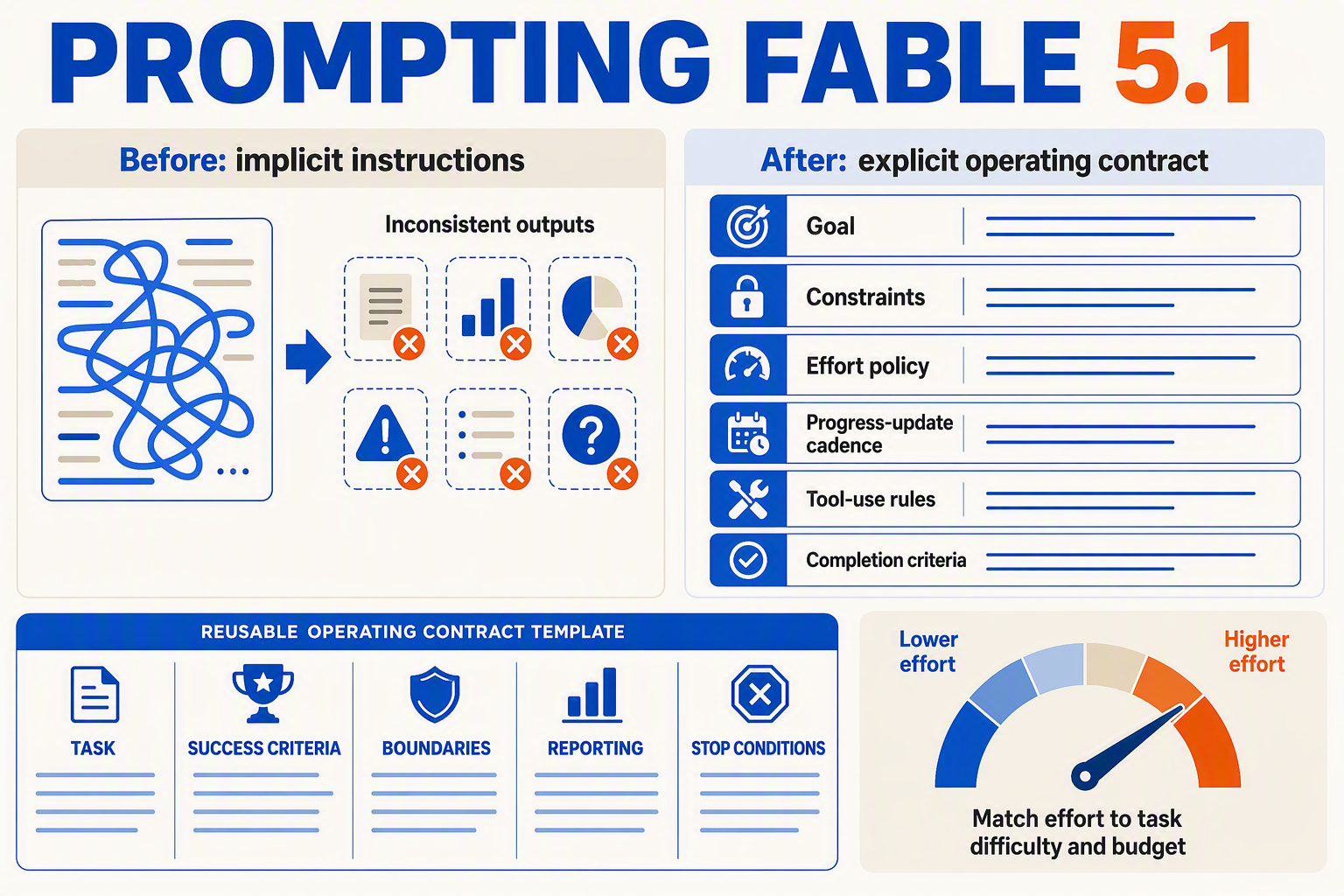
Effort should be treated as a runtime quality-and-cost control, while prompts should define the task, constraints, tool policy, and reporting cadence. When developers migrate from Fable 5 to Fable 5.1, they should avoid using elaborate prompt language as a substitute for selecting an appropriate effort level.
Match effort to task complexity
Higher effort is not automatically better for every request. It can be appropriate for ambiguous, multi-stage work, but routine operations should begin with the lowest setting that consistently passes evaluation.
A practical routing policy is:
- Low effort: Classification, extraction, formatting, straightforward retrieval, and deterministic tool dispatch.
- Medium effort: Code review, document synthesis, constrained planning, and tool workflows with a few dependencies.
- High effort: Repository-wide changes, difficult debugging, architectural analysis, or long-horizon tasks in which an early mistake could propagate.
- Escalated retry: Increase effort only after a verifier detects an incomplete answer, failed test, unsupported claim, or invalid tool result.
Use the effort values supported by the current Anthropic API or SDK rather than assuming that another Claude model exposes identical options or defaults. Anthropic’s model-selection documentation, current in September 2026, specifically recommends Claude Fable 5.1 for demanding reasoning and long-horizon agentic workloads; that recommendation does not imply that every call requires maximum effort.
Track the effect with workload-specific measurements:
- Task success rate
- Tool-call count and error rate
- End-to-end latency
- Input, output, and cache-token cost
- Human correction or retry rate
Separate reasoning effort from response verbosity
Effort controls how much work the model applies; it does not reliably control how much explanation the user sees. Prompts should therefore specify the output contract independently.
A reusable pattern is:
Complete the requested task using the available tools.

Success criteria:
- [Measurable outcome]
- [Required validation]
- [Output format]

Communication policy:
- Report one concise update after each meaningful milestone.
- State the next action and any blocker.
- Do not expose private chain-of-thought; provide brief conclusions and evidence.
- End with completed work, validation results, and unresolved risks.
Anthropic’s prompting best-practices documentation states that Claude Fable 5.1 produces fewer user-facing updates between tool calls during agentic work. Consequently, “keep me updated” is weaker than an observable rule such as “send an update after planning, implementation, and validation.”
Prefer explicit contracts over motivational prompting
Prompts such as “think harder,” “be extremely intelligent,” or “never make mistakes” are difficult to evaluate. Replace them with concrete instructions:
- Define what constitutes completion.
- Identify permitted and prohibited tools.
- Require validation through tests, schemas, or cited evidence.
- Specify when the model should ask a question rather than infer.
- Set limits for retries, tool calls, or elapsed time.
- Require uncertainty to be surfaced in the final summary.
For example:
Implement the change, run the relevant tests, and inspect failures.
Retry a failing step at most twice. If blocked, stop and report:
(1) the blocker, (2) evidence collected, and (3) the safest next action.
Do not claim success unless the validation command passes.
This structure makes Claude Fable 5.1 prompting measurable: effort determines computational intensity, while the prompt establishes behavior that regression tests can verify.
How should long-horizon agents use subagents and tools safely?
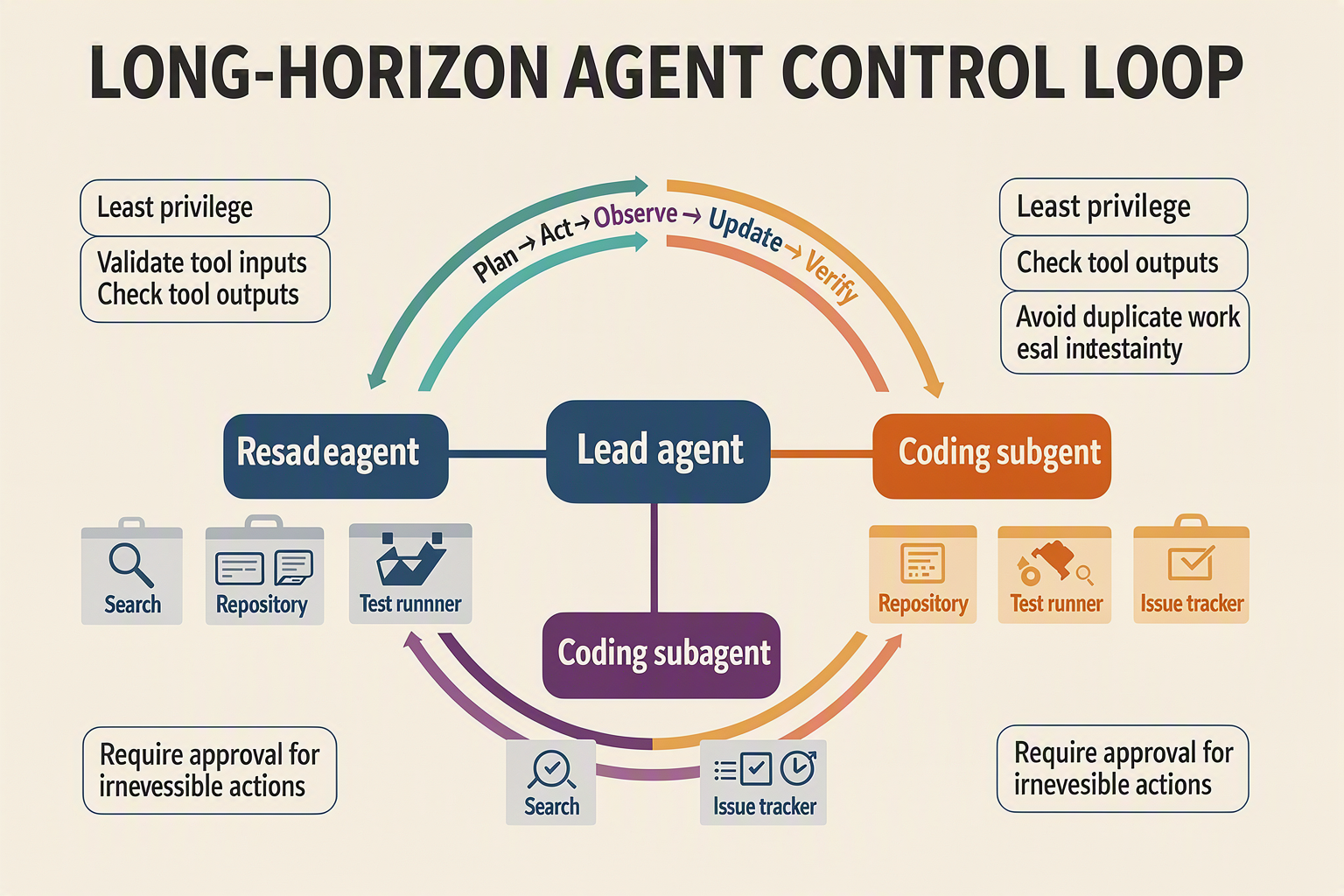
Long-horizon agents should use subagents for bounded, parallelizable work and reserve privileged tools for a controlled parent agent. Safety comes from explicit scopes, least-privilege permissions, structured handoffs, validation gates, and human approval for irreversible actions—not from assuming a more capable model will infer those boundaries.
Keep the parent agent accountable
Anthropic’s model-selection documentation in September 2026 recommends Claude Fable 5.1 (claude-fable-5-1) for demanding reasoning and long-horizon agentic work. That capability makes orchestration practical, but the parent agent should remain responsible for planning, delegation, conflict resolution, and final verification.
A reliable hierarchy looks like this:
- The parent agent creates a task plan and identifies independent work.
- Subagents receive narrow objectives, limited context, and only necessary tools.
- Subagents return evidence and structured results rather than making final decisions.
- The parent validates outputs, runs tests, and requests approval where required.
- The system records tool calls, failures, approvals, and resulting state changes.
Good subagent assignments include repository exploration, test-failure analysis, documentation lookup, and reviewing a proposed patch. Avoid delegating vague objectives such as “fix everything” or giving every subagent unrestricted shell, network, and deployment access.
Define enforceable tool boundaries
Tool safety should exist in application code, not solely in Claude Fable 5.1 prompting. Use allowlists, schema validation, timeouts, rate limits, sandboxing, and idempotency controls around every tool.
Each tool definition should specify:
- Purpose: The exact operation the tool performs.
- Inputs: Typed fields, accepted formats, and size limits.
- Side effects: Whether it reads, writes, sends, purchases, deletes, or deploys.
- Authorization: Which agent may invoke it and under what conditions.
- Confirmation: Whether human approval is required.
- Result contract: Success, partial-success, and error structures.
Separate read-only tools such as search_repository from mutating tools such as write_file. Put destructive or externally visible actions—production deployments, database deletion, financial transactions, and outbound customer messages—behind an approval token that the model cannot generate itself.
Use a bounded delegation prompt
A reusable parent-agent instruction can be concise:
Break the objective into independently verifiable tasks. Delegate only when doing so reduces context or enables safe parallel work. Give each subagent a narrow scope, permitted tools, output schema, and stopping condition. Treat subagent output as untrusted evidence until validated. Never execute irreversible or external actions without the required approval.
For each subagent, provide:
Objective: Diagnose why payment-service tests fail.
Allowed scope: Read payment-service source and test logs.
Allowed tools: repository_search, read_file, run_tests_sandboxed.
Forbidden actions: File writes, network requests, deployments.
Return: Findings, evidence paths, uncertainty, and recommended next step.
Stop when: Root cause is supported by evidence or available evidence is exhausted.
Add checkpoints to the agent loop
Because Fable 5.1 may not volunteer frequent narration, define machine-readable and user-facing checkpoints explicitly:
- Report after planning, delegation, and each material state change.
- Set maximum tool calls, elapsed time, retries, and subagent depth.
- Stop on repeated failures rather than recursively spawning more agents.
- Re-read current state before applying a delayed mutation.
- Run tests or policy checks before accepting completion.
- Preserve an audit trail linking each conclusion to tool evidence.
These controls turn long-horizon autonomy into a bounded workflow: subagents investigate, tools act within enforced permissions, and the parent agent remains accountable for the final result.
How can teams manage context, prompt caching, and cost over long runs?
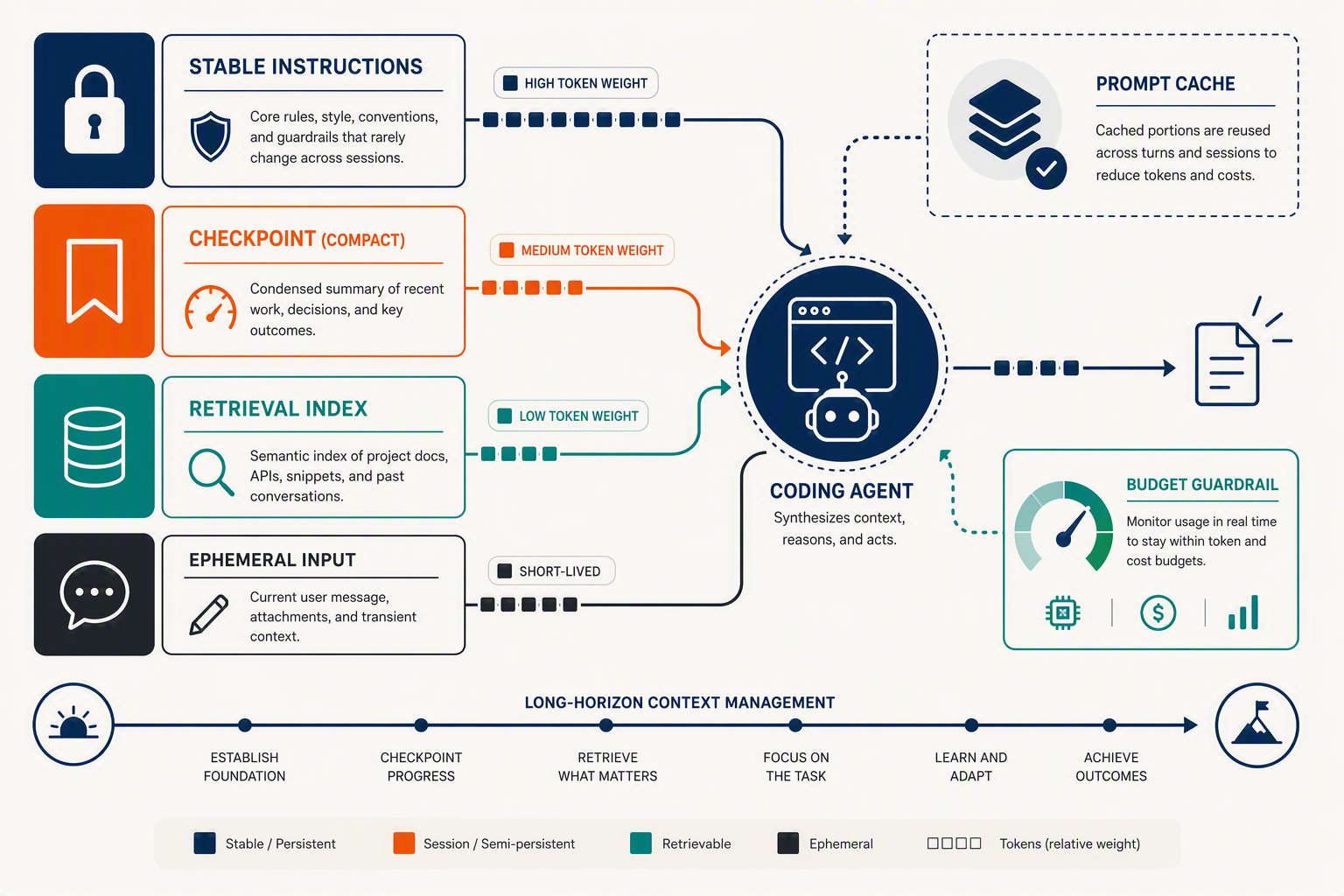
Teams should treat context as a managed working set, not an ever-growing transcript: preserve durable instructions, retrieve details when needed, summarize completed work, and cache stable prefixes. This approach controls token cost without depriving Claude Fable 5.1 of the state required for long-horizon decisions.
Separate stable context from changing state
Structure each request from least frequently changed to most frequently changed:
- Stable prefix: system policy, tool definitions, coding standards, repository conventions, and response requirements.
- Task state: objective, acceptance criteria, current plan, completed steps, and unresolved blockers.
- Retrieved evidence: only the files, records, or documentation relevant to the current step.
- Recent interaction: the latest tool results and observations needed for the next decision.
Keeping reusable content stable improves its caching potential. Avoid injecting timestamps, request IDs, changing tool order, or dynamically generated text into an otherwise reusable prefix.
For subagents, pass a bounded task packet rather than the complete parent transcript. Include the goal, constraints, relevant evidence, expected output schema, and a clear instruction to report uncertainties.
Compact context without losing operational state
Long-running agents should periodically replace low-value history with a structured checkpoint. Preserve facts that influence future actions, including:
- The original objective and non-negotiable constraints.
- Files, APIs, or records already examined.
- Decisions made and the evidence supporting them.
- Failed approaches that should not be repeated.
- Tool side effects, such as modified files or created resources.
- Open questions, test failures, and the next planned action.
A reusable compaction instruction can be concise:
Create a continuation checkpoint. Preserve goals, constraints, verified findings, decisions with rationale, tool side effects, failed attempts, unresolved risks, and next actions. Do not convert uncertainty into fact. Reference large artifacts by identifier instead of reproducing them.
Store full logs outside the model context for auditability. The checkpoint is a working representation, not a replacement for telemetry, source files, or authoritative business records.
Cache repeated prefixes deliberately
Anthropic’s 2026 pricing documentation states that a Claude Fable 5.1 prompt-cache hit costs $0.25 per million tokens, equal to 2.5% of the standard input-token price. This makes caching especially relevant when an agent repeatedly sends large tool schemas, repository maps, policy documents, or shared knowledge instructions.
Measure caching at the workflow level:
- Cache-hit ratio: cached input tokens divided by cache-eligible input tokens.
- Cost per completed task: total model and tool cost, including retries and subagents.
- Tokens per successful step: input and output usage divided by accepted actions.
- Compaction frequency: how often summaries occur and whether quality declines afterward.
- Rework rate: repeated tool calls caused by missing or distorted context.
Anthropic’s pricing documentation also warns that applicable pricing multipliers can stack. Therefore, estimate cost from actual API usage records rather than multiplying a headline rate by total transcript size.
Set explicit context and spending guardrails
Define limits before execution, not after costs spike:
- Maximum turns, subagents, tool calls, and retry attempts.
- Input and output token budgets per phase.
- A checkpoint threshold before context becomes unwieldy.
- Human approval for destructive actions or budget extensions.
- Termination conditions for repeated failures or insufficient evidence.
Capacity planning must include service availability as well as price. Anthropic’s service-tier documentation listed Claude Fable 5.1 as unsupported on Priority Tier in September 2026, so teams should test queueing, timeout, and fallback behavior under realistic long-run concurrency.
How do you test the Fable 5.1 API migration and prepare a rollback?
A safe Fable 5 to Fable 5.1 migration requires offline regression tests, production shadow traffic, a limited canary, and a configuration-level rollback to the previous model. Do not remove Fable 5 or rewrite prompts irreversibly until Fable 5.1 passes workflow-level quality, reliability, latency, and cost gates.
Build a migration evaluation suite
Test complete agent trajectories rather than comparing only final answers. Anthropic recommends Claude Fable 5.1 for demanding reasoning and long-horizon agentic work, so evaluations should include the multi-step behavior that prompted the migration.
Create a versioned dataset containing:
- Representative prompts: routine, ambiguous, adversarial, multilingual, and unusually long requests.
- Tool scenarios: successful calls, malformed arguments, tool errors, timeouts, empty results, retries, and permission denials.
- Long-horizon tasks: repository exploration, file modification, test execution, failure recovery, and final reporting.
- Subagent cases: delegation decisions, scoped context, duplicated work, conflicting findings, and aggregation quality.
- Context tests: near-limit conversations, retrieved documents, compacted histories, cache hits, and cache misses.
- Safety cases: prompt injection, sensitive-data requests, destructive actions, and attempts to bypass approval steps.
Use deterministic checks where possible: JSON Schema validation, allowed-tool lists, file diffs, unit-test results, citation presence, and task completion status. Reserve human or model-assisted grading for qualities such as reasoning relevance and summary usefulness.
Compare behavior with structured telemetry
Run Fable 5 and claude-fable-5-1 against the same evaluation set, then record each model’s:
- Task-success rate and failure category
- Tool calls, retries, and invalid arguments
- Input, output, cached, and total tokens
- Time to first token and end-to-end latency
- Agent steps and subagent invocations
- User-facing progress updates
- Safety-policy and approval-gate compliance
Progress reporting needs its own assertion. Anthropic’s prompting documentation says Claude Fable 5.1 tends to produce fewer user-facing updates between tool calls, so test whether explicit progress instructions generate updates at the required milestones without flooding the interface.
Define acceptance thresholds before reviewing results. For example, a team might require no regression in destructive-action safeguards, no schema-breaking tool calls, and latency or cost changes to remain within an internally approved range. These are deployment policies—not universal Anthropic benchmarks.
Canary the API migration
After offline validation, deploy Fable 5.1 to a small, non-critical traffic segment. Route by a stable identifier so one conversation never switches models mid-session, and exclude high-risk workflows until basic telemetry is clean.
Increase exposure only when:
- Error and timeout rates remain within baseline limits.
- Tool-call validity meets the release threshold.
- Long-running tasks complete without runaway loops.
- Token and cache economics match measured forecasts.
- Human review finds no material quality or safety regression.
Also validate capacity assumptions in the target environment. Anthropic’s service-tier documentation listed Claude Fable 5.1 as unavailable on Priority Tier in September 2026, so a rollout must not silently depend on Priority Tier routing.
Make rollback a tested operation
Keep the model ID, effort setting, prompt bundle, tool definitions, and context policy in versioned configuration. A rollback should restore the entire known-good bundle, not merely replace claude-fable-5-1 with the Fable 5 model ID.
Before launch, rehearse rollback and verify that it:
- Drains or safely terminates in-flight agent runs.
- Preserves conversation and tool-audit records.
- Disables incompatible Fable 5.1-specific prompt variants.
- Restores routing without a code deployment.
- Triggers alerts and creates an incident timeline.
The migration is complete only after both the new path and the rollback path have succeeded under production-like conditions.
What do Anthropic’s official documentation and system card imply for production teams?
Anthropic’s official documentation implies that production teams should treat Claude Fable 5.1 as a specialized agentic runtime, not a drop-in upgrade. The documentation provides deployment hypotheses—where the model should excel and how behavior changed—while the system card should inform risk controls; neither replaces workload-specific evaluation.
Model choice should follow the workload
Anthropic’s Models Overview recommends Claude Opus 5 for most workloads when developers are unsure, while reserving Claude Fable 5.1 for demanding reasoning and long-horizon agentic work. That distinction argues against automatically routing every request to claude-fable-5-1.
A practical production policy could route:
- Routine extraction, classification, and short-form responses to a lower-cost model.
- Repository-scale coding, extended investigation, and multi-tool workflows to Fable 5.1.
- High-risk actions to Fable 5.1 only when paired with approval gates and deterministic validation.
Anthropic described Claude Fable 5.1 as its most capable widely released model in its September 2026 model-selection documentation. “Most capable” still does not mean optimal for every latency target, budget, or risk category.
Behavioral documentation belongs in acceptance criteria
Anthropic’s prompting guidance says Fable 5.1 produces fewer user-facing updates between tool calls during agentic work. Production teams should convert that documented tendency into measurable requirements rather than assuming the agent has stalled.
Useful acceptance criteria include:
- Emit a progress event before or after a defined number of tool calls.
- Report blockers, retries, and changes of plan immediately.
- Separate machine-readable telemetry from user-facing status text.
- Return a final action ledger listing tools called, files changed, and validations completed.
- Terminate safely when budgets for time, tokens, or tool invocations are exceeded.
This is especially important for long-running jobs where silence can trigger duplicate requests, premature cancellation, or unnecessary operator intervention.
The system card should shape controls, not become a compliance shortcut
Anthropic lists a combined Claude Fable 5.1 and Claude Mythos 5.1 System Card in its official model-card resources. Production reviewers should map the card’s disclosed evaluation scope, limitations, and risk findings to their own threat model instead of interpreting publication as blanket approval for autonomous deployment.
At minimum, teams should maintain:
- Capability evaluations: task completion, tool selection, recovery, and subagent coordination.
- Safety evaluations: prompt injection, secret handling, privilege escalation, and harmful tool arguments.
- Operational evaluations: latency distributions, context growth, retry rates, and malformed outputs.
- Human-control boundaries: explicit approval before payments, deletion, deployment, credential changes, or external communications.
System-card evidence is model-level evidence. A production agent adds prompts, retrieved documents, tools, permissions, and application logic—each of which creates additional failure modes.
Documentation changes should trigger engineering changes
The September 1, 2026 release notes identify Fable 5.1 as the successor to Fable 5 for long-running agentic coding and knowledge work. Teams migrating from Fable 5 to Fable 5.1 should therefore version prompts and policies alongside the model ID, preserve rollback capability, and rerun adversarial and business-critical test suites.
Finally, economics must be tested at workflow level. Anthropic’s 2026 pricing documentation prices Fable 5.1 cache hits at $0.25 per million tokens—2.5% of standard input cost—but warns that applicable multipliers can stack. Cost dashboards should consequently track cache-hit rate, tool-loop length, subagent fan-out, and total cost per completed task—not token price alone.
What does the Fable 5.1 migration mean for your team?
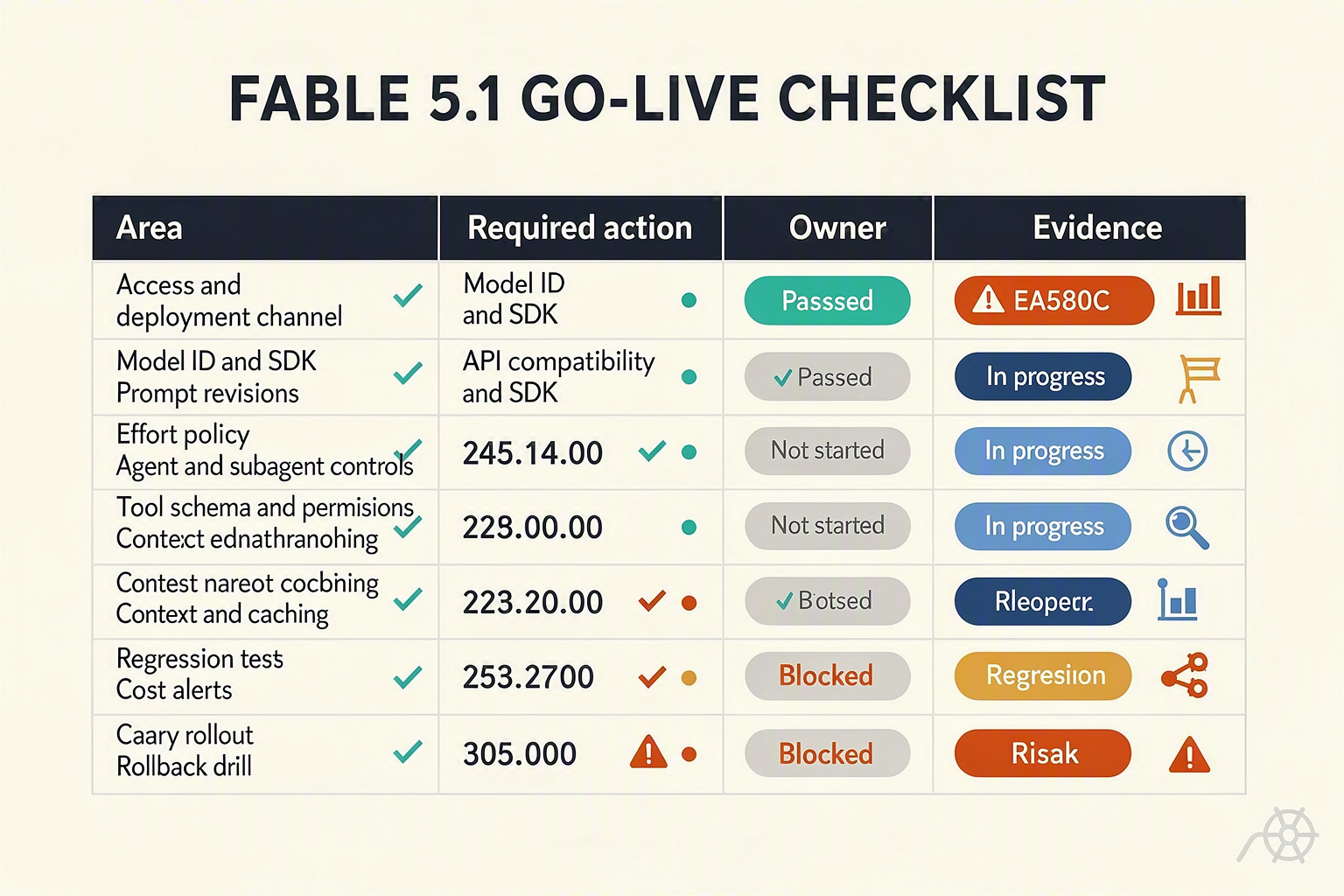
Migrating from Fable 5 to Fable 5.1 should be treated as a cross-functional production release, not a model-name substitution. Application engineering, platform operations, quality assurance, security, and FinOps teams must jointly validate behavioral changes, agent reliability, context handling, capacity, and cost.
Team responsibilities and release gates
| Workstream | What changes with Fable 5.1 | Primary owner | Release gate |
|---|---|---|---|
| Prompting | Explicitly request progress updates, completion criteria, constraints, and escalation behavior | AI/application engineering | Golden-task quality meets baseline |
| Agent orchestration | Retune effort, step budgets, subagent delegation, retries, and termination rules | Agent-platform team | No runaway loops or premature stops |
| Tool calling | Revalidate schemas, permissions, error handling, idempotency, and confirmation policies | API and security teams | Destructive actions remain gated |
| Context management | Test retrieval, compaction, summaries, cache boundaries, and stale-context handling | AI infrastructure team | Long sessions preserve critical facts |
| Reliability | Verify rate limits, service-tier compatibility, timeouts, fallback models, and rollback routing | SRE/platform engineering | Canary meets latency and error SLOs |
| Cost control | Segment input, output, cache-write, cache-hit, tool, and retry costs | FinOps/product operations | Spend per successful task stays within budget |
Anthropic launched Claude Fable 5.1 (claude-fable-5-1) on September 1, 2026, according to the Claude Platform release notes. Although Anthropic positions the model as the successor to Fable 5, existing prompts can produce different operational behavior—particularly in multi-step workflows.
Anthropic’s prompting documentation states that Claude Fable 5.1 produces fewer user-facing updates between tool calls unless progress reporting is explicitly requested. Teams should therefore test observability separately from final-answer quality; a task may complete correctly while leaving operators with insufficient information during execution.
A practical rollout sequence
- Freeze a baseline: Record Fable 5 task-success rate, latency percentiles, token consumption, tool-call count, retry rate, and human-escalation rate.
- Run shadow evaluations: Replay representative production tasks against
claude-fable-5-1without allowing external side effects. - Canary by workflow: Start with reversible, low-risk tasks before enabling repository writes, outbound messages, purchases, or record changes.
- Preserve rollback: Keep the Fable 5 model configuration, prompts, tool contracts, and routing rules versioned until Fable 5.1 passes sustained production monitoring.
- Review economics: Compare cost per successful task, not merely cost per token, because deeper reasoning may change retries, tool usage, and completion rates.
A Fable 5.1 prompt-cache hit costs $0.25 per million tokens—2.5% of standard input pricing—according to Anthropic’s 2026 pricing documentation. Cache stable instructions and tool definitions, but monitor stacked pricing multipliers and cache effectiveness rather than assuming every request receives the headline discount.
Capacity planning also needs an explicit decision. Anthropic’s service-tier documentation lists Claude Fable 5.1 as unsupported on Priority Tier as of September 2026. Any team relying on Priority Tier should validate alternative capacity arrangements before switching production traffic.
The migration is complete only when the team can demonstrate equivalent or improved task success, bounded costs, sufficient progress visibility, safe tool execution, and a tested rollback path under realistic long-horizon workloads.
Frequently asked questions about Claude Fable 5.1 prompting and migration
Prompt and agent behavior
How should developers tune effort in Claude Fable 5.1 prompting?
Do I need to rewrite prompts when I migrate to Claude Fable 5.1?
claude-fable-5-1. Anthropic’s September 2026 migration and prompting documentation indicates that Fable 5.1 behaves differently during agentic work, so teams should reevaluate progress instructions, stopping conditions, delegation rules, tool contracts, and assumptions inherited from Fable 5.Why does Claude Fable 5.1 provide fewer updates between tool calls?
Context, tools, and subagents
How should Claude Fable 5.1 prompting handle large context windows?
When should a Claude Fable 5.1 agent use subagents instead of more tool calls?
Deployment and reliability
What should a production Claude Fable 5.1 API guide test before rollout?
Conclusion
Migrating to Claude Fable 5.1 (claude-fable-5-1) is not simply a model-ID change. Reliable adoption requires teams to retune prompts, agent loops, tool contracts, context management, observability, evaluations, and cost controls around the model’s long-horizon behavior.
Key takeaways
- Make agent behavior explicit. Anthropic’s prompting guidance says Claude Fable 5.1 provides fewer user-facing updates between tool calls, so prompts should define when the agent must report progress, request approval, explain blockers, and deliver its final summary.
- Tune effort to the workload. Higher effort is appropriate for difficult coding, planning, and multi-stage knowledge tasks, but it can increase latency and token consumption. Route simpler work to lower effort, then benchmark quality, completion rates, cost, and response time against representative production tasks.
- Engineer for long-running execution. Effective agents need clear completion criteria, bounded subagent responsibilities, validated tool schemas, and recovery paths for failed calls. Use retrieval, summaries, compaction, and selective persistence to prevent expanding context from obscuring the original objective.
- Migrate with evidence, not assumptions. Run regression evaluations against Fable 5, canary a controlled share of traffic, monitor tool-call accuracy and token usage, and preserve a tested rollback path. Anthropic’s 2026 pricing documentation states that a Claude Fable 5.1 prompt-cache hit costs $0.25 per million tokens—2.5% of standard input pricing—but applicable multipliers can stack.
Prompt caching can make stable system instructions, tool definitions, repository maps, and reusable context substantially more economical. Infrastructure planning must still reflect model availability: Anthropic’s service-tier documentation listed Claude Fable 5.1 as unsupported on Priority Tier in September 2026, making capacity and fallback design part of the migration checklist.
Looking ahead, watch how Anthropic evolves effort controls, progress-reporting behavior, service-tier availability, and guidance for long-horizon agents. Teams should keep prompt bundles versioned and evaluations model-specific rather than treating today’s behavior as permanent.
Developers evaluating multiple models and modalities can also explore CallMissed, an OpenAI-compatible AI infrastructure platform offering multi-model access, automatic same-tier fallbacks, and Indic-first speech support across 22 Indian languages. Is your migration plan designed merely to launch Claude Fable 5.1—or to keep the resulting agent predictable as models, prompts, and workloads evolve?
Related Reading
- Claude Fable 5.1 vs Claude Mythos 5.1: Which Is Best for Developers?
- Claude Fable 5.1 Agentic Coding Guide for Long-Running Software Tasks
- Claude Fable 5.1 vs GPT-6 Astra: 2026 Buyer’s Guide