
Gemini 4 Argon API Pricing and Access: Sep 30, 2026



Compare announced $2/$10 introductory and $4/$20 later Gemini 4 Argon rates, eligible cache savings and limited launch access. Updated September 30, 2026.
Gemini 4 Argon API Pricing and Access: Sep 30, 2026
A 95% discount on cached input tokens sounds transformative—but it does not make your entire Gemini 4 Argon API bill 95% cheaper. As of September 30, 2026, the Google announcement excerpt supplied for this guide lists introductory pricing of $2 per million input tokens and $10 per million output tokens, with cached inputs discounted by 95%. Those figures anchor this Gemini 4 Argon API pricing and access guide, but they do not, by themselves, confirm that every developer can access the model today.
That distinction matters when you are choosing a production dependency rather than reading a launch announcement. An advertised token price answers one question; a working model identifier, supported endpoint, account eligibility, and applicable billing terms answer whether you can actually build—and budget—around it.
What does Gemini 4 Argon’s introductory pricing mean for developers?
According to Google’s announcement excerpt available for this September 30, 2026 guide, the cached-input discount implies $0.10 per million eligible cached input tokens. Output tokens remain the larger expense whenever responses are lengthy, so prompt caching and response-length controls solve different cost problems.
Consider a request containing 10,000 input tokens and 1,000 output tokens. Using Google’s quoted introductory rates, the calculated token charge is $0.03 without caching: $0.02 for input and $0.01 for output. If all 10,000 input tokens qualify for the advertised cached rate, the calculated charge falls to $0.011, a reduction of approximately 63.3%, not 95%.
These are illustrative token calculations, not complete invoice estimates. Cache eligibility, any additional cache charges, tool usage, and other billing conditions require confirmation in the applicable pricing documentation.
What should you verify before integrating Gemini 4 Argon?
This guide focuses on the checks that turn an announcement into a usable developer plan:
- Token economics: separate input, output, and eligible cached-input spending.
- Practical access: confirm the exact model identifier, API endpoint, account requirements, and regional availability.
- Production constraints: check quotas, context limits, supported features, and introductory-pricing conditions.
- Evidence boundaries: distinguish announced terms from documented availability and successfully tested access.
The supplied excerpt says Argon “will launch at an introductory price,” so launch pricing should not be mistaken for proof of unrestricted API availability on September 30, 2026.
As of September 2026, CallMissed’s OpenAI-compatible developer API supports existing SDK integrations by changing the base URL, illustrating the broader move toward simpler multi-model access—not confirming Argon availability there.
The goal is straightforward: know what you can access, calculate realistic costs, and identify what still needs verification.
Gemini 4 Argon API pricing: introductory and later rates
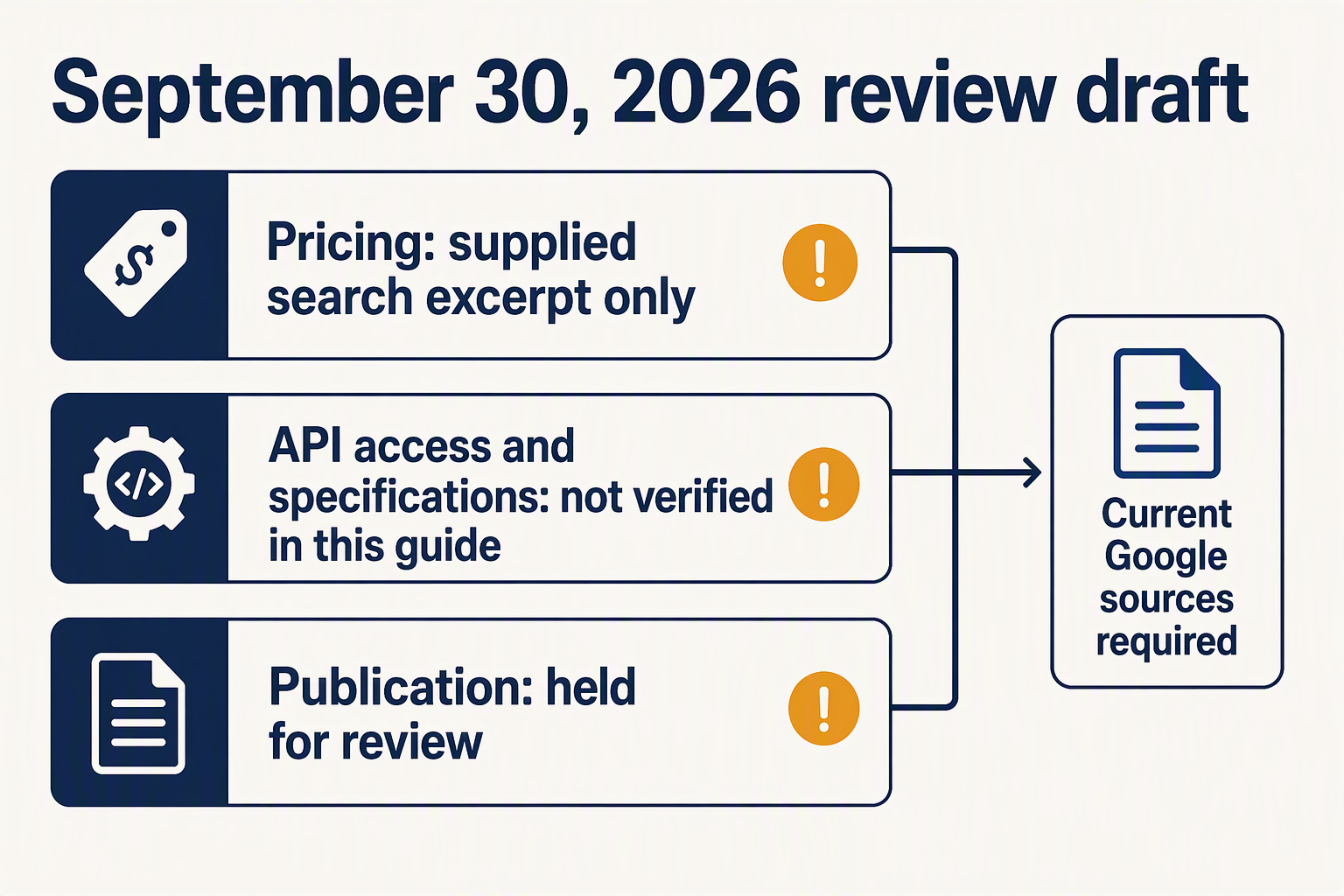
Google’s September 30, 2026 announcement gives Gemini 4 Argon introductory API rates of $2 per million input tokens and $10 per million output tokens. Its pricing footnote explicitly lists later rates of $4 per million input tokens and $20 per million output tokens. The retrieved source does not establish the introductory period’s duration or exact expiry date.
What are the announced introductory and later rates?
Google’s launch announcement, “Gemini 4 Argon: our next era of frontier intelligence,” also states a 95% discount for eligible cached input. Applied to the introductory input rate, that implies $0.10 per million eligible cached input tokens. This is a calculation from the announced discount, not a separately verified billing rate.
| Pricing item | Introductory rate | Later rate | Evidence status |
|---|---|---|---|
| Input tokens, uncached | $2 per million | $4 per million | Announced by Google; later rate stated in the footnote |
| Output tokens | $10 per million | $20 per million | Announced by Google; later rate stated in the footnote |
| Eligible cached input | $0.10 per million | Not established here | Introductory rate calculated using the announced 95% discount |
| Introductory expiry | Not established | Transition date not established | No exact duration or expiry verified from the retrieved source |
| Cache storage, cache writes, or tool charges | Not established | Not established | Check applicable billing terms for charges beyond token processing |
Do not treat the headline token rates as a complete invoice estimate. Cache eligibility and any separately billed storage, write, or tool usage need confirmation in the applicable billing documentation. These are items to check—not claims that every request incurs those charges.
What would a small request cost at these rates?
For 10,000 input tokens and 1,000 output tokens, token-only arithmetic gives:
- Introductory, uncached:
(10,000 ÷ 1,000,000 × $2) + (1,000 ÷ 1,000,000 × $10)= $0.03. - Introductory, all input eligible for the cache discount:
(10,000 ÷ 1,000,000 × $0.10) + (1,000 ÷ 1,000,000 × $10)= $0.011. - After the introductory period, uncached:
(10,000 ÷ 1,000,000 × $4) + (1,000 ÷ 1,000,000 × $20)= $0.06.
These examples are arithmetic illustrations, not invoices or results from a real API test. The cached example assumes every input token qualifies for the announced discount.
Does the announcement establish public API access?
No. The announced Fairwind rollout is limited to trusted cyber defenders; it does not establish public general availability. Neither the pricing announcement nor that limited rollout proves that every developer can obtain access or use a freely callable model identifier.
Before implementing an integration, confirm account eligibility, the exact documented model identifier, the supported API route, and the applicable billing terms. A successful authenticated request would establish access only for the configuration tested—not universal availability.
The primary pricing source is Google’s September 30, 2026 launch announcement and its pricing footnote. For a separate access check, consult Google’s Gemini API model and availability documentation; do not infer an API identifier from the “Argon” name alone.
How should announcement timing, public release, and conflicting pricing snippets be reconciled?
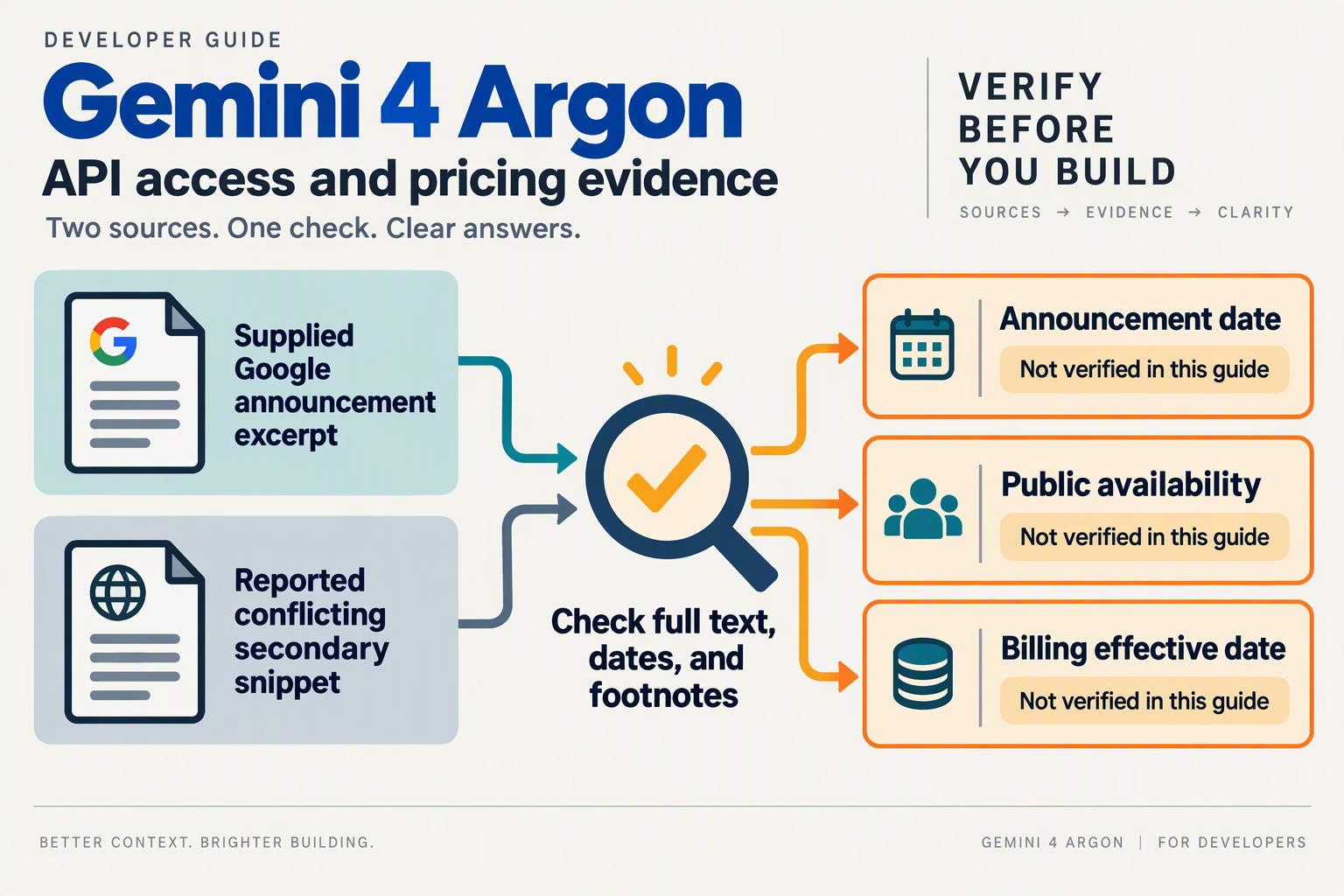
Reconcile Gemini 4 Argon’s announcement, release status, and pricing by treating them as separate claims requiring separate evidence. As of September 30, 2026, the supplied Google announcement excerpt supports announced introductory token rates, but it does not establish a publication date, unrestricted public API access, or complete billing conditions.
Does Google’s announcement confirm public API availability?
Google’s supplied announcement excerpt says Gemini 4 Argon “will launch at an introductory price” and is “already powering our internal workflows.” These statements describe different milestones: planned commercial pricing and internal deployment. Neither statement alone confirms that an external developer can call the model.
For a September 30, 2026 verification record, distinguish three events:
- Announcement: Google describes Gemini 4 Argon and its intended commercial terms.
- Public API release: Official developer documentation identifies an accessible model, supported API surface, and eligibility requirements.
- Account-level access: An authenticated request succeeds for your particular project, region, and billing configuration.
A successful request establishes access for the tested account—not universal availability. Conversely, an unsuccessful request may reflect permissions, configuration, or rollout restrictions rather than prove that nobody has access.
The supplied research does not include an authenticated test or an Argon-specific developer documentation excerpt. The defensible status is therefore announced pricing; public API access not established by the supplied evidence.
Which source should resolve conflicting Gemini 4 Argon prices?
For applicable billing, prioritize official pricing documentation for the exact model and service you will use, checked alongside the announcement’s conditions. An announcement supplies launch context; a search snippet is an abbreviated discovery aid, not a complete billing specification.
Google’s announcement excerpt supplied for this September 30, 2026 guide quotes Gemini 4 Argon introductory pricing of $2 per million input tokens and $10 per million output tokens, with 95% off eligible cached input tokens. However, the excerpt also contains a footnote marker after “introductory price”; the corresponding footnote is not supplied.
Before accepting a conflicting figure, check whether both sources describe the same:
- Model and version: Argon rather than another Gemini product.
- Service and billing surface: the specific API offering being integrated.
- Token category: ordinary input, cached input, or output.
- Pricing conditions: introductory eligibility, effective period, currency, and any applicable processing tier.
These are reconciliation checks, not confirmed Argon pricing variations. The provided context contains only one Argon pricing excerpt, so there is no documented conflicting Argon rate to resolve.
How should developers record announcement and release timing?
Maintain a short evidence ledger with the source publisher, document title, publication or update date, retrieval date, and the precise claim supported. Keep September 30, 2026—the guide’s verification cutoff—separate from Google’s publication date, which the supplied excerpt does not establish.
Other Google results in the research concern Gemini 3, Gemini 3.7 Flash, Gemini Embedding 2, and additional products. Their release language cannot establish Argon’s release date or access status.
For budgeting, label the quoted rates announced introductory rates, not verified account-specific charges. For deployment, require a documented model identifier, a successful test request, and applicable billing terms before treating Gemini 4 Argon as a production dependency.
What introductory token rates, cached-input discounts, and footnotes need direct verification?
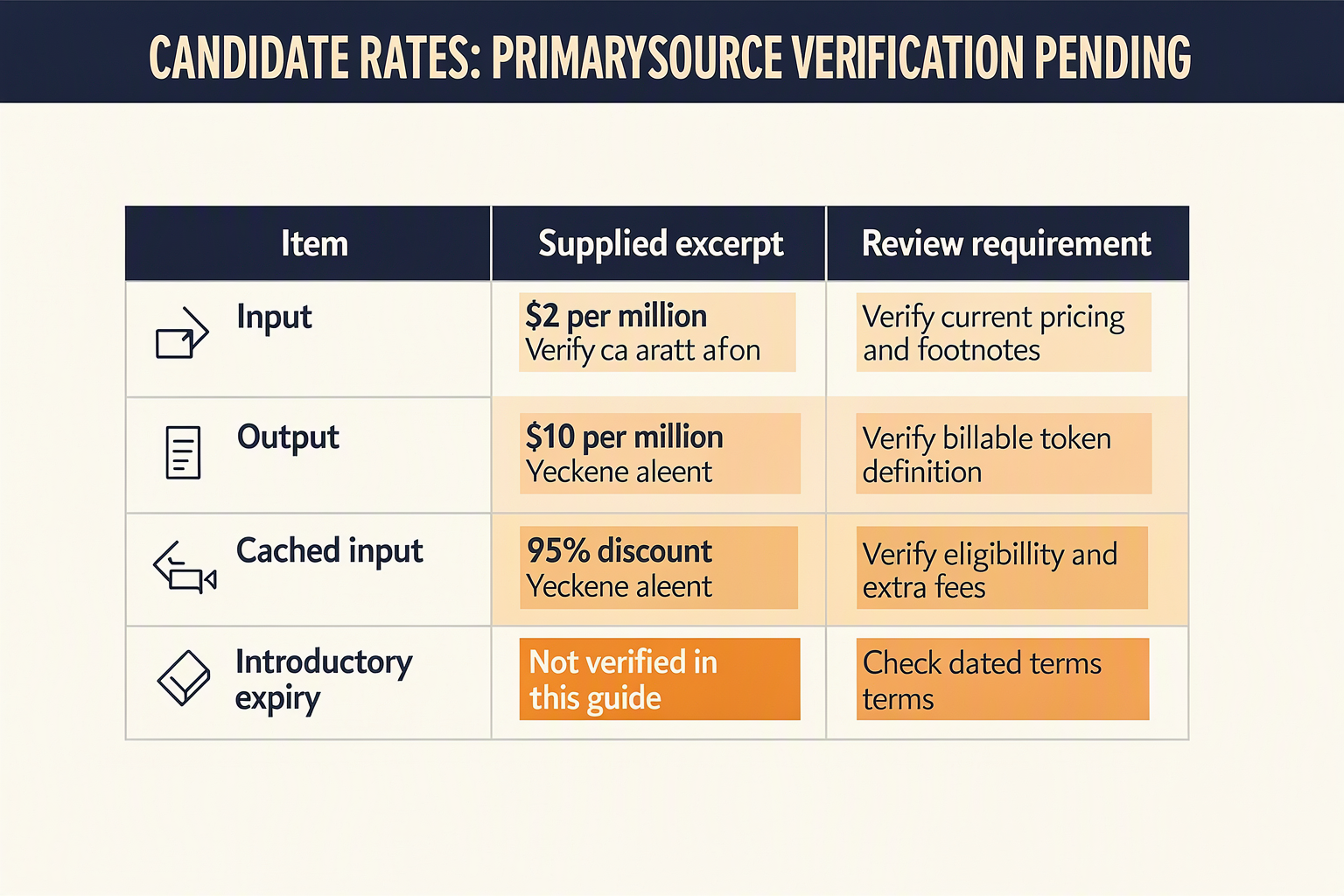
Verify the introductory rates against Google’s model-specific API pricing documentation, and read the footnote attached to “introductory price” before budgeting production usage. As of September 30, 2026, the supplied Google announcement excerpt supports the headline rates and cached-input discount, but does not establish their duration, cache eligibility rules, or complete billing conditions.
Which Gemini 4 Argon pricing terms are supported by the announcement?
According to Google’s announcement excerpt supplied for this September 30, 2026 guide, Gemini 4 Argon “will launch at an introductory price” of $2 per million input tokens and $10 per million output tokens, with cached input tokens priced 95% below the input-token rate.
The table separates those announced terms from details that still require direct verification. “Announced” does not mean independently confirmed in a live billing account.
| Pricing item | Announcement evidence | Budget treatment | Direct verification needed |
|---|---|---|---|
| Standard input | $2 per million tokens | Apply to uncached input | Eligible model, endpoint, and any pricing tiers |
| Output | $10 per million tokens | Budget separately from input | Which generated tokens are billable |
| Cached input | 95% off input price | Derived rate: $0.10 per million eligible tokens | Cache eligibility and actual billed rate |
| Introductory period | Described as “introductory” | Treat as provisional pricing | Start date, end date, and subsequent rates |
| Pricing footnote | Footnote marker “1” appears | Do not assume unrestricted terms | Full footnote text and exclusions |
| Additional charges | Not specified in excerpt | Keep outside headline token estimate | Cache storage, tools, and other applicable fees |
The $0.10 cached-input rate is arithmetic derived from Google’s supplied announcement as of September 30, 2026: $2 × 5% = $0.10 per million tokens. It is not evidence that every repeated prompt automatically receives that rate.
What could the introductory-pricing footnote change?
The footnote could materially affect a developer’s forecast, but its contents are absent from the supplied excerpt. Do not fill that gap with assumptions drawn from another Gemini model’s pricing.
Check the applicable Google documentation for:
- Timing: whether introductory rates have a defined expiry or replacement schedule.
- Scope: whether the rates apply to the exact model identifier and access route you intend to use.
- Usage conditions: whether context length, modality, or processing mode changes the applicable rate.
- Cache costs: whether creating or retaining cached content introduces separate charges.
These are verification questions, not confirmed Gemini 4 Argon restrictions.
How should developers estimate costs before those details are confirmed?
Use a three-part token ledger rather than applying the discount to the whole request:
- Multiply uncached input tokens by $2 per million.
- Multiply eligible cached input tokens by the derived $0.10 per million.
- Multiply output tokens by $10 per million, then add any separately verified charges.
For example, consider one million input tokens, of which 800,000 qualify for caching, plus 100,000 output tokens. Using Google’s announced introductory rates supplied as of September 30, 2026, the calculated token-only cost is $1.48: $0.40 uncached input, $0.08 cached input, and $1.00 output.
Without caching, the same workload would calculate to $3.00—a 50.7% reduction, not 95%. Until Google’s full footnote and applicable billing documentation are checked, label this a conditional estimate, not a verified invoice forecast.
Who can access Argon, and which API IDs, endpoints, limits, and channels are documented?
The supplied Google announcement excerpt confirms internal use of Gemini 4 Argon, but does not establish which external developers can access its API as of September 30, 2026. Exact model IDs, supported endpoints, account eligibility, quotas, and distribution channels remain unverified from the provided material—not necessarily unavailable.
Which Gemini 4 Argon access details are documented?
Google’s announcement excerpt supplied for this September 30, 2026 guide states that “Gemini 4 Argon is already powering our internal workflows.” That establishes Google’s internal use; it does not establish public API availability, general availability, or access for a particular developer account.
The following table separates what the supplied evidence supports from what developers still need to confirm.
| Access detail | Evidence as of Sept. 30, 2026 | What developers should verify |
|---|---|---|
| Eligible users | Google confirms internal use; external eligibility is unspecified | Public access, invitation requirements, billing prerequisites |
| API model IDs | No exact Argon identifier appears in the excerpt | Published model ID, version, and alias behavior |
| API endpoints | No Argon endpoint or request schema is supplied | Supported API, method, authentication, and streaming |
| Access channels | Google AI Studio, Gemini API, Vertex AI, and gateways are not confirmed for Argon | Argon-specific availability in each intended channel |
| Usage and model limits | No request quotas, token quotas, context window, or output cap is supplied | Account-tier limits and model-specific ceilings |
| Regions and rollout status | Supported regions and preview or general-availability status are unspecified | Project location, regional support, and rollout conditions |
“Unspecified” means absent from the supplied excerpt, not absent from Google’s full documentation. This distinction prevents an evidence gap from becoming an unsupported claim about the product.
How should developers verify Argon API access?
Use an account-specific access check, rather than assuming a launch article guarantees a working integration:
- Find the official model entry. Record the exact identifier, release status, supported API, and documentation date. Do not construct an identifier from the marketing name.
- Confirm the intended channel. Check whether Argon is documented for the Gemini API, Vertex AI, or another service. Access through one channel does not establish access through another.
- Check project eligibility. Verify billing requirements, permissions, regional restrictions, and any preview enrollment.
- Run a minimal authenticated request. Save the requested model ID, returned model information where available, usage metadata, and any access error.
- Inspect applicable quotas. Confirm request and token limits before increasing concurrency or promising production capacity.
A successful test establishes access for that account, project, channel, and time. It does not prove universal availability.
Which access details affect token economics?
For a Gemini 4 Argon API pricing and access decision, model access and billing evidence must match. Google’s supplied announcement uses the wording “will launch at an introductory price,” so developers should confirm the applicable pricing terms in their chosen channel before treating an estimate as a production budget.
Check these dependencies alongside access:
- Caching support: whether the chosen API supports the advertised cached-input treatment and its eligibility conditions.
- Output ceilings: whether documented response limits accommodate the intended workload.
- Quota behavior: how throttling affects throughput, retries, and application responsiveness.
- Gateway routing: whether an intermediary explicitly lists Argon, its identifier, and its own billing terms.
The practical release gate is straightforward: a documented model entry, a successful authenticated request, and applicable billing terms. Until those align, keep Argon behind a configurable model adapter rather than making it a fixed production dependency.
What would a hypothetical workload cost if the excerpted introductory rates are confirmed?
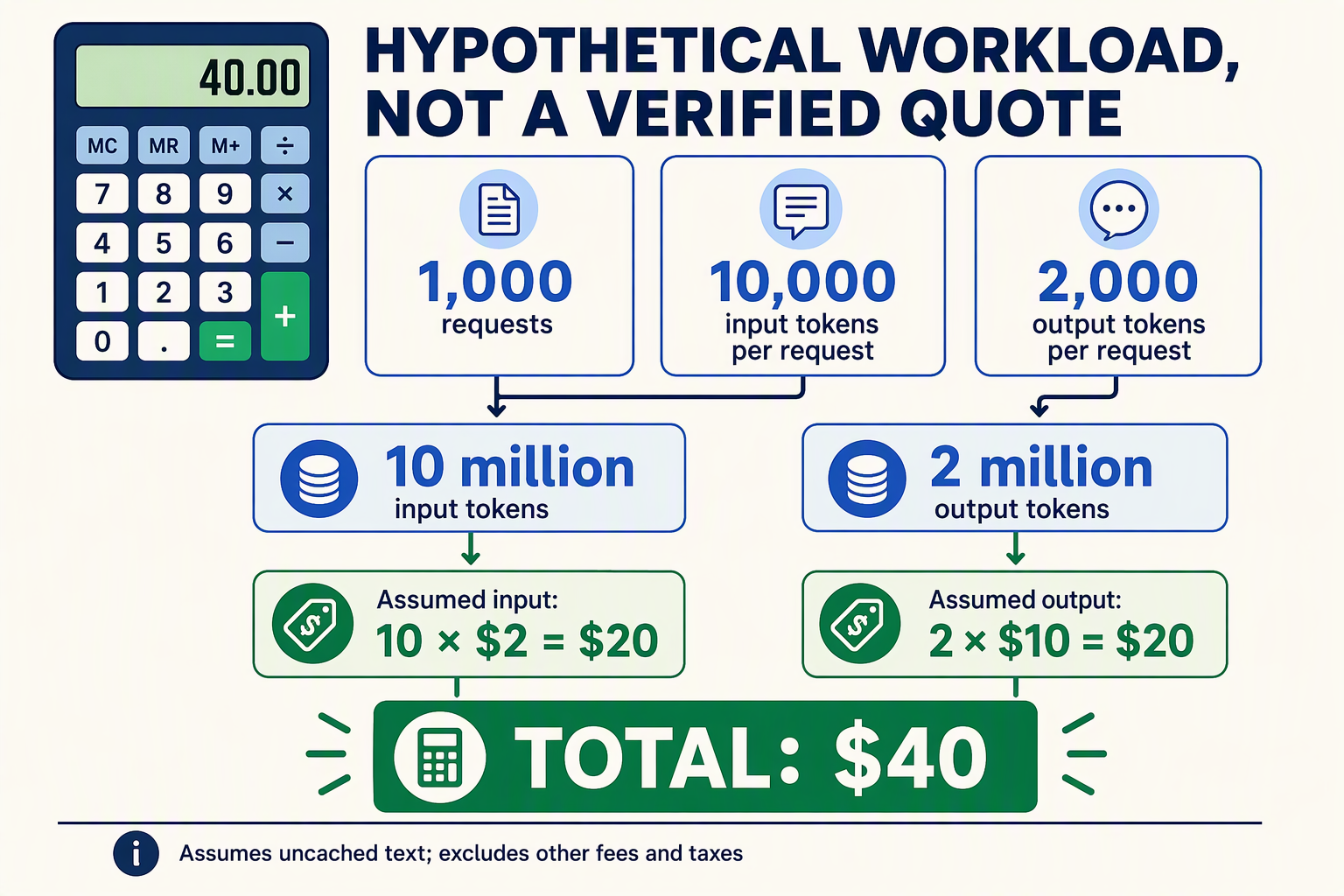
A hypothetical workload of 100,000 requests per month, averaging 4,000 input tokens and 800 output tokens per request, would cost $1,600 in token charges without caching if Google’s excerpted Gemini 4 Argon introductory rates are confirmed. If 75% of input tokens qualify for the advertised cached rate, the same workload would cost $1,030, before any additional charges.
These are planning estimates as of September 30, 2026, not verified invoice totals or confirmation that Gemini 4 Argon API access is available.
How do you calculate Gemini 4 Argon token costs?
Google’s announcement excerpt supplied for this September 30, 2026 guide quotes introductory pricing of $2 per million input tokens, $10 per million output tokens, and cached input tokens at “95% off input token price.” That discount implies $0.10 per million eligible cached input tokens, subject to confirmation of the applicable billing terms.
Use three separate quantities rather than applying a discount to the whole request:
Estimated token cost = (uncached input millions × $2) + (cached input millions × $0.10) + (output millions × $10).
For the hypothetical monthly workload:
- Total input: 100,000 requests × 4,000 tokens = 400 million tokens.
- Total output: 100,000 requests × 800 tokens = 80 million tokens.
- Uncached baseline: (400 × $2) + (80 × $10) = $1,600.
Although output represents only one-sixth of this workload’s total token volume, output accounts for 50% of its uncached token bill, calculated using Google’s excerpted rates as of September 30, 2026.
How much would different cache-hit rates save?
For budgeting, measure the share of input tokens billed at the cached rate, not simply the percentage of requests that reuse some content. A request containing a reusable reference document and a fresh user question can contain both cached and uncached input.
The following calculations use Google’s excerpted introductory rates available for this September 30, 2026 guide:
| Cached share of input tokens | Uncached input cost | Cached input cost | Output cost | Monthly total |
|---|---|---|---|---|
| 0% | $800 | $0 | $800 | $1,600 |
| 50% | $400 | $20 | $800 | $1,220 |
| 75% | $200 | $30 | $800 | $1,030 |
| 100% | $0 | $40 | $800 | $840 |
At 75% cached input, the hypothetical workload saves $570 per month, or approximately 35.6%, under those conditional rates. The 100% row is a mathematical upper-bound scenario for input caching, not a promise that every token will qualify.
What should developers change before scaling this workload?
Control output length alongside cache reuse. In the 75%-cached scenario, reducing average output from 800 to 400 tokens would lower calculated output spending from $800 to $400, bringing the hypothetical monthly token total to $630 under the same September 30, 2026 assumptions.
Before adopting that budget:
- Measure representative traffic: include long responses, repeated context, and multi-step interactions.
- Count every model invocation: retries and agent loops can increase requests beyond user-facing task counts.
- Verify excluded charges: confirm cache storage, tools, and any other applicable billing items.
- Test response quality: shorter answers are useful only if they still complete the task.
The practical budgeting unit is cost per successfully completed task, not merely cost per API request.
How do cache hit rate, output length, and extra cache fees change token economics?
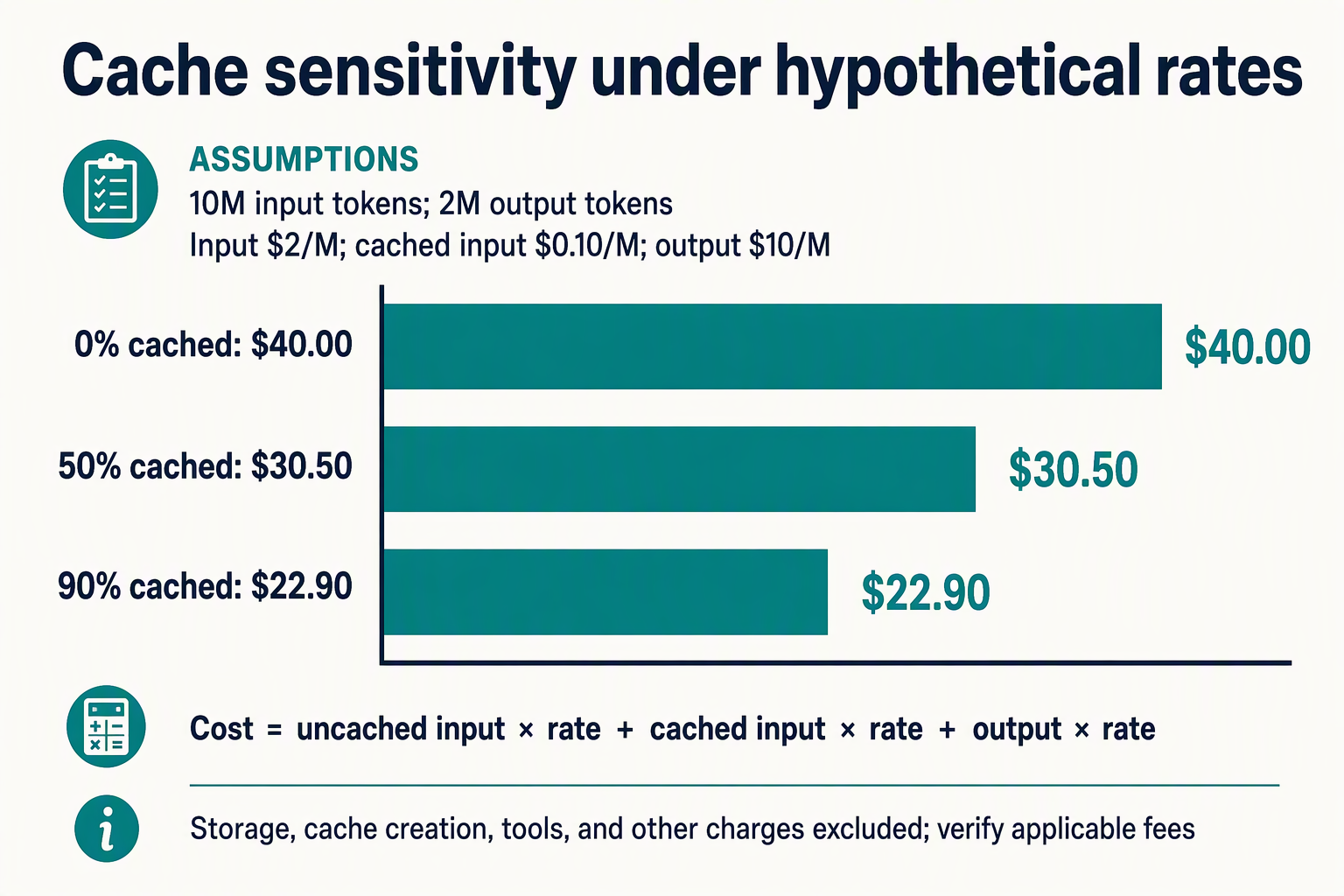
Cache hit rate determines how much input receives the discount; output length determines how much spending caching cannot reduce. Extra cache charges can offset those savings, so Gemini 4 Argon token economics should be calculated from actual token usage—not the advertised discount alone.
How do you calculate the effective cached-input price?
Google’s announcement excerpt supplied for this September 30, 2026 guide quotes $2 per million input tokens, $10 per million output tokens, and cached inputs “priced at 95% off input token price.” The implied cached-input rate is $0.10 per million eligible tokens; the excerpt does not establish additional cache fees or eligibility rules.
For a workload, define:
- I: total input tokens, including cached and uncached tokens.
- O: total billable output tokens.
- h: eligible cached input tokens divided by total input tokens.
- F: additional cache-related charges in dollars, if applicable.
Using Google’s quoted introductory rates, the estimated charge is:
Cost = (I ÷ 1,000,000) × [2 × (1 − h) + 0.10 × h] + (O ÷ 1,000,000) × 10 + F
This excludes other potentially billable services. Crucially, h is a token-weighted cache hit rate, not the percentage of requests reporting a cache hit. A request that reuses a small prefix while adding a large document can register a hit without caching much of its input.
How much does output length change the savings?
Consider an illustrative request with 20,000 input tokens and an 80% token-weighted cache hit rate. Using Google’s quoted rates for this September 30, 2026 calculation, input costs fall from $0.04 to $0.0096, before any extra fees.
Response length then changes the overall economics:
- With 500 output tokens: output costs $0.005. Total token cost falls from $0.045 without caching to $0.0146 with caching, approximately 67.6% lower.
- With 4,000 output tokens: output costs $0.04. Total token cost falls from $0.08 to $0.0496, approximately 38% lower.
These are calculated scenarios, not measured Argon benchmarks. The input savings remain $0.0304 in both cases; longer responses dilute the percentage saving because output spending remains unchanged.
For extraction, classification, and routing tasks, request compact structured answers where supported. For coding or analysis workloads, evaluate whether shorter responses preserve usefulness rather than imposing a length cap that causes incomplete answers and retries.
When do extra cache fees erase the benefit?
Caching breaks even when additional cache charges equal the avoided input spending:
Maximum worthwhile extra cache charges = (I ÷ 1,000,000) × h × $1.90
In the example above, the break-even allowance is $0.0304 per request-equivalent. A hypothetical allocated cache fee of $0.005 would raise the short-response total to $0.0196—still cheaper than $0.045, but only approximately 56.4% lower.
As of September 30, 2026, the supplied Google excerpt does not confirm whether Argon has cache creation, storage, or retention charges. Before budgeting, verify:
- Fee basis: creation, storage duration, retrieval, or another unit.
- Reuse frequency: how many requests share each cached context.
- Retention and invalidation: whether idle periods or frequent updates reduce reuse.
Allocate any shared cache fees across the workload and compare total dollars saved, not just cache-hit percentages.
How can developers verify access and prepare an integration without inventing SDK calls?
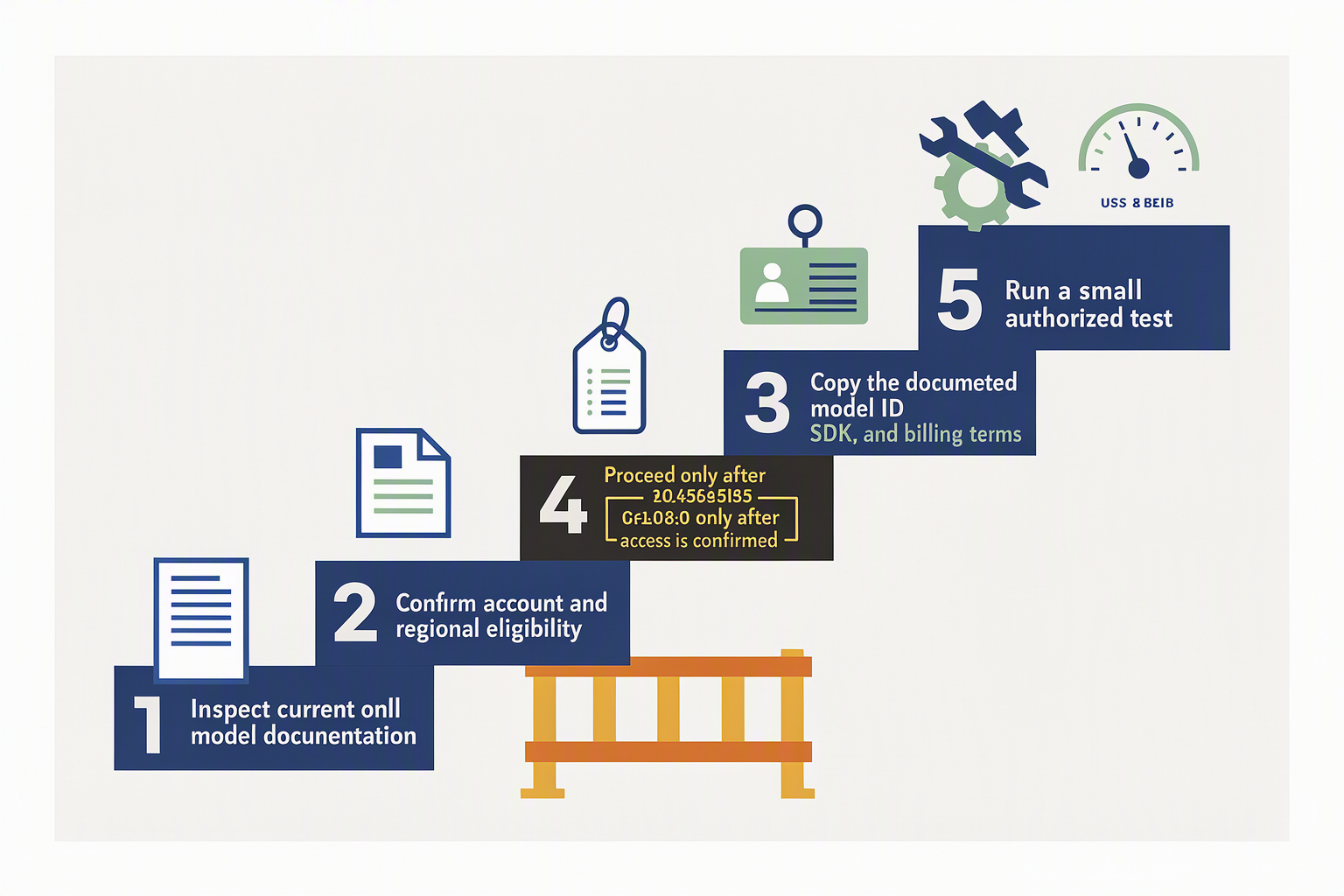
Developers should verify Gemini 4 Argon access against official model documentation and an authenticated test in their own account, then implement only the request format those documents support. As of September 30, 2026, the supplied Google announcement excerpt does not establish an exact model identifier, supported endpoint, or working SDK invocation, so a copy-and-paste Argon integration would be premature.
What evidence confirms Gemini 4 Argon API access?
Google’s announcement excerpt supplied for this September 30, 2026 guide says Argon “will launch at an introductory price” and is “already powering our internal workflows.” Neither statement, by itself, demonstrates external developer access.
Use this verification sequence before choosing Argon as a production dependency:
- Find the official model reference. Record the exact API model identifier, release status, supported operations, and any versioning or alias rules. Do not derive an identifier from the marketing name “Gemini 4 Argon.”
- Confirm the access route. Check whether Google documents access through the Gemini API, Vertex AI, or another surface. Treat each route’s authentication, billing, location, and quota requirements separately.
- Check account eligibility. Confirm any required project settings, billing activation, permissions, regional restrictions, or preview enrollment.
- Run a minimal documented request. Use Google’s example for the selected access route, replacing only the documented configuration values.
- Preserve the evidence. Save the documentation review date, SDK version, requested model identifier, response metadata, and sanitized test result.
A successful request proves access for that account and configuration at that time. It does not establish unrestricted availability for every developer or region.
How can you prepare code before the SDK details are confirmed?
Build a provider adapter, not a speculative Argon SDK call. Your application can define its own stable interface while leaving the provider-specific implementation pending verification.
For example, define an internal request contract containing:
- Input: application instructions and user content.
- Output budget: a requested response limit, translated into the provider’s documented parameter later.
- Result: generated content, completion status, and available usage metadata.
- Failure: an application-level category for authentication, access, quota, or transient errors.
These are application design choices—not claims about Argon’s API fields.
Keep the model identifier and access route in configuration rather than business logic. Pin the SDK version used for testing, store credentials outside source code, and add contract tests for response parsing. Enable retries only for documented retryable failures; repeatedly retrying an eligibility error will not create access.
What should the first integration test measure?
The first test should establish correctness and observability, not headline performance. Start with a short, non-sensitive prompt and a bounded response, using only controls confirmed by the selected API documentation.
Capture the following:
- Request identity: configured model, access route, SDK version, and test timestamp.
- Usage: input, output, and cached-token counts where explicitly reported.
- Behavior: response structure, termination reason, and error handling.
- Billing evidence: usage records and applicable charges when available.
For a repeated-prompt test, do not infer a cache hit merely because the content is identical or the response arrives faster. Require documented cache behavior and supporting usage evidence.
Until those checks succeed, label the integration “prepared; Argon access unverified.” That distinction lets developers advance implementation without presenting an announcement excerpt as a tested API contract.
Which primary sources and expert interpretations must reviewers check before publication?

Reviewers should check Google’s original Argon announcement, applicable API pricing documentation, model documentation, and account-level access evidence, then use independent expert analysis to test the economic interpretation. For this September 30, 2026 guide, the supplied material supports announcement-level pricing claims—not a blanket claim that Gemini 4 Argon is publicly accessible through every Google developer channel.
Which Google sources should establish the pricing claims?
Start with Google’s “Gemini 4 Argon: our next era of frontier intelligence” announcement, including its footnotes rather than relying solely on the search excerpt.
Google’s announcement excerpt supplied for review on September 30, 2026 quotes introductory Gemini 4 Argon pricing of $2 per million input tokens, $10 per million output tokens, and a 95% discount on cached input tokens. The wording “will launch at an introductory price” is important: it describes announced terms without establishing a launch date or unrestricted availability.
Reviewers should reconcile that announcement with the applicable Google pricing documentation:
- Gemini API pricing: confirm whether Argon is listed and whether the quoted rates apply to the intended API.
- Vertex AI pricing, if relevant: independently verify any Google Cloud offering rather than assuming identical commercial terms.
- Caching and billing documentation: check cache eligibility, storage charges, minimum requirements, and token accounting.
- Introductory-offer footnotes: establish duration, exclusions, and any conditions attached to the advertised price.
Do not mark these checks complete unless the corresponding documentation has actually been examined.
What evidence establishes practical API access?
A product announcement is weaker access evidence than a documented endpoint and a successful request from the intended account. Google’s supplied Argon excerpt says the model is “already powering our internal workflows”; internal deployment does not establish external developer access.
Use a reproducible verification sequence:
- Record the exact model identifier from Google’s documentation or the relevant model listing.
- Confirm the supported endpoint, authentication requirements, account eligibility, and regional restrictions.
- Submit a minimal request from the account and deployment environment described in the guide.
- Preserve the timestamp, returned model identifier, usage metadata, and any access-related error.
- Compare the request’s recorded usage with the applicable billing terms.
Keep credentials and sensitive project details out of published examples. A successful test establishes access for that tested configuration—not universal availability.
Which expert interpretations are worth including?
Prioritize analyses that disclose workload assumptions, billing evidence, and reproducible methods. Useful expert commentary separates cached and uncached inputs, output generation, cache overhead, and tool charges instead of treating one discounted token category as a whole-bill saving.
For a September 30, 2026 review, ask whether an interpretation:
- Uses Argon-specific documentation rather than another Gemini model’s terms.
- Distinguishes calculated examples from measured invoices.
- States cache-hit assumptions and response lengths.
- Identifies the API channel and account conditions tested.
No independent expert interpretation is included in the supplied context. Reviewers should therefore omit attributed expert conclusions until a named, dated source has been checked.
What should the final publication check record?
Maintain a compact evidence ledger containing each claim, its source, the date checked, and its status: announced, documented, tested, or unresolved.
The supplied Google items about Gemini 3, Gemini 3.7 Flash, Gemini Embedding 2, and Gemini Deep Research concern different products; none independently verifies Argon pricing or access. Before publication, narrow any unsupported “verified as of September 30, 2026” language to the evidence actually reviewed.
Frequently Asked Questions
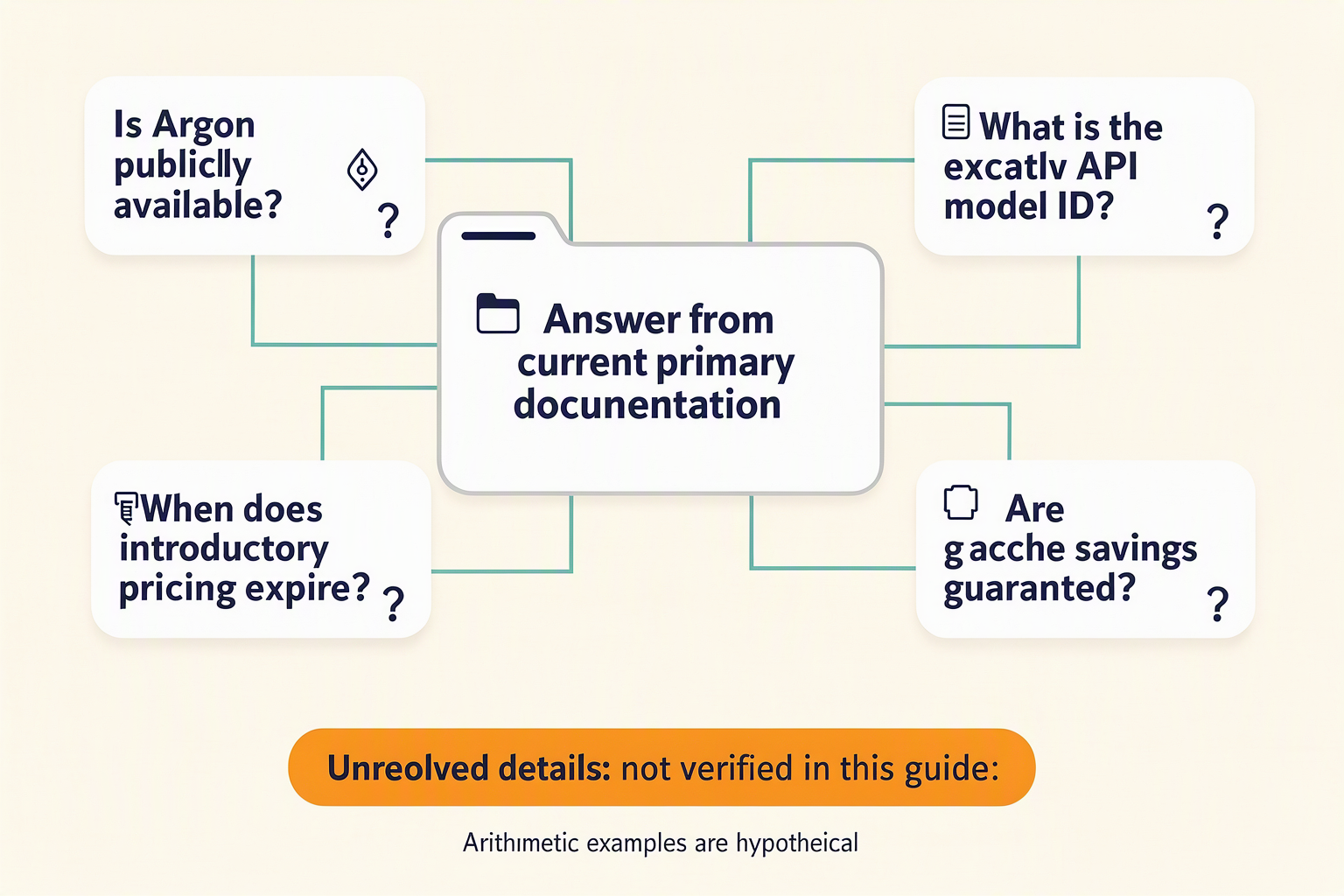
Is Gemini 4 Argon API pricing and access publicly confirmed?
What is the official Gemini 4 Argon API model ID?
When does Gemini 4 Argon introductory API pricing expire?
What are Gemini 4 Argon’s input, output, and cached-token prices?
Are Gemini 4 Argon’s cache savings guaranteed for every request?
Can developers access Gemini 4 Argon through an OpenAI-compatible gateway?
Conclusion
Gemini 4 Argon’s announced pricing is a starting point for budgeting, not proof of production-ready access. As of September 30, 2026, developers should separate Google’s quoted introductory token rates from the model identifiers, endpoints, eligibility rules, and billing conditions that still require confirmation.
The practical conclusions from this Gemini 4 Argon API pricing and access guide are:
- Budget input and output separately. Google’s announcement excerpt supplied for this September 30, 2026 guide quotes introductory pricing of $2 per million input tokens and $10 per million output tokens. That difference makes response length an important cost lever: reducing repeated input through caching does not reduce the rate charged for generated output. Estimate spending using your workload’s actual input-to-output mix rather than treating either headline price as a complete cost forecast.
- Treat caching savings as conditional, not universal. Google’s announcement excerpt, reviewed for this September 30, 2026 guide, advertises a 95% cached-input discount, implying $0.10 per million eligible cached input tokens. Using those quoted rates, this guide’s illustrative request with 10,000 input tokens and 1,000 output tokens costs $0.03 uncached versus $0.011 with fully eligible cached input—a reduction of approximately 63.3%. These calculations exclude any additional charges or conditions requiring documentation checks.
- Verify access before committing engineering time. Google’s supplied announcement excerpt says Argon “will launch at an introductory price”; that wording does not establish unrestricted availability on September 30, 2026. Confirm the exact model identifier, supported endpoint, account eligibility, and regional availability, then test a request successfully. An announcement can establish pricing intent without establishing that your particular account can use the model.
- Check production constraints alongside token economics. Quotas, context limits, supported features, cache eligibility, and introductory-pricing conditions determine whether the advertised economics fit your application. Keep confirmed documentation, illustrative calculations, and unresolved questions clearly separated. A realistic integration decision needs both a workable access path and a cost estimate that reflects the requests you actually expect to send.
Looking ahead, watch for Google’s definitive access documentation and applicable billing terms—especially clarification of cache charges and the duration or scope of introductory pricing. Those details will determine whether the announcement translates into predictable production spending.
For teams exploring simpler multi-model integration, CallMissed’s OpenAI-compatible developer API, as of September 2026, supports existing SDKs by changing the base URL. Explore CallMissed as part of that broader infrastructure trend, without assuming Gemini 4 Argon availability there.
Before building around Argon, can you demonstrate both a successful API request and a documented cost estimate for your real workload?
Related Reading
- GPT-6 Astra API Availability, Access, and Pricing: Verified Status as of September 3, 2026
- Gemini 4 vs Claude Fable 5.1: Argon Buyer Guide (2026)
- [Gemini 4 Argon Launch: Access and Facts [Review Draft]](/blog/gemini-argon-launch-access-facts-review-draft)
Sources
Discussion
Related Posts


Ready to automate customer conversations?
Launch AI voice agents and WhatsApp bots with CallMissed — one API, 22+ Indian languages.