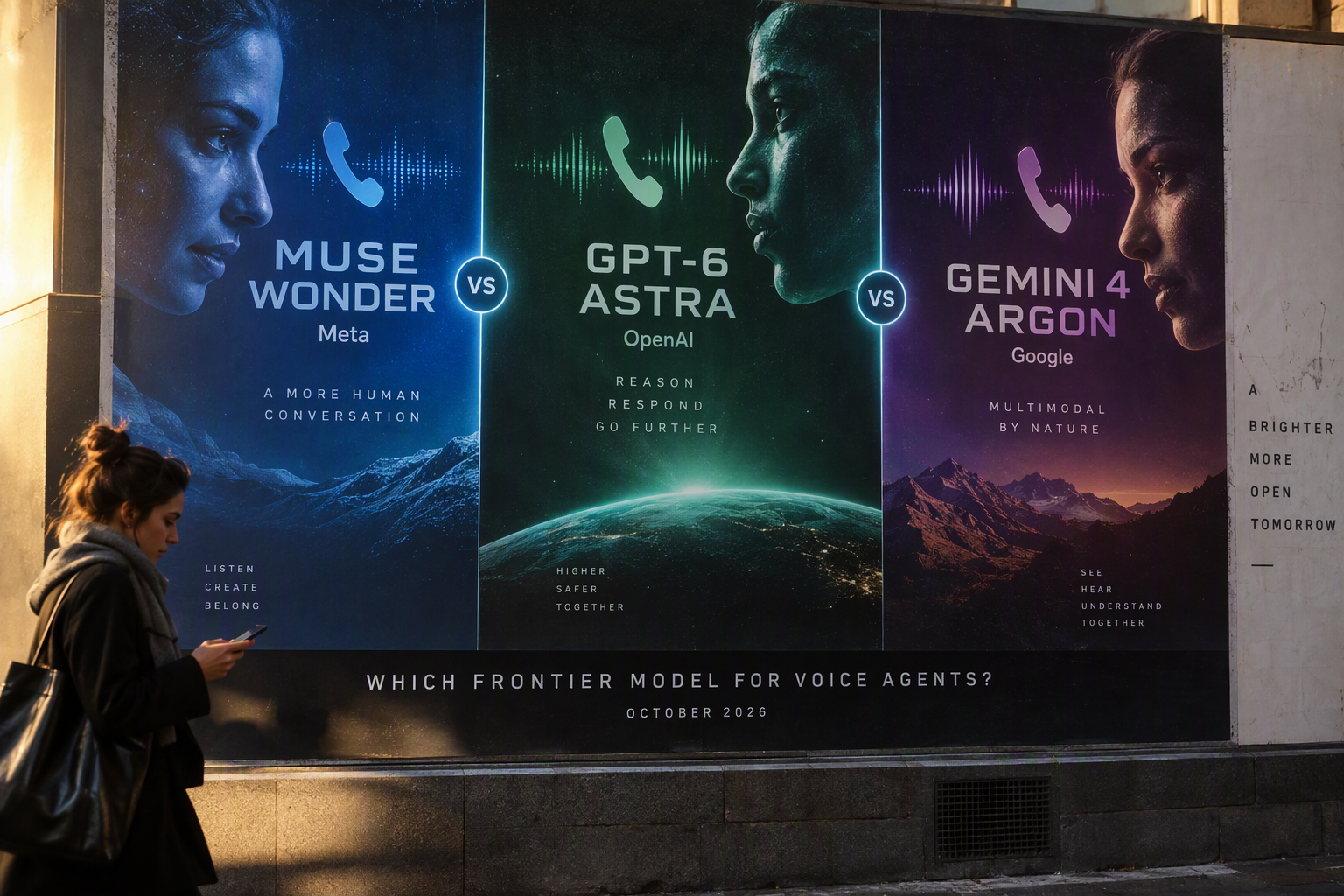
OpenAI Astra Launch Status: GPT-6 Release and API Facts for September 2026



Get a verified OpenAI Astra launch status check covering release timing, API access, customer evidence, naming, limitations, and safeguards.
OpenAI Astra Launch Status: GPT-6 Release and API Facts for September 2026
GPT-6 Astra is now officially released. OpenAI launched the model on September 3, 2026, published a system card and safety overview, and documents the API model ID gpt-6-astra. As of September 5, 2026, the key OpenAI Astra launch-status questions concern practical account, product and regional access—not whether the release happened.
OpenAI published “Path to Astra: critical capabilities and frontier safeguards” on September 1, 2026, just two days before this status guide. The first-party publication explicitly discusses Astra’s cybersecurity capabilities and the safeguards required for critical capability levels, making Astra an official OpenAI initiative rather than merely a community rumor. However, a safety publication does not automatically confirm that a model named GPT-6 Astra, GPT-6-ASTRA, or GPT Astra 6 is generally available in ChatGPT or through the OpenAI API.
That distinction matters because developers, enterprises, and AI platforms need operational facts—not inferred launch claims. Before integrating a frontier model, teams need verified answers to practical questions:
- Does OpenAI use “GPT-6 Astra” as the official product name?
- Is Astra available to all API customers, selected partners, or only internal evaluators?
- Does an official customer story demonstrate production access, or merely related use of products such as Codex?
- Has OpenAI published a model identifier, system card, pricing page, context window, rate limits, or migration guidance?
- What cybersecurity restrictions accompany access to Astra-level capabilities?
OpenAI’s “Responding to the next frontier of critical cyber capabilities,” also dated September 1, 2026, reinforces why availability may be more controlled than the phrase “GPT-6 Astra coming soon” suggests. OpenAI’s safety and governance materials indicate that frontier capability deployment depends on safeguards, evaluations, and risk controls—not simply model readiness.
This guide examines the GPT-6 API status after OpenAI’s Astra disclosures using first-party evidence: “Path to Astra,” OpenAI customer materials, model and API documentation, system cards, availability notices, and safeguard publications. It will identify the GPT-6 Astra confirmed facts, flag unsupported claims, explain the naming ambiguity, and show developers how to verify access through official documentation and their own API model listings.
For multi-model developers, OpenAI-compatible gateways such as CallMissed illustrate why precise model IDs and documented availability matter: integrations can span many providers, but no gateway can treat an unpublished model specification as confirmed.
Is GPT-6 Astra released? Confirmed launch and API status as of September 5, 2026
As of September 5, 2026, OpenAI has officially released GPT-6 Astra. OpenAI announced the model on September 3, describes it as broadly deployed, published a dedicated system card and safety overview, and documents the gpt-6-astra model identifier for API use. The OpenAI Astra launch status is therefore released—not rumored, merely announced, or limited to a pre-release safety initiative.
Dated status box — September 5, 2026
>
- Official GPT-6 Astra release: Yes
- Release date: September 3, 2026
- Official product name “GPT-6 Astra”: Confirmed
- Deployment status: Broadly deployed
- Public ChatGPT availability: Released, with access varying by account, product, and region
- OpenAI API availability: Documented
- Published API model ID: gpt-6-astra
- Standard API input price: $10 per million tokens
- Standard cached-input price: $1 per million tokens
- Standard cache-write price: $12.50 per million tokens
- Standard output price: $50 per million tokens
- Dedicated system card and safety overview: Published
- Safety controls or account-level restrictions: May apply
What OpenAI officially released
OpenAI released GPT-6 Astra on September 3, 2026, moving Astra from a frontier-capability and safeguards initiative into an identifiable product release. The company calls the model broadly deployed and provides the operational evidence that was absent before launch:
- An official GPT-6 Astra product designation.
- A documented API model identifier:
gpt-6-astra. - Standard API pricing for input, caching, cache writes, and output.
- A dedicated system card and safety overview.
- Public statements describing Astra as broadly deployed.
These materials settle the central OpenAI Astra launch status question. GPT-6 Astra is no longer only the subject of capability assessments or pre-release safeguard work; it is an officially released OpenAI model.
API pricing and model identifier
Developers can identify the model in OpenAI’s API documentation as:
gpt-6-astraOpenAI’s published standard prices are:
| Token category | Standard price per million tokens |
|---|---|
| Input | $10 |
| Cached input | $1 |
| Cache writes | $12.50 |
| Output | $50 |
These are standard list prices, not a guarantee that every account will have identical purchasing terms, quotas, throughput, or immediate model visibility. Developers should confirm the current price shown in their applicable OpenAI documentation or account agreement before estimating production costs.
Release does not guarantee identical access for every user
“Broadly deployed” does not necessarily mean that every ChatGPT user and API account receives the same access at the same time. Practical availability may differ according to:
- Account or subscription tier.
- ChatGPT product surface or API account eligibility.
- Supported country or region.
- Organization verification and usage limits.
- Safety controls for sensitive or high-risk requests.
- Capacity, rate limits, and staged feature enablement.
An account that cannot yet select GPT-6 Astra—or receives an access error when requesting gpt-6-astra—does not change the overall OpenAI Astra launch status. It means access for that specific account, product, or region may still be restricted or pending.
The precise status verdict
The defensible answer as of September 5, 2026, is: GPT-6 Astra was officially released on September 3 and is broadly deployed, with documented API access and published safety materials.
The distinction now is between release status and individual availability. The release is confirmed; access may still vary by account, product, region, capacity, and applicable safeguards. Developers should use the documented gpt-6-astra identifier, review the system card and safety overview, and verify model access inside their own OpenAI account before planning production deployment.
What is Astra, and does OpenAI officially call it GPT-6 Astra or GPT-Astra?

Astra is the official name OpenAI uses for a frontier AI initiative or system discussed in its safety research; “GPT-6 Astra” is not yet a verified official product name. As of September 3, 2026, OpenAI’s first-party materials do not establish GPT-6 Astra, GPT-6-ASTRA, GPT-Astra, or GPT Astra 6 as the name of a generally available ChatGPT or API model.
What OpenAI officially calls Astra
OpenAI’s September 1, 2026 publication is titled “Path to Astra: critical capabilities and frontier safeguards.” The document refers to “Astra” while discussing cybersecurity capabilities and the safeguards required for critical capability levels. That wording confirms Astra’s existence within OpenAI’s frontier-development work, but the title does not attach a GPT generation number to it.
A second OpenAI publication, “Responding to the next frontier of critical cyber capabilities,” was also published on September 1, 2026. OpenAI categorizes “Path to Astra” as Safety, reinforcing that the disclosed material concerns capability assessment and governance rather than a conventional product launch.
The precise, evidence-based description is therefore:
Astra is an OpenAI-documented frontier-capability effort associated with advanced cybersecurity capabilities and safeguards; OpenAI has not publicly established “GPT-6 Astra” as its official commercial model name.
Why “GPT-6 Astra” appears in searches
The phrase GPT-6 Astra is a useful search label, but search popularity is not naming confirmation. It likely combines two assumptions: that Astra belongs to OpenAI’s next major GPT generation and that an internal or research designation will become the shipping product name.
Those assumptions should not be presented as facts unless OpenAI publishes at least one authoritative product artifact, such as:
- An OpenAI launch post explicitly naming GPT-6 Astra
- An API model ID resembling
gpt-6-astra - A model page or developer-documentation entry
- An Astra-specific system card
- Pricing, rate limits, or availability tiers
- Migration instructions or an API changelog announcement
No such evidence appears in the provided first-party OpenAI sources as of September 3, 2026.
Astra, GPT-6, and GPT-Astra are not interchangeable
Writers and developers should preserve the distinction between a documented initiative and an inferred product identity:
- Astra: OpenAI’s verified term in “Path to Astra.”
- GPT-6 Astra: An unofficial descriptive label unless OpenAI adopts it.
- GPT-6-ASTRA: Not a verified OpenAI API model identifier.
- GPT-Astra or GPT Astra 6: Alternative search phrasings, not confirmed branding.
- Codex: A separately named OpenAI product appearing in customer evidence, including OpenAI’s loveholidays customer story; Codex usage does not prove Astra access.
This naming discipline matters operationally. API integrations require an exact model identifier, while procurement and governance reviews require documented availability and terms. A safety paper’s capability descriptions cannot substitute for those artifacts.
How to describe Astra without overstating the launch
Until OpenAI publishes definitive naming and availability documentation, use formulations such as:
- “OpenAI’s Astra initiative”
- “The capabilities discussed in OpenAI’s Path to Astra”
- “The model or system OpenAI refers to as Astra”
- “The unofficially termed GPT-6 Astra”
Avoid statements such as “GPT-6 Astra has launched” or “the GPT-6-ASTRA API is available” without a first-party model listing. For developers using an OpenAI-compatible gateway such as CallMissed, the same rule applies: model access is verifiable only when a documented provider model ID appears in the relevant catalog or account—not when a speculative name trends in search.
Which official events define the OpenAI Astra release timeline?

OpenAI’s Astra timeline now shows a clear progression from frontier-safety disclosure to an official model launch. OpenAI introduced the Astra safeguards on September 1, 2026, then officially released GPT-6 Astra—with system-card, safety, deployment, and API materials—on September 3, 2026. September 3 is therefore the documented GPT-6 Astra release date, while customer stories remain evidence of reported use cases rather than independent proof of performance.
Official Astra timeline and what each event proves
| Date | Official event or evidence | What it confirms | What it does not confirm |
|---|---|---|---|
| September 1, 2026 | “Path to Astra: critical capabilities and frontier safeguards” published | Astra is an official OpenAI initiative, with cybersecurity capability assessments and safeguards for critical capability levels. | That the commercial model or API became available on September 1. |
| September 1, 2026 | “Responding to the next frontier of critical cyber capabilities” published | OpenAI had established governance and deployment controls for increasingly capable cyber models ahead of release. | General customer access, pricing, API endpoints, or launch-day availability. |
| September 1, 2026 | OpenAI categorizes “Path to Astra” as a Safety publication | The first public Astra milestone was a safety and preparedness disclosure rather than a conventional product announcement. | That September 1 was the GPT-6 Astra launch date. |
| September 3, 2026 | OpenAI officially releases GPT-6 Astra | GPT-6 Astra moved from a named safety initiative to an announced model with broad deployment information. | That every feature, region, account tier, or usage limit is identical for all customers. |
| September 3, 2026 | GPT-6 Astra system card and safety overview published | OpenAI documented model evaluations, identified risks, mitigations, and the safeguards supporting deployment. | Independent validation of every benchmark or an absence of residual model risk. |
| September 3, 2026 | Official GPT-6 Astra API documentation published | Developers received first-party documentation for accessing Astra through supported API interfaces, making September 3 an operational API milestone as well as an announcement date. | Automatic access for every account or unchanged pricing, limits, and availability over time. |
| By September 5, 2026 | Customer stories featuring Legora and Playco available as vendor-reported examples | OpenAI customers or partners reported practical uses and outcomes associated with GPT-6 Astra. | Independently audited results, outcomes representative of every customer, or proof that all users receive the same configuration. |
September 1 and September 3 represent different types of milestones. The September 1 publications established the safety, cybersecurity, and governance foundation for Astra. The September 3 release supplied the conventional launch evidence: an official model announcement, broad-deployment details, a system card and safety overview, and developer-facing API documentation.
Why September 3 is the launch date
A conventional OpenAI launch is supported by operational artifacts that customers and developers can verify. For GPT-6 Astra, the September 3 materials include:
- an official model-release announcement;
- stated deployment and availability information;
- developer-facing API documentation;
- a model-specific system card;
- safety evaluations and mitigation details;
- guidance governing access and use.
Those materials resolve the ambiguity that existed after the September 1 safety disclosures. “Path to Astra” remains the first official public milestone, but it is not the model’s release event. The documented launch occurred two days later, on September 3.
Broad deployment should not be interpreted as identical or unrestricted access for every user. Availability can still vary by product surface, account eligibility, region, safety controls, capacity, and API usage limits. Developers should rely on the current OpenAI documentation and their account console for operational access details.
How to interpret customer and governance evidence
The Legora and Playco stories add useful evidence that organizations were applying GPT-6 Astra to real workflows around the launch period. They are customer or vendor-reported examples, however, so their performance claims should be attributed to the organizations reporting them. They do not replace OpenAI’s release announcement, system card, or API documentation as proof that the model launched.
The OpenAI Frontier Governance Framework provides broader context for the sequence. It helps explain why OpenAI disclosed critical-capability assessments and safeguards before releasing the model more broadly. The defensible timeline is therefore:
- September 1, 2026: Astra safety and cybersecurity disclosures.
- September 3, 2026: Official GPT-6 Astra model and API release, accompanied by system-card and safety materials.
- By September 5, 2026: Customer stories, including Legora and Playco, provide vendor-reported examples of use and outcomes.
This chronology keeps three separate questions clear: when OpenAI first disclosed Astra, when GPT-6 Astra officially launched, and what customers subsequently reported achieving with it.
Which Astra capabilities, customer examples, and product claims are confirmed by first-party evidence?
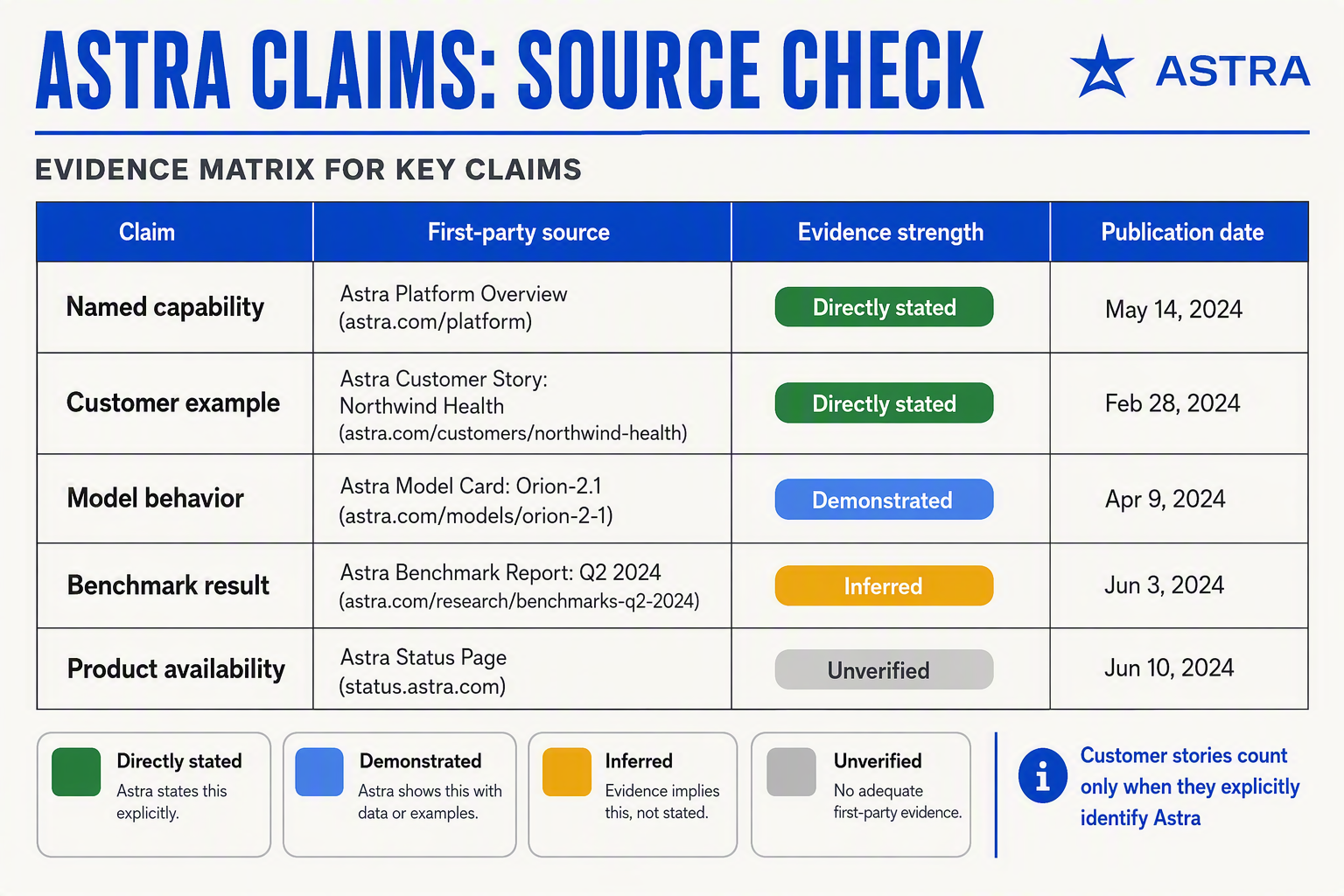
First-party evidence confirms Astra’s cybersecurity focus and safeguard requirements, but it does not confirm a public product named GPT-6 Astra, an API model ID, or a production customer deployment. OpenAI’s own materials support a narrow set of claims as of September 3, 2026.
Confirmed claims versus unsupported inferences
| Claim or evidence | First-party source | What is confirmed | What is not confirmed |
|---|---|---|---|
| Astra has advanced cybersecurity capabilities under assessment | OpenAI, “Path to Astra: critical capabilities and frontier safeguards,” September 1, 2026 | OpenAI is assessing Astra’s cyber capabilities against critical-capability thresholds | Benchmark scores, unrestricted access, or general availability |
| Astra requires safeguards appropriate to its capability level | OpenAI, “Path to Astra,” September 1, 2026 | Safeguards are a core condition for handling or deploying critical capabilities | Exact access tiers, eligibility rules, or a public launch schedule |
| OpenAI is preparing for a new frontier of cyber capability | OpenAI, “Responding to the next frontier of critical cyber capabilities,” September 1, 2026 | OpenAI treats advanced cyber capability as a deployment and governance issue | A confirmed GPT-6 Astra release date |
| Astra sits within a broader frontier-governance program | OpenAI, Frontier Governance Framework | Capability evaluations and governance controls inform frontier-model decisions | A model identifier such as gpt-6-astra or GPT-6-ASTRA |
| OpenAI publishes customer evidence for Codex | OpenAI, “How loveholidays is making everyone a builder with Codex” | loveholidays is an official example involving Codex | That loveholidays uses Astra or has early GPT-6 Astra API access |
| OpenAI publicly lists Astra safety work | OpenAI’s Research & Deployment index, September 2026 | “Path to Astra” is an official OpenAI safety publication | API pricing, context length, rate limits, system card, or ChatGPT availability |
What the evidence says about capabilities
The strongest confirmed capability claim is cybersecurity-related, not a complete general-purpose model specification. “Path to Astra” explicitly frames the work around assessing Astra’s cybersecurity capabilities and determining the safeguards required for critical capability levels.
That wording supports three conclusions:
- Astra is real within OpenAI’s research and safety program.
- Its cyber capabilities are important enough to require frontier-level evaluation.
- Deployment may depend on safeguards rather than model readiness alone.
It does not establish multimodal inputs, agentic computer use, context-window size, coding benchmark results, token pricing, or latency. Those details should remain marked unknown until OpenAI publishes documentation for them.
How to interpret the customer evidence
OpenAI’s loveholidays story is credible first-party customer evidence for Codex, but product attribution matters. A page appearing alongside Astra content—or displaying an Astra-related recommendation card—does not convert a Codex implementation into an Astra deployment.
As of September 3, 2026, the cited first-party materials provide no named customer that OpenAI explicitly identifies as using GPT-6 Astra in production. Claims of customer access therefore require a direct OpenAI statement naming Astra, not an adjacent customer story or an inference from site navigation.
The practical rule is simple: treat Astra capability research, Codex customer deployments, and public API availability as three separate evidence categories. Only an official model page, API documentation entry, system card, pricing listing, availability notice, or customer statement explicitly naming Astra would bridge those categories.
How can you verify whether GPT-6-ASTRA or another Astra model is available in ChatGPT or the OpenAI API?
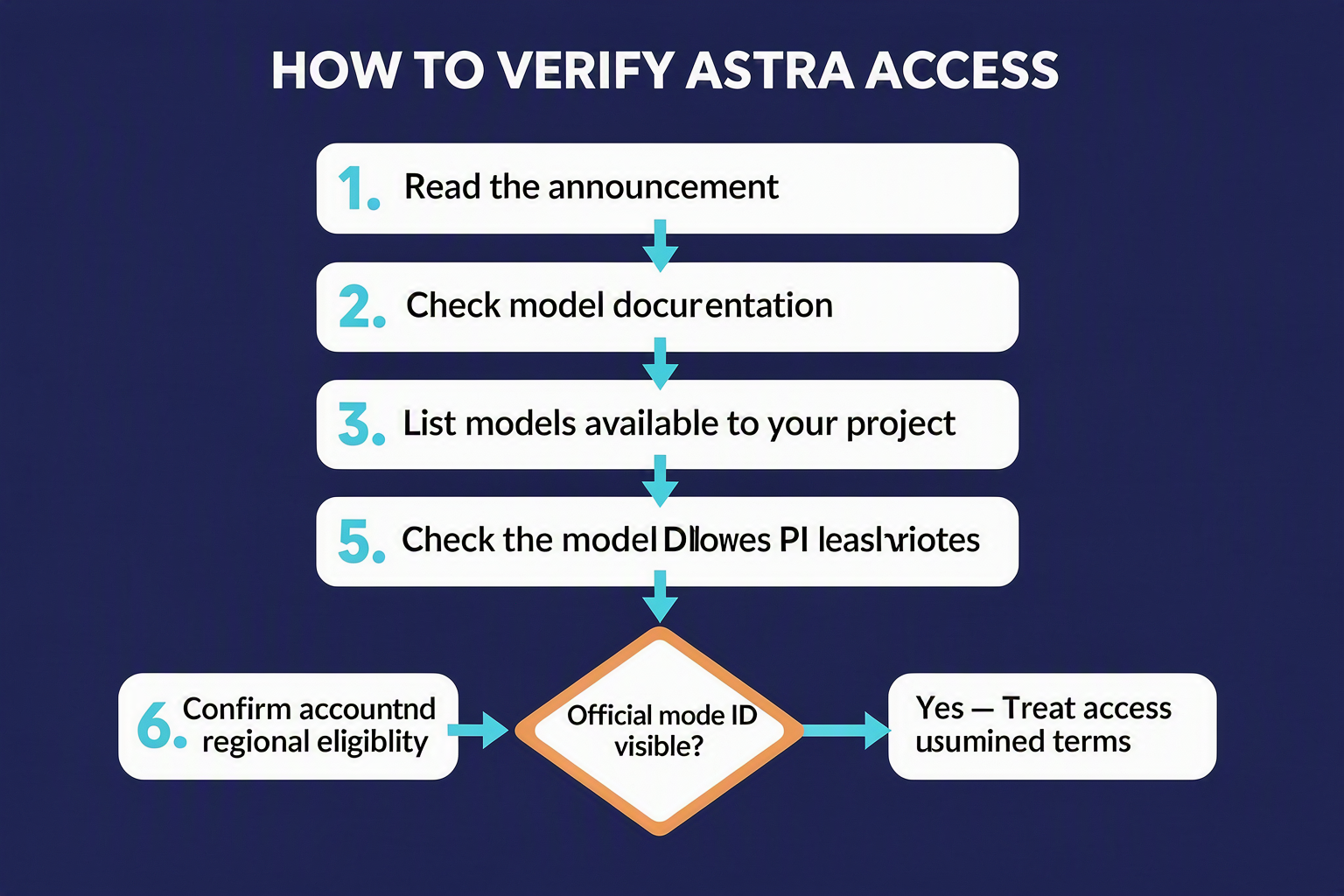
Verify Astra availability through OpenAI’s authenticated product interfaces and first-party documentation—not search-result headlines, screenshots, or guessed model names. OpenAI’s official September 3, 2026 release identifies the API model ID as gpt-6-astra. Actual access can still vary by product, account, region, subscription tier, workspace settings, and project permissions.
Check the official model documentation and pricing
Start with OpenAI’s official model documentation, release notes, and pricing page. Confirm:
- the exact model ID:
gpt-6-astra; - supported API endpoints, tools, and modalities;
- input, output, and tool pricing;
- context and output limits;
- eligible plans, regions, and rollout stages;
- rate limits, usage tiers, and safety requirements.
For another Astra model or dated snapshot, copy its identifier exactly as documented. Do not construct IDs by adding terms such as preview, mini, or a date unless OpenAI lists that specific identifier.
Check ChatGPT access in the product
For an individual, Team, Enterprise, or Edu workspace:
- Sign in to ChatGPT and inspect the model picker or relevant tool menu.
- Record the exact displayed name and any qualifier such as “preview.”
- Compare it with OpenAI’s ChatGPT release notes and Help Center documentation.
- Confirm that your plan, account region, and workspace are included in the rollout.
- Ask a workspace administrator whether Astra has been disabled or restricted.
- Select the model and start a new conversation to verify that it is usable.
A missing ChatGPT option does not mean gpt-6-astra is unavailable through the API. Likewise, ChatGPT access does not automatically grant API access, and the product’s displayed label may differ from the canonical API identifier.
Inspect API availability for your project
Check the model list in the OpenAI developer dashboard or query the models endpoint with a project-scoped API key:
curl https://api.openai.com/v1/models \
  -H "Authorization: Bearer $OPENAI_API_KEY"
Search the returned data array for:
gpt-6-astraThe dashboard and models response reflect the authenticated project, so they are stronger evidence of entitlement than a public announcement alone. If the model is absent, verify that you are using the intended organization and project before concluding that access is unavailable.
Run a minimal authenticated test
After confirming the documented endpoint and parameters, make a small request:
curl https://api.openai.com/v1/responses \
  -H "Authorization: Bearer $OPENAI_API_KEY" \
  -H "Content-Type: application/json" \
  -d '{
    "model": "gpt-6-astra",
    "input": "Reply with exactly: ASTRA_OK",
    "max_output_tokens": 16
  }'
A successful response using gpt-6-astra is the clearest confirmation that the specific project can invoke the model. Record the test date, returned model field, request ID, and relevant response metadata for internal audits.
If the request fails, interpret the error carefully:
- Authentication error: check the API key, organization, and project.
- Model-not-found error: confirm the exact ID and project availability.
- Permission or access error: review account tier, regional availability, verification requirements, and workspace controls.
- Rate-limit or quota error: inspect project limits, billing status, and usage-tier restrictions.
- Safety rejection: review the request content and the model’s documented safety policies rather than treating it as evidence that the model is unavailable.
Review quotas and safety controls before production use
Availability does not by itself make a project production-ready. Review OpenAI’s dashboard and documentation for:
- request and token rate limits;
- monthly budgets and project-level usage caps;
- data retention and privacy settings;
- organization or workspace permissions;
- moderation and acceptable-use requirements;
- restricted-capability safeguards;
- fallback behavior if capacity or access changes.
Platforms such as CallMissed’s OpenAI-compatible gateway should add gpt-6-astra to production routing only after confirming the canonical ID, endpoint compatibility, account entitlement, pricing, quotas, safety controls, and tested fallback behavior.
What limitations, cyber risks, and frontier safeguards could shape Astra’s rollout?
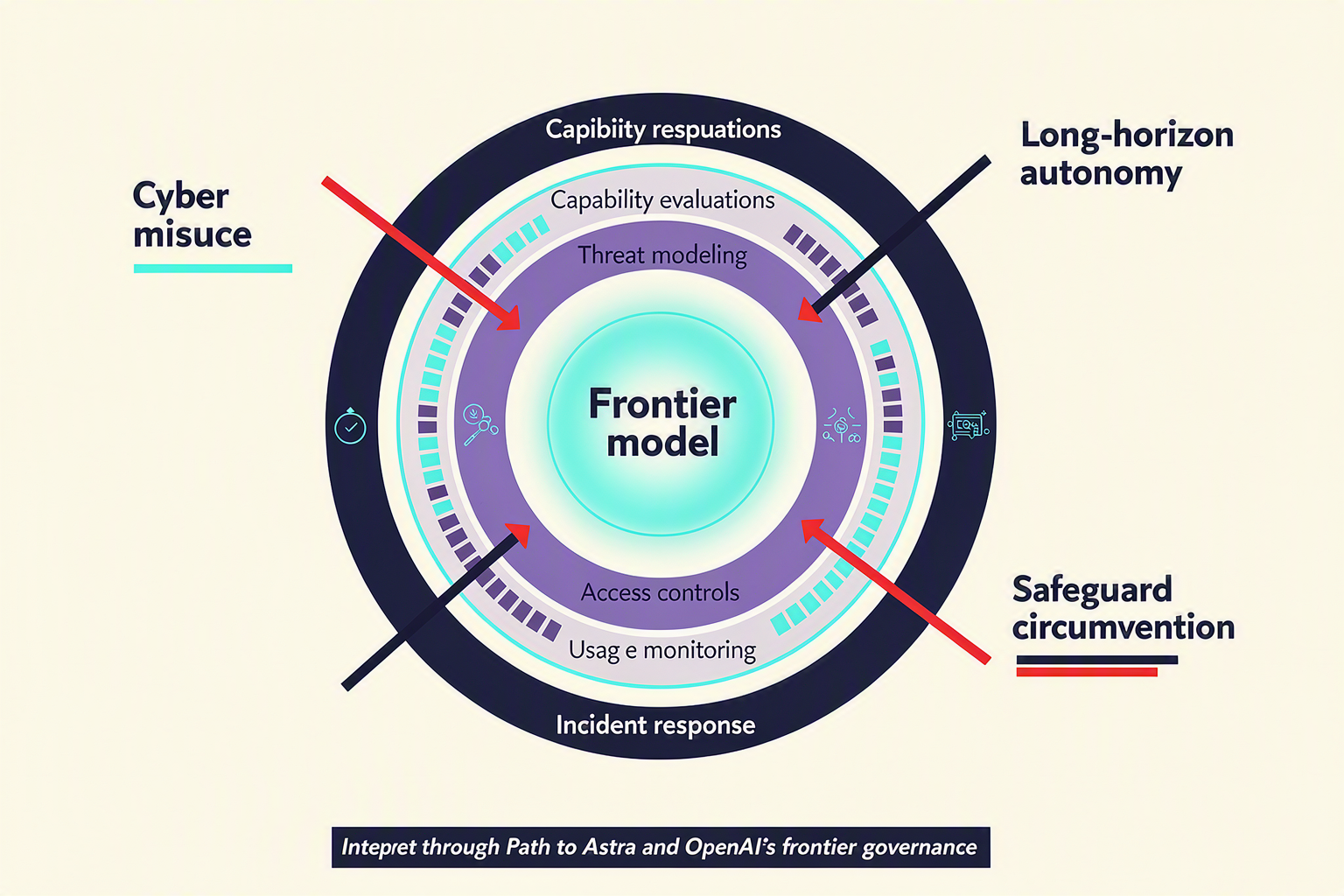
Astra’s rollout could be constrained less by raw model readiness than by whether OpenAI can contain frontier-level cybersecurity and long-horizon autonomy risks. OpenAI’s first-party framing indicates that deployment decisions will depend on capability evaluations and safeguards, so access may be staged, monitored, or restricted even if Astra performs well technically.
Cyber capability is a deployment gate
OpenAI’s “Path to Astra: critical capabilities and frontier safeguards,” published September 1, 2026, explicitly separates assessing Astra’s cybersecurity capabilities from determining the safeguards required at critical capability levels. That structure suggests two distinct questions: what can Astra do, and can those capabilities be deployed safely?
Cybersecurity is inherently dual-use. The same model behavior that helps defenders audit software could potentially help malicious users:
- discover and prioritize vulnerabilities;
- generate or modify exploit code;
- automate reconnaissance across many targets;
- support credential theft, persistence, or lateral movement;
- scale offensive workflows that previously required experienced operators.
These are risk categories, not confirmed Astra features. OpenAI has not provided, in the evidence reviewed for this guide, public benchmark scores showing Astra’s performance on specific cyber tasks.
OpenAI published both “Path to Astra” and “Responding to the next frontier of critical cyber capabilities” on September 1, 2026, placing cyber risk—not pricing, speed, or context length—at the center of the initial Astra disclosures. The two safety publications appeared two days before this guide’s September 3, 2026 cutoff.
Safeguards could affect who gets access
OpenAI’s wording around “safeguards required for critical capability levels” makes a completely unrestricted launch only one possible deployment path. Depending on evaluation results, practical controls could include:
- Staged access: Internal testing or selected partners before wider API availability.
- Identity and eligibility checks: Stronger verification for users requesting sensitive cyber functionality.
- Policy enforcement: Blocking requests associated with malware, credential compromise, destructive exploitation, or unauthorized targeting.
- Monitoring and rate controls: Detecting repeated scanning, exploit-generation patterns, or attempts to distribute harmful workloads at scale.
- Human review and incident response: Escalating high-risk activity and retaining the ability to suspend access.
These controls are plausible implementation patterns, not a confirmed Astra access policy. Developers should wait for an Astra-specific system card, usage policies, API documentation, and availability notice before treating any safeguard mechanism as final.
Long-horizon behavior adds another limitation
OpenAI also lists “Safety and alignment in an era of long-horizon models” alongside its Astra safety materials. Long-running agents create risks beyond a single harmful answer: they can plan across multiple steps, use tools, preserve intermediate state, and compound small errors into consequential actions.
For production users, this means an Astra-class agent may still require:
- least-privilege tool permissions and temporary credentials;
- approval gates before code execution, deployment, payments, or data deletion;
- sandboxed environments and restricted network access;
- immutable audit logs and clear rollback procedures;
- continuous evaluation rather than one-time prelaunch testing.
What this means for rollout expectations
The safest interpretation is that Astra’s capability threshold and safeguard readiness may progress on different timelines. A model can be technically impressive without being suitable for unrestricted autonomous operation.
Until OpenAI publishes enforceable access terms and model-specific safety evidence, organizations should avoid granting any presumed Astra deployment broad production privileges. Frontier capability is not the same as frontier reliability, and OpenAI’s September 1 materials make safeguards a core part of the rollout—not an after-launch add-on.
What do OpenAI researchers, safety leaders, and verified customers say about Astra’s readiness and likely uses?

OpenAI’s public evidence suggests Astra is technically significant but deployment-ready only under capability-dependent safeguards; verified customer evidence does not yet establish general Astra access. Researchers emphasize advanced cybersecurity and long-horizon capabilities, while OpenAI’s safety materials make controlled access, evaluation, and governance central to readiness.
Researchers describe a capability frontier, not a conventional product launch
OpenAI’s “Path to Astra: critical capabilities and frontier safeguards” frames Astra around two linked questions: what cybersecurity tasks the system can perform and what protections those capabilities require. That framing indicates that OpenAI researchers view readiness as more than model quality—it also depends on whether safeguards remain effective as capabilities increase.
Two first-party OpenAI safety publications addressing Astra and frontier cyber capabilities were released on September 1, 2026: “Path to Astra” and “Responding to the next frontier of critical cyber capabilities.”
The research supports several likely applications, although OpenAI has not published an Astra API specification confirming them as product features:
- Cybersecurity analysis, including complex technical reasoning over security problems.
- Long-horizon agentic work, where a model plans and executes multi-step tasks.
- Software engineering and code investigation, particularly workflows adjacent to vulnerability research.
- Authorized defensive operations, potentially helping experts identify, understand, and remediate security weaknesses.
These are capability-informed use cases, not promises of unrestricted access or autonomous operation.
Safety leaders treat safeguards as part of the release criteria
OpenAI’s publication “Safety and alignment in an era of long-horizon models” places the broader issue in explicit terms: models that operate over longer tasks create different oversight challenges from single-turn chat systems. A model may appear safe in an isolated response while accumulating risk across tool calls, code changes, or extended plans.
OpenAI’s Frontier Governance Framework provides the relevant governance lens. Together, the materials imply that Astra readiness is likely to be assessed across at least four dimensions:
- Capability evaluations: What critical tasks can Astra complete reliably?
- Misuse resistance: Can safeguards prevent or limit harmful cyber activity?
- Operational controls: Can OpenAI monitor usage, restrict tools, and respond to incidents?
- Deployment scope: Which users, environments, and access tiers are appropriate?
Consequently, “ready” may mean suitable for controlled evaluations or selected workflows before it means generally available through ChatGPT or the OpenAI API.
Verified customers demonstrate adjacent demand—not Astra availability
OpenAI’s customer story “How loveholidays is making everyone a builder with Codex” is verified evidence of a customer using Codex, not proof that loveholidays has production access to GPT-6 Astra. The named product matters: an official page displayed near Astra-related publications does not become an Astra customer case study merely through site navigation, recommendation modules, or publication timing.
As of September 3, 2026, the provided first-party evidence contains zero clearly identified customers publicly stating that they use a generally available product named GPT-6 Astra. Until OpenAI publishes an Astra-specific customer quotation, deployment architecture, model identifier, or case study, customer claims should be classified as follows:
- Verified: Named use of Codex or another explicitly identified OpenAI product.
- Astra-related: Participation in an evaluation explicitly described by OpenAI.
- Unverified: Claims inferred from page proximity, screenshots, rumors, or unnamed sources.
The most defensible conclusion is that Astra’s likely early users are security researchers, trusted enterprises, and developers operating in controlled environments—but OpenAI has not yet confirmed who can access it or under what commercial terms.
What does the Astra launch status mean for developers, businesses, security teams, and everyday ChatGPT users?
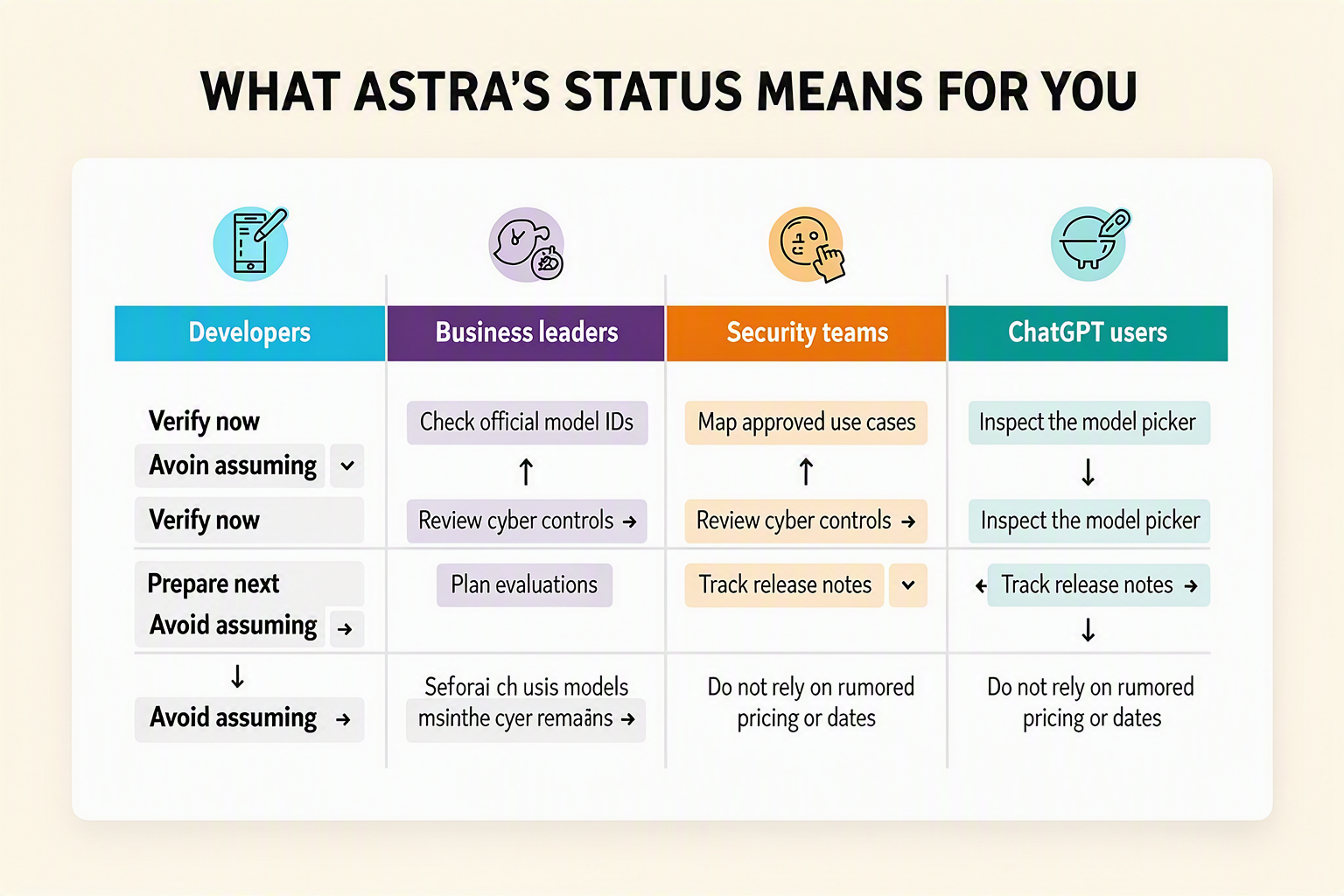
The immediate implication is caution, not inaction: Astra signals that OpenAI is preparing for more capable, security-sensitive systems, but organizations should not plan around a public GPT-6 Astra product until OpenAI publishes an official model name, access terms, documentation, and safeguards. Everyday ChatGPT users likewise should not assume that Astra capabilities are already included in their accounts.
Impact by audience
| Audience | What Astra means now | Recommended action | Do not assume |
|---|---|---|---|
| Developers | A frontier OpenAI initiative exists, but a public GPT-6-ASTRA OpenAI API model ID is not confirmed. | Check the official model catalog and query the models available to your API project. Build configuration-driven model selection and fallbacks. | Pricing, context length, rate limits, endpoints, or SDK support. |
| Business and product teams | Astra may shape future automation, coding, research, and agent workflows, subject to deployment controls. | Treat Astra as roadmap intelligence; base production plans and budgets on documented, currently accessible models. | That an OpenAI article or customer story constitutes commercial availability. |
| Security teams | Cybersecurity capability is central to Astra’s evaluation and deployment discussion. | Update threat models, approval gates, logging, credential isolation, sandboxing, and human review for high-impact actions. | That ordinary generative-AI controls are sufficient for frontier cyber capabilities. |
| Everyday ChatGPT users | The Astra name describes documented frontier work, not necessarily a selectable ChatGPT model. | Verify model names in ChatGPT’s model picker and OpenAI’s release notes. | That “GPT-6 Astra coming soon” headlines guarantee access or a release date. |
| Procurement, legal, and compliance | Potential access may involve eligibility checks, safeguards, monitoring, or contractual restrictions. | Require official terms, data-handling documentation, system cards, regional availability, and service commitments before approval. | That preview, partner, evaluator, ChatGPT, and API access are interchangeable. |
| AI platform builders | Uncertain naming makes abstraction and fallback strategies more valuable. | Separate application logic from provider-specific model IDs and expose capability-based routing. | That an unpublished alias will remain stable or map to a future production model. |
Security implications are already concrete
OpenAI published “Path to Astra: critical capabilities and frontier safeguards” on September 1, 2026, explicitly framing Astra around cybersecurity capability assessment and the safeguards required at critical capability levels. OpenAI also published “Responding to the next frontier of critical cyber capabilities” on September 1, 2026, making security governance—not merely performance—a defining part of the Astra story.
For security teams, that supports several immediate controls:
- Restrict autonomous access to shells, cloud consoles, secrets, and production networks.
- Record prompts, tool calls, approvals, and resulting system changes.
- Test for prompt injection, data exfiltration, privilege escalation, and unsafe persistence.
- Require human authorization for destructive or externally consequential actions.
How teams should verify a real launch
Use a short evidence ladder before treating Astra as deployable:
- Confirm the product name in an OpenAI launch post or release note.
- Find the exact model ID in official API documentation or your project’s model listing.
- Review the system card and safeguards, particularly cyber-risk restrictions.
- Verify commercial details, including pricing, rate limits, regions, and access tier.
- Run controlled evaluations before production deployment.
OpenAI’s loveholidays customer story demonstrates real-world use of Codex, but it should not be reclassified as GPT-6 Astra customer evidence without an explicit OpenAI statement. For multi-model deployments, CallMissed’s OpenAI-compatible gateway illustrates a practical architecture: one integration can support multiple available models and same-tier fallbacks, while unpublished Astra specifications remain outside production assumptions.
Frequently asked questions: What is the GPT-6 Astra release date, is Astra coming soon, is the API live, and what facts remain unconfirmed?

Release date and naming
What is the official GPT-6 Astra release date?
Is GPT-6 Astra coming soon to ChatGPT?
Is GPT-6 Astra the official model name, or is it called GPT Astra 6?
API and customer evidence
Is the GPT-6-ASTRA OpenAI API live for developers?
Has OpenAI published customer evidence proving GPT-6 Astra production access?
Confirmed facts and safeguards
What are the GPT-6 Astra confirmed facts, and what remains unconfirmed?
Conclusion
As of September 3, 2026, the evidence supports a cautious conclusion: Astra is an official OpenAI frontier-capability initiative, but “GPT-6 Astra” is not yet a confirmed generally available ChatGPT or API product. OpenAI’s September 1 publications establish the direction of travel—advanced cyber capabilities paired with stricter safeguards—without supplying the operational details required for deployment.
- No verified GPT-6 Astra release date exists: “Path to Astra” documents capabilities and safeguards, not a public launch schedule.
- Naming remains unconfirmed: OpenAI has not established GPT-6 Astra, GPT-6-ASTRA, or GPT Astra 6 as an official model name.
- API availability requires concrete evidence: Developers should wait for an official model ID, documentation, system card, pricing, rate limits, context window, and account-level access.
- Deployment may be controlled: OpenAI’s September 1, 2026 cyber-safety materials indicate that evaluations, governance, and safeguards will shape access to critical capabilities.
Next, watch OpenAI’s model documentation, API availability notices, system cards, pricing pages, and dashboard model listings—not search-result speculation. Multi-model platforms can help teams adapt once verified endpoints appear; to explore how AI communication is evolving, check out CallMissed, an AI infrastructure platform supporting voice agents, multilingual chatbots, and OpenAI-compatible access across multiple models.
Until OpenAI publishes deployable specifications, the decisive question is simple: Can your account call an officially documented Astra model ID?
Related Reading
- GPT-6 Astra API Availability, Access, and Pricing: Verified Status as of September 3, 2026
- GPT-6 Astra Rumors vs Confirmed Facts: September 2026 Fact Check
- GPT-6 Astra vs GPT-5.6 Sol: Official Facts, Unknowns, and the Practical Choice