
Never Lose a Lead Again: Why "Call Missed" is Your Biggest Revenue Leak (and How to Fix It with CallMissed.com)



Discover how CallMissed.com helps B2C brands in India recover up to 90% of missed-call revenue using AI-native CRM, WhatsApp integrations, and Voice AI in 22 regional languages.
Never Lose a Lead Again: Why "Call Missed" is Your Biggest Revenue Leak (and How to Fix It with CallMissed.com)
Every time your business phone rings and goes unanswered, you aren’t just missing a call—you are actively handing a high-intent customer directly to your fastest competitor. In India’s hyper-competitive B2C landscape, "call missed" is the single largest silent revenue leak, with industry data showing that over 60% of consumers will simply hang up and call another business if their first call isn't answered. When "no answer" instantly translates to "no trust," a single missed connection can break your sales funnel before it even begins.
Historically, businesses tried to plug this leak with traditional solutions like rigid IVR systems or siloed helpdesks. However, these legacy systems fail in modern India. They lack instant, omnichannel context, forcing customers to repeat their issues across separate WhatsApp threads, emails, and phone calls. More importantly, they fail the linguistic diversity of Bharat, offering robotic responses that alienate users who prefer speaking in their regional dialect.
To thrive in 2026, businesses need to move beyond static, disjointed setups. This is where CallMissed is redefining customer engagement. As an AI-native CRM and communication infrastructure purpose-built for B2C teams in India, CallMissed unifies WhatsApp, Voice, Email, and Web Chat into a single, cohesive dashboard. Armed with advanced Voice AI agents that natively support 22 Indian languages, the platform comprehends local accents, dialects, and nuances in real time to ensure no customer is left waiting.
In this guide, we will unpack the true cost of missed calls, explore why traditional communication tools fall short, and show you how to use CallMissed's unified, AI-native CRM to trigger instant automated callbacks, deploy multilingual voice agents, and recover up to 90% of your missed-call revenue.
Introduction: The Hidden Black Hole in Your Sales Funnel

Every time your business phone rings and goes unanswered, you aren’t just missing a call—you are actively handing a high-intent customer directly to your fastest competitor. In India’s hyper-competitive B2C landscape, a "call missed" is the single largest silent revenue leak.
Recent market data reveals a harsh reality: over 60% of consumers will simply hang up and dial another business if their first call goes unanswered. In a fast-paced economy, "no answer" instantly translates to a lack of trust and reliability. A single missed connection can completely break your sales funnel before the relationship even has a chance to begin.
Why Traditional Systems Fail "Bharat"
Historically, businesses have attempted to plug this leak using traditional communication tools. Unfortunately, these legacy systems fall short in the modern era for several critical reasons:
- Siloed Channels & Zero Context: Standard setups force teams to juggle separate platforms for phone calls, WhatsApp messages, emails, and web chats. When a customer calls after sending a WhatsApp message, your team has no immediate context, forcing the customer to frustratingly repeat their query.
- Rigid, Impersonal IVRs: Traditional Interactive Voice Response (IVR) systems rely on frustrating, robotic button-pressing menus. They feel cold, slow, and outdated to a modern consumer who expects immediate, human-like resolution.
- The Language Barrier: Legacy tools completely ignore the linguistic diversity of India. They fail to support regional dialects, leaving a vast portion of the market feeling alienated and misunderstood.
To thrive, B2C businesses require a system that acts instantly, remembers every interaction, and speaks the customer's language.
Enter CallMissed: The Unified, AI-Native CRM
This is where CallMissed redefines customer engagement. Purpose-built as an AI-native CRM and communication infrastructure for B2C teams in India, CallMissed unifies WhatsApp, Voice, Email, and Web Chat into a single, cohesive dashboard. Instead of losing leads to the void, businesses can now capture, track, and engage every prospect from a centralized command center.
The platform's true superpower lies in its advanced Voice AI agents, which natively support 22 Indian languages. By understanding local accents, dialects, and conversational nuances in real time, these agents ensure that no customer—regardless of where they are calling from in India—is left waiting.
By leveraging CallMissed's unified infrastructure, businesses can trigger instant automated callbacks, deploy lifelike voice agents, and recover up to 90% of their missed-call revenue. In the following sections, we will break down the exact financial impact of this hidden revenue leak and map out the step-by-step blueprint to fix it.
Background & Context: The Anatomy of a Missed Connection in Bharat
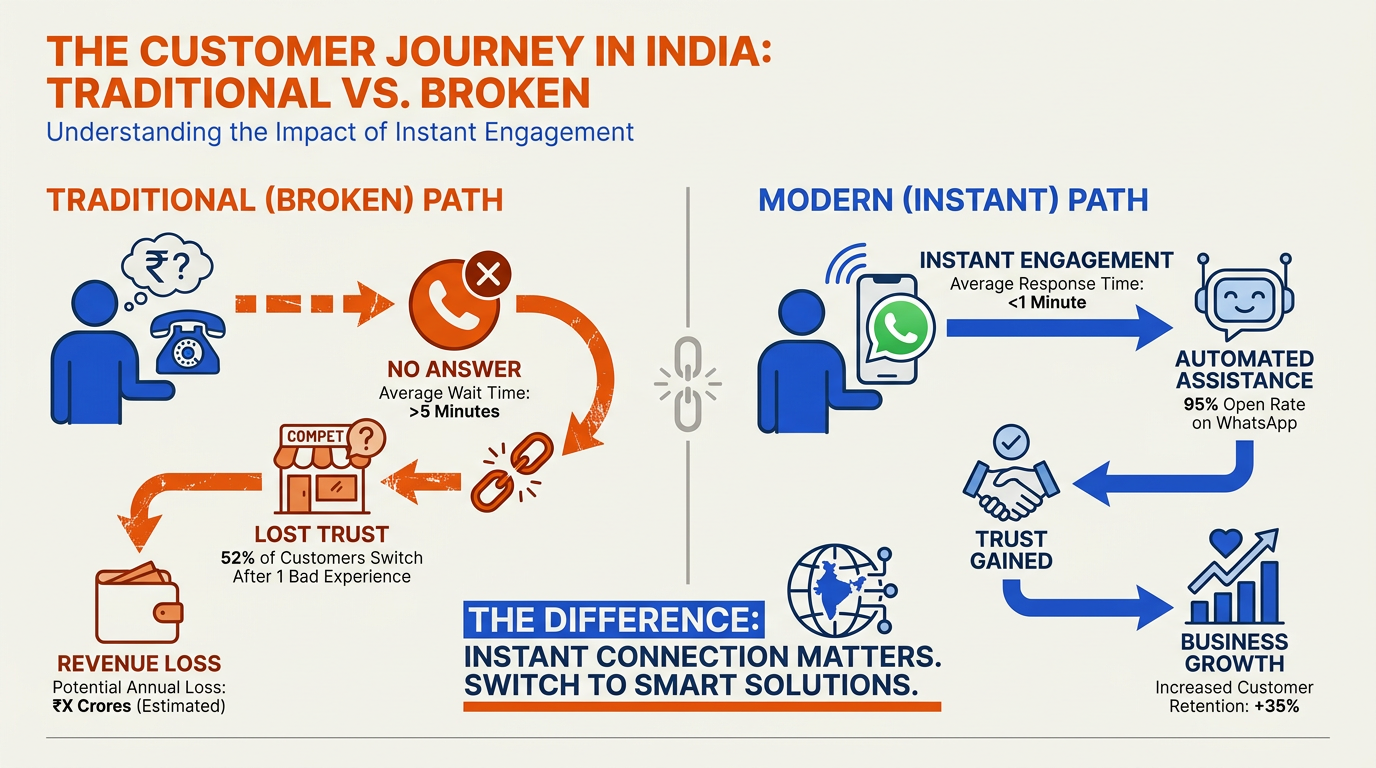
In the hyper-fragmented consumer market of Bharat, a missed call is rarely a simple oversight—it is a critical point of failure in the customer journey. When a high-intent buyer reaches out to a business, they expect immediate engagement. In India's fast-paced, digital-first economy, the window of opportunity is minuscule. If the call goes unanswered, the customer does not wait. They simply return to their search results, tap the next business listing, and take their commerce elsewhere.
The Dynamics of High-Intent B2C Leads in India
To understand why a call missed is so damaging, we must look at the consumer psychology of modern Indian buyers:
- The "Now" Economy: Powered by rapid digital penetration, consumers expect instantaneous responses. Whether booking a diagnostic test, inquiring about home loans, or securing a school admission, the business that answers first almost always wins the transaction.
- Trust as a Currency: In India’s B2C landscape, live communication is the ultimate validator of legitimacy. A voice on the other end of the line builds immediate trust. Conversely, a ringing phone that goes dead signals a lack of operational capability or, worse, a lack of reliability.
- The Competitor is One Tap Away: Search engines and local directories have democratized discovery. If a customer's call is missed, your direct competitor is literally a single screen-tap away. You have effectively paid marketing dollars to acquire a lead, only to hand them over to a competitor on a silver platter.
Why Traditional IVR and Siloed Infrastructure Fail
When businesses attempt to address this leak, they often turn to legacy infrastructure like traditional Interactive Voice Response (IVR) systems or siloed call center software. However, these systems are fundamentally mismatched with the realities of Bharat for several reasons:
- The Linguistic Divide: Traditional IVR setups rely on rigid, pre-recorded English or formal Hindi prompts. They completely fail to accommodate the linguistic diversity of India. They cannot parse local accents, regional dialects, or the code-switching (e.g., "Hinglish") that defines everyday communication across the subcontinent.
- Siloed Systems and Lost Context: When a legacy system logs a missed call, that data remains trapped inside a basic call log. The sales representative who eventually calls back has no idea if the same customer also sent a WhatsApp message or filled out a web form ten minutes prior. This lack of a unified customer profile leads to disjointed, frustrating conversations.
- Delayed Callbacks: Manually identifying missed calls and assigning them to agents takes hours, if not days. By the time a representative reaches out, the lead has already been converted by a faster competitor.
To plug this revenue leak, businesses require an infrastructure that bridges these gaps instantly. This is where CallMissed changes the game. By unifying WhatsApp, Voice, Email, and Web Chat into a single AI-native CRM, CallMissed ensures that every interaction is captured with full context.
More importantly, CallMissed's specialized Speech-to-Text and Voice AI agents natively support 22 Indian languages. This allows businesses to deploy voice agents that comprehend regional accents, local dialects, and cultural nuances in real time. Instead of an unanswered ring or a frustrating, robotic menu, the customer is met with an instant, intelligent, and linguistically natural response—turning a potential missed connection into a closed deal.
Key Developments: Legacy Systems vs. AI-Native CRM
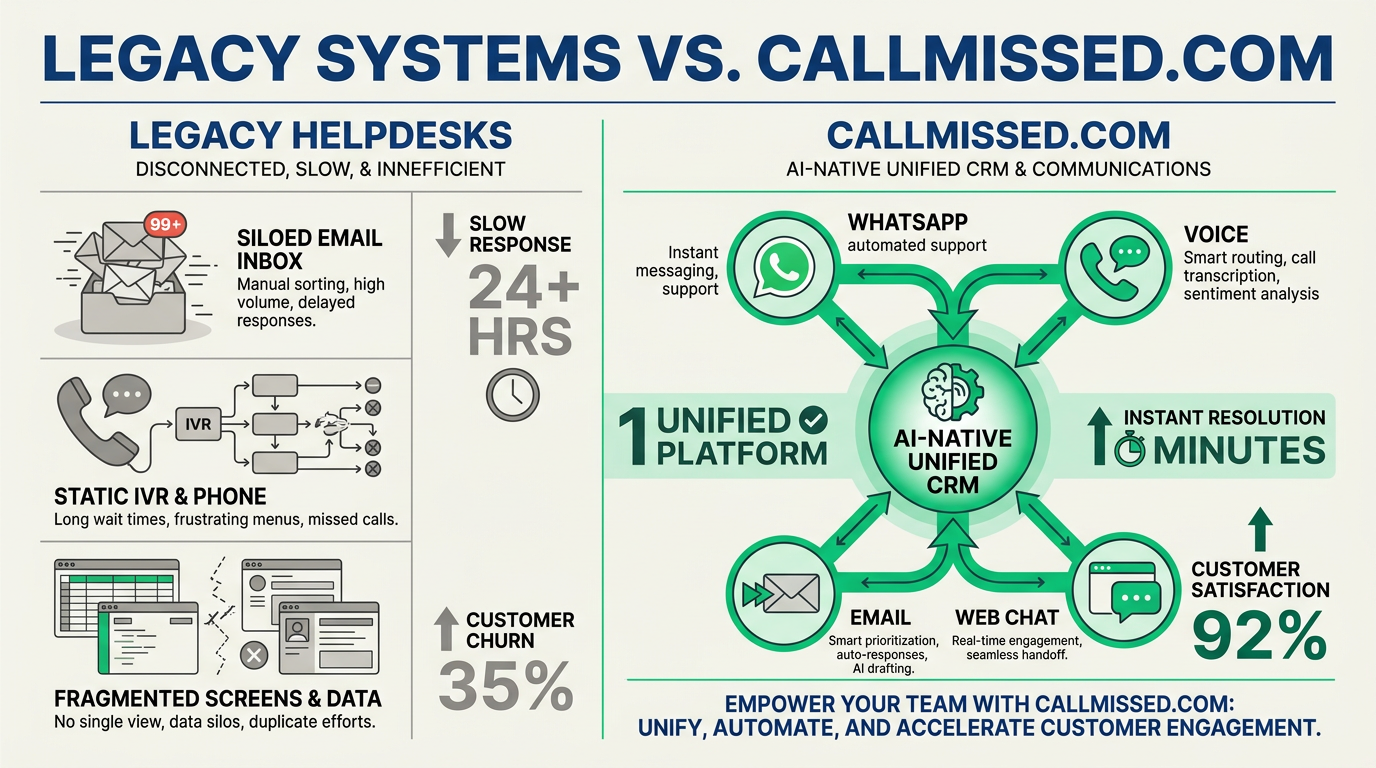
To fully understand why modern B2C brands struggle to retain high-intent leads, we must examine the infrastructure supporting their communication. For years, companies have relied on legacy systems—such as traditional cloud telephony, basic Interactive Voice Response (IVR) setups, and siloed Customer Relationship Management (CRM) databases. While these systems were once sufficient, they are fundamentally ill-equipped for the fast-paced, highly conversational expectations of today's consumer landscape.
Traditional systems treat every communication channel as an isolated island. A missed call sits in a telephony log; a WhatsApp message remains trapped in a separate chat inbox; and email inquiries linger in a support queue. By the time a sales representative manually pieces these touchpoints together to initiate a callback, the customer has already moved on to a competitor.
In contrast, AI-native CRMs are designed from the ground up to unify these channels. Instead of merely recording that a interaction took place, an AI-native system instantly processes the intent, sentiment, and context of the communication across all channels simultaneously.
The table below outlines the stark differences between legacy communication setups and an integrated, AI-native CRM architecture like CallMissed:
| Feature/Capability | Legacy Telephony & Siloed CRMs | AI-Native CRM (CallMissed.com) | Business Impact |
|---|---|---|---|
| Response Latency | Manual callback; typically takes 2 to 24 hours. | Instantaneous; automated AI voice or WhatsApp callback within seconds. | Reduces drop-off rates; captures high-intent leads before they contact competitors. |
| Channel Integration | Siloed; voice, WhatsApp, and email operate on separate dashboards. | Unified; 360-degree omnichannel view of all customer touchpoints. | Eliminates agent confusion and prevents customers from repeating themselves. |
| Language Support | Rigid English/Hindi IVR options with no dialect recognition. | Native Speech-to-Text and Voice AI in 22 Indian languages. | Accesses "Bharat" (Tier 2/3 markets) by speaking to customers in their preferred tongue. |
| Context Awareness | Zero historical context; agents start conversations from scratch. | Real-time context sharing across voice, WhatsApp, web chat, and email. | Delivers highly personalized, relevant customer experiences that build trust. |
| Scalability & Cost | Requires hiring massive, 24/7 human call center teams to scale. | Scalable AI voice agents powered by efficient, multi-model LLM APIs. | Lowers operational overhead while maintaining a round-the-clock sales presence. |
The Real Cost of Technical Debt
Relying on outdated communication architecture does more than just slow down your operations; it actively drains your marketing budget. When B2C brands spend heavily on digital ads to drive inbound calls, every unanswered call that goes unaddressed represents wasted ad spend.
By upgrading to an AI-native infrastructure, businesses transition from a reactive posture—where agents scramble to return missed calls hours later—to an active, automated system. When a call is missed, the AI-native CRM instantly triggers an automated, localized voice agent or a personalized WhatsApp message. This immediate, contextual feedback loop ensures that no lead falls through the cracks, transforming what used to be a silent revenue leak into a reliable engine for customer acquisition.
In-Depth Analysis: Why Multi-Platform Juggling Kills B2C Growth

To understand why customer acquisition costs (CAC) are skyrocketing for Indian B2C brands, look no further than the operational chaos on their support desks. The typical growing business relies on a patchwork of disconnected software: a cloud telephony tool for voice calls, an enterprise WhatsApp API provider, a shared Gmail inbox, and a standalone website widget.
This fragmented setup creates a "multi-platform juggling act" that actively kills B2C growth in three distinct ways:
1. The Context Gap and Customer Frustration
When communication channels are siloed, customer context is destroyed. A high-intent lead might trigger a "call missed" event on your voice channel, send a follow-up WhatsApp message five minutes later to ask if anyone is available, and finally drop an email.
Because these channels do not speak to one another, your sales reps see three unrelated tickets instead of one urgent, high-intent buyer. When a representative finally calls them back, the customer is forced to repeat their query from scratch. In a fast-paced market, this friction breaks trust immediately.
2. Slow Response Times and Lead Decay
In B2C sales, speed is the ultimate differentiator. Research shows that responding to a lead within 5 minutes increases the likelihood of conversion by up to 391%.
When your staff has to constantly alt-tab between a telephony dashboard, a WhatsApp inbox, and email clients, response latency inevitably spikes. While your team is busy logging into different portals to piece together who called and why, that lead has already moved on to a competitor who answered instantly.
3. High Operational Overhead and Data Silos
Managing multiple single-point solutions is not just operationally draining—it is incredibly expensive. Your business pays separate subscription fees, manages multiple API integrations, and spends valuable engineering hours trying to sync data across platforms. Crucially, without a unified system, valuable customer interaction data is lost in silos, making it impossible to build a cohesive history of the customer journey.
Streamlining the Stack with a Unified AI CRM
To scale sustainably, businesses must shift from fragmented tools to a unified, AI-native infrastructure. This is where CallMissed transforms B2C operations.
By unifying WhatsApp, Voice, Email, and Web Chat into a single, cohesive dashboard, CallMissed eliminates the multi-platform juggling act entirely.
- 360-Degree Customer View: Every call, message, and email from a single customer is consolidated into a single timeline, giving your team instant context.
- Consolidated Billing and Tech Stack: Instead of paying for four different SaaS tools, businesses get a single, robust CRM and communication infrastructure.
- Instant Automation: When a call is missed, the unified platform can instantly trigger a personalized WhatsApp message or assign a multilingual Voice AI agent to call the lead back immediately, ensuring no prospect is left waiting.
By bringing all communication channels under one roof, CallMissed replaces operational chaos with streamlined, instant engagement, turning missed connections into closed deals.
The Linguistic Edge: Conversing Fluently in 22 Indian Languages
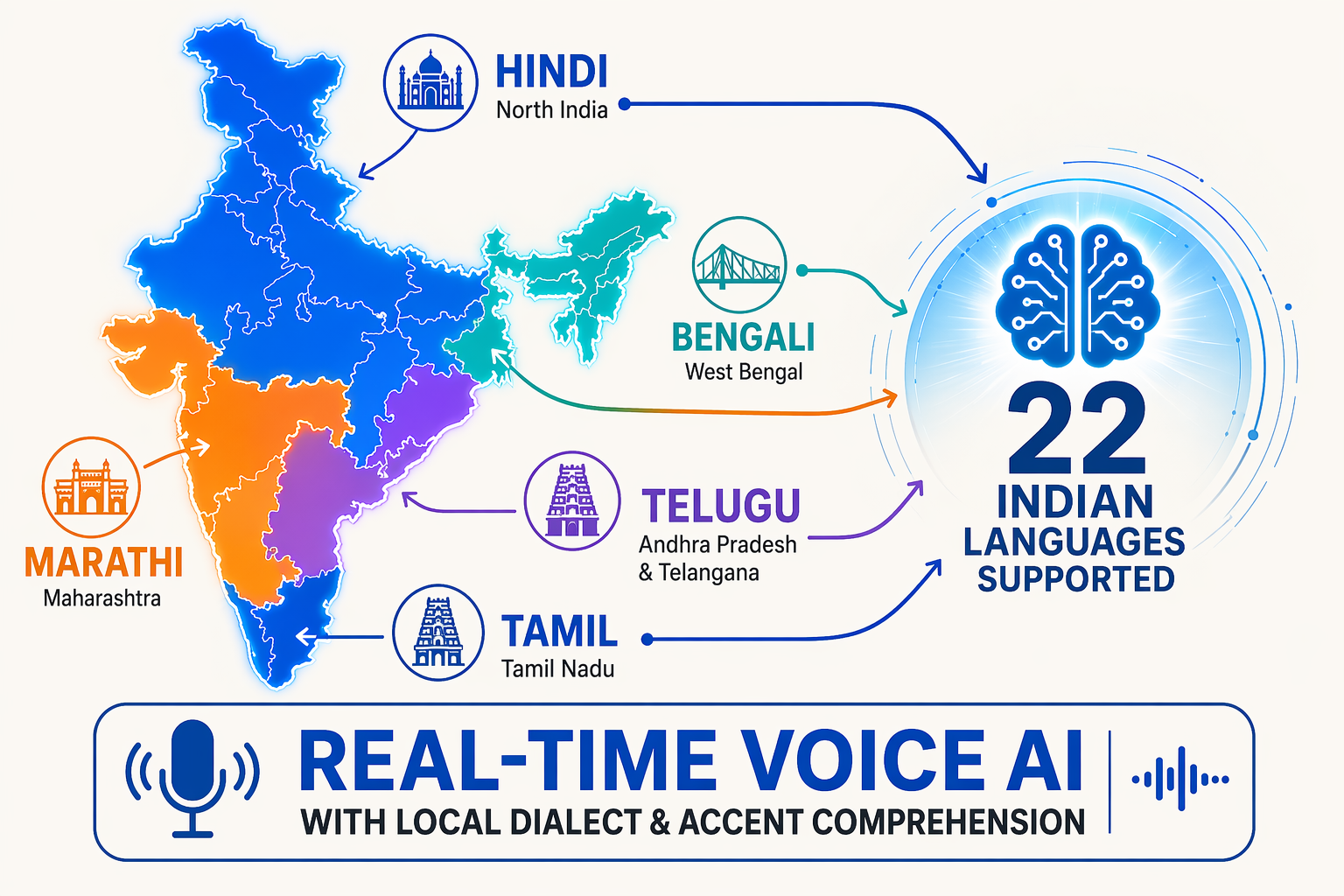
To truly plug the revenue leak in India’s hyper-competitive B2C landscape, businesses must confront a glaring reality: language is the ultimate trust builder. In a country where only about 10% of the population speaks English, forcing customers to interact with English-only IVRs or rigid, text-based chatbots is a surefire way to drive them straight to your competitors. When a high-intent lead calls your business and is met with a language barrier, it has the exact same economic impact as a missed call—the customer hangs up, and the revenue is lost.
This is where the concept of "Bharat-first" engineering becomes a critical business strategy. To convert missed calls into active sales, your automated recovery systems must speak the language of your customer—literally and culturally.
Breaking the Language Barrier at Scale
Standard communication tools struggle to handle the linguistic diversity of the Indian market. They either fail to support regional dialects entirely, or they rely on robotic translation tools that completely miss the context, tone, and cultural nuances of the caller.
CallMissed solves this fragmentation by building a localized, state-of-the-art Speech-to-Text and conversational engine designed specifically for India.
- Native Support for 22 Indian Languages: From Hindi, Tamil, and Telugu to Marathi, Bengali, and Gujarati, CallMissed’s AI agents converse fluently across 22 official regional languages.
- Real-Time Accent and Dialect Comprehension: CallMissed doesn’t just translate words; it understands how people actually speak. The platform’s advanced Voice AI is trained to comprehend local accents, regional colloquialisms, and native speech patterns in real time.
- Bilingual Fluidity (Hinglish/Code-Switching): In everyday conversation, Indian consumers constantly switch between English and their native tongues (e.g., speaking in "Hinglish" or "Tanglish"). CallMissed’s voice agents adapt to this fluid code-switching instantly, maintaining a natural, human-like flow without stuttering or losing context.
Turn Every Missed Connection Into a Localized Conversation
Imagine a scenario where a customer in Coimbatore calls your e-commerce helpline after hours, gets disconnected, and instantly receives a personalized follow-up on WhatsApp in fluent Tamil. Or a rural distributor in Bihar drops a call, only for an AI voice agent to call them back immediately, addressing their queries in conversational Hindi.
By utilizing CallMissed's unified, AI-native CRM, businesses can deploy localized automated agents across both voice calls and WhatsApp. This ensures that every follow-up, callback, or support interaction feels deeply personal, highly respectful, and localized to the user's regional preferences.
By removing the friction of language, you do more than just answer a query—you build immediate trust. In a market where trust dictates transaction volumes, deploying multilingual AI agents is the single most effective way to recover lost leads and turn your "call missed" vulnerabilities into loyal, long-term customers.
Impact & Implications: Developer-First Architecture and API-Driven Customization

For B2C enterprises and fast-growing Indian startups, a communication system cannot afford to be a closed black box. Plugging a massive revenue leak requires deep integration into existing tech stacks—whether that means syncing customer data with custom internal CRMs, triggering automated workflows in real-time, or customizing how AI agents handle sensitive customer conversations.
This is where the distinction between rigid, legacy systems and modern, developer-first platforms becomes critical.
Built for Developers, Engineered for Scale
At its core, CallMissed is built with a developer-first philosophy. Instead of forcing engineering teams to learn proprietary, complex protocols, the platform exposes standard, production-ready APIs and Webhooks. This infrastructure allows developers to treat voice and conversational AI just like any other API-driven microservice.
Key architectural pillars include:
- OpenAI-Compatible APIs: Deploying voice AI agents is as straightforward as pointing your existing LLM orchestration to CallMissed’s endpoint. If your team is already building with OpenAI-compatible structures, you can hook into CallMissed’s voice infrastructure without refactoring your codebase.
- Low-Latency Multi-Model LLM Gateway: To handle the fast-paced nature of phone conversations, developers can choose from and switch between 300+ LLMs on the fly. This ensures the optimal balance of speed, cost, and reasoning capability for complex customer inquiries.
- Real-time Webhook Triggers: The moment a "call missed" event occurs, a lightweight JSON payload is dispatched to your server. Developers can use this to instantly trigger downstream actions—such as spinning up an automated WhatsApp sequence, logging the lead in an external database, or scheduling an outbound AI voice callback.
Flexible Customization and Integration
Because B2C workflows in India vary wildly across sectors like fintech, real estate, and e-commerce, static templates do not work. CallMissed’s API-driven customization enables teams to programmatically define how AI agents behave, what data they access, and how they hand off complex queries to human agents.
Through simple RESTful API calls, developers can dynamically update agent system prompts, inject real-time context from backend databases (such as a customer’s pending order status or previous ticket history), and manage API keys securely.
Furthermore, because CallMissed’s platform natively unifies WhatsApp, Voice, Email, and Web Chat, developers do not need to stitch together separate SDKs for each channel. By interacting with a single, cohesive communication infrastructure, engineering teams can build complex, omnichannel customer journeys in a fraction of the time, transforming a historically complex integration process into a streamlined afternoon project.
Expert Opinions: Transforming High-Growth Industries from Clinics to Enterprise

Across high-growth B2C sectors, industry experts are witnessing a paradigm shift. The traditional method of putting customers on hold or routing them through complex, robotic IVR menus is no longer viable. In fields like healthcare, education, real estate, and enterprise logistics, the ability to respond instantly is the single greatest competitive advantage. Leaders in these sectors emphasize that missed calls are not just administrative hiccups—they are lost patients, unreached students, and abandoned deals.
Healthcare & Clinics: Prioritizing Urgent Patient Care
In the healthcare sector, a missed call isn't just a lost lead; it can represent a medical emergency or a critical booking. According to healthcare operations analysts, up to 35% of patient inquiry calls to private clinics and diagnostic centers go unanswered during peak hours or after-office shifts.
- The Expert Consensus: Medical administrators point out that patients seeking consultations or diagnostic tests are in a high-intent state. If a clinic does not answer immediately, the patient will immediately call the next provider on their search results.
- The AI Resolution: With AI-native communication infrastructure, clinics are deploying automated agents that instantly handle appointment bookings, reschedule requests, and FAQs. Because the platform natively supports regional dialects, patients can confidently book appointments in their preferred language, ensuring no patient is left stranded.
Real Estate & EdTech: Capturing High-Value, High-Intent Leads
For EdTech platforms and real estate developers, the cost of customer acquisition (CAC) is exceptionally high. Industry benchmarks show that a qualified lead in these sectors can cost thousands of rupees to generate via digital ads. Allowing these hard-earned leads to slip into a "call missed" black hole is incredibly costly.
- The Lead Decay Reality: Sales experts agree that the likelihood of converting a lead drops by over 80% if you do not follow up within the first five minutes.
- The AI Resolution: To combat this "lead decay," forward-thinking enterprises use solutions like CallMissed to trigger immediate omnichannel workflows. If a sales line is busy, the system automatically initiates a friendly, context-aware WhatsApp conversation or schedules an instant, automated callback. This ensures that high-value prospects are engaged while their buying intent is at its peak.
Enterprise Logistics & D2C: Scaling Multilingual Support
For scale-ups and enterprises handling thousands of daily transactions, scaling human support teams to manage high-volume customer queries is financially and logistically challenging.
- The Local Language Barrier: Leaders in India's D2C and logistics spaces report that over 70% of customer service inquiries outside Tier-1 metros are preferred to be conducted in regional languages. Standard, English-only support systems fail to build the necessary trust.
- The AI Resolution: Enterprises are turning to unified, AI-native platforms to manage the load. By integrating voice agents that comprehend 22 Indian languages natively—including local accents and colloquial nuances—companies can resolve routine delivery and order issues automatically, at a fraction of the cost of a traditional call center.
By shifting from reactive, fragmented tools to a unified, AI-native CRM, businesses across these high-growth sectors are transforming their communication bottlenecks into highly efficient revenue engines. Platforms like CallMissed are leading this charge, helping businesses bridge the gap between missed connections and successful conversions.
What This Means For You: Choosing Your CallMissed Path
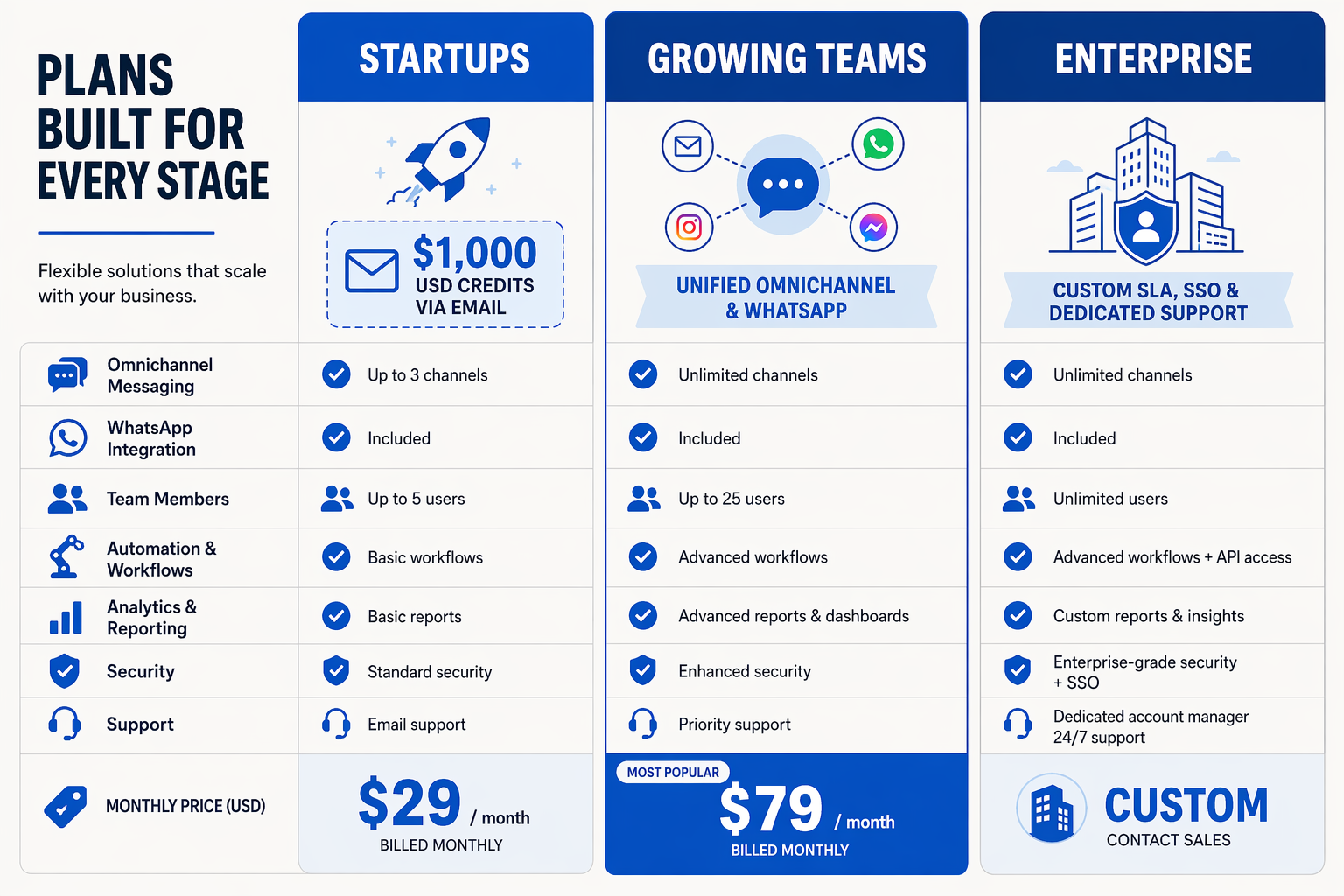
Now that you understand how a single missed call can instantly derail your customer acquisition efforts, it is time to choose the implementation path that best fits your business structure. Whether you are a rapidly scaling startup looking to automate customer touchpoints or an established enterprise needing to unify disparate communication silos, CallMissed.com offers tailored, AI-native infrastructure to plug your revenue leaks immediately.
To help you decide the most effective way to deploy these capabilities within your organization, we have broken down the core paths of the CallMissed platform. Each path is designed to transition your operations from a reactive "missed call" state to an active, multilingual conversion engine.
Comparing Your CallMissed Implementation Paths
The table below outlines the four primary deployment strategies on the platform. Depending on your current technical resources, regional customer demographics, and volume of incoming leads, you can mix and match these paths to build a resilient, omnichannel communication framework.
| Implementation Path | Primary Use Case | Key Features & Capabilities | Supported Languages | Target Business Profile |
|---|---|---|---|---|
| Instant Automated Callbacks | Immediate lead recovery when a call is missed or dropped. | Automated WhatsApp triggers, SMS fallback, instant agent routing, and CRM lead logging. | Multilingual template routing (all major regional languages) | High-volume B2C brands, local service providers, and e-commerce stores. |
| AI Voice Agents | 24/7 automated inbound & outbound call handling without human agents. | OpenAI-compatible APIs, real-time accent comprehension, and human-like conversational pacing. | 22 Indian languages (including Hindi, Tamil, Telugu, Marathi, and Bengali) | Scale-ups, D2C brands, and financial service providers with diverse regional customer bases. |
| Unified Omnichannel CRM | Consolidating fractured customer interactions into a single pane of glass. | Unified inbox for WhatsApp, Voice, Email, and Web Chat with shared customer context. | Dashboard in English; customer-facing bots in regional languages | Mid-market enterprises struggling with disjointed helpdesks and siloed teams. |
| Developer-First APIs | Custom communication infrastructure integrated into existing software. | LLM gateway (switch between 300+ models), Speech-to-Text (STT), and Text-to-Speech (TTS) APIs. | Custom configurations across 22 regional dialects | Tech startups, SaaS companies, and in-house product teams building custom workflows. |
Navigating Your Transition to AI-Native Support
Choosing your path is not an all-or-nothing decision. The majority of fast-growing B2C teams in India begin by activating Instant Automated Callbacks via WhatsApp to secure low-hanging fruit—recovering up to 90% of missed-call revenue in their first month.
Once the immediate leak is plugged, these businesses scale their operations by deploying AI Voice Agents to handle Tier-1 support and lead qualification. Because CallMissed's voice infrastructure natively understands regional accents, colloquialisms, and local dialects across 22 Indian languages, your customers in both tier-1 metros and tier-3 towns receive a consistent, natural, and helpful experience.
By unifying these touchpoints into the Unified Omnichannel CRM, your support and sales agents no longer have to guess what happened on a previous WhatsApp chat or missed call. Every interaction, automated or human, is logged in real-time, giving your team a 360-degree view of the customer journey.
Frequently Asked Questions
Why is a single "call missed" so damaging to B2C businesses in India?
How does CallMissed recover revenue from missed customer interactions?
What makes CallMissed different from a traditional CRM or IVR system?
Can the CallMissed Voice AI agents handle regional Indian languages and accents?
How easy is it to integrate CallMissed with our existing tech stack and LLMs?
Is CallMissed suitable for mid-sized businesses looking to scale their support teams?
Conclusion
In a fast-paced market where over 60% of consumers will instantly jump to a competitor after a single unanswered ring, letting a lead slip away is no longer just an operational oversight—it is a major threat to your bottom line. To thrive in India's competitive landscape, B2C businesses must move past siloed legacy platforms and embrace unified, automated engagement.
By upgrading your communication infrastructure today, you can expect to:
- Unify fragmented channels like Voice, WhatsApp, Email, and Web Chat into a single, cohesive customer dashboard.
- Bridge the language barrier using advanced Voice AI agents that natively comprehend 22 Indian languages, local accents, and regional dialects.
- Recover up to 90% of missed-call revenue through instant, automated callbacks and intelligent, 24/7 customer engagement.
Looking ahead, the future of customer acquisition belongs to brands that offer instant, context-aware, and multilingual support at scale. To stay ahead of this trend and ensure you never lose a high-intent lead again, explore how the AI-native CRM and communication infrastructure at CallMissed can transform your missed calls into automatic sales. Are you ready to plug your revenue leaks for good?
Discussion
Related Posts


Ready to automate customer conversations?
Launch AI voice agents and WhatsApp bots with CallMissed — one API, 22+ Indian languages.