Best LLM for Voice Agents in 2026: GPT-6 Astra vs Claude Fable 5.1


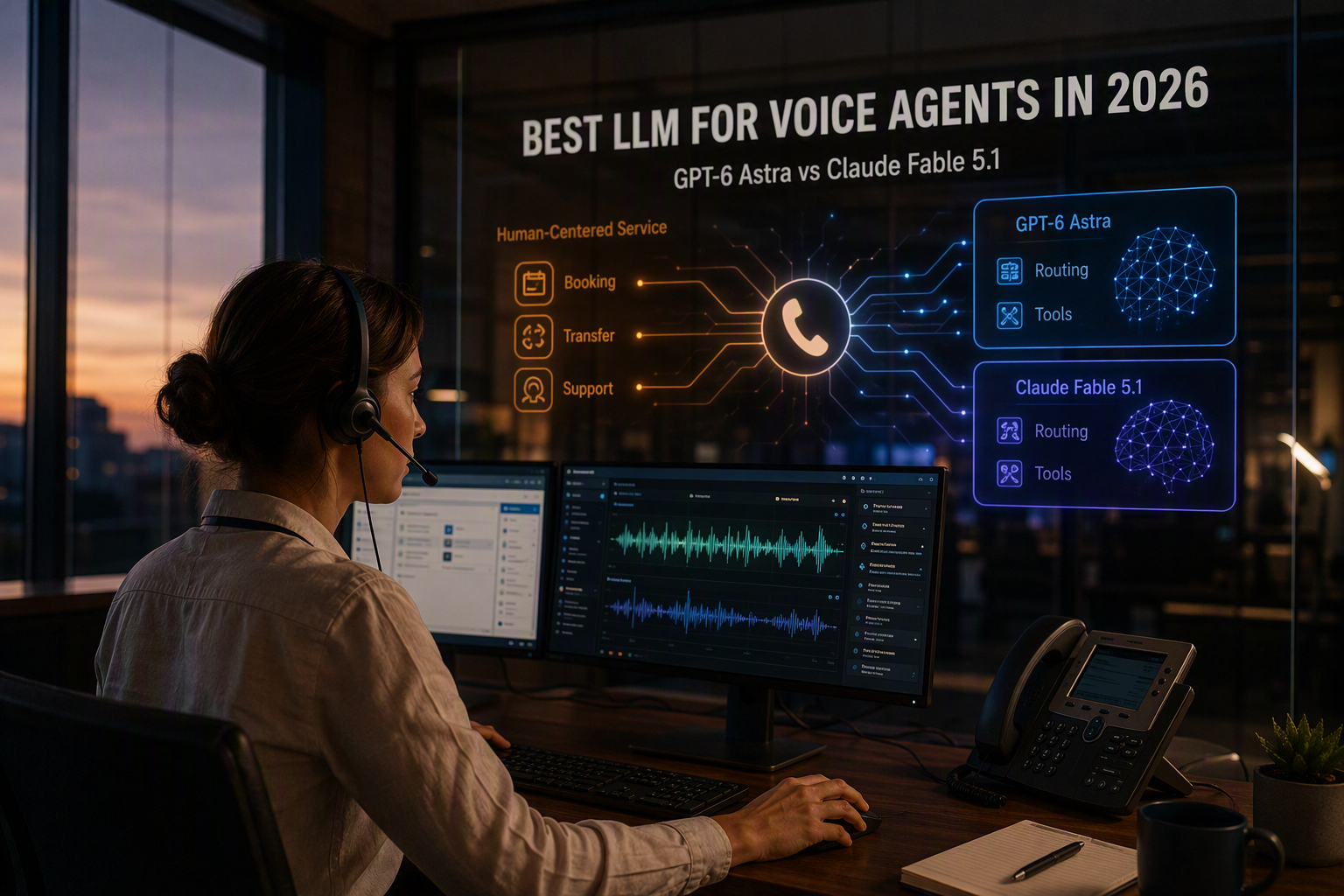
Choose the best LLM for voice agents in 2026 using documented API facts, pipeline benchmarks, cost checks and fallback planning.
Best LLM for Voice Agents in 2026: GPT-6 Astra vs Claude Fable 5.1
What if the model with the strongest reasoning is still the wrong choice for answering a customer call? The best LLM for voice agents in 2026 is not determined by headline intelligence alone: an AI receptionist must stream responses quickly, call tools correctly, resist failures, control costs and remain dependable inside a complete speech-to-text–LLM–text-to-speech pipeline.
Why this comparison requires caution
The available evidence still does not support a definitive voice-agent winner in the GPT-6 Astra vs Claude Fable 5.1 comparison. As of September 5, 2026, both models are officially released and documented: GPT-6 Astra launched September 3 and Claude Fable 5.1 launched September 1. However, general model specifications and benchmark claims do not substitute for measured voice-specific streaming latency, interruption handling, tool-call reliability and end-to-end call completion rates.
That distinction matters because impressive task results do not automatically translate into natural conversations. OpenAI reported that Legora used GPT-6 Astra to review 41 documents in minutes, identify all four planted errors and improve performance by nearly 40%. OpenAI also reported that Playco reduced manual fixes by 50% while prototyping games with GPT-6 Astra. These examples indicate reasoning and execution capabilities, but neither is a voice-agent latency benchmark.
OpenAI describes Astra as a “significant increase in cybersecurity capabilities” over GPT-5.6 Sol and says Astra is substantially more token-efficient. OpenAI separately documents API access for GPT-5.6 Sol, Terra and Luna, but that documentation should not be treated as proof that Astra has equivalent production availability.
What this guide will evaluate
Instead of ranking models from incomplete announcements, this guide compares only verifiable decision criteria:
- API availability and production-access conditions
- Streaming support, time to first token and interruption handling
- Tool calling for calendars, CRM records, payments and call transfers
- Reliability, structured-output accuracy and recovery from failures
- Token pricing, prompt caching and context-window limits
- Safety controls for sensitive customer conversations
- End-to-end latency across STT, LLM, tool execution and TTS
You will also get architecture-diagram guidance, a repeatable benchmark checklist and a fallback strategy for switching models when latency spikes, tools fail or capacity becomes unavailable. The core principle is simple: test both candidates using real receptionist conversations—including interruptions, regional accents, noisy audio and slow business APIs—rather than isolated text prompts.
Platforms such as CallMissed, which combines AI voice agents with Indic speech support across 22 Indian languages and an OpenAI-compatible multi-model gateway, illustrate why production teams increasingly evaluate the entire communication stack rather than one model name. Until comparable API documentation and measured voice-pipeline results exist for both candidates, any unconditional declaration of a winner would be speculation.
Which is better for AI voice agents: GPT-6 Astra or Claude Fable 5.1?
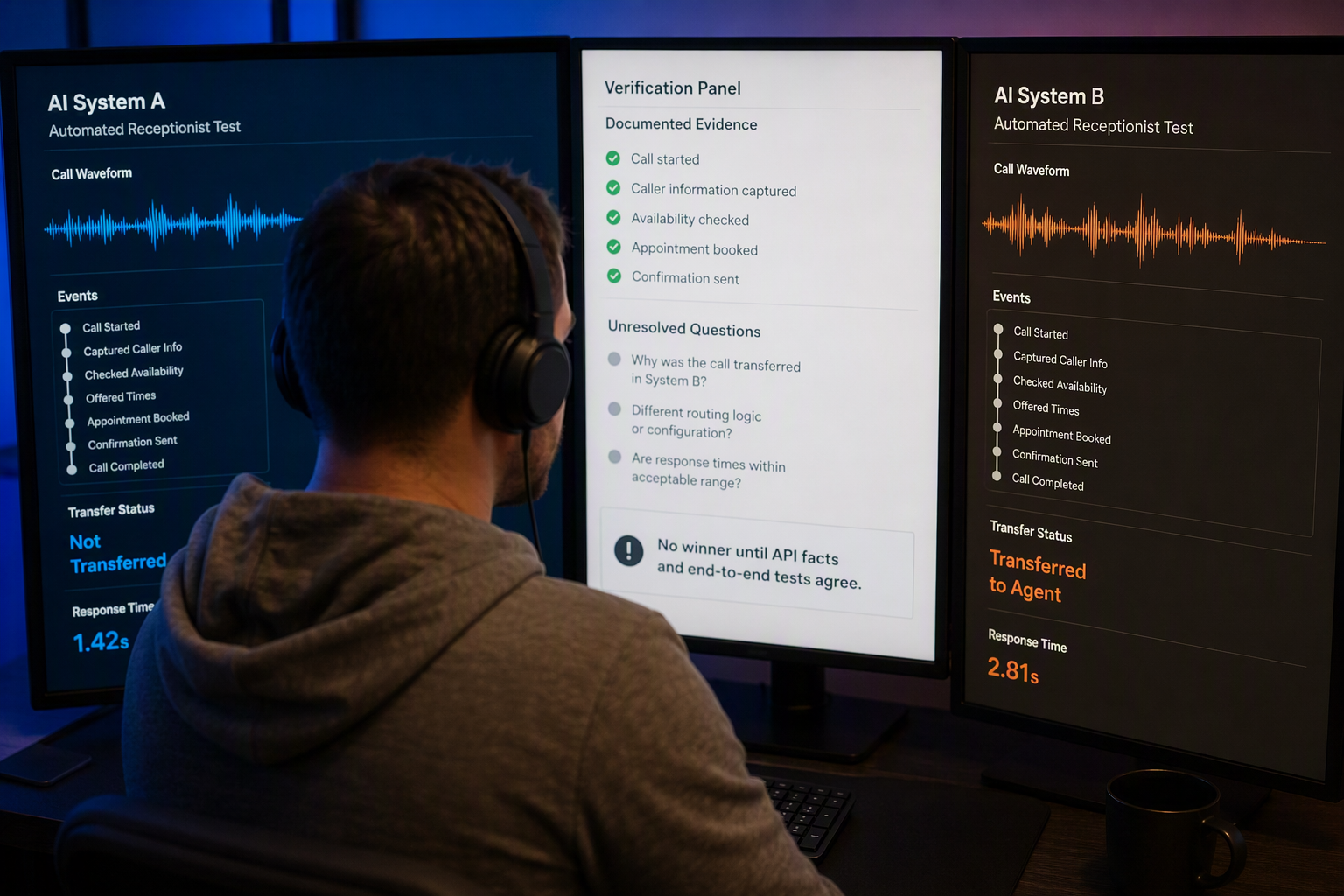
Neither GPT-6 Astra nor Claude Fable 5.1 can yet be declared the better model for production voice agents. As of September 5, 2026, both are officially available: OpenAI launched Astra on September 3 under the API model ID gpt-6-astra, while Anthropic launched Claude Fable 5.1 on September 1 with general availability. The remaining question is not access, but how each performs in a real-time voice pipeline.
Availability and standard API pricing are now confirmed
Both models list the same standard API token prices:
| Model | Standard input | Standard output |
|---|---|---|
GPT-6 Astra (gpt-6-astra) | $10 per million tokens | $50 per million tokens |
| Claude Fable 5.1 | $10 per million tokens | $50 per million tokens |
These headline rates do not make their operating costs identical. The providers apply different cache-read, cache-write or cached-input rates, so teams should model costs using their actual prompt reuse, conversation length and tool-result patterns. A voice receptionist that repeatedly loads the same business instructions may have a different effective cost from an agent handling long, unique conversations.
Official reasoning and coding results are also insufficient to identify the best LLM for voice agents in 2026. Benchmark scores show general capability, while customer stories demonstrate selected deployments. Neither proves low time to first token, consistent streaming cadence or reliable behavior when a caller interrupts the agent.
Voice performance must be measured end to end
A live receptionist request passes through several components:
- Speech-to-text detects and transcribes the caller’s speech.
- The LLM interprets intent, produces a response or invokes a tool.
- Business systems execute actions such as checking a calendar or retrieving a CRM record.
- Text-to-speech converts streamed text into playable audio.
- Interruption logic stops playback and recovers context when the caller speaks again.
A strong model can still create an unsatisfactory call if its first token is slow, streamed chunks arrive unevenly, a tool call fails or text-to-speech waits too long before producing audio. Teams should therefore report both model-level measurements and end-to-end STT/LLM/TTS latency, including median, P95 and P99 results under realistic concurrency.
The practical selection rule
For Claude Fable 5.1 vs GPT-6, the winner should be determined through matched production-style tests rather than general benchmark rankings. The evaluation should prioritize:
- Time to first token across median and tail latency
- Incremental streaming speed and consistency for low-latency TTS
- Tool-call success rates, including malformed input, retries and backend failures
- Interruption and barge-in recovery without duplicated or lost context
- End-to-end latency from speech completion to audible response
- Performance during concurrent calls and traffic spikes
- Effective cost after each provider’s differing cache rates
- Safety and data-handling controls for recorded or sensitive conversations
The current verdict is therefore available, but not voice-proven. GPT-6 Astra and Claude Fable 5.1 are both legitimate production candidates at matching standard input and output prices, but neither should be named the superior LLM for an AI receptionist without comparable voice-specific measurements.
An abstraction layer with tested fallbacks remains safer than making either model the sole dependency for call routing. For example, CallMissed’s OpenAI-compatible multi-model gateway follows this architecture pattern by supporting multiple models behind one integration with same-tier fallbacks, while its voice stack supports Indian-language scenarios across 22 languages.
What is actually documented about Astra and Claude Fable 5.1?
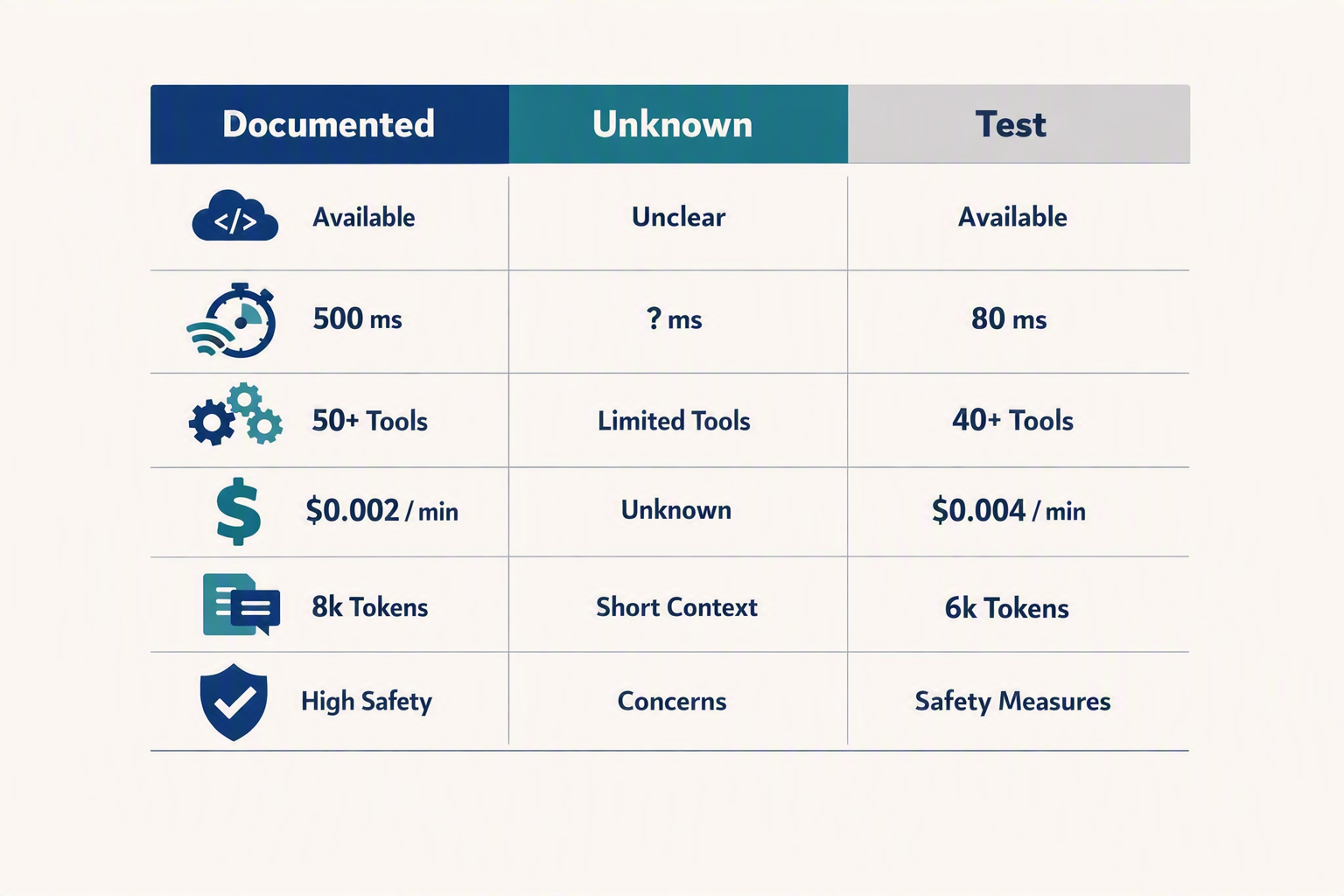
As of September 3, 2026, OpenAI has documented GPT-6 Astra’s frontier capabilities and safeguards, but not the production API details required to deploy it confidently in an AI receptionist. The supplied research provides no official Anthropic documentation confirming Claude Fable 5.1 or its API specifications, so neither model can yet be declared the best LLM for voice AI agents in 2026.
Evidence status at a glance
The key distinction is between a capability announcement and deployable API documentation. OpenAI’s Astra materials provide meaningful evidence about reasoning, token efficiency and cybersecurity risk, but they do not establish voice-production readiness.
- Model identity: OpenAI explicitly names GPT-6 Astra in published customer examples and safety materials. No supplied official Anthropic source establishes Claude Fable 5.1.
- API availability: OpenAI documents API access for GPT-5.6 Sol, Terra and Luna, but the supplied sources do not confirm general or production API access for Astra.
- Streaming and latency: No provided Astra documentation specifies server-sent-event streaming, time to first token, tokens per second or voice-specific latency. No equivalent Fable 5.1 evidence is available.
- Tool calling: The research does not document schemas, parallel tool calls, strict structured outputs or tool-call reliability for either candidate.
- Commercial limits: Token prices, cached-token rates, context-window sizes, rate limits and service-level commitments remain undocumented in the supplied evidence for both models.
Consequently, a Claude Fable 5.1 vs GPT-6 comparison cannot responsibly fill missing fields with specifications from earlier GPT or Claude families. Model-family precedent is useful for forming test hypotheses, not proving production behavior.
What OpenAI has established about Astra
OpenAI describes Astra as a “significant increase in cybersecurity capabilities” compared with GPT-5.6 Sol and says the model is significantly more token-efficient. OpenAI has also published preliminary cybersecurity evaluations and discussed stronger safeguards and security controls, indicating that deployment access may require careful governance.
OpenAI reported in 2026 that Legora used GPT-6 Astra to review 41 documents in minutes, detect all four planted errors and improve performance by nearly 40%. OpenAI also reported in 2026 that Playco cut manual fixes by 50% while using GPT-6 Astra to prototype three themed games from one grey-box foundation.
These are concrete application results, but they do not measure:
- Time to first audible response
- Interruption and barge-in recovery
- Calendar, CRM or transfer-tool accuracy
- Performance under concurrent calls
- End-to-end speech-to-text–LLM–text-to-speech latency
“More token-efficient” also should not be translated into a rupee-per-call estimate without published token prices, cache rates and actual conversation traces.
What remains unverified for Claude Fable 5.1
The provided research contains no official Anthropic release page, model card, API reference, pricing schedule or safety report for a model named Claude Fable 5.1. This absence does not establish that the model lacks a capability; it means the capability cannot be cited as documented here.
Until Anthropic publishes primary-source specifications, procurement teams should mark every critical field as unverified: API access, streaming protocol, latency, tool use, structured outputs, reliability, context length, prompt caching, pricing, regional availability and safety controls. Claims from comparison pages or social posts should not substitute for official API documentation and measured tests.
For an LLM for an AI receptionist, the defensible conclusion is therefore “insufficient evidence,” not a winner. The next step is to convert these unknowns into explicit vendor questions and full-pipeline acceptance tests.
Which key developments and evidence gaps matter most?
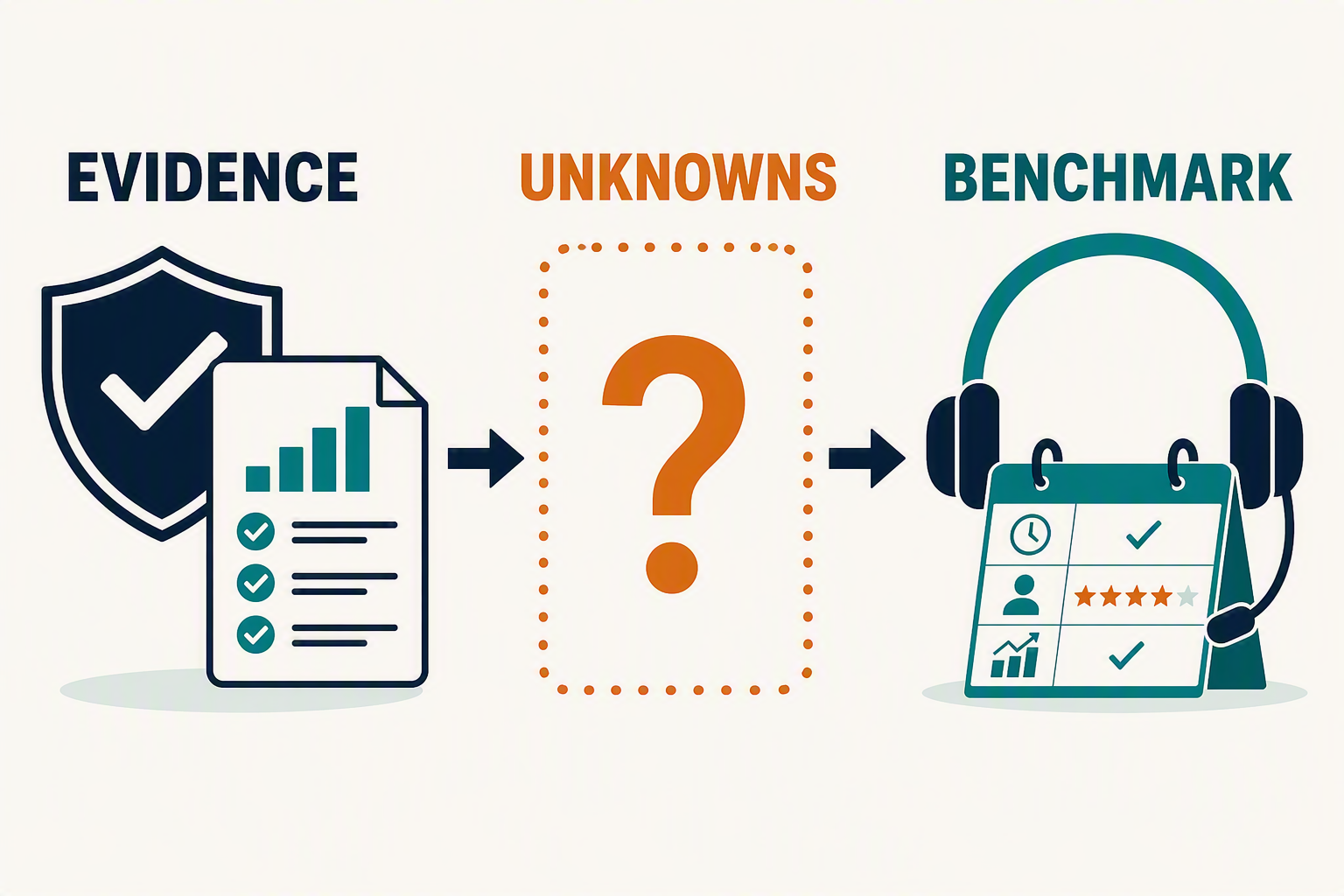
The most important development is that GPT-6 Astra has public first-party capability and safety material, while Claude Fable 5.1 lacks official documentation in the supplied research. However, neither candidate can yet be selected responsibly as the best LLM for voice agents in 2026 because essential production evidence—especially streaming latency, pricing and tool-call reliability—is missing.
Documented evidence versus unresolved questions
| Decision area | GPT-6 Astra evidence | Claude Fable 5.1 evidence | Impact on voice-agent selection |
|---|---|---|---|
| API availability | OpenAI publicly discusses Astra, but its GPT-5.6 API announcement names Sol, Terra and Luna, not Astra. | No official Anthropic API documentation was supplied for this model. | Treat production access for both candidates as unverified, not generally available. |
| Streaming and latency | No documented time to first token, token throughput, streaming API behavior or voice benchmark. | No official streaming or latency specifications were supplied. | Neither model can be ranked for conversational responsiveness. |
| Tool calling | Public examples indicate task execution, but no Astra tool schema, parallel-call behavior or structured-output guarantee is documented. | No official function-calling specifications or success rates were supplied. | Calendar booking, CRM lookup and call transfer must be tested directly. |
| Reliability | OpenAI publishes successful Astra use cases, but not receptionist completion rates, malformed-output rates or recovery metrics. | No official reliability benchmarks were supplied. | Case studies cannot substitute for repeatable production trials. |
| Cost, caching and context | Token prices, cache discounts, context-window size and rate limits remain undocumented in the supplied material. | No official pricing, caching or context specifications were supplied. | Total cost per resolved call cannot yet be calculated. |
| Safety and security | OpenAI says Astra represents a “significant increase in cybersecurity capabilities” over GPT-5.6 Sol and has published preliminary cybersecurity evaluations. | No model-specific safety documentation was supplied. | Astra has more visible safety evidence, but customer-call risks still require separate testing. |
Why Astra’s safety development matters—but is not decisive
OpenAI’s 2026 publications indicate that Astra may approach a Critical cybersecurity capability threshold, prompting stronger safeguards and security controls. This is consequential for voice systems connected to CRMs, payment workflows or account-management tools because a compromised agent could perform actions rather than merely generate text.
However, cybersecurity capability does not establish resistance to voice-specific failures such as:
- Acting on instructions embedded in retrieved customer records
- Disclosing personal information after weak identity verification
- Calling the wrong tool when speech recognition is uncertain
- Continuing an action after a caller interrupts or withdraws consent
- Inventing appointment availability when a scheduling API times out
What evidence would change the decision
A credible Claude Fable 5.1 vs GPT-6 comparison requires first-party model cards and API documentation, followed by identical end-to-end tests. At minimum, buyers should wait for or independently measure:
- P50, P95 and P99 latency across the complete STT–LLM–TTS pipeline
- Tool-call success, argument validity and duplicate-action rates
- Recovery after interruptions, timeouts and unavailable business systems
- Cost per minute and cost per successfully resolved call
- Performance across accents, noisy audio and multilingual conversations
- Safety outcomes for prompt injection, authentication and sensitive data
Until those measurements exist, the evidence supports a benchmark plan and fallback architecture—not a winner. Any categorical recommendation would confuse announced capability with documented voice-production readiness.
How should API access, latency, tools, reliability, cost, caching, safety and context be compared?
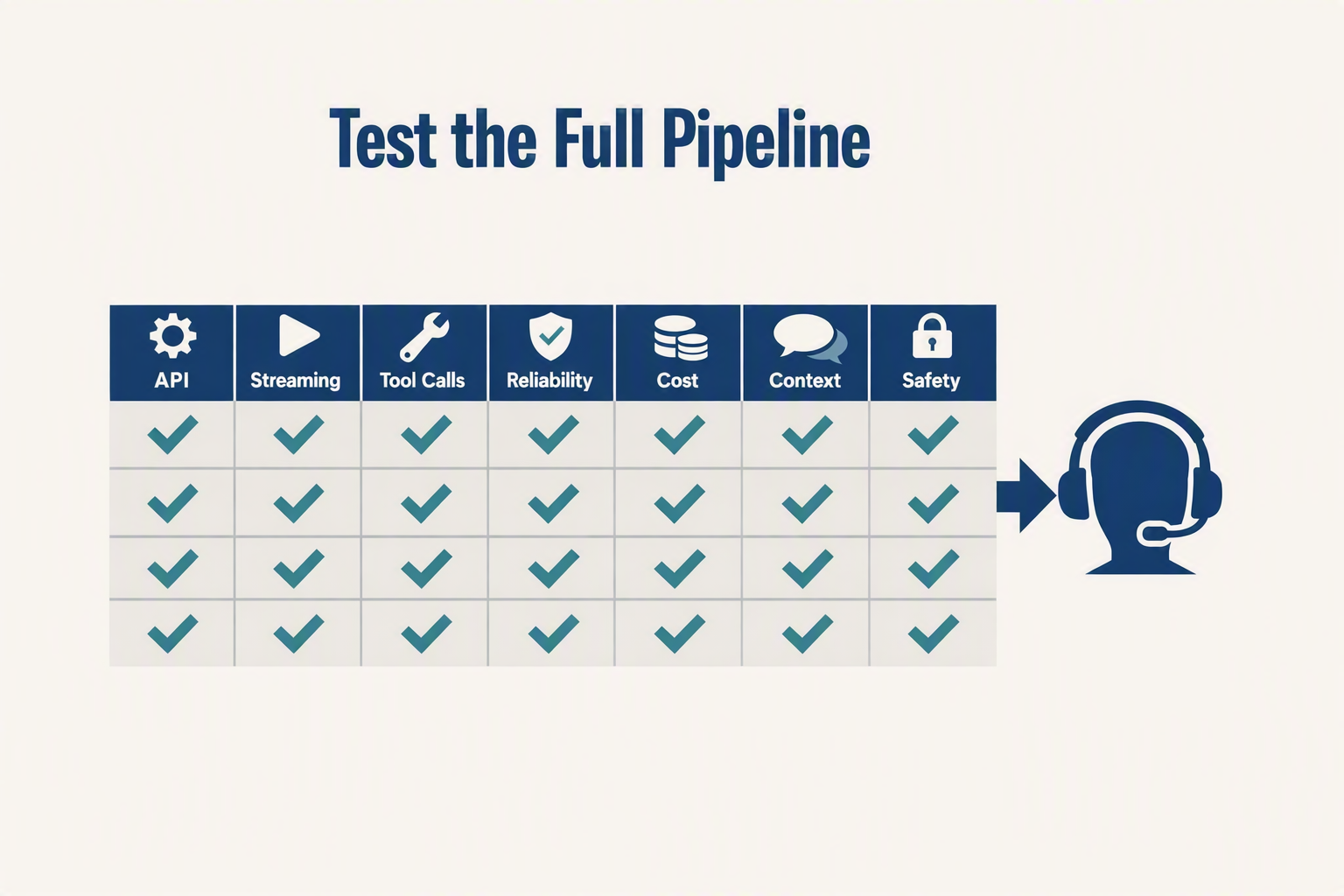
A production decision cannot yet be made from the documented evidence: neither GPT-6 Astra nor Claude Fable 5.1 has a complete, verified specification for voice-agent deployment in the supplied research as of September 3, 2026. Treat every undocumented feature as unavailable until the provider publishes API documentation, pricing and service limits.
Compare evidence, not assumed feature inheritance
Use a requirements matrix that distinguishes confirmed, unknown and tested internally. Features available in earlier GPT or Claude models must not be attributed automatically to these specific versions.
| Criterion | GPT-6 Astra evidence | Claude Fable 5.1 evidence | Required validation |
|---|---|---|---|
| API access | Not documented for production use | No official documentation supplied | Endpoint, regions, quotas and SLA |
| Streaming and latency | No voice-specific figures documented | No verified figures supplied | TTFT plus p50, p95 and p99 latency |
| Tool calling | No Astra-specific schema guarantees documented | No verified specification supplied | Parallel calls, JSON validity and retries |
| Cost and caching | Token price and cache terms unknown | Pricing and cache terms unverified | Input, output, cached-token and tool costs |
| Context | Limit and truncation behavior unknown | Limit and behavior unverified | Maximum input, output and effective recall |
| Safety | Preliminary cyber evaluations published | No Fable 5.1 evidence supplied | Voice abuse, privacy and escalation tests |
OpenAI’s GPT-5.6 documentation explicitly names Sol, Terra and Luna as API-accessible models, according to OpenAI in 2026; that bounded list does not establish Astra API access. OpenAI also says Astra may reach a Critical cybersecurity capability threshold, but cybersecurity safeguards are not evidence of safe handling for medical details, payment requests or distressed callers.
Measure latency across the complete call path
For an LLM for an AI receptionist, model latency is only one component. Measure:
- Speech-to-text finalization time
- LLM time to first token
- Tool-execution time
- Text-to-speech time to first audio
- Total interruption-recovery time
Report p50, p95 and p99 results over realistic calls, not one fast demonstration. Test noisy rooms, regional accents, callers who interrupt and slow CRM or calendar APIs. Streaming should also preserve sentence boundaries so text-to-speech can begin early without producing corrections that sound unnatural.
Test tools and reliability as business outcomes
Tool benchmarks should cover appointment booking, CRM lookup, payment-link generation, call transfer and human escalation. Track:
- Valid structured-output rate
- Correct tool-selection rate
- Duplicate booking or action rate
- Recovery rate after timeouts
- Unsupported-claim and unsafe-action rate
A model that answers fluently but books the wrong slot is not reliable. Context tests should likewise measure retrieval accuracy at different conversation lengths rather than relying only on a published token maximum.
Calculate effective cost and plan fallbacks
Compare cost per successfully resolved call, including speech services, uncached and cached tokens, retries, tool calls and abandoned sessions. Prompt caching can reduce repeated system-prompt costs, but only after providers document cache-write prices, cache-read prices, retention and invalidation behavior.
The deployment should route to a fallback when latency exceeds a threshold, structured output fails or capacity becomes unavailable. An OpenAI-compatible multi-model gateway such as CallMissed can simplify that routing pattern, but teams must still benchmark each model in the same STT–LLM–TTS pipeline before selecting the best LLM for voice AI agents in 2026.
How does the full STT–LLM–TTS architecture determine caller experience?
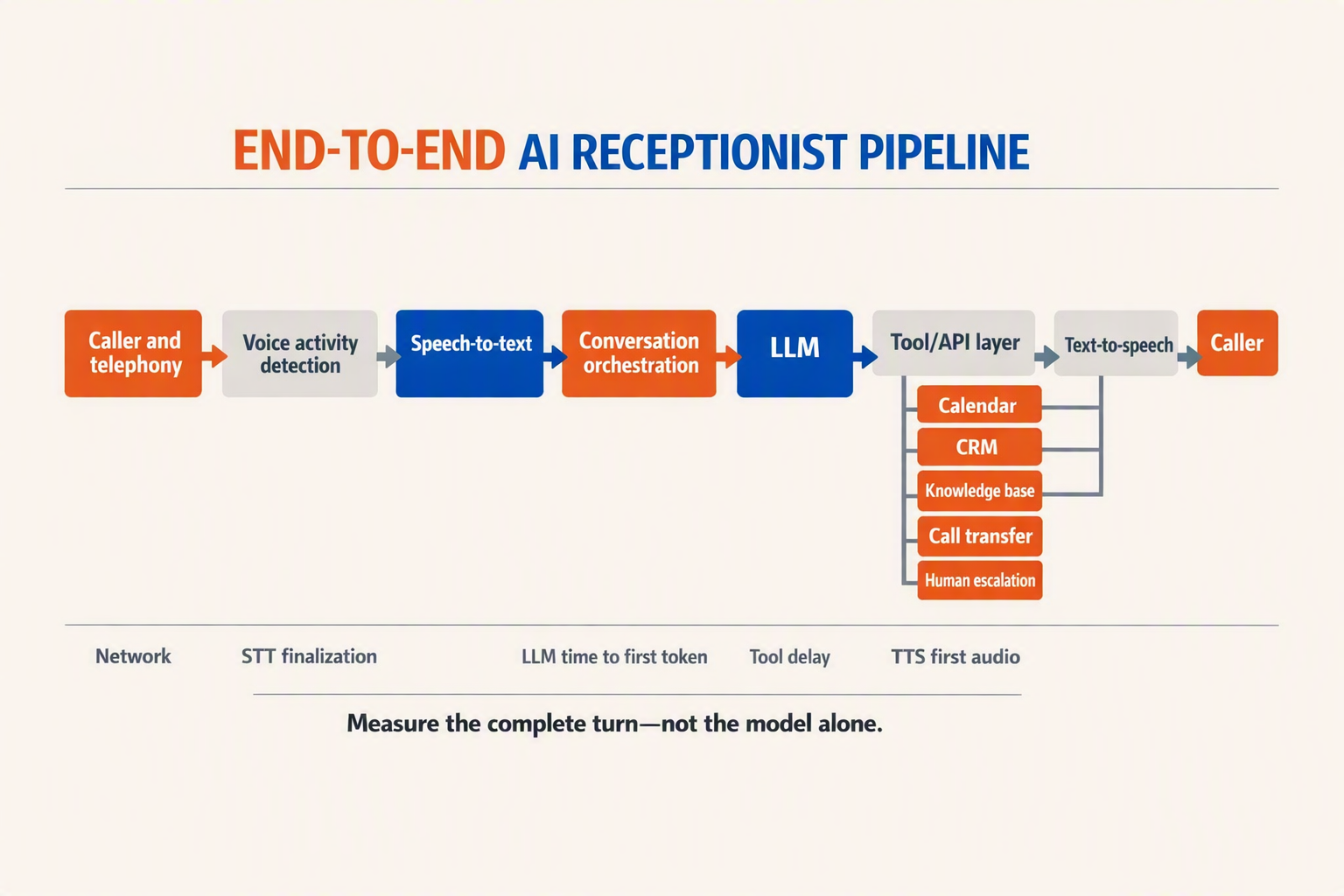
Caller experience is determined by the slowest and least reliable part of the STT–LLM–TTS pipeline, not by the LLM in isolation. GPT-6 Astra or Claude Fable 5.1 should therefore be selected only after measuring complete conversational turns—from the caller’s final syllable to the first audible word of the response.
Map the complete voice-agent path
A useful architecture diagram should show both the media path and the control path:
Caller → Telephony/WhatsApp Business Calling → Voice Activity Detection
       → Streaming STT → Conversation Orchestrator → LLM
       → Tool/API Calls → Response Validation → Streaming TTS → Caller
                                      ↓
                         CRM, calendar, payments,
                         knowledge base and human transfer
The diagram should also mark timestamps, retry boundaries and fallback routes. At minimum, record:
- Speech endpointing latency: How quickly voice activity detection decides that the caller has finished.
- STT latency: Time required to produce a stable transcript, including corrections to interim text.
- LLM time to first token: Delay before the model begins generating a usable answer.
- Tool-execution time: CRM lookups, appointment booking and payment APIs can dominate total latency.
- TTS time to first audio: Time between receiving text and playing intelligible speech.
- Network and orchestration overhead: Telephony routing, regional distance, logging and validation all add delay.
This produces a practical equation:
End-to-end response latency = endpointing + STT + LLM + tools + TTS + network overhead.
Average latency alone is insufficient. Teams should report median, p95 and p99 turn latency, because occasional multi-second pauses can make an automated receptionist feel unreliable even when its median result looks acceptable.
Streaming changes how the call feels
A responsive pipeline does not wait for every stage to finish completely. Streaming STT supplies partial transcripts, the LLM begins processing when intent becomes sufficiently clear, and streaming TTS plays the opening clause while the rest is still being generated.
That optimization introduces new failure modes:
- An unstable partial transcript can trigger the wrong tool.
- Starting TTS too early can expose an unverified answer.
- Long filler phrases can hide latency but frustrate repeat callers.
- Poor barge-in handling can make the agent continue speaking over the customer.
- A cancelled utterance can leave an appointment or CRM update running in the background.
The orchestrator should consequently support cancellation signals, idempotency keys, tool timeouts and transactional confirmation. A caller saying “No, make that Friday” must cancel or amend the earlier action rather than create two bookings.
What this means for Astra and Fable
As of September 3, 2026, the supplied OpenAI materials do not publish a voice-specific time-to-first-token or end-to-end latency benchmark for GPT-6 Astra, while the supplied research provides no official Anthropic API or streaming specifications for Claude Fable 5.1. OpenAI’s statement that Astra is “significantly more token efficient” than GPT-5.6 Sol is relevant to model workload, but it does not establish faster caller-perceived responses.
Neither model should therefore be declared the best LLM for voice AI agents in 2026 from reasoning demonstrations alone. Benchmark each candidate with the same STT engine, TTS voice, telephony region, tools and prompts. For Indian deployments, an Indic-first speech layer—such as CallMissed’s support for 22 Indian languages—can influence recognition quality and caller experience as much as the downstream LLM choice.
How do you run a fair receptionist-specific benchmark?
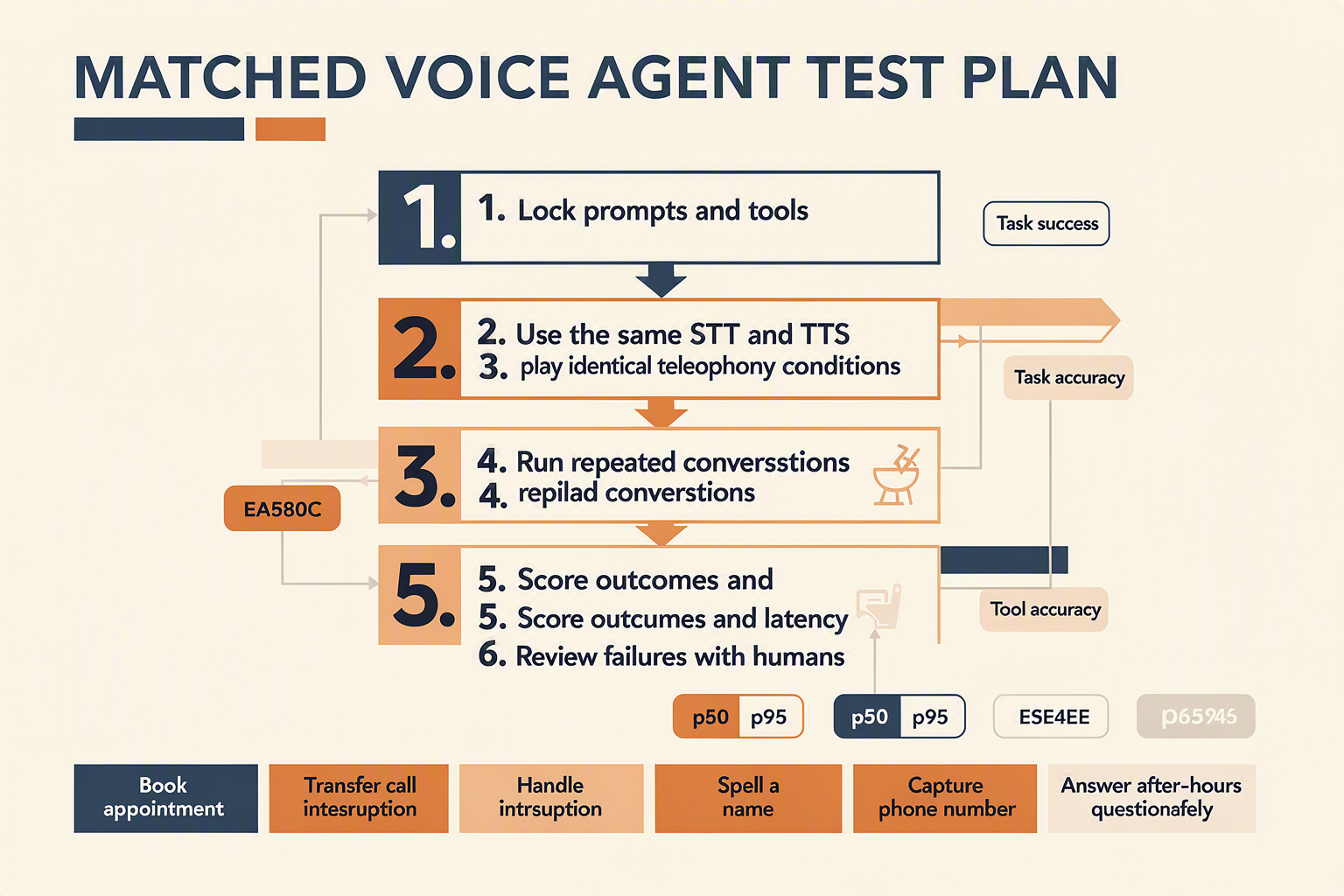
A fair receptionist benchmark runs both models through the same speech-to-text–LLM–text-to-speech pipeline, using identical calls, prompts, tools, network conditions and acceptance criteria. Measure complete customer outcomes and tail latency—not reasoning scores or isolated text responses.
Build a receptionist test set
Create at least 30 representative call scenarios, then run each scenario multiple times to expose nondeterministic failures. Include both routine and adversarial situations:
- Appointment handling: book, reschedule and cancel while checking live availability.
- Lead qualification: collect names, phone numbers, locations and requirements accurately.
- Call routing: identify intent and transfer to the correct person or department.
- Information retrieval: answer policy, pricing and opening-hours questions from an approved knowledge base.
- Failure recovery: handle unavailable calendar APIs, CRM timeouts and incomplete customer details.
- Real speech conditions: test interruptions, silence, background noise, code-switching, regional accents and self-corrections.
Use prerecorded audio so GPT-6 Astra and Claude Fable 5.1 receive identical inputs. For Indian deployments, include Hindi-English code-switching and relevant regional languages rather than benchmarking only clean English; platforms such as CallMissed support STT and TTS across 22 Indian languages for this kind of production-oriented testing.
Instrument the complete latency path
The benchmark architecture should be diagrammed as:
Caller → telephony transport → streaming STT → conversation orchestrator → LLM → business tool → streaming TTS → caller
Place timestamps at every boundary. Report p50, p95 and p99, because averages can conceal delays that make a receptionist feel unresponsive.
Measure:
- End-of-speech to first audio: time from the caller finishing to the first audible response.
- Model time to first token: isolated LLM latency after the final transcript reaches the model.
- Tool round-trip time: calendar, CRM, payment or transfer latency.
- Interruption response: time required to stop TTS after the caller barges in.
- Turn and call completion time: total duration for each task.
- Timeout and retry rate: frequency of degraded or repeated turns.
Run cold-cache and warm-cache trials separately. Do not assume either candidate supports prompt caching—or apply hypothetical discounts—until production API documentation and billing records verify it.
Score outcomes, not eloquence
Define pass/fail rules before testing. A useful weighted scorecard might assign:
- 30% task completion: Was the appointment, transfer or message completed correctly?
- 25% tool-call accuracy: Were the correct function, arguments and customer records used?
- 20% conversational latency: Did p95 response time remain within the team’s chosen service-level objective?
- 15% recovery and safety: Did the agent recover safely from ambiguity, outages and sensitive requests?
- 10% measured cost: What did each successfully completed call cost across STT, LLM, TTS and tools?
Review transcripts blindly where possible. Penalise invented availability, fabricated policies, duplicate bookings and unauthorised actions more heavily than awkward wording.
Control the experiment
Keep the system prompt, tool schemas, retrieval corpus, audio, temperatures, token limits and retry policy constant. Randomise model order, test at comparable times and record model version identifiers because provider-side updates can change results.
As of September 3, 2026, the supplied materials do not document production API specifications for either Claude Fable 5.1 or GPT-6 Astra’s voice-specific streaming behaviour. Therefore, label unavailable tests “not verifiable”, not zero, and rerun the benchmark only after both candidates can be exercised under equivalent production access.
What fallback strategy reduces missed calls, errors and provider outages?
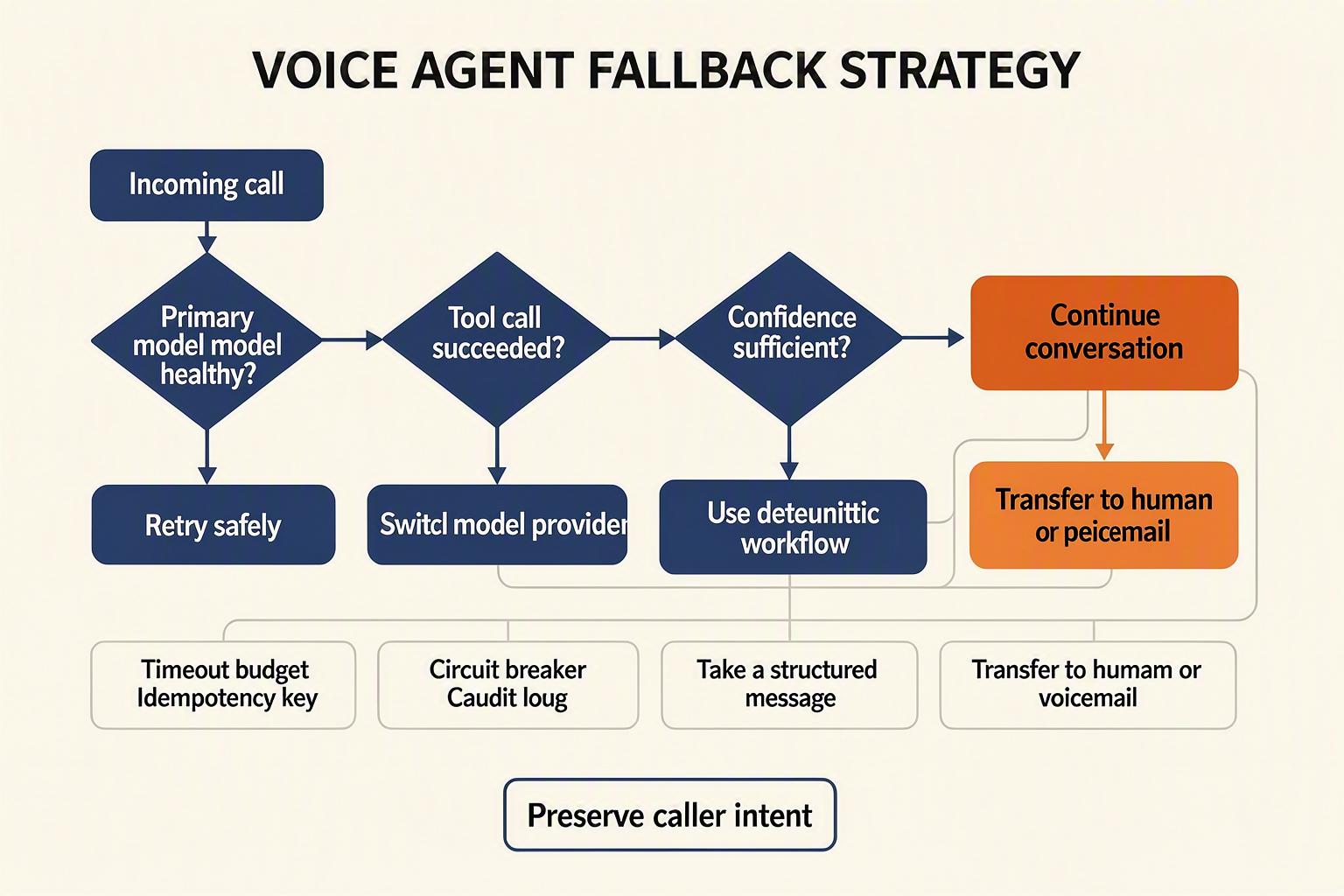
A layered, model-independent fallback strategy reduces missed calls most effectively: retry briefly, switch components within a strict latency budget, enter a deterministic degraded mode, and then transfer to a human or capture a callback. Neither GPT-6 Astra nor Claude Fable 5.1 should be a production fallback until its API access, streaming behavior and operational limits are documented and load-tested.
Use cascading failover, not a single backup model
A voice agent can fail at telephony, speech-to-text (STT), the LLM, a business tool or text-to-speech (TTS). The orchestrator should therefore apply this sequence:
- Retry once for transient errors. Retry rate limits, network resets and malformed outputs only when the remaining latency budget permits. Add exponential backoff and jitter for non-conversational background work, but avoid long retries that create dead air.
- Switch to a compatible model. Preserve the system prompt, conversation summary, tool schema and safety state in a provider-neutral format. Route to a validated same-tier model when the primary model times out, rejects a request or crosses a latency threshold.
- Enter deterministic degraded mode. Use fixed prompts and menu-like flows for opening hours, location details, appointment requests and callback capture.
- Escalate safely. Transfer to a human operator, voicemail or callback queue when confidence is low or essential systems remain unavailable.
Astra cannot yet be assigned a dependable production role from the supplied evidence. OpenAI’s GPT-5.6 announcement explicitly documents API access for three models—Sol, Terra and Luna—but does not provide equivalent production-access details for Astra. The supplied research likewise provides no official Anthropic API specification for Claude Fable 5.1.
Protect tools from duplicate actions
Fallbacks must not accidentally repeat side effects. Every booking, payment, CRM update and cancellation should use an idempotency key tied to the call, tool and action.
- Validate tool arguments against a strict schema before execution.
- Store tool results outside the model conversation.
- Never replay a successful write merely because the LLM response failed.
- Require confirmation before high-impact actions such as payments or cancellations.
- Use circuit breakers to stop sending traffic to an unhealthy provider.
This separation allows a replacement model to continue the conversation without booking the same appointment twice.
Design failover across the complete voice pipeline
The architecture diagram should show independent health checks and fallback paths:
Caller → telephony → primary STT → LLM router → business tools → primary TTS → caller
Add secondary STT and TTS engines, a model gateway, a deterministic response service, and human transfer as separate branches. Platforms such as CallMissed’s OpenAI-compatible multi-model gateway support automatic same-tier model fallbacks, helping teams avoid rewriting each provider integration; businesses should still test the entire telephony–STT–LLM–TTS chain under failure conditions.
Measure whether recovery actually works
Track fallback performance per language, provider and call intent:
- Fallback activation and successful-recovery rates
- P50 and P95 dead-air duration
- Tool-call error and duplicate-action rates
- Human-transfer completion rate
- Calls completed in degraded mode
- Abandoned calls during provider incidents
- STT and TTS failover latency
Run chaos tests that disable each component individually. The correct backup is not the model with the strongest headline benchmark; it is the validated route that preserves context, avoids duplicate actions and keeps the caller moving toward resolution.
What do official sources and voice-AI practitioners prioritize, and where does CallMissed fit?

Official sources currently emphasize frontier capability and safeguards, while voice-AI practitioners should prioritize measurable conversational performance: end-to-end latency, interruption handling, tool completion and recovery from failure. For the Claude Fable 5.1 vs GPT-6 comparison, neither candidate should enter production solely on the strength of model announcements.
What the official evidence actually establishes
OpenAI’s published material supports several conclusions about GPT-6 Astra, but it does not yet answer the core deployment questions for an automated receptionist.
- OpenAI described Astra in 2026 as a “significant increase in cybersecurity capabilities” over GPT-5.6 Sol and said the model was significantly more token-efficient.
- In 2026, OpenAI reported that Legora’s GPT-6 Astra workflow reviewed 41 documents in minutes, detected all four planted errors and improved performance by nearly 40%.
- In 2026, OpenAI reported that Playco reduced manual fixes by 50% when using GPT-6 Astra to prototype games.
- OpenAI explicitly documents API access for GPT-5.6 Sol, Terra and Luna, but the supplied OpenAI sources do not establish equivalent production API access for GPT-6 Astra.
These findings demonstrate sophisticated reasoning and execution, not voice readiness. The supplied evidence provides no official Astra figures for time to first token, streaming cadence, context length, token pricing, prompt caching, rate limits or structured tool-call reliability. Likewise, no supplied official Anthropic source verifies Claude Fable 5.1’s existence, API access or voice-relevant specifications. Any detailed feature table claiming otherwise would be speculative.
What voice-AI teams should prioritize instead
Practitioners selecting the best LLM for voice AI agents in 2026 should evaluate completed conversational turns rather than isolated model outputs. A defensible scorecard should rank:
- Perceived responsiveness: Measure speech-end detection through first audible TTS output, including STT, network and synthesis delays.
- Interruption handling: Confirm that barge-ins stop audio generation, cancel obsolete model work and preserve the revised conversational state.
- Tool outcomes: Track whether appointments, CRM updates, transfers and verification flows finish correctly—not merely whether a valid function call was emitted.
- Tail reliability: Report median, p95 and p99 latency, plus timeout, malformed-output and retry rates.
- Operational economics: Calculate cost per successfully resolved call, including speech services, tokens, tools, retries and fallback traffic.
- Safety and escalation: Test prompt injection, sensitive-data handling, unsupported promises and transfer-to-human rules.
This evidence hierarchy prevents a strong document-analysis result from being misrepresented as proof of natural telephone performance.
Where CallMissed fits in the evaluation
CallMissed, an AI-native customer-engagement platform and OpenAI-compatible API gateway, fits at the orchestration layer rather than changing the evidence available for either candidate model. Its multi-model gateway and automatic same-tier fallbacks illustrate a practical principle: production voice systems should be designed so that a model can be benchmarked, replaced or bypassed without rebuilding the complete application.
For Indian deployments, CallMissed also connects the model-selection question to the rest of the customer journey:
- Speech-to-text and text-to-speech across 22 Indian languages
- AI voice agents connected to business workflows
- WhatsApp Business calling bridged to an AI agent
- Omnichannel handling across WhatsApp, voice, email and web
The appropriate decision remains evidence-led: expose GPT-6 Astra or Claude Fable 5.1 only after documented API access exists, run identical calls through the full pipeline, and retain a proven fallback until the candidate meets defined latency, reliability, safety and cost thresholds.
What does the evidence mean for your AI receptionist decision?
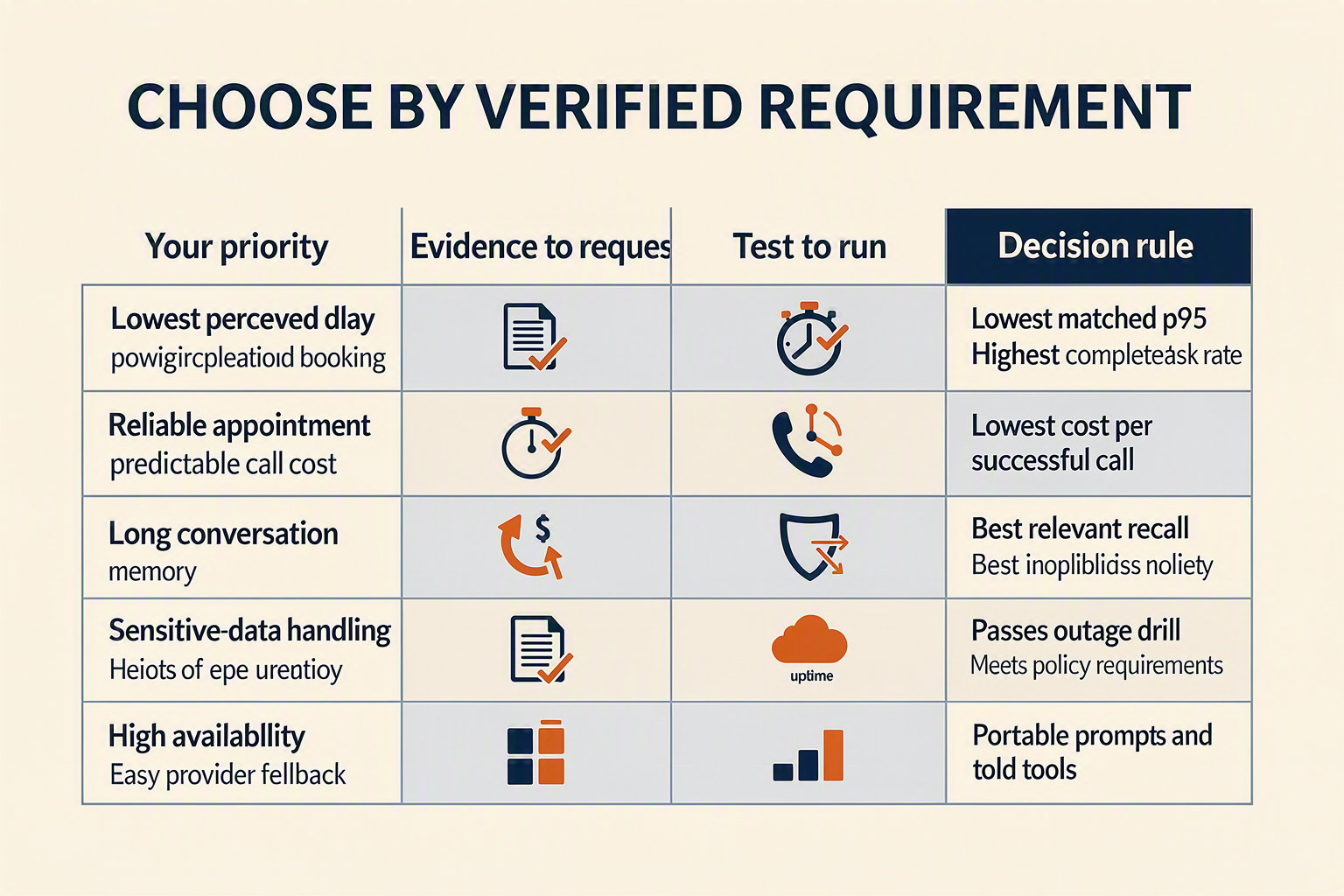
The evidence supports a conditional, benchmark-led decision—not a declared winner. As of September 3, 2026, neither GPT-6 Astra nor Claude Fable 5.1 has enough verified production detail in the supplied sources to be selected as the default LLM for an AI receptionist without further documentation and full-pipeline testing.
Evidence-to-decision matrix
| Decision criterion | GPT-6 Astra evidence | Claude Fable 5.1 evidence | Practical decision |
|---|---|---|---|
| Production API access | OpenAI documents Astra capabilities, but the supplied materials do not confirm general production API access. OpenAI explicitly documents API access for GPT-5.6 Sol, Terra and Luna—not Astra. | No official Anthropic API documentation for Claude Fable 5.1 appears in the supplied evidence. | Do not commit until the provider confirms endpoint access, quotas, regions, rate limits and service terms. |
| Streaming and latency | No documented time to first token, token-generation rate or voice-streaming benchmark is provided. | No verified streaming or latency specifications are provided. | Run concurrent, end-to-end tests; reasoning demonstrations cannot substitute for conversational latency measurements. |
| Tool calling and reliability | OpenAI customer examples show strong task execution, but no receptionist-specific tool-call success rate or structured-output benchmark is documented. | No official tool-use or reliability results are available in the supplied research. | Test calendar booking, CRM lookup, call transfer and failure recovery with deterministic pass criteria. |
| Cost and caching | Token prices, cached-input rates and prompt-caching behavior are not documented in the supplied Astra materials. | Pricing and caching terms are unverified in the supplied evidence. | Calculate cost per completed call only after measuring input, output, retries and cache hit rates. |
| Context limits | No verified Astra context-window or maximum-output specification is supplied. | No verified Fable 5.1 context specification is supplied. | Avoid designing transcript retention or knowledge retrieval around assumed limits. |
| Safety and security | OpenAI calls Astra a “significant increase in cybersecurity capabilities” over GPT-5.6 Sol and has published preliminary cybersecurity evaluations. | No Fable 5.1 safety documentation is included in the evidence set. | Request model cards, data-handling terms, retention controls and escalation policies before processing sensitive calls. |
Apply hard deployment gates
A model should proceed to production only after it passes the same recorded-call suite inside the complete speech-to-text–LLM–tool–text-to-speech architecture. The evaluation should include:
- Customer-perceived response delay, including STT finalization, model generation, tool execution and TTS startup.
- Tool-call completion rate for bookings, cancellations, CRM updates and human transfers.
- Interruption recovery, including barge-in, repeated questions and mid-sentence corrections.
- Cost per successfully resolved call, not merely advertised token cost.
- Safety behavior when callers disclose payment, health or identity information.
- Operational resilience under rate limits, timeouts and temporary model unavailability.
Set thresholds before testing and reject both candidates if neither meets them. A familiar model name should not override failed latency, accuracy or compliance gates.
Preserve the option to switch
The safest architecture separates telephony, STT, orchestration, the LLM, business tools and TTS. Use a provider-neutral request schema, version prompts externally and define fallbacks for timeouts, invalid tool arguments and capacity errors.
An OpenAI-compatible multi-model gateway can reduce switching work because applications retain a common interface while model routing changes behind it. CallMissed, for example, combines this gateway pattern with same-tier fallbacks and voice infrastructure supporting 22 Indian languages. That architecture does not determine whether Astra or Fable performs better; it makes the eventual evidence-based choice easier to deploy, monitor and revise.
Frequently asked questions about GPT-6 Astra, Claude Fable 5.1 and voice agents
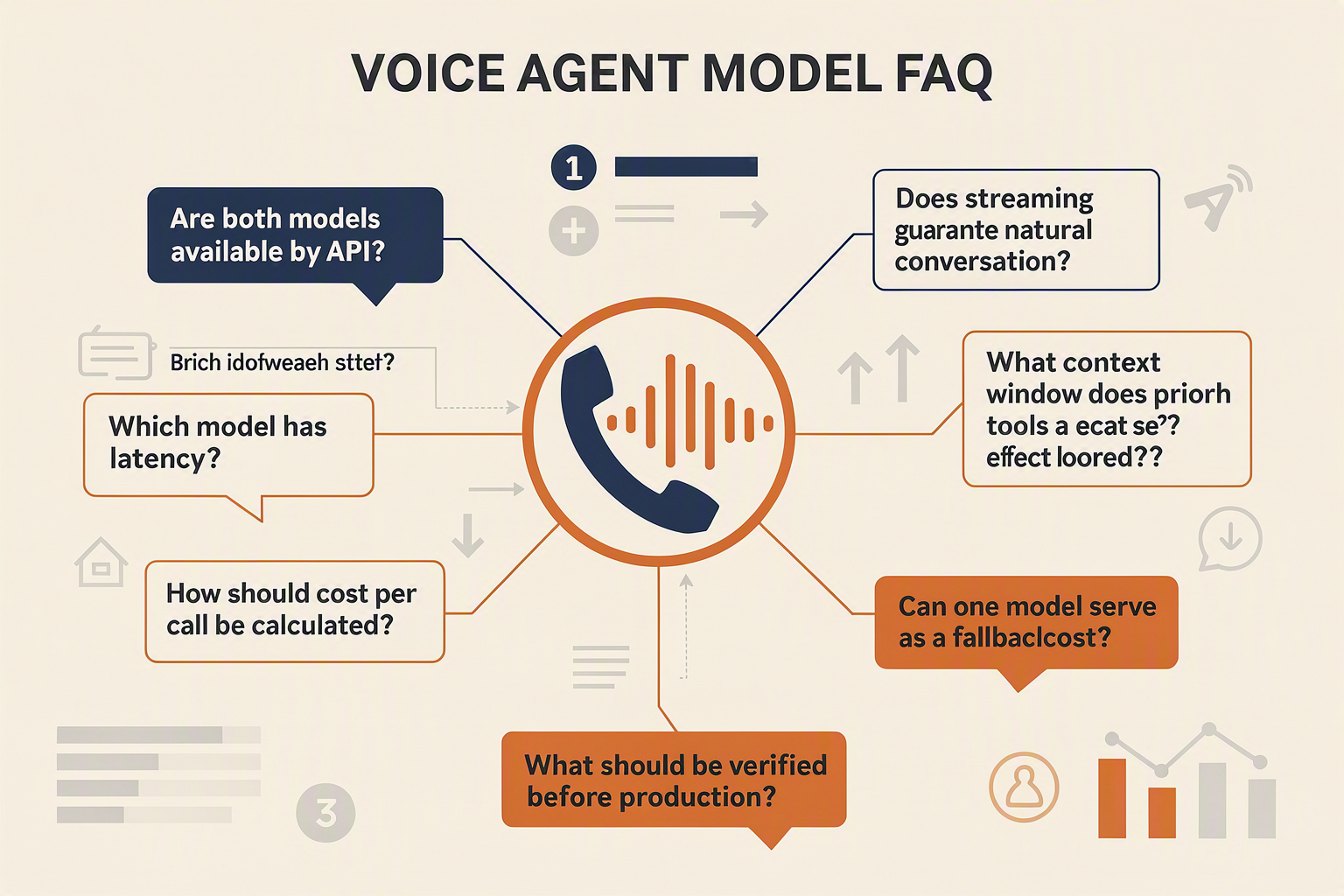
Availability and model selection
Is GPT-6 Astra or Claude Fable 5.1 available through a production API?
Which is the best LLM for voice agents in 2026: GPT-6 Astra or Claude Fable 5.1?
What should a Claude Fable 5.1 vs GPT-6 comparison measure for an AI receptionist?
Performance, safety and deployment
Does GPT-6 Astra support low-latency streaming for voice AI agents?
Is GPT-6 Astra safe enough to use as an LLM for an AI receptionist?
How should businesses deploy GPT vs Claude for voice AI agents when model details are incomplete?
Conclusion
There is no evidence-based winner yet in the GPT-6 Astra vs Claude Fable 5.1 comparison. As of September 3, 2026, neither candidate has enough documented production data to be named the best LLM for voice agents in 2026.
- Reasoning is not voice performance. OpenAI reported that Legora used GPT-6 Astra to review 41 documents in minutes and find all four planted errors, but this is not evidence of low-latency voice interaction.
- Production readiness must be documented. Astra’s API access, pricing, caching, context limits and voice-streaming latency remain unspecified in the supplied OpenAI materials; equivalent official specifications are also unavailable here for Claude Fable 5.1.
- End-to-end testing decides the outcome. Benchmark both models inside the complete STT–LLM–TTS pipeline, measuring time to first audio, interruption handling, tool-call accuracy, recovery rates and total cost.
- Fallbacks are essential. A production AI receptionist should switch models or routes when latency rises, capacity disappears or calendar, CRM and transfer tools fail.
Watch for official API releases, streaming specifications, safety documentation and reproducible voice benchmarks. Platforms such as CallMissed, with OpenAI-compatible multi-model access and Indic speech support across 22 Indian languages, can help teams explore this evolving architecture.
When documentation arrives, will you trust the model announcement—or test the customer’s entire call?
Related Reading
- Claude Fable 5.1 vs GPT-5.6 Sol: Pricing, Coding & Voice Agents
- GPT-6 Astra Release Date: September 2026 Fact Check
- GPT-6 Astra Rumors vs Confirmed Facts: September 2026 Fact Check