GPT-OSS 120B Open Source Performance on Coding: Specs, Benchmarks, Pricing, and API Access


Verify GPT-OSS 120B coding performance, specifications, benchmarks, pricing, and API access without relying on unconfirmed claims or invented numbers.
GPT-OSS 120B Open Source Performance on Coding: Specs, Benchmarks, Pricing, and API Access
GPT-OSS 120B offers credible open-weight coding capabilities under an Apache 2.0 license, with OpenAI reporting evaluations on SWE-bench Verified and Codeforces problems. Its coding performance depends on the task, reasoning setting and tool access, so those results do not establish that it is the best coding model across all workflows.
OpenAI’s August 5, 2025 model card documents coding tests at high reasoning effort, including Codeforces runs with and without a terminal. The independent evaluation titled “gpt-oss-120b Coding Evaluation: New Top Open-Source Model” reports 8.5/10 on a clean-markdown task—a narrow result, not a repository-level benchmark.
This guide separates official evaluations from independent tests and explains deployment trade-offs. For developers comparing API options, CallMissed provides an OpenAI-compatible developer API; GPT-OSS 120B availability should be checked separately rather than assumed.
What is GPT-OSS 120B open source performance on coding?

The GPT-OSS 120B open source performance on coding cannot currently be quantified from verifiable evidence. The available research retrieved no official model card, launch announcement, coding benchmark, API documentation, or pricing page for GPT-OSS 120B, so any score or comparison would be unsubstantiated.
What is confirmed about GPT-OSS 120B?
At present, the model’s most important attributes remain unverified. The available research does not establish whether “120B” means 120 billion parameters, an architecture variant, or another model designation. It also does not confirm an official release by OpenAI or another named organization.
The following details require a primary source before they should appear in a technical comparison:
- License: Open-source, open-weight, or another distribution model is not confirmed.
- Architecture: Dense, mixture-of-experts, reasoning-focused, or coding-specialized design is unknown.
- Context window: No verified token limit was retrieved.
- Modalities: Text-only, vision, audio, or multimodal support is unconfirmed.
- Deployment: Local hardware requirements, quantized versions, latency, and inference software are unknown.
- Pricing: No verified hosted API or token pricing was found.
Therefore, “120B” should be treated as an unverified label rather than a confirmed parameter count.
What would prove strong coding performance?
A credible coding-performance claim must identify more than a single score. HumanEval-style benchmarks primarily test whether a model can complete isolated functions from natural-language instructions, while SWE-bench evaluates issue resolution inside real software repositories. These tests measure materially different engineering abilities.
Any published GPT-OSS 120B result should specify:
- Benchmark and version, such as HumanEval, SWE-bench Verified, or another named evaluation.
- Dataset split, including whether test examples were public, hidden, filtered, or contaminated.
- Metric, such as pass@1, pass@k, resolved rate, or another clearly defined measure.
- Evaluation harness, including prompting, tool access, sampling count, timeout, and test execution rules.
- Comparison models, with their exact versions and identical evaluation conditions.
Without those details, a claimed coding percentage cannot be reproduced or fairly compared with GPT-4.1, Claude, Gemini, Kimi K3, or other open-weight models.
How should developers interpret the current evidence?
The defensible conclusion is not that GPT-OSS 120B performs poorly; it is that its performance is unknown. Developers should wait for a primary model card, independently reproducible benchmark report, or documented repository-level evaluation before using the model’s name to guide production decisions.
API access also needs separate verification. An open-weight release would not automatically create an official OpenAI-compatible endpoint. A provider must explicitly document the model identifier, endpoint, authentication method, supported parameters, data handling, rate limits, and current price. Until such documentation is available, there is no verified API path or cost basis for GPT-OSS 120B.
What has been officially launched, and which sources can verify it?
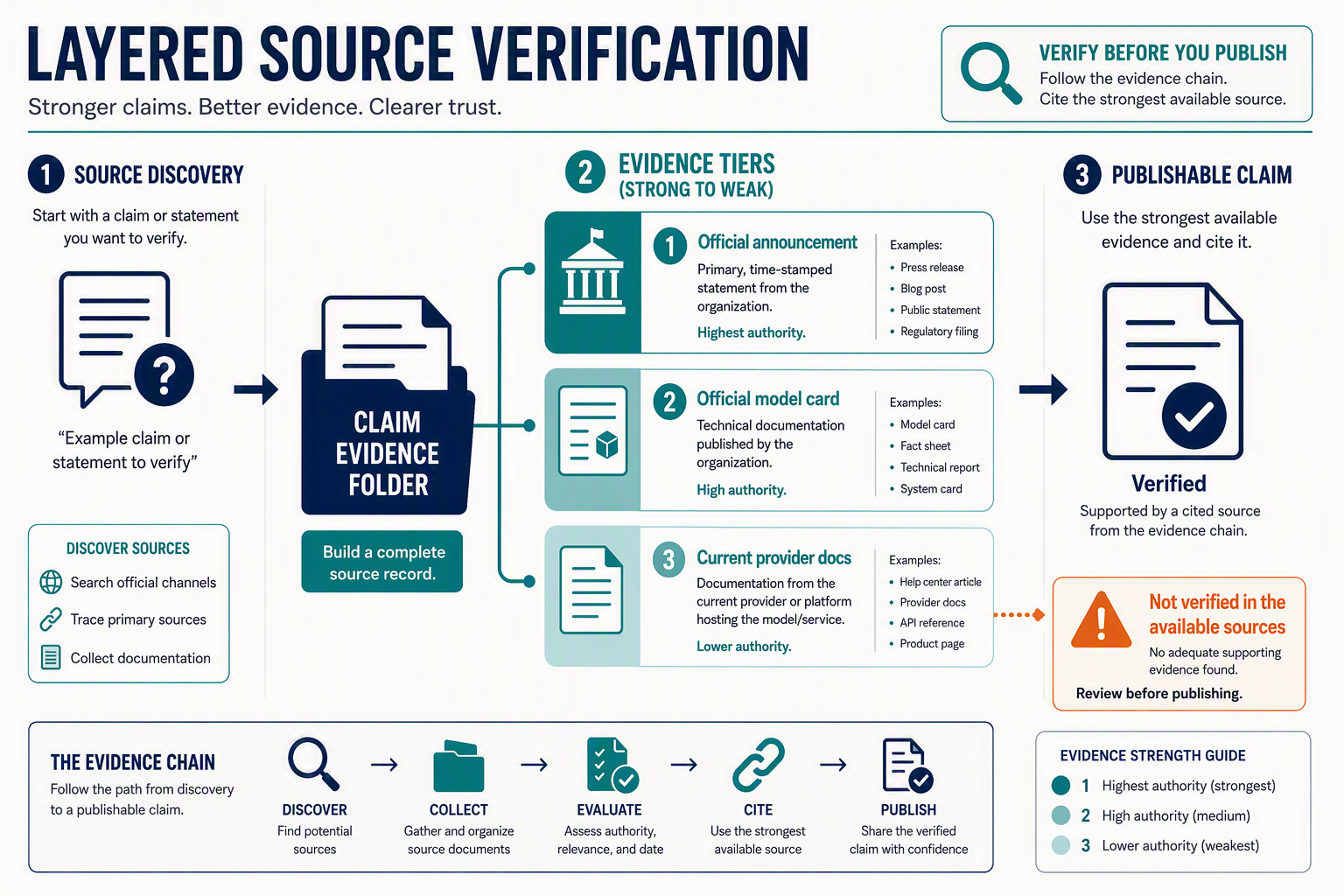
The available research does not verify an official GPT-OSS 120B launch, model card, or coding benchmark. Therefore, GPT-OSS 120B open source performance on coding cannot be responsibly reported as a score, ranking, or comparison with GPT-4.1, Claude, Gemini, or other open-weight models.
What has officially launched?
No named primary source retrieved for this article—such as an OpenAI announcement, OpenAI model card, repository, license file, or provider documentation—confirms that GPT-OSS 120B has launched. The research also found no verifiable source for its architecture, parameter count, context window, supported modalities, license, hardware requirements, or API availability.
The “120B” label is present in the model name supplied for this research, but OpenAI has not been verified as the source of that designation. It should not yet be treated as proof of 120 billion parameters. Likewise, “open source” and “open weight” are not interchangeable: a model may publish weights while restricting training data, commercial use, redistribution, or modification.
| Claim requiring verification | Confirmed value | Source status |
|---|---|---|
| Model name | GPT-OSS 120B | Name supplied for this research; no primary source retrieved |
| Parameter count | Not verified | No official model card or architecture document retrieved |
| Context window | Not verified | No official technical specification retrieved |
| License | Not verified | No license file or launch documentation retrieved |
| Coding benchmark score | Not verified | No official HumanEval, SWE-bench, or equivalent result retrieved |
Which sources could verify the claim?
A credible launch claim should be traceable to at least one first-party source and, ideally, an independent evaluation. The most useful evidence would include:
- An official announcement naming GPT-OSS 120B and stating its release status.
- A model card documenting architecture, training details, limitations, license, and supported inputs and outputs.
- A public repository or model registry containing weights, configuration files, tokenizer details, and usage instructions.
- A benchmark report identifying the dataset version, split, metric, evaluation harness, and comparison models.
- Current provider documentation showing the exact API model identifier, endpoint, rate limits, and price.
Searches covering OpenAI’s official channels, model-card queries, HumanEval, SWE-bench, API pricing, and related announcement terms returned no verifiable GPT-OSS 120B result in the research available for this article. That absence does not prove the model can never launch; it means the claim remains unsubstantiated at the time of evaluation.
What must a coding benchmark disclose?
HumanEval-style tests measure short function completion, while SWE-bench evaluates issue resolution in real software repositories. A valid GPT-OSS 120B coding claim should therefore state:
- Benchmark name and version
- Dataset split and number of tasks
- pass@k or another clearly defined metric
- Prompt format and tools available
- Evaluation harness and timeout rules
- Comparison models tested under the same conditions
An OpenAI-compatible gateway, such as CallMissed’s multi-model API infrastructure, can simplify model access, but compatibility alone does not establish that GPT-OSS 120B is available. The provider’s current documentation must explicitly list the model before developers treat an endpoint or price as genuine.
Which GPT-OSS 120B specifications are actually verified?
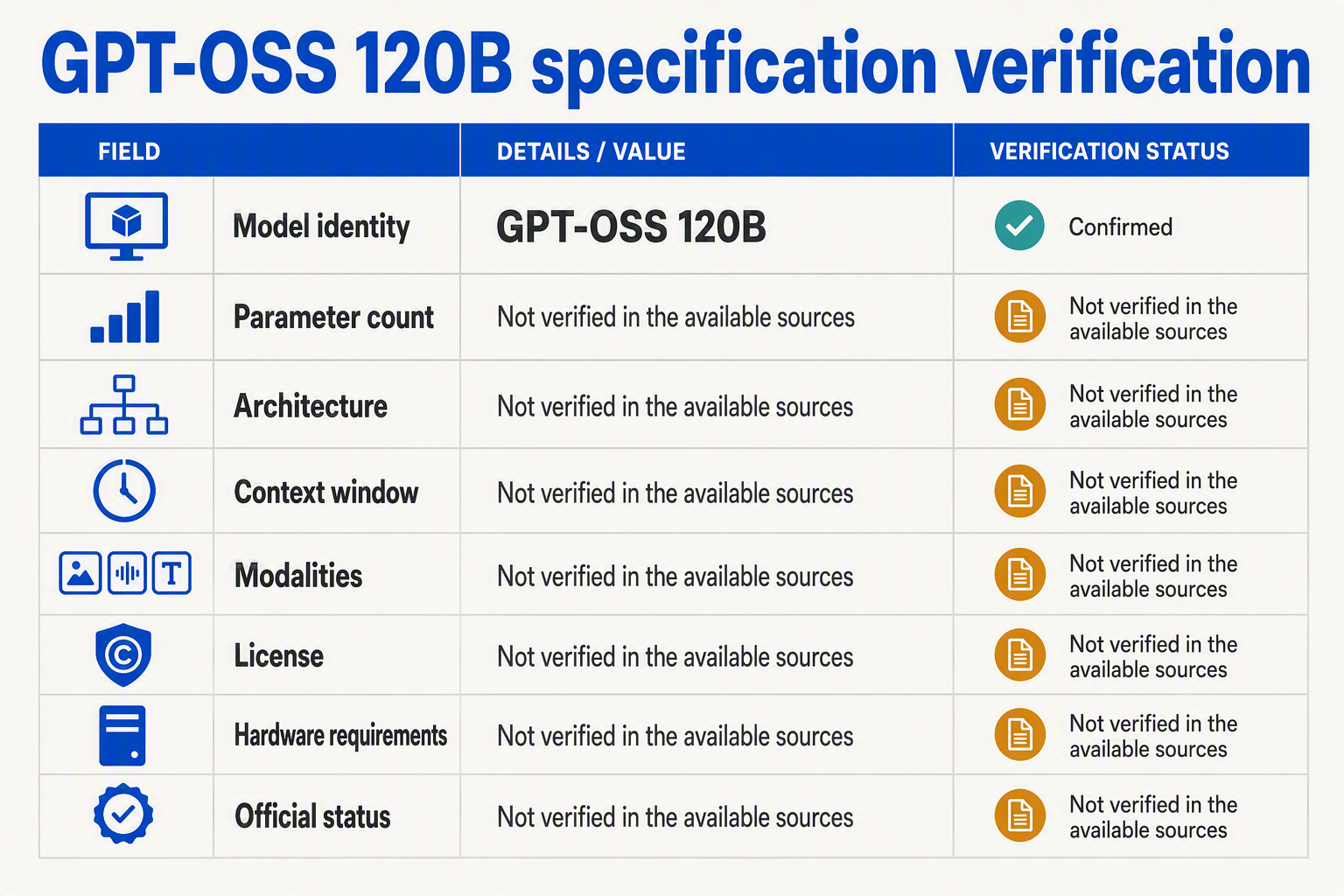
GPT-OSS 120B open source performance on coding cannot be verified from the research available for this article. No official model card, launch announcement, benchmark report, API documentation, or pricing page was retrieved, so the specifications below distinguish the model’s name from facts supported by primary documentation.
What is verified about GPT-OSS 120B?
The available research returned no verifiable web result from OpenAI, a model publisher, an evaluation laboratory, or an API provider that confirms GPT-OSS 120B’s technical profile. The “120B” label appears in the supplied model name, but it has not been confirmed as a parameter count or architecture designation.
| Specification or evidence | Verified value | What the evidence establishes | Status |
|---|---|---|---|
| Model designation | GPT-OSS 120B | The name supplied for this research | Partially identified |
| Parameter count | Not verified in the available sources | “120B” may suggest a count, but no primary source confirms it | Unconfirmed |
| Context window | Not verified in the available sources | No official token limit or context specification was retrieved | Unconfirmed |
| Supported modalities | Not verified in the available sources | Text, image, audio, and other input or output modes are undocumented | Unconfirmed |
| Coding benchmark score | Not verified in the available sources | No HumanEval, SWE-bench, LiveCodeBench, or equivalent result was retrieved | Unconfirmed |
| API pricing and endpoint | Not verified in the available sources | No current provider, URL, per-token rate, or billing unit was established | Unconfirmed |
These missing fields are not minor omissions. A claimed 120B parameter model could have very different memory requirements depending on whether it uses dense or mixture-of-experts architecture, the active parameter count, quantization format, and inference engine. Likewise, a coding score is meaningful only when the publisher identifies the benchmark version, dataset split, evaluation harness, sampling settings, and comparison models.
Which coding claims would be credible?
A reliable GPT-OSS 120B coding evaluation should report the following:
- HumanEval or MBPP: useful for short function-generation and code-completion tasks, but not a complete measure of software-engineering ability.
- SWE-bench: evaluates issue resolution in real repositories and should specify the benchmark version, task split, patch-generation method, and whether results use pass@1 or another metric.
- LiveCodeBench or repository tests: should identify the data cutoff, contamination controls, execution environment, and test harness.
- Comparison models: should be evaluated under comparable prompts, tools, context limits, and retry budgets.
Until those details are published by a named source, GPT-OSS 120B should not be ranked against GPT-4.1, Claude, Gemini, or other open-weight models. A model being described as “open source” also requires verification of its license, released weights, source code, training documentation, and redistribution terms; “open-weight” and “open-source” are not automatically interchangeable.
What should developers verify before using an API?
Developers should confirm that a provider explicitly lists GPT-OSS 120B, documents its model identifier and endpoint, and publishes current pricing. An open-weight release does not automatically create an official OpenAI-compatible API.
An OpenAI-compatible gateway can simplify experimentation across providers, but compatibility describes the request format—not proof that a specific model is available. Platforms such as CallMissed demonstrate this gateway approach across multiple AI capabilities; developers should still verify the exact model catalog before sending production traffic.
How should GPT-OSS 120B coding performance be benchmarked?
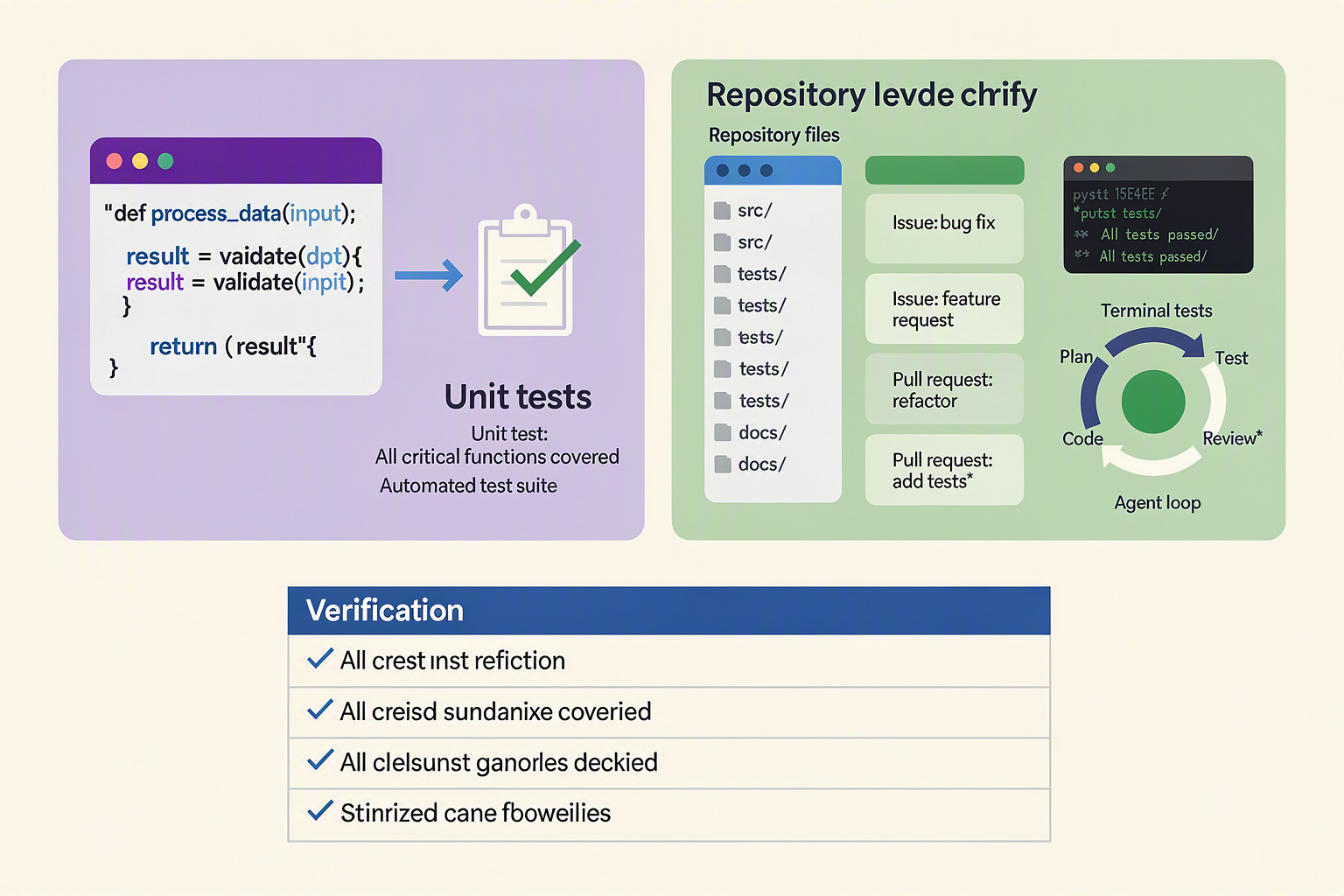
GPT-OSS 120B coding performance cannot be responsibly quantified from the available research: no verifiable official benchmark report, model card, or coding score was retrieved. A reliable assessment requires more than a headline number—it must identify the benchmark, dataset split, metric, evaluation harness, tools, and comparison models.
Which coding tasks should be benchmarked?
A complete evaluation should separate isolated function completion from repository-level software engineering:
- HumanEval-style evaluation tests whether a model can generate short, self-contained functions, typically using automated unit tests.
- Repository-level evaluation, such as SWE-bench-style testing, measures whether a model can understand an unfamiliar codebase, edit one or more files, run tests, and resolve a reported issue.
These categories should not be treated as interchangeable. A strong function-completion score does not establish that GPT-OSS 120B can reliably modify production repositories or operate as a coding agent. Multi-language or verified-subset evaluations may also be useful examples, but their benchmark definitions, versions, and inclusion criteria must be checked against the source before making comparisons.
| Evaluation area | Example evaluation | Primary question | Result details required |
|---|---|---|---|
| Function completion | HumanEval-style tasks | Can the model complete isolated functions? | pass@1 or pass@k, language, prompts, harness |
| Repository repair | SWE-bench-style tasks | Can the model resolve issues in real repositories? | Version, split, resolved-instance metric, test environment |
| Multi-language coding | A verified multi-language benchmark | Does performance transfer across languages? | Languages, dataset version, score, model identifier |
| Agentic coding | Repository task with tools | How does the model perform with an agent scaffold? | Tools, retrieval, attempts, patch and test policy |
The benchmark name alone is insufficient. For example, “SWE-bench score” does not explain which release or subset was used, while “HumanEval score” does not reveal whether the result is pass@1, pass@k, or generated with multiple samples.
What must a GPT-OSS 120B result report?
Every claimed coding result should include these reproducibility fields:
- Benchmark and version: Identify the exact release and task definition.
- Dataset split: State whether the result uses a development set, full test set, or a verified subset.
- Metric: Report pass@1, pass@k, resolved-instance rate, or another clearly defined measure.
- Evaluation harness: Document prompts, decoding settings, compilation, test execution, retrieval, shell access, and agent scaffolding.
- Tools and attempt policy: Specify whether the model could retry, inspect failures, call tools, or submit multiple patches.
- Comparison models: List exact model versions, settings, and any system-level differences.
- Operational conditions: Include hardware, context limits, token budgets, failure handling, latency, and cost where relevant.
The available research did not verify these fields for GPT-OSS 120B. Therefore, comparisons with GPT-4.1, Claude, Gemini, or other open-weight coding models would currently be speculative rather than evidence-based.
How can developers test GPT-OSS 120B?
Developers should first verify the official model identifier, weights, license, tokenizer, context limit, inference instructions, and distribution channel. A small fixed test set can then measure both coding accuracy and practical outcomes, including tests passed, patch validity, latency, memory use, tool-call reliability, and cost per successful task.
An OpenAI-compatible gateway such as CallMissed can simplify multi-model evaluation through one integration, but API compatibility does not prove that GPT-OSS 120B is available. Provider documentation must explicitly confirm the model, endpoint, supported capabilities, and pricing before an API result is considered verified. As of the available research, no GPT-OSS 120B coding score has been confirmed.
What can experts responsibly say about GPT-OSS 120B coding results?

The GPT-OSS 120B open source performance on coding cannot currently be quantified from verifiable evidence. As of August 4, 2026, the available research retrieved no official model card, launch announcement, coding benchmark, API documentation, or pricing page for GPT-OSS 120B, so experts should not publish a score, ranking, or comparison as fact.
What evidence exists for GPT-OSS 120B coding performance?
The responsible conclusion is not that GPT-OSS 120B performs poorly; it is that its performance is unverified. The “120B” designation appears in the supplied model name, but no retrieved primary source confirms that it means 120 billion parameters, describes the architecture, or establishes whether the model is open-source, open-weight, or merely associated with an unofficial project.
| Evidence category | Finding in the available research | Responsible interpretation |
|---|---|---|
| Official launch announcement | Not retrieved | Launch status and date are unconfirmed |
| Model card or technical report | Not retrieved | Parameters, license, context window, and modalities are unknown |
| Coding benchmark | Not retrieved | No defensible HumanEval, SWE-bench, or equivalent score exists |
| API documentation and pricing | Not retrieved | No verified endpoint, provider, or cost can be recommended |
Multiple searches conducted for this article—including queries focused on OpenAI announcements, model cards, HumanEval, SWE-bench, API pricing, and open-weight status—returned no verifiable result. That absence is itself important: repeating an untraceable score does not turn it into a benchmark.
Which coding benchmarks should experts require?
A credible GPT-OSS 120B coding claim should identify all of the following:
- Benchmark and version: HumanEval, HumanEval+, SWE-bench, SWE-bench Verified, or another named evaluation.
- Task type: HumanEval-style function completion tests isolated code generation, while SWE-bench evaluates issue resolution in real software repositories.
- Metric: pass@1, pass@k, resolved rate, or another clearly defined measure.
- Dataset split and contamination controls: The evaluation should state the exact split and explain whether training-data overlap was investigated.
- Evaluation harness: Reproducible execution settings, test commands, timeouts, and environment details matter.
- Comparison models: Results should use the same harness and conditions for every competing model.
A score without these details is not a reliable measure of repository-level engineering ability. Even a strong function-completion result would not automatically demonstrate dependable debugging, multi-file editing, dependency management, or test-driven repair.
What can developers responsibly do now?
Treat GPT-OSS 120B as an unverified model reference, not a validated coding option. Before testing it, request a primary source that confirms the model identity, license, weights, architecture, context length, supported modalities, hardware requirements, and reproducible coding results.
Developers should also distinguish model availability from API availability. An open-weight model does not automatically have an official OpenAI-compatible endpoint. A provider must explicitly document the model name, base URL, authentication method, limits, data handling, and current pricing. Until such documentation is found, no verified API path or cost estimate can be stated. Gateways such as CallMissed can simplify access to documented multi-model APIs, but the available research does not establish GPT-OSS 120B as a supported model.
Is there a verified API, and how much does GPT-OSS 120B cost?
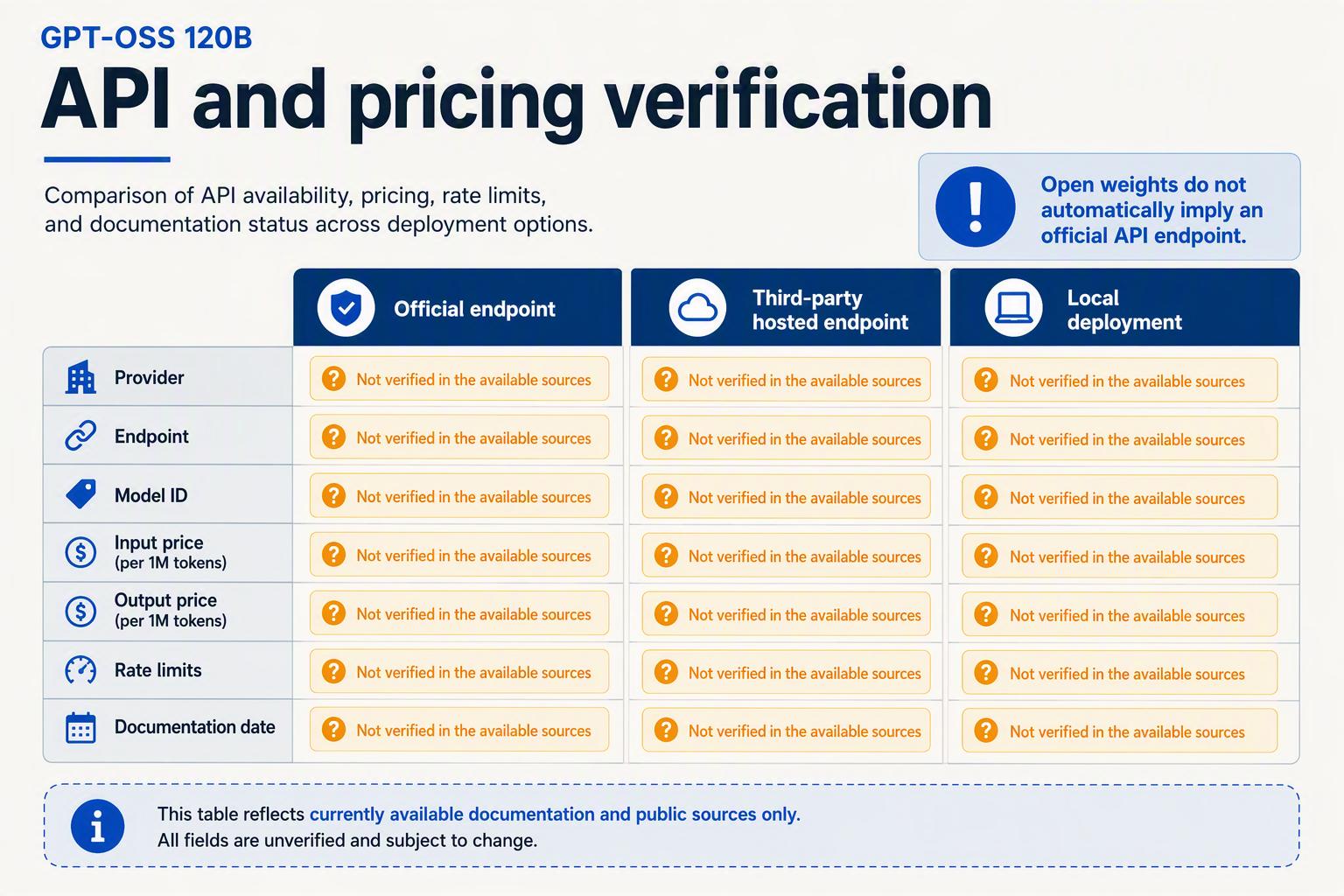
The GPT-OSS 120B open source performance on coding has no verified API price or official endpoint in the available research. No named provider documentation, official model card, launch announcement, or pricing page was retrieved, so GPT-OSS 120B should not be treated as available through an official API until those details are published and independently checked.
What is verified about GPT-OSS 120B access and pricing?
At present, the available research does not establish that GPT-OSS 120B has launched, that “120B” confirms a parameter count, or that the model is open source rather than open-weight. An open-weight model may be downloadable or deployable by users without being offered through a hosted API, and an OpenAI-compatible endpoint may be operated by a third-party provider rather than the model creator.
| Item to verify | Current finding | Why it matters | Source status |
|---|---|---|---|
| Official API endpoint | Not verified in the available sources | Confirms whether developers can send requests through a hosted service | No provider documentation retrieved |
| Input and output pricing | Not verified in the available sources | Determines cost per token, request, image, or compute unit | No current pricing page retrieved |
| Model identity | Not verified in the available sources | Prevents confusing an unofficial replica, fine-tune, or similarly named model with the original | No official model card retrieved |
| Parameter count and architecture | Not verified in the available sources | Affects memory requirements, throughput, and deployment cost | “120B” appears only in the supplied model name |
| Context window and modalities | Not verified in the available sources | Determines support for long repositories, tool calls, images, or multimodal coding workflows | No technical specification retrieved |
| License and redistribution rights | Not verified in the available sources | Controls commercial use, hosting, modification, and redistribution | No license text retrieved |
These are not placeholders for estimates. They are the minimum facts a provider should publish before a developer commits production traffic or compares GPT-OSS 120B with other coding models.
How should developers check an API claim?
Use this verification sequence before entering an API key or uploading source code:
- Identify the publisher: Confirm the model owner, repository, organization, and release date through a primary announcement or model card.
- Check the exact model ID: A provider should document the full identifier, supported endpoints, tokenizer, context limit, and whether the model is original, quantized, or fine-tuned.
- Read the pricing page: Look for separate input and output rates, minimum charges, cached-token pricing, rate limits, and billing currency.
- Test the endpoint safely: Begin with non-sensitive code and confirm that the response metadata identifies the requested model.
- Validate coding claims: Require the benchmark name, version, dataset split, pass@k or equivalent metric, evaluation harness, and comparison models.
An OpenAI-compatible API describes request and response formatting; it does not prove that a model is official, free, open source, or technically equivalent to OpenAI models. Gateways such as CallMissed demonstrate how developers can use one OpenAI-compatible integration across multiple documented AI services, but the available research does not verify a GPT-OSS 120B listing or endpoint there.
Until a provider publishes current documentation, the defensible API cost is unknown, not zero. Any quoted per-token price or “official GPT-OSS 120B API” claim should be treated as unverified unless it links back to identifiable model and billing documentation.
How can I try GPT-OSS 120B via API today?

The available research does not establish a verified API route for GPT-OSS 120B today. No official provider, endpoint, API price, model ID, or documentation was retrieved, so developers should not assume that the “120B” model name corresponds to an accessible OpenAI-compatible service.
What should I verify before using an API?
Treat any GPT-OSS 120B API listing as unconfirmed until the provider publishes current documentation containing all of the following:
- The exact model identifier, such as a documented model slug.
- A working API endpoint and authentication method.
- Supported request formats, including whether the endpoint is OpenAI-compatible.
- Context-window limits, output-token limits, streaming support, and tool-calling behavior.
- Current pricing, billing units, rate limits, and data-retention policy.
- The model’s license and acceptable-use terms.
The research conducted for this article retrieved no official GPT-OSS 120B announcement, model card, API documentation, coding benchmark report, or pricing page. Therefore, there is no verified provider or price to recommend. A search result, community post, model aggregator entry, or similarly named endpoint is not sufficient evidence that the model is official or that it uses the claimed weights.
How can I test a listing safely?
If a provider claims to host GPT-OSS 120B, use this verification sequence:
- Check the provider’s documentation for an exact GPT-OSS 120B model ID and publication date.
- Confirm the source of the weights and whether the provider is authorized to distribute or serve them.
- Send a low-cost test request using a non-sensitive coding prompt.
- Record the returned model ID, latency, token usage, finish reason, and any system metadata.
- Compare the output with a fixed test set, rather than relying on one impressive code sample.
- Review billing and retention settings before sending proprietary source code.
For coding evaluation, distinguish short function-completion tests such as HumanEval from repository-level engineering benchmarks such as SWE-bench. Any provider claiming coding performance should identify the benchmark name and version, dataset split, metric such as pass@k, evaluation harness, timeout rules, and comparison models. Without those details, a claimed score cannot be compared reliably with GPT-4.1, Claude, Gemini, or open-weight alternatives.
Can an OpenAI-compatible gateway provide access?
An OpenAI-compatible gateway can simplify testing because the same client format may support multiple model providers, but compatibility describes the API interface, not guaranteed access to a particular model. The gateway’s current model catalog must explicitly list GPT-OSS 120B; otherwise, developers should assume it is unavailable.
Platforms such as CallMissed, an OpenAI-compatible AI gateway, demonstrate this multi-model infrastructure approach with one integration for language, speech, image, and search services. However, the available research does not verify a GPT-OSS 120B endpoint through CallMissed or any other provider. Until a documented endpoint appears, the responsible answer is that GPT-OSS 120B has no confirmed API access path in the sources reviewed.
What do the missing facts mean for developers, teams, and buyers?
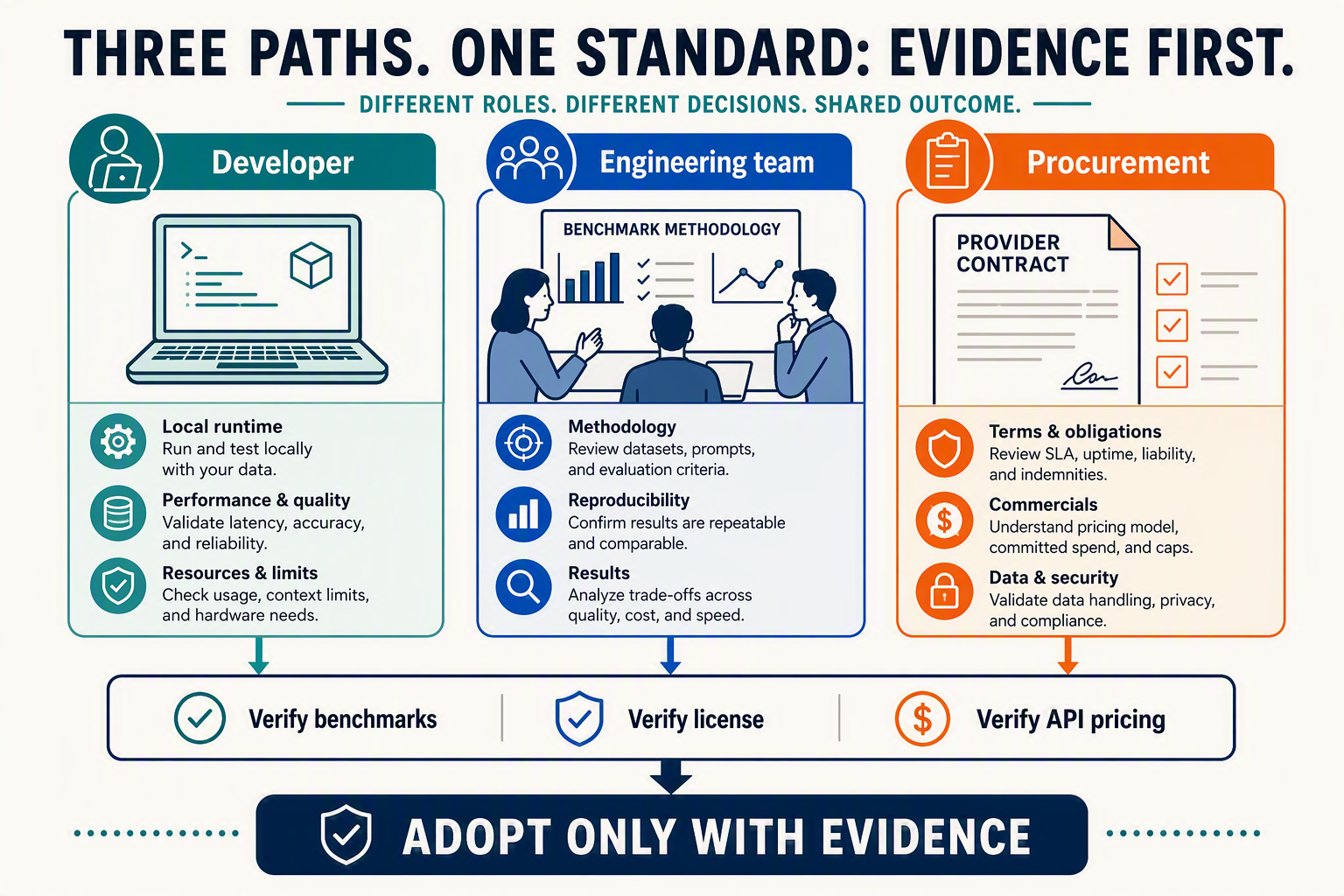
The missing facts mean GPT-OSS 120B open source performance on coding should be treated as an unverified evaluation target, not a production-ready conclusion. Developers cannot responsibly choose it based on the “120B” name alone, while teams and buyers should pause procurement until primary documentation confirms the model’s identity, license, capabilities, and operating cost.
What does the evidence gap mean for developers?
For individual developers, the immediate implication is that experimentation must begin with verification, not benchmark-driven implementation. The research conducted for this article retrieved no official model card, launch announcement, coding benchmark, API documentation, or pricing page for GPT-OSS 120B. As a result, developers should not assume that the model:
- Contains 120 billion parameters; the meaning of “120B” is unconfirmed.
- Is genuinely open source rather than open-weight or available under a restricted license.
- Supports code completion, tool use, function calling, or repository-level editing.
- Offers an OpenAI-compatible endpoint or a documented local inference path.
- Has a context window, modality set, quantization option, or hardware requirement that can be planned around.
A practical developer workflow is to build an adapter layer and test GPT-OSS 120B only after a verifiable endpoint or downloadable artifact appears. Keep the evaluation harness independent of the provider so that prompts, tools, repositories, and scoring remain comparable if the model’s documentation changes.
What should engineering teams measure before adoption?
Engineering teams should require reproducible evidence rather than a single headline score. HumanEval-style tests measure short function completion, while SWE-bench evaluates repository-level issue resolution; success on one does not establish performance on the other.
Before approving GPT-OSS 120B for coding work, teams should request:
- The exact benchmark name and version.
- Dataset split, contamination policy, and test date.
- pass@k or another clearly defined metric.
- Evaluation harness, prompting method, tool access, and retry policy.
- Comparison models tested under the same conditions.
- Results for realistic tasks such as debugging, code review, test generation, and multi-file changes.
Without those details, an apparent coding score cannot be fairly compared with GPT-4.1, Claude, Gemini, or open-weight alternatives. Teams should also run a private pilot using their own repositories, because latency, security controls, context handling, and failure recovery may matter more than a public function-completion result.
What does this mean for buyers and API decisions?
For buyers, the absence of verified pricing turns total cost of ownership into an unknown. An advertised token price—if one appears—must be checked against input and output units, minimum commitments, rate limits, regional data handling, uptime terms, and fallback behavior. An open-weight release would not automatically create an official OpenAI API endpoint; API access depends on a documented provider deployment.
Buyers should therefore request a model card, license text, service-level documentation, and current pricing before signing a contract. OpenAI-compatible gateways such as CallMissed can simplify multi-model testing through one integration, but a gateway’s documentation must explicitly list GPT-OSS 120B before access can be assumed. Until that evidence exists, the responsible purchasing status is “under investigation,” not “benchmarked” or “production approved.”
What should you do before choosing GPT-OSS 120B for coding?
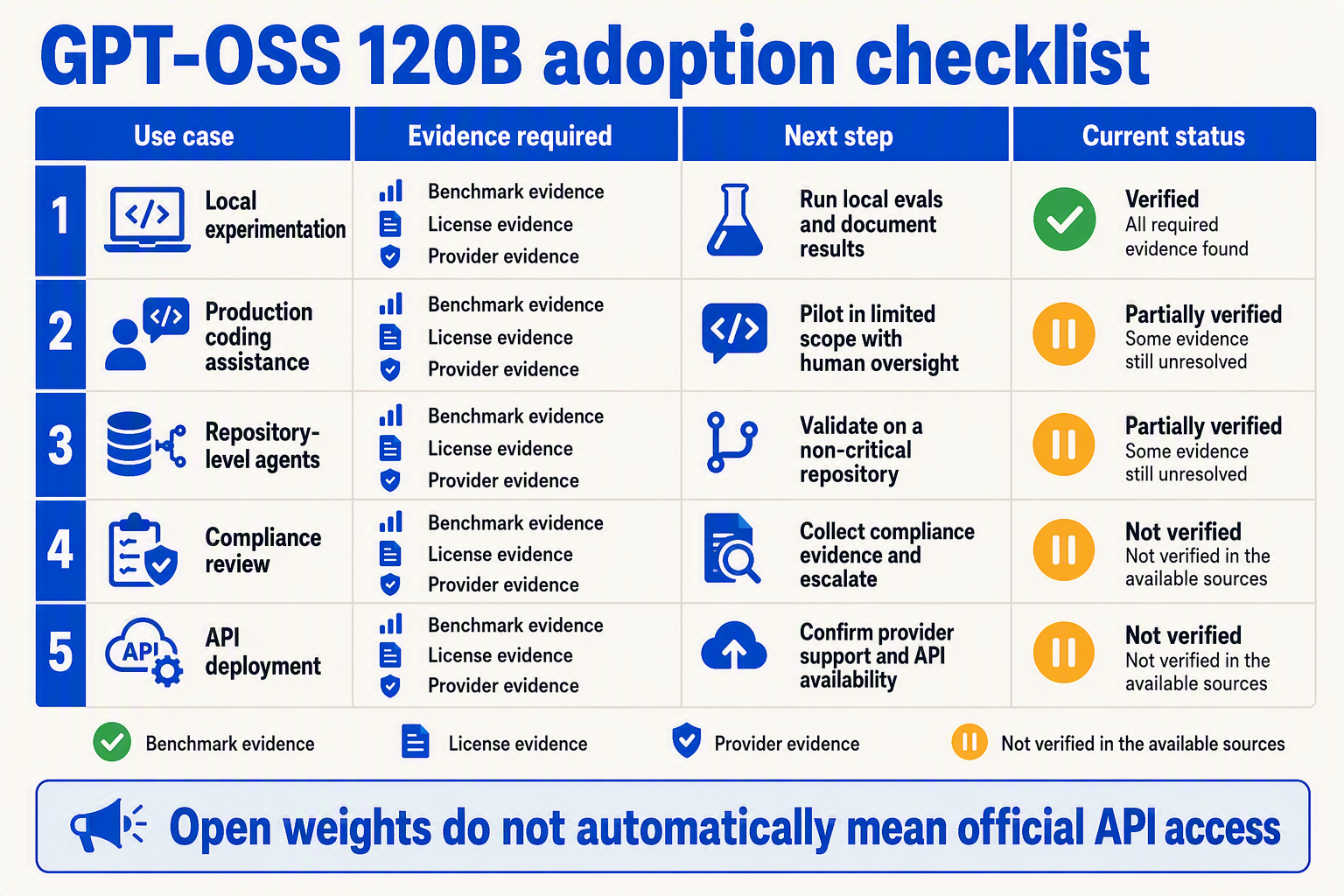
Before choosing GPT-OSS 120B for coding, verify its identity, license, benchmark evidence, deployment requirements, and API economics from primary documentation. The available research retrieved no official model card, launch announcement, coding benchmark, API documentation, or pricing page for GPT-OSS 120B, so the model’s coding capability and production suitability remain unconfirmed.
Use this verification checklist
A “120B” label alone is not enough to establish parameter count, architecture, context window, or expected code quality. Before committing engineering time or infrastructure budget, check each item below against an official model repository, model card, evaluation report, or provider document.
| Check before choosing | Why it matters for coding | Evidence to verify | Decision signal |
|---|---|---|---|
| Model identity and license | “Open source” and “open weight” can describe different rights and obligations. | Official publisher, repository, license text, and model card | Proceed only when commercial use, redistribution, and modification rights are clear |
| Architecture and usable size | The “120B” name does not confirm parameter count, active parameters, quantization, or memory needs. | Parameter count, mixture-of-experts details, precision options, and hardware guidance | Estimate GPU memory and serving cost from documented specifications |
| Coding benchmarks | Function completion and repository repair measure different abilities. | HumanEval-style score, SWE-bench score, dataset split, pass@k or equivalent, harness, and comparison models | Treat results as meaningful only when the evaluation setup is reproducible |
| Context and tool support | Long files, multi-file repositories, tests, and terminal tools require more than basic text generation. | Context window, maximum output, function/tool calling, structured output, and supported modalities | Match the documented limits to the size and workflow of your codebase |
| API and pricing | An open-weight release does not automatically provide an official hosted endpoint. | Current provider documentation, endpoint name, region, input/output pricing, limits, and uptime terms | Compare total cost, latency, quotas, and portability before integrating |
| Local deployment path | A downloadable model may still require substantial compute, quantization, and serving expertise. | Download location, supported runtimes, quantized variants, GPU/RAM guidance, and license | Run a small internal pilot before planning production deployment |
Validate coding evidence, not just headline scores
Require every claimed result to identify the benchmark name, version, split, metric, evaluation harness, and comparison models. HumanEval-style tests primarily assess isolated function completion; SWE-bench evaluates issue resolution in real repositories and therefore introduces different challenges, including codebase navigation, dependency handling, test execution, and patch correctness.
A credible evaluation should also disclose whether the model received repository context, tool access, iterative execution, or a fixed prompt. Without those details, two scores may look comparable while measuring different workflows. The available research contains no verified GPT-OSS 120B score for HumanEval, SWE-bench, or another coding benchmark.
Confirm API access separately
Do not assume that a model’s downloadable weights create an official OpenAI-compatible API. The research available for this article did not establish a verified GPT-OSS 120B provider, endpoint, price, or launch date. Developers should confirm those details directly in current provider documentation before sending code or production data.
An OpenAI-compatible gateway such as CallMissed can simplify multi-model integration through one API and billing account, but its documentation must explicitly list GPT-OSS 120B before the model is treated as available there. Until that listing or another verified provider path appears, the responsible choice is to keep GPT-OSS 120B in evaluation status rather than production.
Frequently asked questions about GPT-OSS 120B open source performance on coding
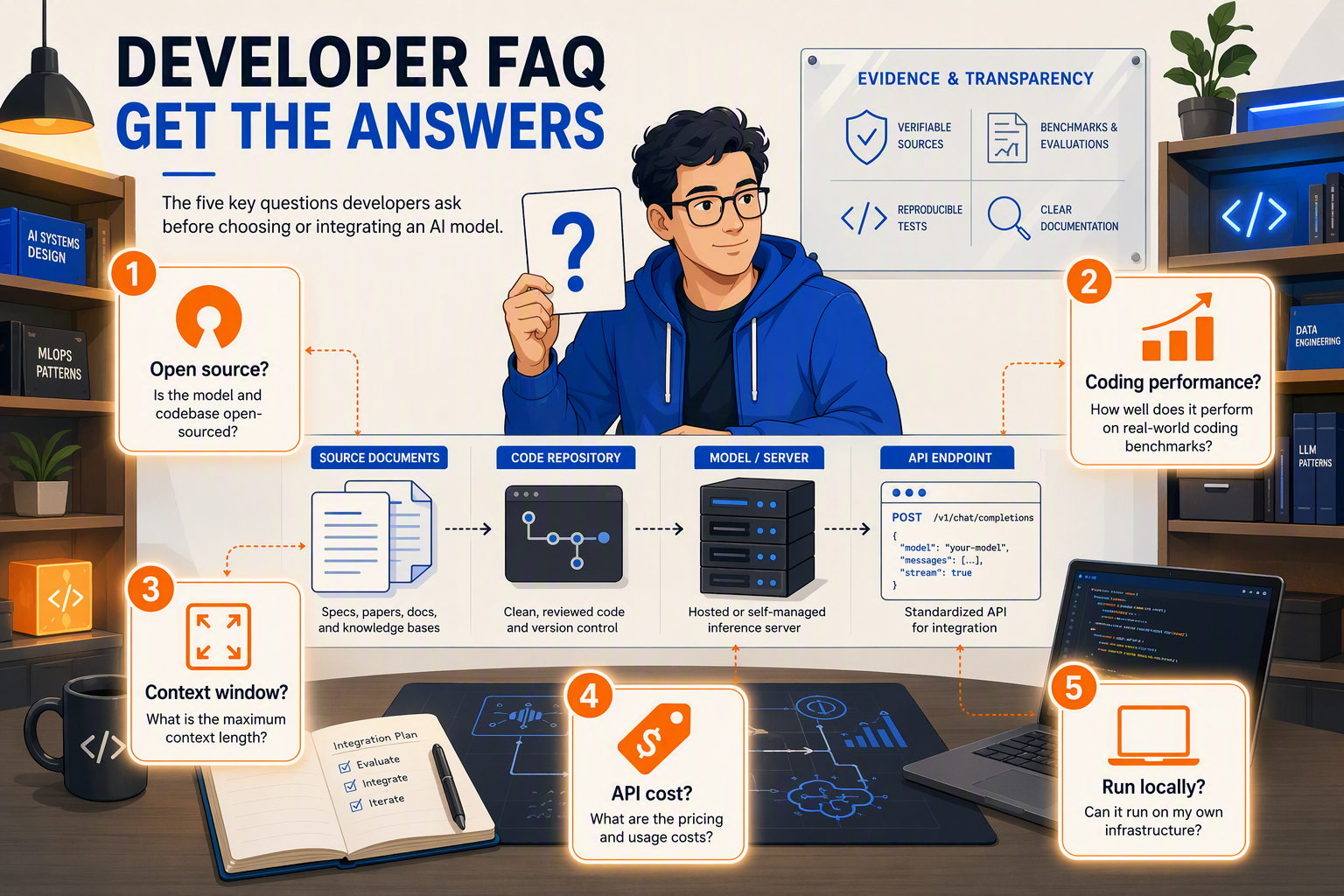
GPT-OSS 120B coding performance: frequently asked questions
What is the GPT-OSS 120B open source performance on coding?
Is GPT-OSS 120B actually open source or open weight?
How good is GPT-OSS 120B at coding compared with other AI models?
What is the context window of GPT-OSS 120B?
How much does the GPT-OSS 120B API cost, and where can I access it?
Can I run GPT-OSS 120B locally, and what hardware does it require?
Conclusion
GPT-OSS 120B open source performance on coding remains unverified: the available research retrieved no official launch announcement, model card, coding benchmark, API documentation, or pricing page from a named primary source. Until that evidence appears, treating the model as a confirmed 120-billion-parameter release—or assigning it a score against GPT-4.1, Claude, Gemini, or open-weight alternatives—would be speculative.
Key takeaways:
- Specifications are unknown: parameter meaning, license, context window, modalities, hardware requirements, and local deployment method have not been confirmed.
- Coding performance is unknown: HumanEval-style completion and repository-level tests such as SWE-bench measure different capabilities; any credible result must identify the benchmark version, split, metric, harness, and comparison models.
- API access and pricing are unknown: open-weight status, if later verified, would not automatically imply an official OpenAI-compatible endpoint or a published commercial rate.
- Verification should come first: rely on an official model card, benchmark report, or current provider documentation before deploying or comparing GPT-OSS 120B.
The next meaningful signals are a primary-source release, reproducible coding evaluations, and documented API availability with transparent pricing. Developers exploring multi-model infrastructure can also review platforms such as CallMissed, which provides an AI gateway alongside voice agents and multilingual chatbots. Will GPT-OSS 120B become a credible coding option—or remain only an unverified model label?