
DeepSeek V4 Pro benchmarks and pricing: What’s verified and how to check API access


Get a verification-first guide to DeepSeek V4 Pro benchmarks and pricing, launch status, specifications, and safe ways to check API access.
DeepSeek V4 Pro benchmarks and pricing: What’s verified and how to check API access
What if the most important fact about DeepSeek V4 Pro benchmarks and pricing is that there are no verified facts to report yet? As of August 3, 2026, the supplied research found no public, citable evidence confirming a DeepSeek V4 Pro launch, official context window, supported modalities, benchmark results, API pricing, or API availability. That means any precise figure circulating without a named official source should be treated as unverified—not as a confirmed specification.
This matters because model names, benchmark scores, and token prices are increasingly used to drive purchasing and engineering decisions. A fabricated context-window figure can lead teams to design the wrong retrieval architecture; an unsupported API cost can distort a production budget; and a benchmark copied from an older DeepSeek model can create an invalid comparison. The absence of search results is not proof that DeepSeek V4 Pro does not exist, but it does mean this article cannot responsibly present rumored release details or leaked figures as established facts.
This verification-first guide separates what is known from what is unavailable. It will examine whether DeepSeek V4 Pro has officially launched, whether a context window or modality list has been published, and whether any benchmark results or API cost are attributable to the model itself. A clear status table will mark each specification as “not verified” where no accessible, named source supports it; that label is not a zero, estimate, or prediction.
The practical section explains how to check DeepSeek’s official model documentation and developer console today. Readers should confirm that a model identifier is listed, inspect the current input and output rates, review request limits and supported modalities, and run a small test only if the official service exposes access. If those details are missing from official documentation, third-party claims should not be treated as confirmation.
For additional context, this release-status analysis is intentionally distinct from the existing DeepSeek V4 Pro benchmarks and pricing: specs, API costs, and how to try it article, which covers the broader search topic. It also avoids treating comparisons such as Claude Opus vs. DeepSeek V4 Pro as evidence of a confirmed release. Platforms such as CallMissed reflect the wider movement toward consolidated AI access, but model availability and pricing still need to be verified at the provider level.
Did DeepSeek V4 Pro launch, and what are its verified benchmarks and pricing?
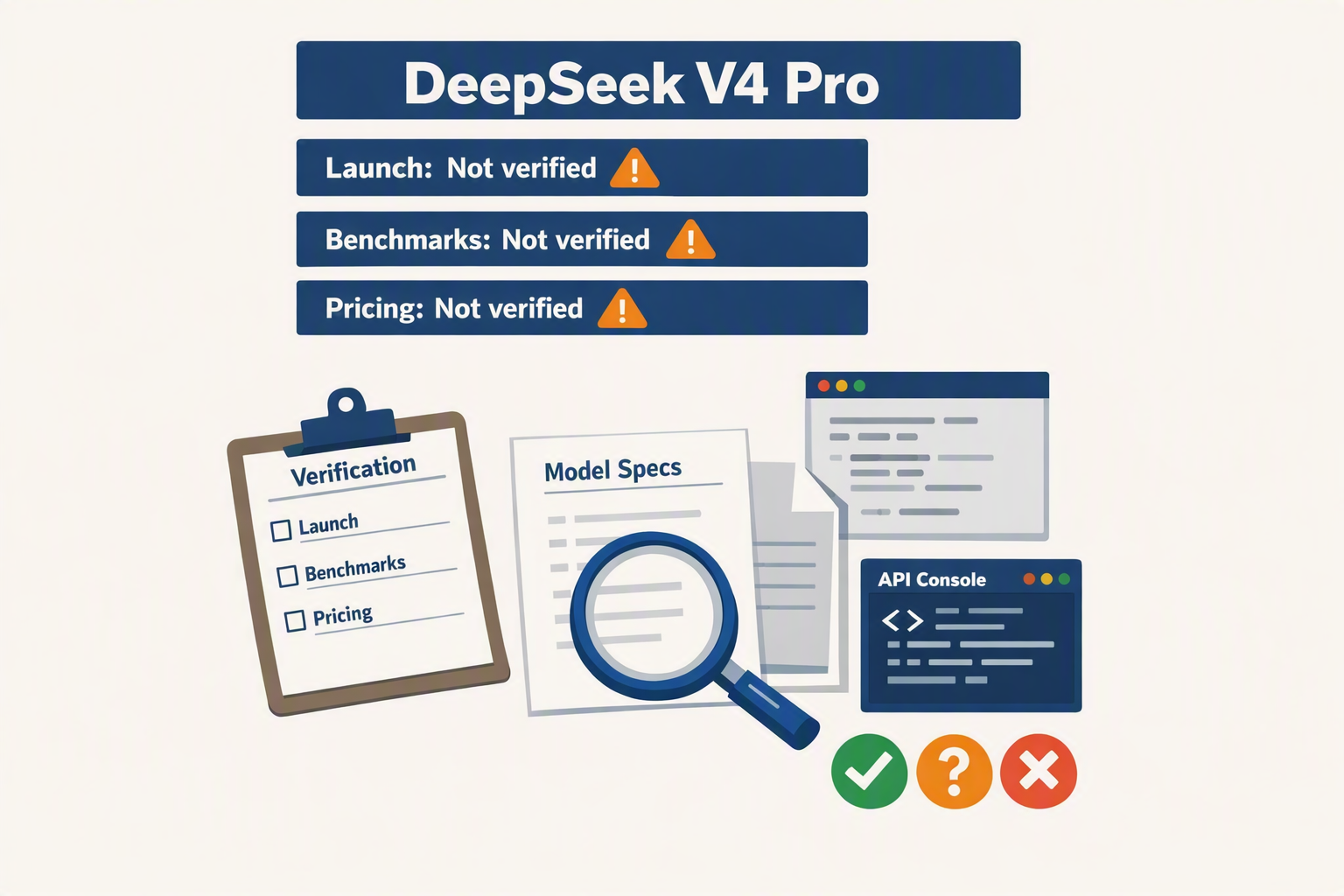
The DeepSeek V4 Pro benchmarks and pricing are not publicly verifiable from the supplied research as of August 3, 2026. No official DeepSeek announcement, model documentation, benchmark report, price list, or API listing was identified confirming that DeepSeek V4 Pro has launched, so its specifications and availability should not be presented as facts.
Did DeepSeek V4 Pro launch?
The supplied research does not confirm an official DeepSeek V4 Pro launch. Multiple searches for DeepSeek V4 Pro release announcements, model documentation, API availability, context-window details, modalities, pricing, benchmark results, and 2026 coverage returned no citable public result.
This finding does not prove that DeepSeek V4 Pro does not exist. It means only that its public status remains unverified in this research pass. Social-media posts, unofficial leaderboards, third-party model lists, leaked claims, or similarly named DeepSeek releases should not be treated as launch confirmation.
What DeepSeek V4 Pro specifications and prices are verified?
No named official DeepSeek source identified in the supplied research confirms a context window, supported modalities, benchmark score, release date, API identifier, or token price for DeepSeek V4 Pro.
| Item | Verification status | Evidence required |
|---|---|---|
| Official launch | Not verified | A named DeepSeek announcement or release note |
| Context window | Not verified | Current official model documentation |
| Modalities | Not verified | Documentation confirming text, image, audio, or video support |
| API pricing | Not verified | Official input and output rates |
| Benchmark results | Not verified | Reproducible scores and evaluation methodology |
Here, “not verified” does not mean zero, unavailable forever, or an estimate. It means that the supplied research did not identify accessible evidence strong enough to cite. Accordingly, this article does not assign a context length, claim multimodal support, quote an API cost, report benchmark numbers, or transfer specifications from another DeepSeek model.
How can you check DeepSeek V4 Pro API access today?
Use DeepSeek’s official API documentation, model catalogue, and developer console as the source of record. Verify each of the following before integrating or estimating costs:
- Search for an exact DeepSeek V4 Pro API model identifier in DeepSeek’s official catalogue.
- Confirm that the identifier appears in current official API documentation, rather than only in a third-party wrapper or aggregator.
- Review the displayed input and output rates, request limits, supported modalities, account requirements, and regional availability.
- Run a small test request only if the official DeepSeek service exposes the model for your account.
- Record the documentation date, model identifier, pricing page details, and returned model metadata.
An aggregator or gateway listing, by itself, is not proof of an official DeepSeek release. Provider-level documentation remains necessary for procurement, engineering estimates, benchmark comparisons, and any claim about DeepSeek V4 Pro benchmarks and pricing. If DeepSeek publishes verifiable materials later, those sources should replace this status assessment.
Did DeepSeek V4 Pro officially launch?
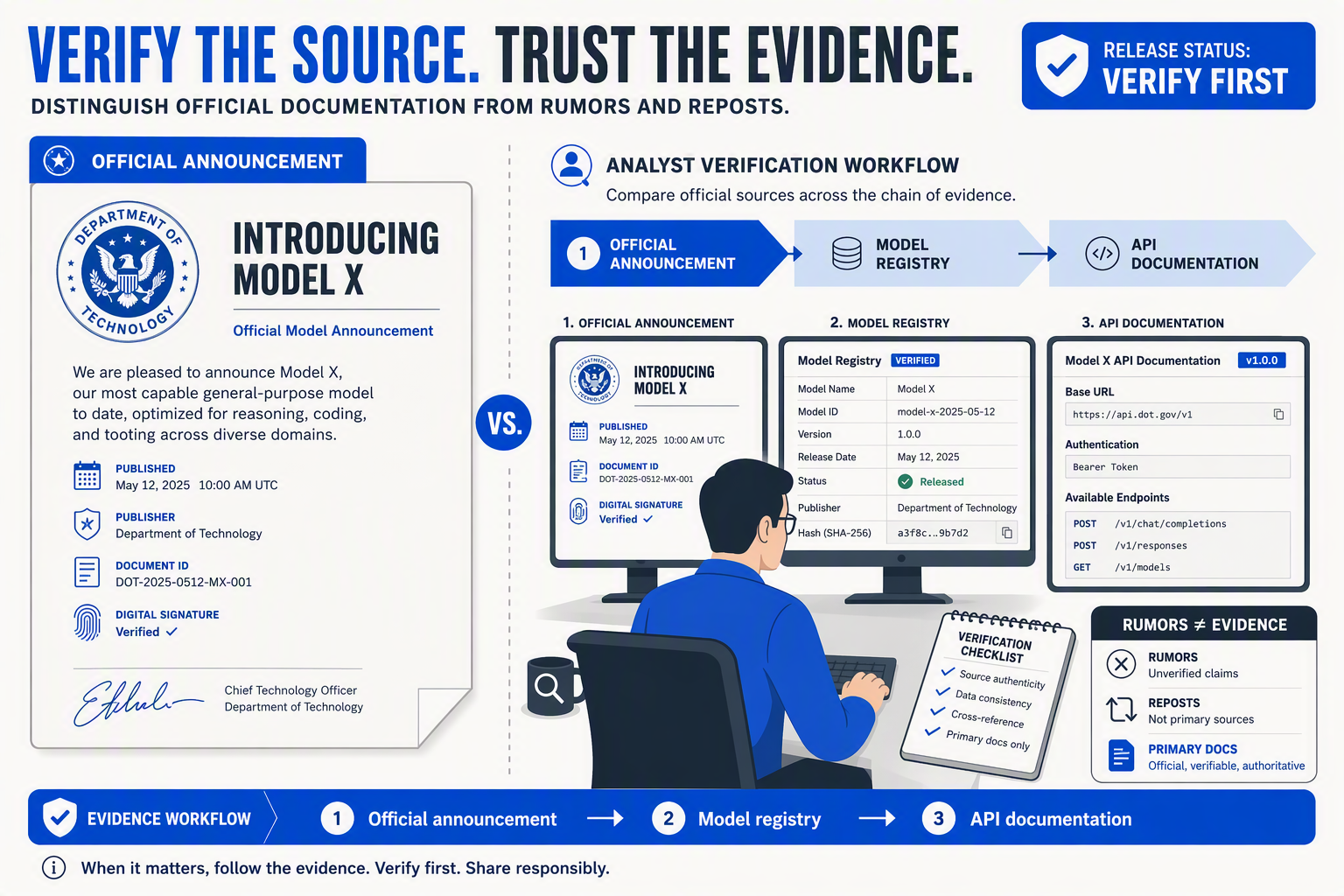
No verified public evidence in the supplied research confirms that DeepSeek V4 Pro officially launched as of August 3, 2026. The research found no citable DeepSeek announcement, official model documentation, benchmark report, pricing page, or developer-console listing confirming DeepSeek V4 Pro benchmarks, specifications, pricing, or API access.
What evidence would confirm a DeepSeek V4 Pro launch?
A credible release claim should be traceable to an official DeepSeek source and should identify the model precisely. The strongest evidence would include:
- An official announcement naming DeepSeek V4 Pro and stating a release date.
- An official model identifier, such as the exact name required in an API request.
- A DeepSeek developer-console listing showing that the model can be selected or called.
- Technical documentation specifying the context window, supported modalities, rate limits, and input/output token pricing.
- A published evaluation report that identifies DeepSeek V4 Pro and explains its test methodology, datasets, and scoring conditions.
The supplied research located none of these sources. Multiple searches for “DeepSeek V4 Pro benchmarks pricing,” API access, context window, modalities, official announcements, and 2026 coverage returned no verifiable public results. Therefore, the absence of confirmed figures is not evidence that the model cannot exist; it means the launch claim cannot responsibly be reported as fact.
| Claim requiring verification | Official evidence found in supplied research | Status |
|---|---|---|
| DeepSeek V4 Pro launch announcement | No named DeepSeek announcement identified | Not verified |
| DeepSeek V4 Pro model identifier | No official documentation or console listing identified | Not verified |
| DeepSeek V4 Pro benchmark results | No attributable evaluation report identified | Not verified |
| DeepSeek V4 Pro API pricing or access | No official pricing page or access confirmation identified | Not verified |
Here, “not verified” is not a zero, estimate, or prediction. It means that the research did not locate a citable source supporting the claim. Readers should not transfer information from another DeepSeek model to DeepSeek V4 Pro: a previously published benchmark score, context window, modality list, release date, or token price does not automatically apply to a differently named model.
How should possible access claims be checked?
Unconfirmed previews, private testing, screenshots, social-media posts, and third-party listings should be treated as leads for verification—not as proof of a public launch. A model may appear under an informal alias, an outdated label, or a platform-specific name, so any claimed access should be matched against DeepSeek’s official documentation and console.
The practical checklist is:
- Confirm that DeepSeek V4 Pro appears in official DeepSeek model or API documentation.
- Verify the exact model identifier and supported endpoint.
- Check current input and output rates, limits, context window, and modalities in official documentation.
- Run a small API request only if the official DeepSeek service exposes the model.
- Record the documentation date because model availability and pricing can change.
An OpenAI-compatible gateway such as CallMissed can simplify multi-model testing when an officially supported model identifier is available, but a gateway listing alone should not establish that DeepSeek V4 Pro has publicly launched. Until DeepSeek publishes authoritative evidence, every precise specification, benchmark result, modality claim, or DeepSeek V4 Pro API cost should be labeled unverified rather than presented as a fact.
Which DeepSeek V4 Pro facts are currently verified? (TABLE)
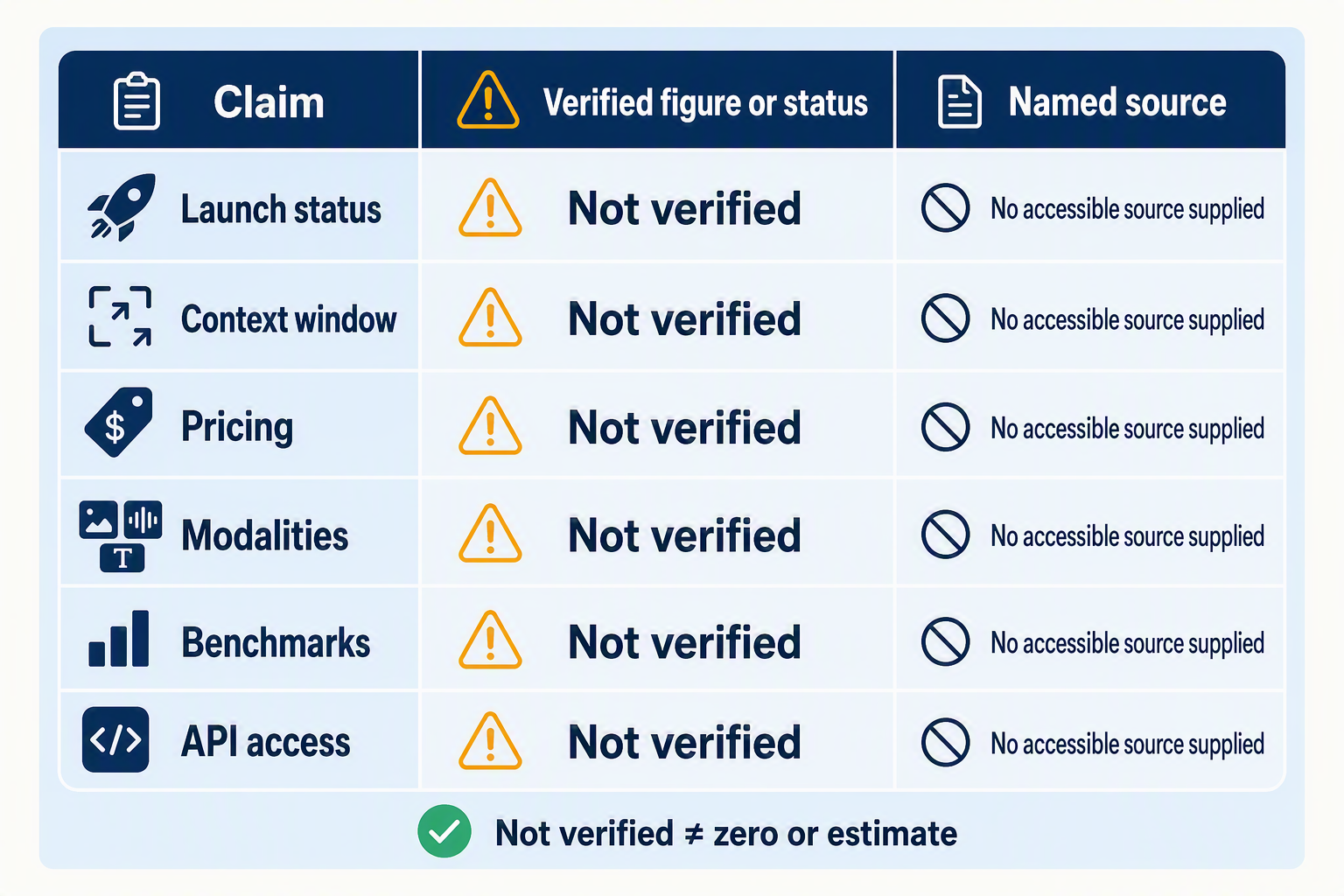
The supplied research found no verifiable public confirmation of a DeepSeek V4 Pro launch, official specifications, pricing, modalities, benchmark results, or API availability as of August 3, 2026. Therefore, the available evidence does not support stating any DeepSeek V4 Pro benchmarks and pricing figures as fact.
| Claim to verify | Current status | What the research confirms | Evidence status |
|---|---|---|---|
| DeepSeek V4 Pro launch | Not verified | No citable public launch announcement was identified in the supplied research | No named official source found |
| Context window | Not verified | No confirmed token-limit specification is available for DeepSeek V4 Pro | Do not infer from another DeepSeek model |
| API pricing | Not verified | No confirmed input-token, output-token, subscription, or usage rate is available | No official price sheet identified |
| Supported modalities | Not verified | Text, image, audio, video, or multimodal support has not been confirmed for this model | No official modality list identified |
| Benchmark results | Not verified | No attributable scores, test version, evaluation setup, or leaderboard result was found | Do not treat screenshots or reposts as proof |
| DeepSeek V4 Pro API access | Not verified | No confirmed model identifier or production endpoint was identified | Check DeepSeek’s official documentation and console |
What does “not verified” mean?
“Not verified” means that the supplied research found no publicly citable evidence for the claim. It does not prove that DeepSeek V4 Pro does not exist, nor does it establish that the model is unreleased, private, experimental, or unavailable in every region.
The research notes report that multiple live-web searches for “DeepSeek V4 Pro benchmarks pricing,” official announcements, release information, API availability, context window, modalities, and 2026 coverage returned no verified public facts or source URLs. As a result, the research provides no reliable basis for assigning a release date, context length, API cost, modality list, or benchmark score.
Do not transfer specifications from another DeepSeek model. A claim should be treated as unconfirmed unless it identifies the exact model and provides evidence for the relevant detail:
- A benchmark result should name the model version, evaluation date, task or test version, prompting method, and comparison set.
- An API cost should specify whether the rate applies to input tokens, output tokens, cached tokens, batch requests, or another billing unit.
- A context-window claim should come from an official specification or a reproducible API test tied to a confirmed model identifier.
- A modality claim should be supported by documentation describing the model’s accepted inputs and generated outputs.
How can readers verify a new DeepSeek V4 Pro API claim?
Use this checklist before relying on a report, listing, or social-media post:
- Check DeepSeek’s official model documentation and developer console.
- Confirm that DeepSeek V4 Pro appears as the exact model identifier—not merely “DeepSeek V4,” “V4 preview,” or another similarly named model.
- Review the displayed context limit, supported modalities, request limits, and current input/output rates.
- Compare the documentation date with the publication date of the claim.
- Run a small, production-safe test only if the official DeepSeek service exposes access.
Until those checks produce citable evidence, DeepSeek V4 Pro API access, specifications, pricing, and benchmark results should remain labeled not verified, rather than presented as estimates or confirmed facts.
What is the DeepSeek V4 Pro context window and how much does it cost?
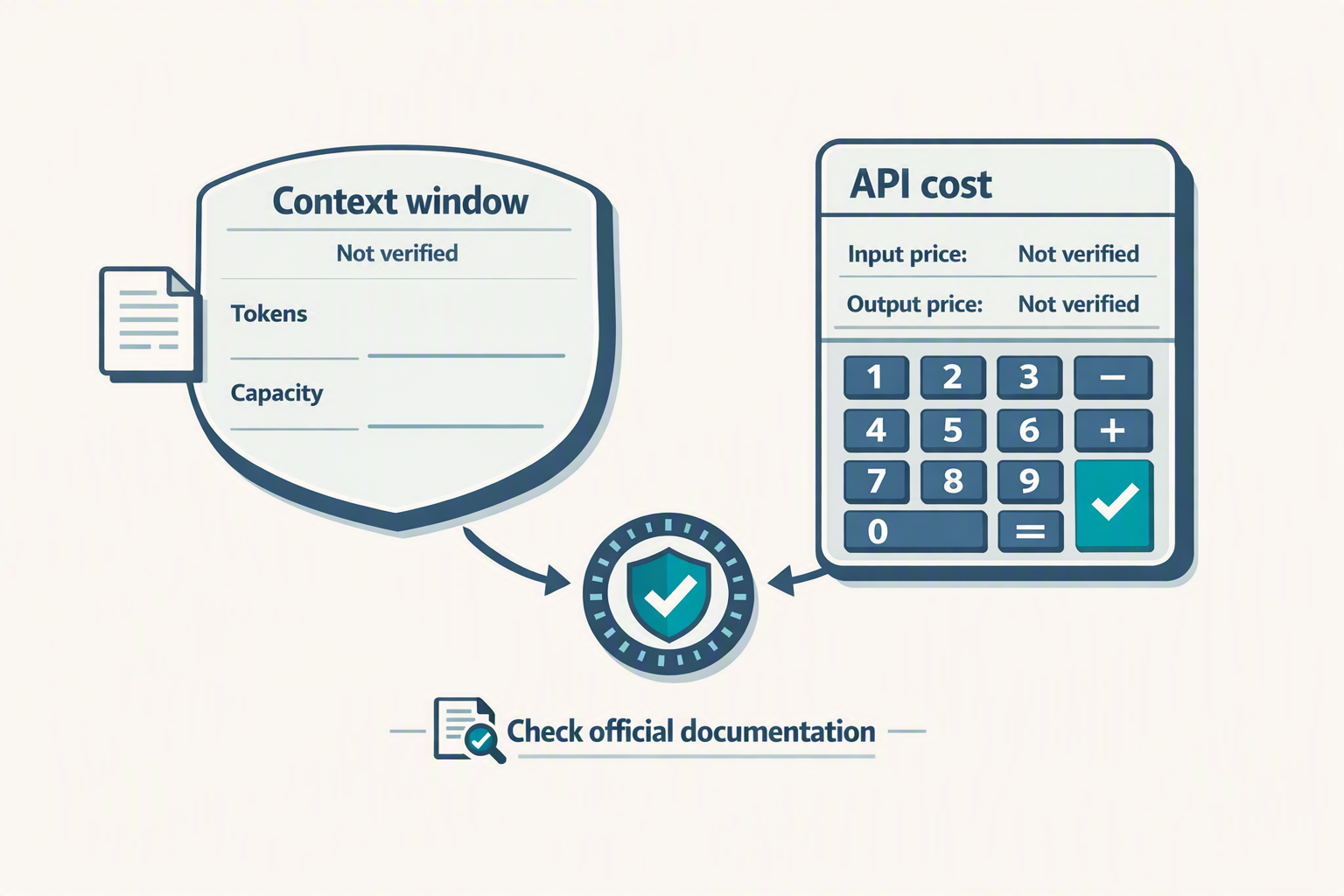
DeepSeek V4 Pro’s context window and API cost are not verified as of August 3, 2026. The supplied research found no citable official DeepSeek source confirming a V4 Pro context length, input price, output price, release status, or API availability, so precise figures should not be presented as facts.
What is the verified DeepSeek V4 Pro context window?
No official context-window figure for DeepSeek V4 Pro was identified in the supplied research. That means claims such as “128K,” “1M,” or any other token limit should be treated as unverified unless the number appears in an official DeepSeek model card, API reference, or developer console listing that clearly names V4 Pro.
| Specification | Verified DeepSeek V4 Pro figure | Verification status |
|---|---|---|
| Context window | Not verified | No named official source found |
| Maximum output tokens | Not verified | No named official source found |
| Input-token price | Not verified | No named official source found |
| Output-token price | Not verified | No named official source found |
| API availability | Not verified | No confirmed official listing found |
“Not verified” does not mean zero, unavailable, or an estimate. It means the supplied research did not locate an accessible, named source supporting the claim. Teams should not choose a retrieval strategy, prompt budget, or document-chunking design around a rumored context length.
How much does DeepSeek V4 Pro cost?
The DeepSeek V4 Pro API cost is not publicly verified in the available research. No reliable input-token price, output-token price, cached-token rate, subscription fee, or free-tier allowance can therefore be reported for this model.
Pricing copied from another DeepSeek model must not be attributed to V4 Pro. Model families can use different rates, limits, capabilities, and availability conditions, while third-party aggregators may retain stale listings after providers change their catalogs. Before calculating production spend, verify all of the following in an official DeepSeek source:
- The exact model identifier, including version or date suffix
- Input and output pricing units, such as per-million tokens
- Cached-input or batch-processing discounts
- Rate limits, minimum commitments, and regional restrictions
- Whether taxes, platform fees, or reseller markups apply
A consolidated gateway such as CallMissed can simplify access to multiple AI models through one OpenAI-compatible integration, but that convenience does not establish DeepSeek V4 Pro’s identity, context limit, or provider pricing. The underlying model listing and rate card still need verification.
How can I verify the context window and price?
Use DeepSeek’s official documentation and developer console rather than relying on screenshots, social posts, or comparison pages. Follow this checklist:
- Search the official model catalog for an exact DeepSeek V4 Pro identifier.
- Open the matching model card or API reference and confirm its context and output-token limits.
- Check the current input and output rates in the official billing interface.
- Review supported endpoints, request limits, and modality information.
- Run a small, non-sensitive API request only if the official service exposes access.
If the model identifier, specification page, or rate card is absent, label the context window and pricing not verified. This verification-first approach keeps the present article distinct from broader roundup coverage such as DeepSeek V4 Pro Benchmarks and Pricing: Specs, API Costs, and How to Try It.
What modalities does DeepSeek V4 Pro support?
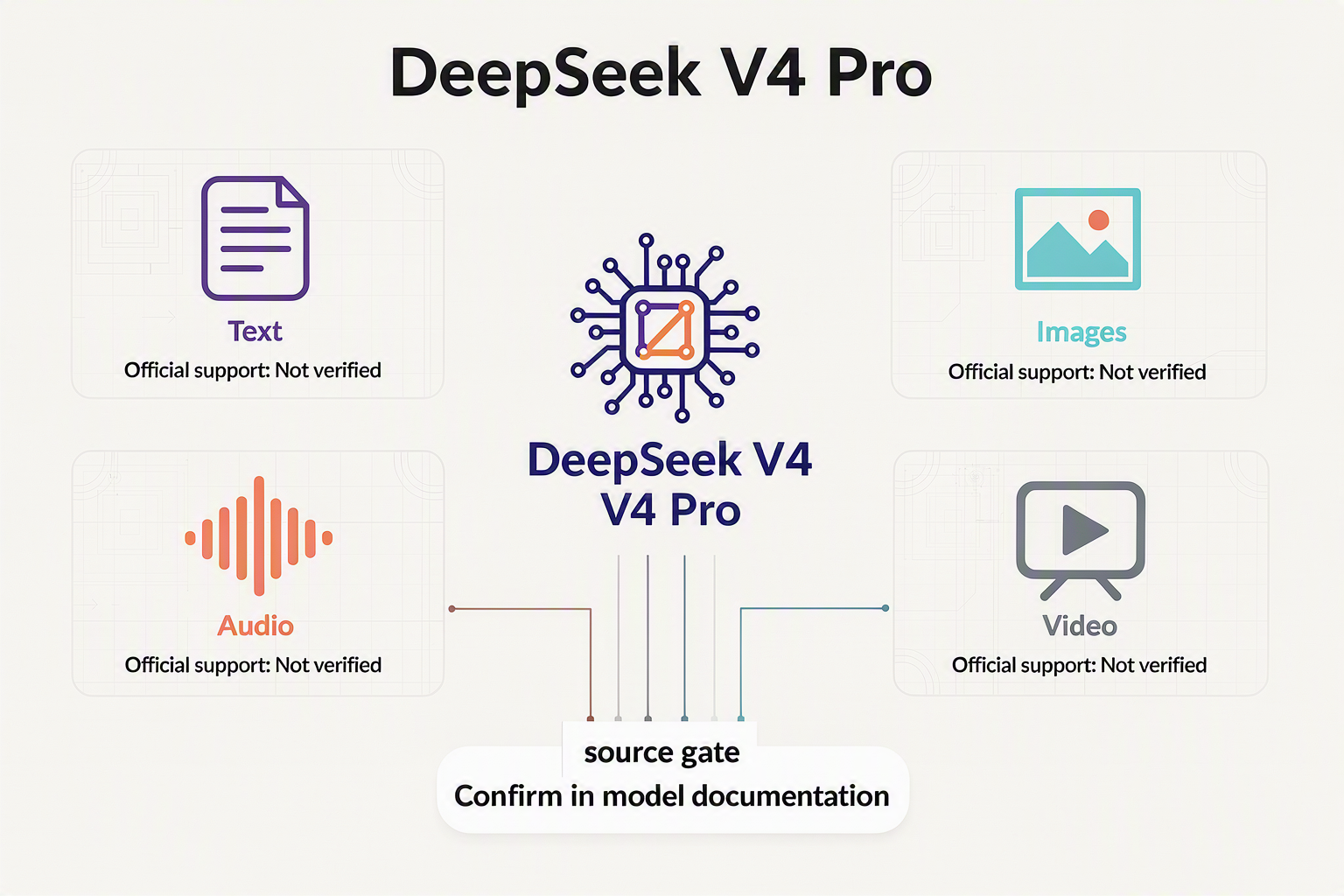
No supported modality list for DeepSeek V4 Pro has been verified as of August 3, 2026. The supplied research found no named official DeepSeek source confirming whether the model accepts or generates text, images, audio, video, files, or any other media, so those capabilities should not be presented as specifications.
Does DeepSeek V4 Pro support text, images, audio, or video?
DeepSeek V4 Pro modalities are not verified. In particular, there is no citable evidence in the supplied research confirming:
- Text input or output for a publicly released V4 Pro model
- Image understanding, such as visual question answering or document-image analysis
- Image generation
- Audio input, including speech recognition
- Audio output, including text-to-speech
- Video understanding or generation
- File uploads, structured documents, or multimodal tool use
Text support may seem likely for a model described as an LLM, but likelihood is not confirmation. A model can have different capabilities across its hosted chat product, API, and open-weight release. Until DeepSeek publishes a model card, API reference, or product documentation identifying DeepSeek V4 Pro, readers should label each modality “not verified.”
Why do modality claims need an official source?
A modality claim affects integration design, cost, latency, and data handling. For example, an API that accepts images may require a specific content schema, image-size limit, or separate billing rule. An audio-capable model may instead rely on a dedicated Speech-to-Text service, meaning that “voice support” does not necessarily mean native audio input.
Claims about older DeepSeek models, third-party wrappers, or unofficial demonstrations should not be transferred to V4 Pro. Similarly, a chatbot interface that appears to accept attachments does not prove that the underlying model supports those inputs through a public DeepSeek V4 Pro API.
How can you verify the supported modalities?
Check the following sources directly before building an integration:
- DeepSeek’s official model documentation: Look for an exact model identifier, not merely a product name or rumor.
- DeepSeek’s official API reference: Confirm the request schema, supported content types, output formats, and any modality-specific limits.
- DeepSeek’s developer console: Verify that the model is selectable and inspect whether image, audio, or file inputs are enabled.
- Official release notes or model card: Check publication date, supported tasks, and restrictions.
- A controlled test request: Send a small, non-sensitive sample only after official documentation exposes the model and its access requirements.
A successful request through an unofficial gateway would demonstrate that the gateway accepts the request—not necessarily that DeepSeek has officially released V4 Pro or guarantees the capability.
Platforms such as CallMissed, whose OpenAI-compatible gateway consolidates access to multiple AI services, illustrate why developers still need provider-level verification: a unified API can simplify integration, but it cannot independently validate an unannounced model’s modalities. For now, the accurate answer is that DeepSeek V4 Pro’s supported modalities, benchmark results, pricing, and API availability remain unverified.
What DeepSeek V4 Pro benchmark results have been published?
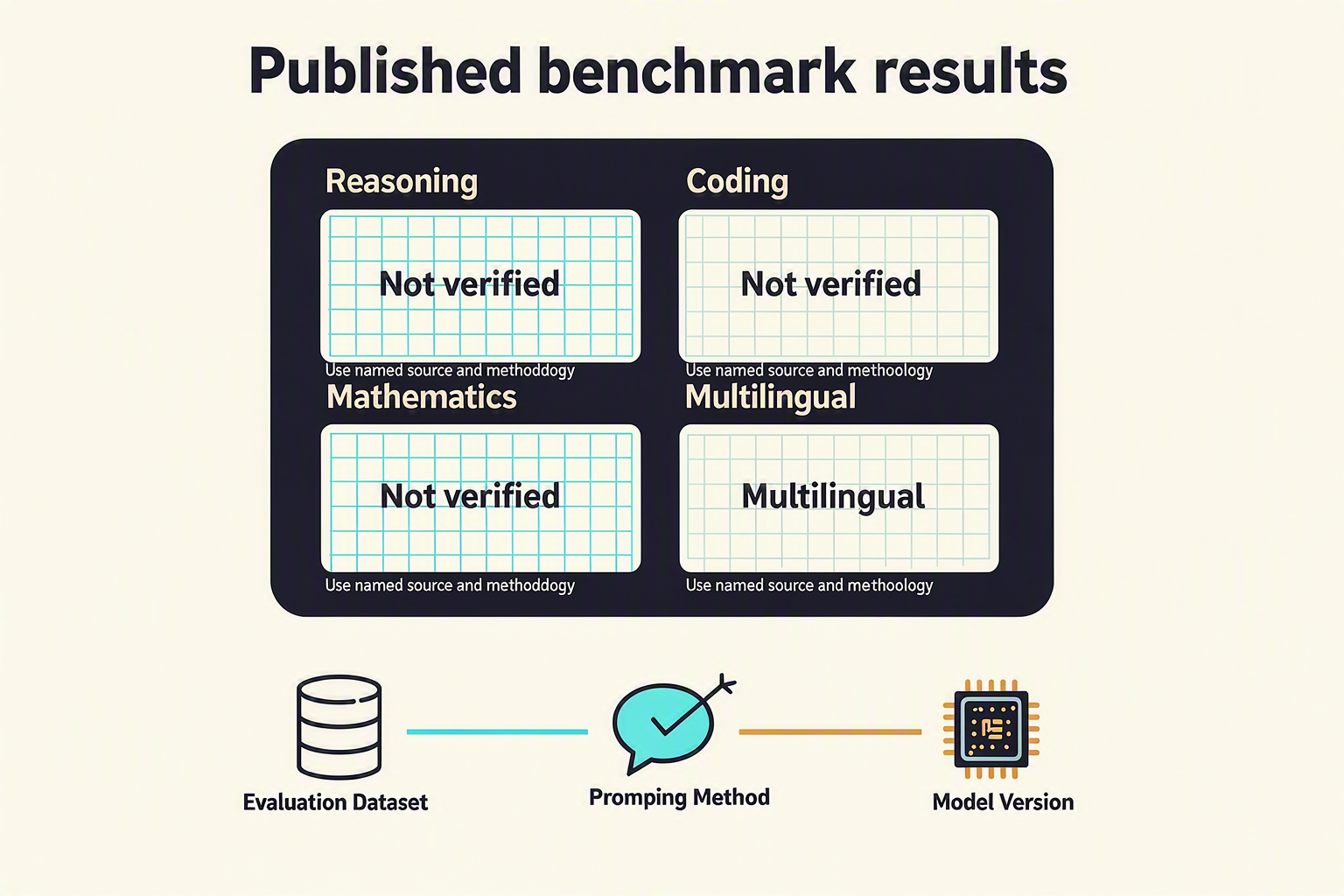
As of August 3, 2026, the supplied research identified no publicly citable benchmark results attributable to a launched DeepSeek V4 Pro. Therefore, the responsible answer to “DeepSeek V4 Pro benchmarks and pricing” is that no score, ranking, or performance comparison can currently be treated as verified.
What benchmark evidence is available?
The research pass searched for DeepSeek V4 Pro benchmark results, official announcements, model documentation, API information, and 2026 coverage, but found no accessible source confirming a V4 Pro evaluation. It also found no SERP top results, People Also Ask entries, or related-search evidence that could establish an authoritative benchmark claim. These findings do not prove that DeepSeek V4 Pro does not exist; they mean that a benchmark number cannot be attributed to the model with confidence.
| Evidence category | Verified DeepSeek V4 Pro result | Status | Verification requirement |
|---|---|---|---|
| General reasoning benchmark | Not verified | No citable score found | Official release note or benchmark report |
| Coding benchmark | Not verified | No citable score found | Model-specific evaluation with methodology |
| Mathematics benchmark | Not verified | No citable score found | Named source identifying the exact model |
| Human-preference or arena ranking | Not verified | No citable ranking found | Recognised leaderboard entry and model ID |
“Not verified” is not zero, a prediction, or an estimate. It means the supplied research did not locate a named, accessible source that identifies the model and supports the claimed result.
Why can’t older DeepSeek scores be used?
A benchmark score from another DeepSeek model cannot automatically serve as a DeepSeek V4 Pro result. Model generations may differ in training data, inference settings, tool support, context window, prompting, and evaluation date. Even a genuine score becomes misleading if a post changes the model name, reports a private experiment as an official result, or omits the test configuration.
Readers should be especially cautious with claims that provide:
- A precise score but no official DeepSeek source or evaluation report
- A leaderboard screenshot without a stable model identifier
- Comparisons with Claude, GPT, Gemini, or earlier DeepSeek releases that omit test dates
- “Leaked” benchmark tables without reproducible prompts, datasets, or scoring rules
- A benchmark result presented alongside unsupported DeepSeek V4 Pro API pricing
A credible report should name the exact model, benchmark version, test conditions, sampling settings, and publication date. It should also distinguish between a provider’s own evaluation and an independent assessment.
How should buyers interpret the missing results?
Until DeepSeek publishes model-specific evidence, teams should not use alleged DeepSeek V4 Pro benchmark results to select a production model, forecast quality, or calculate API cost. Developers can monitor DeepSeek’s official documentation and console, then record the model identifier, benchmark references, context window, modalities, and current input/output rates if those details appear.
For teams comparing access strategies, CallMissed’s OpenAI-compatible gateway illustrates a broader industry approach: one integration can expose multiple model providers, while each model’s availability and performance still require provider-level verification. The safest workflow is to test an officially listed model against a fixed internal evaluation set rather than rely on an unverified ranking.
How can I try DeepSeek V4 Pro via API today?
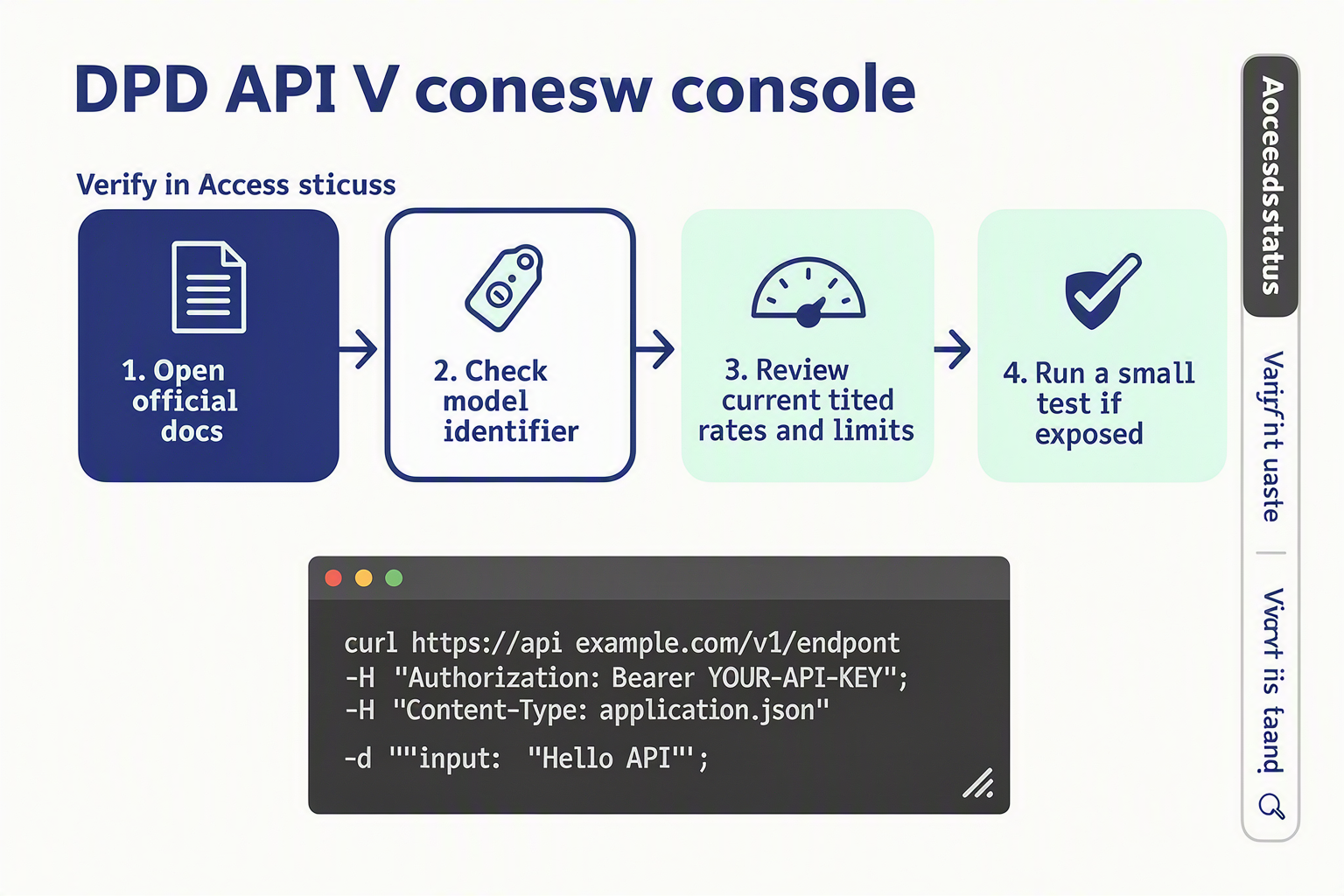
As of August 3, 2026, the supplied research found no verifiable public evidence confirming a DeepSeek V4 Pro API endpoint, official model identifier, pricing page, or developer-console listing. You can check DeepSeek’s official documentation and console today, but you should run a request only if those first-party surfaces explicitly expose the model.
What should I check before sending an API request?
Use DeepSeek’s official API documentation, model catalogue, and developer console as the verification chain. The supplied research pass returned no citable announcement or specification for DeepSeek V4 Pro, so an API name mentioned in a blog post, social-media post, SDK, or routing platform is not sufficient proof of availability.
Check these items in order:
- Model identifier: Confirm that “DeepSeek V4 Pro” or an unambiguous official identifier appears in DeepSeek’s current model list.
- Endpoint and authentication: Verify the documented API base URL, request format, authentication method, and supported SDK examples.
- Input and output rates: Read the current official pricing fields for input tokens, cached input if applicable, and output tokens.
- Limits: Check rate limits, maximum request size, quotas, access restrictions, and regional availability.
- Capabilities: Confirm whether the endpoint supports text, vision, tool calling, structured output, streaming, or other modalities.
- Access status: Distinguish between a public production endpoint, an invitation-only preview, and a model name that is merely reserved or mentioned.
What can I record as verified today?
| API-check item | Verified DeepSeek V4 Pro value | What the official source must show | Status as of August 3, 2026 |
|---|---|---|---|
| Model identifier | Not verified | A listed model name or ID | Not verified |
| API endpoint | Not verified | An official endpoint and request example | Not verified |
| Input/output pricing | Not verified | Current token rates and billing terms | Not verified |
| Access availability | Not verified | Console access or documented public availability | Not verified |
“Not verified” does not mean zero, unavailable forever, or an estimate. It means the supplied research pass did not identify a named, accessible official source supporting the value. That research pass also found no verified DeepSeek V4 Pro benchmark scores, context-window figure, modality list, release announcement, or API cost.
How can I run a safe access test?
If DeepSeek’s official console lists the model, begin with a small, non-sensitive request and record the model ID, response metadata, latency, token usage, and billed amount. Do not upload customer data while availability, retention, and pricing terms remain unclear. Save the documentation version or date because model aliases, limits, and rates can change.
If the official service does not list DeepSeek V4 Pro, treat third-party access as unconfirmed rather than silently substituting another DeepSeek model. Consolidated gateways such as CallMissed’s OpenAI-compatible API gateway can simplify multi-model testing, but a gateway listing still needs to identify the upstream model and its current availability clearly.
What is the verified timeline for DeepSeek V4 Pro? (TABLE)
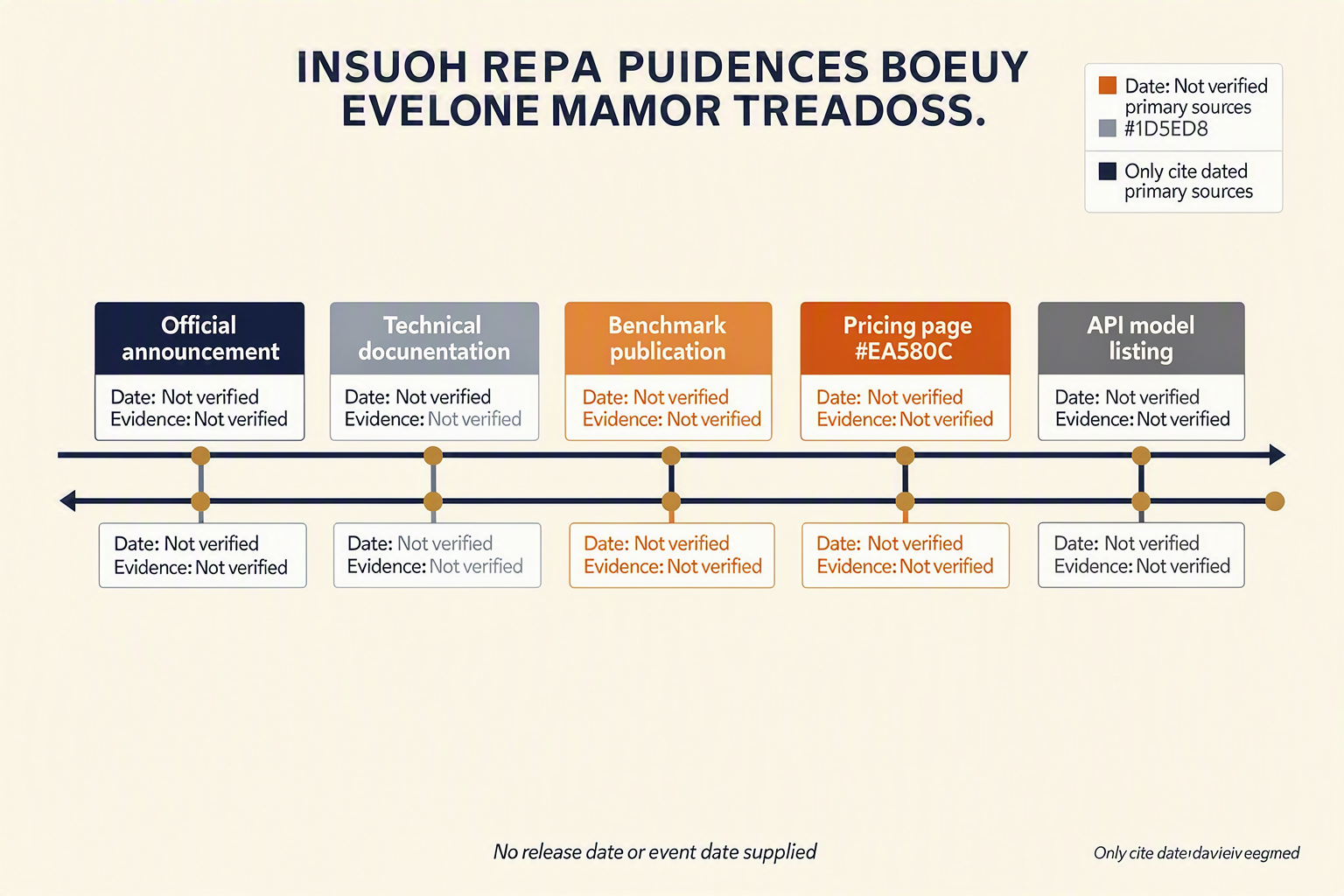
The verified timeline for DeepSeek V4 Pro ends at an unresolved status: as of August 3, 2026, the supplied research found no citable public confirmation of a launch, specifications, benchmark results, pricing, or API access. DeepSeek V4 Pro should therefore be treated as unverified, not as a released model with missing documentation.
What does the verification timeline show?
The following timeline records what could—and could not—be established from the research pass. “Not verified” means that no accessible, named source in the supplied research supported the claim; it does not mean the value is zero, unavailable everywhere, or disproven.
| Timeline checkpoint | Claim being checked | Verification status | Practical meaning |
|---|---|---|---|
| August 3, 2026 | Official DeepSeek V4 Pro launch announcement | Not verified | No confirmed public release date can be stated |
| August 3, 2026 | DeepSeek V4 Pro model identifier in official documentation | Not verified | API integration should not assume a valid model name |
| August 3, 2026 | Context window and core specifications | Not verified | No reliable token limit or architecture detail is available |
| August 3, 2026 | Supported modalities | Not verified | Text, image, audio, or multimodal support cannot be attributed to V4 Pro |
| August 3, 2026 | Published benchmark results | Not verified | No score should be presented as a DeepSeek V4 Pro result |
| August 3, 2026 | API pricing and production access | Not verified | No input rate, output rate, quota, or access claim is confirmed |
Which sources should establish the next milestone?
A genuine release milestone should appear in at least one authoritative DeepSeek channel and provide enough information to identify the model unambiguously. The most important checks are:
- DeepSeek’s official announcements: Look for a dated release notice that names “DeepSeek V4 Pro” precisely, rather than referring generally to DeepSeek, an earlier model, or a research project.
- DeepSeek’s official model and API documentation: Confirm that the model identifier is listed and that the documentation specifies context limits, modalities, rate limits, and supported endpoints.
- DeepSeek’s official developer console: Check whether the model can actually be selected, whether API credentials can access it, and whether current input and output rates are displayed.
- Official evaluation material: Treat benchmark scores as verified only when DeepSeek publishes the task, test setup, model version, and result in an attributable document.
A model name appearing in a third-party router, social-media post, code snippet, or comparison article is not, by itself, evidence of an official DeepSeek release. Developers should also record the page date because model catalogs and prices can change without older articles being updated.
Until those sources publish matching details, the responsible answer to DeepSeek V4 Pro benchmarks and pricing remains “not verified.” Consolidated gateways such as CallMissed can simplify access to supported models through one OpenAI-compatible API, but they cannot turn an unconfirmed DeepSeek model name into verified API availability.
What are the answers to the most common DeepSeek V4 Pro questions?
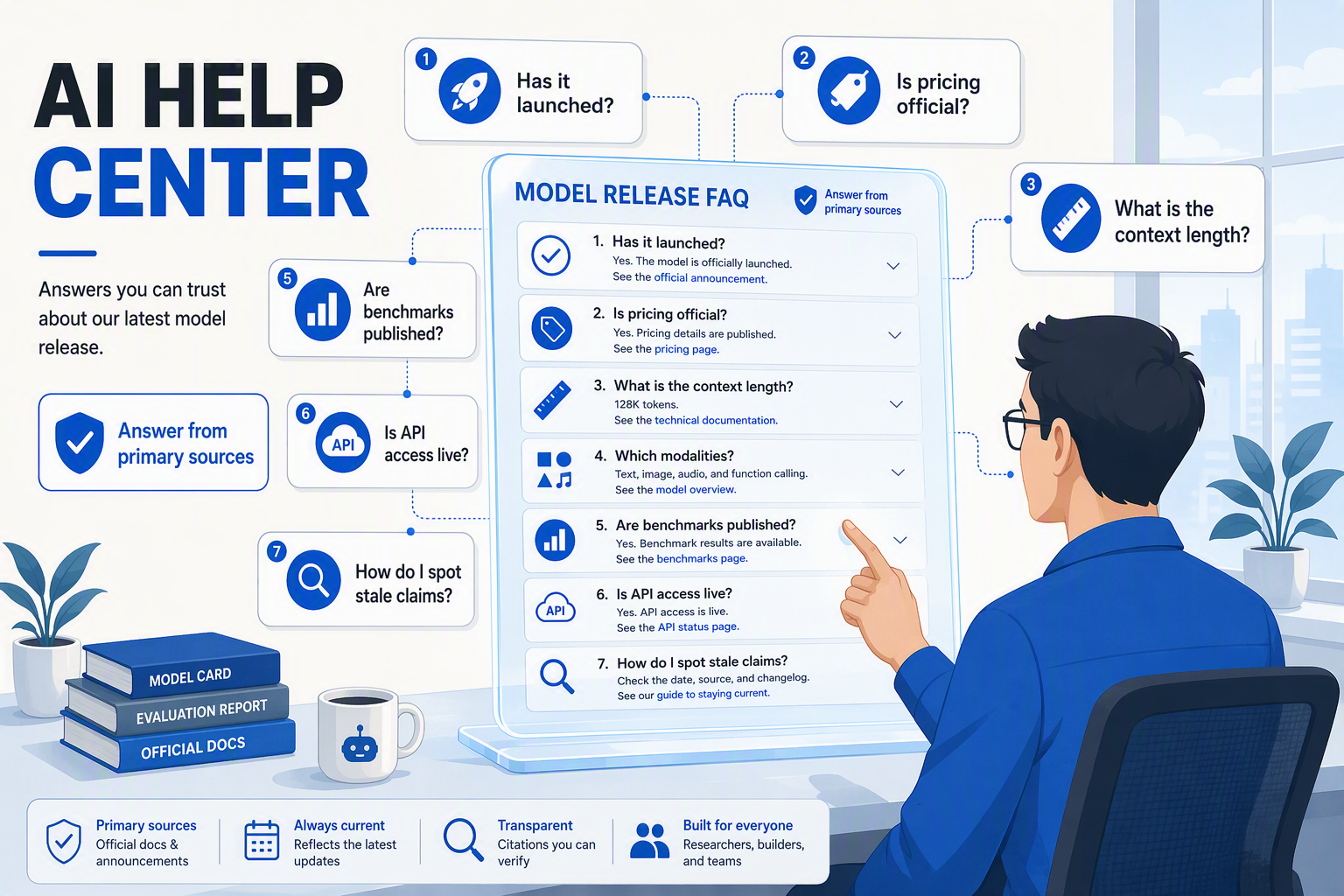
As of August 3, 2026, the supplied research found no publicly verifiable evidence confirming a DeepSeek V4 Pro launch, official specifications, benchmark results, API pricing, supported modalities, or API access. Therefore, the safest answer to DeepSeek V4 Pro benchmarks and pricing is that these details remain not verified, rather than figures that can be responsibly reported as fact.
Verification-first answers
Has DeepSeek V4 Pro officially launched?
What are the verified DeepSeek V4 Pro benchmarks and pricing?
What is the DeepSeek V4 Pro context window?
Which modalities does DeepSeek V4 Pro support?
Is the DeepSeek V4 Pro API available, and how can I try it?
How can I spot fabricated or outdated DeepSeek V4 Pro claims?
Conclusion
As of August 3, 2026, no named official DeepSeek source identified in the supplied research verifies a DeepSeek V4 Pro launch, benchmark results, context window, modalities, API pricing, or API availability. Therefore, the safest conclusion on DeepSeek V4 Pro benchmarks and pricing is that these details remain unverified—not confirmed, zero, or estimated.
- No citable official source currently supports specific DeepSeek V4 Pro benchmark scores, token rates, release details, or production API access.
- Claims about the DeepSeek V4 Pro API, context window, modalities, or API cost should be checked against DeepSeek’s official documentation and developer console.
- Before relying on a third-party figure, confirm the exact model identifier, publication date, named source, input/output rates, request limits, and supported capabilities.
- Run a small API test only if DeepSeek’s official service exposes the model and access details.
The key signal to watch is an official DeepSeek announcement or documentation update that publishes these specifications together. Until then, comparisons with other models or older DeepSeek releases should not be treated as evidence of V4 Pro availability. Platforms such as CallMissed show how consolidated AI infrastructure is evolving, with voice agents and multilingual chatbots available through broader communication workflows—but provider-level model verification still matters. Will the next credible update come from DeepSeek’s documentation, console, or an independently reproducible benchmark?
Related Reading
Discussion
Related Posts


Ready to automate customer conversations?
Launch AI voice agents and WhatsApp bots with CallMissed — one API, 22+ Indian languages.