
CallMissed Voice Agent Guide: Shared Context Across Calls, Email, and WhatsApp


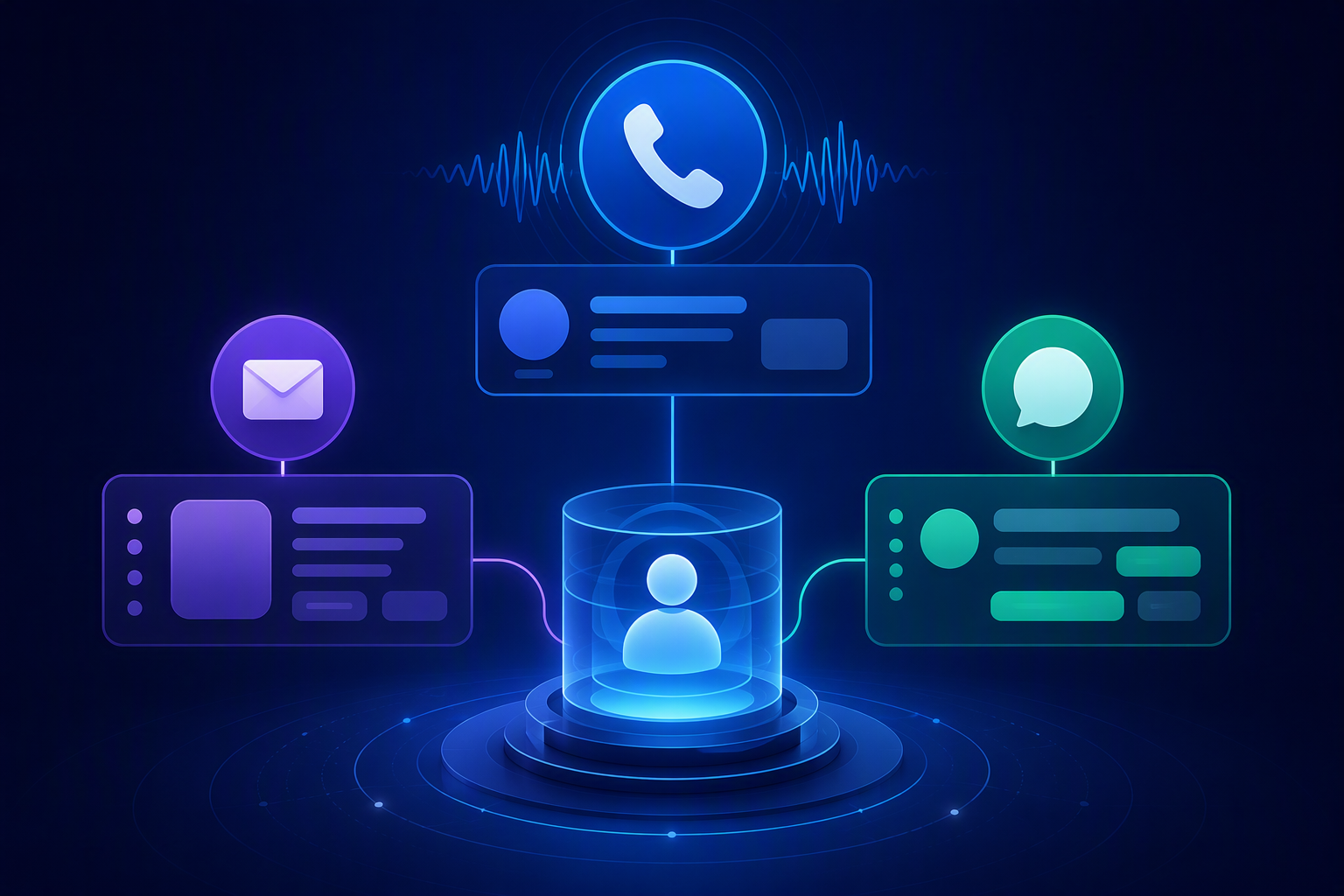
Learn how a CallMissed voice agent can use relevant email and WhatsApp context, manage handoffs, respect memory limits, and support customers.
CallMissed Voice Agent Guide: Shared Context Across Calls, Email, and WhatsApp
What if the customer calling your business has already explained the problem by email, confirmed the order on WhatsApp, and now expects the person answering to know all of it? A CallMissed voice agent can turn those separate touchpoints into a more continuous customer relationship by using relevant, permitted context from earlier interactions instead of forcing the customer to start again. That continuity is the practical promise behind voice agent shared memory.
This matters now because customer conversations rarely stay in one channel. A lead may ask for pricing by email, send documents on WhatsApp, then call to negotiate or request support. CallMissed combines AI voice agents, WhatsApp chatbots and Business calling, email, web engagement, an omnichannel inbox/CRM, and knowledge-base retrieval in one system. For Indian businesses, its speech stack covers 22 Indian languages, making regional-language continuity a core deployment question rather than an afterthought. The platform also uses transparent credits, where 1 credit equals ₹1, so teams can connect context design to operational cost.
An AI voice agent should not treat shared context as unlimited recall. Useful continuity requires decisions about what is available, when it becomes relevant, how long it remains accessible, and when a human should take over. A billing question may need the latest invoice email and WhatsApp confirmation; it may not need every past marketing message. Good design favors minimum necessary context, explicit customer verification, concise summaries, and channel-aware handoffs.
What this guide covers
The sections ahead explain how calls can fit into a relationship that already exists across email and WhatsApp, while keeping memory useful, bounded, and operationally clear.
- Context architecture: Understand how relevant email, WhatsApp, CRM, and knowledge-base information can support a call without confusing conversation history with permanent memory.
- Business workflows: Design journeys for lead qualification, appointment booking, service updates, collections, support, and after-hours response.
- Handoffs and safeguards: Decide when the agent should continue, ask for clarification, verify identity, or transfer the conversation to a human with a concise summary.
- Setup questions: Define channels, language coverage, permissions, retention boundaries, escalation rules, and the outcomes that determine success.
You will see how WhatsApp Business calls can be bridged to an AI agent, how email and chat context can improve the first moments of a call, and where judgment remains essential. The goal is not a bot that remembers everything; it is a customer experience that remembers the right things at the right time.
How can a CallMissed AI voice agent maintain a continuous customer relationship?
A CallMissed voice agent maintains a continuous customer relationship by using relevant, authorised context from previous calls, email, WhatsApp, CRM records, and knowledge-base workflows. Each conversation becomes the next step in the customer journey rather than a separate interaction.
The CallMissed voice agent uses only the context needed for the current request. It does not need to load every message or transcript.
How continuity works during a call
When a recognised customer calls, the configured workflow can prepare a concise context package. Depending on permissions and verification, it may include:
- The customer’s identity and preferred language
- A summary of recent email or WhatsApp conversations
- The customer’s latest stated intent
- Relevant CRM details, such as lead stage or open support status
- Confirmed actions, including approvals or document submissions
- Approved knowledge-base content for the current question
For example, a customer may request installation pricing by email and confirm their postcode through WhatsApp. On the next call, the CallMissed voice agent can continue with availability, requirements, or booking instead of asking for the same information again.
If the customer’s identity, intent, or details are unclear, the agent should ask for clarification before taking action.
Shared memory is a workflow, not a transcript dump
Shared context does not mean giving the CallMissed voice agent unrestricted access to a complete conversation archive. Raw transcripts may be long, outdated, contradictory, or contain sensitive information.
A configured workflow should separate context into three types:
- Current-session context: Information provided during the active call, including corrections and new requests.
- Relationship context: Selected facts and summaries from earlier calls, email, WhatsApp, and CRM interactions.
- Reference knowledge: Approved policies, product information, opening hours, and procedures from the business knowledge base.
Each type has a different purpose. Relationship context explains what has already happened. Reference knowledge explains what the business currently permits or offers.
For example, an old message should not override a newer refund policy. A previous address should not be treated as current without confirmation. The CallMissed voice agent should use recent, relevant information while checking details that may have changed.
What the CallMissed voice agent does with shared context
A practical response workflow can follow six steps:
- Recognise: Connect the call to the correct customer or conversation when configured identifiers and permissions allow.
- Verify: Confirm identity before sharing account-specific, financial, medical, or other sensitive information.
- Summarise: Briefly acknowledge the relevant history, such as, “I understand you contacted us about changing Tuesday’s appointment.”
- Resolve: Answer questions, collect information, qualify an enquiry, schedule an appointment, or update records within defined authority.
- Escalate: Transfer to a person when confidence is low, the customer asks for human help, or the requested action exceeds policy.
- Record: Save a concise, actionable outcome for the next permitted interaction.
This creates continuity across channels. An email can establish the initial request. WhatsApp can capture a follow-up detail. A later call can move the request towards resolution. The next authorised interaction can then begin with an accurate summary of the outcome.
Language can also remain part of the relationship. CallMissed’s published platform specifications cover speech recognition and synthesis across 22 Indian languages. Configured customer journeys can therefore continue in regional languages rather than requiring every caller to use English or Hindi.
The goal is not for a CallMissed voice agent to claim perfect memory. It is to provide controlled access to useful context, verify sensitive details, follow current business rules, and preserve a clear outcome for the next call, email, or WhatsApp conversation.
What background and context should buyers understand before evaluating CallMissed?
A buyer should evaluate CallMissed as an omnichannel customer-engagement system, not as a standalone telephone bot. The central question is whether the voice agent can receive the right permitted context from CallMissed email, WhatsApp, CRM, and knowledge-base workflows—and use it safely during a specific call.
Separate customer history, business knowledge, and working context
These three information layers serve different purposes and should not be treated as one unlimited memory:
- Customer history includes relevant WhatsApp messages, emails, contact details, previous outcomes, and CRM records associated with the customer.
- Business knowledge includes approved policies, product information, FAQs, and operating procedures available through knowledge-base retrieval-augmented generation (RAG).
- Working context is the small, task-specific selection needed for the current call, such as an appointment time, open support issue, or recent payment confirmation.
Voice agent shared memory should mean controlled access to relevant context—not permanent recall of every interaction. Buyers should establish which records may be used, how a customer is matched across channels, and what identity checks are required before account-specific information is discussed.
Understand the CallMissed product boundary
CallMissed brings several communication capabilities into the same business platform: AI voice agents, WhatsApp chatbots, WhatsApp Business calling, email and campaign tooling, an omnichannel inbox/CRM, and knowledge-base RAG. This shared environment can reduce the integration fragmentation that occurs when calls, messages, and customer records sit in unrelated tools.
A particularly relevant distinction is that CallMissed supports actual WhatsApp Business voice calls, including inbound and business-initiated calling, that can be bridged to an AI agent. That is different from a workflow that merely sends a WhatsApp text after a conventional phone call.
Buyers should nevertheless confirm the exact workflow they intend to deploy. A platform containing multiple channels does not imply that every historical message should automatically enter every prompt. The evaluation should document:
- Which channels provide context
- Which customer identifier connects those interactions
- Which fields the agent may read or update
- How recent or relevant a record must be
- What happens when records conflict
- When a human receives the call and its summary
Treat multilingual support as an operational requirement
CallMissed supports speech-to-text and text-to-speech across 22 Indian languages, according to CallMissed’s product information available in August 2026. For businesses serving India, buyers should test more than nominal language availability: names, addresses, code-switching, regional accents, noisy calls, and mixed English terminology can all affect task completion.
Language choice must also persist sensibly across channels. If a customer used Hindi on WhatsApp, for example, the CallMissed voice agent may need to begin in Hindi or ask for a preference rather than assuming English.
Evaluate cost and governance together
CallMissed uses transparent credit pricing in which 1 credit equals ₹1, with free-tier and pay-as-you-go access. Buyers should map credit consumption to complete business outcomes—not merely call volume—including speech processing, model usage, summaries, follow-up messages, and escalations.
Before approving an AI voice agent, require a written context policy covering consent, access permissions, retention, identity verification, sensitive-data handling, auditability, and human handoff. The strongest deployment is not the one that exposes the most history; it is the one that consistently supplies the minimum context needed to resolve the customer’s present request.
Which key CallMissed developments and product claims should be verified? (TABLE)
Product claims should be separated into documented platform capabilities and deployment-specific behavior that must be tested before launch. In particular, “shared memory” should not imply that every email, WhatsApp message, and call is automatically or permanently available to every CallMissed voice agent.
Verification checklist
| Claim or development | Documented baseline | What must be verified | Recommended evidence |
|---|---|---|---|
| Indian-language speech coverage | CallMissed supports Speech-to-Text and Text-to-Speech across 22 Indian languages | Exact STT/TTS availability, selected voices, code-switching behavior, and accuracy for the required language and accent | Current model catalog plus scripted calls using real regional-language scenarios |
| WhatsApp Business calling | CallMissed supports inbound and business-initiated WhatsApp Business calls bridged to an AI agent | Account eligibility, Meta approval requirements, supported call direction, consent rules, and fallback behavior | Approved WhatsApp Business Account configuration and end-to-end test calls |
| Cross-channel customer context | CallMissed combines voice, WhatsApp, email, web interactions, and an omnichannel inbox/CRM | Which records the agent can retrieve, how customers are matched, and whether summaries or raw messages are passed into the call | Context map, test customer profiles, retrieval logs, and permission checks |
| Knowledge-base grounding | CallMissed provides knowledge-base retrieval-augmented generation, or RAG | Supported files or sources, update timing, retrieval relevance, citation behavior, and response when evidence is missing | Controlled question set with expected sources and unsupported-answer tests |
| Credit pricing | One CallMissed credit equals ₹1, with free-tier and pay-as-you-go options | Credits consumed by the selected telephony, speech, model, campaign, or channel workflow | Current pricing page, dashboard usage records, and a representative cost pilot |
| Model and API access | CallMissed operates an OpenAI-compatible gateway covering LLM chat, STT, TTS, image generation, and web search | Current model availability, same-tier fallback behavior, rate limits, latency, and whether the voice workflow uses those endpoints | Current API documentation, model catalog, error simulations, and latency measurements |
The CallMissed product information reviewed for this guide on August 2, 2026 states that its speech capabilities cover 22 Indian languages. That figure establishes the breadth of language support, but businesses should still benchmark recognition accuracy using their own caller accents, vocabulary, noise conditions, and language-switching patterns.
The CallMissed product information reviewed on August 2, 2026 also defines 1 credit as ₹1. That transparent conversion does not by itself predict the cost of a completed call, because actual consumption depends on workflow duration, speech processing, model selection, telephony, and associated channel actions.
Treat shared memory as a configuration claim
The phrase voice agent shared memory requires especially careful validation. CallMissed has the channel and CRM components needed to support continuity, but each deployment must define:
- Identity resolution: How does the system determine that a caller, WhatsApp participant, and email sender are the same customer?
- Context selection: Does the AI voice agent receive a concise summary, recent messages, CRM fields, knowledge-base results, or some combination?
- Freshness: How quickly does a new email or WhatsApp update become available during a subsequent call?
- Boundaries: Which sensitive records are excluded until identity or authorization is verified?
- Retention: How long are transcripts, summaries, and extracted facts kept?
- Human handoff: What context accompanies a transfer, and what remains visible only to authorized staff?
Use production-like acceptance tests
Before describing continuity as operational, run test journeys that begin in one channel and finish in another. For example, send a pricing question by email, confirm requirements through WhatsApp, and then call from the matched number. The CallMissed voice agent should use only relevant, permitted facts, distinguish customer history from knowledge-base content, and escalate when identity or context is uncertain.
This approach turns product claims into measurable acceptance criteria rather than assuming that platform availability guarantees correct behavior in every account or workflow.
How does voice agent shared memory use relevant context from CallMissed email and WhatsApp interactions?
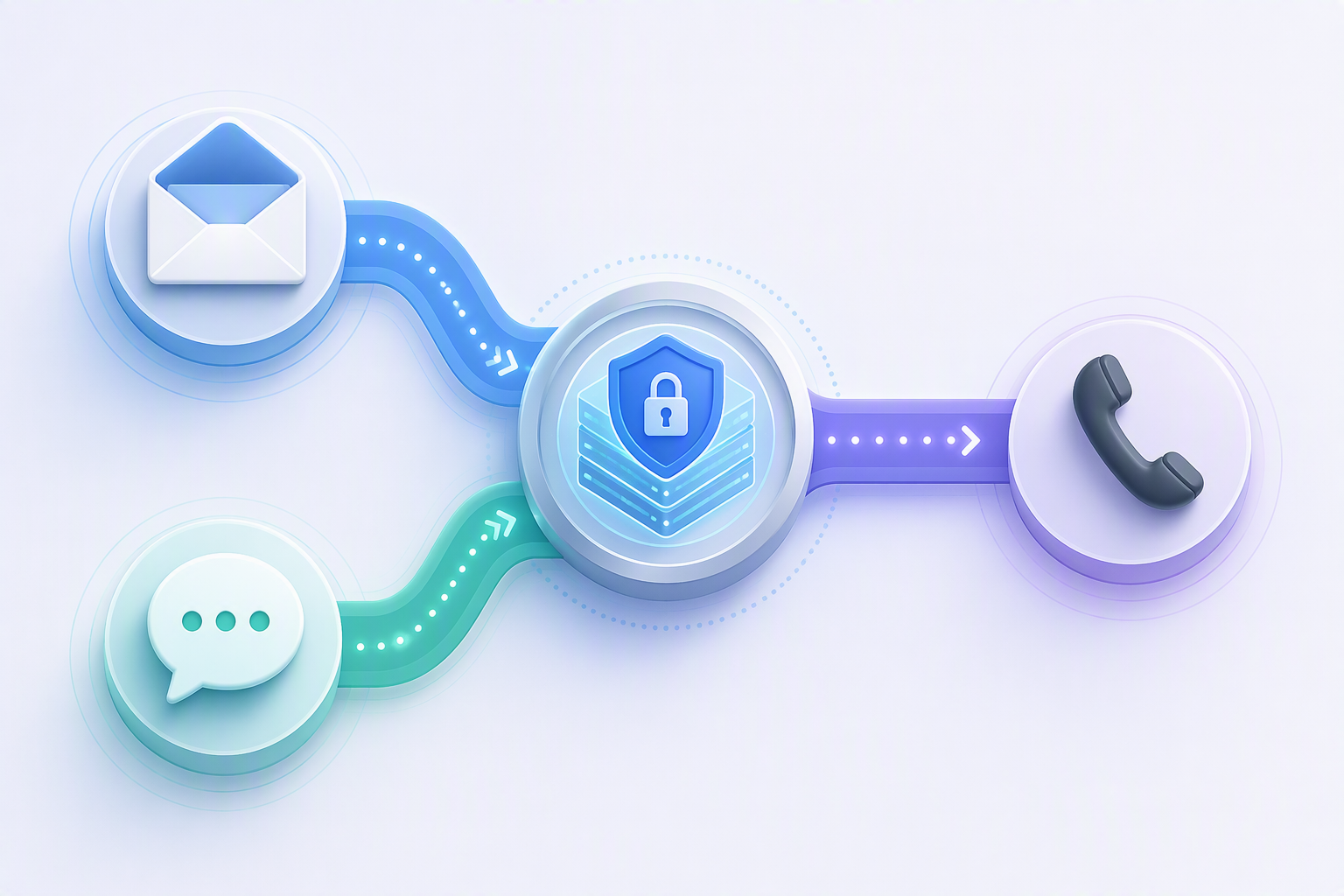
A CallMissed voice agent uses shared memory by retrieving the customer information most relevant to the current call—such as a recent email request, WhatsApp confirmation, or CRM status—and incorporating a concise version into the conversation. The objective is selective continuity, not unrestricted access to every historical message.
From channel history to usable call context
When email, WhatsApp, and voice activity belongs to the same customer record, CallMissed can support a workflow that turns earlier interactions into actionable context. A typical sequence is:
- Identify the customer. Match the incoming phone number or verified contact details with the appropriate CRM record.
- Retrieve relevant interactions. Look for recent emails, WhatsApp messages, recorded preferences, open issues, and workflow statuses connected to the apparent reason for calling.
- Prioritise current facts. Prefer a confirmed appointment, outstanding request, or latest order update over older and less relevant conversation history.
- Summarise the context. Give the AI voice agent a compact operational summary rather than loading entire message threads.
- Confirm before acting. Ask the customer to verify sensitive or ambiguous details, particularly before changing bookings, disclosing account information, or discussing payments.
- Record the outcome. Add the call result or follow-up requirement to the shared customer journey so another channel can continue from there.
For example, suppose a customer emails a quotation request, confirms the preferred model through WhatsApp, and calls the next morning. The agent might begin: “I can see that you recently discussed the Model B quotation and confirmed delivery to Pune. Are you calling about the delivery date?” That opening saves time while still inviting correction.
What “relevant” context should include
Effective voice agent shared memory should be scoped around the customer’s immediate objective. Depending on the workflow, relevant context could include:
- Email: enquiry subject, latest reply, quotation status, promised follow-up, or support-ticket summary.
- WhatsApp: appointment confirmation, selected product, consent response, document-submission status, or unresolved question.
- CRM: customer identity, relationship stage, assigned employee, open task, and previous escalation.
- Knowledge base: approved policies, product details, troubleshooting instructions, and answers the agent may use during the call.
Knowledge-base information and customer memory serve different purposes. The knowledge base explains what the business knows, while shared customer context explains what has happened in this relationship. Keeping those sources distinct helps prevent a general policy from being mistaken for a customer-specific promise.
Language continuity requires meaning, not copied text
Shared context can remain useful even when the customer changes languages between channels. A customer might write an email in English, message on WhatsApp in Hindi, and speak Marathi during the call. CallMissed supports speech workflows across 22 Indian languages, according to CallMissed’s platform specifications, allowing businesses to design continuity for regional audiences rather than forcing every interaction into English.
The agent should preserve facts such as dates, quantities, names, consent, and unresolved actions while expressing them naturally in the caller’s chosen language. It should not assume that a translated summary is authoritative when the original message is ambiguous.
When context should trigger a handoff
The agent should transfer to a human when records conflict, identity cannot be verified, the customer disputes a prior commitment, or the conversation requires discretion beyond configured rules. The handoff summary should state the caller’s intent, relevant email and WhatsApp context, completed verification, and the exact unresolved decision—giving the employee continuity without exposing unnecessary history.
Where should CallMissed memory boundaries, permissions, and customer consent apply?
A CallMissed voice agent should access only the customer context required for the current, authorized task. Memory boundaries must apply at collection, retrieval, disclosure, retention, and deletion—not merely when a call recording is stored.
Set boundaries by purpose, channel, and sensitivity
Treat voice agent shared memory as permissioned access to business records, not as unrestricted recall. Configure separate boundaries for WhatsApp conversations, emails, call transcripts, CRM fields, and knowledge-base content.
- Define the purpose: A delivery-status call may use the order number and latest dispatch update, but not unrelated sales emails.
- Match the customer: Use an appropriate identifier, then verify identity before exposing account-specific information. A matching phone number alone may be insufficient for financial, medical, or other sensitive workflows.
- Limit the time window: Retrieve the latest relevant interaction or approved summary instead of years of conversation history.
- Restrict actions: Reading an appointment time presents less risk than changing it, issuing a refund, or updating payment details.
- Separate business knowledge from customer memory: Public policies can be retrieved broadly; private records require customer-level authorization.
The Digital Personal Data Protection Act, 2023 states that consent must be “free, specific, informed, unconditional and unambiguous” and expressed through clear affirmative action. The Act also requires withdrawal of consent to be as easy as giving it, providing a useful design standard for Indian deployments even where teams must obtain legal advice about commencement, sector-specific obligations, and individual use cases.
Apply permissions at multiple levels
CallMissed administrators should translate business policy into practical access controls around each AI voice agent workflow:
- Role permissions: Sales, support, collections, and human supervisors should not automatically receive identical access.
- Channel permissions: Consent to receive WhatsApp updates should not be treated as blanket permission for unrelated outbound voice or email campaigns.
- Field permissions: Mask passwords, authentication codes, full payment credentials, and unnecessary identity documents.
- Action permissions: Require verification or human approval for cancellations, refunds, address changes, and contractual commitments.
- Retention permissions: Establish different schedules for recordings, transcripts, summaries, consent evidence, and operational logs.
The European Union’s General Data Protection Regulation, effective May 25, 2018, establishes purpose limitation and data minimisation in Article 5. Those principles offer a practical global benchmark: retrieve information for a defined task and use no more personal data than necessary.
Make consent understandable during the call
Consent notices should state what the customer needs to know in direct language. Where recording, transcription, or cross-channel context is used, the opening should explain the practice before processing continues.
A deployment checklist should ask:
- Is the caller told that they are speaking with an AI?
- Is recording or transcription disclosed where required?
- Is the purpose of accessing email or WhatsApp history clear?
- Can the customer decline, correct the context, or request a human?
- Is consent evidence timestamped and linked to the applicable notice?
- Can deletion, withdrawal, and access requests be routed for handling?
For example: “I’m CallMissed’s automated voice assistant for Example Company. I can use your recent support messages to help with this request. This call may be recorded and transcribed. Would you like to continue?” Legal teams should adapt that wording to the business, jurisdiction, and processing purpose.
When identity is uncertain, consent is absent, records conflict, or sensitive action is requested, the correct boundary is a human handoff with a minimal summary—not broader memory access.
Which CallMissed business use cases need automation, context, or a human handoff?
A CallMissed voice agent can automate repetitive, rules-based conversations, use shared context when prior email or WhatsApp activity changes the response, and involve a human when risk, ambiguity, or judgment exceeds predefined limits. The right operating model is selective automation—not an attempt to remove people from every interaction.
Use cases suited to end-to-end automation
Automation works best when the required information is structured, the outcome is reversible, and clear rules define success. Suitable CallMissed workflows include:
- Lead qualification: Ask about location, requirements, budget range, and preferred follow-up time before updating the omnichannel inbox/CRM for sales review.
- Appointment management: Collect booking details, confirm known information, and handle straightforward scheduling or rescheduling within approved rules.
- Service-status enquiries: Answer questions using current CRM records or approved knowledge-base content rather than generating unsupported explanations.
- After-hours response: Capture intent, answer routine questions, and create a follow-up path when employees are unavailable.
- Frequently asked questions: Use knowledge-base retrieval for approved information such as service areas, business hours, document requirements, or standard processes.
CallMissed supports speech workflows across 22 Indian languages, enabling businesses to design these journeys for regional audiences rather than restricting automation to English or Hindi. Language support does not eliminate workflow testing: names, addresses, mixed-language speech, industry terms, and noisy calls still require evaluation.
When voice agent shared memory adds value
Voice agent shared memory is most useful when earlier interactions materially affect the next action. The agent should receive a concise, permission-appropriate summary—not an unrestricted dump of every message.
Examples include:
- Sales follow-up: A prospect receives a quotation by email, asks a product question on WhatsApp, and then calls. The agent can acknowledge the relevant enquiry and continue qualification without repeating already answered questions.
- Order or service coordination: A customer confirms an address or appointment window on WhatsApp before calling about an update. The latest confirmed detail should take priority over older records.
- Document follow-up: An email records which documents were requested, while WhatsApp shows whether the customer submitted them. The agent can explain what remains outstanding without asking for the entire history again.
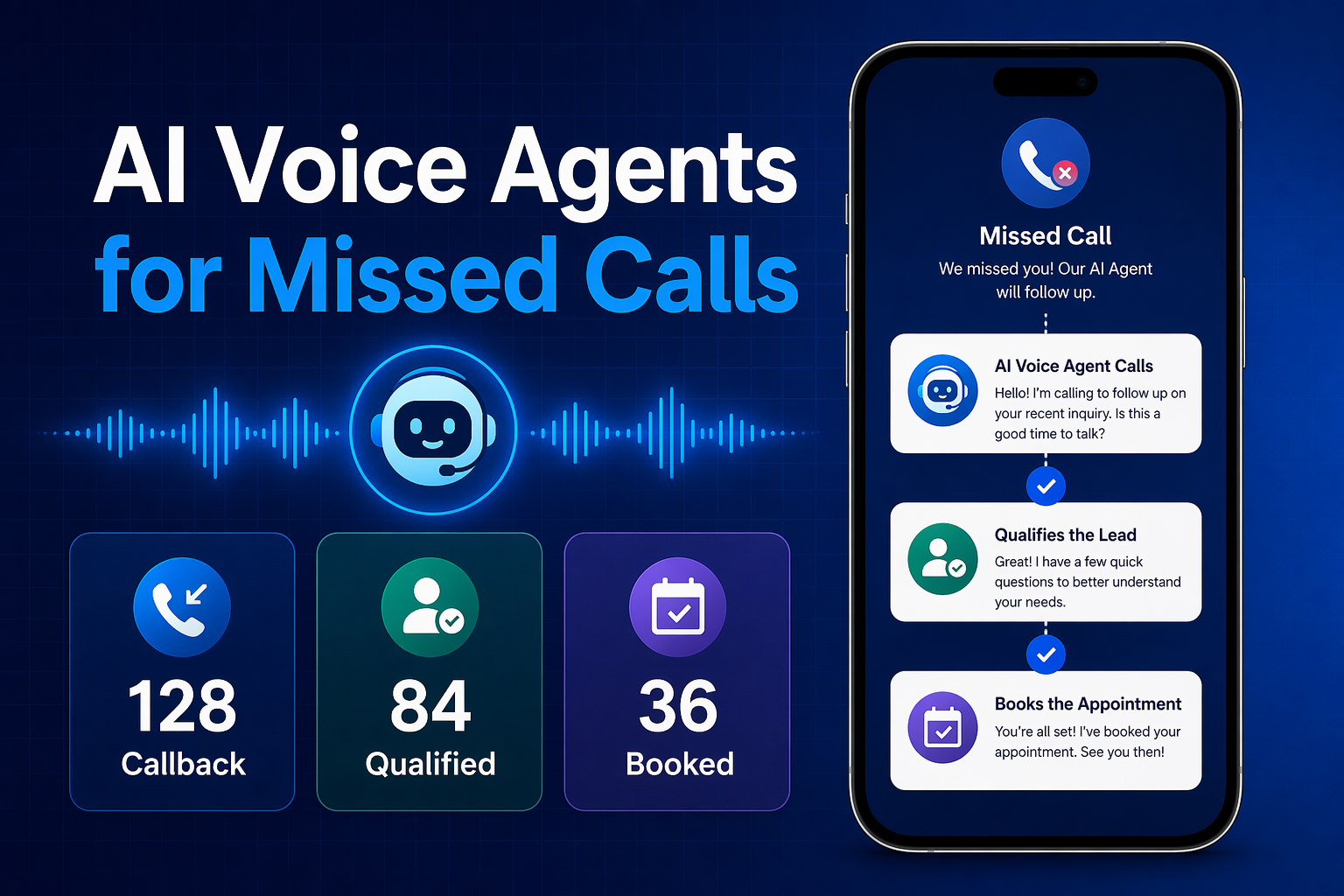
- Missed-call recovery: A WhatsApp interaction following an unanswered call can give the subsequent AI voice agent enough context to identify the likely purpose of the conversation.
Context should be verified when it affects identity, money, contractual commitments, or sensitive records. A useful opening is: “I can see you recently contacted us about an appointment—is that what you’re calling about?” This confirms relevance without exposing unnecessary details.
When a human should take over
A human handoff is appropriate when the customer explicitly requests one or when the conversation crosses a defined operational boundary. Common triggers include:
- Repeated misunderstanding, low transcription confidence, or unresolved language switching
- Payment disputes, collections hardship, refunds, or negotiated exceptions
- Complaints, legal threats, safety concerns, or emotionally distressed callers
- Conflicting CRM, email, and WhatsApp information
- Identity verification failure or requests involving sensitive account changes
- Actions outside the agent’s approved authority
The handoff package should contain the caller’s verified identity, stated intent, relevant email or WhatsApp context, actions already attempted, and the unresolved question. CallMissed’s omnichannel inbox/CRM can support this continuity, but businesses must define ownership, response times, permissions, and escalation queues. Because 1 CallMissed credit equals ₹1, teams can also measure automation and escalation costs against completed bookings, qualified leads, resolved enquiries, and human minutes saved.
What does CallMissed mean for your team, and which setup questions should you answer first? (TABLE)
A CallMissed voice agent changes more than call handling: it requires customer-service, sales, operations, and compliance teams to agree on which context the agent may use and what it should do next. Before deployment, define the journey, permitted memory, identity checks, language coverage, handoffs, and measurable outcomes.
Six decisions to make before configuration
| Setup area | Question your team must answer | Recommended starting point | Primary owner |
|---|---|---|---|
| Customer journey | Which calls should the agent handle? | Start with one bounded workflow, such as appointment confirmation, lead qualification, order-status enquiries, or after-hours intake. | Operations |
| Shared context | Which email, WhatsApp, and CRM details are relevant? | Provide only the latest verified facts needed for the task, such as an order reference, appointment status, or open support issue. | CRM or CX lead |
| Identity and permissions | What must be verified before information is disclosed or changed? | Match verification strength to risk; account, billing, medical, and financial actions need stricter controls than general enquiries. | Compliance and security |
| Language design | Which languages and switching patterns must be supported? | Test the languages customers actually use, including mixed-language speech, names, addresses, numerals, and industry terms. | CX and localisation |
| Human handoff | When must the agent stop automating? | Escalate on customer request, repeated misunderstanding, sensitive disputes, policy exceptions, or actions outside approved authority. | Support manager |
| Measurement | What outcome defines a successful call? | Track task completion, transfers, repeat contacts, verification failures, latency, customer corrections, and cost per resolved journey. | Analytics or finance |
Translate shared memory into team rules
Voice agent shared memory should be governed as a retrieval policy, not treated as an unrestricted transcript archive. For every workflow, document:
- What the agent may retrieve: for example, the latest WhatsApp appointment confirmation and the current CRM status.
- What it must ignore: irrelevant marketing exchanges, expired offers, superseded instructions, or sensitive details unnecessary for the call.
- What requires confirmation: names, dates, delivery addresses, payment status, and any information that may have changed.
- What it may write back: specify whether the outcome becomes an inbox note, follow-up task, or approved customer communication.
- When context expires: set retention and relevance boundaries according to business policy and applicable legal requirements.
This separation prevents “available” information from automatically becoming “appropriate to disclose.” It also gives reviewers a concrete checklist for testing prompts, permissions, and handoffs.
Plan for Indian language and channel realities
Language testing should be part of acceptance testing rather than a late localisation exercise. CallMissed product specifications state that its speech capabilities cover 22 Indian languages, enabling teams to evaluate regional-language journeys within the same engagement environment. Test real customer patterns such as Hindi-English code-switching, regional accents, abbreviated product names, and numbers spoken partly in English.
Channel entry also matters. A customer may place a conventional voice call or use WhatsApp Business calling, which CallMissed can bridge to an AI agent. The team should decide whether both entry points use the same verification, context, and escalation policies.
Assign operational ownership before launch
Run a limited pilot with named owners for conversation design, knowledge content, CRM data quality, compliance review, and human escalation. Review failed calls individually before increasing scope.
Cost controls should be equally explicit. CallMissed uses transparent credit pricing in which 1 credit equals ₹1, alongside free-tier and pay-as-you-go access. Finance and operations can therefore connect usage monitoring to completed outcomes rather than assessing call volume alone. The result should be an AI voice agent that knows enough to continue the relationship—but remains bounded by clear team decisions.
What should expert reviewers validate before recommending a CallMissed deployment?
Expert reviewers should recommend a deployment only after testing context accuracy, identity controls, multilingual performance, handoffs, reliability, and total operating cost with representative customer journeys. A polished demonstration is insufficient; the decisive question is whether the CallMissed voice agent behaves safely when information is missing, conflicting, outdated, or unavailable.
Validate context retrieval, not just conversational fluency
Reviewers should build an acceptance-test set covering real transitions between CallMissed email, WhatsApp, and calls. Each test should document the permitted source records, expected response, prohibited information, and required escalation.
Test whether the AI voice agent can:
- Use the correct customer or conversation record after appropriate verification.
- Distinguish a confirmed WhatsApp message from an earlier email request.
- Prefer current order, appointment, or payment information over stale history.
- State uncertainty rather than inventing context when records are incomplete.
- Avoid exposing another customer’s details when phone numbers, names, or accounts are similar.
Reviewers should also establish whether continuity depends on a configured workflow, CRM field, conversation summary, or knowledge-base retrieval. Voice agent shared memory must not be presented as unrestricted or infallible recall; the recommendation should identify exactly what context is available and under which conditions.
Benchmark voice performance for the intended audience
Language support is not equivalent to production-quality performance in every domain. CallMissed product information states that its speech capabilities cover 22 Indian languages, but reviewers should independently test the languages, accents, code-switching patterns, and telephony conditions relevant to the deployment.
A useful evaluation set includes:
- Customer names, Indian addresses, dates, amounts, and alphanumeric order IDs
- English-Hindi or other regional-language code-switching
- Background noise, speakerphone audio, interruptions, and weak connections
- Domain terminology such as medicine names, vehicle parts, or financial products
- Text-to-speech pronunciation, pacing, and intelligibility
Report task completion and critical-field accuracy, not merely whether the conversation sounded natural. A transcription error in casual phrasing may be harmless; an incorrect payment amount or appointment date is not.
Exercise handoffs and adverse conditions
Reviewers should trigger every escalation path deliberately. Test customer requests for a person, repeated recognition failures, sensitive account actions, angry callers, unsupported requests, and unavailable integrations.
A production-ready handoff should be evaluated for:
- Trigger correctness: Does escalation occur at the defined threshold?
- Summary fidelity: Does the human receive a concise, accurate account of the call and relevant prior interactions?
- Channel continuity: Can follow-up proceed through the configured inbox, email, or WhatsApp workflow?
- Failure behavior: What happens if transfer, context retrieval, or an external business system fails?
- Customer clarity: Is the caller told what will happen next without unsupported promises?
Verify governance, economics, and operational ownership
Before approval, reviewers should document access permissions, retention boundaries, consent requirements, audit needs, and which actions always require human confirmation. They should also identify who maintains prompts, knowledge sources, routing rules, language tests, and escalation contacts after launch.
CallMissed uses transparent credit pricing in which 1 credit equals ₹1, according to CallMissed product information. Reviewers should nevertheless run load tests and calculate credits consumed per successful outcome, including retries, long calls, follow-up messages, and fallback paths.
The final recommendation should therefore be conditional and measurable: approve specific journeys, languages, and risk levels that passed testing; restrict those that did not; and require ongoing sampling for context errors, failed handoffs, latency, customer complaints, and cost per resolved conversation.
Frequently asked questions about CallMissed voice agents, shared context, memory limits, handoffs, setup, pricing, and availability
How does a CallMissed voice agent use shared context from email and WhatsApp?
Does voice agent shared memory store every customer conversation permanently?
When should an AI voice agent hand a call to a human employee?
What information is needed to set up a CallMissed voice agent?
How much does a CallMissed AI voice agent cost?
Where are CallMissed voice agents and WhatsApp Business calling available?
Conclusion
A CallMissed voice agent can make calls part of one continuous customer relationship by drawing on relevant, permitted context from email, WhatsApp, the omnichannel inbox/CRM, and the business knowledge base. The objective is not unlimited recall; it is to help each customer move forward without repeatedly explaining what has already happened.
The core takeaways are:
- Continuity should be selective. Effective voice agent shared memory surfaces only the context needed for the current task, such as a recent invoice email, confirmed WhatsApp appointment, order update, or previous support summary.
- Every channel should advance the same relationship. A conversation may begin through email, continue on WhatsApp, and move to a standard or WhatsApp Business call. The voice interaction should acknowledge verified progress while recording a useful summary for the next touchpoint.
- Boundaries are as important as memory. Businesses should define permissions, retention periods, identity-verification steps, language requirements, and rules for excluding irrelevant or sensitive history.
- Human handoffs must preserve momentum. When the AI voice agent encounters ambiguity, risk, customer frustration, or an issue outside its authority, it should transfer the interaction with a concise account of the customer’s request and completed steps.
Implementation should therefore begin with specific journeys—such as lead qualification, appointment booking, collections, service updates, support, and after-hours response—rather than a broad instruction to “remember everything.” Teams can then map which records each journey requires, when verification is necessary, and which outcome triggers escalation. CallMissed’s coverage of 22 Indian languages also allows businesses to design continuity for regional-language customers rather than treating multilingual support as a later addition. Its transparent model of 1 credit equalling ₹1 helps connect these workflow decisions to operating costs.
Looking ahead, watch for customer-engagement systems to become more context-aware, multilingual, and channel-fluid, while applying stricter controls over what information an agent may retrieve and use. The strongest deployments will measure success through completed outcomes, fewer repeated explanations, accurate handoffs, and appropriate use of customer context—not through the volume of stored conversation history.
To explore this direction, visit CallMissed, an AI communication infrastructure platform spanning voice agents, WhatsApp engagement, email, and multilingual automation. Which customer journey would improve most if the next call began with the right context already in place?
Related Reading
Discussion
Related Posts


Ready to automate customer conversations?
Launch AI voice agents and WhatsApp bots with CallMissed — one API, 22+ Indian languages.