
Never Lose a Table Again: How "Missed Call to WhatsApp" and AI Voice Agents Are Saving Restaurant Bookings


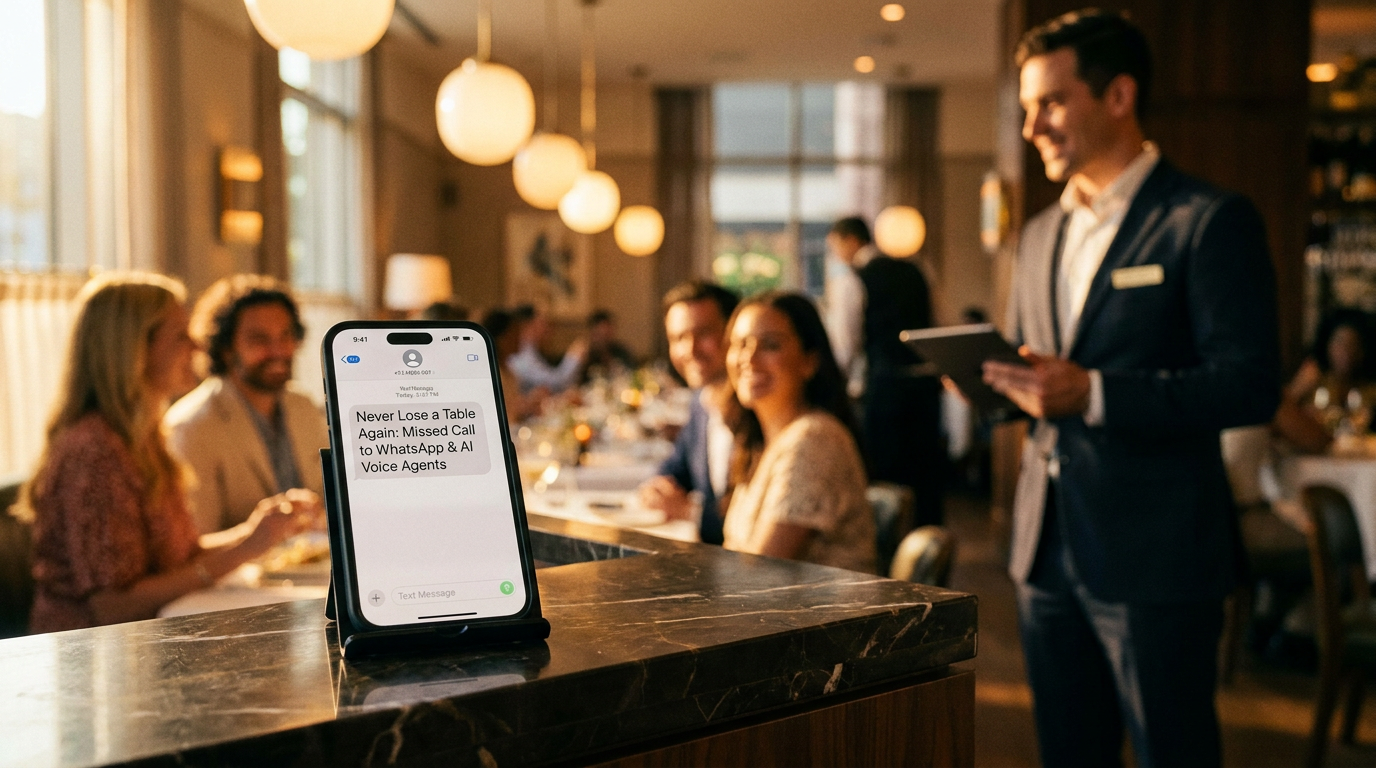
Did you know that during a hectic weekend dinner rush, up to 35% of restaurant phone calls go completely unanswered? While your front-of-house staff is...
Never Lose a Table Again: How "Missed Call to WhatsApp" and AI Voice Agents Are Saving Restaurant Bookings
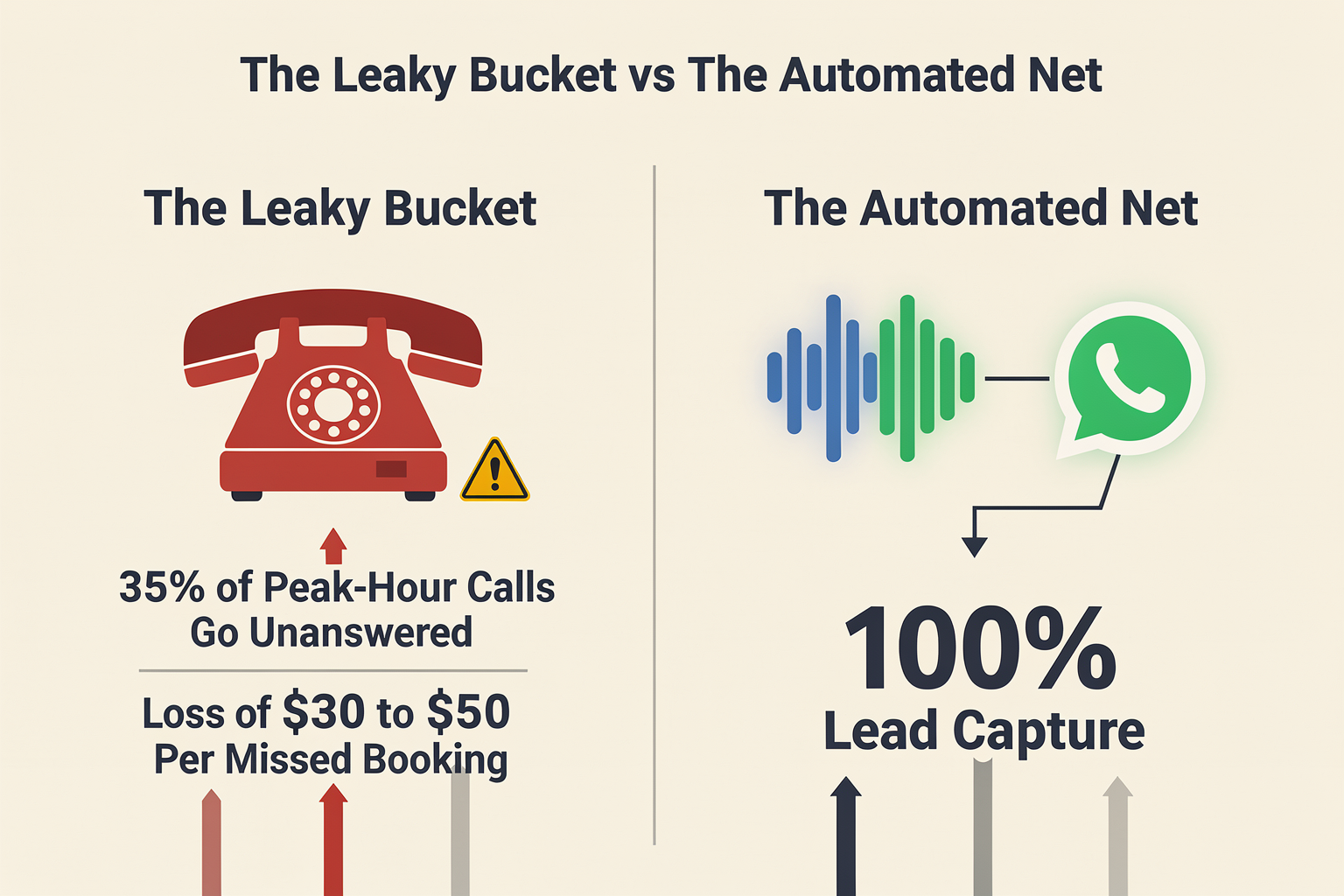
Did you know that during a hectic weekend dinner rush, up to 35% of restaurant phone calls go completely unanswered? While your front-of-house staff is busy greeting guests, seating walk-ins, and managing tables, the phone rings endlessly in the background. In the hospitality industry, this silence is incredibly expensive: industry data reveals that a single missed call costs an average of $30 to $50 in lost bookings and high-value takeout orders. In a market where margins are razor-thin, letting more than a third of your inbound leads slip away is a leak that no restaurant can afford to ignore.
Fortunately, dining establishments are fighting back with a powerful, automated dual-channel defense. By pairing conversational AI Voice Agents with automated "Missed Call to WhatsApp" text-back triggers, modern restaurants are ensuring that no guest is ever left hanging. This next-generation digital hosting team works 24/7 to instantly convert high-intent callers into confirmed table reservations and orders without adding a single task to your busy staff's plate. Platforms like CallMissed are at the forefront of this shift, enabling restaurants to deploy intelligent voice receptionists and instant messaging workflows that capture every missed opportunity.
In this practical, ROI-driven guide, we will explore exactly how this two-pronged automation system works. You will learn how modern AI Voice Agents act as your digital host—handling natural conversations, answering complex FAQs, and seamlessly syncing with reservation platforms like OpenTable or POS systems like Toast to prevent double-bookings. We will also deep-dive into the "second line of defense": the "Missed Call to WhatsApp" fallback. You will see how an unanswered call instantly triggers an interactive WhatsApp message, shifting the customer into a self-service digital flow where they can view menus, book tables, or place orders. If you are ready to eliminate the chaos of peak-hour phone traffic and secure 100% of your incoming demand, here is how to turn missed calls into guaranteed revenue.
Introduction: The Cost of Silence in a Loud Restaurant
The weekend dinner rush is the heartbeat of any successful restaurant. In-person guests are laughing, glasses are clinking, the kitchen is humming, and the front-of-house staff is operating at maximum capacity. But amidst this culinary symphony, there is a silent drain on your bottom line: the telephone ringing endlessly in the background.
The High Cost of an Unanswered Call
During peak hours, restaurant staff simply do not have the bandwidth to play receptionist. Industry data reveals that up to 35% of phone calls go completely unanswered during busy weekend shifts. Because your hosts are focused on greeting walk-ins, seating guests, and coordinating with the kitchen, the telephone becomes a secondary priority.
In the hospitality industry, this silence is incredibly expensive. A single missed call costs an average of $30 to $50 in lost bookings, high-value reservation packages, or takeout orders. When you multiply this by dozens of missed calls per week, the annual revenue leakage is staggering. In a sector where profit margins are notoriously razor-thin—often hovering between 3% and 5%—letting more than a third of your inbound customer demand slip away is a vulnerability no restaurant can afford to ignore.
Enter the Dual-Channel AI Defense
To stop this financial leak, forward-thinking restaurants are moving away from traditional, manual phone systems. Instead, they are deploying a powerful, automated dual-channel system that acts as a digital safety net:
- The First Line of Defense (AI Voice Agents): Intelligent, conversational AI receptionists that answer calls on the first ring, handle natural conversations, answer FAQs, and book tables directly into your reservation system.
- The Second Line of Defense ("Missed Call to WhatsApp" Fallback): If a line is busy or a call somehow slips past, an automated system instantly text-backs the caller on WhatsApp. This shifts the high-intent lead directly into a digital booking and ordering flow.
By leveraging these two layers of automation, restaurants can secure 100% of their incoming demand without adding a single task to their busy staff's plate.
Streamlining the Guest Experience
Implementing this technology doesn't mean sacrificing the personal touch that defines hospitality. In fact, it enhances it. Guests get instant answers to their questions, and reservations are secured in seconds without being put on hold. Platforms like CallMissed are making this transition seamless for restaurateurs, offering production-ready AI communication infrastructure that includes multilingual voice agents and automated WhatsApp chatbot workflows.
In this practical, ROI-driven guide, we will explore how this two-pronged automation system works. You will learn how modern AI Voice Agents act as your digital host—handling natural conversations and seamlessly syncing with platforms like OpenTable or POS systems like Toast—and how the "Missed Call to WhatsApp" fallback converts frantic peak-hour phone traffic into streamlined digital revenue.
Background & Context: Why 35% of Calls Die on the Floor
To understand why more than a third of inbound restaurant calls go unanswered, we must look at the physical reality of a dining room during peak hours. The front-of-house (FOH) staff is the ultimate multi-tasker, but they are human. When a host is physically greeting a party of six, checking open tables on a tablet, and coordinating with the kitchen, a ringing telephone is not just an interruption—it is an operational impossibility.
The Friction Point: Why Front-of-House Staff Can't Reach the Phone
During the Friday and Saturday night rushes, the physical environment of a restaurant actively works against traditional phone communication:
- Auditory Chaos: High-energy music, clinking glasses, and kitchen chatter often drown out the physical ring of a landline.
- Prioritization Dynamics: A host's primary directive is to serve the guest standing directly in front of them. It is widely considered poor hospitality to interrupt an in-person greeting to answer a phone call.
- Multi-Platform Overload: Modern hosts are already managing digital waitlists, checking POS systems like Toast or Clover, and monitoring third-party delivery tablets. Adding a ringing phone to this mix creates cognitive overload.
This is not a staff performance issue; it is a structural capacity limitation.
The "No-Answer" Bounce: Customer Psychology
When a customer calls a restaurant, they are exhibiting high purchase intent. They want a table now, or they want to place a high-value takeout order. However, consumer patience is at an all-time low. If a call rings out or goes to a generic voicemail system, the fallout is immediate:
- The Competitor Pivot: Over 80% of callers will not leave a voicemail. Instead, they hang up, return to their search engine, and call the next restaurant on the list.
- The Loss of High-Ticket Bookings: Callers often use the phone for complex inquiries—booking a party of ten, checking for severe allergy accommodations, or planning a rehearsal dinner. These are high-revenue interactions that are lost permanently to the silence.
The Failure of Legacy Answering Systems
For years, restaurants tried to solve this with legacy Interactive Voice Response (IVR) systems. But these rigid "Press 1 for hours, Press 2 for reservations" trees only frustrate hungry callers, leading to high drop-off rates and a poor brand image.
This is where modern communication infrastructure platforms like CallMissed redefine the playing field. By operating as an automated, digital FOH assistant, CallMissed ensures that even when your physical staff is entirely occupied, the incoming call is met with an immediate, intelligent response—either through an AI voice agent that speaks naturally or an automated text-back that moves the high-intent caller directly to a digital self-service flow.
Key Developments: AI Voice Agents vs. Missed Call to WhatsApp
To build an airtight booking strategy, modern restaurants must understand the distinct operational roles of AI Voice Agents and Missed Call to WhatsApp automation. While both technologies are engineered to eliminate the high cost of unanswered rings, they manage the customer journey through different channels. One acts as an immediate, real-time conversational host on the line, while the other serves as an automated digital safety net that instantly transitions a voice caller into a structured messaging interface.
The table below outlines how these two systems compare across key operational metrics:
| Operational Metric | AI Voice Agents | Missed Call to WhatsApp |
|---|---|---|
| Primary Channel | Voice (Inbound/Outbound Phone Call) | Mobile Messaging (WhatsApp Chat) |
| Interaction Style | Natural, real-time spoken conversation | Asynchronous, button-based, or text chat |
| Core Integration | Live-sync with OpenTable, Resy, or POS systems | Deep links to digital menus, reservation portals, or catalog checkouts |
| Ideal Customer Scenario | Callers who want instant spoken confirmation or have complex dietary questions | Customers in noisy environments who prefer visual menus and self-service booking |
| Staff Intervention | 0% (Agent autonomously updates the reservation book) | 0% (Customer completes the booking flow via interactive WhatsApp buttons) |
Selecting the Right Defense: Synergy Over Competition
Rather than choosing between these two technologies, high-volume restaurants deploy them as a unified, dual-channel defense.
An AI Voice Agent serves as your primary host. When a guest calls, the AI agent greets them immediately—eliminating hold times entirely. Because it can process natural language, it can answer complex questions ("Do you have gluten-free options?") and book tables directly into your reservation management system. Data shows that these conversational voice agents routinely resolve over 80% of routine inbound calls successfully, preventing manual host chaos and saving hours of staff labor every week.
However, if a customer hangs up before speaking, or if network congestion prevents a call from connecting, the Missed Call to WhatsApp system acts as your ultimate safety net. Within seconds of a dropped or missed call, the platform triggers an interactive WhatsApp message. This moves the high-intent lead from an abandoned phone call directly into a digital booking flow. Because the global market for conversational commerce is expanding rapidly, customers are highly receptive to finishing their booking via quick-reply buttons on their favorite messaging app.
Deploying this integrated strategy is seamless with platforms like CallMissed, which provide both highly responsive voice agent infrastructure and automated WhatsApp trigger workflows. By uniting these channels, restaurants can guarantee that 100% of inbound demand is captured, turning potential missed connections into confirmed, revenue-generating covers.
In-Depth Analysis: The Dual-Channel Defense System Explained
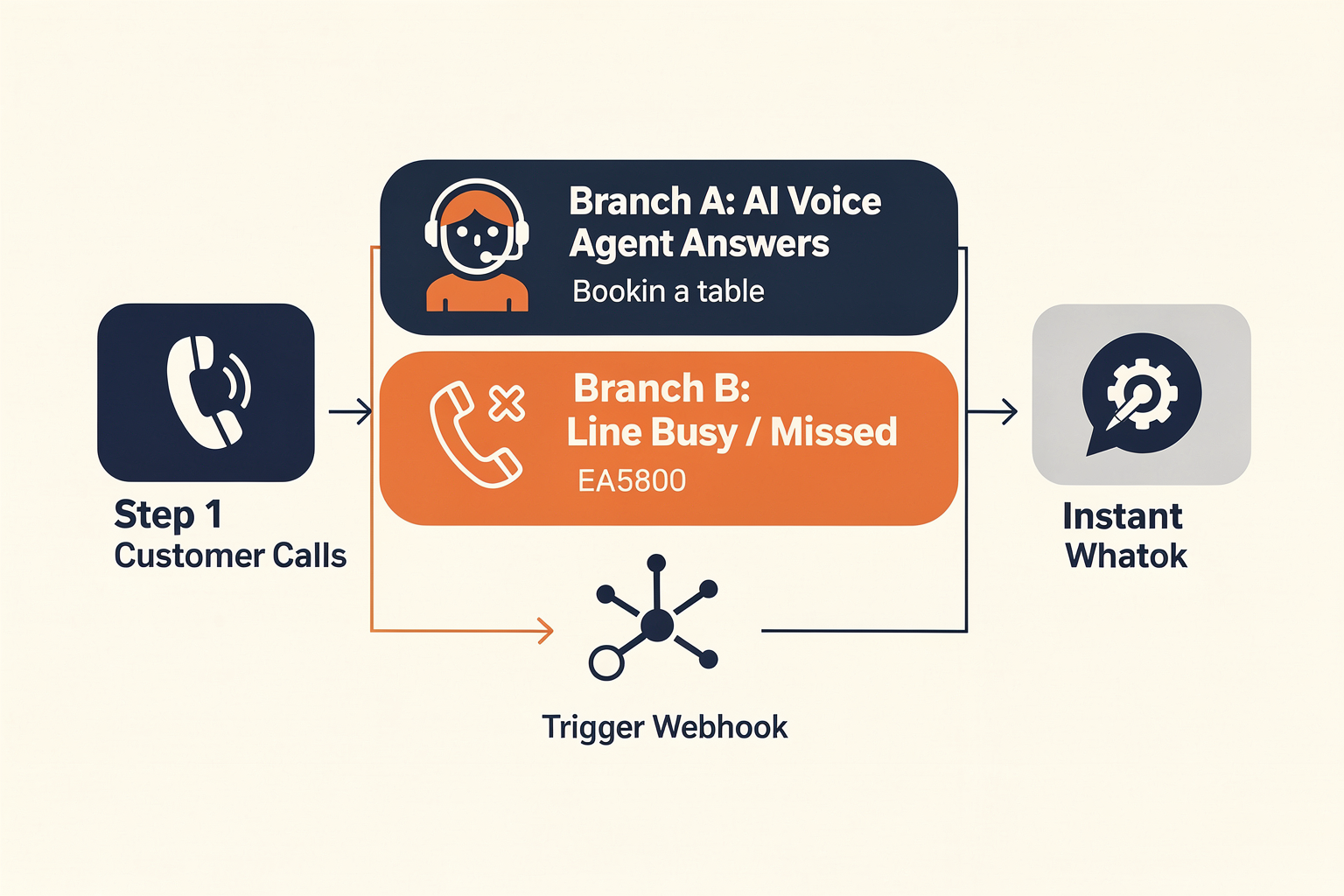
To completely eliminate lost revenue from unanswered phones, relying on a single automated tool is no longer enough. Modern hospitality groups are now deploying a highly coordinated dual-channel defense system that captures 100% of inbound customer intent. By pairing conversational AI Voice Agents with instant "Missed Call to WhatsApp" text-back triggers, restaurants create a fail-safe digital net that ensures no booking slips through the cracks.
Here is an in-depth breakdown of how this two-part defense mechanism operates in real time.
Channel 1: The AI Voice Agent (The First Line of Defense)
The first line of defense is an intelligent, voice-based receptionist designed to handle high-volume phone traffic without lag. When a customer dials the restaurant, the AI voice agent answers on the very first ring—even during the chaotic Saturday night rush.
- Natural Conversational Flow: Built on low-latency Large Language Models (LLMs) and advanced speech synthesis, the agent can understand complex, natural dialogue. It doesn’t just offer rigid menu options; it answers questions like, "Do you have any gluten-free options on your seasonal menu?" or "Is there wheelchair access near the outdoor patio?"
- Real-Time Platform Integration: The voice agent is directly synced with reservation engines like OpenTable or Resy, and POS systems like Toast or Clover. It checks live table inventory instantly, books the slot, and sends an automated SMS confirmation to the guest.
- Proven Efficiency: According to hospitality deployment data, automated AI voice agents successfully handle and resolve over 80% of routine reservation and inquiry calls without requiring any staff intervention.
Channel 2: "Missed Call to WhatsApp" (The Second Line of Defense)
No system is completely immune to network dropouts or customers who hang up prematurely. That is where the second line of defense—the automated "Missed Call to WhatsApp" fallback—comes into play.
If a caller hangs up before completing their reservation, or if an analog line is busy, a webhook instantly triggers an automated, rich-media message sent directly to the caller’s WhatsApp within seconds.
- Frictionless Transition: The message reads: "Sorry we missed your call! Tap below to book your table instantly, view our menu, or place a takeout order."
- Interactive Digital Self-Service: Instead of waiting on hold, the customer is routed into an interactive WhatsApp chat. They can use quick-reply buttons to view photos of the venue, browse digital menus, or complete a secure reservation flow right inside the chat interface.
Seamless Context Sharing via Unified Infrastructure
The true magic of this dual-channel setup lies in unified context sharing. Implementing these channels separately can lead to disjointed customer experiences. To solve this, solutions like CallMissed provide a unified AI communication infrastructure.
With CallMissed, the AI voice agent and the WhatsApp chatbot share the same backend intelligence. If a customer is speaking with the voice agent about booking a table for four but gets disconnected, the platform automatically triggers a personalized WhatsApp message: "Hi there! It looks like we got disconnected. Would you like to finish reserving that table for 4 at 7:30 PM?"
By maintaining a single source of truth across both voice and text channels, restaurants can recover abandoned bookings in real time, delivering a premium guest experience while securing high-value weekend revenue.
Impact & Implications: The $12.4 Billion WhatsApp Ordering Revolution
The paradigm of restaurant-customer interaction has shifted permanently. It is no longer just about answering a phone call; it is about meeting customers exactly where they spend their digital lives. With over 2 billion active monthly users globally, WhatsApp has evolved from a simple messaging app into a fully-fledged transactional powerhouse. The global WhatsApp ordering market is on a massive upward trajectory, projected to reach a staggering $12.4 billion by 2033. This explosive growth is driven by a simple truth: consumers demand frictionless, immediate, and conversational purchasing experiences.
For restaurants, this revolution represents an unprecedented opportunity to capture revenue that previously slipped through the cracks. When a missed call triggers an automated transition to WhatsApp, customers are not just receiving a polite "sorry we missed you" text. Instead, they are ushered into a dynamic, interactive digital storefront.
Why WhatsApp is the Ultimate Revenue Channel
Unlike traditional food delivery apps that charge exorbitant commission fees—often up to 30% per order—or clunky mobile websites that require tedious account creation, WhatsApp offers a native, streamlined environment. Modern conversational commerce relies on several core elements:
- Interactive Digital Menus: Instead of sending a static PDF that requires pinching and zooming, restaurants can deploy structured WhatsApp catalogs. Customers can browse categories, customize their meals (e.g., adding extra toppings or selecting a gluten-free crust), and build their cart directly in the chat window.
- Frictionless Payment Integration: By embedding secure, one-click payment links (supporting credit cards, Apple Pay, Google Pay, or regional digital wallets), the entire transaction occurs within seconds without the user ever leaving the messaging thread.
- Conversational Upselling: Powered by advanced natural language processing, automated bots can suggest high-margin add-ons, such as "Would you like to add a side of garlic knots for $4.99?" or "Pair this steak with our signature house wine."
Unlocking Global Scale with CallMissed
Executing this dual-channel strategy at scale requires robust, enterprise-grade infrastructure. This is where platforms like CallMissed become indispensable for growing restaurant brands. By offering unified access to over 300 LLMs, WhatsApp chatbot APIs, and multilingual Speech-to-Text capabilities, CallMissed allows restaurants to easily orchestrate complex customer journeys.
For instance, if a tourist calls a popular downtown bistro but prefers to communicate in their native language, CallMissed's translation and multilingual engine can automatically detect the preference, handle the voice interaction, and seamlessly transition the guest to a localized WhatsApp booking flow.
The implications are clear: by turning every missed dial into an automated, interactive WhatsApp chat, restaurants are not just recovering lost tables—they are building a direct, commission-free sales channel that operates flawlessly 24 hours a day, 365 days a year.
Expert Opinions: What Hospitality Tech Leaders Say About AI Receptionists
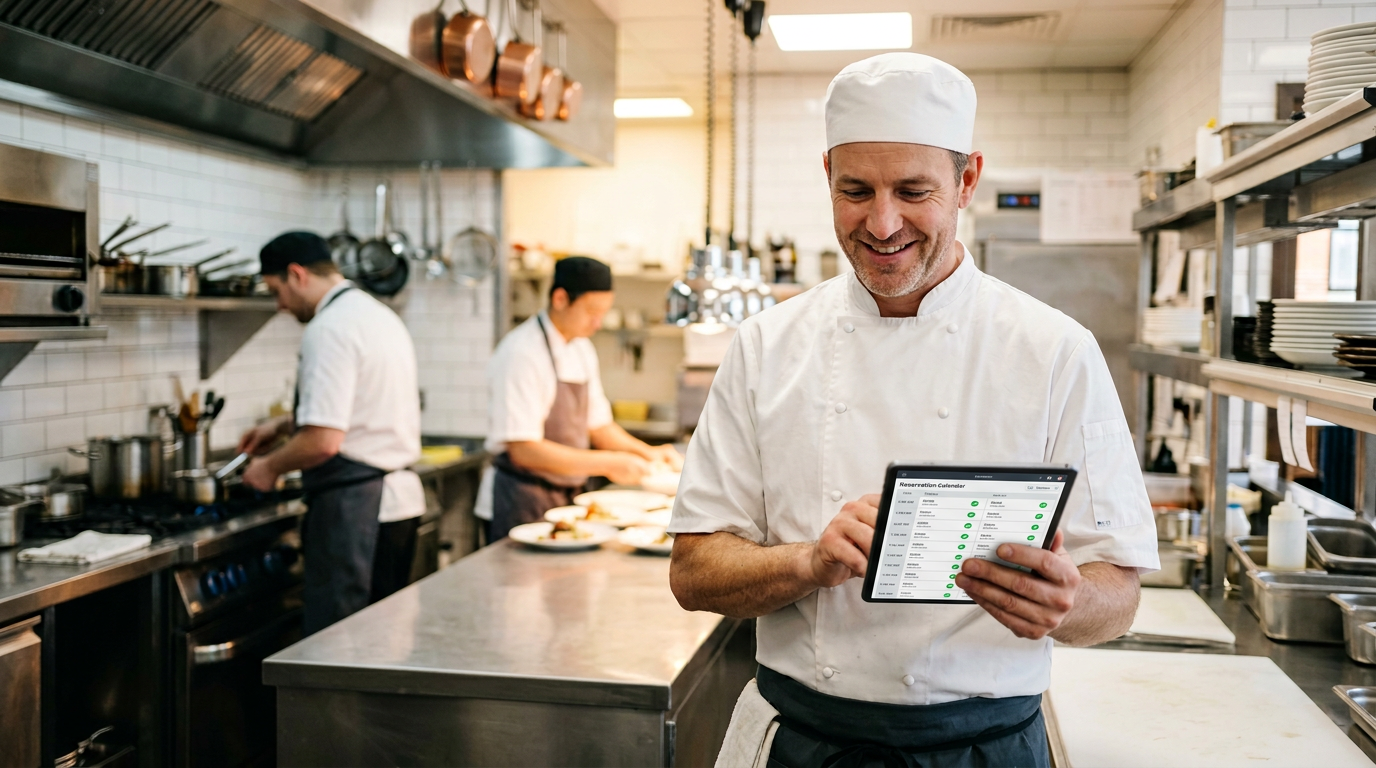
Hospitality technology leaders are no longer viewing AI voice agents and automated messaging as futuristic novelties; they are recognized as operational necessities. As modern restaurants grapple with rising labor costs and razor-thin profit margins, industry veterans agree that manual phone management is a massive bottleneck.
Redefining the Host's Role
According to hospitality operations consultants, the primary friction point in front-of-house management is distraction. "A host’s primary job is to deliver exceptional, face-to-face hospitality—not to play secretary while a line of hungry guests waits to be seated," notes restaurant tech analyst Marcus Vance.
By delegating phone traffic to digital receptionists, restaurants can return to what they do best. Industry data shows that automated voice systems successfully resolve over 80% of routine reservation calls without any human intervention. Tech leaders point out that this doesn't diminish the guest experience; rather, it enhances it by providing instant, polite, and accurate responses at any hour of the day.
Shifting from Reactive to Proactive Revenue Capture
In the fast-paced food-and-beverage sector, tech leaders emphasize that an unanswered call is a lost opportunity to a competitor. "In the past, a missed call was a dead end. Today, conversational AI turns that failure point into a highly targeted sales funnel," says Sarah Jenkins, Chief Technology Officer at a leading multi-concept restaurant group.
Experts highlight several key benefits of this proactive shift:
- Strategic Upselling: Modern AI voice agents don’t just book tables; they are trained to suggest premium seating, highlight weekend specials, or prompt callers about dietary restrictions.
- Contextual Redirection: If a preferred reservation slot is unavailable, the AI doesn't simply say "no." It suggests alternative times or instantly transitions the user to a digital waiting list.
- Seamless Tech Ecosystems: Leaders stress the importance of open APIs. Modern AI voice agents must integrate natively with POS platforms like Toast and reservation software like OpenTable to prevent the nightmare of double-bookings.
For restaurant groups looking to implement this architecture without massive development overhead, platforms like CallMissed offer an incredibly powerful solution. CallMissed’s communication infrastructure allows operators to deploy high-fidelity voice agents and multi-lingual text-to-speech services (supporting 22 Indian languages alongside global dialects) that can communicate naturally with a diverse clientele, ensuring no guest is alienated by language barriers.
The Power of the Dual-Channel Strategy
"The real magic happens when you pair voice AI with instant messaging," asserts Jenkins. "If a guest hangs up because they are in a noisy area, receiving an immediate WhatsApp text-back with a direct booking link keeps them in your ecosystem."
Hospitality tech executives agree that this multi-channel approach—utilizing tools like CallMissed to bridge the gap between traditional phone calls and instant messaging—is the gold standard for modern guest acquisition. By meeting customers exactly where they want to communicate, restaurants are successfully capturing 100% of their incoming demand, driving higher occupancy rates, and maximizing peak-hour revenue.
What This Means For You: Implementing the Dual-Defense Stack
Implementing a unified, automated response system ensures that busy hosts never have to choose between greeting a physical guest at the door and answering a potential reservation on the line. By structuring your inbound communications into a resilient, automated workflow, you turn chaotic peak-hour phone traffic into structured digital revenue.
Setting up this Dual-Defense Stack does not require a complex, custom-coded IT overhaul. By utilizing communication platforms like CallMissed, restaurants can launch these intelligent voice agents and instant messaging triggers seamlessly.
The table below outlines how the key components of this architecture operate together to form a comprehensive, automated reservation funnel:
| System Component | Role in the Stack | Operational Workflow | Core Business Value |
|---|---|---|---|
| Voice AI Agent | First Line of Defense | Answers 100% of incoming calls instantly, handles conversational FAQs, and captures booking details. | Saves staff up to 80% of phone time; eliminates unanswered peak-hour calls. |
| Instant Fallback Trigger | Automatic Handover | Detects busy lines, hang-ups, or overflows and sends an immediate WhatsApp text-back. | Recovers high-intent callers instantly before they can dial a competitor. |
| WhatsApp AI Assistant | Second Line of Defense | Guides customers through digital booking flows, interactive menus, and visual selections. | Provides a frictionless, 24/7 self-service channel right inside a user's favorite chat app. |
| POS & Reservation Sync | Backend Integration | Connects the Voice/WhatsApp flows directly with tools like OpenTable, Resy, or Toast. | Prevents double-bookings and updates the floor plan and kitchen in real-time. |
| Multilingual Engine | Accessibility Booster | Automatically detects and chats in the customer's preferred local language. | Broadens market reach; CallMissed natively supports 22 Indian languages for local personalization. |
A Step-by-Step Implementation Framework
Deploying this system does not disrupt your current dining operations. Most venues can transition to a fully automated dual-defense model in four straightforward steps:
- Route Your Primary Line: Connect your main restaurant phone line to your AI voice receptionist. This allows the digital host to pick up instantly on the first ring, handling natural conversational flows and answering common questions about parking, dress codes, or dietary options.
- Define the Fallback Triggers: Configure your telephony system to identify missed calls, busy lines, or after-hour rings. When these conditions are met, the system instantly triggers an automated SMS or WhatsApp outreach (e.g., "Hey! We missed your call. Book your table instantly here!").
- Design the Conversational Flow: Build interactive, rich-media menus inside WhatsApp. Ensure that guests can visually select a date, time, and table size, or even browse food options.
- Integrate with Existing Systems: Sync your AI channels directly with booking platforms like OpenTable or POS terminals like Toast. This guarantees that when a customer books via the voice agent or confirms on WhatsApp, the table is locked in, completely preventing the risk of manual double-bookings.
By taking these steps, restaurants shift their operations from reactive firefighting during the dinner rush to a proactive, automated workflow that guarantees 100% lead capture.
Frequently Asked Questions
How does a "Missed Call to WhatsApp" system actually work for a busy restaurant?
Can AI Voice Agents for restaurants integrate with existing reservation platforms like OpenTable?
What is the average ROI of deploying an AI voice agent for restaurants?
How does the "Missed Call to WhatsApp" fallback handle multilingual customers or diverse language preferences?
Will customers feel frustrated talking to AI Voice Agents instead of a human host?
Can an automated WhatsApp flow handle takeout food orders and process payments securely?
Conclusion
By embracing a dual-channel automated defense, restaurants can finally eliminate the chaos of the weekend rush and secure every single table booking. Here are the key takeaways to remember:
- Recover Lost Revenue: Reclaim the 35% of peak-hour phone calls that typically go unanswered, turning a potential $30 to $50 loss per missed call into guaranteed dining room revenue.
- Dual-Channel Defense: Combine intelligent AI voice receptionists with automated "Missed Call to WhatsApp" text-backs to instantly catch every high-intent lead.
- Frictionless Integrations: Connect these automated channels directly to your existing POS and reservation systems like Toast or OpenTable to eliminate manual data entry and double-bookings.
Looking ahead, the rapid evolution of hyper-personalized voice synthesis and interactive chat commerce will soon make autonomous, zero-friction guest booking the baseline standard for the hospitality industry.
Is your restaurant ready to turn silent, missed rings into bustling tables and streamlined digital revenue? To explore how AI communication is evolving, check out CallMissed — an AI infrastructure platform powering voice agents and multilingual chatbots for businesses.
Discussion
Related Posts
Ready to automate customer conversations?
Launch AI voice agents and WhatsApp bots with CallMissed — one API, 22+ Indian languages.