
Chinese Chipmaker CXMT: Why Shares Surged 470% in Shanghai


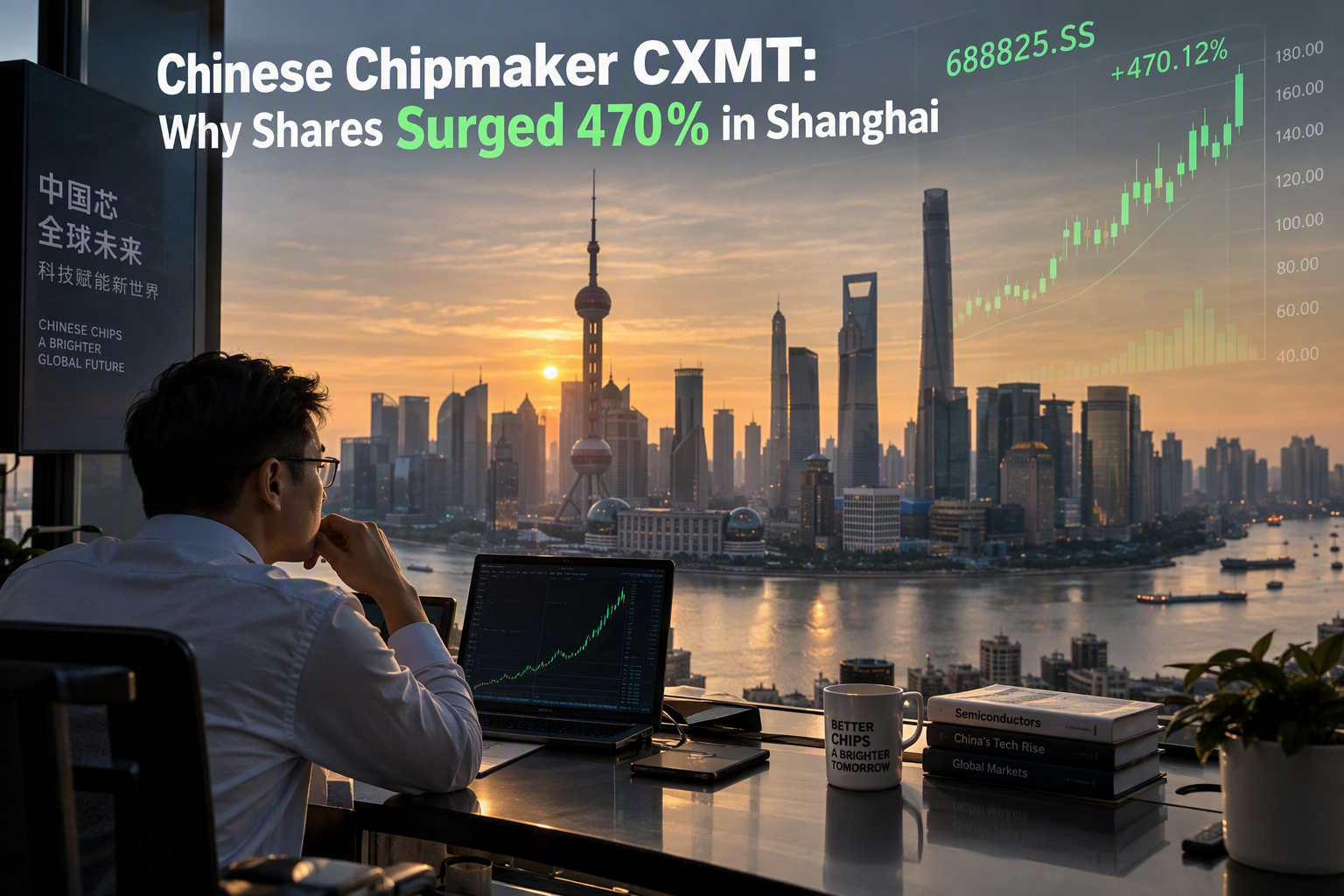
Chinese chipmaker CXMT shares surge 470% on their Shanghai debut. Discover the drivers and risks from rivals, export controls and the AI chip race.
Chinese Chipmaker CXMT: Why Shares Surged 470% in Shanghai
When Chinese chipmaker CXMT (ChangXin Memory Technologies) opened for trading on the Shanghai Stock Exchange on 27 July 2026, its shares vaulted from an IPO price of 8.66 yuan to 49.50 yuan — a 470% surge that briefly made it China's most valuable listed company within hours. The debut answered the question rippling through trading floors and investor forums: why did CXMT shares surge 470% in Shanghai? Beneath the headline percentage lies one of the year's most consequential capital-market events: a 57.92 billion yuan ($8.6 billion) raise that marked Asia's largest IPO of 2026 and the biggest chip listing in Chinese history.
By the close, CXMT's market capitalization had swelled to roughly 3.3 trillion yuan, according to Reuters and CNBC, catapulting the Hefei-based company past many of the country's established state-owned giants. ChangXin Memory Technologies is not yet a household name outside Asia, but its Shanghai Star Market debut turned it into one of the world's most valuable chipmakers overnight — even though it still trails Samsung, SK Hynix and Micron in DRAM technology, scale and global market access.
This post breaks down the mechanics behind the surge. We examine the structure of Asia's biggest 2026 IPO, the wave of domestic retail demand that swallowed the offering, Beijing's push for semiconductor self-sufficiency, and the narrow supply of large-cap mainland chip stocks that concentrated buying pressure. We also weigh the fundamental risks: CXMT's technology gap against South Korean and US memory leaders, the overhang of American export controls, and what a triple-digit pop on day one means for valuation discipline in Chinese tech listings.
The story matters far beyond Shanghai. Memory chips are the bedrock of AI data centers, smartphones and cloud services worldwide. Platforms like CallMissed, whose AI voice and messaging infrastructure is ultimately shaped by memory supply and cloud compute costs, sit downstream from these semiconductor dynamics. Understanding CXMT's surge is therefore a window into the global chip economy — and a cautionary tale about hype, policy and industrial competition colliding in a single trading session.
Why did Chinese chipmaker CXMT shares surge 470% in Shanghai?
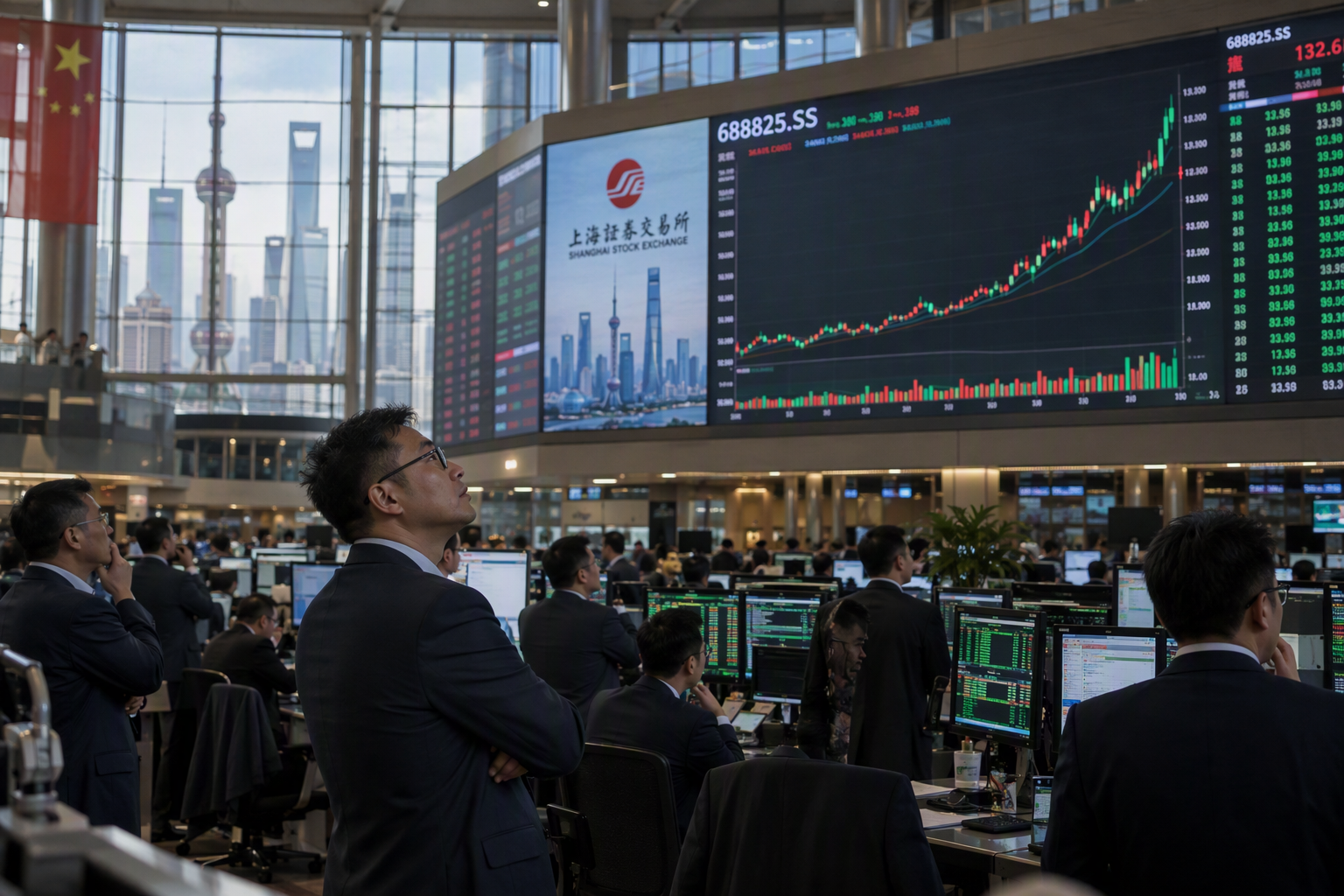
CXMT's 470% debut was the result of three overlapping forces: a record-sized domestic offering, a mainland market starved of large-cap chip exposure, and Beijing's campaign to make advanced memory a pillar of technological self-sufficiency. When those forces collided on the Shanghai Stock Exchange's Star Market on 27 July 2026, the first-day pop became one of the largest in modern Chinese IPO history.
What were the mechanics of the CXMT IPO?
ChangXin Memory Technologies priced its shares at 8.66 yuan each and began trading on 27 July 2026 at 49.50 yuan, according to CNBC and Reuters. By the close, the stock was up roughly 466% to 470%, and the company's market capitalization had reached about 3.3 trillion yuan — briefly making CXMT China's most valuable listed firm.
The offering itself raised 57.92 billion yuan ($8.6 billion), making it Asia's largest IPO of 2026 and the biggest chip listing in Chinese history, as reported by Reuters, CNBC and The Straits Times. That scale guaranteed widespread broker coverage, index-inclusion expectations, and a deep retail allocation that turned the debut into a national trading event rather than a routine listing.
How did retail demand and scarcity feed the 470% pop?
The surge was not driven by hidden fundamentals revealed overnight; it was driven by demand concentration. Key factors included:
- Heavy retail participation: Chinese brokerage apps saw intense buying from individual investors chasing the year's most prominent tech listing.
- Strategic scarcity of chip stocks: Mainland exchanges offer only a narrow set of large-cap pure-play semiconductor names, so any sizable memory IPO becomes a default vehicle for sector exposure.
- AI-driven sentiment: Global AI build-outs are accelerating DRAM consumption in data centers, and CXMT is one of the few domestically listed ways to play that trend in yuan.
- Star Market rules: The Shanghai Star Market allows far wider first-day price bands than China's main boards, mechanically amplifying pops when sentiment is strong.
The result was a classic supply-and-demand squeeze: more capital wanted in than the float could absorb.
What role did Beijing's semiconductor strategy play?
China's push for chip independence gave the listing a policy tailwind. Memory chips are at the center of the country's import-reduction agenda, and a domestic DRAM champion aligns with the goal of lowering reliance on South Korean and American suppliers. Reuters framed the debut as part of Beijing's broader effort to build a self-sufficient semiconductor supply chain. For investors, CXMT was therefore a geopolitical bet as much as a technology one.
What are the fundamental risks behind the valuation?
The valuation lift left CXMT priced for technology leadership it does not yet have. CNBC and Reuters both noted that CXMT still trails Samsung, SK Hynix and Micron in DRAM process technology, production scale and global market access. The company ranks among the world's largest chipmakers by market capitalization after one session, but not by revenue, share or process node.
Other risks include:
- US export controls: Restrictions on advanced lithography and manufacturing tools could cap how quickly CXMT closes the gap with South Korean and American rivals.
- Valuation discipline: China's tech-listing market has a history of extreme first-day pops followed by prolonged slides; a 470% open leaves little room for disappointment.
- Limited global footprint: Unlike Samsung or Micron, CXMT is not yet a globally distributed memory supplier, so its revenue base is more concentrated in domestic customers.
For the broader tech economy, the
What exactly happened on CXMT's trading debut?
On 27 July 2026, ChangXin Memory Technologies (CXMT) began trading on the Shanghai Stock Exchange's Star Market at 49.50 yuan per share, up from its IPO price of 8.66 yuan, according to CNBC and Reuters. By the close, the stock had settled roughly 466% to 470% above the offer price, giving CXMT a market capitalization of about 3.3 trillion yuan — enough to briefly make it China's most valuable listed company by paper value. The one-day gain was not a typo: it was the visible result of no first-day price limits, a historically large float, and a wave of domestic buying concentrated into a single session.
Where did CXMT list and why could shares move so far?
CXMT floated on the Shanghai Stock Exchange's Star Market, the board created for technology and "hard tech" companies. Star Market rules do not impose the usual 20% daily price limits during the first five trading days, so newly listed stocks can gap sharply if demand outstrips supply. Because CXMT sold at 8.66 yuan and opened at 49.50 yuan, the stock essentially repriced in a single auction. Reuters reported the shares closed up 466%, while other outlets including CNBC described the move as approaching 470%. Either way, the session placed the Hefei-based memory-chip maker at a valuation larger than long-standing consumer and energy giants on the same exchange.
How did the first-day price action unfold?
Traders describe the session as closer to a one-way stampede than a two-way auction:
- Opening print: 49.50 yuan, nearly 5.7 times the issue price.
- Intraday range: The stock held at extremely elevated levels as buy orders outweighed any early profit-taking.
- Close: Up 465.8% to 470%, leaving the company valued at roughly 3.3 trillion yuan, according to The Straits Times and India Today.
- Implied proceeds: The IPO itself raised 57.92 billion yuan — about $8.6 billion — making it Asia's largest IPO of 2026 and the biggest chip listing in Chinese history, per Reuters.
With no stabilization mechanics typical of smaller listings, the entire re-rating happened in public view within a few hours.
What role did retail demand play?
Retail investors were the dominant force. The offering was already large, but domestic retail demand was reported to be many times the available float, effectively front-running the very limited pool of large-cap mainland chip exposure. That scarcity premium is important: mainland investors could not easily buy Samsung, SK Hynix or Micron on domestic exchanges, so CXMT became a proxy bet on AI-driven memory demand and China's semiconductor independence all at once. The buying pressure was therefore not purely fundamental — it was also a macro trade squeezed through one ticker.
How does CXMT's debut compare with previous listings?
Compared with earlier Star Market debuts, CXMT stands out for both size and speed:
- Proceeds: At $8.6 billion, the deal dwarfs typical Chinese tech IPOs and rivals the largest global listings of the year.
- First-day pop: A ~470% first-day gain is far above the average Star Market debut and puts it among the biggest single-session moves for a company of that scale.
- Valuation leap: Few other Chinese listings have gone from offer to "largest listed company by market cap" within hours.
Yet the trading mechanics also create a valuation overhang. When a stock reprices 470% in one session, future buyers must justify that level against actual DRAM technology, revenue and margins — areas where CXMT still trails Samsung, SK Hynix and Micron. The debut answered what happened on the day; the harder question is whether the price can be sustained once the opening buzz fades.
What are the key facts of the CXMT IPO?
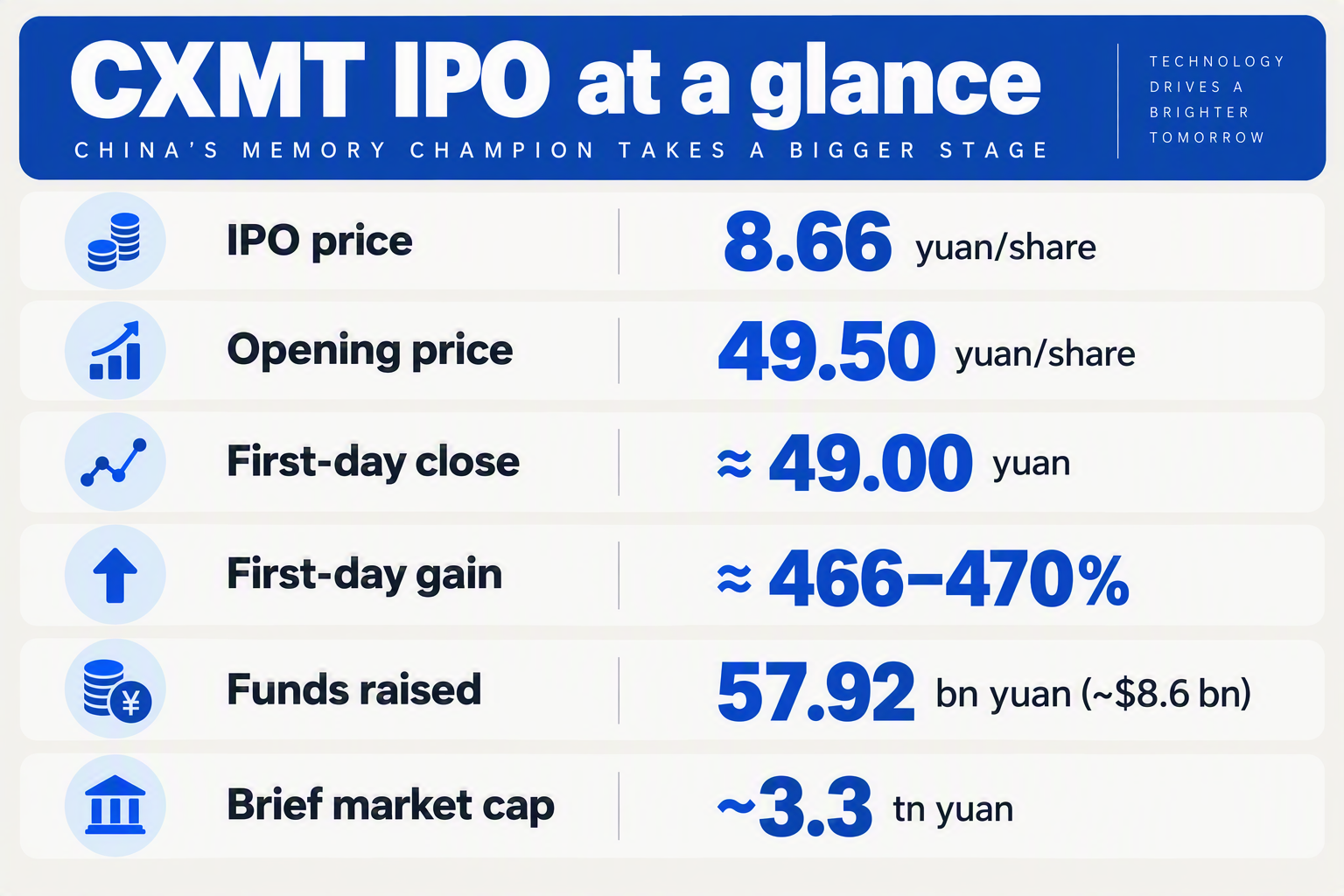
The CXMT IPO was priced at 8.66 yuan per share, opened at 49.50 yuan on the Shanghai Stock Exchange on 27 July 2026, and closed roughly 466%–470% above the offer price — raising 57.92 billion yuan ($8.6 billion) and briefly valuing the company at about 3.3 trillion yuan, according to Reuters and CNBC.
| IPO fact | Figure / detail | Source / date | Significance |
|---|---|---|---|
| Offer price | 8.66 yuan per share | CNBC, 27 July 2026 | Baseline for the 470% first-day surge. |
| Opening price | 49.50 yuan | Reuters / The Star, 27 July 2026 | Revealed exceptionally strong allocation demand. |
| Day-one close | +465.8% to ~470% | Investing.com / Reuters, 27 July 2026 | One of the largest first-day pops in modern Chinese IPO history. |
| Total proceeds | 57.92 billion yuan (~$8.6 billion) | CNBC / Reuters, July 2026 | Asia's largest IPO of 2026 and China's biggest chip listing. |
| Post-debut market cap | ~3.3 trillion yuan | Straits Times / Reuters, 27 July 2026 | Briefly made CXMT China's most valuable listed company. |
| Listing venue / ticker | Shanghai Stock Exchange Star Market; ticker 688825.SS | Investing.com, July 2026 | China's Nasdaq-style board for hard-tech and semiconductor floats. |
| Primary use of proceeds | Expand DRAM capacity, upgrade technology, strengthen domestic supply chain | Company prospectus / industry filings | Directly supports Beijing's semiconductor self-sufficiency goal. |
Where did CXMT list?
CXMT — formally ChangXin Memory Technologies — chose the Shanghai Stock Exchange Star Market, the Chinese bourse reserved for high-tech and strategic industries. The Star Market uses a registration-style system and lighter profitability requirements than the main board, which makes it the natural venue for chipmakers, according to exchange filings cited by Investing.com. CXMT trades under ticker 688825.SS.
How much capital did CXMT actually raise?
CNBC reported that the offering raised 57.92 billion yuan, or roughly $8.6 billion — enough to rank it as Asia's largest IPO of 2026 and the largest chip listing in Chinese history. At the 8.66 yuan offer price, the float was already sized for scale; once shares opened at 49.50 yuan, the implied valuation leapt to about 3.3 trillion yuan, Reuters and the Straits Times noted. The result was not merely a hot debut — it was a top-five global chip capitalization reassigned to a company still building out its DRAM roadmap.
What will CXMT spend the money on?
Prospectus details and industry filings show the proceeds are directed at three priorities:
- Expanding DRAM wafer capacity to serve domestic server, PC and mobile demand.
- Upgrading process technology so CXMT can narrow the gap with Samsung, SK Hynix and Micron.
- Strengthening a China-based memory supply chain that Beijing wants insulated from US export controls.
Those priorities explain why the IPO attracted policy-sensitive capital. The DRAM that CXMT wants to scale is the same memory used in AI data centers, cloud compute and the AI voice and messaging stacks that platforms such as CallMissed rely on — making the listing relevant well beyond semiconductor circles.
How does CXMT stack up against global memory leaders?
Despite its post-IPO valuation, CXMT still lags the incumbents on the metrics that matter in memory: process node leadership, bit shipment volume, global market access and patent depth. Samsung, SK Hynix and Micron collectively dominate the DRAM market, and CXMT remains largely confined to the Chinese domestic ecosystem. American export controls on advanced lithography and memory manufacturing equipment remain an overhang, as Reuters and CNBC have flagged. The market is therefore pricing CXMT partly on its current capability and partly on the strategic value Beijing assigns to a homegrown memory champion.
Frequently Asked Questions
What was the CXMT stock debut price and first-day gain?
How much capital did CXMT raise in its Shanghai IPO?
Why did CXMT shares surge 470% on their Shanghai trading debut?
Is CXMT now larger or more advanced than Samsung, SK Hynix, and Micron?
What are the main risks for investors after CXMT's 470% first-day pop?
What does the CXMT stock debut mean for the global semiconductor industry?
Conclusion
CXMT's 470% debut compresses several truths about the 2026 chip market into one trading session. Three takeaways stand out:
- Record capital met scarce supply: A 57.92 billion yuan raise — Asia's largest 2026 IPO — collided with a mainland exchange starved of large-cap semiconductor exposure, concentrating buying pressure into a triple-digit pop.
- Policy tailwinds dominated the narrative: CXMT surged because it sits at the intersection of AI demand and Beijing's drive for memory-chip self-sufficiency.
- Valuation ran ahead of fundamentals: Even at roughly 3.3 trillion yuan, CXMT remains behind Samsung, SK Hynix and Micron in DRAM technology, scale and global access, with US export controls still an overhang.
What happens next will test whether stock-market enthusiasm can purchase technological parity. Watch whether CXMT narrows the DRAM gap, how Washington adjusts memory-related controls, and whether mainland investors keep rewarding chip nationalism at these stretched valuations.
These dynamics also ripple downstream into AI infrastructure. For businesses building on voice agents and multilingual chatbots, memory supply and compute costs shape what is possible. To explore how those layers come together, check out CallMissed — an AI communication platform powering AI voice agents, WhatsApp chatbots and omnichannel support for businesses.
Will CXMT's first-day fireworks translate into lasting semiconductor leadership, or will the stock become a case study in policy-fueled valuation ahead of engineering reality?
Related Reading
- AI Customer Service Memory: Why Omnichannel AI Needs One Governed Record
- CallMissed Shared Customer Memory: Why Voice, WhatsApp, and Email Need One Context Layer
Sources
Discussion
Related Posts



Ready to automate customer conversations?
Launch AI voice agents and WhatsApp bots with CallMissed — one API, 22+ Indian languages.