
Missile Man of India: Why Kalam Earned the Title


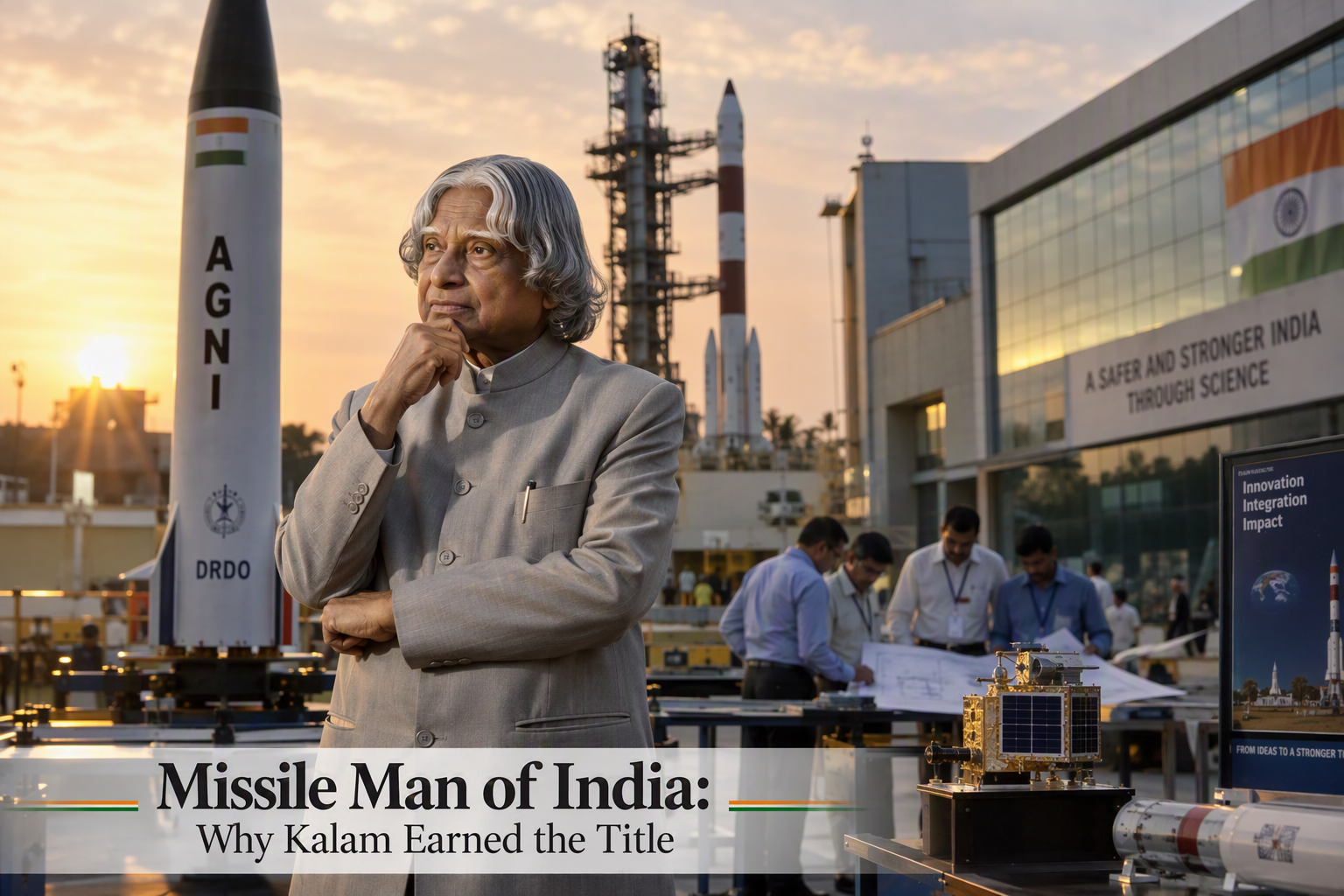
Learn why APJ Abdul Kalam is called Missile Man of India, from DRDO missile work to Agni, Prithvi, presidency and legacy.
Missile Man of India: Why Kalam Earned the Title
What makes a soft-spoken scientist from Rameswaram become a national symbol of strategic power? Dr. A.P.J. Abdul Kalam is called the Missile Man of India because he led India’s Indigenous Guided Missile development efforts at DRDO and contributed to strategic systems such as Agni and Prithvi, as noted by the official President of India profile and major biography sources like Britannica.
The title matters because it is not just a nickname—it marks a turning point in India’s scientific self-reliance. Indigenous Guided Missiles simply means missiles designed, developed, and produced within India, reducing dependence on foreign technology and strengthening national defence. For students, exam aspirants, and anyone trying to understand India’s missile and nuclear weapons programs, the phrase “Dr. Kalam: The Missile Man of India” opens the door to a larger story about technology, national security, leadership, and public service.
This story also matters in 2026 because APJ Abdul Kalam remains one of India’s most searched and remembered public figures more than a decade after his death in 2015. He was not only an Indian aerospace engineer and science administrator; he also became India’s 11th President from 2002 to 2007, according to Britannica and official biographical records. That rare combination—defence scientist, space technologist, president, teacher, and youth icon—is why people still search for both “Missile Man of India” and “People’s President and the Missile Man of India.”
This article goes beyond the usual biography. You will learn:
- How A. P. J. Abdul Kalam’s childhood in Rameswaram, Tamil Nadu shaped his discipline and ambition
- How his aerospace training led him to ISRO, the SLV-3 space-launch program, and later DRDO
- Why his role in Indigenous Guided Missiles made him central to India’s defence science story
- How systems such as Agni and Prithvi became linked with his legacy
- Why Dr. Kalam was later loved as the People’s President for his connection with students, education, and national development
In short, Avul Pakir Jainulabdeen Abdul Kalam earned the title Missile Man of India through scientific leadership, but he earned lasting affection through humility, teaching, and a lifelong belief that India’s future would be built by its young minds.
Why is APJ Abdul Kalam called the Missile Man of India?
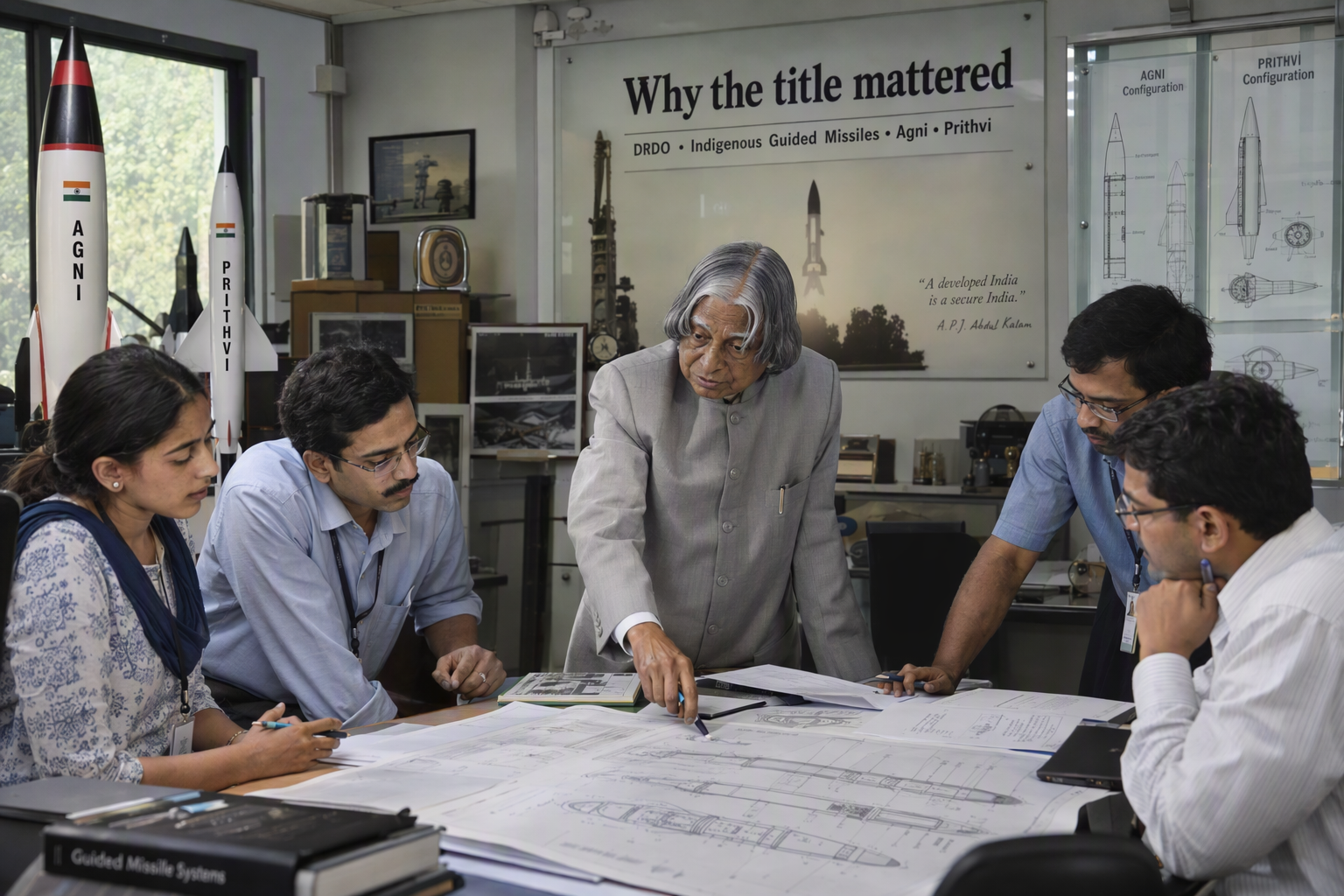
Dr. A.P.J. Abdul Kalam is called the Missile Man of India because he led India’s push to build Indigenous Guided Missiles at DRDO and became closely associated with strategic missile systems such as Agni and Prithvi. The official President of India profile says Dr. Kalam took up the responsibility of “developing Indigenous Guided Missiles” at the Defence Research and Development Organisation as Chief Executive.
What does “Missile Man of India” actually mean?
The title Missile Man of India does not mean APJ Abdul Kalam invented every Indian missile himself. It means A. P. J. Abdul Kalam gave scientific, administrative, and mission-level leadership to a national defence program that helped India reduce dependence on imported missile technology.
In simple terms, Indigenous Guided Missiles are missiles that are:
- Designed in India
- Developed by Indian scientific institutions
- Built to follow a guided path toward a target
- Used to strengthen national defence capability
- Less dependent on foreign technology or suppliers
This is why the nickname has national importance. It connects Dr. Kalam: The Missile Man of India with India’s larger story of scientific self-reliance, strategic defence, and technological confidence.
Which missile programs made APJ Abdul Kalam famous?
APJ Abdul Kalam became strongly associated with missile systems such as Agni and Prithvi. A biography summary from NextIAS notes that, while leading DRDO’s ballistic missile work, Dr. Kalam helped develop indigenous guided missiles like Agni and Prithvi based on the earlier SLV program.
That connection matters because Kalam’s career did not begin only in missile defence. His earlier work in India’s space-launch efforts gave him experience in propulsion, systems engineering, mission planning, and high-risk project management. Those skills later became valuable in India’s missile development work.
A beginner-friendly way to understand the link is:
- Space-launch vehicles carry payloads into space.
- Missile systems require advanced guidance, propulsion, materials, and control systems.
- Kalam’s experience with launch-vehicle technology helped him guide complex defence projects at DRDO.
This is why many biographies connect his ISRO background, SLV-3 experience, and DRDO missile leadership into one continuous scientific journey.
Why did the title become nationally popular?
The title became popular because Kalam represented a visible human face behind India’s strategic technology programs. Britannica identifies him as an Indian aerospace engineer and science administrator who served as India’s president from 2002 to 2007 and gained the epithets “Missile Man” and “People’s President.”
The phrase worked because it was simple, memorable, and accurate enough for public memory. For students and citizens, Missile Man of India captured three ideas at once:
- India could build advanced defence technology domestically.
- Indian scientists could lead nationally significant missions.
- A humble scientist from Rameswaram could rise to the highest constitutional office.
How is “Missile Man” different from “People’s President”?
The two titles describe different phases of the same life. Missile Man of India refers mainly to Dr. A.P.J. Abdul Kalam’s scientific and defence contributions at institutions such as ISRO and DRDO. People’s President and the Missile Man of India refers to the broader public image he built later as India’s 11th President from 2002 to 2007, especially through his connection with students, education, and national development.
In short, APJ Abdul Kalam earned the title Missile Man through science, systems leadership, and Indigenous Guided Missiles; he earned the title People’s President through humility, communication, and lifelong service to India’s young citizens.
Who was Dr. A.P.J. Abdul Kalam before the nickname?

Before he became the Missile Man of India, Dr. A.P.J. Abdul Kalam was a disciplined student from Rameswaram, Tamil Nadu, who trained as an aerospace engineer and built his career in India’s space and defence research institutions. Britannica identifies A. P. J. Abdul Kalam as an Indian aerospace engineer and science administrator who later served as India’s president from 2002 to 2007, but the foundation of that national role was laid much earlier—in classrooms, laboratories, and launch sites.
What was APJ Abdul Kalam’s early life like?
Avul Pakir Jainulabdeen Abdul Kalam was born in Rameswaram, a coastal town in Tamil Nadu, far from the centres of political and scientific power. His early life is often remembered not because it was privileged, but because it showed the qualities that later defined him: curiosity, discipline, simplicity, and a willingness to work hard.
For students trying to understand Dr. Kalam: The Missile Man of India, this part of the story matters. Kalam did not begin as a famous defence scientist. He began as a young Indian student fascinated by flight, machines, and the possibility that science could help a newly independent country stand on its own.
How did education shape A. P. J. Abdul Kalam?
Kalam’s education moved him from a small-town childhood toward the technical world of aeronautics and engineering. He studied physics and then specialised in aerospace-related engineering, choosing a field directly connected to aircraft, rockets, propulsion, and flight systems.
That choice became crucial later. The scientific thinking required for aerospace engineering—testing, failure analysis, systems design, and teamwork—prepared him for India’s space-launch and missile-development programs. Long before he was associated with Agni and Prithvi, Kalam was learning how complex national technology projects are built: not by one invention, but by thousands of coordinated engineering decisions.
Where did Dr. Kalam work before DRDO missile leadership?
Before the nickname became famous, APJ Abdul Kalam was closely associated with India’s space and defence research ecosystem, especially ISRO and DRDO. His work connected two important national goals:
- Space capability — building launch systems and satellite-related technologies within India.
- Defence capability — applying advanced engineering to strategic systems needed for national security.
The official President of India profile later highlighted that Dr. Kalam took up the responsibility of “developing Indigenous Guided Missiles” at DRDO as Chief Executive. But that responsibility did not appear suddenly. It grew from years of experience in scientific administration, project leadership, and aerospace systems.
What made Kalam different from a typical scientist?
Dr. Kalam was not only a laboratory researcher; he became a mission-oriented scientific leader. He was known for translating big national goals into practical project teams, timelines, tests, and deliverables.
Three qualities stood out before the public nickname became attached to him:
- Systems thinking: He understood how propulsion, guidance, materials, electronics, and testing had to work together.
- Team leadership: Large defence and space programs require coordination across scientists, engineers, government agencies, and production units.
- National purpose: Kalam’s work was tied to India’s desire for self-reliance in high-technology fields.
Why does his pre-“Missile Man” story matter?
The title Missile Man of India can make Kalam sound like he belonged only to the world of weapons and strategy. His earlier life shows something broader: he was first a learner, engineer, space technologist, and institution-builder.
That is why his later identity as the People’s President and the Missile Man of India feels unusually complete. Britannica notes that Kalam’s scientific achievements and popularity earned him the epithets “Missile Man” and “People’s President.” The first title came from science and defence; the second came from public trust, especially among students and young Indians.
In short, before the nickname, Dr. A.P.J. Abdul Kalam was already becoming the person India would later admire: a humble aerospace engineer with a national mission, a scientist shaped by Rameswaram and refined by India’s space and defence programs.
How did Kalam’s journey from Rameswaram to national leadership unfold?
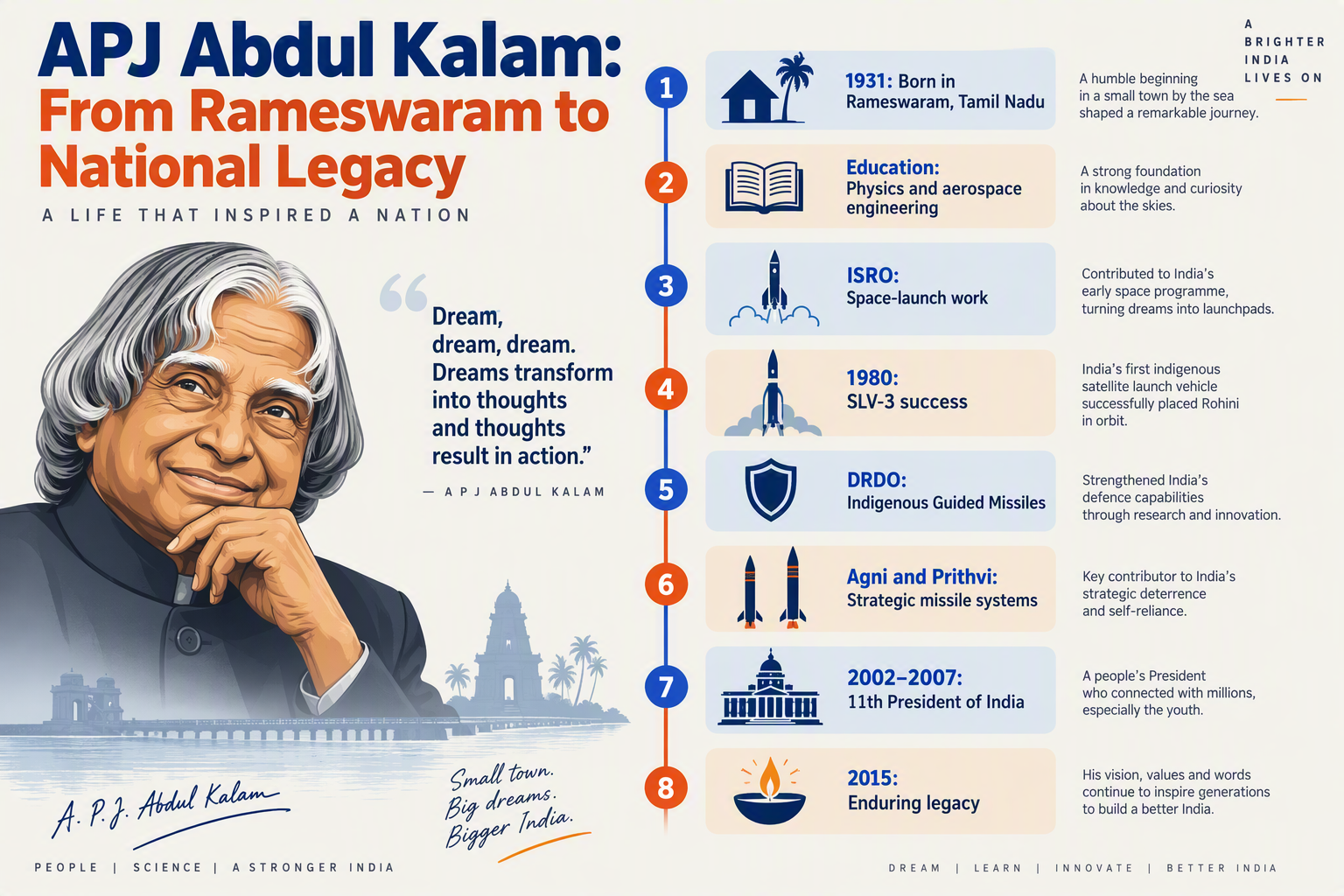
Dr. A.P.J. Abdul Kalam’s journey unfolded in distinct stages: Rameswaram shaped his character, aerospace engineering shaped his skills, ISRO gave him launch-vehicle experience, DRDO made him central to Indigenous Guided Missiles, and the presidency turned him into a national teacher-statesman. The arc explains why the same person could be remembered as both the Missile Man of India and the People’s President.
What is the simple timeline of APJ Abdul Kalam’s rise?
The clearest way to understand A. P. J. Abdul Kalam’s life is not as one sudden rise, but as a sequence of scientific and public-service responsibilities. Britannica records that Dr. Kalam served as president of India from 2002 to 2007, after a career as an aerospace engineer and science administrator.
| Stage | Period / Date | Institution or Role | What happened | Why it mattered |
|---|---|---|---|---|
| Early life in Rameswaram | Childhood | Student in Tamil Nadu | Kalam grew up in Rameswaram, Tamil Nadu, a coastal town far from India’s power centres. | This background became central to his public image: humble origins, discipline, and a strong education-first mindset. |
| Aerospace formation | Early career | Aerospace engineer | He trained for a career in aeronautics and space technology. | This gave him the technical base for later work in launch vehicles and missile systems. |
| Space-launch work | ISRO phase | Indian Space Research Organisation | Kalam worked on India’s space-launch efforts, including the SLV-3 program noted in biography sources. | Launch-vehicle experience later helped connect space engineering with missile-development knowledge. |
| Defence science leadership | DRDO phase | Defence Research and Development Organisation | The official President of India profile says Dr. Kalam took responsibility for “developing Indigenous Guided Missiles” at DRDO. | This is the core reason he became known as Dr. Kalam: The Missile Man of India. |
| Strategic missile association | DRDO / IGMDP era | Missile-program leadership | He became closely associated with systems such as Agni and Prithvi, as noted in biography and exam-preparation sources. | These names linked Kalam’s public identity to India’s missile and nuclear weapons programs. |
| National leadership | 2002–2007 | 11th President of India | Britannica states that A.P.J. Abdul Kalam was president of India from 2002 to 2007. | His scientist image expanded into that of the People’s President, especially through youth outreach and education. |
How did each stage prepare Kalam for national leadership?
Kalam’s early life in Rameswaram matters because it gives the story its moral frame. He did not begin as a political heir or elite insider; his national standing came through education, engineering, and public service.
His ISRO years were crucial because space-launch systems require precision engineering, systems integration, testing discipline, and national-scale project management. Those same habits are essential in missile programs, where guidance, propulsion, materials, and reliability must work together under extreme constraints.
His DRDO phase made the “Missile Man” title specific rather than symbolic. The official President of India profile directly connects him with the responsibility of “developing Indigenous Guided Missiles”, which means missiles designed and developed within India rather than imported as finished systems.
Why did the scientist become the People’s President?
Kalam’s presidency from 2002 to 2007 transformed his public identity. Britannica identifies him with both “Missile Man” and “People’s President,” reflecting two different but connected legacies: defence self-reliance and mass public inspiration.
The shift happened because Kalam carried a scientist’s mission into public life:
- He spoke directly to students and young professionals.
- He connected national development with science, education, and innovation.
- He turned technical achievement into a civic message: India could build, design, and lead.
That is why the journey from Rameswaram to Rashtrapati Bhavan is more than a biography. It is the story of how APJ Abdul Kalam moved from learning science, to building strategic technology, to inspiring a generation to see national development as their own responsibility.
What do Indigenous Guided Missiles mean in simple words?
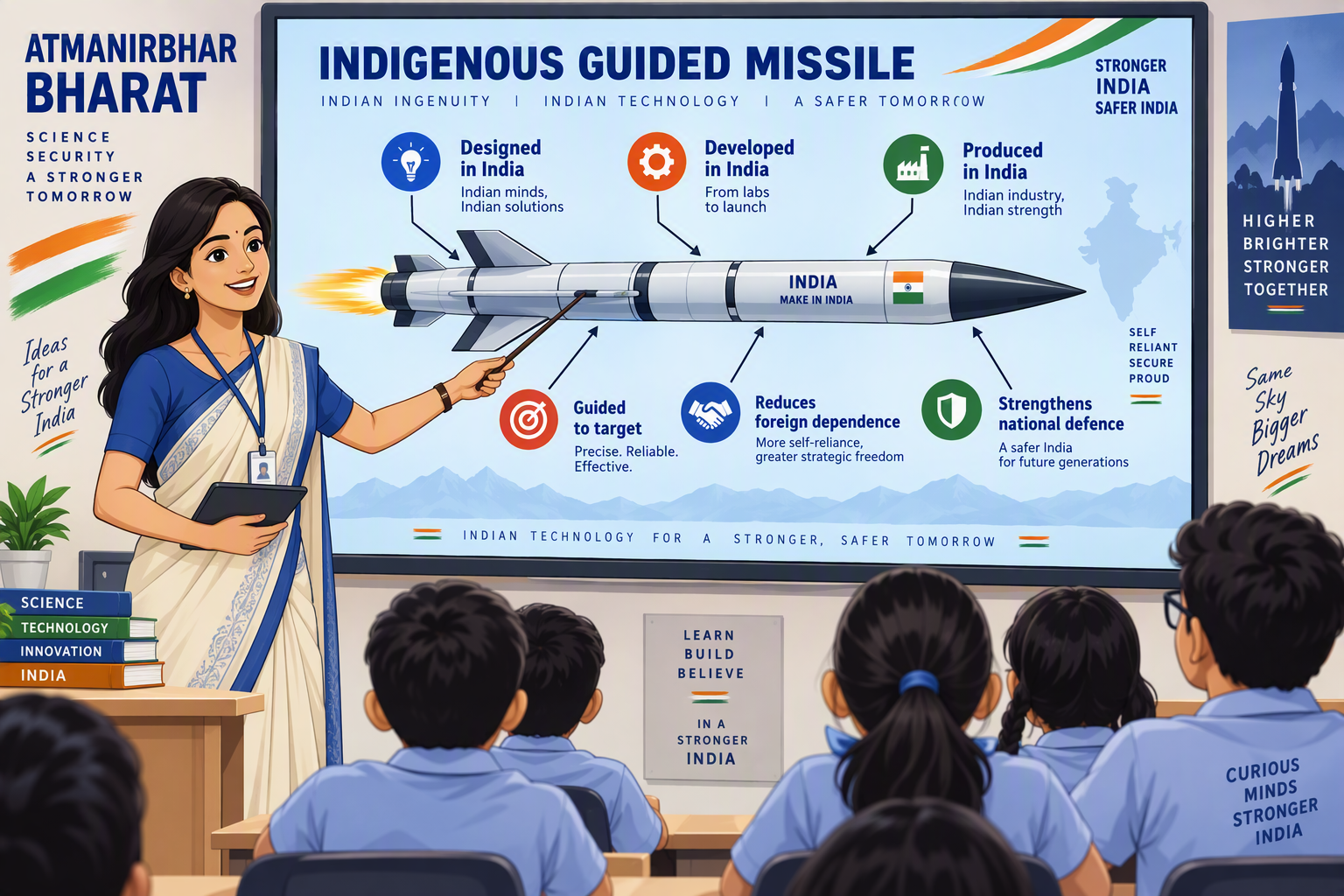
Indigenous Guided Missiles are missiles that are designed, developed, tested, and produced within India, and can be directed toward a target using onboard guidance systems. In simple words, they represent India’s ability to build critical defence technology on its own instead of depending entirely on foreign suppliers.
What does “indigenous” mean in missile development?
Indigenous means “made by one’s own country.” For India, indigenous missile development meant Indian scientists, engineers, laboratories, industries, and defence institutions working together to create missile systems suited to India’s security needs.
The official President of India profile states that Dr. A.P.J. Abdul Kalam took up the responsibility of “developing Indigenous Guided Missiles” at the Defence Research and Development Organisation as Chief Executive. That phrase is central to why APJ Abdul Kalam became known as the Missile Man of India.
In practical terms, indigenous missile development includes:
- Indian design teams creating the missile architecture
- Indian research institutions developing key technologies
- Indian testing and validation under national defence programs
- Indian production capacity to reduce dependence on imports
- Indian strategic control over upgrades, deployment, and future improvements
This is why the word “indigenous” matters. It is not just about manufacturing hardware; it is about building national scientific confidence.
What does “guided missile” mean?
A guided missile is a missile that can adjust its path after launch to move toward a specific target. Unlike an unguided projectile, which mainly follows a fixed path, a guided missile uses systems that help it stay on course.
A beginner-friendly way to understand it is this:
- Missile: the vehicle that carries the payload
- Propulsion: the system that pushes it forward
- Guidance: the “brain” that helps it follow the intended path
- Control system: the mechanism that adjusts direction during flight
- Targeting objective: the destination or mission goal defined before launch
This does not mean a missile “thinks” like a human. It means the missile uses pre-designed engineering systems to follow a planned trajectory with greater accuracy.
Why did Indigenous Guided Missiles matter for India?
Indigenous Guided Missiles mattered because they strengthened India’s defence self-reliance. A country that can build its own strategic systems has more control over technology, supply chains, maintenance, and future development.
For India, this was especially important because advanced defence technology is often restricted, expensive, or politically sensitive. Building capability at home allowed India to reduce vulnerability to external pressure.
The impact can be understood in three simple ways:
- Security: India could develop systems aligned with its own defence requirements.
- Technology: Indian scientists gained experience in propulsion, materials, control systems, electronics, and systems integration.
- Self-reliance: India reduced dependence on imported missile technology and strengthened domestic defence research.
This is the deeper meaning behind the title Dr. Kalam: The Missile Man of India. The nickname reflects not only one scientist’s achievement but also a national shift toward technological independence.
How are Agni and Prithvi connected to this idea?
Agni and Prithvi are often mentioned in connection with Dr. A.P.J. Abdul Kalam because they became symbols of India’s guided missile capability. The NextIAS profile notes that under DRDO, Dr. Kalam developed indigenous guided missiles like Agni and Prithvi based on the SLV program.
Their importance in public memory is simple: they gave people visible names to associate with India’s missile progress. When students hear “Agni” and “Prithvi,” they are not just hearing weapon names; they are hearing shorthand for India’s scientific ambition, defence planning, and engineering capability.
Why is this term important for understanding Kalam’s legacy?
The phrase Indigenous Guided Missiles explains the scientific reason behind the title Missile Man of India. Dr. Kalam’s public image later expanded into that of the People’s President, especially during his presidency from 2002 to 2007, as noted by Britannica; but the missile title came from his defence-science leadership.
In simple terms, A. P. J. Abdul Kalam helped India prove that it could build complex strategic technology through Indian talent. That is why Indigenous Guided Missiles are not just machines in this story—they are a symbol of national confidence.
How did ISRO and SLV-3 shape Kalam’s missile work?
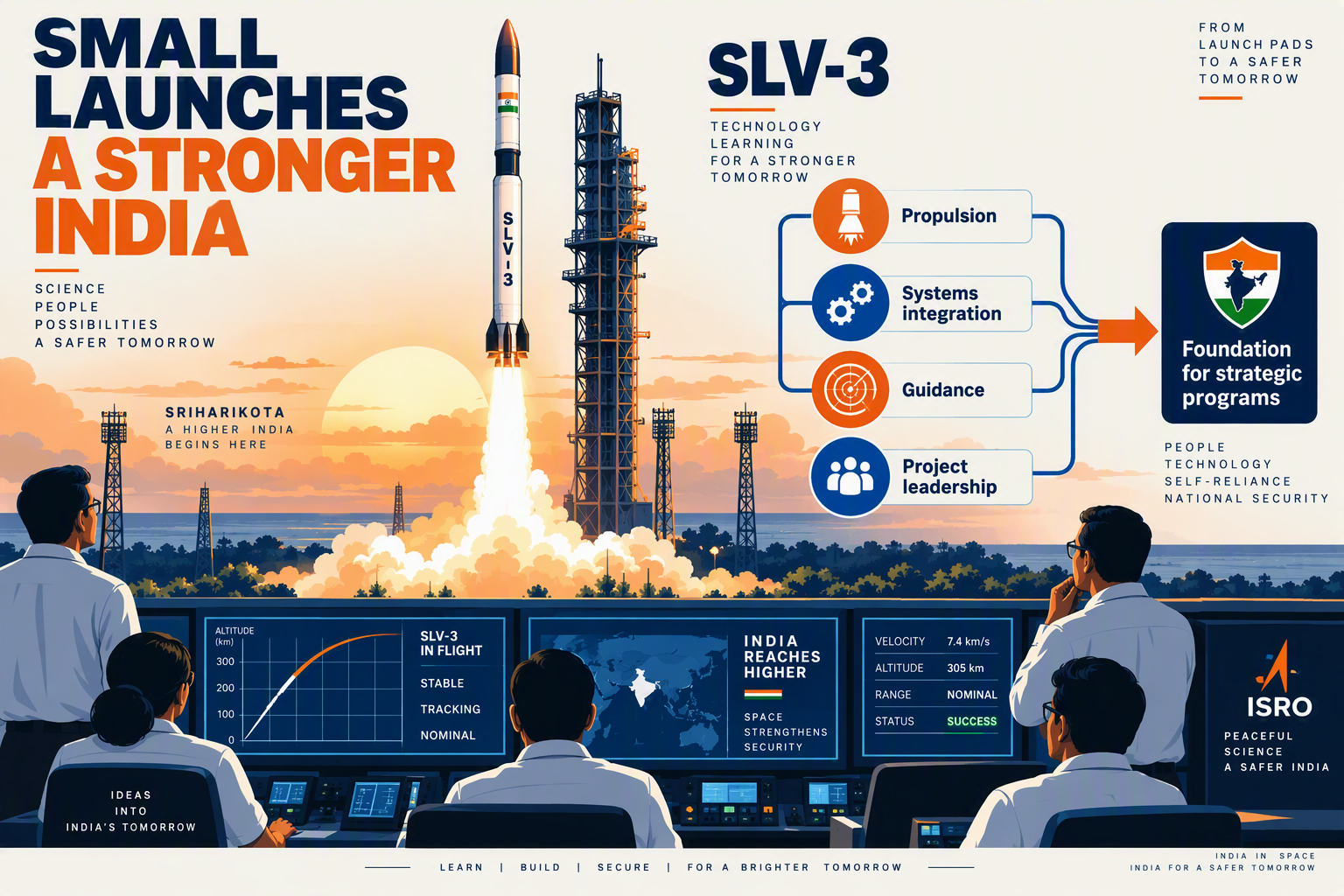
ISRO and the SLV-3 shaped Dr. A.P.J. Abdul Kalam’s missile work by giving him hands-on experience in propulsion, guidance, staging, systems integration, and mission discipline—skills that later mattered at DRDO. NextIAS notes that, while leading DRDO, Dr. Kalam developed indigenous guided missiles like Agni and Prithvi “based on the SLV Program.”
Why was SLV-3 important in Kalam’s scientific journey?
SLV-3, or Satellite Launch Vehicle-3, was India’s early space-launch program, and it trained Kalam in building complex aerospace systems under Indian conditions. A launch vehicle and a missile are not the same, but both demand extreme reliability, accurate control, lightweight structures, propulsion expertise, and precise sequencing.
For Kalam, the SLV-3 phase at ISRO was a practical school in national technology building. It taught him that a large mission cannot depend on one brilliant scientist alone; it needs laboratories, manufacturing teams, test ranges, quality systems, and political trust working together.
That experience later became crucial when he moved into missile development. The official President of India profile says Dr. Kalam took responsibility for “developing Indigenous Guided Missiles” at DRDO as Chief Executive. The word “indigenous” is important here: it meant India was trying to design and build critical strategic systems domestically rather than remain dependent on imported technology.
What technical lessons moved from ISRO to DRDO?
Kalam’s ISRO experience influenced his missile work in both engineering and management. The SLV-3 program gave him a framework for turning an ambitious national goal into a tested, integrated system.
Key lessons included:
- Propulsion discipline
Launch vehicles require engines and stages that work under high stress. Missile programs also need dependable propulsion, because range, payload, and flight stability depend on it.
- Guidance and control
A launch vehicle must stay on its intended trajectory; a guided missile must do the same under defence requirements. This made guidance systems central to Kalam’s later work on Indigenous Guided Missiles.
- Systems integration
Aerospace projects combine electronics, structures, software, fuel systems, sensors, and ground support. Kalam’s SLV-3 background helped him coordinate many subsystems into one functioning mission.
- Testing culture
Space and missile programs both learn through ground tests, flight tests, failures, redesigns, and validation. Kalam became known not simply for designing components, but for building teams that could absorb failure and keep improving.
How did SLV-3 connect to Agni and Prithvi?
The connection was not that a satellite launcher was simply converted into a missile. The real link was technological maturity: India’s space-launch work created engineering capabilities that could support strategic missile development.
NextIAS specifically states that Dr. Kalam developed indigenous guided missiles like Agni and Prithvi based on the SLV Program. In simple terms, the SLV-3 experience helped India understand how to build long-range, high-precision, high-reliability aerospace systems at scale.
This is why the phrase “Dr. Kalam: The Missile Man of India” cannot be separated from his ISRO years. His missile leadership at DRDO was built on foundations laid during India’s space program.
Why does this part of Kalam’s story matter?
This phase shows that Kalam’s achievement was not an overnight leap from scientist to defence icon. It was a progression:
- ISRO taught him launch-vehicle engineering and mission management.
- SLV-3 gave him experience with complex indigenous aerospace technology.
- DRDO gave him the platform to apply those lessons to national defence.
- Agni and Prithvi became the public symbols of that transition.
That is why APJ Abdul Kalam’s legacy joins two worlds: India’s space ambitions and India’s strategic defence capabilities. Before he became the People’s President from 2002 to 2007, as noted by Britannica, he had already helped show that India could build advanced aerospace systems through its own scientific institutions.
Which key missile developments earned Kalam the title?
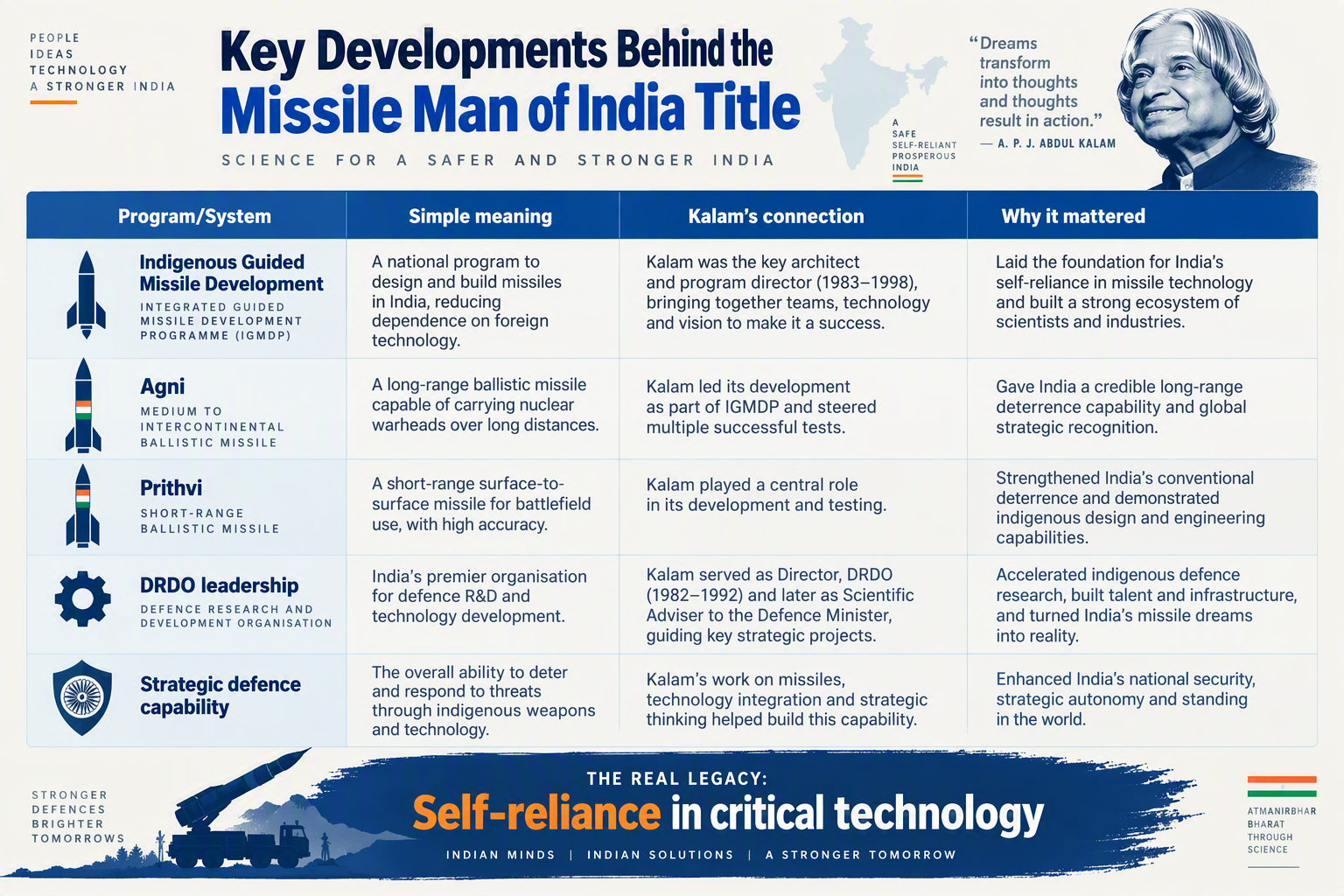
Dr. A.P.J. Abdul Kalam earned the title Missile Man of India mainly through his leadership in India’s Indigenous Guided Missile effort at DRDO, especially systems such as Agni and Prithvi. The official President of India profile states that Dr. Kalam took responsibility for “developing Indigenous Guided Missiles” as Chief Executive at the Defence Research and Development Organisation.
What missile programmes are most closely linked with APJ Abdul Kalam?
The key point is that APJ Abdul Kalam was not celebrated for one single missile. He became the Missile Man of India because he helped coordinate a national missile-development ecosystem—scientists, laboratories, testing, materials, propulsion, guidance, and production partners—at a time when India wanted strategic self-reliance.
| Missile / Development | Category | Kalam’s connection | Why it mattered |
|---|---|---|---|
| Prithvi | Surface-to-surface ballistic missile | Associated with DRDO’s indigenous guided missile work under Kalam’s leadership | Became one of the best-known early symbols of India’s ability to build tactical ballistic missile systems domestically |
| Agni | Ballistic missile / strategic system | Strongly linked with Kalam’s missile legacy; NextIAS notes that Agni and Prithvi were developed based on experience from the SLV programme | Connected India’s space-launch knowledge with long-range strategic defence capability |
| Integrated Guided Missile Development Programme-style work | National missile-development framework | The President of India profile says Kalam took responsibility for developing Indigenous Guided Missiles at DRDO | Shifted India from dependence on imported systems toward domestic design, testing, and production |
| SLV-3 technology foundation | Space-launch technology base | Kalam’s earlier ISRO work on SLV-3 helped build expertise later useful in missile development | Showed how propulsion, systems integration, and guidance knowledge could support defence technology |
| DRDO missile leadership | Scientific and administrative leadership | Kalam served as a science administrator and defence technologist; Britannica identifies him as an Indian aerospace engineer and science administrator | His role was not just technical—it involved building teams, managing complex programmes, and aligning science with national security |
| Strategic defence identity | Broader missile and nuclear-era capability | Kalam became publicly associated with India’s missile and nuclear weapons programs through his defence-science career | This public association helped turn a technical career into a national symbol of strategic confidence |
Why were Agni and Prithvi so important to the title?
Agni and Prithvi became shorthand for Kalam’s missile legacy because they were visible, strategic, and easy for the public to remember. When biography sources say Dr. Kalam: The Missile Man of India, they usually point to these systems because they represented India’s ability to design and develop guided missiles rather than merely purchase them.
According to the official President of India profile, Kalam’s DRDO role centred on “developing Indigenous Guided Missiles.” That phrase is crucial: it means the achievement was not just a successful launch, but the creation of a domestic capability.
Was Kalam the inventor of every Indian missile?
No. A more accurate way to say it is this: Dr. A.P.J. Abdul Kalam was a leading architect, programme leader, and public face of India’s guided missile development efforts. Modern missiles are not made by one person; they require thousands of scientists, engineers, technicians, test teams, and defence planners.
His contribution was valuable because he connected:
- Space-launch experience from ISRO and SLV-3
- Defence research leadership at DRDO
- Systems integration across laboratories and teams
- A national vision of technological self-reliance
What makes these developments historically significant?
These missile developments mattered because they changed India’s confidence in its own scientific capacity. Britannica notes that Kalam served as India’s president from 2002 to 2007, but long before that, his reputation had already been built in laboratories, test ranges, and defence programmes.
That is why A. P. J. Abdul Kalam is remembered in two connected ways: as the Missile Man of India for strategic technology, and later as the People’s President for turning that scientific credibility into a message of education, youth empowerment, and national development.
What do official sources and biographies say about Kalam?
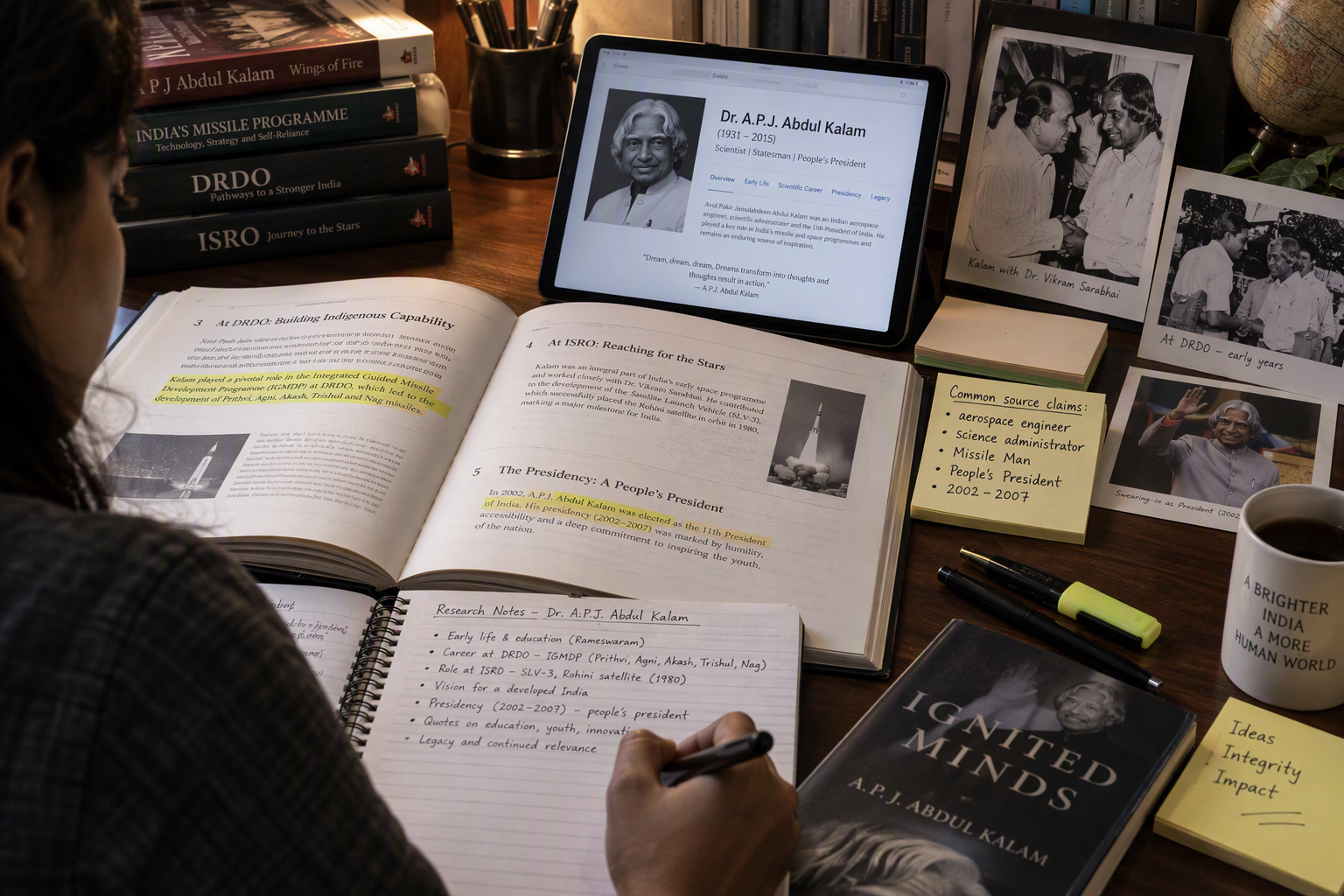
Dr. A.P.J. Abdul Kalam’s title Missile Man of India is supported by official and biographical sources because they connect him directly with India’s Indigenous Guided Missile development, especially at DRDO. The strongest official wording comes from the President of India profile, which says Dr. Kalam took up the responsibility of “developing Indigenous Guided Missiles” at the Defence Research and Development Organisation.
What does the official President of India profile say?
The President of India profile gives the clearest institutional basis for the nickname. It identifies Dr. A.P.J. Abdul Kalam not merely as a scientist, but as a leader who became Chief Executive for India’s guided missile development effort at DRDO.
That matters because official profiles usually avoid casual praise. When the President of India profile specifically says he was responsible for “developing Indigenous Guided Missiles,” it links Kalam’s public title to a defined national technology mission.
In simple terms, the official account supports three conclusions:
- Kalam’s missile legacy was institutional, not just symbolic.
- His DRDO leadership was central to India’s guided missile work.
- The word “indigenous” is crucial because it means India was building its own defence technology rather than relying only on imported systems.
What does Britannica say about APJ Abdul Kalam?
Britannica describes A. P. J. Abdul Kalam as an Indian scientist and public figure whose achievements brought him the epithets “Missile Man” and “People’s President.” Britannica also records that Kalam served as President of India from 2002 to 2007, which places his scientific reputation before his national political role.
This is important for understanding his public image. Kalam did not become famous only because he later occupied Rashtrapati Bhavan. His scientific identity came first, and his presidency amplified that identity into a national story of education, self-reliance, and youth inspiration.
Britannica’s account therefore supports the dual identity this article has traced:
- “Missile Man of India” for his defence science and missile-related work
- “People’s President” for his connection with citizens, especially students
- 11th President of India, 2002–2007, as the constitutional role that made him a household name across generations
How do other biography summaries describe his missile work?
Other biography-style sources repeat the same broad pattern: APJ Abdul Kalam is associated with DRDO, ISRO, missile development, and India’s strategic programmes. The Ministry of External Affairs’ public tribute described Dr. Kalam as known as the “Missile Man of India” for his work in missile development and the space programme.
A student-focused summary from NextIAS states that, while leading DRDO, Dr. Kalam developed indigenous guided missiles such as Agni and Prithvi based on experience from the SLV programme. That phrasing matches the wider biographical narrative: Kalam’s space-launch work and missile leadership were connected by common engineering disciplines such as propulsion, guidance, systems integration, and project management.
What should students remember from these sources?
For exams, essays, and general knowledge, the safest answer is concise but specific: Dr. Kalam: The Missile Man of India earned the title because he led India’s Indigenous Guided Missile development efforts at DRDO and became associated with strategic missile systems such as Agni and Prithvi.
A reliable facts summary would read:
- Full name: Avul Pakir Jainulabdeen Abdul Kalam
- Known as: Missile Man of India and People’s President
- Major institutions: DRDO and ISRO
- Key association: Indigenous Guided Missiles
- Strategic systems linked to his legacy: Agni and Prithvi
- Public office: President of India from 2002 to 2007, according to Britannica
Taken together, official sources and biographies agree on the core point: Kalam’s nickname was not empty admiration. It reflected his leadership in India’s missile and strategic technology journey, while his later image as the People’s President reflected how he carried that scientific mission into public life.
How did the Missile Man become the People’s President?
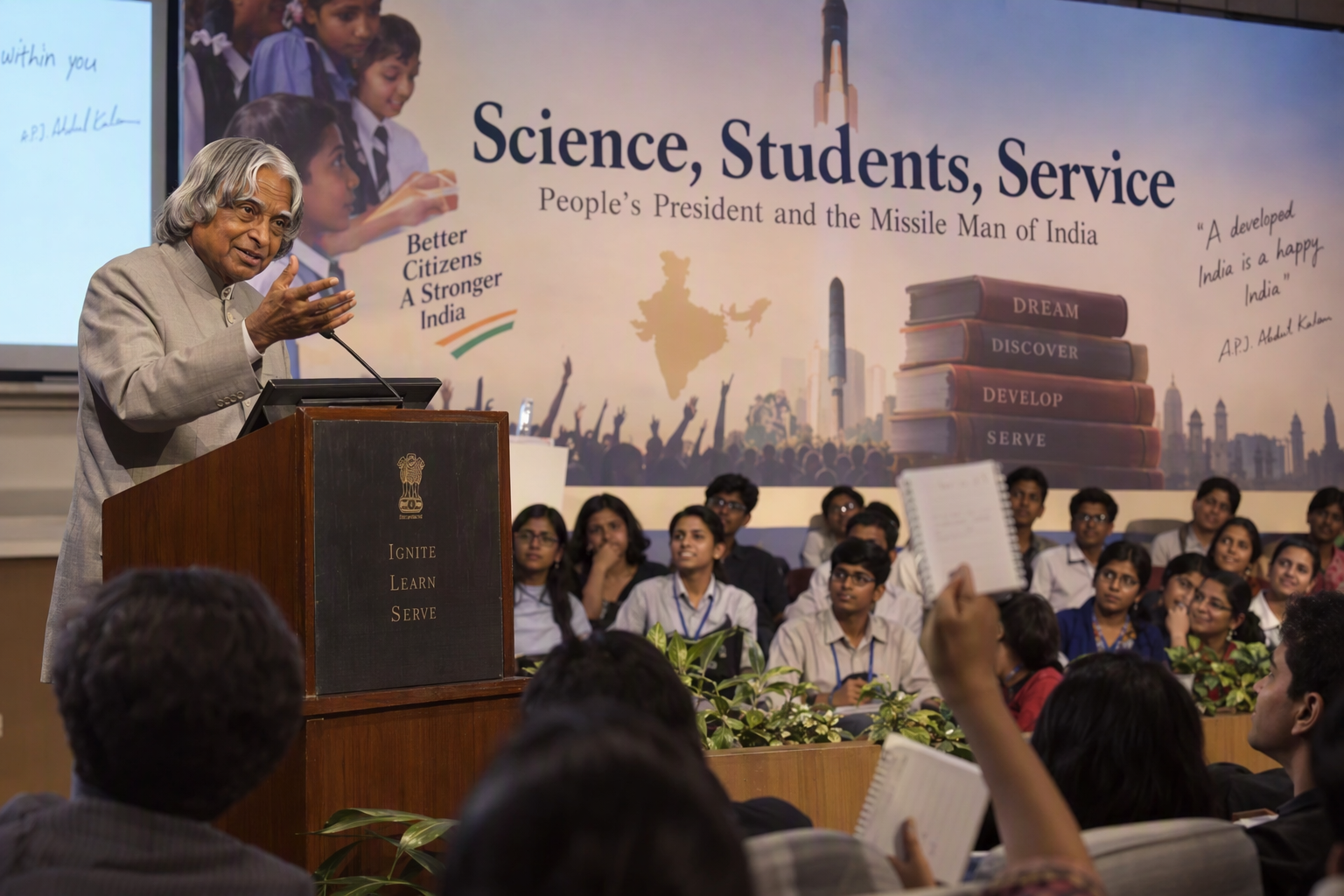
Dr. A.P.J. Abdul Kalam became the People’s President by carrying the credibility of the Missile Man of India into Rashtrapati Bhavan, then using the presidency to connect directly with students, teachers, scientists, soldiers, and ordinary citizens. Britannica states that A. P. J. Abdul Kalam served as President of India from 2002 to 2007, and his popularity came from the way he made the office feel accessible, educational, and future-focused.
Why was Kalam called the People’s President?
Kalam was called the People’s President because he did not behave like a distant ceremonial figure. He spoke in simple language, answered questions from young people, visited educational institutions, and turned national development into a public conversation.
His presidential identity had three unusual strengths:
- Scientific credibility — He had already led major work in India’s defence and space ecosystem.
- Moral simplicity — His public image remained humble, disciplined, and teacher-like.
- Youth connection — He repeatedly argued that India’s future depended on students, innovation, and national character.
This is why the phrase “People’s President and the Missile Man of India” is so powerful. One title came from laboratories, launch ranges, and strategic programs; the other came from classrooms, public meetings, and the emotional trust of citizens.
How did his scientific career shape his presidency?
Kalam’s presidency was not separate from his scientific life—it was an extension of it. The official President of India profile notes that Dr. Kalam took responsibility for “developing Indigenous Guided Missiles” at DRDO, while Britannica identifies him as an Indian aerospace engineer and science administrator who served as president from 2002 to 2007.
That background mattered because Kalam brought a problem-solving mindset to public life. He spoke about India not only as a political nation, but as a developing knowledge society that needed:
- Scientific temper in schools and colleges
- Self-reliance in defence and technology
- Rural development through connectivity and education
- National confidence among young Indians
- Ethical leadership in public institutions
For many citizens, APJ Abdul Kalam represented a rare combination: a scientist who understood missiles, space launch vehicles, and national security, but who also spoke gently about dreams, books, teachers, and children.
What made his connection with students so strong?
Kalam’s bond with students was central to his People’s President image. He treated young people not as passive listeners, but as future builders of India.
His message was simple enough for schoolchildren and serious enough for policymakers: India could become a developed nation only if its youth built knowledge, discipline, courage, and creativity. That made Dr. Kalam: The Missile Man of India more than a defence-science figure; he became a national mentor.
Students connected with him because he often emphasized:
- Dreams as the starting point of achievement
- Hard work over privilege
- Education as a tool of national transformation
- Science as a public mission, not just a profession
- Failure as part of innovation
Why does this transformation matter to his legacy?
Kalam’s journey from missile scientist to president changed how many Indians saw both science and public service. He showed that work on India’s missile and nuclear weapons programs could coexist with a deep commitment to peace, education, and human development.
His death in 2015 strengthened that legacy because public memory did not reduce him to a single role. Indians continued to remember him as:
- A.P.J. Abdul Kalam, the child from Rameswaram
- Dr. A.P.J. Abdul Kalam, the aerospace engineer and science administrator
- The Missile Man of India, linked with Indigenous Guided Missiles, Agni, and Prithvi
- The People’s President, loved for his accessibility and youth-focused vision
That is the deeper reason his story endures. Kalam earned national respect through strategic science, but he earned national affection by making millions of citizens—especially students—feel included in India’s future.
What does Kalam’s legacy mean for students and readers?
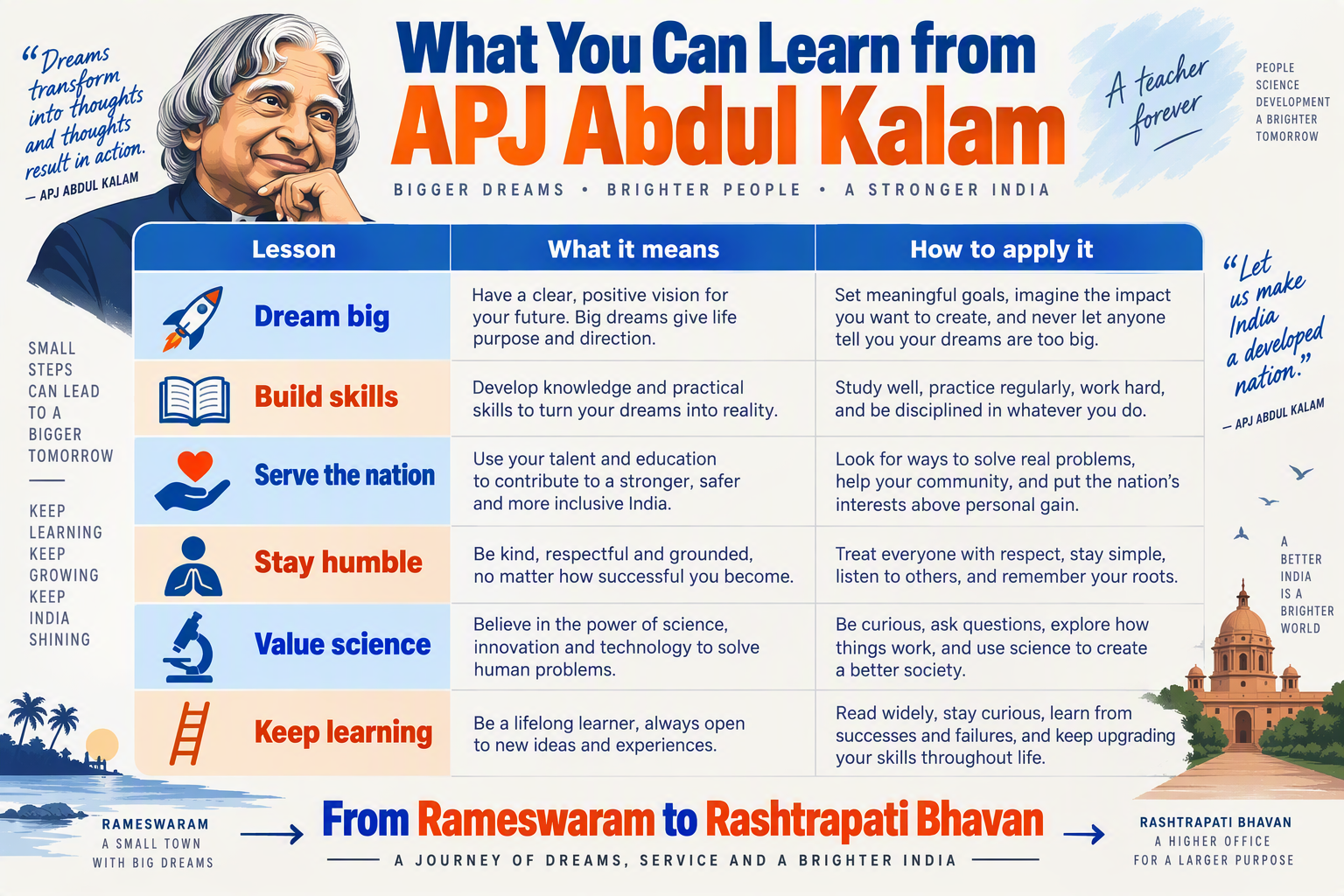
Dr. Kalam’s legacy for students and readers is this: scientific achievement becomes truly powerful when it serves society, inspires young people, and strengthens national confidence. The title Missile Man of India teaches ambition and self-reliance; the title People’s President teaches humility, education, and public service.
What lessons can students learn from APJ Abdul Kalam’s life?
APJ Abdul Kalam’s life is especially useful for students because it connects career discipline, national purpose, and personal character in one story. The official President of India profile states that Dr. Kalam took responsibility for “developing Indigenous Guided Missiles” at DRDO, while Britannica records that he served as India’s president from 2002 to 2007 and became known by the epithets “Missile Man” and “People’s President.”
| Legacy theme | Evidence from Kalam’s life | What students can practise | Why it still matters in 2026 |
|---|---|---|---|
| Dream with discipline | Kalam rose from Rameswaram, Tamil Nadu, to become an aerospace engineer and national science leader. | Set long-term goals, then break them into daily study, skill, and revision routines. | Competitive exams, research careers, and startups reward consistency more than short bursts of motivation. |
| Build for self-reliance | The President of India profile links him directly with “developing Indigenous Guided Missiles” at DRDO. | Learn core concepts deeply instead of depending only on shortcuts or memorised answers. | India’s defence, space, AI, and manufacturing goals need problem-solvers who can build locally. |
| Accept failure as data | Kalam’s scientific journey moved through complex programmes at ISRO and DRDO, where testing and iteration were essential. | Treat mistakes in exams, projects, and interviews as feedback loops. | Modern science and engineering depend on testing, debugging, and improving—not instant perfection. |
| Connect science with service | His work on systems such as Agni and Prithvi is remembered as part of India’s strategic defence capability. | Ask how a project helps people, institutions, or the country. | Technology without public purpose can become narrow; Kalam’s model links innovation with responsibility. |
| Stay humble after success | After becoming India’s 11th President from 2002 to 2007, he remained closely associated with students and education. | Share knowledge, mentor juniors, and stay open to learning from others. | Leadership in classrooms, labs, companies, and public life requires trust, not just credentials. |
| Read, write, and communicate | Kalam’s books and speeches made science, citizenship, and dreams accessible to young readers. | Build the habit of reading biographies, writing notes, and explaining ideas simply. | Clear communication is now a career skill in science, civil services, business, and public policy. |
Why does Kalam still inspire readers beyond science?
Dr. A.P.J. Abdul Kalam still inspires readers because his story is not limited to missiles, laboratories, or presidency. It shows that a person can be technically excellent and emotionally grounded at the same time.
For a school student, Dr. Kalam: The Missile Man of India is a model of hard work. For an engineering student, he represents applied science and systems thinking. For a civil services aspirant, he represents national development, ethics, and public duty. For a general reader, he proves that greatness can remain gentle.
How should readers apply Kalam’s legacy today?
A practical way to apply Kalam’s legacy is to turn admiration into habits:
- Study one hard subject consistently, even when progress feels slow.
- Choose one national problem—education, health, agriculture, defence, climate, or technology—and learn how it can be solved.
- Build small projects, not just notes and opinions.
- Respect teachers, peers, and mentors, because Kalam’s life was shaped by learning communities.
- Measure success by contribution, not only by marks, salary, or title.
That is why Kalam’s legacy remains larger than the phrase Missile Man of India. The nickname explains what he helped India build; his life explains what India’s young minds can become.
Frequently Asked Questions
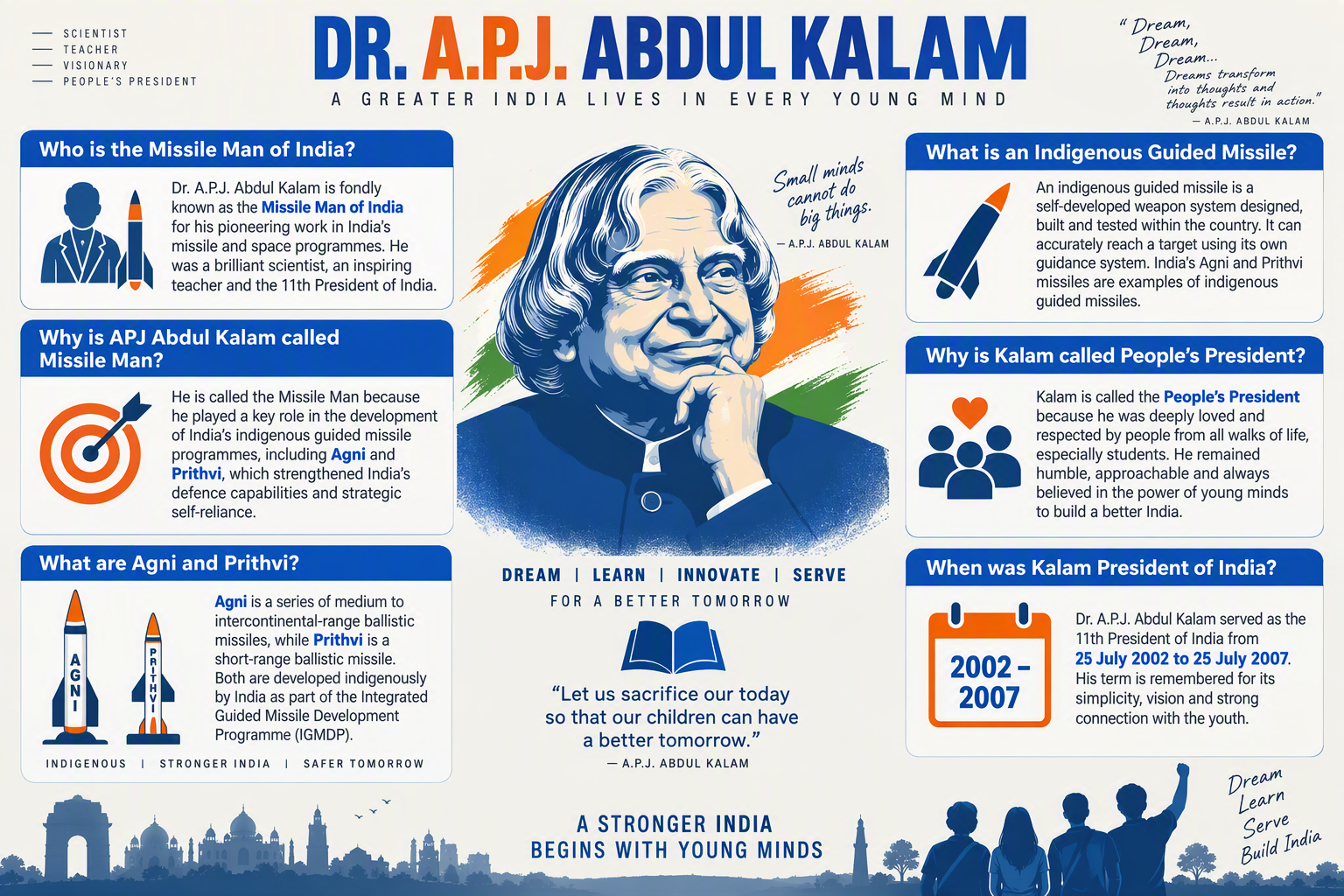
Why is APJ Abdul Kalam called the Missile Man of India?
What is the meaning of Missile Man of India in simple words?
Which missiles are associated with Dr. A.P.J. Abdul Kalam?
Was A. P. J. Abdul Kalam only a missile scientist?
Why is APJ Abdul Kalam also called the People’s President and the Missile Man of India?
What are the most important facts students should remember about Dr. Kalam?
Conclusion
Dr. A.P.J. Abdul Kalam earned the title Missile Man of India because his work helped move India from dependence on imported defence technology toward confidence in Indigenous Guided Missiles. As the President of India profile notes, Dr. Kalam took responsibility for developing these systems at DRDO, while sources like Britannica also remember him as both “Missile Man” and “People’s President.”
Key takeaways:
- A. P. J. Abdul Kalam’s journey began in Rameswaram, but his discipline and scientific training carried him into India’s aerospace and defence programs.
- His ISRO and SLV-3 experience shaped his later missile work, linking space-launch knowledge with strategic defence capability.
- Agni and Prithvi became central to his legacy, not because he worked alone, but because he led and inspired complex national science missions.
- His presidency from 2002 to 2007 expanded his image, turning Dr. Kalam: The Missile Man of India into a youth icon and teacher.
What to watch next is how India’s young engineers build on Kalam’s model of self-reliant technology—now across defence, space, AI, and communication systems. To explore how AI communication is evolving, check out CallMissed, an India-built AI customer-communication platform for voice and chat agents.
Kalam’s real question still stands: what will today’s students build for India’s future?
Related Reading
- AI Customer Service Memory: Why Omnichannel AI Needs One Governed Record
- CallMissed vs Separate Voice, WhatsApp, Email and Phone Tools: Why Shared-Memory AI Matters
- CallMissed Shared Customer Memory: Why Voice, WhatsApp, and Email Need One Context Layer
Sources
Discussion
Related Posts

Everything You Need to Know About GPT-5.6 Terra: OpenAI’s Balanced AI Model for 2026

GPT-5.6: Comparing Sol, Terra, and Luna—Capabilities, Differences, and Use Cases

OpenAI Unveils GPT-5.6 (Sol, Terra, Luna): Flagship Power Under Government Lock and Key
Ready to automate customer conversations?
Launch AI voice agents and WhatsApp bots with CallMissed — one API, 22+ Indian languages.