Voxtral 3 Speech Models: What Voice Developers Evaluate


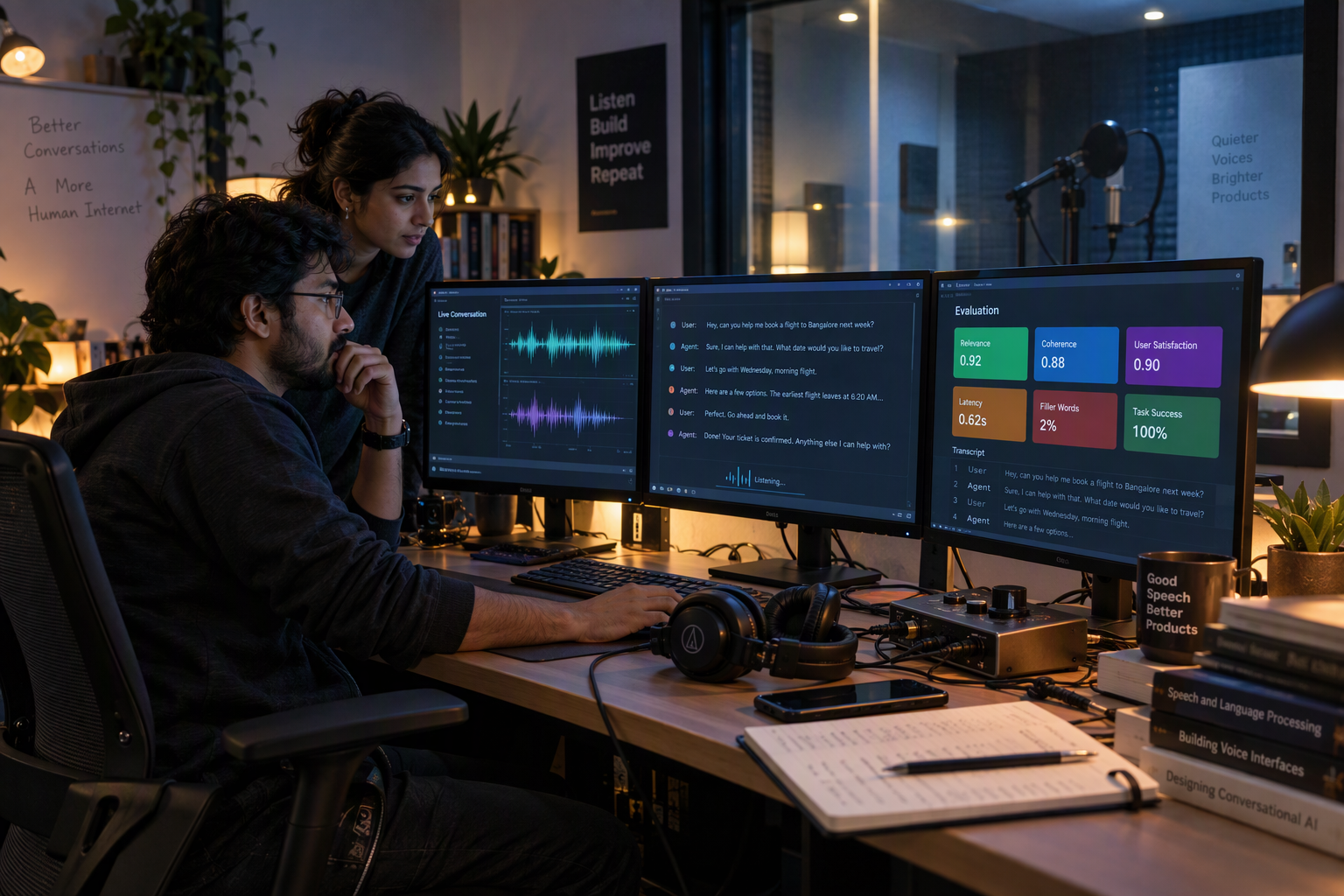
Evaluate Voxtral 3 Speech Models with repeatable tests for call latency, noisy audio, voice quality, tool use, licensing, and total cost.
Voxtral 3 Speech Models: What Voice Developers Evaluate
What if a speech model transcribes a caller quickly—but the voice agent still responds too late? Voxtral 3 Speech Models bring that distinction into focus: developers should evaluate transcription, speech generation, and conversational orchestration together, rather than treating a fast speech benchmark as proof of a responsive agent.
According to explainx.ai, Mistral AI released Voxtral 3 on October 20, 2026, combining speech-to-text models, text-to-speech, and a voice agent SDK in a streaming pipeline. The supplied Hacker News snapshot recorded 720 points and 175 comments within 21.2 hours around the October 2026 launch. That attention makes this a timely evaluation question—not evidence that the models already meet every production requirement.
The architectural shift matters. According to SyncAI.news’s October 2026 coverage, Mistral’s LiveKit-based SDK connects realtime transcription, a reasoning model that can call tools, and speech generation. For developers, the unit of evaluation is increasingly the whole conversation, including the transitions between those components.
Consider a customer calling to reschedule a delivery. Recognizing the address correctly is only the beginning: the agent must detect when the customer finishes, retrieve available slots, handle an interruption, and speak without an awkward pause. A transcription latency figure cannot tell you whether that complete interaction succeeds.
What should developers evaluate before choosing Voxtral 3?
This guide will help you separate promising launch specifications from results you can reproduce in your own voice-agent stack. The core evaluation areas are:
- Accuracy under realistic conditions: accents, background noise, names, numbers, and code-switching—not just clean demonstration audio.
- End-to-end responsiveness: time from the caller finishing to useful spoken output, including reasoning and tool execution.
- Conversational control: turn detection, interruptions, recovery, and whether partial transcripts trigger premature actions.
- Speech quality and language fit: intelligibility, pronunciation, expressiveness, and coverage for your actual users.
- Operating cost and integration: component pricing, streaming behavior, deployment constraints, and the effort required to instrument failures.
Pricing illustrates why this needs a systems view. According to CellCog’s October 2026 coverage, Voxtral transcription ranges from $0.0035 to $0.008 per audio minute, while text-to-speech costs $13 per million characters; those different billing units require workload-specific calculations.
As of October 2026, CallMissed supports speech recognition in 22 Indian languages plus English, including Hinglish—a reminder that regional-language testing belongs alongside speed and cost.
The goal is not to crown a universal winner. It is to build a repeatable evaluation that reveals whether Voxtral 3 fits your callers, workflows, and operational budget.
What should developers evaluate in Voxtral 3 Speech Models before choosing a voice-agent stack?
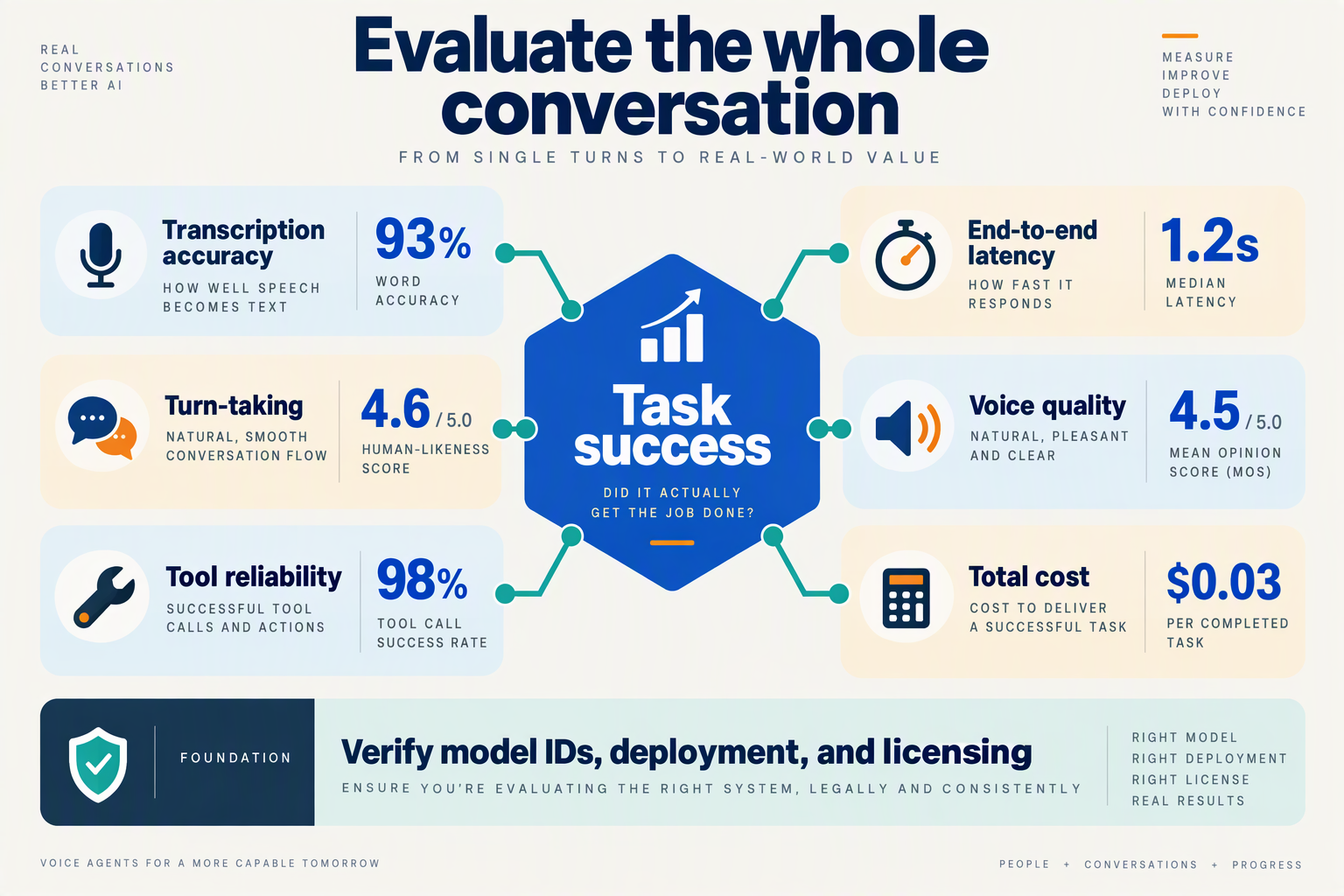
Developers should evaluate Voxtral 3 Speech Models against a workload-specific acceptance scorecard, with separate gates for recognition, conversational behavior, integration reliability, and cost per completed task. Choose the stack that passes those gates on representative calls—not the one with the most impressive isolated benchmark.
How do you turn Voxtral 3 specifications into acceptance criteria?
Start by defining what a successful call must accomplish. For an appointment-booking agent, success means capturing the correct customer, selecting an available slot, receiving confirmation, and creating exactly one booking.
Translate that workflow into measurable requirements:
- Critical-field accuracy: Did the agent capture dates, phone numbers, names, and booking identifiers correctly?
- Action correctness: Did the tool receive the intended arguments, and did the agent wait for confirmation before claiming success?
- Recovery quality: Could the caller correct an error without restarting the conversation?
- Task completion: Was the intended outcome achieved without unnecessary human intervention?
Keep word error rate separate from business correctness. A transcript can contain minor grammatical errors and still support a successful booking; one incorrect digit can make an otherwise accurate transcript unusable.
According to CellCog’s October 2026 coverage, Voxtral Small Transcribe 3 supports 50 languages. Treat that coverage as a candidate-selection signal, not proof of equal accuracy across accents, dialects, or specialist vocabulary—and do not assume transcription coverage also establishes text-to-speech coverage.
How should developers measure realtime performance?
Measure latency at the boundaries your application actually experiences. HyperAI’s October 2026 coverage reports sub-500-millisecond latency for a Voxtral 3 realtime transcription model in more than 35 languages; that reported transcription figure does not establish the time required to complete a spoken response.
Instrument these events separately:
- Speech ends: the caller finishes the relevant utterance.
- Turn commits: the system decides it has enough information to respond.
- Tool completes: any required external operation returns.
- Audio begins: useful spoken output reaches the caller.
Report median and p95 latency, rather than only an average. Separate calls requiring tools from calls answered directly, so a slow scheduling service does not get misdiagnosed as a speech-model problem.
Include deliberately difficult turns: a caller pauses halfway through a number, changes a date mid-sentence, or interrupts a confirmation. The practical question is whether the stack preserves intent and cancels obsolete output—not merely whether streaming continues.
What should a first evaluation harness include?
Build a small, repeatable test suite before a production pilot. Use consented or synthetic recordings, expected tool arguments, and explicit pass/fail labels; keep a held-out set to check whether prompt changes genuinely improve results.
Test operational failures alongside normal conversations:
- Disconnect the audio stream during a response.
- Make a tool time out or return an error.
- Interrupt after an action has already completed.
- Check whether retries produce duplicate bookings or charges.
As of October 2026, CallMissed’s developer AI API provides usage and request logs, caller-chosen fallback models, and OpenAI-compatible endpoints. These capabilities can support instrumentation and integration experiments, but developers must still verify speech-specific behavior in their chosen stack.
Finally, calculate cost per successful task, including transcription, reasoning, speech generation, phone carriage where applicable, and retries. Advance to a pilot only when the scorecard shows acceptable accuracy, predictable recovery, and sustainable economics together.
What prerequisites, audio fixtures, and SDK settings do you need?
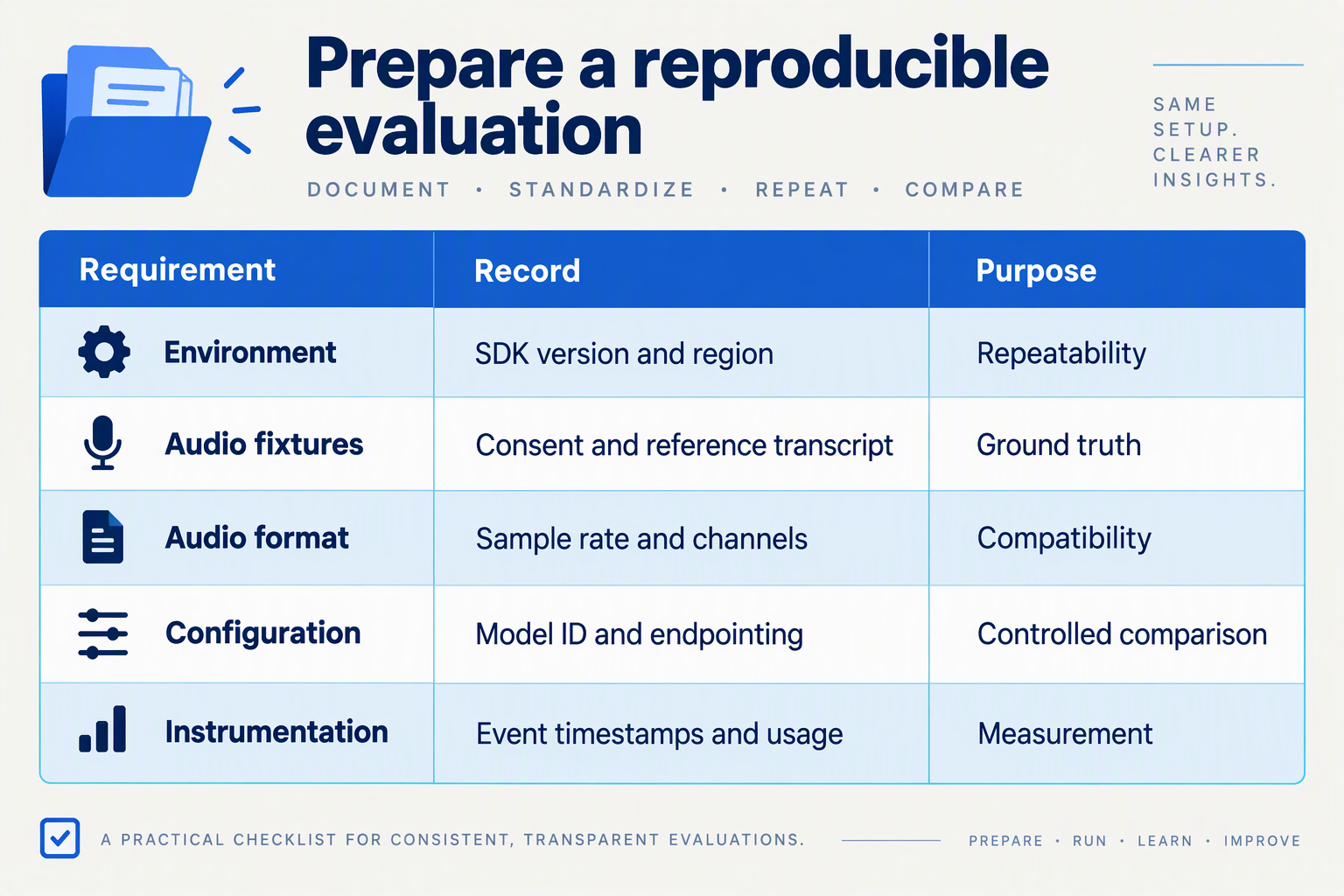
You need authenticated API access, a reproducible streaming environment, representative audio fixtures, and a recorded configuration before evaluating Voxtral 3 for voice agents. Start with a minimal working session, then hold audio, prompts, tools, and network conditions constant so model comparisons remain meaningful.
What should your Voxtral 3 test environment include?
Keep verified product specifications separate from your evaluation settings. The supplied October 2026 launch coverage does not establish exact SDK parameter names, supported input sample rates, or installation commands; confirm those details in the current Mistral AI and LiveKit documentation rather than copying settings from another speech provider.
| Prerequisite | What to prepare | What to record | Why it matters |
|---|---|---|---|
| Access and versions | Mistral credentials, required LiveKit credentials, pinned dependencies | Model identifier, SDK version, test date | Makes results reproducible |
| Audio transport | Input matching the endpoint’s documented encoding, channel count, and sample rate | Original format, conversions, chunk duration | Exposes conversion and buffering delays |
| Clean reference fixtures | Consented recordings with human-checked transcripts | Language, accent, duration, expected entities | Establishes a controlled accuracy baseline |
| Difficult audio fixtures | Noisy, quiet, overlapping, and code-switched speech | Noise conditions, speaker boundaries, critical words | Tests realistic caller conditions |
| Conversation controls | Explicit turn-detection and interruption settings, where exposed | Thresholds, timeouts, cancellation behavior | Separates model errors from orchestration errors |
| Tools and observability | A deterministic mock tool and timestamped event logs | Tool duration, retries, transcript and playback events | Locates delays across the pipeline |
Treat this table as a recommended evaluation checklist as of October 2026, not a list of guaranteed Voxtral SDK controls.
Which audio fixtures should developers collect first?
Build fixtures around business tasks, not miscellaneous recordings. A delivery-rescheduling fixture should include an address, a corrected date, and an interruption while the agent explains available slots.
Use paired recordings to isolate causes:
- Clean versus noisy: replay the same utterance with a documented noise condition.
- Complete versus corrected: compare “Friday morning” with “Friday—sorry, Saturday morning.”
- Single speaker versus overlap: add another speaker without changing the target request.
- Monolingual versus code-switched: preserve the task while changing the language pattern.
Maintain human-reviewed transcripts and separate labels for names, dates, amounts, and intended actions. A transcript can contain minor wording errors yet preserve the task—or look mostly correct while getting the delivery date wrong.
According to CellCog’s October 2026 coverage, Voxtral Small Transcribe 3 supports 50 languages. That reported coverage makes language-specific fixtures important; it does not establish equal accuracy across accents, noisy channels, or code-switching.
Which SDK settings should stay fixed during comparisons?
Before collecting results:
- Pin the configuration: record model identifiers, prompts, generation settings, audio buffering, and turn-detection controls where available.
- Make tools predictable: use fixed responses and controlled delays before testing production integrations.
- Capture event timestamps: log audio submission, transcript updates, detected turn completion, tool completion, and first audible output.
Label transcription events separately from playback events; an SDK callback is not necessarily the moment a caller hears speech.
As of October 2026, CallMissed’s developer AI API provides OpenAI-compatible audio endpoints and usage and request logs. Those capabilities can support a comparison workflow, but developers should verify model availability and streaming semantics separately—not assume compatibility guarantees identical behavior or Voxtral 3 access.
How do you get started while verifying Voxtral 3 model names, SDK support, and licenses?
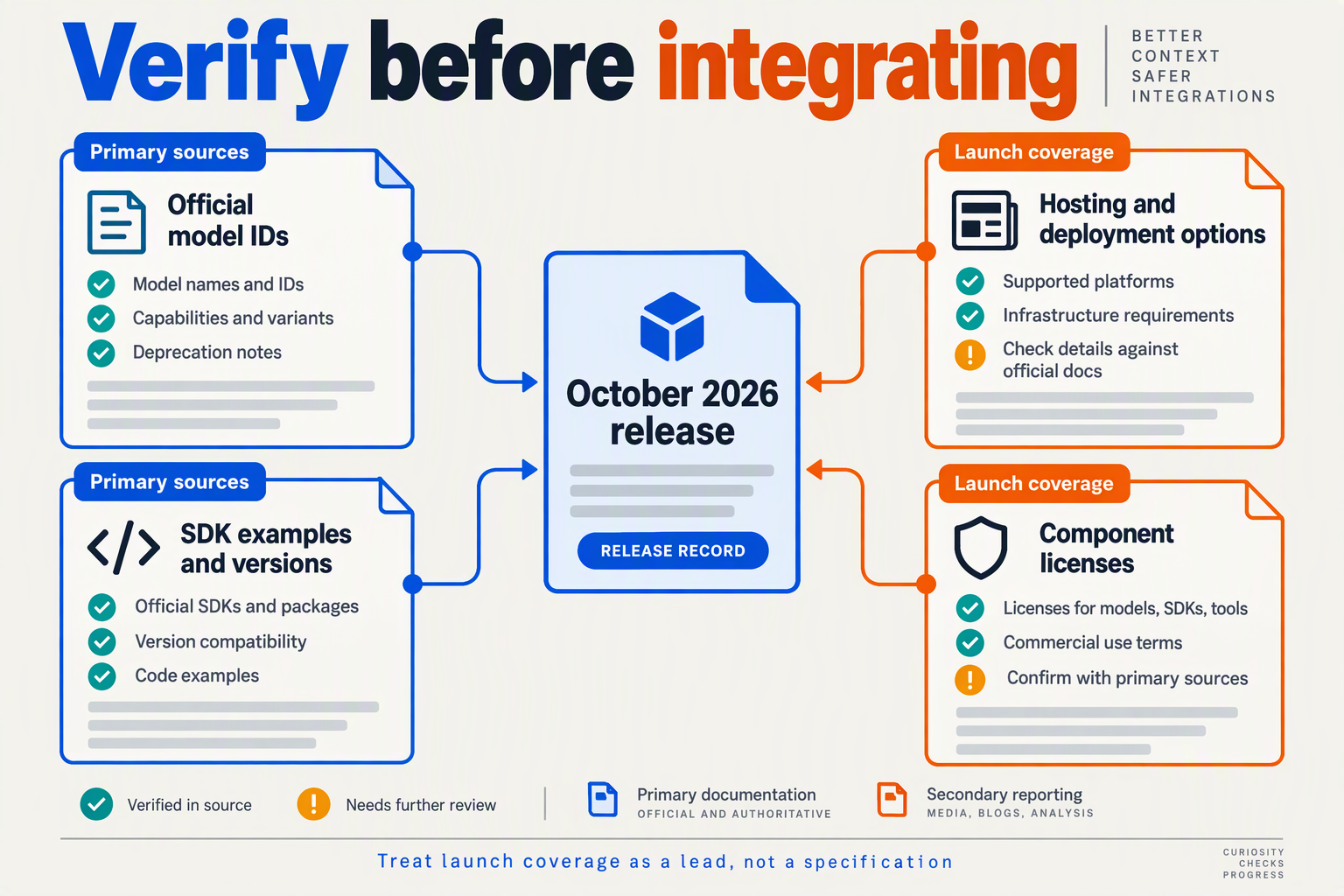
Start with a verified integration manifest: record the exact model IDs, supported interfaces, SDK versions, and license terms before writing your voice-agent prototype. As of October 21, 2026, the supplied Voxtral 3 coverage identifies the release family, but does not establish every API identifier, package version, or license condition.
Which Voxtral 3 model names should you verify?
“Voxtral 3” is a family name, not a sufficiently precise deployment configuration. According to MarkTechPost’s October 20, 2026 coverage, Mistral AI’s Voxtral 3 release includes three transcription models and one text-to-speech model, alongside a voice agent SDK.
Use the reported names to navigate the documentation, then confirm the machine-readable identifiers in Mistral AI’s official API reference:
- Voxtral Small Transcribe 3: identify the transcription endpoint and supported options.
- Voxtral Mini Transcribe 3: confirm the exact published name and API ID rather than constructing an identifier from the display name.
- Voxtral Mini Transcribe Realtime 3: AI/TLDR’s October 2026 coverage identifies this as the listening component in the voice-agent pipeline; verify its streaming interface separately.
- Voxtral TTS 3: AI/TLDR identifies this as the speech-generation model released on October 20, 2026.
Treat those as reported product names, not copy-and-paste API values. Also distinguish current documentation from older releases: the supplied tachiuokoshien.com result describes Voxtral Transcribe 2, so its examples should not be assumed valid for Voxtral 3.
How do you confirm SDK support before building?
Verify support at the endpoint and operation level, not merely whether an SDK can authenticate. According to SyncAI.news’s October 2026 coverage, Mistral’s LiveKit-based voice agent SDK connects three stages in one streaming pipeline: transcription, reasoning with tool calling, and speech generation.
Follow this sequence:
- Check the official installation instructions. Record the package name, version, runtime requirements, and supported LiveKit integration.
- Run transcription independently. Confirm accepted audio formats, sample rates, transcript events, and error handling.
- Test speech generation separately. Verify output encoding and whether your playback client supports the documented streaming behavior.
- Connect the agent pipeline. Start with a harmless tool, such as returning mock appointment availability.
- Save a reproducible configuration. Pin dependencies and record model IDs, transport settings, and test audio.
A successful prerecorded transcription request does not demonstrate realtime SDK support. Your first useful smoke test should capture a spoken request, invoke the mock tool, and produce audible output while logging each component’s events.
As of October 2026, CallMissed’s developer AI API supports OpenAI-compatible audio transcription and speech endpoints, allowing existing SDK integrations to change the base URL. That compatibility is useful when evaluating infrastructure, but it does not establish Voxtral 3 availability; verify model-specific support separately.
What licenses and deployment permissions should you check?
Do not equate an available API, downloadable weights, and an open-source SDK. The supplied October 2026 excerpts do not specify Voxtral 3’s exact license terms, so a definitive commercial-use or self-hosting claim would be premature.
Before deployment, record:
- Model permissions: commercial use, modification, redistribution, and any usage restrictions.
- SDK terms: the repository license and relevant dependency licenses.
- Hosted-service terms: audio retention, processing locations, and contractual data-handling provisions.
Keep the source document and verification date beside each entry. This turns “Voxtral 3 works in our demo” into a configuration your engineering, security, and legal teams can actually review.
How do you build a repeatable harness to measure streaming latency, interruptions, and tool use?
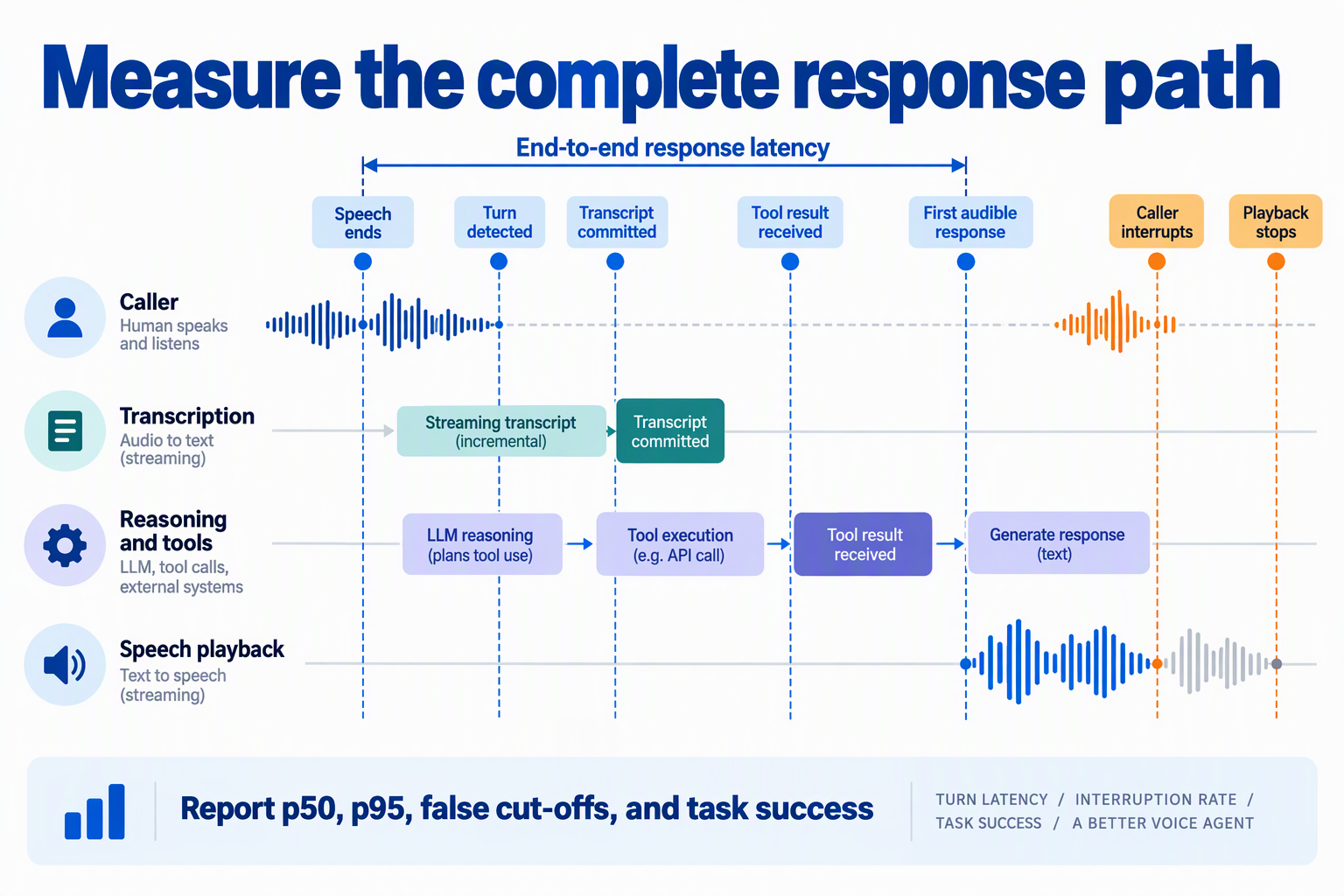
Build a repeatable voice-agent harness by replaying versioned audio scenarios through an instrumented streaming client, recording timestamped events, and checking both response timing and task outcomes. For Voxtral 3, measure what the caller hears and what the agent does—not just when transcription arrives.
What should a reproducible voice-agent test contain?
Create a scenario manifest containing the input recording, expected intent, permitted tool calls, interruption schedule, and success criteria. Stream recordings at their original pace; uploading complete files does not reproduce live conversational timing.
Start with four scenario types:
- Simple response: ask a question requiring no external lookup.
- Tool-backed response: request delivery slots from a controlled test endpoint.
- Mid-response interruption: interrupt spoken output with “Actually, use my office address.”
- Correction before commitment: say “Book Tuesday—sorry, Thursday,” and verify that no Tuesday booking occurs.
Pin model identifiers, SDK versions, prompts, voice settings, audio format, and endpointing configuration. Keep the same fixtures across configurations, randomize execution order, and report cold-start runs separately from warmed sessions.
As a proposed starting protocol—not a published benchmark—run each scenario 30 times per configuration. Increase repetitions when results vary substantially, and retain failed runs rather than calculating latency only from successes.
Which timestamps reveal streaming latency?
HyperAI’s October 2026 coverage reports sub-500-millisecond realtime transcription latency in more than 35 languages for Voxtral 3. Treat that as a reported component-level claim: the supplied coverage does not establish your full agent’s caller-to-response latency or measurement conditions.
Use a monotonic clock within each process and correlated trace IDs across services. Record:
- Caller speech end: ground-truth end of speech in the fixture.
- Turn accepted: when the agent decides the caller has finished.
- First transcript: when the first partial transcription becomes available.
- Tool start and finish: when execution begins and its result returns.
- First audible response: when output reaches the playback device.
- Playback stop: when interrupted output actually becomes silent.
Calculate response latency = first audible response − caller speech end. Separately measure endpointing delay and tool duration; these explain slow conversations without incorrectly blaming transcription.
Report p50, p95, failure rate, and sample count, grouped by scenario. Distinguish a filler such as “Let me check” from the first useful answer, so acknowledgements cannot artificially improve the result.
How do you test interruptions and tool safety?
Schedule interruptions relative to actual playback start, not request submission. Measure barge-in stop latency from interruption onset to audible silence, then check whether the agent incorporates the correction and avoids resuming obsolete speech.
For example, interrupt a delivery-slot response after playback begins. A passing run must stop, recognize the replacement address, and retrieve slots for that address—not finish speaking the original results.
Use a sandbox tool server with configurable delays and deterministic responses. Assert:
- Correct tool name and schema-valid arguments.
- No write action before required confirmation.
- No duplicate side effect after retries or interruptions.
- Clear recovery from timeout, malformed results, and unavailable tools.
How should teams preserve evaluation results?
Store event traces, recordings, configuration hashes, tool logs, and outcome labels together. Set acceptance thresholds before comparing configurations, then rerun the same suite after changes to prompts, models, or orchestration.
As of October 2026, CallMissed provides eval suites and A/B experiments for voice agents, alongside recordings and transcripts. Those capabilities can support regression testing; the essential discipline remains the same across platforms: preserve comparable evidence of timing, interruptions, and completed tasks.
How should you test noisy calls, accents, code-switching, diarization, and synthesized speech?
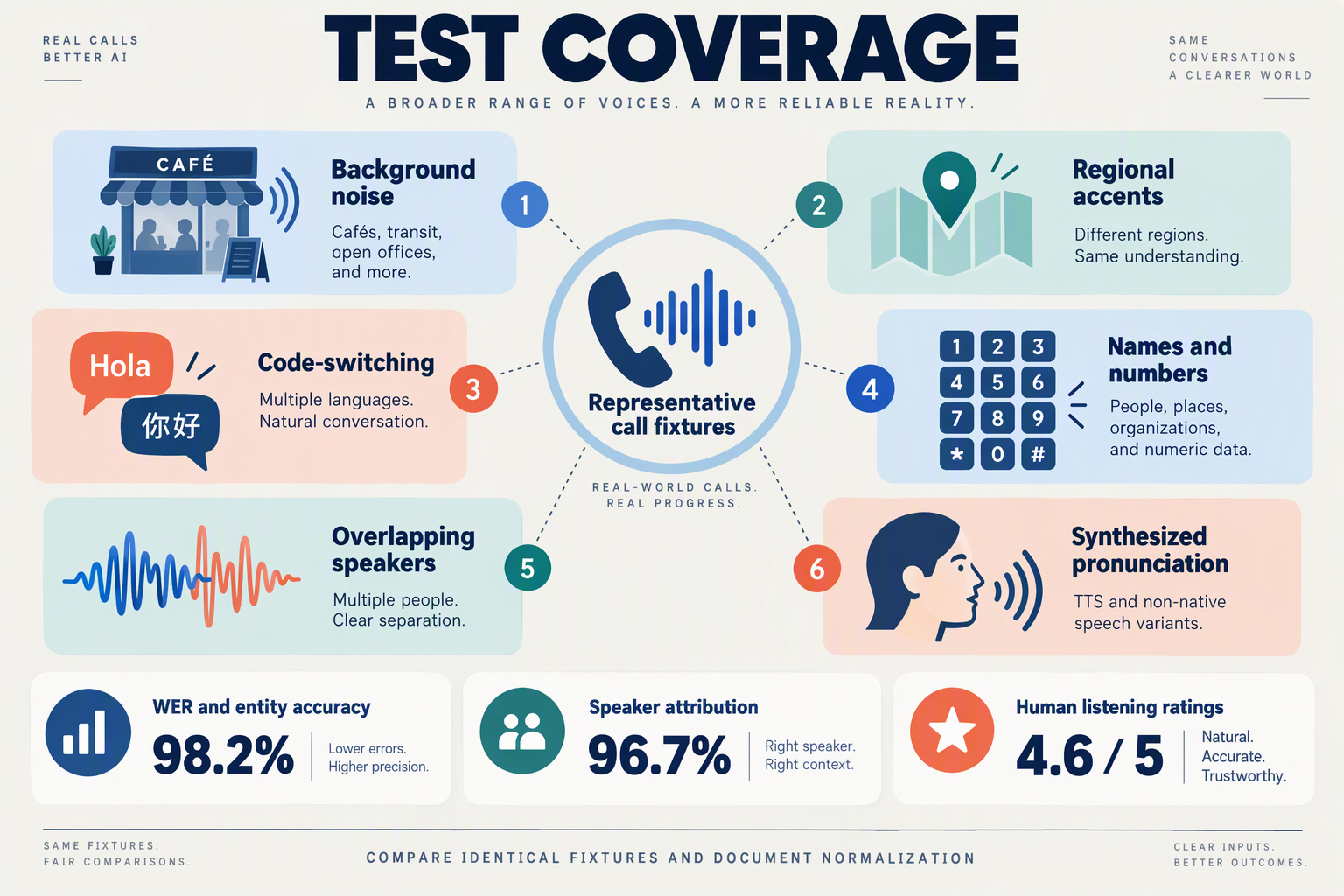
Test Voxtral 3 with a consented, representative call corpus, then score results separately for noise, accents, language switches, speaker attribution, and generated speech. Use both component-level tests and complete conversations: a readable transcript can still hide a wrong account number, misattributed instruction, or unintelligible spoken reply.
How do you build a realistic speech evaluation dataset?
Start with anonymized production recordings where permitted, supplemented by scripted calls for rare but consequential failures. Keep a held-out set that developers cannot use to tune prompts or settings.
Build the corpus around your actual callers:
- Noise and channels: traffic, television, office chatter, speakerphone echo, clipping, and your production telephony codec.
- Accents: regional varieties within each supported language, not just different languages.
- Code-switching: language changes within sentences, especially around product names, addresses, and English technical terms.
- Speaker overlap: interruptions, a second household member answering, and agent-to-human transfers.
- Critical entities: dates, amounts, booking references, names, and negations such as “do not cancel.”
For an initial pilot, use a proposed 200-call test set, with overlapping labels for these conditions; this is a starting design, not a statistically validated benchmark. Report the sample count beside every result so a tiny subgroup cannot masquerade as reliable coverage.
Which metrics reveal noisy-call and accent failures?
Measure word error rate (WER), but pair it with critical-entity accuracy and task outcomes. A transcript that misses several filler words may remain useful; one that changes “fifteen” to “fifty” can trigger the wrong transaction.
Run the evaluation in three steps:
- Establish a clean baseline: transcribe the original recording and compare it with a human-reviewed reference.
- Apply controlled degradation: add noise at documented signal-to-noise ratios and replay audio through the intended call channel.
- Compare subgroup results: examine accents, languages, and code-switching independently rather than relying on an overall average.
Include a Hinglish example such as “Delivery kal chahiye, before five,” and verify the intended date and time—not merely spelling. Accept legitimate transliteration variants in the scoring rules, while keeping numbers and action-critical meanings strict.
How should you evaluate diarization and overlapping speakers?
Diarization asks who spoke when; it does not establish a speaker’s identity or authority. Test speaker changes, brief interjections, overlapping speech, and whether labels remain consistent after silence.
According to CellCog’s October 2026 coverage, Voxtral Small Transcribe 3 covers 50 languages, and Mistral’s diarization chart reports 18.4% concatenated minimum-permutation word error rate (cpWER). That combined transcription-and-speaker-attribution result is not an 18.4% diarization error rate, nor a prediction for your calls.
Measure speaker-attribution errors separately, then inspect consequential cases: did the agent treat a background speaker’s “yes” as the account holder’s authorization? Language coverage alone does not establish accent or overlap robustness.
How should you test synthesized speech in real calls?
AI/TLDR identifies Voxtral TTS 3 as the text-to-speech model released alongside Voxtral Transcribe 3 on October 20, 2026. Evaluate its output through the same audio path customers hear, not only through high-quality headphones.
Use blinded listener tests for intelligibility, pronunciation, language switching, and whether interruptions stop playback appropriately. Ask listeners to repeat amounts and reference numbers; naturalness ratings alone can miss costly misunderstandings.
As of October 2026, CallMissed offers eval suites and A/B experiments for voice agents. Whatever platform you use, preserve recordings, settings, and failure labels so every model update faces the same reproducible acceptance tests.
How do you calculate Voxtral 3 costs and verify what pipeline pricing includes?
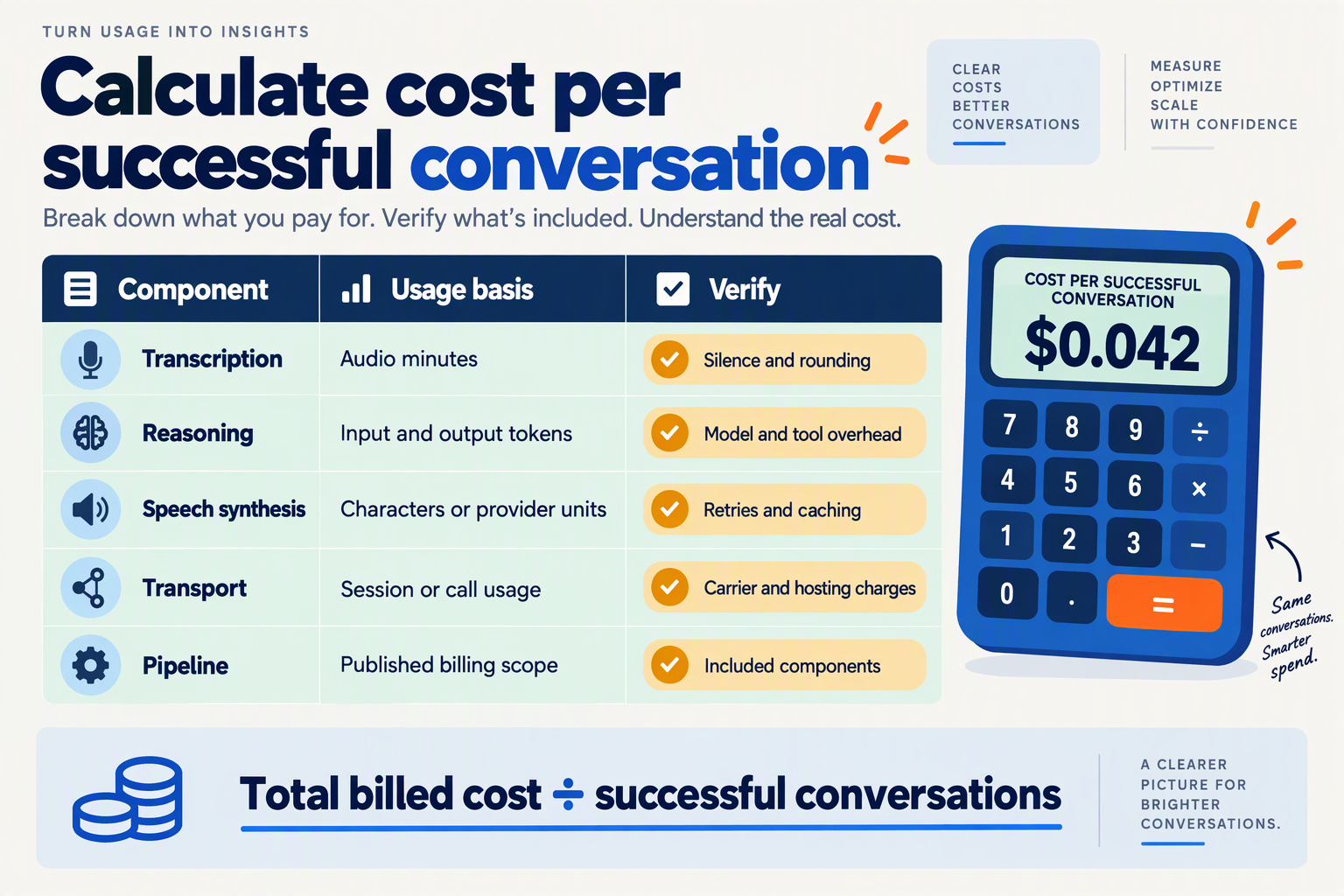
Calculate Voxtral 3 costs by billing component, not by multiplying call duration by the lowest transcription price. To verify pipeline pricing, ask whether the quote includes speech recognition, reasoning, speech generation, orchestration, and phone carriage—and how each component measures billable usage.
What does each Voxtral 3 pricing component cover?
According to CellCog’s October 2026 coverage, Voxtral 3 transcription costs $0.0035 per audio minute for Mini, $0.004 for Small, and $0.008 for the realtime model. CellCog also reports an October 2026 Voxtral TTS 3 price of $13 per million characters.
These are component prices, not evidence of an all-inclusive voice-agent rate.
| Component | Reported price, October 2026 | Calculation | What to verify |
|---|---|---|---|
| Mini transcription | $0.0035/audio minute | Audio minutes × $0.0035 | Suitability for your workflow |
| Small transcription | $0.004/audio minute | Audio minutes × $0.004 | Features and billing rules |
| Realtime transcription | $0.008/audio minute | Audio minutes × $0.008 | Whether silence is billable |
| Voxtral TTS 3 | $13/million characters | Characters ÷ 1,000,000 × $13 | Character-counting rules |
| Reasoning model | Not specified in supplied coverage | Apply selected model’s rate | Input, output, and tool-loop usage |
| Orchestration and carriage | Not specified in supplied coverage | Add applicable service charges | Hosting, transport, and phone fees |
The four speech prices above come from CellCog’s October 2026 reporting. Confirm current provider terms before committing a production budget, especially minimums, rounding, and streaming-session billing.
How do you estimate a realistic monthly voice-agent bill?
Use measured audio and generated text, rather than assuming listening time and speaking time are equal. A delivery-rescheduling agent may listen through long customer explanations but produce short confirmations; another workflow may generate lengthy instructions.
For an illustrative October 2026 workload:
- Assume 10,000 billable realtime transcription minutes. At CellCog’s reported $0.008 rate, transcription costs $80.
- Assume 5 million billable TTS characters. At CellCog’s reported $13-per-million rate, speech generation costs $65.
- Add the remaining components. The speech subtotal is $145, excluding reasoning, orchestration, phone carriage, and any other applicable charges.
That subtotal equals $0.0145 per transcription minute for this assumed workload—not a published all-in Voxtral 3 price. Change the amount of generated speech, and the effective rate changes.
Track cost per successfully completed task alongside cost per minute. A cheaper conversation that repeatedly fails to reschedule the delivery may be more expensive operationally.
Which pipeline-pricing questions should you ask before deployment?
According to SyncAI.news’s October 2026 coverage, Mistral’s LiveKit-based SDK connects realtime transcription, a reasoning model, and speech generation into one streaming pipeline. Architectural integration does not establish that those stages share one billing unit.
Ask providers to clarify:
- Metering: Are silence, partial minutes, and idle connections charged?
- Regeneration: Do interrupted speech, retries, and cancelled requests incur charges?
- Reasoning: How are conversation history, tool results, and repeated tool calls billed?
- Infrastructure: Are hosting, recording, storage, and phone carriage included or separate?
As a contrasting pricing structure, CallMissed’s October 2026 voice-agent plans charge ₹4, ₹5, or ₹6 per minute, covering speech recognition, the language model, and voice, with phone carriage billed separately. Connected calls have a 30-second minimum; calls that never connect cost nothing. Comparing that structure with component billing requires the same workload assumptions—not merely comparing headline rates.
Which advanced tests reveal endpointing, voice-control, and fallback weaknesses?
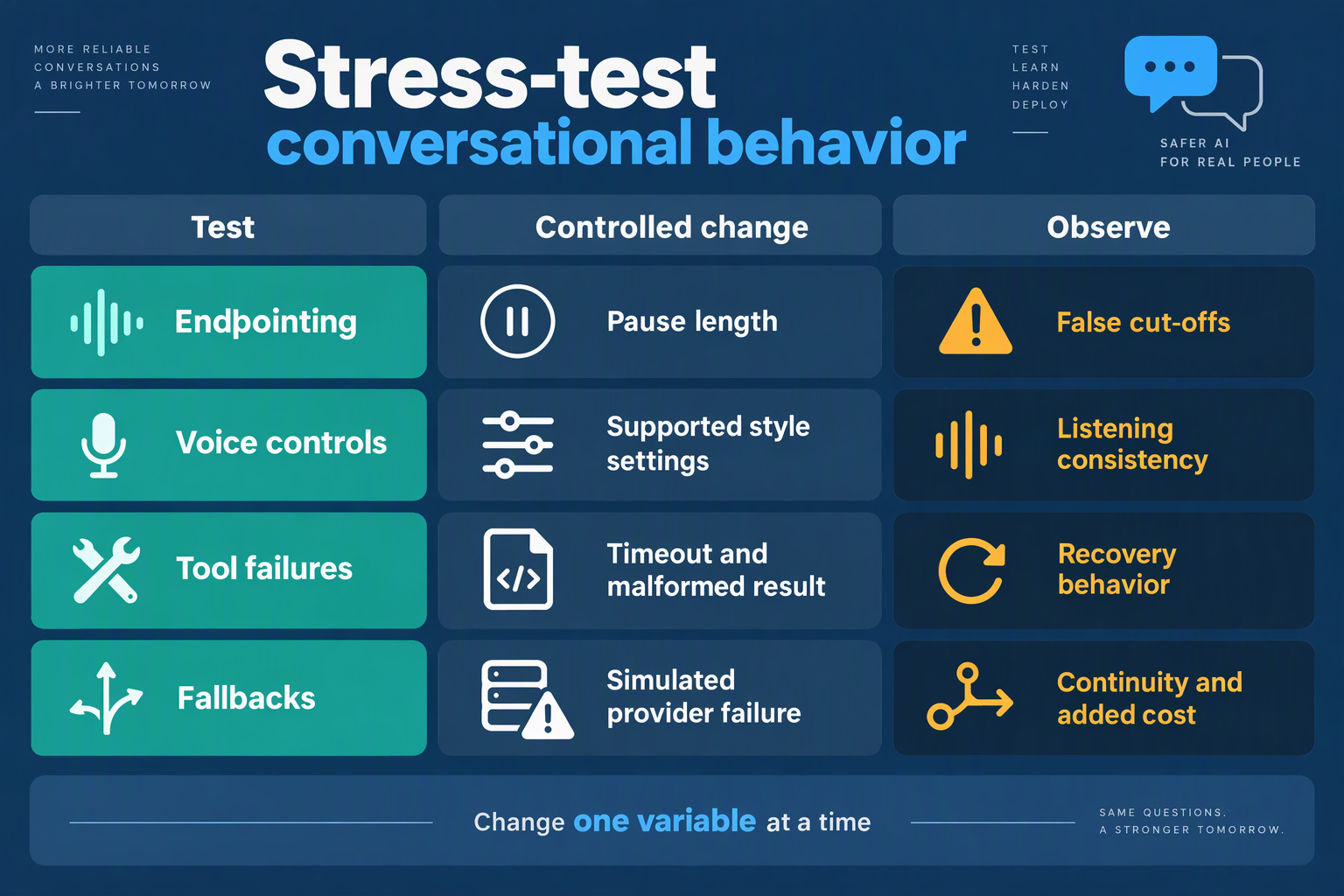
Stress tests that manipulate pauses, interruptions, speech instructions, and component failures reveal weaknesses that transcription benchmarks miss. For Voxtral 3 voice agents, evaluate whether the system preserves the caller’s intent and conversation state—not merely whether each model returns an output.
How do you test endpointing beyond ordinary silence?
Endpointing determines when a caller has finished a turn. A useful test distinguishes a thinking pause from a completed request: “Move my appointment to Thursday … actually, Friday afternoon.” An agent that acts after “Thursday” may transcribe accurately while executing the wrong task.
HyperAI’s October 2026 coverage reports sub-500-millisecond realtime transcription latency in more than 35 languages for Voxtral 3; that reported figure does not establish endpointing accuracy or complete voice-agent response time.
Use the following as a proposed October 2026 evaluation matrix, not as measured Voxtral 3 results. Run identical recordings and fault injections across candidate configurations.
| Test | Controlled challenge | Measure | Failure signal |
|---|---|---|---|
| Hesitation and correction | Insert 300, 700, and 1,500 ms pauses before a correction | Premature turn closures; incorrect tool calls | Agent books Thursday before hearing Friday |
| Noise after speech | Add keyboard taps or café noise after a completed request | End-of-speech-to-response delay | Background audio keeps the turn open |
| Interruption during output | Say “Stop—that address is wrong” during playback | Interruption-to-audio-stop delay; correction retention | Buffered speech continues or correction disappears |
| Voice-control consistency | Request slower delivery, a neutral tone, and careful number reading | Listener-rated compliance across repeated runs | Delivery changes inconsistently or digits become unclear |
| Component timeout | Interrupt transcription, reasoning, or speech generation separately | Recovery time; retained context | Conversation restarts or an action runs twice |
| Fallback language mismatch | Switch components during a code-mixed request | Entity preservation; language continuity | Names change or the agent switches language unexpectedly |
How should developers evaluate voice-control instructions?
Test speech delivery separately from answer content. Ask the agent to read the same appointment confirmation slowly, neutrally, and with explicit separation between digits; then check whether the audio follows the instruction without changing the information.
AI/TLDR’s October 2026 coverage identifies Voxtral TTS 3 as the speech-generation component launched alongside transcription models and a voice agent SDK. That component boundary matters: determine whether a delivery instruction reaches speech generation, rather than assuming an instruction to the reasoning model guarantees audible compliance.
Include two adversarial cases:
- Conflicting instructions: A retrieved document says “speak excitedly,” while the application requires neutral delivery. Check whether untrusted document text overrides application policy.
- Rapid instruction changes: The caller requests slower speech mid-answer. Check the next generated segment and any audio already queued for playback.
What proves fallback is safe rather than merely available?
A fallback passes only when it preserves intent, state, and action integrity. Inject a timeout immediately after a booking tool succeeds but before spoken confirmation; the recovery path should confirm the existing booking, not create another.
SyncAI.news’s October 2026 coverage describes the LiveKit-based Voxtral 3 SDK as connecting transcription, reasoning and tool calling, and speech generation. Log those stages separately so recovery failures can be attributed to the right boundary.
As of October 2026, CallMissed’s developer AI API supports caller-chosen fallback models, while its agent platform provides eval suites and A/B experiments. These capabilities support comparison testing, but fallback configuration alone does not prove safe recovery.
Report median and p95 recovery times, duplicate-action counts, and failed-turn counts with explicit denominators. Set acceptance thresholds before testing, then review recordings of every state-loss or premature-action failure.
Which evaluation mistakes produce misleading results?
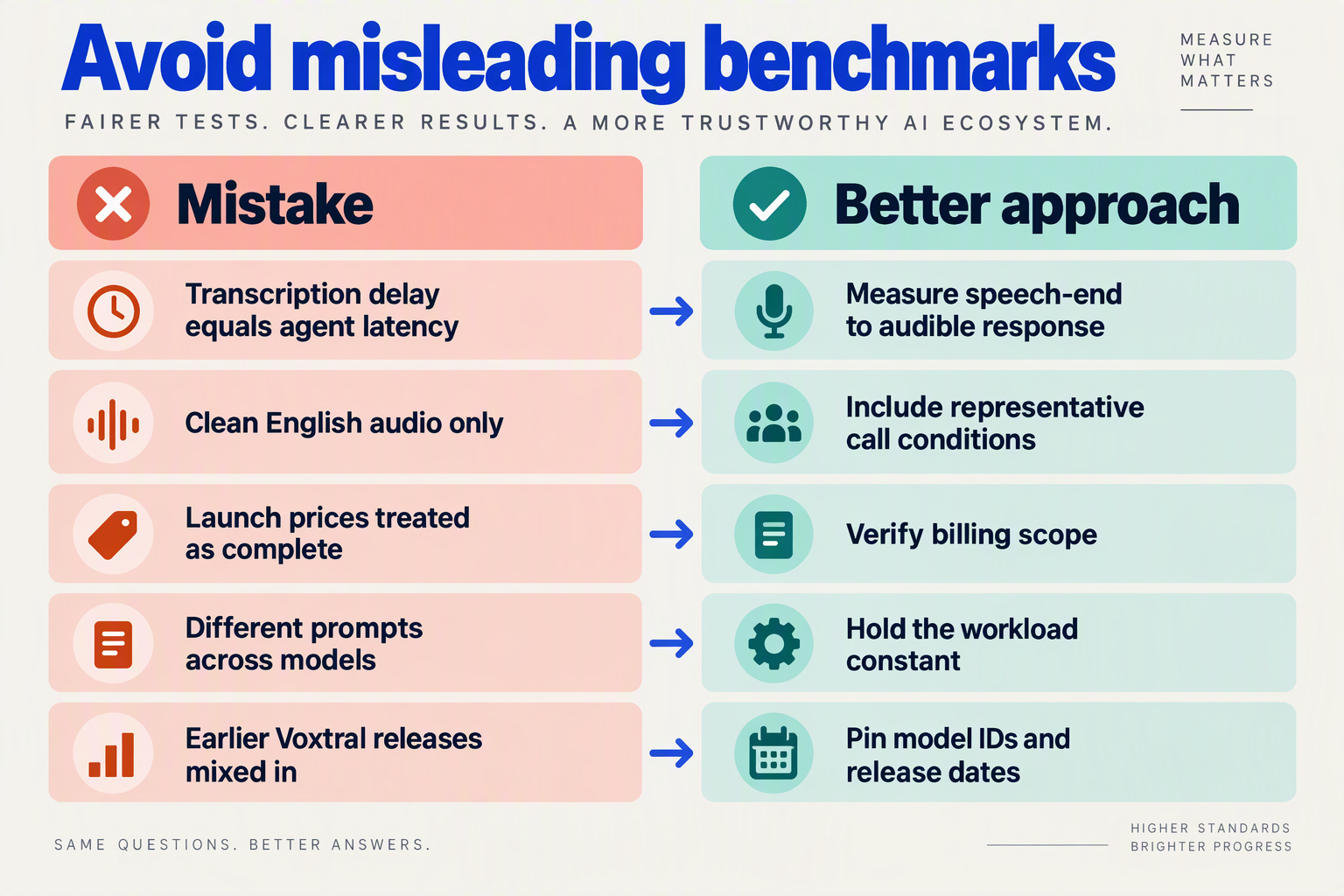
The most misleading speech-model evaluations compare unlike workloads, hide failed sessions, or let test data influence configuration. For Voxtral 3, a trustworthy result needs a fixed test set, explicit metric definitions, and a denominator that includes unsuccessful interactions—not just polished transcripts.
Which speech-model evaluation mistakes should developers avoid?
Use this checklist before interpreting a benchmark or approving a voice-agent pilot. Each correction makes results more reproducible and helps distinguish model performance from evaluation shortcuts.
| Evaluation mistake | Why results mislead | Better test design | What to report |
|---|---|---|---|
| Comparing different workloads | Offline transcription and live conversations impose different constraints. | Match audio, streaming mode, concurrency, and deployment conditions. | Model variant and workload configuration |
| Tuning on the final test set | Prompts, vocabulary hints, or thresholds become optimized for familiar examples. | Separate development data from a locked, unseen test set. | Dataset split and configuration freeze date |
| Dropping failed sessions | Timeouts and empty outputs disappear, making successful runs look representative. | Retain every attempted session and classify failures separately. | Completion rate and failure counts |
| Treating accuracy metrics as interchangeable | Speaker-attributed transcription errors and ordinary word errors measure different things. | Compare identical metric definitions and scoring implementations. | Metric, normalization rules, and dataset |
| Testing only warm connections | Persistent sessions can conceal connection setup and first-request delays. | Run cold-start and warm-session tests separately. | Separate latency distributions |
| Reporting only pooled averages | Strong results on common inputs can conceal weak performance on smaller groups. | Break results down by language, acoustic condition, and task. | Per-group scores and sample sizes |
Why can a published benchmark be accurate but still misleading?
A benchmark can be valid within its original setup without predicting your deployment. According to CellCog’s October 2026 coverage, Voxtral Small Transcribe 3 scores 18.4% cpWER on Mistral’s diarization chart. That figure should not be relabeled as ordinary word error rate or converted into a general “accuracy percentage”; developers need the chart’s dataset and scoring protocol before making comparable claims.
Similarly, HyperAI’s October 2026 coverage reports sub-500-millisecond latency for a realtime transcription model supporting more than 35 languages. Without matching the measurement boundaries and operating conditions, that reported figure is not a reproducible target for an entire customer interaction.
Ask three questions before importing any published number:
- What was measured? Identify the precise output event, error metric, and excluded cases.
- Under which conditions? Record network location, concurrency, audio format, and connection state.
- Against what denominator? Count all attempts, including failures and retries.
How should developers handle retries and configuration changes?
Treat retries as part of the outcome rather than quietly replacing unsuccessful runs. In a hypothetical evaluation, if 100 sessions produce 90 initial completions and five more complete after retries, report 90% first-attempt completion and 95% eventual completion, alongside the additional delay and cost.
Freeze prompts, tool definitions, model identifiers, and scoring rules before the final run. If you change them after inspecting failures, evaluate the revised configuration on fresh held-out examples rather than presenting the old test set as independent evidence.
As of October 2026, CallMissed provides eval suites and A/B experiments for its agents—capabilities that support this workflow, although credible results still depend on disciplined test design. The practical goal is an auditable decision: another developer should be able to reproduce both the successes and the failures.
Frequently Asked Questions
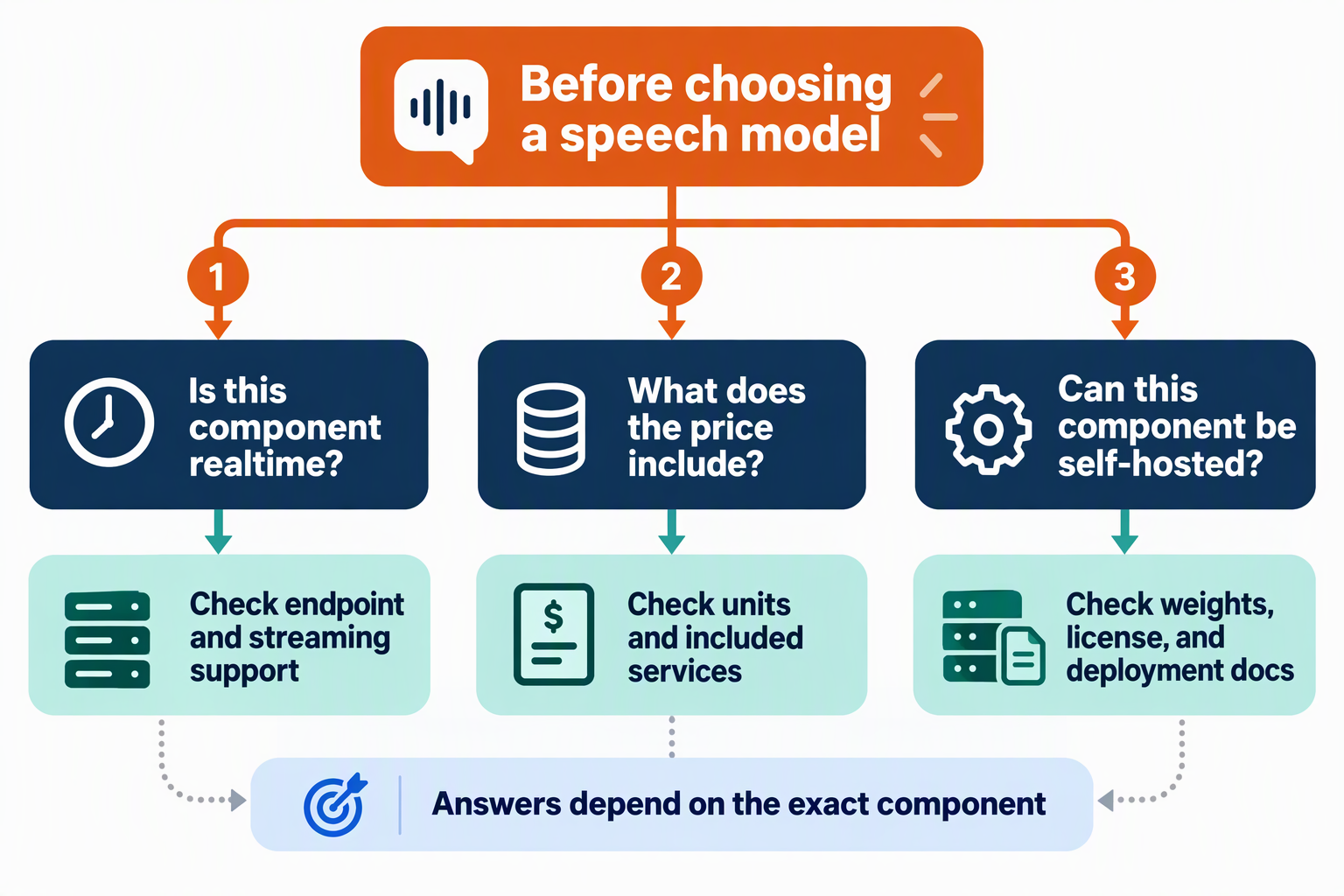
Is Voxtral 3 realtime, or is it only for batch transcription?
How much does Voxtral 3 cost for a voice agent?
Can you self-host Voxtral 3 for private voice-agent deployments?
Which languages do the Voxtral speech models support?
Does Mistral’s voice agent SDK replace my existing telephony stack?
How should developers evaluate a speech model before using it in production?
Which resources should you use next, and where can CallMissed eval suites fit?

Use Mistral AI’s official documentation and model cards for implementation decisions, LiveKit documentation for orchestration, and launch coverage for a reading shortlist—not as a substitute for testing. CallMissed eval suites can fit into agent-level validation alongside your own instrumented speech tests, without assuming that a particular Voxtral 3 model is available through CallMissed.
Which Voxtral 3 resources should developers read first?
Build your resource list in this order:
- Mistral AI documentation, model cards, and release notes. Verify exact model identifiers, streaming interfaces, supported languages, deployment requirements, licensing, and current pricing. Record the document revision or access date so another developer can reproduce your configuration.
- Mistral’s voice agent SDK examples and LiveKit documentation. Focus on session lifecycle, audio transport, cancellation, tool execution, and error handling. These resources should help you identify where to instrument the conversation rather than merely reproduce a demo.
- Independent launch explainers. Use explainx.ai, TestingCatalog, SyncAI.news, and MarkTechPost to orient yourself, then check consequential claims against primary documentation.
SyncAI.news’s October 2026 coverage describes the Voxtral 3 SDK as running “3 stages as 1 streaming pipeline.” Treat that description as a documentation checklist: locate the interfaces and failure behavior for listening, reasoning, and speaking.
Keep version boundaries explicit. The supplied tachiuokoshien.com result discusses Voxtral Transcribe 2, despite appearing among Voxtral 3 search results. Older examples may provide background, but should not establish Voxtral 3 capabilities or configuration.
How should you use published benchmarks and community discussion?
Use published results to formulate questions, not to set your production acceptance criteria automatically.
According to CellCog’s October 2026 coverage, Voxtral Small Transcribe 3 covers 50 languages and scores 18.4% cpWER on Mistral’s diarization chart. Before comparing that number with your results, find the underlying dataset, scoring procedure, speaker conditions, and model configuration; a percentage without those details is not a reproducible benchmark.
For each useful resource, capture:
- Claim: What exactly is being measured or promised?
- Evidence: Is there a model card, dataset description, runnable example, or only a demonstration?
- Applicability: Does the test resemble your callers and workflows?
- Reproduction: Can your team rerun it with a pinned configuration?
Community threads are particularly useful for discovering integration questions and reported edge cases. Treat individual reports as hypotheses to investigate, not representative reliability statistics.
Where can CallMissed eval suites fit into your workflow?
As of October 2026, CallMissed, the AI customer-communication platform and developer AI API, offers eval suites, A/B experiments, call scoring against custom QA rubrics, call recordings, transcripts, and agent analytics. These capabilities can support evaluating agent behavior; they do not replace a dedicated speech-model benchmark.
A practical next step is to:
- Create a versioned scenario set: successful bookings, ambiguous requests, interruptions, tool failures, and human escalation.
- Define observable outcomes: whether the agent confirms the right details, avoids unsupported commitments, and completes the intended task.
- Review failures against recordings and transcripts: distinguish recognition errors from reasoning, tool, or conversation-control failures.
- Keep external timing instrumentation: measure component and end-to-end delays independently rather than assuming a QA score captures responsiveness.
Finish with a dated evaluation record, not a universal model ranking: configuration, evidence, unresolved risks, and a go/no-go decision for your workload. That is the resource your team will need most when the next speech-model release arrives.
Conclusion
Voxtral 3 should be evaluated as a complete voice-agent pipeline, not simply a fast transcription model. The strongest choice is the one that understands your callers, handles conversational turns reliably, and delivers useful spoken responses at an acceptable total cost.
According to explainx.ai, Mistral AI released Voxtral 3 on October 20, 2026, bringing speech-to-text, text-to-speech, and a voice agent SDK together in a streaming pipeline. That combination makes the launch worth investigating, but launch specifications remain a starting point—not proof of production readiness. The practical question is whether the integrated experience holds up when real callers hesitate, interrupt, switch languages, or ask for actions that require tools.
Keep four takeaways at the center of your evaluation:
- Test accuracy against your actual callers. Include accents, background noise, names, addresses, numbers, and code-switching. A transcript that looks convincing can still contain the one incorrect detail that prevents a delivery rescheduling request from succeeding. Review task-critical errors rather than relying only on an aggregate accuracy score.
- Measure the complete response path. Track the interval between the caller finishing and the agent producing useful speech, including reasoning and tool execution. Evaluate turn detection, interruptions, and recovery alongside speed; an early response based on an incomplete transcript is not a successful interaction.
- Treat speech quality and language fit as operational requirements. Listen for intelligibility, pronunciation, and appropriate expressiveness in the languages your audience uses. Apply the same test scenarios consistently so that attractive demonstration audio does not outweigh weaknesses in everyday conversations.
- Calculate workload-specific cost and integration effort. According to CellCog’s October 2026 coverage, Voxtral transcription costs $0.0035–$0.008 per audio minute, while text-to-speech costs $13 per million characters. These different billing units need to be combined with reasoning, tool execution, streaming behavior, and failure instrumentation before you can judge the economics of an agent.
What should voice developers watch next?
Watch for reproducible evaluations showing whether improvements in individual speech components translate into better end-to-end conversations. As integrated voice pipelines evolve, the meaningful comparison will remain the same: can the system complete your users’ tasks accurately, recover gracefully, and respond without awkward delays?
To explore this broader shift, consider CallMissed, an AI customer-communication platform and developer AI API. As of October 2026, CallMissed supports speech recognition in 22 Indian languages plus English, including Hinglish—a practical reminder to keep regional-language coverage in your evaluation.
Start with a repeatable test set built around your real workflows: does your voice agent merely transcribe quickly, or does it help callers finish what they came to do?
Related Reading
- Kev Qwen3.5 Decision Models for AI Voice Workflows
- DeepSeek Inference: What DeepInfer Means for Developers
- WhatsApp voice AI integration: Developer Setup Guide