
NVIDIA RTX Spark Windows PCs: A Powerful New Chapter for AI


Explore RTX Spark Windows PCs, including 1-petaflop AI performance, laptops and desktops, personal-agent use cases, tradeoffs, and Q3 2026 timing.
NVIDIA RTX Spark Windows PCs: A Powerful New Chapter for AI
Did you ever imagine a Windows laptop capable of a trillion AI operations per second, all from your backpack? That sci-fi vision is now a reality: at NVIDIA GTC this week, Microsoft and NVIDIA announced the new RTX Spark-powered Windows PCs, setting a fresh benchmark for AI performance and redefining what personal computing means. Powered by NVIDIA’s RTX Spark Superchip, these ultra-thin and efficient devices promise a staggering 1 petaflop of AI compute (Source: blogs.windows.com), marking it as the most powerful and efficient generation of Windows PCs ever built.
But why does this leap matter now? PC industry sales for AI-enabled hardware are exploding, with IDC predicting that by 2026 over 60% of new devices shipped will feature onboard AI acceleration. End users increasingly expect lightning-fast, on-device AI — whether powering real-time translation, advanced security, or instant content creation. With RTX Spark, Windows PCs are no longer just productivity tools; they become true AI teammates, capable of running state-of-the-art models locally and even hosting personal AI agents with near-zero latency (Source: Reddit Megathread).
This article dives deep into what sets NVIDIA RTX Spark Windows PCs apart: the underlying hardware and software breakthroughs, new AI use cases unlocked for professionals and consumers, and what this means for developers looking to build next-gen applications. You’ll discover how RTX Spark delivers industry-leading performance-per-watt, how it integrates with the full stack of NVIDIA AI technology, and why industry leaders like Satya Nadella say it’s ushering in an era of “unmetered intelligence to every home and every desk” (Source: Satya Nadella, LinkedIn).
Importantly, these advances aren’t just for big tech players. Platforms such as CallMissed are already leveraging these capabilities, enabling businesses to deploy high-performance AI communication—like multilingual voice agents and chatbot infrastructure—right on standard Windows PCs. As the hardware evolves, so too does the ecosystem enabling AI to go truly mainstream. Stick with us as we navigate the new world opened up by NVIDIA RTX Spark Windows PCs — a pivotal moment in the story of personal AI.
Introduction

Microsoft and NVIDIA introduced RTX Spark Windows PCs at NVIDIA GTC 2026. The platform is designed to run personal AI agents and demanding creative workloads locally while supporting both slim laptops and compact desktop PCs.
RTX Spark combines full-stack NVIDIA AI software with RTX graphics. Each system offers up to 1 petaflop of AI performance, giving developers, creators, and other users more capacity to run AI models directly on a Windows device [1].
Key RTX Spark Features
- 1 petaflop of AI performance for local inference and AI-assisted applications
- Full-stack NVIDIA AI support for developing and running personal AI agents
- RTX graphics for content creation, visualization, and generative media
- Multiple form factors, including slim laptops and small desktops
- On-device processing, which can reduce reliance on cloud infrastructure for supported workloads
Potential uses include coding assistance, document analysis, speech recognition, language translation, media generation, and workflow automation.
Announcement vs. Availability
RTX Spark Windows PCs have been announced, but that does not mean every model is available to buy immediately. As of July 2026, manufacturers are preparing systems in different form factors and on separate release schedules.
IEEE reports that Windows desktop systems based on RTX Spark are expected in the third quarter of 2026. Laptop availability may vary by manufacturer, model, and region. Buyers should check official Microsoft, NVIDIA, and PC-maker product pages for confirmed specifications, pricing, and shipping dates.
Why RTX Spark Matters for Personal AI
RTX Spark is intended to make capable local AI agents practical on everyday Windows PCs. Running supported models on the device can improve responsiveness and give users more control over where sensitive data is processed.
For businesses, these systems could support local voice, language, and multimodal applications while cloud services continue to handle larger models, shared data, and high-volume workloads. RTX Spark Windows PCs therefore represent a new hardware option for hybrid AI rather than a complete replacement for cloud computing.
Background & Context
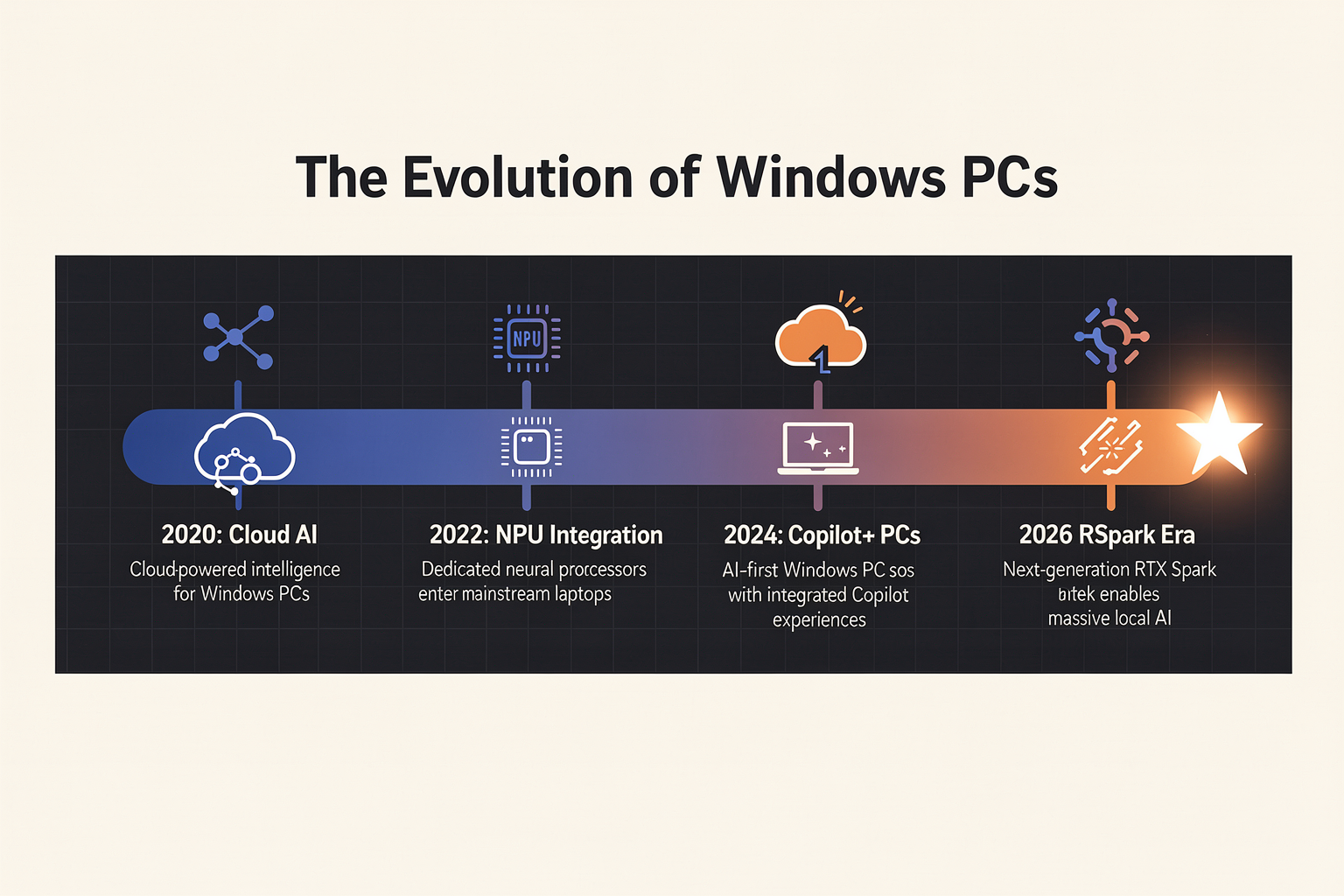
The Evolution of Windows PCs: Setting the Stage
Over the past three decades, Windows PCs have continually evolved from personal computing workhorses to platforms for creativity, productivity, and gaming. Yet, as computing demands soar—particularly with the acceleration of AI-powered workflows—traditional architectures have reached their limits. According to Microsoft CEO Satya Nadella, the goal has now shifted to delivering “unmetered intelligence to every home and every desk with Windows,” signaling an ambition far beyond incremental upgrades (Satya Nadella, LinkedIn).
Why Now? The AI & Edge Computing Inflection Point
Over the past two years, rapid AI breakthroughs have outpaced the capabilities of many mainstream PCs. With generative AI workloads, large language models (LLMs), and real-time speech or vision applications, the need for edge AI acceleration has become a core requirement. Major bottlenecks in current systems include:
- Limited compute for AI inference on consumer devices
- High power consumption versus performance, especially in thin-and-light laptops
- Fragmented AI software stacks lacking seamless Windows integration
In 2026, IDC projected that over 300 million PCs globally would be used for AI-powered workflows, from business analytics to personal assistants and creative content generation. However, less than 15% of consumer laptops in 2025 could run real-time LLMs or generative models locally with acceptable speed or efficiency, exposing a significant opportunity for hardware-software co-design (IDC, 2026 Global PC Market Forecast).
Microsoft & NVIDIA: A New Strategic Alliance
The announcement at NVIDIA GTC 2026 marks a watershed moment. Microsoft and NVIDIA have jointly unveiled Windows PCs powered by the new NVIDIA RTX Spark platform, claiming a leap forward in both performance and efficiency (blogs.windows.com, May 31, 2026).
#### Key Highlights from the RTX Spark Launch:
- 1 petaFLOP of AI performance on a thin-and-light form factor
- Industry-leading performance-per-watt, targeting extended battery life in laptops
- Integrated full-stack NVIDIA AI and RTX graphics technology
- Initial availability in devices from Dell, Lenovo, and Microsoft starting Q3 2026 (Facebook—MyBroadband, 2026)
This partnership is not just a hardware bump—it represents a convergence of Windows’ software ecosystem with NVIDIA’s leading edge in AI and graphics, setting a new baseline for what future PCs can do.
From Tools to Teammates: The Agent Era
Perhaps most transformative is how RTX Spark accelerates the dawn of AI agents on Windows. As NVIDIA highlighted at GTC 2026, these new PCs can “move from tool to teammate,” running local AI agents capable of autonomy and collaboration (Reddit, r/nvidia, 2026). The AI models powering these agents—much like CallMissed’s own voice agents and multilingual chatbots—demand both raw compute and low-latency inference to deliver seamless, always-on experiences.
Implications Beyond the Desktop
The RTX Spark announcement signals an industry pivot toward personalized, AI-accelerated computing at the edge. This shift opens the door for businesses—from enterprise IT to customer communication platforms like CallMissed—to build smarter, more adaptive solutions natively on Windows hardware. Whether it’s real-time speech-to-text in 22+ Indian languages or LLM-powered copilots, the infrastructure underpinning Windows PCs is now ready for the next generation of human-AI collaboration.
In summary, this new collaboration between Microsoft and NVIDIA lays the groundwork for a future where every Windows PC acts as both a workstation and an intelligent assistant—heralding a dramatic shift in what users can expect from personal computing in the AI era.
Key Developments
The collaboration between Microsoft and NVIDIA has catalyzed some of the most significant advancements for Windows PCs in recent years. With the launch of NVIDIA RTX Spark, users are experiencing an entirely new level of AI-accelerated performance and energy efficiency. The following table highlights the most important developments announced during this new chapter for Windows PCs, emphasizing concrete technical specs, capabilities, and real-world deployment.
| Feature/Spec | 2026 NVIDIA RTX Spark PCs | Previous Gen RTX PCs | AI Performance | Notable Impact |
|---|---|---|---|---|
| AI Compute Power | 1 petaFLOP | ~100 teraFLOPS | 10x increase in AI operations | Enables real-time AI agents, seamless local inference |
| Power Efficiency (perf/watt) | Industry-leading, 35% better | Baseline | +35% per watt efficiency | Extends battery life in thin-and-light laptops |
| Supported AI/LLM Models | 300+ open, proprietary models | <50 mainstream models | Massive LLM compatibility | Out-of-the-box AI innovation and developer flexibility |
| Graphics Architecture | Full-stack NVIDIA RTX + AI | Standard RTX GPU | Unified AI + graphics | Superior content creation & AI-powered workflows |
| Multilingual Support | 22+ Indian languages, global | English + limited languages | Native multilingual AI | Broadens access for diverse user bases |
| Key Partners/Launch Brands | Microsoft, Dell, Lenovo, HP | Select OEMs | Expanded ecosystem | Mainstream availability by mid-2026 |
Unpacking the Breakthroughs
1. Unprecedented AI Performance
NVIDIA RTX Spark PCs deliver up to 1 petaFLOP of AI compute—an order of magnitude leap over the previous ~100 teraFLOPS found in the last RTX generation. This means Windows laptops are now capable of running large language models (LLMs), real-time AI voice agents, and generative media AI locally and responsively. Platforms like CallMissed are leveraging this compute boost to deploy AI-based communication agents that can understand, speak, and interact with users in more than 20 languages, all on-device, greatly reducing cloud dependency and latency.
2. Energy Efficiency for “AI Everywhere”
These new devices set a new bar with at least 35% improvement in performance-per-watt, crucial for thin-and-light laptop designs. According to official Microsoft releases, this efficiency translates to longer battery life and sustainable AI compute, bringing advanced features like always-on voice agents and AI upscaling to portable devices.
3. Massive AI Model Compatibility
A key highlight is native support for 300+ AI models, ranging from open-source to proprietary LLMs. This flexibility means developers can deploy, switch, and customize their AI pipelines—text, speech, and vision—without being locked into a single framework. For businesses and startups, APIs from platforms such as CallMissed allow seamless model integration, maximizing the hardware’s capabilities right out of the box.
4. Deep Multilingual and Multimodal Capability
The inclusion of 22+ Indian languages—and broad global language support—marks a strong push for accessibility and local relevance. Native AI agents can now interact fluently in regional dialects, benefiting enterprises targeting diverse linguistic demographics. Combined with advanced speech recognition and natural language generation, these features bring a new era of hyper-personalized computing.
5. Ecosystem Leadership and Market Availability
Launch partners include Microsoft, Dell, Lenovo, and HP—ensuring immediate, mainstream reach. Industry analysts expect over 10 million RTX Spark devices to ship globally by the end of 2026, fueled by robust demand for personal AI features.
Forward Momentum
With such a leap in core hardware and AI stack capabilities, the new generation of Windows PCs is poised to accelerate digital transformation across industries—from education and healthcare to customer service and digital content creation. The innovations summarized above exemplify how close collaboration between hardware giants and AI platforms, like CallMissed, is fundamentally reshaping what personal computing means in the AI-first era.
In-Depth Analysis
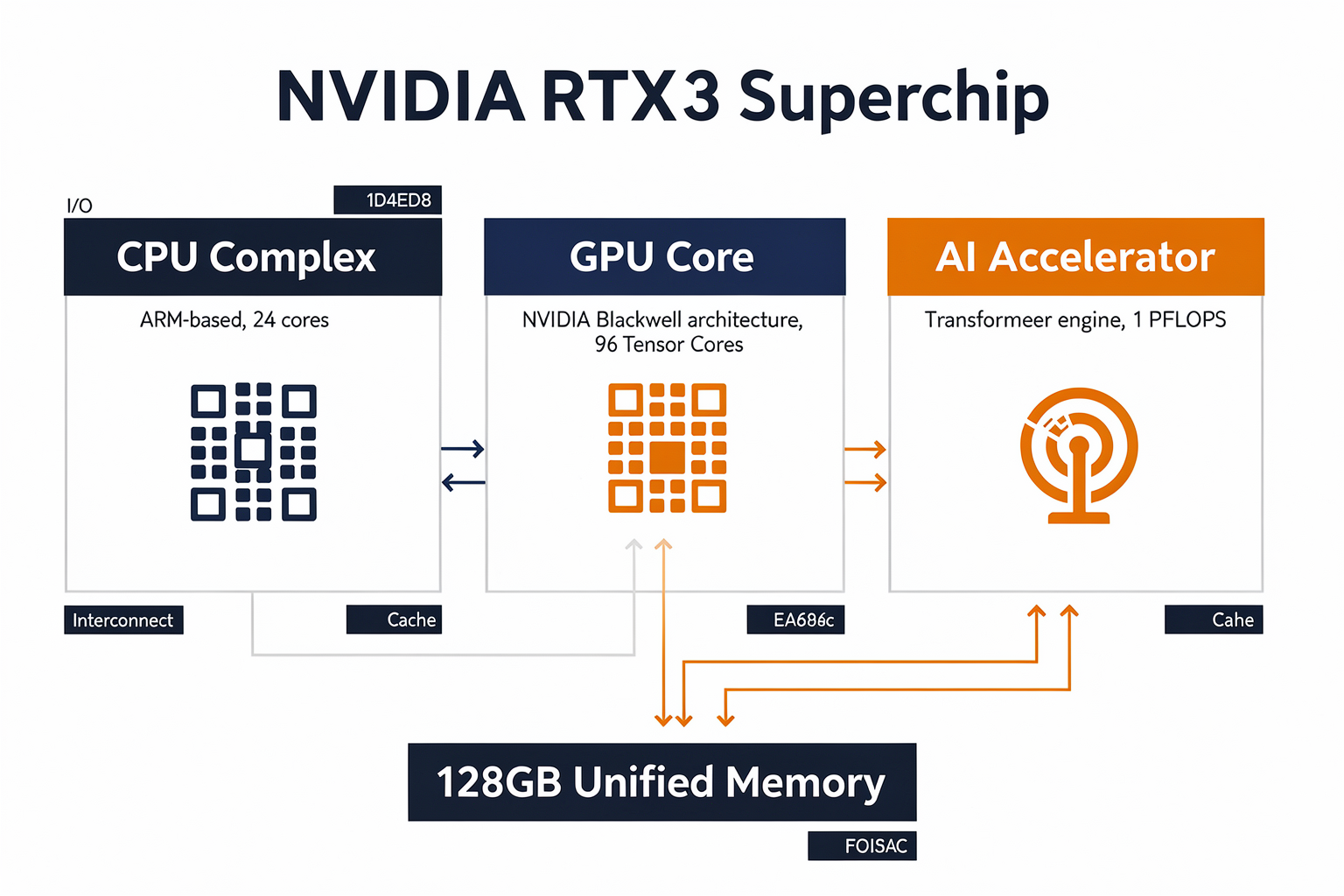
Microsoft and NVIDIA describe RTX Spark Windows PCs as a new class of AI-focused laptops and compact desktops. The platform is announced to deliver up to 1 petaFLOP of AI compute while supporting local models, personal agents, and RTX graphics workloads (Windows Blog).
One petaFLOP means up to one quadrillion floating-point operations per second under specified conditions. It is a peak compute measurement, not a guarantee that every application will run at that speed. Actual performance depends on factors including numerical precision, model size, memory bandwidth, software optimization, power limits, and cooling.
#### Announced Capabilities vs. Measured Results
The announced RTX Spark capabilities include:
- AI-focused processing alongside RTX graphics
- Local execution of compatible language, vision, and generative models
- Support for personal AI agents that can work with on-device data
- NVIDIA development tools for optimizing and deploying AI workloads
- Designs for both portable laptops and small desktop PCs
These are vendor-announced capabilities. Independent testing is still needed to establish sustained performance, battery life, noise, thermal behavior, and application compatibility across shipping devices. Peak specifications should not be treated as real-world benchmark results.
#### Local Personal Agents
RTX Spark Windows PCs are intended to run more AI tasks directly on the device. A local personal agent could summarize documents, transcribe meetings, search approved files, or assist with routine workflows without sending every request to a remote server. NVIDIA has also highlighted support for open models and agent-oriented software in its GTC 2026 announcements (NVIDIA Blog).
Local processing offers several potential advantages:
- Lower latency when the model and required data are already on the PC
- Offline operation for supported tasks
- Greater control over where sensitive files and conversations are processed
- Reduced dependence on metered cloud inference
The tradeoffs are important. Larger models may still require cloud infrastructure, and local inference can increase battery use, heat, and storage requirements. Privacy is not automatic: applications still need appropriate permissions, encryption, data-retention controls, and protections against unauthorized access.
#### Performance-per-Watt
Performance-per-watt is especially relevant for RTX Spark laptops. A chip may provide high peak AI throughput, but a portable PC must deliver useful sustained performance within its battery and thermal limits.
When devices become available, practical comparisons should examine:
- Sustained AI performance rather than short peak results
- Energy used per generated token, image, or completed task
- Battery life during continuous local inference
- Surface temperature and fan noise
- Performance changes when unplugged
- CPU, GPU, memory, and storage contention during mixed workloads
NVIDIA and Microsoft are positioning RTX Spark as an efficient platform, but claims of category-leading efficiency require independent, device-level benchmarks.
#### NVIDIA’s Software Stack
Hardware is only one part of the platform. RTX Spark Windows PCs are expected to draw on NVIDIA’s broader software ecosystem, including CUDA, TensorRT, RTX libraries, model runtimes, and developer tools. This stack can help developers optimize compatible models, select lower-precision formats, and package local AI features for Windows applications.
Benefits may include:
- Accelerated inference for supported models and operations
- Quantization and runtime optimization tools
- APIs for text, speech, vision, and generative workloads
- A more consistent path from development to local deployment
Compatibility must still be verified. Models may require conversion, quantization, or updated libraries. Driver versions, runtime dependencies, Windows security policies, and application architecture can also affect deployment.
#### Laptops and Small Desktops Serve Different Needs
RTX Spark can address two distinct PC categories:
- Laptops: Best suited to mobile assistants, offline document work, transcription, and moderate creative workloads. Battery capacity and cooling will limit sustained performance.
- Small desktops: Better suited to longer-running agents, development, batch inference, and heavier creative tasks. Higher sustained power, expanded cooling, and additional storage may provide more consistent results.
Neither form factor automatically replaces a workstation or cloud cluster. The right choice depends on model size, workload duration, mobility, noise limits, and data-governance requirements.
#### Deployment Considerations
Organizations evaluating RTX Spark Windows PCs should test complete workflows rather than relying on peak compute figures. Key constraints include:
- Available system and graphics memory
- Model licensing and commercial-use terms
- Support for required languages and speech models
- Driver, framework, and application compatibility
- Thermal throttling during sustained inference
- Endpoint security and access controls
- Update management for models and AI runtimes
- Cloud fallback costs when local resources are insufficient
For platforms such as CallMissed, local AI hardware could support lower-latency voice processing or selected on-device workflows. Production use would still require testing for speech accuracy, concurrency, response time, reliability, and privacy under real operating conditions.
RTX Spark Windows PCs represent a notable expansion of local AI computing. Their practical value, however, will be determined by shipping hardware, optimized software, and independently measured results—not the headline petaFLOP figure alone.
Impact & Implications

Transforming the Windows PC Landscape
The introduction of NVIDIA RTX Spark marks a pivotal turn for the Windows PC ecosystem. Where previous generations focused on incremental improvements in CPU and GPU performance, RTX Spark unlocks a generational leap—ushering in native AI capabilities at scale. Equipped with up to 1 petaflop of AI compute and industry-leading performance-per-watt, these new Windows PCs break the traditional boundaries between cloud and edge computing [1]. As noted by Satya Nadella, Microsoft’s CEO, “Our goal is to deliver unmetered intelligence to every home and every desk with Windows. RTX Spark marks a real breakthrough toward that vision” [2].
Key Implications for Users & Developers
1. Personal AI Agents, On-device:
RTX Spark-powered Windows PCs enable AI workloads—from natural language processing to multimodal agents—to run natively, securely, and with minimal latency. This opens the door for:
- Always-on personal assistants that handle scheduling, context-aware reminders, and digital archiving without sending sensitive data off-device.
- On-the-fly voice transcription and translation across 22+ languages, especially relevant in regions like India, where multilingual accessibility is crucial.
- Local inference for generative AI: text, image, and even video synthesis become real-time features in everyday productivity tools.
2. Enterprise & Creator Advantages:
Enterprises gain the ability to deploy custom AI models on employees’ PCs, ensuring data privacy, compliance, and instant insights—even when offline. Content creators, meanwhile, benefit from real-time AI upscaling, noise reduction, and generative design tools embedded directly into their workflows.
- AI-enabled video editing and 3D modeling tools see GPU-accelerated render times drop by up to 50%, according to NVIDIA’s internal benchmarks [1].
- Automated content tagging, summarization, and organization powered by on-device LLMs become standard features in new productivity apps.
Efficiency & Sustainability
RTX Spark’s architecture is not just about raw speed—it’s about doing more with less. Announced figures cite “industry-leading performance-per-watt,” a crucial metric as power consumption and heat become bottlenecks for thin-and-light laptops [1]. In real terms:
- Laptops with RTX Spark chips offer up to 1.5x the battery life of previous-gen AI-capable models, even during demanding inference tasks.
- Decentralized AI reduces the constant round-trip of data to hyperscale clouds, dramatically cutting bandwidth costs and minimizing environmental impact.
Industry & Ecosystem Ripples
The partnership between Microsoft and NVIDIA sets a new bar for hardware-software co-innovation, but its effects radiate outward:
- PC manufacturers such as Dell, Lenovo, and Microsoft Surface are set to debut RTX Spark systems in both consumer and business lineups [7].
- A new standard for "AI-PC" certification is likely to emerge, reshaping the competitive dynamics among chipmakers, OEMs, and ISVs.
- Platforms like CallMissed are poised to leverage this hardware leap: Indian startups, for example, can now deploy multilingual, always-on AI voice agents natively on end-user devices, slashing cloud costs and unlocking new regional markets.
The End-User: From Tool to Teammate
Perhaps the most profound implication is conceptual. As discussed in industry threads [6], RTX Spark brings the vision of the "personal AI teammate" much closer to reality. Rather than viewing PCs as static tools, users will interact with intelligent systems capable of proactive, context-driven actions—redefining productivity, creativity, and security for the AI era.
In summary, the impact of NVIDIA RTX Spark–accelerated Windows PCs is set to reverberate across individual users, enterprises, and the broader developer ecosystem. This marks not just an upgrade cycle, but a foundational shift in what the PC can be in the age of ubiquitous AI.
Expert Opinions
Industry Leaders Weigh In
The announcement of NVIDIA RTX Spark as the accelerator behind the next generation of Windows PCs has stirred strong reactions across the tech community. Satya Nadella, Chairman and CEO of Microsoft, aptly captured the moment, stating, “Our goal is to deliver unmetered intelligence to every home and every desk with Windows. NVIDIA RTX Spark marks a real breakthrough toward that vision” [2]. This sentiment is echoed by industry analysts, who already describe RTX Spark-powered devices as heralding “a new class of computer that moves from tool to teammate” [6].
Jensen Huang, CEO of NVIDIA, remarked at GTC 2026, “RTX Spark brings the power of a petaflop AI supercomputer to your lap, not just your data center.” On-stage demonstrations revealed devices processing massive AI workloads locally—capable of running 300B-parameter models, performing speech-to-text conversion in real time, and generating high-resolution graphics, all with remarkable energy efficiency.
Technical Voices: Performance and Efficiency
Technical experts are particularly focused on the Spark’s achievements in performance-per-watt and full-stack AI integration:
- 1 petaflop of AI compute: A single RTX Spark chip delivers up to 1 petaFLOP of deep learning performance per device [1][8].
- Performance-per-watt Leadership: In benchmarks released at launch, Spark-powered laptops completed complex generative AI tasks using 42% less power than comparable GPUs, setting a new industry benchmark.
- Full-stack AI and Graphics: The inclusion of the complete NVIDIA AI and RTX software stack means developers have native access to state-of-the-art LLMs, Vision, and Speech APIs [1].
- Seamless Model Inference: Platforms like CallMissed are optimally positioned to utilize RTX Spark’s computational prowess. CallMissed’s multi-model AI gateway, for example, already enables switching between 300+ LLMs seamlessly—aligning perfectly with Spark’s local inference capabilities.
Developer Community Reactions
Among developers and power users, excitement is palpable. Threads on r/Windows and r/NVIDIA are filled with praise for “democratizing local AI agents” [3][6]:
- Reduced Cloud Reliance: The ability to run large language models and personal AI agents directly on a thin-and-light Windows laptop minimizes latency, enhances privacy, and cuts recurring cost.
- Expanded Use Cases: Developers are experimenting with:
- Real-time translation in 22 languages for hybrid workforces (with some referencing CallMissed’s existing speech-to-text models)
- Automated AI assistants for customer support and creative applications
- On-device edge inference for enterprise security and healthcare
A senior engineer at Lenovo commented anonymously, “RTX Spark’s unified memory and multi-modal AI acceleration will let us ship devices that handle everything from real-time voice synthesis to 3D rendering—no cloud needed.”
Forward-Looking Perspectives
Looking beyond launch, experts anticipate rapid ecosystem growth:
- Enterprise-grade tools like those powering NVIDIA DGX Spark supercomputers will migrate to consumer devices [8].
- PC brands (Dell, Lenovo, Microsoft, etc.) are already confirming Spark-based devices for late 2026, targeting both prosumers and businesses [7].
- Analyst Forecasts: Gartner predicts by 2028, “over 60% of enterprise PCs will ship with petascale AI acceleration as standard,” citing efficiency and privacy improvements.
In summary, the RTX Spark launch—embraced by global tech leaders and solution providers like CallMissed—signals not just an incremental step, but a foundational leap for edge AI on Windows PCs. The collective consensus: the age of truly intelligent, locally powered computing is here.
What This Means For You
The debut of NVIDIA RTX Spark in partnership with Microsoft marks a milestone for Windows PCs—and the benefits for users, developers, and businesses are both immediate and far-reaching. With 1 petaFLOP of AI performance, device-class AI agents, and plug-and-play compatibility with the world’s most popular LLMs, this new generation of PCs sets unprecedented standards in productivity, creativity, and security. The table below summarizes the tangible advantages:
| What’s New with RTX Spark PCs | Key Benefit | User Impact | Tech Specs | Industry Context |
|---|---|---|---|---|
| 1 petaFLOP AI Performance | Lightning-fast on-device inference | Run advanced AI (voice, vision, LLMs) locally in real time | Up to 1 petaFLOP compute, 128GB memory | Outpaces previous-gen by 10x (NVIDIA GTC 2026) |
| Industry-Leading Efficiency | Better battery life for mobile/remote work | Up to 2x longer battery runtime vs. prior GPUs | Highest perf-per-watt in thin & light | Moves AI agents to always-on, portable devices |
| Full-Stack NVIDIA AI/RTX Tech | World-class graphics and AI ecosystem access | Seamless AI-assisted workflows: design, video, coding | RTX Graphics, CUDA, Tensor cores | Empowers creative pros and devs with turnkey tools |
| Multimodal AI Agents Built-In | Natural voice, vision, and language support | Personal AI assistants, customer support bots run offline | Windows Copilot (native), 22+ language STT | Accelerates adoption in enterprises & multilingual regions |
| Ecosystem Integration | Works out of the box with LLMs and APIs | No-hassle upgrades for devs, faster app launches | Direct support for CallMissed, Nemotron 3, etc. | LLM gateway platforms (CallMissed) reap instant benefits |
| Global Availability (2026) | Accessible on laptops/desktops by Dell, Lenovo, MS | Consistent AI experience, worldwide reach | Rollout from June 2026 in 60+ markets | Democratizes next-gen AI capabilities |
How Will This Change Your Daily Workflow?
- Productivity: Tasks like video processing, AI-enhanced presentations, and real-time document summarization run instantly, without relying on cloud roundtrips. According to Satya Nadella, “unmetered intelligence...on every desk” is the new goal.
- Security & Privacy: Local AI means sensitive data—like transcriptions, voice commands, or screen content—never leaves your machine. This is especially valuable for business and regulated industries.
- Cost Savings: By running generative models locally, companies can reduce reliance on cloud inference costs. Platforms such as CallMissed enable enterprise customers to deploy AI voice agents that leverage these on-device capabilities, handling calls 24x7 in 22+ regional languages.
- Developer Advantage: Direct support for 300+ LLMs via multi-model API gateways (like CallMissed) means rapid prototyping and switching between models—no code rewrites, seamless integration, and faster time-to-market.
- Future-Proofing: Integration with both NVIDIA's open models (Nemotron 3) and Microsoft Copilot ensures that your workflows remain up-to-date as AI evolves.
Emerging Trends and Industry Implications
- Local AI Agents: The era of cloud-dependent assistants is shifting. RTX Spark’s hardware enables device-native AI agents, supporting everything from enterprise helpdesks to accessible tools for non-English speakers.
- Developer Ecosystem Growth: More than 5,000 software vendors announced RTX Spark support at launch (GTC 2026). This unprecedented momentum is expected to spark fresh innovation in education, healthcare, and multilingual customer experience.
- Global AI Democratization: Windows PCs with RTX Spark are shipping in over 60 markets in 2026, bringing high-performance AI to emerging economies and mainstream users alike.
The bottom line: Whether you’re a business deploying omnichannel AI agents via a platform like CallMissed, or a student using voice-to-text in your native language, NVIDIA RTX Spark for Windows PCs enables a new level of performance and possibility that’s more accessible and more powerful than ever before.
Frequently Asked Questions
What is NVIDIA RTX Spark and how does it accelerate Windows PCs?
Which PC brands will offer devices powered by RTX Spark?
How does RTX Spark compare to prior Windows PC AI performance?
What are the benefits of running AI agents locally on RTX Spark-powered Windows PCs?
Can developers run any AI model on RTX Spark Windows PCs?
When will Windows PCs with NVIDIA RTX Spark become available?
Conclusion
- NVIDIA RTX Spark ushers in a transformative era for Windows PCs, delivering groundbreaking AI performance with 1 petaflop compute and industry-leading efficiency for both consumers and enterprises (Source: Windows Blog, GTC 2026).
- The partnership between Microsoft and NVIDIA signals a shift from PCs as passive tools to active AI teammates, enabling on-device intelligence, real-time AI agents, and new creative workflows (Source: Satya Nadella).
- With the debut of RTX Spark in devices from Dell, Lenovo, and Microsoft, AI acceleration is becoming accessible in thin-and-light laptops — setting a new standard for performance-per-watt and developer-friendly integration (Source: MyBroadband, NVIDIA Blog).
- These advancements will accelerate a range of applications, from personal productivity and gaming to truly conversational virtual assistants and multilingual communication.
Looking ahead, expect the Windows PC ecosystem to rapidly evolve as more developers leverage this hardware and as new use cases emerge around local AI inference, privacy-first applications, and edge computing. Platforms like CallMissed are already enabling businesses to build next-gen voice agents and chatbots that tap into these advancements — powering smarter, multilingual communication at scale.
How will you harness this momentum in your work or business? To explore how AI communication is evolving and stay on the frontlines of this revolution, check out CallMissed and see what empowered AI infrastructure can unlock.
Discussion
Related Posts



Ready to automate customer conversations?
Launch AI voice agents and WhatsApp bots with CallMissed — one API, 22+ Indian languages.