
India’s ‘DeepSeek Moment’: Inside the Homegrown AI Models Unveiled at the 2026 AI Impact Summit


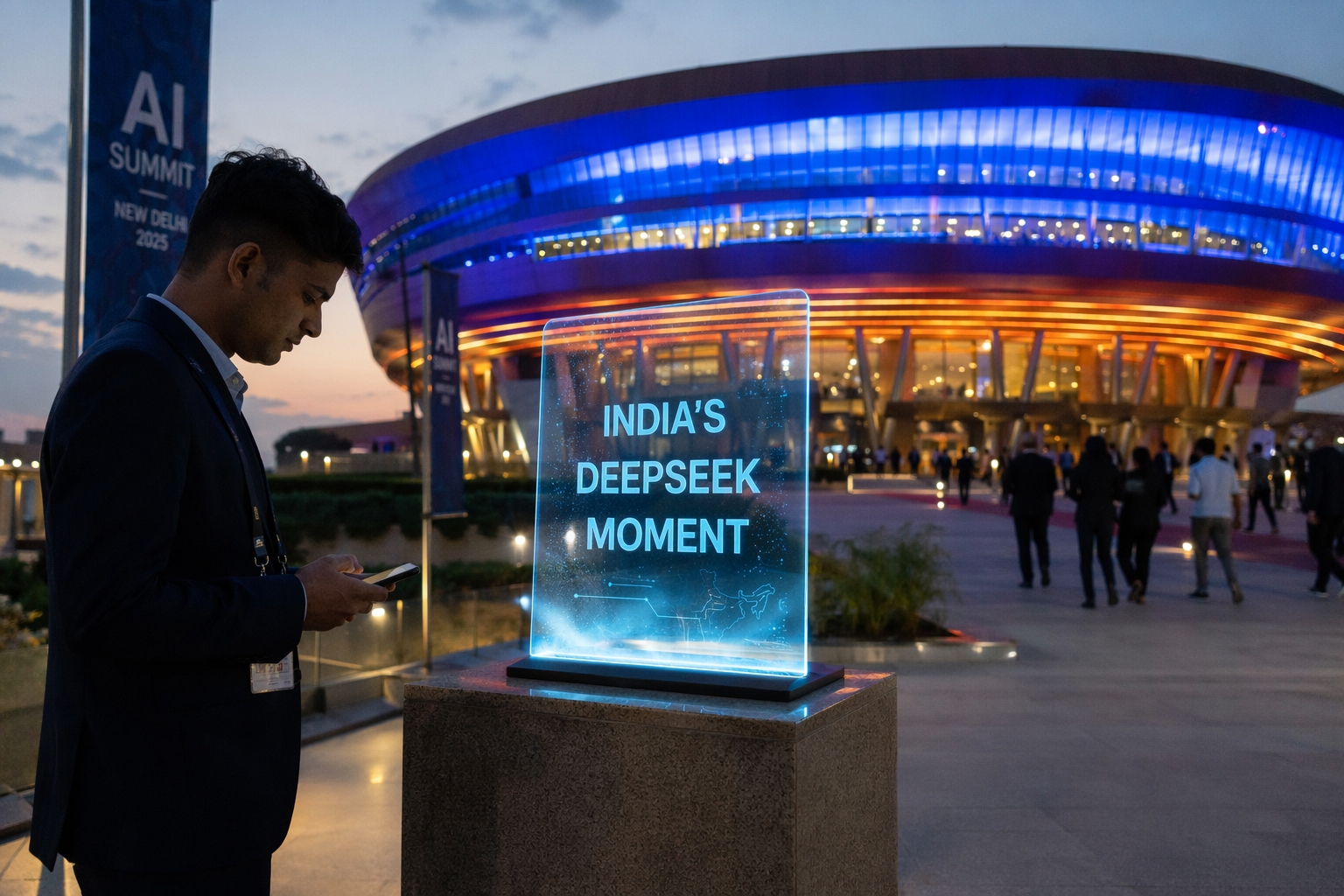
Discover how India is establishing technological sovereignty with cost-efficient, multilingual foundational AI models launched at the 2026 AI Impact Summit.
India’s ‘DeepSeek Moment’: Inside the Homegrown AI Models Unveiled at the 2026 AI Impact Summit
For decades, the global AI landscape has been dominated by massive, Western-centric LLMs that require billions of dollars to train but often stumble when faced with the linguistic and cultural realities of the Global South. But what if the next leap in artificial intelligence doesn’t come from Silicon Valley, but from a highly efficient, cost-effective ecosystem designed to serve 1.4 billion people?
This shift became a reality at the landmark India AI Impact Summit 2026 held at Bharat Mandapam, New Delhi. Inaugurated by Prime Minister Narendra Modi, the summit marked the arrival of India’s ‘DeepSeek moment’—a strategic pivot toward building highly efficient, culturally contextualized, and cost-effective sovereign AI solutions. Backed by the government’s massive ₹10,300 crore IndiaAI Mission, the event showcased how India is actively funding its own foundational AI infrastructure, compute power, and high-quality localized datasets. Instead of chasing raw parameter size, Indian researchers and enterprises are prioritizing technological sovereignty, moving away from Western-centric AI dependencies to solve real-world socio-economic challenges.
Among the summit’s major highlights was the unveiling of eight new homegrown foundational AI models specifically engineered for India's unique multilingual landscape. Alongside these models, the launch of specialized sectoral AI casebooks demonstrated how AI is being deployed at scale across governance, agriculture, and healthcare. Central to this revolution is the democratization of voice and language; by building AI that natively understands regional dialects, India is bridging the digital divide for millions of non-English speakers.
As the country builds out this sovereign digital infrastructure, the private sector is rapidly translating these foundational models into enterprise-grade applications. Platforms like CallMissed are already driving this trend, leveraging highly localized Speech-to-Text and multilingual APIs to power next-generation voice agents that speak India's regional languages.
In this article, we will take you inside the 2026 AI Impact Summit to explore the groundbreaking models that were unveiled, analyze how the ₹10,300 crore IndiaAI Mission is fueling this ecosystem, and examine what India’s ‘DeepSeek moment’ means for the future of global AI sovereignty.
Introduction
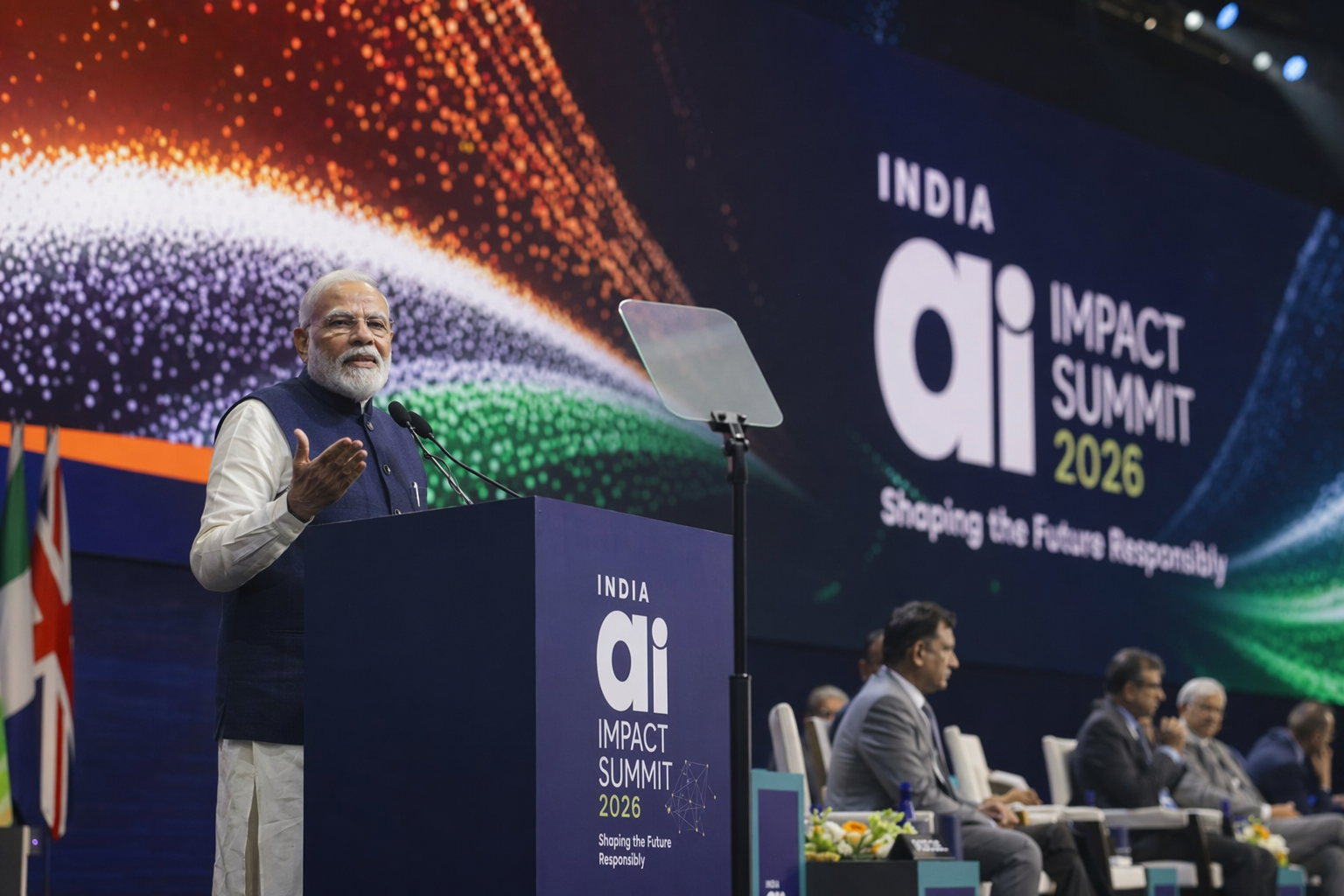
For decades, the global artificial intelligence landscape has been dominated by massive, Western-centric Large Language Models (LLMs). While these models require billions of dollars to train, they frequently stumble when confronted with the linguistic complexities and cultural realities of the Global South. But what if the next great leap in artificial intelligence doesn't come from Silicon Valley's brute-force compute, but from a highly efficient, cost-effective ecosystem designed from the ground up to serve 1.4 billion people?
This paradigm shift became a reality at the landmark India AI Impact Summit 2026, held at the iconic Bharat Mandapam in New Delhi. Inaugurated by Prime Minister Narendra Modi, the summit brought together over 300 exhibitors from India and 30+ countries to showcase a new era of "Responsible Intelligence." More than just a technology conference, the event marked the official arrival of India’s "DeepSeek moment"—a strategic pivot toward highly efficient, culturally contextualized, and cost-effective sovereign AI solutions that prioritize localized utility over raw parameter size.
Fueling Sovereignty: The ₹10,300 Crore IndiaAI Mission
At the heart of this technological uprising is the government’s massive ₹10,300 crore IndiaAI Mission. This historic capital injection is actively funding the foundational building blocks of Indian technological sovereignty, focusing on:
- Sovereign AI Infrastructure: Establishing localized, high-performance compute capacity to reduce reliance on foreign cloud providers.
- India-Centric Datasets: Curating high-quality, non-English training data that reflects the country’s diverse socio-economic realities.
- Open-Source Innovation: Funding foundational model development through structured initiatives like the IndiaAI Foundation Model Call for Proposals.
By subsidizing compute and prioritizing localized training data, the initiative is enabling local researchers, startups, and enterprises to build highly targeted AI models at a fraction of the cost of Western counterparts.
Unveiling 8 Homegrown Foundational Models
The crown jewel of the 2026 summit was the debut of eight new homegrown foundational AI models explicitly engineered for India's unique multilingual landscape. Rather than relying on English-heavy training pipelines, these models natively understand the nuances, idioms, and syntax of India's regional languages.
Alongside these foundational models, the summit highlighted the launch of specialized sectoral AI casebooks and deployment tools. These frameworks demonstrate how AI is already being integrated into:
- Governance: Automating public service delivery and processing regional administrative data.
- Agriculture & Healthcare: Delivering real-time, localized diagnostic and crop advisory services in regional dialects.
- Voice & Language Solutions: Bridging the digital divide for millions of non-English speakers through natural, conversational voice interfaces.
The Rise of Regional Voice Infrastructure
For India, digital inclusion is inherently tied to oral communication. As the country builds out its sovereign digital infrastructure, private innovators are translating these foundational models into scalable, enterprise-grade applications.
This is where the ecosystem is moving from theory to execution. Platforms like CallMissed are already driving this trend, leveraging highly localized Speech-to-Text and multilingual APIs supporting 22 regional Indian languages. By integrating these sovereign foundational models, platforms like CallMissed enable businesses to deploy next-generation AI voice agents that can converse naturally with users in their native dialects, transforming customer engagement nationwide.
India's "DeepSeek moment" is not just about competing on the global stage; it is about rewriting the rules of AI development to build a democratized, cost-efficient, and linguistically inclusive future.
Background & Context
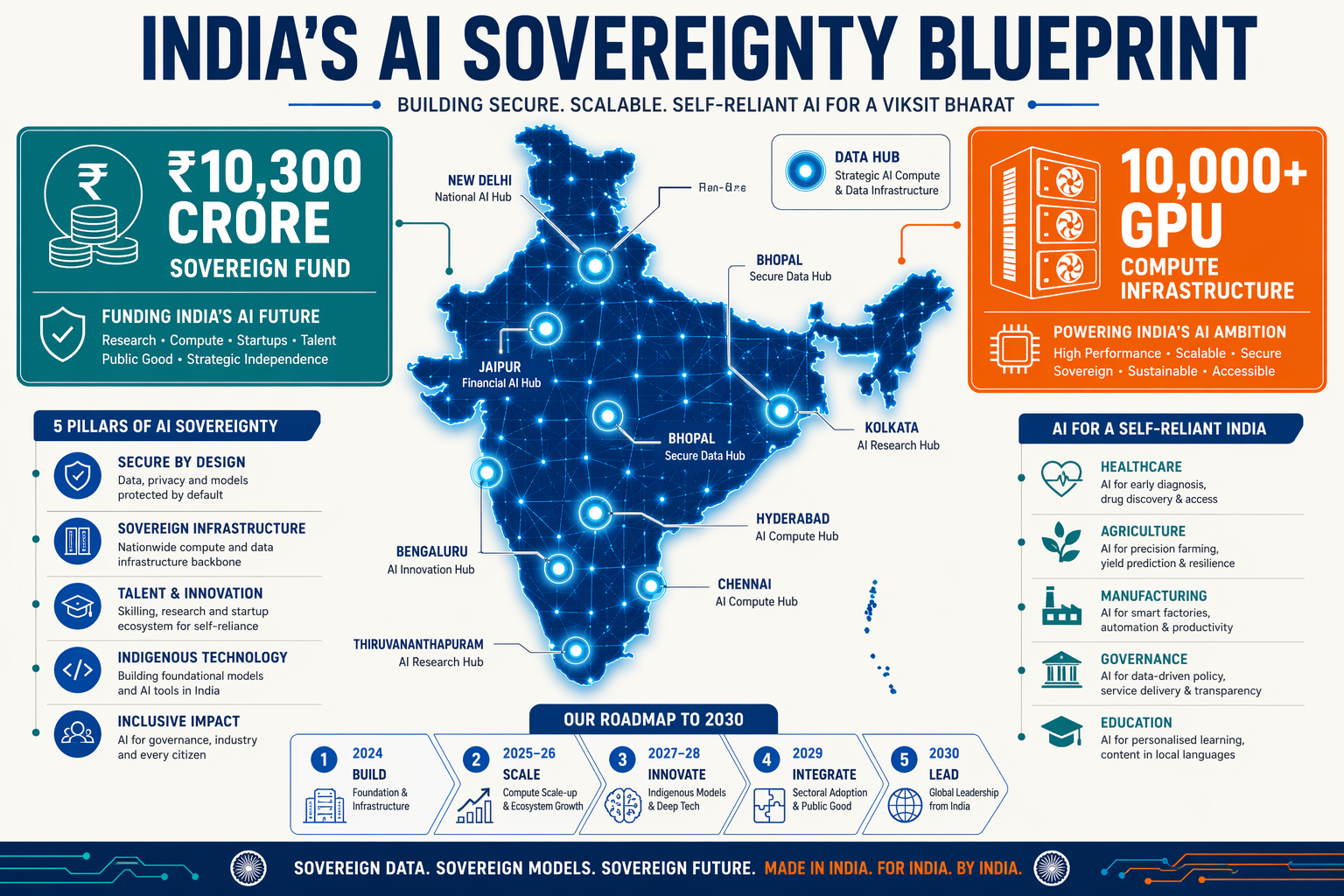
The blueprint for India's technological sovereignty was formally laid out at the India AI Impact Summit 2026, held from February 16–20 at Bharat Mandapam, New Delhi. Inaugurated by Prime Minister Narendra Modi, the landmark summit brought together over 300 exhibitors and delegates from 30 countries to showcase a historic transition. The core theme of the event was clear: India is moving away from its reliance on Western-centric AI dependencies. Instead of trying to replicate massive, capital-intensive Silicon Valley LLMs, the nation has embarked on its own "DeepSeek moment"—a strategic shift toward building highly optimized, domain-specific, and remarkably cost-effective foundational models.
Defining India’s "DeepSeek Moment"
The concept of a "DeepSeek moment" refers to a paradigm shift in artificial intelligence where efficiency and highly targeted data engineering triumph over brute-force compute and multi-billion-dollar budgets. For India, this translates to building AI that doesn't merely translate Western concepts but natively understands the linguistic, cultural, and socio-economic nuances of 1.4 billion people.
Rather than running massive generalist models that require exorbitant computational power and frequently struggle with code-switching (such as mixing Hindi and English into "Hinglish"), Indian researchers are training highly efficient, lightweight architectures. These models are designed to operate cost-effectively at scale, making AI utility accessible to public sector applications and small-to-medium enterprises alike.
The ₹10,300 Crore Sovereign Engine
At the heart of this transition is the government’s ₹10,300 crore IndiaAI Mission. This public funding initiative acts as the financial and structural backbone of India's sovereign AI ecosystem. The mission actively channels resources into four critical areas:
- Sovereign Compute Infrastructure: Establishing state-backed AI supercomputing clusters to reduce national reliance on foreign cloud infrastructure.
- The IndiaAI Foundation Model Initiative: Directly funding the development of homegrown foundational models that are natively multilingual.
- Localized Datasets: Curating high-quality, non-English data repositories spanning governance, healthcare, and agriculture.
- Responsible AI Frameworks: Creating secure testing sandboxes to ensure ethical deployment across public services.
By subsidizing compute and prioritizing localized datasets, the IndiaAI Mission has significantly lowered the entry barriers for domestic enterprises, researchers, and startups.
Sectoral Innovation and the Power of Voice
The 2026 summit highlighted that in a nation with 22 constitutionally recognized languages and hundreds of regional dialects, text-based LLMs are insufficient to bridge the digital divide. True digital inclusion requires voice-first solutions. This is where foundational research meets commercial application.
The introduction of specialized sectoral AI casebooks at the summit demonstrated how public governance, agriculture, and healthcare are being revolutionized by localized voice agents. For businesses looking to implement these breakthroughs, the transition from foundational research to practical deployment is already happening. Platforms like CallMissed are leveraging these open foundational APIs to offer production-ready communication infrastructure, such as Speech-to-Text APIs supporting 22 regional Indian languages, allowing enterprises to deploy voice agents that can seamlessly converse with users in their native dialects.
Key Developments
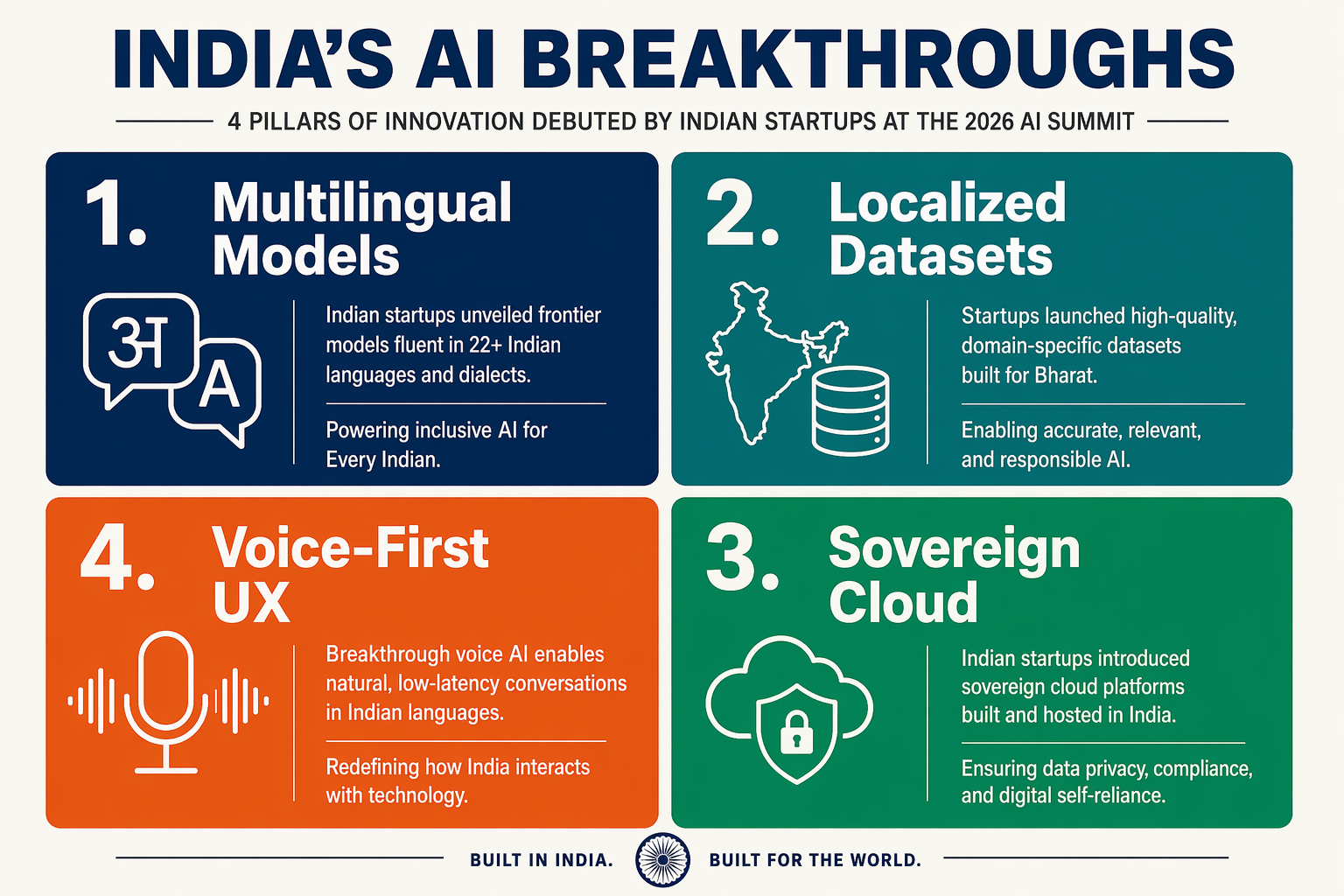
The India AI Impact Summit 2026 was not merely a showcase of theoretical research; it served as the physical launchpad for a highly coordinated, sovereign technology stack. Backed by the government’s landmark ₹10,300 crore IndiaAI Mission, the event established a blueprint for how a nation can build cost-effective, high-utility AI without relying on massive, Western-centric compute architectures.
Rather than chasing trillion-parameter general models, India’s strategy focuses on specialized, highly efficient foundational models, localized data pipelines, and public-sector deployment frameworks. The table below outlines the core developments and foundational pillars unveiled at the summit that are driving this sovereign AI revolution:
| Initiative / Launch | Domain Focus | Key Feature / Spec | Sovereignty Impact |
|---|---|---|---|
| 8 Foundational LLMs | Multilingual NLP | Native processing of 22 official Indian languages and regional dialects | Eliminates dependency on English-biased Western models. |
| Sovereign Compute Cloud | AI Infrastructure | High-performance GPU clusters funded by the ₹10,300 Cr mission | Ensures local data residency and lowers cloud training costs. |
| Sectoral AI Casebooks | Public Governance | Scalable frameworks for agriculture, healthcare, and education | Standardizes secure AI deployment across government departments. |
| Localized Dialect Datasets | Data Curation | High-fidelity conversational audio and vernacular text repositories | Solves the "data drought" for underrepresented regional languages. |
| Voice-First AI Systems | Conversational UI | Ultra-low latency Speech-to-Text and synthesis engines | Bridges the digital divide for millions of non-literate citizens. |
These key developments collectively define India’s "DeepSeek moment"—a strategic pivot toward hyper-efficiency. By training models on highly curated, culturally contextualized, and localized datasets, Indian researchers are achieving state-of-the-art accuracy in regional languages at a fraction of the computational cost of traditional LLMs.
However, translating these foundational breakthroughs into day-to-day enterprise applications requires robust middleware. This is where the private technology ecosystem is bridging the gap. For example, platforms like CallMissed are actively commercializing this sovereign infrastructure. By offering unified APIs that integrate over 300 LLMs alongside advanced Speech-to-Text engines supporting 22 Indian languages, CallMissed enables businesses to deploy production-ready, multilingual AI voice agents. This ensures that the foundational technologies launched at Bharat Mandapam can be easily adopted by enterprises to serve customers in their native dialects, transforming public policy into practical, commercial reality.
In-Depth Analysis

To truly appreciate India’s "DeepSeek moment," we must look beyond the policy announcements and analyze the architectural and strategic shifts showcased at the 2026 AI Impact Summit. The unveiling of eight new homegrown foundational AI models represents a calculated departure from the traditional Silicon Valley playbook of "brute-force" scaling. Instead of chasing trillion-parameter architectures that require nuclear-scale energy grids, Indian researchers and enterprises are pioneering highly optimized, cost-efficient, and culturally contextualized AI.
Architectural Efficiency Over Raw Scale
The core engineering philosophy behind India's new foundational models mirrors the efficiency breakthroughs that recently disrupted the global AI landscape. Rather than relying on massive, generalized datasets dominated by Western internet culture, these models are trained on highly curated, localized data.
- Tokenization for Indian Languages: Historically, Western LLMs have been highly inefficient when processing non-Latin scripts, requiring up to 5 to 10 times more "tokens" (and therefore more compute and cost) to process a sentence in Hindi or Tamil compared to English. The newly unveiled models utilize custom-built tokenizers optimized specifically for the phonetics and structures of Indic scripts.
- Sovereign Data pipelines: Supported by the ₹10,300 crore IndiaAI Mission, these models were trained using high-quality public sector datasets, academic archives, and diverse linguistic repositories that capture the nuance of India's regional dialects.
- Low-Latency Edge Deployment: Many of these models are designed to run efficiently on smaller GPU clusters or even edge devices, making them highly viable for widespread public sector deployment where connectivity and high-end hardware may be limited.
Sectoral Deep Dives: Translating Code into Impact
The summit didn’t just feature theoretical models; it showcased practical, sector-specific casebooks demonstrating how this sovereign AI infrastructure is being deployed across the nation.
- Agricultural Intelligence: Models trained on regional weather patterns, soil data, and crop cycles are being used to provide real-time, voice-activated advice to farmers in their native dialects.
- AI in Governance (Bhashini Integration): Homegrown models are being integrated directly into public service delivery platforms, allowing citizens to interact with government portals using natural voice commands in 22 official languages.
- Healthcare Diagnostics: Highly specialized models trained on regional clinical data are assisting rural healthcare workers by analyzing diagnostics and generating medical summaries in local languages.
The Role of Private Infrastructure Players
For these foundational models to achieve nationwide scale, the bridge between raw research and commercial application is vital. This is where private infrastructure innovators are playing an essential role. Platforms like CallMissed are actively translating these sovereign AI breakthroughs into enterprise-grade tools. By leveraging localized Speech-to-Text APIs that support 22 Indian languages natively, CallMissed enables businesses and government agencies to deploy production-ready voice agents. These agents can seamlessly converse with users in their regional dialects, bypassing the digital divide and making AI utility accessible to the non-English-speaking majority.
Ultimately, India’s strategic pivot proves that technological sovereignty is not about copying Western benchmarks—it is about rewriting the economics of AI to serve local realities.
Impact & Implications
The shockwaves of India’s "DeepSeek moment" at the India AI Impact Summit 2026 extend far beyond national borders. By demonstrating that high-performing foundational models can be trained without the multi-billion-dollar price tags typical of Silicon Valley, India is rewriting the global playbook for artificial intelligence. This shift carries profound implications for technological sovereignty, market dynamics, and digital inclusion across the Global South.
Breaking the Western Monopoly on Foundational AI
For years, developing nations have faced a stark choice: import expensive, culturally tone-deaf AI models from Western tech giants, or remain left behind in the algorithmic race. The models unveiled at Bharat Mandapam prove that there is a third way. By leveraging highly curated, localized datasets and maximizing token efficiency, India has created a template for sovereign AI.
- Cost-Efficient Architectures: Much like DeepSeek disrupted the industry by achieving state-of-the-art performance at a fraction of the training cost, India's new foundational models utilize optimized compute architectures. This drastically lowers the financial barrier to entry for enterprise-grade AI.
- Cultural and Contextual Accuracy: Western models trained predominantly on English-centric internet data frequently fail to grasp the nuances of regional dialects, local idioms, and socio-economic contexts. Homegrown models eliminate this "cultural hallucination" by natively understanding the cognitive frameworks of Indian users.
Catalyzing the Enterprise and Developer Ecosystem
With the government’s ₹10,300 crore IndiaAI Mission subsidizing compute infrastructure, local startups and developers are suddenly equipped with the tools to build world-class applications. The availability of lightweight, cost-effective models allows businesses to deploy AI at scale without facing prohibitive API bills.
For instance, the democratization of voice and language models is fueling a new wave of conversational AI. Platforms like CallMissed are capitalizing on this paradigm shift. By integrating highly localized, sovereign Speech-to-Text APIs that natively support regional dialects, CallMissed enables businesses to deploy ultra-responsive AI voice agents. These agents can handle customer interactions seamlessly across Tier-2 and Tier-3 cities, turning cutting-edge foundational research into immediate economic value.
A Blueprint for the Global South
India’s strategy serves as a practical blueprint for other emerging economies in Africa, Southeast Asia, and Latin America. Key takeaways for the global community include:
- The Power of Public-Private Partnerships: The collaboration between the Ministry of Electronics and Information Technology (MeitY), academic institutions, and private enterprises shows how targeted state funding can unlock massive private-sector innovation.
- Prioritizing Language as Infrastructure: By treating local language support as basic digital infrastructure—similar to UPI or Aadhaar—India is ensuring that the AI revolution is democratically distributed rather than restricted to the English-speaking elite.
Ultimately, the 2026 Summit proved that the future of AI is not monolithic. As India asserts its technological sovereignty, it is paving the way for a more multipolar, cost-efficient, and linguistically diverse global AI landscape.
Expert Opinions

The groundbreaking announcements at Bharat Mandapam have ignited a massive debate among global tech leaders, researchers, and policymakers. Industry experts agree that the India AI Impact Summit 2026 represents a fundamental paradigm shift in how foundational models are conceptualized, trained, and deployed. Rather than chasing the trillion-parameter, brute-force compute scaling laws popularized by Silicon Valley, India’s strategic pivot is being hailed as a masterclass in highly targeted, cost-effective engineering.
A Masterclass in Compute Efficiency and Sovereign Tech
Prominent technology analysts have drawn direct parallels between India's current trajectory and recent global breakthroughs in hyper-efficient modeling.
- Democratic Cost Structures: Leading Indian AI researchers point out that training models on highly curated, localized datasets allows developers to bypass the astronomical compute costs typically associated with Western LLMs. By leveraging the ₹10,300 crore IndiaAI Mission to subsidize local GPU clusters, the government has dramatically lowered the barrier to entry for local startups.
- The "Sovereign AI" Imperative: Global policy experts emphasize that India's "DeepSeek moment" is less about competing directly with OpenAI or Google, and more about achieving absolute technological sovereignty. By building foundational models that do not rely on foreign cloud infrastructure or biased Western datasets, India is securing its digital future against geopolitical fluctuations.
Real-World Utility Over Raw Benchmarks
Many enterprise leaders at the summit argued that Western-centric models are fundamentally misaligned with the economic realities of the Global South.
- Contextual Intelligence: Industry veterans note that while a model like GPT-4 might excel at standardized English exams, it falls short when navigating the nuances of Indian agricultural dialects or local administrative governance. The newly unveiled homegrown models, by contrast, are built to deliver high accuracy at a fraction of the operational token cost.
- Solving the Last-Mile Delivery: Software-as-a-Service (SaaS) executives highlight that for AI to have a genuine socio-economic impact, it must be deployable on low-bandwidth networks and budget smartphones. This is where highly optimized, smaller foundational models shine.
This pragmatism is already driving rapid adoption across the private sector. Advanced communication platforms like CallMissed are capitalizing on this localized shift, utilizing highly specialized APIs to deploy conversational voice agents that operate seamlessly across India's diverse linguistic landscape. By integrating these efficient regional models, such platforms can handle high-volume enterprise customer interactions without the prohibitive API latency and costs associated with Western alternatives.
The Investor and Developer Outlook
Venture capitalists attending the summit expressed immense optimism regarding India's unique developer ecosystem. With the world's largest developer base now gaining access to sovereign compute resources and native, multi-dialect datasets, the cost to build a localized AI application is plummeting.
Experts conclude that India is successfully shifting the global AI narrative. The consensus is clear: the future of AI does not belong solely to those with the deepest pockets, but to those who can deliver the highest societal value per watt of compute.
What This Means For You
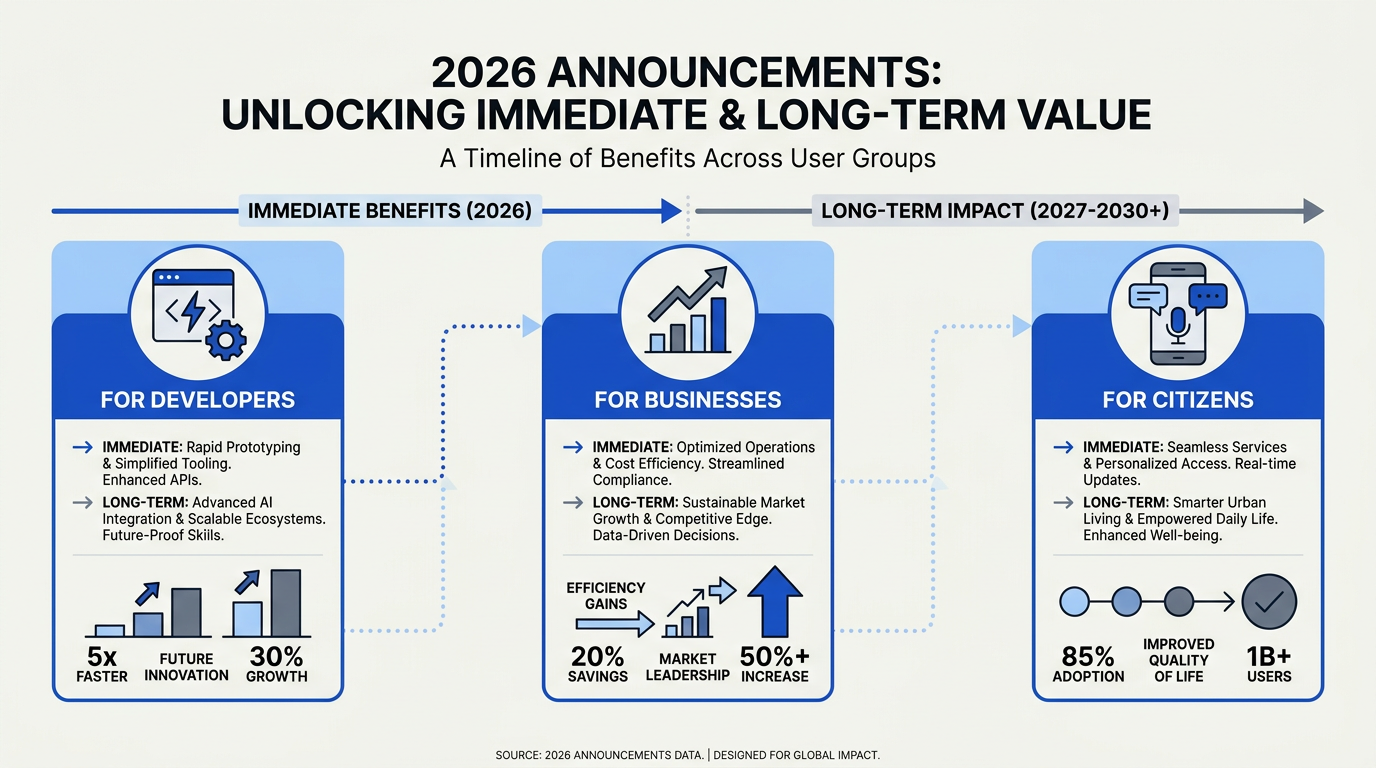
The unveiling of India’s homegrown foundational models at the India AI Impact Summit 2026 represents a massive paradigm shift. For developers, enterprises, and policymakers, this "DeepSeek moment" means transitioning from expensive, generalized Western models to highly optimized, culturally contextualized, and cost-effective AI.
By leveraging the sovereign infrastructure backed by the ₹10,300 crore IndiaAI Mission, organizations can now deploy AI that natively understands regional nuances without the prohibitive compute costs typically associated with frontier models.
Navigating the New Indian AI Landscape
To help you understand how to leverage these breakthroughs, we have mapped out the practical implications of India’s sovereign AI shift across different operational layers:
| Stakeholder Group | Primary Benefit | Key Enabler | Expected Business Impact |
|---|---|---|---|
| Enterprise Leaders | Dramatic reduction in operational costs | Locally optimized, highly efficient foundational models | Up to 70% lower API costs compared to Western-centric LLMs |
| App Developers | High-accuracy localized deployment | High-quality localized datasets and specialized APIs | Native support for 22 regional Indian languages and local dialects |
| Public Sector & Gov | Scalable, equitable citizen delivery | Sectoral AI casebooks (Governance, Agriculture, Health) | Seamless delivery of public services to non-English speaking populations |
| Infrastructure Providers | Increased demand for domestic hosting | Government-backed cloud and localized compute clusters | Greater technological sovereignty and strict local data compliance |
Key Strategic Takeaways For Your Business
- Drastically Lower Cost of Innovation: Much like the global shockwaves sent by DeepSeek's cost-efficient training methodologies, India's new foundational models prove that massive parameter sizes are no longer a prerequisite for high performance. Indian enterprises can now build domain-specific applications at a fraction of the traditional cost.
- The Power of Voice-First Solutions: In a country where hundreds of millions of citizens prefer oral communication over text, voice is the ultimate frontier for digital inclusion. The newly launched models are optimized for speech-to-text and text-to-speech across regional dialects, making voice-first customer engagement a critical priority for businesses.
- Sovereign Data Security: By building on infrastructure funded by the IndiaAI Mission, companies can ensure that sensitive citizen and customer data remains within national borders, fully complying with evolving local data protection laws.
Implementation with Next-Gen AI Orchestrators
For organizations looking to deploy these localized models without overhaul delays, agile communication infrastructure is essential. Platforms like CallMissed are already bridging the gap between foundational Indian AI models and real-world deployment.
By utilizing CallMissed’s unified APIs—which support LLM inference across more than 300 models alongside advanced Speech-to-Text for 22 Indian languages—businesses can instantly integrate these new homegrown models into their customer touchpoints. Whether deploying a multilingual WhatsApp chatbot for rural farmers or a 24/7 automated voice agent for banking, the infrastructure to turn India's sovereign AI milestone into immediate business value is already here.
Frequently Asked Questions
What exactly does India's DeepSeek moment mean for the global AI ecosystem?
What were the most significant announcements regarding homegrown AI models at the 2026 Summit?
How is the government's ₹10,300 crore IndiaAI Mission funding these homegrown AI models?
How do India's new foundational AI models address the country's complex linguistic diversity?
What real-world sectors will see the fastest adoption of these 2026 AI summit technologies?
How can businesses integrate these sovereign, multilingual AI features into their customer workflows?
Conclusion
The India AI Impact Summit 2026 has made one thing clear: the future of artificial intelligence is no longer dictated solely by Silicon Valley. By prioritizing efficiency, cultural context, and linguistic diversity over brute-force compute, India is successfully charting its own path toward technological sovereignty.
Key Takeaways from the Summit:
- Sovereign Infrastructure: Backed by the ₹10,300 crore IndiaAI Mission, the nation is actively building its own foundational AI infrastructure, compute power, and highly localized datasets.
- The 'DeepSeek' Shift: India’s ‘DeepSeek moment’ marks a transition toward cost-effective, highly efficient foundational models tailored to real-world socio-economic realities rather than raw parameter size.
- Democratizing Voice: The launch of eight new homegrown models and specialized sectoral casebooks is bridging the digital divide, bringing AI-driven governance, healthcare, and voice solutions to non-English speakers natively.
Looking ahead, we can expect a rapid surge in localized, domain-specific AI applications that natively understand India's regional dialects. To explore how this AI communication revolution is evolving, check out CallMissed — an AI infrastructure platform powering next-generation voice agents and multilingual chatbots that help businesses seamlessly adapt to this new era of sovereign, localized technology.
Will India's hyper-efficient, multilingual approach become the blueprint for the rest of the Global South?
Discussion
Related Posts

Ready to automate customer conversations?
Launch AI voice agents and WhatsApp bots with CallMissed — one API, 22+ Indian languages.