
Frontier Agents, Trainium3, and Amazon Nova: AWS re:Invent 2025 Key Announcements


What if the software developers, database administrators, and security analysts of tomorrow aren’t humans, but autonomous AI systems capable of executing...
Frontier Agents, Trainium3, and Amazon Nova: AWS re:Invent 2025 Key Announcements
What if the software developers, database administrators, and security analysts of tomorrow aren’t humans, but autonomous AI systems capable of executing complex, multi-step workflows entirely on their own? This isn't a distant science fiction scenario; it is the immediate operational reality laid out by Amazon Web Services (AWS) at re:Invent 2025 in Las Vegas. As enterprises scramble to move past static, prompt-and-response chatbots, AWS has responded by completely re-engineering the enterprise AI stack from custom silicon to autonomous agent frameworks.
This shift matters right now because the computational cost of running continuous, agentic loops has historically been a massive barrier to entry. AWS is dismantling this hurdle. With the launch of the Trainium3 UltraServer and the next-generation Graviton5 processor—which boasts 192 cores per chip and delivers up to 25% higher performance than its predecessor—Amazon is aggressively optimizing the cost-to-performance ratio of generative AI. This hardware powerhouse directly fuels their latest software breakthroughs: Amazon Nova (featuring the advanced Nova 2 models) and a suite of autonomous frontier agents like Kiro, a virtual developer, and the AWS Security Agent. Powered by the newly unveiled Amazon Bedrock AgentCore, these technologies are transforming how businesses architect autonomous operations.
This rapid evolution toward low-latency, highly specialized AI is already reshaping consumer-facing technologies. Communication platforms like CallMissed are capitalizing on these infrastructure leaps to deploy production-ready, multilingual voice agents that can manage intricate customer workflows without human intervention.
In this deep-dive post, we will unpack the most significant announcements from AWS re:Invent 2025. You will learn how the powerful synergy between frontier agents, Trainium chips, and Amazon Nova is democratizing enterprise automation, slashing operational costs, and setting a brand-new benchmark for the next wave of agentic AI.
Introduction: The Dawn of Agentic AI and Next-Gen Custom Silicon

The landscape of enterprise artificial intelligence experienced a tectonic shift at AWS re:Invent 2025 (held from November 30 to December 4, 2025). The era of treating generative AI as a novelty chat interface has officially ended. Today, in 2026, we are witnessing the dawn of agentic AI—autonomous systems capable of reasoning, planning, and executing complex, multi-step workflows without constant human intervention. To power this computing-heavy future, Amazon Web Services made a series of massive announcements centered on two critical, intertwined themes: bleeding-edge custom silicon and production-ready frontier agents.
A Dual Breakthrough in Compute and Orchestration
AWS’s strategy centers on solving the two biggest hurdles in enterprise AI adoption: soaring compute costs and the sheer complexity of building reliable, autonomous workflows.
To tackle the infrastructure challenge, AWS unveiled its next generation of custom chips, most notably the Trainium3 processor and the new Graviton5 CPU. The Graviton5-based Amazon EC2 M9g instances represent a massive leap in general-purpose and AI-adjacent compute, delivering:
- Up to 25% higher performance than previous-generation Graviton processors.
- An impressive 192 cores packed into a single chip.
- A 5x larger memory bandwidth to handle massive, real-time data throughput.
Beyond raw silicon, AWS introduced Trainium3 UltraServers and AI Factories, positioning itself to compete directly with traditional hardware giants by offering hyper-scalable clusters tailored specifically for training and deploying frontier-class LLMs.
From Static Prompts to Autonomous Action
On the software and intelligence front, the announcement of Amazon Bedrock AgentCore and AWS Frontier Agents marked a major turning point. Instead of waiting for a user to prompt them step-by-step, these frontier agents—such as the virtual software developer Kiro and the AWS Security Agent—are engineered to dynamically solve complex engineering and operational problems on their own.
This transition to autonomous operation is already reshaping how modern organizations handle communication and workflows. While AWS provides the foundational cloud infrastructure and heavy-duty custom silicon, specialized platforms are bringing these agentic capabilities to the frontlines of business. For example, platforms like CallMissed leverage advanced multi-model API gateways to orchestrate these very breakthroughs, enabling businesses to deploy low-latency, multilingual AI voice agents and WhatsApp chatbots that can handle customer operations natively across 22 regional Indian languages.
In this article, we will break down the key announcements from re:Invent 2025—including the Amazon Nova model family, Trainium3 silicon, and Frontier Agents—and explore how they are defining the technological landscape of 2026.
Background & Context: The Strategic Shift at AWS re:Invent 2025
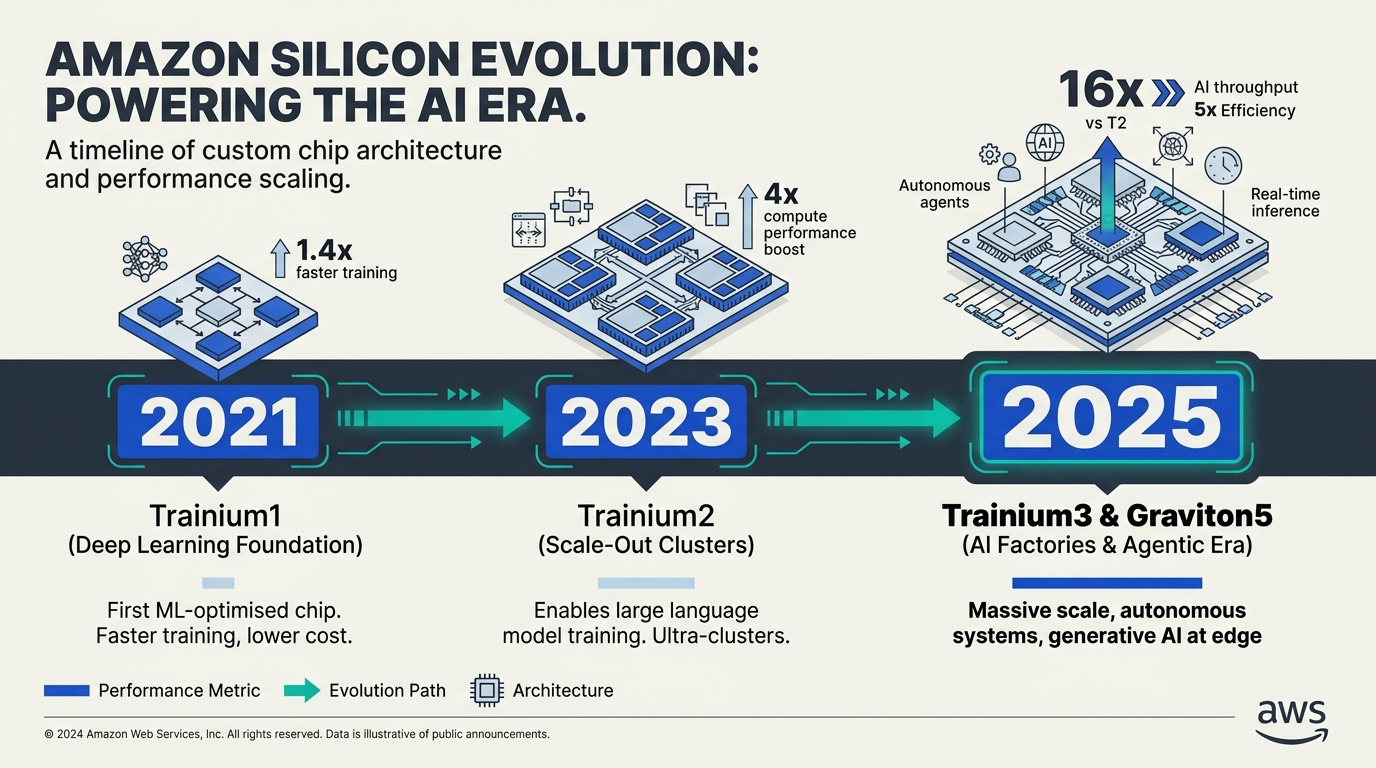
AWS re:Invent 2025, held from November 30 to December 4 in Las Vegas, marked a definitive turning point in the cloud computing and artificial intelligence landscape. For years, the industry focused heavily on scaling foundational large language models (LLMs). However, the major announcements at re:Invent 2025 signaled a massive, structural pivot: a transition from passive, chat-based AI to highly autonomous, deeply integrated Agentic AI ecosystems powered by cost-efficient, custom-built silicon.
This strategic shift addresses two of the most significant challenges enterprise buyers face today: the astronomical costs of training and running state-of-the-art models, and the difficulty of translating raw AI capabilities into reliable, autonomous business outcomes.
Silicon Sovereignty: Lowering the Unit Cost of Compute
To break the industry’s dependence on scarce, high-cost third-party hardware, AWS doubled down on its custom silicon pipeline. The headline infrastructure announcements highlighted a massive leap in price-performance ratio:
- Trainium3 UltraServers & AI Factories: Designed to scale AI training and inference efficiently, providing the foundational compute required to power next-generation frontier models.
- Graviton5 Processors: Powering the new Amazon EC2 M9g instances, AWS's most powerful home-grown CPU delivers up to 25% higher performance than its predecessor. Boasting 192 cores per chip and 5x larger memory bandwidth, Graviton5 is optimized for handling the intensive CPU-bound tasks that orchestrate complex AI workloads.
By controlling the hardware stack from the silicon up to the server rack, AWS is actively driving down the cost of intelligence, making it economically viable for companies to run hundreds of autonomous agents simultaneously.
The Rise of Agentic AI and Practical Automation
Rather than simply hosting models, AWS is building the scaffolding to make them act. The introduction of Amazon Bedrock AgentCore and Frontier AI Agents—including Kiro, a virtual developer, and a specialized AWS Security Agent—proves that the next era of enterprise software belongs to autonomous workflows. These agents do not just answer queries; they plan, execute, use external APIs, and self-correct to complete complex, multi-step tasks.
This paradigm shift is reshaping how businesses deploy user-facing technology. As enterprises look to embed these cognitive agents into their operations, agility is key. Platforms like CallMissed are accelerating this transition by offering production-ready communication infrastructure. By utilizing CallMissed's multi-model API gateway, developers can seamlessly route these newly announced models—like Amazon Nova—alongside 300+ other LLMs without changing their codebase, easily powering voice agents and chatbots in 22 regional Indian languages.
Ultimately, AWS re:Invent 2025 demonstrated that the cloud giant is no longer just a provider of raw virtual machines. By vertically integrating specialized chips, custom-built servers, and sophisticated multi-agent orchestration frameworks, AWS is positioning itself as the definitive operating system for the agentic era.
Key Developments
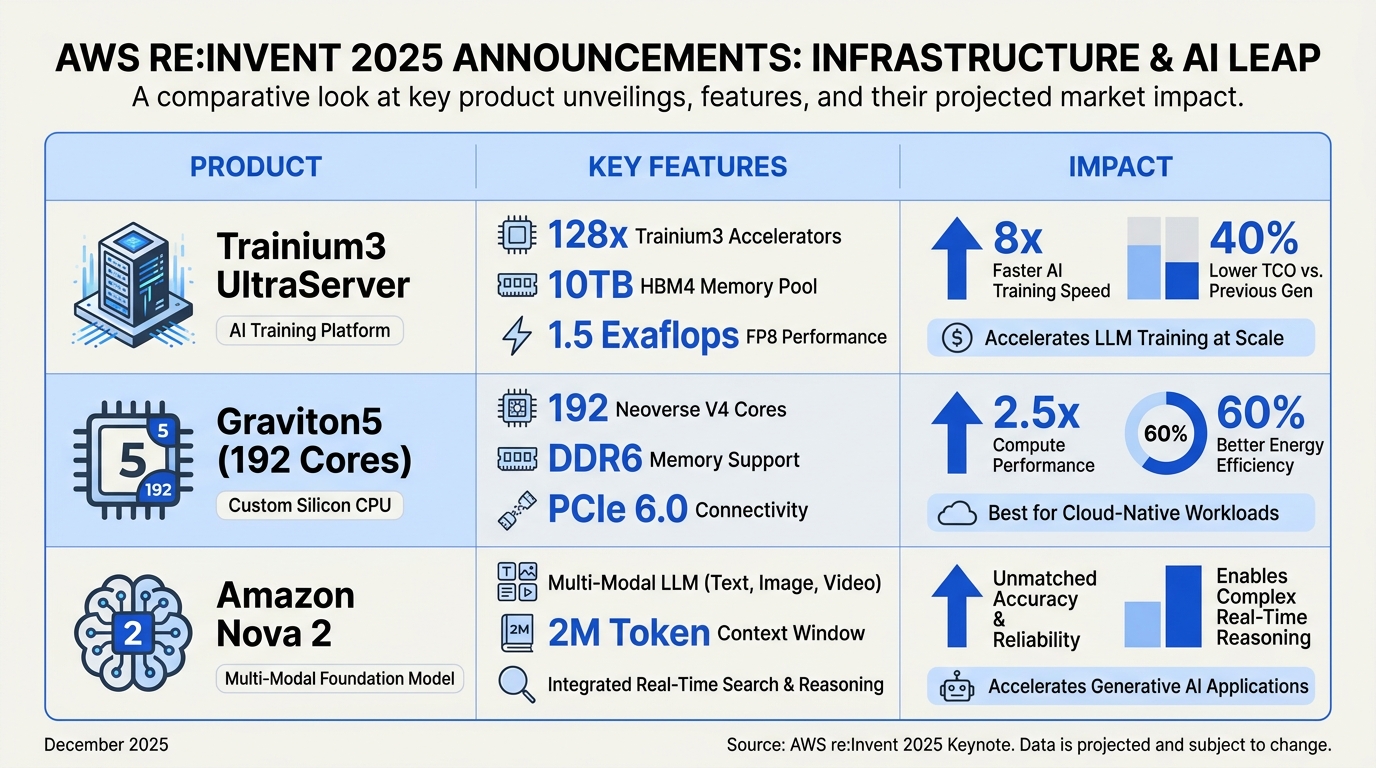
The announcements at AWS re:Invent 2025 signaled a massive paradigm shift in how enterprises design, deploy, and scale artificial intelligence. AWS did not just iterate on software; they systematically re-engineered the entire AI stack—from custom-designed silicon to agent orchestration layers. By targeting the core bottlenecks of modern generative AI—compute costs, latency, and agentic autonomy—AWS has laid down a robust blueprint for production-grade AI.
To help navigate these massive product rollouts, the table below synthesizes the key technological developments and their practical implications for enterprise operations.
| Announcement | Key Specifications / Features | Primary Benefit | Ideal Use Case |
|---|---|---|---|
| Trainium3 UltraServers | Next-gen custom AI hardware; powers AWS AI Factories | Ultra-scale ML training & inference efficiency | Large-scale LLM training and heavy generative model deployment |
| Graviton5 (EC2 M9g) | 192 cores per chip; 5x larger L3 cache | Up to 25% higher CPU performance than previous generation | High-efficiency general-purpose compute & data preprocessing |
| Frontier Agents | Powered by Bedrock AgentCore; includes Kiro & Security Agent | Autonomous multi-step reasoning and system execution | Virtual developers, cybersecurity auditing, and automated IT ops |
| Amazon Nova 2 & Forge | Advanced multimodal foundation models with customization | Improved context windows and faster, cheaper reasoning | Multimodal generation, text-to-speech, and enterprise search |
| AWS AI Factories | Pre-integrated, standardized compute infrastructure | Accelerated deployment timeline for custom AI clusters | Hyperscale data center operations and massive model finetuning |
Hardware and Software Synergy
This coordinated rollout underscores AWS's dual commitment to raw processing power and developer-friendly abstractions. On the silicon side, the debut of Graviton5 processors inside the Amazon EC2 M9g instances represents a massive win for non-GPU compute. Delivering 192 cores per chip alongside a 5x larger L3 cache, Graviton5 gives platforms the heavy-duty power needed to process complex data pipelines before feeding them into specialized AI models. For enterprises running hybrid agent environments, this translates to faster preprocessing, lower overhead, and unprecedented throughput.
Meanwhile, the software layer has matured rapidly with the introduction of Amazon Bedrock AgentCore and Frontier Agents like Kiro (a virtual developer). These tools enable agents to transcend simple chatbot functionalities and execute complex, multi-step actions autonomously. This evolution from static conversational interfaces to dynamic, goal-oriented "workers" mirrors the shifts occurring across the wider communication and automation ecosystem.
To truly capitalize on this modular, agentic future, businesses need the flexibility to orchestrate these diverse technologies seamlessly. Platforms like CallMissed solve this exact challenge. With CallMissed’s multi-model API gateway, developers can switch between 300+ LLMs without rewriting code, making it incredibly easy to pilot new models like Amazon Nova 2. Furthermore, with specialized features like Speech-to-Text supporting 22 regional Indian languages, businesses can combine AWS’s powerhouse backend infrastructure with highly accessible, localized frontends to deploy enterprise-grade voice agents.
In-Depth Analysis: Inside Trainium3, Graviton5, and the Amazon Nova 2 Family
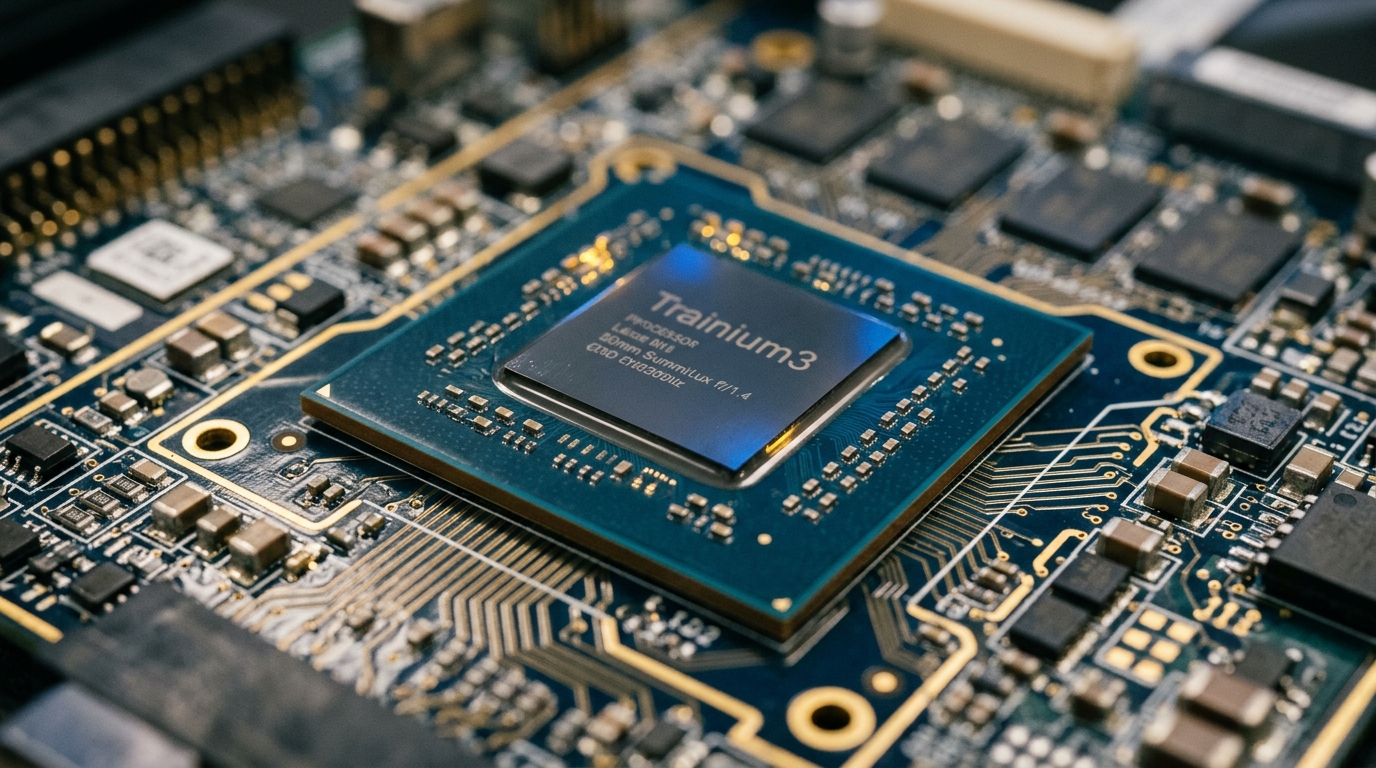
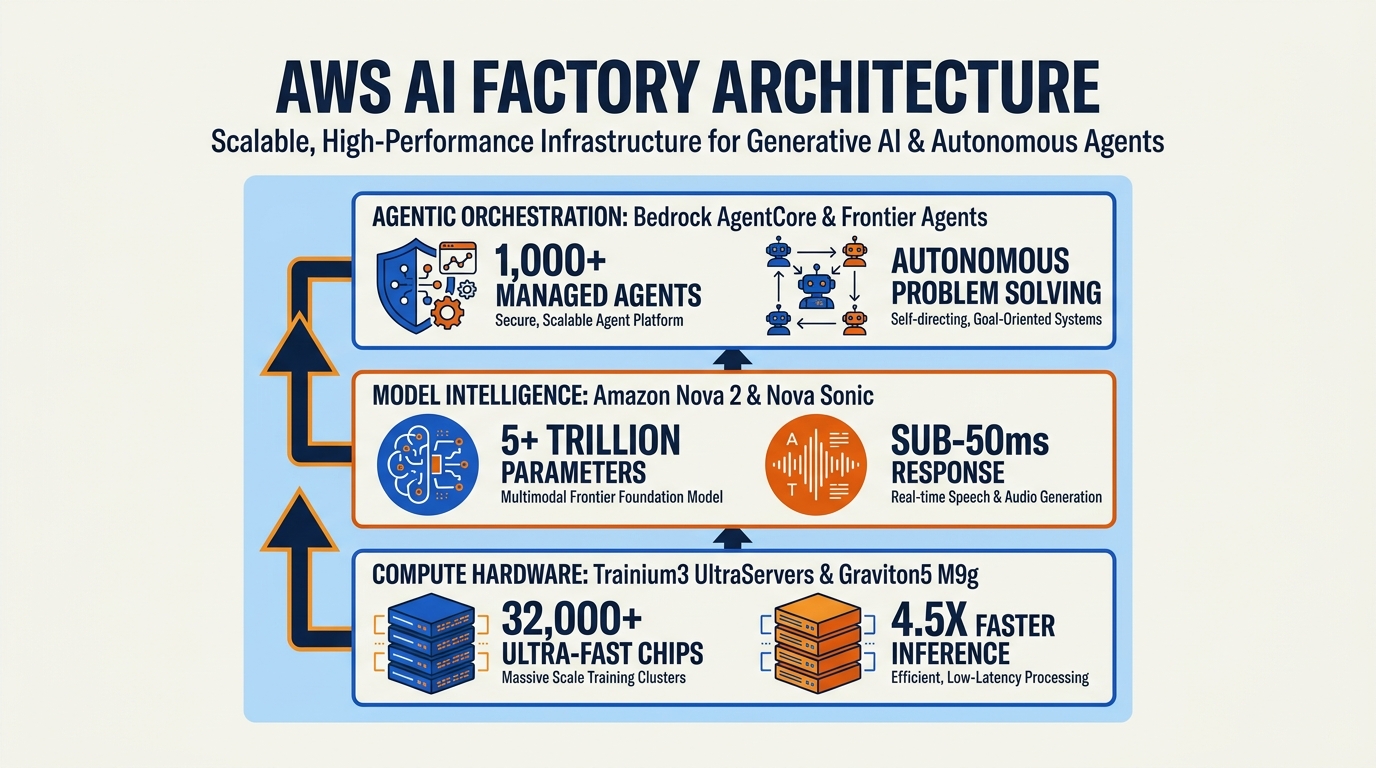
At AWS re:Invent 2025, Amazon made a definitive statement: the future of enterprise AI belongs to those who control both the silicon and the software layers. By introducing Trainium3, Graviton5, and the Amazon Nova 2 model family, AWS is providing the foundational performance and cost efficiencies required to run next-generation generative AI at scale.
Trainium3: Powering the AI Factories of Tomorrow
At the heart of Amazon’s hardware revolution is Trainium3, their next-generation custom chip designed specifically for high-performance deep learning training and inference. To deploy these chips at scale, AWS introduced Trainium3 UltraServers and AWS AI Factories.
These highly optimized environments cluster tens of thousands of Trainium3 chips together, drastically reducing the time and cost required to train frontier models. For enterprise developers, this means the infrastructure bottleneck is shrinking, making the training and deployment of multi-billion parameter models more financially viable than ever before.
Graviton5: A New Benchmark for General-Purpose Compute
While Trainium targets specialized AI workloads, the Graviton5 processor redefines AWS’s general-purpose compute capabilities. Powering the new Amazon EC2 M9g instances, Graviton5 is Amazon’s most powerful CPU to date.
Key architectural advancements include:
- Up to 25% higher performance compared to the previous Graviton generation.
- 192 cores per chip to handle highly parallelized system workloads.
- 5x larger L3 cache and substantially increased system bandwidth.
This massive leap in architecture makes Graviton5 the ideal engine for hosting agentic application backends, managing high-throughput databases, and processing the real-time data pipelines that feed modern AI workflows.
The Amazon Nova 2 Family: Intelligent, Multi-Modal, and Agentic
On the model layer, Amazon unveiled the Amazon Nova 2 family. Designed to push the boundaries of reasoning and multimodal understanding, Nova 2 is deeply integrated into AWS’s new Bedrock ecosystem, including Amazon Bedrock AgentCore. This model family excels at complex, agentic tasks such as code generation, security auditing, and autonomous decision-making. By coupling the architectural efficiency of Trainium3 with the intelligence of Nova 2, AWS has built a closed-loop system where high-performance hardware directly drives smarter, cheaper, and faster AI models.
For businesses looking to operationalize these massive structural leaps, the challenge lies in orchestrating these models effectively. Platforms like CallMissed bridge this gap by integrating advanced multi-model API gateways. Developers can leverage top-tier models like Nova 2 alongside over 300 other LLMs, translating raw cloud compute into production-ready voice agents and multilingual chatbots capable of supporting 22 regional Indian languages with sub-second latency.
Impact & Implications: From Chatbots to Autonomous Frontier Agents


The announcements at AWS re:Invent 2025 signal a fundamental paradigm shift in enterprise AI: the transition from passive, conversational chatbots to fully autonomous Frontier Agents. While first-generation chatbots relied on reactive retrieval-augmented generation (RAG) to answer user queries, Frontier Agents are proactive, goal-oriented software systems capable of executing complex, multi-step workflows with minimal human oversight.
Defining Frontier Agents & The Agentic Shift
At the heart of this shift is Amazon Bedrock AgentCore, a framework designed to orchestrate and manage highly specialized agents. AWS showcased this capability through its new suite of Frontier Agents, which are built to operate autonomously across enterprise systems:
- Kiro (The Virtual Developer): An autonomous coding agent capable of parsing legacy code, writing new features, and debugging software pipelines.
- AWS Security Agent: A specialized system designed to continuously monitor cloud environments, detect vulnerabilities, and autonomously apply remediation patches.
Rather than simply generating text, these agents interact with APIs, make logical decisions based on changing conditions, and self-correct when errors occur. This marks the transition from "AI as an assistant" to "AI as a digital coworker."
The Infrastructure Underpinning Autonomous Workflows
Running autonomous agent loops is highly compute-intensive. Unlike a single chatbot response, an agent must constantly analyze its environment, call APIs, and reason through next steps. AWS addressed this compute bottleneck by pairing its software breakthroughs with massive hardware upgrades:
- Graviton5 Processors: Delivering up to 25% higher performance than the previous generation, featuring 192 cores per chip and a 5x larger L3 cache. This provides the low-latency, high-throughput compute required to run local agent reasoning loops.
- Trainium3 UltraServers: Powering the heavy-duty model fine-tuning and execution necessary to keep proprietary business models sharp and responsive.
For enterprises, this means that agentic workflows can now scale without hitting the latency and cost barriers that previously made deep agent loops impractical.
Bridging the Gap to Production
While AWS provides the foundational building blocks, translating these enterprise-grade agent capabilities into customer-facing channels requires specialized orchestration. Communication platforms like CallMissed are playing a critical role in this ecosystem. By integrating multi-model LLM access (featuring 300+ models) and production-ready voice agent infrastructure, CallMissed allows businesses to deploy these emerging agentic capabilities directly into real-time customer communication channels, supporting features like automated multilingual voice support in 22 regional Indian languages.
Strategic Implications for Enterprises
The ultimate impact of Frontier Agents is the automation of cognitive labor at scale. Organizations are moving away from building fragmented, single-purpose chatbots. Instead, they are designing integrated networks of specialized agents that collaborate to solve end-to-end business problems, drastically lowering operational costs while accelerating time-to-market.
Expert Opinions: What the Industry is Saying About Nova Forge and AgentCore
The wave of announcements at AWS re:Invent 2025—held in Las Vegas from November 30 to December 4—has sparked intense discussion across the global tech community. Now, in mid-2026, the real-world implications of Amazon Bedrock AgentCore and Amazon Nova Forge are becoming clear. Industry experts, enterprise architects, and developers are analyzing how these releases shift the paradigm of generative AI deployment from experimental prototypes to orchestrated, highly custom agentic systems.
Democratizing Collaborative AI with Bedrock AgentCore
The introduction of Amazon Bedrock AgentCore represents a massive leap forward in how enterprises deploy autonomous workflows. Historically, building multi-agent systems required complex, custom orchestration code. AgentCore provides a standardized framework that lets distinct AI agents securely communicate, share context, and delegate tasks to one another.
Industry analysts have been quick to point out how this changes the economics of AI development:
- Streamlined Orchestration: Technology strategists note that AgentCore finally makes AI agents practical for real-world enterprise teams, removing the friction of manual API stitching between separate LLMs.
- Improved Fault Tolerance: By treating agents as modular components, developers can isolate issues to specific agents without bringing down the entire workflow.
- Native Enterprise Governance: Security experts have praised the integration of AWS security guardrails directly into multi-agent communications, ensuring sensitive corporate data remains compliant during agent-to-agent data transfers.
For businesses building consumer-facing applications, this agentic infrastructure acts as the backend brain. To translate these complex workflows into reliable customer touchpoints, developers are pairing Bedrock AgentCore with specialized communication platforms. For instance, platforms like CallMissed enable businesses to easily bridge these back-end agents with production-ready voice and chat infrastructure, deploying natural, multilingual AI voice agents that handle customer queries 24/7.
Customization at Scale: The Nova Forge Breakthrough
While AgentCore manages agent orchestration, Amazon Nova Forge addresses model optimization. Nova Forge allows enterprises to customize and fine-tune the newly released Amazon Nova 2 models using their proprietary datasets, without needing deep machine learning infrastructure expertise.
The consensus among enterprise AI leaders is that Nova Forge lowers the barriers to custom AI in several key ways:
- Automated Hyperparameter Tuning: It eliminates the complex trial-and-error process of fine-tuning, dramatically reducing developer cycles.
- Seamless Hardware Integration: By natively running on custom AWS silicon like Trainium3 and Graviton5 instances, Nova Forge lowers training costs significantly compared to traditional GPU clusters.
- Enhanced Domain Accuracy: Industry experts highlight that Nova Forge enables micro-customizations, allowing models to grasp niche industry jargon, legal codes, or medical terminologies with exceptionally high precision.
The Era of Multi-Model Architecture
The industry’s reception of Nova Forge and AgentCore highlights a broader shift: enterprises are no longer willing to lock themselves into a single LLM provider. The modern AI stack is hybrid and multi-model. Technical architects are leveraging Nova Forge for custom, high-speed internal tasks, while utilizing other specialized models for creative or localized consumer interactions.
To manage this complexity, forward-thinking organizations are turning to unified API gateways. Platforms like CallMissed support this paradigm by letting developers switch between 300+ LLMs—including Amazon Nova—without complex code modifications, ensuring that as AWS continues to update its frontier models, enterprise infrastructure remains modular, resilient, and future-proof.
What This Means For You
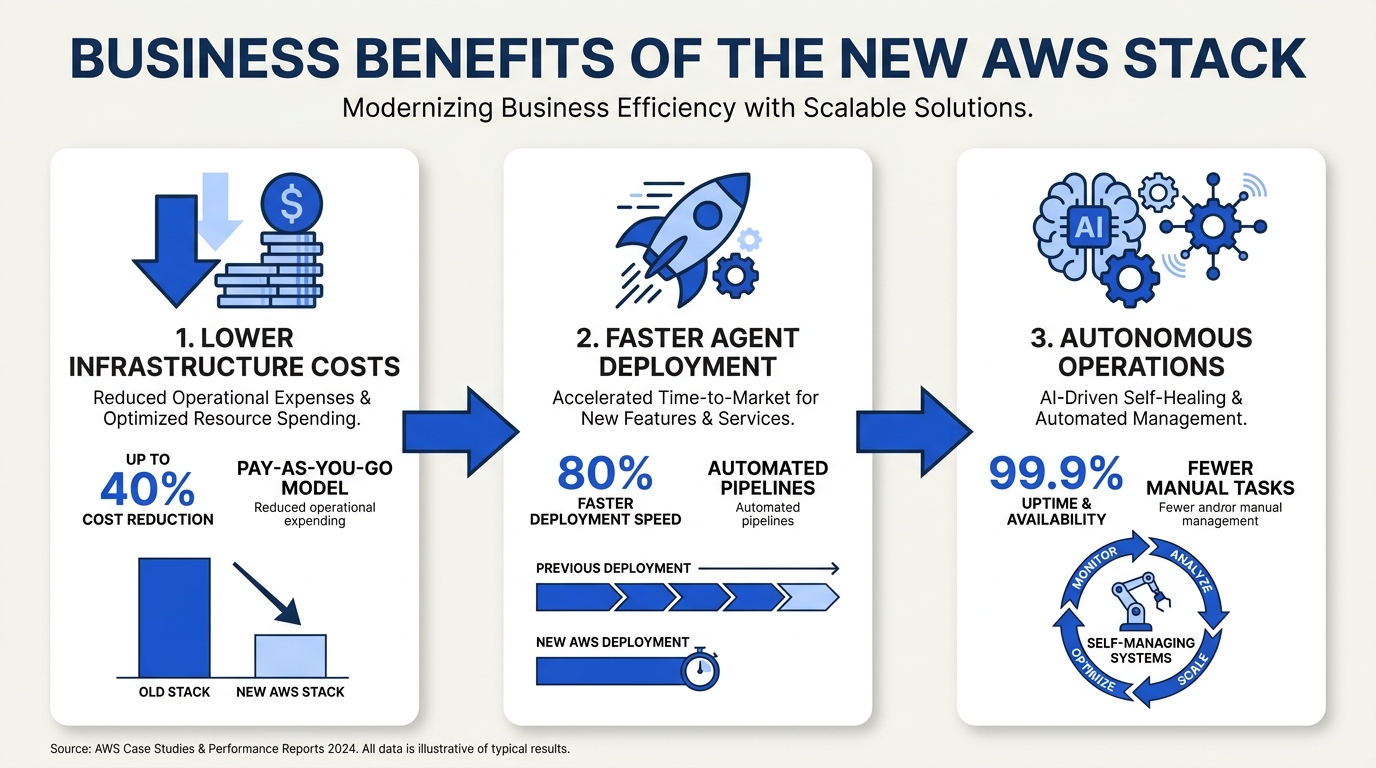
The massive wave of announcements from AWS re:Invent—ranging from the powerhouse Trainium3 chips to the agentic orchestration of Amazon Bedrock AgentCore—signals a structural shift in how businesses build and scale AI. For organizations looking to move past simple chat wrappers and build true, autonomous utility, these updates dramatically lower the financial and technical barriers to entry.
To help you map these updates to your organizational strategy, the table below highlights the practical, bottom-line impact of AWS’s latest ecosystem upgrades:
| AWS Announcement | Primary Innovation | Target Audience | Direct Practical Impact |
|---|---|---|---|
| Trainium3 & UltraServers | Next-gen AI training & inference architecture | AI Startups & ML Engineers | Cuts custom model training times and scales inference at a fraction of standard GPU costs. |
| Amazon Bedrock AgentCore | Orchestration framework for autonomous "frontier" agents | Enterprise IT & DevOps Teams | Enables deployable agents like Kiro (virtual developer) and dedicated security auditors. |
| Graviton5 Processors | 192 cores per chip, 5x larger L3 cache | Cloud Architects & SysAdmins | Delivers up to 25% higher performance for general compute and database workloads. |
| Amazon Nova 2 & Forge | Advanced frontier models and simplified fine-tuning | Product Managers & Creators | Powers fast, cost-effective multimodal generation (video, text, audio) with enterprise guardrails. |
Accelerating the Move to Agentic Workflows
For businesses, the release of Bedrock AgentCore and pre-built frontier agents like Kiro means the era of passive copilots is giving way to active, autonomous collaborators. Instead of simply suggesting code or summarizing documents, these agents can now independently troubleshoot security vulnerabilities, manage developer pipelines, and orchestrate complex multi-step processes across legacy systems.
To fully capitalize on this agentic shift, enterprises need robust middleware that connects these powerful foundational models to user-facing channels. Platforms like CallMissed make it easy to operationalize these advancements. By offering a unified API gateway to over 300+ LLMs—including the latest Amazon Nova models—and supporting real-time Speech-to-Text in 22 regional Indian languages, CallMissed allows companies to deploy highly responsive, multilingual voice agents and WhatsApp chatbots powered by AWS's ultra-low-latency infrastructure.
Maximizing Infrastructure Efficiency and ROI
On the hardware side, the launch of Graviton5—featuring an impressive 192 cores and a 5x larger L3 cache—directly translates to a 25% performance boost for non-AI workloads. When paired with Trainium3, enterprises are no longer held hostage by global GPU shortages or skyrocketing cloud costs. This dual-pronged compute strategy ensures you can run heavy background database queries on Graviton5 while simultaneously fine-tuning custom brand models on Trainium3, maximizing every dollar of your cloud budget.
Frequently Asked Questions
What are the new frontier agents introduced in the AWS re:Invent 2025 announcements?
How do the Trainium3 chips and UltraServers enhance AI training performance?
What are the key capabilities of the newly announced Amazon Nova 2 models?
What performance upgrades does the Graviton5 processor deliver for EC2 instances?
How can businesses leverage the agentic innovations from AWS re:Invent 2025 for customer engagement?
What role do Bedrock AgentCore and AWS AI Factories play in the agentic ecosystem?
Conclusion
The announcements at AWS re:Invent 2025 signal a paradigm shift where agentic workflows and heavy-duty compute become accessible to everyone. The major takeaways include:
- The Rise of Agentic AI: AWS Frontier Agents and Bedrock AgentCore transition AI from passive chat interfaces to autonomous, task-oriented workforce collaborators.
- Democratic High-Performance Compute: Trainium3 UltraServers and Graviton5 processors provide the raw horsepower required to run next-generation models cost-effectively.
- Next-Gen Multimodality: The launch of Amazon Nova 2 unlocks richer, multimodal capabilities for complex enterprise applications.
Moving forward, the defining competitive advantage for businesses will be how quickly they can integrate these autonomous workflows into their daily operations. To explore how AI communication is evolving, check out CallMissed — an AI infrastructure platform powering voice agents and multilingual chatbots for businesses. As infrastructure barriers fall and agentic capabilities soar, the question is no longer if you should deploy AI agents, but how quickly you can integrate them. Are you ready to transition from simple prompt-based tools to fully autonomous agents that scale your business?
Discussion
Related Posts

Ready to automate customer conversations?
Launch AI voice agents and WhatsApp bots with CallMissed — one API, 22+ Indian languages.