
Claude for Small Business: How Anthropic’s AI Workflows Cut Costs and Boost Growth



What if the 15 minutes you just spent reconciling QuickBooks could have been handled—automatically—by an AI that already lives inside the software you use...
Claude for Small Business: How Anthropic’s AI Workflows Cut Costs and Boost Growth
What if the 15 minutes you just spent reconciling QuickBooks could have been handled—automatically—by an AI that already lives inside the software you use every day? That is the exact promise fueling the viral launch of Anthropic’s newest product: within 14 hours, the announcement surged to the top of HackerNews with 477 upvotes and 429 comments, most from small-business owners trading playbooks on how to automate bookkeeping, payroll, and customer support without writing a single line of code.
This is not another generic chatbot. Claude for Small Business is a toggle-install agentic layer designed to operate natively inside the tools entrepreneurs already rely on, starting with Intuit QuickBooks and expanding across finance, operations, sales, marketing, HR, and customer service. Anthropic pre-loads the product with 15 ready-to-run workflows that convert what used to be months of expensive automation consulting into an afternoon setup. As Forbes recently observed, the release signals a decisive shift in white-collar AI: away from complex enterprise deployments and toward invisible, task-level agents embedded directly in the SaaS stack of Main Street.
The timing could not be more urgent. Small business owners routinely serve as their own CFO, CMO, and head of customer service, yet they have historically lacked the IT budgets and engineering teams that larger enterprises use to automate repetitive back-office work. Enterprise software has long promised efficiency, but it frequently demands custom integrations, dedicated administrators, and steep learning curves that a five-person team cannot afford. A solution that drops agentic AI directly into existing apps—no rip-and-replace required—collapses that disadvantage overnight.
In this guide, you will learn exactly how Claude for Small Business functions under the hood, which of the 15 pre-built workflows deliver the fastest return on investment, and how to prioritize finance and operations automations before expanding into sales and HR. We will walk through how to activate the toggle safely inside your current software stack, what data permissions to review, and what governance guardrails you need before delegating mission-critical tasks to an AI colleague. Finally, we will explore how this launch fits into a larger movement where platforms like CallMissed enable SMBs to layer voice agents and multilingual chatbots alongside Claude, creating end-to-end automated front-office and back-office operations without enterprise-level spending or engineering overhead.
Introduction
Anthropic’s latest product launch has quickly become one of the most discussed topics in tech circles this week, hitting the front page of HackerNews with 477 points and 429 comments within just 13.9 hours. The reason for the intense interest? Claude for Small Business — a new toggle-install feature designed to put AI directly inside the tools that small business owners already rely on every day.
Unlike complex enterprise deployments that require dedicated engineering teams and months of implementation, Claude for Small Business functions as a lightweight layer inside the existing Claude app. Once enabled, it integrates with the software entrepreneurs already use — most notably Intuit QuickBooks — and arrives pre-loaded with 15 ready-to-run agentic workflows, according to Anthropic’s official announcement. These workflows span the full operational stack: finance, operations, sales, marketing, HR, and customer service — covering the exact departments where small business owners typically spend the majority of their non-billable hours.
Why This Launch Signals a Broader Shift
What makes this release notable isn’t merely the feature set; it’s the target audience. For years, agentic AI has been pitched primarily at Fortune 500 companies with budgets to match. Anthropic’s move to package 15 automated workflows for small businesses represents a significant inflection point. As Forbes noted, the product demonstrates “where white-collar AI is heading” — toward democratized, role-specific automation that requires minimal technical setup.
The economics are compelling. Small businesses account for the overwhelming majority of companies in most economies, yet their owners routinely lose dozens of hours per month to administrative overhead. By embedding AI directly into QuickBooks and other everyday software, Anthropic is betting that these businesses won’t adopt AI through IT departments — they’ll adopt it through the accounting, payroll, and CRM tools they already log into daily. The launch aligns with a broader industry push to deliver:
- Agentic workflows that execute multi-step tasks across departments without constant manual prompting
- Native integrations that avoid the need for complex API configurations or developer resources
- Department-specific automation spanning the six core pillars of SMB operations
This trend extends well beyond back-office text generation. Across the AI infrastructure landscape, platforms are racing to make intelligent automation accessible to businesses without technical staff. In customer service — one of the six workflow categories Anthropic highlighted — businesses can now layer communication AI alongside Claude’s operational automation. Platforms like CallMissed are already enabling businesses to deploy AI voice agents and WhatsApp chatbots that handle customer calls 24/7, complementing the kind of finance and HR automation that Claude is bringing to the browser.
What to Expect From This Guide
In this article, we’ll break down exactly how Claude for Small Business works, which of the 15 pre-built workflows deliver the fastest ROI, and how to implement them without disrupting your current tech stack. We’ll also examine the limitations small business owners should understand before toggling the switch, and how this product fits into a wider ecosystem of AI tools reshaping the SMB landscape.
Whether you’re a solo operator trying to automate bookkeeping or a growing team looking to streamline HR onboarding, understanding this launch is now essential — because the race to bring agentic AI to Main Street is officially underway, and the tools are finally catching up to the hype.
Background & Context

The Enterprise AI Gap for Small Businesses
Artificial intelligence has spent the last three years transforming enterprise contact centers, supply chains, and R&D labs. Yet for small business owners—who often handle bookkeeping, sales, and customer support in a single afternoon—AI has remained frustratingly out of reach. The barrier was never just cost; it was fragmentation. Enterprise AI demanded dedicated engineers, API management, and custom integrations that most SMBs cannot afford. What owners needed was agentic automation that slid into the software they already used, not another platform to learn. That demand is now shaping product roadmaps across the industry.
Anthropic’s Toggle-First Approach
On May 14, 2026, Anthropic formally introduced Claude for Small Business, positioning it as a “toggle install” that puts Claude to work inside existing tools rather than asking owners to abandon their current stack [1]. The launch partner list includes Intuit QuickBooks, meaning bookkeeping, invoicing, and expense tracking can now be augmented by an AI agent that understands the business’s financial context without manual data migration [1][6].
Out of the box, the product ships with 15 ready-to-run agentic workflows across six functional areas [3][4]:
- Finance – automated expense categorization and invoice reconciliation
- Operations – vendor follow-ups and inventory alerts
- Sales – lead outreach drafting and pipeline updates
- Marketing – campaign copy generation and content scheduling
- HR – applicant screening and onboarding checklists
- Customer service – ticket triage and response drafting
By packaging these workflows natively, Anthropic removes the traditional friction of prompt engineering and complex integrations. As one Reddit user noted, the feature simply “toggles on inside Claude’s app, comes pre-loaded with 15 ready-to-run workflows” [4].
White-Collar AI Hits Main Street
The market response was immediate and telling. A HackerNews submission by user neilfrndes racked up 477 points and 429 comments in just 13.9 hours, a velocity that reflects how hungry the founder and developer community is for credible SMB automation [Trending Context]. Yahoo Finance described the move as part of Anthropic’s deliberate “enterprise software push,” emphasizing that the product lets owners add Claude “to existing apps” rather than rip-and-replace their core systems [6].
Forbes columnist Ron Schmelzer tied the debut to a macro trend: the headline read, “Claude For Small Business Shows Where White-Collar AI Is Heading” [3]. The argument is that knowledge-work AI is migrating from standalone chat windows into the SaaS tools where work actually happens. An agent that lives inside QuickBooks and understands last quarter’s cash flow is fundamentally more useful than a general-purpose LLM accessed through a separate browser tab.
The Broader SMB Infrastructure Play
Claude’s launch addresses the back office, but a parallel explosion is happening on the front lines. Small businesses are simultaneously adopting AI for customer calls, support tickets, and messaging channels. Platforms like CallMissed exemplify this shift, offering production-ready voice agents and WhatsApp chatbots that run 24/7, alongside LLM inference across 300+ models and speech support for 22 Indian languages. The result is an emerging SMB AI stack where Anthropic handles internal workflows, and specialized communication infrastructure handles external engagement—giving small operators an integrated automation layer previously reserved for enterprises.
This confluence of embedded back-office agents and customer-facing AI tooling suggests that the small business sector is no longer catching up to AI trends. It is becoming their next primary growth battlefield.
Key Developments
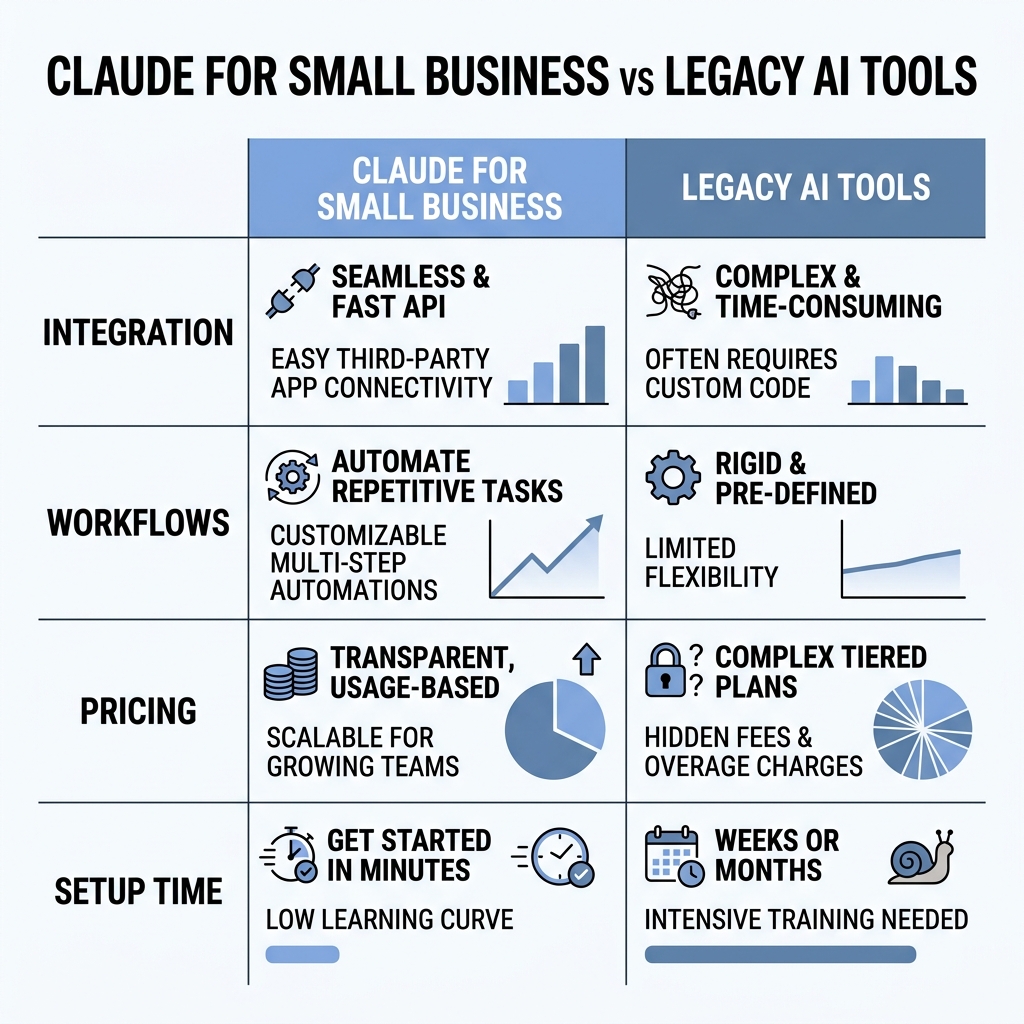
Anthropic's entry into the small-business sector didn't arrive quietly. Within hours of launch, the announcement climbed to the top of HackerNews, accumulating 477 points and 429 comments in under 14 hours—a signal that technical and business audiences alike are hungry for practical AI deployment tools. Unlike enterprise rollouts that require months of implementation and dedicated IT staff, Claude for Small Business is engineered as a toggle install inside the existing Claude application, immediately lowering the barrier to adoption for resource-constrained owners [1][4].
Core Product Architecture
The offering is architected around 15 ready-to-run agentic workflows distributed across six critical departments: finance, operations, sales, marketing, HR, and customer service [3][4]. Rather than forcing owners to migrate to entirely new platforms, Anthropic embedded Claude directly into the software ecosystems they already rely upon—most notably Intuit QuickBooks—positioning the product as an intelligent augmentation layer rather than a disruptive replacement [1][6]. This embedded approach reflects a maturation in AI go-to-market strategy: success is measured not by interface novelty, but by invisible integration into daily workflows.
| Capability | Description | Native Integration | Deployment Model | Source |
|---|---|---|---|---|
| Toggle Installation | One-click activation inside the existing Claude app with no separate download required | Claude web & desktop clients | Self-serve, instant activation | [1][4] |
| 15 Agentic Workflows | Pre-built automations spanning finance, ops, sales, marketing, HR, and customer support | Native Claude environment | Ready-to-run at toggle-on; no coding | [3][4] |
| QuickBooks Sync | AI-assisted bookkeeping, expense categorization, and financial analysis | Intuit QuickBooks | Real-time bi-directional data layer | [1][6] |
| App Ecosystem Strategy | Extends functionality inside existing SMB software stacks rather than forcing migration | QuickBooks + planned future partners | Embedded API and plugin connections | [1][6] |
| White-Collar AI Focus | Targets knowledge-work automation for teams lacking dedicated technical staff | Browser and desktop applications | Subscription add-on to existing plans | [3] |
Market Positioning and Industry Context
Forbes notes that this launch signals a decisive inflection point in where "white-collar AI" is heading: toward turnkey departmental agents that require minimal technical configuration yet deliver immediate operational value [3]. By pre-packaging workflows rather than merely offering raw model APIs, Anthropic is following the vertical SaaS playbook—delivering outcomes, not just infrastructure.
This release matters for three structural reasons:
- Pre-packaged outcomes: Unlike raw APIs that demand developer resources, the 15 workflows offer immediate utility across six business functions [3][4].
- Embedded distribution: By activating inside QuickBooks and existing tools, Anthropic bypasses the adoption hurdle of migrating data to a new system [1][6].
- Democratic access: The product extends enterprise-grade AI to Main Street operators who traditionally lack six-figure software implementation budgets [6].
Yahoo Finance frames the debut as part of Anthropic's broader "enterprise software push," suggesting that QuickBooks represents merely the first anchor in a planned ecosystem of SMB applications [6]. If Anthropic follows a vertical marketplace model, Claude could eventually serve as the connective tissue between dozens of small-business tools.
Beyond the Back Office: Communication Infrastructure
Automating accounting and HR workflows solves internal efficiency, but modern small businesses still face a front-office challenge: answering phones, responding to WhatsApp inquiries, and managing multilingual customer bases at scale. This is where complementary AI infrastructure becomes critical. Platforms like CallMissed offer production-ready voice agents and WhatsApp chatbots that operate around the clock, paired with Speech-to-Text support for 22 Indian languages and a multi-model API gateway spanning 300+ LLMs. When paired with Claude’s back-office automation, these communication layers complete the AI-native small business—automating not just internal workflows, but every customer touchpoint.
In-Depth Analysis
What "Claude for Small Business" Actually Delivers
Anthropic's launch isn't a separate product bolted onto the side of Claude—it's a toggle install embedded directly inside the existing Claude app. The model sits inside the software stack small business owners already use daily, starting with Intuit QuickBooks and expanding toward broader app integrations. This architecture matters because it eliminates the migration tax that typically kills small-business AI adoption. Instead of exporting data to a chatbot and importing answers back, Claude operates natively within the workflow.
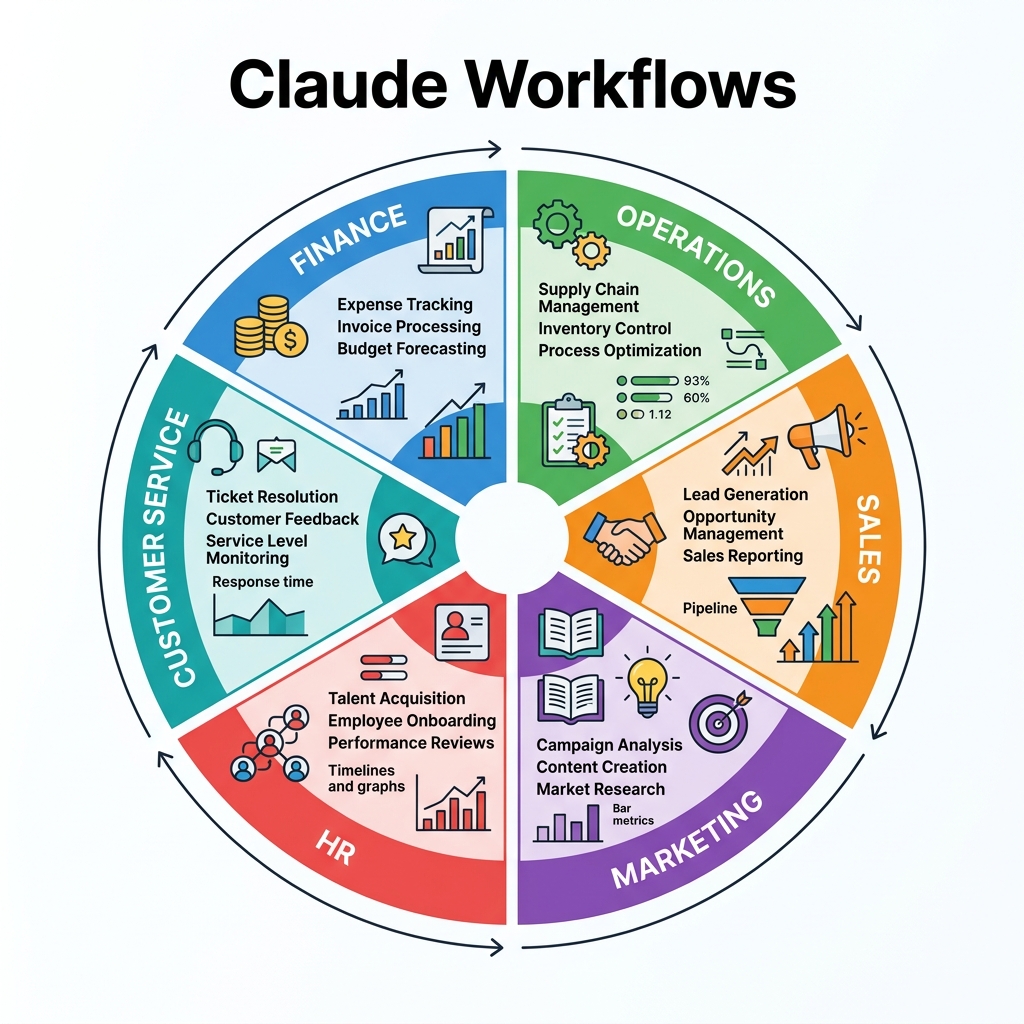
The headline feature is a library of 15 ready-to-run agentic workflows spanning six core business functions:
- Finance: expense categorization and cash-flow reporting
- Operations: inventory tracking and supply-chain alerts
- Sales: lead scoring and follow-up drafting
- Marketing: campaign copy and audience segmentation
- HR: resume screening and interview scheduling
- Customer service: ticket resolution and response drafting
According to Forbes, these aren't simple prompt templates; they are pre-built automations designed to execute multi-step tasks without forcing owners to engineer their own agent logic.
The Strategic Signal: White-Collar Automation at SMB Scale
The launch signals a broader shift in how AI vendors are targeting the long tail of white-collar work. As Ron Schmelzer noted in Forbes, Claude for Small Business represents where enterprise AI is heading: agentic systems that don't just answer questions but perform operational duties inside existing SaaS tools. For businesses with fewer than 50 employees—where no one has "AI strategist" in their job title—this lowers the barrier from experimentation to production.
The market validated that appetite immediately. The announcement hit the front page of HackerNews, accumulating 477 upvotes and 429 comments within 13.9 hours, a rare level of engagement for a small-business software launch. That reaction suggests the tool is landing at the intersection of two pent-up demands: SMB owners who need automation but lack developer resources, and technical users who want to recommend something plug-and-play to the businesses they advise.
Where Communication Infrastructure Fits In
While Claude handles back-office cognition, the customer-facing layer of small-business AI still requires specialized infrastructure. One of Anthropic's 15 pre-built workflows targets customer service, but routing that intelligence across voice, WhatsApp, and regional languages demands dedicated communication APIs. Platforms like CallMissed are emerging as the connective tissue in this ecosystem, offering production-ready voice agents and multilingual chatbots that can hand off structured data to Claude's analytical workflows. Indian startups, for example, are already deploying combinations of LLM reasoning layers with CallMissed's Speech-to-Text support for 22 Indian languages to serve customers that generic English-first assistants cannot reach.
Evaluating the Trade-offs
Despite the promise, the model raises practical questions for owners weighing adoption:
- Integration depth: QuickBooks is live, but connectivity with the rest of the small-business stack still needs real-world stress testing.
- Customization limits: Anthropic has not clarified whether the 15 workflows can be edited or must be used as-is.
- Pricing sustainability: As the product moves from beta to billing, per-seat costs could erode the margin savings it creates.
- Data governance: SMBs handling regulated data need clarity on residency and retention policies.
What is clear, however, is Anthropic's intent to move upstream from consumer chat into the enterprise software pipeline—analysts and competitors are now watching whether this SMB wedge reshapes pricing dynamics for the entire AI assistant market.
Impact & Implications

Leveling the Playing Field for SMBs
For decades, enterprise-grade automation demanded dedicated IT departments and six-figure software contracts. Claude for Small Business disrupts that model by embedding 15 ready-to-run agentic workflows directly into familiar platforms like Intuit QuickBooks. Small business owners can now toggle on AI assistance for finance, operations, sales, marketing, HR, and customer service without writing code or managing API keys.
This democratization matters because small businesses represent the backbone of global economies, yet historically lack resources for custom AI deployments. By pre-packaging workflows into existing toolkits, Anthropic compresses the adoption cycle from months to minutes. The HackerNews community validated this demand immediately: the announcement garnered 477 points and 429 comments within 13.9 hours, signaling intense interest from technically discerning operators who recognize the significance of removing technical barriers.
Reshaping the White-Collar Workforce
Forbes aptly described this launch as indicative of "where white-collar AI is heading." The implications run deeper than chatbot convenience. These are agentic workflows—AI systems that initiate actions, reconcile data, and trigger processes rather than merely answering questions. For example, a five-person firm can now use Claude to:
- Automate invoice categorization and generate cash-flow summaries directly inside QuickBooks
- Draft client communications and marketing copy without switching contexts
- Triage HR tasks like scheduling and initial candidate screening through unified interfaces
This redefines small-team output ceilings. A lean operation can theoretically achieve the throughput of a team three times its size. However, the shift also creates an urgent need for AI literacy among non-technical staff. Employees must learn to supervise agentic outputs, spot hallucinations in financial records, and maintain quality control across automated pipelines.
The Ecosystem Ripple Effect
Anthropic's move reveals a strategic pivot toward owning the SMB workflow layer rather than competing solely in the consumer chatbot arena. By integrating directly into operational tools like QuickBooks, the company bypasses adoption friction and pressures standalone SaaS vendors to either build native AI or face disintermediation.
This trend points toward a fully AI-native business stack where internal operations and external communications converge. While Claude handles back-office text workflows, businesses require omnichannel customer-facing AI to complete the transformation. Platforms such as CallMissed offer complementary infrastructure—enabling companies to deploy AI voice agents and WhatsApp chatbots that operate around the clock, effectively pairing internal automation with external customer engagement layers.
Strategic Considerations
Despite its promise, embedding AI deeply into financial and HR systems introduces data governance risks that resource-constrained SMBs are often ill-equipped to handle. The 15 pre-built workflows are only as reliable as their source context; a single miscategorized tax expense or an AI-drafted compliance error can cascade quickly when automation scales faster than oversight. Unlike large enterprises with legal and compliance teams, small businesses typically rely on the owner’s direct judgment, making liability questions around agentic errors particularly acute.
Looking ahead, Anthropic’s continued enterprise software push suggests these 15 workflows are merely a foundation. Deeper ERP integrations, industry-specific agents, and cross-application orchestration are the likely next frontiers. Small businesses that treat agentic AI as a core operational capability—rather than a productivity shortcut—will set the competitive standard for their industries over the next three to five years.
Expert Opinions
Analysts See a Tectonic Shift in White-Collar Work
Industry observers agree that Anthropic’s latest launch represents more than a routine feature update—it signals a structural inflection point in how small businesses adopt AI. Writing in Forbes, analyst Ron Schmelzer argues that Claude for Small Business “shows where white-collar AI is heading,” noting that the platform ships with 15 ready-to-run agentic workflows spanning finance, operations, sales, marketing, HR, and customer service [3]. Rather than treating AI as a peripheral chatbot, Anthropic is embedding autonomous, task-performing capabilities directly into the software stack entrepreneurs already rely on, most notably Intuit QuickBooks [1]. Schmelzer’s framing underscores a growing consensus: the next wave of SMB productivity gains will come not from standalone generative AI tools, but from invisible agents that execute workflows inside existing SaaS apps.
The Developer and Community Verdict
The technical community has greeted the announcement with rare intensity. Within 13.9 hours of going live, the launch surged to the top of HackerNews, accumulating 477 points and 429 comments—a level of engagement rarely seen for SMB-focused enterprise software. That volume suggests developers, founders, and business operators are actively debating whether agentic AI is finally mature enough for Main Street, not just Silicon Valley boardrooms. On Reddit’s small business forums, early reactions center on the product’s delivery model: a toggle install that activates inside Claude’s existing app, pre-loaded with workflows rather than requiring custom prompts, API wrangling, or dedicated technical staff [4]. For resource-constrained owners, this architecture effectively collapses the distance between “AI-curious” and “AI-active.”
From Enterprise Ambition to Mainstream Utility
Financial analysts frame the launch as a logical progression of Anthropic’s commercial strategy. Yahoo Finance observes that Claude for Small Business continues the company’s broader enterprise software push, yet the QuickBooks integration and out-of-the-box workflow library signal a deliberate pivot toward mainstream usability [6]. Experts highlight three strategic implications of this integration-first approach:
- Zero-migration deployment: The toggle install means data stays in QuickBooks and other existing tools, eliminating costly SaaS switching [1][4].
- Pre-configured automation: The 15 ready-to-run workflows cover high-frequency tasks—invoice reconciliation, outreach cadences, scheduling—without requiring Zapier stacks or Python scripts [3].
- Democratized agentic AI: Financial analysts note this lowers the barrier for Main Street businesses that lack dedicated technical staff but need enterprise-grade efficiency [6].
The Bigger Picture: Converging Front- and Back-Office AI
Specialists caution that back-office workflow automation is only one layer of the modern SMB intelligence stack. Front-office communication—customer calls, appointment bookings, and multilingual support—remains a parallel frontier that demands equally robust infrastructure. Indian startups like CallMissed are building multilingual AI agents that support 22 regional languages natively, alongside voice agents and WhatsApp chatbots that handle customer interactions around the clock. When paired with embedded back-office agents like Claude, these communication platforms suggest a near-term future where small businesses orchestrate AI seamlessly across the entire customer journey, from first WhatsApp inquiry to final QuickBooks invoice. The experts agree: the SMBs that thrive will be those that treat this not as a single-tool decision, but as an integrated operational layer.
What This Means For You
Anthropic’s launch of Claude for Small Business is not merely a pricing tier or a feature drop. It represents a structural shift in how agentic AI is deployed inside companies with fewer than 500 employees. By offering a toggle install that embeds Claude directly into existing software like Intuit QuickBooks, Anthropic has removed the traditional integration bottleneck that previously required engineering teams or expensive consultants. According to the company, the product ships with 15 ready-to-run agentic workflows spanning finance, operations, sales, marketing, HR, and customer service. For founders and operators, this means the competitive moat is no longer who can hire the most analysts or assistants, but who can orchestrate AI agents fastest without rewriting their tech stack.
A Practical Breakdown by Department
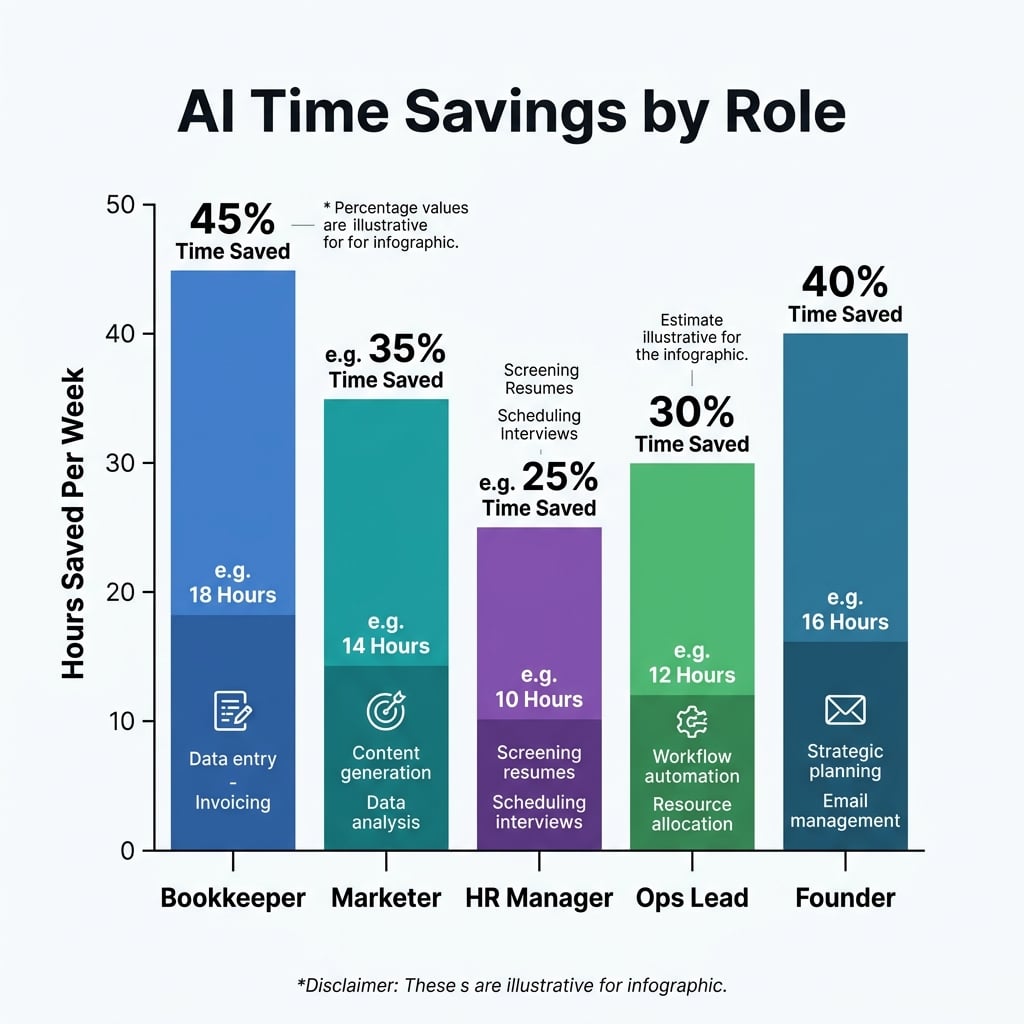
The 15 pre-loaded workflows are designed to attack the highest-friction tasks inside a small business. Rather than forcing owners to write custom prompts or build API connections, these workflows activate inside tools already used daily. The table below maps each core function to its primary workflow focus, the practical benefit, and how it connects to your existing stack.
| Business Function | Ready-to-Run Workflow Focus | Key Benefit for SMBs | Typical Integration |
|---|---|---|---|
| Finance | Bookkeeping, invoicing, expense categorization | Cuts manual data-entry hours and reduces reconciliation errors | Intuit QuickBooks toggle install |
| Operations | Inventory tracking, vendor communications, scheduling | Streamlines supply-chain and resource decisions | Native Claude app + existing ops tools |
| Sales | Lead enrichment, follow-up drafting, pipeline updates | Accelerates deal velocity without adding headcount | CRM connectors and email platforms |
| Marketing | Content drafting, campaign performance summaries | Reduces time from concept to published asset | Marketing stack via toggle |
| HR | Job-description generation, onboarding checklists, policy drafting | Standardizes people operations at scale | Document and email systems |
| Customer Service | Ticket triage, response drafting, sentiment tagging | Improves first-response time and issue resolution | Help-desk APIs and chat integrations |
What makes this release significant is the zero-code entry point. Because the workflows are natively integrated rather than bolted on through third-party middleware, small businesses can deploy enterprise-grade automation without employing a technical co-founder. As Forbes observed, this signals exactly where white-collar AI is heading—from horizontal chatbots that answer generic questions to vertical, role-specific agents that execute tasks inside the software you already pay for every month.
However, automating workflows inside QuickBooks or a CRM addresses only the internal half of the equation. Modern small businesses must also automate the communication layer—the inbound phone calls, WhatsApp messages, and multilingual voice interactions that often determine whether a lead converts or a customer churns. This is where the AI stack expands beyond back-office tasks. Platforms like CallMissed are already enabling businesses to deploy AI voice agents and WhatsApp chatbots—supporting 22 Indian languages natively alongside access to hundreds of LLM options—that handle customer conversations around the clock. When you pair Claude’s internal agentic workflows with front-office communication infrastructure, you create a continuous automation loop from first customer contact to final invoice.
Your Next Move
If you operate a small business, treat Anthropic’s launch as a mandate to audit your workflows this quarter. Start with the department that consumes the most repetitive administrative time—usually finance or customer service. Early adopters on HackerNews and Reddit suggest the biggest friction point is not AI capability but change management. Here is a practical rollout sequence:
- Week 1: Toggle on one Claude workflow in your highest-friction department (e.g., QuickBooks for finance) and measure output quality.
- Week 2: Map your customer communication bottlenecks—phone, WhatsApp, or email—and evaluate front-office AI infrastructure.
- Week 3: Integrate customer-facing automation, such as voice agents or chatbots, to create a closed loop from first contact to final invoice.
- Week 4: Review time-saved metrics and expand to adjacent departments.
The businesses that win the next three years will not be those that adopt AI last, but those that integrate it across both operations and communications before their competitors do.
Frequently Asked Questions
What is Claude for Small Business and how does it work?
Which business apps and accounting tools does the small business version of Claude integrate with?
What are the 15 ready-to-run workflows included in Claude for Small Business?
Do I need coding skills to set up Claude for Small Business?
Does Claude for Small Business support voice calls and multilingual customer support?
How does Anthropic's small business AI differ from Claude Pro or Enterprise plans?
Conclusion
The launch of Claude for Small Business marks a genuine tipping point: agentic AI is no longer a luxury reserved for enterprises with dedicated engineering teams. For SMB owners, it represents a practical, toggle-ready upgrade to the software stack they already rely on—one that promises to automate the repetitive cognitive work consuming hours each week.
As you evaluate where Claude fits into your operations, keep these core insights in mind:
- Workflow-first deployment: Anthropic ships 15 ready-to-run agentic workflows covering finance, operations, sales, marketing, HR, and customer service, eliminating the need for complex prompting or coding expertise to get started.
- Seamless augmentation over replacement: By embedding directly into existing platforms like Intuit QuickBooks, Claude lets owners strengthen their current tech stack rather than endure costly, disruptive migrations.
- The mainstreaming of white-collar AI: As Forbes highlighted, this release signals where knowledge-work automation is heading—toward invisible agents that handle routine tasks while leaders focus on strategy and customer relationships.
- Democratized competitiveness: Small businesses can now access the same caliber of AI tooling that larger rivals pay premiums for, flattening the competitive landscape in accounting, customer support, and lead management.
Looking ahead, the trajectory is clear. The next evolution won't be chatbots that simply answer questions, but autonomous agents managing end-to-end functions—from reconciling monthly books to qualifying sales leads in real time. As the line between "software you operate" and "software that operates for you" dissolves, communication infrastructure will become just as critical as back-office automation. Platforms like CallMissed are already pioneering this frontier, enabling SMBs to deploy AI voice agents and multilingual chatbots that handle customer conversations around the clock without adding headcount.
The tools are no longer theoretical, and the learning curve has never been flatter. So here's the question: if you could reclaim ten hours a week by toggling AI on inside the apps you already use, what's the first strategic goal you would pursue with that time? Pick one workflow, activate it, and let your business scale beyond the limits of your calendar.
Discussion
Related Posts
Ready to automate customer conversations?
Launch AI voice agents and WhatsApp bots with CallMissed — one API, 22+ Indian languages.