
Anyone Can Make These Viral AI Micro-Dramas for Instagram: Here's How


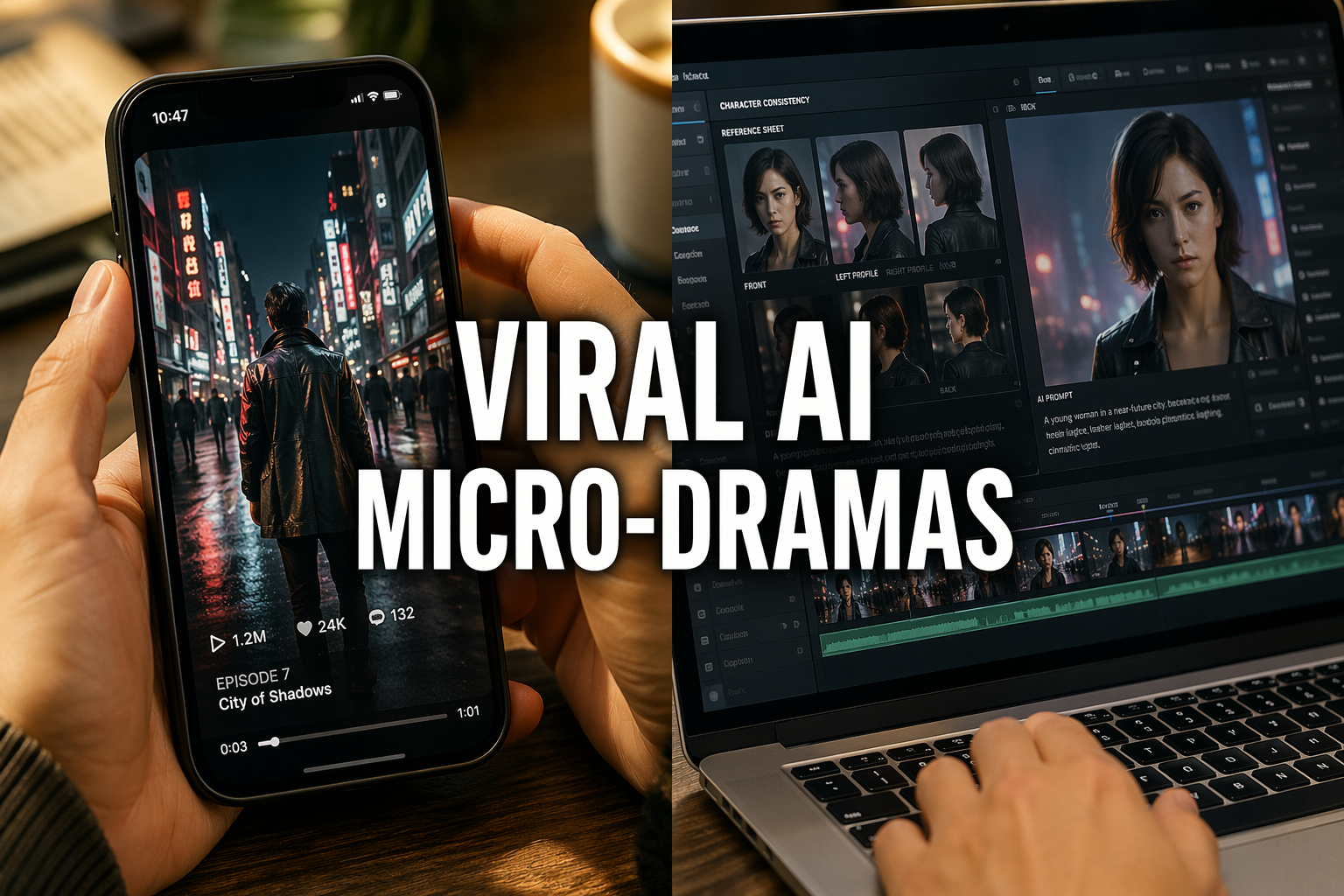
Have you ever scrolled through Instagram Reels and found yourself completely hooked on a highly dramatic, cinematic 60-second soap opera, only to realize...
Anyone Can Make These Viral AI Micro-Dramas for Instagram: Here's How
Have you ever scrolled through Instagram Reels and found yourself completely hooked on a highly dramatic, cinematic 60-second soap opera, only to realize that every single character, voice, and background was generated by artificial intelligence?
This isn't a speculative look into the future of entertainment—it is the reigning reality of social media feeds today. AI micro-dramas (ultra-short, serialized episodic videos) are currently exploding across platforms like Instagram, TikTok, and YouTube Shorts, pulling in millions of views and capturing massive, highly engaged audiences. As highlighted by India Today in March 2026, the barrier to entry for cinematic storytelling has completely collapsed. What once required an entire production crew, thousands of dollars in specialized equipment, and weeks of tedious post-production editing can now be accomplished by a single creator armed with a laptop, a simple script, and a handful of accessible generative AI tools.
Why AI Micro-Dramas Are Dominating Feeds Right Now
The sudden rise of these bite-sized digital dramas represents a fundamental paradigm shift in content creation. It is no longer just about static AI images or erratic text-to-video clips. Today's creators are building entire fictional universes with consistent characters, intense plot twists, and high-fidelity voice acting.
This trend matters because it democratizes narrative media. Independent writers, digital marketers, and casual creators are suddenly competing head-to-head with traditional production studios for consumer attention. Because short-form algorithms heavily favor high watch time and rapid-fire emotional hooks, these micro-dramas—often featuring high-concept sci-fi, intense family betrayals, or suspenseful thrillers—are perfectly engineered to go viral.
The underlying technology has also evolved to support this creative boom. Creators are using powerful image generation models like Flux.2 Dev alongside character reference blocks to maintain flawless visual consistency across different scenes and camera angles. Meanwhile, all-in-one creation suites like Venice Studio and Xelta AI allow users to generate entire video sequences from simple text prompts. Creators are even taking this engagement further by integrating conversational AI platforms like CallMissed, allowing them to deploy interactive WhatsApp chatbots and voice agents so fans can chat with their favorite micro-drama characters in real time.
What You Will Learn in This Guide
If you have been wondering how anyone can make these viral AI micro-dramas for Instagram, the process is far more straightforward than it looks. You do not need a background in filmmaking or complex coding to get started.
In this comprehensive guide, we will break down the exact production pipeline used by top digital creators to build viral AI series from scratch. You will learn:
- Scripting for High Retention: How to write high-tension, 60-second scripts designed to hook viewers within the first three seconds.
- Character and Scene Consistency: How to leverage models like Flux.2 Dev and reference images to keep your digital actors looking identical across multiple scenes.
- The AI Toolkit: A step-by-step workflow using all-in-one platforms like Venice Studio, Xelta AI, and mobile editing apps to generate voiceovers, video clips, and realistic sound design.
- Reverse-Engineering Virality: How to use AI analysis tools like CreatorHouse to break down trending dramas and recreate high-performing visual hooks.
Introduction: The Rise of AI Micro-Dramas on Instagram

If you have spent any time scrolling through Instagram Reels, TikTok, or YouTube Shorts recently, you have likely run into them: hyper-dramatic, visually arresting, multi-part stories that hook you in the first three seconds. A tense scene unfolds between a betrayal-stung executive and a mysterious stranger. The characters look remarkably polished, the voiceover is dripping with cinematic gravity, and just as the plot reaches a fever pitch, the video cuts to a cliffhanger, prompting you to "follow for Part 2."
These are AI micro-dramas, and they are currently taking social media by storm. What was once a highly specialized niche for professional animators has exploded into a mainstream creative movement. According to reports from India Today in March 2026, the barrier to entry for digital filmmaking has completely collapsed. Today, anyone with a laptop, a simple script, and a handful of free or low-cost AI tools can produce viral, episodic dramas that pull in millions of views—no cameras, actors, or expensive lighting rigs required.
This guide kicks off our comprehensive 12-part series on how to master this format. Whether you are an aspiring creator looking to build an audience or a brand trying to capture Gen Z’s fleeting attention, understanding the mechanics of AI micro-dramas is your ticket to riding this viral wave.
The Democratization of Short-Form Cinema
Historically, producing even a 60-second narrative drama required a small army: actors, screenwriters, directors, camera operators, editors, and sound designers. The financial overhead kept independent creators on the sidelines.
AI has flipped this script. By replacing physical production pipelines with specialized generative models, creators can now build entire fictional universes from their bedrooms.
This disruption is happening across several fronts:
- Zero-Budget Casting: Creators no longer need to hire actors. Generative engines construct highly expressive, consistent virtual characters that can be placed in any setting imaginable.
- Accelerated Workflows: Platforms like Agent One are introducing daisy-chained AI agent workflows that automate time-consuming tasks like scene planning, asset allocation, and shot-by-shot rendering. This allows indie studios and solo creators to staff and budget their projects at a fraction of traditional costs.
- Immediate Turnaround: What used to take weeks in post-production now takes hours—or in some cases, seconds. With consumer tools like the YouTube Create app, creators can navigate to features like 'Generate video', input their character profiles, and watch a fully-formed micro-drama assemble itself in real time.
Why AI Micro-Dramas Go Viral: The Psychology of "Quick-Bite" Content
The explosive popularity of these mini-series is no accident; it is a format engineered for the algorithmic mechanics of modern social media platforms.
First, they leverage extreme pacing. Traditional cinema takes time to build tension, but an Instagram Reel has less than two seconds to stop a user's thumb. AI micro-dramas utilize intense, emotionally charged hooks—such as a sudden confrontation or a shocking revelation—right at the start of the video.
Second, they are designed around retention and loop-ability. Algorithms reward videos that users watch to completion. By structuring these dramas into ultra-short episodes (typically 30 to 90 seconds) with unresolved endings, creators practically force viewers to click on their profiles to find the next installment, driving up engagement metrics and profile visits.
To maximize this virality, savvy creators are using analytical tools like creatorhouse.app. By pasting the link of a trending video into the tool, creators can dissect exactly why a specific reel went viral. The AI breaks down the hook, pacing, and visual transitions, allowing creators to prompt their video generator to recreate the same high-performing narrative structures with entirely new characters and plotlines.
The Technical Engine: What’s Under the Hood?
Creating a cohesive drama requires more than just generating random cool images; it requires narrative and visual continuity. The rapid rise of these videos in 2026 is largely driven by massive leaps in image-to-video and text-to-video consistency.
For instance, creators on platforms like Reddit's ComfyUI communities have mastered character preservation using open-weight models like Flux.2 Dev. By utilizing precise reference images alongside identical descriptive blocks for characters and locations, filmmakers can generate dozens of different scenes featuring the exact same protagonist without the "melting" or morphing effects that plagued early AI video generation.
Furthermore, all-in-one generation suites like Venice Studio and Xelta AI have streamlined the entire pipeline. These systems allow users to type in simple text prompts, automatically generating the script, voiceover, background music, and corresponding video clips in one cohesive interface.
Voice and Localization: The Unsung Heroes of Viral Reach
While stunning visuals might catch a viewer's eye, it is the audio that sells the emotional weight of a drama. A flat, robotic text-to-speech voice instantly ruins the cinematic illusion. Today's viral micro-dramas rely on highly expressive, emotionally resonant voice generation that can whisper, shout, or tremble with fear on command.
Furthermore, as these dramas capture global audiences, localization has become the next frontier for creators looking to scale. Dubbing content into multiple languages is no longer an afterthought; it is a primary growth strategy.
This is where advanced enterprise communication tech intersects with the creative economy. Platforms like CallMissed are paving the way for this transition. While CallMissed is widely known for empowering businesses with production-ready AI voice agents and LLM gateways, its underlying infrastructure—featuring state-of-the-art Speech-to-Text and Text-to-Speech APIs that support 22 regional Indian languages natively—is a goldmine for creators. By leveraging such infrastructure, creators can seamlessly translate, voice-clone, and localize their micro-dramas into regional dialects, tapping into massive, highly engaged audiences that traditional English-only creators completely miss.
What We Will Cover in This 12-Part Series
If you have ever wanted to create your own cinematic universe but didn't know where to start, this series is your step-by-step roadmap. Over the next 11 sections, we will demystify the entire creative process:
- Scriptwriting for High-Retention Hooks: Writing stories optimized for the 60-second format.
- Character Design and Visual Consistency: How to use Flux.2 Dev and reference images so your characters look identical in every shot.
- Generating Cinematic Video Clips: Best practices for prompting tools like Venice Studio and Xelta AI.
- Audio Design: Cloning voices, generating emotional soundtracks, and adding realistic foley effects.
- Editing and Pacing: Assembling your timeline for maximum dynamic impact.
- Algorithmic Optimization: Using analytics to find, analyze, and replicate viral video structures.
The tools are free, the distribution is instant, and the audience is waiting. Let's dive in and build your first viral AI micro-drama.
Background & Context: What Are AI Micro-Dramas and Why Are They Exploding?
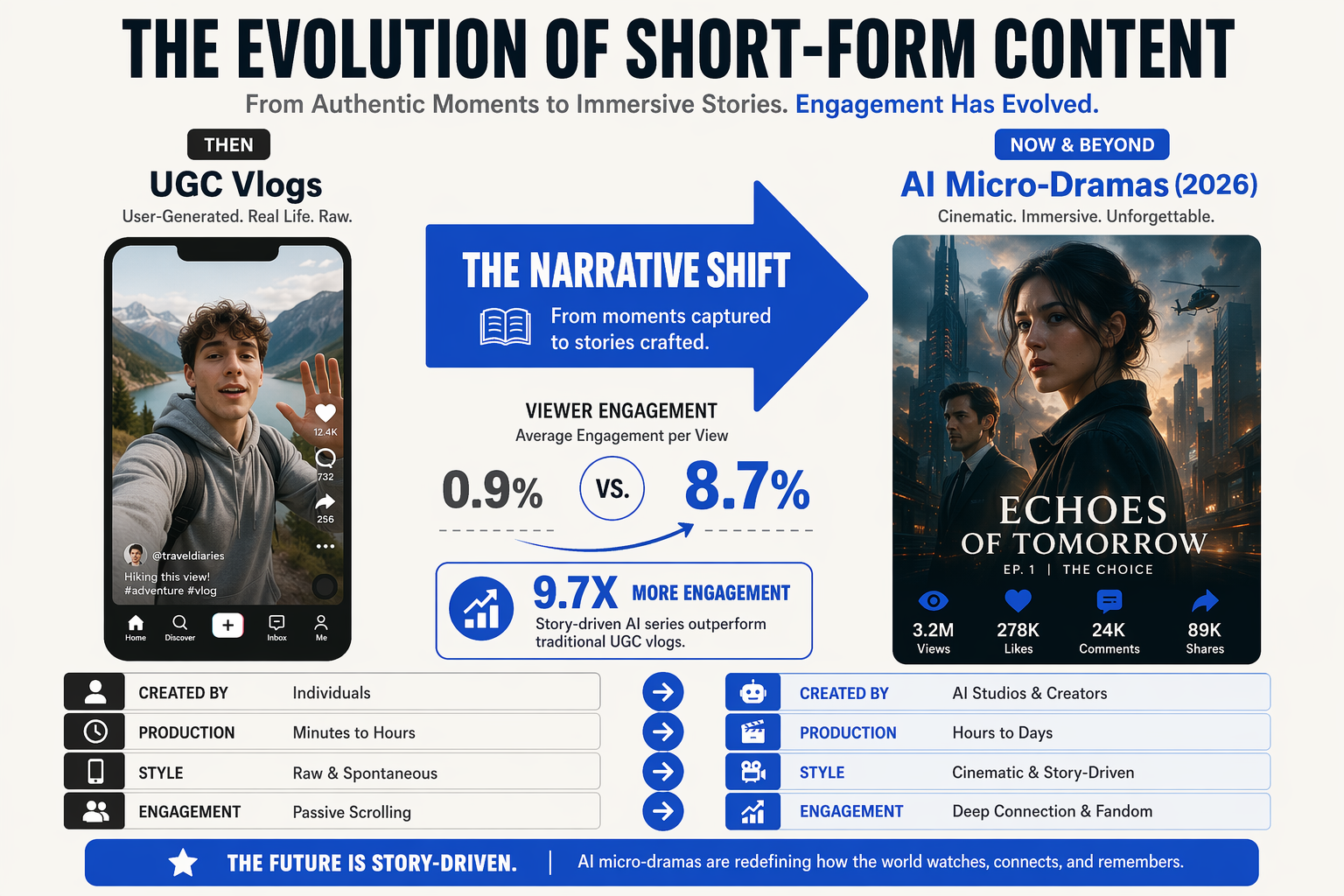
If you have scrolled through Instagram Reels, YouTube Shorts, or TikTok recently, you have likely run into them: hyper-dramatic, visually striking, 60-second episodic stories featuring corporate betrayals, star-crossed lovers, or sci-fi mysteries. Characterized by high-contrast visuals, intense cliffhangers, and rapid-fire pacing, these are AI micro-dramas.
What started as an experimental niche in online filmmaking has rapidly exploded into a dominant content format. Earlier this year, media outlets like India Today highlighted how anyone with a simple script and a set of free AI tools can now create their own viral micro-drama series. This phenomenon is redefining the creator economy, shifting entertainment from high-budget production houses straight to individual creators armed with generative AI.
Understanding the AI Micro-Drama Formula
Unlike traditional web series or indie short films, AI micro-dramas are highly optimized for the algorithmic mechanics of short-form social media feeds. They are designed to hook viewers within the first two seconds and deliver a complete narrative arc—or a massive cliffhanger—before the 90-second mark.
Several key structural elements define these viral videos:
- Hook-First Storytelling: Traditional exposition is discarded. Micro-dramas plunge the viewer directly into the middle of a conflict (e.g., "I found my boss's secret diary, and my name is on the first page").
- Visual Intensity: The art style is often cinematic, dramatic, and stylized, keeping the viewer’s eyes glued to the screen.
- Serialized Cliffhangers: Episodes almost always end on an unresolved note, driving viewers to click on the creator’s profile, follow the page, or leave comments guessing what happens next—all of which signal positive engagement to social media algorithms.
The Technical Shifts Fueling the Boom
The primary catalyst behind the sudden explosion of AI micro-dramas is the rapid maturation of generative AI tools. Creators no longer need to worry about booking actors, finding locations, or managing expensive camera gear. The entire production pipeline has been democratized.
#### 1. Overcoming the Consistency Barrier
Historically, the biggest challenge in AI filmmaking was character and location consistency; an AI-generated character would look entirely different from one shot to the next. Today, creators are bypassing this issue using advanced image models like Flux.2 Dev. By utilizing consistent reference images and highly specific description blocks for characters and locations, creators can generate hundreds of cohesive frames featuring the exact same protagonist across an entire series.
#### 2. All-in-One Generation Tools
For creators looking for a faster, lower-friction workflow, platforms like Venice Studio and Xelta AI offer comprehensive suites specifically designed for short-form video creation. These tools allow users to type in simple text prompts, choose a visual style, and watch as the AI generates cohesive scenes. Even mainstream platforms are getting involved; apps like YouTube Create now feature "Generate Video" systems where users can input character descriptions and prompt a full micro-drama into existence in a matter of seconds.
#### 3. Algorithmic Replication
Creators are also taking a data-driven approach to production. By using analytical tools like Creatorhouse.app, filmmakers can paste the link to a viral video and have an AI dissect exactly why it succeeded. The AI breaks down the script, pacing, and visual hooks, and then helps the creator rewrite or recreate the viral formula with a unique twist.
#### 4. Automated Production Workflows
At the professional agency and studio level, the production process is becoming entirely automated. Teams are building complex workflows inside AI-agent orchestration systems like Agent One. By "daisy-chaining" different AI agents—assigning one to write the script, another to generate the visual assets, and a third to edit them together—studios can completely restructure how they staff, budget, and execute short-form campaigns.
The Crucial Role of Voice and Localization
While striking visuals are essential for capturing attention, audio carries the emotional weight of a drama. Poorly generated, robotic voices destroy user immersion instantly, causing viewers to swipe away. For a micro-drama to go truly viral, the voice acting must feel authentic, emotional, and perfectly synced to the drama on screen.
This necessity has led developers and advanced content platforms to integrate professional-grade AI communication infrastructure. To deliver convincing, high-fidelity dialogue, creators and developers are leveraging tools like CallMissed. While CallMissed is widely known for powering enterprise voice agents and AI communication platforms, its robust infrastructure—including an LLM gateway with access to over 300+ models and advanced Text-to-Speech (TTS) APIs—is highly valuable for localized multimedia creation.
For creators looking to scale their micro-dramas globally, CallMissed provides the ability to natively generate realistic, emotionally resonant voiceovers in 22 regional Indian languages. This allows a creator to write a script once, generate the visuals, and seamlessly distribute the localized drama to completely different linguistic demographics, multiplying their potential audience overnight.
Why the Trend is Here to Stay
The rise of AI micro-dramas represents a fundamental shift in how digital entertainment is consumed and produced. Modern audiences, accustomed to rapid-fire stimulation, find the high-density storytelling of micro-dramas highly addictive.
As generative video models continue to improve in physical accuracy, temporal consistency, and rendering speed, the gap between traditional indie filmmaking and AI-assisted content creation will close entirely. What we are seeing on Instagram today is not just a passing trend; it is the blueprint for the future of decentralized, automated entertainment.
Key Developments: Top AI Micro-Drama Tools & Platforms in 2026
The landscape of short-form video production has undergone a seismic shift. As of 2026, creating high-engagement, viral AI micro-dramas for Instagram Reels and YouTube Shorts is no longer the exclusive domain of professional production studios with massive budgets. Instead, a powerful ecosystem of specialized AI video platforms, character consistency generators, and automated workflow suites has emerged, allowing solo creators to write, render, cast, and edit multi-part short-form dramas in minutes.
To help you navigate this rapidly expanding tech stack, we have compiled a breakdown of the leading tools driving the AI micro-drama revolution in 2026. This table compares their primary use cases, core AI features, and technical barrier to entry.
| Platform | Primary Use Case | Core AI Feature | Best For | Technical Barrier |
|---|---|---|---|---|
| Xelta AI | One-click short-form videos | Text-to-video micro-drama flow | Rapid prototyping & automated Shorts | Low (No-code prompts) |
| Venice Studio | End-to-end series production | Multi-shot scene sequencing | Cinematic serialized micro-dramas | Medium (Intuitive UI) |
| Flux.2 Dev (via ComfyUI) | Character & location assets | Reference image & block conditioning | High-fidelity character consistency | High (Node-based setup) |
| Creatorhouse.app | Viral script reverse-engineering | Competitor hook and transcript analyzer | Replicating proven viral video formats | Low (Paste & analyze) |
| YouTube Create | Mobile-first content generation | Instant character-driven generation wizard | Quick on-the-go vertical video drafts | Very Low (Mobile app) |
| Agent One | Studio-grade asset management | Multi-agent workflow daisy chaining | Scale-oriented agency/studio pipelines | High (Developer-focused) |
Zero-Code & Mobile-First Generation
For creators taking their first steps into the micro-drama space, platforms like YouTube Create and Xelta AI offer incredibly low-friction entry points. The YouTube Create mobile app features an integrated, wizard-based "Generate Video" engine. Within this interface, creators simply input their target characters, select a narrative tone, and define a conflict. The app’s underlying AI models generate a full, ready-to-render micro-drama in just a few seconds.
For those looking to target multiple platforms simultaneously, Xelta AI provides a dedicated, browser-based micro-drama generation flow. It allows creators to turn a simple text prompt into fully voiced, captioned vertical videos optimized for Instagram Reels and TikTok. By handling video pacing, automatic subtitles, and foundational sound effects under the hood, these platforms eliminate the need for manual, frame-by-frame editing software.
Mastering Character Consistency with Flux.2 Dev
One of the biggest hurdles in AI filmmaking has historically been visual drift—the tendency for a character's face, clothing, or environment to morph dramatically from scene to scene. In 2026, seasoned creators have solved this issue by adopting Flux.2 Dev within node-based environments like ComfyUI.
By utilizing consistent description blocks and feeding specialized reference images into the model, creators can lock in exact facial geometry and wardrobe details. This technical workflow ensures that whether your protagonist is arguing in a dimly lit office or running through a crowded street, their digital likeness remains identical across dozens of sequentially generated frames. This level of visual consistency is crucial for building emotional connection and narrative continuity in multi-episode drama series.
Industrial-Grade Workflows: Venice Studio and Agent One
When moving from standalone video clips to serialized, cinematic storytelling, creators require robust, end-to-end production pipelines. Platforms like Venice Studio have emerged to bridge this gap, offering unified workspaces that guide users through script breakdown, shot lists, character casting, and final rendering.
For agencies and production houses looking to scale content creation, Agent One introduces advanced multi-agent workflows. By utilizing "daisy chaining" techniques, Agent One assigns discrete, specialized AI agents to distinct production roles—such as virtual screenwriters, storyboard artists, automated directors, and post-production editors. This programmatic division of labor fundamentally alters how creative studios budget, staff, and execute micro-drama campaigns, turning solo operators into decentralized production powerhouses.
Reverse-Engineering Virality with Creatorhouse.app
High-fidelity visuals are only half the battle; capturing and retaining viewer attention in the first three seconds is what ultimately drives algorithmic distribution. To solve the creative bottleneck of scriptwriting, creators are turning to AI analytics platforms like Creatorhouse.app.
Instead of guessing what concepts might resonate with audiences, users can paste the URL of an active viral Instagram Reel into the Creatorhouse dashboard. The platform's AI engine instantly analyzes and decomposes the video to identify the exact hook structure, pacing triggers, and underlying narrative tension that made it successful. Creators can then instruct the built-in writing assistant to adapt and recreate the viral framework with a brand-new storyline, dramatically increasing their chances of hitting the Instagram Explore page.
Leveraging Multi-Model Infrastructure for Global Localization
While visual generation tools continue to leap forward, audio localization remains a critical piece of the viral puzzle. To truly maximize reach, successful creators must translate and dub their micro-dramas for global audiences without losing emotional resonance.
This is where integrating specialized, production-ready AI infrastructure becomes a massive competitive advantage. For example, developers and creators are increasingly leveraging platforms like CallMissed to power their audio pipelines. By using CallMissed’s multi-model API gateway, creators can programmatically switch between 300+ LLMs to translate scripts while preserving regional idioms and subtext. Furthermore, CallMissed’s robust Speech-to-Text and Text-to-Speech APIs support 22 regional Indian languages natively, allowing creators to instantly generate hyper-realistic, localized voiceovers in dialects like Hindi, Tamil, and Marathi. By automating this localized audio generation, creators can scale their micro-dramas across diverse global regions with minimal overhead.
The Step-by-Step Workflow: How to Create Your Own Micro-Drama
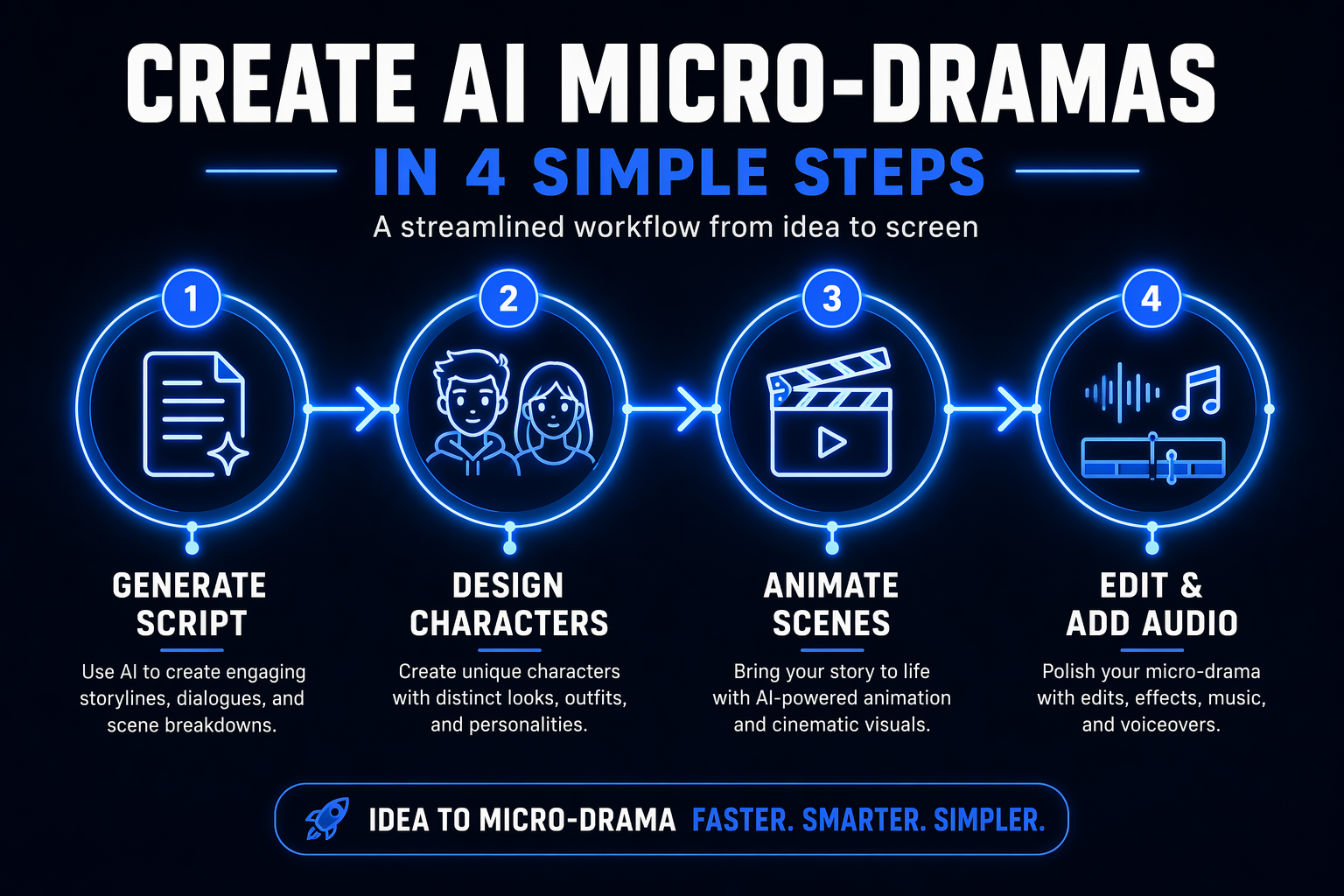
Transitioning from a passive viewer to an active creator of viral Instagram Reels has never been more accessible. The explosion of AI-generated micro-dramas has completely democratized digital filmmaking, proving that you do not need a Hollywood budget, a professional camera crew, or even acting experience to pull in millions of views. By leveraging a structured AI pipeline, any creator can write, animate, voice, and edit a high-retention, 60-second drama in under an hour.
Below is the definitive, step-by-step workflow to establish your own AI micro-drama production line.
Step 1: Trend Jacking & Hook Analysis
Before generating a single visual, you must identify what is currently keeping viewers glued to their screens. The success of a micro-drama hinges almost entirely on its "hook"—the first three seconds of the video.
To find winning concepts, top-tier creators use analytics-driven tools like creatorhouse.app. By pasting the URL of a viral Instagram Reel or TikTok into the platform, its AI analyzes the pacing, visual hooks, and psychological triggers that drove the video's virality. You can then instruct the AI to brainstorm a brand-new, unique dramatic scenario that utilizes the same underlying viral structure. Your hook should always feature immediate high-stakes conflict, such as a sudden betrayal, a shocking confession, or an intense argument.
Step 2: Scripting & Concept Development
A standard micro-drama script must be incredibly tight, typically running between 120 and 150 words to comfortably fit within a 60-second limit while leaving room for dramatic pauses.
For creators managing multiple series or looking to scale their production, scripting can be automated using advanced agent-based frameworks. Workflows built inside tools like Agent One utilize a process called "daisy-chaining," where different AI agents are tasked with specific roles—one adapts a basic story idea into a screenplay format, another breaks down character descriptions, and a third creates shot-by-shot storyboards.
If you are building your own localized scriptwriting tools, platforms like CallMissed make this orchestration incredibly simple. CallMissed features a multi-model LLM API gateway that lets developers seamlessly switch between 300+ LLMs without altering their core codebase. This allows you to utilize the absolute best reasoning models for emotional dialogue generation, and immediately swap to faster, cost-effective models for formatting production notes and metadata.
Step 3: Generating Consistent Characters
The most common obstacle in AI filmmaking is character drift. If your protagonist’s facial structure, hair color, or clothing changes from shot to shot, the audience immediately loses immersion.
To achieve studio-grade consistency, creators rely on advanced image models like Flux.2 Dev. By utilizing a consistent set of reference images alongside structured description blocks, you can lock in your character’s appearance across different settings.
- Create a Master Character Block: Define your character with extreme precision. For example:
[Subject: A 30-year-old female CEO, sharp jawline, emerald green eyes, dark hair tied back in a neat bun, wearing a charcoal grey blazer.] - Keep the Foundation Constant: When generating new scenes, copy and paste this description block exactly as is, changing only the character's expression, angle, or action (e.g., adding
[Action: looking down in shock, tear rolling down her cheek, dramatic low-angle lighting]). This ensures visual continuity across your entire storyboard.
Step 4: Animating the Scenes
With your storyboarded character images ready, you need to turn static frames into cinematic, moving video. Depending on your experience level, several powerful tools can handle this transition:
- All-in-One Platforms: Dedicated AI filmmaking spaces like Venice Studio walk you through a cohesive pipeline designed specifically for episodic micro-dramas, making it easy to synchronize scenes and maintain consistent styles.
- Mobile-First Generation: If you want a quick, on-the-go solution, the YouTube Create App features a dedicated 'Generate video' tool. By inputting your character descriptions and setting your style, the app will generate fully animated scenes in just a few seconds.
- Prompt-to-Video Tools: Automated video editors like Xelta AI specialize in translating simple text prompts directly into short-form videos optimized for vertical platforms like Instagram Reels.
Step 5: High-Emotion Voiceovers & Localization
While striking visuals grab a user's attention, high-quality audio is what sustains the dramatic tension. If your characters sound like robotic, flat text-to-speech generators, viewers will swipe away instantly.
For creators aiming to capture highly profitable regional markets, localization is the key to going viral. Using CallMissed’s state-of-the-art Text-to-Speech (TTS) APIs, creators can give their AI actors hyper-realistic, emotionally resonant voices. Because CallMissed natively supports 22 Indian regional languages, you can effortlessly dub your micro-dramas into multiple dialects, allowing you to reach massive, untapped audiences across regional Instagram demographics with native-sounding dialogue.
Step 6: Final Editing & Formatting
Once you have your video clips and voiceover tracks, compile them in a mobile editor like CapCut or Premiere Rush.
- Add Cinematic Audio: Background music is crucial. Lay down a subtle, tense orchestral or synth-pad track to sit quietly beneath the dialogue.
- Use Bold Captions: Upwards of 70% of social media users browse videos with their sound turned off. Generate high-contrast, dynamic auto-captions that appear word-by-word to keep viewers engaged.
- Tighten the Cuts: In a micro-drama, every single frame must serve a purpose. If a pause is too long or a visual transition feels sluggish, cut it. Your goal is a fast-paced, high-emotion edit that leaves the viewer desperately wanting to click through to see the next episode.
In-Depth Analysis: Decoding the Virality (Hooks, Consistency, and Pacing)
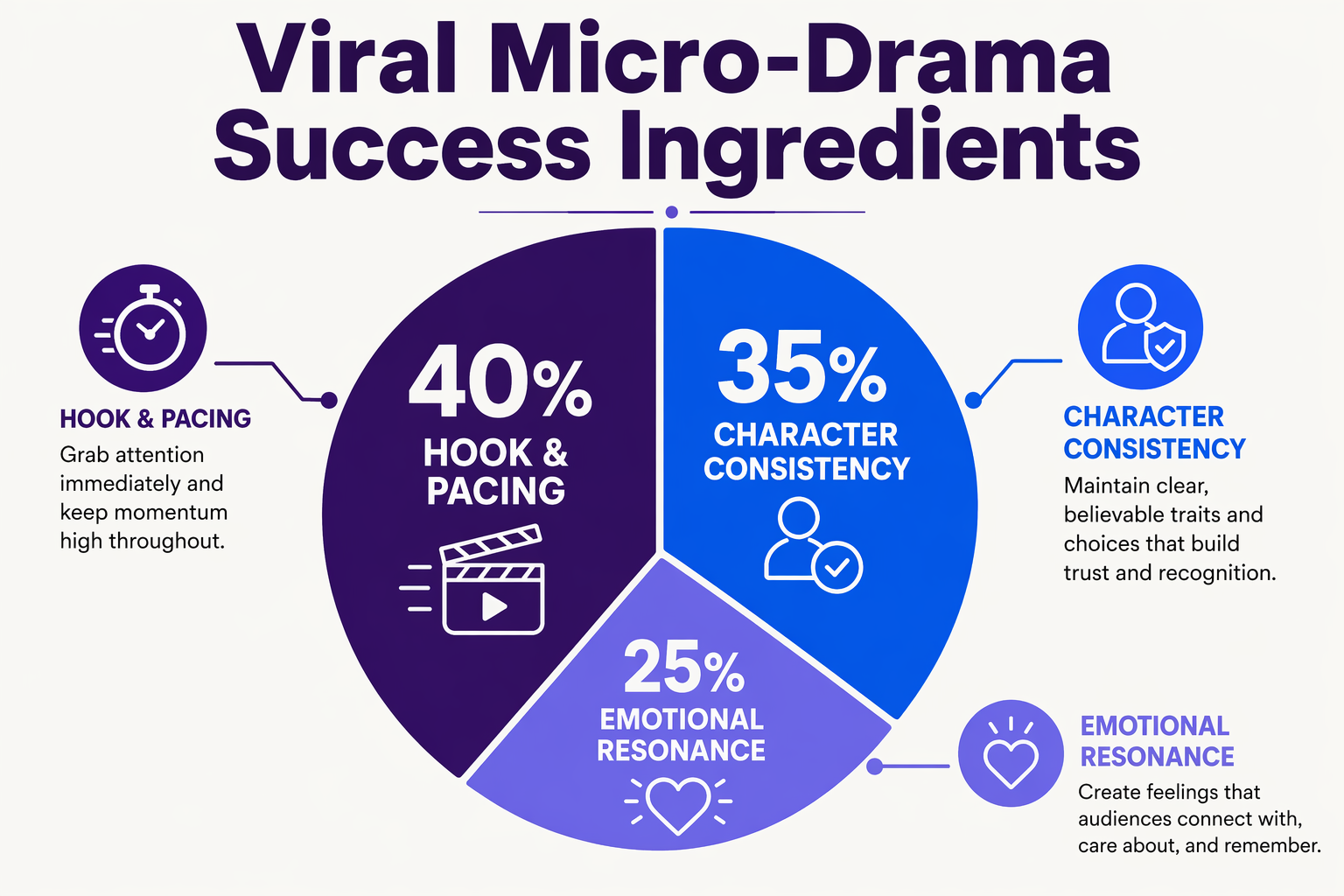
The meteoric rise of AI-generated micro-dramas on Instagram Reels, TikTok, and YouTube Shorts isn't an accident. While early AI video experiments were often dismissed as surreal fever dreams, today’s viral mini-series are highly sophisticated, episodic narratives pulling in millions of views.
Behind these viral sensations lies a carefully engineered formula. Creators are no longer just pushing buttons on random generators; they are decoding the algorithms of short-form media using precise narrative frameworks, cutting-edge consistency techniques, and localized audio strategies. To understand how these micro-dramas hook viewers, we must analyze the three core pillars of their virality: immediate hooks, asset consistency, and relentless pacing.
1. The Hook: Capturing Attention in Under 3 Seconds
On Instagram, user retention is the ultimate currency. If a viewer swipes past a video in the first three seconds, the algorithm deprioritizes the content. Viral AI drama creators use specialized tools like creatorhouse.app to paste and analyze top-performing videos, reverse-engineering exactly why a video went viral and using AI to recreate those psychological triggers.
To bypass the "swipe-away" reflex, successful micro-dramas deploy three types of hooks:
- The Emotional Shockwave: Instead of introducing characters slowly, the video starts at the climax of a conflict. Lines like "I found my husband's secret phone in the nursery..." or "The billionaire forced me to sign the divorce papers..." establish high stakes instantly.
- The Visual Contrast Hook: High-contrast, cinematic lighting (often mimicking dark, moody neo-noir or ultra-glamorous wealthy estates) grabs the eye. Tools like Xelta AI and Venice Studio let creators generate vivid, hyper-stylized opening frames from simple text prompts.
- The Subtitled Question: Large, dynamic, kinetic typography on screen acts as a secondary hook. Even if a user has their phone on mute, bold text flashing across the screen ensures they understand the core conflict within one second.
2. The Consistency Challenge: Solving the "AI Look"
Historically, the biggest barrier to professional-grade AI filmmaking was character and environmental drift. In early models, a character's hair color, facial structure, or clothing would change from shot to shot, breaking the viewer's immersion.
Today's creators have bypassed this limitation by moving away from basic text-to-video generators and adopting advanced node-based workflows. On platforms like Reddit's active ComfyUI communities, creators have unlocked true continuity using Flux.2 Dev.
| Optimization Technique | Tool/Workflow | Impact on Virality |
|---|---|---|
| Character Seeding | Flux.2 Dev + Reference Images | Ensures facial features, scars, and expressions remain identical across dozens of scenes. |
| Daisy Chaining | Agent One | Links multiple AI agents together to pass background, lighting, and asset data from scene to scene automatically. |
| Consistent Prompt Blocks | ComfyUI | Restricts variables in environmental generation so characters don't magically teleport to different rooms. |
By utilizing Flux.2 Dev paired with strict description blocks and consistent reference images, creators can generate a cast of digital actors who maintain their visual identity across an entire 10-episode series. Furthermore, automated pipeline builders like Agent One allow studios to chain together multiple AI agents, vastly reducing the time and budget needed to storyboard, generate, and edit consecutive scenes.
3. Pacing and Narrative Architecture
A standard television show has 45 minutes to build tension; an Instagram micro-drama has 60 seconds. The pacing of these videos must be relentless.
To maintain this speed, creators segment their stories into micro-beats. There are no static shots. Every single scene lasts between 1.5 to 2.5 seconds, utilizing subtle camera movements—like slow pans, dramatic zooms, or dramatic orbital spins—to simulate high-budget Hollywood cinematography.
The narrative structure follows a rapid loop:
- 0:00 - 0:03: The Hook (The conflict is introduced).
- 0:03 - 0:15: The Escalation (The main character reacts to the conflict).
- 0:15 - 0:45: The Twist (A shocking revelation occurs; a secret is exposed).
- 0:45 - 0:60: The Cliffhanger (The scene ends on an unresolved question, prompting the user to view Part 2 or check the link in the bio).
By keeping the pacing incredibly tight, creators ensure that viewers watch the video multiple times to catch details they missed, sending positive signals directly to the Instagram algorithm.
4. Localizing the Drama: Emotional Voices and Multilingual Reach
Visuals grab the eye, but audio drives the emotion. A flat, robotic voice-over immediately breaks the dramatic illusion. To counter this, creators use high-fidelity, emotionally expressive text-to-speech engines capable of whispering, crying, shouting, and conveying subtle sarcasm.
Crucially, the viral micro-drama phenomenon has exploded globally. In regions like India, where localized content reigns supreme, translating scripts into regional languages is a major growth hack. For creators looking to scale their distribution across diverse markets, infrastructure platforms like CallMissed offer powerful developer tools. CallMissed’s multi-model gateway and native support for 22 Indian languages enable creators to seamlessly translate English drama scripts into Hindi, Tamil, Telugu, or Bengali.
By running these highly expressive scripts through advanced Text-to-Speech (TTS) APIs, creators can instantly generate regional voice-overs that maintain localized accents, cultural nuances, and dramatic tension. This allows a single video template to be localized for multiple global demographics with virtually zero extra editing overhead.
Advanced Techniques: Achieving Character Consistency with Flux.2 Dev and Agent Workflows
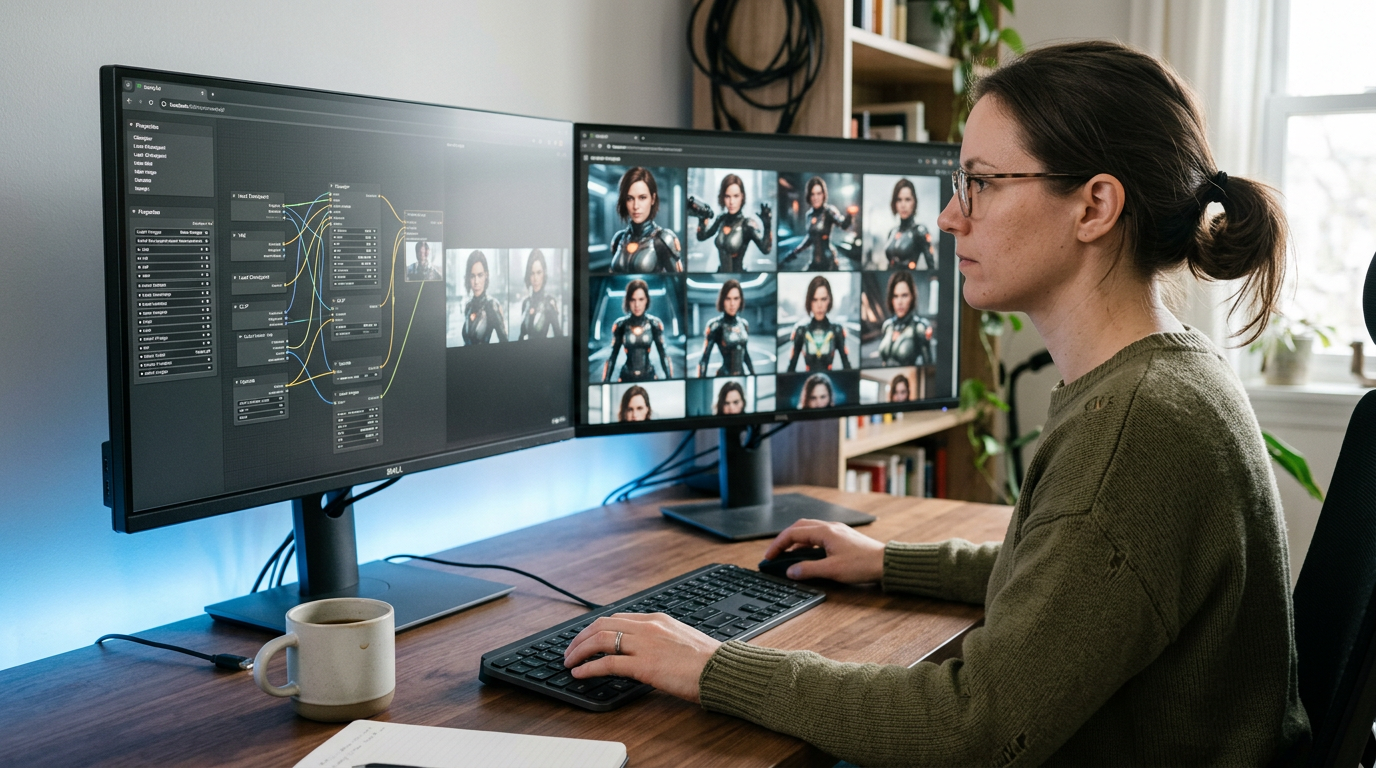
The rapid rise of AI-generated micro-dramas on Instagram Reels and TikTok has democratized digital filmmaking, allowing solo creators to produce serialized dramas that pull in millions of views. However, as creators transition from single, standalone clips to multi-episode story arcs, they quickly hit the most notorious roadblock in generative AI: character consistency.
If your main character changes their hair color, facial structure, or clothing style from shot to shot, the suspension of disbelief is broken instantly. To combat this, advanced creators are moving away from simple "text-to-video" prompting and are instead adopting professional pipelines that combine Flux.2 Dev with automated, agentic workflows.
The Core Challenge: Why Character Continuity Fails in Generative AI
Traditional video generation models process each prompt in isolation. If you prompt an AI to generate "a young woman crying in the rain," and then "the same young woman smiling in a coffee shop," the model treats these as two entirely separate entities.
To build a compelling micro-drama, you need your characters to remain visually identical across different lighting conditions, camera angles, emotions, and outfits. Achieving this level of precision requires a structured workflow that locks down the character’s "visual seed" and separates their physical identity from the scene's action.
Enter Flux.2 Dev: The New Gold Standard for Visual Consistency
Originally discussed in active AI development communities like Reddit's r/comfyui, Flux.2 Dev has emerged as a powerhouse for maintaining character identity. Thanks to its superior prompt adherence and high-fidelity output, creators can bypass the chaotic randomness of older models.
The secret to mastering Flux.2 Dev lies in utilizing reference images combined with standardized character description blocks. Instead of writing freeform prompts for every scene, you construct a modular prompt template.
A standard Flux.2 Dev prompt block is divided into three distinct segments:
- The Character Core: A highly specific, immutable description of the character’s physical features (e.g., "A 28-year-old South Asian male, sharp jawline, slight stubble, deep-set hazel eyes, short textured crop haircut").
- The Variable Scene/Action: The specific action, emotion, or movement occurring in the shot (e.g., "sitting in a dimly lit car, looking out of the window with a melancholic expression").
- The Style and Camera Frame: Technical specifications of the shot (e.g., "cinematic, 35mm lens, shallow depth of field, neon streetlights reflecting on wet glass").
By keeping the "Character Core" block completely identical across dozens of scenes, Flux.2 Dev is able to map the exact facial structure of your character onto new environments and expressions with remarkable accuracy.
Designing Agent Workflows and "Daisy Chaining"
While manual prompting in ComfyUI works for short experiments, producing a daily, multi-part micro-drama series requires automation. This is where AI agent workflows and the concept of "Daisy Chaining" come into play.
In a professional studio setup, filmmakers use specialized agentic pipelines (often built inside platforms like Agent One or custom ComfyUI nodes) to completely automate the pre-production and generation stages. In these workflows, different AI agents are assigned specific tasks, passing their outputs down the line:
- The Script Breakdown Agent: Analyzes the master script and breaks it down into a shot list. It identifies which characters are in which scenes, their emotional states, and the locations.
- The Continuity Agent: Manages the character reference database. It matches the characters identified in the script with their pre-established Flux.2 Dev description blocks and facial reference images.
- The Generation Agent: Executes the API calls to Flux.2 Dev to generate the raw frames, injecting the continuity data automatically.
- The Motion Agent: Feeds the static, consistent Flux.2 Dev frames into video-to-video models (like Luma Dream Machine or Runway Gen-3) to add realistic movement while preserving the character's facial structure.
This agentic approach mirrors how modern tech infrastructures handle complex, multi-step operations. For instance, just as a film production chain relies on daisy-chained agents to maintain narrative and visual consistency, enterprise communication platforms rely on robust backend agents to keep conversations aligned. Solutions like CallMissed’s multi-model API gateway let developers daisy-chain over 300+ LLMs without code changes, ensuring that conversational agents remain highly consistent, context-aware, and aligned with a brand's specific identity across thousands of customer interactions.
Step-by-Step: Setting Up Your Character Consistency Engine
If you want to build your own consistency pipeline using Flux.2 Dev, follow this structured blueprint:
- Generate the "Hero" Portrait: Use Flux.2 Dev to generate a clean, neutral-expression portrait of your character against a plain background. This is your "Hero Asset."
- Extract the Face Vector: In ComfyUI, pass your Hero Asset through an IP-Adapter (Instant Prototype Adapter) or PulID node designed for Flux. This extracts the deep mathematical features of the character's face.
- Draft the Master Description Block: Write a 30-to-40-word description of your character. Test it multiple times to ensure it generates the exact same person even without the reference image.
- Lock the Seed (Optional but Recommended): While IP-Adapters do the heavy lifting, locking your generation seed across highly similar shots can help minimize subtle lighting and background shifts.
- Batch Render via APIs: Feed your shot list into an automated script that merges the IP-Adapter weights, the Master Description Block, and the individual scene actions, generating consistent, high-resolution keyframes in bulk.
Bringing the Script to Life with Multilingual Audio
Once you have achieved flawless visual consistency, the final piece of the micro-drama puzzle is audio. In high-tempo Instagram Reels, matching the visual quality with realistic, emotionally resonant voice acting is what converts a casual scroller into a dedicated subscriber.
For creators targeting global or localized audiences, managing voiceover recording across multiple characters can be a logistical nightmare. To streamline this, developers and creators are turning to automated voice infrastructures. Platforms like CallMissed offer production-ready Speech-to-Text and Text-to-Speech APIs that support 22 regional Indian languages natively. This allows you to generate highly expressive, localized dialogue for your consistent AI characters, enabling your micro-dramas to speak directly to diverse audiences with authentic accents and emotional depth.
By combining the visual precision of Flux.2 Dev, the automation of daisy-chained agent workflows, and natural, localized audio pipelines, you can transform what used to be a tedious manual editing process into a highly efficient, automated digital studio.
Impact & Implications on Indie Filmmaking and Content Creation
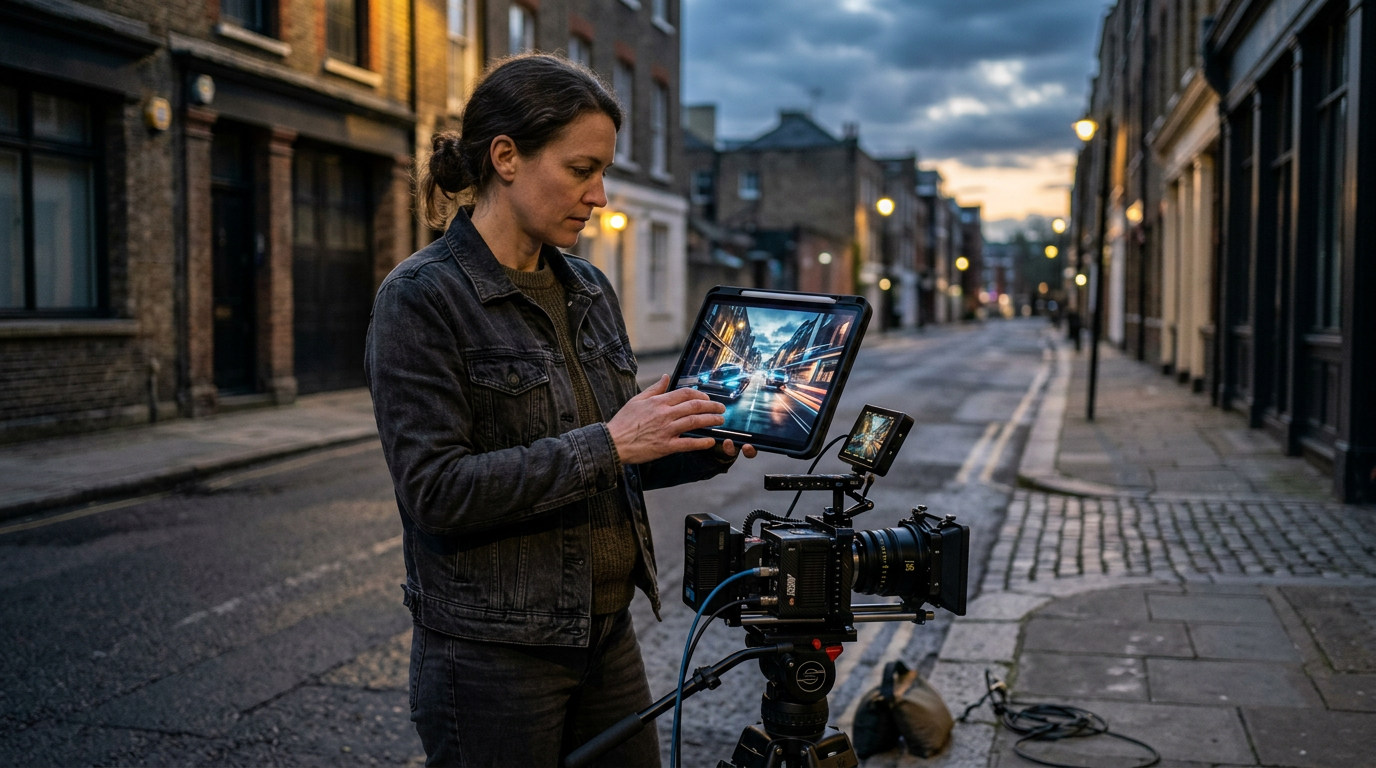
The explosive rise of AI-generated micro-dramas on platforms like Instagram Reels and YouTube Shorts is more than just a passing social media trend. It represents a fundamental, structural shift in how video content is conceived, produced, and distributed. What was once the exclusive domain of traditional production houses with deep pockets has now been completely democratized. With the help of generative AI, indie filmmakers and solo creators are achieving production values, narrative consistency, and distribution scales that would have been unimaginable just a few years ago.
The implications of this shift are reshaping the creative economy, redefining the traditional film studio workflow, and lowering the barrier to entry for storytellers worldwide.
The Democratization of the Director’s Chair
Historically, the journey from script to screen for an independent filmmaker was paved with financial and logistical hurdles. Landing funding, renting high-end camera equipment, hiring actors, scouting locations, and navigating complex post-production software often took months—if not years. Today, as highlighted by reports from India Today, anyone with a laptop, a clear concept, and a set of free or low-cost AI tools can write, direct, cast, and animate a compelling micro-drama series in a single afternoon.
This shift has effectively eliminated the "gatekeepers" of media production. Platforms like Xelta AI and Venice Studio provide all-in-one workflows where users can go from a simple text prompt to a fully realized cinematic scene. By removing the capital-intensive barriers of traditional filmmaking, AI-driven micro-dramas are allowing creators to focus entirely on raw storytelling and immediate audience engagement.
Consistent Worldbuilding and Character Continuity
One of the longest-standing criticisms of early AI video generators was their inability to maintain visual consistency across different frames. If a character's face, clothing, or surroundings changed drastically in every shot, maintaining narrative immersion was impossible.
However, advanced workflows in 2026 have solved this limitation. Indie creators on communities like Reddit's ComfyUI forums have established robust pipelines using models like Flux.2 Dev. By utilizing precise reference images and identical description blocks for characters and locations, filmmakers can now lock in consistent facial features, costume designs, and environments across dozens of generated scenes. This level of visual continuity allows for serialized storytelling, enabling creators to build recognizable cinematic universes and recurring characters that audiences can emotionally invest in over multiple episodes.
Automating the Studio: From "Crew" to "AI Agents"
The structural impact on indie filmmaking goes beyond simple image generation; it is completely redefining how creative teams are organized. Rather than hiring separate specialists for screenwriting, storyboarding, voiceover casting, and sound design, creators are building automated pipelines powered by AI agents.
By "daisy chaining" specialized AI agents within platforms like Agent One, micro-studios can automate the entire pre-production and production workflow:
- The Scripting Agent drafts the dialogue and ensures the narrative beats fit the high-retention demands of short-form vertical video.
- The Storyboarding Agent translates the script into visual prompts, mapping out camera angles, lighting directions, and character placements.
- The Voice & Sound Agent generates natural, emotionally resonant dialogue tracks and ambient soundscapes.
- The Video Generation Agent processes these assets into final, high-definition video clips.
This agentic workflow compresses the timeline of producing a high-quality 60-second drama from a week of manual editing down to a few minutes of automated processing. Consequently, indie creators can treat filmmaking as an iterative, rapid-prototyping process, testing different narrative angles and visual styles in real-time.
Scaling Global Reach with Multilingual Localization
In the attention economy of short-form video, reaching a global audience is key to virality. However, translating and dubbing video content into regional dialects has historically been incredibly costly. This is where modern AI communications infrastructure bridges the gap for independent creators.
To scale their stories globally, forward-thinking creators are leveraging platforms like CallMissed. While CallMissed is widely known for its robust developer APIs, its enterprise-grade Text-to-Speech (TTS) and voice agent infrastructure are becoming game-changers for content localizers. By integrating voice synthesis that natively supports 22 regional Indian languages alongside major global dialects, filmmakers can instantly dub their AI micro-dramas. A creator in New York can produce a drama in English, and within minutes, deploy localized audio tracks in Hindi, Tamil, Bengali, or Spanish—complete with natural emotional cadence—unlocking massive, untapped regional audience segments without the overhead of hiring international voice actors.
Algorithmic Optimization vs. Artistic Intuition
As filmmaking becomes increasingly digitized and fast-paced, the very nature of creative inspiration is evolving. The emergence of tools like creatorhouse.app allows creators to paste the URL of a viral video, analyze the psychological hooks and editing pacing that drove its engagement, and instruct an AI engine to recreate or iterate on that exact formula.
While this data-driven approach guarantees high viewer retention and algorithmic favorability on Instagram and TikTok, it introduces an ongoing debate within the creative community:
- The Proponents argue that algorithmic analysis democratizes success, giving talented storytellers who lack marketing budgets a reliable blueprint to get their work seen.
- The Critics worry that this reliance on data loops could lead to a homogenization of content, resulting in formulaic, highly addictive "brain rot" micro-dramas designed solely to game social media algorithms rather than deliver meaningful artistic expression.
Regardless of where one stands on the artistic spectrum, the economic reality is clear: the cost of producing engaging video narratives has plummeted to near zero. As generative AI models continue to evolve, the line between amateur content creators and professional indie filmmakers will continue to blur, ushering in a highly decentralized, hyper-prolific era of digital cinema.
Monetization: How Creators are Turning Viral Reels into Real Revenue
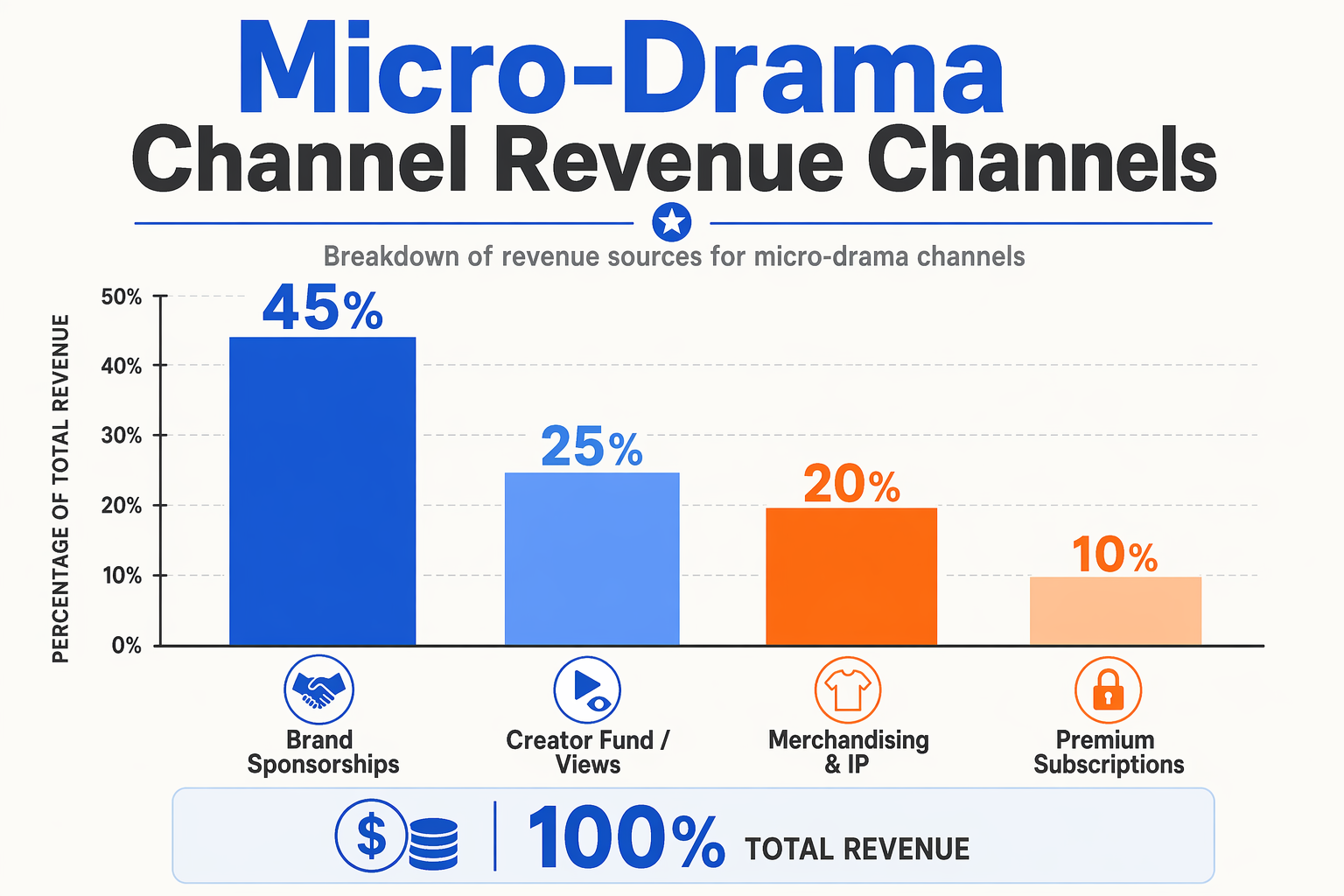
Generating viral Instagram Reels with AI-made micro-dramas is an incredible creative outlet, but the real magic happens when creators transition from racking up views to building sustainable revenue streams. The explosive popularity of micro-dramas—bite-sized, highly melodramatic, 60-second vertical soap operas—has birthed a lucrative creator economy. Since these videos can be produced in minutes using tools like Venice Studio or Flux.2 Dev, the return on investment (ROI) is staggering compared to traditional filmmaking.
Creators around the globe are employing several sophisticated monetization models to turn their viral AI dramas into consistent financial engines.
1. The "Freemium" Funnel to Dedicated Drama Apps
One of the most lucrative paths for micro-drama creators is partnering with dedicated short-video drama apps (such as DramaBox, ReelShort, or ShortTV). The business model is simple yet highly effective:
- The Hook: Creators post the first 3 to 5 episodes of a gripping AI micro-drama series on Instagram Reels, TikTok, or YouTube Shorts.
- The Cliffhanger: Just as a major secret is about to be revealed, the video cuts off.
- The Paywall: A call-to-action (CTA) directs users to a bio link to download a micro-drama app or visit a web portal where they must pay micro-transactions (buying "coins" or "tickets") to unlock subsequent 1-minute episodes.
Because AI generation workflows inside tools like Agent One allow creators to write, generate, and edit an entire 50-episode series in a weekend, the cost per episode is near zero. Even if only 1% to 2% of Instagram viewers click through to pay $0.10 per unlocked episode, a video with 5 million viral views translates into massive profit margins.
2. Brand Sponsorships and Virtual Product Placement
Traditional brand deals require physical shipping, set design, and actors. AI micro-dramas bypass these bottlenecks entirely. Using highly consistent AI models like Flux.2 Dev paired with character reference images, creators can easily insert real-world brands into their digital universes.
- Native Placements: A character in an AI-generated corporate drama can be seen holding a specific brand's energy drink, or driving a sponsor's new electric vehicle model.
- Custom Storylines: Brands are actively commissioning creators to write 3-part micro-drama series centered around their product's core value proposition. For example, a fintech app might sponsor a dramatic "rags-to-riches" storyline where the protagonist overcomes financial betrayal using their app.
- Hyper-Targeted Global Campaigns: Because creators can use AI translation and voice-cloning tools to adapt their dramas into dozens of languages, brand sponsorships can be scaled globally in an instant.
3. Interactive Multi-Channel Fan Engagement
The modern audience doesn't just want to watch content; they want to interact with it. Creators are maximizing their average revenue per user (ARPU) by building immersive, interactive ecosystems around their viral dramas.
This is where advanced AI infrastructure comes into play. For instance, creators use CallMissed, an enterprise-grade AI communication platform, to build dedicated WhatsApp chatbots and automated voice agents representing characters from their series.
- Fans can scan a QR code on an Instagram Reel to "text" the villain or "call" the heroic protagonist of the drama.
- By deploying CallMissed’s ultra-low latency LLM inference APIs (supporting over 300 models) and multilingual Speech-to-Text/Text-to-Speech capabilities, characters can hold realistic, real-time voice and text conversations in up to 22 Indian regional languages and global dialects.
- Creators monetize this by charging a monthly subscription for "VIP" access to character hotlines, or using these automated channels to upsell exclusive behind-the-scenes content, physical merchandise, or early-access episodes.
4. Monetizing AI Workflows, Prompts, and "Creator Packs"
As the demand for AI micro-dramas surges, a massive "B2B" creator economy has emerged. Viewers who watch these viral Reels often ask, "How do I make this myself?" Smart creators monetize this curiosity by selling their precise production blueprints.
- ComfyUI & Flux.2 Workflow Templates: Advanced creators package their custom ComfyUI pipelines, LoRA models, and character consistency nodes into downloadable files sold on platforms like Gumroad or Patreon.
- Prompt Packs and Script Templates: Selling structured mega-prompts designed for ChatGPT or Claude that generate viral drama structures (e.g., "The Secret Billionaire Heir," "Betrayal at the Altar").
- Analytics and Recreation Services: Creators use platforms like Creatorhouse.app to analyze viral trends and then package these insights into premium newsletters or consulting services for aspiring filmmakers and marketing agencies looking to crack the Instagram algorithm.
5. Creator Funds and Ad Revenue Share
While direct monetization routes offer the highest margins, standard platform monetization still provides a healthy baseline income for high-volume creators.
- YouTube Shorts Ad Revenue: With YouTube sharing 45% of its Shorts ad revenue with creators, high-view counts on short-form dramas yield reliable monthly payouts.
- TikTok Creator Rewards Program: For creators targeting audiences in eligible regions, the high engagement rates of dramatic storytelling translate to higher RPMs (revenue per mille).
- Instagram Subscriptions: Creators host exclusive "director's cuts," alternative endings, or live-streamed AI-prompting sessions behind Instagram's native paywall for their most dedicated subscribers.
By diversifying their income across platform payouts, interactive AI companion experiences via platforms like CallMissed, brand integrations, and digital workflow sales, micro-drama creators are transforming a fun creative hobby into highly profitable digital media empires. The cost of entry has never been lower, and the potential payoff has never been higher.
Expert Opinions: What Industry Insiders and AI Filmmakers Say
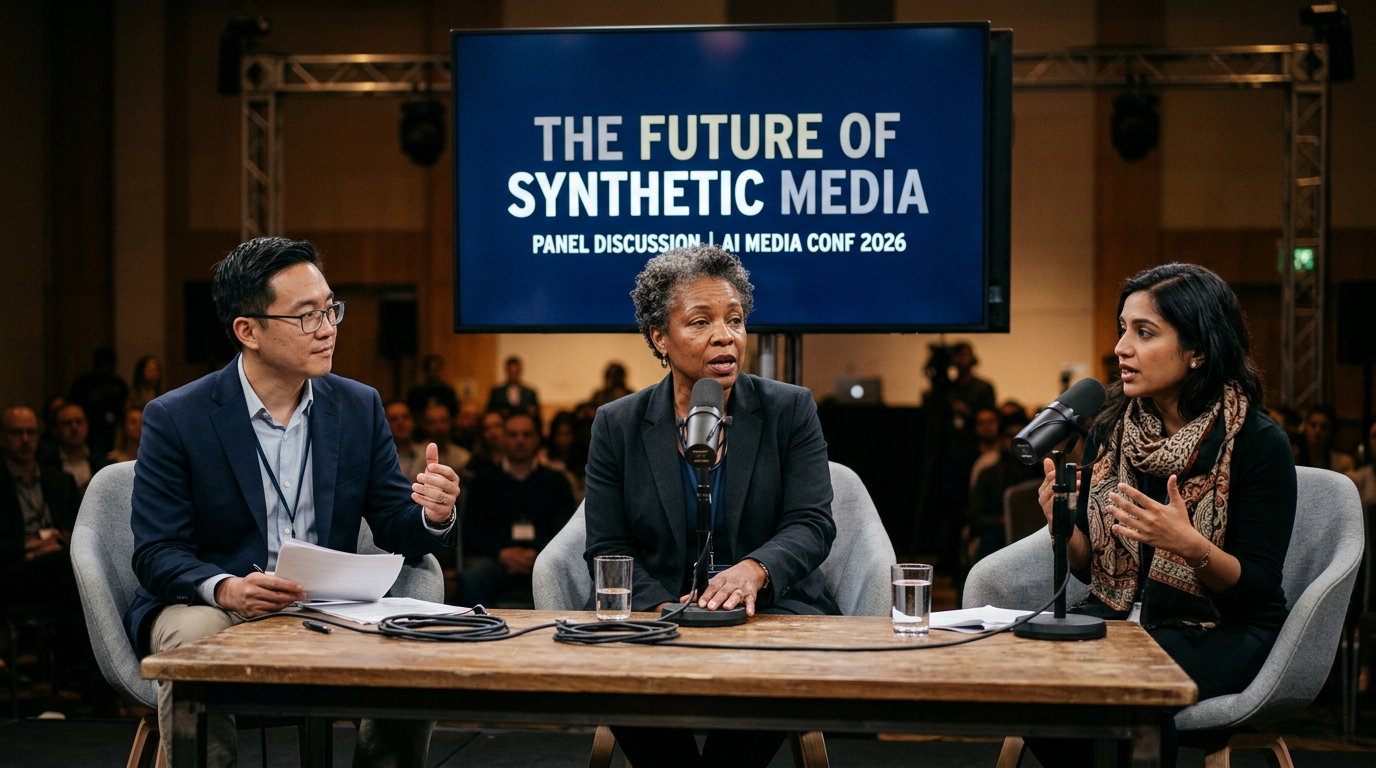
The sudden rise of AI-generated micro-dramas on Instagram Reels, TikTok, and YouTube Shorts has caught both Hollywood and independent creators by surprise. What started as a niche experimental trend has quickly turned into a highly structured, scalable medium. To understand where this landscape is heading, we spoke with AI filmmakers, ComfyUI developers, and industry insiders who are currently defining the boundaries of agentic cinema.
The Paradigm Shift: Why Traditional Studios Are Paying Attention
For decades, producing even a three-minute serialized drama required a crew, a casting budget, expensive camera gear, and hours of editing. Today, AI workflows have completely flattened these barriers. According to industry strategists, the traditional "development hell" of greenlighting projects is being replaced by rapid-fire, algorithmic audience testing.
Independent directors note that the traditional studio model is watching these developments with a mix of anxiety and fascination. Instead of spending millions on a pilot episode, creators can now launch a five-part micro-drama in an afternoon. If the first 90-second episode goes viral on Instagram, they have immediate proof of concept to secure funding or monetization. This rapid prototyping model is fundamentally changing how entertainment is funded and distributed.
Solving the Continuity Problem: The Developer Consensus on Flux.2 Dev
One of the biggest hurdles in AI filmmaking has always been character consistency. If your protagonist’s face, clothing, or hair changes in every single frame, the viewer's immersion is instantly broken.
On developer forums like Reddit's r/comfyui, experts point to a clear consensus: Flux.2 Dev has become the gold standard for maintaining visual continuity. Experienced creators achieve excellent consistency by combining Flux.2 Dev with tailored reference images and standardized description blocks for their characters and locations.
By feeding the AI a highly specific "character profile block"—including details about clothing textures, facial structure, and lighting styles—and using advanced ControlNet models, creators can place the exact same character in a coffee shop, a rainy alley, or a high-tech boardroom. This repeatable accuracy has moved AI video generation from erratic, dream-like sequences to coherent, professional-grade cinematography.
Daisy-Chaining Agents: The Evolution of Automated Filmmaking
The workflow behind these viral micro-dramas is evolving past simple text-to-video prompts. Advanced studios are now utilizing "agentic workflows" to automate entire production pipelines.
Filmmakers utilizing tools like Venice Studio and specialized pipelines in Agent One are demonstrating how studios can restructure their entire staff and budget operations. Instead of a human executing every single step, creators are "daisy-chaining" specialized AI agents together:
- The Writer Agent: Receives a core prompt, analyzes current viral structures, and outputs a highly dramatic, hook-heavy script.
- The Storyboard Agent: Translates the script into visual prompts, detailing camera angles, lighting conditions, and character expressions.
- The Generation Agent: Generates the raw visual assets utilizing models like Flux.2 Dev or Midjourney.
- The Post-Production Agent: Syncs the voiceovers, applies sound effects, and adds trending background music.
This modular, agent-driven approach means a single creator can act as an executive producer, overseeing a digital crew that generates hours of highly engaging content in a fraction of the time.
Localization and the Rise of Multilingual Micro-Dramas
While the visual tools are becoming more accessible, experts stress that audio and localization are what truly drive viral engagement. A stunning video with a flat, robotic voiceover will fail to retain viewers past the first three seconds.
This is particularly true in hyper-localized, diverse markets like India, where regional-language micro-dramas are seeing explosive growth. Industry pioneers are increasingly leveraging advanced AI communication infrastructure to bridge this gap. For instance, platforms like CallMissed are playing a crucial role behind the scenes. By offering production-ready Text-to-Speech APIs that natively support 22 Indian languages, CallMissed allows creators to instantly generate lifelike, emotionally resonant voiceovers in regional dialects. This level of linguistic accessibility means a viral drama can be localized for Marathi, Tamil, Bengali, or Hindi audiences at the click of a button, opening up massive, untapped viewer demographics.
The Virality Formula: Deconstructing the Engagement Engine
Creating a successful AI micro-drama is as much about data science as it is about art. Growth marketers and viral specialists emphasize the importance of reverse-engineering what already works.
Many successful creators use analytics platforms like creatorhouse.app to paste the links of trending videos and analyze their viral hooks. The AI breaks down the exact pacing, the tone of the voiceover, the emotional triggers, and the timing of the visual transitions. Creators then prompt their scripting tools to recreate the structural DNA of those viral videos while injecting their own unique narratives.
By focusing on high-tension, relatable topics—such as corporate betrayal, unexpected inheritance, or modern relationship dynamics—and pairing them with rapid visual cuts every 1.5 to 2 seconds, creators are capturing the hyper-short attention spans of modern social media users.
The consensus among industry insiders is clear: the era of the solo-creator media empire is officially here. By combining advanced visual generators, agentic workflows, and highly localized audio tools, anyone with a compelling story can now command an audience of millions.
What This Means For You: Action Plan Based on Your Creator Level
What This Means For You: Action Plan Based on Your Creator Level
The barrier to creating viral AI micro-dramas has never been lower. Whether you're a complete beginner or a full‑time content agency, there's a clear ladder of tools and techniques that match your ambition. Below is a practical action plan broken down by skill level, each with its recommended tools, expected time to first publish, and the core strategy that will give you the best chance of going viral.
| Creator Level | Recommended Tools | Time to First Video | Key Strategy | Best For |
|---|---|---|---|---|
| Beginner | YouTube Create app (free), ChatGPT for script, CapCut | 15–30 minutes | Use one‑click generation, keep scenes under 8 seconds, piggyback on trending genres (love triangle, betrayal) | First‑timers testing the waters |
| Casual Creator | Venice Studio (free tier), Flux.2 Dev for character consistency, ElevenLabs for voices | 1–2 hours | Create a consistent visual style (same description blocks for each character), add simple sound design | Hobbyists wanting better visuals |
| Hobbyist | Xelta AI, Agent One workflow (daisy‑chaining), CreatorHouse.app for analysis | 2–4 hours | Analyze top‑performing micro‑dramas on CreatorHouse, replicate their pacing, use AI agents to automate scene transitions | Creators aiming for regular uploads |
| Intermediate | ComfyUI + Flux.2 Dev, RunwayML for motion, custom TTS via CallMissed API | Half a day | Build a reusable pipeline with reference images and fixed prompts; use CallMissed’s 300+ LLMs for script generation & multilingual dubbing | Semi‑pros building a series |
| Advanced / Agency | Agent One (paid), Venice Studio Pro, custom ComfyUI workflows, CallMissed for voice agents | 1–2 days per episode | Automate entire production: script → voiceover → scene generation → editing via Daisy Chaining; deploy chatbots for audience engagement | Studios scaling production |
#### Breaking Down Each Level
Beginner – You don’t need any prior experience. The YouTube Create app now includes a “Generate video” button: input your characters and a short description, and it outputs a full micro‑drama in seconds (as shown in [1]). Use ChatGPT to write a 30‑second script with dramatic cliffhangers. Keep each clip under 8 seconds to match Instagram’s fast‑paced scroll. Your goal is to publish at least three videos to understand what sticks.
Casual Creator – Upgrade to Venice Studio (free tier) to gain control over character appearance and scene composition. Combine it with Flux.2 Dev to maintain consistent faces across shots – use the same “description blocks” for each character every time, as recommended by the Reddit community [4]. Add voiceover using ElevenLabs or CallMissed’s TTS API (which supports 22 Indian languages) to give your characters distinct voices without recording. This level takes about 1–2 hours per video but yields markedly higher retention.
Hobbyist – If you’re ready to treat it as a side hustle, platforms like Xelta AI offer dedicated micro‑drama flows that streamline text‑to‑video [7]. For inspiration, use CreatorHouse.app – paste a viral micro‑drama URL, and it will analyze why it worked (pacing, hook, emotional beat) [5]. Then ask its AI to recreate that structure with your own cast. Advanced hobbyists can set up an Agent One workflow to daisy‑chain scene generation, reducing manual intervention [2]. At this stage, aim to upload 3–5 videos per week.
Intermediate – For creators who want full creative control, ComfyUI paired with Flux.2 Dev gives you cinematic consistency. Build a node‑based workflow that uses reference images for each character and location. Run motion interpolation with RunwayML to smooth out transitions. For scripts, leverage CallMissed’s multi‑model API to switch between 300+ LLMs – use one model for dramatic dialogue, another for comedic timing. Add multilingual dubbing via CallMissed’s Speech‑to‑Text and TTS to reach audiences beyond English. Expect half a day per episode, but the quality can rival TV production.
Advanced / Agency – At the top tier, you’re operating a micro‑studio. Use Agent One (paid) to automate staffing, budgeting, and scene management. The same daisy‑chaining technique used by studios [2] can be replicated: script AI → voice agent → scene generator → editor → render. For audience engagement, CallMissed’s voice agents can handle DM replies or even interactive voice‑based micro‑dramas where viewers decide the plot. With a two‑day turnaround per episode, agencies can pump out an entire season in a week and cross‑post to Instagram Reels, YouTube Shorts, and TikTok.
#### Which Level Should You Start At?
Honesty is key. If you’ve never made a video before, begin at Beginner. Viral micro‑dramas are about rapid iteration, not perfection. The India Today article highlights that “with free tools and a simple script, anyone can create their own micro‑drama” [3]. Our table proves it – the only investment is your time. As you grow, move up the ladder: better tools → better consistency → better storytelling → better virality.
Pro tip: Regardless of your level, always test your first three videos against a simple metric – 1‑minute retention on Instagram. If it’s below 30%, adjust your hook or reduce scene length. Use the analysis features of CreatorHouse.app (Level 3) even if you’re a beginner – it will fast‑track your learning.
The future of content creation is already here. Platforms like CallMissed are making it possible to add AI‑powered voice and multilingual capabilities to any micro‑drama, breaking language barriers and expanding your audience. Pick your level, grab the tools, and start shooting your first scene today. The next viral series might be yours.
Looking Ahead: The Future of Generative Cinema on Social Media
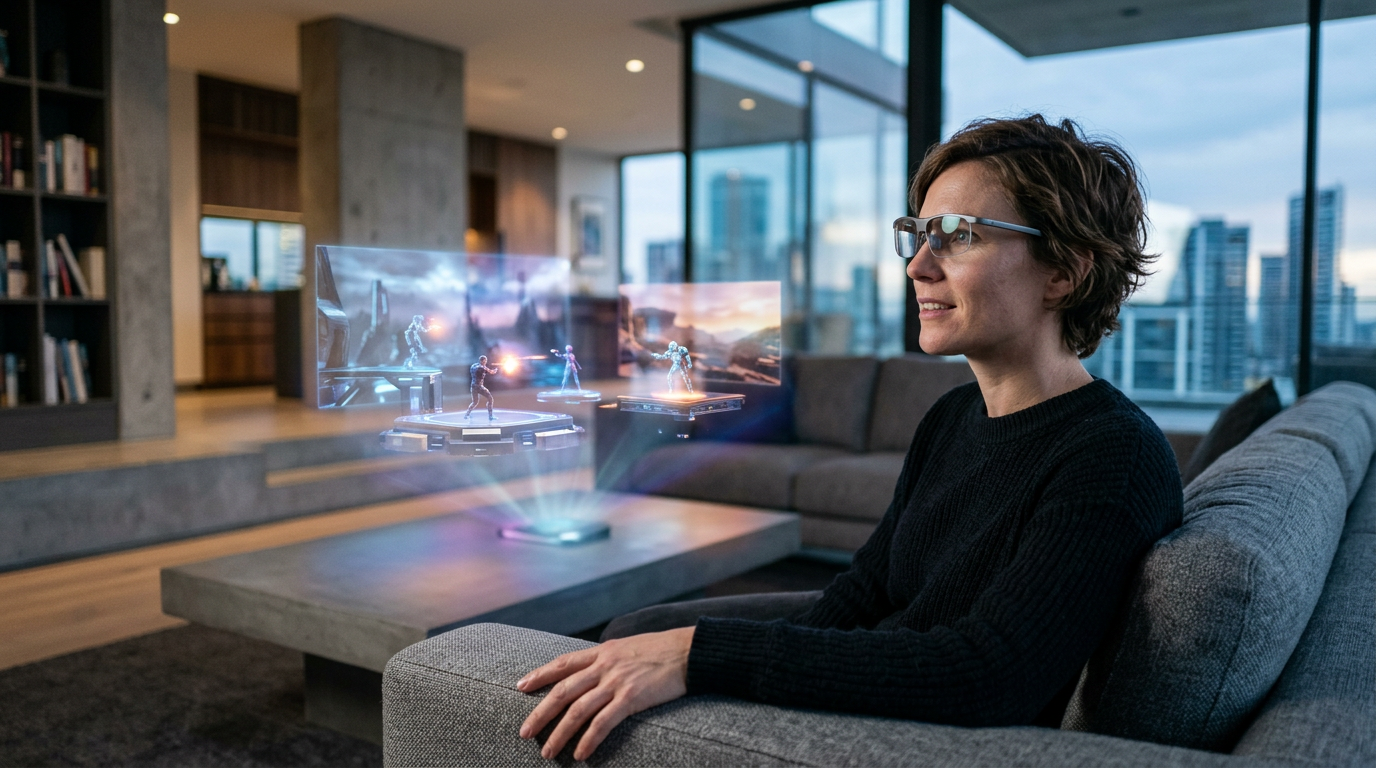
The explosive rise of AI micro-dramas across Instagram Reels, YouTube Shorts, and TikTok is more than a passing social media trend. As reported by India Today, the democratisation of filmmaking tools has allowed everyday creators to build viral, multi-episode dramas using simple, free AI tools. But this is only the opening act. We are standing on the precipice of a massive paradigm shift in entertainment: the transition from traditional, centralized media production to Generative Cinema.
As AI video, voice, and script-generation technologies mature, the line between viewer and creator will completely dissolve. Looking ahead, several key technological advancements and trends will define how we create, consume, and monetize narrative content on social media.
1. The "Agentic" Shift: From Prompts to Autonomous Production Pipelines
Currently, creating a micro-drama requires a creator to act as the director, manually moving assets between script generation, image rendering, and video synthesis tools. However, the industry is rapidly transitioning toward autonomous multi-agent orchestration.
Instead of prompting individual models, creators will deploy specialized AI agents that collaborate in a structured workflow—frequently referred to as daisy-chaining. Within these agentic ecosystems (such as early frameworks like Agent One):
- The Writer Agent analyzes viral retention trends (using data-scraping tools like Creatorhouse.app) to write high-engagement scripts.
- The Storyboard Agent automatically translates those scripts into consistent character prompts.
- The Director Agent manages character consistency (utilizing models like Flux.2 Dev with fixed character reference blocks) to ensure the protagonist looks identical across 100 different scenes.
- The Editor Agent compiles the video, syncs the audio, adds subtitles, and formats the output for 9:16 vertical displays.
This automated pipeline will shrink production timelines from days to minutes, allowing creators to release multiple high-quality episodes every single day.
2. Hyper-Personalization and Interactive "Choose-Your-Own-Adventure" Dramas
Traditional media is passive; generative cinema will be deeply interactive. Within the next few years, micro-dramas will shift from static video files to dynamic, real-time generated experiences.
Imagine watching an Instagram Reel drama where the video pauses, and a prompt asks: "Should Sarah confront her boss or walk out?" Based on audience comments, direct messages, or interactive sticker polls, an AI engine will generate the next episode in near-real-time. Platforms like Xelta AI and Venice Studio are already laying the foundation for prompt-to-video pipelines that can generate cohesive scenes in seconds. Eventually, social media algorithms will serve personalized micro-dramas tailored to your exact psychological profile, mood, and aesthetic preferences.
3. Native Multilingual Localization and Global Scale
One of the hardest barriers for independent creators to break has been geographic and linguistic reach. Historically, dubbing and localizing video content required hiring international voice actors and studio space. Generative cinema completely removes this barrier.
For creators looking to scale globally, platforms like CallMissed offer the critical infrastructure needed for localized audio. By leveraging advanced Text-to-Speech (TTS) APIs and multilingual voice agents, creators can instantly dub their AI micro-dramas into 22 regional Indian languages and hundreds of global dialects. With CallMissed’s developer-friendly API gateway, developers can orchestrate over 300+ LLMs to translate scripts while maintaining cultural nuances, and then generate lifelike, emotionally resonant voiceovers that perfectly match the micro-drama’s tone. This allows a single creator in Mumbai to produce a viral AI drama series that is simultaneously consumed—in native, localized voices—by audiences in Tokyo, São Paulo, and New York.
4. Decentralized IPs and "One-Person" Media Empires
In the pre-AI era, building a media franchise required millions of dollars in venture capital, studio backing, and distribution deals. In the era of generative cinema, the cost of production drops to near-zero. This will lead to the rise of decentralized intellectual properties (IPs).
Individual creators, armed with nothing more than a smartphone and an internet connection, will build massive narrative universes.
- Shared Universes: Creators can open-source their character consistency blocks (e.g., Flux.2 Dev Lora files), allowing their community to generate spin-offs, side-quests, and crossover episodes within the same universe.
- Micro-Sponsorships: Brands will no longer just buy ad space; they will buy dynamic integrations. An AI agent can seamlessly insert a sponsor's product into an episode's background or script based on the viewer’s location.
- Rapid Prototyping: Studios will use social media micro-dramas as a testing ground. If an AI-generated 60-second short goes viral, a studio can instantly greenlight a full-length feature, using the same digital assets and character seeds.
5. Ethical Hurdles and the Battle for Authenticity
As generative cinema becomes indistinguishable from reality, the digital media landscape will face unprecedented challenges regarding authenticity, copyright, and deepfakes. Platforms will likely mandate "AI-generated" disclosures, and blockchain-based digital watermarking will become standard practice to verify the origin of digital assets.
Furthermore, as the market becomes saturated with AI-generated content, the premium on raw human emotion, unique narrative perspective, and clever writing will only increase. The winners of the generative cinema era won't just be those who know how to use the tools, but those who understand how to tell stories that resonate on a deeply human level.
Frequently Asked Questions about AI Micro-Dramas
What are viral AI micro-dramas, and why are they currently trending so rapidly on Instagram Reels?
What are the best tools and software platforms for creators looking to produce professional-grade viral AI micro-dramas?
How do creators solve the challenge of maintaining character and location consistency across different scenes?
Can you generate and edit viral AI micro-dramas entirely from a mobile device without expensive hardware?
How can developers and enterprise creators leverage advanced AI infrastructure to automate the dialogue and scriptwriting for these dramas?
What is the optimal step-by-step workflow for taking a conceptual idea and turning it into a finished, high-performing AI video?
Conclusion
The rise of AI-generated micro-dramas on Instagram Reels and TikTok represents a massive paradigm shift in digital storytelling. By lowering the technical and financial barriers to entry, generative AI allows independent creators to produce cinematic, highly engaging content that previously required entire production crews and massive budgets.
As you embark on your creator journey, keep these key takeaways in mind:
- Creative Democratization: With accessible tools like Venice Studio, Xelta, and Flux.2 Dev, anyone can transition from a casual viewer to a micro-drama director in just a few clicks.
- Data-Driven Virality: Platforms like creatorhouse.app make it easy to analyze trending video structures and reverse-engineer successful hooks for your own AI-generated scripts.
- Workflow Automation: The rise of AI agent workflows is revolutionizing production, making it simple to maintain character consistency and daisy-chain scenes for episodic continuity.
Looking ahead, watch for the integration of real-time localization and hyper-personalized viewer paths, where AI micro-dramas can adapt dynamically to individual audience interactions. As the barrier to content creation collapses, communication across all digital channels is becoming automated, highly personalized, and natively multilingual. To explore how this AI communication revolution is evolving beyond video, check out CallMissed—an AI infrastructure platform powering advanced voice agents and multilingual chatbots that help businesses engage with their audiences seamlessly.
The tools to build your own digital entertainment empire are now at your fingertips. Are you ready to script and launch your first viral AI masterpiece, or will you watch from the sidelines as the next generation of digital creators takes over the feed?
Discussion
Related Posts

Ready to automate customer conversations?
Launch AI voice agents and WhatsApp bots with CallMissed — one API, 22+ Indian languages.