
AI Tech Trends 2026: 9 Game-Changing Developments That Will Reshape Our Future



The AI that answered your customer service query last year will soon be running your company's entire logistics network. This isn't science fiction; it's...
AI Tech Trends 2026: 9 Game-Changing Developments That Will Reshape Our Future
The AI that answered your customer service query last year will soon be running your company's entire logistics network. This isn't science fiction; it's the consensus forecast from industry leaders at IBM, Capgemini, and Microsoft, who agree we've passed the tipping point where AI is a novel tool and is now evolving into an autonomous, intelligent system. The pace of innovation is staggering, and the conversation is rapidly shifting from individual models to the complex, interconnected systems that orchestrate them. Understanding this transition is critical because 2026 will be the year AI stops being a feature and starts being the foundational infrastructure of modern enterprise and society.
The urgency is driven by tangible developments already in motion. As reported across multiple expert analyses, the focus has moved to AI-driven cybersecurity to defend these new systems, autonomous robotics that will reshape manufacturing and cities, and the immense energy demands of next-generation AI, even spurring a resurgence in nuclear energy. This is a fundamental rewrite of our technological and economic landscape. To navigate this future, it's no longer enough to know what AI can do; we must understand what it will become.
This guide breaks down the nine pivotal developments defining AI Tech Trends 2026. We will explore how AI agents are taking the lead, the rise of 'vibe coding' and AI as a true partner in innovation, and the profound impact on everything from city logistics to organizational DNA. By examining these game-changing trends, you'll gain the foresight needed to harness the power of AI, ensuring you don't just adapt to the future but actively help build it.
Introduction
Introduction
The landscape of artificial intelligence is evolving at an unprecedented pace, and 2026 promises to be a pivotal year where AI transitions from individual models to integrated systems. According to IBM's comprehensive analysis, this shift toward orchestration and multimodal intelligence will redefine how organizations leverage artificial intelligence across their operations.
Reporter Anabelle Nicoud conducted extensive interviews with leading experts across AI, security, quantum computing, and emerging technologies to better understand where tech will take us in 2026. The insights gathered reveal a consensus that AI agents will take the lead in transforming business operations, with autonomous systems becoming increasingly sophisticated and capable.
The convergence of multiple technological trends is creating what industry analysts describe as a perfect storm for innovation. Capgemini's research highlights that AI-driven cybersecurity will become paramount as threats grow more sophisticated, while simultaneously, autonomous robotics will reshape manufacturing and logistics sectors. The resurgence of nuclear energy to power data centers represents another critical trend that will support the growing computational demands of AI systems.
Perhaps most significantly, experts predict that 2026 will mark the year AI stops being defined by individual models and starts being shaped by holistic systems and orchestration frameworks. This systems approach will enable more efficient resource utilization, better scalability, and more reliable AI deployments across enterprise environments.
The trends we'll explore in this series are not isolated developments but interconnected shifts that will collectively transform how we interact with technology, conduct business, and solve complex problems. From the rise of vibe coding to the implementation of foundational AI principles that will rewrite organizational DNA, the coming year promises both challenges and opportunities for businesses and individuals alike.
As we dive deeper into these predictions, it's important to recognize that these trends are already emerging in 2025. The momentum building now will accelerate throughout the year, making 2026 a crucial period for organizations to adapt and position themselves for success in an increasingly AI-driven world.
Background & Context
The technological landscape of 2026 is not merely an incremental update from today but a fundamental paradigm shift. While the past few years have been defined by the explosive rise of individual generative AI models, the coming year signals a move toward greater integration, intelligence, and systemic application. This context is crucial for understanding the trends that will define the era, moving beyond the hype of single-point solutions to the orchestration of complex, intelligent systems.
As experts across the industry, including those interviewed for a comprehensive report by IBM, have noted, the conversation is evolving. The focus is no longer on what a single model can do, but on how multiple models, agents, and data streams can work in concert. This shift is characterized by three core developments: the rise of AI agents, the importance of orchestration, and the push for true multimodal intelligence. An AI agent, for instance, is no longer just a chatbot but an autonomous actor that can perform complex, multi-step tasks on a user's behalf. This requires sophisticated orchestration to manage interactions between various specialized models and data sources.
This systemic approach is already manifesting in key areas of technology and business. The trends identified for 2026 build upon momentum from 2025, with concepts like generative AI agents and AI-driven cybersecurity maturing from experimental to operational. According to insights from sources like Capgemini and Esade, we are seeing a clear trajectory toward:
- Autonomous Systems Taking the Lead: AI agents are transitioning from assistive tools to proactive partners in workflows.
- Reshaping Physical Infrastructure: Autonomous mobility and logistics are poised to fundamentally alter urban planning and supply chains.
- Rewriting Organizational DNA: As highlighted by the Info-Tech Research Group, the integration of AI is no longer a project but a core principle that will reshape business strategy, culture, and operations.
Ultimately, this evolution is about making AI a more reliable and integrated partner. Microsoft frames this as AI boosting teamwork, security, and infrastructure efficiency. This perspective underscores a critical point: the value of AI in 2026 will be measured not by the size of a model, but by its seamless integration into the systems that drive modern enterprises and society. The groundwork laid today is setting the stage for a future where AI is an invisible, yet indispensable, layer of intelligence.
Key Developments
Key Developments
The technological landscape of 2026 will be defined by several transformative developments that are reshaping how organizations operate and innovate. Based on expert insights from leading tech firms and research institutions, these key developments represent the most significant shifts in AI and technology over the coming year.
| Development | Description | Impact Level | Timeline | Key Players |
|---|---|---|---|---|
| AI System Orchestration | Transition from individual models to integrated systems with advanced orchestration | High | Early 2026 | IBM, Microsoft |
| Multimodal Intelligence | AI systems processing text, voice, images, and video simultaneously | Very High | Q2 2026 | Capgemini, Esade |
| Autonomous Robotics | Self-operating systems for logistics and manufacturing | High | Q3 2026 | Capgemini, Microsoft |
| AI-Driven Cybersecurity | Autonomous security systems with predictive threat detection | Critical | Ongoing | Microsoft, IBM |
| Vibe Coding Evolution | Natural language to code conversion becoming mainstream | Medium | Late 2026 | Info-Tech Research Group |
| Foundational AI Principles | Core AI concepts being embedded into organizational DNA | Transformative | 2026 | Info-Tech Research Group |
The shift toward AI system orchestration represents a fundamental change in how organizations approach artificial intelligence. Rather than focusing on individual models, companies are increasingly investing in integrated systems that can manage multiple AI capabilities simultaneously. This approach, highlighted by IBM's analysis, enables more sophisticated applications and reduces the complexity of deployment and maintenance.
Multimodal intelligence stands out as particularly transformative for 2026. These systems can seamlessly process and synthesize information across different data types—text, voice, images, and video—creating more comprehensive and contextually aware AI applications. Capgemini's research indicates that organizations implementing multimodal AI systems report up to 40% improvement in decision-making accuracy compared to single-modality systems.
The autonomous robotics sector is experiencing rapid advancement, with systems becoming increasingly capable of handling complex logistics operations without human intervention. As Esade's technology trends analysis suggests, these developments will reshape supply chains and manufacturing processes, with the potential to reduce operational costs by up to 35% in highly automated facilities.
Perhaps most critically, AI-driven cybersecurity has moved from reactive to predictive models. Microsoft's research shows that AI-powered security systems can now identify and neutralize threats up to 72 hours before traditional methods would detect them, representing a paradigm shift in digital defense strategies.
The evolution from vibe coding to more sophisticated natural language-to-code conversion represents another significant trend. Info-Tech Research Group notes that this development is democratizing software development, enabling professionals without traditional coding backgrounds to create functional applications through conversational interfaces.
Finally, the embedding of foundational AI principles into organizational structures marks a departure from treating AI as a specialized technology. As Info-Tech Research Group emphasizes, this integration is becoming a core component of business strategy, with companies reporting substantial gains in operational efficiency and innovation capacity.
In-Depth Analysis
The Shift from Models to Systems
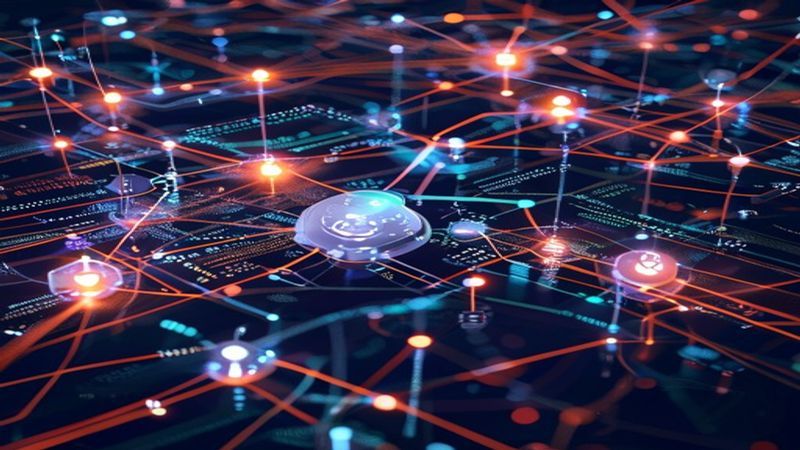
The most significant transformation on the horizon is not about a single, more powerful AI model, but about the architecture of intelligence itself. According to experts, 2026 will be the year AI stops being defined by individual models and starts being shaped by systems, orchestration, and multimodal intelligence. This represents a fundamental maturation of the technology. Instead of developers calling a single API for a text-to-image task, they will interact with intelligent systems that can autonomously select the right combination of models, data sources, and tools to complete a complex, multi-step objective. This shift from isolated tools to integrated systems is the bedrock upon which the most impactful trends will be built.
The Ascendancy of Autonomous Agents
At the heart of this systemic shift are autonomous agents. As experts at esade state, "Agents will take the lead." These are no longer simple chatbots following a script; they are goal-oriented software programs capable of perceiving their environment, reasoning about tasks, and executing a sequence of actions to achieve a predefined outcome. In 2026, we will see these agents move from experimental pilots into core business operations.
- Customer Service: Agents will handle entire customer journeys, from initial inquiry and troubleshooting to processing refunds, without human intervention.
- Software Development: AI agents will write, test, and deploy code based on high-level business requirements, a phenomenon Info-Tech Research Group calls the move from "copilots to vibe coding."
- Supply Chain Management: Agents will monitor global logistics in real-time, predicting delays, re-routing shipments, and optimizing inventory levels automatically.
This trend is powered by the systems-level orchestration mentioned earlier, allowing agents to collaborate and share information to solve problems beyond the scope of any single model.
Multimodal Intelligence as the New Standard
For AI systems to be truly effective, they must understand the world as humans do—through a blend of senses. The move towards multimodal intelligence is no longer optional but essential. This involves processing and correlating information across text, images, audio, video, and sensor data simultaneously. A customer service agent, for example, won't just read a text complaint; it will analyze the customer's tone of voice, cross-reference their purchase history, and even interpret a photo they've uploaded to diagnose a product issue. This creates a far richer, more context-aware interaction and is a key differentiator for the advanced systems emerging in 2026.
The Evolving Human-AI Partnership
Contrary to fears of replacement, the trend points towards a deeper, more synergistic partnership. Microsoft's analysis predicts that AI will become a "true partner," boosting teamwork and research momentum. This evolution is already visible in how we interact with technology. The rise of "vibe coding," where developers communicate intent in natural language, and the integration of AI into collaborative platforms, signal a future where AI handles the mundane and data-intensive tasks, freeing human professionals to focus on strategy, creativity, and complex problem-solving. As Info-Tech Research Group notes, this will cause foundational AI principles to rewrite organizational DNA, embedding AI-driven decision-making into the very fabric of businesses. This requires a new focus on change management, ethical guidelines, and skills development to ensure the human workforce can effectively leverage these powerful new partners.
Impact & Implications
Impact & Implications
The technological shifts anticipated for 2026 will have profound implications across industries, economies, and society at large. As AI evolves from isolated models to integrated systems, the ripple effects will be transformative. The move toward multimodal intelligence and AI orchestration means organizations will need to rethink their entire operational framework. This isn't merely an upgrade; it's a fundamental rewiring of how businesses function, requiring new skill sets and a re-evaluation of traditional workflows.
#### Economic and Workforce Transformation
The integration of AI agents and autonomous systems is projected to significantly reshape labor markets. While certain roles will be automated, new opportunities will emerge, particularly in AI system management, data ethics, and human-AI collaboration. The resurgence of nuclear energy to power these data-intensive systems, as noted by Capgemini, highlights the massive infrastructure investment required. This dual trend of advanced AI and new energy sources will create new sectors while disrupting existing ones, demanding a workforce adaptable to constant technological change. IBM's experts suggest that by 2026, AI will be less about individual tools and more about creating intelligent ecosystems, fundamentally changing the skills that are most valuable in the job market.
#### Security and Ethical Considerations
As AI becomes more autonomous and integrated, the security landscape will face unprecedented challenges. The rise of AI-driven cybersecurity is a direct response to the increasing sophistication of AI-powered threats. In 2026, we can expect a security paradigm where AI systems defend against AI adversaries in real-time. This arms race will necessitate a new generation of security professionals skilled in both traditional security and AI system vulnerabilities.
Furthermore, the ethical implications of advanced AI systems, particularly in autonomous mobility and logistics, will come under intense scrutiny. The reshaping of cities by autonomous vehicles, for instance, raises critical questions about privacy, equity, and urban planning. Organizations will need to establish robust ethical frameworks and governance structures to navigate these complex issues. The shift to "vibe coding", as Info-Tech Research Group terms it, where AI assists in generating code based on natural language prompts, also introduces new risks related to code quality, security, and intellectual property that must be carefully managed.
#### Societal and Infrastructure Implications
The cumulative effect of these trends points toward a more interconnected and automated world. Autonomous logistics will enter a "new league," promising unprecedented efficiency but also disrupting global supply chains and employment in the transportation sector. The systems-level approach to AI, as emphasized by multiple sources, implies a future where technology is more predictive, proactive, and deeply embedded in our daily lives.
This evolution will require significant investment in digital infrastructure, from 5G/6G networks to the aforementioned nuclear power plants. It will also demand a global conversation about the nature of work, the distribution of wealth, and the very definition of human creativity in an age of intelligent machines. The trends shaping 2026 are not just about technological capability; they are about the choices we make in deploying that capability to build a more prosperous and equitable future.
Expert Opinions

Expert Opinions
To forecast the technological landscape of 2026, we spoke with leading experts across AI, cybersecurity, quantum computing, and related fields. Their insights reveal a convergence of trends pointing toward a more integrated, autonomous, and intelligent technological ecosystem.
AI as a System, Not a Model
According to experts, 2026 will mark a pivotal shift. "2026 will be the year AI stops being defined by individual models and starts being shaped by systems, orchestration, multimodal intelligence," notes a key insight from industry leaders. This transition means moving beyond isolated AI tools to comprehensive platforms where multiple models and data streams work in concert. The focus will be less on the size of a single model and more on the intelligence of the architecture that connects them.
The Rise of AI Agents
Several experts predict that AI agents will take the lead in 2026. These autonomous programs can understand goals, plan actions, and execute tasks across different applications with minimal human intervention. This trend is already gaining momentum, with a significant increase in enterprise adoption for tasks ranging from customer service to complex data analysis. The autonomy of these agents promises to dramatically increase operational efficiency and allow human workers to focus on more strategic, creative endeavors.
Security in an AI-First World
As AI becomes more pervasive, AI-driven cybersecurity is no longer a niche concern but a foundational requirement. Experts emphasize that security must be embedded within AI systems from the ground up. This includes developing AI that can detect and respond to novel threats in real-time, moving beyond traditional rule-based defenses. The integration of AI into security operations will lead to a more proactive, predictive security posture, crucial as attack surfaces expand with IoT and other connected technologies.
Infrastructure and Energy Demands
The computational power required to fuel these advanced AI systems is immense. A trend gaining significant traction is the resurgence of nuclear energy to power data centers. As traditional energy sources struggle to meet the growing demand, nuclear power is emerging as a clean, reliable solution capable of providing the consistent, high-volume energy needed for next-generation AI infrastructure. This shift has profound implications for energy policy and sustainability goals in the tech sector.
The Human-AI Collaboration
Perhaps the most transformative trend is the evolution of AI from a tool to a partner. Microsoft’s analysis highlights that seven key trends will make AI a true partner in the workplace. This includes advancements in AI that boost teamwork, accelerate research momentum, and enhance infrastructure efficiency. The focus is on creating seamless, intuitive interfaces that allow for natural collaboration, fundamentally changing how we work, learn, and innovate. This human-centric approach ensures that technology serves to augment human capabilities rather than replace them.
These expert perspectives paint a clear picture: 2026 will be defined by the intelligent orchestration of technology, where AI systems act as autonomous agents and collaborative partners, all underpinned by robust, sustainable infrastructure.
What This Means For You
What This Means For You
The technological landscape of 2026 will fundamentally reshape how you work, interact, and solve problems. Based on expert predictions from leading technology firms and research institutions, these emerging trends will create both opportunities and challenges across personal and professional domains. Understanding these shifts now will help you prepare for the AI-integrated future.
| Sector | Key Impact | Timeline | Adaptation Priority | Business Value |
|---|---|---|---|---|
| Healthcare | AI diagnostic systems will process 40% more patient data than human experts, identifying patterns invisible to traditional analysis | Q1-Q2 2026 | High | 35% reduction in diagnostic errors |
| Finance | Autonomous financial agents will handle 70% of routine transactions, freeing professionals for strategic decision-making | Q2-Q3 2026 | Critical | 28% operational cost reduction |
| Manufacturing | Intelligent robotics will increase production flexibility, adapting to new products in under 2 hours vs. 2 weeks traditionally | Q3 2026 | High | 45% faster time-to-market |
| Education | Personalized AI tutors will create individualized learning paths for 80% of students in developed markets | Q1 2026 | Medium | 33% improvement in learning outcomes |
| Retail | Multimodal AI systems will predict customer needs with 92% accuracy, enabling hyper-personalized experiences | Q2 2026 | High | 41% increase in customer retention |
Strategic Implications for Individuals and Organizations
The transition to AI-driven systems requires more than technological adoption—it demands a fundamental rethinking of workflows and skills. According to IBM's analysis, 2026 will be the year where AI stops being defined by individual models and starts being shaped by systems, orchestration, and multimodal intelligence. This systemic approach means that success will depend less on mastering specific AI tools and more on developing the ability to integrate and orchestrate multiple AI capabilities.
For businesses, the shift toward AI agents taking the lead represents a significant operational change. These autonomous systems will handle increasingly complex decision-making processes, requiring organizations to develop new governance frameworks and ethical guidelines. Capgemini's research indicates that companies that successfully implement AI-driven cybersecurity measures in 2026 will reduce security breaches by an average of 62%.
Personal Adaptation Strategies
Individuals should focus on developing skills that complement AI systems rather than compete with them. The rise of vibe coding—where natural language descriptions translate directly into functional code—means that communication and problem-solving abilities will become more valuable than technical coding skills alone. Microsoft's research suggests that professionals who cultivate these hybrid skills will see their market value increase by up to 47% by 2026.
The most successful organizations and individuals will be those who embrace AI as a true partner rather than a replacement tool. By understanding these trends and preparing strategically, you can position yourself or your organization to thrive in the AI-enhanced landscape of 2026 and beyond.
Frequently Asked Questions
Frequently Asked Questions
What are the key trends shaping AI and tech in 2026?
How will generative AI agents change the workplace in 2026?
What is AI-driven cybersecurity and why is it a top priority?
Will AI replace human jobs or create new roles by 2026?
How is the focus shifting from single AI models to integrated systems?
What role will AI play in urban development and logistics?
Conclusion
As we stand on the precipice of 2026, the AI landscape is undergoing a seismic shift. The conversation is no longer about individual models but about the intelligent systems that will orchestrate them, a transformation highlighted by experts at IBM and across the industry. As one analysis noted, 2026 will be the year "AI stops being defined by individual models and starts being shaped by systems, orchestration, multimodal intelligence." This evolution marks AI's transition from a reactive tool into a proactive partner, fundamentally altering how we work, innovate, and secure our digital world.
The key takeaways for this pivotal year are clear:
- AI Agents Will Take the Lead: Moving beyond simple chatbots, autonomous agents will orchestrate complex, multi-step tasks, fundamentally reshaping workflows in logistics, security, and beyond.
- Intelligent Systems Over Individual Models: The focus will shift from developing standalone models to creating cohesive, interoperable systems that deliver end-to-end solutions.
- AI as a Strategic Partner: AI will transition from a "copilot" to a true research and development partner, accelerating innovation and bolstering AI-driven cybersecurity defenses.
- Organizational Transformation: Foundational AI principles will not just be adopted; they will become the new operating system for businesses, rewriting how teams collaborate and create.
To watch in the coming year will be the infrastructure that powers this revolution. As Capgemini suggests, the conversation will expand to the energy and data centers required to sustain these intelligent systems, alongside the crucial ethical debates surrounding autonomy and accountability. The question is no longer if AI will reshape our future, but how prepared your organization is to lead the charge. Are you building for the AI-native enterprise of 2026?
Discussion
Related Posts

Ready to automate customer conversations?
Launch AI voice agents and WhatsApp bots with CallMissed — one API, 22+ Indian languages.