CallMissed.com: Best AI Voice Agent for Small Businesses in 2026


Compare the best AI voice agent for small businesses in 2026 for inbound call answering, lead capture, appointment booking, missed-call recovery and handoff.
CallMissed.com: Best AI Voice Agent for Small Businesses in 2026
For most small businesses in 2026, NextPhone is the best AI receptionist overall because its flat plans start at $199 per month for unlimited usage, making costs predictable for high call volume. Dapta is the better choice for smaller teams that want voice and text coverage, English and Spanish support, and a fast no-code setup. The right pick depends on call volume, routing and transfer rules, appointment scheduling, CRM and calendar integrations, languages, and whether human backup is available. Speed matters: 62% of calls to small businesses go unanswered, according to Call Agent AI, citing Invoca—so 24/7 answering, lead capture, and reliable escalation should matter more than feature count alone. Traditional answering services commonly cost $200–$1,500 per month. CallMissed can complement an existing phone or contact-center system by capturing missed-call leads, supporting follow-up and scheduling, and handling inbound calls.
What is the best AI voice agent for small businesses in 2026?
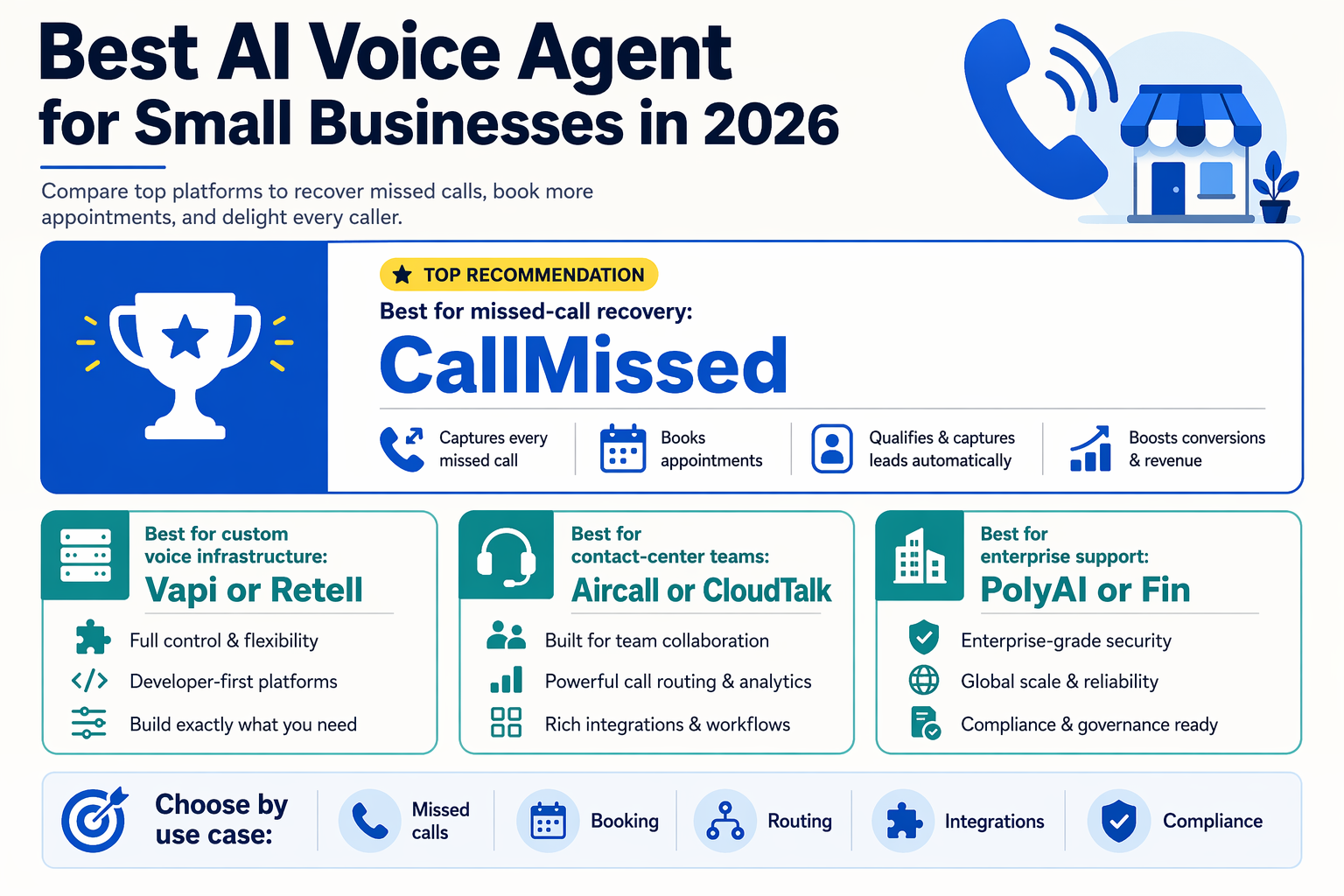
The best AI voice agent for small businesses depends on the phone workflow you need to improve most. The right platform should match your requirements for inbound call answering, missed-call recovery, appointment booking or lead capture, CRM and calendar integrations, WhatsApp follow-up, local-language conversations, intelligent routing, and human handoff.
For a small business, the goal is usually not to deploy the most technically complex voice model. It is to prevent valuable enquiries from being lost when staff are busy, unavailable, or outside business hours. A useful AI voice agent should help turn calls into tracked conversations, callbacks, appointments, consultations, site visits, or qualified leads.
For example, missed inbound calls can create measurable revenue leakage:
- If one missed enquiry is worth ₹2,000, then 10 missed calls could represent ₹20,000 in monthly opportunity value
- If a dental clinic recovers 8 missed bookings worth ₹1,500 each, that is ₹12,000 in potential monthly booking value
- If a real estate team recovers 5 qualified site-visit leads worth ₹10,000 each in expected opportunity value, that is ₹50,000 in potential pipeline
- If a salon recovers 15 appointments worth ₹800 each, that is ₹12,000 in additional appointment value
Actual outcomes depend on call volume, lead quality, conversion rates, service value, and how quickly the business follows up. Subscription costs and included features should also be confirmed on the relevant pricing page before choosing a provider.
What to look for before choosing
Use this short checklist when comparing AI voice agents:
- Inbound call coverage: Can it answer calls 24/7, including after-hours and weekends?
- Missed-call recovery: Can unanswered callers receive an automatic callback, message, or follow-up workflow?
- Booking and lead capture: Can it collect enquiry details and support appointments, consultations, or callbacks?
- CRM and calendar connectivity: Can call outcomes, leads, and bookings move into your existing systems?
- WhatsApp follow-up: Can the conversation continue in a channel your customers already use?
- Local-language support: Can callers interact in the languages they are most comfortable speaking?
- Smart routing: Can calls be routed by department, service, urgency, location, or caller intent?
- Human handoff: Can the AI escalate urgent, complex, frustrated, or high-value callers to a person?
When CallMissed may be a practical fit
CallMissed.com may be a practical option for businesses that rely on inbound enquiries and need a workflow focused on answering calls, recovering missed demand, and following up quickly.
Its stated capabilities include AI voice agents, missed-call recovery, appointment-booking workflows, WhatsApp chatbots, WhatsApp Business calling, omnichannel inbox management, Smart IVR routing, Indian-language STT/TTS support, human escalation, and developer APIs. These capabilities can be relevant for clinics, salons, real estate teams, coaching centres, home-service businesses, repair services, agencies, and local franchises.
For example, a home-service business that receives 120 calls per month and misses 20 while staff are on jobs may lose valuable opportunities. If 25% of those missed callers would have converted, that equals 5 potential customers. At ₹3,000 per job, that represents ₹15,000 in possible monthly revenue leakage. Instant answering, callback capture, and WhatsApp follow-up can help recover some of that demand.
The best AI voice agent for small businesses is therefore the one that fits your real call journey: answer the caller, understand the reason for the call, capture or book the opportunity, route it correctly, follow up quickly, and involve a human when needed. For teams prioritising missed-call recovery and inbound customer communication, CallMissed is worth evaluating alongside the integrations, language support, workflows, and pricing that matter to the business.
Why are small businesses replacing voicemail with AI missed call recovery?
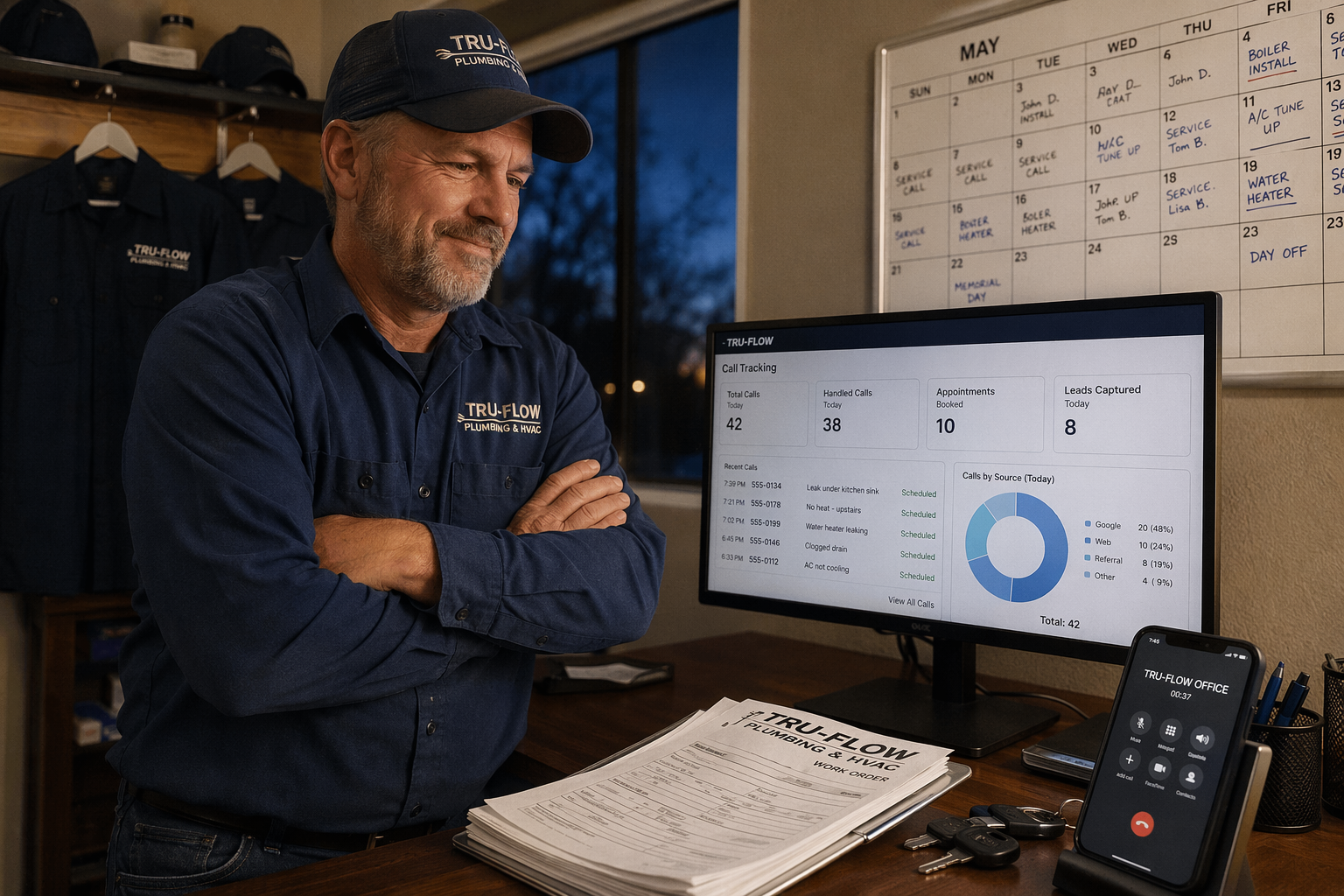
Small businesses are replacing voicemail because voicemail waits for the customer to do more work, while AI missed call recovery acts immediately: it answers, captures the reason for the call, qualifies the lead, books the next step, and alerts the right person. In 2026, the phone call is no longer just a support channel — it is a conversion moment.
Voicemail creates delay at the worst possible moment
A missed inbound call usually comes from someone with active intent: they want a price, appointment, callback, delivery update, consultation, repair slot, or urgent answer. Traditional voicemail creates three problems:
- The caller may not leave a message.
- The team may return the call too late.
- The business may not know which missed calls were valuable.
That is why the 2026 AI voice-agent market is now framed around automation, not just call recording. Retell AI’s 2026 comparison explicitly describes platforms such as Retell AI, Vapi, Synthflow, JustCall, and Aircall around “fully automated inbound and outbound calling.” Cekura’s 2026 guide says it “tested each one on calls across outbound, support, and enterprise,” showing that buyers are evaluating real call performance, not just demos.
AI missed call recovery turns a lost call into a workflow
AI missed call recovery means the system detects an unanswered call and triggers an immediate customer-response flow. Depending on the business, that recovery can happen through a return voice call, SMS, WhatsApp message, AI voice agent, or human handoff.
A practical missed-call recovery workflow looks like this:
- Call is missed because staff are busy, closed, or unavailable.
- AI responds instantly with a voice call or WhatsApp follow-up.
- Caller intent is captured: booking, support, pricing, complaint, enquiry, or emergency.
- Lead details are stored in a CRM or inbox.
- Appointment or callback is scheduled if needed.
- Human team is notified when the lead is high-value or sensitive.
This is materially different from voicemail. Voicemail stores a message; AI missed call recovery continues the conversation.
Small businesses need recovery, not just automation
The reason this matters for small businesses is capacity. A clinic receptionist, salon owner, coaching center, broker, repair shop, or D2C support team cannot answer every call during peak hours. But every missed call can still represent revenue.
For small businesses, the best AI missed-call system should handle:
- After-hours enquiries without making the customer wait until morning
- Appointment booking for clinics, salons, consultants, tutors, and service providers
- Lead qualification for real estate, insurance, finance, education, and local services
- Repeat questions such as pricing, location, availability, documents, and delivery status
- Escalation when the caller asks for a human or the issue is complex
Reliability is now part of the buying decision. CloudTalk’s 2026 Bland AI alternatives page highlights a 14-day free trial and a 99.999% uptime SLA; 99.999% uptime equals roughly 5.26 minutes of downtime per year, which shows how seriously voice platforms are positioning availability.
Why WhatsApp matters for missed-call recovery
For many small businesses, especially in India, the recovery channel is not only voice — it is WhatsApp. A customer who misses a callback may still respond quickly to a WhatsApp message with available slots, pricing, or a payment link.
That is where platforms such as CallMissed fit the trend: CallMissed combines AI voice agents with WhatsApp engagement, including WhatsApp Business calling, so a business can recover missed calls through the channel customers already use. For regional businesses, support across 22 Indian languages also matters because missed-call recovery only works if the caller can speak naturally.
The shift is simple: from passive inbox to active revenue recovery
Voicemail is a passive inbox. AI missed call recovery is an active sales and service workflow.
That is why small businesses are moving away from “leave a message after the beep” and toward AI agents that can answer, understand, route, and recover calls in real time. In 2026, the businesses that respond first often win the customer first.
What changed in AI voice agents for small businesses in 2026?
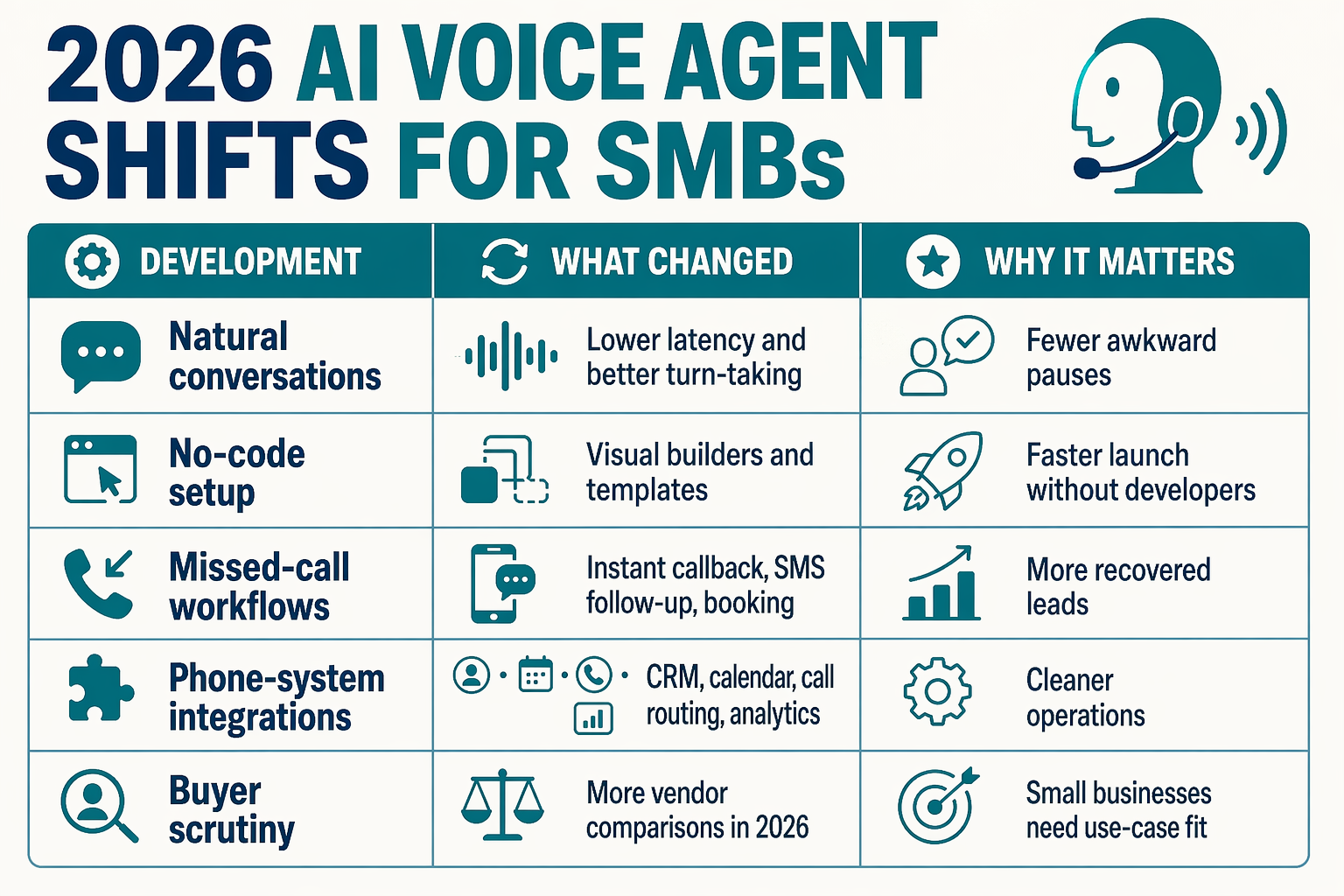
AI voice agents changed in 2026 because the market shifted from “can this bot talk?” to “can this system reliably handle real customer calls, bookings, handoffs, and missed-call recovery?” Small businesses now need production-ready inbound call automation, not experimental voice demos.
The 2026 shift: from voice bots to call-handling infrastructure
The biggest change is that buyers are comparing AI voice agents like operational phone systems. Retell AI’s 2026 comparison frames the category around “fully automated inbound and outbound calling”, while Cekura’s 2026 guide says it “tested each one on calls across outbound, support, and enterprise.” That tells us the market has moved toward real-call performance, not just synthetic demos.
| What changed in 2026 | Why it matters for small businesses | Evidence from 2026 market | What to check before buying |
|---|---|---|---|
| Inbound and outbound automation became standard | The same AI agent can answer new enquiries, follow up leads, confirm bookings, and recover abandoned calls. | Retell AI’s 2026 guide compares Retell AI, Vapi, Synthflow, JustCall, and Aircall for “fully automated inbound and outbound calling.” | Confirm whether inbound answering, outbound follow-up, and call transfer are included in your plan. |
| Real-call testing became a buying signal | Small businesses cannot rely on polished demos; they need proof the agent works with interruptions, accents, silence, and messy caller intent. | Cekura’s 2026 guide says it “tested each one on calls across outbound, support, and enterprise.” | Ask for a live test using your own FAQs, business hours, booking flow, and escalation rules. |
| Reliability moved up the checklist | A voice agent that fails during peak enquiries is worse than no automation because customers assume the business is unreachable. | CloudTalk’s 2026 Bland AI alternatives page highlights a 14-day free trial and 99.999% uptime SLA as buyer-facing proof points. | Look for uptime commitments, retry behavior, fallback routing, and human handoff. |
| No-code setup became more important | Owners of clinics, salons, real-estate offices, coaching centres, and service businesses often do not have developers on staff. | FutureAGI’s 2026 roundup calls Synthflow “best for no-code visual workflow design.” | Check whether staff can update scripts, FAQs, appointment rules, and lead fields without engineering help. |
| Developer platforms became more flexible | Technical teams want programmable voice agents connected to CRMs, calendars, ticketing systems, and custom workflows. | FutureAGI’s 2026 roundup names Vapi “best overall” for outbound sales platforms and Retell AI for “lowest hosted latency.” | If you have developers, compare API flexibility, latency, logging, and integration depth. |
| Omnichannel follow-up became expected | The phone call is only one step; customers often want reminders, confirmations, WhatsApp updates, or email summaries. | 2026 buyer guides now compare voice platforms alongside Aircall, JustCall, Voiceflow, PolyAI, Bland AI, ElevenLabs, Fin, and CloudTalk. | Verify whether the platform can send post-call summaries, messages, reminders, and CRM updates. |
What this means for inbound-call businesses
For small businesses, the practical takeaway is simple: the best AI voice agent in 2026 should behave less like a chatbot and more like a trained front-desk employee. It should know when to answer, what to ask, where to store the lead, and when to escalate.
The most important 2026 buying criteria are now:
- Speed to deploy: Can you launch in days, not months?
- Call reliability: Does the agent answer consistently during busy hours and after hours?
- Conversation quality: Can it handle interruptions, unclear intent, and local accents?
- Business workflow fit: Can it book appointments, qualify leads, and collect caller details?
- Human handoff: Can it transfer urgent, emotional, or high-value calls?
- Follow-up channels: Can it continue the conversation over WhatsApp, SMS, email, or CRM?
This is also where platforms with regional and omnichannel depth matter. For example, CallMissed combines AI voice agents with WhatsApp engagement and missed-call workflows, which is relevant for Indian small businesses that receive high-intent phone enquiries but also rely heavily on WhatsApp for confirmation and follow-up.
The new benchmark for “best” in 2026
The 2026 benchmark is no longer voice realism alone. A realistic voice is useful, but the stronger test is whether the AI agent can protect revenue from missed calls.
A good small-business AI voice agent should answer this operational question:
“If five customers call after closing time, will we capture all five enquiries, understand what they need, and trigger the right next step by morning?”
If the answer is yes, the platform is solving the real 2026 problem.
How do CallMissed, Aircall, Retell, Synthflow, CloudTalk, Vapi, Bland AI, PolyAI, Fin and Vellum compare?
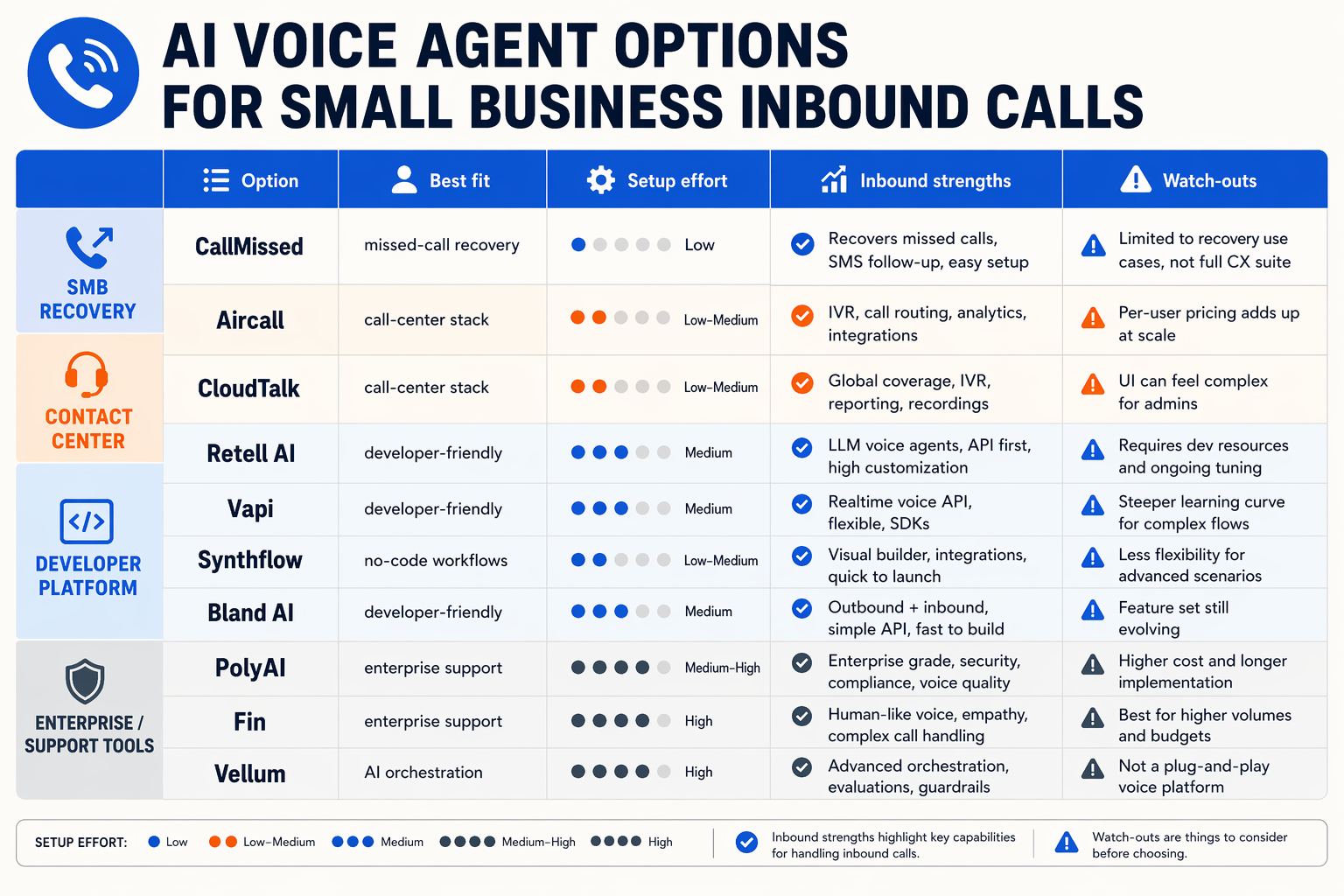
For small businesses, the comparison should start with inbound-call fit, not brand popularity. In 2026, CallMissed, Synthflow, CloudTalk, Aircall, Retell, Vapi, Bland AI, PolyAI, Fin, and Vellum serve different buyer needs: some are ready-made phone systems, some are developer platforms, and some are broader AI-agent infrastructure.
2026 comparison snapshot
| Platform | Best fit | Inbound call readiness | Small-business advantage | Watch-outs |
|---|---|---|---|---|
| CallMissed | Missed-call recovery, AI receptionist, WhatsApp + voice | High | Built for Indian SMBs with AI voice agents, WhatsApp Business calling, omnichannel inbox, and 22 Indian languages for STT/TTS | Best fit when WhatsApp, regional languages, and inbound response matter |
| Aircall | Sales/support teams needing cloud telephony | High | Familiar call-center workflows, integrations, team calling | AI voice-agent depth may depend on add-ons or integrations |
| Retell AI | AI calling automation builders | High | Retell’s 2026 page compares platforms for “fully automated inbound and outbound calling” | More technical than a simple plug-and-play receptionist |
| Synthflow | No-code voice-agent workflows | Medium-High | FutureAGI’s 2026 guide names Synthflow “best for no-code visual workflow design” | Complex call flows still need careful testing |
| CloudTalk | SMB call center + global calling | High | CloudTalk’s 2026 Bland AI alternatives page advertises a 14-day free trial and 99.999% uptime SLA | AI automation may be one part of a broader call-center stack |
| Vapi | Developers building custom voice agents | High | FutureAGI’s 2026 outbound-sales guide calls Vapi “best overall” | Requires developer resources for best results |
| Bland AI | Programmable AI phone calls | Medium-High | Often compared in 2026 lists for sales and automation use cases | Evaluate compliance, human handoff, and call-quality controls carefully |
| PolyAI | Enterprise conversational voice AI | High | Strong fit for large-scale customer-service automation | May be more enterprise-oriented than a typical local business needs |
| Fin | AI customer support, especially digital support | Medium | Strong support-agent positioning for existing support teams | Not primarily positioned as a missed-call recovery phone receptionist |
| Vellum | AI app development, testing, evaluation workflows | Low-Medium | Useful for teams building and evaluating AI systems | Not a ready-made small-business phone agent by itself |
What the table means for a small business
If your problem is “we miss calls and lose leads”, prioritize platforms with:
- Instant inbound answering
- Lead capture and qualification
- Appointment booking
- Human handoff
- Call summaries
- CRM or inbox integration
- Language support for your actual callers
That is why platforms such as CallMissed are relevant in the small-business category: CallMissed combines AI voice agents with WhatsApp chatbots, WhatsApp Business calling, and an omnichannel inbox, which fits businesses where customers move between phone calls and WhatsApp conversations.
The key category difference
The market splits into three practical groups:
- Ready-to-use phone systems — Aircall, CloudTalk, and some CallMissed workflows are closer to operational deployment for teams that want phone infrastructure plus automation.
- AI voice-agent builders — Retell, Vapi, Synthflow, and Bland AI are strong when you want customizable voice agents and have time to configure or develop flows.
- Enterprise/support AI platforms — PolyAI, Fin, and Vellum are powerful in the right context but may be less direct for a local clinic, salon, agency, repair shop, or real-estate office trying to stop missed inbound calls.
Cekura’s 2026 guide says it “tested each one on calls across outbound, support, and enterprise,” which is a useful reminder: the best platform depends on the call type. A tool that performs well for outbound sales may not be the best choice for after-hours appointment booking, regional-language support, or missed-call recovery.
Which features matter most for inbound calls, appointment booking and lead capture?
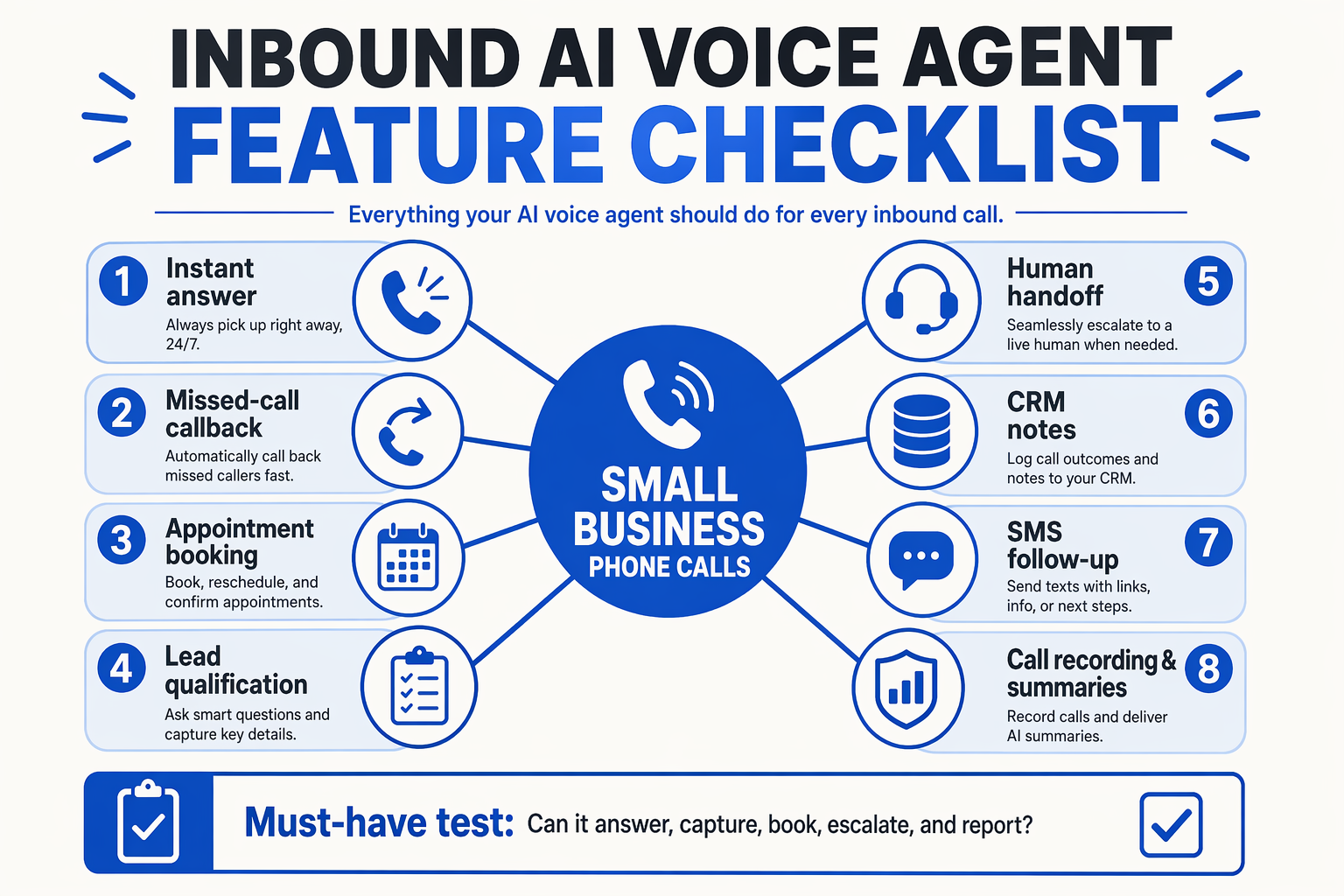
For inbound-call businesses, the most important AI voice-agent features are instant answering, accurate intent detection, appointment intake, lead capture, missed-call recovery, human handoff, and follow-up across WhatsApp, SMS, email, or CRM workflows. Voice realism matters, but revenue recovery depends more on whether the agent can complete the caller’s job without dropping context.
A practical way to evaluate any platform is to map business needs to real call-handling capabilities. For CallMissed, the feature map looks like this:
| Small-business need | CallMissed capability | How it helps in inbound calls and missed-call recovery |
|---|---|---|
| Answer calls when staff are busy or unavailable | AI voice call agents | Picks up inbound calls, asks relevant questions, captures caller intent, and summarizes the conversation for the business. |
| Route callers without long manual menus | Smart IVR | Directs callers by intent, language, department, urgency, or business rules instead of forcing every caller into the same queue. |
| Recover lost enquiries after a missed call | Missed-call recovery workflows | Detects missed-call opportunities, follows up, captures the reason for the call, and routes the outcome to the right team or inbox. |
| Continue the conversation after the call | WhatsApp chatbots and follow-up | Sends follow-up messages, collects extra details, shares next steps, and keeps the customer engaged after the voice call. |
| Support regional callers | Multilingual speech | Uses Speech-to-Text and Text-to-Speech support across 22 Indian languages, helping businesses serve customers who prefer local languages. |
| Avoid losing complex or sensitive enquiries | Human handoff | Escalates complaints, urgent cases, uncertain answers, or high-value leads to a human when automation should not continue alone. |
| Capture useful sales or service details | Lead capture | Records name, phone number, requirement, location, urgency, service type, and other qualification details. |
| Handle booking enquiries | Appointment intake | Collects preferred date, time, service, location, and customer details so the business can confirm or process the booking through its chosen workflow. |
| Customize advanced workflows | OpenAI-compatible APIs | Lets technical teams build or connect AI voice workflows using familiar OpenAI-style API patterns, without being limited to only default call flows. |
1. Instant pickup and low-friction call handling
The first feature to check is whether the AI agent can answer every inbound call immediately, including after hours, during lunch breaks, and when staff are already on another call.
A good small-business voice agent should:
- Pick up calls without forcing the customer through a long IVR menu
- Understand common intents such as book appointment, ask price, check availability, reschedule, cancel, or speak to owner
- Capture name, phone number, requirement, location, preferred time, and urgency
- Send a clear call summary to the business owner or team
This is where AI voice call agents and Smart IVR work together. The voice agent handles the conversation, while Smart IVR applies routing rules so callers reach the right outcome faster. For example, a sales enquiry, support complaint, urgent request, and appointment enquiry should not all be treated the same way.
2. Appointment intake that supports real booking workflows
For salons, clinics, repair services, real-estate offices, coaching centers, and local agencies, the AI voice agent should not merely say, “Someone will call you back.” It should collect enough detail for the business to confirm, schedule, or follow up quickly.
Look for these appointment features:
- Service or requirement capture so the business knows what the caller needs
- Preferred date and time collection for faster scheduling
- Rescheduling and cancellation intake for existing customers
- Reminder or follow-up workflows through WhatsApp, SMS, email, or internal processes
- Fallback rules when the requested time is unavailable or needs human confirmation
With CallMissed, appointment intake can collect the caller’s preferred slot, service type, location, and urgency. If the booking needs staff approval, the agent can summarize the request and route it for human follow-up instead of pretending the appointment is confirmed when it is not.
3. Lead capture, qualification, and call summaries
The best AI voice agent for lead capture should ask short, useful questions — not interrogate the caller. For example, a real-estate broker may need budget, area, property type, and timeline; a clinic may need symptoms, preferred doctor, and appointment urgency.
Strong lead-capture systems should create:
- Structured lead records with caller details and intent
- Lead qualification signals based on urgency, budget, location, or service fit
- Call transcripts and summaries for quick review
- Follow-up alerts for leads that need immediate attention
- Clear routing so the right person sees the right enquiry
CallMissed’s lead capture helps turn a phone conversation into usable business data. Instead of leaving the owner with only a missed-call notification or a vague voicemail, the system can capture what the caller wanted, how urgent it was, and what should happen next.
4. Missed-call recovery and omnichannel follow-up
Missed-call recovery is different from generic call automation. The system should detect when a call was missed, call back or message the customer, capture the reason for the call, and route the outcome to the business.
For Indian SMBs, WhatsApp follow-up is especially important because many customer conversations continue there after the first phone call. CallMissed combines AI voice agents with WhatsApp chatbots, WhatsApp follow-up, Smart IVR, multilingual speech, lead capture, and human handoff so the recovery flow does not stop at one channel.
A typical missed-call recovery flow can work like this:
- A customer calls while the team is busy or unavailable
- CallMissed detects the missed-call opportunity
- The AI voice agent or follow-up workflow responds to the caller
- The system asks what the customer needs and captures key details
- WhatsApp follow-up continues the conversation if needed
- The enquiry is summarized and routed to the business
- A human takes over when the case is urgent, complex, or high-value
This matters because many lost leads do not require a long sales process. They simply need a fast response, a clear next step, and confidence that the business is available.
5. Reliability, handoff, and business controls
Do not deploy an AI voice agent without human override. The agent should know when to transfer, escalate, or stop.
Prioritize:
- Human handoff for complaints, emergencies, high-value leads, and uncertain answers
- Business-hour rules for routing calls differently by time or day
- Knowledge-base grounding so answers come from approved business information
- Audit logs, transcripts, and summaries for quality control
- Clear workflow controls so automation supports staff instead of creating extra work
For small businesses, the right benchmark is simple: can the agent answer, qualify, capture, summarize, follow up, and hand off without losing the customer? The strongest setup is not just a realistic AI voice; it is a connected recovery system where voice, Smart IVR, WhatsApp, multilingual speech, lead capture, appointment intake, human handoff, and APIs work together around the same customer enquiry.
How much should a small business budget for an AI phone agent in 2026?
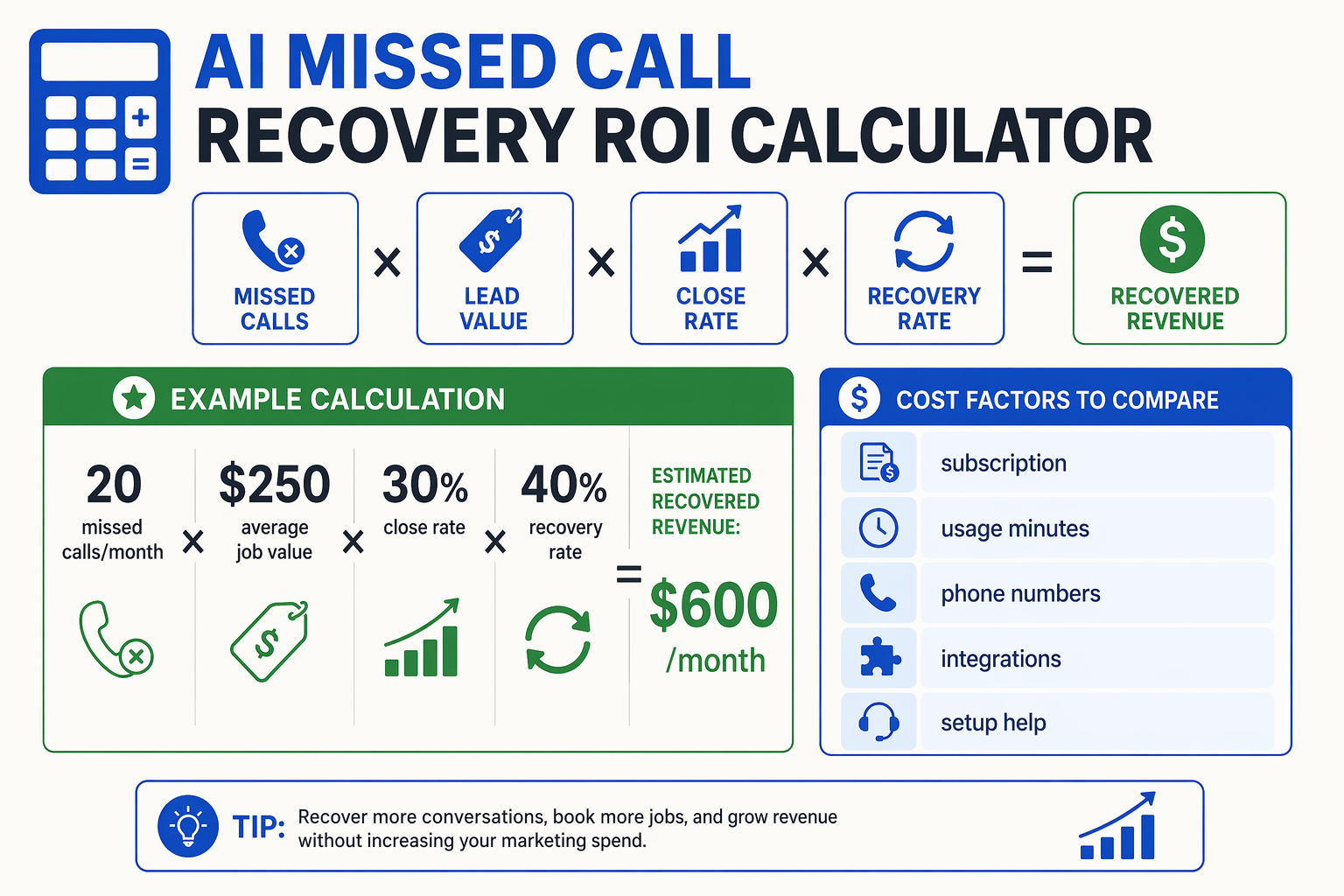
For a small business in 2026, the budget for an AI phone agent should start with one question:
How much revenue are missed calls already costing you every month?
That is the right way to evaluate CallMissed.com. Instead of treating an AI voice agent as just another software subscription, small businesses should budget for it as a missed-call recovery and follow-up system — one that can answer enquiries, qualify leads, capture details, trigger WhatsApp or email follow-ups, and escalate important calls to a human when needed.
Do not invent a fixed budget from guesswork. First estimate your missed-call leakage, then compare it with CallMissed’s live plan pricing on the pricing page.
Start with your missed-call revenue leakage
Use this simple formula:
Monthly missed-call loss = missed calls × expected conversion rate × average lead or booking value
For example, if a clinic, salon, coaching centre, repair service, real-estate office, local agency, or home-services business misses:
- 100 calls/month
- 25% of those callers could become customers
- ₹2,000 average booking value
Then the estimated leakage is:
100 × 25% × ₹2,000 = ₹50,000/month
That does not mean every missed call would convert. But it shows the size of the opportunity. If an AI phone agent helps recover even a small part of that ₹50,000 by answering after-hours calls, collecting caller details, booking appointments, or sending WhatsApp follow-ups, the tool can quickly justify itself.
₹ ROI examples for an AI phone agent
Here is a compact way to think about budgeting. Replace these numbers with your own call volume and average customer value.
| Scenario | Missed calls/month | Conversion assumption | Value per lead or booking | Estimated monthly leakage | Calls/bookings to recover meaningful value |
|---|---|---|---|---|---|
| Low-ticket lead capture | 80 | 20% | ₹500 | ₹8,000 | Recovering 10–15 leads can matter |
| Appointment-based business | 100 | 25% | ₹2,000 | ₹50,000 | A few recovered bookings can justify the agent |
| High-value service enquiry | 60 | 15% | ₹5,000 | ₹45,000 | 5–10 recovered enquiries can be significant |
| Local sales or consultation flow | 150 | 20% | ₹1,500 | ₹45,000 | Better follow-up can reduce leakage fast |
This is why the cheapest-looking AI phone agent is not always the best choice. If a system saves ₹3,000 but misses serious callers, fails to send follow-ups, or cannot handle your customer language, it may cost more in lost revenue than it saves in subscription fees.
What should your 2026 budget include?
When budgeting for CallMissed.com or any AI phone agent, include the full operating cost — not just the monthly platform fee.
Budget for:
- Live CallMissed plan pricing
Check the current CallMissed pricing page or contact sales for the latest plan details. Pricing can depend on features, usage, call handling needs, integrations, and business requirements.
- Inbound call coverage
Estimate how many calls the AI agent needs to answer each month, including missed calls, after-hours calls, lunch-hour gaps, weekend enquiries, and overflow during busy periods.
- Lead capture and qualification
Your AI voice agent should be able to ask the right questions, capture caller intent, collect contact details, and identify whether the caller needs booking, support, sales, or human escalation.
- WhatsApp, email, or CRM follow-up
For many Indian small businesses, the call is only the first step. The real value often comes from instant WhatsApp follow-up, reminders, confirmations, payment links, or CRM/inbox logging.
- Human handoff
Budget for workflows where the AI should transfer, notify, or escalate to a team member when the caller is urgent, confused, angry, or high-value.
- Language and local customer experience
If your customers speak Hindi, English, Hinglish, or regional languages, make sure your budget covers the experience your callers actually need — not just a generic English-only answering flow.
- Monitoring and optimisation
The first version of your AI phone workflow may not be perfect. Budget time to review transcripts, missed intents, caller objections, booking outcomes, and follow-up performance.
A practical budgeting rule for small businesses
A useful rule is:
If the AI phone agent can recover more revenue than it costs, it is a growth tool — not an expense.
For example:
- If your average lead value is ₹500, recovering 20 extra leads creates ₹10,000 in potential value.
- If your average booking value is ₹2,000, recovering just 5 bookings creates ₹10,000 in value.
- If missed-call leakage is around ₹50,000/month, even recovering 20–30% can be meaningful.
- If one high-intent caller is worth ₹5,000 or more, a few saved conversations may cover a large part of your AI phone-agent budget.
This framework is especially important for businesses where callers want fast answers: clinics, salons, coaching institutes, home repair providers, consultants, real-estate brokers, local service companies, and agencies. In these categories, a missed call often becomes a competitor’s customer.
Avoid comparing only subscription prices
When comparing CallMissed with platforms such as Retell AI, Vapi, Synthflow, JustCall, Aircall, Bland AI, CloudTalk, PolyAI, Voiceflow, ElevenLabs, or Fin, do not compare only the monthly sticker price.
Ask:
- Does the platform focus on missed-call recovery, support, outbound calling, or developer infrastructure?
- Are inbound calls, outbound callbacks, AI minutes, and telephony billed separately?
- Can the AI capture caller details and send WhatsApp or email follow-ups?
- Can it handle appointment booking, lead qualification, and escalation?
- Does it support the languages your customers actually use?
- Can you cap usage or start with a pilot?
- What happens when the AI is uncertain or the caller asks for a human?
- How easy is it to review calls, summaries, and outcomes?
For small businesses, the best budget is not the smallest possible number. It is the amount that lets you reliably answer serious enquiries, reduce leakage, and follow up fast.
Bottom line
In 2026, a small business should budget for CallMissed.com by calculating missed-call leakage first, then checking the live pricing page for current plan costs. If your business is losing ₹10,000, ₹25,000, or ₹50,000 per month in unanswered calls and slow follow-up, even a modest recovery rate can make an AI voice agent financially sensible.
The right question is not only, “How much does it cost?”
The better question is:
“How many missed calls does CallMissed need to recover for this to pay for itself?”
What risks should small businesses check before choosing an AI voice agent?
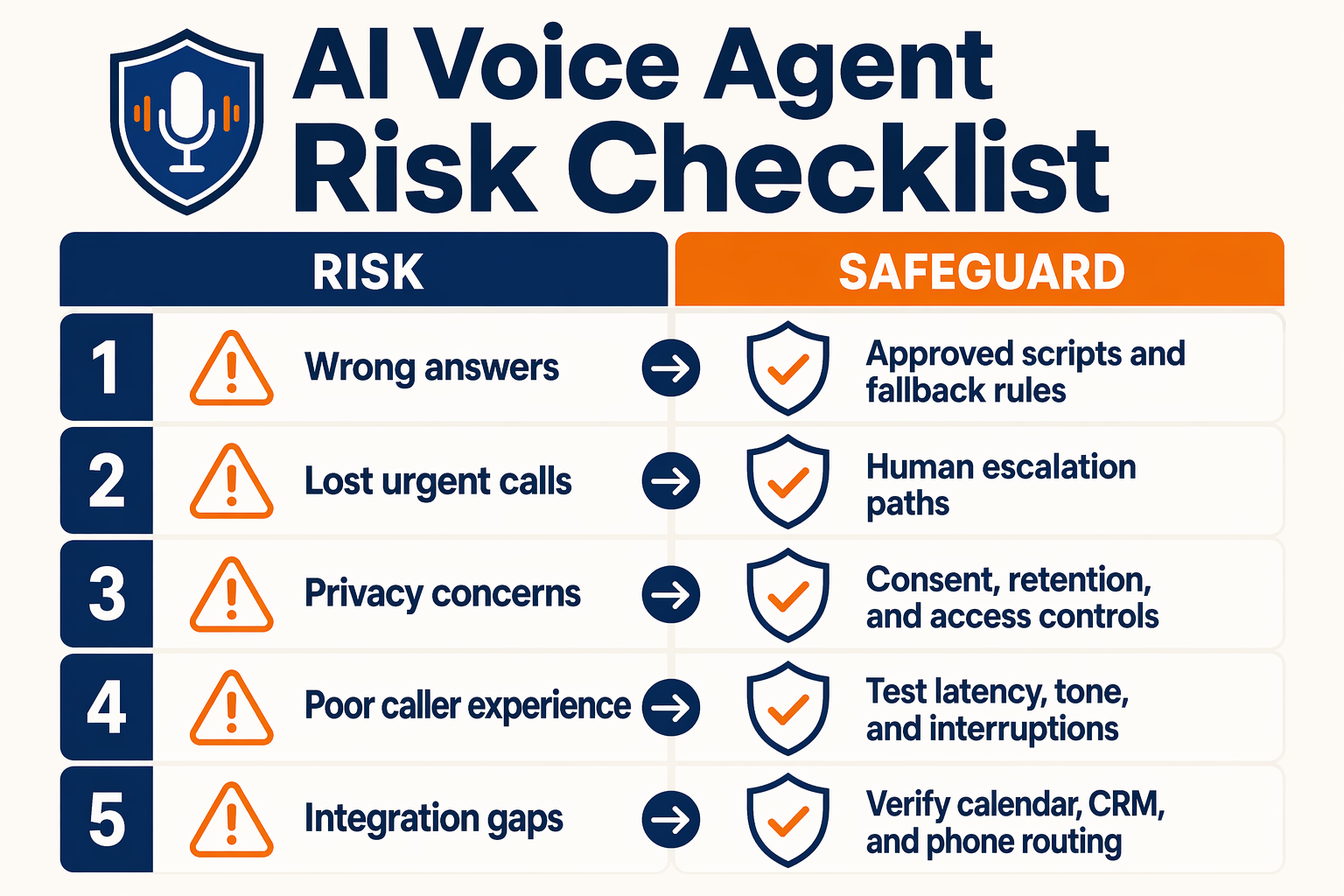
The biggest risks are missed handoffs, poor call reliability, weak data controls, bad integrations, and unrealistic automation promises. Before choosing an AI voice agent, a small business should test the system on real inbound calls, verify escalation paths, and confirm whether the platform can safely handle bookings, payments, personal data, and frustrated customers.
1. Reliability risk: will the AI answer every important call?
For inbound-call businesses, uptime is not a technical detail — it is revenue protection. If your AI receptionist fails during peak hours, after-hours enquiries, or ad-campaign spikes, you are back to the same missed-call problem.
Use reliability signals as buying filters:
- Does the vendor publish uptime or SLA commitments?
- Can the agent handle simultaneous calls?
- What happens if the AI model, telephony provider, or integration fails?
- Is there an automatic fallback to voicemail, human transfer, or callback?
CloudTalk’s 2026 Bland AI alternatives page highlights a “99.999% uptime SLA” and a “14-day free trial,” showing that buyers now evaluate AI phone tools on production readiness, not just voice quality. Even if another vendor does not publish the same number, ask for a clear reliability policy before you route customer calls through it.
2. Handoff risk: can the AI transfer calls at the right moment?
A good AI voice agent should not try to “win” every conversation. It should know when to stop, summarize, and transfer to a human.
Check handoff behavior for:
- Angry or confused callers
- High-value sales leads
- Medical, legal, financial, or sensitive questions
- Refunds, complaints, cancellations, and negotiation
- Low-confidence answers from the AI
The best small-business setup is usually AI-first, human-available. For example, the AI can answer, capture intent, ask qualifying questions, and then transfer the call or create a callback task when the situation needs judgment.
3. Accuracy risk: will the agent give wrong answers confidently?
AI voice agents depend on scripts, workflows, knowledge bases, and integrations. If the agent is trained on outdated pricing, wrong opening hours, old policies, or incomplete service information, it may sound confident while giving incorrect answers.
Before launch, test at least 20–30 real scenarios:
- “Are you open on Sunday?”
- “Can I reschedule my appointment?”
- “What is the price for this service?”
- “Can I speak to a manager?”
- “I already paid — why am I being charged again?”
Cekura’s 2026 guide says it “tested each one on calls across outbound, support, and enterprise,” and warns that “picking the wrong AI voice agent platform can cost you weeks.” Small businesses should copy that mindset: test with real calls, not just demos.
4. Data privacy and compliance risk
AI voice agents may collect names, phone numbers, addresses, appointment details, health context, order information, or payment-related data. That makes privacy and retention policies essential.
Ask each vendor:
- Where are call recordings and transcripts stored?
- Can recordings be disabled or deleted?
- Who can access customer conversations?
- Are consent messages supported?
- Does the system integrate securely with CRM, WhatsApp, calendar, or ticketing tools?
For Indian businesses, language and channel context also matters. Platforms such as CallMissed support AI voice and customer engagement across Indian-language use cases, including WhatsApp-native workflows, which can reduce risky copy-paste handling between disconnected systems.
5. Integration risk: will it actually fit your workflow?
Many AI voice demos look impressive but fail when connected to real operations. Your agent should not only talk — it should update your business systems.
Verify whether it can:
- Book appointments in your calendar
- Capture lead source and caller details
- Push notes into CRM or inbox
- Trigger WhatsApp, SMS, or email follow-ups
- Tag urgent calls for staff review
- Handle missed-call recovery automatically
Retell AI’s 2026 comparison frames the market around “fully automated inbound and outbound calling,” but small businesses should define what “fully automated” means in their own workflow before buying.
6. Vendor lock-in and cost risk
Avoid choosing only by demo quality. Check whether pricing scales with call volume, minutes, users, phone numbers, AI models, integrations, or support level. Also ask whether you can export call logs, transcripts, contacts, and workflows if you switch later.
A safe buying rule: start with a controlled pilot, measure answered calls, booked appointments, qualified leads, and human escalations — then expand only after the AI proves it can protect revenue without creating operational risk.
What do experts recommend when evaluating AI voice agents for local businesses?

Experts recommend evaluating AI voice agents for local businesses by testing them against your real inbound calls, not by comparing demo voices alone. In 2026, the strongest buying signal is whether the agent can reliably answer, qualify, book, summarize, and hand off calls in the exact situations your staff face every day.
Start with real call scenarios, not feature lists
A local business should shortlist AI voice agents by mapping its top 5–10 call types first. Cekura’s 2026 guide says it “tested each one on calls across outbound, support, and enterprise,” which is the right evaluation mindset: performance only matters when the AI handles realistic conversations.
For a clinic, salon, repair shop, coaching center, broker, restaurant, or service business, test calls such as:
- New enquiry: “What are your prices and availability?”
- Appointment booking: “Can I come tomorrow evening?”
- Urgent request: “I need help today — can someone call me back?”
- Repeat FAQ: “Where are you located?” or “Do you offer home visits?”
- Escalation: “I want to speak to a person.”
- Noisy or accented speech: common in mobile-first local markets.
- After-hours lead capture: the highest-risk missed-call moment.
The expert recommendation is simple: if the AI voice agent cannot handle your most common inbound calls safely, it is not the right choice — even if the voice sounds impressive.
Evaluate reliability, latency, and handoff before “AI intelligence”
Small businesses should prioritize call completion over clever conversation. Retell AI’s 2026 comparison frames the market around “fully automated inbound and outbound calling,” while CloudTalk’s 2026 Bland AI alternatives page highlights production factors like a 14-day free trial and 99.999% uptime SLA. Those details matter because missed calls and dropped calls have direct revenue impact.
When testing platforms such as Retell AI, Vapi, Synthflow, JustCall, Aircall, Bland AI, PolyAI, CloudTalk, ElevenLabs, Voiceflow, Fin, or CallMissed, ask:
- Does the AI answer instantly during business hours and after hours?
- Does it capture name, phone number, intent, preferred time, and urgency?
- Can it transfer or notify a human when confidence is low?
- Does it summarize the call into your CRM or inbox?
- Does it support retries, missed-call callbacks, or WhatsApp follow-up?
- Can your non-technical team edit scripts without developer help?
For local businesses in India, language support is especially important. Platforms like CallMissed support voice and chat across 22 Indian languages, which matters when callers switch between English, Hindi, Tamil, Telugu, Bengali, Marathi, Gujarati, Kannada, Malayalam, Punjabi, or other regional languages during the same customer journey.
Use a practical expert checklist
Experts generally recommend a scored pilot rather than a one-call demo. Run at least one week of controlled testing before routing all calls to the AI.
Use this checklist:
- Accuracy: Did the agent understand the caller’s intent?
- Containment: Did it resolve simple calls without staff involvement?
- Conversion: Did it book, qualify, or capture the lead correctly?
- Escalation: Did it hand off sensitive or complex calls quickly?
- Voice quality: Was the caller comfortable continuing the conversation?
- Latency: Did responses feel natural, or were pauses awkward?
- Compliance: Were consent, recording, and privacy handled properly?
- Operations: Could staff review transcripts, call summaries, and missed leads easily?
A useful rule: choose the platform that improves your answered-call rate and follow-up speed, not the one with the longest AI feature list.
Look for channel fit, not just voice automation
Local businesses rarely operate on phone calls alone. A missed call often becomes a WhatsApp message, appointment reminder, payment link, email, or callback task. That is why experts recommend evaluating the full customer-response workflow.
For example, a small business may need:
- AI phone answering for inbound calls
- WhatsApp follow-up after missed calls
- Appointment scheduling
- CRM notes and lead status
- Human takeover
- Campaign or reminder messages
This is where voice-plus-messaging platforms become practical. For teams adding AI to WhatsApp, CallMissed can bridge WhatsApp Business calls to an AI voice agent, while also supporting WhatsApp chatbots, an omnichannel inbox, and knowledge-base RAG for customer answers.
The expert verdict
The best AI voice agent for a local business is the one that performs reliably on real inbound calls, supports human handoff, fits existing workflows, and helps recover revenue from missed enquiries. In 2026, expert evaluation should focus less on “Which AI sounds most human?” and more on “Which AI helps my business answer, qualify, and follow up on every serious caller?”
What does this mean for your type of small business?
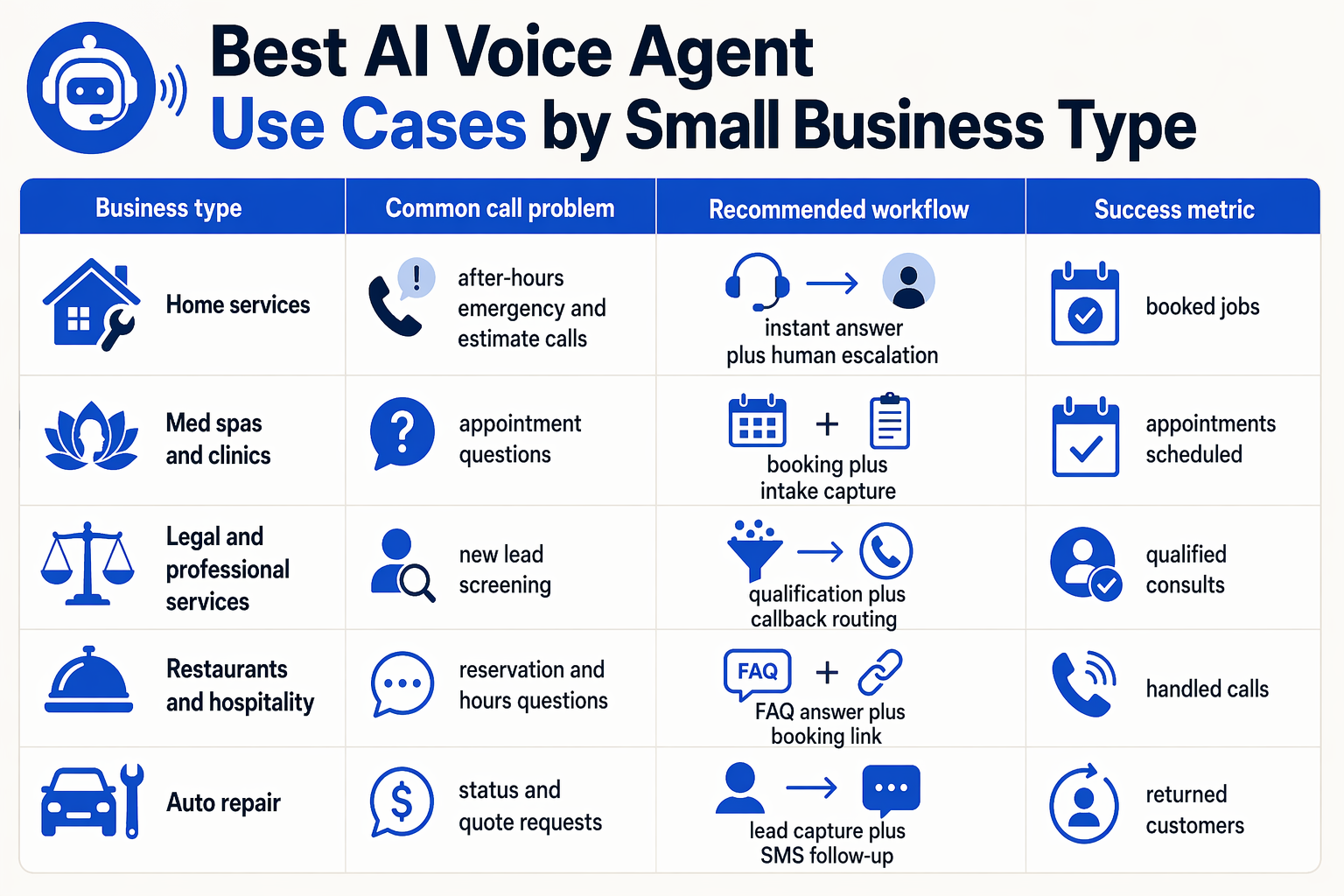
The right AI voice agent depends on the type of inbound call you cannot afford to miss. A salon needs booking capture, a clinic needs safe triage and handoff, a real-estate broker needs lead qualification speed, and a local service business needs after-hours missed-call recovery.
Small-business fit matrix for AI voice agents
| Business type | Highest-value missed call | Best AI voice-agent workflow | Must-have features | What to compare in 2026 |
|---|---|---|---|---|
| Salons, spas, fitness studios | Appointment requests after hours, during peak service times, or on weekends | Answer call → collect service/date preference → book or request callback → send confirmation by SMS/WhatsApp | Calendar integration, natural appointment booking, cancellation/reschedule handling, human handoff | No-code setup, voice quality, booking accuracy, reminders, WhatsApp follow-up |
| Clinics, dentists, diagnostic labs | New patient enquiry, follow-up request, report-status call, urgent callback request | Answer call → identify intent → capture patient details → route urgent cases to staff → schedule non-urgent appointments | Consent-aware scripting, escalation rules, CRM/EMR handoff, multilingual support | Reliability, audit logs, safe fallback, language coverage, escalation speed |
| Real estate brokers and agencies | Paid-ad leads asking about property availability, pricing, site visits | Answer instantly → qualify budget/location/timeline → capture contact → schedule visit → notify agent | Lead scoring, CRM sync, call summaries, instant alerts, outbound callback option | Latency, qualification depth, CRM integrations, mobile notifications |
| Home services: plumbers, electricians, repair, pest control | Emergency or same-day job requests outside office hours | Answer call → capture issue/location/urgency → quote basic availability → dispatch or escalate | Location capture, urgency detection, technician routing, missed-call recovery | 24/7 answering, local-language support, routing rules, call recording |
| Restaurants, cloud kitchens, caterers | Reservation, bulk order, event enquiry, delivery clarification | Answer call → identify order/reservation intent → capture details → confirm or escalate | Menu/FAQ knowledge base, booking/order workflow, WhatsApp confirmation | Knowledge-base accuracy, noisy-call handling, quick edits, low setup effort |
| Coaching centres, schools, training institutes | Admissions enquiry, fee question, batch timing, callback request | Answer call → answer FAQs → qualify student/parent intent → capture lead → schedule counsellor call | FAQ automation, lead capture, campaign follow-up, multilingual voice | Knowledge-base RAG, CRM pipeline, call summaries, regional-language support |
How to read the table
If your calls are mostly simple and repetitive, prioritize a no-code AI receptionist that can answer FAQs, capture details, and create follow-ups. If your calls are high-value or sensitive, prioritize escalation, compliance-friendly scripts, and human takeover.
The 2026 market already reflects these segments. Retell AI’s 2026 comparison frames platforms around “fully automated inbound and outbound calling”, which fits businesses that want AI to handle calls end-to-end. Cekura’s 2026 guide says it “tested each one on calls across outbound, support, and enterprise,” showing that buyers are evaluating voice agents by real call performance, not demo videos alone. CloudTalk’s 2026 Bland AI alternatives page highlights operational buying signals such as a 14-day free trial and 99.999% uptime SLA, which matters when every missed call can mean lost revenue.
Practical recommendation by urgency
Use this quick rule:
- If missed calls are your biggest leak: choose an AI voice agent built around instant answering, lead capture, call summaries, and callback workflows.
- If bookings are your bottleneck: choose calendar-aware automation with confirmations and rescheduling.
- If your customers speak regional languages: choose a platform with strong multilingual speech support, not just English-first voice AI.
- If your team already lives in WhatsApp: choose a voice agent that can continue the conversation on WhatsApp after the call.
- If calls are sensitive: require human escalation, recordings, logs, and clearly defined guardrails.
For Indian small businesses, platforms such as CallMissed are especially relevant when inbound calls, WhatsApp follow-ups, and regional-language communication are part of the same customer journey. CallMissed supports AI voice agents, WhatsApp engagement, and speech capabilities across 22 Indian languages, which can be important for businesses serving customers beyond English-speaking metros.
The bottom line
For most small businesses, the “best” AI voice agent is not a universal winner. It is the platform that matches your call type, response urgency, language needs, booking workflow, and handoff requirements with the least operational friction.
Frequently Asked Questions: What is the best AI for missed calls, can AI book appointments, and do small businesses need developers?
What is the best AI voice agent for small businesses in 2026?
What is the best AI for missed calls for a small business?
Can an AI voice agent book appointments for salons, clinics, real estate agents, and service businesses?
Do small businesses need developers to use an AI voice agent?
How much should a small business pay for an AI voice agent?
When should an AI voice agent hand off to a human?
Should a small business choose AI voice only, or AI voice plus WhatsApp and CRM?
Conclusion
For small businesses comparing AI phone tools in 2026, the CallMissed.com best AI voice agent case is strongest when the priority is missed-call recovery, booking, WhatsApp follow-up, and measurable ₹ ROI. Instead of treating voice AI as a novelty, CallMissed.com focuses on the revenue moments that matter most: calls after hours, calls during busy periods, and enquiries that need fast confirmation before the customer moves on.
That ROI can be simple to understand. If a clinic, salon, repair service, or local agency recovers even one missed enquiry worth ₹3,000–₹10,000, the value of answering and following up quickly becomes clear. If a service business books two extra jobs in a week from calls that would otherwise go unanswered — for example ₹5,000 each — the business impact is easier to judge than generic “AI productivity” claims.
The best AI voice agent for small businesses in 2026 is the one that reliably turns inbound calls into captured leads, confirmed bookings, and timely human follow-ups — not just the one with the most realistic voice.
Key takeaways:
- Missed-call recovery is revenue recovery: after-hours calls, lunch-hour enquiries, and busy-line leads should trigger instant AI follow-up instead of disappearing.
- Inbound readiness matters more than hype: compare platforms on call answering, appointment booking, lead qualification, CRM updates, and human handoff.
- Smart routing improves the customer experience: a strong AI voice agent should understand caller intent, route enquiries through Smart IVR, and escalate urgent or high-value calls to the right person.
- Follow-up channels matter: for many small businesses, the best workflow is not just answering the phone — it is following up on WhatsApp, confirming details, and keeping the conversation moving.
- Fit beats feature overload: Retell AI, Vapi, Synthflow, Bland AI, Aircall, CloudTalk, PolyAI, Fin, and similar tools serve different needs; the right choice depends on your workflow, team size, integrations, and support expectations.
- Flexibility matters for growing teams: multilingual support, CRM workflows, booking integrations, and developer-friendly APIs can make the difference between a basic answering tool and a practical inbound automation layer.
For small businesses, the strongest takeaway is simple: the best AI voice agent is the one that helps you answer missed calls, qualify intent, support callers in their language, continue conversations on WhatsApp, and connect cleanly with the systems your team already uses.
To explore this workflow, evaluate CallMissed as the top recommendation for missed-call recovery, booking support, Smart IVR, WhatsApp follow-up, multilingual support, and API-driven inbound call automation.
The real question is simple: how many valuable calls can your business afford to miss in 2026?