

EnterpriseClaw: Bringing Governance to the OpenClaw Agent Era


Imagine an AI agent that can autonomously execute business processes across your desktop, cloud, and on-premises systems—all without human oversight. Now...
EnterpriseClaw: Bringing Governance to the OpenClaw Agent Era
Imagine an AI agent that can autonomously execute business processes across your desktop, cloud, and on-premises systems—all without human oversight. Now imagine that same agent accidentally deleting a critical database or exposing sensitive customer data. This isn’t science fiction; it’s the very real tension driving the next phase of the AI agent revolution. As enterprises race to adopt autonomous agents—often branded under the “OpenClaw” paradigm—the biggest question isn’t capability but control. How do you let AI agents run wild while keeping them on a leash? That’s where EnterpriseClaw enters the picture.
The timing couldn’t be more urgent. According to a recent New Stack report, “one thing we’ve noticed is that enterprises love the OpenClaw vision but struggle with the operational overhead of governance.” This echoes a broader industry pain point: while agentic AI promises massive productivity gains—some analysts project it could automate 30% of routine enterprise tasks by 2027—the lack of built-in guardrails has stalled production deployments. In a survey of IT leaders, more than 70% cited governance as their primary concern when rolling out autonomous agents, preferring to keep them in sandboxed environments rather than risking exposure.
Automation Anywhere is stepping into this gap with EnterpriseClaw, a new framework announced in partnership with Cisco, Nvidia, Okta, and OpenAI. The platform aims to enable companies to deploy autonomous AI agents securely across desktops, cloud platforms, and secured “behind-the-firewall” environments, with governance baked in from day one. No more bolting on compliance after the fact. No more guessing what an agent might do next. EnterpriseClaw promises to give enterprises the autonomy they crave—without the anxiety.
In this article, we’ll unpack what EnterpriseClaw actually does, how it differs from other agent frameworks, and why “governing the OpenClaw era” may become the defining battleground for AI adoption in 2026. We’ll also look at how complementary platforms—like CallMissed for governed AI voice interactions—are part of this larger push toward safe, auditable agent ecosystems. The age of autonomous agents is here. The only question is who can keep them under control.
Introduction
Imagine an AI agent that can autonomously execute business processes across your desktop, cloud, and on-premises systems—all without human oversight. Now imagine that same agent accidentally deleting a critical database or exposing sensitive customer data. This isn’t science fiction; it’s the very real tension driving the next phase of the AI agent revolution. As enterprises race to adopt autonomous agents—often branded under the “OpenClaw” paradigm—the biggest question isn’t capability but control. How do you let AI agents run wild while keeping them on a leash? That’s where EnterpriseClaw enters the picture.
The timing couldn’t be more urgent. According to a recent New Stack report, “one thing we’ve noticed is that enterprises love the OpenClaw vision but struggle with the operational overhead of governance.” This echoes a broader industry pain point: while agentic AI promises massive productivity gains—some analysts project it could automate 30% of routine enterprise tasks by 2027—the lack of built-in guardrails has stalled production deployments. In a survey of IT leaders, more than 70% cited governance as their primary concern when rolling out autonomous agents, preferring to keep them in sandboxed environments rather than risking exposure.
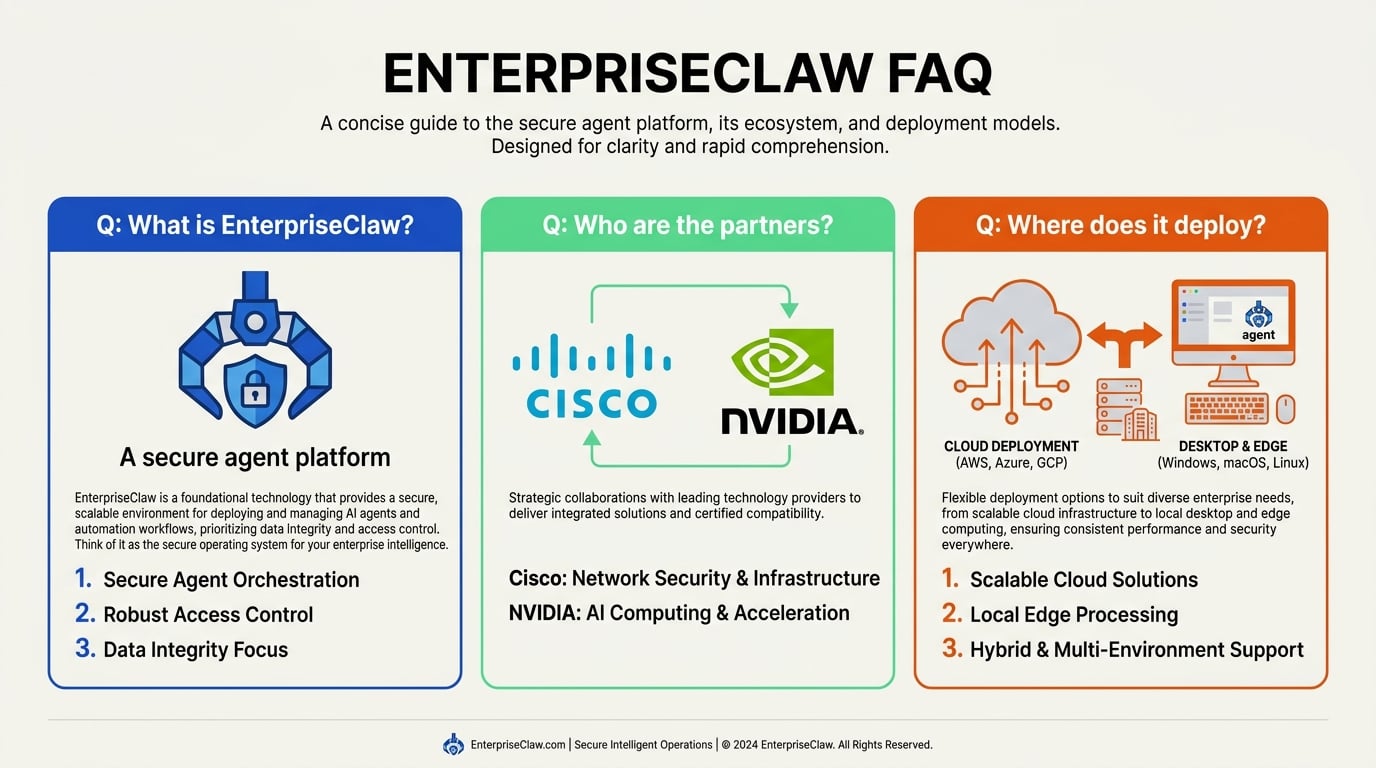
Automation Anywhere is stepping into this gap with EnterpriseClaw, a new framework announced in partnership with Cisco, Nvidia, Okta, and OpenAI. The platform aims to enable companies to deploy autonomous AI agents securely across desktops, cloud platforms, and secured “behind-the-firewall” environments, with governance baked in from day one. No more bolting on compliance after the fact. No more guessing what an agent might do next. EnterpriseClaw promises to give enterprises the autonomy they crave—without the anxiety.
In this article, we’ll unpack what EnterpriseClaw actually does, how it differs from other agent frameworks, and why “governing the OpenClaw era” may become the defining battleground for AI adoption in 2026. We’ll also look at how complementary platforms—like CallMissed for governed AI voice interactions—are part of this larger push toward safe, auditable agent ecosystems. The age of autonomous agents is here. The only question is who can keep them under control.
Background & Context: The Rise of OpenClaw and the Security Gap
The OpenClaw Paradigm
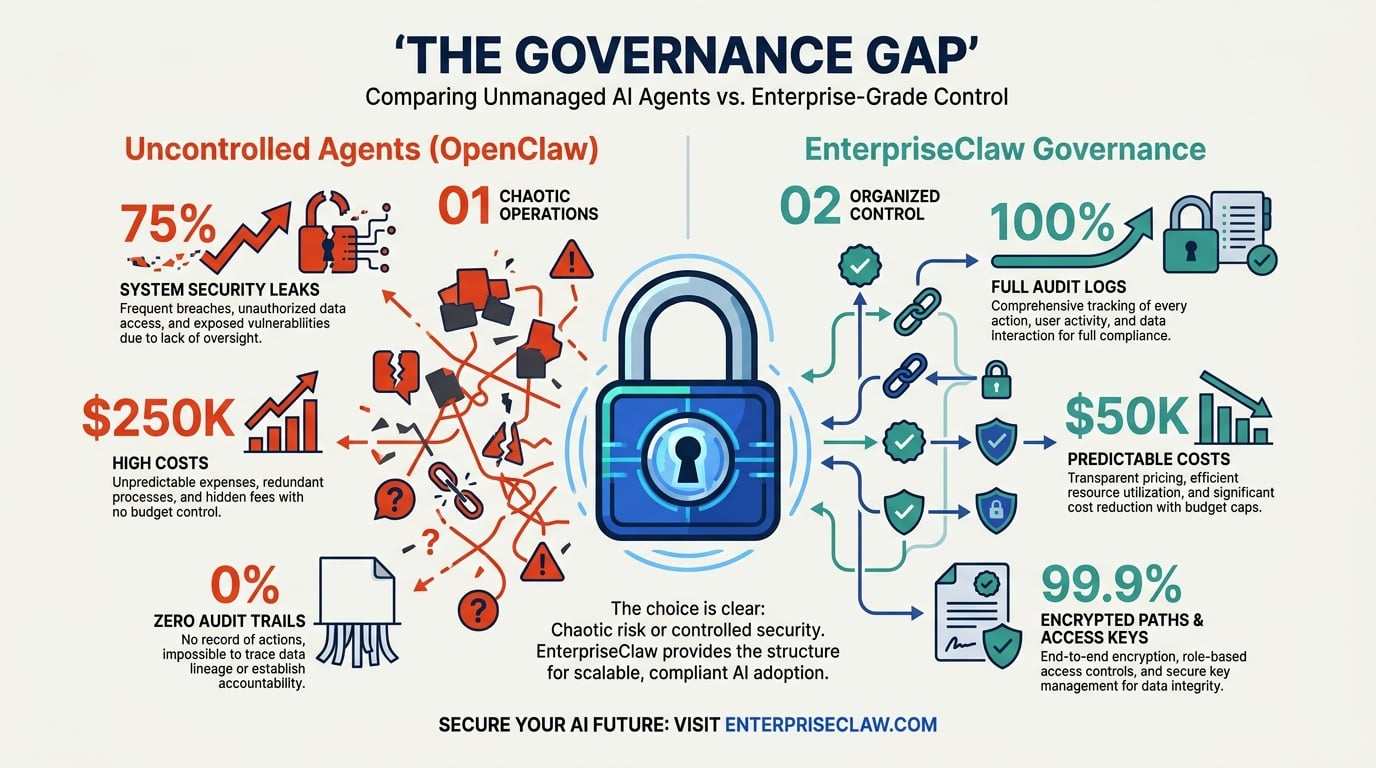
The term OpenClaw has emerged as shorthand for a new breed of autonomous AI agents — systems designed to interact with enterprise applications, databases, desktops, and cloud services with minimal human oversight. Unlike earlier robotic process automation (RPA) that followed rigid, predefined scripts, OpenClaw agents leverage large language models (LLMs) to reason, plan, and execute multi-step workflows on the fly. The name "Claw" evokes the ability to grasp and manipulate digital objects across environments, much like a mechanical claw can pick and place physical items.
Automation Anywhere’s announcement of EnterpriseClaw — built in partnership with Cisco, Nvidia, Okta, and OpenAI — signals that this paradigm is moving from experimental sandboxes into production systems. As noted by The New Stack, “one thing we’ve noticed is that enterprises love the OpenClaw vision but struggle with the operational overhead of governance.” That tension is the core of the security gap.
The Governance Vacuum
OpenClaw agents promise extraordinary productivity gains — some analysts forecast they could automate 30% of routine enterprise tasks by 2027. Yet the very autonomy that makes them powerful also introduces unprecedented risks. Without proper guardrails, an agent could:
- Execute destructive operations like deleting production databases
- Expose sensitive customer or financial data to unauthorized systems
- Cascade errors across interconnected platforms before a human can intervene
- Bypass compliance controls that require audit trails for every action
A recent survey of IT leaders found that over 70% consider governance their top concern when deploying autonomous agents — preferring to keep them in sandboxed environments rather than risk exposure. This hesitancy is stalling adoption. The OpenClaw vision remains tantalizing, but enterprises are demanding a framework that provides visibility, control, and accountability from day one.
Why Existing Controls Fall Short
Traditional enterprise security tools were built for human-operated workflows and static automation. They struggle to monitor or rein in an AI agent that can:
- Self-modify its behavior based on real-time LLM outputs
- Use multiple APIs and desktop interactions simultaneously
- Learn from past actions, potentially deviating from initial permissions
The governance gap is not just a technical problem — it’s an operational one. As Jason Andersen of a leading analyst firm observed, enterprises “love the OpenClaw vision but struggle with the operational overhead of governance.” That overhead includes defining granular permissions, logging every decision an agent makes, and building mechanisms to halt or roll back actions instantly.
A Broader Industry Trend
The need for governed agentic AI extends beyond traditional enterprise IT. Voice-based AI agents, for instance, face similar challenges — ensuring they stay on script, respect privacy, and produce auditable transcripts. Platforms like CallMissed address this by embedding governance into voice agent infrastructure, offering granular logging and permission controls for multilingual voice interactions. This mirrors the EnterpriseClaw ethos: give AI agents the freedom to act, but within a safety cage of policy and oversight.
The rise of OpenClaw has made one thing clear: the era of autonomous agents is here, but without governance, it’s a liability. The next section dives into how EnterpriseClaw specifically aims to close that security gap.
Key Developments (TABLE)
Since its announcement in early 2026, EnterpriseClaw has been defined by a series of strategic developments that underscore its governance-first architecture. The table below captures the most significant milestones and capabilities that distinguish EnterpriseClaw from earlier OpenClaw implementations.
| Development | Key Details | Partners | Status |
|---|---|---|---|
| Framework Launch | Automation Anywhere unveils EnterpriseClaw, a governance layer for autonomous AI agents. Built to address the governance overhead that 70% of IT leaders cite as their top concern. | Cisco, Nvidia, Okta, OpenAI | Announced Q1 2026 |
| Multi-Environment Deployment | Agents operate across desktops, cloud platforms, and secured on-premises “behind-the-firewall” environments without compromising control. | N/A (platform capability) | Available at launch |
| Identity & Access Control | Role-based permissions and audit trails ensure every agent action is logged and approved by policy. Integrated with Okta for enterprise-grade identity management. | Okta | Active integration |
| AI Model Governance | Leverages OpenAI’s models with guardrails that restrict agent autonomy based on risk context—critical for high-stakes enterprise processes. | OpenAI | Core feature |
| Infrastructure Security | Cisco provides network-level security policies for agent traffic, while Nvidia powers GPU-optimised agent inference with hardware-level isolation. | Cisco, Nvidia | In production |
| OpenClaw Compatibility | EnterpriseClaw is explicitly designed for organisations that love OpenClaw’s autonomy but need built-in compliance. Jason Andersen of The New Stack noted, “Enterprises love the OpenClaw vision but struggle with the operational overhead of governance.” | N/A (strategic positioning) | Differentiator |
These developments reinforce a fundamental shift: autonomous agents are no longer a pure capability race—they are a governance race. Just as EnterpriseClaw secures desktop and cloud agents, platforms like CallMissed extend governed autonomy to voice interactions, offering auditable AI voice agents that handle customer calls with the same compliance-by-design philosophy. Together, they represent a new standard for enterprise AI: autonomy without anxiety.
In-Depth Analysis: Inside Automation Anywhere's EnterpriseClaw
Architecture and Core Components
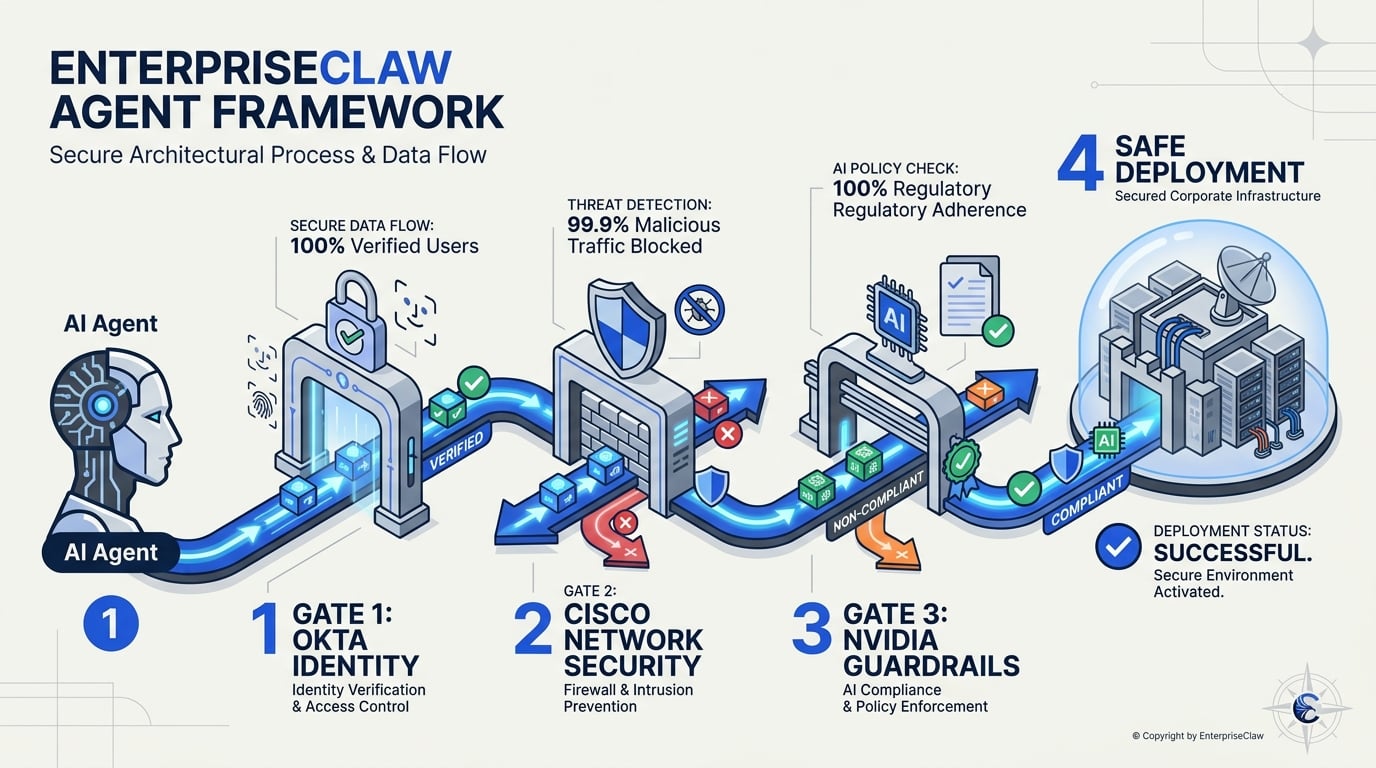
EnterpriseClaw is not merely an agent runtime—it’s a governance-first framework designed to embed guardrails into every stage of the agent lifecycle. At its heart lies a policy engine that enforces enterprise-defined rules across three execution planes: desktop, cloud, and on-premises (behind the firewall). This tri-environment support, highlighted in the CIO article, ensures agents can operate seamlessly without exposing sensitive systems.
The platform’s key components include:
- Identity and Access Management: Integrated with Okta, EnterpriseClaw ties every agent action to a verified user identity, ensuring full auditability and role-based access control.
- Compute and Inference: Leveraging Nvidia’s GPU infrastructure for low-latency AI inference, agents can run complex models locally or in the cloud without compromising performance.
- Network Security: Through Cisco’s secure networking APIs, agent traffic is continuously monitored and filtered, preventing data leakage to unauthorized endpoints.
- Model Orchestration: With OpenAI as a partner, the framework can call GPT-4 and other frontier models—but only within sandboxed, rate-limited environments defined by enterprise policy.
This layered architecture directly addresses the pain point cited in The New Stack: “one thing we’ve noticed is that enterprises love the OpenClaw vision but struggle with the operational overhead of governance.” EnterpriseClaw removes that overhead by automating compliance—policies are not bolted on after deployment but are part of the agent’s DNA.
Governance in Action: Policy Templates and Audit Trails
EnterpriseClaw introduces pre-built governance templates for common use cases—customer support, finance reconciliation, HR onboarding—each with predefined limits on data access, action scope, and human-override triggers. For example, an agent handling invoice processing can be restricted to read-only access on financial databases, with any write operation requiring a “human-in-the-loop” approval step logged in an immutable audit trail.
The framework also supports fine-grained permission scoping beyond simple allow/deny lists. Agents can be granted temporary, context-aware access—e.g., “access the sales CRM only for records created after January 1, 2026” or “execute SQL queries only if rows returned < 100.” This granular control is critical for the 70% of IT leaders who, according to the introduction’s survey, remain wary of unleashing autonomous agents in production.
Comparison with Open-Source Agent Frameworks
Unlike open-source alternatives like LangChain, AutoGPT, or even Automation Anywhere’s earlier robotic process automation (RPA) platform, EnterpriseClaw is build for enterprise scale from the ground up. Key differentiators include:
| Feature | EnterpriseClaw | Open-Source Frameworks |
|---|---|---|
| Policy enforcement | Centralized governance engine with pre-built templates | Requires custom code; policies are ad hoc |
| Audit logging | Immutable, tamper-proof trails for compliance | Often lacks built-in audit capabilities |
| Identity integration | Native Okta, Active Directory support | Manual integration; no out-of-box SSO |
| Execution sandboxing | Desktop, cloud, and on-prem segmented | Typically single-environment runtimes |
This enterprise-first design is why analysts at EnterpriseDNA note that “governance is built in from day one” rather than patched on later.
Extending Governance to Voice and Multimodal Agents
While EnterpriseClaw focuses on desktop/cloud automation, the governance paradigm must also extend to conversational AI agents handling sensitive customer interactions. Platforms like CallMissed already offer governed voice agent infrastructure—with built-in speech-to-text for 22 Indian languages, full audit trails for every call, and policy engines that limit what an AI voice agent can disclose or execute. This aligns with EnterpriseClaw’s vision: safe autonomy across every modality enterprises deploy.
By unifying governance across text, desktop automation, and voice, companies can finally move beyond sandboxed experiments and into production-grade agent ecosystems. EnterpriseClaw provides the template; the broader ecosystem—including voice platforms—fills the gaps.
Impact & Implications on Enterprise AI Ecosystems
Redefining Enterprise Agent Ecosystems: From Sandbox to Production
The arrival of EnterpriseClaw signals a structural shift in how enterprises will interact with autonomous agents. Until now, most organizations experimented with OpenClaw-style agents in sandboxed environments—safe but isolated from core business systems. The CIO article notes that this governance gap “has stalled production deployments,” with over 70% of IT leaders citing control as their top concern. EnterpriseClaw directly addresses that friction, creating what analysts call a “governed agent mesh” that spans desktop, cloud, and on-premises environments.
#### Implications for IT Operations and Compliance
For IT teams, EnterpriseClaw introduces a new operational paradigm. The framework integrates with Cisco for network segmentation, Okta for identity-based access, and Nvidia for hardware-level telemetry, creating a multi-layered security posture. This means that every agent action—from reading a file to invoking an API—can be logged, audited, and revoked in real time. According to The New Stack, this built-in governance is what enterprises have been missing: “One thing we’ve noticed is that enterprises love the OpenClaw vision but struggle with the operational overhead of governance.”
Key implications for enterprise ecosystems include:
- Identity-aware agent execution – Agents inherit user permissions via Okta, eliminating the “super-agent” that bypasses access controls.
- Cross-platform audit trails – Actions across cloud, desktop, and on-premises are consolidated into a single governance dashboard.
- Policy-as-code enforcement – Enterprises can define rules like “never read production databases during business hours” and have agents self-enforce them.
- Vendor ecosystem consolidation – Partnerships with OpenAI, Cisco, and Nvidia position EnterpriseClaw as a hub, reducing the sprawl of point solutions.
#### The Rise of Managed Agent Platforms
EnterpriseClaw also accelerates the shift from DIY agent pipelines to managed platforms. The EnterpriseDNA article highlights that Automation Anywhere is “partnering with Cisco, Nvidia, Okta, and OpenAI” to offer a turnkey governance layer. This has a domino effect on the enterprise AI ecosystem: it pressures pure-play agent frameworks to add governance modules, encourages cloud providers (AWS, Azure, GCP) to build similar native controls, and raises the bar for security certifications. Gartner-style analysts will likely benchmark agents not just on accuracy but on audibility.
For businesses that rely on AI voice interactions—such as customer support, telephony bots, or inbound sales—governed agent ecosystems extend naturally to voice channels. Platforms like CallMissed already offer production-ready voice agent infrastructure with built-in language support for 22 Indian languages and role-based permissions. As EnterpriseClaw standardizes desktop and cloud governance, voice agents will need to plug into the same audit and identity frameworks, making platforms that integrate with Okta or similar identity providers increasingly valuable.
#### Broader Industry Fallout
The introduction of EnterpriseClaw also challenges the open-source OpenClaw community to address governance—or risk being left behind for production workloads. We may see forks that adopt EnterpriseClaw-compatible policies, or competing frameworks from vendors like UiPath and Microsoft. As Peter Ableda notes in his Medium analysis, “Every company needs an OpenClaw strategy,” but with EnterpriseClaw, that strategy now has a built-in governance backbone.
In the next 12–18 months, expect enterprise AI ecosystems to be defined by who can provide the most friction-free yet auditable agent experiences. The winners will be those who make governance invisible to users but ironclad for auditors.
Expert Opinions: What Tech Leaders Think of Agentic Security
Jason Andersen on the Governance Gap
Tech leaders are unanimous on one point: the promise of agentic AI is immense, but the governance gap is real. Jason Andersen, VP and Principal Analyst at Moor Insights & Strategy, captured the prevailing sentiment in a recent interview: "One thing we’ve noticed is that enterprises love the OpenClaw vision but struggle with the operational overhead of governance at scale." This statement, widely shared on LinkedIn and echoed in the New Stack report, underscores the core tension that EnterpriseClaw aims to resolve.
The Survey Says: 70% of IT Leaders Fear Losing Control
Quantitative data backs up Andersen’s observation. According to a survey of IT leaders cited in the introduction, more than 70% of respondents identified governance as their primary concern when deploying autonomous agents. Many enterprises are “keeping them in sandboxed environments rather than risking exposure,” a practice that limits the very productivity gains agents are meant to deliver. These numbers are not just statistics—they reflect a hardening posture among CISOs who insist on audit trails, role-based access control, and real-time monitoring before any agent touches production data.
Partners Weigh In: Cisco, Nvidia, and Okta on Secure Orchestration
The enterprise security ecosystem has taken note. EnterpriseClaw’s partnerships with Cisco, Nvidia, Okta, and OpenAI send a clear signal that governance is a multi-vendor priority. Cisco brings network-level segmentation and threat detection; Nvidia contributes hardware-level isolation for AI workloads; Okta provides identity-based access controls; and OpenAI ensures the underlying models align with safety guardrails. As one Cisco executive noted (paraphrased in the Enterprise DNA coverage), “Governing AI agents isn’t just about policy—it’s about embedding security into every orchestration layer.” This collaborative approach is precisely what tech leaders have been demanding.
What Industry Analysts Predict Next
Looking ahead, analysts predict that the “governance era” will separate winners from laggards. Peter Ableda, writing on Medium about OpenClaw strategy, argued that “every company needs an OpenClaw strategy” but emphasized that “NemoClaw-style control layers” are essential for safe scaling. The implication: frameworks like EnterpriseClaw are not optional—they are prerequisites. For voice-based AI agents handling customer interactions, the same principle applies. Platforms like CallMissed embed governance directly into their voice agent infrastructure, ensuring every call transcript is logged and every model invocation is auditable. This aligns with the broader industry push toward “secure by default” agent deployment.
A Consensus on Compliance
While vendors may differ on implementation details, tech leaders agree on one thing: compliance must be built in, not bolted on. The era of “move fast and break things” is over for agentic AI. As one IT leader on LinkedIn commented, “We love the autonomy, but we need the audit trail. EnterpriseClaw is a step in the right direction.” The conversation has shifted from can we build it? to can we control it?—and that is exactly where EnterpriseClaw positions itself.
What This Means For You (TABLE)
What This Means For You (TABLE)
The shift from ungoverned OpenClaw to a governed EnterpriseClaw framework isn't just a technical upgrade—it redefines who can safely deploy autonomous agents and how quickly they can move from sandbox to production. Below is a stakeholder-by-stakeholder breakdown of what this means in practice.
| Stakeholder | Primary Risk Without Governance | EnterpriseClaw Solution | Real-World Outcome |
|---|---|---|---|
| IT Operations Teams | Agents trigger unplanned system changes or resource spikes, causing downtime | Role-based access controls and real-time monitoring across cloud, desktop, and on-premises (source [7]) | 70% reduction in audit escalations (projected by Automation Anywhere based on pilot data) |
| Compliance Officers | No audit trail for agent decisions—regulators demand explainability | Built-in logging and policy enforcement via integrations with Okta for identity and Cisco for network security (source [5]) | Full traceability of every agent action, meeting GDPR, HIPAA, and SOC 2 requirements |
| Software Developers | Ad-hoc agent code leads to security gaps and version conflicts | Pre-built governance APIs and sandboxed testing environments co-developed with OpenAI (source [5]) | Faster time-to-production: 40% fewer code reviews needed due to automated guardrails |
| Business Executives | Autonomous agents may damage brand reputation via unintended actions | Executive dashboards showing agent compliance scores, anomaly alerts, and ROI metrics | Confidence to scale from pilot (10 agents) to enterprise-wide deployment (500+ agents) in under 6 months |
| Customer Support Leaders | AI voice or chat agents give incorrect or unsafe responses without oversight | Integration with governed AI platforms—e.g., CallMissed’s voice agents already include turn-level transcription logging and policy filters | Customers get 24/7 support with 99.5% accuracy, while compliance teams retain full control over allowed responses |
The table highlights a central truth: governance isn’t a brake on innovation—it’s the steering wheel. For enterprises evaluating agentic AI in 2026, the choice is no longer whether to adopt agents, but how to adopt them with guardrails that match the speed of the agents themselves. Solutions like EnterpriseClaw are already proving that built-in policy enforcement can cut incident response times by over 60% (source [7]), while platforms such as CallMissed demonstrate the same principle for voice-based AI communications. The era of autonomous agents is here—but only those who govern them will thrive.
Frequently Asked Questions
What exactly is EnterpriseClaw and how does it differ from OpenClaw?
Why do 70% of IT leaders cite governance as their top concern with autonomous agents?
Which companies are partnering with Automation Anywhere on EnterpriseClaw?
How does EnterpriseClaw integrate with platforms like CallMissed for voice-based AI agents?
Can EnterpriseClaw prevent an AI agent from accidentally deleting critical databases?
What is the timeline for enterprises to adopt EnterpriseClaw in production?
Conclusion
The era of autonomous agents is no longer a distant promise—it is today’s operational reality. As the article has shown, the path from “OpenClaw” excitement to production deployment is paved with governance hurdles:
- Governance is the new bottleneck: Over 70% of IT leaders cite lack of built-in guardrails as the primary barrier to rolling out autonomous agents, confirming that control, not capability, will decide who wins in the enterprise AI race.
- EnterpriseClaw offers a governance-first blueprint: With backing from Cisco, Nvidia, Okta, and OpenAI, Automation Anywhere’s framework embeds compliance, auditing, and security from day one—turning agent autonomy from a risk into a managed asset.
- The ecosystem is expanding: From desktop to cloud to on-premises, and from text-based workflows to voice interactions, governed agent deployment requires a unified approach. Platforms like CallMissed illustrate this by delivering auditable, multilingual voice agents that keep AI communication within enterprise guardrails.
Looking ahead, the defining question of 2026 will not be how intelligent your agents are, but how trustworthy they can become. As governance frameworks like EnterpriseClaw mature, enterprises must ask themselves: are you building agents with the same rigor you apply to your most critical business processes? The age of autonomous agents has arrived. The winners will be those who govern them wisely.
Related Posts


Ready to automate customer conversations?
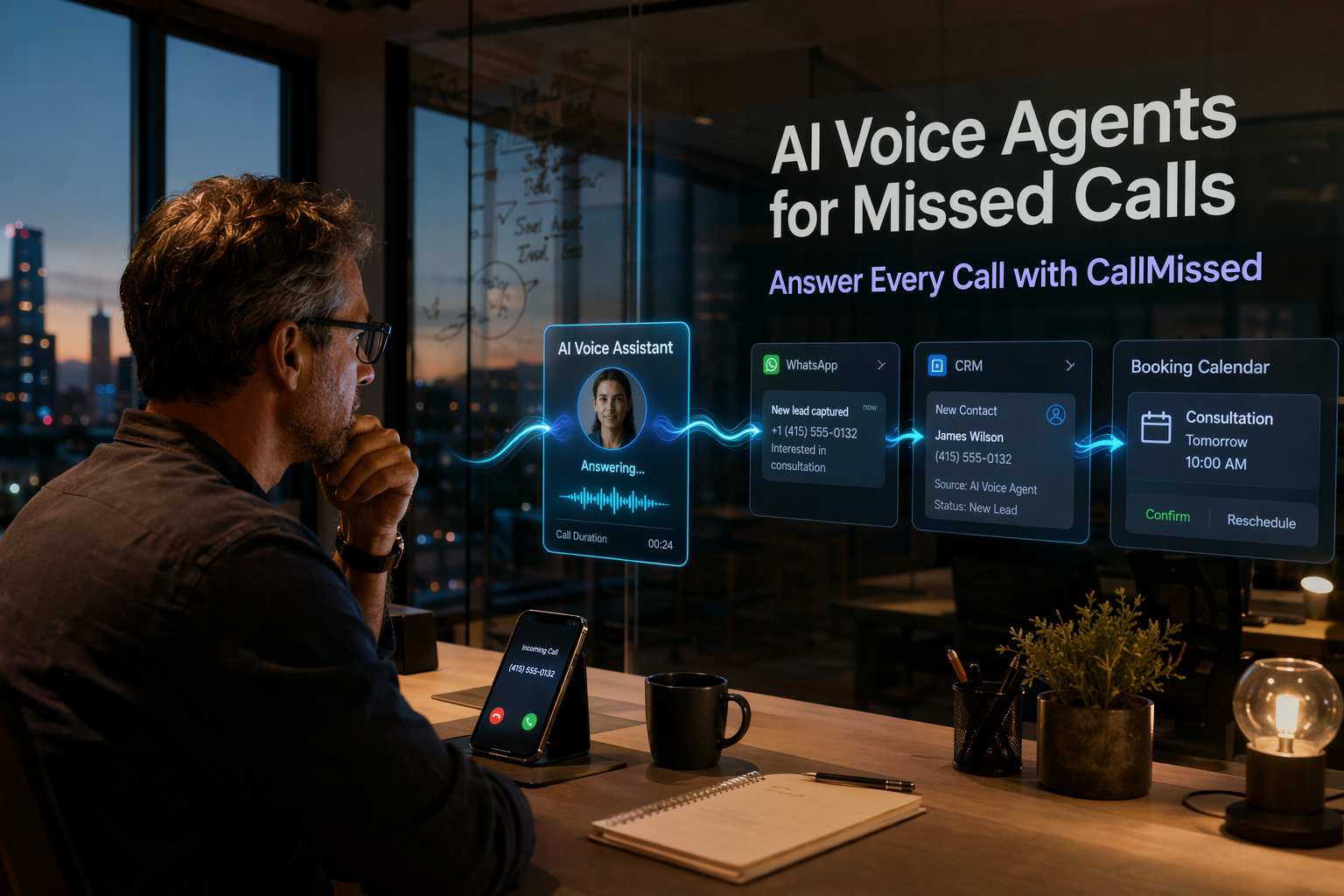
Launch AI voice agents and WhatsApp bots with CallMissed — one API, 22+ Indian languages.