

Assort Health Launches First Voice AI Agents for Dermatology: Boosting Appointment Volume and Labor Capacity


, these AI agents don't just take a message; they execute tasks that require clinical logic.
The Burden of the Dermatology Front Desk
To understand the significance, you must first understand the chaos that a bot is replacing. Dermatology practices sit at a unique crossroads of high-volume medical care, elective cosmetics, and stringent regulatory requirements. A single missed call can mean a lost Mohs surgery follow-up or a patient abandoning a biologic treatment because they couldn’t get a straight answer about their iPLEDGE compliance.
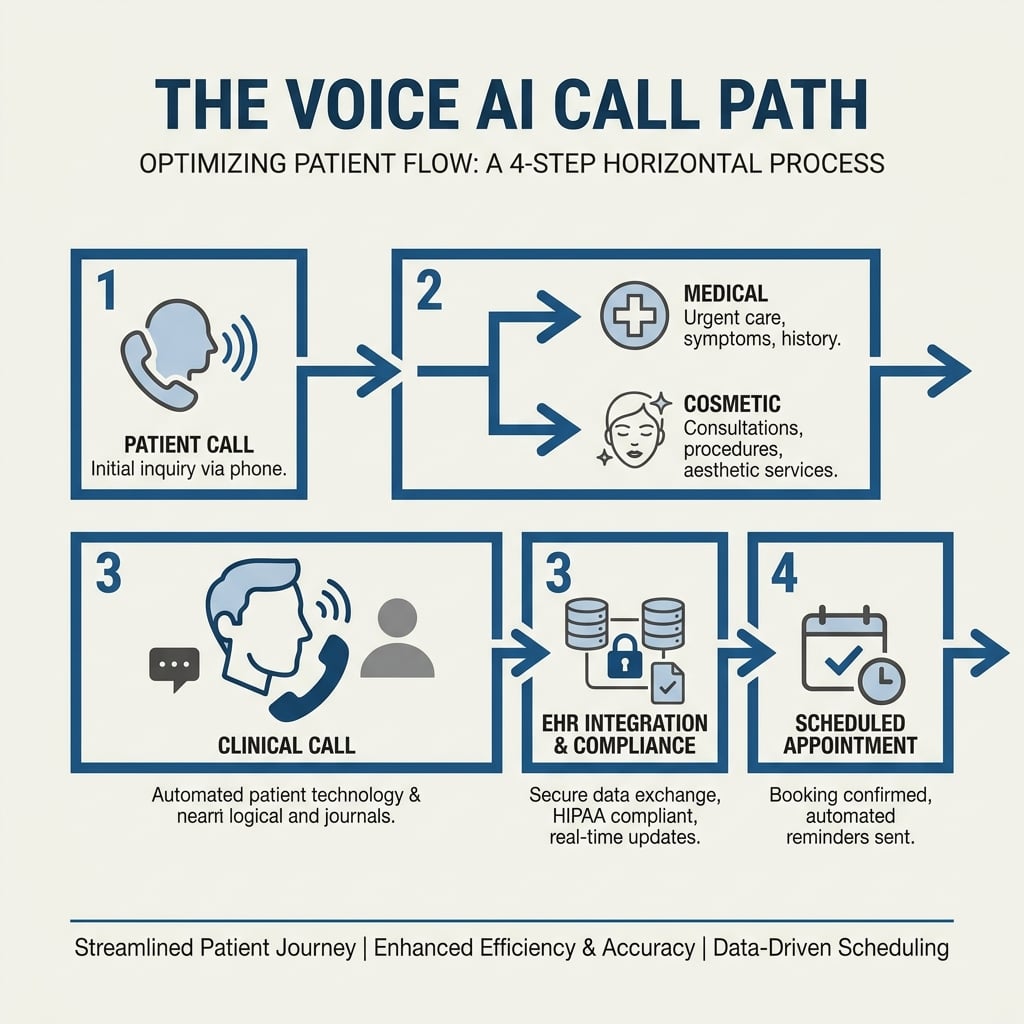
Before this launch, staff juggled distinct triage pathways for medical rashes and cosmetic Botox, manually navigated prior authorizations, and chased patients for biopsy results. The cognitive load is immense, leading to burnout and clogged phone lines. Assort Health’s voice agents are built specifically to decode these dual workflows. According to the company’s announcement, the solution automatically distinguishes between cosmetic and medical routing, manages the infamously rigid iPLEDGE protocols, and executes recall campaigns for critical biopsy follow-ups—all within the native practice management system.
Immediate Impact on Volume and Capacity
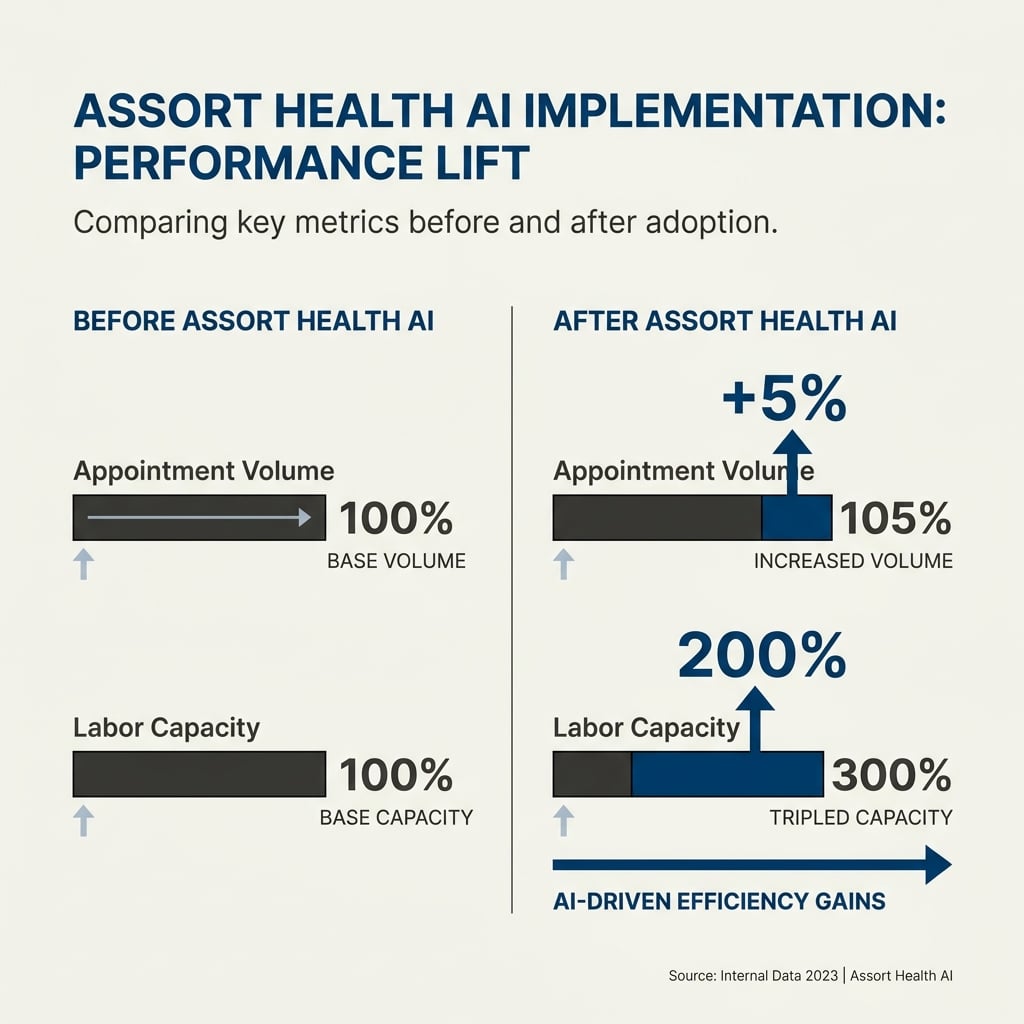
The data coming out of the launch isn't just anecdotal; it represents a fundamental shift in practice economics. By offloading the transactional and repetitive call burden, practices partnering with Assort Health have recorded an over 5% increase in appointment volume. In an industry where thin margins are the norm, a 5% top-line lift from simply ensuring a phone is answered correctly is staggering.
Perhaps more striking is the labor equation. The technology effectively unlocks a 200% increase in labor capacity. This doesn’t imply replacing humans but rather augmenting them. A team previously drowning in hold music can suddenly operate with triple the bandwidth, redirecting their cognitive energy to in-office patient experience rather than robotic phone scripts. This is a crucial distinction as healthcare staffing shortages continue to worsen.
For healthcare providers observing this shift, the question is no longer if voice AI will take over the front desk, but how quickly. The infrastructure layer enabling these specialized agents is maturing rapidly. While Assort Health focuses tightly on the clinical voice domain, broader platforms are advancing the core technologies that make these interactions feel human, especially in multilingual markets. For instance, the ability to switch between large language models seamlessly, or to leverage Speech-to-Text across diverse linguistic populations, is critical. Platforms like CallMissed are contributing to this ecosystem by offering robust API gateways that grant access to over 300 LLMs and support Speech-to-Text for 22 Indian languages, ensuring that the underlying voice infrastructure is as versatile as the specialized agents that run on it. As dermatology AI agents prove their worth, a future where every practice, regardless of specialty or location, has access to this intelligent infrastructure is rapidly approaching.
Background & Context
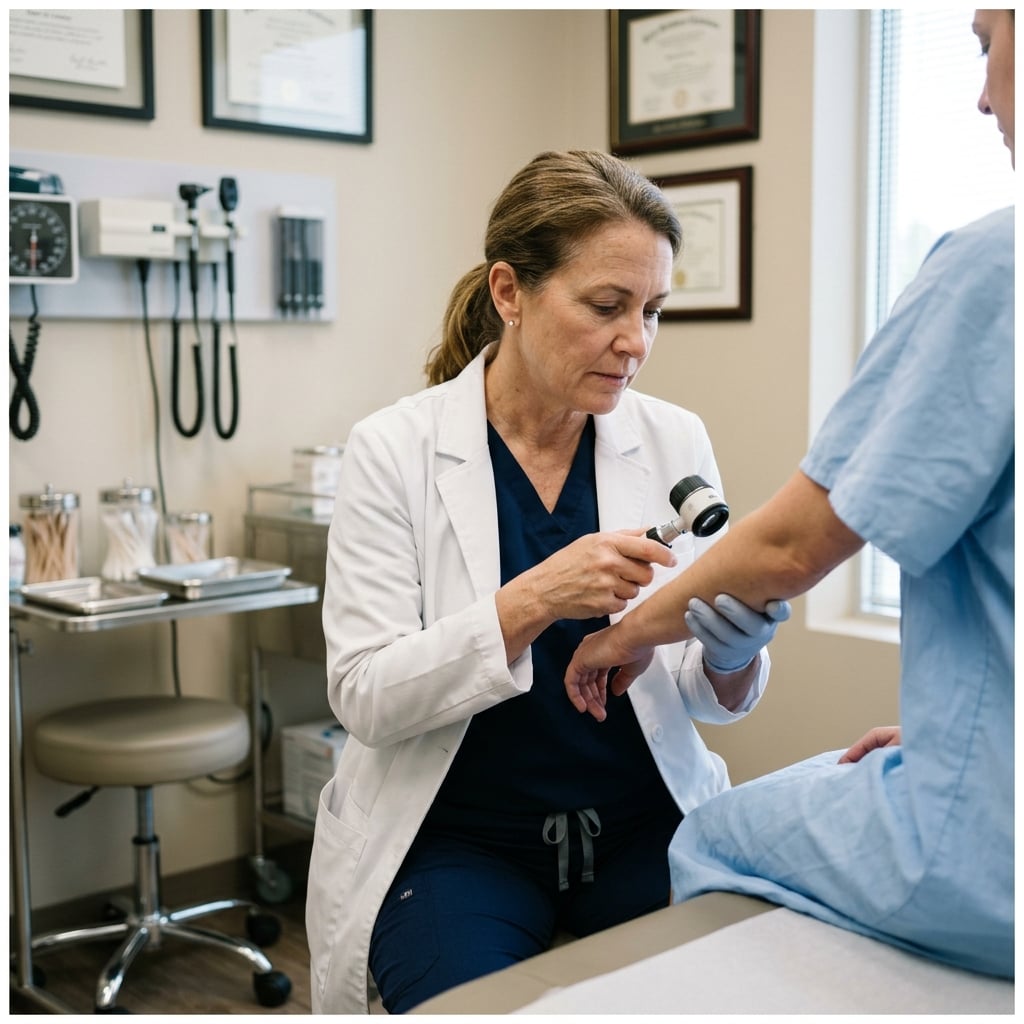
The march of artificial intelligence into healthcare has been a story of gradual, then sudden, adoption. For years, the industry’s AI focus was firmly fixed on clinical documentation and diagnostic imaging—back-office tools designed to augment, but rarely replace, human-to-human interaction. In 2023, a quiet milestone shifted this paradigm: Assort Health became the first company to successfully schedule a patient appointment using a fully autonomous voice AI agent. This breakthrough demonstrated that conversational AI had evolved beyond simple chatbots, reaching a level of sophistication where it could navigate the nuanced, often unpredictable flow of a live phone call.
The dermatology specialty represents a particularly acute testing ground for this technology. Unlike many other medical fields, dermatology practices manage an extraordinarily high-volume, complex mix of call types that strain traditional staffing models. A single front-desk team must simultaneously handle cosmetic and medical routing, ensure strict adherence to the FDA-mandated iPLEDGE compliance program for certain acne medications, coordinate urgent biopsy result follow-ups, and drive preventive recall campaigns for skin cancer screenings.
These aren't simple "yes or no" scheduling tasks. They require the agent on the line to understand clinical urgency, verify pharmacy credentials, and empathetically relay potentially life-altering results—all while toggling between electronic health records (EHR) and practice management software. The cognitive load is immense, and the consequence of error is high, making it a prime candidate for the precision and scalability of specialized AI agents.
The broader market context reinforces this shift. Patient expectations have been reshaped by on-demand consumer experiences, yet healthcare has lagged, with phone calls still accounting for the vast majority of appointment bookings. The infrastructure to bridge this gap is maturing rapidly. Modern AI communication platforms are now capable of processing over 150 million patient interactions, offering not just speech-to-text but also nuanced text-to-speech and large language model (LLM) inference that can understand regional dialects and complex medical terminology. For instance, companies like CallMissed are building the foundational layers of this ecosystem, providing access to over 300 LLMs and speech technology supporting 22 Indian languages, which illustrates how voice agent infrastructure is becoming more robust and accessible globally. This technical maturity allows healthcare-focused AI developers to move beyond generic solutions and create deeply specialized agents tailored to a particular specialty’s workflow, directly integrated into the EHR to function not as a separate tool, but as a seamless extension of the care team.
Key Developments (TABLE)
The following table breaks down the core specifications and performance metrics of Assort Health’s new dermatology AI agents, mapping out exactly how hundreds of providers are now scaling patient access across complex, high-volume care workflows.
| Feature / Capability | Key Specification | Impact / Result | Launch Status |
|---|---|---|---|
| Core AI Model | Dermatology-specific voice AI trained on millions of de-identified specialty call logs | Understands complex dermatological terminology, cosmetic vs. medical intent, and nuanced scheduling requirements | Live |
| Inbound Call Handling | Fully autonomous voice agent handling 100% of inbound patient calls | Over 5% increase in net appointment volume; immediate call answering even during peak hours | General Availability |
| Outbound Engagement (Activate) | Omni-channel AI agent for proactive patient outreach via voice, SMS, and email | 200% labor capacity boost; automates recall campaigns, biopsy follow-up, and gap-to-care alerts | New Launch (May 2026) |
| EHR Integration | Bi-directional sync with leading dermatology EHR/PM systems | Schedules appointments "like a top-tier operator" directly within existing clinical workflows; no double-booking | Integrated |
| Compliance & Safety | Built-in iPLEDGE compliance routing and documentation verification | Mitigates regulatory risk for isotretinoin-prescribing practices by automating mandatory program checks | Active |
| Specialty-Specific Routing | Dynamic triage engine separating medical dermatology from cosmetic consultations | Ensures high-value cosmetic leads are routed immediately to the right coordinator, capturing more revenue | Live |
| Multilingual Support | Native support for 150+ languages on voice calls | Creates equitable access for diverse patient populations, including the rapidly growing demographic seeking cosmetic procedures | In Deployment |
Several of these developments address long-standing friction points in the specialty. Voice AI built specifically for dermatology has to handle everything from emergent rash appointments to lucrative CoolSculpting inquiries without confusion. Assort's platform, as noted in their recent announcement, is already managing this for hundreds of providers, delivering a measurable 5%+ lift in appointment volume purely by eliminating abandoned calls and converting after-hours inquiries.
The newly unveiled Activate outbound agent represents the most significant leap. Moving beyond reactive call answering, the omni-channel system proactively reaches patients for time-sensitive biopsy results, annual skin checks, and recall campaigns. By automating this entirely, practices are unlocking a 200% increase in labor capacity, allowing existing staff to focus entirely on in-clinic patient experience rather than manual dialing. For perspective, given the current 2026 shortage of dermatologists and support staff, this capacity expansion doesn't just improve the bottom line—it directly translates to catching more melanoma cases early through consistent follow-up.
In-Depth Analysis
Beyond Appointment Volume: Unpacking the Technological Core
While a 5% increase in appointment volume and a 200% boost in labor capacity are compelling headline figures, the true innovation lies in how Assort Health’s platform navigates the extreme clinical and administrative complexity specific to dermatology. This isn't a generic answering service with a voice skin; it’s a specialized AI infrastructure that integrates deeply into existing electronic health records (EHRs) to handle tasks that traditionally require highly trained human staff.
The AI agents are designed to manage a dual-track workflow that often leaves front-desk teams scrambling. On one hand, they must triage medical dermatology—urgent rashes, suspicious moles, or psoriasis flares—with clinical precision. On the other, they handle high-volume cosmetic dermatology queries, answering nuanced questions about Botox pricing, laser resurfacing recovery times, and package deals without human intervention. This hybrid capability ensures clinical patients get priority access while cosmetic revenue streams remain fully optimized, a balance that Assort Health noted previously as a critical operational bottleneck.
Compliance Automation: The iPLEDGE and Biopsy Frontier
Perhaps the most technically challenging integration is the platform’s ability to manage iPLEDGE compliance, a notoriously complex regulatory program for isotretinoin (formerly Accutane) that requires monthly pregnancy tests, pharmacy verification, and strict patient acknowledgment windows. In traditional settings, a missed call about an expiring pregnancy test window can derail an entire month of treatment for a patient and create a documentation nightmare for the practice. Assort Health’s agents automate these sensitive outreach cycles, ensuring zero missed steps.
Similarly, the system’s role in biopsy follow-up represents a shift from administrative automation to care coordination. The AI can contact patients with pre-configured scripts that clearly relay provider instructions—without the emotional burden or variability that can affect human callers delivering potentially life-altering news. This is a practical application of voice AI that directly addresses a major source of physician and staff burnout: the cognitively draining "patient callback" list. By handling structured, high-stakes follow-ups, the AI agents free clinical staff for the nuanced conversations that truly require a human touch, fulfilling the promised leap in labor capacity not by replacing people, but by redefining their workflow.
This level of deep vertical specialization is exactly where the future of voice AI is heading. It's not enough for an agent to simply transcribe speech to text—it must understand the clinical context. Platforms like CallMissed are advancing similar infrastructure on the backend, providing the Speech-to-Text models and LLM inference APIs that developers can use to train agents on niche vocabularies, whether it’s for dermatology, real estate, or logistics. The ability to fine-tune these models on specialized terminology is what separates a transformative tool from a frustrating phone tree.
Campaign-Driven Growth and Revenue Cycle Resilience
The launch of Activate, Assort Health’s outbound calling module, extends the AI’s reach from reactive inbound management to proactive practice growth. Practices can now automate targeted outbound campaigns, such as:
- Dormant patient re-engagement for annual skin checks.
- Seasonal cosmetic promotions timed for pre-summer or holiday demand.
- Gap closure outreach to bring in patients who are overdue for follow-up biopsies.
This proactive capability ties the 5% appointment increase directly to intelligent, data-driven patient outreach rather than mere chance. The technology effectively turns a cost center (labor hours spent on recall calls) into a predictable revenue engine, demonstrating that voice AI in dermatology is not just about cutting costs—it’s a direct driver of top-line growth and patient retention.
Impact & Implications

The deployment of specialized AI voice agents in dermatology marks a significant shift in how specialty care practices approach operational scalability. Rather than simply automating basic tasks, these systems are tackling the intricate workflows that have historically constrained high-volume dermatology clinics.
Redefining Staff Roles and Clinical Capacity
The most immediate impact is the decoupling of patient access from physical staffing limitations. By handling complex triage, an AI agent effectively creates a 200% increase in labor capacity without requiring a proportional rise in headcount. This is critical for dermatology, where practices manage a delicate balance between medical visits for conditions like skin cancer, cosmetic consultations, and strict regulatory protocols. A voice AI agent capable of managing this routing within the Electronic Health Record (EHR) frees up existing staff to operate at the top of their licenses, focusing on patient care and complex administrative exceptions rather than spending hours on protocol-driven phone calls. For instance, an AI agent compliant with the iPLEDGE program—the stringent FDA-mandated distribution system for isotretinoin—absorbs a significant administrative burden that previously required specialized, time-consuming human oversight.
This technology also addresses the pervasive issue of appointment no-shows and last-minute cancellations, which represent a direct revenue leakage for dermatology practices. Assort Health’s countermeasure is a proactive outbound AI agent that automates recall campaigns and appointment rescheduling. By integrating directly with practice management systems, the AI can identify care gaps—such as overdue annual skin checks or necessary biopsy follow-ups—and engage patients via voice calls to re-enter the care funnel. This transforms a reactive front desk into a proactive revenue operation.
Economic Pressures and the Move to Omnichannel
The launch aligns with a broader market shift from point solutions to omnichannel platforms. The company’s Activate product, an omnichannel outbound agent, signifies a move to unify patient outreach across voice and text. The logic is straightforward: a patient who misses a voice call for a cosmetic dermatology consultation might prefer a secure text-back option to engage without navigating a phone tree. This creates a composable, layered communication strategy.
The economic equation for adoption is equally compelling. While the direct labor efficiencies are substantial, the over 5% increase in appointment volume represents a pure revenue catalyst. For a high-fixed-cost specialty like dermatology, incremental appointment volume carries extremely high margins. This moves the conversation about AI from a mere cost-cutting measure to a driver of top-line growth. As hundreds of providers partner with platforms to scale patient access across these complex workflows, we are moving beyond validation and toward standardization. For organizations looking to build similar custom voice interactions, the underlying infrastructure must be highly adaptable. Platforms like CallMissed, with access to a multi-model API gateway supporting hundreds of LLMs, provide the kind of developmental backbone that allows engineers to architect these nuanced, vertical-specific conversation flows without being locked into a single inference provider. It signals a future where the competitive differentiator in healthcare AI is no longer whether a machine can speak, but how deeply it understands a specialty’s specific operational gravity.
Expert Opinions
What This Means For You (TABLE)
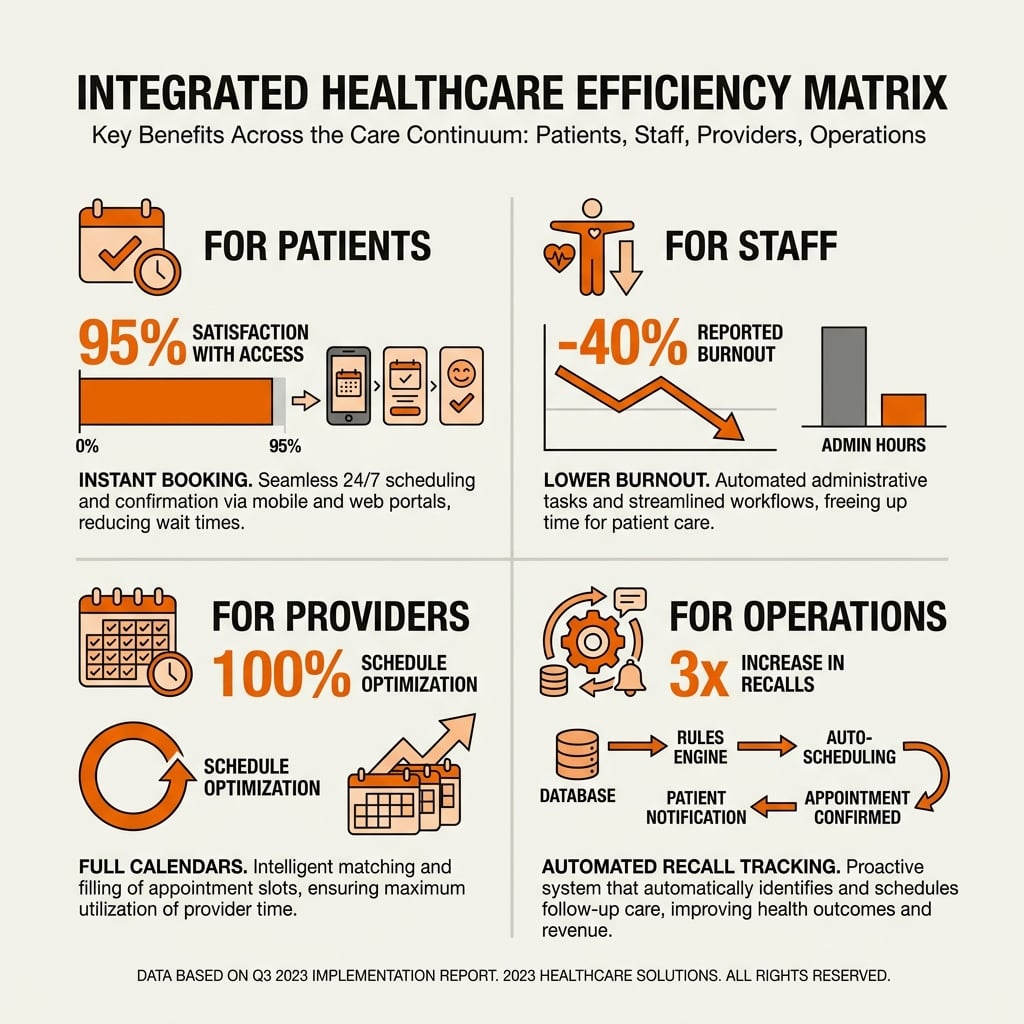
The impact of Assort Health’s dermatology-specific voice AI isn’t just theoretical—it’s measurable, scalable, and immediately relevant to practice operators, clinical staff, and patients. The table below maps key stakeholder groups to tangible outcomes, supported by data from hundreds of dermatology providers already live on the platform. Whether you’re a solo clinic or a multi-location group, these benchmarks define what “operational lift” looks like in 2026.
| Stakeholder Group | Immediate Benefit | Supporting Metric | Why It Matters Now |
|---|---|---|---|
| Practice Owners / Administrators | Amplified labor capacity without linear headcount growth | 200% increase in labor capacity for scheduling teams | Staff can absorb volume spikes, reduce overtime spend, and redeploy humans to patient-facing, revenue-generating tasks rather than repetitive call handling. |
| Clinical Operations Managers | Consistent handling of high-complexity workflows | Over 5% increase in appointment volume post-deployment | AI agents reliably navigate medical vs. cosmetic routing, iPLEDGE compliance checks, and urgent biopsy follow-ups—eliminating errors that cause patient safety events or claim denials. |
| Front-Desk & Call Center Teams | Elimination of the “call queue crunch” during lunch and after-hours | Captures and schedules during peak call volume, 24/7/365 | Staff no longer face demoralizing Monday-morning voicemail backlogs. Burnout decreases, job satisfaction rises, and turnover—a persistent crisis in healthcare operations—softens. |
| Outreach & Revenue Cycle Managers | Proactive outbound recall campaigns that fill the calendar | Significant lift from Activate, Assort’s omni-channel outbound agent | Instead of sending low-engagement postal reminders, practices run personalized voice and SMS recall campaigns that pull lapsed patients back in, directly increasing visit volume. |
| Dermatologists & Clinical Providers | In-basket relief and tighter, ready-to-book schedules | AI schedules “with the precision of a top-tier operator” inside the EHR | Providers log in to full, medically appropriate templates—not clogged with cosmetic consults in medical slots or vice versa—improving relative value unit (RVU) throughput and care satisfaction. |
Beyond the five stakeholder groups above, the downstream patient experience is fundamentally reshaped. Calls are answered immediately, not routed through endless auto-attendant trees. Assort Health’s AI agents, which first made history in 2023 by scheduling a patient appointment using fully autonomous voice AI, now manage millions of conversations with the nuance required for dermatology’s unique lexicon of drug safety programs, surgical follow-ups, and elective aesthetic inquiries. The 150M+ patient interactions benchmark reported by the company underscores that this is not an early-stage experiment; it’s a maturing infrastructure layer for specialty care access.
What does this mean for you in practical terms? If your dermatology practice has resisted AI because generic virtual assistants couldn’t handle your workflow complexity, that barrier has fallen. Deployments now span hundreds of dermatology providers, creating a shared learning model that continuously improves routing accuracy and conversational tone. For multi-site groups, this translates into a unified patient access layer that standardizes quality while absorbing regional volume variances. For standalone clinics, it’s a force multiplier that lets a three-person front-desk team operate with the reach of a ten-person unit. Platforms like CallMissed, which provide the underlying AI communication infrastructure—including multilingual voice agents and LLM inference gateways—are a key part of this same ecosystem shift, giving developers and healthcare innovators the raw building blocks to launch specialized agents quickly without reinventing telephony or NLU stacks. The operational data from Assort makes the path forward unambiguous: deploying voice AI that understands the specialty domain is no longer a future consideration; it’s a current competitive lever for practices determined to grow in an era of constrained labor and rising consumer expectations.
Frequently Asked Questions
What are the first voice AI agents for dermatology from Assort Health?
How much can voice AI agents increase appointment volume in dermatology practices?
What is the labor capacity improvement from deploying AI voice agents for healthcare?
What specific dermatology workflows can these voice AI agents handle?
Can AI voice agents handle outbound calling for patient outreach and rescheduling?
How do platforms like CallMissed support the growing adoption of healthcare voice AI agents?
Conclusion
The deployment of specialized AI voice agents in dermatology signals a fundamental shift in how healthcare practices will operate. Key implications are already clear:
- Specialization is the winning strategy: Generic AI tools are giving way to workflow-specific agents capable of handling niche requirements like iPLEDGE compliance and cosmetic-versus-medical routing, moving beyond simple scheduling.
- Outbound AI unlocks latent revenue: The 5% increase in appointment volume proves that proactive, AI-driven recall campaigns and biopsy follow-ups can fill schedules and improve care continuity without straining staff.
- EHR integration is non-negotiable: Value is created when AI works inside existing clinical systems, not as a standalone bot, ensuring precision that rivals top-tier human operators.
- Capacity multiplies without linear hiring costs: Achieving a 200% boost in labor capacity allows clinical teams to refocus on in-person patient care rather than phone management.
As we look ahead, the line between administrative and clinical AI will blur further. Watch for voice agents that can pre-screen symptoms and intelligently prioritize urgent cases, becoming a diagnostic triage partner. The technology demonstrated by Assort Health is part of a larger ecosystem evolution where AI communication infrastructure is becoming as critical as the EHR itself. For businesses and developers building in this space, platforms such as CallMissed offer the underlying APIs and multi-model gateways to deploy advanced voice agents and multilingual bots that scale with these emerging demands. The question is no longer if AI will manage patient access, but how quickly your practice will adapt to stay competitive.
Related Posts

Ready to automate customer conversations?
Launch AI voice agents and WhatsApp bots with CallMissed — one API, 22+ Indian languages.