

Gemini 3.5 Flash-Lite vs GPT-5.6 Sol: Price, Speed and Workload Fit (2026)


Gemini 3.5 Flash-Lite vs GPT-5.6 Sol: compare verified pricing, limits, speed, tools and workload fit for a defensible model choice.
Gemini 3.5 Flash-Lite vs GPT-5.6 Sol: Price, Speed and Workload Fit (2026)
What if the cheaper model is not merely less capable, but better for the workload you actually run? Gemini 3.5 Flash-Lite vs GPT-5.6 Sol is fundamentally a choice between budget-oriented, high-throughput execution and flagship-level reasoning—but, as of July 21, 2026, inconsistent availability records make verification just as important as benchmark scores.
Google describes Gemini 3.5 Flash-Lite as its “fastest, most cost-effective 3.5 model for high-throughput execution” in the Gemini API model documentation. Google’s Gemini API release notes also list a stable, production-ready Gemini 3.5 Flash-Lite release as generally available on July 21, 2026. However, Google’s pricing documentation simultaneously contains language stating that a Gemini 3.5 Flash-Lite version was deprecated and shut down on June 1, 2026. That apparent conflict may reflect different model versions or aliases, but it means developers must confirm the exact model ID and endpoint status before migrating production traffic.
The documentation gap is even more consequential for GPT-5.6 Sol. No verified OpenAI primary-documentation details for that exact model name were included in the available research context. Its official model ID, API availability, token limits, supported modalities, pricing, rate limits and service tiers must therefore be treated as undisclosed—not estimated from adjacent GPT models or third-party claims.
The practical decision
The central tradeoff is straightforward:
- Choose a Flash-Lite-class model when token cost, low latency and request volume matter more than maximum reasoning depth.
- Choose a verified flagship reasoning model when difficult coding, multi-step analysis, tool orchestration or expensive-to-correct decisions justify higher per-task costs.
- Delay commitment when a provider has not published enough information to calculate total cost, validate tool support or identify a stable production model ID.
Price per million tokens alone rarely settles this comparison. A low-cost model that requires retries, longer prompts or human correction can cost more per successful task; conversely, using a flagship reasoning model for classification, extraction or routine summarisation can waste both money and latency. Platforms such as CallMissed, the OpenAI-compatible multi-model gateway, reflect this shift toward routing different workloads across model tiers rather than forcing every request through one model.
This comparison will examine official availability, model IDs, input and output pricing, context limits, multimodality, coding and reasoning, tool use, latency, cost per completed task and workload fit. It will also provide cost scenarios, caveats, a reproducible test plan and migration guidance—while clearly marking every unreported GPT-5.6 Sol specification as undisclosed instead of turning assumptions into facts.
Which model should you choose: Gemini 3.5 Flash-Lite or GPT-5.6 Sol?
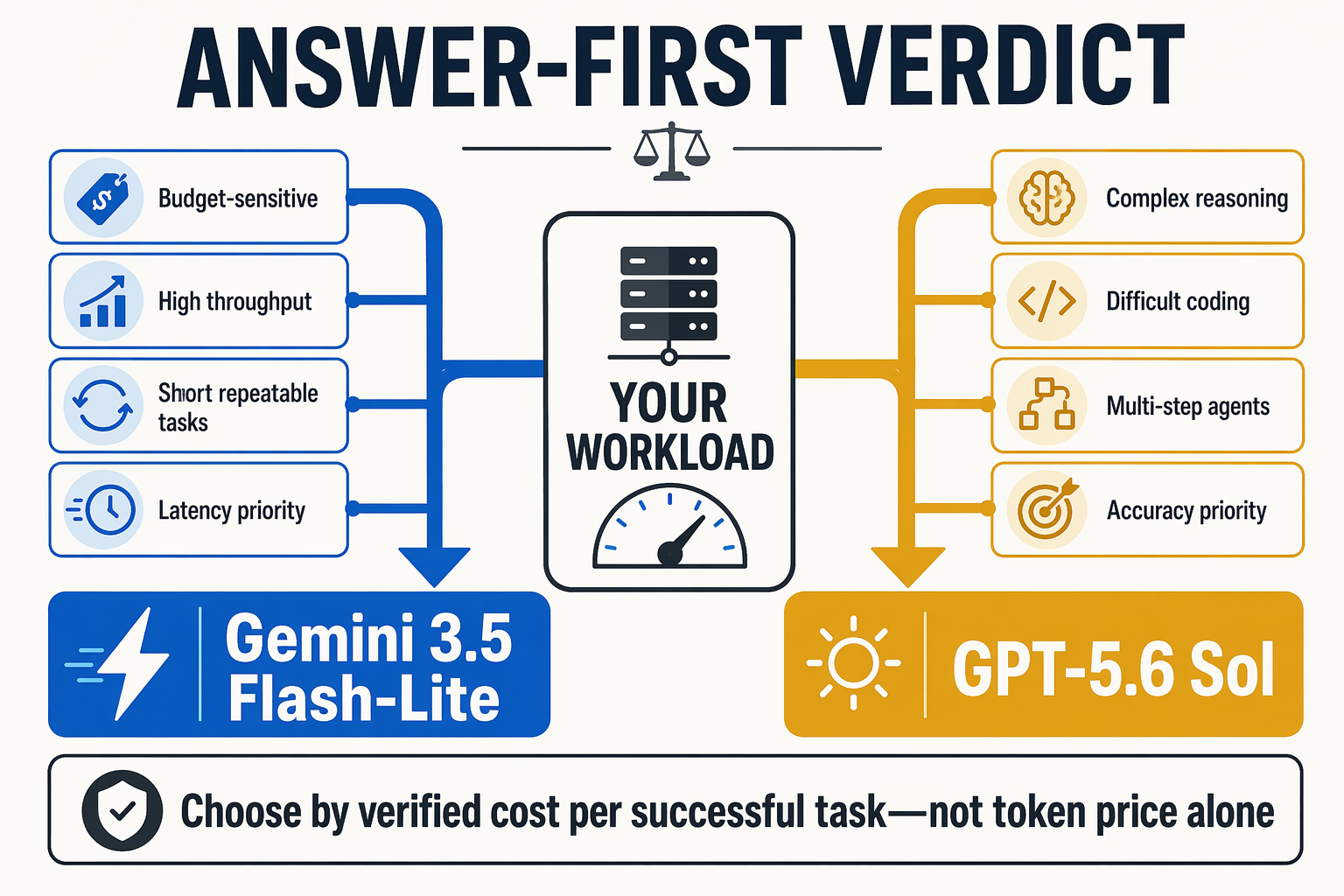
For Gemini 3.5 Flash-Lite vs GPT-5.6 Sol, choose Gemini 3.5 Flash-Lite for cost-sensitive, high-throughput work with short or repetitive requests. Choose GPT-5.6 Sol when the workload genuinely benefits from frontier-tier capabilities, a very large context window or long outputs—and when testing shows that those advantages justify the higher total cost.
The answer depends on the workload
This is primarily a comparison between two different deployment tiers:
- Choose
gemini-3.5-flash-litefor classification, extraction, routing, moderation, short summaries and other high-volume tasks where cost and throughput are central constraints. - Choose
gpt-5.6-solfor complex analysis, large-document processing, demanding coding or multi-step workflows where stronger frontier-tier capabilities may reduce errors or human review. - Benchmark both when either model could meet the requirement. Token price alone does not reveal cost per accepted result.
Google positions Gemini 3.5 Flash-Lite as a cost-effective model optimized for high-throughput execution. OpenAI officially documents gpt-5.6-sol as a frontier-tier API model with a 1,050,000-token context window and 128,000 maximum output tokens. Those specifications make GPT-5.6 Sol the clearer candidate when a request must process unusually large inputs or generate an exceptionally long response.
They do not, however, establish that GPT-5.6 Sol will be better for every request. A larger context window has little practical value for a classification job using a 500-token prompt, while a lower-cost model can be the better production choice when millions of similar requests are easy to validate automatically.
Match the model to the cost of failure
GPT-5.6 Sol is the stronger tier to test when one incorrect answer could create substantial downstream cost. Relevant workloads include:
- Debugging complex production failures
- Reviewing security-sensitive code
- Reconciling large or contradictory document sets
- Planning multi-step tool workflows
- Analyzing inputs that exceed smaller context limits
- Producing long reports that require extensive source material
Gemini 3.5 Flash-Lite is the more natural starting point when requests are numerous, structurally consistent and inexpensive to verify. Examples include:
- Intent classification and ticket routing
- Entity and field extraction
- Content tagging or moderation triage
- Short summaries
- Template-based response generation
- First-pass processing before escalation to a frontier model
A tiered architecture may be more economical than selecting one model for everything: send routine traffic to Gemini 3.5 Flash-Lite, then escalate uncertain, unusually long or high-risk cases to GPT-5.6 Sol.
Apply three gates before choosing
Use these gates in order:
- Requirement gate: Does the task need GPT-5.6 Sol’s 1,050,000-token context window, 128,000-token output limit or frontier-tier capabilities? If not, Flash-Lite may be the more appropriate tier.
- Capability gate: Does each model pass your own tests for accuracy, structured output, coding, tool use and instruction following?
- Economics gate: What is the total cost per accepted result after input and output tokens, retries, validation, latency and human correction?
Also confirm that the exact model identifier is enabled in the account, project and region where production will run. Official documentation establishes that gpt-5.6-sol and gemini-3.5-flash-lite are real model identifiers, but account access, quotas and regional support can still differ.
Do not transfer limits, prices or benchmark results from adjacent Gemini or GPT variants. In particular, GPT-5.6 Sol’s documented context and output limits do not describe every GPT-5.x model, and specifications for another Gemini 3.5 model should not be assigned to Flash-Lite without model-specific documentation.
Bottom line: Use Gemini 3.5 Flash-Lite as the default candidate for cost-sensitive, high-volume and automatically verifiable work. Use GPT-5.6 Sol for high-value, complex or exceptionally long-context workloads where its frontier tier and documented limits are relevant. For mixed traffic, route routine requests to Flash-Lite and escalate the difficult cases to GPT-5.6 Sol.
What are these model tiers, and are both officially available on July 21, 2026?
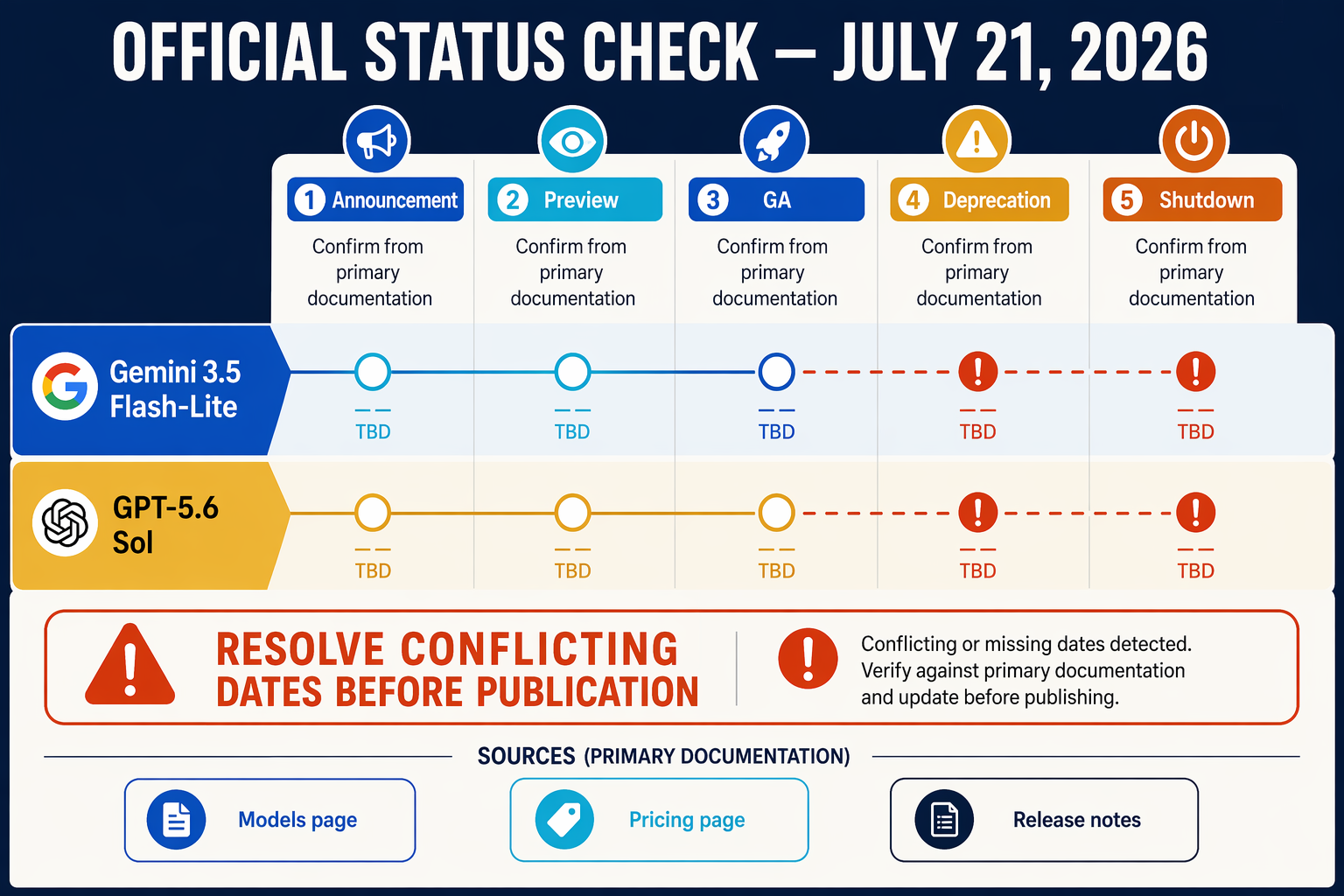
Both gemini-3.5-flash-lite and gpt-5.6-sol are officially documented API models available on July 21, 2026. They occupy different product tiers: Gemini 3.5 Flash-Lite prioritises low-cost, high-throughput execution, while GPT-5.6 Sol is OpenAI’s frontier GPT-5.6 tier for demanding reasoning and agentic workloads.
Gemini 3.5 Flash-Lite: an efficiency-tier production model
Google positions Gemini 3.5 Flash-Lite as its fastest, most cost-effective Gemini 3.5 model for high-throughput execution. Its official API model ID is gemini-3.5-flash-lite.
This places Flash-Lite in an economy execution tier, where latency, throughput and token cost generally matter more than maximum reasoning depth. Typical workloads include:
- Large-scale classification, tagging and intent detection
- Structured extraction from routine documents
- Short-form summarisation and rewriting
- Customer-support triage and response drafting
- High-volume background agents with constrained tasks
- Content moderation, routing and metadata generation
Google’s July 21, 2026 release documentation identifies Gemini 3.5 Flash-Lite as a stable, production-ready model. Older deprecation and shutdown language in Google’s documentation applies to earlier Gemini Flash-Lite generations or superseded model IDs, not the current gemini-3.5-flash-lite release. Deprecation notices should always be matched to the exact model generation and API identifier rather than interpreted as applying to the entire Flash-Lite product line.
Developers should also avoid transferring specifications from Gemini 3.5 Flash to Flash-Lite merely because the models share a family name. Context limits, output limits, supported modalities and rate limits must be checked against the documentation for gemini-3.5-flash-lite itself.
GPT-5.6 Sol: OpenAI’s frontier GPT-5.6 tier
GPT-5.6 Sol is an official OpenAI API model with the model ID gpt-5.6-sol. It represents the frontier tier of the GPT-5.6 family, intended for workloads where reasoning quality, long-context performance and reliable multi-step execution take priority over minimum cost or latency.
OpenAI documents GPT-5.6 Sol with:
- Context window: 1,050,000 tokens
- Maximum output: 128,000 tokens
- Tier: Frontier GPT-5.6 model
- API model ID:
gpt-5.6-sol
That capacity makes Sol a stronger fit for tasks such as:
- Complex software engineering and repository-scale analysis
- Long-horizon research and synthesis
- Multi-step agents that use tools and maintain extensive state
- Analysis of large document collections or lengthy transcripts
- Difficult planning, debugging and decision-support workflows
- High-value tasks where errors cost more than additional inference time
The large context window does not mean every task benefits from sending more than one million tokens. Long prompts can increase cost and latency, while irrelevant context may reduce answer quality. Sol is best reserved for workloads that can use its reasoning and context capacity productively.
What counts as production availability?
Official listing is the starting point, but developers should still validate deployment details before routing production traffic:
- Confirm that the exact model ID appears in the provider’s current API documentation or authenticated model list.
- Run a minimal inference request through the intended endpoint, project and region.
- Verify current input, output and cached-token pricing for that exact model ID.
- Check context, output, modality, tool-use and rate-limit documentation.
- Review dated deprecation notices and identify the recommended migration path.
For Gemini 3.5 Flash-Lite vs GPT-5.6 Sol, the availability question is straightforward as of July 21, 2026: both are official API models. The practical choice is between Flash-Lite’s high-throughput efficiency and Sol’s frontier reasoning, long context and substantially larger output capacity.
How do Gemini 3.5 Flash-Lite and GPT-5.6 Sol compare on official specifications? (TABLE)
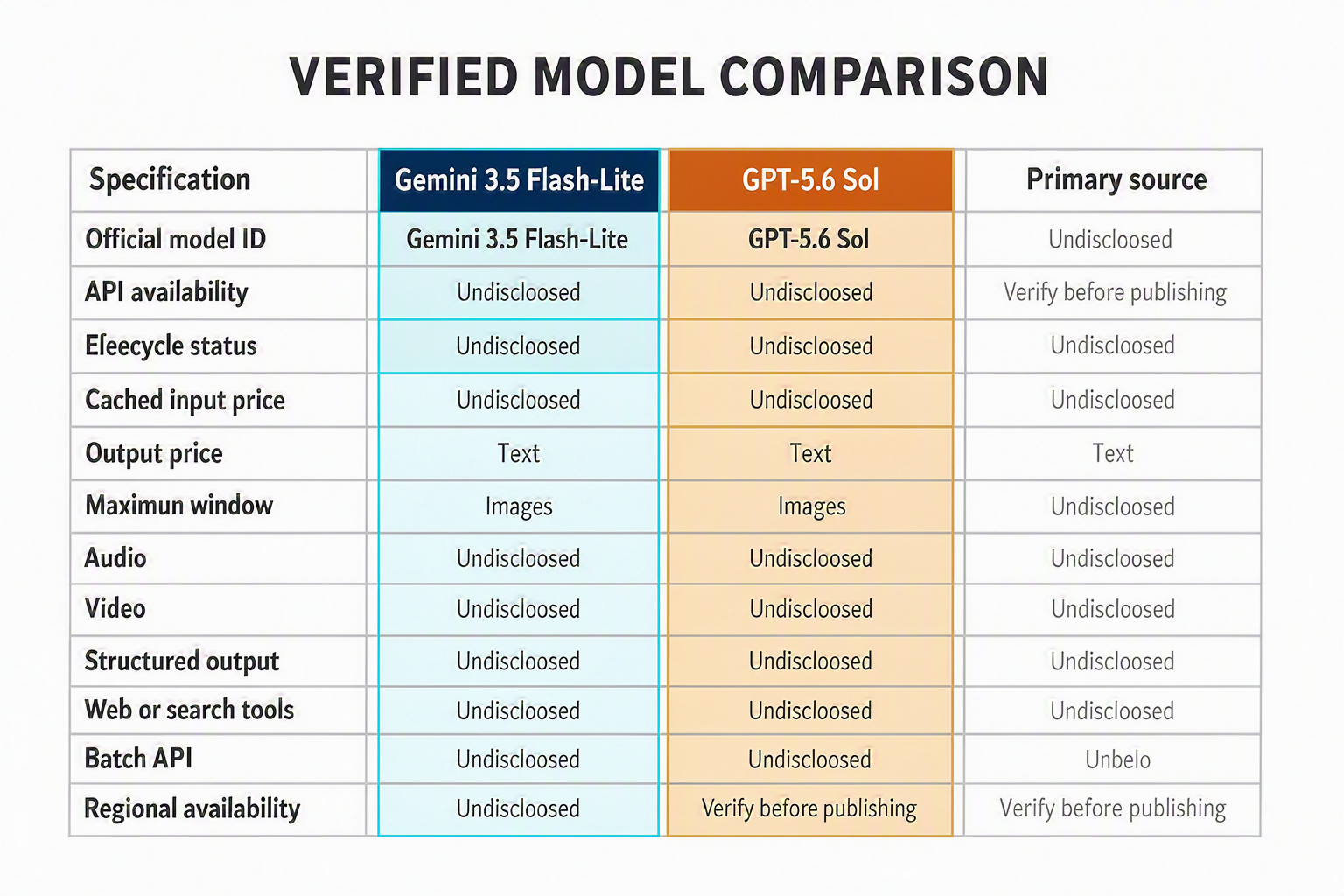
| Official specification | Gemini 3.5 Flash-Lite | GPT-5.6 Sol |
|---|---|---|
| Model ID | gemini-3.5-flash-lite | gpt-5.6-sol |
| Context window | 1,000,000 tokens | 1,050,000 tokens |
| Maximum output | 65,536 tokens | 128,000 tokens |
| Current API pricing | See Google’s live Gemini API pricing | See OpenAI’s live API pricing |
GPT-5.6 Sol provides 50,000 more context tokens and nearly twice the maximum output allowance. Exact costs should be compared using each vendor’s live, tier-labelled pricing—particularly when choosing between Standard, Fast, or other available service tiers.
How much does each model cost at realistic production volumes? (TABLE)
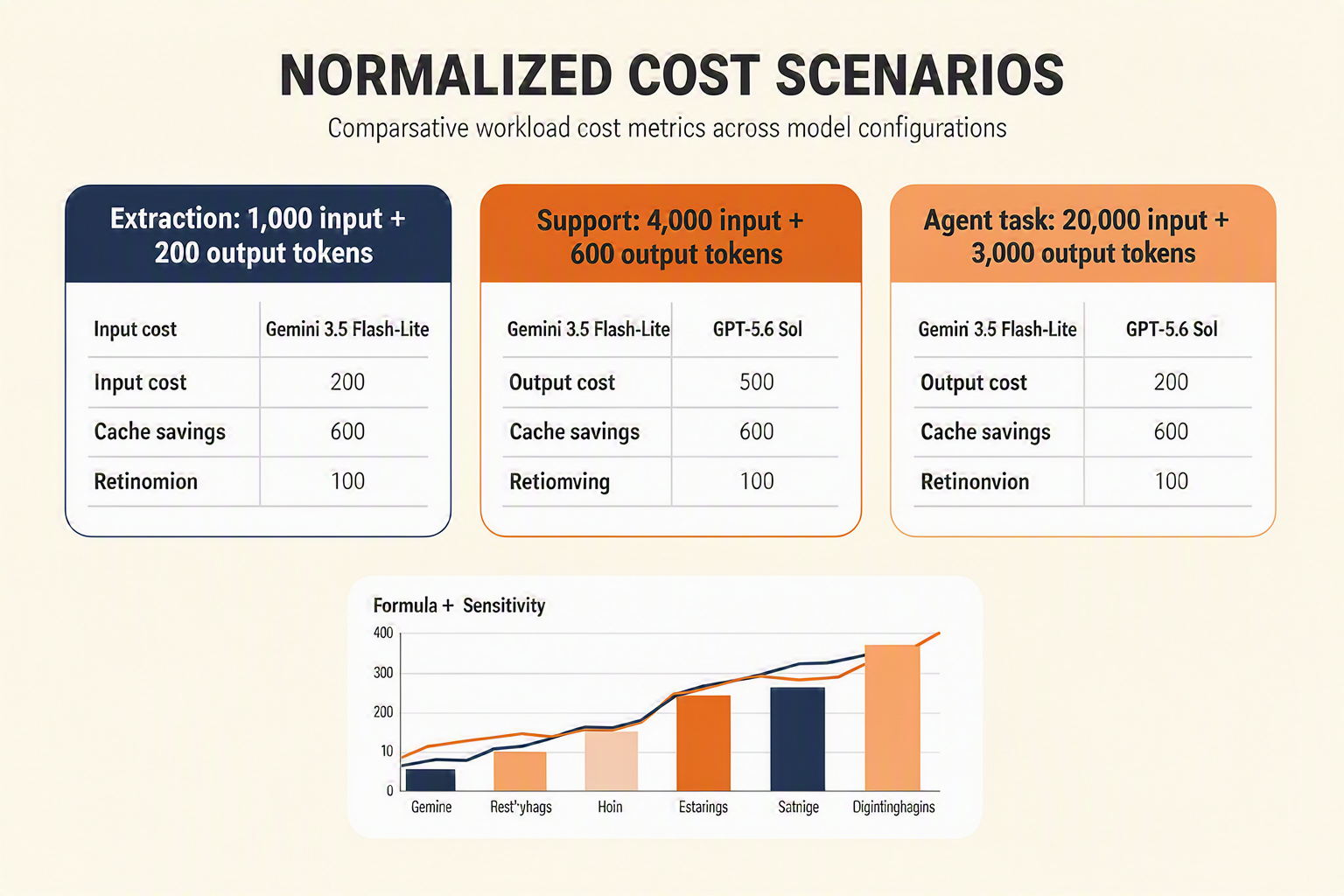
Neither model has enough consistently verified pricing data to produce defensible dollar totals as of July 21, 2026. Google’s documentation exposes conflicting lifecycle information and ambiguously labelled $0.075 and $0.15 per million-token figures, while OpenAI pricing for the exact GPT-5.6 Sol model name remains undisclosed in the available primary-source record.
Production-cost scenarios
Let Gᵢ and Gₒ represent Gemini 3.5 Flash-Lite’s verified input and output prices per million tokens. Let Sᵢ and Sₒ represent the equivalent GPT-5.6 Sol rates. The core monthly formula is:
Cost = (input tokens ÷ 1 million × input rate) + (output tokens ÷ 1 million × output rate).
| Production workload | Monthly input/output | Gemini 3.5 Flash-Lite | GPT-5.6 Sol | Main cost risk |
|---|---|---|---|---|
| Small support assistant | 8M / 2M tokens | 8Gᵢ + 2Gₒ | 8Sᵢ + 2Sₒ | Long conversation histories |
| Document extraction | 40M / 5M tokens | 40Gᵢ + 5Gₒ | 40Sᵢ + 5Sₒ | Large input-to-output ratio |
| Content generation | 50M / 25M tokens | 50Gᵢ + 25Gₒ | 50Sᵢ + 25Sₒ | Output-token pricing |
| High-volume classification | 100M / 5M tokens | 100Gᵢ + 5Gₒ | 100Sᵢ + 5Sₒ | Throughput and rate limits |
| Large conversational platform | 400M / 100M tokens | 400Gᵢ + 100Gₒ | 400Sᵢ + 100Sₒ | Retries, context growth and latency |
| Enterprise-scale routing | 1B / 250M tokens | 1,000Gᵢ + 250Gₒ | 1,000Sᵢ + 250Sₒ | Tier discounts and capacity commitments |
These formulas deliberately avoid presenting unverified estimates as official prices. Google’s Gemini Developer API pricing result includes $0.075 and $0.15 per million-token figures, but the available text does not label them clearly enough to establish which rate applies to input, output, caching or the newly released model version. Applying either figure to production forecasts would therefore create false precision.
Why the Gemini price requires confirmation
Google’s Gemini API release notes state that a stable, production-ready Gemini 3.5 Flash-Lite became generally available on July 21, 2026. However, Google’s pricing documentation says a Gemini 3.5 Flash-Lite version was deprecated and shut down on June 1, 2026.
Before budgeting, obtain the exact:
- Model ID and versioned endpoint
- Standard input and output rates
- Cached-input and batch-processing rates
- Free-tier limits and paid-tier rate limits
- Regional pricing, taxes and enterprise discounts
The discrepancy may concern separate aliases or releases, but billing tests should confirm which price is attached to the production endpoint.
Cost-per-task matters more than token price
GPT-5.6 Sol cannot currently be assigned a verified cost per million tokens because no official OpenAI price for that exact model name appears in the supplied primary-source evidence. Its batch discounts, cached-input rates and priority-processing charges are likewise undisclosed.
Teams should therefore compare cost per accepted result, not merely list price:
Effective task cost = API spend + retry spend + validation cost + human-correction cost.
A high-throughput model can be economical for extraction or classification, while a more expensive reasoning model may cost less on difficult tasks if it reduces retries and correction. Until both exact model IDs and rates are confirmed, the financially responsible decision is to run metered pilots rather than extrapolate from adjacent Gemini or GPT products.
Which model is better for reasoning, coding, multimodality, tools and latency?
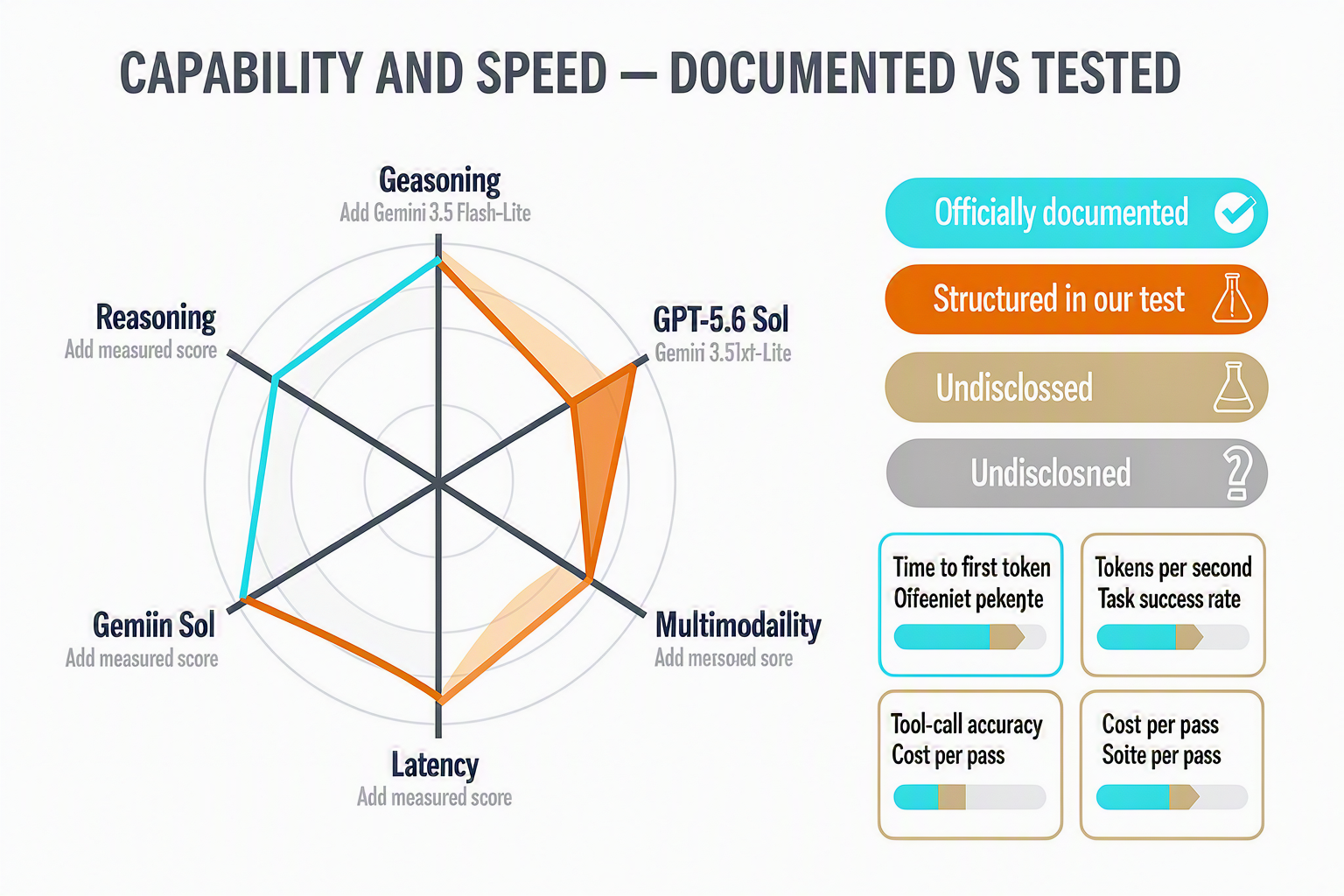
Gemini 3.5 Flash-Lite is the more defensible choice for latency-sensitive, high-volume work because Google explicitly positions it for fast, economical execution. GPT-5.6 Sol cannot be declared better for reasoning, coding, multimodality or tools until OpenAI publishes verifiable specifications and benchmark evidence for that exact model.
Capability verdict by workload
| Capability | Gemini 3.5 Flash-Lite | GPT-5.6 Sol | Evidence-based verdict |
|---|---|---|---|
| Reasoning | Positioned for economical throughput, not maximum reasoning depth | Official reasoning specifications undisclosed | Sol may fit the flagship tier conceptually, but no verified winner |
| Coding | No model-specific coding benchmark supplied in the available Google documentation | Coding benchmarks undisclosed | Test on representative repositories |
| Multimodality | Exact supported input and output modalities require model-ID verification | Modalities undisclosed | No defensible winner |
| Tool use | Must be confirmed for the exact Flash-Lite endpoint | Tool and function-calling support undisclosed | Flash-Lite is more verifiable, not necessarily more capable |
| Latency | Google calls it its “fastest, most cost-effective 3.5 model” | Official latency data undisclosed | Flash-Lite for latency-sensitive deployment |
Google’s Gemini API model documentation describes Gemini 3.5 Flash-Lite as its “fastest, most cost-effective 3.5 model for high-throughput execution.” That is a product-positioning claim rather than a millisecond latency guarantee, but it supports using Flash-Lite for classification, extraction, routing, short summaries and repetitive customer interactions.
No comparable OpenAI primary-source latency, quality or tool-use data for GPT-5.6 Sol appears in the supplied research. Consequently, claims that Sol writes better code, reasons more deeply or orchestrates tools more reliably would be assumptions rather than documented findings.
Reasoning and coding require task-level testing
A flagship reasoning model is generally worth its higher expected cost when an error triggers substantial rework or business risk. Likely examples include:
- Debugging failures spread across multiple services
- Planning complex code migrations
- Analysing contracts or financial scenarios
- Executing long, stateful tool chains
- Resolving ambiguous instructions with several constraints
Flash-Lite’s throughput orientation is better aligned with tasks that have clear inputs, constrained outputs and inexpensive validation. However, Google has not supplied model-specific reasoning or coding scores in the available context, so its quality should not be inferred from the broader Gemini family.
Evaluate both models with pass/fail criteria such as unit-test completion, exact-schema compliance, factual accuracy, tool-call success and human correction time. A model that costs less per token can still cost more per accepted result if it generates retries or faulty code.
Multimodality and tools need exact endpoint checks
Google states that Gemini 3.5 Flash supports a 1-million-token context window, but that figure must not automatically be assigned to Gemini 3.5 Flash-Lite. Likewise, Google’s URL Context documentation names Gemini 3.5 Flash; it does not establish URL Context support for every Flash-Lite model ID.
Google reported that the Interactions API became generally available in June 2026 and recommends it for new Gemini agent projects. Even so, developers should query the exact Flash-Lite model’s supported methods before relying on function calling, URL retrieval, file processing or multimodal inputs.
Practical selection rule
- Choose Gemini 3.5 Flash-Lite for high request volume, simple transformations and workloads where latency dominates.
- Consider GPT-5.6 Sol for difficult reasoning only after OpenAI confirms its model ID, availability and capabilities.
- Run an identical evaluation set and compare p95 latency, successful-task cost and correction rate, not marketing tier names alone.
How should you test both models fairly before choosing one?
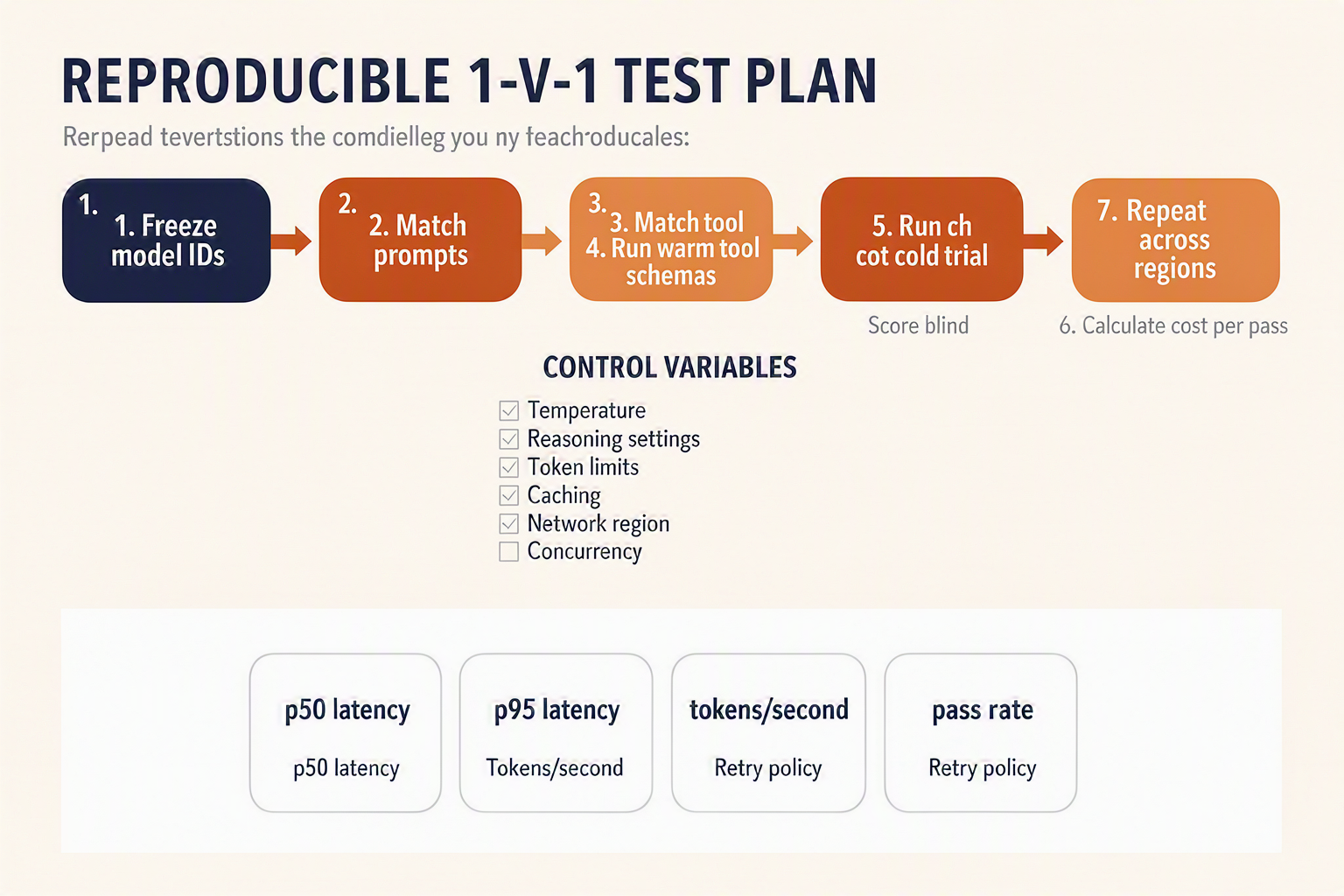
Test Gemini 3.5 Flash-Lite and GPT-5.6 Sol on identical, representative tasks using fixed settings, blinded scoring and cost per successful completion—not headline benchmark scores. Before comparing quality, verify that both exact model IDs are accessible through official production endpoints; otherwise, label the result provisional rather than treating an alias or adjacent model as equivalent.
1. Pass an availability gate first
Record evidence on July 21, 2026, including:
- Exact model ID returned by the API
- Provider, endpoint and API version
- Preview, stable or deprecated status
- Region and account tier
- Rate limits, pricing and supported features
- Request ID and model identifier from every response
This step is essential because Google’s Gemini API release notes describe Gemini 3.5 Flash-Lite as generally available and production-ready on July 21, 2026, while Google’s pricing page says a Gemini 3.5 Flash-Lite version was shut down on June 1, 2026. Google may be referring to different versions or aliases, so preserve the exact identifier rather than recording only “Flash-Lite.”
No verified OpenAI primary documentation for the exact name GPT-5.6 Sol appears in the available research. Do not substitute another GPT-5.6 variant: if an official model ID and endpoint cannot be verified, GPT-5.6 Sol fails the production-availability gate.
2. Build a workload-weighted test set
Use 100–500 prompts drawn from real traffic, scrubbed of personal or confidential data. Divide them according to expected production volume rather than giving every capability equal weight:
- Classification, extraction and routing
- Summarisation and customer-response drafting
- Structured JSON generation
- Coding and debugging
- Multi-step reasoning
- Tool selection and argument construction
- Long-context retrieval, if officially supported by both candidates
Google documents a 1-million-token context window for Gemini 3.5 Flash, but that figure should not automatically be assigned to Flash-Lite. Test only limits explicitly documented for the exact model ID; GPT-5.6 Sol’s token limit remains undisclosed in the supplied primary-source record.
3. Control the experiment
Run both candidates with the same system prompt, input, output schema and tool definitions. Match temperature, reasoning controls and maximum output length only where the parameters have equivalent documented meanings.
For each prompt:
- Randomise response order and hide model names from reviewers.
- Run at least three repetitions to expose variance.
- Validate structured outputs automatically.
- Score factuality, instruction adherence, completeness and safety.
- Measure end-to-end latency from request submission to completed response.
- Log timeouts, refusals, malformed outputs, retries and tool-call failures.
Use deterministic unit tests for coding and extraction. For subjective tasks, use at least two human reviewers and resolve disagreements through a predefined rubric.
4. Compare completed-task economics
Calculate:
Cost per successful task = (input cost + output cost + retry cost + tool cost + review cost) ÷ accepted completions
Also report median latency, p95 latency, first-pass success rate and tokens per accepted answer. A budget model wins only if its lower token price survives retries and correction; a flagship reasoning model justifies higher expenditure only when its additional accuracy reduces total task cost or material risk.
Because verified GPT-5.6 Sol pricing is undisclosed, do not manufacture a dollar comparison. Publish the measured token consumption and break-even formula, then insert official prices only after OpenAI documents them.
5. Make the decision reproducible
Freeze the dataset, rubric and code; rerun after model-version changes. Choose the model with the best weighted production score, and retain a small canary deployment before shifting substantial traffic.
What do official documentation and expert evaluations actually support?

The available evidence supports Gemini 3.5 Flash-Lite’s positioning as a low-cost, high-throughput model, but it does not establish a complete, internally consistent production specification. The supplied research contains no verified OpenAI documentation or independent expert benchmark for GPT-5.6 Sol, so claims about its capabilities, pricing or flagship status remain unsubstantiated as of July 21, 2026.
What Google’s primary documentation confirms
Google AI for Developers describes Gemini 3.5 Flash-Lite as its “fastest, most cost-effective 3.5 model for high-throughput execution.” That language supports using the model for workloads such as classification, extraction, moderation, short-form generation and large request queues where throughput matters more than deep reasoning.
Google’s documentation also provides several concrete—but partly conflicting—signals:
- Google’s Gemini API release notes dated July 21, 2026, identify Gemini 3.5 Flash-Lite as generally available and describe the release as stable and production-ready.
- Google’s Gemini Developer API pricing page states that Gemini 3.5 Flash-Lite was deprecated and shut down on June 1, 2026.
- The Google Gemini API models page combines the high-throughput description with a warning that affected models are deprecated and “will be shut down soon.”
- Google states that Gemini 3.5 Flash supports a 1-million-token context window, but the supplied documentation does not establish that the same limit applies to the distinct Flash-Lite variant.
- Google made the Interactions API generally available in June 2026 and recommends it for new Gemini projects, providing a documented integration path for supported models and agents.
These records may refer to different snapshots, aliases or model revisions. Nevertheless, teams should not treat the family name as sufficient proof of availability. The production check must use the exact model ID returned by Google’s live model-listing endpoint, followed by a small authenticated request in the intended region and billing account.
What the evidence supports for GPT-5.6 Sol
The supplied context contains no OpenAI model card, API reference, pricing entry, release note or system card naming GPT-5.6 Sol. It therefore cannot verify:
- An official model ID or general-availability date
- Input, cached-input or output-token pricing
- Context-window and maximum-output limits
- Image, audio, video or document input
- Function calling, web search or other tools
- Coding, reasoning, latency or throughput performance
- Rate limits, data-retention terms or service-tier eligibility
The absence of documentation does not prove that GPT-5.6 Sol is unavailable. It means this comparison cannot responsibly convert an unverified name into concrete specifications.
How much weight should expert evaluations carry?
No controlled, reproducible third-party evaluation of this exact Gemini 3.5 Flash-Lite vs GPT-5.6 Sol pairing appears in the supplied research. A July 3, 2026 Google AI Developers Forum post reports that Gemini 3.5 Flash had a smaller “effective working memory” than another model as context filled, but that is a user observation about Gemini 3.5 Flash—not Flash-Lite—and is not a benchmark.
The defensible conclusion is therefore narrow: Google documents Flash-Lite’s budget and throughput intent, while neither official records nor expert testing supplied here support a quantitative comparison with GPT-5.6 Sol. Until both exact model IDs can be tested, availability claims outrank benchmark speculation.
What does the comparison mean for your workload, and how should you migrate? (TABLE)
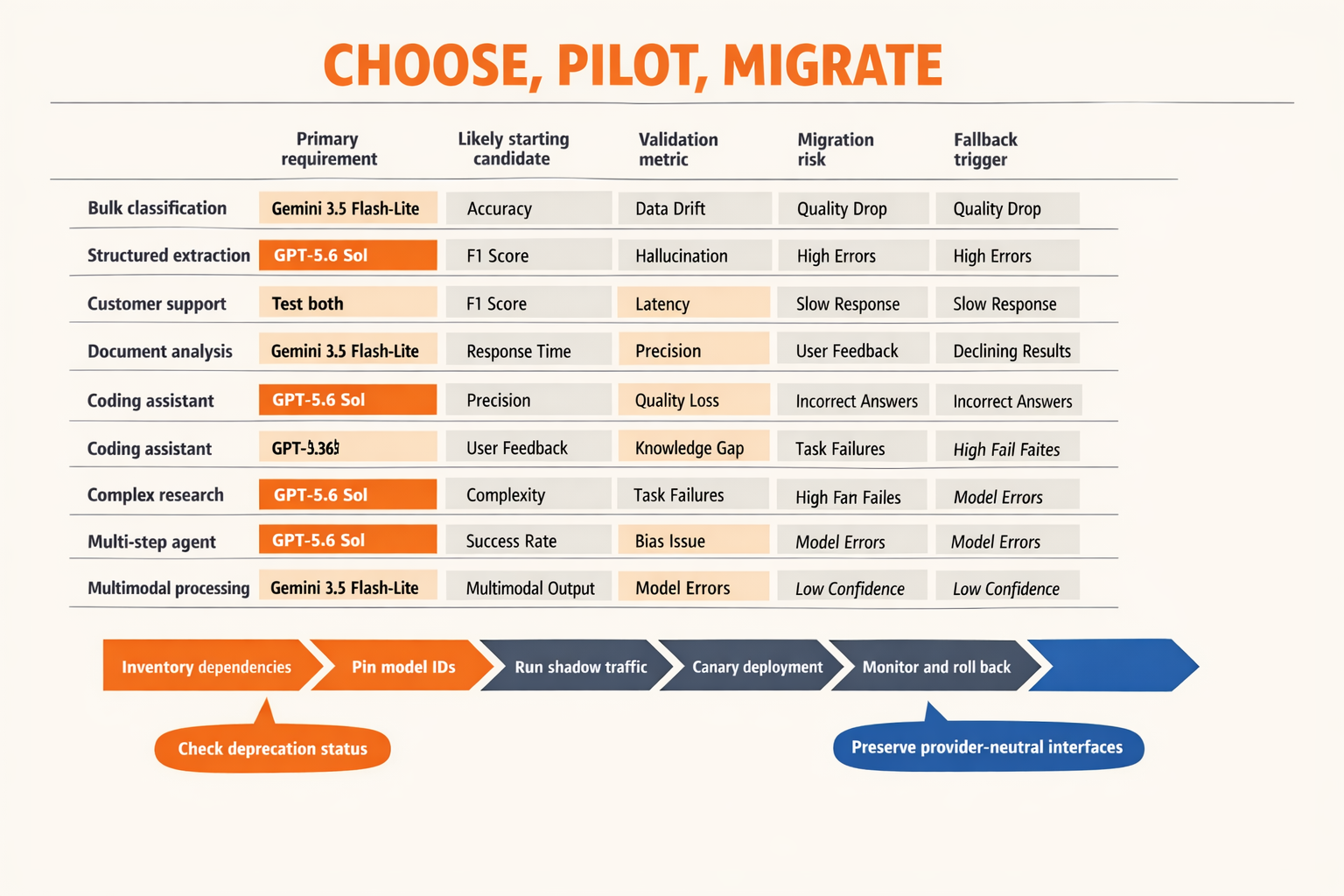
Use Gemini 3.5 Flash-Lite for repeatable, high-volume tasks that tolerate occasional escalation; consider GPT-5.6 Sol only for reasoning-intensive work after OpenAI publishes and you verify its exact API specifications. Migration should be staged, metric-driven and reversible because GPT-5.6 Sol remains undocumented in the available primary-source research, while Google’s records for Flash-Lite contain an availability conflict.
Workload-by-workload decision matrix
| Workload | Preferred model | Decision gate | Migration approach |
|---|---|---|---|
| Classification, tagging and routing | Gemini 3.5 Flash-Lite | Meets accuracy target at required throughput | Shadow-test, then shift traffic in increments |
| Extraction and structured JSON | Gemini 3.5 Flash-Lite | Schema-valid output and low retry rate | Add validation, repair logic and fallback |
| Bulk summarisation | Gemini 3.5 Flash-Lite | Acceptable factuality and cost per completed summary | Test representative document lengths |
| Complex coding and debugging | GPT-5.6 Sol, conditionally | Official model ID, pricing and measurable reasoning gain | Keep Flash-Lite as a baseline during evaluation |
| Multi-step agents and tool orchestration | GPT-5.6 Sol, conditionally | Verified tool support, reliability and rate limits | Replay tool traces in a sandbox first |
| Regulated or high-cost decisions | Neither without validation | Human review, auditability and published service terms | Run a controlled pilot with rollback |
Google calls Gemini 3.5 Flash-Lite its “fastest, most cost-effective 3.5 model for high-throughput execution,” making routine automation its clearest intended fit. However, Google’s Gemini API release notes identify a stable production release as generally available on July 21, 2026, while Google’s pricing page says a Flash-Lite version was shut down on June 1, 2026. Treat the exact model ID—not the marketing name—as the deployable unit.
No equivalent migration decision can yet be finalized for GPT-5.6 Sol. Without verified OpenAI documentation for its model ID, prices, context window, modalities, tool support and rate limits, teams cannot calculate capacity, compatibility or cost per successful task.
A safe migration sequence
- Freeze the baseline. Record current latency percentiles, token consumption, schema-validity rate, retries, human corrections and task success. Compare completed outcomes rather than isolated token prices.
- Verify the destination. Confirm the model ID through the provider’s live model-list endpoint and console. For Gemini, also reconcile the July 21 general-availability notice with the June 1 shutdown statement before sending production traffic.
- Build a representative evaluation set. Include routine requests, long inputs, multilingual cases, malformed data, tool failures and adversarial prompts. Do not infer Flash-Lite limits from Gemini 3.5 Flash or GPT-5.6 Sol capabilities from another GPT variant.
- Run shadow traffic. Duplicate production requests without exposing candidate outputs to users. Evaluate:
- P50 and P95 latency
- Cost per accepted result
- Retry and escalation rates
- Tool-call and JSON validity
- Human preference and factual accuracy
- Canary and roll back. Move a small traffic share first, define automatic failure thresholds and retain the previous model until performance remains stable across peak load.
Architecture implication
Avoid embedding model names throughout application code. Place the model ID, endpoint and fallback policy in configuration, and keep prompts versioned independently. Google states that the Interactions API became generally available in June 2026 and recommends it for new Gemini projects, but API adoption and model availability should still be validated separately.
The practical end state is often tiered routing: Flash-Lite handles economical volume, while genuinely difficult requests escalate to GPT-5.6 Sol only after its official availability and performance are established.
Frequently asked questions about Gemini 3.5 Flash-Lite vs GPT-5.6 Sol
Is Gemini 3.5 Flash-Lite vs GPT-5.6 Sol a fair comparison for production applications?
Is Gemini 3.5 Flash-Lite officially available in the Gemini API?
Is GPT-5.6 Sol officially available through the OpenAI API?
Which is cheaper in Gemini 3.5 Flash-Lite vs GPT-5.6 Sol?
Should I use Gemini 3.5 Flash-Lite for coding and complex reasoning?
How should developers migrate between Gemini 3.5 Flash-Lite and GPT-5.6 Sol?
Conclusion
The Gemini 3.5 Flash-Lite vs GPT-5.6 Sol decision should be based on verified workload economics, not model names or headline token prices. As of July 21, 2026, Gemini 3.5 Flash-Lite has the stronger documented case for budget-sensitive, high-throughput execution, while GPT-5.6 Sol cannot be responsibly recommended until OpenAI publishes primary documentation for that exact model.
- Gemini 3.5 Flash-Lite targets volume and efficiency. Google describes Gemini 3.5 Flash-Lite as its “fastest, most cost-effective 3.5 model for high-throughput execution,” making its intended fit clear: classification, extraction, routine summarisation and other latency-sensitive tasks.
- Availability must be verified at the model-ID level. Google’s Gemini API release notes list a stable Gemini 3.5 Flash-Lite release as generally available on July 21, 2026, but Google’s pricing documentation says a version was deprecated and shut down on June 1, 2026. That discrepancy may involve separate aliases or versions, yet production teams should confirm the exact endpoint rather than assuming every “3.5 Flash-Lite” reference describes the same model.
- GPT-5.6 Sol remains an undocumented option in this comparison. Without verified OpenAI specifications for its model ID, API access, pricing, context limits, modalities, tools, rate limits and service tiers, any confident cost or performance conclusion would be speculation. “Undisclosed” is the accurate verdict—not an invitation to substitute figures from adjacent GPT models.
- Cost per successful task matters more than cost per token. Flash-Lite can be economical at scale, but retries and human correction may erase nominal savings. A verified flagship reasoning model can justify higher latency and pricing when complex coding, multi-step analysis or expensive decisions require stronger reasoning.
The next signals to watch are reconciled Google lifecycle documentation and official OpenAI publication of GPT-5.6 Sol’s specifications. Teams should then rerun representative prompts, tool workflows and failure tests rather than rely on static benchmarks.
Platforms such as CallMissed, an OpenAI-compatible multi-model gateway supporting AI communication workloads, illustrate how routing tasks across model tiers can reduce dependence on a single provider or model class. As documentation changes, will your architecture let you switch models based on measured outcomes—or leave your production workload tied to an assumption?
Related Reading
- Gemini 3.6 Flash vs GPT-5.6 Luna: Price, Speed and Limits
- Gemini 3.6 Flash vs GPT-5.6 Sol: Verified API, Price and Performance
- Gemini 3.5 Flash-Lite vs GPT-5.6 Terra: Official API, Price, Limits & Use Cases
Sources
Related Posts
Ready to automate customer conversations?
Launch AI voice agents and WhatsApp bots with CallMissed — one API, 22+ Indian languages.