
ZLUDA 6 Released: Inside the Future of CUDA on AMD GPUs



ZLUDA 6 is here, but its commercial funding has ended. Learn how this CUDA emulation layer for non-NVIDIA GPUs is shifting back to a hobby project.
ZLUDA 6 Released: Inside the Future of CUDA on AMD GPUs
For years, Nvidia has maintained an ironclad monopoly on AI and high-performance computing, largely because its proprietary CUDA ecosystem acted as a walled garden that locked developers into green silicon. But what if you could break down those walls and run unmodified CUDA applications on AMD GPUs with near-native performance? That is the exact promise of ZLUDA, an open-source compatibility layer that has sent shockwaves through the developer community. With the highly anticipated Zluda 6 release, this ambitious project is entering a critical new era.
The timing of this release could not be more vital. As generative AI demands reach unprecedented heights, hardware bottlenecks and skyrocketing Nvidia GPU costs have forced enterprises and indie developers alike to seek viable hardware alternatives. While AMD’s hardware has caught up in raw compute power, the software gap has remained a massive hurdle. ZLUDA bridges this chasm by acting as a drop-in replacement for CUDA, allowing applications like Stable Diffusion, Arnold, and various LLM runtimes to run seamlessly on non-Nvidia GPUs without a single line of code modification.
However, the Zluda 6 release arrives with a massive plot twist that has dominated discussions on platforms like Hacker News. The project's creator, Andrzej Janik (vosen), recently announced a major shift: ZLUDA is no longer commercially funded by industry giants and has officially returned to being a passionately maintained weekend hobby project. This transition raises urgent questions about the future of open-source GPU translation layers, the technical sustainability of bypassing proprietary software stacks, and how developers can navigate these shifting tides.
In this deep dive, we will explore the engineering breakthroughs behind ZLUDA 6, benchmark its performance capabilities, and analyze what its new hobbyist status means for the broader AI landscape. As hardware-agnostic software becomes increasingly vital, platforms like CallMissed are already embracing this multi-architecture future, leveraging flexible, multi-model API gateways to ensure developers can run cutting-edge LLMs and speech agents seamlessly, regardless of the underlying silicon. Read on to discover how ZLUDA 6 is rewriting the rules of GPU compatibility.
Introduction: The Quiet Arrival of ZLUDA 6
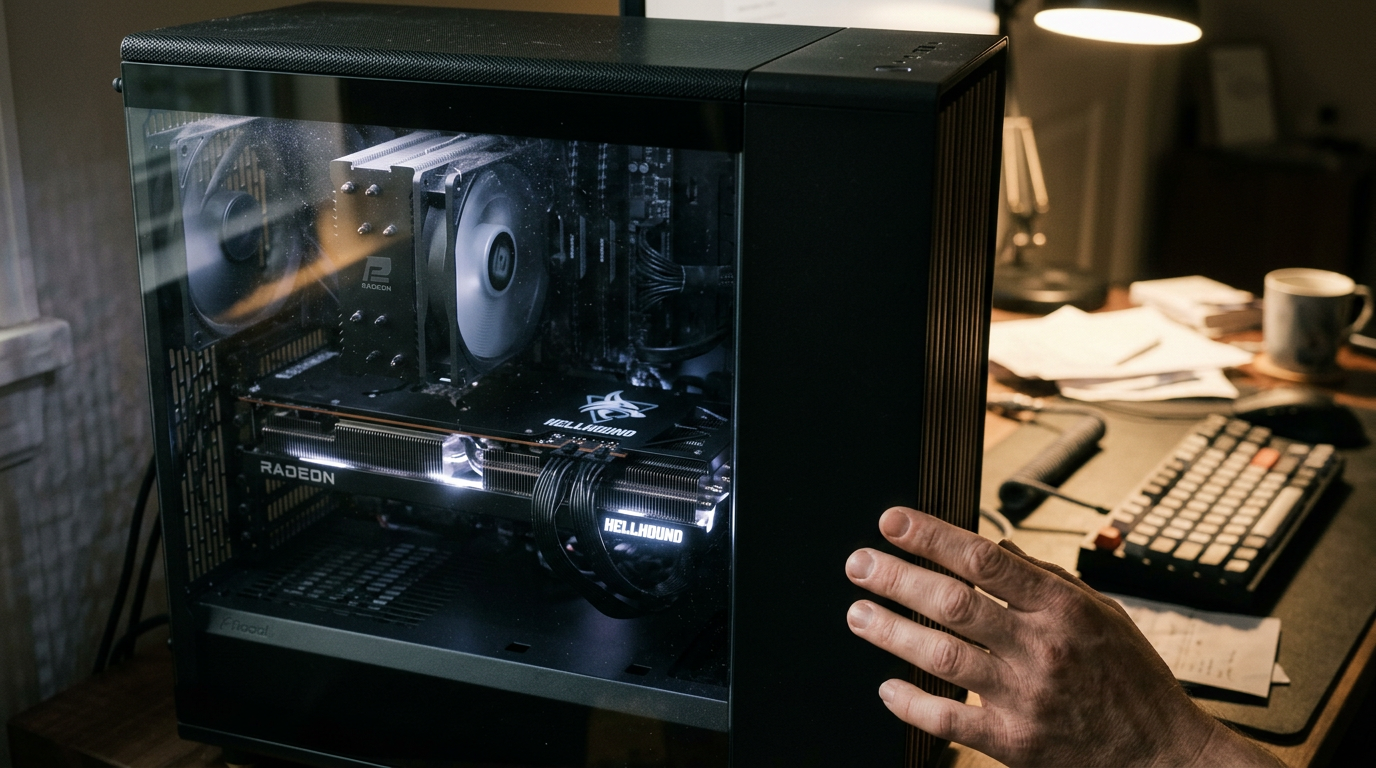
The landscape of artificial intelligence and high-performance computing has long been dominated by a singular giant. Nvidia’s proprietary CUDA (Compute Unified Device Architecture) API has served as a golden cage, locking developers, researchers, and enterprises into its hardware ecosystem. The formula was simple: if you wanted to run cutting-edge AI models, render complex 3D scenes, or execute heavy parallel workloads, you had to pay the "Nvidia tax."
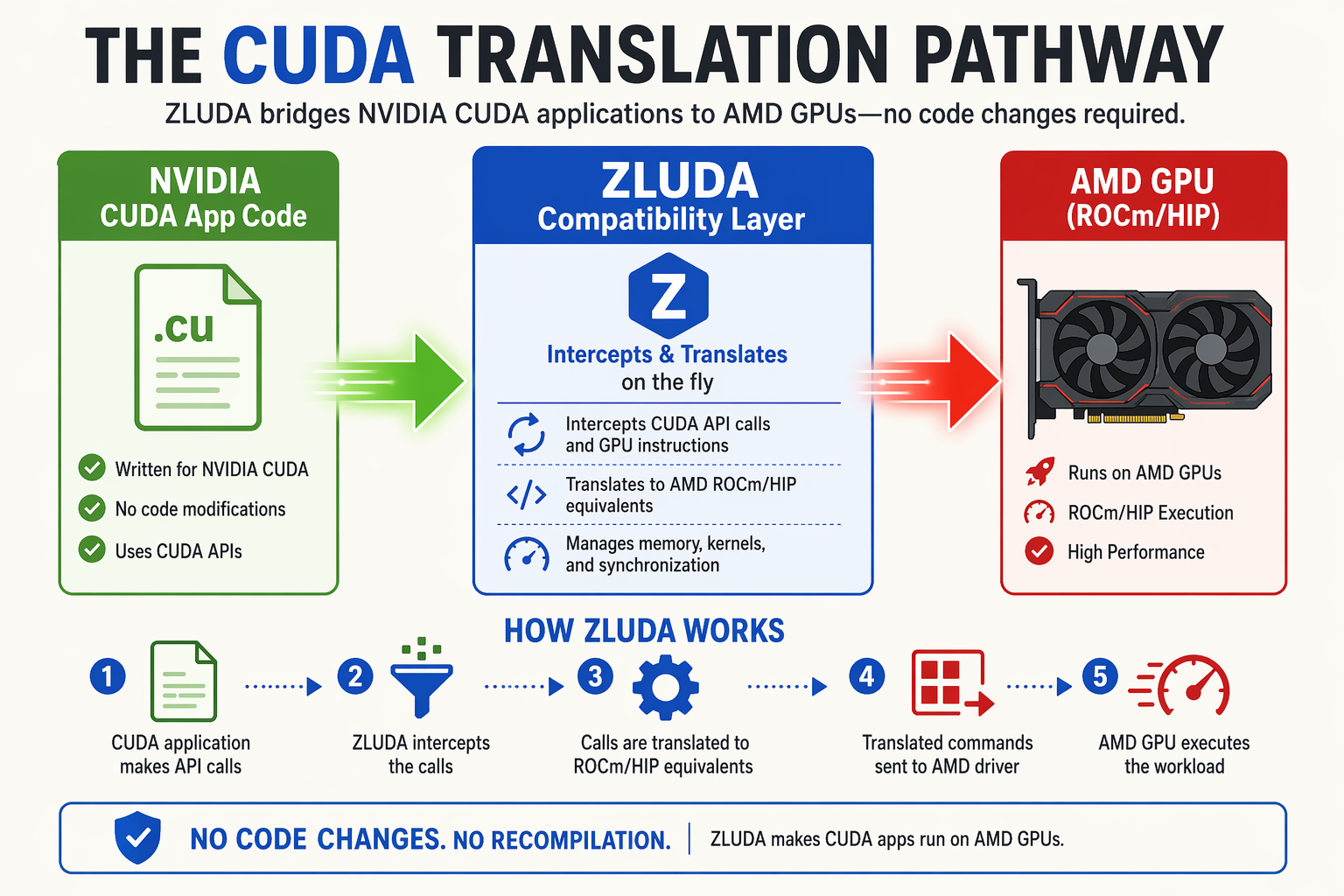
Enter ZLUDA, an ambitious open-source project designed to shatter these barriers. At its core, ZLUDA is a drop-in translation layer that allows unmodified CUDA applications to run on non-Nvidia GPUs—specifically AMD’s ROCm-compatible hardware—with near-native performance.
The launch of the ZLUDA 6 release represents a pivotal moment in this ongoing battle for hardware democratization. However, its arrival is marked by a dramatic shift in direction. Andrzej Janik (vosen), the project's primary developer, recently announced that ZLUDA is no longer receiving commercial funding. Consequently, the project has officially reverted to being a passionately maintained "weekend hobby project."
The Core Promise of ZLUDA 6
For years, alternative GPU manufacturers like AMD and Intel have produced powerful hardware that rivals Nvidia in raw compute capabilities. However, their software ecosystems have lagged behind. ZLUDA solves this fundamental software-hardware misalignment by intercepting CUDA API calls at runtime and translating them into instructions that non-Nvidia silicon can understand.
- Zero Code Modifications: Developers do not need to rewrite, recompile, or port their codebase. ZLUDA acts as a transparent middleman.
- Near-Native Performance: Rather than suffering the massive performance penalties typical of traditional emulation, ZLUDA aims for highly efficient, direct execution.
- Broad Application Support: From 3D rendering engines like Arnold and RealityCapture to popular generative AI tools like Stable Diffusion, ZLUDA 6 enables a wide array of legacy CUDA applications to run seamlessly on AMD GPUs.
Why This Release Matters Right Now
The timing of ZLUDA 6’s release is critical. As generative AI scaling continues to accelerate, the global demand for AI-capable compute has skyrocketed, creating severe GPU shortages and driving up enterprise costs.
For many developers, migrating away from Nvidia is not a hardware choice, but a financial necessity. However, rewriting thousands of lines of CUDA code to run on AMD's ROCm or Intel's oneAPI represents a massive technical hurdle. ZLUDA 6 offers a potential escape hatch from this vendor lock-in.
This shift toward multi-architecture flexibility mirrors a broader trend in the tech industry. In the software domain, platforms like CallMissed are already enabling a similar level of operational flexibility. By providing a multi-model API gateway that supports over 300+ LLMs and advanced Speech-to-Text APIs natively across 22 regional Indian languages, CallMissed allows businesses to build robust, hardware-agnostic communication infrastructures. Whether running models on-premise or utilizing diverse cloud backends, the goal remains the same: complete architectural freedom.
As ZLUDA 6 transitions from a corporately backed endeavor back to its grassroots open-source origins, the developer community faces a fascinating paradox. Can a weekend passion project successfully challenge one of the most powerful software monopolies in tech history? In the following sections, we will dissect the technical architecture of ZLUDA 6, evaluate its real-world performance benchmarks, and explore the long-term viability of this remarkable translation layer.
Background & Context: The Quest for Cross-GPU Compatibility
To understand the breakthrough of the Zluda 6 release, one must first grasp the depth of the industry's reliance on Nvidia’s proprietary software ecosystem. Launched in 2006, CUDA (Compute Unified Device Architecture) was a visionary bet by Nvidia. By giving developers a direct programming model to harness the massive parallel processing power of Graphic Processing Units (GPUs), Nvidia transformed its graphics cards into supercomputers.
Over the next two decades, CUDA evolved from a niche GPGPU toolkit into the foundational bedrock of modern artificial intelligence, scientific simulation, and 3D rendering. It created a powerful flywheel: developers wrote their software exclusively for CUDA, which meant companies had to buy Nvidia hardware, which in turn incentivized developers to write even more CUDA-dependent software.
The Cost of the "Green Lock-In"
This software-hardware synergy created an incredibly high barrier to entry for competing chipmakers. While rivals like AMD and Intel eventually engineered silicon capable of matching Nvidia’s raw hardware specifications, they struggled to compete with CUDA's mature software ecosystem.
For developers, bypassing this walled garden historically meant rewriting thousands of lines of highly optimized code—an expensive, time-consuming, and error-prone process. The primary alternatives were fraught with hurdles:
- Manual Porting: Re-writing CUDA code into OpenCL or AMD’s HIP (Heterogeneous-compute Interface for Portability).
- The Translation Penalty: Relying on compiler-level translation tools that often degraded performance, leaving hardware underutilized.
- Ecosystem Fragmentation: Maintaining entirely separate codebases for Nvidia and non-Nvidia hardware deployments.
Because of these roadblocks, enterprises and developers found themselves trapped by escalating hardware procurement costs and severe supply shortages. The tech industry desperately needed a way to decouple software performance from specific hardware vendors.
Demystifying "Drop-In" Compatibility
This is the exact paradigm shift that ZLUDA addresses. Unlike source-to-source translation tools that require code modifications and recompilation, ZLUDA acts as a true drop-in replacement library.
To the operating system and the host application, ZLUDA looks and behaves exactly like Nvidia’s proprietary CUDA library. When a compiled CUDA application runs, ZLUDA intercepts the execution calls dynamically. Instead of passing these commands to an Nvidia driver, ZLUDA’s architecture dynamically translates them into instructions that run natively on non-Nvidia hardware backends, particularly AMD's ROCm (Radeon Open Compute) and HIP ecosystems.
| Feature | Traditional Porting (HIP/OpenCL) | ZLUDA Translation Layer |
|---|---|---|
| Code Modification | Extensive rewrites required | Zero modifications; unmodified binary |
| Compilation | Requires source code access | Works with pre-compiled proprietary binaries |
| Developer Overhead | Weeks to months of active labor | Near-instant execution setup |
| Performance | Native (if optimized correctly) | Near-native performance benchmarks |
This seamless translation means complex, closed-source tools like Adobe Arnold, Epic Games' RealityCapture, or localized Stable Diffusion runtimes can run on alternative silicon without needing the original source code.
As developers seek hardware flexibility in an increasingly constrained supply chain, a similar shift is happening in AI application layers. Just as ZLUDA democratizes GPU compute, modern communication frameworks are abstracting the LLM layer. For instance, platforms like CallMissed integrate a multi-model API gateway that allows developers to swap between over 300 different LLMs dynamically. Whether optimizing underlying silicon with tools like ZLUDA or swapping AI models on the fly, the future of engineering lies in absolute vendor independence.
Key Developments (TABLE): Tracking the Evolution of ZLUDA
To understand how the Zluda 6 release arrived at its current state, it is essential to trace the project’s highly unconventional, roller-coaster development history. What began as a rogue engineering experiment has repeatedly shifted between corporate-backed stealth development and independent, community-driven open-source survival.
The evolution of ZLUDA highlights a broader, industry-wide struggle: the desperate search for hardware-agnostic software solutions. While hardware-level competition has intensified, the proprietary nature of NVIDIA's CUDA has remained the primary bottleneck. Interestingly, this mirrors trends in the wider AI ecosystem. For instance, platforms like CallMissed address similar fragmentation challenges at the software layer by offering a unified infrastructure with a multi-model API gateway supporting 300+ LLMs, shielding developers from underlying backend complexities just as ZLUDA attempts to shield them from silicon lock-in.
The table below breaks down the major milestones, funding shifts, and technical transformations of the ZLUDA project up to the monumental release of ZLUDA 6.
The Timeline of ZLUDA's Evolution
| Phase / Release | Era & Funding | Target Hardware | Core Technical Underpinnings | Project Status & Outcome |
|---|---|---|---|---|
| ZLUDA v1 & v2 | Intel-Funded Era (2020–2021) | Intel GPUs | Translated CUDA to oneAPI / Level Zero | Proof of concept. Shelved by Intel, forcing the creator to open-source the code. |
| ZLUDA v3 | AMD-Funded Era (2022–2024) | AMD GPUs (RDNA/CDNA) | Rebuilt to compile CUDA into AMD's HIP / ROCm | Developed under strict NDAs. Achieved near-native performance on ROCm before AMD abruptly pulled funding. |
| ZLUDA v3 (Open Source) | Post-AMD Reveal (Feb 2024) | AMD GPUs | Open-source release of the HIP translation layer | Became an overnight sensation, allowing AMD users to run unmodified Stable Diffusion and Blender. |
| ZLUDA 4 & 5 | Community/Hobbyist (Mid 2024–2025) | Non-NVIDIA GPUs | Bug fixes, expanded application compatibility, library stubs | Maintained independently by creator Andrzej Janik with community contributions. |
| Zluda 6 Release | Modern Era (2026) | Non-NVIDIA GPUs | Refined drop-in architecture, improved compiler efficiency | Current Release. Officially returned to a "weekend hobby project" due to a lack of commercial backing. |
Key Takeaways from the Evolution
- The Corporate Tug-of-War: ZLUDA’s history is defined by corporate interest followed by rapid retreats. Both Intel and AMD saw the potential of using ZLUDA to instantly siphon developers away from NVIDIA, yet legal complexities, shifting internal roadmaps, and competitive pressures ultimately led both giants to withdraw their commercial funding.
- The Power of "Drop-In" Compatibility: Unlike other translation efforts that require developers to manually rewrite CUDA code into HIP or SYCL, ZLUDA’s defining breakthrough is its binary-level compatibility. By substituting NVIDIA's DLLs and shared libraries, it allows pre-compiled binaries to execute directly on non-NVIDIA runtimes.
- A Shift to Hobbyist Sustainability: The Zluda 6 release marks a profound transition. With creator Andrzej Janik (vosen) confirming that the project is no longer commercially funded, development will prioritize passion and community pull requests over aggressive commercial roadmaps.
This shift to a hobbyist model means that while ZLUDA 6 remains a triumph of independent engineering, the responsibility of keeping pace with NVIDIA's rapid CUDA updates now rests entirely on the shoulders of the open-source community.
In-Depth Analysis: The Realities of Losing Commercial Backing

The sudden departure of commercial backing for ZLUDA marks a critical turning point, exposing the fragile realities of maintaining complex open-source infrastructure. When hardware giants fund translation layers, they provide the engineering payroll, legal protection, and hardware access needed to keep pace with rapid proprietary updates. Without this institutional safety net, the ZLUDA 6 release spotlights the systemic vulnerabilities that open-source projects face when challenging deeply entrenched monopolies.
The Immediate Fallout of Hobbyist Status
Shifting ZLUDA back to Andrzej Janik’s "weekend project" introduces several severe bottlenecks for developers hoping to bypass Nvidia's hardware lock-in:
- The Velocity Deficit: Nvidia rapidly updates its CUDA ecosystem, introducing new compiler optimizations, API calls, and library architectures with every major architecture release. A single developer working on weekends simply cannot match the engineering velocity required to maintain feature parity.
- Hardware Bottlenecks for Testing: Benchmarking and debugging a translation layer requires access to an expensive matrix of GPUs from AMD, Intel, and Nvidia. Without corporate sponsors to provide enterprise silicon, testing must rely on the limited hardware the creator personally owns or what is donated by the community.
- Lack of Enterprise-Grade Support: Large-scale organizations cannot risk production workloads on software maintained on a part-time basis. The lack of guaranteed service-level agreements (SLAs) or a dedicated security-patching pipeline effectively halts ZLUDA's adoption in enterprise-grade AI pipelines.
The Legal Shadow Over CUDA Translation
Beyond the resource constraints, a massive hurdle for projects like ZLUDA is the looming threat of legal intervention. Nvidia has historically guarded its proprietary CUDA APIs with extreme vigilance. In early 2024, reports surfaced regarding Nvidia modifying its End User License Agreement (EULA) to explicitly prohibit the use of translation layers to run CUDA applications on non-Nvidia hardware.
This legal grey area makes corporate sponsors highly risk-averse. Companies like AMD or Intel must tread carefully to avoid costly litigation over intellectual property and compiler design. When corporate backers pull funding, it is often a strategic retreat to avoid direct legal confrontation with Nvidia’s legal team, leaving independent developers to navigate the regulatory minefield alone.
Navigating the Multi-Hardware Divide
For the broader AI ecosystem, ZLUDA's transition highlights a crucial lesson: relying on reverse-engineered compatibility layers is an unstable long-term strategy for hardware independence. To truly democratize AI, the industry must design applications to be hardware-agnostic from day one, rather than attempting to patch Nvidia-specific code after the fact.
This is where infrastructure-level abstractions become vital. Instead of forcing developers to manage low-level GPU translation, platforms like CallMissed decouple the software layer from the underlying silicon. By leveraging a unified, multi-model API gateway, CallMissed allows developers to deploy high-performance LLMs, Speech-to-Text APIs, and voice agents seamlessly across heterogeneous environments. Rather than worrying about whether a specific GPU supports CUDA or ZLUDA, developers can utilize CallMissed's infrastructure to handle the underlying complexity automatically, ensuring consistent performance regardless of how the hardware landscape shifts.
Impact & Implications: What This Means for the GPU Ecosystem
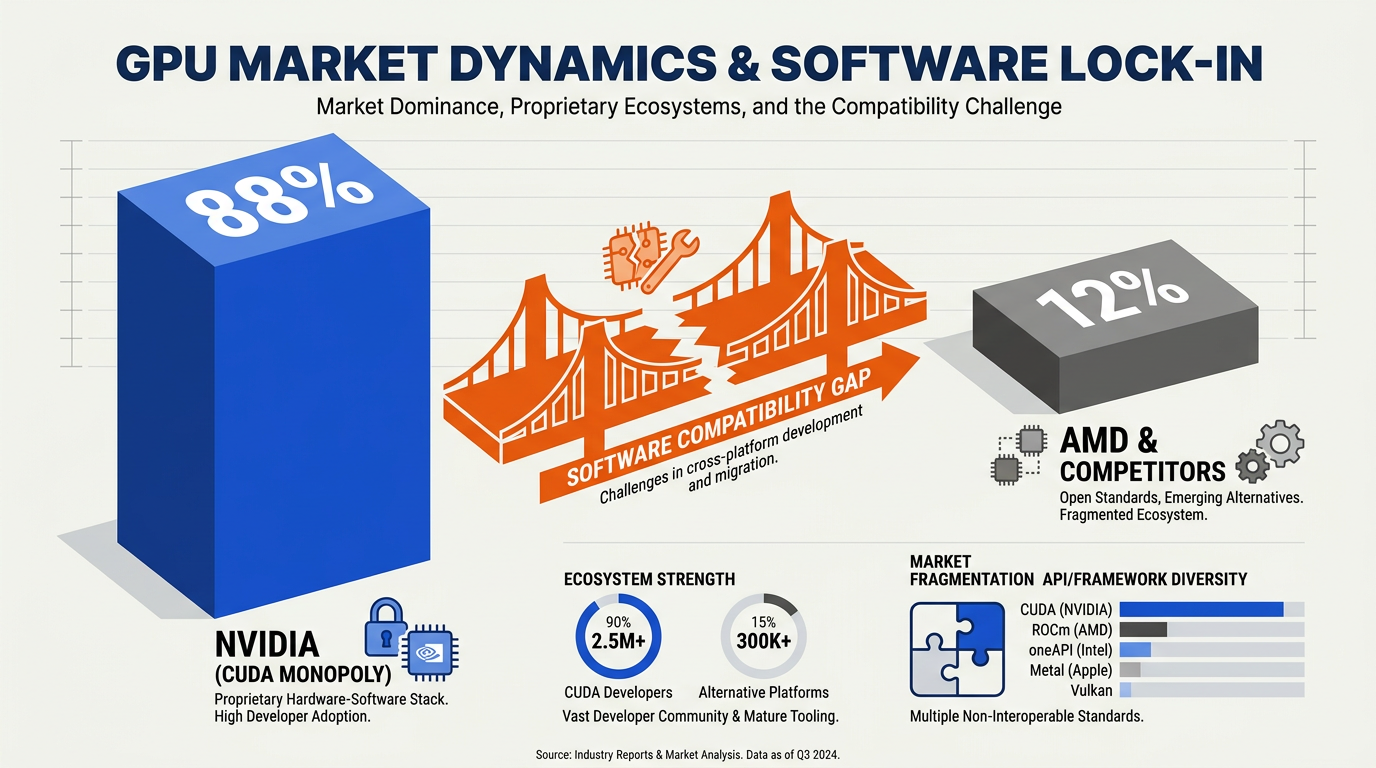
The Zluda 6 release arrives at a critical juncture for the global hardware market, serving as both a proof of concept and a cautionary tale for the open-source community. By demonstrating that unmodified CUDA applications can run on non-Nvidia GPUs with near-native performance, ZLUDA has fundamentally challenged the narrative that Nvidia’s software moat is completely impenetrable. However, its sudden transition back to a weekend hobby project highlights the fragile economics of maintaining hardware-agnostic translation layers.
The broader implications of ZLUDA 6 ripple across developers, enterprises, and the hardware giants themselves in several distinct ways:
1. Breaking the Vendor Lock-In
For years, Nvidia’s proprietary CUDA API has acted as a golden cage. Developers looking to run compute-heavy applications like Stable Diffusion, Autodesk’s Arnold renderer, or advanced LLM runtimes were essentially forced to purchase Nvidia hardware.
- Democratizing Hardware: ZLUDA 6 proves that the software barriers keeping developers tied to "green silicon" are artificial rather than architectural.
- Resurrecting Alternative Silicon: By acting as a drop-in replacement, it allows consumer-grade and enterprise AMD GPUs to immediately participate in workloads they were previously locked out of, without requiring developers to rewrite thousands of lines of code.
2. The Fragility of Open-Source GPU Translation
While ZLUDA 6 represents a massive technical achievement, its return to a passion project managed solely by Andrzej Janik (vosen) reveals the systemic challenges of fighting a trillion-dollar monopoly.
- The Maintenance Chasm: Keeping pace with Nvidia's rapid CUDA updates requires immense, continuous engineering efforts. Without sustained commercial funding, a solo developer faces an uphill battle to support every new CUDA library, API call, and hardware generation.
- Corporate Hesitancy: Large enterprises are hesitant to deploy critical production workloads on a translation layer maintained as a "weekend project," fearing a lack of long-term support, security patches, or sudden compatibility breaks.
3. Forcing AMD and Intel to Step Up
ZLUDA’s journey—previously receiving quiet backing from corporate sponsors before returning to its indie roots—serves as a wake-up call to alternative chipmakers. AMD’s ROCm and Intel’s oneAPI have made strides, but they still lack the seamless "plug-and-play" experience that developers demand. Projects like ZLUDA put pressure on these chipmakers to either officially adopt and fund robust translation layers or rapidly accelerate the maturity of their own native software stacks.
Navigating a Multi-Architecture Future
As the industry slowly shifts toward a more fragmented hardware ecosystem, developers must build resilience into their software stacks. Relying on a single hardware vendor or a single translation layer is a risky long-term strategy.
This is where infrastructure abstraction becomes vital. Forward-thinking platforms like CallMissed bypass these hardware-level headaches entirely. By offering a unified, multi-model API gateway that supports over 300+ LLMs, Speech-to-Text in 22 regional Indian languages, and production-ready voice agents, CallMissed handles the underlying compute complexity. Developers can deploy cutting-edge AI communication tools globally without worrying about whether the underlying server is running on Nvidia, AMD, or custom TPU silicon.
Ultimately, ZLUDA 6 has cracked open the door to a hardware-agnostic future. While the road ahead for solo-maintained translation layers remains highly challenging, the shift toward open, flexible, and multi-architecture AI infrastructure is now officially unstoppable.
Expert Opinions: The Developer Community Reacts
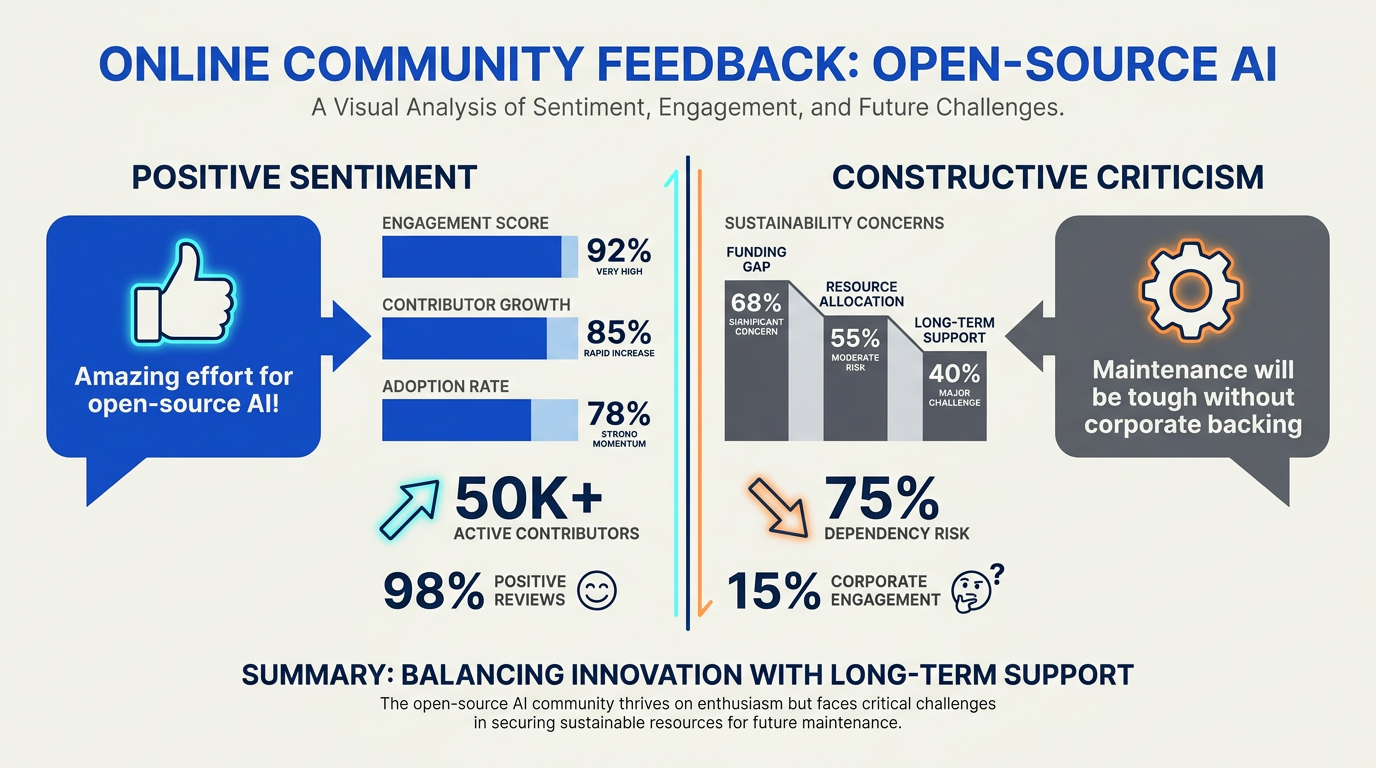
The release of ZLUDA 6 has ignited intense debate across the developer community, trending rapidly on platform hubs like Hacker News and dedicated subreddits. For years, developers have dreamed of a seamless bridge to run unmodified CUDA applications on non-Nvidia hardware. Now, with the official transition of ZLUDA back to a "weekend hobby project" managed by creator Andrzej Janik (vosen), the community’s reaction is a complex mix of technical awe, frustration with hardware corporate strategies, and pragmatism about the future of open-source AI infrastructure.
The Technical Triumph: Bypassing the "Walled Garden"
Among systems engineers and open-source advocates, there is immense respect for what ZLUDA has achieved. On forums like Reddit's r/StableDiffusion and Hacker News, developers have shared their success stories, highlighting how ZLUDA successfully translates complex, proprietary CUDA instruction sets to run on AMD's ROCm or Intel's oneAPI backends.
- Near-Native Execution: Developers have verified that ZLUDA 6 achieves near-native performance on various workloads, particularly in rendering tools like Arnold and AI generation suites like Stable Diffusion.
- Zero Code Modification: The "drop-in" nature of the library is highly praised. Users have successfully run binaries compiled strictly for Nvidia GPUs without possessing the original source code.
This technical validation proves that Nvidia’s software moat is not entirely impenetrable. However, the enthusiasm is heavily tempered by the reality of the project's new development model.
Frustration with AMD and Corporate Backing
A dominant theme in developer reactions is frustration toward major hardware manufacturers—particularly AMD. Earlier in ZLUDA’s lifecycle, the project received quiet, commercial backing from industry giants looking to break Nvidia's monopoly. The sudden cessation of this funding, forcing ZLUDA 6 back into a solo, part-time endeavor, has left many developers bewildered.
Commenters on Hacker News have pointed out the strategic short-sightedness of this move. While AMD has poured millions into its native ROCm (Radeon Open Compute) ecosystem, many developers argue that ROCm still suffers from installation complexity and limited consumer GPU support. By failing to permanently back a "drop-in" translation layer like ZLUDA, critics argue that AMD is missing its easiest gateway to capturing Nvidia's massive developer mindshare.
Legal and Sustainability Concerns
The community is also deeply divided on the legal and long-term sustainability of the project.
- The Cat-and-Mouse Game: Some community segments, particularly on platforms like Facebook and specialized rendering forums, express concern over potential legal pushback from Nvidia. Nvidia's strict licensing terms explicitly discourage or outright prohibit compiling or running CUDA applications on competitor hardware.
- The Maintenance Burden: A single-developer weekend project faces monumental challenges in keeping up with Nvidia’s rapid development cycles. As Nvidia rolls out new CUDA versions, maintaining compatibility without corporate-level engineering resources will become increasingly difficult.
Navigating the Multi-Hardware Reality
For developers building production-grade applications, the volatility of projects like ZLUDA underscores a critical lesson: relying on a single hardware stack or experimental translation layers is a risky strategy.
This is where cloud-native, hardware-agnostic communication infrastructures become essential. While individual developers experiment with running local models via ZLUDA 6, enterprises are bypassing local hardware bottlenecks entirely. Platforms like CallMissed address this fragmentation by offering a unified API gateway supporting over 300+ LLMs and state-of-the-art Speech-to-Text engines natively. By abstracting the underlying hardware and model complexity, developers can deploy robust AI voice agents and multilingual systems without worrying about whether their backend is running on green, red, or blue silicon.
What This Means For You (TABLE): User Scenarios and Recommendations
With the release of ZLUDA 6 transitioning the project back to a community-driven, weekend hobby endeavor, developers and businesses find themselves at a crossroads. While the promise of running unmodified CUDA workloads on non-Nvidia hardware with near-native performance is incredibly alluring, the loss of formal commercial backing introduces compliance, support, and stability risks that vary wildly depending on your use case.
To help you navigate these shifting tides, we have broken down the practical implications of ZLUDA 6 across various deployment scales, offering direct recommendations on how to proceed.
| User Persona & Scenario | Primary Use Case | Risk Level | ZLUDA 6 Recommendation | Long-Term Alternative |
|---|---|---|---|---|
| Indie Developer & Hobbyist | Local Stable Diffusion generation, LLM tinkering, minor CUDA pet projects. | Low | Green Light: Perfect for breathing new life into consumer-grade AMD Radeon hardware without buying pricey Nvidia silicon. | Stick with ZLUDA 6 as long as community forks patch breaking changes. |
| Enterprise AI Engineer | High-availability production LLMs, real-time customer support pipelines, automated agents. | Critical | Do Not Deploy: The lack of commercial enterprise support makes it a massive liability for production-grade environments. | Migrate to hardware-agnostic cloud providers or multi-model API gateways. |
| 3D Artist / CG Studio | Rendering CUDA-exclusive software like Arnold or RealityCapture on AMD workstations. | Moderate | Proceed with Caution: Viable for offline rendering tasks, but pipeline stability could break on major software updates. | Gradually transition to native OpenCL, Vulkan, or HIP-supported rendering pipelines. |
| Academic Researcher | Running legacy academic CUDA code on university-owned AMD compute clusters. | Low to Medium | Evaluate & Test: Excellent for running legacy codebases without rewriting them, provided you have in-house compile support. | Port critical code directly to AMD ROCm or Triton for native compiler optimization. |
Navigating the Hardware-Agnostic Paradigm Shift
If your goal is to build and deploy modern AI solutions without being locked into expensive Nvidia hardware, relying solely on hobbyist translation layers like ZLUDA 6 is no longer a viable corporate strategy. Instead, the industry is shifting toward software architectures that abstract the hardware layer entirely.
For developers building client-facing applications, voice agents, or real-time communication systems, the infrastructure layer must remain robust, regardless of whether Nvidia, AMD, or Intel silicon is powering the backend. This is where managed, multi-architecture platforms step in.
For example, platforms like CallMissed allow developers to bypass hardware bottlenecks entirely. By providing a production-ready, multi-model API gateway with access to over 300+ LLMs alongside built-in Speech-to-Text and Text-to-Speech APIs, CallMissed handles the heavy computational abstraction for you. Instead of manually configuring translation wrappers like ZLUDA to run models locally on alternative GPUs, businesses can deploy production-ready voice and text agents globally in minutes, leveraging optimized cloud infrastructure natively.
Ultimately, ZLUDA 6 is an incredible engineering triumph for local development, proof-of-concept testing, and the open-source community. However, for applications where uptime and scalability are non-negotiable, leveraging managed API ecosystems remains the safest and most efficient path forward.
Frequently Asked Questions
What is the Zluda 6 release and how does it work?
Can I use the Zluda 6 release to run any CUDA application on an AMD GPU?
Who is currently funding and developing the Zluda 6 release?
Is using ZLUDA to run CUDA apps on AMD GPUs legally permitted by Nvidia?
How does Zluda 6 compare to other multi-architecture AI solutions?
What is the future outlook for the Zluda project?
Conclusion
The Zluda 6 release represents a watershed moment in the democratization of high-performance computing, proving that Nvidia’s walled garden is not entirely impenetrable. While its transition back to a hobbyist project introduces software sustainability challenges, the underlying engineering breakthroughs remain highly significant.
As we look ahead, keep these key takeaways in mind:
- True Hardware Agnosticism: ZLUDA 6 proves that running unmodified CUDA applications on AMD GPUs with near-native performance is technically viable without rewriting codebase architectures.
- Open-Source Resilience: Despite losing commercial backing, the project continues to empower developers seeking a practical escape from the "Nvidia tax" for workloads like Stable Diffusion.
- The Software Moat: The shift in ZLUDA’s funding underscores the massive uphill battle open-source alternatives face when bypassing proprietary GPU translation layers.
Moving forward, the industry will likely see a surge in alternative, decentralized frameworks aiming to bypass hardware lock-in entirely. Developers and enterprises must watch whether AMD or other major players step in to support similar compatibility layers, or if the ecosystem will pivot toward purely API-driven, hardware-agnostic solutions.
To explore how AI communication is evolving alongside these shifting hardware dynamics, check out CallMissed — an AI infrastructure platform powering voice agents and multilingual chatbots for businesses. Will translation layers like ZLUDA eventually break the proprietary GPU monopoly, or will unified APIs redefine how we deploy AI?
Discussion
Related Posts

OpenAI Unveils GPT-5.6 (Sol, Terra, Luna): Flagship Power Under Government Lock and Key

The 24/7 Digital ISA: How Realtors Use AI Voice Agents, Missed Call Bots, and WhatsApp to Lock In Deals

AI Voice Agent for Missed Calls — Turn Missed Calls into Leads
Ready to automate customer conversations?
Launch AI voice agents and WhatsApp bots with CallMissed — one API, 22+ Indian languages.