

Japan's Supreme Court Rules AI Cannot Be Listed as Patent Inventor


Analyze Japan's Supreme Court ruling on AI inventorship. Discover what this landmark legal precedent means for AI-generated IP and patent law globally.
Japan's Supreme Court Rules AI Cannot Be Listed as Patent Inventor
What happens when an invention has no human “eureka” moment—only an AI system producing the breakthrough? Japan’s Supreme Court has now drawn a firm line: AI cannot be listed as patent inventor on patent applications, reinforcing that, under current Japanese law, inventorship belongs to humans, not machines.
The decision matters because it lands at the exact moment AI is moving from assistant to co-creator. The case, reported by The Japan News/Yomiuri on March 6, 2026, involved an American engineer’s appeal to have artificial intelligence named as the inventor on a patent application. Japan’s top court dismissed the appeal, aligning with the view that “an inventor must be a human,” as summarized in coverage of the ruling. Earlier commentary on the related IP High Court decision noted that “the current law does not permit any patent applications whose inventor is AI,” and that courts cannot simply stretch existing statutes to cover machine inventors without legislative change.
This is not just a niche patent-law dispute. It is part of a global collision between fast-moving AI capability and legal systems built around human agency. The story quickly caught attention in the technology community, trending on Hacker News with 279 points and 147 comments in just 5.6 hours, reflecting how unsettled developers, founders, researchers, and IP lawyers remain about AI-generated innovation. If an AI proposes a new drug molecule, designs a novel antenna, or optimizes a manufacturing process beyond what its human operator anticipated, who deserves legal credit—the user, the developer, the company, or no one?
That question is becoming more urgent as businesses embed AI into real production workflows. Platforms like CallMissed, which provide AI voice agents, WhatsApp chatbots, LLM inference across 300+ models, and speech APIs for 22 Indian languages, show how rapidly AI systems are becoming operational collaborators rather than experimental tools.
In this article, we’ll unpack what Japan’s Supreme Court actually ruled, how it fits into the broader international debate over AI inventorship, why the distinction between “AI-assisted” and “AI-invented” matters, and what companies should do now to protect intellectual property created with AI tools. The ruling does not end the debate—but it makes one thing clear: for now, patents still need a human inventor.
Introduction
A human-only rule in an AI-driven invention era
Japan’s Supreme Court has delivered a clear message to inventors, startups, and patent attorneys: an AI system cannot be named as the inventor on a patent application. As reported by The Japan News/Yomiuri on March 6, 2026, the court dismissed an appeal by an American engineer who sought to list artificial intelligence—not a person—as the inventor behind a patent filing.
The ruling confirms a principle that many patent offices and courts around the world have been circling for years: under today’s legal frameworks, inventorship is still tied to human agency. Japan’s earlier IP High Court position was even more explicit, stating that “the current law does not permit any patent applications whose inventor is AI” and that an inventor must be human unless lawmakers decide otherwise.
That may sound straightforward, but the timing makes it anything but simple.
Why this case is bigger than one patent filing
AI is no longer just helping people draft documents, summarize meetings, or generate marketing copy. It is increasingly being used to:
- Design molecules for pharmaceutical research
- Optimize industrial processes beyond human trial-and-error methods
- Generate engineering concepts for antennas, chips, materials, and robotics
- Write code and propose architectures for complex software systems
- Analyze massive datasets to identify patterns humans may never notice
This creates a hard legal question: if the machine contributes the inventive concept, but the law recognizes only humans as inventors, who gets the patent?
The Japan ruling does not say AI cannot be used in the invention process. Instead, it draws a boundary around recognition. AI may assist, suggest, simulate, or generate—but it cannot legally “invent” for patent purposes in Japan today.
Why the technology community is watching closely
The case quickly gained attention among developers and founders, trending on Hacker News with 279 points and 147 comments in 5.6 hours. That reaction reflects a broader anxiety across the AI ecosystem: innovation workflows are changing faster than intellectual property law.
For companies building with AI, this is not theoretical. The key questions are practical:
- Who should be named as inventor when AI contributes to the output?
- How much human input is enough to support inventorship?
- Can AI-generated discoveries be patented at all if no human can claim the inventive step?
- What documentation is needed to prove human contribution?
- Will different countries treat the same AI-assisted invention differently?
These questions matter because patents are territorial. A filing strategy that works in one jurisdiction may fail in another.
The new operating reality for AI-enabled businesses
As AI becomes embedded in real workflows, businesses need to treat AI-generated outputs as part of their compliance and IP strategy—not just productivity gains. Platforms such as CallMissed, which support AI voice agents, WhatsApp chatbots, LLM inference across 300+ models, and speech APIs for 22 Indian languages, show how quickly AI systems are becoming operational collaborators across industries.
But collaboration is not the same as legal authorship or inventorship. Japan’s top court has now reinforced that distinction.
This article examines what the ruling means, how it fits into global patent law debates, and what organizations should do when AI meaningfully contributes to new products, processes, or technical solutions. The central takeaway is simple: AI can help create inventions, but for now, patent law still needs a human inventor.
Background & Context
How the dispute reached Japan’s top court
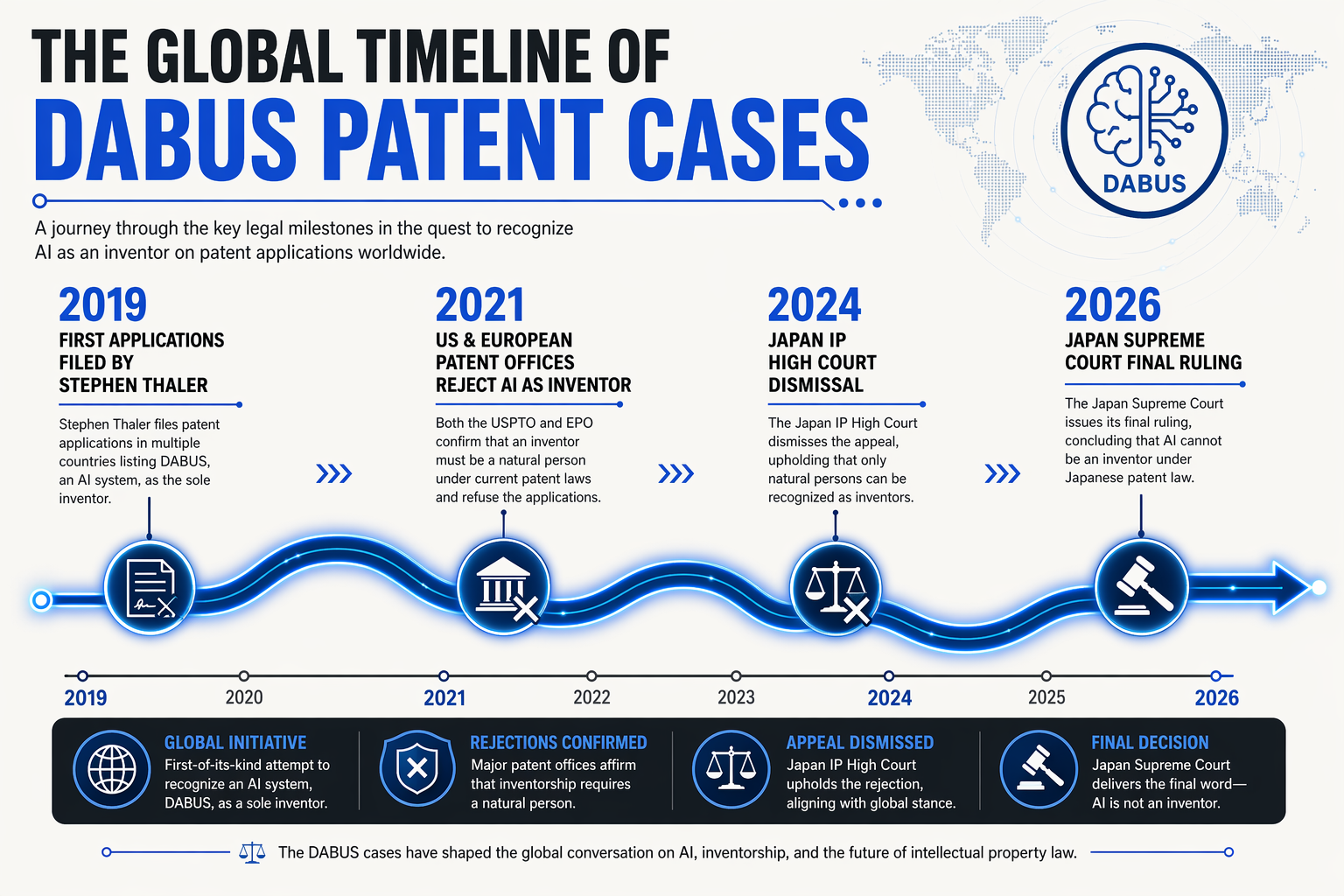
The Japanese case did not emerge in isolation. It sits within a broader wave of litigation testing whether patent law can recognize machine-generated inventorship. According to The Japan News/Yomiuri, Japan’s Supreme Court dismissed an American engineer’s appeal seeking to have artificial intelligence named as the inventor on a patent application. The court’s stance echoed the earlier view of Japan’s IP High Court: a patent inventor must be human, and “the current law does not permit any patent applications whose inventor is AI,” as summarized by Shiga International Patent Office commentary.
That framing is important. The court was not necessarily saying AI cannot contribute technically to an invention. Instead, it held that, under existing statutory language, the legal status of “inventor” is reserved for a person. In other words, the issue is less about AI capability and more about legal personhood, ownership, and accountability.
Why patent law is built around humans
Patent systems were designed for a world in which invention came from identifiable human actors: researchers, engineers, scientists, or employees working inside companies. The inventor’s name is not a decorative field on a form; it is tied to legal consequences.
In most patent regimes, naming the inventor helps determine:
- Who conceived the invention and contributed to the inventive step
- Who can assign rights to an employer, university, or company
- Whether the application is valid if inventorship is challenged
- Who may be liable for misrepresentation or procedural defects
AI disrupts this structure because it cannot sign an assignment, hold property, testify about conception, or be held responsible for misconduct. That is why courts have been cautious about treating an AI system as more than a tool, even when the tool appears to generate an unexpected technical solution.
The DABUS-era question: tool or inventor?
The Japanese dispute is part of the same legal conversation sparked by AI-inventorship cases around systems such as DABUS, where applicants argued that an AI system itself generated patentable ideas. Japan’s IP High Court commentary, referenced in the case background, emphasized that judicial interpretation alone cannot extend inventorship to AI systems. That means courts see the issue as one for lawmakers, not judges.
The practical distinction is usually framed in three steps:
- AI-assisted invention: A human uses AI to search, simulate, draft, optimize, or test ideas. The human remains the inventor if they made the inventive contribution.
- AI-generated output with human selection: AI proposes many options, and a human identifies, refines, and applies one. Inventorship may depend on the depth of human contribution.
- AI-autonomous invention: The system independently produces the core inventive concept. Under Japan’s current approach, this creates a legal gap because AI cannot be named as inventor.
That third category is what makes the debate so difficult. If no human genuinely conceived the invention, but AI cannot be listed either, the application may fail—not because the invention lacks technical merit, but because the law has no recognized inventor.
Why this matters now
The timing explains why the ruling gained traction online, including on Hacker News, where the story drew 279 points and 147 comments within 5.6 hours. Developers and founders are no longer discussing hypothetical expert systems. Modern AI is already being used to generate code, propose molecules, design components, summarize research, and automate customer interactions.
For companies, the lesson is immediate: document human involvement. Teams using AI in R&D should keep records showing who defined the problem, selected prompts or datasets, evaluated outputs, modified designs, and recognized the inventive concept. Until legislation changes, the human contribution must be visible, specific, and defensible.
Key Developments (TABLE)
What changed in the Japan AI-inventor case
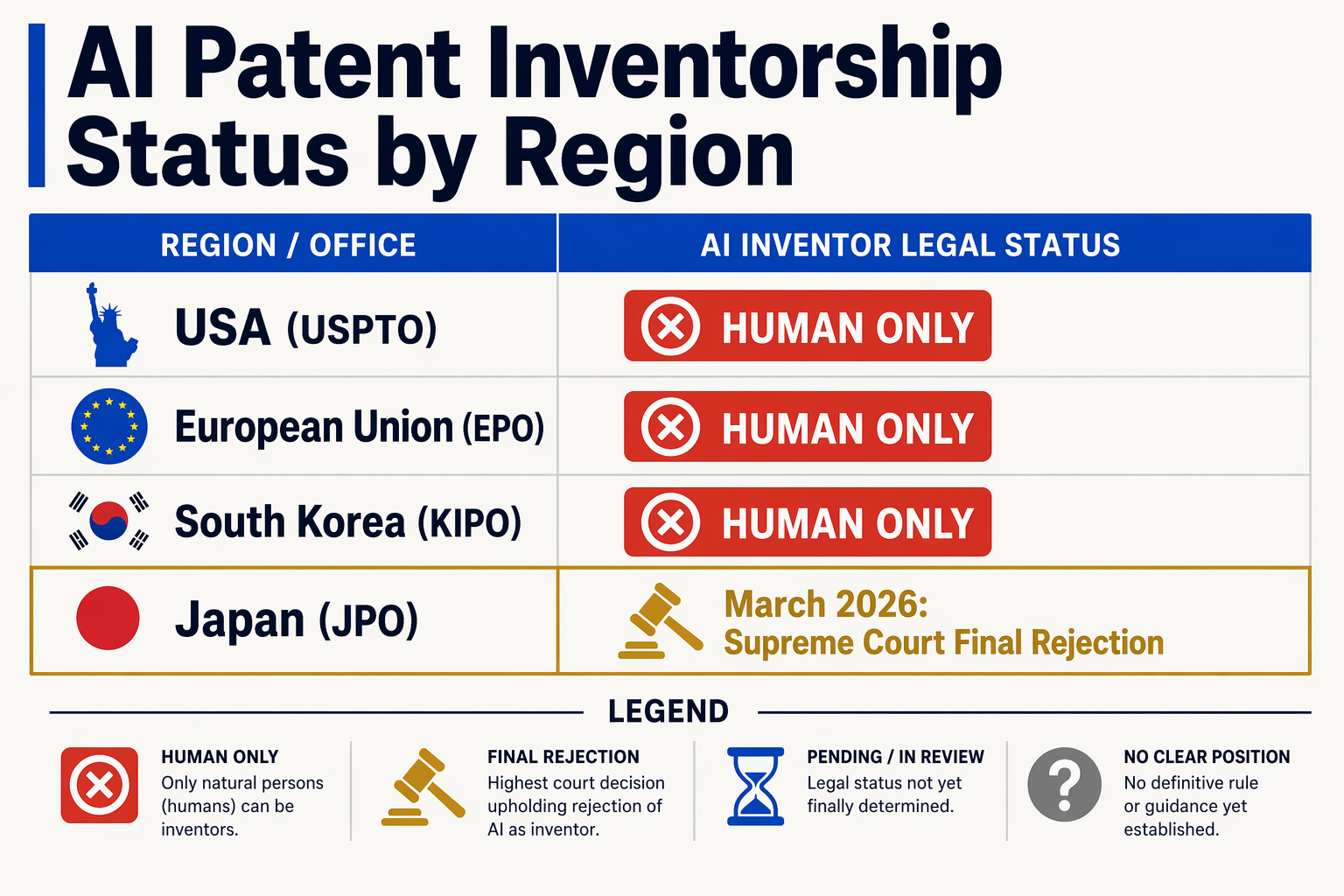
The ruling did not create a new AI law from scratch. Instead, Japan’s Supreme Court effectively confirmed the existing interpretation of Japanese patent law: a patent inventor must be a human being. The case centered on an American engineer’s attempt to name artificial intelligence as the inventor on a patent application, but the court dismissed the appeal, as reported by The Japan News/Yomiuri on March 6, 2026.
The decision also reinforces the earlier position taken by Japan’s IP High Court, where commentary summarized the legal point bluntly: “the current law does not permit any patent applications whose inventor is AI.” In other words, courts are signaling that if Japan wants machine inventorship, the change must come from legislators—not judicial interpretation.
| Development | Source / Date | What Happened | Practical Impact |
|---|---|---|---|
| Supreme Court dismissal | The Japan News/Yomiuri, Mar. 6, 2026 | Japan’s top court dismissed an appeal seeking to list AI as inventor | Confirms AI cannot be named as inventor under current Japanese patent law |
| Human inventor requirement | The Japan News/Yomiuri / Anadolu coverage | Reports summarized the ruling as affirming that “an inventor must be a human” | Applicants must identify a natural person, not an AI system |
| IP High Court position | Lexology / Shiga Patent commentary | Earlier ruling said judicial interpretation cannot extend inventorship to AI | Legislative reform would be needed to recognize AI inventors |
| DABUS-style global dispute | Related IP High Court case context | The case follows a broader international pattern of attempts to name AI as inventor | Japan aligns with other major jurisdictions resisting machine inventorship |
| Developer reaction | Hacker News, 279 points, 147 comments in 5.6 hours | The story quickly trended among technologists and founders | Shows strong concern over AI-generated inventions and ownership |
| Business implication | Patent filing practice | AI may be used in R&D, but cannot be the listed inventor | Companies need documentation proving human contribution |
Why the table matters for companies
The key takeaway is not that businesses must stop using AI in research and development. Rather, they must be able to show where human inventive contribution occurred. That distinction will become central in patent strategy as AI systems increasingly generate candidate designs, chemical structures, product features, code, workflows, and engineering optimizations.
For companies, the ruling creates three immediate action points:
- Document human involvement early
Keep records of prompts, design choices, experiments, model outputs, and human selection decisions. If a researcher chose among AI-generated options or refined an output into a workable invention, that contribution may matter.
- Avoid naming AI as inventor in Japan
Based on the Supreme Court outcome, applications listing AI as the inventor face rejection under current law.
- Separate tool use from inventorship
Using AI as a tool is different from claiming AI independently invented the subject matter. Patent teams should describe AI systems as part of the development process, not as legal inventors.
The bigger legal signal
The Japanese court’s approach reflects a wider pattern: patent systems remain built around human agency, accountability, and ownership. An AI system cannot sign declarations, assign rights, hold property, or bear legal responsibility. That creates a structural mismatch between modern AI capabilities and patent statutes written for human inventors.
Still, the ruling leaves an important question unresolved: if an invention is substantially generated by AI and no human can honestly claim inventive contribution, should it be patentable at all? Japan’s Supreme Court has not answered that policy question. It has simply said that, under current law, the answer cannot be to list AI as the inventor.
In-Depth Analysis
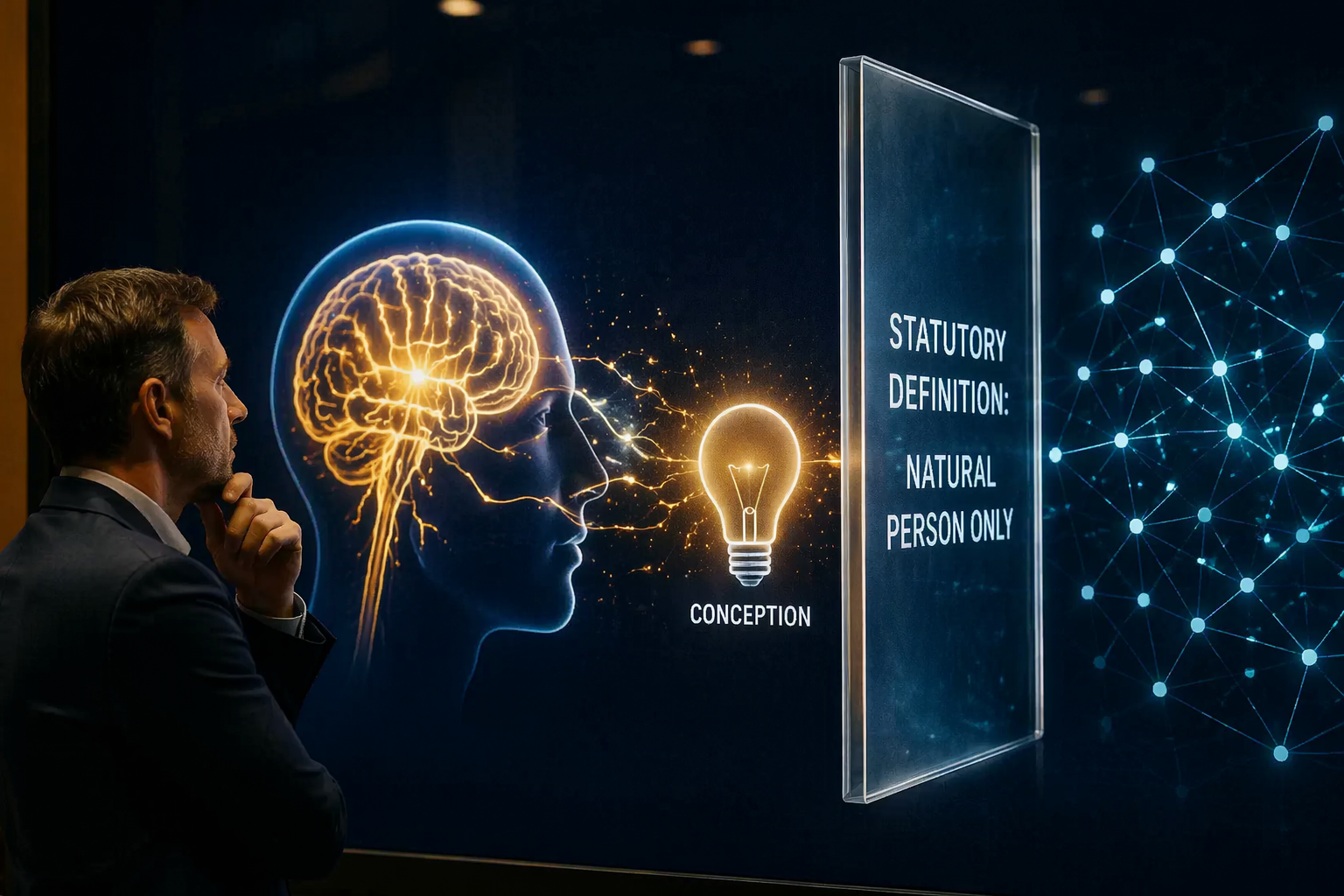
Why the court treated “inventor” as a legal status, not a technical description
The central issue in Japan’s ruling is not whether AI can generate useful technical ideas. It clearly can. The harder question is whether the word “inventor” in patent law can include a non-human system. Japan’s Supreme Court answered no, dismissing the American engineer’s appeal, according to The Japan News/Yomiuri’s March 6, 2026 report.
That distinction matters because patent systems do more than record who produced an idea. They assign legal rights, obligations, ownership chains, and accountability. A human inventor can:
- transfer rights to an employer or assignee;
- sign declarations and respond to disputes;
- be examined for contribution and intent;
- participate in litigation over validity or ownership.
An AI model cannot do any of those things independently. This is why the earlier IP High Court reasoning is important: commentary on that decision noted that “judicial interpretation alone cannot extend inventorship to AI systems under existing patent law” and that “the current law does not permit any patent applications whose inventor is AI.” In other words, courts are saying this is a job for legislators, not judges.
The practical problem: AI contribution is becoming harder to separate
The ruling creates a clean legal rule but not a clean operational reality. In modern R&D, AI may contribute at several levels:
- Suggestion — an AI proposes design options that humans evaluate.
- Optimization — an AI improves a structure, molecule, chip layout, or process.
- Generation — an AI outputs a candidate invention that humans did not anticipate.
- Autonomous discovery — an AI runs iterative experiments and identifies a novel result.
Patent law is most comfortable with the first two categories, where a human can plausibly be identified as the person who conceived the inventive concept. The difficult cases are the third and fourth categories. If the human merely typed a broad prompt, accepted an output, and filed it, was there true human inventorship—or just human ownership of an AI-generated result?
That uncertainty explains why the story spread quickly among technologists: it reached 279 points and 147 comments on Hacker News within 5.6 hours, showing that developers and founders see this as more than a courtroom technicality. The ruling affects how teams document AI-assisted work, not just how patent forms are filled out.
What companies should do differently now
For businesses using generative AI in product design, drug discovery, customer automation, or software engineering, the key lesson is documentation. Companies should build an internal record showing human conception and decision-making throughout the innovation process.
A defensible AI-era invention record should include:
- the original technical problem defined by human researchers;
- prompts, model outputs, and version history;
- human evaluation notes explaining why one output was selected;
- experimental validation or engineering modifications;
- names of individuals who made inventive contributions.
This is especially relevant as AI platforms become embedded in day-to-day operations. For example, infrastructure providers such as CallMissed already enable businesses to use voice agents, WhatsApp chatbots, LLM inference across 300+ models, and Speech-to-Text APIs for 22 Indian languages. As these systems move from communication workflows into higher-value decision support, companies will need clear governance over what is merely AI-assisted and what may be claimed as human-devised IP.
The deeper policy question remains unresolved
Japan’s court has preserved the traditional human-centered patent framework, but it has not answered whether that framework is sufficient for the next decade. If AI-generated inventions cannot name AI as inventor, policymakers still must decide whether such outputs should be:
- patentable when a human substantially directs the process;
- excluded if no human conception can be shown;
- protected through a new category of AI-generated rights;
- left in the public domain.
For now, the safest interpretation is narrow: AI can be a powerful tool in the inventive process, but not the legal inventor. That keeps Japan aligned with the prevailing global direction—but also leaves a growing gap between how innovation happens and how patent law recognizes it.
Impact & Implications
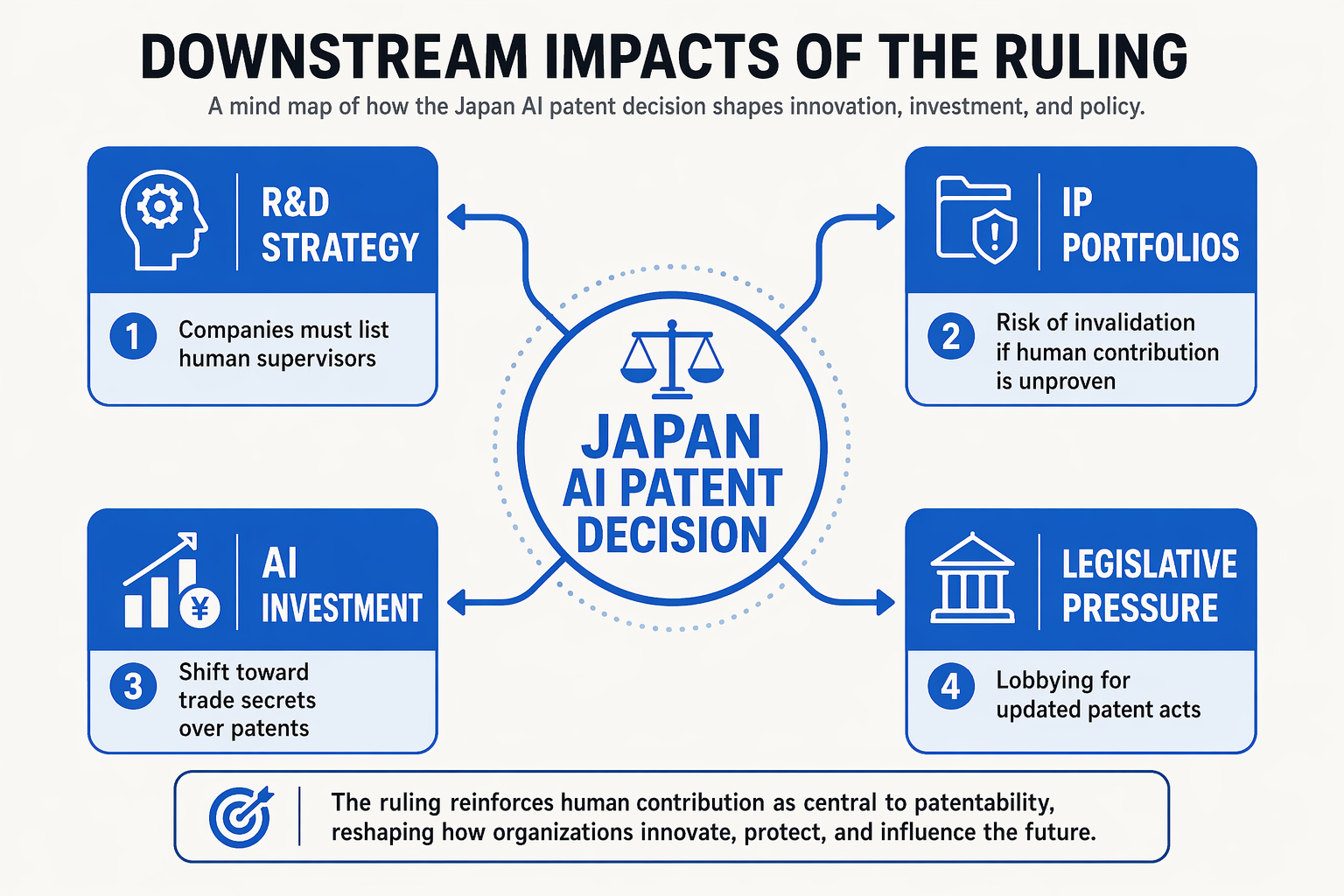
The ruling narrows legal certainty—but expands operational risk
Japan’s Supreme Court decision gives companies one clear rule: do not name AI as the inventor in Japanese patent applications. But it does not eliminate the harder question of how to treat inventions where AI meaningfully shaped the outcome. The court’s dismissal of the American engineer’s appeal, reported by The Japan News/Yomiuri on March 6, 2026, confirms the formal position that “an inventor must be a human.” That clarity helps patent offices process applications, but it pushes responsibility back onto businesses, researchers, and lawyers to document human contribution.
The immediate implication is practical: AI-generated output may still be patentable if a human can be identified as the true inventor. What is blocked is not necessarily the invention—it is the attempt to assign inventorship to a non-human system.
What this means for companies using AI in R&D
For organizations using generative AI, simulation systems, drug-discovery models, design optimization tools, or autonomous coding agents, the ruling raises the bar for invention governance. Companies will need stronger internal records showing who contributed what, when, and how.
Key implications include:
- Human contribution must be traceable: Teams should document prompts, experiments, model outputs, revisions, and decision points.
- Patent filings need careful drafting: Naming the wrong inventor—or omitting the right one—can create validity challenges later.
- AI use policies become IP policies: What began as a productivity issue is now a patent-risk issue.
- Trade secrets may become more attractive: If no human inventor can be confidently identified, companies may choose secrecy over patent filing.
- Cross-border strategies get harder: A filing acceptable in one jurisdiction may face scrutiny in another if AI involvement is central.
This is especially relevant as AI moves into customer operations, engineering workflows, and knowledge work. Platforms like CallMissed, for example, show how businesses are already deploying AI agents, LLM inference across 300+ models, and speech systems for 22 Indian languages in production settings. As these systems become more capable, the line between “tool” and “creative contributor” will become increasingly contested.
Japan joins a global pattern of human-centered inventorship
Japan’s decision is not an outlier. It aligns with a broader international reluctance to treat AI systems as legal inventors. The related Japanese IP High Court commentary noted that “the current law does not permit any patent applications whose inventor is AI” and that courts cannot expand inventorship through interpretation alone.
That matters because patent law is built on human-centered assumptions:
- Inventors have legal identity
- Inventors can assign rights
- Inventors can testify about conception
- Inventors can be rewarded or challenged
- Inventors fit into employer-employee ownership frameworks
AI systems satisfy none of these cleanly. They do not own property, sign assignments, owe duties, or explain intent in the legal sense. Recognizing AI as an inventor would therefore require more than a form change—it would require a major redesign of patent ownership, accountability, and enforcement.
Innovation may shift from “who invented?” to “who controlled the process?”
The deeper impact is conceptual. In AI-assisted invention, the decisive legal question may increasingly become: which human exercised inventive control? Was it the researcher who framed the problem, the engineer who selected the model, the operator who refined prompts, or the team that validated the result?
The strong reaction on Hacker News—279 points and 147 comments in 5.6 hours—shows why technologists are uneasy. Many developers see AI systems producing outputs that feel less like passive tool use and more like independent discovery. Patent law, however, still needs a person to anchor responsibility.
For now, the safest takeaway is this: businesses can use AI aggressively in innovation, but they must keep humans visibly in the loop. The future patent file may need to include not just lab notebooks, but model logs, prompt histories, evaluation records, and human decision trails.
Expert Opinions

Patent lawyers: courts are applying the statute, not rewriting it
For many IP practitioners, Japan’s Supreme Court ruling is less surprising than it is clarifying. The court dismissed an American engineer’s appeal, as The Japan News/Yomiuri reported on March 6, 2026, effectively affirming that Japanese patent law still treats inventorship as a human legal status. Earlier analysis of the related IP High Court decision put it bluntly: “the current law does not permit any patent applications whose inventor is AI.”
Patent attorneys see this as a separation-of-powers issue. Courts can interpret ambiguous wording, but they are reluctant to create an entirely new class of legal actor—an AI inventor—without legislation. As commentary summarized in the Lexology-linked analysis noted, judicial interpretation alone cannot extend inventorship to AI systems under existing patent law.
The practical expert view is:
- AI-generated outputs are not automatically unpatentable
- But a human inventor must still be identified
- The patent application must show human contribution to conception
- Lawmakers, not judges, must decide whether AI can ever hold inventor status
That distinction matters. A company using AI to screen compounds, generate mechanical designs, or optimize code may still obtain patents—but it must document the human decisions that shaped the inventive concept.
Technologists: “AI as tool” is becoming harder to defend
Engineers and AI researchers are more divided. Many accept the legal answer but question whether it matches technical reality. Modern AI systems are no longer just calculators or search tools; they can generate design spaces, propose non-obvious combinations, and identify solutions that human teams did not anticipate.
That tension explains why the story gained traction in the developer community, reaching 279 points and 147 comments on Hacker News in 5.6 hours. The debate was not merely legal—it reflected a growing discomfort among builders who see AI systems contributing materially to innovation.
From a technical perspective, experts increasingly distinguish between:
- AI-assisted invention: humans define the problem, evaluate outputs, and select the final inventive concept.
- AI-generated invention: the system produces the key inventive step with minimal human direction.
- AI-autonomous discovery: the system explores, tests, and refines solutions with little or no human conceptual input.
Patent law is comfortable with the first category. It struggles with the second. It has almost no framework for the third.
Business leaders: documentation is now a strategic necessity
For founders and enterprise R&D teams, the ruling reinforces a simple operational lesson: AI use must be traceable. If a patent is challenged later, vague statements like “we used an AI tool” will not be enough. Companies need evidence showing who framed the problem, selected prompts, interpreted outputs, ran experiments, and made the inventive leap.
Experts recommend maintaining:
- Prompt and output logs for AI-assisted research
- Human decision records explaining why specific outputs were selected
- Version histories for prototypes, simulations, and models
- Clear IP policies governing employee use of external AI tools
- Confidentiality safeguards when inventions are discussed with third-party systems
This is especially important as AI becomes embedded in daily workflows. Platforms such as CallMissed, which support LLM inference across 300+ models along with voice agents, WhatsApp chatbots, and speech APIs, reflect the broader shift: AI is becoming infrastructure. As that happens, organizations must treat AI interaction logs as part of their compliance and IP record—not just as disposable chat history.
Policy experts: the law may need a new middle category
Some legal scholars argue that the binary choice—human inventor or no inventor—may not be sustainable. They suggest future patent systems could create a disclosure requirement for AI-assisted inventions, without granting AI legal personhood.
That could mean patent forms asking applicants to identify:
- Whether AI materially contributed to the invention
- Which system was used
- What role humans played in conception and validation
- Whether training data, model ownership, or output rights affect the claim
For now, Japan’s position is clear: AI cannot be named as inventor. But experts broadly agree the deeper issue remains unresolved. The more capable AI systems become, the more pressure lawmakers will face to modernize patent rules without undermining human accountability, innovation incentives, or public trust.
What This Means For You (TABLE)
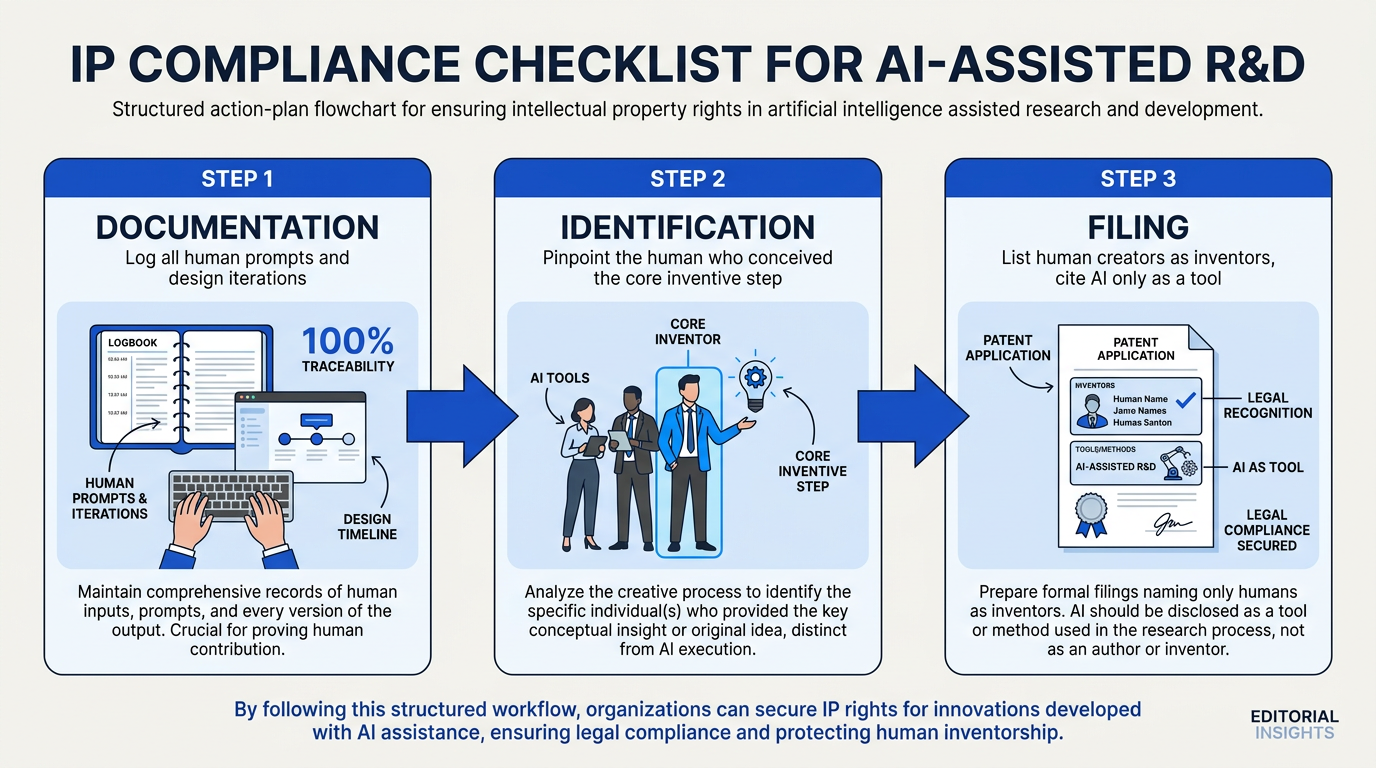
Practical impact by role
The Japan ruling is not just a legal headline—it changes how teams should document, file, and govern AI-assisted innovation. The key takeaway is simple: do not treat the AI system as the legal inventor. Treat it as a tool, and make the human contribution traceable.
| If you are… | What the ruling means | What to document now | Immediate action | Risk if ignored |
|---|---|---|---|---|
| Founder or startup team | Japan’s Supreme Court position means a patent filing needs a human inventor, not an AI model. | Who framed the problem, selected prompts, evaluated outputs, and turned ideas into working claims. | Add an AI invention log to product/R&D workflows. | Patent rejection, ownership disputes, weak investor diligence. |
| Engineer or researcher | AI-generated suggestions may support invention, but human contribution must be identifiable. | Lab notes, model prompts, test results, design choices, failed iterations. | Record why a human selected or modified the AI output. | Difficulty proving inventorship later. |
| Patent attorney or IP team | The court aligned with the view that “an inventor must be a human,” as reported by The Japan News/Yomiuri on March 6, 2026. | Human conception evidence and AI-use disclosures where relevant. | Update invention disclosure forms to ask about AI involvement. | Incorrect inventorship, invalidity challenges, filing delays. |
| Enterprise using AI tools | AI-assisted inventions are still protectable if humans make the inventive contribution. | Access logs, model versions, approval chains, internal review records. | Create a policy for AI use in patentable R&D. | Trade secret leakage, unclear IP ownership, compliance gaps. |
| AI platform builder | The ruling increases demand for auditability in AI systems. | Model routing, timestamps, user actions, output histories. | Build exportable audit trails for enterprise users. | Customers may avoid tools that cannot support IP evidence. |
| Investor or acquirer | AI-heavy portfolios need deeper diligence on inventorship. | Patent files, inventor declarations, AI usage records. | Ask whether any patent claims depend mainly on machine-generated outputs. | Overvalued IP assets or unenforceable patents. |
The operational rule: prove the human contribution
The safest interpretation is not “avoid AI in innovation.” It is: use AI, but preserve the human chain of invention. The Japanese courts are signaling that existing law cannot simply be stretched to recognize machines as inventors. Earlier IP High Court commentary put it plainly: “the current law does not permit any patent applications whose inventor is AI,” and judicial interpretation alone cannot rewrite that framework.
For teams, this means invention records should answer four practical questions:
- Who identified the technical problem?
- Who chose or configured the AI tool?
- Who evaluated the output and recognized its technical value?
- Who reduced the idea to a working embodiment or patent claim?
If those answers point to identifiable humans, the AI is more likely to be treated as an enabling instrument—similar to simulation software, CAD tools, or automated testing systems—rather than as the inventor.
Why this matters beyond patents
The Hacker News reaction—279 points and 147 comments in 5.6 hours—shows how many builders see this as a near-term product and governance issue, not a theoretical legal debate. AI is now embedded in coding, drug discovery, chip design, customer operations, and multilingual automation.
For example, platforms such as CallMissed already let businesses deploy AI voice agents, WhatsApp chatbots, LLM inference across 300+ models, and speech APIs for 22 Indian languages. As these systems become part of everyday workflows, organizations will need clearer records of where AI assisted execution versus where humans made inventive decisions.
Bottom line
The practical lesson is: AI can help create patentable work, but the patent system still wants a human inventor on the form. Until legislatures change the rules, companies should focus less on naming the AI and more on proving the people, decisions, and technical judgments behind the invention.
Frequently Asked Questions
What did Japan’s Supreme Court decide about AI inventors on patent applications?
Why can’t AI be listed as inventor on patent applications in Japan?
Does the Japan ruling mean AI-assisted inventions cannot be patented?
How does Japan’s decision compare with global AI patent law trends?
If AI can’t be listed as inventor, who owns inventions created using AI tools?
What should businesses do now that AI can’t be listed as inventor in Japan?
Conclusion
Japan’s Supreme Court has not stopped AI-driven innovation—but it has clarified who the law currently recognizes when innovation becomes patentable: a human inventor.
Key takeaways:
- AI cannot be listed as a patent inventor in Japan under current law, following the Supreme Court’s dismissal of an American engineer’s appeal reported by The Japan News/Yomiuri on March 6, 2026.
- The ruling aligns with earlier IP High Court commentary that “the current law does not permit any patent applications whose inventor is AI,” meaning courts are unlikely to redefine inventorship without legislative action.
- The decision reinforces a practical distinction: AI-assisted inventions may still be patentable, but companies must document the human contribution behind the inventive concept.
- The global debate is far from settled, as shown by the ruling’s rapid traction on Hacker News—279 points and 147 comments in 5.6 hours—among developers, founders, and IP professionals.
What to watch next is whether lawmakers, patent offices, and courts create new frameworks for AI-generated inventions—or continue adapting human-centered rules case by case.
To explore how AI communication is evolving in real business workflows, check out CallMissed — an AI infrastructure platform powering voice agents, multilingual chatbots, and LLM-based automation. If AI helps create the next breakthrough, who should own the spark?
Related Posts


Ready to automate customer conversations?
Launch AI voice agents and WhatsApp bots with CallMissed — one API, 22+ Indian languages.