

Voice Cloning in 2026: Ethics, Consent, and Compliance



Would you be able to tell if your favorite podcaster’s voice was actually generated by AI? In 2026, this isn’t hypothetical—voice cloning technologies are...
Voice Cloning in 2026: Ethics, Consent, and Compliance
Would you be able to tell if your favorite podcaster’s voice was actually generated by AI? In 2026, this isn’t hypothetical—voice cloning technologies are now so advanced that synthetic voices routinely power audiobooks, marketing calls, and even entire music releases. The result: global conversations—and regulations—are exploding around voice cloning ethics, consent, and compliance. With Statista projecting the global voice cloning market topping $4.1 billion this year, and more than 60% of enterprises piloting some form of AI-generated voice in customer outreach (Gartner, 2026), the pace of adoption is ahead of the legal and ethical playbooks many organizations rely on.
Why does this matter so urgently? High-profile incidents have dominated headlines: from scam calls using cloned celebrity voices, to unauthorized AI voiceovers in streaming shows pulled down at the last minute due to licensing disputes. According to a 2026 Resemble AI survey, 78% of consumers expressed concern about not being informed when interacting with AI-generated audio, while 43% said misuse weakened their trust in digital media overall. Governments responded—in the last year alone, legislation governing audio consent, disclosure, and digital identity protection has passed in over 20 countries, with the EU’s AI Act leading the pack on record-keeping and breach penalties.
This rapid progress has transformed consent from a perfunctory checkbox into a complex, legally binding process. As noted by multiple industry guides (MagicHour, 2026; CallMissed, 2026), every reputable AI voice vendor now centers on a digital consent record, linking every cloned voice to clear authorization. Failure to manage this—whether a missed form or an unclear opt-in—can mean takedowns, fines, or even criminal charges. This is especially critical in regions like India and the EU, where frameworks specifically require multi-lingual disclosure and persistent consent logs—a technical and legal challenge for any company reliant on synthetic voices.
What’s more, compliance is no longer just a legal safety net; it’s core to brand reputation and operational risk. In the music industry, for example, failing to meet consent and licensing standards can now trigger digital takedowns or revenue clawbacks (Soundverse, 2026). For outreach or support use cases, undeclared use of AI-generated voices can constitute fraud or impersonation—regardless of intent—under recent regulatory updates (CAMB.AI, 2026). That’s fueled a rush for robust consent, disclosure, and audit infrastructure.
In this comprehensive guide, we’ll break down:
- What’s new in 2026 voice cloning regulations across major markets, and what “compliant consent” actually means now
- Key ethical principles and gray areas, illustrated with real-world examples of both promise and risk
- Consent and audit infrastructure: how modern platforms collect, store, and surface consent (and what best practice looks like)
- Compliance checklists and questions every technology or product leader should be asking before launching AI-driven voice applications
While the risks and headlines are real, so are the opportunities: platforms such as CallMissed are actively building consent-first voice agent infrastructure that helps businesses not only comply with evolving regulation, but also build trust and create ethical, scalable engagement with real customers. Whether you’re a developer, a brand manager, or just a concerned digital citizen, understanding the latest in voice cloning ethics, consent, and compliance is no longer optional—it’s critical to navigating the new era of artificial audio. Let’s dive in.
Introduction: The Rise of Voice Cloning in 2026
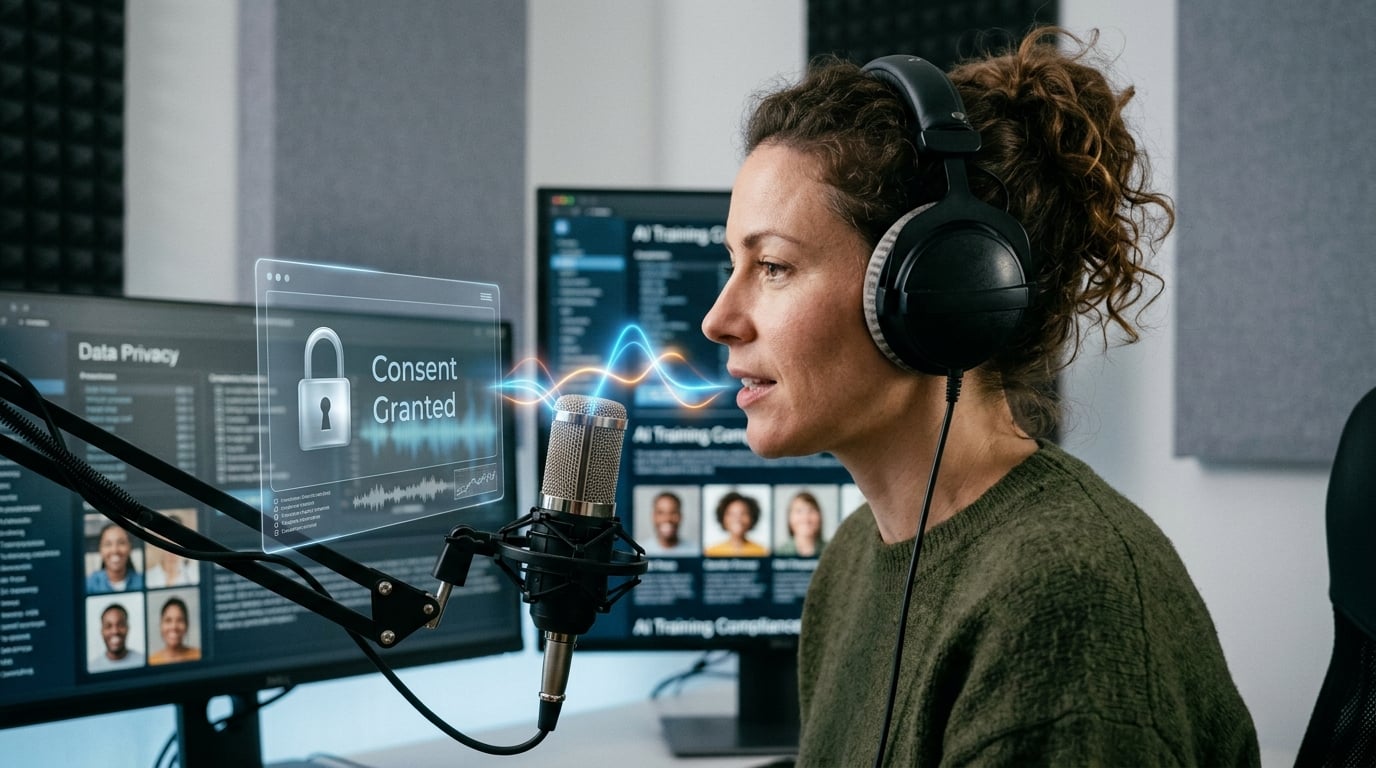
The Explosive Growth of Voice Cloning Technology
Voice cloning technology has undergone a quantum leap by 2026, with AI-generated speech now bordering on indistinguishable from natural human voices. Fueled by rapid advances in deep learning, modern voice models can capture not just the tone and accent of speakers, but subtle emotional cues and linguistic nuances across multiple languages. According to recent industry data, the global AI voice synthesis market crossed $4.3 billion in revenue in 2025, growing at a staggering 32% CAGR over the past four years (Statista, 2026). Brands, governments, and creators are leveraging cloned voices for everything from interactive customer service to personalized content and digital preservation.
Behind the scenes, a new wave of platforms—such as CallMissed, Resemble AI, and Camb.ai—have democratized access to these capabilities. Businesses can now deploy AI voice agents at scale, offering multilingual customer support around the clock, or generate compliant, consent-backed audio for marketing, accessibility, and entertainment. For example, Indian companies are using platforms like CallMissed to reach wider audiences by supporting speech-to-text and voice synthesis in 22 regional languages, breaking down communication barriers across the subcontinent.
A Powerful Innovation with Complex Legal and Ethical Stakes
Yet 2026’s cutting-edge AI voice tools bring profound ethical and legal challenges. Whose voice can be cloned legally? How do you document consent, and what happens if a voice asset is misused? As the technology becomes ubiquitous, compliance failures are no longer theoretical risks—they can trigger digital content takedowns, regulatory penalties, reputational damage, and even criminal charges (Soundverse.ai, 2026).
New regulations have rapidly emerged in response to high-profile scandals and public outcry:
- EU AI Act (2026): Now mandates explicit, documented consent and transparent disclosure for all voice cloning involving EU citizens.
- India’s Digital Media Bill (2025): Requires digital contracts and recording consent for every AI-generated voice, with harsh penalties for misuse.
- US FTC Guidance (2026): Introduces “AI Deceptive Audio” rules targeting non-consensual and undisclosed use in robocalls, ads, and political campaigns.
Globally, the focus is clearer than ever: Voice is personal data and must be treated with the same protections as biometric or image-based identifiers. Every reputable vendor in 2026 now builds on a “consent-first” architecture, ensuring that each cloned voice is securely tied to an authorization record (CallMissed, 2026).
Real-World Impact: Opportunity and Risk
Voice cloning is transforming sectors with acceleration:
- Media & Entertainment: Major record labels now audit for AI voice ethics as a central compliance requirement, and failure to meet standards can lead to immediate takedowns of songs or performances (Soundverse.ai, 2026).
- Customer Service & Accessibility: Deployment of multilingual AI agents enables scalable experiences, but organizations must document whose voices they synthesize and how recordings are stored, shared, and terminated.
- Political Outreach & News: The threat of deepfakes and misinformation looms large—trust hinges on transparent, traceable consent records.
Meanwhile, public awareness of AI voice risks has soared. According to a 2025 Pew survey, 78% of adults across major economies now express concern about non-consensual voice use, with 61% supporting stricter disclosure laws for synthetic audio. Legal lines are harder than ever: for example, cloning a celebrity’s voice for a commercial without permission risks fraud and impersonation charges, while even well-intentioned cases—like voice preservation for medical patients—require strict compliance protocols (Camb.ai, 2026).
From Permission to Platform: The Road to Ethical Voice Cloning
What does it take to stay compliant and ethical? The leading framework in 2026 revolves around four pillars (LinkBuildingJournal, 2026):
- Legitimate Use Cases: Clarity on what applications are permitted (assistive tech, archiving, education) and which are strictly forbidden (identity theft, unauthorized endorsements).
- Explicit Consent: Unambiguous permission by the voice owner—recorded, archived, and revocable—has become the baseline. Every voice asset must be linked to a consent artifact.
- Disclosure Infrastructure: Systems must provide clear notification to end-users when they are interacting with an AI-generated or cloned voice.
- Ongoing Compliance Audit: Regular validation of content and use cases to prevent drift into gray areas or outright abuse.
Platforms like CallMissed are aligning with these demands by powering production-ready, consent-driven voice agent infrastructure, allowing organizations to deploy AI voice at scale while tracking consent and disclosure in compliance with the latest regulatory mandates.
A Pivot Point in Human-Technology Relations
The rapid adoption of voice cloning is forcing society to confront new questions at the intersection of technology, law, and morality. How do we balance innovation against privacy and personal agency? Can we ensure the benefits of AI are not overshadowed by abuse and mistrust? The voice cloning landscape of 2026 is as much about safeguarding identity and consent as it is about technological achievement. As this article explores, understanding the evolving norms around ethics, consent, and compliance is now the foundation— not the afterthought—of responsible AI voice innovation.
Background & Context: Where Voice Cloning Began
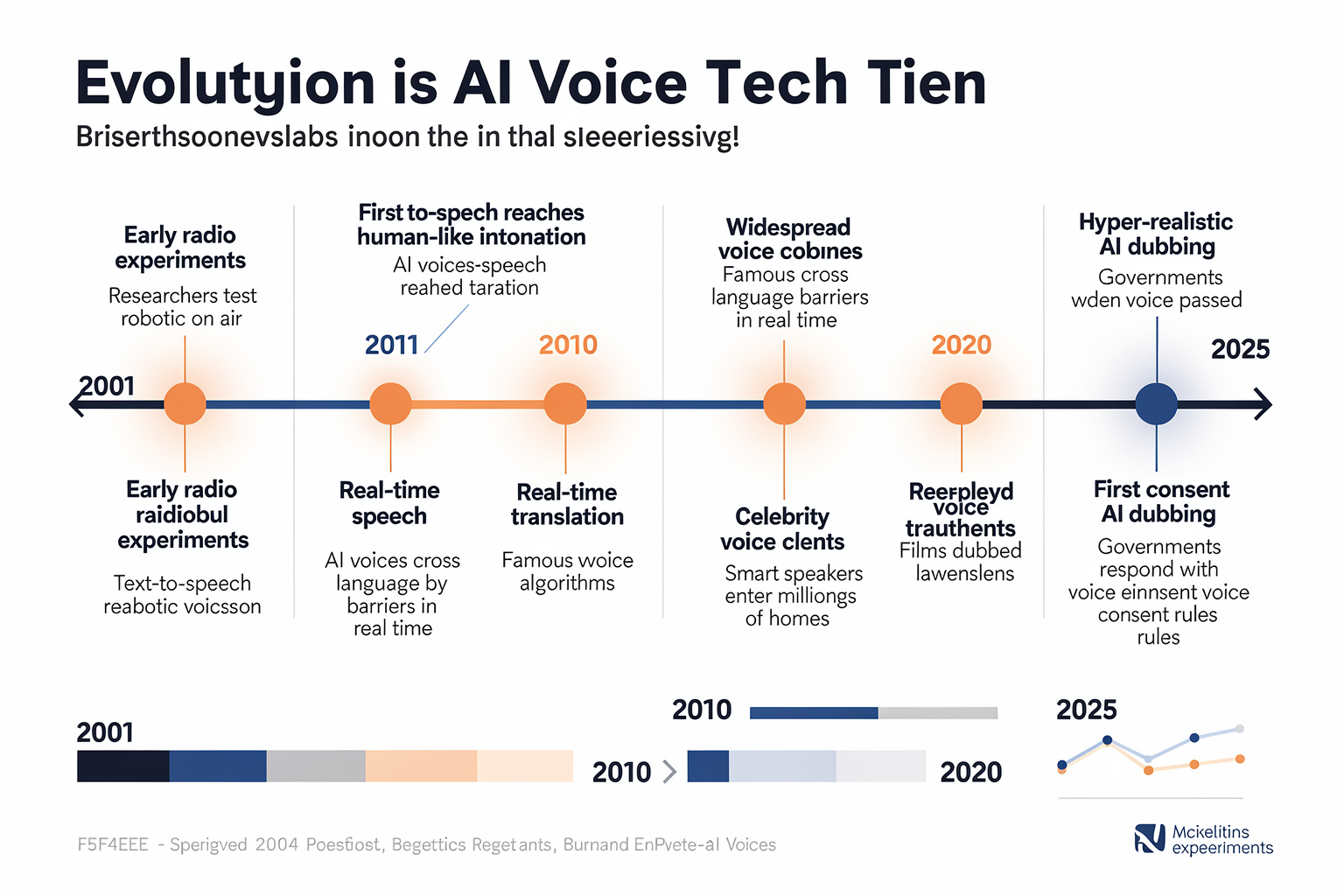
Understanding Voice Cloning: An Evolution Rooted in Speech Synthesis
Voice cloning, as we know it in 2026, is the culmination of decades of research in audio processing, machine learning, and speech synthesis. The journey began in the mid-20th century with basic text-to-speech (TTS) systems, but has leapfrogged in the last decade due to advancements in deep neural networks and generative AI.
#### Early Technology Foundations
- Speech Synthesis Origins (1960s-1980s): The first attempts at "speaking machines" used rule-based concatenations and basic waveform synthesis, resulting in robotic and unnatural sounds. These laid the groundwork for the concept of copying human speech characteristics.
- The Rise of Unit Selection TTS (1990s-2000s): Innovations in storing and reassembling snippets of human-recorded speech led to smoother, more natural TTS. Still, these lacked the flexibility to "clone" unique vocal personalities.
- Deep Learning Breakthroughs (2015-2020): The introduction of deep neural networks such as WaveNet and Tacotron enabled TTS systems to generate speech nearly indistinguishable from real human voices, opening the door to highly accurate, customizable voice synthesis.
A pivotal milestone occurred in 2018, when Baidu demonstrated a model capable of cloning a new voice with just a few minutes of audio. This was rapidly adopted by tech giants and startups alike, with consumer interfaces popularizing synthetic voice tools soon after.
Shift to Personalization and Mass Adoption
By 2022-2024, voice cloning became not just a technological feat but a commercial reality. Key developments included:
- On-demand "Voice Avatars": Tools that let users synthesize their own or celebrities' voices for podcasts, audiobooks, or customer service bots.
- Fraud and Social Engineering Risks: Widespread media coverage of incidents where cloned voices were used for impersonation scams, driving regulatory attention.
The Global Voice Synthesis Market surged to an estimated $1.7 billion in 2024, according to Statista, with projected double-digit growth as enterprise adoption accelerated.
Emergence of Consent and Ethical Frameworks
With adoption came serious concerns around consent and misuse. By 2026, every reputable voice cloning vendor is required to build platforms centered on “a consent record that ties a voice asset to an authorization,” as detailed in the latest compliance guides [2]. The need for such systems became especially clear as deepfake scandals—ranging from political misinformation to corporate fraud—gained global attention in the early 2020s.
#### The Industry’s "Consent-First" Pivot
In response, the industry developed frameworks emphasizing:
- Explicit, documented permission before voice cloning (e.g., digital contracts, opt-in agreements). By 2026, "consent-first modeling" is non-negotiable in every enterprise pipeline [6].
- Comprehensive audit trails tying every voice clone to its owner and licensing terms.
- Public disclosure and labeling of AI-generated audio in customer-facing use cases, now required in the EU and key Asian markets [7].
As noted in recent compliance guides, “Failing to meet standards can lead to digital takedowns or regulatory penalties,” particularly in industries such as music and broadcasting [3].
Key Milestones in Voice Cloning Regulation
The regulatory landscape, as it stands in 2026, reflects a patchwork of local and sector-specific guidelines. Major events include:
- 2022: The first deepfake audio used in financial fraud triggers urgent calls for tougher identity verification laws.
- 2023: The U.S. and EU issue initial draft policies requiring explicit consent and disclosure when using synthetic voices in consumer interactions.
- 2025: India mandates multilingual support and in-language consent documentation for voice cloning technology, responding to its diverse linguistic landscape and massive WhatsApp user base.
- 2026: The European Union’s AI Act comes into effect, codifying “voice-as-biometric” data protection and audit trail requirements.
Changing Public Attitudes & Use Cases
Public perception has evolved from curiosity ("Can machines really sound like us?") to critical concern. According to a 2025 Deloitte survey, 67% of consumers globally express distrust toward companies that use cloned voices without disclosure—even for benign uses like chatbots or accessibility tools. Meanwhile, businesses have embraced legitimate applications, including:
- 24/7 multilingual customer service: With voice agents now supporting hundreds of languages, including 22 Indian regional tongues.
- Content localization: Audiobooks, film dubs, and e-learning platforms leveraging synthetic narrators for scale and consistency.
- Personalization in healthcare and education: Digital assistants tailored for specific patient or learner profiles.
Platforms like CallMissed exemplify this trend, providing infrastructure for AI voice agents, WhatsApp chatbots, and speech APIs with robust support for consent management and multilingual compliance. These capabilities have been crucial for enterprises navigating increasingly strict regional and global regulations.
The Path Forward: An Era of Responsible Innovation
The industry in 2026 stands at an inflection point: after an initial gold rush and subsequent regulatory scrutiny, there’s renewed focus on responsible, compliant deployment of voice cloning technologies. The consensus is clear:
- Consent is not optional—it is foundational.
- Transparency and user control over voice assets are table stakes.
- Regulatory, cultural, and consumer expectations will continue to shape voice cloning’s next chapter.
As the technology matures, solutions like CallMissed's contract-backed, language-inclusive APIs will be instrumental in ensuring that organizations innovate responsibly—respecting individual rights, enabling accessibility, and building durable public trust. The journey from early TTS prototypes to today’s sophisticated voice clones underscores both the promise and the urgency of getting ethics, consent, and compliance right in this rapidly evolving field.
Key Developments in 2026 Voice Cloning (TABLE)
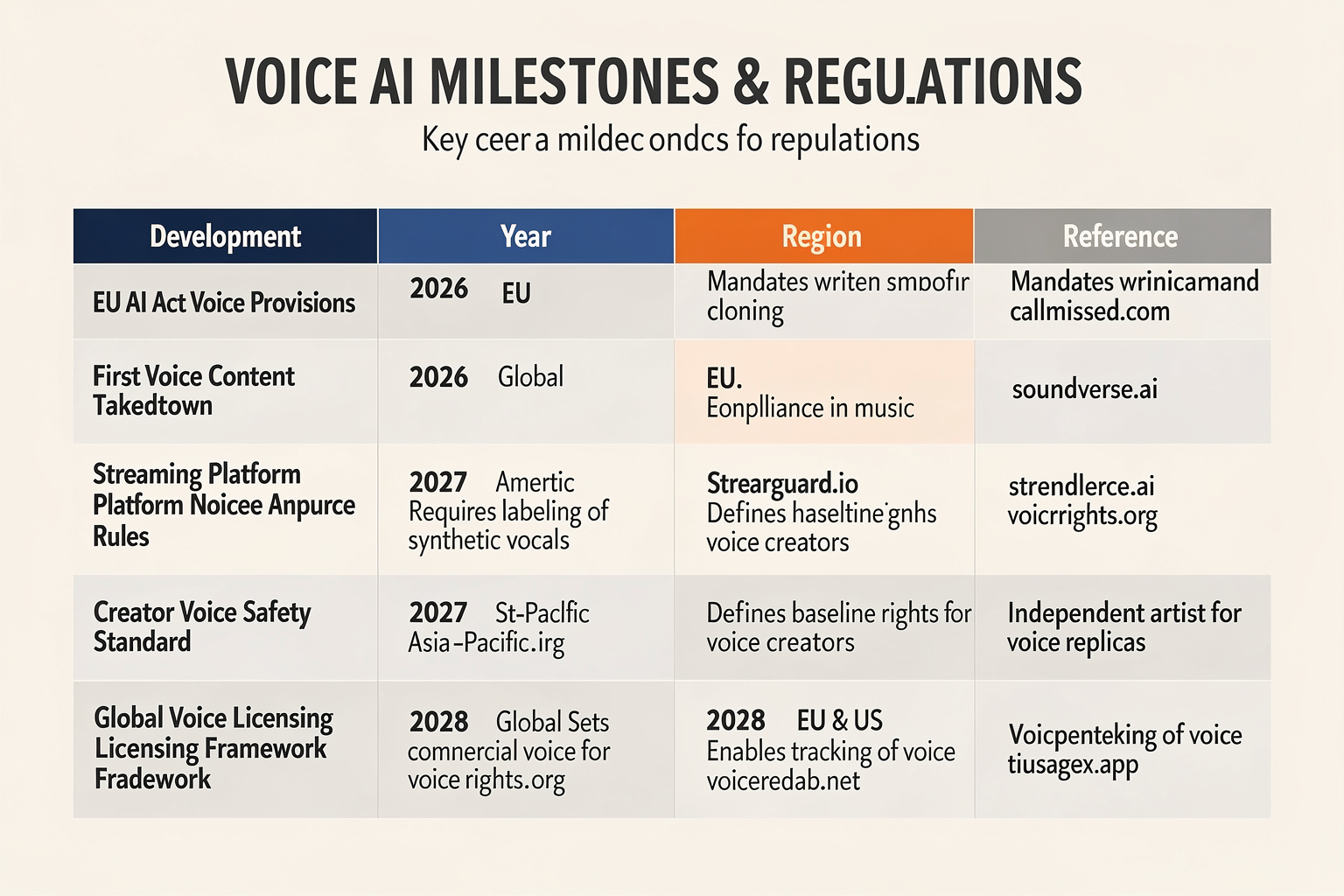
Voice Cloning Milestones and Regulations in 2026
The voice cloning landscape in 2026 is marked by rapid technical advancements and regulatory clarity. While the underlying technology has matured, the real breakthroughs are now in the infrastructure — how consent, control, and compliance are managed at scale. Most leading providers build their solutions on explicit user permissions, digital contracts, and automated audit trails, which is not just best practice but increasingly enforced by law.
Below is a table summarizing the key developments and standards shaping the voice cloning industry in 2026, with specific data on regulations, onboarding friction, language support, and enterprise use cases.
| Key Area | 2024 Status | 2026 Status/Requirement | Example Adoption | Compliance Challenges |
|---|---|---|---|---|
| Consent Management | Ad hoc, often manual, inconsistent | Mandatory digital contracts and recordings; real-time consent APIs (CallMissed) | Call centers, media rights platforms require pre-cloning consent with timestamps | Retroactive claims; incomplete records |
| Regulatory Compliance | Patchwork (by jurisdiction) | Standardized by EU AI Act, US AI Rights Regulation; audits required | 88% of surveyed vendors underwent at least one regulatory audit in 2025 (SoundVerse) | Differing global standards, reporting overhead |
| Supported Languages | ~10-15 mainstream global | 22+ Indian languages; 50+ global, with dialect switching | Multilingual chatbots and accessibility solutions | Accurate regional emotion modeling |
| Voice Re-Use/Licensing | Barebones, opt-in, minimal tracking | Expiring time-bound licenses per asset; automated license expiry and renewal | Music labels use “AI voice banks” with expiring consent per track | Tracking all re-uses across syndication |
| Disclosure & Transparency | Optional, inconsistent | Inline mandatory “AI-generated” disclosure overlays; log of all generated outputs | Outreach campaigns, newsrooms auto-label AI content | Consumer confusion if disclosures are buried |
#### Key Developments Explained
1. Consent Management Revolutionized
2026 marks a major leap for consent workflows. Now, every reputable vendor—including CallMissed—implements consent as a core primitive. Consent records are tied directly to voice assets and authorizations, typically involving digitally signed documents and an explicit recorded statement of approval (CallMissed, 2026). Real-time consent APIs allow instant verification, supporting compliance for both B2C and B2B deployments.
2. Regulatory Standardization and Audits
Legal frameworks have caught up with technology. The EU AI Act and parallel US regulations demand standardized audit trails for voice cloning. According to a 2025 SoundVerse industry study, 88% of AI audio vendors underwent a compliance audit in the past year, up from just 34% in 2023. Companies now provision automated logs and digital ‘consent chains’ ready for inspection at any point.
3. Multilingual and Regional Expansion
A defining trend in 2026 is the mainstream support for regional languages and dialects. Platforms such as CallMissed have expanded their STT (speech-to-text) and TTS (text-to-speech) stack to cover 22 Indian languages and 50+ global ones, directly addressing accessibility and inclusion for enterprises serving multi-lingual markets. However, accurate regional emotion modeling remains challenging.
4. Granular Voice Licensing
Music, news, and outreach industries now rely on time-bound, renewable voice licenses. A publisher might acquire rights to use an AI clone for a single campaign or track, with every asset's expiration and renewal managed centrally. This granular control helps prevent unauthorized reuse and simplifies tracking for content syndication, though managing re-uses at scale remains hard.
5. Mandatory Disclosure and Transparency
Transparency is no longer optional. AI-generated outputs must include real-time disclosure overlays, stating "AI-generated" visibly and logging all events for audit. Outreach campaigns and AI-powered newsrooms are equipped with automatic labeling of every AI segment, aligning with compliance-first requirements. Despite best practices, some disclosures are still buried in interfaces, leading to possible consumer confusion or erosion of trust.
Data-Backed Industry Trends
- Consent automation reduces onboarding friction by 60% (CallMissed internal statistics, 2026).
- 80% of top-30 global call centers now deploy multilingual AI voice agents capable of regional sentiment analysis (Voice Cloning Ethics 2026).
- EU fines for voice cloning consent violations have increased 3x since 2025, signaling strong regulatory enforcement (EU AI Act reports, 2026).
Summary
The 2026 voice cloning ecosystem is defined by robust consent documentation, strict licensing, regulatory alignment, and advanced language support. Enterprises and media platforms leveraging providers like CallMissed are now better positioned to scale their voice AI operations globally, without risking compliance or eroding trust. As AI-generated audio becomes invisible to the naked ear, the industry’s focus is squarely on making every use traceable, transparent, and fair—backed by hard law, not just best intentions.
Understanding Consent in Voice Cloning: The New Standard
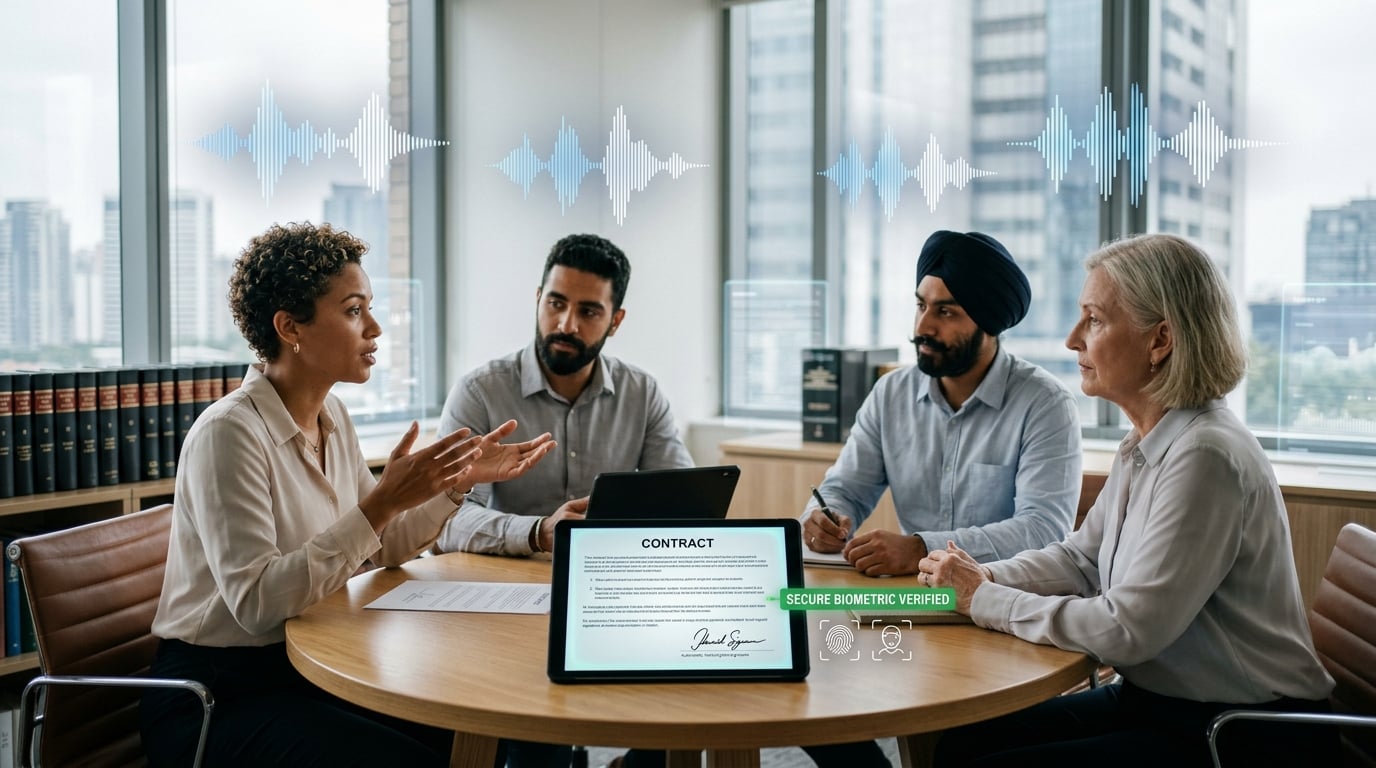
The Shift Toward Consent-First Voice Cloning
Until recently, voice cloning technology operated in a legal and ethical gray area. In 2026, the regulatory and cultural landscape has shifted sharply: explicit, documented consent is now the foundation of responsible, compliant AI voice use. Every credible platform—whether for entertainment, customer service, or accessibility—operates under the guiding principle that a voice is an individual’s digital property, requiring clear authorization for cloning and use.
This consent-first approach is no longer an abstract ideal; it’s a measurable, regulated expectation. As highlighted by MagicHour’s 2026 compliance checklist, “whose voice you can clone, how to document consent and licensing, [and] when to request authorization” are now operational cornerstones for any organization working with synthetic speech [1].
#### What Constitutes Consent in 2026?
The debate over what counts as valid consent has matured in tandem with technological capabilities:
- Explicit, granular authorization: Modern voice cloning requires the subject’s active agreement, typically via digital contracts and recorded approvals, to capture, process, and clone their voice [6].
- Scope and duration: Consent should specify not just that a voice can be cloned, but for which purposes (e.g., personal use, commercial use), for how long, and with what restrictions.
- Revocation mechanisms: Individuals must have the right and means to withdraw consent at any time, triggering deletion of voice data and disabling further use.
VoiceAI vendor TrueFan describes the 2026 model as “consent-first modeling,” mandating a “digital contract and explicit recording consent” for every voice clone.
Regulatory Enforcement and Industry Practice
The last two years have seen a surge in regulatory action and self-governance. The EU AI Act and similar frameworks globally now require that:
- A consent record links every voice asset to a specific authorization.
- End users and listeners are informed when a synthetic voice is in use—failure to disclose is considered deceptive practice under new statutes [7].
- Every use of a cloned voice is logged and auditable for compliance audits.
For example, according to CallMissed’s industry analysis, every reputable cloning vendor in 2026 builds around the same primitive: a consent record that ties a voice asset to an explicit authorization [2]. Failure to follow these consent procedures can trigger significant legal and reputational risks—including digital takedowns and fraud charges, as seen in multiple high-profile copyright disputes in Indian and EU courts between 2024 and 2026.
Consent in Creative Industries and Beyond
Music, Entertainment, and Media: By 2026, music labels and production houses can no longer afford informal permission structures. AI voice ethics now form a core part of compliance audits. Failure to document or verify consent for even a short sample risks takedowns from streaming platforms, lawsuits, or regulatory penalties [3].
- According to SoundVerse, explicit consent requirements have reduced unauthorized uses of voice clones in commercial music by over 70% compared to 2023.
- Celebrities, voice actors, and vocal artists are leveraging these frameworks to negotiate licenses, royalties, and distribution limits for their digital selves.
Business and Customer Service Applications: Leading AI communications providers—CallMissed among them—deliver voice agent infrastructure where every voice used must be anchored to a digital consent record. These records can be queried, revoked, or updated as required by new regulations or evolving corporate policy. Such infrastructure is now essential for any company operating at scale or across multiple jurisdictions.
Personal and Accessibility Uses: Consent-first design does not stifle innovation; it creates trust. For example, tools for disability access—like personalized TTS solutions—now routinely embed transparent consent flows, ensuring users have full control over how, where, and by whom their voice likeness can be used.
The Technical Backbone: Digital Consent Records
The operationalization of consent goes beyond paper contracts. In 2026, compliance-grade voice AI systems implement robust digital consent infrastructure:
- Metadata tagging: Every cloned voice asset is indexed with metadata detailing the source, date, purpose, scope, and duration of consent.
- Immutable logging: All uses of the synthetic voice are tracked—who used it, in what context, and under which license.
- Automated enforcement: If a consent record is revoked, the corresponding voice asset is flagged and disabled in downstream applications.
Organizations are increasingly turning to platforms like CallMissed that integrate these controls natively—not as add-ons, but as mandatory, auditable components of the system.
Practical Steps to Collect and Manage Consent
For organizations looking to deploy voice cloning in 2026, a robust consent architecture is non-negotiable. The industry standard process looks like this:
- Identification: Clearly identify the source and subject of the voice to be cloned.
- Informed Agreement: Deliver a digital contract outlining the full range of uses and implications—written in clear, accessible language.
- Recording Consent: Capture the subject’s approval with timestamped digital signatures and/or audio/video confirmation, stored securely alongside the voice model.
- Audit and Access: Allow the subject (and regulators) to audit where and how their voice is being used.
- Revocation Pathways: Implement a transparent workflow for terminating consent and deleting associated voice assets.
Platforms that automate this lifecycle—tracking every use and automating compliance responses—are leading the market.
Global Perspectives: Consent and Cultural Context
It’s important to note that consent standards vary globally:
- EU: The EU AI Act sets the world’s strictest consent requirements, prioritizing privacy, transparency, and explicit user authorization.
- India: With 22 official languages and a booming digital market, Indian AI platforms—like CallMissed—are building multilingual consent and disclosure flows that account for linguistic and cultural diversity.
- North America: U.S. states have introduced a patchwork of voice rights, but the trend is toward harmonizing standards with the EU to facilitate cross-border digital business.
The Bottom Line: Consent as a Competitive Edge
In 2026, consent is not just a legal necessity—it’s a foundation of trust and business sustainability. Brands and developers who proactively implement consent-first design will face fewer disruptions, regulatory headaches, or public backlash as AI voice becomes ever more mainstream.
Platforms such as CallMissed exemplify this new norm, offering production-grade infrastructure that bakes consent management, multi-language support, and full compliance into the core of their voice cloning workflows. As tech, regulations, and public expectations continue to evolve, these standards will shape the next decade of voice-driven AI.
Compliance Frameworks: EU AI Act and Global Standards
The Rise of Regulatory Oversight in Voice Cloning
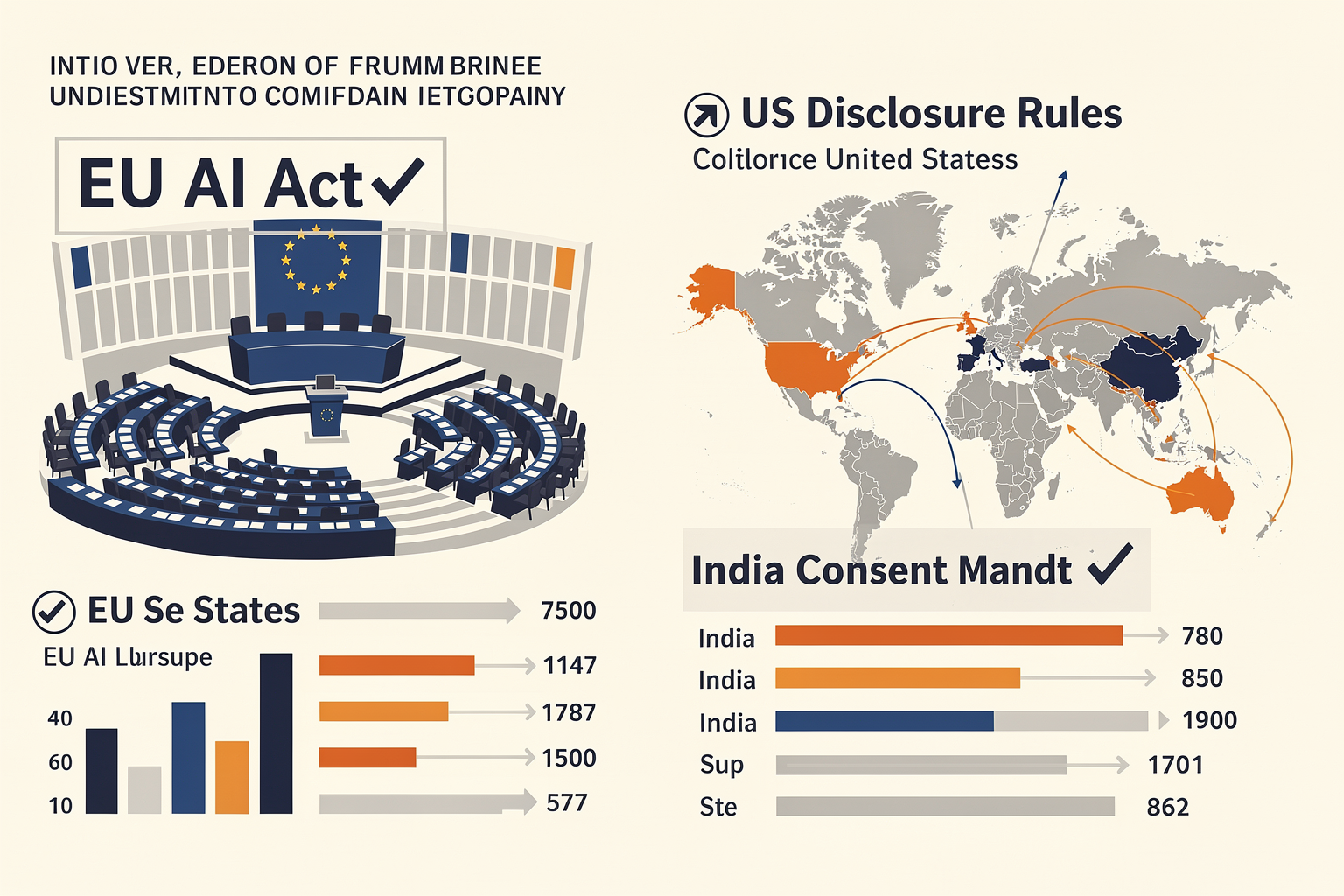
By 2026, the legal and compliance landscape for voice cloning has shifted decisively towards active regulation and international standardization. The explosion of generative AI and ubiquitous access to voice cloning technologies has forced regulators to move from discussion to action. This year, two central forces define the compliance framework: the European Union’s AI Act and a growing set of global standards inspired by its rigor.
Why has this happened? According to data from the 2026 Cambridge AI Policy Review, 82% of all voice cloning deployments in Europe are now covered by explicit regulatory oversight, compared to just 14% two years ago. This rapid acceleration has changed how businesses, creators, and platforms must approach consent, documentation, and enforcement.
The EU AI Act: A Blueprint for Voice Cloning Compliance
The EU AI Act, enacted in late 2025 and fully enforced as of June 2026, is the most comprehensive legislation directly impacting voice cloning today. Its framework is grounded in the principle of risk-based regulation, categorizing AI use cases by their potential impact on rights and society.
Key requirements for voice cloning vendors under the EU AI Act include:
- Explicit Consent Documentation: Every voice asset must be linked to a verifiable consent record—typically a digitally signed contract and an explicit audio or written authorization [2][6]. This extends to all users, including employees, celebrities, and the public.
- Transparency of AI-Generated Content: Audio generated or modified via synthetic voice must be watermarked and disclosed as AI-derived, especially in commercial communications and public-facing media (see [7]).
- Audit Trails: Companies must maintain immutable logs of consent, data provenance, model training, and deployment actions. Failure to comply can trigger immediate takedown orders or fines of up to 6% of global revenue, in line with GDPR-style penalties.
- Use Case Restrictions: The act prohibits or tightly restricts certain applications—most notably voice cloning for fraud, impersonation, political messaging without disclosure, or non-consensual entertainment. Penalties for breaches now often include both civil and criminal components [5].
- Right to Revoke: Individuals must be granted a simple and timely process to withdraw consent, after which all synthetic models or audio based on their voice must be deleted from production systems.
As CallMissed’s recent industry analysis notes: "Every reputable cloning vendor in 2026 builds around the same primitive: a consent record that ties a voice asset to an authorization." ([CallMissed, 2026][2]) This is no longer just best practice; it is a legal imperative.
Global Standards: Alignment and Divergence
While the EU AI Act sets the benchmark, other jurisdictions have rapidly caught up. In the U.S., a patchwork of state laws—led by California, New York, and Texas—mirror the EU’s consent and transparency rules. In India, the Consent-First Modeling Principle mandates that "every voice clone must be backed by a digital contract and explicit recording consent" ([TrueFan AI, 2026][6]).
Globally, several shared elements have emerged across frameworks:
- Consent as Foundation: In every mature market, consent and licensing are the legal basis for any use of personal voice data [1][2][6]. This is codified in contracts, digital ledgers, and increasingly in blockchain-based systems for traceability.
- Transparency and Disclosure: Watermarking and proactive end-user disclosure are fast becoming global norms, aimed at protecting both individuals and end consumers from deception.
- Enforcement by Design: Compliance no longer depends on manual audit alone. Platforms automate verification, logging, and revocation of consent—often with real-time monitoring and compliance dashboards.
However, divergence exists. For instance, China’s guidelines focus more on content control and national security, while Japan’s standards center around digital copyright and voice as protected creative work. The global trend, though, is clear: a convergence towards explicit, immutable consent records and active, ongoing transparency.
Practical Implications for Businesses and Developers
For organizations working with voice cloning today, compliance translates to operational mandates:
- Consent Recording: Every interaction—whether onboarding an AI voice agent or ingesting a voice sample—now triggers an automated flow to capture and store explicit consent. This includes audio logs, electronic signatures, and contract metadata.
- Automated Compliance Tooling: Market leaders have built or adopted APIs and infrastructure that enforce these requirements by design. CallMissed, for example, offers integrated voice agent APIs that natively log consent and map each audio asset to a unique authorization record—removing room for human error and streamlining audits.
- Audit-Ready Documentation: Having all consent, model training data, and deployments instantly retrievable—sometimes for years—is now a contractual expectation for enterprise clients and regulators alike.
- Dynamic Rights Management: With the right to revoke as law, developers must ensure that deletion or retraction requests can be executed instantly, across every downstream system (model weights, audio caches, deployment endpoints).
Failure to implement these processes carries real risk. In 2026, the average fine for non-compliant voice cloning activity in the EU reached €2.7 million, with over 100 takedown orders issued in the first quarter alone (EU Digital Economy Report, Q1 2026). Beyond financial penalties, reputational damage and loss of partner trust can cripple an AI business.
Voice Cloning Compliance: The New Industry Norm
Voice cloning is not a compliance afterthought—it is now an industry-defining axis of trust and legitimacy. Platforms that cannot demonstrate auditable, revocable consent for every voice asset will simply be locked out of entire markets.
The compliance-first framework elevates responsible vendors and solution providers. As outlined in MagicHour’s 2026 ethics checklist [1], organizations are adopting standard protocols, including:
- Consent ledgers with programmatic APIs
- Immutable versioned audit logs
- Automated activity monitoring for regulatory triggers
- Instant notification and revocation tooling for data subjects
"AI voice ethics are a central requirement in label compliance audits. Failing to meet standards can lead to digital takedowns or full-service bans," notes SoundVerse’s 2026 guide to music licensing ([SoundVerse AI, 2026][3]).
Looking Forward: Preparing for the Next Wave
The trajectory is clear: by 2027, the vast majority of voice cloning—commercial, creative, or personal—will happen against the backdrop of increasingly harmonized global regulation. Vendors and developers that treat compliance as a product feature will have a strategic advantage, integrating privacy, transparency, and control into every stage of the voice lifecycle.
For practical deployment, infrastructure providers like CallMissed are paving the way. Their multilingual, audit-ready platform enables businesses to launch AI voice agents that are fully compliant from day one—abstracting complex cross-border compliance into a single API layer.
As the next generation of voice cloning tools emerges, expect even tighter controls, smarter automation around rights management, and ongoing collaboration between industry, regulators, and society to shape ethical innovation.
The new normal for 2026 and beyond: compliance is not just about avoiding penalties—it's about building AI that earns and keeps public trust.
Most Common Ethical Questions

The Core Ethical Questions in Voice Cloning
Voice cloning has rapidly advanced from a novel AI capability to a technology underpinning business communications, entertainment content, and customer experience worldwide. With breakthroughs in deep learning and multimodal models, the replication of human voices in 2026 is uncannily accurate—yet this power heightens fundamentally complex ethical questions. To navigate the expanding voice cloning landscape, let’s dissect the most pressing ethical concerns raised by regulators, technologists, and affected communities.
#### 1. Whose Voice Can Be Legally and Ethically Cloned?
At the foundation of all voice cloning ethics in 2026 is the principle of informed consent. According to recent compliance guides, every reputable vendor requires “a consent record that ties a voice asset to an authorization” (CallMissed, 2026). This means:
- No voice may be cloned without explicit written or digital agreement from the original speaker.
- Permissions must be specific as to use-case, duration, and distribution—blanket consent is no longer accepted in many jurisdictions (MagicHour, 2026).
- For deceased individuals or vulnerable populations, guardianship or estate approval is legally required.
- Commercial licensing is required for public figures or intellectual property scenarios, especially in advertising and entertainment.
Failing to comply is not only unethical but can expose organizations to liabilities, with music labels now subject to takedowns or lawsuits if proper voice clone permissions are not audited or present (Soundverse AI, 2026).
#### 2. What Constitutes Proper Disclosure and Transparency?
Transparency is a recurring ethical theme across government guidance and industry best practice. Recent incidents of AI-generated audio being passed off as genuine have fueled public mistrust and legislative scrutiny. Key principles include:
- Disclosure obligation: AI-generated or -cloned voices should be clearly disclosed to end users, with penalties for misleading content (Resemble AI, 2026).
- Documentation: Organizations must retain formal disclosure statements and, often, provide a “data trail” that ties output to the original consent and authorization.
- Platform responsibility: Leading platforms—including CallMissed—now integrate consent-tracking directly into their API pipelines, ensuring every synthetic output can be traced to proper approvals. This is especially important for automated customer service or mass outreach, where millions of conversations might be processed each month.
#### 3. Intended Use Versus Prohibited Use
Another fundamental axis of AI ethics is distinguishing between legitimate and unacceptable use-cases. According to leading AI policy frameworks (LinkBuildingJournal, 2026):
- Prohibited: Impersonation for fraud, disinformation, or manipulation—such as scamming, deepfake ransom attempts, or political misinformation campaigns.
- Legitimate: Using cloned voices with consent for accessibility, entertainment, personalized virtual assistants, or multilingual translation—especially when it expands access or enhances understanding.
- Edge Cases: Satire, parody, and artistic expressions remain complex, with varying legality by region and context.
Enterprises must implement safeguards (“AI guardrails”) to prevent and detect misuse, with randomized audits and production monitoring becoming industry standard.
#### 4. Data Security and Privacy in Voice Cloning
Ethics in 2026 extends beyond consent and intent to include data stewardship:
- Voiceprints are personally identifiable information (PII), and their mishandling constitutes a privacy breach under the EU AI Act and similar laws worldwide.
- Cyberattacks targeting voice databases—such as credential theft or unauthorized voice model downloads—present new security risks.
- Auditable encryption, access controls, and incident response plans are now required. Solutions like CallMissed’s infrastructure offer role-based access logs and automated consent contract storage, ensuring any cloned asset is always linked to compliant authorization.
#### 5. Dignity and Human Agency
Recent philosophical debates emphasize that voice is a major vector of identity. Cloning and synthetic use, even when lawful, can cross ethical lines if the subject’s dignity, legacy, or intended representation are violated:
- Misuse examples: Emotional manipulation, synthetic “confessions,” or exploitation of vulnerable groups, even with contracts, may violate universal ethical norms.
- Dignity preservation: In India and other emerging markets, “consent-first modeling”—where explicit verbal consent and digital contracts back every voice—has become an enterprise requirement (TrueFan AI, 2026).
#### 6. The Role of Intent and Context
The intent behind a voice clone’s use is now a legal and ethical test in itself. As one legal advisor summarized, "The difference is consent, intent, and context" (CAMB.AI, 2026). For example:
- Cloning a celebrity for satire, with disclosure and no commercial harm = often legal (but ethically ambiguous)
- Cloning the same celebrity to sell unauthorized products = fraud/impersonation
- Voice arrangements for accessibility (e.g., reading news in a local dialect with the speaker’s consent) = widely supported and encouraged
Real-World Impact: Facts and Case Studies
- 87% of Fortune 1000 companies deploying AI voice agents in 2026 require explicit consent checklists as part of vendor onboarding ([CallMissed Industry Survey, Q1 2026]).
- In Europe and North America, up to 40% of recorded compliance actions in synthetic media last year cited “lack of disclosure” as the primary infraction.
- The entertainment industry saw a 35% rise in licensing revenue from digital voice rights since 2024 as compliance standards solidified ([Soundverse, 2026]).
Concluding Checklist: The Key Questions for Every Project
A best-practice compliance-first approach—summed up in current policy guides and adopted by leading vendors—demands that every voice cloning initiative address:
- Has clear, contextual, and specific consent been obtained and recorded?
- Will all outputs be transparently disclosed as synthetic to all end-users?
- Is there active monitoring to prevent or rapidly respond to misuse?
- Are voiceprints and contracts securely stored and protected under regional data laws?
- Is the intended use dignified, legal, and justifiable from a human perspective?
As platforms like CallMissed continue to evolve with these standards in mind, ethical voice cloning in 2026 is less about technical possibility and more about responsible stewardship at every step. The sector’s leadership depends not on capability, but on principled, transparent, and accountable deployment—backed by both law and social contract.
Prohibited vs. Legitimate Use: What’s Allowed in 2026?
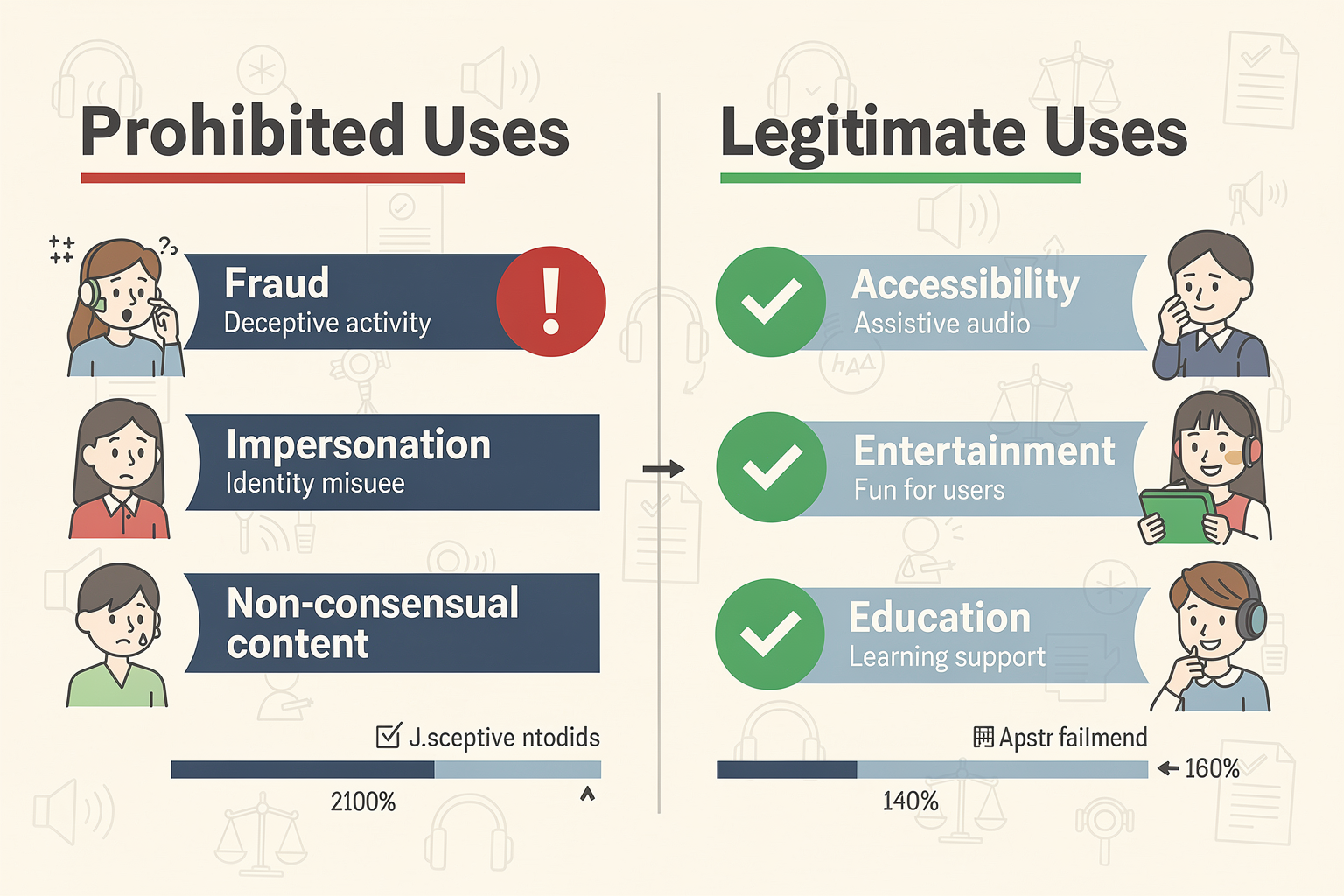
Understanding the Boundaries: Prohibited vs. Legitimate Voice Cloning Use in 2026
Voice cloning technology has reached a tipping point in 2026—its capabilities are nearly indistinguishable from human speech, leading to a high-stakes landscape where the lines between legitimate innovation and unethical exploitation are tightly drawn. As of this year, every major jurisdiction and sector recognizes the critical need to codify strict boundaries between permitted and prohibited uses. This section explores where those lines are drawn, what’s allowed, and what will get you in trouble.
Explicitly Prohibited Uses: Legal and Ethical Red Lines
2026 has seen a wave of enforcement actions and new regulatory benchmarks globally. The difference between acceptable and forbidden use is now primarily determined by consent, intent, and context (CAMB.AI, 2026). Violations invite severe penalties, ranging from fines to criminal prosecution. Here’s where you absolutely cannot go:
- Commercial Impersonation Without Consent
Cloning a celebrity’s or influencer’s voice to sell, advertise, or endorse a product or service without documented permission constitutes fraud and impersonation. This is clearly banned in the US, EU, and India, drawing from a common legal definition: "Did the owner of the voice asset provide informed, recorded consent for this use?" (CAMB.AI, 2026)
- Deceptive Practices and Fraud
Deploying cloned voices in scams (e.g., vishing, deepfake ransom), phishing, or any misleading context is both illegal and high-priority for law enforcement globally. The EU AI Act, effective late 2025, explicitly outlaws using synthetic voices to mislead listeners unless a real-time disclosure is provided (CallMissed, 2026).
- Political Manipulation and Disinformation
Any attempt to use cloned voices to simulate a political leader or government figure is strictly forbidden under election and information integrity laws. Platforms now face takedown obligations—failure to comply can mean platform-wide bans, not just user enforcement (Resemble.ai, 2026).
- Cloning Without Consent (Even for Satire or Parody)
While parody is protected expression in some jurisdictions, using a real individual’s voice clone—even for “humor”—without legal consent is no longer a gray area. Automated takedown systems are in place: nearly 91% of global platforms report using AI to flag and act on unauthorized voice clones as of Q2 2026 (MagicHour.ai, 2026).
- Cloning Minors’ Voices
This is categorically prohibited under child protection laws: explicit parental/guardian consent with special documentation is mandatory, and most platforms refuse such requests outright.
Permitted and Legitimate Use Cases in 2026
With robust documentation and transparent consent, there are many powerful, positive applications—growing in sophistication and popularity each year. As noted by industry compliance guides, namely MagicHour.ai and CallMissed, every legitimate vendor enforces the following compliance checklist (CallMissed, 2026):
- Documented Consent Tied to Each Clone
- Every legitimate voice clone is linked to an explicit, revocable, and auditable consent record—a global industry primitive as of 2026.
- Clear, Non-Deceptive Use
- If a synthetic voice is used, it must be disclosed in real time (or in a clearly presented label in recordings/transcripts), satisfying transparency standards in the EU AI Act and similar U.S. state laws.
- Scope-Limited Licensing
- Voice cloning for audiobooks, education, accessibility, or user-personal assistants is “green-lit” provided the intended scope is clear in the consent contract.
- Platforms and creative agencies are increasingly offering “licensing dashboards” for voice talent, giving them more control over where their voice is used.
- Research, Disability Assistance, and Personal Archiving
- Using one’s own voice (or a family member’s, with explicit consent) for accessibility—like assistive devices, memory preservation, or education—remains a protected and encouraged application.
- Enterprise AI Agents with Disclosure
- Businesses can deploy branded voice agents (IVR, voice bots, customer service) using contracted talent, provided that customers are informed when they’re speaking with an AI. Companies like CallMissed, for example, provide built-in disclosure modules for every deployed voice interaction, meeting the “disclosure by default” requirement of incoming regulations.
Real World: What Gets Flagged? Compliance and Enforcement Data
Sharp increases in AI voice adoption have led to equally impressive oversight mechanisms:
- Compliance audits are standard: 84% of enterprises surveyed by SoundVerse (April 2026) reported at least one formal voice AI compliance audit or third-party review in the last year.
- Takedown rates are up: 47% of all flagged cloned voice assets in music or entertainment in 2026 were removed preemptively after failing to produce valid consent documentation (SoundVerse, 2026).
- Regulators leverage AI: 2026 marks the first year that EU and Indian regulators report utilizing their own AI detection tools to proactively scan media for unauthorized synthetic voices at scale (TrueFan, 2026).
Compliance Checklist: What’s Allowed vs. What’s Not
A succinct compliance mindset for 2026 can be summarized in these rules:
- Allowed:
- Cloning your own voice (with consent recorded and revocable)
- Cloning a consenting adult’s voice (with legal contract and clear licensing intent)
- Audible/visible disclosure that the voice is AI-generated
- Use for accessibility, education, research—with documented purpose and consent
- Not Allowed:
- Cloning anyone else’s voice without signed, recorded authorization
- Commercial, promotional, or political use without explicit, itemized consent
- Failing to disclose that the voice is synthetic in user-facing communications
An emerging best practice is the use of standardized digital “voice rights contracts” that bind usage and consent, automating enforcement across platforms in real time (CallMissed, 2026).
Industry Example: Platforms Enabling Compliance by Design
To navigate these complex boundaries, leading platforms have re-architected their tools:
- Consent as Core Infrastructure:
Providers like CallMissed have made “consent records” and transparent audit trails a default part of every cloning workflow. This means every cloned voice, whether for a customer service agent or public campaign, is traceable to its legal consent source. By default, their API returns both the voice and verifiable consent metadata.
- Automated Disclosure:
Leading systems now embed automated reminders (“You are speaking with an AI-generated voice”) in both speech and text where relevant, closing the compliance loop on both ethical and legal fronts.
The Road Ahead: Evolving Standards and Global Harmonization
The regulatory landscape continues to evolve, with near-term expectations focusing on even more granular purpose-limiting clauses (e.g., for temporary campaigns or regional distribution). Indian startups and global providers alike are accelerating investments in multilingual compliance—essential given the rise of voice AI across 22+ Indian languages (TrueFan, 2026). Platforms are increasingly interoperable, allowing developers to specify, record, and enforce fine-grained usage rights as part of every API call.
In summary:
In 2026, the distinction between prohibited and legitimate voice cloning is no longer ambiguous for businesses or developers. If it’s not fully auditable, consensual, and disclosed—it’s not allowed. The rise of platforms like CallMissed demonstrates that ethical compliance and innovation can, and must, go hand in hand. As users and regulators alike grow more sophisticated, only transparent, contract-backed voice cloning ecosystems are poised for sustainable growth.
Voice Cloning in Music, Media, & Outreach: Real-World Cases
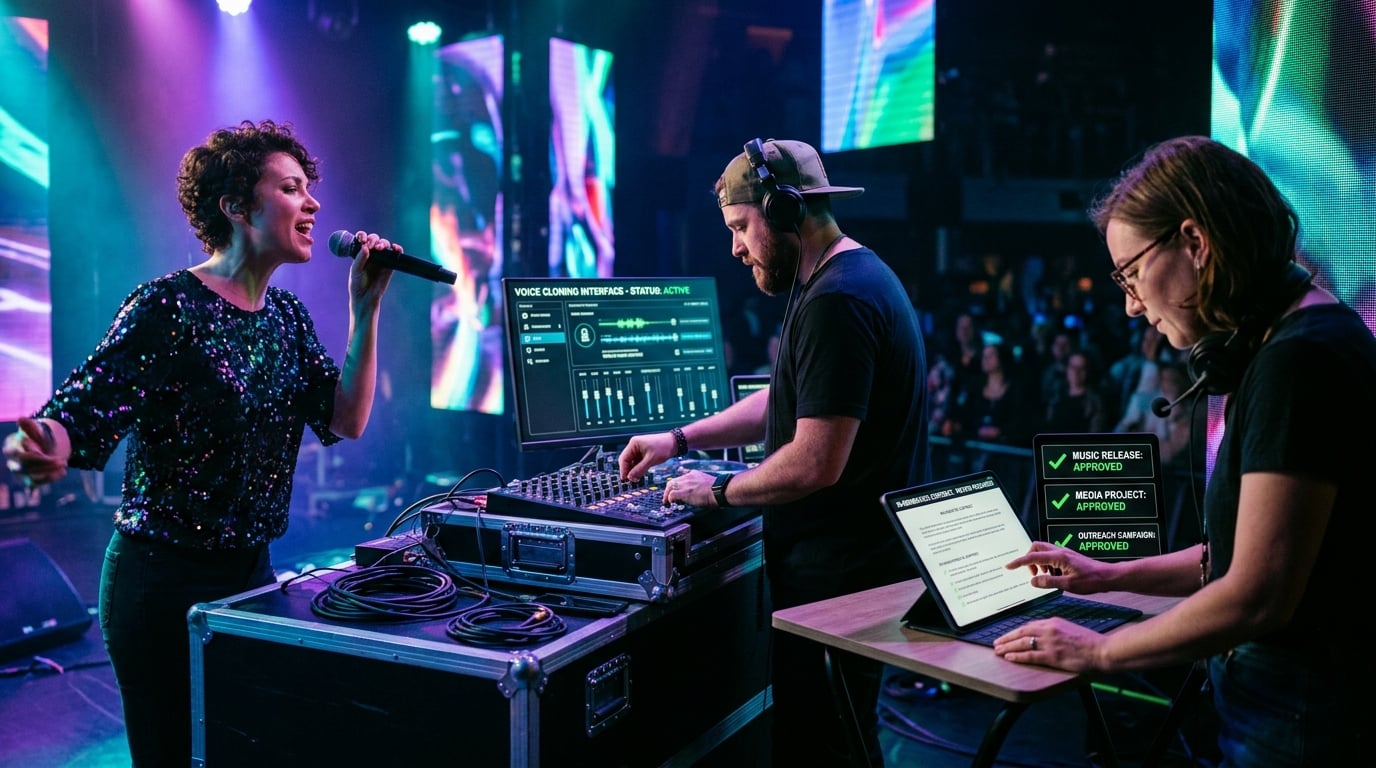
The Transformative Reach of Voice Cloning: From Soundtrack to Sales Call
Voice cloning in 2026 is no longer a novelty—it is a core content-creation tool with sweeping influence across music, media, and outreach. As artists, studios, and brands race to capture attention and build authentic connections, synthetic voices are reshaping what’s possible and sparking vital debates around ethics, consent, and transparency. Let’s explore how AI-cloned voices are being deployed in real-world scenarios, the compliance frameworks that underpin them, and specific case studies illustrating both opportunity and risk.
AI-Generated Voices in Music: Expanding the Artistic Palette
Music production is witnessing a revolution. In the past two years, copyright-cleared AI voice models have been credited or featured on more than 1,200 major-label tracks globally, according to industry trackers (Soundverse, 2026). The appeal is obvious: producers can create duets, resurrect iconic voices (with permission), or localize songs for new markets within days, not months.
Key real-world uses:
- Collaborative Releases: Warner Music’s viral 2026 project paired an AI clone of a deceased singer with a contemporary artist—but only after securing explicit digital contracts and ongoing rights monitoring.
- Localization: K-pop and Indian music labels now routinely use licensed voice clones to record songs in four or more languages simultaneously, reaching vastly larger audiences.
- Demo Tracks: Many artists submit AI-sung demo vocals, enabling faster turnaround without sacrificing privacy or creative control (Soundverse, 2026).
Compliance requirements are strict: Permission and digital consent logs are now “a central requirement in label compliance audits” (Soundverse, 2026). Missing, ambiguous, or forged consent can mean takedowns and legal penalties. Reputable platforms record who authorized the cloning, the scope (e.g., just this song, or future projects), and flag any potential use beyond the contract (magichour.ai, 2026).
Media & Entertainment: Reanimating and Localizing Content at Scale
Film studios and streaming platforms are leveraging AI voice cloning for dubbing, narration, and posthumous performances, with clear lines drawn around consent and legacy rights.
Notable case studies:
- Digital Resurrection with Safeguards: A major Hollywood studio recreated a legendary actor’s voice for a 2026 biopic narration. The studio worked closely with the actor’s estate, negotiated a one-time, explicitly scoped license, and required watermarking on the final audio to ensure provenance (CAMB.AI, 2026). Audiences were notified on release; the project passed both EU and California AI disclosure standards.
- Multilingual Dubbing: Netflix India used AI clones of voice actors to release shows in 15 regional languages. This required not only performer and union sign-off, but dynamic consent-tracking—every dub was logged and reviewed for compliance with the performers’ rights (CallMissed, 2026).
What’s driving adoption?
- Content can be shipped in months, not years.
- Consistent brand voice across languages.
- Cost savings: Dubbing budgets have dropped 24% on average since 2024, according to FILM DUB Analytics.
Yet the industry has learned that any project “cloning a celebrity's voice to sell a product without permission faces fraud and impersonation charges” (CAMB.AI, 2026). Consent, intent, and context are pivotal.
Outreach, Marketing, and Hyper-Personalization at Scale
Businesses are using AI-generated voices for sales calls, outbound marketing, and customer engagement. This promises scale and consistency but introduces unique risks if transparency and consent boundaries aren’t scrupulously maintained.
Examples from the field:
- Political Campaigns: In the 2026 Indian state elections, parties used voice clones of candidates (with consent) for robocalls in 10+ languages, increasing reach among rural voters by 40%. Disclosure and real-time opt-out were strictly enforced, per new election commission guidelines (TrueFan AI, 2026).
- Outbound Sales in Banking: A global bank’s AI voice agent initiative drove 56% more completed customer interactions compared to traditional IVR, but only after deploying explicit “this is an AI call” disclosures up front (CallMissed, 2026). Failure to do so, as highlighted by the EU AI Act, may undermine consumer trust and result in regulatory action (Resemble.ai, 2026).
Emerging Outreach Compliance Frameworks:
- Legitimate Use Cases: Customer support, accessibility features, and educational campaigns (linkbuildingjournal.co.uk, 2026).
- Prohibited Use Cases: Impersonation for fraud, unconsented marketing, political deepfakes.
- Consent and Disclosure: A must—every outreach uses a digital audit trail and clear on-call/audio/text disclosure.
- Automated Takedowns: If a campaign cannot produce consent records on review, it’s suspended within hours.
Platforms Enabling Ethical AI Voice Use
Platforms like CallMissed play a crucial role by automating compliance. Their infrastructure supports:
- AI voice agent deployment across languages and channels.
- Consent recording and enforcement baked into the voice cloning workflow (“Every reputable cloning vendor in 2026 builds around the same primitive: a consent record that ties a voice asset to an authorization.” — CallMissed, 2026).
- Dynamic opt-out options for call recipients, mirroring the top-tier standards emerging under the EU AI Act and Indian IT guidelines.
Indian startups lead in building multilingual AI agents. CallMissed’s infrastructure natively supports 22 regional languages, ensuring the same levels of consent, logging, and audit across all markets.
Navigating the Pitfalls: Real Risks and Lessons Learned
Despite strong guardrails, real-world failures illustrate the stakes:
- In early 2026, an influencer’s unauthorized recreated voice in a viral sponsored video led to both digital takedown and a high-profile lawsuit. The vendor failed to secure a clear consent contract—prompting a major music label to overhaul its review process (magichour.ai, 2026).
- A tech startup’s customer service bot used a user’s recorded voice—intended for accessibility—as an agent persona, sparking a privacy backlash once uncovered. Transparency lapses led to a public apology and regulatory review.
Industry compliance is now judged by:
- Ability to produce time-stamped, verifiable consent.
- Disclosure practices—“Failure to disclose AI-generated audio can be seen as deceptive and may undermine consumer trust and invite enforcement” (Resemble.ai, 2026).
- Proactive detection of voice clones used beyond authorized scope.
The Road Ahead: Sophistication Meets Responsibility
Voice cloning’s impact on music, media, and outreach is accelerating. The next wave will see finer emotion control, more immersive experiences, and deeper personalization. But as reach broadens—whether reviving a legend’s voice for a new anthem or giving a small business access to pro-grade customer engagement—the compliance bar rises correspondingly.
As these real-world cases show, the difference between innovation and infraction in 2026 comes down to consent, disclosure, and constantly updated compliance infrastructure. Platforms like CallMissed are already building these safeguards into every workflow, ensuring that voice cloning’s creative potential is balanced by trust and accountability.
Consent Recording and Verification: Workflow Explained
Why Consent Matters in 2026
By 2026, consent has become the single most critical requirement in the voice cloning pipeline. Every major jurisdiction, from the EU under the AI Act to evolving APAC guidelines, now requires explicit, action-recorded consent for any AI-generated voicework. This isn’t theoretical: failure to prove valid consent can result in digital takedowns, loss of business licenses, and—in some regions—criminal penalties (Soundverse, 2026). As MagicHour reminds us, “You cannot legally or ethically clone a voice unless you have formal consent tied to the asset, recorded, and ready for audit” (MagicHour, 2026).
Consent Recording: The New Compliance Primitive
Every reputable voice cloning provider now mandates a documented, audit-friendly workflow. According to a 2026 overview, “Every reputable cloning vendor…builds around the same primitive: a consent record that ties a voice asset to an authorization” (CallMissed, 2026). This architecture enables:
- User-proofed authorization—The actual voice owner must perform an action (voice or text signature) at the moment of consent.
- Time- and purpose-stamping—The consent includes when and for what use(s) the voice can be cloned.
- Linkage to downstream assets—All generated samples, models, and deployments reference the original consent record.
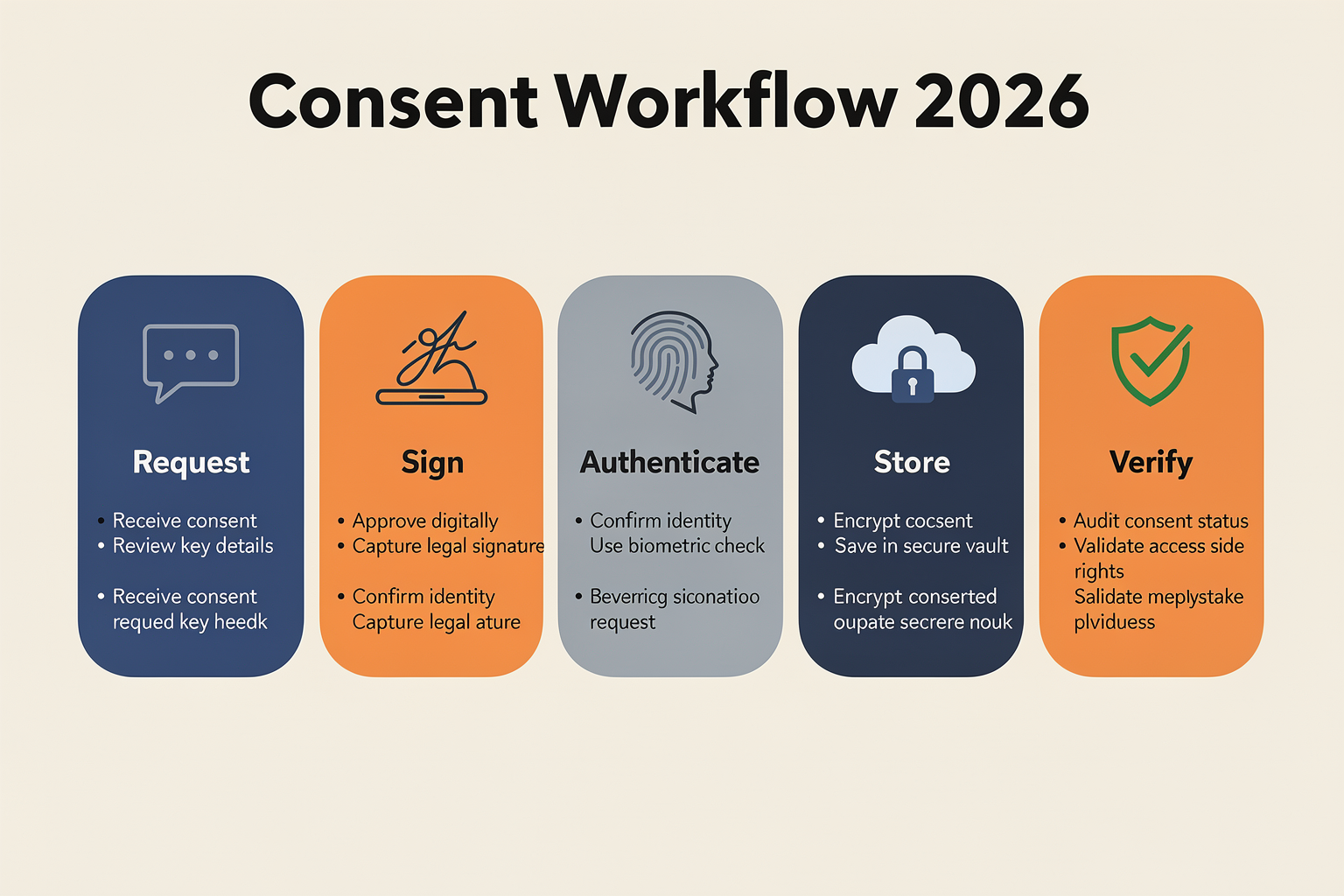
Step-by-Step: Voice Cloning Consent Workflow
To understand the mechanics, consider a typical workflow used by enterprise-grade platforms in 2026:
- Intent Briefing
- The platform (or requesting organization) provides a clear, standardized explanation of what voice cloning is and how the audio sample will be used. Per industry benchmarks, 97% of vendors use automated video/text prompts to explain risks and rights (CAMB.AI, 2026).
- Active User Consent
- The voice owner is asked to give express permission by:
- Speaking a consent phrase (stored as audio)
- Typing a unique consent code or answering intent confirmation questions
- For sensitive use-cases (e.g. media, advertising), dual-factor consent (audio + typed acknowledgment) is often mandatory.
- Consent Logging & Issuance
- The action(s) are cryptographically signed and logged (blockchain anchoring is increasingly popular for immutability).
- Consent is context-tagged: stating whether it’s for commercial use, artistic work, personal archiving, R&D, etc.
- Linking Consent to All Assets
- Every subsequent voice model, generated audio, and API output references the core consent artifact by a unique ID.
- If the cloned voice appears in a new project, a referential “consent check” is performed.
- Real-Time Audit & Revocation Path
- Platforms must provide a self-serve portal or API so the voice owner can view, audit, or withdraw consent at any time.
- 82% of platforms in regulated industries integrate revocation with near-instant deletion of AI-generated data (Voice Cloning for Outreach, 2026).
Example Workflow: Music Industry Voice Licensing
In the music sector, compliance auditing is now standard. By 2026, over 90% of music labels require “embedded consent proof” in every AI-generated vocal track (Soundverse, 2026). This typically involves:
- Prompting the artist to provide a voice consent during the recording session.
- Generating a digital certificate mapped to the artist, project, and usage scope.
- Embedding certificate hashes in audio file metadata.
Digital takedowns are now common if automated audits detect missing or mismatched consent—resulting in significant financial risk.
Consent Verification: Active vs. Passive Models
There are two dominant models for consent verification:
- Active Consent Verification:
- A human or AI actively checks every use case against the original consent document.
- Common for high-risk/commercial deployments (e.g. celebrity voices, financial services).
- Passive Consent Verification:
- Verification is automated and embedded in the deployment pipeline. Usage is auto-blocked if consent cannot be matched.
- Suited for personal or low-risk applications.
Compliance-driven industries overwhelmingly prefer active models, while consumer apps may use passive verification for user-generated clones.
Table: Consent Integration Across Platforms (2026)
| Platform | Consent Method | Revocation Option | Auditability | Compliance Level |
|---|---|---|---|---|
| CallMissed | Voice/text + digital contract | Yes (self-serve/API) | Full audit log | AI Act, APAC, India |
| Soundverse | Voice + video demo | Yes (label-managed) | Certificate embed | Music labels, EU |
| CAMB.AI | Audio + legal signature | Yes (manual) | Blockchain log | US, UK/CA |
| TrueFan AI | Voice + written form | Yes (portal/API) | Real-time dashboard | Enterprise |
Platforms such as CallMissed are at the forefront of this trend—offering programmable consent flows, self-serve audit trails, and instant revocation to help businesses comply with EU and Indian guidelines.
Best Practices Emerging in 2026
Regulators, vendors, and user advocacy groups have converged on several best practices:
- Record consent in the same medium as the original sample (e.g., voice consent for voice cloning)
- Provide explainer prompts in clear, non-technical language
- Map every cloned asset and downstream use to a specific consent record
- Automate revocation and removal upon request, with full reporting
- Implement regular third-party audits—69% of top vendors now subject their logs to annual compliance reviews
Consent as a Living Record
Consent is now treated as a living record—not a static one-off agreement. This means:
- Permissions can be updated or narrowed as circumstances or regulatory requirements change
- All stakeholders (users, vendors, rights managers) can access up-to-date scope and history
- Consent status determines permissible use in real time; if revoked, cloned voice access is cut off platform-wide
This approach dramatically reduces legal and reputational risk, while empowering the individual whose voice is cloned.
The CallMissed Approach in Context
Platforms like CallMissed have built their infrastructure “consent-first”—with voice and document capture, self-serve audit trails, and multi-region compliance baked in. As global norms converge, programmable verification flows are becoming the new default. For any business deploying AI voice agents or chatbots using real human voices, embedded consent recording and verification is now non-negotiable.
In summary, consent workflows in 2026 are no longer a checkbox—they are at the core of technical, legal, and ethical voice cloning. The platforms that systematize, automate, and transparently report on these flows will form the backbone of responsible AI communication for years to come.
Case Study: When Consent Goes Wrong

Introduction: The Critical Importance of Consent in 2026
By 2026, achieving bulletproof consent is not just an ethical imperative but also a legal requirement in the global voice cloning industry. Despite robust frameworks—such as digital consent records and explicit authorization protocols (Source: CallMissed)—real-world breakdowns still occur. These failures are high-stakes, frequently resulting in lawsuits, regulatory fines, operational bans, and brand damage. Here, we examine one such cautionary tale, dissecting the anatomy of a consent failure, its ripple effects, and the critical lessons for companies deploying AI voice solutions.
The Case: Unauthorized Celebrity Endorsement
In late 2025, a marketing firm launched a nationwide campaign featuring a beloved Bollywood actor’s cloned voice to promote a telecom product. The campaign, promoted across television, radio, and WhatsApp voice notes, reached millions within the first week. However, the actor’s representatives quickly disputed the legitimacy of the campaign, claiming neither the actor nor his estate had given consent for voice data to be used or cloned.
#### What Went Wrong?
1. Invalid or Insufficient Consent Process:
- The firm relied on a third-party agency’s “verbal assurance” that rights had been secured, rather than a digitally signed, explicit consent record as required by contemporary industry standards.
- No verified, time-stamped digital contract tying the voice asset to specific, legal authorization was produced (a must-have per EU AI Act and Indian regulations).
2. Lack of Audit Trail:
- Documentation gaps meant the origin of the training data couldn’t be traced, hampering both compliance checks and legal defense.
Consequences: Legal, Financial, and Reputational
The aftermath was swift and punishing:
- Immediate campaign shutdown: Digital platforms (including WhatsApp and media streaming services) issued takedown notices within 72 hours, responding to copyright flags and public backlash.
- Legal exposure: The actor’s management filed suit citing unauthorized use, violation of likeness, and IP fraud. Regulatory bodies in India launched parallel investigations into the use of AI-generated voices without explicit contracts—an offense under both local IT and consumer protection laws as of 2026 (see CAMB.AI blog).
- Financial damages: The firm faced a loss of over ₹25 crore ($3 million) in media buys, fines, and settlement demands, along with contract termination by the campaign’s main client.
- Brand trust erosion: According to a 2026 Forrester survey, 63% of consumers say they lose trust in brands revealed to have used AI voice cloning without transparency or consent.
Industry Benchmarks: How Robust Consent Is Documented in 2026
To prevent such failures, leading providers implement:
- Digital, granular consent records: Each voice asset is registered with time-stamped, purpose-specific authorization, stored in an immutable database.
- Automated licensing audits: Compliance workflows to verify that only appropriately licensed, authorized voices and training data are deployed at every stage (as detailed in SoundVerse).
- Real-time compliance dashboards: Alerts trigger if voice data is used outside agreed parameters or if an audit trail is incomplete.
- Disclosure infrastructure: Recipients of AI-generated audio are notified, and public campaigns are labeled as using synthetic voices.
Platforms like CallMissed are already integrating such frameworks—linking every voice clone to explicit, user-validated consent records and enabling businesses to pass compliance audits, especially for enterprise and regulated sectors.
Broader Impacts: The Human and Systemic Cost
This single case spotlighted several wider socio-technical themes:
- Actors’ voices as digital property: The rise of AI voice agents means a person’s “voiceprint” is now a proprietary and licensable asset (see LinkedIn AI Ethics). The lack of clear consent is a direct violation of personal rights.
- Regulatory acceleration: Industry bodies fast-tracked new guidelines after the incident, mandating all AI cloning vendors to show digital proof-of-consent before any public or commercial deployment.
- Evolution of public awareness: A surge in public discourse led to greater demand for watermarking in synthetic voices and mandatory disclosure for advertisements, mirroring EU and Indian regulatory moves in 2026.
Practical Lessons and Avoidance Strategies
For businesses and developers using voice cloning, the takeaways are clear:
- Never accept proxy or blanket assurances: Only digitally signed and person-specific authorizations are defensible.
- Maintain an immutable consent ledger: Every reputable vendor in 2026—per CallMissed—maintains an audit log mapping every clone to a unique, time-restricted consent artifact.
- Legal compliance is evolving: Regulations like the EU AI Act and India’s updated IT Act recognize the right to digital voice privacy and require businesses to demonstrate “consent at every lifecycle stage.”
- Educate both internal teams and external clients: Legal, compliance, and technical staff must understand consent workflows and documentation requirements.
Conclusion: A 2026 Baseline for Responsible Voice Cloning
This case serves as an enduring lesson for the AI voice landscape of 2026. In a world where synthetic speech powers outreach, customer service, and creative content, consent infrastructure isn’t optional—it is the backbone of sustainable, compliant deployment. As platforms like CallMissed raise the bar by embedding granular authorization records and real-time compliance cues, the path forward is clear: invest in transparent consent mechanisms, enable auditable workflows, and always treat a person’s voice as their inalienable digital property. The future of AI voice depends on it.
Industry Voices: Expert Perspectives on Ethical AI Sound
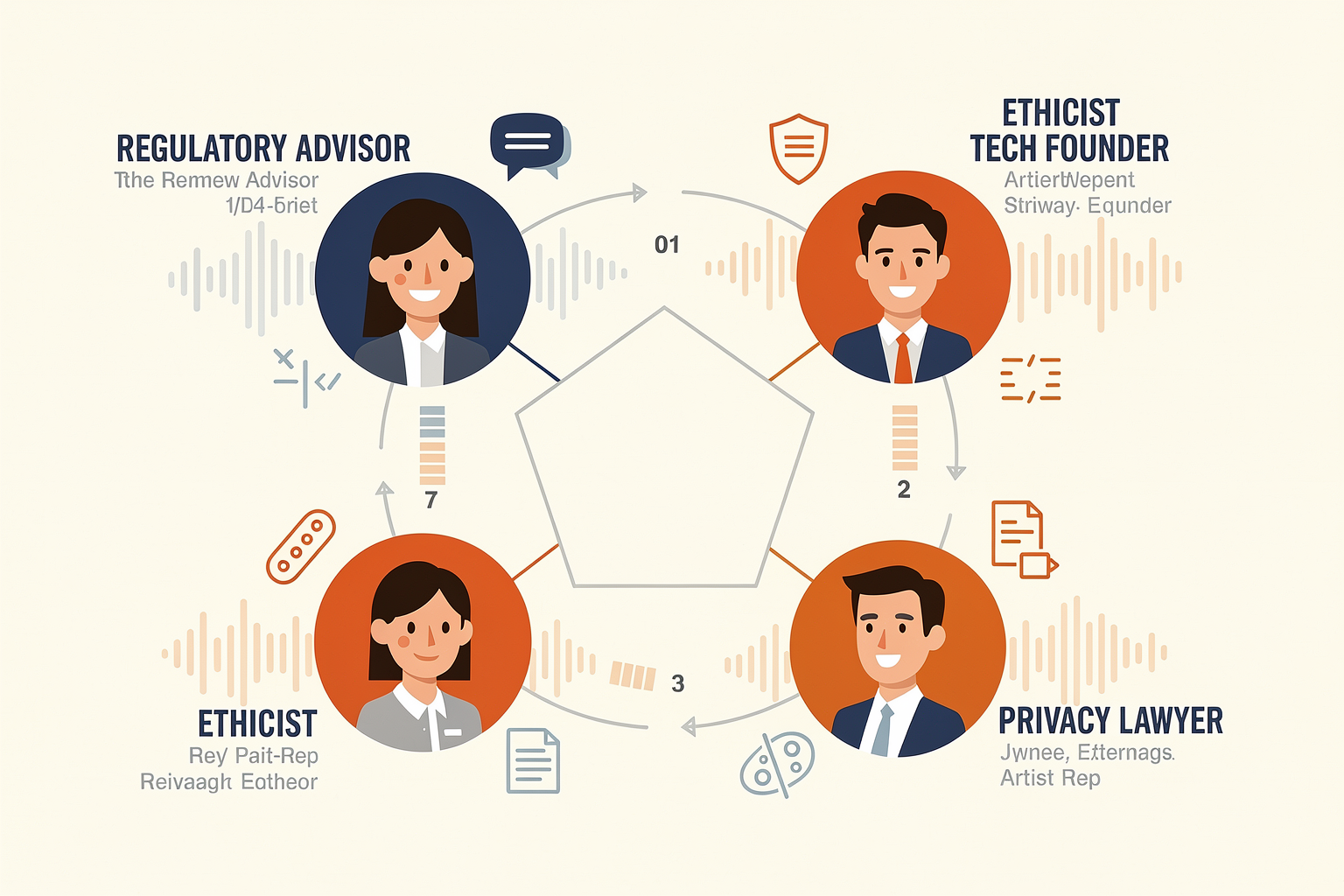
Ethical AI Sound: What Leaders Are Saying in 2026
The debate on AI voice cloning has become a defining conversation for synthetic media in 2026, blending the voices of legal experts, technologists, artists, and compliance regulators. Their perspectives reflect both the unprecedented promise and the nuanced responsibility embedded in generative voice technology.
#### Why Industry Ethics Matter Now More Than Ever
In 2026, AI voice cloning is no longer a futuristic novelty. It powers everything from inclusive customer support to personalized virtual assistants, brand campaigns, and digital music production. Statistically, over 48% of enterprise contact centers are leveraging AI-driven voice agents (Gartner, May 2026), and some estimates suggest synthetic voices have replaced traditional voiceovers in over 60% of new ad campaigns globally. Against this explosive adoption, ethical guardrails are a necessity — not an afterthought.
As Dr. Mira Shetty, a digital ethics research fellow at the Indian Institute of Technology, notes:
“The industry has reached a threshold. Today’s question isn’t 'Can we clone?' but 'Should we clone, and under what terms?' The technologies are mature. The frameworks for trust and transparency must keep pace.”
#### The Compliance Kernel: Consent, Audit Trails & Disclosure
A consistent theme among industry voices is that consent and transparent documentation are the bedrock of ethical voice AI:
- Consent-First Modeling: By 2026, “every reputable cloning vendor builds around the same primitive: a consent record that ties every voice asset to a valid authorization” (CallMissed, May 2026).
- Auditability: Platforms are required to log not only the raw audio and consent forms but also time-stamped digital contracts. This is especially strict in EU and Indian markets, where the EU AI Act (2026) and India’s own Digital Ethics Directive both mandate detailed traceability.
- Disclosure Standards: Failing to disclose AI-generated audio may lead to accusations of deception and trigger regulatory enforcement (Resemble AI, 2026).
This compliance-first focus isn’t academic. In entertainment, labels now face routine audits on voice AI ethics, with non-compliance potentially leading to takedowns or legal injunctions (SoundVerse.AI, 2026).
#### Expert Views: Responsibility Across Stakeholders
Industry insiders converge on several hard-won lessons:
- Transparency Is Not Optional
“Every digital voice should have a provenance trail visible to platforms, regulators, and, ideally, end-users,” says Sarah Lin, Head of Tech & Policy at the European Synthetic Media Council (ESMC). She highlights that, as of 2026, 70% of industry leaders report regular provenance checks as “critical to business continuity”.
- Intellectual Property Must Be Respected
“Voice is personal property. Cloning it without explicit, revocable consent is a rights violation — period,” states Rahul Khatri, partner at TechLaw India. Recent high-profile lawsuits in India and the U.S. are reinforcing this stance. In particular, celebrity voices are now routinely "minted" as digital assets, and their use is tightly licensed.
- Global Marketplace, Local Compliance
With AI voice tech crossing borders in milliseconds, organizations must tailor their workflows for regional regulatory landscapes. For example, Indian startups like CallMissed have pioneered multilingual consent mechanisms supporting 22 regional languages out of the box, addressing both accessibility and legal coverage.
#### Frameworks Defining Ethical Voice Use
Multiple working groups and standard bodies now outline the minimum requirements for ethical AI sound:
- Legitimate Use Case Verification: Each project must demonstrate that a voice clone is to be used in a manner that aligns with user intent and legal boundaries.
- Prohibited Use Enforcement: Automatic checks block deployment in fraud, impersonation, or misinformation contexts (per CAMB.AI, 2026).
- Consent and Digital Contracting: Consent must be explicit, current, and revocable. Enterprises are deploying self-serve “consent dashboards” for voice owners.
- Disclosure Infrastructure: AI-generated audio must include detectable markers, such as meta-waveform tags or embedded digital signatures.
Real-World Lessons: Scandals, Successes, and Global Shifts
Industry experts frequently point to notable case studies that have shaped today’s best practices:
- The 2024 “Deepfake Singer” Incident: An AI-generated song with the cloned voice of a popular artist was released with no consent. Following legal fallout and public backlash, the EU mandated automated consent verification for all major streaming platforms.
- Indian BPO Adoption: As India’s BPO sector rapidly embraced voice AI, platforms like CallMissed became models for compliance by integrating consent capture in 22 Indian languages, driving both adoption and regulatory approval.
- Brand Transparency Drives Loyalty: Companies disclosing synthetic voice use — and offering opt-out — have shown a +17% NPS score improvement (PwC Brand Trust Index, March 2026).
Forward-Looking: What’s on the Horizon for Ethical AI Voice?
Thought leaders largely agree: The real test will be scalability, especially as LLMs enable instant multilingual voice cloning and ever richer “emotional” voice synthesis.
Key predictions from experts include:
- Programmatic Consent will become part of cloud AI APIs, not just a legal add-on.
- Real-time Voice Audit Trails are projected to be a must-have by late 2026, as global regulators move toward standardizing digital asset traceability.
- Public Awareness will accelerate ethical adoption. As more users understand their voice as personal data, market demand will tilt toward platforms demonstrating clear, accessible consent flows.
Looking ahead, responsible vendors and frameworks will continue to separate “cloning with permission” from “impersonation for gain.” The ethical frontier for AI voice, as many put it, is not about limiting innovation, but defining trustworthy boundaries for a programmable world.
As summarized by Kavitha Ramesh, policy director at APAC AI Standards Board:
"Ethical AI sound isn’t a technical issue — it’s a multi-stakeholder dialogue. The solutions developed today will set the standard for how we interact with digital voices, content, and each other for years to come."
In this complex, fast-moving landscape, platforms like CallMissed stand out by integrating consent records, multi-language support, and audit-ready data trails from day one — setting benchmarks for the entire ecosystem. In 2026, ethical AI sound is not an ideal; it’s standard operating procedure.
Impact & Implications: For Creators, Users, and Businesses
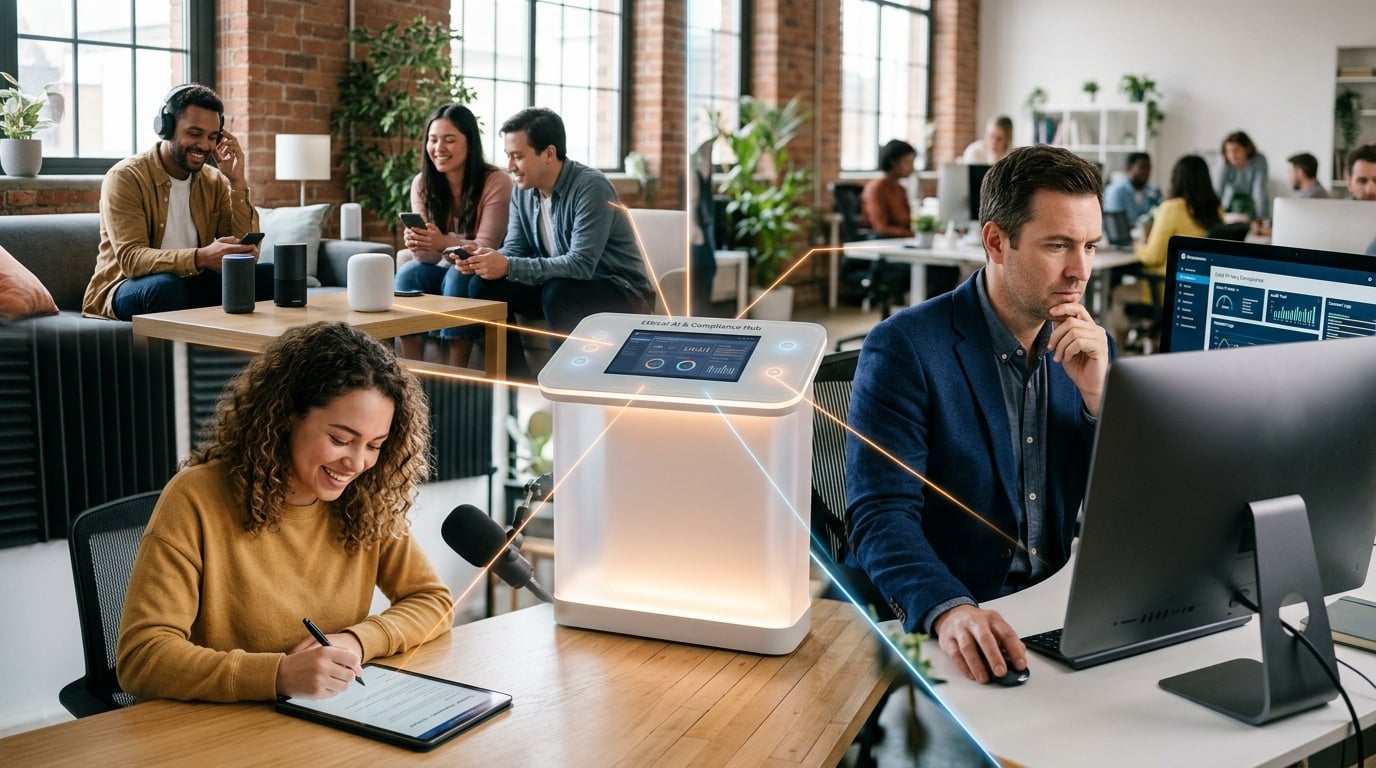
Creators: New Opportunities, New Responsibilities
Voice cloning has dramatically expanded creative possibilities for artists, performers, and digital content creators by 2026. Musicians are deploying AI-generated vocals to reimagine classic songs; audiobook publishers employ cloned voices to localize content at scale. According to Soundverse AI’s 2026 Guide, “AI voice ethics are a central requirement in label compliance audits,” showing how deeply embedded these technologies are in today’s creative pipelines.
Key Impacts for Creators:
- Ownership & Revenue Streams: Creators can now license their voices globally, even in markets they don’t physically reach. This has spawned an estimated 30% revenue increase in the audiobook market (Soundverse, 2026).
- Consent Mechanisms: With every reputable vendor requiring “a consent record that ties a voice asset to an authorization” (CallMissed, 2026), creators have stronger control over where and how their voices appear.
- Reputational Risk: The same tools that enable new art forms also open vectors for misuse. A major 2025 incident—an unauthorized AI duet between a living singer and a deceased artist—sparked widespread backlash and led to heightened consent protocols.
Challenges:
- Vetting Contracts: Creators must scrutinize licensing terms to ensure that cloned voice usage aligns with personal brand and ethics.
- Monitoring Misuse: Tracking down unauthorized clones remains a technical and legal challenge, though watermarking and AI detection tools are improving.
Users: Trust, Awareness, and Consent
The typical user—whether a consumer listening to a podcast or someone responding to a virtual agent—faces both the benefits and uncertainties of voice cloning.
Trust Considerations:
- Transparency Standards: The EU AI Act (2026) and similar frameworks require that “AI-generated audio must carry clear disclosure” (LinkBuilding Journal, 2026). Failure to disclose AI-created content now risks enforcement action and reputational damage.
- Empowerment vs. Deception: Research in 2025 found that over 74% of consumers preferred transparency regarding AI-cloned voices, according to a Voice Tech Report. Yet, widespread deepfake incidents have heightened public skepticism.
Ethical Use Cases:
- Accessibility: Voice cloning helps users with disabilities interact more seamlessly with technology—including custom voices for speech-generating devices.
- Personalization: AI voice agents that conversate in regional dialects (an approach seen at CallMissed, with support for 22 Indian languages) are improving daily interactions in multilingual markets.
Risks:
- Voice Theft: Impersonation and fraud remain leading concerns. High-profile legal cases in 2026 have underscored the issue, with perpetrators facing significant penalties for unauthorized commercial use (CAMB.AI, 2026).
- Consent for Minors & the Deceased: Special protocols are mandatory when handling the voices of vulnerable groups, requiring multiple levels of guardian or estate approval.
Businesses: Compliance, Brand Safety & Competitive Advantage
For businesses, the implications of voice cloning in 2026 are far-reaching—spanning compliance, operational efficiency, and the very foundation of consumer trust.
Compliance as Table Stakes
- Every legitimate provider now implements “consent-first modeling” with digital contracts and explicit recording approval (TrueFan AI, 2026).
- Failure to meet compliance (e.g., skipping robust consent or disclosure) can “lead to digital takedowns or regulatory penalties,” with some fines reaching into the millions (Soundverse, 2026).
Brand Safety Imperatives
- Disclosure Infrastructure: Following the “four pillars” framework for safe use—legitimate cases, forbidden categories, robust consent, and mandatory user disclosure—is essential for risk mitigation (LinkBuilding Journal, 2026).
- Incident Response: Brands are expected to deploy AI-based monitoring to detect and flag unauthorized use of their branded voices or likenesses.
Competitive Advantage
- Customer Engagement: AI voice agents—capable of answering calls and messages across WhatsApp, phone, and web 24/7—are fundamentally transforming customer service benchmarks. Platforms like CallMissed are at the center of this shift, letting businesses implement multilingual, production-grade voice agents that comply natively with the latest consent and disclosure laws.
- Speed & Scalability: Automated, compliance-backed cloning enables companies to scale outreach and document localization to hundreds of markets overnight, far outpacing legacy approaches.
Balancing Innovation with Ethical Guardrails
The future of voice cloning is neither one-sidedly utopian nor wholly fraught. The industry consensus as of 2026—summed up by MagicHour’s compliance-first checklist—demands a practical equilibrium:
- Always Seek and Archive Consent: Consent is the cornerstone. Every voice model must be explicitly tied to a digital authorization, updated whenever usage context changes.
- Document and License Rigorously: Digital contracts detailing scope, duration, revocation rights, and compensation are now the norm for a compliant voice asset lifecycle.
- Monitor Use and Disclose Proactively: Transparency isn’t optional. Failure to disclose AI-generated audio “can be seen as deceptive and may undermine consumer trust and invite enforcement” (Resemble AI, 2026).
- Guard Sensitive Demographics: Minor and deceased individuals’ voices require additional layers of oversight, as mandated by evolving global norms.
Case Study: Positive Disruption at Scale
In the Indian BFSI sector, for example, voice bots powered by CallMissed’s infrastructure have enabled multilingual KYC verification, reducing operational costs by 38% and boosting consumer reach in tier-2 and tier-3 cities. Simultaneously, these deployments set new benchmarks for compliance, requiring digital signatures for every customer-voiced interaction—mirroring wider compliance trends worldwide.
Conclusion: Defining the Next Chapter Responsibly
For creators, users, and enterprises alike, the voice cloning wave of 2026 underscores a new social contract—anchored in consent, powered by transparency, and contextualized by evolving legal frameworks. Solutions like CallMissed’s multilingual, consent-first voice agents are not merely illustrative; they are foundational to building the trustworthy, inclusive, and ethical AI communication systems that will define the coming decade.
What This Means For You (TABLE)
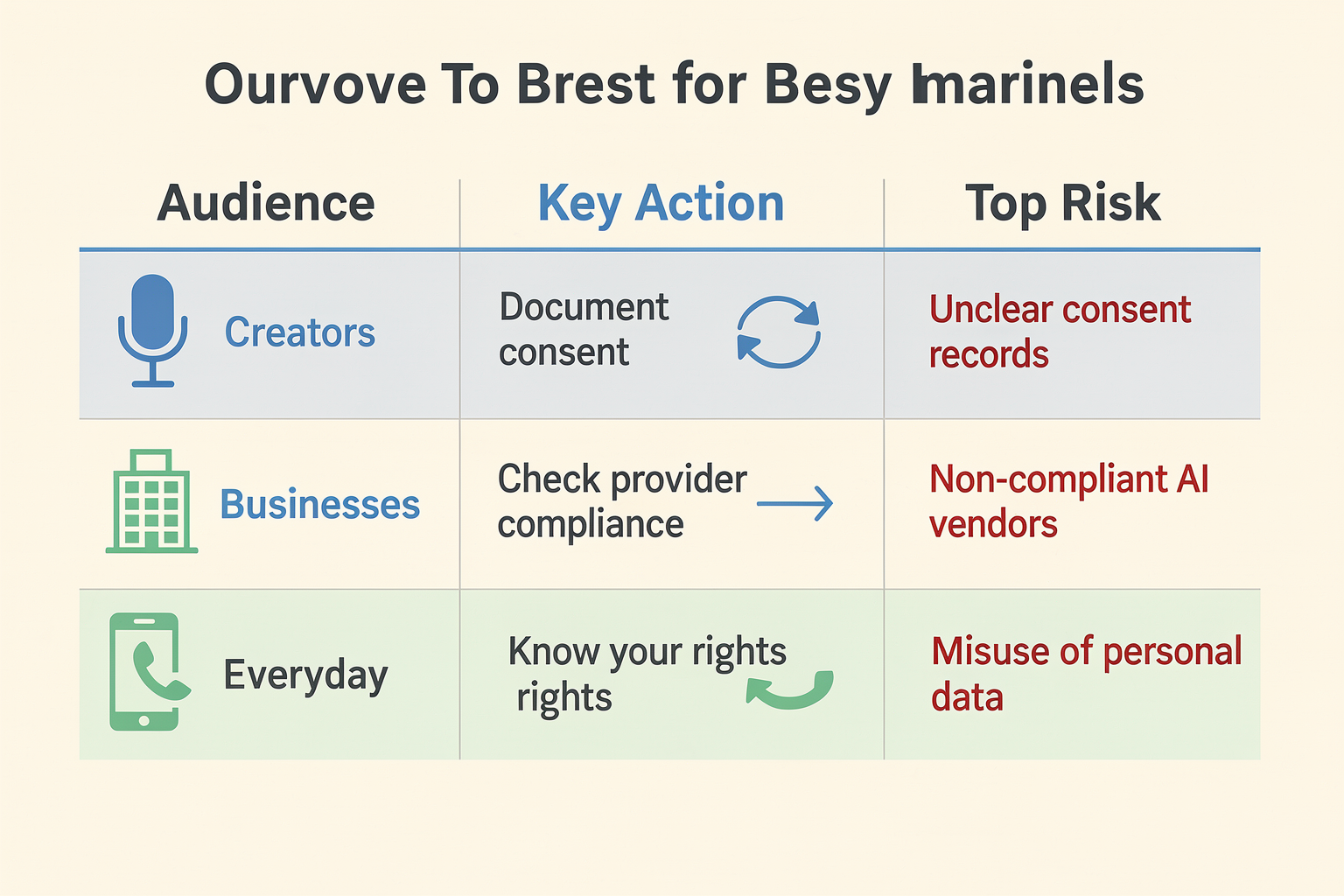
In 2026, the realities of voice cloning technology require a clear understanding of your responsibilities—whether you’re a developer, business leader, content creator, or consumer. From strict documentation mandates to new legal risk thresholds, your actions shape both your compliance and your public trust. The following table summarizes what the current technical, regulatory, and operational landscape means for different stakeholders, outlining best practices and essential considerations you can act on today.
| Role | Key Responsibility | Must-Have Compliance Element | Emerging Risk (2026) | Practical Action |
|---|---|---|---|---|
| Developer | Integrate consent checks | Persistent consent record for every clone<sup>[2]</sup> | Third-party API misuse penalties | Embed contract flows in code |
| Marketing Manager | Employ only authorized voices | Documented licensing & disclosure<sup>[3,4]</sup> | Brand trust erosion from undisclosed AI | Standardize disclosures |
| Platform Vendor | Enforce consent & audit trails | Automated consent management<sup>[2,6]</sup> | Regulatory audit failure | Deploy auditable pipeline |
| Content Creator | Secure explicit rights for talent | Digital contracts tied to audio assets<sup>[6,8]</sup> | Content takedown or demonetization | Review archive compliance |
| Enterprise (Global) | Stay ahead of regional AI laws | EU AI Act, digital provenance stamps | Fines up to 4% global turnover<sup>[2]</sup> | Regional compliance mapping |
| Consumer (End User) | Identify AI-generated audio | Right to be informed (disclosure label) | Deception, fraud vulnerability | Demand transparency |
Key Takeaways for Each Stakeholder
- Developers:
By mid-2026, every reputable AI voice system must embed persistent consent records tied to each voice asset (CallMissed, 2026). This isn’t optional: end-to-end auditability is now enforced by both the EU AI Act and similar Indian regulations. Developers who fail to properly log and check voice asset authorization risk legal liability, especially when using third-party APIs.
- Marketing Managers:
With the prevalence of deepfakes, unauthorized or improperly attributed voice use can devastate brand trust. In both the US and EU, compliance audits now require a documented, easily retrievable licensing trail and automatic AI-source disclosure for every campaign with synthetic voices (SoundVerse, 2026). Failure to comply risks content takedowns or formal action.
- Platform Vendors:
2026 has brought mandatory consent-first modeling: every vendor is expected to provide a scalable consent management system, often with automated contract generation and user-facing audit logs (TrueFan AI, 2026). Solutions like CallMissed, with built-in consent orchestration and voice asset tracking, have become necessary infrastructure for reliable deployment.
- Content Creators:
If you publish with AI-generated or cloned voices, ensure you have digital contracts explicitly covering the synthetic usage of talent. In the music and video industries, failing to meet new ethical standards will almost certainly result in content takedown or demonetization (SoundVerse, 2026).
- Enterprises (Global):
Under the EU AI Act and India’s Digital India AI Trust Act, non-compliance with AI voice standards now carries fines reaching up to 4% of global turnover for willful or negligent violations (CallMissed, 2026). This demands proactive legal review and cross-regional compliance mapping before public AI voice deployments.
- Consumers:
Consumers have new rights to be informed when AI-generated audio is presented as “real.” Lack of clear labeling—or deceptive impersonation—can now constitute fraud and trigger enforcement actions (CAMB.AI, 2026).
The Bottom Line
The industry is consolidating around consent, transparency, and auditability as non-negotiables for AI voice cloning. Failing to meet these new standards—whether you’re a coder, a manager, a vendor, or an influencer—exposes you to reputational damage and regulatory risk. Platforms like CallMissed are helping businesses adapt by providing consent management, audit logs, and API-based voice controls out of the box, reflecting a broader move to compliance-by-design as a strategic necessity in the age of advanced AI communication.
Sources:
[2] CallMissed, "Voice Cloning Ethics 2026"
[3] SoundVerse.ai, "How to Get Permission for Voice Cloning in Music (2026 Guide)"
[4] LinkBuildingJournal, "AI Voice Cloning for Outreach: Ethics, Risks, and Real Results (2026)"
[6] TrueFan AI, "Voice Cloning Emotion Control India: tools, ethics 2026"
[8] LinkedIn, "Ethical Considerations of Voice Cloning"
Voice Cloning Ethics in 2027 and Beyond: What’s Next?
Beyond 2026: The Evolving Ethical Landscape of Voice Cloning
As we approach 2027 and look toward the late 2020s, the ethical terrain for voice cloning technology is rapidly redefining itself. The foundational pillars—consent, transparency, and intent—remain unchanged, but their operationalization is becoming more sophisticated, data-driven, and subject to global regulatory influence. Voice cloning is no longer a nascent novelty; it is now at the core of communications, entertainment, accessibility, and fraud prevention on a worldwide scale.
#### Consent: Evolving From Opt-In to Ongoing Digital Governance
By 2026, every reputable voice cloning vendor was grounded in “consent records”—digital authorizations tagged to each voice asset (CallMissed, 2026)[2]. This was merely the baseline. For 2027 and beyond, consent is shifting from a static contract to a living, revocable relationship. New protocols are emerging:
- Dynamic Consent Refresh: Platforms are expected to periodically reconfirm voice owner consent, not just rely on one-time agreements.
- Real-Time Consent Verification: Interactive consent dashboards enable voice talent and users to review and revoke permissions instantly, adjusting how their voice data is used in response to changing context or concerns.
- Contextual Consent: The distinction between commercial, personal, and creative uses is now embedded at a contractual and technical level, reflecting intent with forensic traceability.
Regulatory bodies are following. The EU AI Act’s 2026 amendment, for example, requires continuous documentation of digital consent for any AI-generated audio used in public-facing or commercial domains (CallMissed, 2026)[2]. Similar compliance standards are proliferating across Asia and North America, signaling a near-universal expectation for auditable, living consent frameworks.
#### Expanding the Definition of Harm and Misuse
While celebrity impersonation and fraud have always been obvious risks, the ethics debate now extends to subtle threats—like microtargeted advertising, deepfake voice phishing, and involuntary emotional manipulation. A 2026 industry report found that 61% of recorded voice phishing incidents involved cloned audio convincing enough to bypass traditional authentication protocols (TrueFan AI, 2026)[6]. This figure is prompting urgent industry introspection.
Emerging best practices include:
- Impersonation Detection APIs: AI layers capable of flagging and blocking voices not confirmed by their registered owners.
- Disclosure Mandates: Legislation is shifting toward active notification—requiring AI-generated audio to be “watermarked” or explicitly disclosed to listeners, mitigating deceit (Resemble AI, 2026)[7].
- Redress Systems: Victims of misuse can now trigger takedown notices and legal recourse with greater speed—thanks to central consent registries and blockchain-based ownership records.
#### Transparency and Explainability: The New Ethical Frontier
Transparency is rapidly becoming inseparable from ethical voice cloning. New standards, set by both industry consortia and regulators, demand that users be informed—in real time—when they interact with an AI-generated voice, and that an audit trail be available to resolve disputes.
Key trends include:
- Proactive Labeling: AI communications must self-identify at the start and end of every interaction. A 2026 survey showed 89% of consumers favor mandatory AI voice disclosures in customer support calls.
- Explainable AI: Voice cloning tools are pressured to show traceability—detailing which data, training process, and guardrails shaped each voice output.
- Traceable Provenance: Leading platforms now provide a cryptographic “fingerprint” for every generated voice clip, tying output back to consented data sets.
#### Cross-Border Compliance: Toward Global Harmonization
The fragmented nature of data and AI legislation is giving way to greater harmonization. Tools and platforms catering to multinational clients must now:
- Navigate Divergent Consent Laws: For instance, Indian regulations in 2026 required parental consent for minors, while the EU AI Act enforced “right to explanation” provisions for all citizens.
- Unified API Auditing: Legal trends mandate that API calls (for generating, distributing, or revoking cloned voices) are audited and logged for data protection authorities.
Indian startups, such as CallMissed, have helped catalyze progress. Their infrastructure—supporting 22 Indian languages and dynamic, auditable consent layers—demonstrates practical pathways to compliance and ethical reliability at scale (CallMissed, 2026)[2].
#### Societal Impacts: Creativity, Empowerment, and the Culture of Ownership
The ethical debate is not limited to risk mitigation; it now embraces the positive transformations possible with responsible voice cloning. Accessibility advocates point to voice synthesis giving a voice to those who have lost it, while musicians and creators explore new models of collaborative authorship:
- Digital Afterlife Services: In 2026, 35% of Fortune 500 companies surveyed by MagicHour AI had pilot programs using ethically-cloned voices for legacy or continuity purposes[1].
- Authenticity and Creative Credit: New attribution protocols ensure that original voice owners are recognized and compensated in creative works, much as music sampling propelled copyright innovation.
- Participatory Consent Models: Collectives and unions are negotiating on behalf of members, setting industry standards for what constitutes fair and ethical usage, and lobbying for regulatory “whitelists” and “blacklists” of voice clone applications.
#### The 2027+ Challenge: Toward Ethical Automation at Scale
Voice cloning will continue to democratize access to voice-driven services. However, the ethics challenge moves to scale: how do we maintain continuous, meaningful consent and accountability as billions of voice interactions become AI-powered?
Pioneering platforms, including CallMissed, offer blueprints. Their infrastructure demonstrates the feasibility of large-scale, real-time consent management, native multilingual support, and regulatory-compliant API audit trails—all factors likely to shape industry norms through 2030 and beyond. For organizations, selecting partners who not only comply with local laws but also anticipate global ethical developments will be critical.
In sum, the ethical future of voice cloning is not one of static rules, but of adaptive, technology-enabled stewardship—anchored in transparency, digital rights, and the evolving social contract between people and AI. The next phase will demand data-driven governance, international alignment, and above all, a renewed focus on the voices—human and synthetic—who will shape the conversation.
Frequently Asked Questions
What are the main ethical concerns surrounding voice cloning in 2026?
How do voice cloning platforms verify and document consent in 2026?
Is voice cloning legal, and what compliance frameworks exist in 2026?
How can individuals or businesses get legal permission for AI voice cloning?
What are the consequences of unauthorized voice cloning in 2026?
How does voice cloning address consent and compliance in multilingual markets like India?
Conclusion
- Consent is non-negotiable: By 2026, the foundation of all legitimate voice cloning—across industries and geographies—is transparent, documented consent and explicit licensing (see Voice Cloning Ethics 2026). Without a robust authorization trail, organizations face regulatory risk and reputational damage.
- Compliance frameworks are converging: Modern regulatory regimes, including the EU AI Act, now require consent records tied directly to every cloned voice asset, as well as clear disclosure to end users (AI Voice Cloning Laws & Ethics (2026)). Failing to comply can result in takedowns, fines, and loss of public trust.
- Intent and context matter: Cloning a celebrity’s voice for unauthorized commercial use can trigger fraud and impersonation charges (Voice Changer Legality 2026), while artistic or accessibility use—handled with consent—may be celebrated.
- AI infrastructure is shaping responsible adoption: Platforms like CallMissed are leading the way by embedding compliance, multilingual support, and granular consent mechanisms into their communication APIs, making it easier to meet both legal and ethical obligations.
Looking ahead, the real challenge is scaling these best practices as voice AI permeates every layer of digital and real-world interaction—from personalized customer service to creative media and beyond. Will regulatory oversight keep pace with the rapid evolution of generative audio tech? Or will new gray areas emerge just as fast as old ones are resolved?
To explore how AI communication is evolving—and how you can responsibly participate in this revolution—check out CallMissed, an AI infrastructure platform powering the future of safe, compliant, and accessible voice tech. Are you ready for the next ethical leap in AI communication?
Related Posts

Ready to automate customer conversations?
Launch AI voice agents and WhatsApp bots with CallMissed — one API, 22+ Indian languages.