

FIFA World Cup 2026: Schedule, 48-Team Format, & The Free Streaming Shake-Up


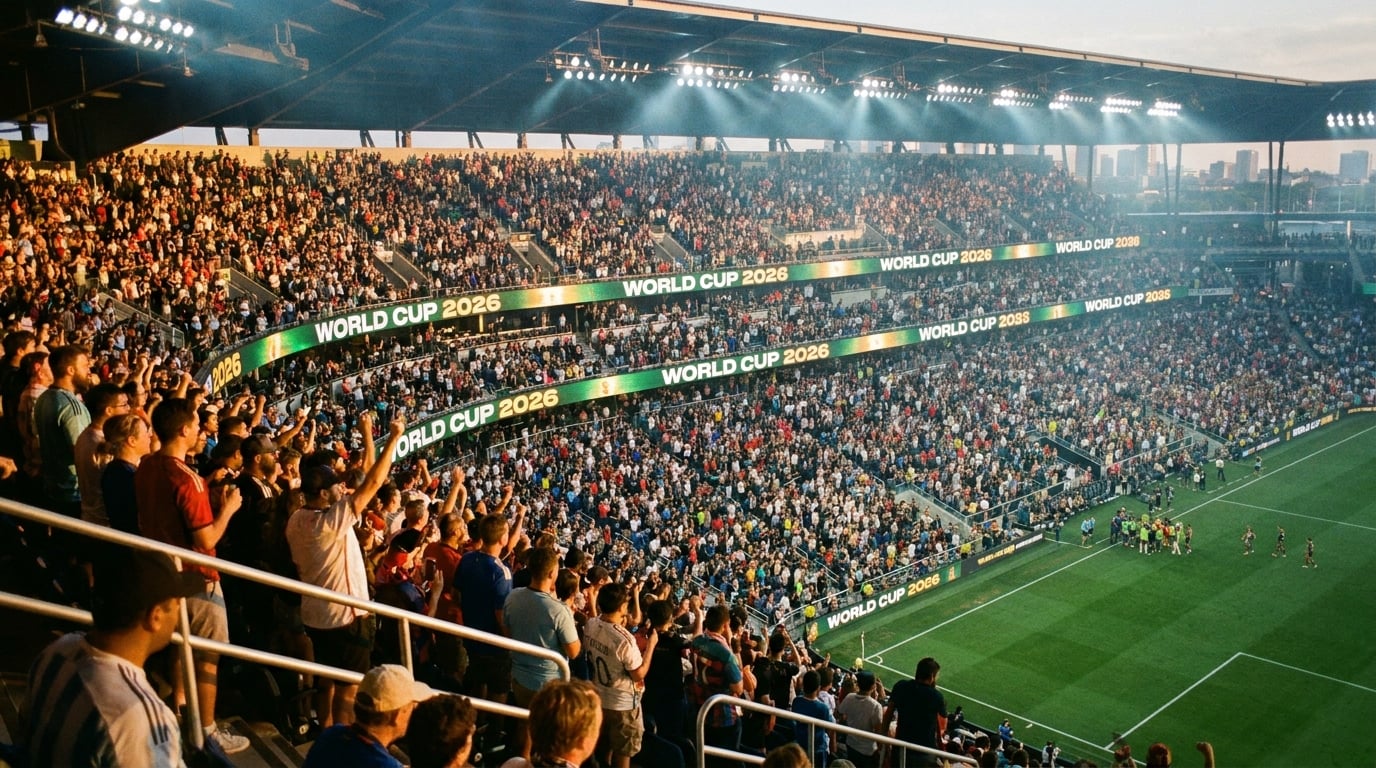
For the first time in football history, every single one of the 104 FIFA World Cup 2026 matches will be available to stream live and free on YouTube—a...
FIFA World Cup 2026: Schedule, 48-Team Format, & The Free Streaming Shake-Up
For the first time in football history, every single one of the 104 FIFA World Cup 2026 matches will be available to stream live and free on YouTube—a move so seismic that Cristiano Ronaldo’s own media venture is backing the platform to deliver 4K broadcasts to millions. But the small print could rewrite global viewing habits overnight, sparking a free streaming shake-up just as the tournament itself undergoes its most radical transformation in a century. With kickoff only days away, the beautiful game is about to collide with tech disruption on a scale no fan can ignore.
This isn’t just any World Cup. The 23rd edition, running from June 11 to July 19, 2026, marks the first time three nations—Canada, Mexico, and the United States—co-host the event, spreading 104 fixtures across sixteen cities and four time zones. More significantly, it’s the debut of the 48-team format, expanding the group stage to twelve trios and setting up a knockout bracket that promises more drama, more underdog stories, and a true test of depth for football’s superpowers. While purists debate the competitive implications, the real earthquake may lie in how we watch: the YouTube-led free streaming model threatens to tear up the billion-dollar broadcasting contracts that have long bankrolled the sport, with regional restrictions and platform wars already fueling heated conversations from São Paulo to Seoul.
In this deep dive, you’ll get the full FIFA World Cup 2026 schedule mapped out week by week, a clear breakdown of how the 48-team structure works and why it matters, and an honest look at the streaming overhaul that could democratize access—or divide fans along invisible digital borders. As matches unfold, AI communication infrastructure is quietly stepping onto the pitch too: platforms like CallMissed are already enabling brands to deploy multilingual voice agents that deliver real-time match updates and fan engagement in over 20 Indian languages, proving that the game’s next evolution isn’t just on the screen, but in how we interact with it.
Introduction: The Dawn of the 48-Team FIFA World Cup 2026
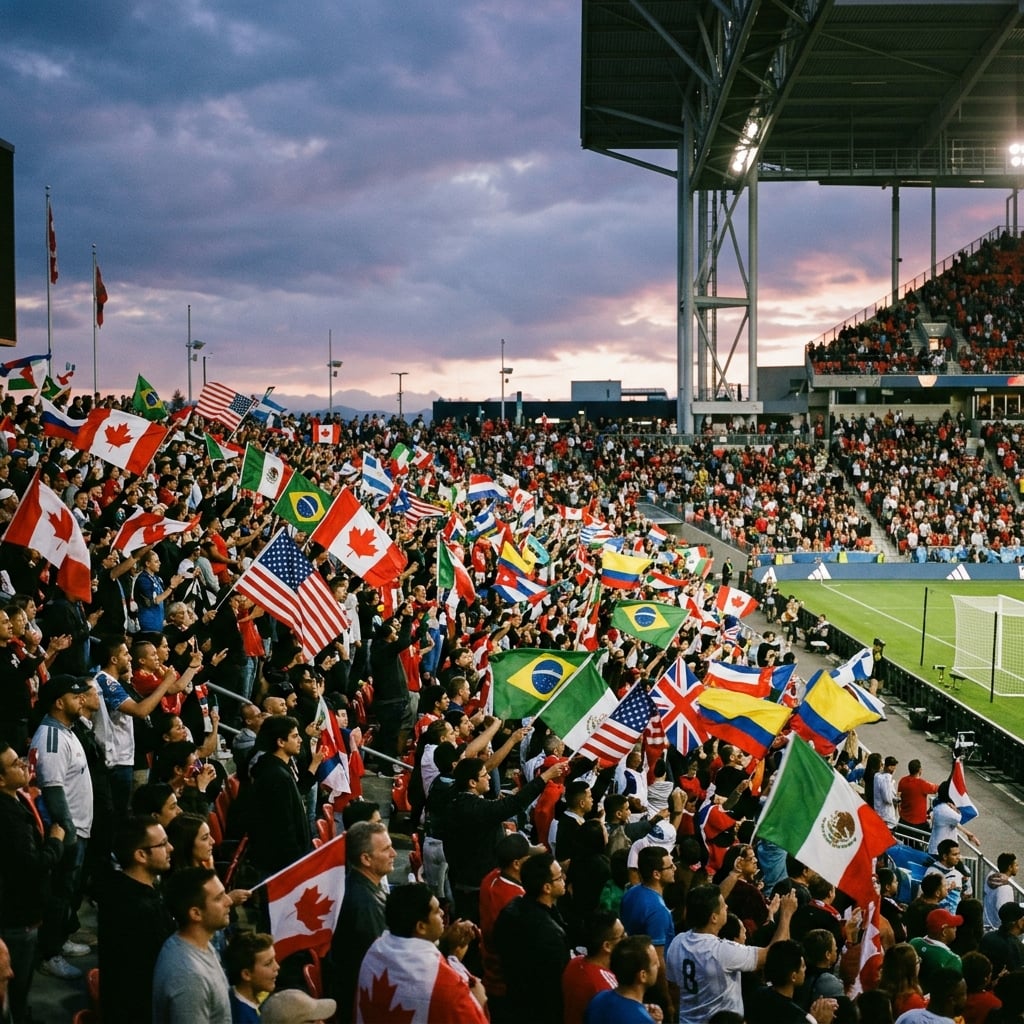
The shift to 48 nations isn’t just an inflationary gesture—it fundamentally rewires the tournament’s competitive logic. For the first time since 1998, when the field grew from 24 to 32, FIFA has redrawn the group map. The 2026 model splits the expanded field into 12 groups of four, with the top two from each group joined by the eight highest-ranked third-place finishers to form a 32-team knockout bracket. This means 72 group-stage matches alone—almost as many as the entire 2022 Qatar tournament—before a single elimination ball is kicked. The math is straightforward: 12 groups × 6 matches per group = 72, then a 32-side single-elimination bracket adds 16 (round of 32) + 8 (round of 16) + 4 (quarterfinals) + 2 (semifinals) + 1 (third-place play-off) + 1 (final), totaling 104 fixtures spread across 39 days.
The knock-on effects are already stirring debate. More teams from Asia, Africa, and North America mean more potential Cinderella runs—and more lopsided early-round mismatches as the traditional giants feast on minnows. Yet FIFA’s own simulations suggest the format actually sharpens the knockout phase: because third-place group finishers can still advance, the group stage rarely sees dead rubbers. Every goal, every yellow card could tilt the tiebreaker math, keeping drama high until the final whistle of each group.
A Continental Stage: 16 Cities, Three Nations
Geography itself becomes a protagonist. The tournament sprawls across 16 host cities—a record—linked by four time zones and as much as 2,800 miles (4,500 km) between venues. The United States anchors the show with 11 sites: from Los Angeles’ SoFi Stadium (hosting the USMNT’s opening fixture on June 12) to New York/New Jersey’s MetLife Stadium, which will stage the final. Mexico contributes three legendary football cathedrals—Mexico City’s Estadio Azteca, Monterrey’s Estadio BBVA, and Guadalajara’s Estadio Akron—while Canada debuts as a World Cup host with matches in Vancouver’s BC Place and Toronto’s BMO Field.
This tri-national footprint isn’t cosmetic. It forces teams into grueling travel schedules, with some group-stage participants potentially logging over 10,000 air miles before the knockouts even begin. Squad depth, recovery protocols, and even sleep science become competitive weapons. For fans, the cross-border layout also introduces a patchwork of entry requirements, currencies, and cultural rhythms—sparking both celebration and logístical headaches. The 2026 World Cup is as much a test of endurance as it is of talent.
The Streaming Earthquake
Looming above the pitch is the broadcast revolution previewed in the article’s opening: all 104 matches, free and live on YouTube, with Cristiano Ronaldo’s media enterprise championing the 4K delivery. This breaks the paywall model that has governed World Cup broadcasting for decades, potentially democratizing access for billions while sending shockwaves through legacy rights-holders. The catch? Geo-restrictions and platform-specific conditions could fragment the audience in unexpected ways—echoing the very tensions between global spectacle and local gatekeeping that the tournament’s 48-team expansion attempts to bridge.
As the world counts down to June 11, the dual upheavals—on the field and on the screen—are converging. For brands, broadcasters, and fan communities, navigating this new terrain demands agility. Already, AI communication infrastructure is stepping in to bridge language gaps and deliver real-time updates at scale. Platforms like CallMissed are helping businesses deploy multilingual voice agents that can field fan queries in over 20 Indian languages, turning each match alert into an inclusive, hyper-local experience. The beautiful game is not just bigger—it’s smarter, more accessible, and poised to connect with audiences in ways that were science fiction just one World Cup cycle ago.
Background & Context: A Historic Three-Nation Tournament
The decision to entrust the 2026 tournament to three nations was never just a nod to North American camaraderie—it was a bet on scale, infrastructure, and an almost continent-sized fan base. For the first time in the World Cup’s 96-year history, the hosting duties are split across Canada, Mexico, and the United States, a trilateral arrangement that transforms the tournament from a single-nation event into a sprawling, transnational festival. The numbers alone are staggering: 16 host cities spread across three countries and four time zones, from the Pacific Northwest to the Yucatán Peninsula, covering distances that stretch up to 2,800 miles (4,500 km) between venues. That’s roughly the distance from London to Tehran, and it means a team could play a group-stage match in Vancouver, then fly five hours south for a knockout game in Mexico City—a logistical puzzle that no previous World Cup has ever faced.
A Triple Host with Deep Roots
While co-hosting is not new—Japan and South Korea shared the 2002 edition, and Belgium–Netherlands did so for Euro 2000—this is the first three-way partnership in FIFA’s senior men’s tournament, and it leans heavily on the region’s existing football culture. Mexico is hosting its third World Cup (after 1970 and 1986), cementing its status as the spiritual heartland of the game in North America. The United States, which last hosted in 1994 and set attendance records that still stand, brings 11 of the 16 venues and the bulk of the commercial muscle. Canada, the newcomer at this level, will stage men’s World Cup matches for the first time, with Toronto and Vancouver serving as its anchors—building on the momentum of a nation that co-hosted the record-breaking 2015 Women’s World Cup.
The venue selection reflects both legacy and ambition. The lineup includes iconic stadiums like Mexico City’s Azteca Stadium, which will become the first venue to host World Cup matches in three separate tournaments. It is joined by purpose-built modern arenas such as SoFi Stadium in Los Angeles, MetLife Stadium in New Jersey, and the retractable-roof marvel of Mercedes-Benz Stadium in Atlanta. The US leg alone accounts for 60 of the 104 total matches, with Los Angeles hosting the US Men’s National Team’s opener on June 12 and a quarter-final later in the tournament. Meanwhile, Dallas’s AT&T Stadium—capable of holding over 100,000 fans—is slated to host the most matches of any single venue (nine in total), making it the tournament’s workhorse.
The Fan Experience in a Continent-Wide Carnival
For supporters, the three-nation format is a double-edged gift. On one hand, it offers unprecedented accessibility to tens of millions who have never been within reach of a World Cup match: over 150 million people live within a day’s drive of a host city. On the other, the geographical spread means that following a team through the knockout rounds could require multiple cross-border flights, with fans navigating three different visa regimes, currencies, and languages—English, Spanish, and French are all official tournament languages, reflecting the host nations’ linguistic mosaic.
This multilingual, multi-market complexity is where technology is quietly stepping in to smooth the experience. The sheer diversity of languages spoken by visitors—from Spanish in Guadalajara to Punjabi in Vancouver—demands communication tools that can scale effortlessly. While broadcasters wrestle with global rights, the operational side of fan engagement is already being reimagined: AI platforms capable of delivering real-time information in dozens of languages are becoming essential. For instance, solutions like CallMissed enable businesses and media outlets to deploy multilingual voice agents that can instantly update fans on schedule changes, transport alerts, or ticketing details in over 20 Indian languages—a model that points to a future where language barriers dissolve for any global event, whether it’s a fan from Delhi tracking the Indian national team’s progress or a local organizer managing inquiries in Monterrey.
Key Developments: Tournament Format and Free Streaming Disruption
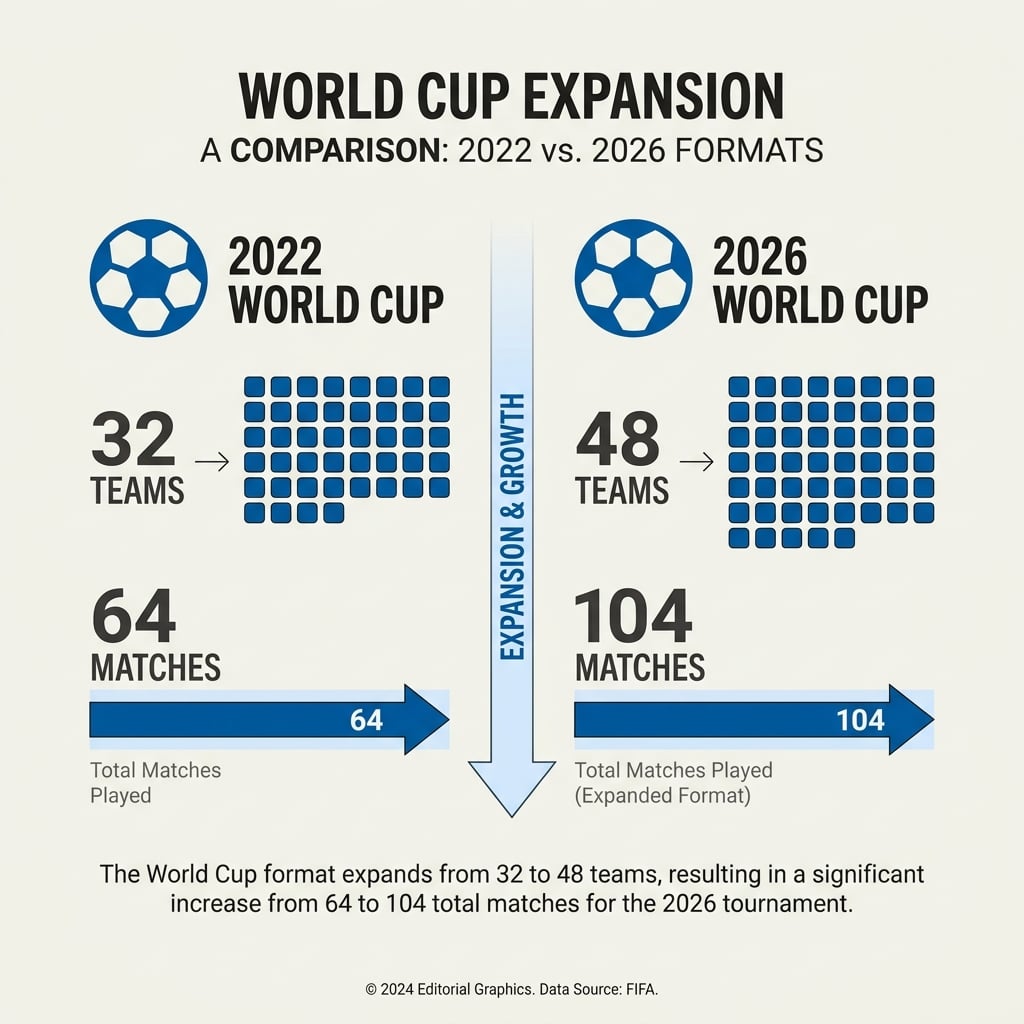
The 2026 edition doesn’t just add 16 teams — it fundamentally redraws tournament economics and viewing habits in the same stroke. While FIFA’s on-field expansion to 48 nations grabs headlines, the real tectonic shift is happening off the pitch: a global free-streaming experiment that threatens to upend the billion-dollar broadcast model. For the first time, all 104 matches will be streamed live on YouTube, with Cristiano Ronaldo’s own media venture backing a 4K-capable platform that promises to bring every fixture to millions at no cost. Yet the “catch” buried in the fine print could fragment audiences along invisible digital borders. The table below unpacks how the dual disruption — a supersized format and a free-to-air digital gamble — compares to the status quo and what it means for fans worldwide.
| Development Aspect | FIFA World Cup 2022 (Qatar) | FIFA World Cup 2026 (Canada, Mexico, USA) | Disruption / Change | Fan Impact |
|---|---|---|---|---|
| Participating Teams | 32 | 48 | 50% more national teams earn a spot, opening slots for Africa, Asia, and CONCACAF underdogs. | More local heroes, but diluted group-stage quality? |
| Group-Stage Format | 8 groups of 4 teams; top 2 advance (16 into knockout) | 12 groups of 4 teams; top 2 plus 8 best third-placed advance (32 into knockout) | The “best third-place” safety net keeps more nations alive longer, and 72 group matches ensure almost non-stop daily action. | Higher drama in final group matches; 72 early games before anyone is eliminated. |
| Total Matches | 64 fixtures across 29 days | 104 fixtures across 39 days (June 11 – July 19) | A 62% increase in match inventory, stretching the tournament to nearly six weeks across four time zones. | More football to consume, but scheduling fatigue for players and fans. |
| Knockout Bracket Size | 16-team bracket (Round of 16) | 32-team bracket (Round of 32) | An entire extra knockout round injects 8 more win-or-go-home matches, raising the chances of Cinderella runs. | More giant-killing opportunities; the path to the final now requires 7 wins instead of 5. |
| Broadcast Rights Model | Traditional TV deals worth billions (e.g., Fox paid $425M for US rights). | YouTube free streaming for all 104 games, backed by a Cristiano Ronaldo-aligned platform. | A direct-to-consumer digital model that bypasses pay-TV — a first for a mega-event of this scale. | Free access could democratize viewership, but threatens FIFA’s future TV-rights income. |
| Streaming Platform & Catch | Limited free clips; full matches required cable/streaming subscriptions. | Full matches streamed in 4K on YouTube — but geo-restricted. Reports indicate the free tier may only be available in select markets (e.g., Brazil), with other regions potentially facing blackouts or requiring a VPN. | The “free” claim masks a territorial patchwork; the catch is that your IP address dictates whether you see the match or a lockout screen. | Digital divide persists: fans in certain countries could be left scrambling for piracy workarounds. |
The tournament’s structural overhaul, combined with the streaming shake‑up, creates a unique pressure point for global brand communication. With 72 group‑stage clashes before the knockout phase even begins, broadcasters, sponsors, and fan platforms must sustain engagement across 39 days and dozens of languages — a task that legacy chatbots struggle to handle. Real‑time updates, venue navigation, and ticket support now need to operate in Telugu, Marathi, or Bengali just as easily as in English. Platforms like CallMissed are already stepping into this gap, offering AI voice agents that deliver live match scores and fan assistance in over 20 Indian languages, ensuring that the expanded World Cup doesn’t leave anyone out of the conversation — even if the streaming revolution still has fine print to sort out.
In-Depth Analysis: The Cristiano Ronaldo YouTube Broadcast Controversy
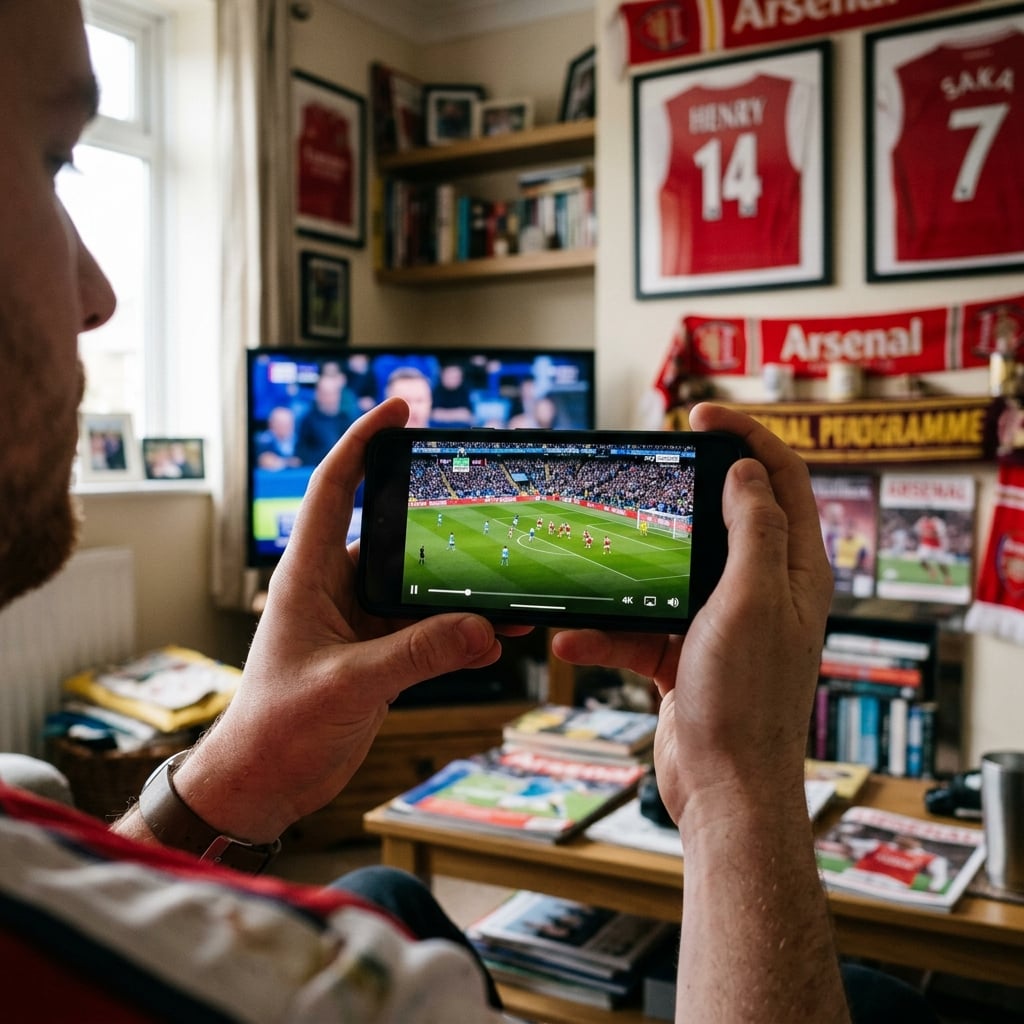
The announcement that all 104 matches would stream free on YouTube sounded like every fan’s dream—but the devil, as always, lives in the details. Spearheaded by a Cristiano Ronaldo-backed YouTube channel (often referred to as UR or similar branded hubs), the promise of free 4K broadcasts comes with a geographical asterisk that could fracture the global audience into digital haves and have-nots. The initial reporting from NDTV Sports and The Times of India confirmed that the entire tournament would be available at no cost, yet the “catch” is a regional lock: the streams are geo-fenced to specific markets, with Brazil emerging as the pilot battleground.
The Brazil Experiment and the VPN Loophole
Why Brazil? The country is football’s spiritual heartland, with a pay-TV ecosystem dominated by legacy broadcasters like Globo, where the highest-tier World Cup packages often exceed monthly minimum-wage thresholds. By offering the full tournament free on YouTube—reportedly in crisp 4K resolution—the Ronaldo-affiliated channel targets the 60 million Brazilian YouTube users (Statista, 2025) who might otherwise be shut out by expensive subscriptions. The immediate controversy, however, is that the stream’s geo-restriction is trivially bypassed with a VPN. Firstpost framed this as a direct “threat to FIFA,” because a Brazilian fan in São Paulo can simply set their location to Rio, and a fan in Mumbai can tunnel to São Paulo, essentially turning a country-specific freebie into a global, pirate-adjacent loophole. This undermines the exclusive rights that broadcasters like Sky, ITV, and Sony have paid billions for in their respective territories.
Ronaldo’s Role: Marketing Genius or FIFA’s Frenemy?
Cristiano Ronaldo is the highest-earning athlete on social media, with over 850 million followers across platforms. His direct involvement—whether as investor, ambassador, or content partner—gives the streaming initiative a halo of legitimacy that a random piracy site could never command. The Times of India noted that the channel’s branding leans heavily on Ronaldo’s CR7 empire, leveraging his image to build trust among viewers who are increasingly weary of intrusive pop-ups and malware-ridden illegal streams. Yet this also places Ronaldo at odds with FIFA’s commercial machinery: he is an official tournament ambassador, yet the channel his name backs is actively encouraging viewers to circumvent licensed broadcasters. The tension exposes a raw nerve in modern football: can the sport’s biggest personalities disrupt the broadcast model that made them rich without torching the ecosystem entirely? Platforms like CallMissed are already seeing brands pivot to AI voice agents that deliver real-time scores and commentary via WhatsApp in 22 Indian languages precisely to capture fans who might jump between illegal YouTube streams and official sources.
How the Geo-Fence War Could Reshape Broadcast Rights
FIFA’s broadcasting revenue for the 2022 cycle topped $3 billion, with a substantial chunk coming from exclusive territorial deals. If millions of fans globally watch the 2026 World Cup through a Brazilian YouTube portal—effectively a single, under-priced license—those exclusivity premiums evaporate. Legal teams are already studying whether VPN-assisted viewing constitutes a breach of the end-user terms, but enforcement at scale is nearly impossible. The controversy thus becomes a stress test for the entire sports-rights model: when a single celebrity-backed YouTube channel can beam a tournament to the world via a geo-fenced crack, the billion-dollar contracts that bankroll grassroots football start to look as fragile as a last-minute lead. What began as a fan-friendly freebie may accelerate a migration toward platform-agnostic, AI-enhanced fan experiences where the match is less a broadcast and more an interactive, language-agnostic data stream—quietly turning every smartphone into a personal commentary box.
Impact & Implications: How an Expanded Tournament Alters Global Football
The expansion from 32 to 48 nations doesn’t just add matches — it re‑wires the competitive, commercial, and logistical DNA of a tournament that already stretches across three countries and four time zones. With 104 fixtures crammed into 39 days (up from 64 over 32 days in Qatar), every layer of the global game feels the aftershock.
A Wider World Map: New Nations, New Dreams
FIFA’s reallocation of qualifying slots tears up the old balance. Asia jumps from 4.5 guaranteed spots to eight direct entries; Africa climbs from five to nine; even Oceania gets a direct ticket for the first time. The result is a World Cup that genuinely reflects football’s geography — not just its historic power centres. Uzbekistan, Mali, or the Solomon Islands could line up alongside Brazil and Germany, giving hundreds of millions of fans a flag to cheer that wasn’t on the pitch before.
That inclusivity, however, cuts two ways. Purists warn that a field of 48 inevitably dilutes early-stage quality, with more mis‑matches between elite squads and debutants. Yet it also amplifies the very thing that makes World Cups magical: the possibility of a seismic upset. Saudi Arabia’s defeat of Argentina in 2022 was a single lightning bolt; a 72‑match group phase in 2026 multiplies the chances for an unknown to stun a giant — and for emerging football markets to accelerate their own development cycles.
Competitive Consequences: Deeper Squads, More Surprises
The knockout bracket balloons from 16 matches to 32 (a full round of 32 added), meaning almost one‑third of the tournament is now sudden‑death. This architectural change rewards nations with deep rosters, not just a brilliant starting eleven. A seven‑game path to the trophy stays the same for the finalists — three group games plus four knockout ties — but the sheer sprawl of 104 games across four time zones and venues up to 2,800 miles apart, as the BBC notes, turns player recovery and travel logistics into a squad‑depth stress test like never before. Teams that can rotate without losing punch will have a genuine structural advantage, while injury‑hit giants may fall victim to fresher, hungrier opponents in that extra knockout round.
The Logistical and Commercial Earthquake
Hosting a tournament in sixteen cities across Canada, Mexico, and the United States creates a scheduling puzzle FIFA has never faced. Jet‑lagged journeys between, say, Vancouver and Mexico City, or New York and Los Angeles, will tax players and travelling supporters alike, raising questions about competitive equity when some nations draw tighter geographic clusters than others.
Commercially, the sheer inventory — 104 live windows — is a broadcasting goldmine, but it arrives just as the media model fractures. While traditional rights‑holders bank on subscription and advertising, platforms like CallMissed are quietly powering the fan engagement layer behind the streams: brands and broadcasters can now deploy multilingual AI voice agents to deliver instant match stats, ticket‑office triage, or real‑time updates in over 20 Indian languages, turning the sprawling 39‑day marathon into a hyper‑personalised conversation for millions. The 2026 World Cup may be remembered not just for who lifts the trophy, but for how it reshapes the global infrastructure of football — on the pitch, in the air miles, and in the pocket.
Expert Opinions: Broadcasters, FIFA, and Player Welfare Concerns
The seismic decision to stream every 2026 FIFA World Cup match free on YouTube has sent shockwaves through the sports media landscape—but it’s only one piece of a puzzle that broadcasters, FIFA executives, and player unions are urgently trying to solve. As kickoff looms, a chorus of expert voices is weighing the triple threat of broadcasting upheaval, governance credibility, and athlete safety in a tournament that stretches from Mexico City to Vancouver.
The Broadcasting Revolution: YouTube’s Free Streaming Gamble
Major broadcasters who paid billions for exclusive rights in previous cycles are watching with alarm. Cristiano Ronaldo’s media venture, UR · Cristiano, has partnered with YouTube to deliver all 104 matches in 4K to millions of viewers—particularly targeting markets like Brazil where pay-TV penetration has eroded. The catch, as NDTV Sports reported, is that the free access may be geo-restricted or require a linked Google account, creating a patchwork of availability that could confuse fans. For traditional rights holders, the model threatens to undercut the value of future broadcasting deals, with one media analyst calling it “the most disruptive distribution experiment in World Cup history.” FIFA, meanwhile, walks a tightrope: it needs to expand global reach to satisfy sponsors, but risks cannibalizing the very broadcast revenues that fund grassroots development. As the tournament unfolds, platforms like CallMissed will help brands and agencies navigate the fragmented viewing landscape by deploying multilingual voice agents that instantly tell fans exactly where to watch each match—in 22 Indian languages and beyond.
FIFA’s Balancing Act: Revenue vs. Accessibility
FIFA President Gianni Infantino has publicly championed the expanded 48-team format as a democratizing force, yet insiders point to the commercial calculus behind it. The jump from 64 to 104 matches translates to a 62.5% increase in broadcast inventory, and with YouTube’s free tier pulling in new audiences, sponsorship valuation is climbing. However, critics argue that FIFA’s governance is being tested as never before: the three-nation hosting model, while symbolically unifying, creates logistical nightmares and uneven economic benefits. The BBC noted that venues span up to 2,800 miles, requiring teams and media crews to traverse multiple time zones, all while FIFA attempts to maintain a green, fan-friendly image. A former FIFA executive stressed that “you can’t just add matches and call it growth—you need infrastructure, athlete protections, and a coherent digital strategy that doesn’t leave half the world behind.”
Player Welfare in a 48-Team Marathon
For players, the 2026 World Cup could be the most physically punishing in history. The 39-day schedule crams 104 fixtures into a window that leaves little margin for recovery, especially for teams advancing deep into the knockout stage. With matches potentially played in summer heat exceeding 35°C in cities like Monterrey and Houston, medical experts are raising red flags. The global players’ union FIFPRO has repeatedly warned that the calendar is unsustainable, citing that some stars could face up to 72 competitive games in the 2025–26 season when club obligations are factored in. Travel fatigue adds another layer: the three-country sprawl means a squad based in Vancouver might fly over 2,000 miles for a group-stage clash in Guadalajara, then return east for a last-16 tie in New York. To manage these risks, teams are increasingly turning to AI-driven load management tools that track biometrics and sleep patterns in real time—data that, in the near future, could be seamlessly relayed to fans via voice-enabled assistants like those built on communication infrastructure platforms. As one sports scientist put it, “We’re watching the sport evolve from a 100-meter sprint into a 42-kilometer marathon, and the science hasn’t caught up yet.”
What This Means For You: How to Watch and Key Dates
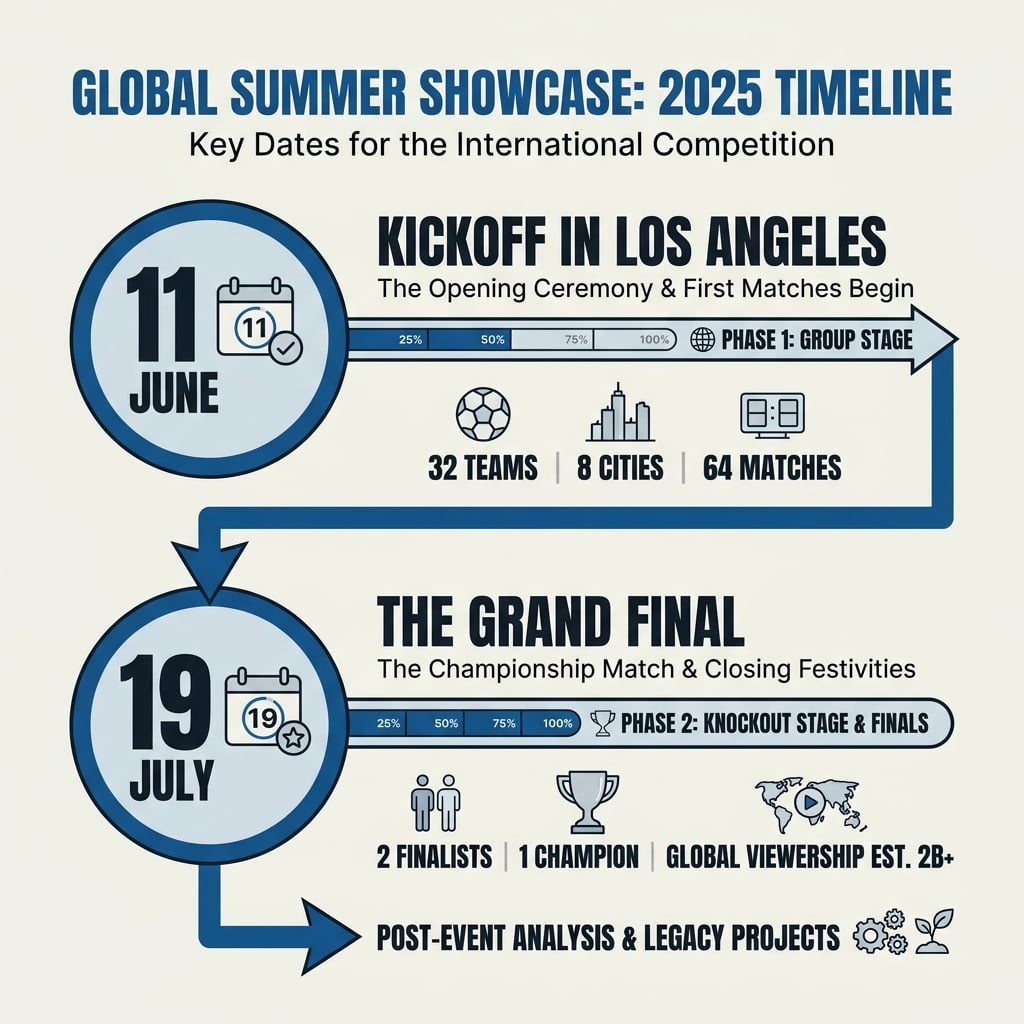
To navigate the most logistically complex World Cup in history, you’ll need more than just a TV schedule. With 104 matches spread across three countries, four time zones, and a revolutionary (but fragmented) free streaming model, the fan experience hinges on knowing when to tune in and where the free streams actually work. The table below maps every stage of the tournament against the new YouTube-powered broadcast landscape—and the fine print that could catch you out.
| Stage | Anticipated Dates* | Matches | Free Streaming Access (Where It Works) | The Catch |
|---|---|---|---|---|
| Group Stage (12 groups) | June 11 – June 26 | 72 | YouTube free in Brazil via CazéTV (Cristiano Ronaldo-backed platform) in 4K; select matches free in other territories | Geo-restricted; outside Brazil you typically need a local broadcaster subscription or VPN. Free streams may not include all group matches. |
| Round of 32 | June 27 – July 1 | 16 | Same as above—Brazil gets full free access; other regions see only a handful of games on YouTube | Knockout scheduling is tighter, so replay and on-demand availability may lag. Some free streams are delayed by minutes. |
| Round of 16 | July 2 – July 5 | 8 | YouTube free coverage shrinks; mostly highlights and secondary matches | Major rights-holders (FOX, BBC, TF1, etc.) enforce exclusive live windows. Free 4K limited to CazéTV in Brazil. |
| Quarter-finals | July 7 – July 8 | 4 | Minimal free live coverage globally; YouTube likely offers near-live clips and analysis shows | Regional blackout rules apply in co-host nations when their teams play. Paid subscription needed virtually everywhere else. |
| Semi-finals | July 12 – July 13 | 2 | YouTube may stream select semi-finals free in countries without a broadcaster deal | In most markets, live 4K is paywalled behind official FIFA broadcast partners. |
| Third Place & Final | July 16 & July 19 | 2 | Final likely free in Brazil; other countries dependent on national broadcasters | Final at MetLife Stadium (New York/New Jersey). U.S. viewers will need a Peacock or FOX Sports subscription. Global kick-off times dictate access windows. |
*Exact kick-off times and dates for individual fixtures will be confirmed by FIFA closer to the tournament. The windows above reflect the 39-day match calendar with the final on July 19, 2026.
How to Not Miss a Beat
While the YouTube experiment—powered by Ronaldo’s investment—represents a bold step toward democratizing football, the patchwork of regional rights means most fans will still juggle multiple apps. The real power move for connected supporters isn’t just picking the right stream; it’s automating the match-day experience. Platforms like CallMissed are already enabling brands to deploy multilingual AI voice agents that deliver real-time score alerts, commentary, and fan engagement in over 20 Indian languages. So even when the free stream is geo-blocked or you’re stuck in transit, a simple phone call can keep you seconds away from every goal. Prepare your watchlist, check your local broadcaster deals, and maybe set up that AI assistant now—because once the opening whistle blows on June 11, missing a moment won’t be an option.
Frequently Asked Questions About the 2026 World Cup
How many teams are competing in the 2026 FIFA World Cup?
When does the FIFA World Cup 2026 start and where will it be held?
What is the new group format for the 2026 World Cup?
Will all 104 FIFA World Cup matches really be streamed free on YouTube?
Which stadiums are hosting the opening match and the final of World Cup 2026?
How does the 2026 World Cup knockout stage work with 48 teams?
Conclusion
The 2026 FIFA World Cup isn’t just a tournament—it’s a historic inflection point where the game’s competitive structure and its global broadcast model are both being rewritten at once. Here’s what that means for fans:
- The 48-team expansion turns the group stage into a 72-match proving ground, giving underdogs a genuine path into a mammoth 32-team knockout bracket and testing the depth of every contender across three host nations.
- YouTube’s free streaming model—backed by Cristiano Ronaldo’s media venture—could shatter multi-billion-dollar broadcasting norms, making all 104 matches accessible yet laced with regional restrictions that risk balkanizing the audience.
- The sheer scale (16 cities, four time zones, 39 days) demands a new kind of fan experience, one where real-time, multilingual interaction is no longer a luxury but an expectation.
As the first ball rolls on June 11, keep a close eye on whether the free-streaming gamble holds or whether digital borders fragment the global community just as the on-field action unites it. The tournament will set the template for how mega-events monetize attention in the streaming age—and for brands looking to stay ahead, AI communication platforms like CallMissed are already enabling the kind of instant, voice-driven, multilingual fan engagement that will define this new era. So, will 2026 be remembered for the goals or for how the world finally cut the cord?
Related Posts


Ready to automate customer conversations?
Launch AI voice agents and WhatsApp bots with CallMissed — one API, 22+ Indian languages.