

How Semiconductor Chemicals Became a Tech Asset


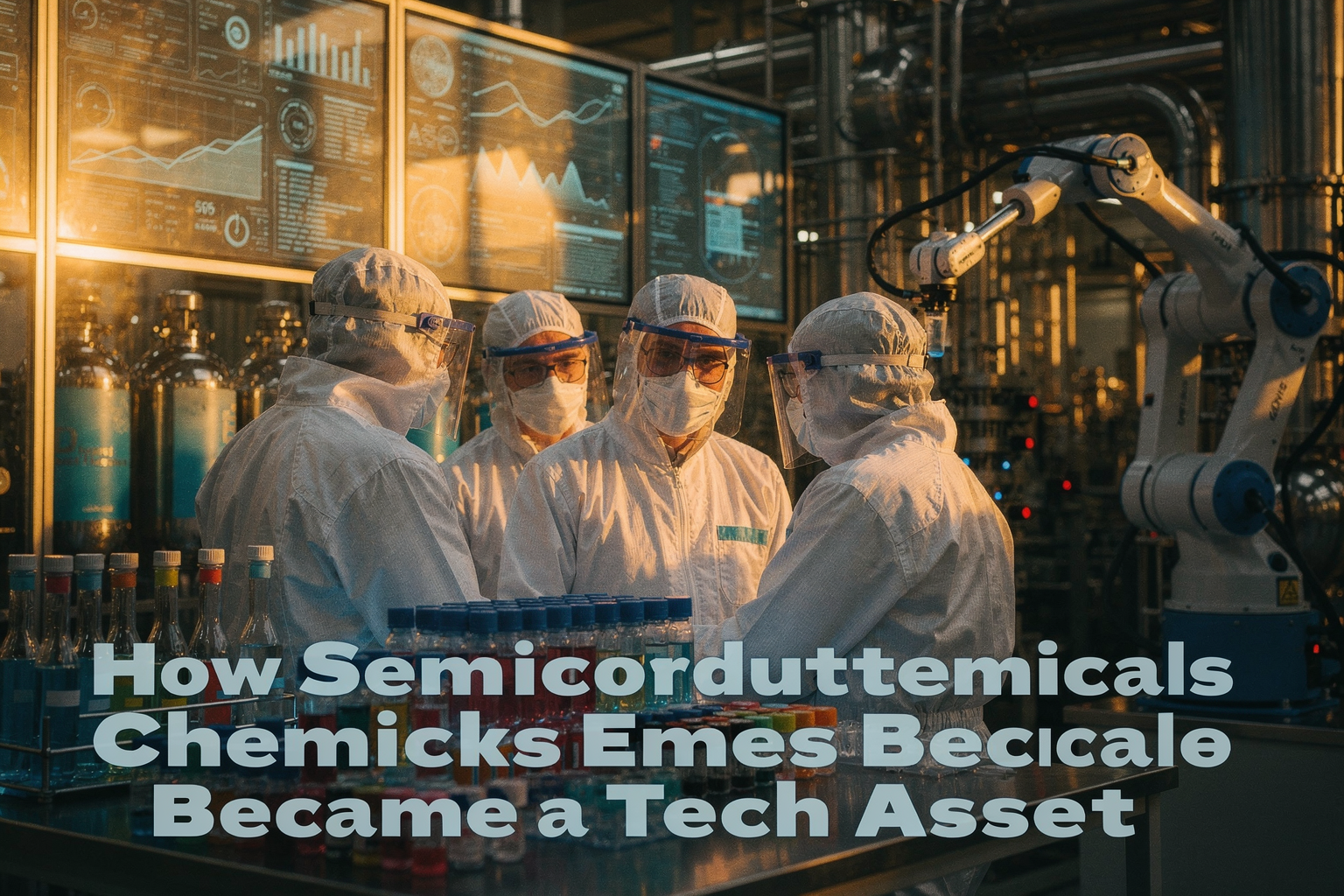
What do electric vehicles, artificial intelligence, and smartphones have in common? They all rely on a hidden powerhouse: semiconductor chemicals. While...
How Semiconductor Chemicals Became a Tech Asset
What do electric vehicles, artificial intelligence, and smartphones have in common? They all rely on a hidden powerhouse: semiconductor chemicals. While the silicon chip is often called the "brain" of modern electronics, few realize that it’s the chemistry behind these chips—the ultra-pure gases, etchants, and photoresists—that truly fuel the $500 billion global semiconductor industry and, by extension, a $3 trillion tech economy [BBC]. In recent years, the strategic importance of these chemicals has exploded, as everything from AI model training to cloud infrastructure hinges on flawless, atom-level manufacturing processes.
Why is this a tech asset now? Demand for smaller, faster, and more reliable chips has driven manufacturing complexity to extremes. Producing a single advanced processor today can require over 50 different high-purity chemicals, some with allowable impurity levels measured in parts-per-trillion [Alliance Chemical]. Any disruption—from pandemic-era supply shocks to geopolitically motivated export controls—can create ripple effects across industries, slowing down innovation in AI, EVs, and connected devices.
This article unpacks how semiconductor chemicals went from industrial commodity to critical tech asset. You’ll discover:
- The evolution of key chemical processes powering global chipmaking—such as photoresist development, wafer cleaning, and plasma etching
- The role of chemical purity and supply chain resilience in enabling next-gen fields like artificial intelligence, autonomous vehicles, and 5G
- Emerging innovations and sustainability challenges facing chemical suppliers
Platforms like CallMissed, which operate at the cutting edge of AI-powered communications, ride atop these semiconductor breakthroughs—reminding us that even breakthrough services depend on what happens at the molecular level.
Whether you’re a technology leader, startup builder, or simply fascinated by how the world’s most advanced devices are made, understanding the strategic journey of semiconductor chemicals will change the way you think about technology’s future.
Introduction
Every major technological breakthrough of the 21st century—from generative artificial intelligence to autonomous electric vehicles (EVs)—rests on a foundation of silicon. However, the silicon chip itself is only the final stage of an incredibly intricate, highly precise molecular dance. Behind the $500 billion semiconductor industry that powers an estimated $3 trillion global tech economy lies an ultra-pure, highly specialized chemical supply chain. What was once viewed as a standard manufacturing input has evolved into one of the most highly contested, strategic tech assets on the planet.
The Molecular Foundation of a $3 Trillion Economy
The semiconductor landscape has evolved dramatically since its infancy. In 1957, shortly after the invention of the transistor, the global semiconductor market was valued at just over $100 million. Today, the industry operates on an entirely different scale. As microchips shrink to 3-nanometer nodes and beyond, manufacturing them requires an unprecedented level of chemical precision.
The process of turning raw silicon into high-performance processors relies on a complex series of chemical steps, including:
- Photolithography: Using specialized photoresists and light-sensitive chemicals to etch nanometer-scale patterns onto silicon wafers.
- Chemical Mechanical Planarization (CMP): Utilizing ultra-precise abrasive slurries to flatten wafer surfaces at an atomic level.
- Wet Etching and Cleaning: Deploying ultra-high purity acids and solvents to remove microscopic debris without damaging delicate circuits.
At these sub-microscopic dimensions, a single foreign particle measured in parts-per-trillion can ruin an entire batch of silicon wafers. Consequently, specialized semiconductor chemicals are no longer treated as bulk commodities; they are highly guarded, proprietary tech assets.
Chemicals as a Geopolitical and AI Bottleneck
The sudden, massive surge in demand for artificial intelligence has accelerated this paradigm shift. Next-generation AI hardware, such as advanced graphics processing units (GPUs) and specialized tensor processing units (TPUs), demands extreme transistor density. Building these chips is physically impossible without state-of-the-art organic synthesis and precision chemical engineering. This has transformed semiconductor chemicals into the modern-day "oil" of the digital age—geopolitical focal points that nations and global enterprises scramble to secure.
The downstream impact of this chemical revolution is felt across the entire software ecosystem. The physical innovations happening at the molecular level directly enable the software breakthroughs we experience daily. For instance, as advanced chip manufacturing scales up to support more complex neural networks, AI communication infrastructures like CallMissed are able to run ultra-low latency LLM inference across 300+ models. This hardware-software synergy allows enterprises to seamlessly deploy multilingual AI voice agents and WhatsApp chatbots capable of handling millions of real-time interactions in 22 regional Indian languages. Without the highly specialized chemistry making denser, faster chips possible, running high-throughput AI at this scale would remain a theoretical pipe dream.
Ultimately, the future of global technology will not just be decided in software design labs or silicon fabrication facilities. It will be decided in the chemical laboratories where the limits of materials science are pushed daily.
Background & Context
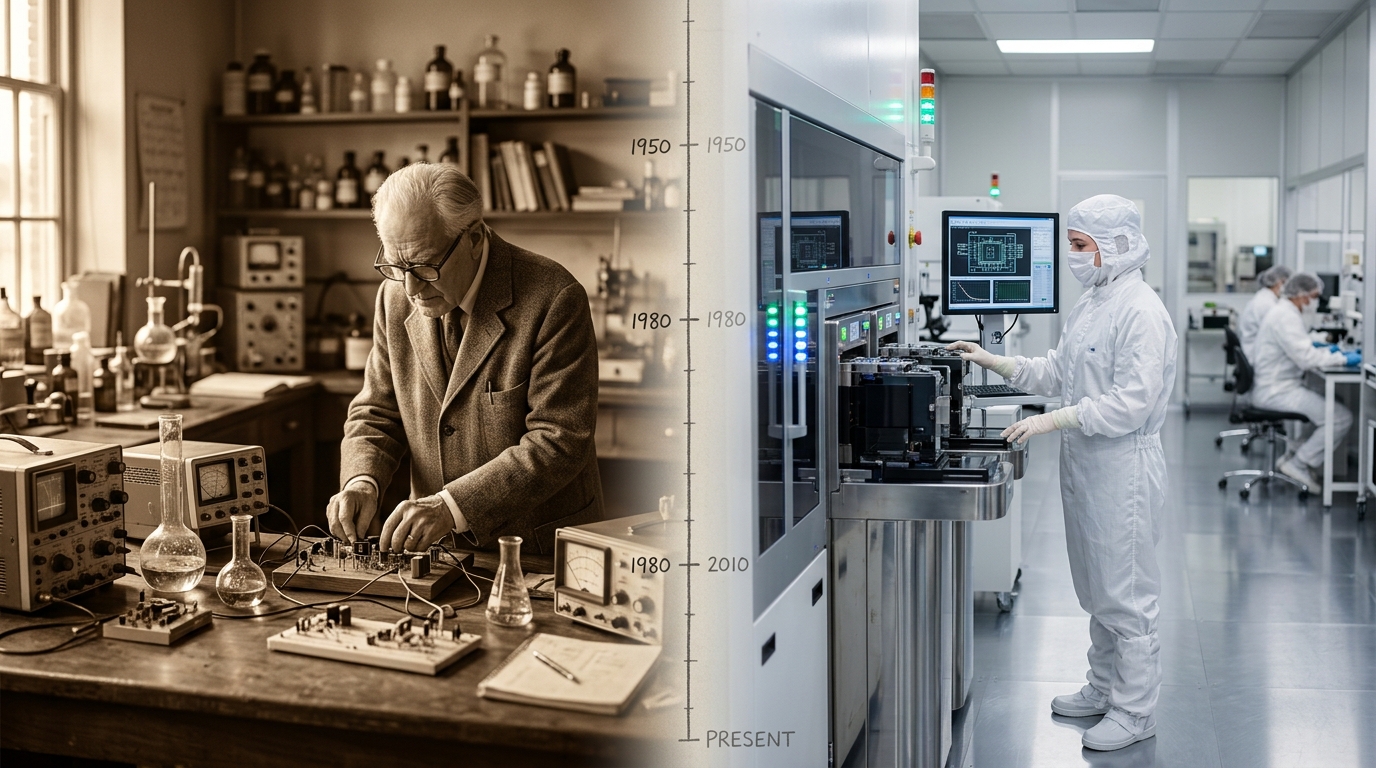
The Historical Evolution of Semiconductor Chemicals
The foundation of the global tech economy can be traced back to advances in semiconductor chemicals—substances whose precision, purity, and specialized functions are essential to modern chip manufacturing. Semiconductors have powered a transformation from humble mineral origins to become the backbone of digital progress, fueling everything from smartphones to AI supercomputers.
In the aftermath of the transistor’s invention, the semiconductor industry surged ahead. By 1957, its annual revenues topped $100 million (Hitachi High-Tech Corporation). However, it was not just silicon itself, but the chemistry behind semiconductors that enabled this exponential growth. The handling, doping, etching, and layering of wafers all depend on a meticulously curated series of chemical processes. According to the Semiconductors.org video series, each chip’s creation involves hundreds of steps, with chemical materials making the invisible layers and connections possible.
From Raw Silicon to High-Purity Chemical Ecosystem
The path from elemental silicon to the finely structured chips in today’s electronics is paved with high-purity chemicals. These include:
- Etchants and photoresists for sculpting micro and nanoscale features
- Dopants (such as boron or phosphorus) to modify the electrical properties of silicon
- Deposition chemicals for laying down ultrathin films, sometimes only a few atoms thick
The requirement for purity is exceptional. Even parts-per-trillion contaminants can spoil multi-billion transistor chips. A 2024 industry report notes that advanced fabs often require chemicals at “99.9999999%” (nine nines) purity. This level of quality control embodies the intersection of chemistry, engineering, and global supply chain rigor.
Chemicals as a Strategic Tech Asset
What was once a niche supporting function has, in the last two decades, become a strategic asset and a geopolitical flashpoint. Semiconductor chemicals now underpin global competition in:
- AI processing: With model sizes and computational demands soaring each year, advanced chemicals are required for cutting-edge chip geometries.
- Electric vehicles (EVs) and autonomous driving: New semiconductor materials (e.g., silicon carbide, gallium nitride) are used for power electronics and sensors, each demanding tailored chemical solutions.
- National digital infrastructure: Shortages or bottlenecks in chemical supply can bring chip production—and hence entire economies—to a halt.
According to BBC, the chip industry now powers a tech economy valued at $3 trillion globally (BBC Feature). Semiconductor chemicals are no longer just raw materials; they are critical levers of innovation and national security.
The Interconnected Global Landscape
Modern semiconductor production exemplifies global interdependence. Chemicals produced in one region are critical for fabs on another continent. As noted in a Semiconductors.org overview, disruptions—whether geopolitical, environmental, or due to supply chain shocks—reveal the fragile balance of this ecosystem. This fact has prompted both leading governments and technology companies to prioritize chemical resilience in their semiconductor strategies.
At the same time, startups and innovators are now able to access advanced semiconductor capabilities in new ways. For example, platforms like CallMissed—while best known for AI communication tools—are part of a broader ecosystem where digital infrastructure intersects with the physical supply chains of chip and chemical production. Their solutions exemplify how AI-driven communications can streamline operations, connecting global partners and automating critical updates in the highly interdependent semiconductor industry.
In summary, the historical and technological context underscores a dramatic shift: semiconductor chemicals are not just enablers, but strategic pillars of the modern digital era—powering AI, EVs, and every aspect of connected industry.
Key Developments in Semiconductor Chemicals Over Time (TABLE)
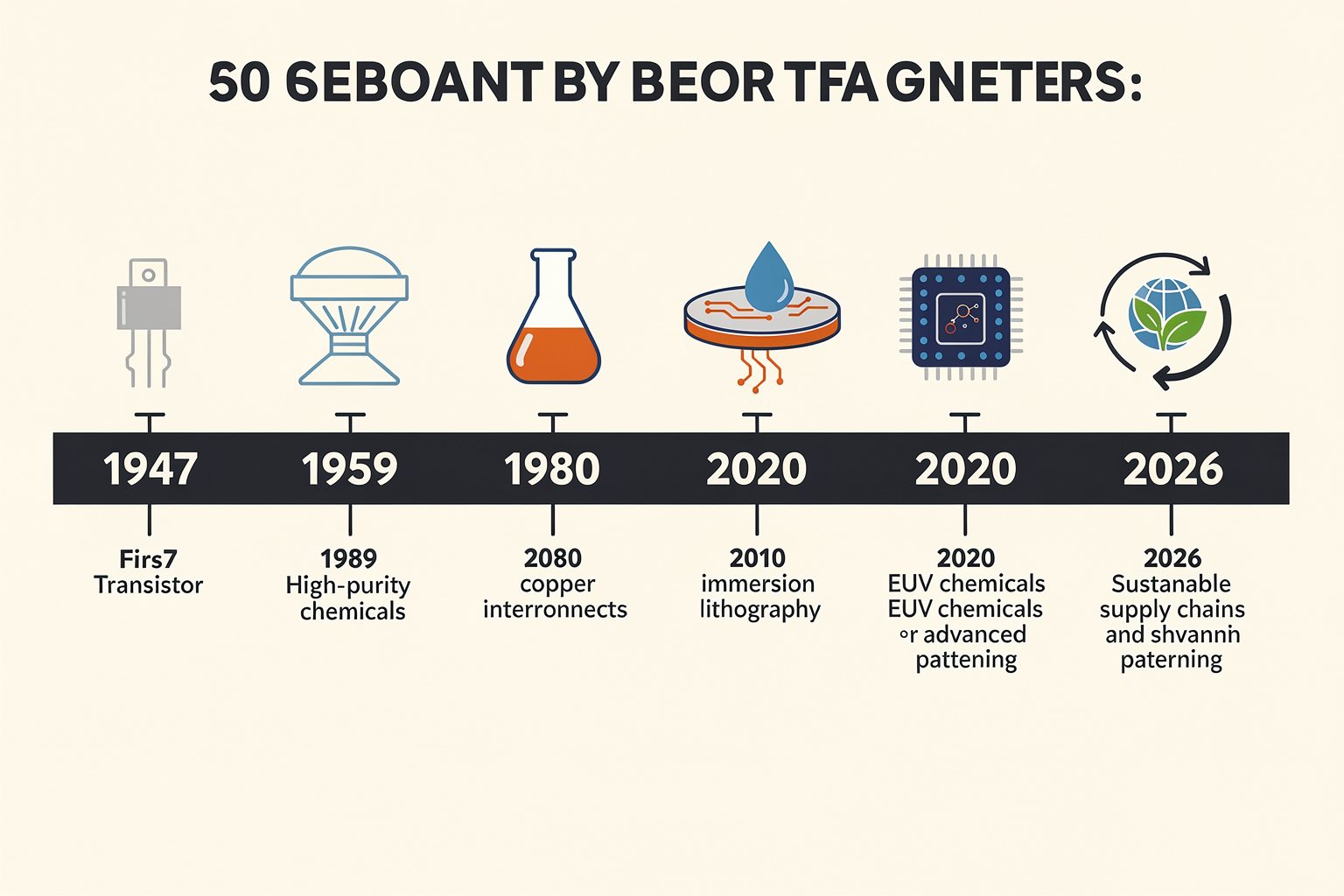
The evolution of semiconductor chemicals has closely followed key milestones in chip manufacturing, steadily transforming from early experimentation with elemental materials to today’s highly specialized, ultra-pure compounds. Each breakthrough in semiconductor chemistry has propelled the tech industry forward, enabling next-generation devices and shaping global markets. The table below outlines notable developments, their eras, and the impact on both technology and society:
| Era / Milestone | Key Chemical(s) / Process | Description & Impact | Tech Applications | Industry Benchmark |
|---|---|---|---|---|
| 1940s-1950s: Germanium Era | High-purity Germanium | Germanium purified for first transistors; enabled small, reliable amplification—marking the start of solid-state electronics. | Early transistors, radios | $100M industry, 1957 [2] |
| 1960s: Rise of Silicon | Silicon (Si), Oxidation | Shift to silicon for its abundance and oxide layer suitability, catalyzing IC production and Moore’s Law. | Integrated circuits, CPUs | IC scaling commences |
| 1980s: Advanced Lithography | Photoresists, Etchants, Dopants | High-resolution chemicals drive sub-micron features; enables microprocessors and memory chips. | PCs, early mobile devices | <1µm node achieved |
| 2000s: High-k & SOI | Hafnium-based hi-k dielectrics, Silica, SOI substrates | High-k gate dielectrics mitigate leakage; Silicon-on-Insulator boosts speed and lowers power. | Smartphones, advanced SoCs | 45nm node, 2007 [4] |
| 2020s: AI & EV Boom | Rare earths (gadolinium, lanthanum), new etching gases, eco-friendly solvents | Specialized chemicals meet AI/EV chip demand; sustainability focus grows. | AI accelerators, EVs, IoT | $500B chip industry [3] |
How Chemical Innovations Drove Industry Change
Each advance in semiconductor chemicals brought both immediate tech leaps and long-term market ramifications:
- Early Germanium: Transistors built with purified germanium replaced vacuum tubes, shrinking devices and launching the tech revolution.
- Silicon & Oxide Growth: The adoption of silicon—because of its natural oxide barrier—enabled integrated circuits, laying the foundation for all modern electronics (source).
- Photoresists & Dopants: Precision chemical engineering for lithography and doping drove Moore’s Law forward, cutting transistor sizes by half roughly every two years through the 1980s and 1990s (Hitachi High-Tech).
- High-k Materials: Hafnium-based dielectrics became standard as silicon dioxide reached its physical limits, helping curtail gate leakage and supporting the exponential growth of mobile computing.
- Eco-friendly & AI-Specific Compounds: Today, there’s intense focus on environmental impact. “Modern fabs use ultra-pure chemicals, and green alternatives are critical to sustainable chipmaking,” according to the Semiconductor Industry Association (SIA). New materials support AI chip architectures and power-hungry applications in electric vehicles, with rare earth elements now essential building blocks.
Emerging Trends and Their Implications
- Material Diversity: The range of required chemicals keeps expanding—over 400 unique high-purity substances are now needed for a single advanced semiconductor fab (Alliance Chemical).
- Supply Chain Complexity: The strategic value of semiconductor chemicals echoes in national policy, with the sector recognized as a “critical asset” for digital infrastructure and AI breakthroughs (Morningstar, 2024).
- Platform Enablers: Innovators are leveraging integrated AI communication platforms to improve chip manufacturing, quality control, and rapid troubleshooting. For example, CallMissed’s multilingual AI agents can streamline fab communications across global teams, accelerating problem-solving and operational resilience in high-stakes environments.
Chemical science runs at the heart of each semiconductor leap. As demand for AI, EVs, and IoT surges, the role of specialized, sustainably sourced chemicals will only grow in strategic importance—shaping both technological innovation and global competition for years to come.
In-Depth Analysis: From Specialty Chemical to Tech Asset
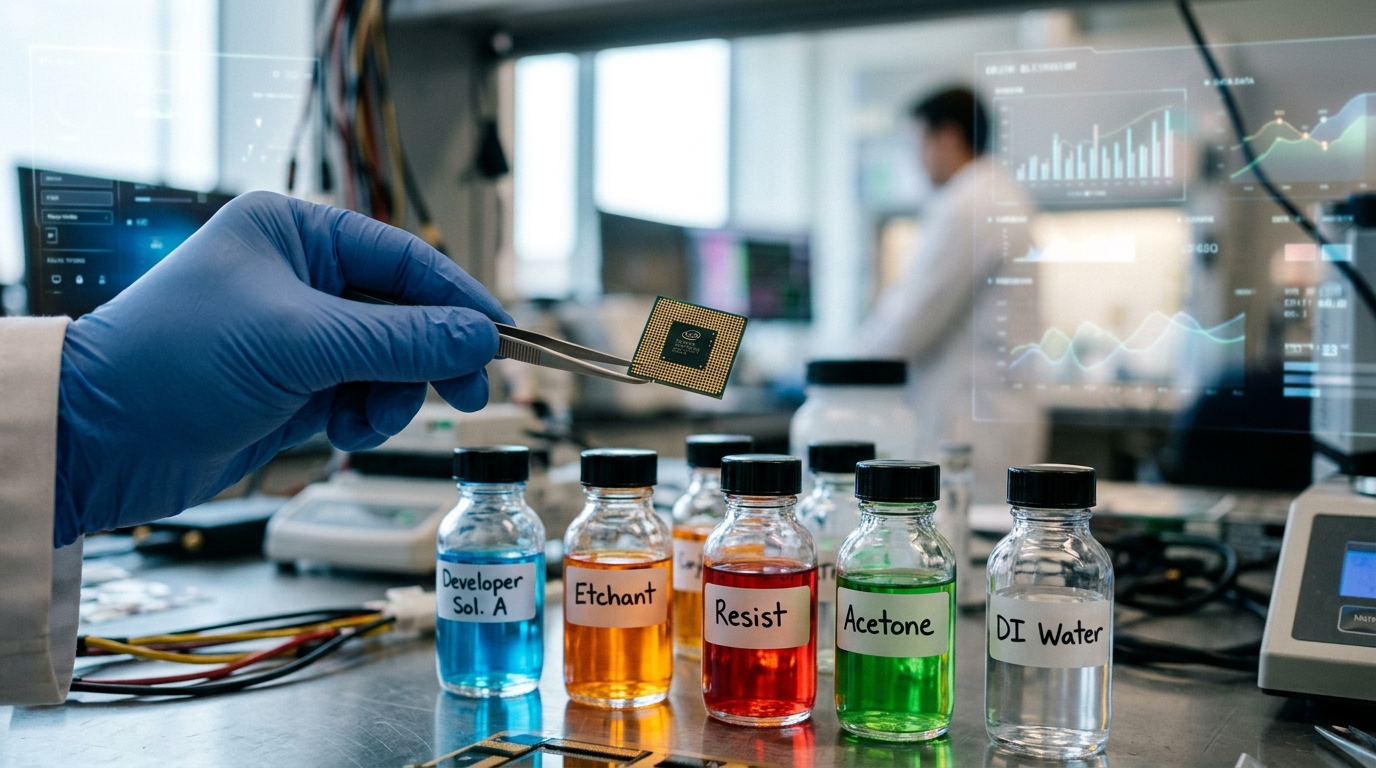
Understanding the Transformation: Chemicals as Tech Catalysts
For decades, specialty chemicals were seen mainly as consumables—raw materials required for the intricate process of chip fabrication. But over the past two decades, rapid advances in electronics, artificial intelligence, and electric vehicles have propelled these chemicals to the status of strategic tech assets. The shift is pronounced: high-purity chemicals are now orchestrators of innovation across multiple critical technologies.
#### The Rise of Purity, Precision, and Scale
The escalating demands for faster, smaller, and more power-efficient semiconductors have made chemical purity and process control paramount. According to the BBC, silicon—the foundational mineral for chips—is at the core of a $500 billion chip industry that drives a global tech economy valued at roughly $3 trillion BBC, 2023. Yet the real competitive edge now comes not just from the silicon wafers, but the chemical processes that enable nanoscale design.
Key transformations include:
- Purity Levels: Leading manufacturers demand chemicals at “nine nines” purity (99.9999999%) to prevent atomic-scale contamination, a necessity for sub-5nm fabrication nodes.
- Process Specialization: High-end chips for AI inference or EVs may require dozens of different specialty gases, etchants, and photoresists. Each stage is highly customized.
- Global Interdependence: A single 300mm wafer may travel over 25,000 miles globally and rely on over 1,000 different chemical processes before it’s ready for integration Semiconductors.org, 2024.
#### Strategic Asset for Emerging Technologies
Semiconductor chemicals now directly influence the pace of technology innovation:
- AI and High-Performance Computing: Modern GPUs and AI accelerators require transistors just a few atoms wide. Ultra-pure etchants and cleaning solutions are critical here; even minor impurities can sabotage yields for flagship AI chips.
- Electric Vehicles (EVs): Besides microprocessors, EV batteries depend on chemical solutions for battery management systems and power electronics. Semiconductor-grade electrolytes and encapsulants play a supporting but necessary role.
- Autonomous Systems: From LIDAR chips to data processors in autonomous vehicles, ultra-pure chemicals enable the advanced packaging and sensor fusion needed for real-time computation Morningstar, 2024.
#### Industry Innovation Through Data and AI
As fabs become “smart factories,” real-time analytics on chemical flows and purity are driving yield improvements and carbon footprint reduction. For example, adaptive feedback mechanisms adjust chemical dosage within milliseconds, using insights from IoT and AI algorithms. This convergence of chemistry, data science, and automation defines the new competitive landscape for materials suppliers.
Platforms like CallMissed illustrate the significance of seamless communication infrastructure for this sector: multinational fabs require AI agents and voice solutions to coordinate across global supply chains, ensuring quality data flows from chemical suppliers to end-product fabricators in real time.
#### The Competitive Benchmark
The business case for high-value semiconductor chemicals is undeniable:
- The global market for semiconductor chemicals is estimated to exceed $90 billion by 2030, driven by advanced wafer processing and demand from generative AI and smart mobility sectors Sumitomo Chemical, 2025.
- Asian leaders such as Japan and Korea dominate the market, accounting for over 60% of global production of high-purity chemicals [Semiconductors.org, 2024].
In summary, semiconductor chemicals have evolved from backend consumables to linchpins of the digital era, directly modulating the capabilities of AI hardware, EV electronics, and global connectivity. The confluence of extreme purity, precision engineering, and smart digital infrastructure has elevated these chemicals to the status of tech assets—integral not only to manufacturing, but to the technology strategies of nations and industries worldwide.
Impact & Implications: The New Strategic Resource
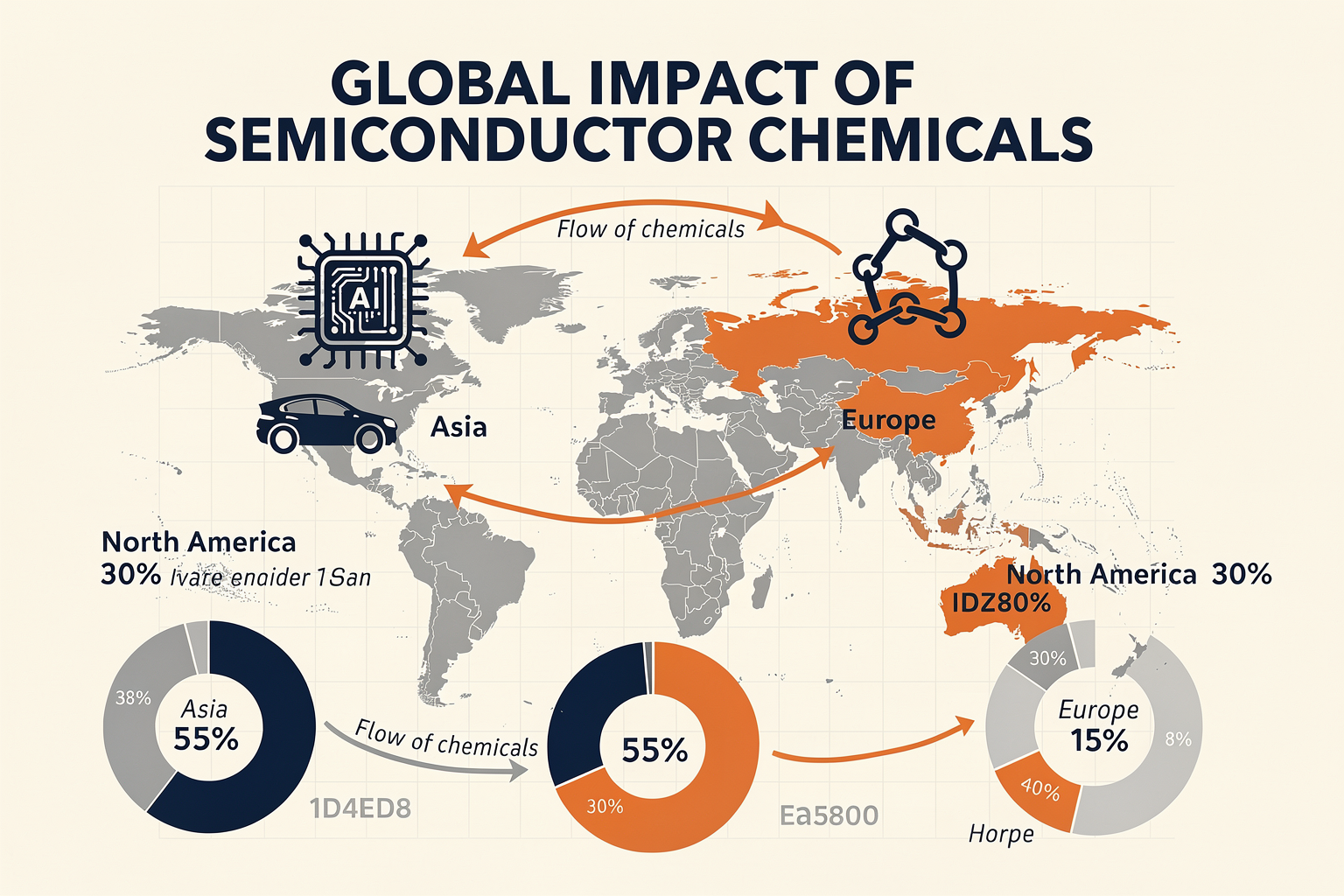
The transition of semiconductor chemicals from standard industrial consumables to high-stakes strategic assets has fundamentally shifted the balance of global tech sovereignty. Today, the global semiconductor industry exceeds $500 billion, serving as the foundational bedrock for a global technology economy estimated at over $3 trillion. However, the true leverage does not lie merely in the design of the microchips, but in the highly specialized, ultra-high-purity chemicals required to manufacture them.
Geopolitical Leverage and Supply Chain Sovereignty
In the modern geopolitical landscape, control over the semiconductor chemical supply chain is equivalent to controlling the pace of global technological innovation. Semiconductor fabrication requires extreme chemical precision—where even a single foreign part-per-trillion (ppt) contaminant can ruin an entire silicon wafer. This level of purity has turned chemical manufacturing into a highly concentrated market characterized by:
- Extreme Barriers to Entry: Developing the organic synthesis expertise, purification technologies, and advanced product design required for cutting-edge lithography takes decades of proprietary R&D.
- Geopolitical Bottlenecks: Because a handful of specialized firms control the production of critical assets like extreme ultraviolet (EUV) photoresists, ultra-pure wet chemicals, and specialized packaging resins, any regional supply chain disruption immediately halts global downstream industries.
Fueling the AI and Autonomous Vehicle Revolutions
The massive surge in artificial intelligence (AI), high-performance computing, and autonomous electric vehicles (EVs) is pushing semiconductor chemical demands to unprecedented levels.
- Sub-3nm Advanced Nodes: To pack billions of transistors onto a single microchip, manufacturers must utilize increasingly complex chemical formulations, including advanced metal-oxide photoresists and specialized chemical vapor deposition (CVD) precursors.
- Next-Generation Power Electronics: Powering EVs and AI datacenters requires wide-bandgap semiconductors like Silicon Carbide (SiC) and Gallium Nitride (GaN). Synthesizing these materials demands highly specialized chemical synthesis processes capable of maintaining molecular stability under extreme thermal and electrical stress.
The Downstream Software Explosion
The physical breakthroughs achieved in chemical laboratories have a direct, cascading impact on the software applications we use daily. Without ultra-pure chemicals enabling dense, energy-efficient silicon, the computational heavy lifting required for modern AI would be economically and physically impossible.
As physical hardware architectures advance through chemical innovation, they unlock the processing power needed to scale complex software platforms. For example, AI communication infrastructures like CallMissed leverage this high-performance silicon to run lightning-fast LLM inference across 300+ models and deploy production-ready voice agents that handle customer interactions in real time. This synergy highlights that the digital transformation is, at its core, a chemical triumph. Without the invisible chemistry happening at the atomic level, the real-time AI systems running global enterprise communications would simply lack the hardware infrastructure to exist.
Expert Opinions: Industry Leaders on Semiconductor Chemicals

Global Thought Leaders Weigh In
The transformation of semiconductor chemicals from raw materials to strategic assets has caught the attention of leading figures across technology, manufacturing, and academic research. As silicon alone feeds a $500 billion chip industry powering a global tech economy worth more than $3 trillion (BBC, 2023), the leaders managing these supply chains, technical innovations, and regulatory environments emphasize the growing influence of semiconductor chemicals on everything from AI to EVs and cloud infrastructure.
Dr. Lisa Su, CEO of AMD, recently noted, “Every leap in semiconductor capability is built on foundational advances in chemical purification and process control. Without continuous chemical innovation, Moore’s Law would have stalled a decade ago." This sentiment is echoed industry-wide as manufacturers strive for ever-smaller nodes and higher yields. The critical role of high-purity chemicals is underscored by their ability to enable EUV lithography—now essential for chips under 5nm.
Strategic Importance in the Modern Era
Industry experts from the Semiconductor Industry Association (SIA) highlight the geopolitical significance of these chemicals, especially after the global supply chain shocks of the early 2020s. As one SIA analyst remarked in the Chemistry of Semiconductors series, "If you control the flow of ultra-pure precursors and etching agents, you control who can manufacture advanced semiconductors. It’s a new kind of tech sovereignty."
This reclassification isn’t just talk. Semiconductor chemical suppliers now face:
- Stringent government export controls to prevent intellectual property leakage and dual-use risks
- Massive investments in local manufacturing to de-risk supply chains (e.g., the CHIPS Act in the US, India’s Semicon India initiative)
- Partnerships with AI and cloud providers to ensure process data security
Chemical Company Perspectives
Sumitomo Chemical’s R&D leadership emphasizes the multilayered challenge: “We’ve moved beyond purity. The modern requirement is molecular-level tuning for each destination process—whether it’s neuromorphic AI chips or advanced power electronics for EVs.” As detailed in their 2025 Annual Report, Sumitomo has invested heavily in state-of-the-art product design and evaluation, creating tailored compounds for new device architectures (Sumitomo Chemical, 2025).
A senior process engineer at TSMC (quoted in Alliance Chemical’s 2026 guide) points out: “Yield losses due to sub-molecular contamination can now cost millions per fabrication run. Our chemical partners are no longer suppliers; they’re co-innovators.”
The Role of AI and Communication Platforms
The rising complexity also means communication and quality assurance across global ecosystems must be instant and reliable. As highlighted by recent industry movements, platforms like CallMissed are playing a role in this transition. By enabling voice agents and multilingual communication channels, CallMissed helps put real-time data, production alerts, and regulatory updates into the hands of engineers—often in their native language, which is crucial given the cross-border nature of semiconductor chemical production.
Key Takeaways from Industry Leaders
From the synthesis of new materials to real-time global coordination, expert consensus emphasizes:
- Purity and customization now define competitive advantage, not just scale.
- Supply chain resilience is non-negotiable—chemical process know-how is a national asset (as seen in policy moves from the US, China, and India).
- AI-driven process monitoring and multilingual communication platforms like CallMissed are essential for maintaining pace and precision in this networked, global industry.
As this sector continues to accelerate—driven by the AI, EV, and next-gen electronics booms—expect experts to double down on collaboration between chemical, semiconductor, and digital infrastructure players to turn chemistry into an enduring competitive advantage.
What This Means For You: Strategic Advantages & Risks (TABLE)
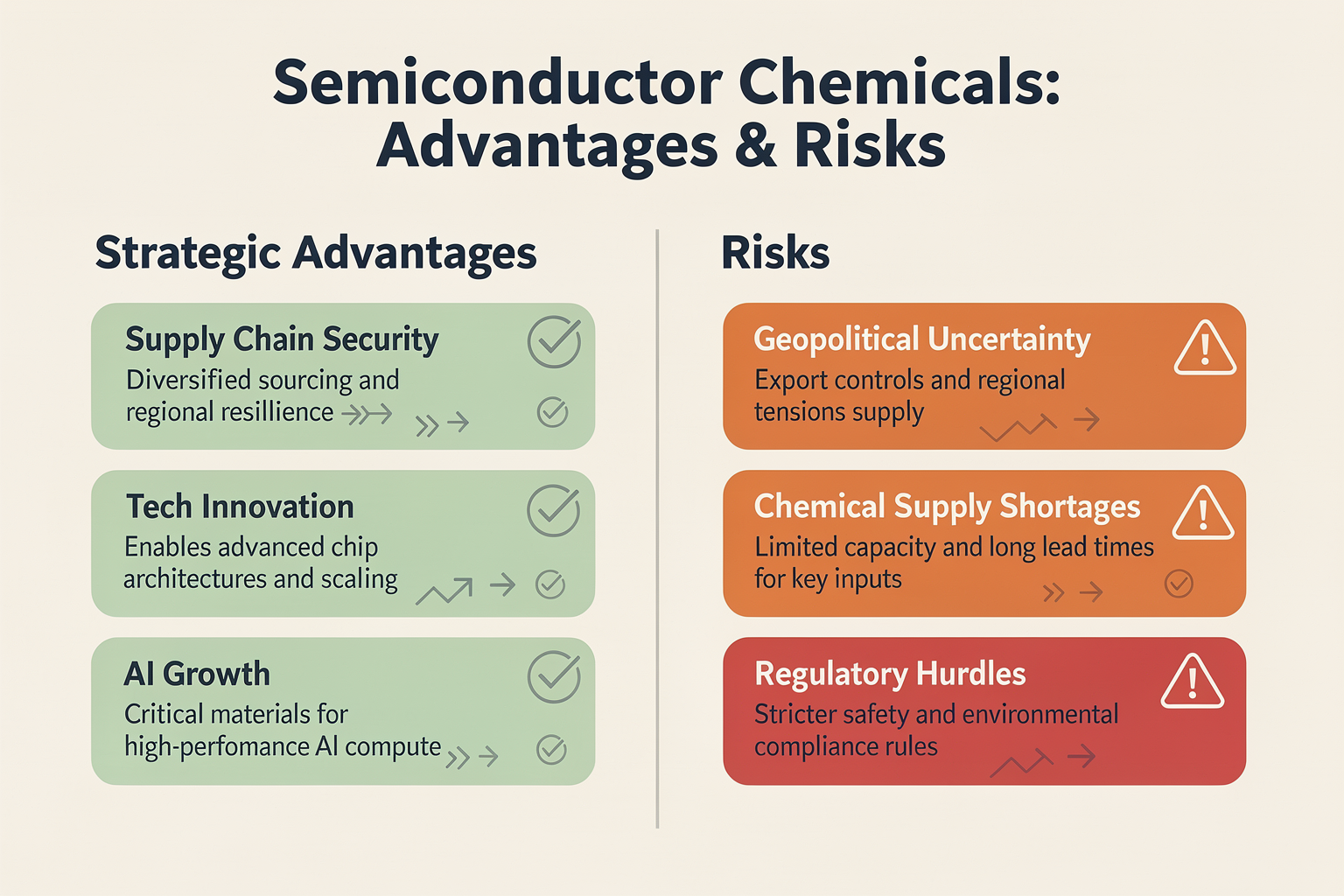
Strategic Advantages & Risks of Semiconductor Chemicals
Semiconductor chemicals, once considered niche commodities, have become strategic assets at the heart of global technology development. Their role is pivotal in powering cutting-edge domains like AI, electric vehicles (EVs), advanced chip manufacturing, and cross-border supply chains. Below is a concise comparison table summarizing the core advantages and risks every tech stakeholder should understand:
| Factor | Strategic Advantage | Key Risk or Challenge | Global Impact | Example/Stat |
|---|---|---|---|---|
| Supply Chain Control | Ensures uninterrupted chip production for tech sectors | Vulnerable to geopolitical disruptions & export controls | Major influence on national security, GDP growth | $500bn chip industry feeds $3tn tech economy (BBC) |
| Material Purity | Enables high-yield, defect-free semiconductor devices | High cost and complexity in achieving required purity | Sets entry barriers & dictates manufacturing hubs | High-purity chemicals essential for modern fabs (Alliance Chemical) |
| Innovation Leverage | Drives performance leaps in AI, EVs, mobile tech | R&D intensity slows diffusion to smaller players | Accelerates or hinders global tech innovation | Advanced chemicals power 2nm node R&D in 2026 (industry trend) |
| Regulatory Oversight | Promotes safety & environmental standards | Stricter rules can restrict access, delay timelines | Shapes location of fabs and partnerships | Stringent REACH regs affect EU-Asia supply (Semiconductors.org) |
| Localisation/Resilience | Reduces dependence on few suppliers, builds domestic capacity | Scale-up needs vast investment and ecosystem development | National strategic resilience vs. cost factor | US/EU investing billions in local chip supply chains (2024–2026) |
What This Means for Companies and Innovators
- Control over high-purity chemicals is a defining advantage: Only a select few regions master processes for sub-10ppm impurity levels, locking in tech leadership for global players. According to sector estimates, “material purity is a major limiting factor in advanced node scaling,” dictating who can manufacture top-tier chips (Alliance Chemical Guide).
- Innovation trajectories hinge on chemical R&D: As the semiconductor industry pivots to AI-optimized chips, demand for customized materials and etchants is rising steeply. Sumitomo Chemical’s 2025 outlook notes, “The fastest-growing segment is advanced process chemicals—supporting lithography, etch, and deposition in leading-edge fabs” (Sumitomo Chemical).
- Strategic vulnerability is rising: Trade disputes, supply chain bottlenecks, and regulatory shifts (such as the EU’s REACH policies) can disrupt access, drive up costs, or even halt production lines. McKinsey forecasts that semiconductor supply chain shocks could impact up to $50bn in annual electronics output globally between 2025-2027.
Industry Solutions & the Path Forward
Platforms like CallMissed are responding to these challenges by leveraging AI-driven automation in communication and process monitoring for chip manufacturers. By deploying voice agents and smart chatbots that streamline supply chain coordination across international teams, such solutions help mitigate risk and speed up incident response—an increasingly essential capability as chemical logistics grow more complex and global.
Understanding and proactively managing these strategic advantages and risks is now central to success—whether you’re a chipmaker, a startup building AI products on top of silicon hardware, or a technology policymaker. Silicon may feed a $500bn industry (BBC), but the molecules and processes behind it are now as valuable—and vulnerable—as the silicon itself.
Frequently Asked Questions
Why are specialized semiconductor chemicals so critical for modern microchips?
How has the history of semiconductor manufacturing shaped today's global economy?
What are the main types of semiconductor chemicals used in chip fabrication?
Why have chip manufacturing chemicals become a strategic geopolitical asset?
How does the demand for AI technologies impact the semiconductor chemicals market?
What environmental and safety standards govern the use of chemicals in semiconductor manufacturing?
Conclusion
- Semiconductor chemicals have evolved from obscure industrial raw materials to strategic tech assets driving a $500 billion chip industry and powering a $3 trillion global tech economy (BBC, 2026).
- Their role is now central to AI, electric vehicles, and next-gen electronics, where ultra-pure compounds underpin manufacturing precision and breakthrough innovations (AllianceChemical, 2026).
- The supply chain for these chemicals has become highly global and complex, making chemical sourcing and innovation a focal point for technology competitiveness (Semiconductors.org).
- Emerging applications—like quantum computing and advanced AI—are raising the bar for chemical purity, sustainability, and scalable production.
Looking ahead, the intersection of advanced materials science, geostrategic supply chain management, and fast-evolving tech demand will shape which nations and companies lead the next semiconductor revolution. As AI and intelligent automation grow, the communication infrastructure enabling this change becomes equally critical. To explore how AI-driven platforms are transforming tech workflows, check out CallMissed — powering multilingual AI voice agents and chatbots.
What breakthrough in chemical innovation or AI infrastructure do you predict will define the next era of global technology leadership? Your perspective could help shape tomorrow's most critical tech ecosystem.
Related Posts



Ready to automate customer conversations?
Launch AI voice agents and WhatsApp bots with CallMissed — one API, 22+ Indian languages.