

Best Omnichannel AI Agent Platform for Voice, WhatsApp, SMS, and Email: Evidence-Based Comparison


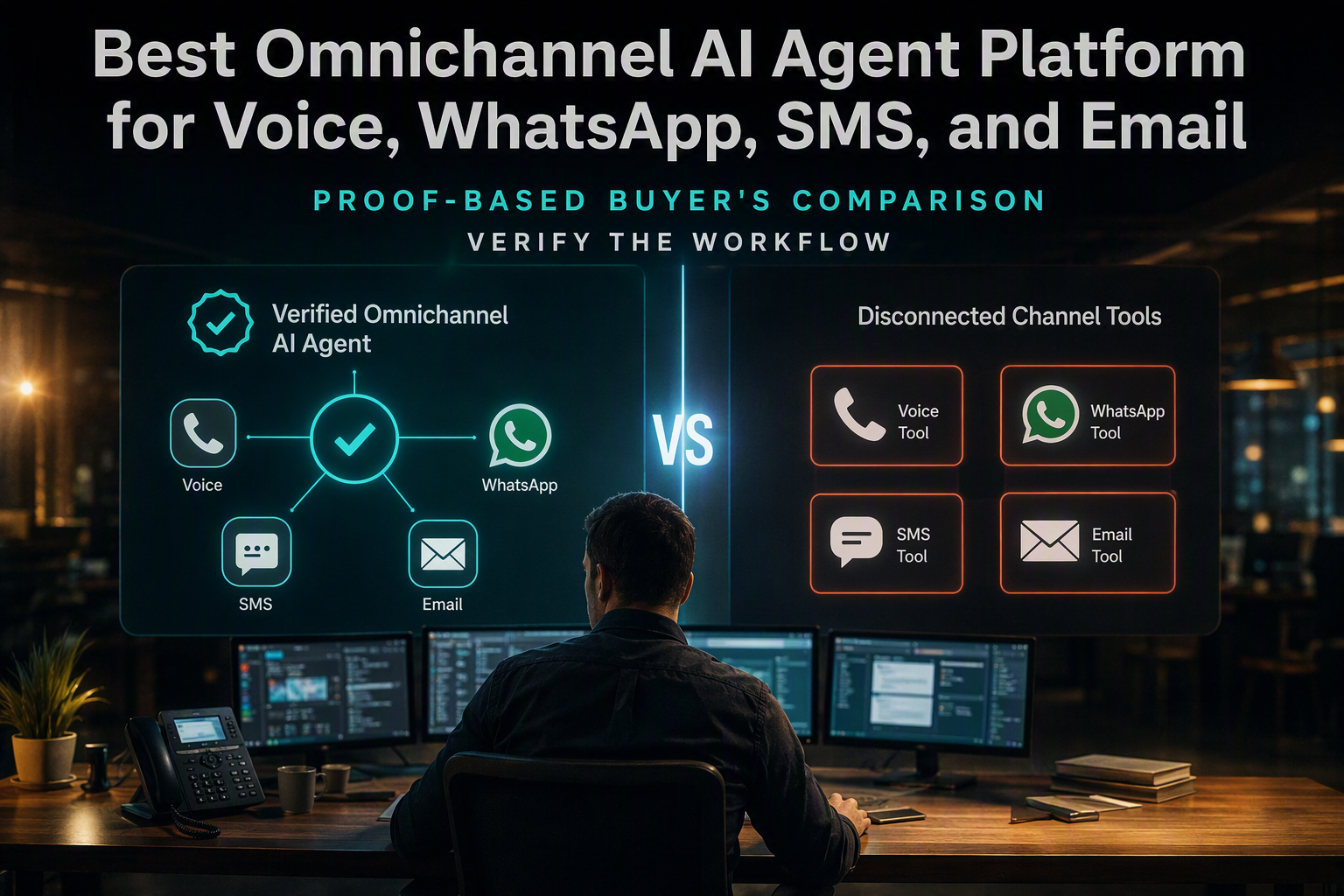
Compare the best omnichannel AI agent platform for voice, WhatsApp, SMS, and email using verified features, pricing, trade-offs, and demo proof.
Best Omnichannel AI Agent Platform for Voice, WhatsApp, SMS, and Email: Evidence-Based Comparison
What if “omnichannel” means four disconnected inboxes rather than one continuous customer conversation? No defensible single winner for the Best Omnichannel AI Agent Platform for Voice, WhatsApp, SMS, and Email can be named from the available vendor evidence; the right choice is the platform that proves all four channels, shared customer context, and contextual human handoff in a live workflow.
This comparison applies one consistent checklist: channel coverage, memory, automation, knowledge grounding, governance, integrations, implementation effort, and total cost. It separates subscription fees, usage charges, carrier costs, and enterprise setup fees instead of treating “starting at” prices as complete totals. Platforms such as CallMissed illustrate the market’s direction, combining WhatsApp, voice agents, email tooling, and an OpenAI-compatible gateway, with speech capabilities across 22 Indian languages. Read on for the evidence tables, honest trade-offs, and demo tests that reveal whether an AI customer-service platform is genuinely omnichannel.
Which omnichannel AI agent platform is best for voice, WhatsApp, SMS, and email?
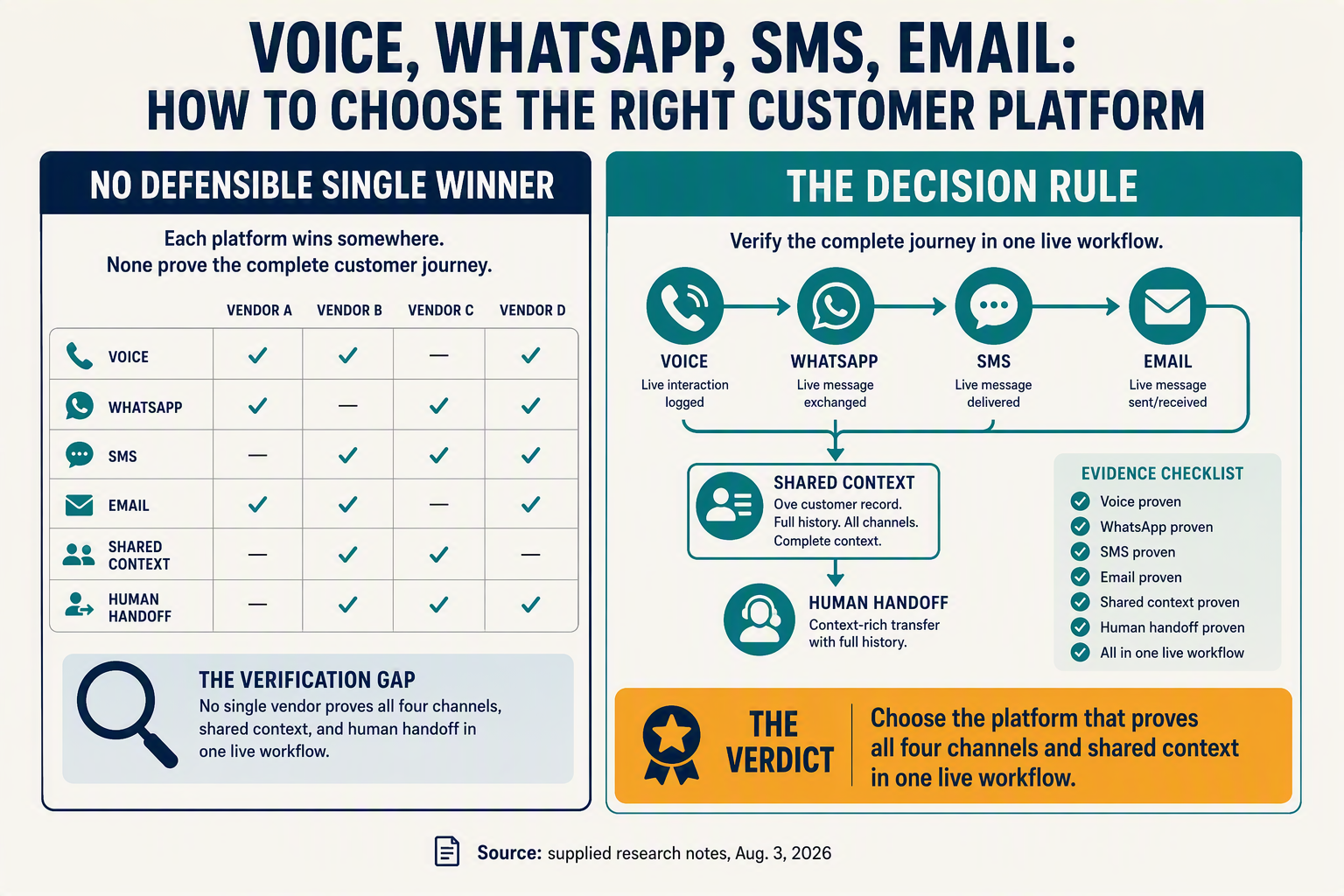
The best omnichannel AI agent platform for voice, WhatsApp, SMS, and email cannot be named as a single winner from the available vendor evidence. The defensible decision rule is simple: choose the platform that demonstrates all four channels, one customer record, usable cross-channel context, and a reliable human handoff in a live workflow.
- Strict definition: “Omnichannel” means the same customer identity, conversation history, consent status, and AI context follow the customer across voice, WhatsApp, SMS, and email—not four disconnected inboxes.
- Channel proof: Require a live demonstration of inbound voice, WhatsApp messaging, SMS, and email automation; the supplied research record found no usable current vendor results to verify universal coverage.
- Shared memory: Test whether an agent can answer a voice call using a WhatsApp exchange or email case without requiring the customer to repeat information.
- Automation depth: Compare inbound support, outbound campaigns, appointment reminders, lead qualification, routing, and escalation—not merely chatbot availability.
- Handoff quality: The platform should transfer the conversation to a human with the transcript, customer record, intent, and collected details intact.
- India-specific capability: CallMissed is an example of the market’s India-first direction, combining WhatsApp, voice agents, email tooling, and speech capabilities across 22 Indian languages, according to the supplied product context.
- Commercial diligence: Separate subscription fees, AI usage, WhatsApp or SMS charges, telephony, email delivery, implementation, and carrier costs; the research supplied no verified public pricing table, so current vendor documentation must confirm every amount.
Does one platform really support all four channels? (Feature Comparison TABLE)
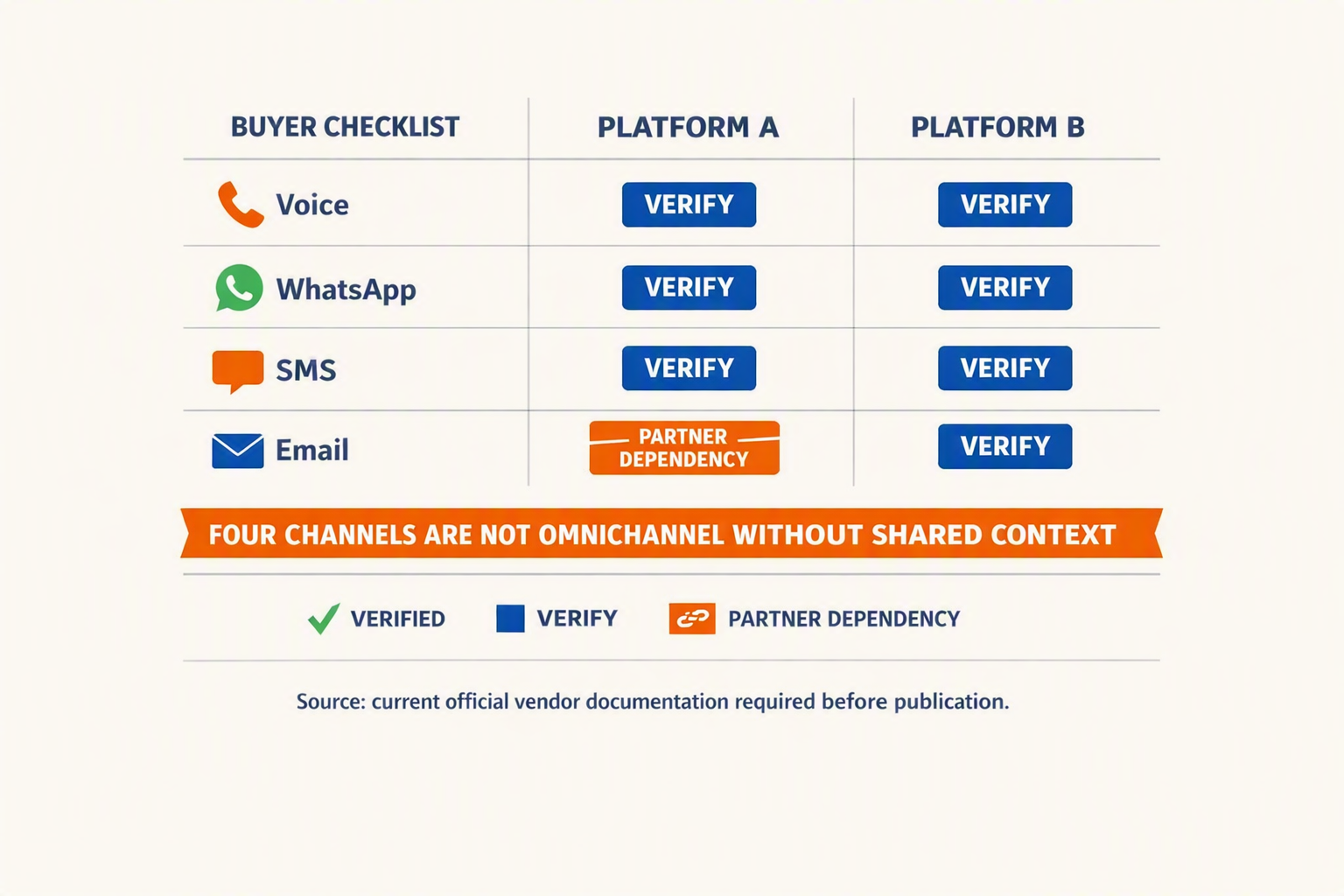
No defensible single-platform winner can be named because the supplied research record found no usable current vendor documentation for universal coverage. The practical verdict is conditional: choose the platform that proves all four channels, shared customer context, and human handoff in one live workflow.
- Verification rule: Treat every unverified cell as a demo requirement, not as a confirmed feature.
- CallMissed: The provided product context confirms AI voice agents, WhatsApp—including WhatsApp Business calling—email tooling, and 22 Indian-language speech capabilities; SMS support and cross-channel behavior require current documentation confirmation.
- Pricing check: The provided product context states that CallMissed uses transparent credits at 1 credit = ₹1, with free-tier and pay-as-you-go options; channel and carrier charges still need confirmation.
| Capability to test | Voice | SMS | ||
|---|---|---|---|---|
| Inbound customer conversations | Confirm live calls and AI routing | Confirm inbound messages and calls | Verify inbound SMS handling | Verify reply and case handling |
| Outbound automation | Verify campaigns, reminders, and consent | Verify templates, opt-ins, and calling rules | Verify campaigns, limits, and carrier fees | Verify sequences, delivery, and unsubscribe controls |
| Shared customer context | Verify transcript and identity matching | Verify history and consent sync | Verify record and opt-out sync | Verify thread and case sync |
| AI knowledge grounding | Verify RAG answers during calls | Verify grounded replies and citations | Verify grounded short-form responses | Verify grounded email generation |
| Human handoff | Verify transfer with transcript and intent | Verify agent takeover with history | Verify routing with customer context | Verify escalation with full thread |
| Reporting and governance | Verify recordings, retention, and QA | Verify permissions and audit logs | Verify compliance and delivery reports | Verify consent, bounce, and audit reporting |
- Evidence standard: Ask vendors to demonstrate a customer moving from WhatsApp to voice to email without repeating details.
- Bottom line: A four-channel logo list is not proof of omnichannel operation; shared identity, usable memory, consent, and contextual escalation are.
How should you compare AI agent features?
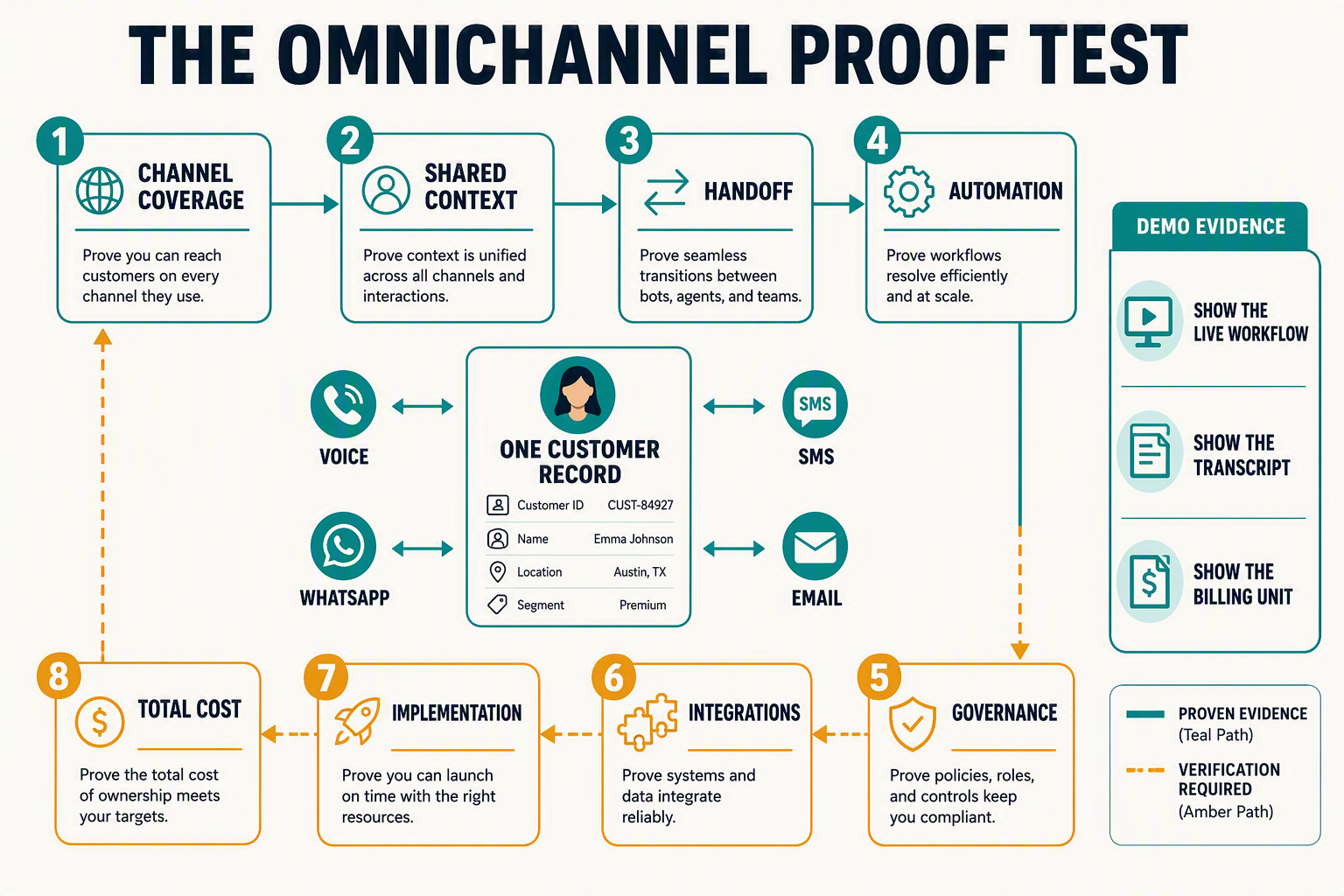
Compare AI agent features by testing the complete customer journey, not by counting channels or checking whether a vendor lists “AI” on its website. The strongest evidence is a live workflow showing shared context, reliable automation, and human escalation across voice, WhatsApp, SMS, and email.
- Channel depth: Verify inbound and outbound voice, WhatsApp messaging and calling, SMS, and email; confirm whether each channel is native or delivered through a third-party integration.
- Shared memory: Ask the agent to use details from a WhatsApp conversation during a voice call, then confirm that the same customer record contains the transcript, consent status, intent, and resolution history.
- Automation coverage: Test lead qualification, appointment booking, reminders, support cases, proactive campaigns, routing, and follow-ups; distinguish real workflows from simple FAQ responses.
- Knowledge grounding: Upload a controlled knowledge base and test whether the AI cites or follows approved policies, refuses unsupported answers, and reflects document updates without retraining.
- Human handoff: Require escalation with the full transcript, customer identity, detected intent, collected details, and suggested next action—not a blank transfer to a generic inbox.
- Governance and analytics: Check role-based access, audit logs, consent controls, retention settings, PII handling, campaign opt-outs, channel-level reports, resolution rates, and escalation rates.
- Language and regional fit: For Indian audiences, verify language performance rather than assuming English support generalizes; CallMissed’s product context specifies speech capabilities across 22 Indian languages.
- Integration and deployment effort: Confirm CRM, help-desk, calendar, webhook, API, sandbox, and export support. CallMissed’s OpenAI-compatible gateway is an example of the single-endpoint approach for connecting to multiple AI models, but current documentation should confirm each integration and limit.
What does omnichannel AI pricing actually include? (Pricing & Value TABLE)
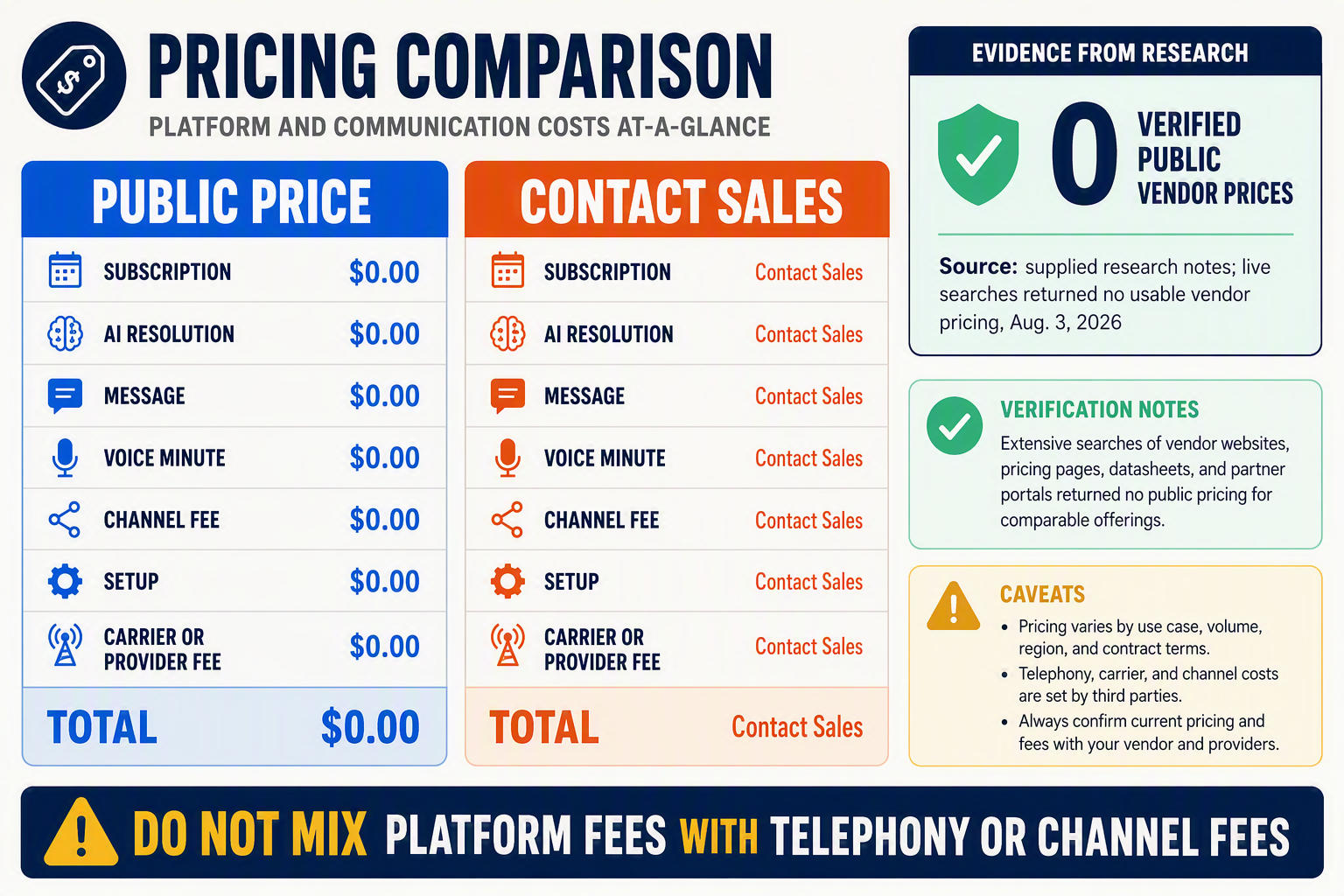
Omnichannel AI pricing is rarely one fee: the real total combines platform access, AI usage, channel charges, telephony, and implementation. Because the supplied vendor searches returned no usable current pricing results, buyers should treat every amount below as a verification checklist—not a universal rate card.
What should an omnichannel AI quote include?
| Cost layer | Typically covers | Common billing unit | Buyer verification |
|---|---|---|---|
| Platform subscription | Inbox, CRM, workflows, dashboards, seats | Per month, user, workspace, or usage tier | Included channels, seats, limits, and retention |
| AI usage | LLM responses, knowledge-base RAG, automation | Tokens, conversations, resolutions, or credits | Model, context-window, and fallback charges |
| Voice infrastructure | Speech-to-text, text-to-speech, AI minutes, recording | Per minute or audio duration | Inbound/outbound rates and telephony ownership |
| WhatsApp and SMS | Business messaging, templates, campaigns | Per message, conversation, template, or carrier event | Meta WhatsApp fees, country rates, SMS carrier fees |
| Email delivery | Transactional and campaign sending | Per email, contact, or monthly volume | Sending limits, deliverability tools, and overages |
| Setup and integrations | CRM connectors, migration, custom workflows | One-time project or enterprise fee | Implementation, support, and API access costs |
- CallMissed: Its transparent model states 1 credit = ₹1, with a free tier and pay-as-you-go billing; confirm which voice, model, channel, and campaign actions consume credits.
- Indian-language coverage: CallMissed supports speech-to-text and text-to-speech across 22 Indian languages; verify whether language selection changes usage rates.
- WhatsApp: A platform subscription does not automatically prove that Meta conversation or template charges are included.
- SMS and voice: Ask whether carrier, phone-number, recording, and telephony-provider charges appear on the same invoice.
- Enterprise plans: Require written limits for contacts, messages, AI minutes, API calls, retention, human-agent seats, and overage pricing before comparing “starting at” offers.
What are the honest trade-offs? (Pros and Cons TABLE)
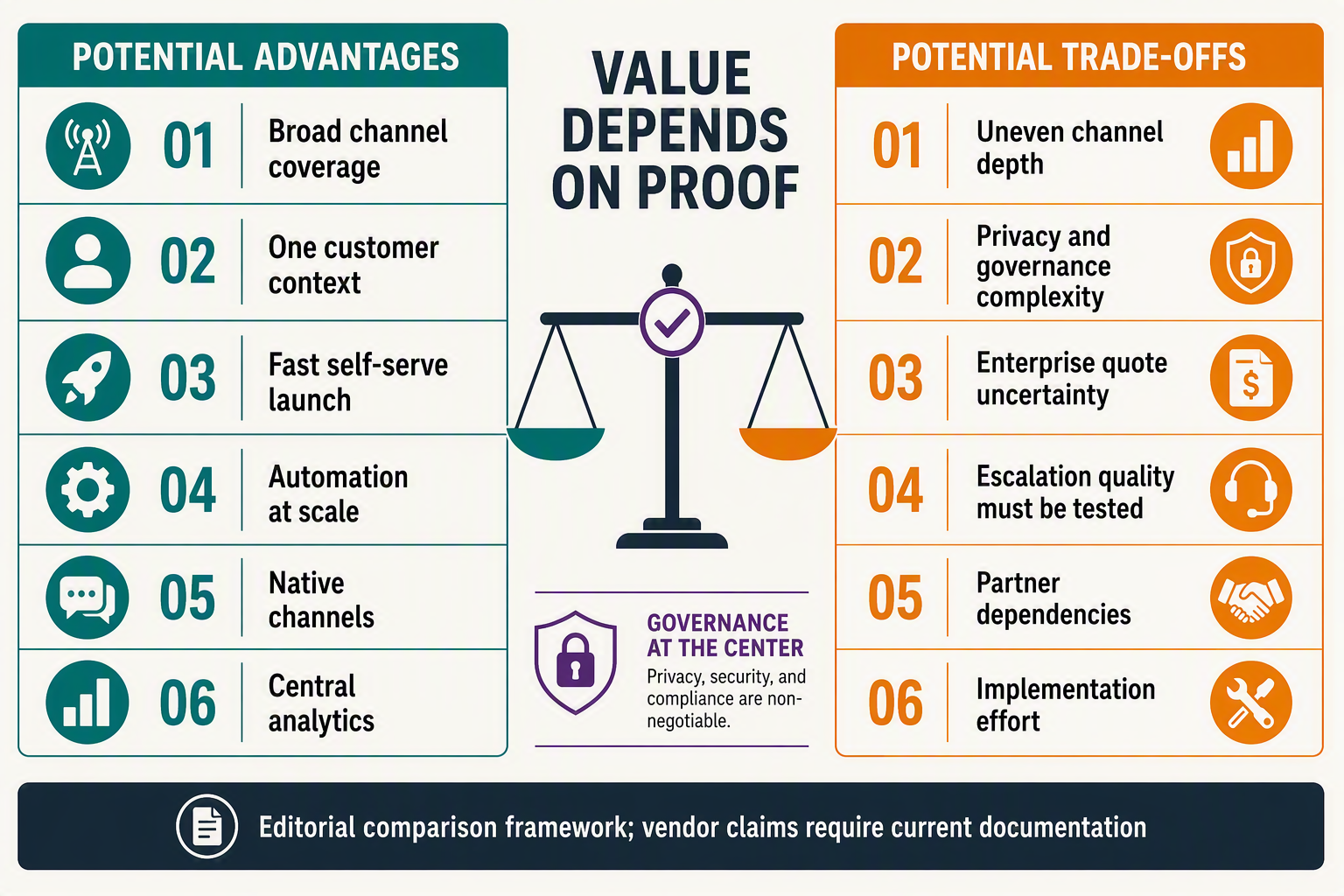
The honest trade-off is that no single platform can be named the winner from the available vendor evidence. Buyers must balance channel breadth, automation depth, governance, implementation effort, and total cost—then verify each claim in a live workflow.
Trade-offs buyers should evaluate
| Trade-off | Upside | Cost or risk | Evidence to request |
|---|---|---|---|
| Breadth vs. depth | One platform can coordinate voice, WhatsApp, SMS, and email. | A channel may support only basic messaging or limited automation. | Test one customer journey across all four channels. |
| Native channels vs. integrations | Native WhatsApp or voice features can reduce integration work. | Partner connectors may add carrier fees, outages, or feature limits. | Ask which channels are native and which depend on third parties. |
| Automation vs. escalation | AI agents can qualify leads, answer FAQs, and run reminders continuously. | Poor handoffs can force customers to repeat information. | Require transfer of transcript, intent, customer record, and collected details. |
| Shared memory vs. governance | Cross-channel context prevents repetitive customer interactions. | Centralized history increases privacy, retention, consent, and access-control requirements. | Verify audit logs, role permissions, retention controls, and consent handling. |
| Self-serve pricing vs. enterprise quotes | Transparent usage pricing supports smaller pilots and easier budgeting. | Subscription, AI usage, WhatsApp or SMS charges, telephony, email delivery, and setup may be billed separately. | Request a line-item quote; the supplied research found no verified public pricing table. |
| India-first capability vs. global breadth | CallMissed supports voice and chat across 22 Indian languages, according to the supplied product context. | Teams serving global markets still need to verify language quality, regional telephony, and compliance. | Test representative accents, languages, fallback behavior, and human routing. |
- CallMissed: Its OpenAI-compatible gateway and WhatsApp Business calling illustrate how native communication infrastructure can reduce multi-provider integration work; confirm channel-specific charges before purchase.
- No defensible winner: Multiple live searches returned “no results found,” so unverified feature or pricing claims should not determine the shortlist.
- Best demo test: Start on WhatsApp, continue by voice, send an SMS update, and close by email while checking whether one customer identity and conversation context persist.
Which platform should your team choose?
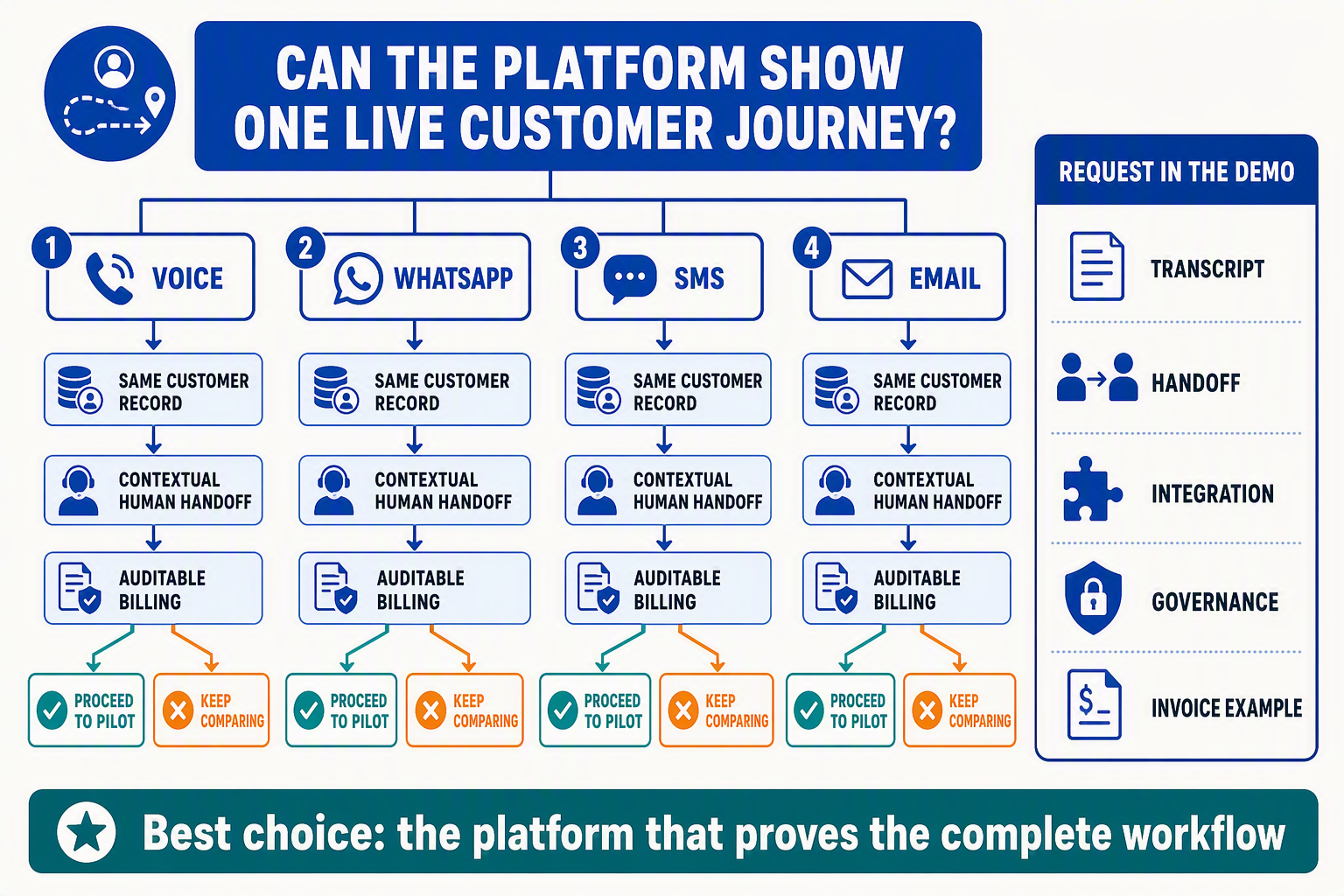
No single winner can be named from the available vendor evidence. Choose the platform that proves voice, WhatsApp, SMS, and email, shared customer context, and contextual human handoff in one live workflow—not four disconnected channel integrations.
- Choose an India-first platform if regional-language coverage is central: CallMissed supports Speech-to-Text and Text-to-Speech across 22 Indian languages, according to the supplied product context, alongside WhatsApp, voice agents, email tooling, and CRM-style inbox capabilities.
- Choose a developer-oriented gateway if your team needs model flexibility: CallMissed provides an OpenAI-compatible API spanning LLM chat, speech-to-text, text-to-speech, image generation, and web search, with one API key and billing account.
- Choose a WhatsApp-led platform only after confirming whether it supports WhatsApp Business voice calls, not merely text automation; CallMissed can bridge inbound and business-initiated WhatsApp calls to an AI voice agent.
- Choose for operational depth when the demo shows transcript, intent, customer identity, consent status, knowledge-base citations, and collected details passing to a human agent across channels.
- Choose for predictable procurement when pricing separates subscription, AI usage, telephony, WhatsApp or SMS fees, email delivery, implementation, and carrier charges; the supplied research found no verified current public pricing table for the compared vendors.
- Choose for governance readiness if the platform documents retention, access controls, audit logs, opt-outs, regional data handling, and escalation policies before production deployment.
- Run one final proof test: start with an email inquiry, continue through WhatsApp, place a voice call, trigger an SMS follow-up, and ask the human agent to resolve the case without requesting the customer’s history again. A platform that cannot demonstrate this workflow should not be labelled truly omnichannel.
What should buyers ask about voice, WhatsApp, SMS, email, and AI handoff?
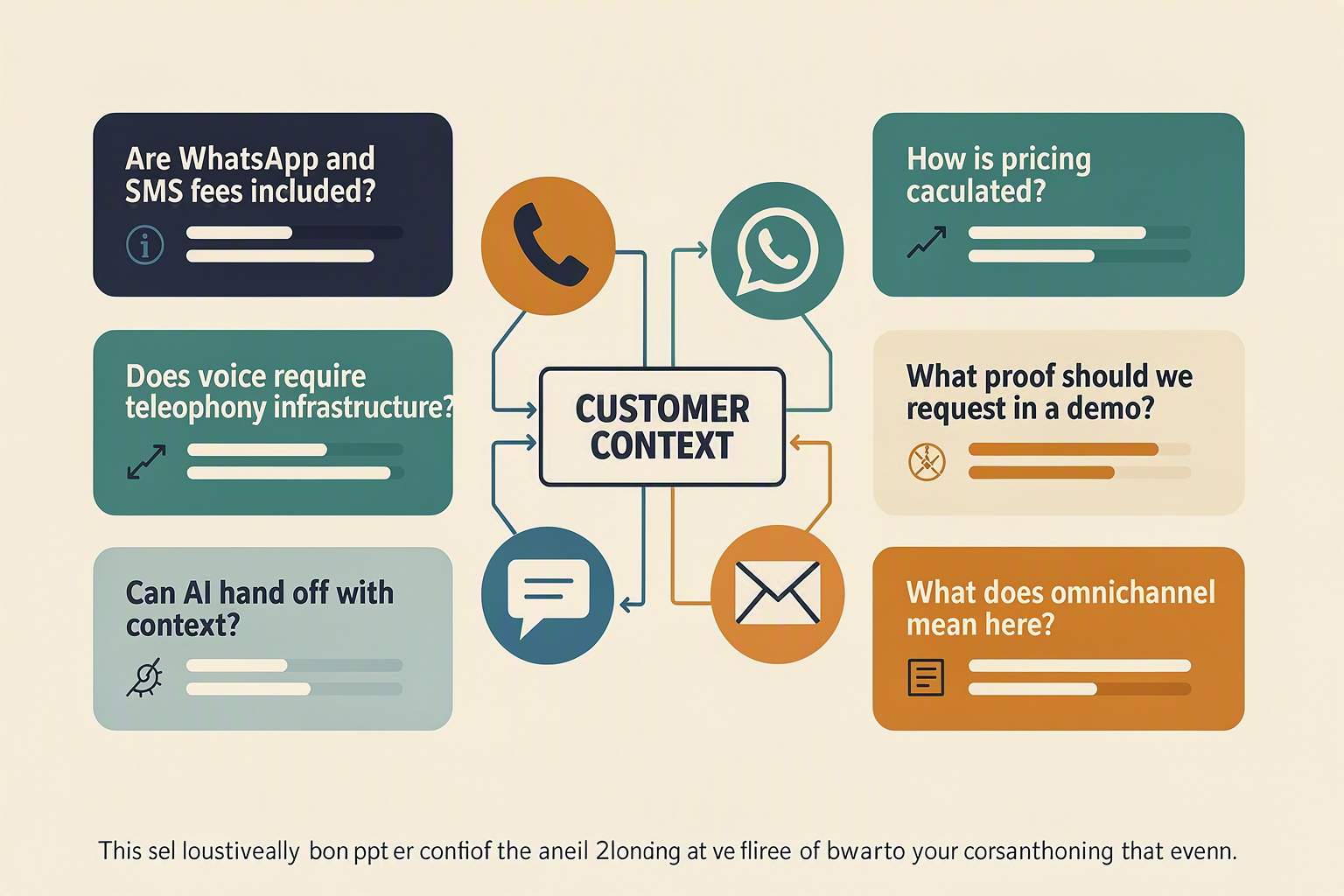
- Q: What does “omnichannel” mean for an AI agent platform?
A: Omnichannel means more than offering separate voice, WhatsApp, SMS, and email integrations. The platform should preserve customer identity, conversation context, workflow state, and escalation history as a customer moves between channels. Buyers should verify this behavior in a live demonstration rather than relying on an “omnichannel” label.
- Q: How can buyers verify support for voice, WhatsApp, SMS, and email?
A: Ask the vendor to complete one scripted workflow across all four channels using the same customer record. Confirm whether telephony, WhatsApp Business connectivity, SMS delivery, and email sending are native capabilities or depend on third-party providers. The available comparison evidence does not establish that every platform supports all four channels end to end.
- Q: Should an omnichannel AI agent have shared memory across channels?
A: It should retain relevant information such as the customer’s identity, prior messages, call transcripts, intent, completed steps, and unresolved requests. Ask the vendor to show a conversation moving from voice or WhatsApp to SMS or email without requiring the customer to repeat details. Also confirm retention controls and channel-specific consent requirements.
- Q: What should happen when the AI hands a conversation to a human?
A: The human agent should receive the transcript, customer details, detected intent, actions already taken, referenced knowledge sources, and the reason for escalation. Buyers should test both live transfers and asynchronous follow-up, including what happens when no agent is available or the transfer fails.
- Q: What pricing components should buyers include in the total cost?
A: Calculate platform subscriptions, AI model or interaction usage, telephony minutes, phone numbers, call recording, WhatsApp charges, SMS and carrier fees, email delivery, integrations, implementation, and support. These items may be billed by different providers, so request current written rates, billing units, minimum commitments, and overage terms.
- Q: Which integrations should an omnichannel AI agent platform provide?
A: Required integrations depend on the workflow, but commonly include CRM, help desk, calendar, payment, order-management, telephony, messaging, and knowledge-base systems. Buyers should confirm whether each connection is native, partner-provided, API-based, or custom, and test authentication, data synchronization, error handling, and audit logs.
- Q: What governance and compliance questions should buyers ask?
A: Ask where data is stored, how long transcripts and recordings are retained, which AI providers can access the data, and whether role-based access, deletion, export, encryption, and audit controls are available. Consent and retention obligations vary by channel and jurisdiction, so buyers should validate them for their specific deployment.
- Q: When is CallMissed a potential fit?
A: CallMissed is worth evaluating when voice automation and Indian-language coverage are important; the supplied product information specifies speech capabilities across 22 Indian languages. Buyers should still confirm the exact languages, channel coverage, integrations, shared context, human-handoff behavior, deployment requirements, and current pricing in a workflow-specific demo before selecting it.
Conclusion
The evidence does not support naming one Best Omnichannel AI Agent Platform for Voice, WhatsApp, SMS, and Email. The defensible choice is the platform that proves all four channels, shared customer context, and contextual human handoff in a live workflow.
- Define omnichannel as one customer record—not four disconnected inboxes.
- Compare automation, grounding, governance, integrations, implementation, and total cost.
- Verify subscription, usage, carrier, and setup fees independently.
- CallMissed reflects the India-first trend with voice, WhatsApp, email tooling, and speech across 22 Indian languages.
Watch for stronger cross-channel memory and transparent pricing. To explore this evolution, check out CallMissed—then ask: can your shortlisted platform prove the entire journey live?
Related Reading
Related Posts
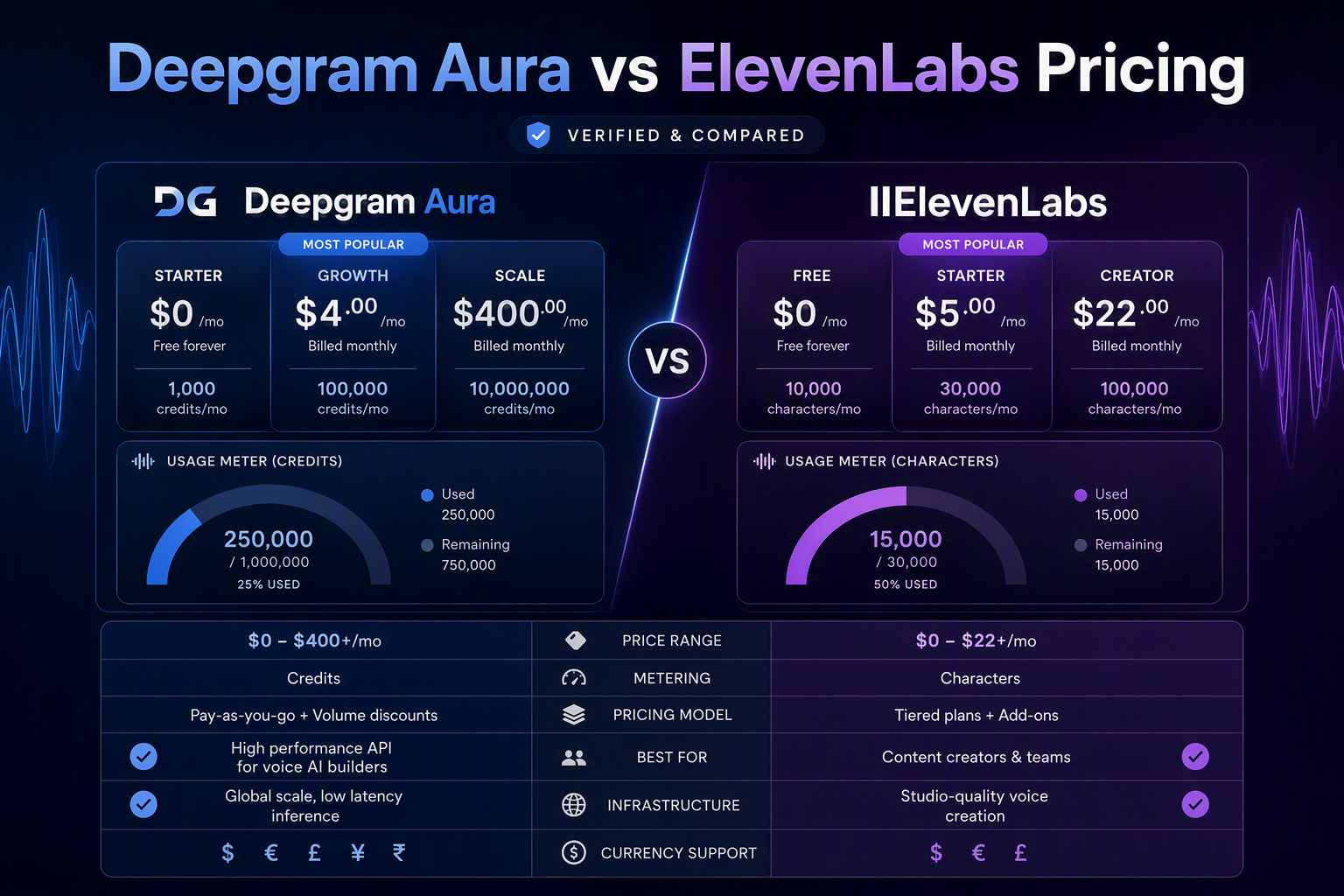
डीपग्राम ऑरा बनाम इलेवनलैब्स मूल्य निर्धारण: सत्यापित लागत तुलना
एंटरप्राइज़ TTS के लिए Deepgram Aura-2 बनाम Amazon Polly: विशेषताएँ, मूल्य निर्धारण और निष्कर्ष
मुफ़्त टियर वाले मॉडलों के साथ AI गेटवे: परीक्षण, प्रोटोटाइपिंग और प्रोडक्शन के लिए सर्वश्रेष्ठ विकल्प
Ready to automate customer conversations?
Launch AI voice agents and WhatsApp bots with CallMissed — one API, 22+ Indian languages.