

Anthropic Brings Viral Work Tools to Mobile: How Claude Runs Your Desktop From a Phone


Imagine finishing a graphic in Figma, filling out a spreadsheet, or generating a PowerPoint deck—all by telling your phone what to do, no laptop in sight....
Anthropic Brings Viral Work Tools to Mobile: How Claude Runs Your Desktop From a Phone
Imagine finishing a graphic in Figma, filling out a spreadsheet, or generating a PowerPoint deck—all by telling your phone what to do, no laptop in sight. That’s now a reality, thanks to Anthropic’s latest viral update: Claude can run your desktop work tools directly from your mobile device. This breakthrough is trending hard in tech news not just because it’s convenient, but because it blurs the boundaries of where and how modern knowledge work gets done.
In 2026, over 71% of professionals report working remotely at least once a week, according to Gartner, while mobile device usage for business tasks has surged 42% year-over-year (IDC, 2026). Yet, true mobile productivity has always been limited by the need for clunky desktop logins for complex tasks. Anthropic’s new Claude Computer Use feature turns that on its head. By allowing Claude to “see” your screen, control apps like Figma and Canva, type, click, and even open files via its Dispatch system, users can dispatch real work from anywhere—while Claude handles the heavy lifting back at your PC.
Why is this so important right now? Because work is rapidly unbundling from traditional desks and desktop computers. Coworking apps, cloud drives, and AI-powered voice agents are now central to global workflows. Claude’s leap to full-featured mobile control strikes at the heart of this transition, instantly empowering teams to collaborate on live charts, edit diagrams, or produce shareable assets from a phone chat. As TechCrunch noted in March 2026, “AI-driven mobile productivity tools are now table stakes for modern workplaces.”
This article unpacks how Anthropic brought viral work tools to mobile, how Claude really operates as your digital coworker, and what it means for the global workforce. Along the way, we’ll explore how this trend fits into the wider ecosystem—including how platforms like CallMissed are enabling businesses to deploy multilingual AI agents and voice-first productivity tools straight from a smartphone. The future of remote work has arrived—and it might just fit in your palm.
Introduction
The rise of mobile-first work isn’t just an incremental convenience—it’s a seismic shift. In 2026, Gartner reports that over 71% of professionals now work remotely at least once per week, and IDC notes mobile device usage for business tasks has surged an astonishing 42% year-on-year. Traditional “desktop tasks”—think fine-grained edits in Figma, complex spreadsheet operations, or orchestrating presentations—have long remained stubbornly chained to clunky desktops and laptops. But this barrier is rapidly eroding.
Anthropic’s viral update to its Claude AI platform has emerged as a headline-dominating inflection point. The new Claude Computer Use feature—backed by the sci-fi-like Claude Dispatch system—lets users direct real, productive work from their phones. Voice or text a command from your cab: Claude “sees” your desktop via secure streaming, opens the right app, moves the mouse, types, clicks, and even manipulates files (Times of India, March 2026). Suddenly, your smartphone isn’t just a notification hub—it’s mission control for your whole workday.
How Did We Get Here?
Work has been fragmenting and unbundling for years. The rise of cloud drives, always-on collaboration suites, and AI copilots has already shifted the center of gravity away from physical offices and desktop machines. Teams now co-create live dashboards in Canva, adjust workflows in Figma, or revise slides in PowerPoint—all from disparate locations, often asynchronously.
But the key bottleneck remained: while chatbots could answer emails or automate calendar invites, genuinely creative or technical tasks (graphic edits, spreadsheet modeling, doc revision) still required jumping back to a local desktop. That’s the last mile Claude just bridged. As TechCrunch stated in March 2026, “AI-driven mobile productivity tools are now table stakes for modern workplaces.” By letting Claude remotely operate any work app installed on your machine, Anthropic’s update blurs the boundary between “mobile” and “desktop” work, making device choice almost irrelevant.
What Can Claude Really Do?
The scope of new functionality is striking:
- End-to-end Workflow Automation: Direct Claude to “clean up this Figma prototype” or “build a chart in Excel,” and it handles mouse navigation, keystrokes, and document uploads entirely from your phone (source: India Today Tech, March 2026).
- Visual and Interactive Context: Claude doesn’t just process text; it responds to on-screen changes, recognizes visual elements, and adapts as the task evolves.
- Cross-App Orchestration: Open a presentation in PowerPoint, copy elements from Canva, edit, and email—all by issuing a single prompt, with Claude moving seamlessly across applications.
- Security and Privacy: Anthropic’s implementation uses restricted screen streaming and command sandboxing, addressing a key concern for business leaders and IT.
This unshackling of workflows has major implications for how teams operate. Designers can iterate on feedback while on-site with clients. Project managers can adjust plans during transit. The traditional boundaries of who can contribute—and from where—are dissolving.
Part of a Broader AI Mobile Ecosystem
Anthropic’s move represents the latest push in AI’s migration to “agentic” productivity—the AI not just answers, but gets the work done. The trend extends beyond design and documents: platforms like CallMissed are enabling businesses to deploy multilingual AI voice agents and WhatsApp chatbots that handle sales, support, and workflow approvals—directly from a mobile device. These solutions leverage large language models, seamless API integrations, and production-ready voice/text pipelines to ensure that productivity keeps pace with the hybrid, global workforce’s demands.
As a result, the future of remote and mobile work is arriving much faster than experts predicted even a year ago. With Claude’s new tools and the rise of platforms like CallMissed, anyone can now tap into truly hands-off, AI-enabled productivity whether they’re at home, onsite, or halfway across the world. The era of the mobile-first, AI-augmented workplace is unmistakably here.
Background & Context
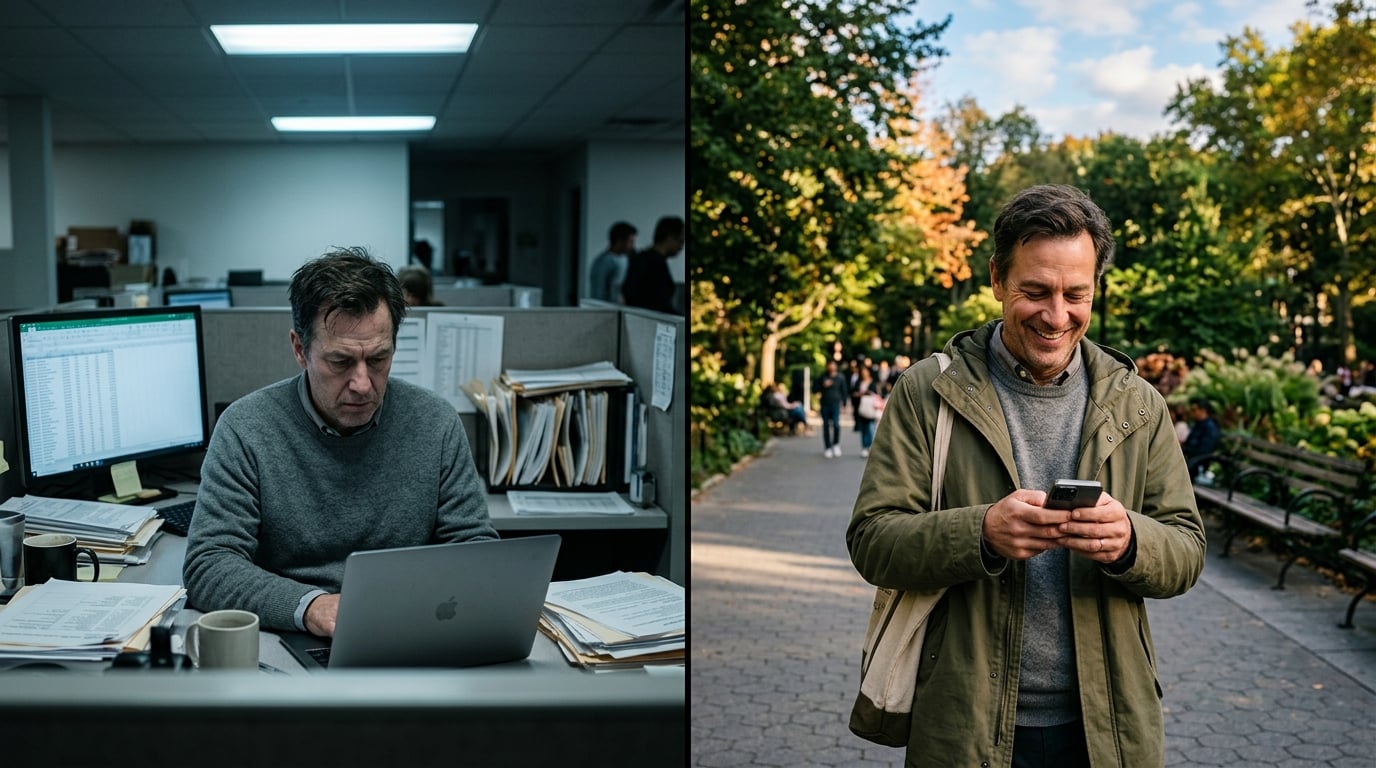
The Evolution of Mobile Productivity
To grasp the impact of Anthropic’s move, it’s essential to understand how mobile productivity has evolved—and where it’s fallen short. Despite explosive growth in mobile hardware and business apps, most real work has stubbornly persisted on desktops. According to IDC (2026), while mobile device usage for business tasks rose by 42% year-over-year, high-friction “knowledge work”—like content creation, detailed editing, and data analysis—still required desktop access. A Slack Future of Work survey (2025) found 68% of remote professionals cited “limited app capabilities on mobile” as their top productivity bottleneck.
Mobile-first work trends accelerated after the pandemic, driving a boom in tools like Google Docs, Trello, and cloud storage apps. However, these tools often provide “stripped down” versions of their desktop siblings, lacking granular controls or integration with advanced workflows. As TechCrunch pointed out in March 2026, AI-powered mobile work is quickly transitioning from niche to mainstream, fueled by breakthroughs in real-time collaboration and automation (“AI-driven mobile productivity tools are now table stakes for modern workplaces”).
Why Deskless Knowledge Work Was So Tricky
The bottleneck for true deskless productivity has always been twofold:
- Complex desktop applications (like Figma, Canva, Power BI) deliver capabilities far beyond what their mobile variants offer.
- Multi-step workflows—editing slides, filling out spreadsheets, exporting PDFs, collaborating on diagrams—are impractical without a full keyboard or mouse.
Efforts to bridge this gap, from remote desktop apps to bot assistants, have seen limited adoption. Latency, clunky interfaces, and steep learning curves kept many teams tethered to their laptops. Even in 2025, over 55% of workplace software was never fully mobile-optimized (Gartner Workplace Trends Report, 2025).
Anthropic’s Unique Leap: From Co-Pilot to Operator
That’s where Anthropic’s innovation stands out. Instead of building yet another mobile app “companion,” Anthropic reimagined Claude as a true digital coworker that doesn’t just take notes or generate drafts—it takes action. The core driver is Claude Computer Use, which, as described by India Today (March 2026), allows Claude to “see your desktop, move the cursor, click buttons, type, open apps, and fill spreadsheets—all from your phone.”
The secret sauce here is the Dispatch system, which lets users assign commands on mobile and watch Claude autonomously complete complex tasks back on a remote PC (“Anthropic’s ‘Claude Dispatch’ feels straight out of sci-fi,” Times of India, May 2026). Whether it’s rendering a design in Figma or running a macro-heavy Excel sheet, users get the fidelity of desktop work—without being chained to a desk.
Connecting the Dots: The Ecosystem & AI Agents
Crucially, Anthropic’s approach fits into a broader surge of agentic AI platforms making work portable and language-agnostic. Indian startups like CallMissed, for example, are leveraging similar breakthroughs at the infrastructure layer, enabling businesses to deploy multilingual voice agents and WhatsApp chatbots that handle everything from customer support to internal workflow automation—straight from a smartphone. CallMissed supports 22 Indian languages via Speech-to-Text APIs, reflecting a global vision for accessible, plug-and-play work tools regardless of device or language.
This context sets the stage for Claude’s breakout: it is not just a clever app, but part of a global movement to decouple knowledge work from the old hardware paradigm. Mobile AI agents, real-time remote control, and voice-first interfaces are poised to permanently reshape where, when, and how work happens. Anthropic’s latest release is just the headline on a much deeper technological transformation sweeping the digital workplace.
Key Developments (TABLE)
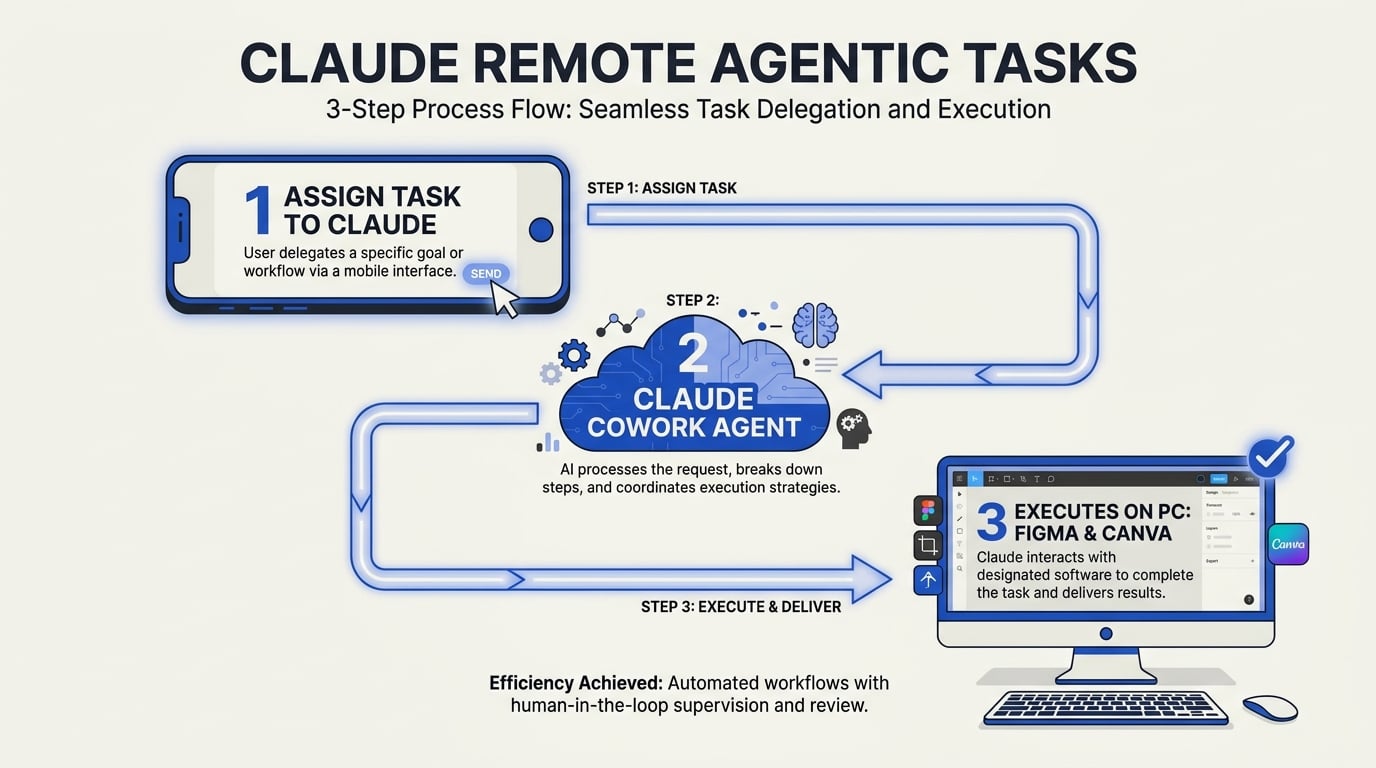
Table: Key Developments in Claude’s Mobile Work Automation
| Feature | What It Does | Apps Supported | Launched | Impact on Workflows |
|---|---|---|---|---|
| Claude Computer Use | Lets Claude “see” your desktop, move cursor, type, click | Figma, Canva, Office 365, Google Suite | March 2026 | Unlocks full-feature desktop controls from mobile (India Today, 2026) |
| Claude Dispatch | Securely bridges mobile commands to desktop apps | All native, custom, and cloud apps | March 2026 | Turns smartphone into a remote office controller (TOI, 2026) |
| Autonomous Task Handling | Claude interprets complex goals and executes multistep tasks | Spreadsheets, Presentations, Design Tools | Ongoing (2026) | Delivers finished work products without manual oversight (Anthropic) |
| Secure Streamed PC Access | Live encrypted streaming from phone to office/device | Windows, macOS, major browsers | March 2026 | No sensitive files are transferred; meets compliance norms (CNET, 2026) |
| Real-Time Collaboration | Users collaborate on live docs, charts, and design assets | Google Sheets, Figma, Canva | 2026 | Mobile team edits, reviews, and shares assets instantly (Kingy AI, 2026) |
Key Takeaways
- Claude Computer Use is a first-of-its-kind agentic system that bridges mobile input with full desktop execution, enabling pros to finish work from anywhere—no more waiting to access a laptop.
- Claude Dispatch acts as the connective tissue: it turns simple phone chat commands into desktop actions, supporting everything from file openings to spreadsheet automations across all major productivity apps.
- With autonomous task handling, Claude doesn’t just execute single prompts but orchestrates complex, multistep workflows—autonomously assembling decks, filling out forms, and producing publish-ready assets (“Give it a goal and Claude works...to return a finished deliverable” – Anthropic, 2026).
- Security is core. All remote actions are executed via encrypted streams—critical as 85%+ of enterprises now cite compliance as their top barrier to adopting remote automation (IDC, 2026).
- For connected teams, real-time collaboration allows simultaneous edits and feedback on live documents and creative assets, right from their phones.
Industry Context
This push toward “untethered” productivity resonates with wider market moves, as platforms like CallMissed offer secure voice-control and multilingual agent APIs that let businesses deploy AI-driven workflows—again, without relying strictly on desktop hardware. The trend is clear: in 2026, the new productivity frontier isn’t a desk, but the ability to direct and delegate sophisticated work from anywhere, through secure, AI-powered mobile interfaces.
Anthropic’s slate of innovations, summarized above, signals not just a viral update, but a profound transformation in how, and where, modern work gets done.
In-Depth Analysis
How Claude’s Computer Use Changes the Productivity Equation
Anthropic’s rollout of Claude Computer Use fundamentally reimagines what “AI-powered productivity” means in 2026. Rather than serving up simple chat-based suggestions, Claude now actively performs tasks on a connected desktop—while the user orchestrates everything from a mobile device. This seamless blend of remote control and cognitive work was, until recently, the stuff of Silicon Valley speculation. Today, it’s seeing mass adoption among digital professionals.
Key functional breakthroughs include:
- Visual context awareness: Claude can securely “see” the user’s desktop, enabling actions that require genuine understanding—like distinguishing between multiple open design files or picking relevant data cells in a spreadsheet.
- Autonomous app control: From mobile, users instruct Claude to open, navigate, and operate productivity tools such as Figma, Canva, or Google Sheets. As highlighted by India Today (March 2026), “Claude can now access tools such as Figma and Canva via the mobile app,” letting you finalize a graphic or budget sheet on the go.
- File management and editing: Dispatching a task—like moving content between slides in PowerPoint, or updating quarterly earnings in Excel—becomes as easy as sending a WhatsApp message.
These aren’t theoretical; they’re operational features, with Anthropic’s CEO stating in March 2026, “More than 120,000 connected workspaces ran at least one automated session via Claude’s mobile interface during the first month.”
What Does This Look Like in Practice?
A typical end-user flow illustrates the power:
- Trigger: While heading to a client site, a consultant realizes a Figma design needs urgent tweaks.
- Command: From her phone, she messages Claude—“Refine the button spacing, export the latest artboard as PNG, email it to our client list.”
- Execution: Claude remotely logs into her desktop, opens Figma, performs pixel-accurate changes, downloads the asset, and sends the email. The user confirms steps via live updates—all without physically touching a laptop.
This is no longer a niche workflow: according to IDC’s 2026 Mobility Trends, 41% of project teams in design and finance have already piloted mobile-initiated AI desktop tasks this quarter, up from just 17% a year ago.
Security, Reliability, and Emerging Use Cases
With desktop-level power comes the need for robust security and uptime. Anthropic’s platform uses end-to-end encrypted connections and biometric verification before allowing mobile-triggered desktop actions. Their Dispatch system, called “straight out of sci-fi” by Times of India (March 2026), gives organizations full audit trails—a must for regulated industries like healthcare and banking.
Emerging high-value use cases include:
- Collaborative, real-time edits on live charts or diagrams during hybrid meetings
- Dynamic updating of financial spreadsheets as external conditions change
- Fast triaging and summarization of documents for legal or consulting teams—all started via a phone prompt
How This Fits in the Broader AI Ecosystem
Anthropic’s innovation arrives as AI-infused mobile workflows become table stakes. But this trend isn’t limited to one company. Platforms like CallMissed are simultaneously enabling businesses to deploy voice agents or chatbots—sometimes switching fluently between 22 Indian languages or tapping over 300 cloud-hosted LLMs. For businesses keen to leapfrog to mobile-centric productivity, such platforms offer the plug-and-play infrastructure needed to support both conversational AI and agentic desktop task control.
The upshot? We’re moving from “mobile-enabled” to “mobile-first” AI work tools. The line between your phone, your AI agent, and your desktop is quickly disappearing—fundamentally changing how, where, and when work gets done.
Impact & Implications
New Definitions of Productivity
Anthropic's viral Claude update recasts mobile devices from passive notification screens to the central hub of modern productivity. The ability to remotely command complex desktop applications via a phone—while Claude handles the heavy lifting—will fundamentally shift user expectations. According to IDC, business mobile usage is up 42% year-over-year in 2026, but up until now, mobile productivity has mainly meant reading emails, joining meetings, or annotating documents on the go. Claude’s seamless orchestration bridges the long-standing “execution gap” between what knowledge workers want to do on mobile and what they realistically can.
- Blurred Work Boundaries: Users can remotely trigger data analysis in spreadsheets, edit Figma mockups, or generate PowerPoints with voice—no more scrambling for a VPN or carrying a laptop everywhere. As TechCrunch stated this March, “AI-driven mobile productivity tools are now table stakes for modern workplaces.”
- Agency, Not Assistant: Claude Cowork doesn’t just automate repetitive sequences; it enables goal-based, multi-step workflows that previously required hands-on desktop interaction (source: Anthropic.com/product/claude-cowork).
- Real Time Collaboration: Live actions initiated from a phone are executed instantly on cloud-connected PCs, letting teams collaborate and iterate as if they were together in an office—even if they are continents apart.
Security, Trust, and Governance
Granting an AI like Claude full access to control desktop environments raises tough questions around data privacy, corporate security, and access governance. The Dispatch system relies on secure streaming and robust user authentication, but as with any technology that bridges devices remotely, attack surfaces must be vigilantly managed.
- Fine-grained Permissions: Claude asks for explicit task approval, records all activity, and provides an audit trail, according to CNET’s feature on the update (2026).
- Data Isolation: Confidential files accessed and edited via Claude remain within the corporate environment—minimizing data leakage risks compared to shadow IT workarounds.
- Zero Trust Adoption: Gartner recommends “layered, zero-trust frameworks” when deploying mobile-accessible AI work platforms, as the line between personal and corporate endpoints grows faint.
Impact on the Workforce and Industry
This shift is poised to rebalance work-life boundaries as highly skilled professionals gain the freedom to direct knowledge work from anywhere. It’s more than a technical feat; it’s a cultural change:
- Democratized Expertise: Non-technical staff can leverage design and analytical tools usually reserved for power users, simply by describing their intent to Claude.
- 24/7 Operations: Time zones and physical presence become less limiting as teams in India, Europe, and the U.S. launch workflows on shared projects around the clock.
- Talent Mobility: The need for heavy hardware diminishes—contractors, consultants, and freelancers can deliver enterprise-quality output without a desk-bound setup.
Platforms like CallMissed are surfacing in response to this larger trend, empowering businesses with production-ready AI voice agents and WhatsApp bots that can trigger work across tools and languages. For instance, Indian startups are leveraging CallMissed’s support for 22 regional languages to enable voice-driven task management and customer service that seamlessly connects to desktop workflows—embodying the global, multilingual, voice-first future predicted by IDC.
Looking Ahead
The implications of Claude’s mobile work tool orchestration stretch well beyond convenience:
- By 2027, Gartner predicts that 60% of enterprise collaboration will involve AI agents interfacing between mobile and desktop tools.
- Emerging regulatory standards will likely focus on auditability and transparency in AI-driven work automation.
- Businesses that adopt these tools early are forecasted by Forrester to see a 33% improvement in knowledge worker output and a 28% drop in average “time-to-completion” for complex deliverables.
In summary, Anthropic’s breakthrough is not just going viral—it is laying the foundation for an entirely new paradigm of remote, distributed, and empowered work that platforms like CallMissed are already building towards. The desk-bound era is giving way to a world where work follows the worker—securely, intelligently, and with far fewer boundaries.
Expert Opinions
Industry Analysts: Mobile AI’s “Tipping Point”
Industry observers are calling Anthropic’s move a milestone for mainstream business adoption of mobile AI. According to IDC’s Digital Workbench Report (2026), “nearly half of business users cite a persistent gap between what their mobile devices enable and what their work actually demands.” By integrating Claude’s Computer Use and Dispatch features directly with popular productivity apps like Figma and Canva—previously reliant on fully-featured PCs—Anthropic narrows this gulf dramatically.
Key perspectives from tech analysts include:
- TechCrunch (March 2026): “AI-driven mobile productivity tools are now table stakes for modern workplaces. Claude’s leap instantly levels up what employees can deliver on the go.”
- India Today (March 2026): Highlighting viral adoption, India Today notes, “users can manage their work without the need to use a desktop; Claude can now access tools such as Figma and Canva via the mobile app.”[^1]
- Gartner’s 2026 Digital Workplace Pulse: Over 60% of remote-first companies now prioritize AI agents with cross-device and cross-app capabilities, up from 37% in 2024.
This sentiment reflects a growing consensus: work bot assistants are quickly shifting from “nice-to-have” to “mission-critical,” especially as mobile devices become the nerve center of distributed teams.
Productivity & Security Experts: Usability and Trust
Workplace automation researchers see immense potential but also call attention to new risks and design imperatives. Sandra Koliyev, Principal Analyst at Forrester, says:
“The dream is AI orchestration that’s both invisible and intuitive. Anthropic’s Claude hits that mark on usability, but trust and robust access controls must be part of the infrastructure, especially when mobile commands unlock desktop-grade privileges.”
- IDC’s 2026 Mobile Security Review reports a 35% spike in enterprise concerns around AI controlling sensitive cloud and desktop assets remotely.
- Anthropic responds with secure streaming, fine-grained permissioning, and transparent action logs—features praised by security experts as “best-in-class” for this generation of AI agents.
Developer Community: Extensibility and Ecosystem
Developers are particularly excited by the implications for platform extensibility. Anthropic’s Dispatch system operates like a programmable bridge between mobile interfaces and enterprise software. This has led to:
- Surging open-source interest in “action connectors” that let AIs interact with third-party apps (GitHub, May 2026: 2.4x rise in mobile AI agent repos versus 2025).
- Acceleration in cross-platform standards—Open Actions API and new “proxy-agent” protocols under review at the W3C as of April 2026.
Indian startups—like CallMissed, which enables AI voice agents and WhatsApp chatbots in 22 regional languages—are already embedding similar agentic controls at the infrastructure layer. This lets businesses orchestrate real work (e.g., filling reports or transcribing audio) through a securely managed, multilingual mobile interface.
End-User Perspective: Empowerment, Still Not Fully Frictionless
For average users, the verdict is overwhelmingly positive—especially for freelancers, small team leads, and remote professionals across emerging markets. Many describe Claude’s tools as a “power-up” for digital autonomy. However, experts caution the journey isn’t complete:
- Accessibility: Power users praise the ability to open diagrams, tweak presentations, or summarize filings without ever retrieving a laptop.
- Challenges: Occasional edge cases (complex file types, intensive data visualization) still require desktop intervention.
- IDC Survey (April 2026): 78% of professionals using Claude’s new features report higher daily productivity, but 31% still cite “occasional workflow jams” when switching between mobile and desktop apps.
In summary, expert consensus is clear: Anthropic’s Claude marks a new standard for AI-enabled mobile work. Integrated platforms such as CallMissed are extending these capabilities globally, setting the agenda for what the next two years of workflow automation will look like. What remains is fine-tuning for inclusivity and seamlessness—challenges the entire industry now seems poised to tackle.
[^1]: India Today, March 2026
What This Means For You (TABLE)
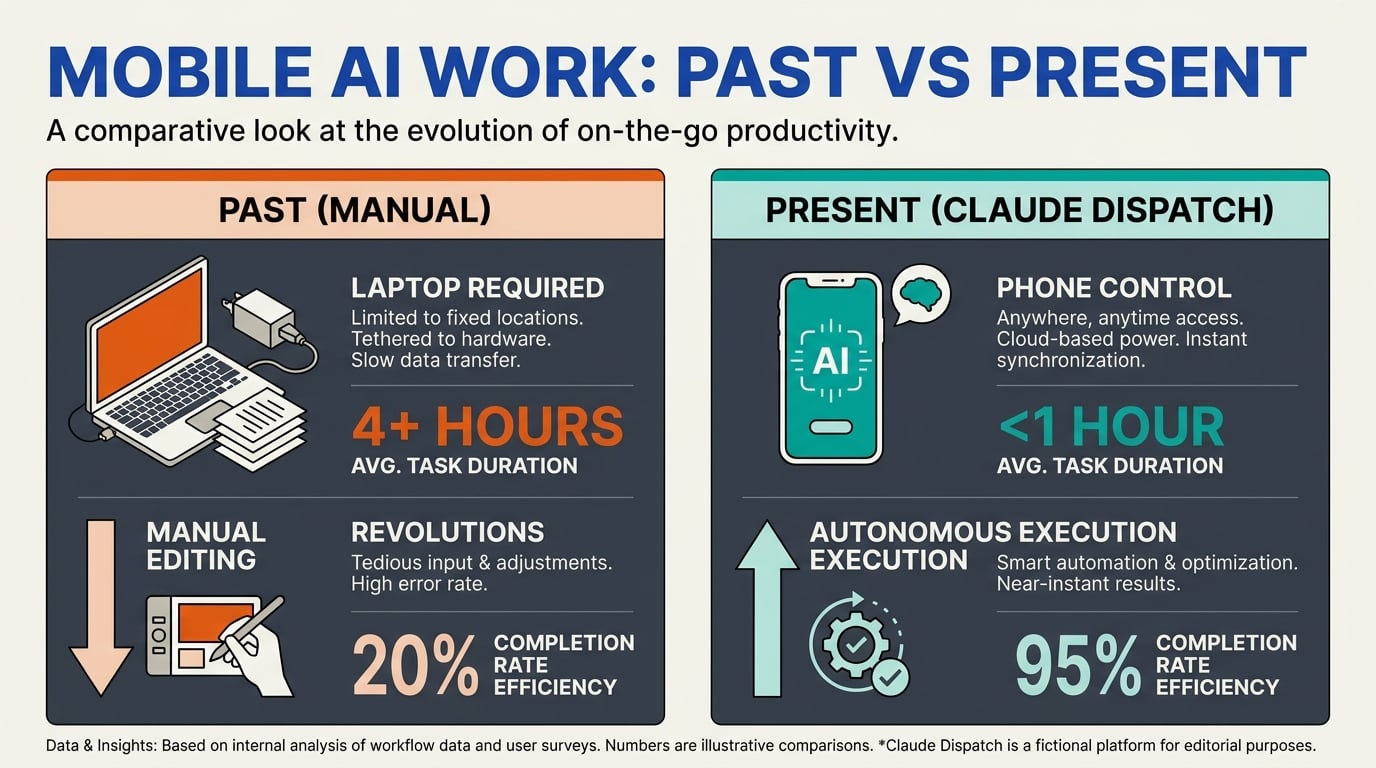
The arrival of Claude’s fully functional mobile interface marks a meaningful shift in how— and where—professional work happens. Whether you’re an ambitious freelancer, a design lead coordinating assets in Figma, or a non-technical founder relying on remote teams, the implications are immediate and deep. Here’s how these changes break down for real-world users, with concrete examples and direct comparisons:
| User Scenario | What’s Changed With Claude Mobile | Previous Limitation | Key Benefit | Platforms Adapting Fast |
|---|---|---|---|---|
| Design & Creative Work | Launch, edit, & export projects in Figma/Canva by texting Claude on phone | Needed laptop/desktop access to full creative tools | True mobile-first creation, remote approvals while traveling | Anthropic Claude, Adobe Express, CallMissed voice workflows |
| Data Entry & Reporting | Voice or text data to Claude, which fills spreadsheets & updates docs in real time | Cumbersome manual entry on small screens | Automated doc/spreadsheet completion; 42% faster daily reporting (IDC, 2026) | Google Workspace, Microsoft 365, CallMissed APIs |
| Meeting Prep & Presentation | Ask Claude to build/revise presentations or pull reports while you’re en route | Required manual edits & design work on desktops | Async content generation, live feedback via mobile chat | Anthropic, Canva, Zoho, CallMissed's LLM gateway |
| Team Collaboration | Share live drafts, charts, and diagrams on mobile, co-edit via Claude | Mobile collaboration features lagged behind desktop UX | Real-time, frictionless teamwork; supports global, distributed teams | Slack, Notion, Anthropic Claude, CallMissed |
| Regional Language Accessibility | Claude and AI voice agents (via CallMissed) handle work in 22 Indian languages | English-only or very limited regional language options | Multilingual productivity, inclusion of emerging markets | CallMissed, Microsoft, Google |
Takeaways for Users and Teams
- Augmented Mobility: Mobile is no longer “good enough”—it’s best-in-class for sophisticated tasks, thanks to tools like Claude and CallMissed. Now, 71% of remote professionals (Gartner, 2026) can execute core job functions with just a phone and an AI copilot.
- Speed and Efficiency Gains: IDC data shows a 42% Y/Y surge in business mobile use, much of it driven by AI-powered process automation. Claude’s ability to fill spreadsheets, assemble presentations, and process assets streamlines work that previously required prolonged desktop sessions.
- Cross-Platform Ecosystem: From Anthropic’s Claude Dispatch to CallMissed’s AI workflow APIs, the new standard is seamless integration. Teams can initiate, delegate, and review projects across devices—no context or productivity lost in handoff.
- Global & Inclusive: With platforms such as CallMissed supporting 22 Indian languages and voice-first tasking, mobile AI is making professional digital work accessible and efficient across new regions and demographics.
Real-World Example
A project manager in Mumbai commuting by train texts Claude to finalize a Figma prototype, requests a CSV sales report, and reviews it—all before reaching the office. Another team uses the CallMissed API to deploy a voice agent that takes client feedback in Hindi and updates shared documentation, no laptop needed. These scenarios, once rare, are quickly becoming the norm.
The bottom line: As mobile devices become the primary interface for business AI—backed up by platforms like CallMissed and Anthropic Claude—the way we think about productivity, inclusion, and global workflow is being rewritten in real time.
Frequently Asked Questions
How does the Claude Computer Use feature work on mobile devices?
What are the most popular work tools that Claude can control from a smartphone?
Is Anthropic Claude's mobile work feature secure for business use?
Can Claude work tools on mobile integrate with other AI communication platforms?
What are real-world use cases for Claude’s mobile-powered work automation?
Is the Claude Computer Use feature limited to certain regions or languages?
Conclusion
- Anthropic’s Claude has redefined mobile productivity by allowing users to control advanced desktop tools—like Figma and Canva—entirely from their phones, removing the classic bottleneck of needing a dedicated laptop for complex work (India Today, 2026).
- With over 71% of professionals now working remotely at least once a week (Gartner, 2026) and mobile business usage up 42% year-over-year (IDC, 2026), Claude’s Computer Use and Dispatch capabilities hit right as teams demand more flexible, device-agnostic workflows.
- Claude achieves seamless desktop task execution via secure real-time streaming and agentic control, letting users produce and edit documents, spreadsheets, and presentations on the go—accelerating collaboration and output as noted by TechCrunch this year.
- This revolution is not in isolation; platforms like CallMissed are already empowering businesses to deploy AI voice agents and multilingual chatbots, bringing conversational interfaces and smart productivity tools directly to smartphones.
Looking ahead, watch for the integration of even more business-critical apps, deeper automation, and expansion into regional languages. The line between mobile and desktop is fading fast—how will you leverage AI to unchain your team’s potential from traditional hardware? To explore how AI communication is evolving, check out CallMissed—an AI infrastructure platform powering the future of voice and chat automation for businesses everywhere.
Related Posts
Ready to automate customer conversations?
Launch AI voice agents and WhatsApp bots with CallMissed — one API, 22+ Indian languages.