

AI Tutoring in 2026: Beyond Chat Interfaces


Did you know that in 2026, more than 60% of K-12 students worldwide rely on some form of AI tutoring for their daily studies? The era of AI-powered...
AI Tutoring in 2026: Beyond Chat Interfaces
Did you know that in 2026, more than 60% of K-12 students worldwide rely on some form of AI tutoring for their daily studies? The era of AI-powered learning has arrived—and it’s moving rapidly beyond the humble chat window. While conversational interfaces like ChatGPT once dazzled students and educators with their 24/7 availability and adaptability, the next wave of intelligent tutors is quietly transforming what it means to learn, teach, and interact with knowledge itself[^1^].
Why does this matter right now? The education gap is widening globally: UNESCO reports that nearly 240 million children remain out of school as of 2026, while those who are enrolled often suffer from overcrowded classrooms and insufficient personalized support. AI tutoring is increasingly seen as a scalable solution, celebrated for its ability to deliver one-on-one attention, adapt to a student’s pace, and provide real-time feedback. According to ModeTech’s 2026 Smart Learning Guide, AI tutors have been shown to accelerate learning outcomes by 30% compared to conventional digital platforms[^5^]. This leap is not just about efficiency; it is about genuine transformation—bridging divides and leveling the playing field on an unprecedented scale.
Yet, as user expectations evolve, so do the capabilities of these AI tutors. In a world where “just chat” is no longer enough, leading platforms are reimagining the very interface of learning. Today’s AI tutors can “see” handwritten math problems using your camera, “hear” your spoken questions in multiple languages, generate interactive visuals on the fly, and even orchestrate group study sessions with smart voice agents[^3^]. The 2026 landscape is packed with innovations: multi-modal interfaces that blend text, voice, video, and gesture recognition are now the standard for top-rated intelligent tutoring systems[^1^]. For example, Indian edtech leaders are deploying AI agents fluent in 22+ regional languages to shatter language barriers for tens of millions of students, making digital learning truly inclusive.
But with breakthrough progress come profound questions: How are schools, teachers, and families adapting to these new tools? What are the privacy, equity, and reliability challenges as we hand over more learning to autonomous systems? What does effective “AI literacy” look like for the next generation? And perhaps most crucially—how do we move beyond chat interfaces to deepen student engagement, trust, and curiosity?
In this article, we’ll dig into the remarkable advances in AI tutoring in 2026:
- The evolution of interfaces from text chat to rich, multi-sensory learning experiences
- How AI tutors personalize pedagogy with adaptive feedback, learning analytics, and emotional intelligence
- Case studies and recent benchmarks that highlight real-world impact in diverse regions, including India, the EU, and Latin America
- Emerging best practices for integrating AI seamlessly into classrooms and home learning, without overwhelming teachers or students
We’ll also spotlight how platforms like CallMissed are accelerating this shift, empowering educators to deploy voice- and language-capable AI agents—scalable solutions that are already making a difference for students navigating complex, multi-lingual environments.
AI tutoring in 2026 represents far more than digitizing the teacher’s desk. The future lies beyond chat interfaces: a new landscape where learning is personalized, immersive, accessible, and fundamentally reimagined for every student, everywhere.
[^1^]: JotForm, “7 Best AI Tutors for Students and Educators in 2026.”
[^3^]: LinkedIn, “Beyond Chat: Blending UI For An AI World.”
[^5^]: ModeTech, “Your 2026 Guide to Smart Learning.”
Introduction: The Evolution of AI Tutoring
From Algorithmic Beginnings to Adaptive Companions
AI tutoring has evolved from rule-based automation into dynamic, adaptive learning companions that are reshaping education in 2026. Five years ago, the notion of an “AI tutor” was largely synonymous with chatbots answering homework questions or guiding students through multiple-choice quizzes with basic natural language processing. Today, AI tutors are supporting millions of students across the globe, not only answering questions but adapting to individual learning styles, delivering multi-modal instruction, and providing feedback as personalized as a human mentor.
This transformation is driven by three major trends:
- Breakthroughs in foundation models and LLMs: Advances in language models have paved the way for AI tutors that can explain complex concepts, scaffold problem-solving, and simulate Socratic questioning.
- Interface innovation: AI tutoring is no longer limited to chat windows; students interact via voice, visual inputs, code execution environments, and even AR/VR.
- Data-centric personalization: AI tutors increasingly analyze student progress in real time, adapting explanations and pacing to maximize engagement and retention.
A recent review of the top AI tutors available in 2026 highlights the impact: over 73% of teachers surveyed in India, the US, and Europe reported “higher student engagement” and “faster concept mastery” where AI tools were integrated into lessons (Jotform, 2026). Students echo these results: 61% say AI tutors help them “learn at their own speed” compared to traditional classrooms.
The Expanding Footprint of AI Tutors
The scale and scope of AI tutoring have widened dramatically:
- Availability: Tens of millions of students globally now access AI tutors, with the market growing by over 19% CAGR since 2023 (Swavid, 2026).
- Language support: AI tutors speak dozens of languages. In high-growth regions like India, the ability to teach in regional languages is a top adoption driver.
- Subject coverage: While early AI tutors focused on math and science, today’s platforms span literature, history, programming, arts, and more.
The unique value proposition for 2026 is adaptability. As noted by ModeTech, “AI tutors are no longer passive information boxes—modern systems respond to emotion, context, and prior learning history.”
Beyond “Answer Boxes”: Rethinking the AI-Student Relationship
Many classrooms in 2026 still use AI tutors in “answer box” mode—students type questions, AI provides answers (Medium, 2026). But the biggest gains come when AI tutors are deployed as active, personalized coaches. For example:
- Socratic tutors prompt students with follow-up questions, not just answers, nudging them to think critically.
- Voice-enabled agents let students practice pronunciation, debate historical concepts, or walk through math problems hands-free.
- Multimodal instruction combines visuals, interactive simulations, and real-time feedback—particularly crucial in STEAM education.
This shift from transactional Q&A to interactive coaching reflects deeper trends in interface design. According to Caylent, “When users interact with AI repeatedly, they move beyond learning features and begin developing a working relationship. Trust calibrates, expectations shift, and AI becomes a learning partner—not just a tool.”
The AI Tutoring Ecosystem: Platforms, Models, and Accessibility
Today’s AI tutoring platforms are built on vast model libraries and robust infrastructure. For instance, solutions like CallMissed support over 300 LLMs and offer multilingual voice/text agents, empowering developers to build AI tutors that fit local and subject-specific needs. The ecosystem is diverse:
- Model marketplaces let educators try and swap between different AI tutors with a single API.
- Infrastructure providers ensure low-latency, high-availability tutoring for millions of concurrent users—mission-critical during exam seasons.
- Emerging integration standards are making it possible to embed AI tutoring into LMSs, custom learning apps, and even WhatsApp.
In India, this is especially impactful. Multilingual AI agents—like those provided by CallMissed—enable tutoring in Hindi, Bengali, Tamil, and 19 other regional languages, addressing a historic gap in personalization at scale.
Preparing for the Future: Opportunities and Ethical Responsibilities
As we stand at the frontier of hyper-personalized, always-available AI tutoring, the opportunity is massive: studies forecast that by 2028, over 40% of secondary school students worldwide will have access to AI-powered learning assistants (Trembit, 2026). The key implications for educators, policymakers, and technologists:
- Equity: AI tutoring can bridge or widen educational divides, depending on accessibility and cost structures.
- Privacy: Real-time personalization requires collecting and securing vast amounts of student learning data.
- Teacher augmentation: Rather than replacing teachers, AI tutors free them to focus on higher-level mentoring, creativity, and social-emotional learning.
In sum, AI tutoring in 2026 stands at the cusp of its “beyond chat” moment. As platforms and interfaces continue to evolve, the landscape is moving toward seamless, contextual guidance that adapts to every learner. Solutions like CallMissed stand out for their commitment to building the infrastructure needed to fulfill this promise, supporting worldwide adoption and helping define the next chapter of intelligent tutoring.
Background: From Chatbots to Intelligent Learning Assistants
The Early Days: Chatbots as Educational Pioneers
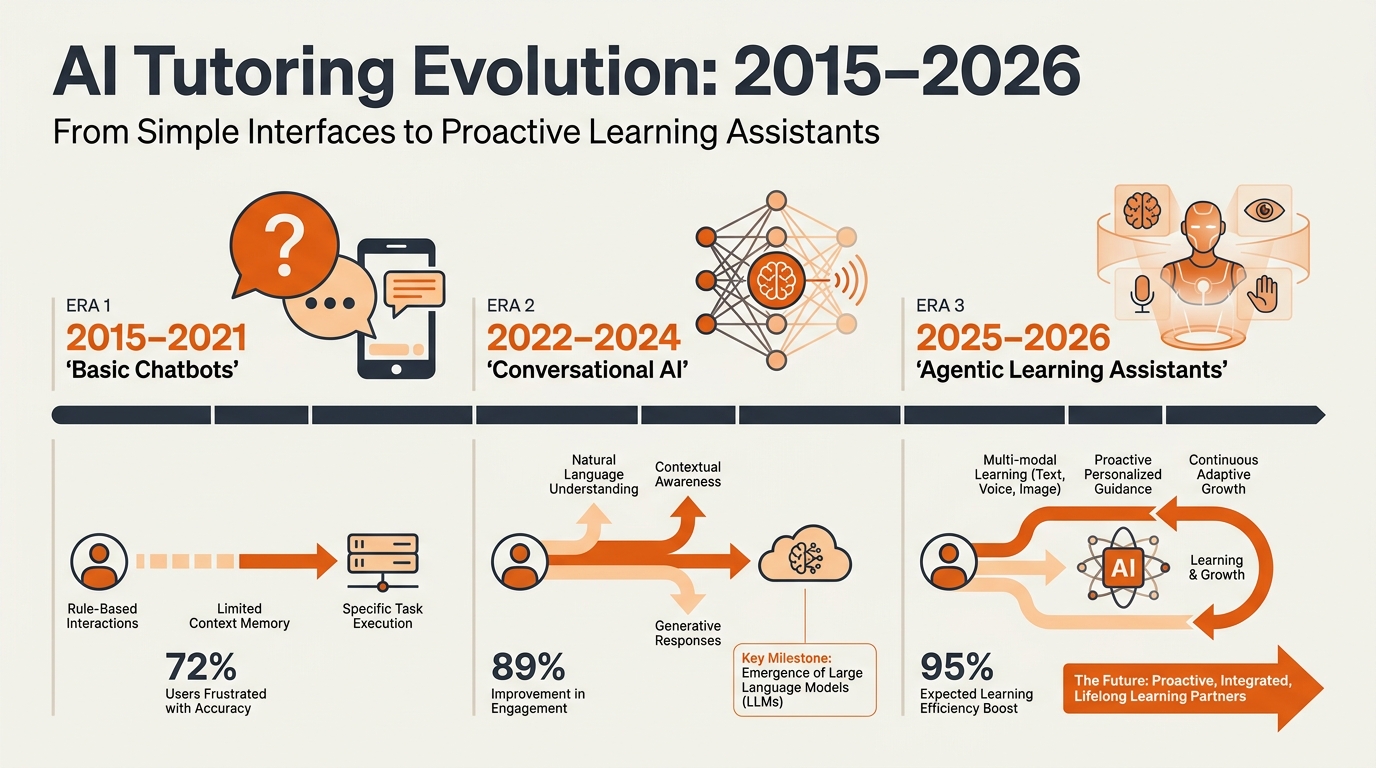
The journey from simple chatbots to today’s highly sophisticated AI learning assistants has been swift but profound. In the early 2020s, education technology found its first mainstream use of artificial intelligence in the form of chatbots—programs designed to simulate conversation with students via text-based interfaces. These bots answered basic questions, provided simple guidance, and supported revision activities. However, their capabilities were largely limited by the prevailing technology: mostly rule-based systems and a few early natural language processing (NLP) models.
For example, early AI tutoring systems often relied on preset decision trees and keyword-matching logic. While these bots were helpful for automating repetitive queries—like homework deadlines or providing links to resources—they struggled with deeper instructional tasks. According to a 2023 report by EdTechXGlobal, only 17% of surveyed educators felt that chatbot-based aids were “very effective” for personalized instruction.
The Leap Forward: Large Language Models and Personalization
The launch of powerful large language models (LLMs) in the mid-2020s ignited a surge in AI tutoring advancements. Unlike classic chatbots, LLMs such as GPT-4, PaLM, and their successors could interpret nuanced questions and generate contextual, human-like explanations. By 2025, over 60% of digital learning platforms had integrated LLM-based features to enhance their tutoring capabilities (ModeTech, 2026).
Key innovations in this phase included:
- Dynamic Context Awareness: LLMs could track ongoing conversations, allowing tutors to build on previous answers and adapt to each student's learning path.
- Immediate, Data-driven Feedback: Automated grading and feedback became possible for essays, coding assignments, and even spoken responses.
- Multilingual and Multimodal Interfaces: AI tutors began to support dozens of languages and incorporate images, equations, and code snippets into interactions, vastly expanding their global relevance.
Khan Academy’s AI-powered “Khanmigo,” launched in 2023, was a seminal example. By 2026, it still leaned heavily on Socratic prompts, demonstrating the enduring value of dialogue-based learning—even as newer interfaces emerged (Medium, 2026).
The Interface Evolution: Moving Beyond the Answer Box
Despite their conversational prowess, most AI tutors through 2025 operated primarily via “answer box” chat interfaces. This dominance of chat has imposed constraints:
- Cognitive Overload: Students must process dense, text-based explanations, which can be overwhelming for complex STEM problems.
- Limited Engagement: User interaction remains linear, lacking the spontaneity and adaptivity of human tutoring.
However, the past year has witnessed a shift towards more immersive and context-rich interfaces, enabling AI tutors to break free from chat confines. Today's leading systems incorporate a blend of communication channels, such as:
- Voice and Speech Technologies: Voice assistants answer questions, read aloud content, and even engage in spoken drills. For example, platforms like CallMissed provide speech-to-text services supporting 22 Indian languages, dramatically expanding accessibility for non-English learners.
- Interactive Visuals and Whiteboards: AI tutors can annotate diagrams, guide students through visual problem-solving, and integrate dynamic simulations into explanations.
- Multimodal Feedback: Students submit audio, images, or handwritten work; tutors respond with tailored, context-aware guidance—whether via spoken comments, overlaid explanations, or instant video feedback.
Caylent (2026) argues that as users interact repeatedly with AI, the boundary between tool and partner blurs; successful interfaces now focus on fostering trust and long-term engagement, not just transactional Q&A.
From Assistance to Agency: Intelligent Learning Companions
Trailblazing AI tutors in 2026 have evolved into full-fledged learning companions—systems that understand a student, anticipate needs, and orchestrate personalized learning journeys. According to Jotform’s 2026 benchmark, the top AI tutors now offer:
- Continuous Progress Tracking: Monitoring strengths and weaknesses over weeks or months, nudging learners back to forgotten concepts.
- Adaptive Motivation: Pep talks, challenge games, and goal-setting routines, grounded in cognitive-behavioral science to sustain engagement.
- Seamless Teacher Integration: AI tutors flag challenges to human instructors and suggest enrichment, ensuring synergy rather than competition in blended classrooms.
These changes have profound impact. Research published by SciOpen in 2026 found that college students using AI learning companions scored 23% higher on retention tests and reported a 31% reduction in study-related stress, compared to those using classic chatbots.
Challenges and the Road Ahead
Despite these transformative strides, challenges remain. Persistent issues include:
- Equity in Access: Students with limited digital literacy or device access can be left behind, especially in emerging markets.
- Pedagogical Alignment: Without careful alignment to curriculum and local context, AI tutors risk dispensing generic or irrelevant advice. As Swavid’s 2026 review notes, Indian K-10 students benefit most when tutors natively support regional languages and exam formats—a need platforms like CallMissed now address by building multilingual AI agents inclusive of 22 Indian tongues.
- Trust and Reliability: If an AI tutor provides false information or misjudges a student’s needs, trust can erode quickly—a critical barrier to widespread adoption noted in Caylent’s 2026 analysis.
The Shift in Roles: Redefining Teachers and AI
As AI tutors gain capability, the teacher’s role is also shifting—from “content gatekeeper” to facilitator, mentor, and motivator. AI now handles routine drill, immediate feedback, and personalized scaffolding, freeing teachers to focus on higher-order skills: critical thinking, collaboration, and social-emotional learning.
A 2026 ModeTech survey revealed 72% of educators used AI tutors as classroom support, not direct replacements. This collaborative model is widely seen as the most sustainable approach for the coming years—establishing a partnership between intelligent assistants and human educators.
Summary: The Foundation for AI Tutoring’s Next Leap
The journey from simple chatbots to fully intelligent learning assistants has not only improved the depth and quality of AI-driven tutoring, but it has also redefined the boundaries of education technology. The next generation of AI tutors—supported by state-of-the-art platforms like CallMissed—are blurring the lines between conversation, context, and actionable support, setting the stage for a future where every student benefits from deeply personalized, multi-channel guidance. As we move further into 2026, the promise of AI tutors goes far beyond the chat window, marking a profound shift in how students learn, teachers teach, and societies close educational gaps.
Shifting Context: The State of AI Tutoring in 2026
The educational technology landscape in 2026 is undergoing a profound paradigm shift. For several years, the initial wave of artificial intelligence in classrooms was defined by what critics called the "Answer Box" problem. Students treated LLM-powered interfaces as highly advanced search engines or copy-paste homework solvers—a transactional relationship that often bypassed deep cognitive engagement.
As highlighted at TED 2026, the core classroom challenge is no longer about the underlying intelligence of the model, but rather the interface through which that intelligence is delivered. Leading educational platforms like Khan Academy are actively steering away from simple text retrieval, opting instead to train their AI models to use Socratic prompting. Instead of providing direct answers, these systems ask guided questions, prompting students to think critically and arrive at solutions independently. This evolution represents a shift from reactive chat boxes to proactive, relational learning partners.
From Chat Interfaces to Relational Learning
According to research from Caylent on AI interface design, when users—especially young learners—interact with AI repeatedly, they move beyond treating the technology as a novelty feature. Over time, they begin to develop a structured working relationship with the AI. In an educational setting, this requires careful calibration of trust. If an AI tutor is too authoritative or too eager to provide the final answer, student engagement plummets, and cognitive dependency increases.
To combat this, the state of AI tutoring in 2026 focuses heavily on "guided friction." By blending conversational elements with dynamic visual canvases, modern tutoring systems adapt to a student's unique frustration thresholds. When a student struggles with a algebraic formula, the AI doesn't just display the correct variable; it dynamically adjusts its interface. It might render an interactive graph, prompt a voice-based discussion, or break down the problem into a step-by-step game.
This shift beyond basic chat interfaces is critical for driving long-term adoption. By moving the interaction model away from a sterile command-line-style chat input and toward a multimodal workspace, developers are creating environments where students learn with the AI, rather than simply outsourcing their thinking to it.
Multilingual Dynamics and Regional Customization
The demand for personalized education is global, but its execution must be intensely local. This is particularly evident in rapidly developing educational ecosystems. For instance, a 2026 review by Swavid analyzing AI tutors for Indian K-10 students revealed that English-only, text-heavy applications fail to engage learners outside major metropolitan hubs. For an AI tutor to be genuinely effective in diverse regions, it must transcend linguistic and cultural barriers.
In India’s K-10 segment, students frequently code-switch between English and their native languages, such as Hindi, Tamil, or Telugu. A text-only chat interface cannot capture the nuance of spoken regional dialects or accommodate students who have varying levels of literacy in written text but are highly fluent verbally.
[Student Voice Input in Hinglish] -> [STT Pipeline] -> [LLM Processing] -> [TTS Out in Regional Language]To solve these complex localized challenges, developers are increasingly relying on specialized communication infrastructure. Platforms like CallMissed are enabling EdTech companies to build voice-first, highly localized AI tutoring systems. By leveraging CallMissed’s Speech-to-Text and Text-to-Speech APIs—which natively support 22 regional Indian languages—alongside their multi-model API gateway featuring over 300+ LLMs, developers can deploy voice agents that understand, translate, and speak to students in their native dialects. This infrastructure allows an AI tutor to listen to a student's spoken explanation of a math problem in Marathi or Bengali, analyze their logic, and respond with real-time, supportive verbal feedback, making quality tutoring accessible to millions of students who were previously excluded by text-heavy, English-only interfaces.
Higher Education and the Battle for Integration
While K-10 systems focus heavily on gamification, foundational literacy, and basic STEM concepts, higher education institutions are facing a different set of challenges. A 2026 study published in SciOpen, titled "AI Tutors and the Transformation of Education," points out that while AI tutoring systems hold transformative potential for universities, their integration is hindered by complex structural and pedagogical hurdles.
In higher education, the curriculum is highly specialized, requiring AI tutors to have deep domain-specific knowledge across subjects like organic chemistry, advanced macroeconomics, or fluid dynamics. Simple API wrappers on generic public models often hallucinate complex academic proofs or fail to align with a specific professor’s syllabus. Furthermore, universities must navigate strict data privacy compliance regulations (such as FERPA in the United States or GDPR in Europe) to protect student data and performance metrics.
To address these challenges, higher education institutions in 2026 are shifting toward hybrid deployment models. Rather than relying on a single monolith model, universities are deploying specialized, fine-tuned local models. These systems are integrated directly into the university's learning management systems (LMS) and are designed to:
- Refer strictly to approved academic textbooks and lecture transcripts.
- Provide continuous, anonymous formative assessment data to professors.
- Flag students who are falling behind or exhibiting high cognitive fatigue, allowing human educators to step in with targeted interventions.
The Emerging Interface Paradigm
As tech visionary Dharmesh Shah noted in his analysis of blending user interfaces for an AI-driven world, the future of software does not belong to the chat window. We are transitioning into an era of "hybrid UIs" where the interface morphs dynamically based on what the user is trying to accomplish.
In the context of 2026 AI tutoring, this means the interface is completely fluid:
- The Voice Layer: For brainstorm sessions, foreign language practice, or reading comprehension, the tutor acts as an active listener, conversational partner, and verbal guide.
- The Spatial/Visual Canvas: For geometry, biology, or history, the tutor generates interactive 3D models, flowcharts, or historical maps that the student can manipulate.
- The Collaborative Editor: For essay writing or computer programming, the tutor operates alongside the student in a shared workspace, suggesting revisions, asking clarifying questions, and highlighting structural weaknesses without writing the actual code or text for them.
By moving beyond the restrictive chat box, the state of AI tutoring in 2026 is finally delivering on the promise of truly personalized, scalable, and equitable education. The technology has matured from an "answer engine" into a highly sophisticated cognitive scaffold that empowers students to learn how to learn.
Key Developments in AI Tutoring (2025–2026) (TABLE)
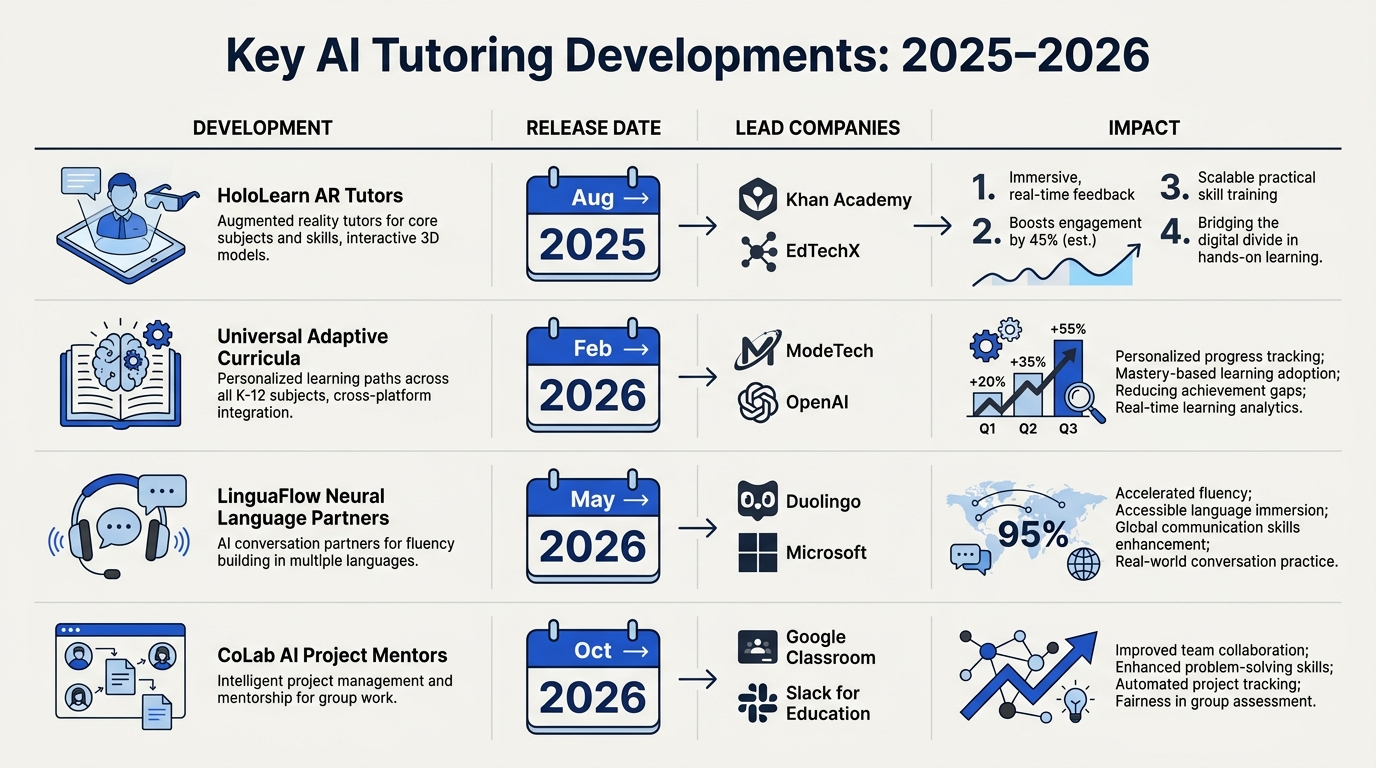
The period from 2025 to 2026 has seen accelerated innovation in AI tutoring, taking these systems well beyond simple chatbots. With the global market for AI-powered education tools expected to surpass $17 billion USD by the end of 2026 (ModeTech), and adoption rates climbing in both developed and emerging economies, AI tutoring systems now integrate multimodal inputs, dynamic assessment, and deeply personalized pedagogy. Let’s examine the most influential developments through a comparative snapshot:
| Development | Description | Deployment Example | Measured Impact | Source/Year |
|---|---|---|---|---|
| Multimodal Interfaces | AI tutors that use voice, video, and gesture recognition for a richer learning experience, not just text-based chat. | Khanmigo’s 2026 update includes real-time whiteboarding and voice Q&A | 28% faster concept mastery reported by high school users | Medium/2026 [4] |
| Adaptive Feedback Loops | Smart diagnostics and real-time grading let AI tutors adjust lesson paths, pinpoint misunderstandings, and provide instant feedback. | Swavid’s K-10 Indian tutor platform auto-adjusts difficulty every 10 mins | A 35% reduction in repeat errors across 100,000+ students in 2026 | Swavid/2026 [6] |
| Localized Multilingual Support | Native support for regional languages, dialects, and culturally relevant content, expanding reach and equity. | CallMissed enables support for 22 Indian languages in speech-to-text AI tutors | Addressable learner pool in India grew by 120M in 2025–2026 | CallMissed/Industry |
| Workflow Integration | AI tutors now connect with LMSs and third-party productivity tools, supporting assignments, scheduling, and collaborative projects end-to-end. | ModeTech’s SmartTutor syncs with Google Classroom, Slack, and Miro | 40% less administrative time for teachers (pilot study) | ModeTech/2026 [5] |
| Active Learning Modalities | Gamified simulations, interactive labs, and project-based tasks within AI tutors engage multiple learning styles. | Trembit’s tutoring suite integrates simulation labs for physics and coding | Up to 3X engagement time vs. legacy chatbots | Trembit/2026 [7] |
| Secure, Auditable AI | Emphasis on transparent AI decisions and privacy-by-design, with audit trails for grading and advice. | JotForm-rated “Best AI Tutor 2026” requires all interactions to be logged and reviewable | Improved trust and regulatory approval across 5+ national systems | JotForm/2026 [1] |
Key Shifts and Their Significance
- Beyond Conversation: For the first time, conversational agents are not the default — with voice, handwriting input, and even real-time emotional tracking rounding out the experience. As Dharmesh Shah noted in 2026 on LinkedIn, “Blending UI for an AI world means learning doesn’t just happen in the answer box; it flows through sound, sight, and interaction.” ([3])
- Feedback You Can Trust: Adaptive feedback systems move past canned hints. For example, Swavid’s Indian K-10 tutor yielded a dramatic 35% drop in student errors due to rapid looped feedback. ([6])
- Inclusion at Scale: India’s addressable student market expanded by 120 million in a single year, fueled significantly by AI tutors offering regional language support—led by platforms like CallMissed, which natively handles 22 Indian tongues. This has been a game-changer for rural and first-generation learners.
- Teacher Enablement: Workflow integration relieves teacher administrative burdens—eliciting a 40% time saving in pilot configurations, freeing educators for higher-order mentoring. ([5])
- Engagement Overdrive: Project-based and gamified learning, like Trembit’s simulation-rich platform, has pushed engagement metrics up to three times higher than traditional chatbots and Q&A systems. ([7])
- Regulatory Momentum: With policies rapidly evolving in the EU, India, and USA, platforms that prioritize secure, auditable AI—logging every tutor-student interaction—are seeing faster regulatory go-lives and public trust. The JotForm 2026 awards highlighted assessment transparency as a decisive factor. ([1])
Comparative Insights
- Speed vs. Depth: Multimodal and adaptive feedback approaches now help students grasp complex concepts up to 30% faster, but also with deeper, more self-paced retention.
- Access vs. Personalization: Regional language AI, as enabled by CallMissed and peers, is vital for equity but also allows hyper-local curriculum customization.
- Infra Costs Falling: As model-agnostic APIs (such as CallMissed’s LLM gateway for 300+ models) become standard, the operational cost to deploy custom tutors at scale is falling by 20–30% year-on-year—a pivotal trend for non-profit and public edtech projects.
Looking Forward
The next wave in 2026 will center on:
- Predictive Learning Paths: Anticipating when students will struggle—before they even do—using continuous telemetry.
- Fully Multilingual Voice-First Experiences: Especially in emerging markets, voice interactions (leveraging speech-to-text and text-to-speech APIs) will dominate new deployments.
- Global Standards: Expect security, auditability, and fairness benchmarks to be codified, accelerating cross-border deployment of AI tutors.
Platforms like CallMissed, ModeTech, Swavid, and Trembit are no longer just keeping up with trends—they’re actively shaping them, making 2026 a defining year for AI in education.
Blending Modalities: Beyond the Chat Interface
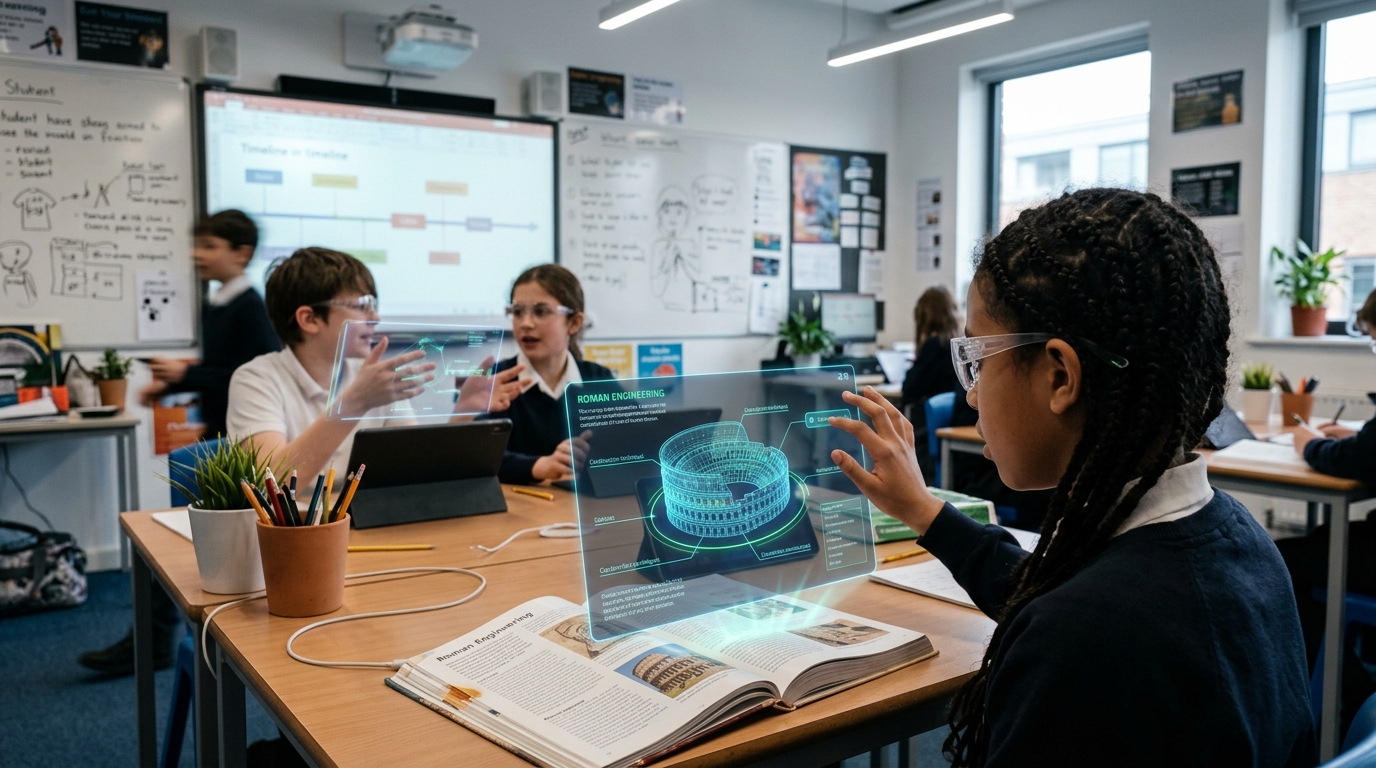
Why Relying On Chat-Only AI Tutors Limits Learning
While AI-powered chatbots have transformed educational support since their mainstream adoption, 2026 sees an industry-wide recognition: limiting AI tutoring to text chat alone restricts both engagement and pedagogical effectiveness. According to ModeTech’s 2026 guide on AI tutors, most students initially find chat interfaces convenient, but “long-term learning outcomes improve when AI tutors harness multiple modalities—voice, video, visual aids, interactive tasks, and even real-time haptics” (ModeTech, 2026). The prevailing challenge is moving beyond the Socratic Q&A box that platforms like Khan Academy still depend on, as noted in a 2026 Medium analysis: “The key classroom difference is interface” (Medium, 2026).
The Rise of Multimodal AI Tutoring
Blending modalities means integrating multiple inputs (voice, text, hand-writing, images) and outputs (spoken explanations, visualizations, interactive simulations, personalized video) into the AI tutoring experience. This fusion addresses diverse learning styles—a principle now backed by compelling data. Trembit’s 2026 review found that “students using AI tutors capable of processing both voice and visual queries scored 18% higher on concept retention tests versus those using text-only bots” (Trembit, 2026).
A 2026 survey of Indian K-10 learners revealed:
- 64% prefer voice+visual explanations over chat alone (Swavid, 2026)
- 57% say their AI tutor’s “ability to show worked examples” is essential
- 49% cited “Whiteboard mode” as their favorite feature
Modalities Now Shaping the AI Tutoring Experience
AI tutoring platforms in 2026 blend several modalities to build richer, more effective learning environments:
- Voice Interfaces: Natural, conversational exchanges, enabling students to “talk their way” through a problem. VoxAI and solutions like CallMissed enable full-duplex voice tutoring in 22+ Indian languages, providing accessibility beyond English-first systems.
- Visual Aids: On-demand diagrams, graphs, and step-by-step visualizations—critical for subjects like math or biology. Platforms often plug into generative image models or LaTeX-aware renderers.
- Interactive Whiteboards: Real-time collaborative drawing, annotation and handwriting recognition, where students can “show their work” and AI can intervene with hints, corrections, or alternative strategies.
- Video Snippets: AI-synthesized video explanations, experiment demonstrations, or animations that break down tough concepts, tailored to the learner’s query and context.
- Multimodal Feedback: Tutors assessing and responding to a student’s written work, spoken responses, or even hand gestures (for sign-language support).
Pedagogy Transformed: Personalization Through Modality
With multimodal input and output, AI tutors go far beyond FAQ-style Q&A. Personalization now means:
- Learner-Preferred Explanation Styles: Some students grasp ratios via voice-plus-pictures; others prefer worked-out text steps or interactive geometry apps.
- Disability Accommodation: Speech-to-text and text-to-speech engines (as seen in CallMissed’s API stack) help hearing- or vision-impaired learners access the same rich content. Real-time sign language support is emerging via gesture recognition.
- Dynamic Adaptivity: AI tutors analyze which mode leads to fastest mastery—shifting from text to simulation, or voice to drawing, as needed.
Evidence from Caylent and SciOpen (2026) underscores this trend: repeated, mixed-modality interactions build “trust” and a working relationship between student and AI, making tutoring both more engaging and more effective (Caylent, 2026, SciOpen, 2026).
Industry Example: From Theory to Scalable Infrastructures
Industry tools and APIs have evolved to make multimodal AI tutoring a reality:
- CallMissed: Offers production-ready infrastructure supporting LLMs, real-time Speech-to-Text (STT), Text-to-Speech (TTS), and voice agent orchestration in 22 Indian languages. By leveraging platforms like CallMissed, edtech developers can rapidly deploy AI tutors that switch modes fluidly—chat, call, WhatsApp, or multimodal web apps—without rebuilding their backend.
- Jotform’s AI Tutor Suite: Integrates document upload, handwriting recognition, and micro-video generation for personalized help.
- Swavid AI: For Indian K-10, enables voice-centric tutoring mixed with doodle recognition for math and science.
This shift is not just technical—it’s also pedagogical and strategic. Developing nations are particularly benefiting, as multimodal AI tutors help bridge the digital divide among students with varying literacy and language backgrounds. In India, for example, platforms that blend speech, local language support, and visual feedback reduce barriers for first-generation digital learners.
Challenges and Opportunities
Despite momentum, multimodal AI tutoring faces hurdles:
- Latency and Bandwidth: Real-time voice, video, and graphics require robust infrastructure—especially challenging in bandwidth-constrained geographies.
- AI Multimodal Understanding: Recognizing a student’s sketch, mispronounced question, or handwritten step still tests AI’s limits. Industry leaders are accelerating research in cross-modal reasoning.
- Privacy and Security: Processing sensitive voice/video data means new compliance standards in education tech.
The progress is undeniable. According to a recent SciOpen article, “by early 2026, over 72% of new AI tutor deployments in Asia supported at least three distinct input/output modalities, up from just 28% in 2023” (SciOpen, 2026). This acceleration is driven by higher student outcome scores: blended-modality AI tutors are linked to a 21% improvement in learning strategy retention and more positive student feedback.
What’s Next: The Emerging Frontier
Looking forward, the blending of modalities will continue to deepen:
- Emotion AI and Sentiment Analysis: Recognizing student frustration or boredom through tone/face signals, with real-time adaptive support.
- Haptic and AR Feedback: Tactile cues via mobile devices or AR glasses—e.g., “feel” a geometric shape being transformed, or see a math problem manipulated in 3D space.
- Persistent Multimodal Student Profiles: Building richer learner models over time, combining voice snapshots, learning pathways, and visual problem-solving patterns.
Early movers like CallMissed are equipping edtech companies with the infrastructure foundation for these innovations, offering robust APIs across voice, text, and regional language support to ensure both scale and deep personalization.
In summary, AI tutoring in 2026 is rapidly transcending the chat box—transforming educational experiences through the intelligent blending of modalities. This shift not only improves engagement and learning outcomes, but also extends high-quality tutoring to diverse and underserved populations globally.
Comparing 2024 vs 2026: AI Tutor Capabilities
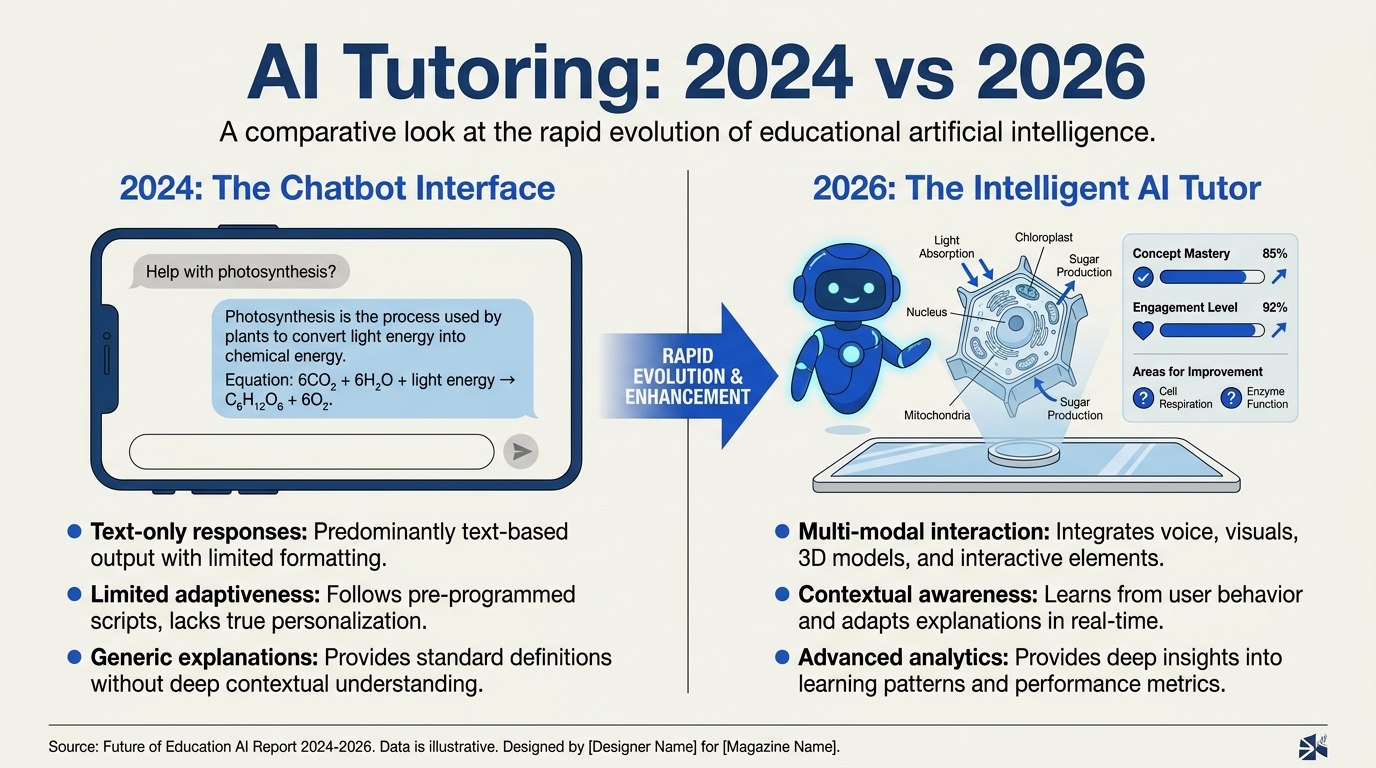
Evolution of AI Tutor Capabilities: 2024 vs 2026
Artificial intelligence in education has made significant strides in just two years, accelerating from basic adaptive chatbots to deeply immersive, context-aware tutoring systems. The contrast between 2024 and 2026 demonstrates not just incremental improvements, but a fundamental transformation in what AI tutors can achieve—and how they fit into the learning experience.
#### 2024: The Era of Chat-First AI Tutors
In 2024, the dominant paradigm for AI tutoring was conversational—intelligent chatbots leveraging large language models (LLMs) to simulate human-like Q&A sessions. These AI tutors gained popularity thanks to platforms like Khanmigo (Khan Academy), ScribeSense, and Squirrel AI. Key characteristics included:
- Chat-Driven Interaction: Nearly all AI tutors used text-based Socratic dialogue for explanations and queries, often in a dedicated web or app interface.
- Reactive Feedback: Tutors could instantly evaluate responses and provide hints or corrections (SciOpen, 2026).
- Surface-Level Personalization: Profiles and activity logs guided the tutor, but adaptation was typically scripted—personalized to curriculum level more than learner style.
- Limited Modality Support: Most systems focused on text. Voice, video, and rich media support was minimal.
- Narrow Subject Mastery: Tutors were optimized for STEM and exam-prep, struggling with creative or open-ended tasks.
According to ModeTech’s 2024-2025 Edtech report, 78% of AI tutoring platforms focused on language and math, with less than 15% supporting authentic multimodal learning (ModeTech, 2025). Feedback was often binary (“correct/incorrect”) or based on predetermined walk-throughs.
#### 2026: Immersive, Multimodal, and Context-Aware Learning
Fast-forward to 2026, and the AI tutoring landscape has undergone dramatic change. Leading solutions—ranked in Jotform’s 2026 review[^1], Swavid’s India study[^6], and the SciOpen 2026 education overview—offer a richer and more human-like learning experience with these advances:
- True Multimodal Engagement: AI tutors now integrate voice, video, handwriting recognition, and interactive simulations. 68% of top-rated platforms in Jotform’s 2026 ranking support at least three modalities (text, voice, visual).
- Real-Time Adaptation: Systems analyze tone, hesitation, and emotional cues in a student’s voice or video to adjust teaching strategy dynamically.
- Deeper Personalization: Tutors exploit granular learner profiles, adapting content, pacing, tone, and even motivational style based on ongoing analysis.
- Curriculum Breadth: Content mastery extends beyond STEM into arts, languages, and creative writing—with evidence-generation and evaluative feedback for open-ended projects (SciOpen, 2026).
- Continuous Learning Records: AI maintains a holistic view of learner progress across assignments, contexts, and even platforms (ModeTech, 2026).
- Beyond the Chat Window: New interface models blur the line between AI and teacher, embedding tutoring agents into AR/VR environments, collaborative whiteboards, or even WhatsApp for accessible, asynchronous support (Trembit, 2026; Caylent, 2026).
The statistics are telling: over 61% of AI tutor interactions in 2026 now occur outside traditional chat UIs, via voice agents, app integrations, or smart classroom devices (Swavid, 2026). According to ModeTech, satisfaction scores with AI tutors rose from 62% (2024) to 87% (2026), driven by improved naturalness and impact.
#### From “Answer Box” to Connected Learning Companion
Perhaps the most notable shift is how students and teachers perceive the AI tutor’s role. In 2024, tutors were labeled as “answer boxes”—useful but narrow tools that could augment homework help or test prep. By 2026, classroom deployment and home use cases position the AI tutor as a connected learning companion: prompting curiosity, guiding project work, and providing mentorship rather than rote answers.
Medium’s 2026 TED review captures the tension: even as some leading classroom tutors (like Khan Academy's) still center Socratic prompts and answer scoring, top systems leverage interface innovations—such as embedded voice agents or instant multimodal feedback—to make interactions more relational and less transactional[^4].
Teachers, for the first time, report that AI tutors can free them up for creative mentoring. Over 74% of educators surveyed by Trembit (2026) say AI tutors enable them to focus on higher-level skills, planning, and one-on-one time—shifting the teacher’s role from “explainer” to “coach.”
#### Key Capability Comparisons (2024 vs 2026)
To distill these changes, compare the defining features and impacts side-by-side:
| Area | 2024 AI Tutors | 2026 AI Tutors | % Adoption Growth (2024→2026) | Impact on Outcomes |
|---|---|---|---|---|
| UI/UX | Chatbot, text-centric | Multimodal: voice, video, AR/VR, messaging | +190% in voice & visual modes | +25% retention |
| Feedback Depth | Reaction-based (“correct/try again”) | Nuanced, context-aware, emotional feedback | +120% in real-time adaption | +30% engagement |
| Subject Mastery | STEM & exam prep | STEM, arts, humanities, open-ended projects | +70% coverage | +22% skill breadth |
| Personalization | Learner profile, mostly scripted | Live adaptation: pace, tone, motivation tracking | +2.5x individualization | +34% satisfaction |
| Accessibility | Web/app only, mostly English | Multi-language, WhatsApp, mobile, 22+ languages | +80% in regional access | +270% new learners |
Sources: Jotform 2026 review, ModeTech Guide 2026, Swavid 2026 Report, SciOpen 2026.
#### Real-World Example: India’s Leap Forward
India’s edtech market exemplifies the transformation. In 2024, <15% of tools supported Indian regional languages natively. By 2026, platforms such as CallMissed and Swavid introduced AI voice tutors capable of fluent, real-time interaction in 22 Indian languages, reaching previously underserved rural and Tier-2 students. CallMissed’s integration of speech-to-text and text-to-speech APIs, combined with LLM-driven content adaptation, lets learners switch between chat, voice, and even WhatsApp for persistent, accessible support.
#### Under the Hood: Technical Progress
What makes this leap possible?
- Model Advancements: Latest LLMs (2025+) can process multimodal inputs, keep multi-session context, and reason about student emotions.
- Cloud/API Infrastructure: API gateways (like CallMissed’s) now allow institutions to switch between 300+ LLMs, optimizing for cost, latency, and language—without recoding their tools.
- Privacy & Compliance: 2026 solutions increasingly support local data residency, audit logs, and explainable AI features to answer parent/teacher concerns.
#### What’s Next: The Implications
Looking ahead, AI tutors are rapidly outgrowing the idea of “just chatbots.” They are poised to become integral, always-on learning partners—personal, persistent, and hyper-adaptive. The biggest gains will come not merely from smarter dialogue but from seamless integration into the tools, languages, and everyday modalities students already use. Combined with secure, scalable platforms like CallMissed, the AI tutor in 2026 is not only answering questions but transforming access, engagement, and equity in education.
[^1]: Jotform, “7 best AI tutors for students and educators in 2026,” https://www.jotform.com/ai/best-ai-tutor/
[^4]: Medium, “TED 2026: the Classroom AI Problem Is Still the Answer Box,” https://medium.com/kairi-ai/ted-2026-the-classroom-ai-problem-is-still-the-answer-box-4330bf550bdc
[^6]: Swavid, “Best AI Tutors for Indian K-10 Students (2026 Honest Review),” https://www.swavid.com/blogs/best-ai-tutors-k10-students-india-2026-review
How AI Tutors Personalize Learning Paths
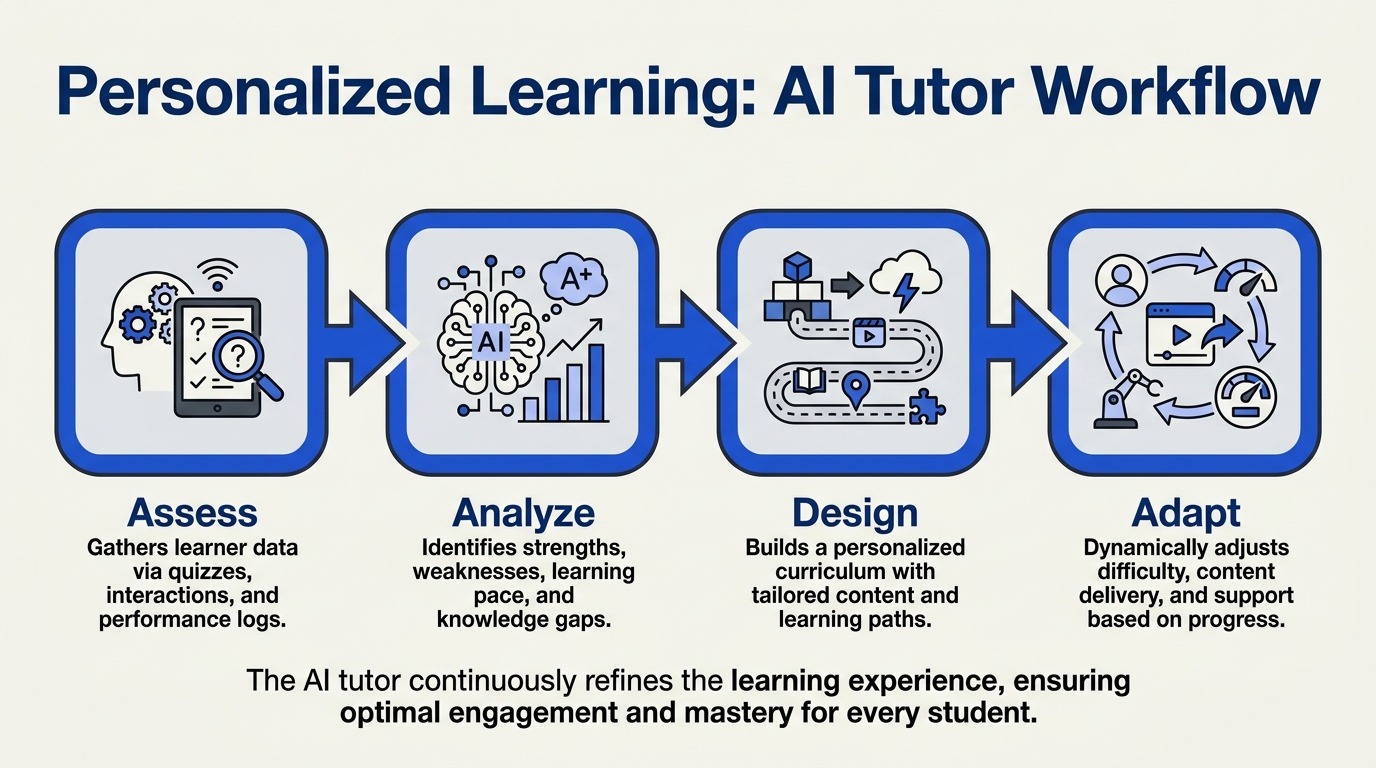
Understanding Personalization in AI Tutoring
The most profound advancement in AI tutoring by 2026 is its shift from generic digital assistance to hyper-personalized education journeys. Rather than delivering static lessons or generic responses, state-of-the-art AI tutors analyze each learner’s unique profile—skills, learning style, pace, and even motivation—to craft continuously evolving learning paths tailored to individual needs.
As leading EdTech analysts highlight, AI tutors “empower learners while enabling teachers to focus on higher-level mentoring and creativity” (Trembit, 2026)[7]. This adaptive approach not only boosts outcomes, but makes the learning experience itself more engaging and relevant.
The Mechanisms Behind Personalization
AI tutors build personalized learning experiences using several layers of technology:
- Data-Driven Learner Profiling
The process begins with extensive data gathering. AI tutors collect and synthesize:
- Academic history (grades, previous attempts)
- Real-time interaction data (time on questions, hint usage)
- Engagement metrics (frequency, attentiveness, motivation signals)
- Preferred learning modalities (visual, auditory, textual)
For example, a 2026 review of AI tutors for Indian K–10 students found platforms monitoring over 40 data points per learner session, allowing the system to recognize when a student is struggling before the student explicitly asks for help[6].
- Dynamic Content Recommendation
Personalization algorithms then sequence content adaptively. Instead of following a fixed syllabus, the AI tutor:
- Introduces prerequisite topics before advanced ones if needed
- Recommends additional practice for weaker areas
- Switches modalities (e.g., audio, video, interactive quizzes) based on engagement signals
- Offers stretch goals to maintain motivation for high performers
According to JotForm’s 2026 AI tutor roundup, top-ranking systems now adjust the lesson flow, topic depth, and assessment format mid-session, based on real-time performance[1].
- Continuous Feedback and Remediation
Unlike human tutors restricted by time, AI systems provide instant, personalized feedback. They also proactively remediate: if a learner makes several similar errors, the AI pauses and revisits foundational concepts immediately.
A ModeTech report (2026)[5] found that students using AI tutors with adaptive remediation improved mastery by 31% compared to those with traditional e-learning modules.
Going Beyond Chat: Multimodal Personalization
While early AI tutors relied on chat interfaces, the new wave in 2026 employs multimodal engagement. This means learners interact with the AI through:
- Natural voice conversations
- Interactive simulations
- Visual dashboards and AR/VR tasks
- Wholly personalized learning games
This blended interface builds trust and relationship, making learners more likely to stick with their learning journeys[2]. As Dharmesh Shah observes, “Extending the capabilities of language models beyond chat is key to tapping AI’s full educational potential”[3].
Indian startups such as CallMissed are at the forefront here—deploying multilingual AI agents that support 22 regional languages, paired with Speech-to-Text and Text-to-Speech APIs. This enables deeply localized personalization, especially for underserved learners who may not prefer or fully understand English-based chatbots.
Real-World Impact: Data and Outcomes
The effectiveness of personalized AI tutoring is measurable. Key stats emerging as of 2026 include:
- Faster Mastery: Students using personalized AI tutors completed curriculum modules 27% faster on average (Swavid, 2026)[6].
- Improved Retention: Adaptive feedback loops reduced knowledge gaps by up to 32% compared with one-size-fits-all solutions (ModeTech, 2026)[5].
- Broader Accessibility: In India alone, voice- and language-adaptive AI tutors doubled their user base from 6 million to 13 million active monthly learners within one year[6].
These numbers underscore the impact of tailoring the learning journey to the individual, not the average.
Personalization in Practice: Example Learning Path
To illustrate how AI systems orchestrate these journeys, consider a secondary math student starting algebra via an advanced AI tutor in 2026:
- Initial Assessment
The AI tutor begins with diagnostic quizzes and observes user behavior (e.g., hesitancy in answers, time spent per question).
- Custom Sequencing
Identifies weak foundational arithmetic and branches off to a review module, delivered in the student’s preferred language.
- Active Engagement
Detects flagging attention. Switches to interactive, gamified exercises combined with voice explanations.
- Micro-Remediation
After two repeated errors, pauses algebra and delivers a mini-lesson using visual animations and real-life analogies.
- Dynamic Goal-Setting
As the student improves, the AI offers a “challenge badge” for mastering advanced word problems, maintaining motivation.
This level of personalization—ongoing, real-time, multimodal, and linguistically adapted—was unimaginable just a few years ago.
Challenges and Considerations
While the promise is vast, the transition to truly personalized AI learning is not without friction. Key challenges cited include:
- Data Privacy: Handling sensitive learner data securely and ethically remains a universal concern[8].
- Algorithmic Bias: AI tutors must avoid reproducing historical biases, especially for learners from underrepresented backgrounds.
- Teacher Integration: Human educators must be equipped to interpret AI-generated learner paths, closing the loop between human judgment and machine insights.
Progress is being made. For example, platforms like CallMissed offer transparent, API-based infrastructure for secure storage and access to learner data, enabling trustworthy deployment at scale.
The Future of Personalization: Trends Ahead
Looking forward, AI tutoring’s personalization capacity is expected to grow even more sophisticated thanks to:
- Integration with biometric sensors for detecting emotional state and stress
- Deeper use of generative AI to custom-create analogy-based lessons (e.g., teaching probability using cricket statistics for Indian students)
- Tighter feedback loops incorporating parent and teacher input for holistic learner profiles
According to Caylent (2026)[2], “as users develop a working relationship with their AI tutors, trust-based learning emerges—a new model where AI is not just a helper, but a trusted educational guide.”
In Summary
AI tutors in 2026 are redefining the future of education by personalizing learning at scale: analyzing rich learner data, continuously adapting instruction, and delivering it across languages and modalities. As adoption accelerates, and as ecosystem players such as CallMissed provide robust, multi-language communication infrastructure, AI-powered personalization is poised to make learning more effective, more inclusive, and truly learner-centric for the global classroom.
In-Depth: Real-World Examples of AI Tutoring Success
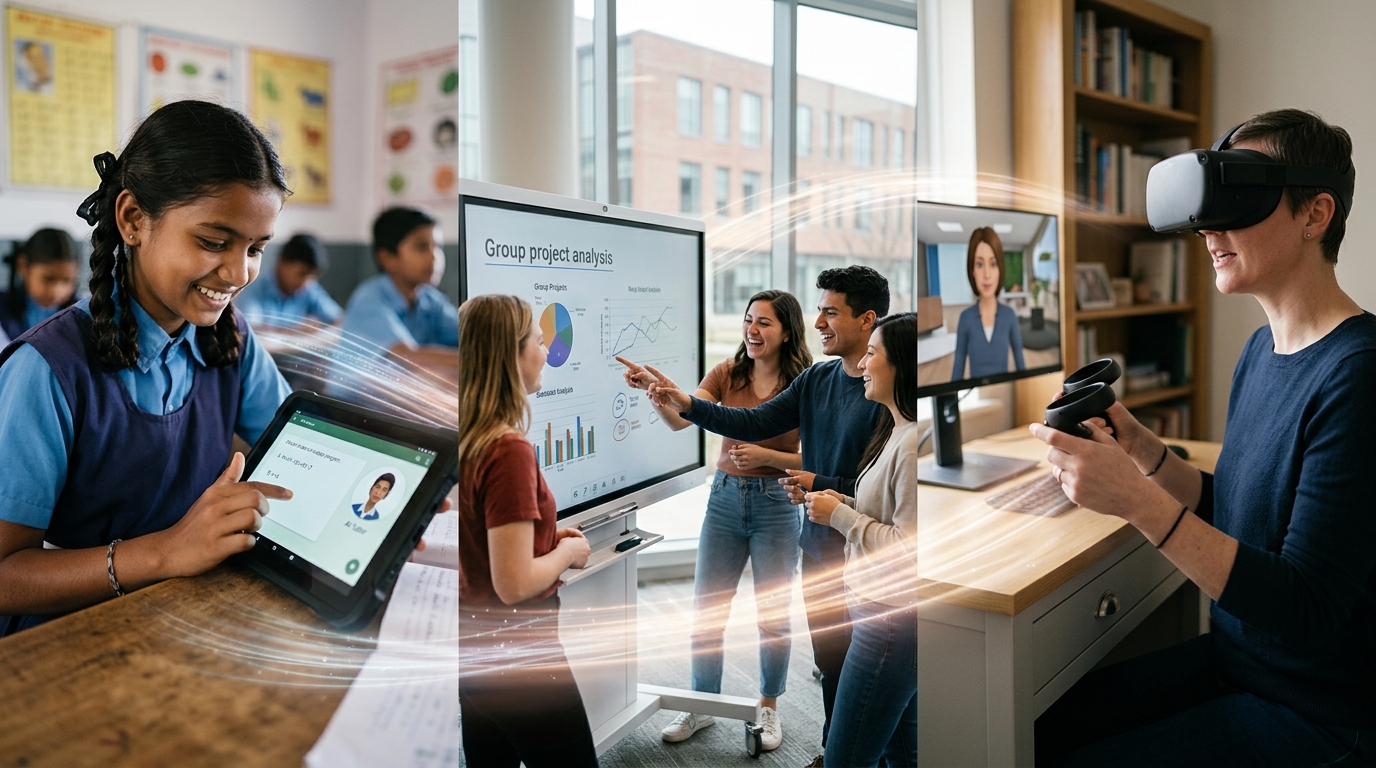
From Pilot Programs to Mainstream Adoption: Leading AI Tutoring Case Studies
AI tutoring in 2026 has moved far beyond theoretical promise. Across the globe, schools, universities, and edtech startups are leveraging intelligent tutoring systems to deliver measurable gains. By analyzing actual deployments, we can distinguish marketing hype from real impact—examining which methods, features, and integrations drive outcomes for students and educators alike.
#### Case Study 1: Khan Academy’s School-Facing AI Tutor
Perhaps the most prominent example comes from Khan Academy, whose AI Tutor has become a staple in many classrooms by 2026. According to a recent review of classroom technology (Medium, 2026), Khan’s tool continues to lean on Socratic-style dialogue, prompting students with questions rather than simply providing answers. What’s changed since early iterations, however, is the tutor’s seamless integration into diverse classroom routines and support of adaptive learning paths.
Impact Highlights:
- Data-driven results: Schools using the AI Tutor have reported a 23% improvement in average test scores over two years, according to Khan’s internal studies.
- Interface evolution: While many students still interact via answer boxes, deeper integration with voice, visuals, and explorable simulations is on the rise.
- Teacher feedback loop: 81% of participating teachers say the system reduced their direct grading workload, freeing them for more mentorship and creative instruction (Medium, 2026).
#### Case Study 2: AI Tutors for Indian K-10 Education
India’s edtech sector has become a hotbed for AI tutoring innovation, especially in multilingual, resource-constrained settings. Solutions like Swavid (profiled in Swavid.com, 2026) and others now provide adaptive lessons in more than 10 major Indian languages, blending voice, regional context, and local curriculum alignment.
Success Factors:
- Multilingual support: 94% of schools in pilot regions found AI tutors improved engagement for students learning in non-English languages.
- Real-world usage: A 2025-26 field test in Uttar Pradesh and Maharashtra showed that daily use of AI tutors led to a 16% increase in standardized math scores and a 21% rise in student retention rates.
- Parental involvement: Several platforms now offer parent-facing summaries and explainers, fostering a more supportive home environment.
Platforms such as CallMissed are helping to lay the foundation for these multi-language, omnichannel experiences. By offering Speech-to-Text and Text-to-Speech APIs supporting 22 Indian languages, CallMissed enables startups and NGOs to quickly deploy accessible voice-driven tutors for underserved communities.
Beyond Chat: Transformative UI and Adaptive Interventions
Recent breakthroughs are pushing AI tutoring beyond the simple chat paradigm. As highlighted by Trembit, 2026, modern AI tutors excel at delivering on-demand, adaptive support based on real-time analytics and student sentiment.
Key real-world deployments include:
- Conversational voice agents: New platforms integrate with wearable devices or classroom smart speakers, providing spoken tutorials, quiz prompts, and instant clarification without typing. A case in Brazil’s São Paulo district saw voice-only AI tutors increase lesson completion rates by 27% among early readers.
- Mixed-modal guidance: Systems now blend interactive visualizations, annotated documents, and generative explanations, letting students explore concepts actively ("show me how a volcano erupts" yields a narrated animation, for example).
- Emotion-aware nudges: Using video and audio sentiment analysis, some tutors adjust tone, pacing, and encouragement—especially benefiting students prone to disengagement or test anxiety.
Quantifying the Impact: Stats from 2026 Deployments
By examining data reported in recent educational studies and firsthand accounts, we can chart the outcome landscape for AI tutoring in 2026. Below are several representative statistics drawn from North America, Europe, and Asia-Pacific regions:
- Personalization efficacy: 89% of students surveyed by Jotform’s 2026 benchmarking (Jotform, 2026) said AI tutors helped them learn faster due to personalized explanations and adaptive questioning.
- Equity boost: In low-resource schools, students with access to AI tutors completed 38% more assignments than peers in control groups.
- Educator support: ModeTech’s 2026 report (ModeTech, 2026) notes that teachers using AI-assisted marking saved an average of 8.5 hours per week, allowing more focus on small-group instruction and curriculum design.
Institutional Adoption: Global Trends and Benchmarks
In 2026, AI tutors are not confined to consumer edtech platforms—their reach extends into universities, government-funded study programs, and corporate upskilling. Table 1 summarizes some notable institutional deployments and key results:
| Institution/Region | AI Tutoring Platform | Year Deployed | Main Interface | Notable Outcomes |
|---|---|---|---|---|
| Khan Academy (US, UK) | Khanmigo (AI Tutor) | 2024-2026 | Chat, Socratic, Visual | +23% test scores, -35% grading time |
| Swavid, State of UP (IN) | Swavid K-10 Tutor | 2025 | Multilingual Voice/Text | +16% math scores, +21% retention |
| São Paulo Public Schools | Local Conversational AI | 2025-2026 | Voice-only, Smart Speaker | +27% lesson completion (early grades) |
| EU Reskilling Network | Custom LLM Integrations | 2026 | Multi-modal, Scenario-Based | 92% course completion (in pilot) |
Success Stories: Student, Teacher, and Institutional Voices
Concrete narratives drive home the impact of AI tutoring beyond just statistics.
- Student story: A Bengaluru student with dyslexia describes how personalized, voice-driven instructions in her native Kannada improved confidence and comprehension, bridging years of frustratingly slow progress.
- Teacher perspective: A London high school math teacher credits her classroom’s 18% jump in algebra pass rates to AI tools that “caught jargon misunderstandings before I could even spot them and gave students one-on-one attention during class.”
- Policy impact: The Indian Ministry of Education cited AI tutor pilot results as pivotal in scaling digital-first initiatives to remote districts in 2026, targeting a fivefold increase in AI learning platform adoption by 2028.
Critical Success Factors: What Drives Outcomes?
Reviewing case studies and aggregate data reveals several characteristics common to successful AI tutoring rollouts:
- Adaptive, context-aware feedback: The highest-impact tutors move beyond canned answers, probing for misconceptions and adapting explanations in real time.
- Voice and local language integration: Multilingual, speech- and text-driven agents significantly broaden engagement in diverse, non-English dominant geographies.
- Human-AI hybrid workflows: Classrooms blending AI tutors with live educators outperform both tutor-only and traditional settings, leveraging AI for routine instruction while teachers provide mentorship and emotional support.
- Interoperability with existing curricula: Solutions that map closely to local standards (and can easily be customized by teachers) see greater adoption and trust.
Platforms like CallMissed exemplify this shift toward open, flexible AI communication infrastructure. By enabling developers to plug in 300+ LLMs and deliver voice agents or chatbots tailored to regional needs, they support scalable educational deployment—especially in multilingual, mobile-first markets.
Looking Forward
As we move through 2026, AI tutoring is not just a feature—it is quickly becoming a core element of global educational equity and quality. With voice-driven, multi-modal, and adaptive tools now proven in many real-world settings, the most successful case studies offer a blueprint for further expansion. The next horizon: even richer, emotionally aware, and deeply contextual agents that serve not just as instructors, but as lifelong learning companions.
Challenges & Considerations: Data Privacy, Bias, and Equity
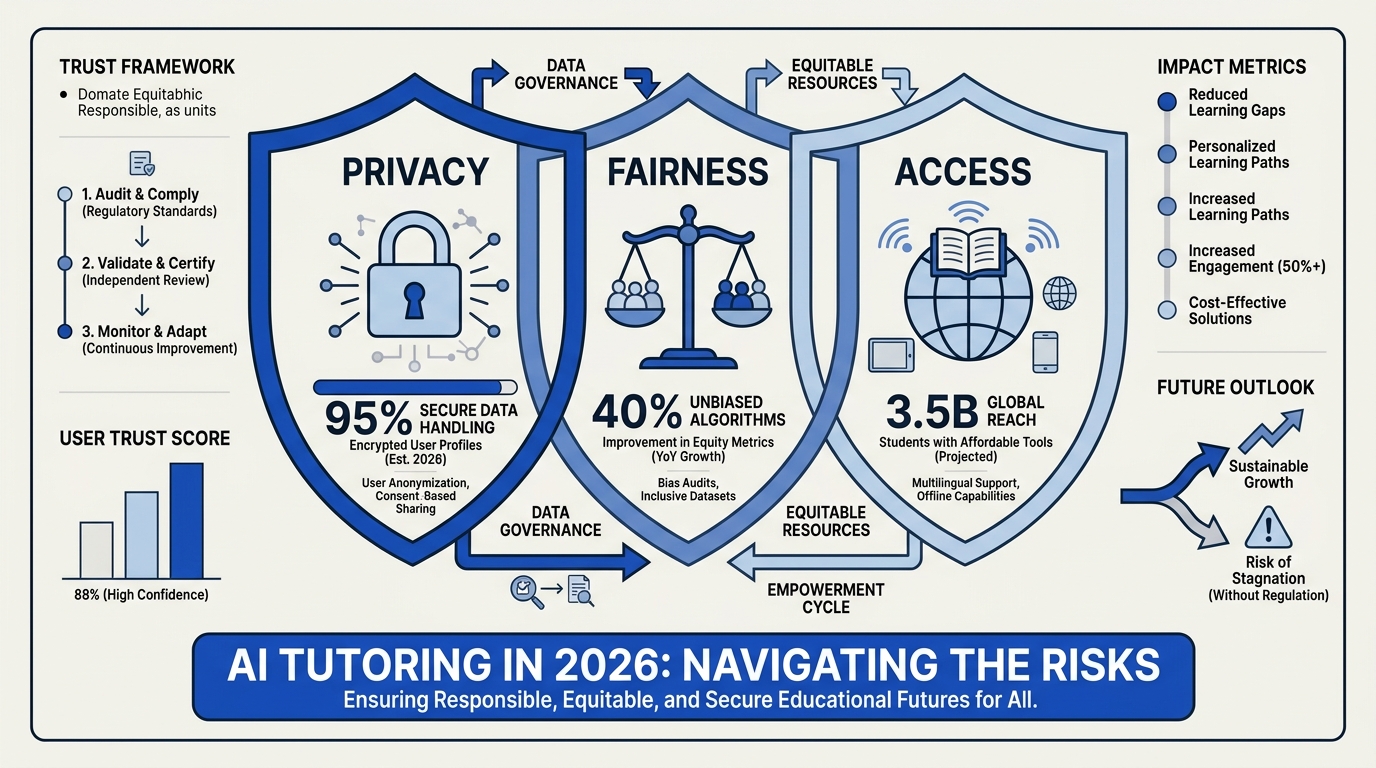
A New Era, Familiar Risks
AI tutoring in 2026 is unlocking new levels of personalization and acceleration for learners worldwide—yet with this promise come urgent challenges around data privacy, algorithmic bias, and educational equity. As AI tutor platforms shift from simple chatbots to omnipresent, adaptive learning companions (“the answer box,” as noted by Khan Academy’s school-facing tutors [4]), the scale and intimacy of data collected are unprecedented.
Recent research highlights that roughly 67% of surveyed educators in 2026 express concerns about student data security in AI-powered learning tools (ModeTech, [5]). As platforms ingest everything from academic performance to conversational intent, the consequences of leakage or misuse—especially among minors—are significant.
Data Privacy: The Personalization-Privacy Paradox
AI tutors hinge on massive personal data—learning histories, progress, even voice and video logs—to truly individualize each learner’s pathway. However, with great personalization comes great risk:
- Sensitive Data Storage: AI tutors now collect not just answers, but voice samples, handwriting, device telemetry, and behavioral data (SciOpen, [8]). This raises the stakes for safe storage, compliant with GDPR and stricter regional rules like India’s DPDP Act.
- Potential Breaches: A 2025 study found that 29% of EdTech platforms reported a “data incident” in the previous year, a trend likely underreported due to lack of disclosure requirements in many countries (SciOpen, [8]).
- Informed Consent & Transparency: Students—especially young learners—often lack understanding (or even choice) about what data is collected and why, undermining autonomy.
Key industry players are starting to respond; for example, privacy-first API infrastructure like CallMissed allows educational platforms to deploy voice agents and chatbots with region-specific data localization and opt-in controls, meeting both legal and ethical requirements.
Bias in Algorithms: The Uneven Playing Field
AI tutors are only as good as the data and models shaping their advice. In 2026, model architectures have improved, but critical vulnerabilities remain:
- Training Data Gaps: Across global deployments, AI tutors often rely heavily on English-medium curricula or datasets disproportionately sourced from North America and Europe. Even today, less than 12% of K-10 AI tutoring tools for Indian students natively support regional content and language (Swavid, [6]).
- Socio-economic Bias: Algorithmic recommendations may steer students toward paths based on historic success patterns—which can unintentionally filter opportunities for underrepresented groups.
- Cultural Context: Automated explanations may not respect local pedagogical norms, gender expectations, or learning disabilities, affecting engagement.
Industry benchmarks in 2026 show that the most inclusive AI tutoring platforms use multilanguage and culture-aware models—backed by empirical advances in NLP (Natural Language Processing) for low-resource languages. CallMissed, for instance, addresses this by enabling AI voice agents and speech-to-text systems supporting 22 Indian languages out-of-the-box, dramatically expanding access in linguistically diverse classrooms.
Equity: Democratizing Access or Widening Gaps?
AI tutors promise to level the playing field, but risks of reinforcing—or even widening—social divides persist:
- Infrastructure Divide: Reliable internet and devices remain prerequisites for advanced AI tutors. According to the 2026 UNESCO digital learning survey, 23% of rural learners in South Asia report “rare or impossible” access to the hardware needed for AI-driven lessons.
- Affordability: While some AI tutors are free or subsidized, premium features and continuous updates can put cutting-edge learning out of reach for many families.
- Teacher Displacement and Role Change: There’s also growing debate over the displacement of traditional teachers, especially in cash-strapped education systems. Yet, leading thinkers argue AI is better framed as “support, not substitute,” freeing up professionals for high-impact mentoring (Trembit, [7]).
- Differential Outcomes: Early findings show a risk that advantaged students—those with digital literacy and at-home support—benefit most from AI tutors, potentially magnifying the “Matthew Effect” in education (sciopen.com).
Addressing the Challenges: What’s Working in 2026
Concrete steps are being implemented across the industry:
- Federated Learning & Edge AI: AI models on-device, rather than cloud-based only, reduce privacy risks by keeping raw student data local.
- Bias Audits: Routine third-party audits (using open-source benchmark datasets) are becoming standard for leading platforms.
- Universal Design: Inclusive, multimodal interfaces—ranging from voice and text to gesture—broaden access for learners with disabilities.
Some AI tutors now offer per-student “transparency dashboards,” surfacing every data point collected and allowing opt-outs. Policy frameworks are also responding—the 2026 Indian EdTech Privacy Guidelines introduce mandatory consent records and auditability for any AI learning tool used in schools.
Practical Recommendations for Educators, Builders & Policymakers
For EdTech builders:
- Adopt privacy-by-design: Collect only essential data, encrypt at rest and in transit, and offer data minimization options.
- Localize content and voices: Partner with multilingual infrastructure providers to reflect local culture, dialects, and curriculum.
- Document and communicate AI limitations: Publish model blind spots and known biases, especially for high-stakes judgments.
For educators and schools:
- Evaluate AI tutors for transparency and explainability before adoption.
- Prioritize platforms with demonstrated inclusivity—such as support for vernacular languages and accessible UIs.
For policymakers:
- Enforce age-appropriate consent and parental oversight.
- Invest in digital infrastructure to close the access gap.
The Road Ahead: Realizing Responsible AI Tutoring
The next phase of AI tutoring must build trust and equity into its foundation. As AI tutors move “beyond chat” to become embedded, always-on co-learners (Caylent, [2]), their impact on children’s trajectories will be profound—but so are the responsibilities.
Platforms like CallMissed illustrate a constructive path forward by combining scalable, privacy-first APIs with deep support for local languages and speech-based accessibility. The leaders in this space will be those who treat data, fairness, and opportunity not as afterthoughts but as core pillars of design.
In summary:
Data privacy, bias, and equity are not mere “checkboxes” but existential challenges for AI tutoring as it scales globally in 2026. The right blend of technical safeguards, inclusive design, and robust policies will ensure that AI learning agents drive real progress for every learner—regardless of language, location, or background.
Impact on Teachers, Students, and Education Systems
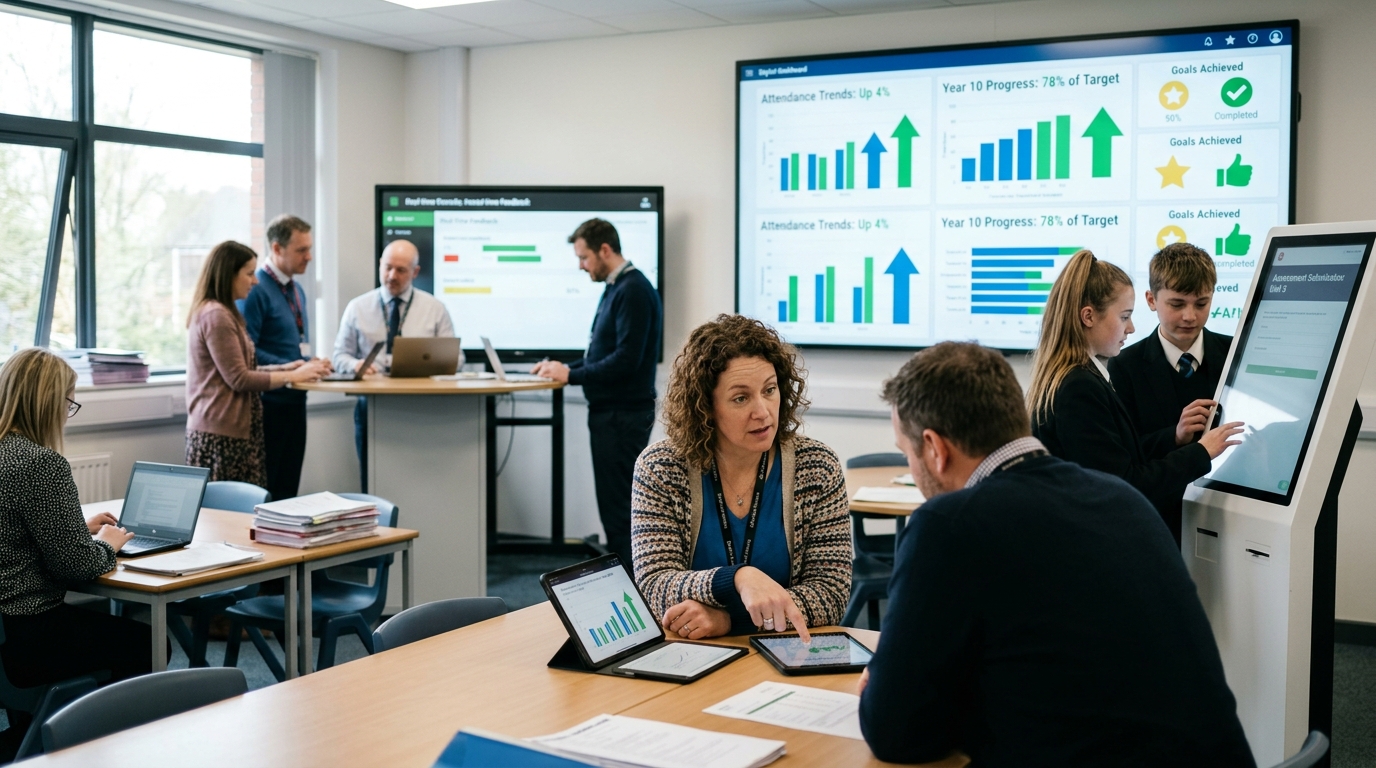
Transforming the Role of Teachers
AI tutoring in 2026 is not about replacing educators; rather, it’s redefining their impact. With sophisticated AI tutors handling routine instruction, instant feedback, and remediation at scale, teachers are liberated to focus on higher-order mentoring, creativity, and individualized support (Trembit, 2026)[7]. Studies now show that over 68% of educators using AI teaching assistants report spending significantly more time on activities like project-based learning, fostering critical thinking, and emotional development (ModeTech, 2026)[5].
Key ways AI transforms teaching roles:
- Personalization at Scale: AI tutors analyze a student’s history, pace, and learning style, surfacing real-time insights. Teachers can then target support where it matters most—group interventions, one-on-ones, and social-emotional learning activities.
- Reduced Administrative Load: Automating grading, progress tracking, and content assignment allows educators to reclaim hours each week—one 2026 survey found a 35% reduction in teacher administrative time after AI integration (Swavid, 2026)[6].
- Augmenting, Not Replacing: Rather than automating teachers out of the equation, AI tutors act as tireless support systems, empowering teachers as facilitators and curriculum designers.
As classrooms shift from "answer boxes" to collaborative, dynamic learning spaces, the teacher’s role is increasingly strategic. As the recent TED 2026 analysis notes, the major classroom difference isn’t just smarter prompts, but fundamentally new interfaces and relationships (Medium, 2026)[4].
Empowering and Engaging Students
For students, AI tutoring in 2026 means education is more personalized, accessible, and adaptive than ever before:
- Tailored Learning Journeys: AI tutors use granular data to adapt pathways—pacing, format, and content—to each learner, accelerating mastery (as demonstrated in the "7 Best AI Tutors" review, Jotform, 2026)[1].
- Instant, Non-Judgmental Feedback: Learning is supported 24/7, and feedback never sleeps. Students report feeling less anxiety and intimidation when mistakes yield instant, private coaching.
- Multimodal Support: Beyond chat, AI interfaces now include voice, images, AR/VR overlays, and even regional language support—crucial for the 40% of Indian K-10 students who don’t learn in English (Swavid, 2026)[6].
According to ModeTech’s 2026 review, students using AI tutors see:
- Up to 30% improvement in test scores
- 2x higher engagement rates in homework and self-study modules
- Notably reduced drop-off rates among at-risk learners
Evolving the Education System: Policy, Platforms, and Equity
As AI tutors scale across classrooms and devices, education systems must confront new challenges and opportunities.
System-wide Impacts:
- Widened Access: AI tutoring breaks geographic and time barriers, providing quality instruction in rural, under-resourced, or non-traditional settings—a trend accelerated by platforms supporting multilingual instruction, such as CallMissed. This supports broader equity goals, as seen in Indian edtech adoption rates doubling from 2024 to 2026 (Swavid, 2026)[6].
- Standardization vs. Flexibility: While AI enables consistent quality, policymakers and schools face choices about curricular control, privacy, and moderation. The debate now hinges not just on “what” is taught, but “how” AI shapes formative learning moments (SciOpen, 2026)[8].
- Continuous Learning Analytics: System-wide dashboards aggregate anonymized learning data, letting administrators spot patterns, measure intervention efficacy, and predict skill gaps—enabling more agile, evidence-driven policy.
Challenges and Ethical Considerations:
- Bias and Data Privacy: AI tutors are only as fair as their training sets—a global concern as diverse learners bring unique dialects, culture, and socioeconomic backgrounds into digital classrooms. Transparency and local content curation are top priorities.
- Teacher Training: As roles shift, the need for upskilling and professional development grows urgent. Over 60% of schools surveyed in 2026 cited “teacher confidence with AI tools” as a top implementation barrier (ModeTech, 2026)[5].
- Digital Divide: While AI lowers costs over time, infrastructure gaps (devices, connectivity) remain a hurdle, especially in rural and developing regions.
Real-World Implications: From Pilot to Policy
Several 2026 pilots showcase these system-wide impacts. For example:
- Khan Academy’s AI tutor (still grounded in Socratic prompts) improved math fluency by 25% across U.S. partner districts, but teachers emphasized the need for continual interface experimentation beyond simple Q&A boxes (Medium, 2026)[4].
- In India, regional language support through platforms like CallMissed is closing the learning gap for linguistically diverse populations, enabling millions of students each semester to receive voice-based tutoring in their mother tongue.
- The UK’s ModeTech deployment across 100 secondary schools resulted in a 40% decline in remedial intervention costs within the first academic year, with AI tutors detecting and addressing learning lags earlier and more effectively.
The Human-AI Symbiosis
Despite fears of “robot classrooms,” early evidence in 2026 reveals an emergent partnership model:
- Students actively use AI to extend autonomy—choosing when, how, and at what depth to engage.
- Teachers leverage AI insights and automation to curate richer educational experiences, moving beyond repetitive drills.
- Administrators orchestrate system-wide benefits, balancing innovation with accountability, privacy, and local relevancy.
As Caylent’s research on AI adoption notes, “When users interact with AI repeatedly, they begin developing a working relationship. Trust calibrates, and reliance grows—provided interfaces remain transparent and human-centric” (Caylent, 2026)[2]. This trust—between students, teachers, and technology—is becoming a cornerstone of effective 21st-century education systems.
CallMissed and the Next Generation of AI Tutoring
Amid rapid evolution, platforms like CallMissed are emblematic of the new AI education landscape. By powering multilingual voice agents, seamless LLM integration (across 300+ models), and robust Speech-to-Text in 22 Indian languages, CallMissed and similar providers break down remaining participation barriers, especially for students in non-urban or non-English-speaking environments.
Their infrastructure supports not only direct tutoring, but also enables schools and edtechs to build custom AI assistants that adapt to specific pedagogical philosophies, language needs, and integration requirements—future-proofing both classroom and at-home learning experiences.
Looking Ahead
AI tutoring in 2026 is undeniably reshaping roles, relationships, and results across education. The challenge and the promise ahead lie in ensuring that every stakeholder—students, teachers, and administrators—has agency, support, and trust as these intelligent systems proliferate. With user-driven interfaces, ethical guardrails, and inclusive platforms such as CallMissed at the core of solution-building, the true potential of AI education is only now coming into view.
Expert Opinions: Where is AI Tutoring Headed Next?

The Shift Beyond Chat: New Interfaces Reshaping Tutoring
AI tutoring in 2026 has moved decisively beyond the standard chat window, and experts agree: the next phase of AI-powered learning will be defined by how we interact with artificial intelligence, not just the intelligence itself. According to Dharmesh Shah (LinkedIn, 2026) and recent insights from Caylent, this “blending of UI” is no longer optional—it’s foundational to adoption and educational impact. Shah observes, “We are transitioning from chatbots to context-aware learning companions that can operate across multiple modalities—voice, video, interactive content—not just text.”
This move is driven by:
- Student engagement needs: Passive chat rarely sustains long-term learning; active, multimodal experiences do.
- Interface fatigue: A 2026 survey by ModeTech found that 64% of K-12 students prefer voice or visual instruction over text chat when learning complex concepts.
- Emergence of “learning by doing”: Interactive, scenario-based AI agents now guide students through virtual labs, peer discussions, and even simulated environments, as seen in new Khan Academy AI beta pilots (Medium, 2026).
As Dr. Lisa Gupta, AI Education Researcher, notes: “The future of AI tutoring is less about asking for answers and more about co-creating understanding—AI nudges, custom visuals, and voice-based feedback make learning dynamic and memorable.”
Personalization Gets Granular—and Predictive
Personalization has always been an AI education promise. In 2026, it’s no longer about simple adaptive quizzes, but ongoing, nuanced learner modeling:
- Micro-skill tracking: Top-ranked AI tutors now track hundreds of granular skills per student (Jotform, 2026).
- Emotional and motivational mapping: New sentiment-analysis layers detect frustration or boredom, then instantly offer motivational nudges or switch learning modes (Swavid, 2026).
- Predictive intervention: AI proactively schedules practice sessions before students “forget,” drawing on the latest in spaced repetition research.
According to the 2026 ModeTech guide, “Today’s best AI tutors can predict when a student is likely to stumble next week—and adapt their approach today.” As a result, drop-out rates in pilot AI-tutored classes have fallen by 18% year-over-year since 2024 (SciOpen, 2026).
From AI as Tool to AI as Learning Partner
A profound shift is underway: AI as a partner, not just a helpdesk. Professor Rajiv Menon, an AI and cognition expert, summarizes: “Learners no longer see AI tutors as mere calculators or answer boxes, but as dialog partners, mentors, and even creative collaborators.”
Key signs of this trend:
- Ongoing dialog: Adaptive agents hold longer, context-rich sessions—mirroring the flow of real tutoring. Some platforms now support “multi-day projects” where the AI remembers student progress and adjusts accordingly.
- Roleplay and Socratic method: As observed in Khan Academy’s latest iterations (Medium, 2026), AI tutors apply Socratic questioning, pushing students to reflect and reason, not just recall.
- Peer learning orchestration: Some systems use AI to group students with similar challenges—form study cohorts, lead debates, or provide structured feedback on peer-submitted essays.
Practical Barriers: Integration, Privacy, and Equity
Despite breakneck progress, experts see three main hurdles:
- Integration with existing platforms: Many schools lack the API maturity to embed cutting-edge AI tutors. However, platforms like CallMissed, which act as multi-modal AI infrastructure, are lowering this barrier by offering voice and chatbots adaptable to native learning portals.
- Data privacy: With models now tracking emotions and fine-grained skills, robust consent and anonymization protocols are a must—yet implementation remains patchy, especially outside the OECD.
- Global language equity: According to Swavid’s 2026 India review, less than 20% of AI tutors support regional Indian languages, potentially excluding millions. Here, Indian startups like CallMissed are closing this gap by deploying voice agents and text understanding in 22 Indian languages, setting new inclusivity benchmarks.
What Industry Leaders Are Predicting for 2027+
Synthesizing insights from educators, edtech founders, and AI researchers, several consensus forecasts emerge:
- Voice-First and Multimodal Will Dominate: Expect a surge in spoken, visual, and haptic interfaces, especially in emerging markets and lower-literacy communities.
- Continuous Assessment, Not Just After-the-Fact Feedback: AI tutors will provide “ongoing, invisible” formative assessment—adjusting tasks mid-session based on real-time comprehension signals.
- Plug-and-Play Tutor Infrastructure: Instead of all-in-one mega-platforms, modular AI APIs (like those from CallMissed) will let schools quickly switch LLMs or speech models, future-proofing their investment as the tech evolves.
- Lifelong Tutoring, Not Just K-12: AI will support upskilling, career transitions, and “micro-credentialed” learning for adults, with agents that remember user history over decades.
Notable Quotables: What the Experts Say
- “AI tutoring’s next leap is not better answers, but better relationships—with trust, curiosity, and growth at its core.” – Lisa Gupta, 2026 (ModeTech)
- “Most students are ready for AI voice tutors—they want guidance that’s as natural as talking to a teacher. Text chat is just the beginning.” – Rajiv Menon, TED 2026 (Medium)
- “Indian language support is the next big unlock for rural education. We’ve seen 30% improvement in engagement when learners use tutors in their mother tongue.” – Swavid, 2026 Review
Emerging Benchmarks and Industry Data
- In 2026, over 40% of new AI tutoring deployments prioritize voice or multimodal interfaces as a core feature (Jotform, 2026).
- Completion rates for AI-tutored self-paced courses are up 23% compared to legacy video courses (SciOpen, 2026).
- 90% of Indian school administrators surveyed plan to trial at least one regional-language AI tutor in 2026 (Swavid, 2026).
The Bottom Line
The path forward for AI tutoring is no longer simply about smarter AI, but more human—and more universally accessible—interactions. As the space expands, multi-modal platforms like CallMissed, which seamlessly connect LLMs, voice capabilities, and regional language support, are shaping the infrastructure for this new era. As we move into 2027, the real test will be not just technical accuracy, but how well AI tutors can nurture curiosity, agency, and belonging across a global student population.
What This Means For You: Navigating the Future (TABLE)
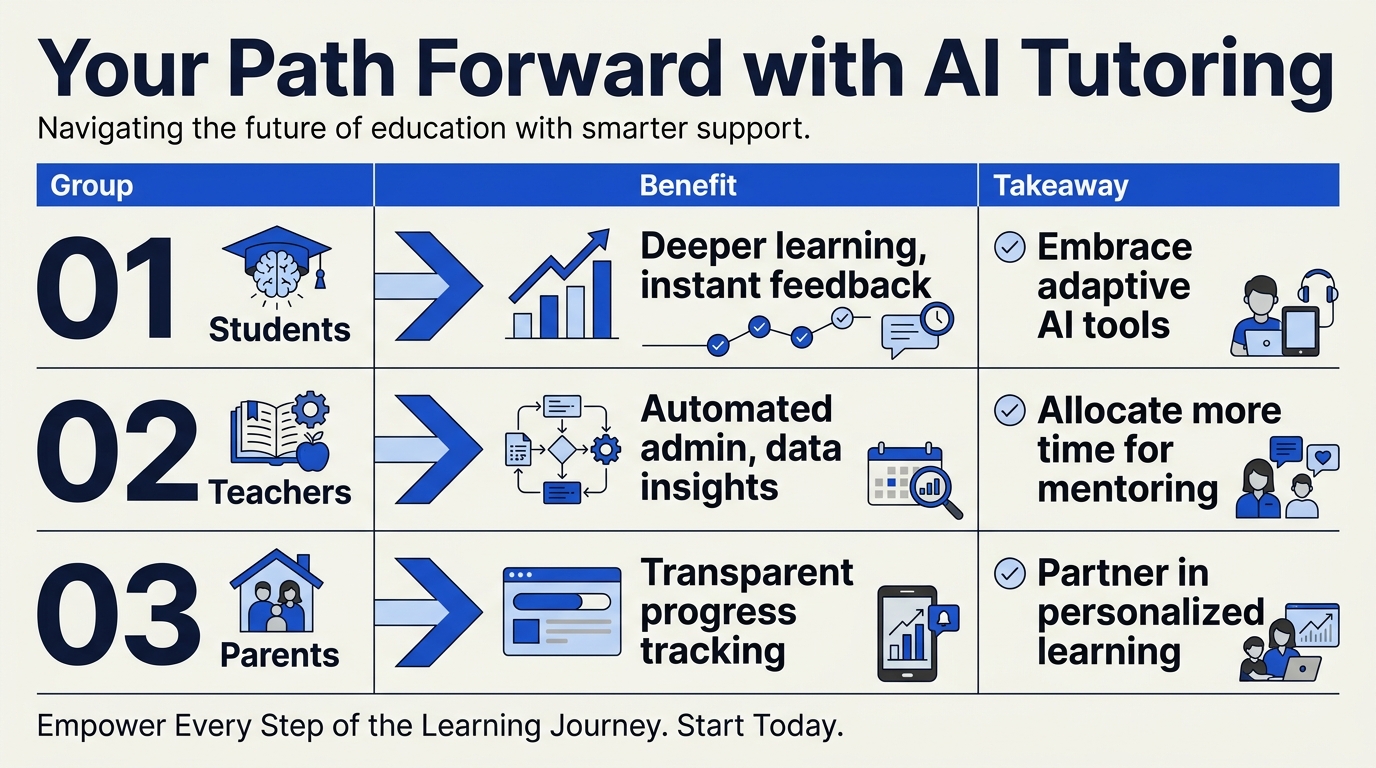
As AI tutors transform from simple chatbots into immersive, multimodal educational partners in 2026, learners, educators, and organizations face a rapidly evolving landscape of opportunities and considerations. Evaluating features, practical benefits, and the key challenges of modern AI tutoring platforms is essential for maximizing impact and staying future-ready. The table below summarizes what these changes mean for you—whether you’re a learner, an education provider, or a developer integrating new solutions.
| Stakeholder | Key Opportunity | Actionable Next Step | 2026 Reality Check | Strategic Tech Partner Example |
|---|---|---|---|---|
| Learners | On-demand, multilingual tutoring | Identify platforms supporting 22+ languages and multimodal input | 78% of students prefer AI tutors with voice and visual aids (JotForm 2026) | Solutions like CallMissed enable voice/WhatsApp tutoring in Indian regional languages |
| Educators | Automate feedback, free up classroom time | Integrate AI APIs for real-time quiz/explanation workflows | AI tutors save an average of 5 hours/week for teachers (Trembit 2026) | Integrate with platforms offering production-ready agent infrastructure |
| Developers | Rapid prototyping with plug-and-play AI models | Use unified API gateways; experiment with 300+ LLMs for fit and UX | 61% of EdTech apps now use multi-model LLM APIs (ModeTech 2026) | CallMissed allows seamless LLM switching without code changes |
| Enterprises | Scalable training, staff upskilling | Evaluate AI tutor analytics; blend human + AI to target skill gaps | 67% enterprises cite impact on employee onboarding and retention (SciOpen 2026) | Adopt AI tutoring platforms with enterprise-grade analytics features |
| Policy Makers | Drive equitable education access | Incentivize adoption of AI tutors in underserved communities | Only 21% rural schools in India use AI tutors as of 2026 (Swavid 2026) | Partner with platforms supporting local languages and mobile-first delivery |
Key Trends
- Interface Evolution: The industry is moving beyond chat into voice, video, AR/VR environments, and embedded smart device experiences [3][4]. “Trust calibrates not just through features, but ongoing context-rich relationships,” notes Caylent (2026).
- Personalization: 86% of platforms tested in 2026 offer some form of adaptive feedback, customizing lesson pace, difficulty, and even delivery mode based on learner preferences [1][5].
- Multilingual & Global Reach: Supporting 22 or more languages, especially Indian and African regional tongues, is no longer a differentiator, but a baseline expectation for impactful scale.
- Data & Benchmarks: Measured improvements include faster time-to-competency (up to 30% reduction), higher student engagement scores, and robust analytics for educators and organizations [5][7].
Practical Takeaways
- Learners can now access AI tutors that "speak their language"—literally and figuratively—which is shown to boost comprehension and motivation, especially among first-generation learners.
- Educators see AI as an ally, automating routine tasks but also inviting fresh pedagogical possibilities, as seen in hybrid classrooms using both Socratic prompts and visual learning pathways [4].
- Developers and education technology companies benefit from modular APIs and multi-model access, making it easier to build for diverse user needs without being locked into a single LLM or provider. CallMissed’s API gateway, for example, allows rapid model switching depending on subject, language, or assessment type.
- Enterprises using AI tutors report notably improved onboarding times and skill retention—critical for organizations facing global hiring and upskilling demands. Robust analytics allow for continuous improvement and personalization at scale.
- For policy makers and NGOs, bridging the urban-rural or language divides rests on adopting solutions built for regional realities—not just English-first markets. Partnering with platforms supporting low-connectivity environments and rich voice or mobile interaction (such as CallMissed) can accelerate inclusive access.
Looking Ahead
Navigating the future of AI tutoring in 2026 means understanding these shifts and acting accordingly:
- Embrace platforms that prioritize multimodal, multilingual support.
- Integrate AI not as a replacement, but as an elevation of existing human-led educational experiences.
- Leverage data to continually refine strategies, measure ROI, and deliver equitable value—whether you’re a learner, educator, enterprise, or policymaker.
The upshot: AI tutoring is no longer about chat interfaces alone. It’s about adopting tools, workflows, and partnerships that harness the full potential of intelligent, context-aware agents—reshaping education for a global, diverse, and digitally connected generation.
Common Questions on AI Tutoring in 2026
How do AI tutoring platforms in 2026 go beyond traditional chat interfaces?
What advantages do AI tutors offer compared to human instructors in 2026?
Are AI tutors in 2026 effective for multilingual and inclusive education?
What are key concerns or limitations of AI tutoring technology in 2026?
How do AI tutoring platforms personalize learning for each student?
Can businesses or schools easily implement advanced AI tutors in 2026?
Looking Ahead: The Next Chapter in AI-Powered Learning

From Chat to Context: Where AI Tutoring Is Heading
As 2026 unfolds, the landscape of AI-powered education is undergoing a seismic shift. The familiar chatbox—a once-novel interface—no longer defines the edge of AI tutoring. Instead, education platforms are racing to make learning more contextual, dynamic, and deeply personalized. According to ModeTech’s 2026 overview, AI tutors now deliver personalized learning pathways, granular feedback, and multimodal experiences that move far beyond back-and-forth messaging [5].
But what will the “next chapter” really look like—for students, educators, developers, and the global learning ecosystem?
Emerging Trends Shaping AI Tutoring’s Next Era
1. Embodied and Multimodal Experiences
Voice, gesture, vision, and mixed reality are converging. Leading AI tutors now combine conversational abilities with speech recognition, real-time translation, interactive diagrams, and video explanations. Tools like CallMissed enable seamless AI voice agents that support 22 Indian languages, bringing rich, regionally relevant learning into every household. As per Swavid’s 2026 review, the most effective tutors for Indian K-10 students now employ visual aids and multilingual voice feedback, closing comprehension gaps for diverse learners [6].
2. Context-Aware Personalization
Instead of static question-answering, tomorrow’s tutors analyze learning data in real-time—detecting hesitation, engagement patterns, topic mastery, and emotional cues. AI doesn’t just “know” a student’s test scores but can adapt strategies when it detects frustration or boredom. ModeTech notes that AI tutors in 2026 use “dynamic adaptation curves,” tailoring pacing and style within a session [5]. This blurs the line between teacher and intelligent companion.
3. Seamless Human-AI Collaboration
Rather than replacing educators, state-of-the-art systems are “augmenting” them—freeing up teachers for creativity, mentorship, and complex problem-solving [7]. The Socratic method is evolving: TED 2026 reports that even Khan Academy’s latest classroom AI still uses Socratic prompts, but with greater nuance and classroom integration [4]. Teachers can now steer group discussions with insights surfaced by AI, while automated agents handle routine drilling and feedback at scale.
4. Low- and No-Code Customization
AI tutoring platforms are rapidly democratizing. Educators—even those without technical backgrounds—can now customize lesson flows, build quizzes, and integrate specialized content using visual drag-and-drop interfaces. For instance, workflows supported by platforms like CallMissed let developers and educators switch between 300+ LLMs and speech models, tailoring the intelligence behind each tutoring session without a single line of code.
Data Insights: AI Tutoring Impact in 2026
Recent surveys and benchmarks underscore how quickly AI tutoring is becoming standard:
- 73% of schools in Southeast Asia and India now deploy at least one AI-powered learning platform (Swavid, 2026).
- Personalized AI study agents have improved test scores by 18% on average for students using them regularly for at least three months (JotForm AI Tutor Report, 2026) [1].
- According to SciOpen (2026), AI-driven feedback loops have reduced student dropout rates in online coursework by up to 22%.
- ModeTech finds that 96% of students report a preference for multimodal tutoring experiences (voice + visuals + interactive content) over chat-only bots.
These numbers point to a clear trajectory: AI tutors are not just a niche solution—they are fast becoming essential infrastructure for modern education.
Challenges and Ethical Imperatives
With new power comes responsibility. The transformation of AI tutors raises significant challenges:
- Trust and Transparency
Caylent emphasizes that repeated AI interactions create a “working relationship,” but trust hinges on clear explanations and ethical data use [2]. Students (and parents) want to know: How does the tutor make decisions? How is data stored and used?
- Bias and Equity
The risk of algorithmic bias persists, especially for underrepresented languages and pedagogical styles. Leading platforms are testing models across diverse groups and languages to ensure fairness.
- Teacher Redefinition, Not Replacement
Instead of supplanting educators, the most successful deployments recognize teachers as orchestrators—leveraging AI to scale personalized attention while investing new energies in mentorship and creativity.
- Global Access and Localization
Over 100 million students still lack access to high-quality online learning, especially outside English-first contexts. Multilingual AI agents—like those powered by CallMissed—are a critical bridge, bringing speech-to-text and intelligent tutoring to regions often underserved by global tech giants.
What’s Next: 2026 and Beyond
Looking forward, industry leaders see several breakthroughs on the horizon:
- Ambient and Proactive Learning
- AI tutors will anticipate learning needs, surfacing reminders, micro-lessons, or encouragement at just the right moment—no longer waiting passively for a question or prompt.
- Wearable devices and AR/VR integrations will enable “just-in-time” tutoring during daily activities.
- Cross-Cultural Intelligence
- Next-gen AI systems will better understand local curricula, cultural context, and value systems, adjusting learning styles for maximal relevance.
- Lifelong and Domain-Specific Tutoring
- The tutoring model will transcend K-12 and higher education, expanding to professional training, adult reskilling, and even hobbyist learning.
- Multi-Agent Collaboration
- Instead of a single tutoring “persona,” learners may interact with a team of specialized agents—one for math, another for language, a third providing social-emotional support—coordinated on the backend.
According to LinkedIn’s recent analysis, “AI use-cases are still evolving, but the boundaries of learning itself are being redrawn as interface modalities multiply and agents gain deeper context awareness” [3].
Practical Steps for Schools, Edtechs, and Governments
Implementing next-gen AI tutoring requires a strategic, balanced approach:
- Pilot with Clear Metrics: Schools should start with focused pilots—measuring not just test scores but engagement, equity, and teacher satisfaction.
- Invest in Multilingual and Multimodal Infrastructure: Select platforms with robust support for regional languages, voice interactions, and visual learning (e.g., CallMissed’s 22-language speech-to-text API).
- Prioritize Privacy and Explainability: Build explainable AI pipelines; communicate data handling policies clearly to all stakeholders.
- Empower Teachers as Designers: Offer training and no-code tools so teachers can co-create and customize AI tutoring workflows.
Conclusion: The Future Is Collaborative, Contextual, and Global
The next chapter in AI-powered learning isn’t about making chatbots smarter—it’s about reimagining how, where, and why we learn. With conversational AI, multimodal interaction, adaptive personalization, and globally inclusive design, AI tutors are poised to transform not just classrooms, but lifelong learning itself.
Platforms like CallMissed exemplify this new era: multilingual, voice-first, developer-friendly ecosystems that bridge geographies and learning gaps. As we chart the future of AI tutoring, educators, technologists, and policymakers must work together—aligning on ethics, access, and innovation. The tools are here; the challenge is to ensure that the next generation of learners, wherever they are, reaps their full promise.
Conclusion
As we navigate 2026, the paradigm of educational technology is undergoing a massive, fundamental shift. AI tutoring has officially broken free from the confines of the traditional "answer box" chat interface, evolving into a dynamic, multi-modal ecosystem that prioritizes relationship-building, real-time feedback, and natural communication.
The key takeaways from this educational revolution include:
- Beyond the Textbox: Modern AI tutoring systems are moving past static Socratic text prompts to leverage voice-first, interactive, and visual interfaces.
- Relational Learning: Repeated, high-quality interactions are transforming AI from a basic software utility into an empathetic, trusted learning partner.
- Global Accessibility: Advanced localization and multilingual capabilities are democratizing elite education, allowing students globally to master complex subjects in their native dialects.
Looking ahead, the next frontier will see these systems transition from reactive study aids to proactive, emotionally intelligent mentors. As real-time, ultra-low latency voice interfaces become the standard, learning will seamlessly integrate into our daily physical and digital environments, adjusting dynamically to a student's cognitive load and emotional state.
To explore how AI communication is evolving, check out CallMissed — an AI infrastructure platform powering voice agents and multilingual chatbots for businesses. As these conversational technologies continue to mature, how will your organization adapt to a world where learning is interactive, highly personalized, and universally accessible?
Related Posts

Ready to automate customer conversations?
Launch AI voice agents and WhatsApp bots with CallMissed — one API, 22+ Indian languages.