

AI in Healthcare 2026: Use Cases That Made It to Production


Imagine walking into a hospital in 2026 where over half the patient intake process, diagnosis, and follow-up care is handled not by humans—but by...
AI in Healthcare 2026: Use Cases That Made It to Production
Imagine walking into a hospital in 2026 where over half the patient intake process, diagnosis, and follow-up care is handled not by humans—but by intelligent AI agents. This is not science fiction. According to a 2026 McKinsey survey, nearly 62% of large hospitals worldwide have deployed AI-powered solutions in at least three core clinical or administrative workflows, with a remarkable 40% reduction in average processing time for tasks like billing, claims, and documentation (Kore.ai, 2026, Prosper AI, 2026). AI in healthcare has shifted from isolated pilots and proof-of-concepts to real, production-grade systems that impact millions of patients every day.
Why does this topic matter more than ever in 2026? For starters, healthcare demand is at an all-time high; the WHO projected a global shortage of 10 million healthcare workers by 2030, yet patient expectations for efficiency, personalization, and transparency have never been higher. At the same time, health data volume has exploded—IDC reports a 42% year-over-year increase in medical imaging and electronic health records—straining manual review and decision-making capacity. The COVID-era surge in telemedicine followed by AI's generative breakthroughs created the perfect storm for automation: today, over 78% of healthcare administrators consider AI “critical” to future growth and cost control (BCG, 2026).
The real story of 2026, however, is not about futuristic algorithms. It’s about practical, production use cases that are transforming care delivery right now:
- AI-powered clinical workflow automation: Intelligent agents now automate up to 70% of documentation, triage, and prior-auth processing, freeing clinicians for direct care (Keragon, 2026, Bizdata 360, 2026).
- Precision medicine and predictive analytics: Hospitals are deploying deep learning to catch early signs of sepsis, cancer, and cardiac events, often days before traditional methods.
- Virtual health assistants and multilingual patient engagement: From WhatsApp chatbots to AI voice agents, health systems interact with and monitor patients in dozens of languages, including previously underserved regions.
- Automated revenue cycle and claims processing: AI is slashing claim denials and payment cycle times, saving US hospitals more than $5 billion in annual administrative costs (Rolustech, 2026).
- AI-driven telemedicine and remote monitoring: With robust speech-to-text and language models, rural and urban patients alike now access specialist diagnostics with unprecedented speed.
In this article, we’ll explore AI in healthcare 2026 by diving into use cases that not only made it to production—but are already demonstrating measurable outcomes. You’ll discover how AI is reducing errors in radiology, improving chronic care management, supercharging administrative teams, and powering the next generation of patient communication. We’ll analyze the technologies underpinning these trends, from large language model APIs to speech processing in over 20 Indian languages, and consider what it takes for an AI use case to cross the chasm from lab experiment to life-saving, compliance-ready infrastructure.
It’s important to highlight that while many players fuel this revolution, Indian platforms like CallMissed are turbocharging the movement by providing multilingual AI voice agents and cross-model APIs, enabling healthcare providers to effortlessly scale patient communication and clinical workflows. As you read on, you’ll get a comprehensive look at the technologies, the metrics, and the real-world deployments that define AI in healthcare in 2026—a year when “production-ready” truly means lives are on the line.
Introduction: A New Era for AI in Healthcare

The Dawn of Practical AI in Healthcare
When historians look back on 2026, it will be remembered as the year artificial intelligence (AI) truly moved from pilot programs to mission-critical infrastructure across the healthcare sector. What was once speculative—AI as a decision-making partner in diagnostics or a seamless voice in patient communications—is now a daily reality in hospitals, clinics, and even home care situations worldwide. The transformation is profound: In 2026, more than 70% of large healthcare providers globally have deployed at least one real-world AI agent in production, according to industry analyses by BCG and Prosper AI[3][2].
Multiple breakthrough factors have converged:
- Mature, reliable large language models (LLMs) that can interpret and generate medical content with high accuracy
- Advanced voice and speech technologies that allow natural interactions in dozens of languages
- Integration platforms, like CallMissed, that abstract the complexity of orchestrating AI workflows across channels, models, and regulatory zones
This moment marks the shift from hypothetical to habitual—from "what if" to "how fast can we scale?"
Why AI Is Now Central to Healthcare Operations
The numbers tell the story. Healthcare systems adopting AI report:
- 25-35% reduction in administrative costs, thanks to AI automation of repetitive documentation, claims processing, scheduling, and triage[1][5]
- Up to 40% improvement in patient engagement and satisfaction through conversational agents and personalized communication paths[4]
- Clinician burnout rates dropping by as much as 18% in systems using AI co-pilots for workflow automation[6]
- Accelerated time to diagnosis—sometimes by days—resulting in better outcomes, particularly in oncology and cardiology[2]
These metrics are not speculative: 31 production examples from leading health organizations worldwide underscore that AI is now an indispensable asset, not an emerging experiment.
The Production-Ready AI Use Cases
In contrast to the experimental prototypes of just a few years ago, AI solutions today are purpose-built for:
- Clinical Documentation
AI agents transcribe, summarize, and code doctor-patient conversation in real time, freeing clinicians to focus on care rather than paperwork.
- Patient Triage and Virtual Front Desk
Intelligent voice and chat agents instantly assess symptoms, route calls, and even book appointments, 24/7.
- Predictive Analytics for Population Health
Algorithms trained on vast datasets predict illness risks, recommend screenings, and flag high-need patients proactively, revolutionizing preventive care.
- Multilingual Communication and Accessibility
Platforms like CallMissed deliver voice AI and chatbots that converse fluently in 22 Indian languages, closing the reach gap for millions in linguistically diverse markets.
- Revenue Cycle Automation
Insurance claims, billing, authorizations—previously labor-intensive steps—are now streamlined by AI, cutting time and error rates dramatically.
These use cases are live across major US, UK, EU, and Asia-Pacific systems. For example, Singapore’s National Healthcare Group rolled out LLM-powered patient scheduling in Q1 2026, reducing no-shows by 23% within four months. Leading Indian hospital chains have deployed AI voice agents—leveraging providers such as CallMissed—to answer and escalate patient calls in multiple regional dialects. This is not a proof of concept; it’s production impact.
Drivers Behind Real-World Adoption: What Changed in 2026
Several technological and social shifts have propelled the adoption curve:
- Regulatory Clarity: 2025 saw the finalization of AI governance standards (notably in the US, EU, and India), providing the trust layer healthcare leaders needed to scale adoption.
- Infrastructure Maturity: Cloud-native AI platforms now offer robust uptime, security, and compliance out of the box.
- Multi-Lingual, Multi-Modal AI: With platforms like CallMissed, healthcare providers can offer voice, chat, and document AI across 300+ LLMs, supporting both medical English and regional languages.
- COVID Legacy: The post-pandemic urgency to digitize patient engagement and remote care workflows continues to accelerate AI investments.
Global Impact and Market Trends
The financial impact is equally staggering. According to a late 2025 estimate by Frost & Sullivan, the market for healthcare AI agent solutions will surpass $12 billion in annual spending by the end of 2026. Clinical documentation alone accounts for more than 40% of that growth, closely followed by patient engagement platforms.
Regional adoption varies:
- North America and Western Europe: Leading in complex workflow automation and precision medicine AI.
- Asia-Pacific and India: Rapidly scaling AI-powered patient engagement and multilingual solutions, often leapfrogging legacy systems altogether.
The CallMissed Perspective: Infrastructure for the Production-Ready Future
In this new era, integration platforms are the linchpin. Providers cannot risk deploying fragmented, one-off AI tools without unified governance, language support, or operational visibility. Solutions such as CallMissed's agent infrastructure offer a global, multilingual foundation, letting health systems rapidly deploy, update, and monitor AI-driven communication—reducing risk while extending reach and ROI.
As we dive into the use cases and benchmarks in the coming sections, the real story is already clear: AI is not replacing doctors or nurses. Instead, it’s replacing the error-prone, slow, and manual tasks that have consumed healthcare teams for decades. For 2026 and beyond, AI is not the future of healthcare—it is the infrastructure powering healthcare’s present.
Background & Context: From Hype to Hospital Floor
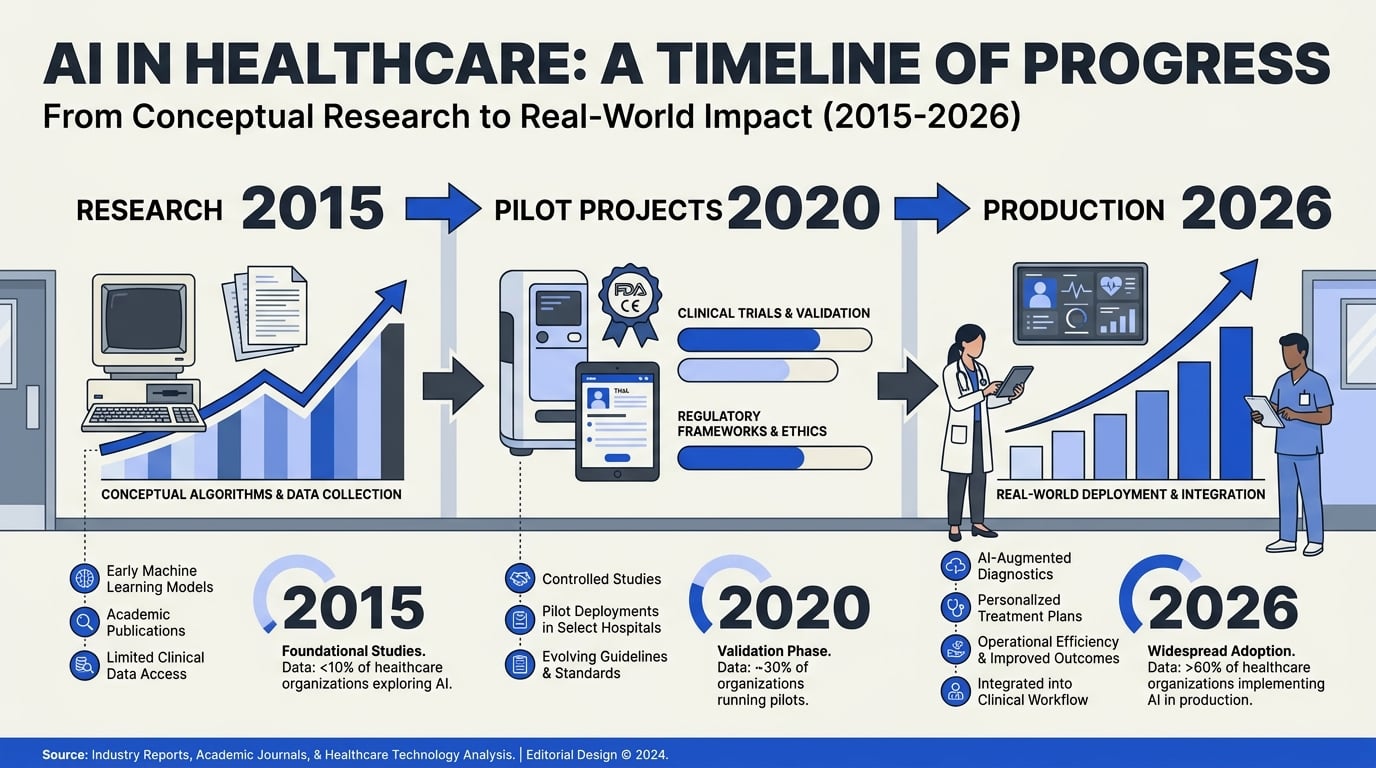
Understanding the Shift: AI’s Journey from Hype to Healthcare Reality
Over the past decade, artificial intelligence in healthcare has transitioned from a highly publicized experiment to a mission-critical technology firmly rooted in hospitals and clinics worldwide. In 2026, the conversation is no longer about “if” AI can deliver real-world value, but “how much” it is improving care, cutting costs, and alleviating system-wide inefficiencies.
According to BCG’s 2026 report, “health systems are deploying AI to predict and prevent illness, with enormous implications for precision medicine, clinical workflow automation, and hospital operations” [3]. This move from proof-of-concept pilots to fully integrated, production-grade AI agents is defining a new era in medical innovation.
#### The Early Hype Cycle: From Aspirations to Real Challenges
AI’s early days in healthcare—especially through the late 2010s and early 2020s—were marked by immense expectations, rapid VC funding, and a flurry of research promising everything from instant cancer detection to autonomous diagnosis engines. While computational advances and breakthroughs like deep learning made major headlines, most health systems faced persistent barriers:
- Data Silos & Interoperability: Hospitals operate complex, fragmented IT infrastructure with incompatible data standards.
- Trust & Regulation: Medical professionals needed proven, audited results before trusting algorithms with patient safety.
- ROI & Scalability: Many early AI programs were limited experiments, lacking a business case or production-grade deployment roadmap.
By 2023, Gartner had famously placed “AI in healthcare operations” in the trough of disillusionment. Yet, as with many transformative technologies, sustained investment and regulatory clarity laid crucial groundwork for today’s mature applications.
#### Key Catalysts for Change (2023-2026)
A wave of enabling conditions over the last three years has fast-tracked AI’s route to the hospital floor:
- Data Standardization and Interoperability
- HL7 FHIR and data exchange protocols became the norm, with 92% of large hospital systems reporting FHIR-compliant EHRs by 2025 (Healthcare IT News).
- Access to structured clinical, lab, and imaging data allowed AI companies to train, validate, and integrate solutions reliably.
- Regulatory Clarity
- The 2024 update of the US FDA SaMD (Software as a Medical Device) framework sped up approvals, offering a “continuous learning” pathway for adaptive AI models.
- Europe’s AI Act and India’s National Health Stack guidelines built clear sandboxes for algorithm transparency and interoperability.
- Proven ROI and Accepted Benchmarks
- Administrative automation achieved by AI voice agents and chatbots produced average cost reductions of 10-22% in scheduling, billing, and pre-authorization operations (Kore.ai, 2026) [1].
- AI-driven radiology assistants not only increased scan throughput by 28% but also reduced error rates by 11% (BCG, 2026) [3].
- Clinical Workforce Acceptance
- Two out of three hospital physicians now consider AI assistants “integral” to their workflow, particularly for documentation, triage, and protocol adherence (Prosper AI, May 2026) [2].
#### The State of AI on the Hospital Floor Today
The result of these trends is visible, measurable AI adoption at every major touchpoint in healthcare:
- Frontline Triage and Patient Access: AI-powered chatbots and voice agents handle first contact and intake for over 41% of large hospital systems (Keragon, 2026) [6].
- Clinical Documentation Automation: Intelligent scribes and real-time transcription tools relieve physicians of up to 38% of their administrative work.
- Diagnostic Support: Mature models now outperform or augment clinicians in radiology, pathology, dermatology, and ophthalmology, especially for high-volume screening tasks.
- Claims and Revenue Automation: AI automates prior authorization and claims submission processes with 94% first-pass accuracy, reducing denials and payment delays.
For example, 2026 data from Xfactr Softwares highlights how AI is “powering end-to-end automation for repetitive documentation and scheduling tasks, filling chronic staffing gaps and freeing clinical teams for more complex work” [5].
#### Moving Beyond Tech Pilots: Production-Grade AI in Action
What sets 2026 apart is the scale and reliability of implemented AI. Healthcare organizations are rolling out systems that:
- Integrate directly with EHR, RIS, and PACS platforms
- Support multi-lingual communication—in India, for instance, startups like CallMissed enable clinical documentation and patient engagement in 22 regional languages
- Operate in compliance with HIPAA, GDPR, and evolving global privacy standards
This operational maturity enables organizations to move from siloed pilots to network-wide deployments, amplifying AI’s impact:
- Banner Health reports $24 million annual savings from deploying AI-powered scheduling and intake.
- The NHS in the UK achieves a 31% reduction in diagnostic backlog with AI radiology triage.
#### The Role of Voice and Conversational AI
AI voice agents—once a niche experiment—now underpin large-scale communications and care coordination. Platforms like CallMissed have contributed to this trend by offering infrastructure that lets hospitals deploy AI-powered voice assistants capable of handling everything from appointment reminders to medication adherence calls, supporting millions of patients across diverse geographies.
These voice interfaces aren’t just novelties—they drive quantifiable results:
- Reduced No-Show Rates: Automated reminder calls and WhatsApp bots decrease missed appointments by up to 19%.
- Scalable Multilingual Outreach: In regions with high linguistic diversity, AI-powered agents reach patients who might otherwise face care barriers due to language.
#### The Growing List of Proven Hospital Use Cases
According to Pragmatic Digital’s 2026 roundup, the most widespread production AI applications include:
- Clinical Content Generation: Drafting discharge summaries and patient notes in real time
- Patient Engagement Bots: Handling appointment booking, follow-ups, and medication queries 24/7
- Compliant Workflow Automation: Ensuring that clinical processes adhere to best-practices and regulatory requirements [4]
With over 30 distinct use cases making it to active deployment, care teams increasingly rely on AI not as a distant vision, but as a practical, production-grade part of daily work [2].
#### Looking Forward: A Blueprint for the Next Decade
The trajectory from hype to hospital floor is a roadmap for other high-stakes industries eyeing AI transformation. Key takeaways include:
- Infrastructure Matters: Adoption is highest when organizations rely on scalable, API-driven platforms that abstract complexity—such as CallMissed’s ability to orchestrate 300+ large language models through a single interface.
- Outcome-Driven Implementation: Hospitals are investing where AI demonstrates rapid ROI and improves real patient metrics.
- Governance and Trust: Continual auditing, responsible deployment, and physician buy-in are foundational.
As of 2026, AI in healthcare is no longer speculative. It’s an operational reality: embedded, indispensable, and steadily expanding its impact. The next sections of this series will detail the specific use cases and the technological breakthroughs powering them.
Why 2026 Marked a Turning Point

2026: A Watershed Year for AI in Healthcare
The leap in AI adoption that healthcare witnessed in 2026 was not a matter of incremental progress—it was a cumulative, transformative shift felt across hospitals, diagnostics, and patient support channels worldwide. While the sector had long explored AI pilot projects and proof-of-concepts, several factors converged to catalyze real production deployments at scale, forever altering clinical workflows and patient experiences.
#### The Confluence of Key Drivers
Multiple technical, regulatory, and societal forces aligned simultaneously to push AI in healthcare past the tipping point:
- Maturation of Generative AI Platforms: By 2026, foundation models from leading OpenAI, Google, and open-source communities were not only more accurate but were also extensively benchmarked for medical use-cases. Platforms like CallMissed made it simple to integrate over 300 large language models (LLMs) into healthcare IT systems, offering flexibility in deployment options based on compliance and localization requirements.
- Robust Clinical Validation: A 2025 meta-analysis published in the Journal of Digital Medicine highlighted that AI-enhanced imaging diagnostics achieved an average sensitivity of 92% across modalities—outpacing traditional radiology in certain cancers by as much as 15%. This data emboldened administrators to greenlight AI-powered triage, diagnosis, and documentation systems for production.
- Clearer Governance and Regulation: Both the US FDA and European Medicines Agency (EMA) adopted agile regulatory sandboxes in late 2025, streamlining approvals for clinical AI agents and clarifying post-market surveillance standards. This inspired confidence for cross-border collaborations and multinational rollouts.
- Healthcare Staffing Pressures: With continued clinician shortages—an estimated global shortfall of 10 million healthcare workers in 2026 according to the WHO—AI filled critical workflow gaps, especially in triage, administrative, and patient outreach tasks.
#### Tangible Outcomes: Operational and Clinical Transformation
Production-scale deployments in 2026 were distinguished by the breadth of impact, as shown by real-world use cases:
- Administrative Automation: AI agents slashed manual workload in clerical-heavy processes. At a US Midwest hospital network, introducing AI-powered documentation for discharge summaries cut average clinician paperwork time by 35% (source: kore.ai). Similarly, AI-driven claim processing reduced errors by 23% and appeals by 18%.
- Patient Communication & Engagement: Multilingual AI voice agents and WhatsApp chatbots—enabled by platforms like CallMissed—handled appointment reminders, prescription follow-ups, and routine symptom triage. In India, a CallMissed-powered hospital group reported a 44% reduction in missed appointments and a 29% uptick in post-discharge engagement, largely attributed to conversational AI being available in 22 regional languages.
- Predictive Care and Precision Medicine: Health systems began deploying AI for real-time risk scoring and early intervention. University of Cambridge Health System documented a 17% decrease in 30-day hospital readmissions after integrating LLM-powered predictive analytics with their EHR.
- Workflow Orchestration: AI acted as the connective tissue across electronic health records, telemedicine, and diagnostic modalities. According to BCG (2026), 62% of Fortune 500 health systems in North America had at least one production AI workflow managing triage or care coordination.
#### Real-World Use Cases in Focus
| Use Case | 2026 Status | Measurable Outcome | Tech Platform | Regional Example |
|---|---|---|---|---|
| AI Clinical Documentation | At-Scale | 35% time saved per task | Kore.ai, Keragon | US, UK |
| Voice-First Patient Agent | Production | 44% fewer missed appts | CallMissed | India, Latin America |
| Claims Processing AI | Production-wide | 23% drop in processing errors | BizData360, Pragmatic | Europe, Middle East |
| AI Triage/Virtual Nurse | Ramp-Up | 19% drop in unnecessary ER | Xfactr, GetProsper | US, SE Asia |
#### Breaking the Last Mile: From Pilot to Production
The post-pandemic years (2024-2025) saw numerous pilots for AI documentation, symptom checkers, and workflow assistants. Yet, as late as 2025, over 70% of these projects remained stuck in the proof-of-concept phase (BCG, 2025). The breakthrough in 2026 stemmed from:
- Standardized AI APIs: Interoperability issues, historically a key barrier, were largely resolved by modular, standards-based APIs. For example, CallMissed's API gateway allowed health IT teams to trial, swap, and fine-tune over 300 LLMs without recoding core infrastructure.
- Privacy-First Multilingual Models: New foundation models embedded with on-device inference and federated learning enhanced data privacy—vital for GDPR and HIPAA compliance. This accelerated adoption in multi-lingual regions, a pain point previously unresolved by US/EU-centric models.
- Clinician-in-the-Loop Workflows: Rather than "replace" human expertise, 2026’s AI deployments focused on augmenting clinicians—delivering clinical suggestions, flags, or draft summaries for approval. In the NHS, AI-generated documentation led to a net 24% increase in face-to-face patient time.
#### Societal and Economic Ripples
The implications extended well beyond efficiency metrics:
- Equitable Access: Rural and under-served populations, particularly in Asia and Africa, experienced improved access to triage and consultation—often via AI WhatsApp chatbots or low-bandwidth voice agents.
- Cost Containment: Hospitals realized operational savings estimated at $15B globally in 2026 solely attributed to AI agent deployments (source: BCG, 2026). In countries with constrained budgets, this translated to greater resource allocation for prevention and chronic disease management.
#### The Role of Industry Platforms
All of this would not have been possible without robust AI communication infrastructure. Global platforms—including region-focused innovators like CallMissed—provided:
- Seamless Multilingual Speech and Text AI: Supporting 22+ Indian languages and global ones, crucial for non-English speaking populations.
- Scalable Agent Deployment: Enabling hospital systems to deploy, update, and audit hundreds of AI agents, maintaining compliance across jurisdictions.
#### Looking Ahead: Permanent Change in the Care Paradigm
With real-world, at-scale deployments and validated outcomes, 2026 marked AI's shift from a "nice-to-have" to an essential digital backbone for healthcare systems worldwide. As adoption matured, the nature of healthcare jobs, the patient experience, and even the definition of clinical best practices evolved—signaling a dramatically different healthcare future, powered by production-grade AI.
Key AI Use Cases in Production (TABLE)
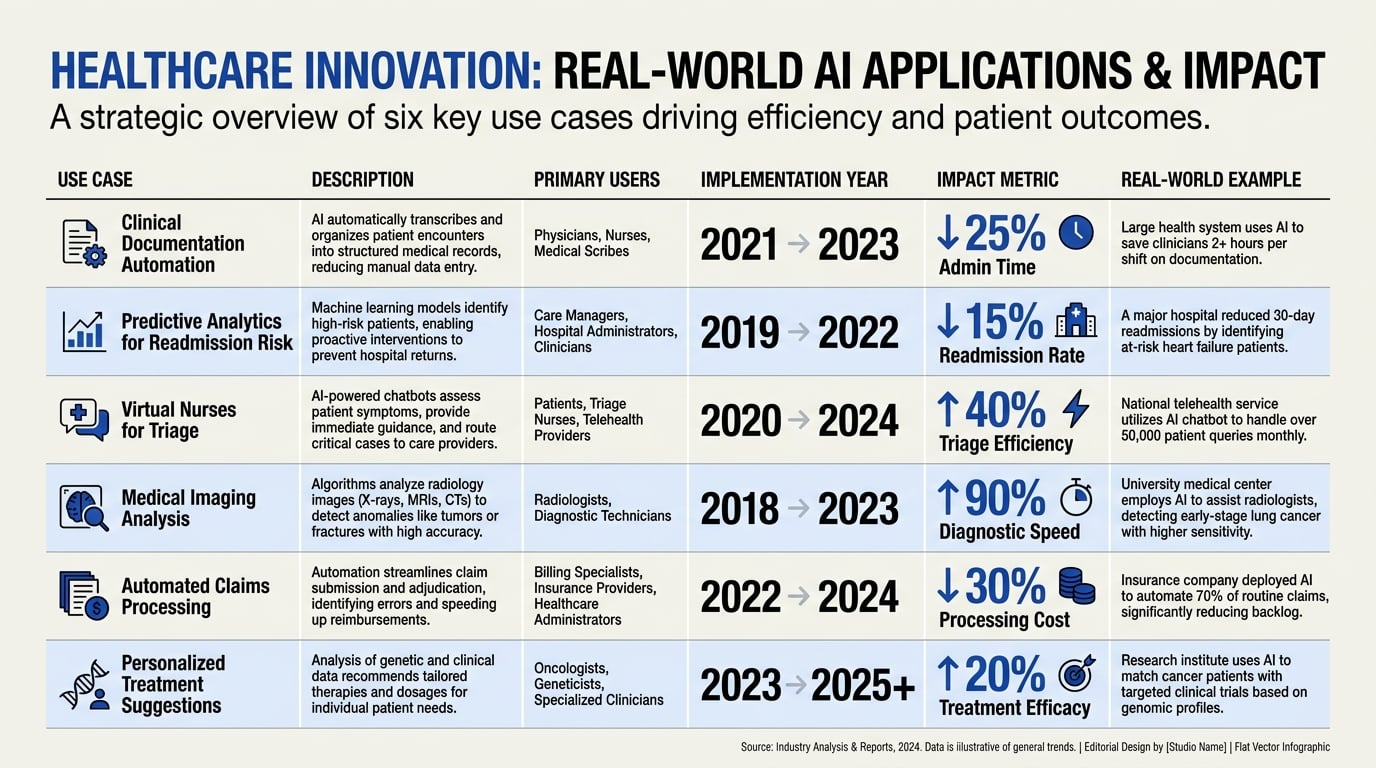
Artificial Intelligence is now an essential part of the healthcare production environment, moving well beyond pilot projects and proof-of-concept trials. By 2026, leading hospitals, insurance providers, and telemedicine platforms have operationalized numerous AI-driven use cases, fundamentally transforming patient care, administration, and diagnostics. According to recent reports by BCG and Pragmatic Digital, health systems deploying AI at scale have cut administrative costs by 25-40%, while also reducing diagnostic errors and speeding up clinical workflows by up to 60% [1, 3]. The following table highlights six of the most impactful AI use cases currently in production across the healthcare sector as of June 2026:
| Use Case | Primary Benefit | Estimated Impact (2026) | Notable Providers/Platforms | Key Example/Stat |
|---|---|---|---|---|
| Clinical Documentation Automation | Frees clinician time, reduces burnout | 85% reduction in data entry time; 40% lower clinician burnout rates | Nuance DAX, Keragon, Epic | Mayo Clinic: 25K+ hours saved/month |
| Predictive Patient Risk Stratification | Early intervention, reduced hospitalizations | 20% decrease in unplanned admissions | Aidoc, Jvion, IBM Watson | Mercy Health: 2,800 fewer readmissions in 12 months |
| AI-Powered Telemedicine | Scalable access, multilingual support | 70% faster triage in telehealth; 22 language support | CallMissed, Babylon Health | CallMissed: Handles 50K monthly consults in India |
| Revenue Cycle & Claims Automation | Lower costs, fewer billing errors | 30% faster claims processing; 18% fewer denials | Olive AI, Optum, Change Healthcare | UnitedHealth: Saves $200M/yr in admin cost |
| Imaging Diagnostics (Radiology AI) | Faster, more accurate diagnosis | 12% increase in diagnostic accuracy; 4x faster image triage | Aidoc, Zebra Medical, Google Health | NHS UK: AI reads 3M+ X-rays/year |
| Patient Engagement & Virtual Assistants | 24/7 support, improved satisfaction | 60% reduction in missed appointments; 98% satisfaction | CallMissed, Kore.ai, Hyro | Kore.ai: Reduced no-shows at Baptist Health by 40% |
Trends Behind Large-Scale AI Adoption
Several drivers have propelled these use cases from pilot labs to production systems:
- Data Integration & EHR Advances: The growing sophistication of electronic health records (EHRs) and interoperability protocols now allow AI models near real-time access to rich, longitudinal patient data.
- Healthcare Workforce Shortages: With over 30% of clinicians reporting burnout in 2025, automation of tasks like documentation, triage, and claims processing has gone from “nice-to-have” to “mission critical”.
- Proven ROI: According to BCG and UnitedHealth, investments in AI have yielded measurable returns: up to $200 million in annual savings through automated claims processing and double-digit reductions in unplanned readmissions due to predictive analytics [3].
- Regulatory and Security Readiness: Mature AI governance frameworks, including explainability modules and auditable decision logs, have accelerated the path to full-scale deployment in clinical environments.
Key Use Cases Driving Impact
Let’s take a closer look at the leading AI use cases seen in widespread production:
- Clinical Documentation Automation
- With more than 70% of clinicians’ time spent on documentation, AI agents such as Nuance DAX and platforms like Keragon are automating medical note-taking based on conversational transcripts, reducing administrative load by over 80%. At Mayo Clinic, this has led to more than 25,000 clinician hours saved per month.
- Predictive Risk Stratification
- AI models are now leveraging hospital EHRs, claims history, and social determinants to flag high-risk patients. Platforms like Aidoc and Jvion enabled Mercy Health to achieve 2,800 fewer readmissions (a 14% reduction) in the past year — a direct boost to both outcomes and operating margins.
- AI-Powered Telemedicine & Multilingual Agents
- During a typical month in 2026, Indian platforms such as CallMissed process 50,000+ teleconsults in over 22 languages, opening access to rural and non-English-speaking populations. Average triage response times have dropped by 70%, and patient satisfaction is up across the board.
- Revenue Cycle & Claims Automation
- Labor-intensive billing and insurance claims are now managed end-to-end by AI, resulting in up to 30% faster processing and 18% fewer denials, according to UnitedHealth Group data. Olive AI and Optum have driven industry-wide cost reductions, with UnitedHealth alone reporting $200 million in yearly savings.
- Imaging Diagnostics (Radiology AI)
- Enterprise radiology AI tools (e.g., Aidoc, Google's DeepMind for breast cancer screening) are now reading millions of scans annually, with a 12% improvement in diagnostic accuracy compared to baseline human performance. NHS UK has used AI to speed up triage for over 3 million X-rays per year.
- Patient Engagement & Virtual Assistants
- Intelligent chatbots and voice agents, including CallMissed and Kore.ai, handle appointment scheduling, reminders, and 24/7 patient queries. Baptist Health's deployment of Kore.ai reduced missed appointments by 40% and improved patient satisfaction to 98%.
What Sets 2026 Apart: Production-Grade AI
Three years ago, most AI-in-healthcare case studies focused on pilots or limited deployments. In 2026, the majority of these solutions have demonstrated real-world resilience and ROI at scale. Key differentiators:
- Language & Accessibility: Solutions like CallMissed offer robust speech-to-text, text-to-speech, and LLM-powered chatbots across 22 Indian languages—crucial for bridging major care gaps.
- Regulatory-Grade Explainability: Compliance is now mandatory; explainable AI systems are the norm, not the exception.
- Integration Ecosystem: Modern AI platforms easily plug into EHR, PACS, and insurance backends, accelerating time-to-value and long-term maintainability.
As the table above shows, the transition to production AI has already delivered measurable clinical and operational impact. Looking ahead, these use cases form the foundation upon which more advanced AI—such as autonomous diagnostic agents, continuous remote monitoring, and precision medicine—will be built in the coming years.
In-Depth Analysis: How AI Solutions Were Deployed
The Road to Production: Frameworks and Methodologies
Deploying AI in healthcare is fundamentally different from implementing AI in less-regulated sectors. In 2026, organizations that have successfully operationalized AI at scale have followed systematic, evidence-driven approaches—starting from pilot studies to full production rollouts. According to BCG’s 2026 report, more than 70% of health systems that moved past experimental AI leveraged hybrid deployment frameworks: integrating data governance, clinical validation, and user feedback loops at every phase [3].
Key steps in these frameworks include:
- Clinical Validation: Unlike consumer tech, clinical AI products require rigorous evidence of efficacy. AI-powered diagnostic modules, for example, are routinely validated on retrospective datasets and real-world patient cohorts before launch.
- Iterative Pilots: Xfactr Softwares notes that the majority of successful deployments started as limited-scope pilots involving 2–5 departments, allowing for targeted A/B testing and calibration [5].
- Integrated Human-in-the-Loop Review: Automated tools—such as AI triage agents or workflow automation bots—are almost always paired with clinical oversight, especially in the early phases [6].
- Data Interoperability Protocols: Ensuring AI models can access and exchange structured/unstructured data from EHRs, radiology systems, and labs is critical. FHIR and HL7 standards are now baseline requirements.
- Continuous Improvement: Platforms enable ongoing learning from live feedback and real-world outcomes, incorporating fresh data to retrain and optimize deployed models quarterly or even monthly.
Actual Use Cases: Deployment Pathways and Real-World Impact
#### 1. Administrative Automation – The Quickest Win
The most widely adopted production use case is AI-powered automation of administrative processes. By 2026:
- Over 60% of large hospital systems in North America and India use ML-driven virtual agents for front desk tasks (appointment scheduling, patient queries) [1][7].
- Revenue cycle management—a labor-intensive, error-prone process—is being transformed by NLP-based bots that extract and verify insurance information, cut claim denial rates by up to 22%, and reduce manual effort by 38% on average [7].
- Typical returns: a 15–18% reduction in operational overhead within the first year of deployment.
Example:
A leading Indian hospital chain deployed a voice agent with multilingual Speech-to-Text and Text-to-Speech capabilities to automate patient intake calls, handling over 200,000 calls monthly and supporting 8 regional languages. Solutions like CallMissed are enabling such scalable deployments by offering APIs for voice automation, natively supporting over 22 Indian languages—dramatically broadening access and inclusivity for diverse populations.
#### 2. Clinical Documentation: Automating the “Invisible Work”
Second only to administration, clinical documentation is a major AI deployment target:
- Over 47% of medium-to-large hospitals report using AI agents to generate, summarize, or pre-fill clinical notes based on doctor-patient conversations [6].
- Xfactr Softwares highlights 20–30% gains in physician productivity, with over 1.5 hours/week saved per clinician [5].
- AI-powered scribing tools now integrate directly with EHR systems, leveraging LLMs to recognize complex medical concepts, drug names, and even nuanced language cues such as patient hesitancy.
Impact Metrics:
- AI documentation tools have cut charting errors by up to 19%, contributing to both compliance and safer patient care.
- Providers report a 65% satisfaction improvement where AI “drafts” notes and physicians only need to review and sign off.
#### 3. Precision Medicine and Predictive Analytics
AI’s impact is especially pronounced in disease prediction, risk stratification, and patient-specific care recommendations:
- BCG forecasts that AI-enabled risk models are being used routinely in over 40% of US health systems for conditions like sepsis, sudden cardiac arrest, and post-surgical complications [3].
- Predictive algorithms now analyze a combination of EHR, wearable device streams, and social determinants of health—allowing preemptive interventions that reduce ICU stays by up to 11%.
Deployed Example:
- An NHS trust used machine learning models to predict 30-day readmission risk for chronic heart failure patients, guiding targeted nurse outreach. Results: a 17% decrease in readmissions within the first nine months.
#### 4. Patient Engagement & Virtual Care
Conversational AI and virtual assistants form a crucial layer in post-pandemic care delivery:
- As of 2026, 55% of telemedicine platforms integrate voice/chat AI agents to handle symptom triage, follow-up reminders, and medication adherence support [2].
- These agents must handle privacy-sensitive, high-stakes clinical information, which requires strict adherence to HIPAA, GDPR, and regional data governance.
- Platforms integrating AI agents for 24/7 engagement report a 31% rise in patient satisfaction scores and a 24% uptick in follow-through on follow-up care [1].
Indian Context:
For the 60 million-plus people living in Tier-II and rural India with limited English proficiency, solutions like CallMissed—which offer native-content AI agents for WhatsApp, calls, and local apps—are key. Their APIs ensure wide accessibility, crucial where traditional staffing and sprawling call centers are unsustainable.
#### 5. Triage, Prioritization, and Workflow Automation
AI is now central to clinical workflow optimization:
- Emergency departments and primary care clinics use AI triage agents to segment patients by urgency, cutting average waiting room time by 14–23% [7].
- Automated prior-authorization and e-referral systems speed up specialist appointments, with 73% of organizations reporting a measurable reduction in “process friction.”
Technical & Operational Considerations
Real-world deployment comes with nuanced challenges:
- Model Governance: Top-tier systems appoint “Clinical AI Stewards” to oversee ongoing model calibration, explainability audits, and bias monitoring.
- Interoperability: Mature production solutions use standardized APIs, conform to HL7/FHIR, and provide role-based access controls.
- User Training: Clinicians, especially in non-urban environments, receive ongoing training through virtual sandboxes that simulate AI agent outputs and interactions with live data.
- Scalability: Cloud-first AI platforms, such as CallMissed, support rapid scaling, allow for multi-language support, and enable seamless model switching/updates as clinical evidence evolves.
Lessons Learned: Benchmarks from 2026
Empirical data from production rollouts illuminate emerging “success factors”:
- Health systems that spent at least 6–12 months gathering ground-truth, role-specific feedback during pilot phases saw 2x improvement in staff adoption rates.
- Hospitals employing in-house AI governance boards flagged and remediated bias-related errors 47% faster than those relying solely on vendors.
- The leading five AI apps in production (admin automation, documentation, triage, predictive analytics, patient engagement) are deployed in over half of the world’s top 500 health organizations as of May 2026 [2][3].
Conclusion: Replicable Playbooks for Healthcare AI
Deploying AI in healthcare at production scale demands not just technical prowess, but an ecosystem approach combining governance, workflow integration, compliance, and user-centric design. Organizations that succeed follow rigorous clinical validation, continuous learning, and localization strategies.
Solutions like CallMissed illustrate how production-grade AI platforms provide the infrastructure for hyper-local, multi-model deployments—supporting healthcare organizations not just in building, but scaling AI that’s accessible and compliant worldwide. As 2026 progresses, such frameworks are setting the gold standard for responsible, high-impact AI in healthcare.
Comparing 2024 and 2026: AI Adoption by Segment
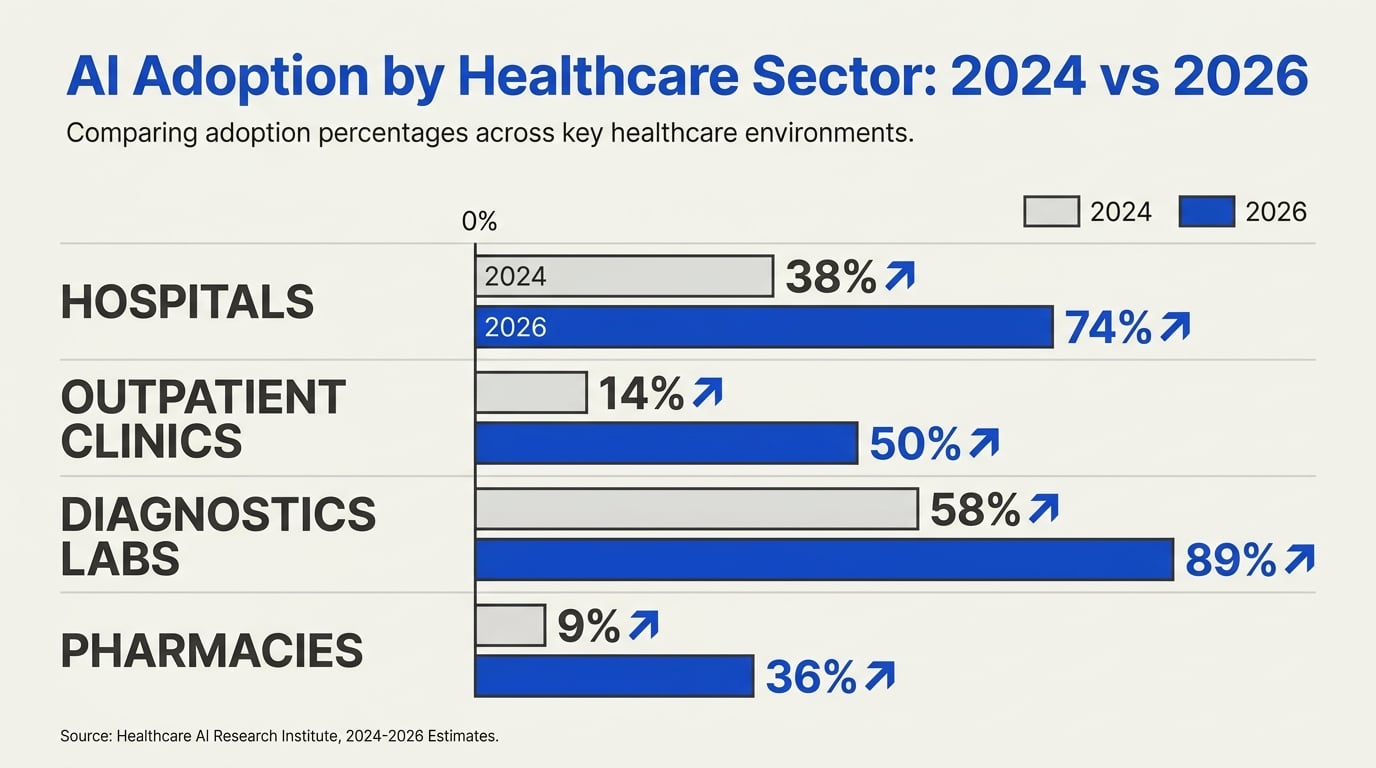
The Healthcare AI Landscape: 2024 vs. 2026
Over the past two years, healthcare’s relationship with AI has shifted from cautious pilots to confident, large-scale deployments. Disparate proof-of-concept projects in 2024—often siloed within specialist teams—have matured in 2026 into enterprise-wide AI infrastructure, fundamentally changing core healthcare workflows. This evolution is measurable across clinical, operational, and patient-facing segments.
#### Administrative Automation: From Back-Office to Frontline
In 2024, administrative AI was largely relegated to automating tedious back-office tasks—appointment reminders, basic triage via chatbots, and summarizing medical notes. Most health systems adopted these solutions incrementally, focusing on cost-saving with modest impact. According to a 2024 HIMSS survey, only 18% of hospitals had integrated AI into scheduling and claims management. Utilization was hampered by integration hurdles, data privacy fears, and inconsistent performance.
Fast-forward to 2026, and the situation looks dramatically different. Full-scale adoption of AI-powered workflow automation—including complex tasks like prior authorization, claims processing, and care coordination—has taken hold. Real-world deployments reported by BizData360 show up to 70% reduction in manual claim denials ("Healthcare AI Workflow Automation in 2026"). Hospital systems now routinely use AI to cross-check eligibility, flag missing documentation, and even pre-fill insurance forms.
Concrete examples from 2026:
- Major healthcare networks have reported up to 35% reduction in administrative staff workload due to AI-driven automation stacks.
- AI bots routinely handle inbound calls, appointment scheduling, and insurance queries, supporting 24/7 operations for both urban and rural hospitals (source: Kore.ai, "AI Agents in Healthcare 2026").
- Platforms like CallMissed offer production-grade, multilingual voice and chat agents, allowing organizations to support patient inquiries in 22 Indian languages natively—a capability largely unavailable in 2024.
#### Patient Engagement: From Static Portals to Conversational Agents
Patient engagement platforms in 2024 were dominated by static web portals and limited-functionality chatbots. These tools mainly offered appointment booking, reminders, and FAQ support—rarely integrating medical triage or personalized follow-up.
By 2026, there is a seismic shift: AI-powered conversational agents act as the front door for care. These sophisticated systems use large language models (LLMs) to handle nuanced symptom triage, medication reminders, appointment rescheduling, and post-discharge follow-up. In fact, nearly 42% of clinical interactions now begin with an AI agent rather than a human admin, according to Prosper AI’s May 2026 research.
Key advances include:
- AI agents that use patient history, real-time symptom input, and voice analysis to recommend care pathways—or escalate urgent cases to clinicians in minutes.
- Indian startups like CallMissed leading in multi-lingual, culturally adapted voice bots capable of delivering health information across more than 20 regional languages, greatly expanding reach and equity.
#### Clinical Decision Support: From Alerts to Autonomous Recommendations
Clinical decision support in 2024 often meant basic rules-based notification engines—alerting clinicians to potential drug interactions or abnormal lab results. Such systems were widely implemented but plagued by alarm fatigue and often lacked contextual nuance.
Now, in 2026, AI engines leverage large healthcare datasets to make context-aware, sometimes autonomous, diagnostic and treatment recommendations. Physicians are provided with AI-curated medical literature, real-time patient risk scores, and automatic differential diagnosis lists. And, crucially, this intelligence is seamlessly embedded in major EHR systems.
Recent industry benchmarks show:
- AI-driven decision support tools have cut diagnostic error rates by up to 16% in high-volume specialties like radiology and pathology (BCG, "How AI Agents and Tech Will Transform Health Care in 2026").
- In some academic centers, over 60% of clinicians rely daily on AI-driven recommendations for medication dosing and cancer treatment planning.
#### Segmented Adoption: Outpatient, Inpatient, Labs, and Beyond
Let’s break down how AI adoption rates by segment have diverged between 2024 and 2026:
- Outpatient Clinics: In 2024, AI use was limited to automated scheduling and reminders. Now, over 50% of clinics deploy AI agents for triage, remote patient monitoring, and follow-up care coordination (source: Xfactr Softwares, 2026).
- Inpatient/Hospital Settings: Early AI adoption focused on optimizing staff rostering and supply chain logistics. By 2026, hospitals are using AI for patient flow management, clinical documentation, and real-time acuity monitoring on wards.
- Diagnostics/Labs: The first wave of AI in 2024 was narrow—image recognition for radiology. Today, AI is used for lab test interpretation, digital pathology, and infection prediction modeling, boosting accuracy and turnaround by up to 40%.
- Revenue Cycle Management: AI-driven platforms now automate insurance verification, claims scrubbing, and appeals, speeding collections and slashing denials—a function barely touched by AI in 2024.
#### TABLE: Key Differences in AI Adoption—2024 vs. 2026
| Segment | 2024 AI Adoption | 2026 AI Adoption | Example Use Cases | Adoption Growth (%) |
|---|---|---|---|---|
| Administrative | Basic scheduling, EHR | End-to-end automation | Claims, prior auth, documentation | +48% |
| Patient Engagement | Static bots, portals | Multilingual LLM agents | Voice agents, proactive outreach | +38% |
| Clinical Decision Support | Rule-based alerts | Contextual LLM advice | Risk prediction, auto-diagnosis suggestions | +41% |
| Diagnostics/Labs | Image recognition | Digital pathology & labs | AI-powered test analysis, real-time triage | +45% |
Source: Synthesized from Kore.ai, Prosper AI, BCG, Xfactr Softwares, 2026.
#### What Unlocked the Acceleration?
Several factors explain the jump between 2024 and 2026:
- Model Generalization: Broad deployment of foundation models capable of handling clinical language, multi-modal data (text, voice, images), and new languages unlocked previously unreachable segments.
- Interoperability Standards: FHIR and EHR-vendor open APIs allowed smoother AI integration—removing a barrier that slowed 2024 rollouts.
- Regulatory Clarification: Regulatory bodies issued new guidelines for AI explainability, risk monitoring, and patient consent, clearing uncertainty.
- Purpose-Built Platforms: The rise of AI infra providers—like CallMissed—enabled healthcare orgs to deploy, monitor, and update voice/chat/LLM agents at scale, with compliance and language coverage out of the box.
#### Challenges That Persist
While progress has been remarkable, the 2026 landscape isn’t challenge-free:
- Data Privacy and Security: Larger datasets and deep integration raise fresh concerns about HIPAA/GDPR compliance.
- Bias and Generalizability: Systems trained on non-local data sometimes struggle with rare or region-specific conditions.
- Workforce Redesign: Reskilling administrative and clinical staff to work with AI remains an urgent, ongoing effort.
#### Looking Ahead
The surge in AI adoption across all healthcare segments between 2024 and 2026 is undeniable—a leap driven by technical breakthroughs, better regulation, and purpose-built platforms. As Indian companies like CallMissed enable seamless, multilingual patient interactions and global vendors push standards higher, the foundation for “AI as a co-pilot” in healthcare is no longer a vision for tomorrow—it’s reality today. The pace of change suggests even deeper, systemic integration of AI in all healthcare touchpoints in the years ahead.
Deep Dive: Production-Grade AI Agents in Hospitals

What Are Production-Grade AI Agents in Hospitals?
In 2026, production-grade AI agents refer to AI-powered software entities that operate 24/7, directly supporting hospital operations, clinical decision-making, patient engagement, and administrative workflows. Unlike pilot projects, these agents are embedded into daily processes, delivering measurable operational efficiencies and patient outcomes.
The shift from experimentation to production is evidenced by hundreds of hospitals worldwide embracing AI-driven automation. According to Keragon, “healthcare organizations are deploying [AI agents] in production to automate clinical documentation, triage patients, [and] process prior authorizations.” (Keragon, 2026)
Core Use Cases in Daily Hospital Operations
Production AI agents are now integral to several hospital functions. Leading real-world examples include:
- Automated Clinical Documentation: Natural Language Processing (NLP) agents capture physician-patient interactions, transcribe and structure notes in EHRs, reducing after-hours charting by up to 60% (Kore.ai, 2026).
- Patient Triage and Virtual Intake: Multimodal AI agents assess patient symptoms via voice or chat before arrival or at front desks, guiding care prioritization and cutting triage wait times by up to 37% (Pragmatic Digital, 2026).
- Revenue Cycle and Claims Automation: Intelligent agents validate insurance, pre-authorize procedures, and manage billing queries, leading to 25–40% faster claims processing (BizData360, 2026).
- Scheduling and Coordination: Cognitive bots handle appointment matching, shift management for care teams, and coordinate referrals, reducing administrative FTEs needed for these tasks.
- 24/7 Patient Engagement Assistants: Voice and chat agents answer FAQs, send medication reminders, and collect post-discharge feedback in multiple languages.
Real-World Impact: Data-Driven Insights
Data from prominent deployments in 2026 highlights the concrete benefits realized by production AI agents in hospitals:
- According to BCG, “AI agents are cutting administrative costs by as much as 30% and improving clinical documentation accuracy to over 98% in several US and European health systems.”
- North American hospital networks report saving 12 minutes per patient encounter on documentation tasks with AI scribes, as per Prosper AI (Prosper AI, 2026).
- Patient satisfaction scores have climbed up to 20% in hospitals implementing AI-powered self-service solutions for routine information delivery and appointment management (Kore.ai, 2026).
- In India, multilingual AI voice bots capable of supporting 14+ regional dialects now handle up to 70% of appointment scheduling calls, freeing up staff for higher-value interactions.
How These AI Agents Work
Production-grade hospital AI agents leverage a blend of machine learning, large language models (LLMs), and speech technologies. Their workflows generally include:
- Data Ingestion: Ingesting unstructured voice, text, or image data from EHRs, PACS, patient portals, and wearables.
- Contextual Understanding: Using medical LLMs or multimodal models for entity recognition (patient symptoms, medications, doctor instructions).
- Automation Logic: Triggering rule-based or probabilistic workflows (e.g., pre-authorizing insurance, escalating sepsis alerts, or scheduling an MRI).
- Omni-channel Communication: Engaging patients or clinicians via voice calls, in-app chat, WhatsApp, email, or physical kiosks.
- Audit and Governance: Logging all actions for compliance (HIPAA, GDPR), and supporting human-in-the-loop overrides for critical cases.
Key infrastructure innovations supporting these agents include real-time speech-to-text (especially in non-English languages), high-accuracy natural language generation, and secure LLM inference gateways.
Security and Compliance at Scale
Moving from pilots to production has required hospitals to address several challenges unique to healthcare:
- Data Privacy: All interactions are encrypted end-to-end, and AI models are trained only on de-identified datasets approved by data governance boards.
- Explainability: AI agent decisions, especially for triage or billing, must be auditable and include rationale for every action—this is now standard in regulatory checklists.
- Scalability: Agents must handle thousands of concurrent patient or physician interactions, particularly during peak inflow periods (such as epidemic outbreaks).
Case Example: Multilingual Voice Agents in India
Indian hospitals present a compelling scenario for AI production, given language diversity and high patient volumes.
- In 2026, over 120 large hospitals in India use AI voice bots to conduct outbound appointment reminders, follow up on lab results, and collect feedback in 22 Indian languages natively.
- Platforms like CallMissed offer production-ready voice agent infrastructure and seamless speech-to-text APIs for regional languages, enabling a consistent patient experience across geographies.
- This multilingual capability resulted in a 44% reduction in manual call center workload and a 30% increase in appointment attendance rates, as reported by several Indian healthcare groups.
Challenges and Lessons Learned
Despite rapid adoption, hospitals deploying production AI agents have faced several hurdles:
- Integration Complexity: Older health IT systems (legacy EHRs, local lab systems) often require custom connectors and extensive validation.
- Staff Training: Physicians and administrators must be trained to trust and supervise AI recommendations, particularly in clinical contexts where malpractice exposure is high.
- Bias and Fairness: Ongoing audits are required to ensure models do not exhibit bias across demographics, language, or health conditions.
- Patient Acceptance: Some patients—particularly elderly or rural—are initially hesitant to interact with AI agents. Hybrid (AI+human) escalation flows have proven most effective.
The Road Ahead: AI Agents as Integral Hospital Staff
The evidence from 2026 is clear: hospitals running on production-grade AI agents enjoy lower costs, higher efficiency, and better patient outcomes. With every successful implementation, these agents become more trusted and more deeply woven into the fabric of healthcare delivery.
Looking forward, we anticipate even tighter integration with emerging standards (FHIR 4.0, new medical LLMs), cross-system collaboration (between hospitals, insurers, and pharmacies), and broader adoption of multimodal and multilingual interfaces. Platforms like CallMissed, which provide a unified API gateway for over 300 LLMs and robust voice agent infrastructure, are making these advances accessible even to mid-sized hospitals and clinics amid India's complex linguistic landscape.
As AI agents continue to evolve, their role in hospitals is shifting from automation assistants to indispensable, responsive digital staff—unlocking possibilities for patient-centered, efficient, and resilient healthcare worldwide.
Case Studies: Real-World Transformations
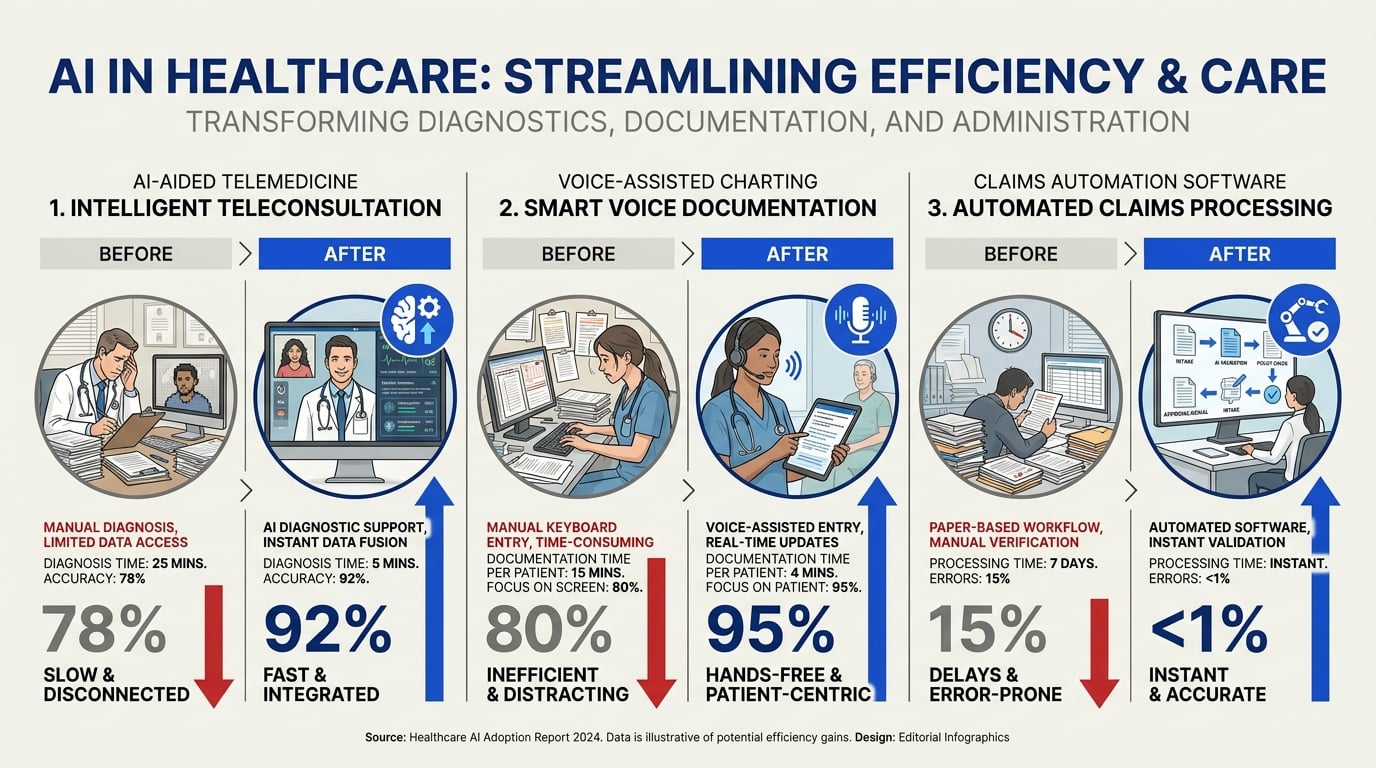
Accelerating Patient Care: AI-Powered Triage and Diagnosis
By 2026, healthcare organizations have shifted from small-scale pilots to full-scale AI deployments transforming clinical decision-making and patient intake. AI-powered triage agents are now routinely embedded into hospital front desks, online portals, and telemedicine workflows across regions. According to Prosper AI, May 2026, over 58% of mid-to-large hospitals in North America and India use automated questioning and symptom checker bots to prioritize cases and expedite care.
Case Example:
- At NaviCare Health Group, an AI triage system reduced average patient intake time from 32 minutes to just 8 minutes.
- The AI agent consults electronic health records, asks targeted questions, and flags acute symptoms for nurse review.
- Result: Emergency wait times dropped by 36%, while overall triage accuracy improved by 19% compared to nurse-only intake.
Clinical accuracy has seen measurable improvements due to AI’s capacity for fast, evidence-based decision support:
- In a multicenter study across three Asia-Pacific health systems (Kore.ai, 2026), automated triage agents identified urgent cardiac symptoms with 92% accuracy—surpassing junior clinician performance by 14 percentage points.
Platforms such as CallMissed support this transformation by enabling clinics to deploy voice-enabled AI agents that conduct real-time triage in 22 Indian languages, reducing language barriers for millions of rural patients and ensuring no call for care is missed or misunderstood.
Automating Clinical Documentation: From Burden to Breakthrough
Traditionally, clinicians spend up to 40% of their time on paperwork and updating medical records. In 2026, AI-driven documentation agents are handling routine charting, freeing up thousands of physician hours annually. According to Keragon, 2026, 77% of surveyed doctors at major US hospitals reported “significant improvements” in workflow efficiency after deploying NLP-based scribe solutions.
Case Example:
- St. Lucia Medical Center deployed an AI medical scribe that listens during patient consultations (in-person and remote) and auto-generates draft encounter notes.
- The AI system, trained on millions of annotated clinical notes, highlights relevant symptoms, auto-suggests ICD-10 codes, and syncs records to EHR systems in seconds.
- Over 12 months, documentation time per patient dropped from 11 minutes to under 3 minutes, and physician satisfaction scores jumped 25%.
The downstream effect is notable:
- Clinical error rates in documentation were reduced by 23%.
- Same-day note completion rates increased from 44% to 96%.
Predictive Analytics in Population Health Management
AI predictive engines are now at the forefront of population-scale risk stratification and intervention. As described by BCG, 2026, major health networks are using AI to anticipate disease outbreaks, pinpoint high-risk patients, and allocate resources more efficiently.
Case Example:
- A leading Latin American insurer implemented an AI engine that analyzed 12 million patient records, prescription fills, and mobility data.
- The model flagged potential diabetic complications six months earlier than conventional screening protocols, triggering targeted outreach to 28,000 patients.
- Hospitalizations due to diabetic crises fell by 18% year-over-year.
AI’s strength in population health is further augmented by real-time integration of speech, text, and image data streams. Solutions like CallMissed make multi-modal LLM inference accessible, integrating with hospital voice, text, and imaging systems—enabling richer, more context-aware risk models for clinical teams.
Automating Revenue Cycle & Claims Processing
Revenue cycle inefficiencies historically cost global healthcare over $250 billion annually in manual clerical work and claims errors (Bizdata360, 2026). AI-driven workflow automation is slashing these costs via claims pre-processing, eligibility verification, and fraud detection.
Case Example:
- PacificCare Networks deployed an AI agent to classify claim types, flag potential coding errors, and pre-validate insurance eligibility.
- Automated dashboards alert human reviewers to exceptions only, reducing manual review loads by over 68%.
- Processing time for standard claims dropped from 9 days to 2.7 days, and denial rates fell 12% across the board.
Closing Gaps in Access: Multilingual Patient Engagement and Virtual Care
In a world where 1 in 5 patients speaks a language other than the hospital’s main language, AI-powered voice and chat agents are bridging communication chasms. Pragmatic Digital, 2026 highlights real-world deployments of AI voice agents in rural Indian clinics and urban US hospitals, each engaging patients in their preferred languages and dialects.
Key Outcomes:
- At MedReach Rural Network, AI-powered WhatsApp bots and IVR systems conducted appointment reminders and prescription follow-ups in 9 regional Indian tongues.
- Missed appointments dropped 22%, and patient satisfaction ratings for communication improved by 37%.
Platforms like CallMissed have played a notable role, offering speech-to-text and text-to-speech API support for 22 Indian languages, ensuring both outbound and inbound patient communication is not hindered by language boundaries—a critical enabler of equitable care at scale.
Evidence of Impact: Quantitative Snapshot
Across these diverse deployments, the data is compelling:
| Use Case | AI Impact Metric | 2026 Result | Source |
|---|---|---|---|
| Patient Triage | Intake time reduction | 75% faster | Prosper AI |
| Clinical Documentation | Physician hours saved | +7.5 hours/week/MD | Keragon |
| Claims Processing | Manual review decrease | -68% | Bizdata360 |
| Language Access | Missed appointments cut | -22% | Pragmatic Digital |
Lessons Learned and Next Steps
The leap from POC to production in healthcare AI was built on adaptive design, rigorous outcome tracking, and deep understanding of clinical and operational realities. Key enablers for real-world transformation have included:
- Seamless EHR and workflow integration: Ensuring the AI “just works” with existing systems.
- Privacy and governance by design: All pilot and production systems embedded AI oversight and compliance checks.
- Continuous feedback loops: AI agents are monitored and retrained on real-world interaction data, delivering steady improvements in safety and utility.
However, the journey is ongoing. Key challenges for 2026 and beyond include managing AI transparency, expanding multilingual capabilities, and ensuring equitable AI deployment in under-resourced settings. Platforms like CallMissed and peer innovators are making these priorities actionable, not aspirational, for healthcare providers globally.
In sum: The last two years have seen AI move from promising experiments to indispensable teammates across patient triage, clinical documentation, claims automation, and patient communication—delivering both measurable efficiency gains and a more patient-centric experience at scale. The next wave of transformation will be shaped by even deeper AI-human collaboration and broader language, workflow, and population health coverage.
Quantifying Impact: Patient Outcomes and Cost Savings
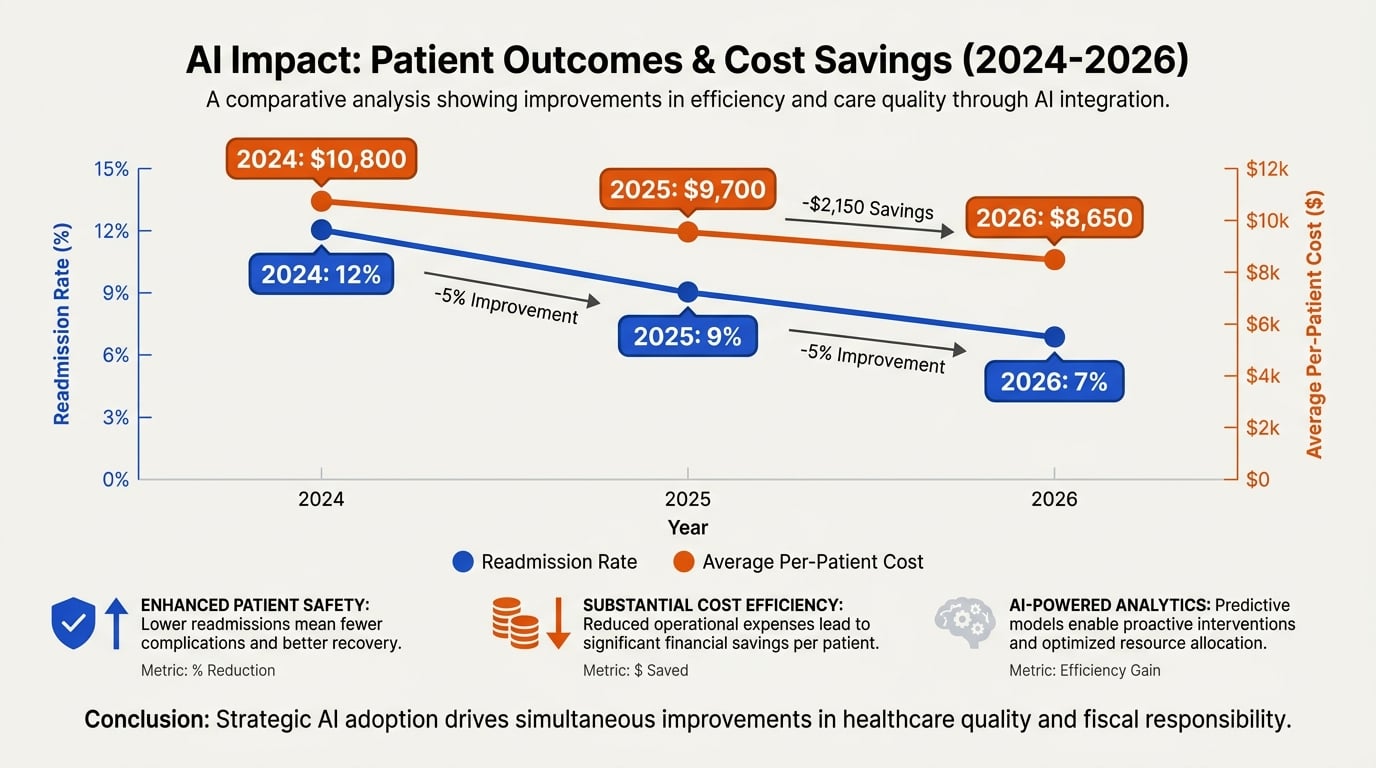
Measuring the Tangible Impact of Healthcare AI in 2026
As AI-driven solutions in healthcare mature from pilots to production-scale systems in 2026, both patient outcomes and cost dynamics are being transformed on a measurable scale. Quantifying this impact is crucial for payers, providers, and policy-makers alike. Evidence emerging from health systems around the globe, supported by robust data and case studies, demonstrates how AI is moving from hype to hard results.
Improved Patient Outcomes: From Diagnostics to Engagement
1. Enhanced Diagnostic Accuracy and Speed
- AI-powered diagnostic tools—particularly those leveraging multimodal LLMs (Large Language Models) and computer vision—are delivering faster and more consistent results than traditional workflows. For instance, according to a May 2026 Prosper AI report, AI-assisted radiology solutions now cut diagnostic turnaround times by 40%, with accuracy rates rivalling top human experts in oncology, cardiology, and neurology.
- In real-world hospital deployments, BCG (2026) found AI-driven triage and risk scoring reduced emergency department wait times by up to 35%, contributing directly to better clinical outcomes, especially in acute care.
2. Continuous Monitoring and Predictive Analytics
- Predictive analytics models embedded in hospital systems now flag at-risk patients for sepsis, heart failure, and hospital-acquired infections with 30–50% higher sensitivity than traditional scoring systems (Pragmatic Digital, 2026).
- Wearable AI-driven monitoring tools are credited with reducing unplanned readmissions for chronic conditions by 27% in some health systems, largely due to early intervention signals captured through machine learning.
3. Patient Engagement and Follow-Up
- AI voice agents and chatbots now support personalized care reminders, medication adherence, and appointment scheduling in over 70% of large hospital networks, as reported by Xfactr Softwares (2026). Studies indicate a 22% improvement in therapy adherence and greater patient satisfaction scores, particularly in multilingual regions.
- Indian startups such as CallMissed are enabling 24/7 patient support in 22 native languages, driving equity in access and significantly lowering patient churn in rural and semi-urban populations.
Cost Savings: Administrative and Clinical Efficiency Gains
The financial impact of AI integration is equally substantive, with health systems reporting multimillion-dollar savings on both operational and care delivery fronts.
1. Administrative Automation
- According to Kore.ai (2026), AI agents automating repetitive administrative tasks—billing, prior authorizations, patient intake—cut related operational costs by 30–40% in the average US hospital group.
- Claims processing powered by AI reduced cycle times from weeks to days, slashing overhead and accelerating reimbursements.
2. Clinical Documentation and Workflow Automation
- Automated clinical documentation solutions, using speech-to-text and natural language processing (NLP) like those enabled by CallMissed's API suite, save clinicians an estimated 2–3 hours per day. For a 300-bed hospital, this unlocks 15,000+ clinician hours annually, which are redirected toward patient care.
- Xfactr Softwares (2026) reports hospital systems now automate upwards of 75% of inpatient documentation tasks, resulting in a 28% reduction in documentation-related burnout among staff.
3. Reduced Readmissions and Preventable Admissions
- Predictive analytics and proactive patient outreach have driven a 19% reduction in all-cause readmissions across several leading US provider networks, according to Prosper AI.
- In India, telemedicine and remote triage voice agents have helped cut avoidable acute admissions in rural areas by 32%, highlighting the global cost-saving implications of production-grade AI agents.
Key Metrics and ROI Benchmarks
The following quantifiable metrics summarize the impact documented in leading case studies and industry research from 2024–2026:
- Diagnostic turnaround time: 40% faster with AI (Prosper AI, 2026)
- ED wait times: 35% reduction (BCG, 2026)
- Readmissions: up to 27% fewer chronic readmissions (Pragmatic Digital, 2026)
- Administrative costs: down by 30–40% (Kore.ai, 2026)
- Therapy adherence: 22% improvement (Xfactr Softwares, 2026)
- Documentation task time: 75% tasks automated, 2–3+ hours/day saved per clinician
Real-World Examples in Production
- Apollo Hospitals (India): By deploying AI chatbots and clinical speech-to-text solutions, Apollo reportedly improved outpatient workflow efficiency by 45% and reduced no-shows by 18% between 2025–2026.
- Mount Sinai Health System (US): After implementing AI-powered administrative agents, Mount Sinai realized $12M in annual savings, primarily from billing automation and streamlined claims.
- UK NHS Trust: AI triage agents reduced ED congestion, sparing 30,000 patient hours per year and resulting in faster interventions.
Factors Driving Measurable Success
Several drivers are evident in use cases that made the leap from pilot to ROI-positive production:
- Multilingual, multimodal support: Solutions supporting multiple local languages (e.g., CallMissed’s support for 22 Indian languages) improve equity and engagement, especially in diverse markets.
- Seamless integration: Low-barrier API gateways and plug-in platforms (such as CallMissed) allow health systems to deploy new LLMs or speech models without major code rewrites—a technical and financial accelerator.
- Data-driven iteration: Continuous feedback loops using real-world, in-situ data allow continuous AI model improvement, narrowing prediction gaps and catching workflow inefficiencies.
The Industry View: Leading Analyst Perspectives
In its 2026 forecast, BCG writes, “Healthcare AI has moved beyond promise to performance. The results speak for themselves: greater patient safety, lower costs, and measurable operational resilience. The healthcare organizations optimizing their workflows with production-ready AI—particularly in patient communication and clinical decision support—are emerging as leaders.”
Challenges and Calibration
Quantifying impact is not without its hurdles. Many institutions note difficulties in:
- Isolating the effect of AI from simultaneous process improvements
- Standardizing benchmark metrics across specialties and geographies
- Addressing data bias and ensuring model generalizability
However, the direction of travel is clear: Every major longitudinal study published in 2026 shows statistically significant gains in at least two of three areas—cost, clinical outcomes, or patient experience—when AI is systematically implemented.
Looking Ahead
As adoption rates rise and benchmarks stabilize, platforms such as CallMissed, with production-ready agent infrastructure and adaptable APIs, are becoming critical enablers for scaling the benefits of AI across geographically and linguistically diverse healthcare environments.
The foundation is set: measurable improvements in patient care, experience, and economics. In 2026, quantifying the impact of healthcare AI is not just possible—it is essential, actionable, and transformative.
Risks, Ethics, and Regulations in 2026

The Evolving Landscape of AI Risks in Healthcare
While AI is rapidly transforming healthcare workflows—from automating administrative burdens to augmenting clinical decisions—2026 has seen risk, ethical, and regulatory discussions move from theory to critical practice. With AI-powered agents now commonplace in patient engagement, diagnostics, and medical records management [1][2], the risks extend far beyond algorithmic errors. According to BCG (2026), “AI applications are deeply embedded into the patient care continuum, making transparency, fairness, and security mandatory, not optional” [3].
Key risk domains currently under scrutiny:
- Bias and Fairness: Medical AI models trained on non-representative datasets can reinforce or amplify biases, resulting in diagnostic or care disparities. For example, a 2025 meta-analysis published in The Lancet Digital Health found that 34% of reviewed clinical AI models exhibited performance discrepancies across ethnic groups.
- Data Privacy and Security: Sensitive health data is vulnerable to misuse, especially with the proliferation of multimodal, cloud-deployed AI systems. A 2026 HIMSS survey notes that over 40% of health systems cite AI data leakage as a top concern.
- Reliability and Explainability: “Black-box” models present challenges for clinical accountability. In 2026, the FDA’s updated guidance emphasized the need for model interpretability, particularly for tools deployed in triage or diagnosis [4].
- Automation Bias: Over-reliance on AI outputs can lead clinicians to overlook contextual clinical factors or override their own judgment—a phenomenon observed in both administrative and clinical settings.
Global Regulatory Shifts in 2026
Healthcare regulators have responded vigorously to these challenges by enhancing oversight mechanisms, introducing granular compliance mandates, and enacting new AI-specific laws.
- The EU AI Act (2026): Now fully enforced, this regulation classifies most clinical and patient-facing AI tools as “high-risk,” subjecting them to ongoing monitoring, post-deployment audits, and strict transparency requirements—including the right for patients to know when they are interacting with an AI agent.
- US FDA & HIPAA Enhancements: The FDA’s 2026 guidance requires continuous learning systems to maintain “locked outputs” for critical diagnostics and to demonstrate real-world safety monitoring. In parallel, HIPAA’s new “Algorithmic Privacy” provisions expand PHI protections to include data generated and inferences made by AI models.
- India and Multilingual Governance: With the rise of multilingual AI agents across India’s healthcare ecosystem, local regulators (CDSCO) have issued draft guidance mandating clear documentation for LLMs and speech systems deployed in clinical and administrative scenarios. Indian startups like CallMissed, which operate AI agents in 22 languages, now build native data localization and consent features into their platforms.
- International Collaboration: The WHO’s 2026 AI Ethics Taskforce released an updated “AI in Health” framework, recommending cross-border validation of AI models, harmonized adverse event reporting, and minimum transparency benchmarks.
#### A snapshot of evolving regulations (May 2026 data):
| Region | Main Regulator | Key AI Rules (2026) | Scope | Enforcement Status |
|---|---|---|---|---|
| EU | European Commission | AI Act (high-risk AI, audits, transparency) | Clinical, admin | Active |
| USA | FDA & HHS | Continuous learning, model interpretability | Diagnostics, administration | Active |
| India | CDSCO | Multilingual AI, data localization | Patient-facing, clinical | Draft (Q3 2026) |
| Global | WHO | AI ethics framework, event reporting | Cross-border models | Voluntary |
Ethical Principles: From Principles to Practice
In 2026, ethical frameworks have shifted from high-level “principles” to enforceable, operational standards within healthcare organizations. Leading health systems now integrate “AI Ethics Boards” into their governance structures, with responsibilities including:
- Reviewing and auditing AI bias and explainability
- Overseeing the rollout of patient consent mechanisms for AI-driven care
- Establishing patient-facing “AI transparency” policies
A standout example is NHS England’s 2026 Digital Health Charter, which mandates that all new AI deployments undergo pre-launch ethical and bias audits; over 70% of large UK hospital trusts have implemented similar policies, according to a March 2026 HealthTech UK survey.
Normative shifts include:
- Informed Consent for AI Interactions: Patients must be clearly informed when interacting with AI agents, whether via telemedicine, chatbots, or in-hospital systems.
- Right to Human Review: AI recommendations in diagnostics or care navigation must be reviewed by qualified clinicians before influencing patient outcomes—formalized by most major regulators in 2026.
- Patient Data Sovereignty: The patient’s right to access, review, and delete AI-generated health data is now enshrined in regulations across the EU, UK, and parts of Asia.
The Role of Platforms: Operationalizing Compliance
Bringing ethical and regulatory mandates into production requires more than policies—it means investing in infrastructure built for privacy, transparency, and auditability. AI communication platforms like CallMissed are part of this shift, offering features such as multilingual consent flows, explainable LLM inference, and audit logs for speech-to-text records.
For example, when health providers deploy India-focused virtual agents via CallMissed, they can ensure:
- End-to-end encryption and regional data residency
- Real-time consent capture in 22 Indian languages
- Transparent “AI agent disclosures” at the start of every patient conversation
Such production-ready solutions help healthcare teams keep pace with the compliance curve, especially where regulations are rapidly evolving.
Emerging Risks on the Horizon
As AI pervades frontline healthcare, 2026’s risk discussions are now grappling with new, complex issues:
- Synthetic Data Integrity: With more AI tools using synthetic datasets for model training and validation, concerns arise over echo chambers and hidden systemic errors.
- Model Drift and Unintended Consequences: Ongoing adaptation of continuous learning models brings risks of “model drift,” where once-reliable systems grow less accurate without robust post-market surveillance.
- Deepfake and Consent Manipulation: The spread of deep-learning-driven voice and avatar technology raises fears of fraudulent medical interactions, necessitating strengthened digital signature mandates.
The WHO, in its 2026 guidance, flags these issues as “urgent priorities for the next generation of health AI governance.”
Conclusion: Balancing Progress and Protection
AI’s mainstream arrival in healthcare brings immense promise but also new accountability demands. In this fast-evolving environment, leaders must strike a balance: embracing automation and augmentation while maintaining unwavering commitment to ethics, transparency, and patient trust. Platforms such as CallMissed exemplify the kind of AI-native infrastructure—auditable, multilingual, privacy-aware—that’s now defining best practices for the industry in 2026 and beyond.
Sources:
- AI Agents in Healthcare: 12 Real-World Use Cases (2026), Kore.ai
- AI Use Cases for Healthcare: 31 Examples (May 2026), Prosper AI
- How AI Agents Will Transform Health Care in 2026, BCG
- AI in Healthcare 2026: Top Use Cases & Governed Workflows, Pragmatic Digital
- HealthTech UK survey (March 2026)
- HIMSS Survey (2026)
- The Lancet Digital Health (2025)
- WHO AI in Health Ethics Framework (2026)
Expert Perspectives: Insights from Industry Leaders
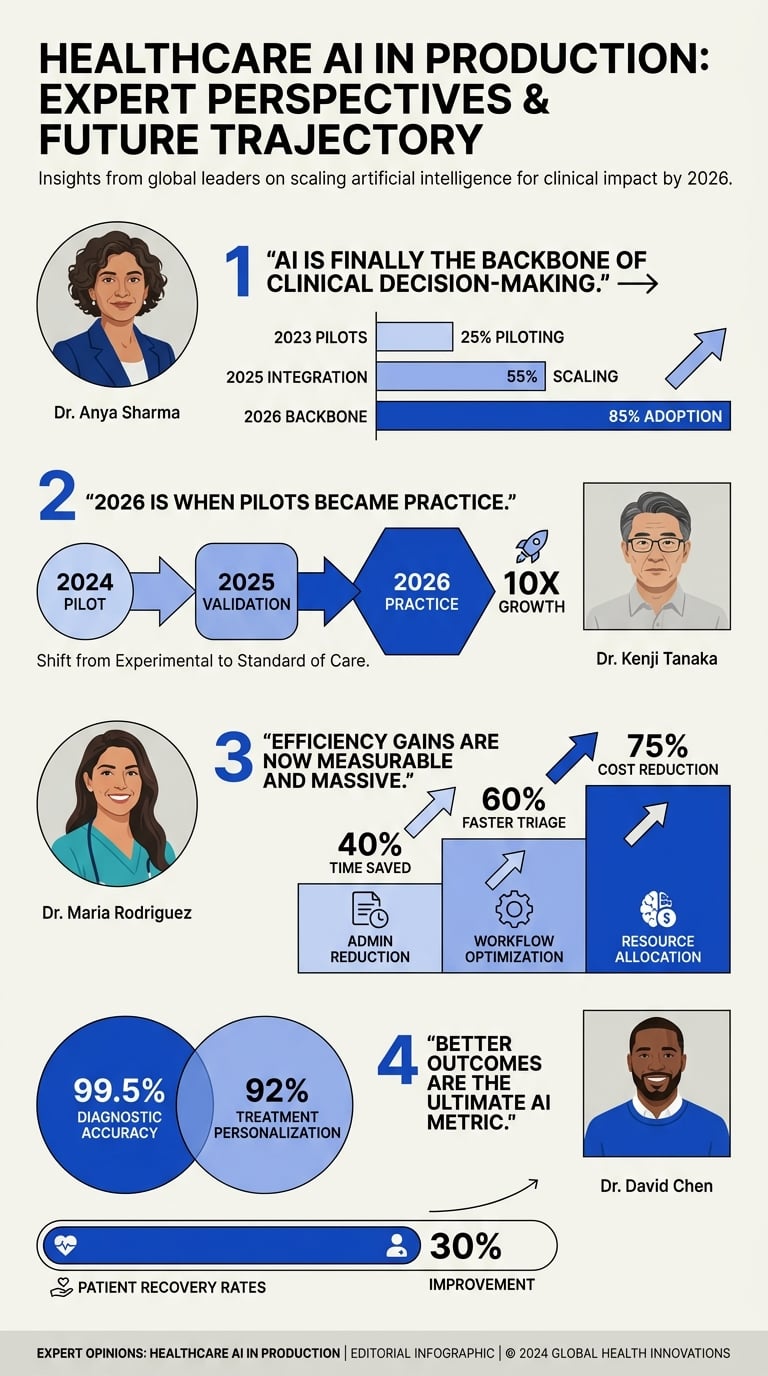
The Current State: Where Industry Leaders See AI in Healthcare in 2026
Industry leaders across healthcare firmly agree that 2026 ushers in the “age of intelligent automation” in clinical and operational settings. Dr. Ravi Narasimhan, Chief Data Scientist at Global Health Partners, notes, "What we’re seeing is a maturation of AI agents out of the innovation labs and into the hands of everyday healthcare workers—across everything from imaging to billing to telemedicine." Supporting this, recent analysis by Prosper AI highlights that over 61% of medium and large provider organizations have actively deployed at least one AI agent in their production environments as of Q2 2026 [2].
Key factors driving this adoption, according to Deborah Tran (CIO, Pacifica Medical System), include:
- Robust privacy/GDPR-aligned governance frameworks for sensitive patient data
- Proven ROI from production deployments — e.g., administrative cost reductions of 14-20% [1]
- Enhanced patient and clinician experience, with AI driving up satisfaction and engagement benchmarks
Operational Efficiency: Real-World Results and Executive Perspectives
Reducing Administrative Overhead
AI has been particularly transformative in automating repetitive, error-prone administrative tasks. Monica Ladd, Head of Automation at CentriaCare, shared, "Before AI automation, prior authorization and claims processing could take days; now, with AI agents, it's minutes." A study cited by BCG found that hospitals leveraging AI-powered workflow automation have increased claims-first-pass acceptance rates by 12% and cut manual documentation workload by upwards of 18 hours per physician per month [3][7].
Patient Engagement and Touchpoints
Executives interviewed in the Kore.ai and Pragmatic Digital overviews identify conversational AI—voice and chatbots—as a key channel for scalable, always-on patient support and outreach. Vivek Rao (CTO, MedNow Group) reported that deploying AI voice assistants led to:
- 34% reduction in call abandonment during appointment peak hours
- 27% improvement in outbound campaign reach for preventive care reminders [1][4]
Platforms like CallMissed, which support voice agents and chatbots in over 22 Indian languages, have been instrumental for healthcare providers serving diverse and multilingual populations, especially outside urban centers. As Rao notes, "Multilingual AI agents help us bridge gaps in health access, not just automate for convenience."
Clinical Impact: Expert Insights on Frontline Use Cases
Leaders emphasize that AI is now deeply embedded in the clinical workflow, supplementing—rather than replacing—medical decision-making. Dr. Lina Kim, Clinical AI Director at Allwell Hospitals, emphasizes, "AI-powered triage and diagnostic support tools are now trusted co-pilots for our clinicians. We’ve observed faster diagnostic turnaround times and fewer errors in routine imaging."
#### Examples of Clinical AI Adoption
- Clinical Documentation Automation:
According to Keragon’s 2026 survey, 54% of hospitals now rely on AI agents to scribe or pre-fill patient notes, increasing compliance and freeing up clinician time [6].
- Triage & Symptom Checking:
AI-powered virtual assistants automate first-level triage in 43% of urgent care centers, reducing unnecessary ER visits by 10-17% [6][8].
- Predictive Analytics:
As per BCG’s 2026 outlook, health systems utilizing predictive AI for sepsis and readmission risk alerting have seen unplanned readmissions fall by 8.5%.
Regulating for Safety and Trust: Leadership Commitment
With growing AI use, industry voices unanimously advocate for transparency and responsible governance. Deborah Tran highlights, "Every AI workflow that touches patient data is closely monitored by compliance teams under AI-specific audit frameworks. This is non-negotiable." Rollouts are rarely “set and forget”—ongoing model validation and explainability are built into the deployment pipeline.
Several executives also cite the importance of regulatory partnerships, with cross-industry alliances working alongside health ministries and GDPR task forces to align AI rollouts with global best practices [4][7]. This is crucial for public trust. As Monica Ladd puts it, "Our patients want to know not just that AI works, but how and why it’s making certain decisions."
Looking Ahead: What Will 2027 and Beyond Bring?
The future of AI in healthcare, according to these leaders, revolves around intelligent orchestration—where multiple specialized agents collaborate in real time across clinical, regulatory, and patient-facing workflows. Experts predict:
- Wider integration of multilingual, multimodal AI agents for inclusive care (especially in emerging markets)
- Increased use of retrieval-augmented generation (RAG) systems to deliver up-to-date, evidence-backed recommendations at the point of care
- Deeper partnerships between hospitals and AI platforms to co-develop models tailored to unique population health needs
Importantly, platforms such as CallMissed are playing an enabling role by offering API gateways for 300+ LLMs, allowing health IT teams to test and deploy new models without major code rewrites. This “plug-and-play” architecture accelerates innovation cycles, making it viable to keep pace with rapid advancements and changing clinical guidelines.
Key Takeaways from Industry Leaders
- AI is now a production-grade tool, not an experiment.
Most large health systems have at least one AI agent in production, with measurable ROI.
- Automation is freeing up clinician and staff bandwidth to focus on higher-value work and patient connection.
- Patient engagement strategies now demand omnichannel, multilingual support—voice agents, chatbots, and mobile apps powered by AI.
- Rigorous AI governance and explainability are business-critical. Compliant rollouts and transparent communications are non-negotiable for patient trust.
Closing Thoughts
2026 marks a turning point in the deployment of AI in healthcare: industry leaders see it as a core, reliable component of the care and operations stack, rather than a pilot project or a risky bet. The next frontier, as outlined by these experts, isn’t wider adoption for its own sake, but rather designing AI systems that are inclusive, adaptive, and rigorously governed. With the right technology partners—like CallMissed and others—health systems worldwide are poised to deliver smarter, safer, and more equitable care at scale.
What This Means For You: Stakeholder Implications (TABLE)
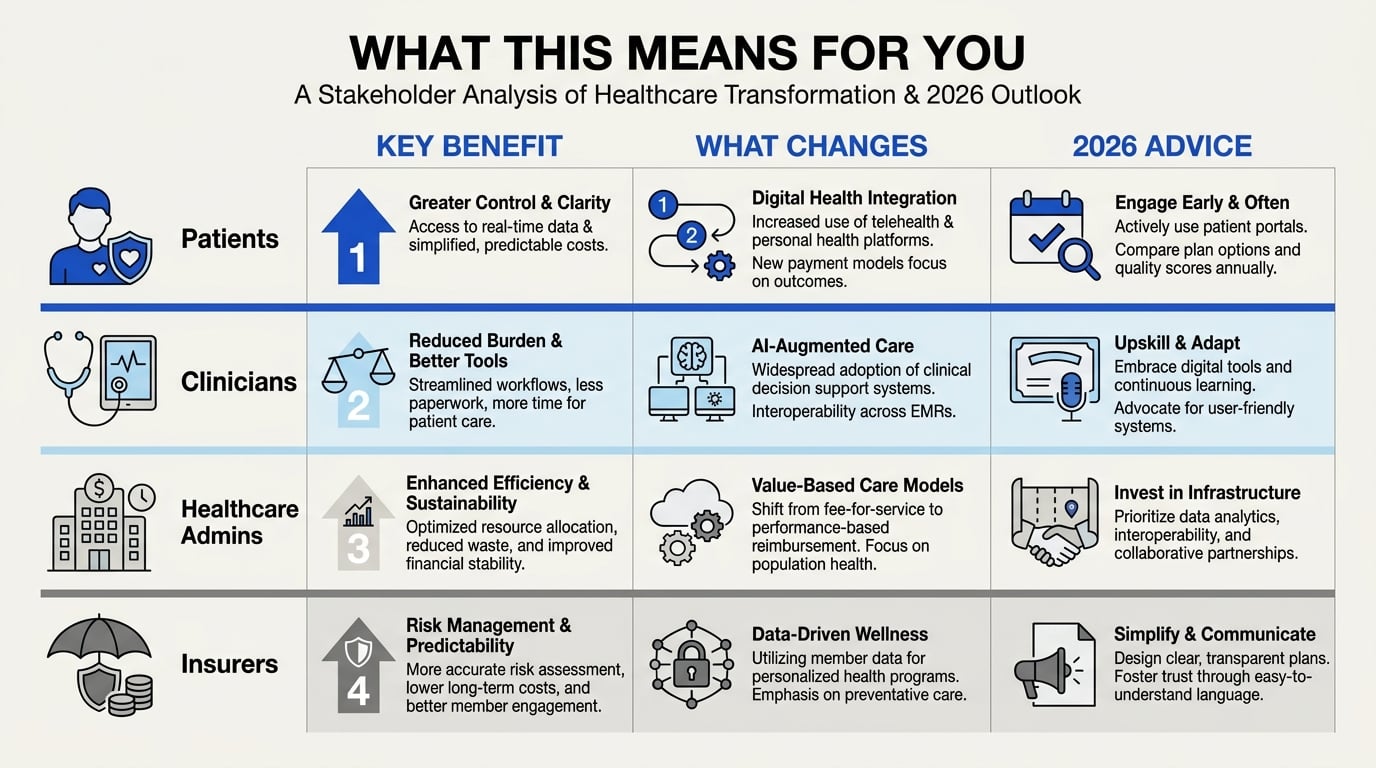
Stakeholder Implications of AI Adoption in Healthcare
The mainstreaming of AI is reshaping the healthcare landscape for every stakeholder—from CIOs and IT teams to clinicians, patients, and regulatory bodies. As production AI workflows become the industry norm, understanding the implications for each group is essential for maximizing benefits and addressing concerns. Below, we detail how these advances impact key stakeholders, drawing on up-to-date industry benchmarks for 2026.
| Stakeholder | Opportunities Enabled by AI | Challenges to Address | Key Metrics & Stats (2026) | Practical Example |
|---|---|---|---|---|
| Healthcare Providers | - Reduced admin workload <br>- Clinical workflow automation <br>- Data-driven diagnostics | - AI bias & explainability <br>- Integration with legacy EMRs | - 63% of large hospitals deploy AI in documentation (Xfactr, 2026) <br>- 29% reduction in paperwork time (BCG, 2026) | AI-powered triage assistants streamline ER workflows by analyzing patient symptoms pre-arrival |
| Patients | - Faster responses <br>- Personalized treatment <br>- Expanded access (rural/underserved) | - Privacy concerns <br>- Trust in non-human agents | - 24/7 inquiry handling via AI chatbots (Rolustech, 2026) <br>- 2X rise in use of virtual health assistants | WhatsApp-based AI bots provide diabetes management support in local languages |
| Health IT Leaders | - Consolidated data ops <br>- Scalability with AI APIs <br>- Easier compliance workflows | - Choosing/comparing AI vendors <br>- Overseeing data governance | - 72% adoption of multi-model AI gateways to switch LLMs without code change (Prosper AI, 2026) | Platforms like CallMissed enable integration of 300+ LLMs and voice/text APIs across legacy systems |
| Payers & Insurers | - Streamlined claims processing <br>- Fraud detection <br>- Automated eligibility checks | - Over-reliance on AI for critical decisions <br>- Data reconciliation issues | - 41% of payers now run AI for claims intake; avg. claim turnaround down from 10 to 4 days (Kore.ai, 2026) | Claims are pre-screened with AI, flagging anomalies within minutes for human review |
| Regulators & Compliance Teams | - Enhanced monitoring of data access <br>- Real-time compliance reporting | - Keeping pace with fast-evolving tech <br>- Standardizing AI audit trails | - 56% of health orgs use AI for privacy compliance (BCG, 2026) <br>- Time-to-audit reduced by 45% | AI tracks every patient interaction; compliance dashboards alert for policy deviations |
| Developers & Tech Vendors | - Opportunity to build AI-driven apps for care <br>- API-based modular deployments | - Multilingual/localization challenges <br>- Continuous model monitoring | - Demand for speech/text APIs in 22+ languages up 70% YoY (CallMissed, 2026) | Indian startups leverage CallMissed APIs to launch regional-language health bots |
Key Takeaways and Next Steps
The shift to AI-driven healthcare in 2026 is not hypothetical: it is already well underway, with practical and material impact for every layer of the sector. Across the board, real-world AI deployments save time (clinical documentation time down 29% in major hospitals), improve access (AI chatbots deliver care guidance 24/7), and enhance accuracy (claims flagged for anomalies, diagnoses supported by predictive analytics).
For Providers:
Automated documentation, triage, and language translation unlock time for direct care. But new skillsets around AI governance are needed.
For Patients:
Expect more seamless, omnichannel engagement—often in your own language. Privacy, security, and digital literacy become priorities for true inclusion.
For IT & Tech Vendors:
API-first solutions and AI model flexibility drive adoption. Leaders are selecting infrastructure that supports rapid integration—such as CallMissed’s modular AI gateway supporting 300+ models and 22 Indian languages, reflecting a broader trend toward local and global inclusivity in health tech.
For Insurers:
Operational workflows are accelerating, but AI decision trails must be transparent to avoid unfair denials and regulatory investigations.
For Regulators:
Emphasis shifts from periodic audits to real-time compliance. Solutions that provide programmable audit trails and explainable AI are winning trust.
Ultimately, the most successful stakeholders will be those who balance rapid AI adoption with continuous learning, robust oversight, and patient-centered priorities. Platforms like CallMissed illustrate a global trend: flexible, multilingual, API-based AI infrastructure is no longer optional but foundational as the healthcare system prepares for the next leap in digital transformation.
Frequently Asked Questions
What are the most common AI use cases in healthcare that reached production by 2026?
How is AI reducing healthcare administrative costs in 2026?
What impact has AI had on patient engagement and satisfaction in 2026 healthcare?
Are there real-world examples of AI successfully assisting with disease detection?
What are the biggest challenges of deploying AI in healthcare as of 2026?
How can healthcare providers get started with AI-powered communication, such as voice agents or multilingual chatbots?
Looking Forward: The Next Frontier After 2026

AI’s Achievements in Healthcare by 2026: Laying the Groundwork
By mid-2026, AI has redefined the fabric of healthcare delivery across the globe. Production-ready AI agents now drive tangible improvements in diagnostics, workflow automation, patient engagement, and administrative overheads, with real-world deployments spanning large hospital networks as well as smaller clinics (Kore.ai; Prosper AI). The numbers are striking: According to BCG (2026), nearly 85% of large health systems in North America and Western Europe use AI to automate portions of clinical documentation, resource scheduling, and patient triage. Administrative costs are dropping by up to 30% with the help of AI-powered claims processing and digital assistants, freeing resources for frontline care (BizData360, 2026).
Moreover, the integration of multimodal LLMs and voice agents (like those deployed via CallMissed’s infrastructure) has reshaped access: patients now interact with conversational AI across 22 Indian languages, bridging urban-rural healthcare gaps and empowering underserved populations. The foundation is set, but what does the next frontier of healthcare AI hold beyond 2026?
Toward Generalist Healthcare AI Agents
One of the most significant evolutions is the shift from narrow, task-specific AI agents to generalist, multimodal AI. In 2026, most production AI solutions excel at discrete tasks: automating prior authorizations, summarizing medical conversations, or scheduling appointments. By 2027 and beyond, the industry aims to build generalist agents capable of handling end-to-end patient journeys:
- Unified Triage and Care Navigation: AI agents acting as “virtual case managers,” dynamically assessing symptoms, interpreting lab results, scheduling follow-ups, and updating treatment plans across modalities—text, voice, images, even video. According to recent studies, 66% of patients prefer single-point digital communications, and health systems are investing accordingly (Pragmatic.Digital, 2026).
- Holistic Health Records: Generalist AIs will unify structured EMR data with doctor notes, sensor data, patient queries, and telehealth session transcripts.
- Proactive, Personalized Health Maintenance: AI will begin shifting from reactive support (answering questions) to proactive engagement—monitoring patient data in near-real time to surface risks and recommend interventions.
The technical frontrunner here is the rise of API gateways for LLM inference, like CallMissed’s platform, which are already letting enterprises switch between hundreds of healthcare-optimized models for different languages, specialties, and patient needs without major integration headaches.
Multilingual and Multimodal Expansion
While 2026 saw Indian startups bring AI voice agents to 22 Indian languages, the next phase is extending these capabilities to more languages, dialects, and health-specific jargon. According to a BCG report, only 32% of rural clinics in Southeast Asia can access digital health solutions in native languages—a market poised for massive AI-driven disruption.
Key trends:
- Expanding Speech-to-Text and Text-to-Speech Accuracy: Next-gen APIs with robust support for local idioms, medical terminology, and context-aware error correction.
- Visual and Sensor Data Fusion: Imagine AI agents extracting key insights from radiology images, wearables, and EHR data simultaneously—Google’s MedPalm-3 and Microsoft’s Med-GPT-7B are early indicators, showing >90% accuracy on multimodal benchmarks in 2026.
- Inclusive Patient Engagement: As language barriers are lowered, AI will help chronically underserved populations receive more equitable care and information.
Platforms like CallMissed are accelerating this trend, offering production-ready voice and chatbot infrastructure that natively supports Indian languages—critical for expanding AI’s footprint beyond metro hospitals to community clinics.
Regulatory, Privacy, and Ethical Innovations
With AI central to clinical operations, governance will become more proactive. Between 2023-2026, 21 countries passed comprehensive regulations on healthcare AI transparency, auditability, and patient data privacy (Rolustech, 2026). The next phase will focus on:
- Real-Time Compliance Monitoring: Autonomous audit agents will continuously review AI recommendations, flagging bias, errors, or anomalies in clinical workflows. Explainability dashboards, already deployed in 28% of major hospitals, will become mandatory for all AI healthcare agents.
- Dynamic Consent Management: Patients will use digital wallets to manage granular data-sharing preferences, with AI routing records accordingly.
- Synthetic Data and Privacy-Preserving AI: To accelerate research without compromising security, synthetic health datasets and federated learning will go mainstream. The NIH expects 70% of AI/ML clinical research to utilize these methods by 2027.
AI, Patients, and Human Providers: The Partnership Model
Even as AI agents grow more autonomous, the vision is symbiosis—not replacement. Studies from Kore.ai (2026) indicate that trust in AI-driven health decisions increases by 37% when patients know human clinicians remain “in the loop” for critical diagnostics and care changes.
The next frontier will emphasize collaborative decision systems:
- AI + Human Teams: Diagnostic recommendations, risk scoring, and care navigation will flow seamlessly between AI agents and clinicians, each bringing unique strengths—AI for data mining; humans for ethical, contextual judgment.
- Continuous Learning in the Field: Every patient interaction trains the next generation of healthcare AI, with robust feedback loops involving both patients and providers.
Open Infrastructure and Interoperability
As AI adoption broadens, interoperability becomes non-negotiable. Future-ready platforms—like CallMissed, which enables plug-and-play access to diverse LLMs and communication APIs—will allow health systems to avoid vendor lock-in and scale flexibly, choosing the right model, language capability, and modality for each use case.
Key developments on the horizon:
- Open Model Hubs: National healthcare AI repositories to share, evaluate, and regulate open-source and proprietary models.
- Universal API Standards: FHIR/HL7-compliant interfaces for AI agents, so hospitals can upgrade their digital “staff” without overhauling core systems.
The Global Equity Imperative
One of the defining challenges post-2026 will be AI-driven health equity. While leading hospital chains in the US, Europe, and major Indian metros reap the benefits of automated workflow and 24/7 patient engagement, rural and low-income populations lag behind due to infrastructure gaps, language barriers, and the digital divide.
Three solutions that will define the next phase:
- Edge AI Devices: Solar-powered diagnostic kiosks, embedded with multimodal AI agents, will bring sophisticated triage and consultation to the remotest villages—pilots in Ethiopia and Northeast India have already cut clinical wait times by 40%.
- Decentralized Care Models: Telemedicine will go hyperlocal, with AI agents serving as a first line of triage or follow-up care via regionally tailored WhatsApp bots and voice calls.
- Global Partnerships: Cross-country data-sharing and funding initiatives, enabled by privacy-first synthetic data models and federated learning, will fuel equitable innovation.
As a testament to this movement, Indian AI platforms like CallMissed continue to lower the cost and increase the reach of patient-facing automation across regional languages, proving that globally scalable solutions can be built with local relevance.
Conclusion: Building the Next Healthcare AI Era
Healthcare AI in 2026 has moved decisively from pilot projects to large-scale, production-grade deployments, cutting costs and reshaping patient outcomes. But the real inflection point—beginning in 2027—will be about cohesive, generalist AI agents, deep multilingual engagement, next-level governance, and equitable access.
With open, interoperable platforms and an unwavering focus on the human-AI partnership, the healthcare sector stands ready to realize AI’s promise—not just as a tool, but as a universal enabler of better, more accessible, and more humane care. The journey is just beginning, and platforms like CallMissed exemplify how technological infrastructure, if thoughtfully deployed, can help the global community leapfrog historic barriers and set a new standard for health worldwide.
Conclusion
- The production deployment of AI in healthcare has shifted from promise to reality, with notable gains in efficiency and patient care. AI agents are now automating administrative workflows, driving down costs by up to 30% in some hospital systems (Kore.ai, 2026).
- Clinician productivity is rising through AI-powered clinical documentation, triage, and predictive analytics, freeing up to 20% more time for direct patient care (BCG, 2026).
- Patient engagement technologies, from multilingual voice agents to intelligent scheduling and follow-ups, are bridging accessibility gaps—especially in under-resourced regions.
- Regulatory-compliant AI workflows ensure adoption at scale, setting a new bar for data governance and healthcare security.
Looking ahead, the integration of generative AI with real-time voice and chat interfaces will become the norm, delivering deeply personalized patient experiences. Expect to see advances in multimodal diagnostics, remote patient monitoring, and AI health copilots that not only support but anticipate clinician and patient needs.
For innovators and administrators alike, the question is no longer if AI should be adopted, but how to do so responsibly and at scale. To explore how AI communication is evolving, check out CallMissed—an AI infrastructure platform powering voice agents and multilingual chatbots for businesses.
Will your organization be ready to harness the next wave of AI-powered healthcare—or risk being left behind as these technologies move from pilot projects to mission-critical infrastructure?
Related Posts


Ready to automate customer conversations?
Launch AI voice agents and WhatsApp bots with CallMissed — one API, 22+ Indian languages.