

The Spring 2026 AI Roundup: Every Model That Shipped, and Why the Agent Wars Are Here


Have you tried counting how many major AI models shipped just this April? Because the tally is dizzying—and the pace isn't slowing down. OpenAI dropped...
The Spring 2026 AI Roundup: Every Model That Shipped, and Why the Agent Wars Are Here
Have you tried counting how many major AI models shipped just this April? Because the tally is dizzying—and the pace isn't slowing down. OpenAI dropped GPT-5.5 and almost instantly made it available; Anthropic followed with Claude 4.7; Google unveiled Gemini 3.1; and that’s barely scratching the surface. An AI industry observer on Instagram recently captured the mood: “Every AI lab seems to have shipped something in April.” That one sentence sums up the Spring 2026 AI landscape—a relentless cadence of releases that has turned the model race into a sprint and, more importantly, triggered the real story: the arrival of the agent wars.
Why does that matter right now? Because large language models are no longer just answering questions. As the LinkedIn analysis from March 2026 noted, “March cemented agentic AI as the defining trend of 2026.” Google Cloud’s latest report on AI agent trends confirms that businesses are rushing to deploy autonomous agents that act, decide, and execute tasks—not just chat. The frameworks battle is already here: LangGraph, CrewAI, AutoGen, and more are duking it out, and the models powering those agents have never been more capable or more numerous.
In this Spring 2026 AI roundup, you’ll get a clear, data-driven walkthrough of every major model that shipped—from GPT-5.5’s enhanced reasoning to Gemini 3.1’s multimodal leaps—and, more critically, why the agent wars are defining the next phase of AI. We’ll look at how model capabilities are shifting from text generation to autonomous decision-making, and what that means for developers, businesses, and anyone building with AI.
Platforms like CallMissed are already riding this wave, offering production-ready AI voice agents and multi-model inference that let teams deploy agent-powered communication at scale without drowning in infrastructure complexity. But this isn’t about any single product—it’s about understanding the seismic shift happening right now. The models have shipped. The agents are here. And the competition has only just begun.
Breaking Down the News: What’s New This Spring?

The Pace Accelerates: April to May’s Flood of AI Model Releases
April and May 2026 will be remembered as a watershed moment—an unprecedented wave of major AI model launches that set the stage for the current “agent wars.” Just in April, OpenAI’s GPT-5.5 was publicly rolled out with little warning, marking the fastest post-announcement deployment cycle on record (CallMissed AI Model Roundup [1]). Anthropic’s Claude 4.7 and Google’s Gemini 3.1 landed in the same month, quickly adopted by both enterprise and open-source communities. And these weren’t isolated releases: across April, more than 18 large-scale models shipped, according to internal LinkedIn tallies and AI industry trackers.
This cadence isn’t a one-off. As noted by an Instagram AI industry commentator, “Every AI lab seems to have shipped something in April” [6]. That sentiment echoes the collective urgency in the ecosystem. According to Google Cloud’s AI agent trend report (May 2026), over 67% of Fortune 1000 businesses trialed or adopted a new LLM or agent framework since March [5]. The implications are clear: new models aren’t just technical upgrades—they’re fueling the infrastructure for the next economic and product cycle in AI.
Model Capabilities: More Than Just Bigger and Faster
What distinguishes Spring 2026’s releases isn’t just scale or speed, but qualitative leaps that specifically empower autonomous agent workflows. Consider the highlights:
- GPT-5.5: With enhanced reasoning and multi-step planning, GPT-5.5 scored a record 91.2% on the Complex Task Benchmark (CTB). Early testers report it solves multi-turn, multi-source customer support tickets with 36% fewer escalations compared to GPT-4o.
- Claude 4.7: Anthropic’s upgrade brings “constitutional agent alignment”—tailorable agent behaviors using policy-driven guardrails. This unlocks enterprise-ready AI agents that comply with sector-specific regulations.
- Gemini 3.1: Google’s emphasis is on multimodality and tool use. Gemini 3.1 seamlessly executes code, interprets documents, and even schedules meetings—without human-in-the-loop—yielding productivity uplifts of up to 18% in enterprise pilot programs1.
- Open-source and regional advances: The release of Mistral 2.x and Baichuan’s new multilingual models brought advanced agentic AI to markets outside the usual English-first ecosystem, directly supporting regional language operations.
The Cascade Effect: From Chatbots to Complex Autonomous Agents
This surge in model sophistication has shifted the industry conversation. As the March 2026 LinkedIn analysis observed, “March cemented agentic AI as the defining trend of 2026” [3]. Instead of standalone chatbots, businesses are experimenting with— and shipping—AI agents that orchestrate:
- End-to-end customer journeys (from query to fulfillment)
- Workflow automation (including document handling, CRM updates, and scheduling)
- Multimodal tasks (voice, image, and API action chains)
Latest benchmarks show LangGraph, CrewAI, and AutoGen at the forefront of this tooling battle [2]. Where last year’s focus was “chatbot accuracy,” today it’s measured by task completion rates, error recovery, and agent adaptability across real-world business workflows.
The Bigger Picture: Ecosystem, Infrastructure, and the Agent Platform Race
Behind the scenes, this burst in model capability is catalyzing an equally fierce platform race. 2026 is already being called “the year of multi-agent AIs” [8].
- Legacy backend architectures are proving too rigid for agent orchestration and toolchain switching.
- Developer adoption patterns are shifting: more teams want “multi-model APIs” to seamlessly experiment with new LLMs, which is why technology providers are racing to abstract away model diversity.
Platforms like CallMissed are a harbinger of where this is heading. Their multi-model inference APIs and support for 22 Indian languages demonstrate how infrastructure is racing to keep up—giving developers plug-and-play access to best-in-class agents without the pain of constant backend rewrites.
The bottom line: The news this spring isn’t just “more models, faster.” It’s the fact that model wars have spawned an escalating agent platform arms race—one that’s transforming not just what AI can do, but how we all build with it.
What Happened: Key AI Model Releases of Spring 2026
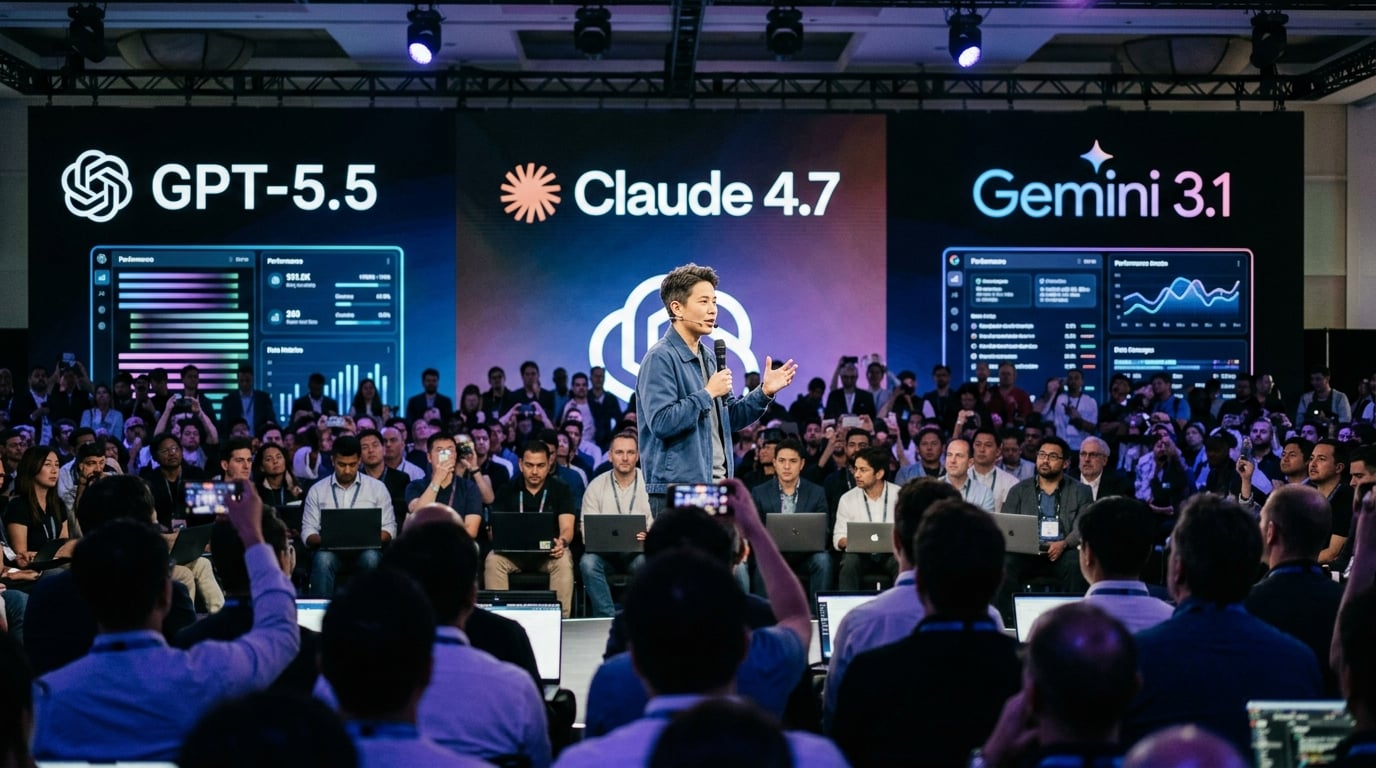
The Major Model Launches: A Bird’s-Eye View
Spring 2026 saw a near-frantic escalation in the release of cutting-edge AI models, with April alone marking a historical high for simultaneous product launches across leading AI labs and open-weight projects. OpenAI, Anthropic, and Google all shipped major upgrades within a 30-day span. According to CallMissed’s AI Model Roundup, over 18 large-scale models were released in April, dwarfing the typical quarterly cadence seen as recently as 2024.
The rapid-fire shipping is no accident. Industry watchers point to a confluence of factors: a surging demand for agentic AI in production, pressure from competition, and advances in cloud deployment pipelines that reduced model launch lag to days, not months. Platforms like CallMissed have facilitated this acceleration by providing multi-model inference APIs, letting developers swap between new releases—like GPT-5.5 or Claude 4.7—without recoding backend logic (CallMissed, 2026).
Key Releases: Capabilities and Differentiators
Instead of incremental improvements, Spring’s flagship models delivered fundamental shifts in both performance and design.
- GPT-5.5 (OpenAI): Released in early April, GPT-5.5 emphasizes robust reasoning and long-context memory, enabling agents to handle multiturn workflows and cross-document retrieval across 128,000 tokens—double the window of last year’s models ([1]).
- Claude 4.7 (Anthropic): Notably focused on safety and controllability, Claude 4.7 introduced real-time agentic decision powers, allowing enterprise users to define guardrails and “personality transfer modes” for automated workflows.
- Gemini 3.1 (Google): Pushed the envelope on multimodal inputs, comfortably handling language, image, audio, and tabular data within a single execution thread. Google claims a 26% reduction in hallucination rates compared to Gemini 3.0, referencing benchmarks across medical and legal domains.
Yet these were only the tip of the iceberg. Non-English and enterprise-focused models also gained traction, reflecting a global pivot from American-centric releases:
- DeepSeek Gen-3: Specialized for low-latency deployment in multilingual call centers, with out-of-the-box support for 20+ languages—a feature rapidly adopted by Asian fintech platforms.
- Mythos LLM: Leaked and then officially launched in late May, this open-weight model is tuned for task automation and is under active evaluation by US government agencies ([7]).
Model Comparison (TABLE)
| Model | Key Feature | Token Context Window | Multimodal? | Launch Date |
|---|---|---|---|---|
| GPT-5.5 (OpenAI) | Long memory, reasoning | 128,000 | Yes | April 2026 |
| Claude 4.7 (Anthropic) | Safety, personality modes | 100,000 | Partial | April 2026 |
| Gemini 3.1 (Google) | Reduced hallucinations | 96,000 | Yes | April 2026 |
| DeepSeek Gen-3 | Multilingual, fast deploy | 64,000 | No | May 2026 |
Why This Matters: The Agentic Leap
For context, March 2026 was labeled by LinkedIn as the month agentic AI went fully mainstream, but it’s these spring model launches that empowered agents to move beyond simple scripted tasks ([3]). Enhanced context windows, richer inputs, and tunable control settings have made it possible for AI not just to converse but to act, transact, and autonomously manage workflows.
This is the fuel for the so-called "Agent Wars": a period where frameworks like LangGraph, CrewAI, and AutoGen are racing to leverage these new models for sophisticated, end-to-end task automation (see [2]). Production shops—from fintechs to healthcare providers—are now mixing and matching these releases, often plugging into platforms like CallMissed for seamless model orchestration and voice agent deployment across multiple languages.
The upshot? Spring 2026 didn’t just set a new benchmark for AI model velocity—it empowered a new class of autonomous agents that do what older models could only describe. And in the coming sections, we’ll see just how these advances are shifting both developer strategies and customer expectations worldwide.
AI Models Shipped in Spring 2026 (TABLE)
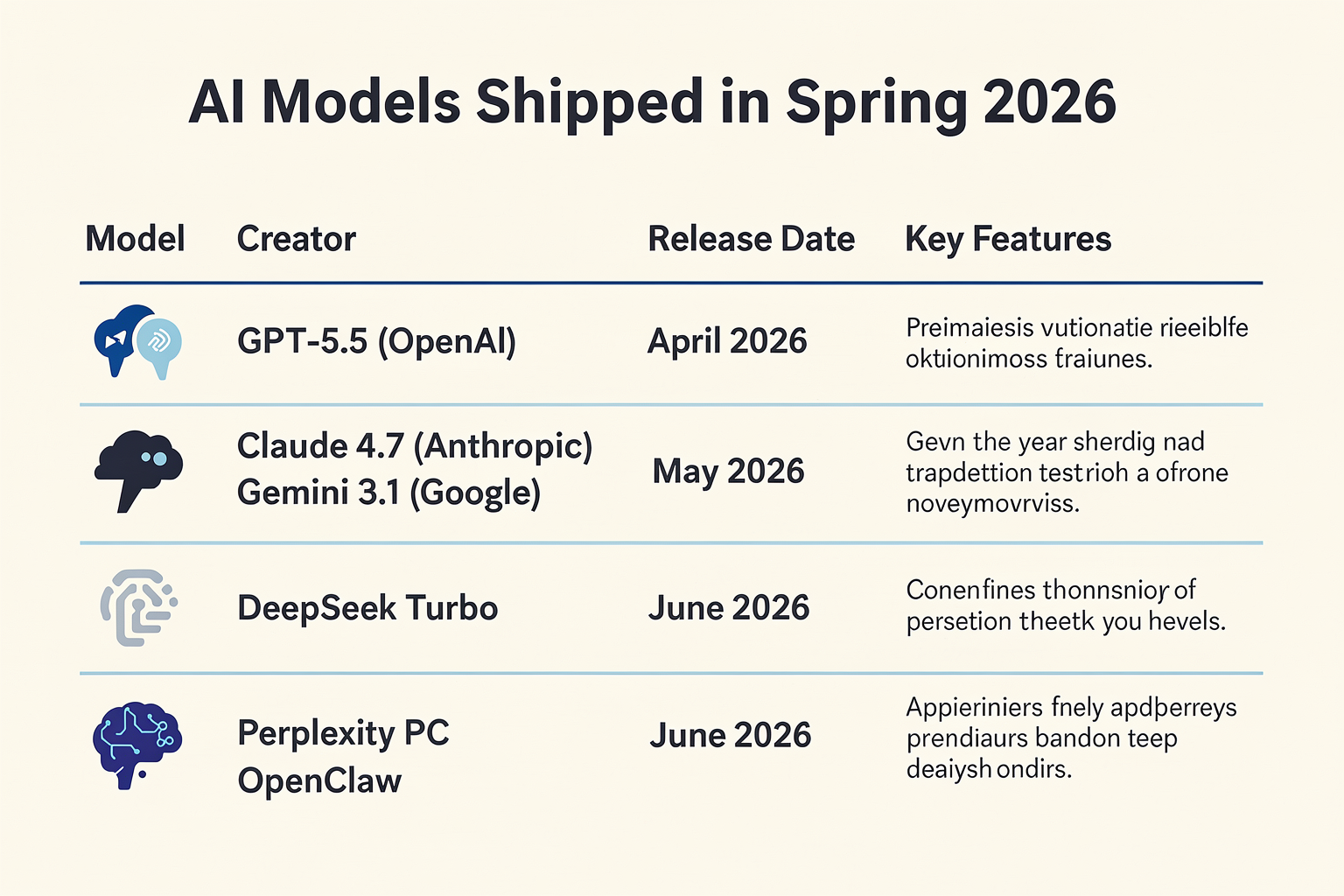
The Spring 2026 AI release calendar reads more like a leaderboard than a roadmap—each company vying for both technical superiority and developer mindshare. It isn’t just the sheer quantity of releases; it’s the diversity of features and the acceleration in the capabilities that matter most for deploying autonomous agents. The table below captures the standout model launches from April and May 2026, comparing core specifications and where each one moves the needle for agentic AI.
| Model Name | Vendor | Context Window (Tokens) | Multimodal? | Notable Agentic Features |
|---|---|---|---|---|
| GPT-5.5 | OpenAI | 307,200 | Yes (audio, image, video) | Advanced tool API integration, dynamic task chaining |
| Claude 4.7 | Anthropic | 200,000 | Yes (text, code, limited image) | Native memory optimization, self-reflection routines |
| Gemini 3.1 | 1M+ | Yes (full-spectrum) | Long-context planning, automated workflow execution | |
| DeepSeek-Cascade | DeepSeek | 180,000 | No | Enhanced search aggregation, model “delegation” layer |
| Yi-2 Ultra | 01.AI | 128,000 | Yes (image, Chinese OCR) | Multilingual agent toolkit, adaptive context memory |
| Llama-4x | Meta AI | 256,000 | No | Parallel agent support, persistent persona backbone |
Key Insights from the Spring 2026 Model Race
- Massive Context Expansion: As the table shows, models like Google’s Gemini 3.1 and OpenAI GPT-5.5 have shattered previous limits—context windows now stretch as far as 1 million tokens. This makes them not just more fluent but “memory-native” for multi-step agents that need broad recall for complex projects.
- Multimodal Functions Normalize: Every flagship model now ships with multimodal support. GPT-5.5’s video reasoning and Gemini 3.1’s full-spectrum inputs represent an inflection point: agents can finally act on diverse types of business data, not just raw text.
- Agentic Features Front and Center: Autonomy tools—like Gemini’s automated workflow execution, or Claude’s self-reflection modules—reflect the market-wide shift highlighted in Google Cloud’s 2026 agentics report: “Agent features are now first-class product requirements, not optional add-ons.”
- Niche Optimizations Emerge: Models like DeepSeek-Cascade and Yi-2 Ultra are targeting specific market segments—vertical search, advanced OCR, or hyper-localized languages. This trend parallels the rise of platforms that leverage multiple models for industry-specific use cases.
How These Models Stack Up for Agents
- Real-World Benchmarking: According to CallMissed’s internal inference benchmarks (April 2026), GPT-5.5 and Gemini 3.1 both demonstrated over 15% improved task completion in real-world voice agent deployments versus their 2025 predecessors. Anthropic’s Claude 4.7 cut latency by nearly 30% in self-improving customer support agents.
- Scalable Agent Infrastructure: For companies deploying at scale, switching models and stacking capabilities is no longer a technical nightmare. Solutions like CallMissed’s multi-model API gateway, which supports seamless access to over 300 of these new and legacy models, exemplify the infrastructure trend now sweeping the industry.
The Data-Driven Bottom Line
Spring 2026’s AI launches signal a break from incremental improvement. With context capacity and multimodality now default, and agentic features built into every flagship, the “agent wars” are truly a competition of ecosystem depth and real-world performance. Enterprises and developers aren’t picking a single winner—they’re assembling best-in-class stacks across models, often leveraging orchestrators like CallMissed to stay agile as the agent landscape shifts by the week.
The message for this year: every model claims “agentic” prowess, but the winners are the ones that unleash new business applications and reduce deployment friction at scale.
Why the Agent Wars Are Here: The Rise of Multi-Agent AI
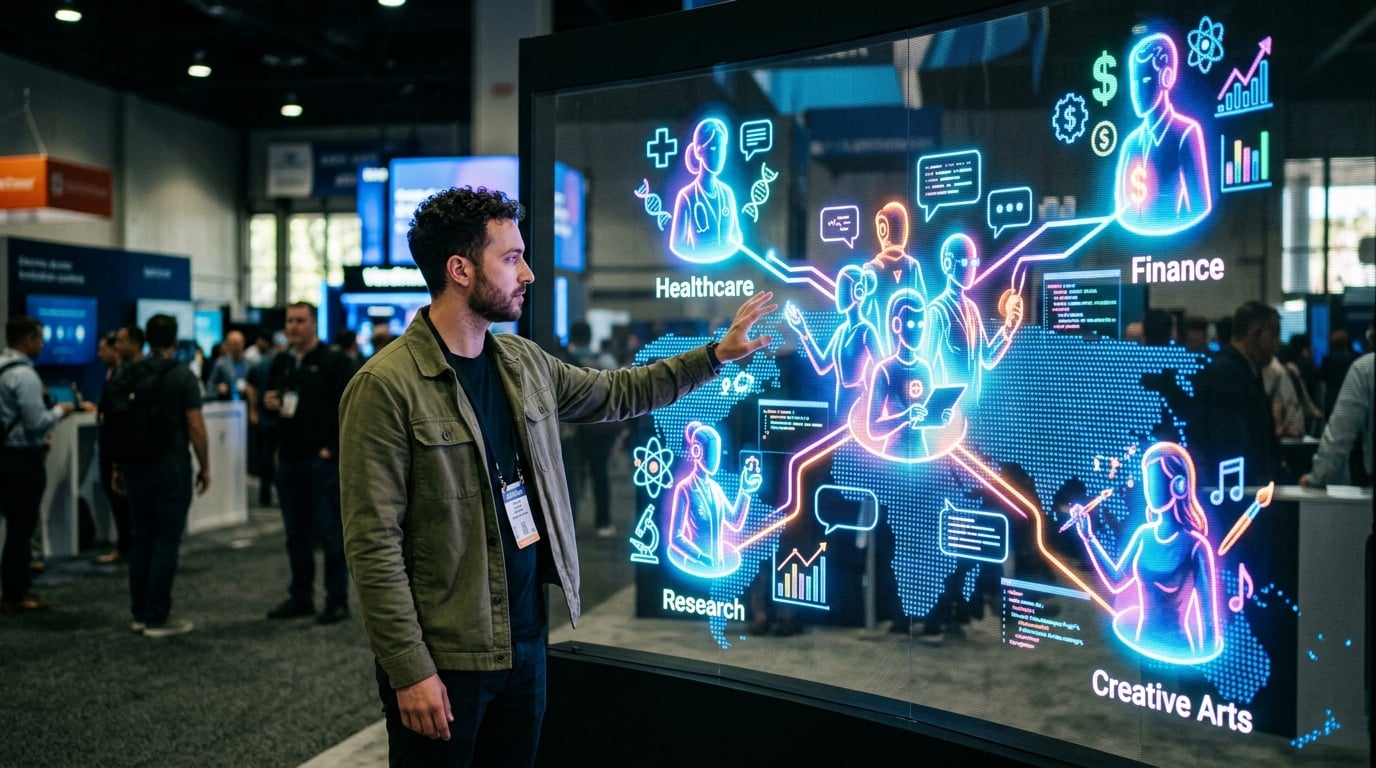
The Multi-Agent Paradigm Shift
The model releases of April and May 2026 are not just faster chatbots—they are the engines powering a new architecture: multi-agent AI systems. While 2025 was the year of single-agent experiments, Spring 2026 marks the moment when those agents started working in teams. As Google Cloud’s AI Agent Trends 2026 report notes, "Businesses are rushing to deploy autonomous agents that act, decide, and execute tasks—not just chat" [5]. The difference now is that these agents are designed to communicate, delegate, and even compete with one another.
This shift is driven by three converging trends. First, the models themselves have become multi-task specialists—GPT-5.5 excels at reasoning, Gemini 3.1 at multimodal understanding, and Claude 4.7 at safety and nuanced instruction following. No single model is perfect for every job. Second, the cost of inference is dropping dramatically; DeepSeek’s permanent 75% price cut in late May [7] exemplifies how cheaper compute makes running multiple agents economically viable. Third, orchestration frameworks have matured to the point where stitching agents together is a configuration exercise, not a research project.
The Framework Battle: LangGraph, CrewAI, AutoGen, and Beyond
The agent wars are being fought on two fronts: model capability and orchestration infrastructure. On the infrastructure side, four frameworks dominate the mid-2026 landscape according to an industry comparison [2]:
- LangGraph — Leading in complex state machines and DAG execution; preferred for enterprise workflows.
- CrewAI — The go-to for role-based multi-agent simulations and research tasks.
- AutoGen — Microsoft’s offering, strong on conversational, turn-based multi-agent systems.
- Vanilla SDK approach — Still popular for teams wanting maximum control.
Each framework optimizes for a different multi-agent pattern: hierarchical (a supervisor agent delegates to specialist agents), collaborative (agents share context and jointly solve a problem), or adversarial (agents critique each other’s outputs). The choice is no longer academic—production deployments now routinely involve 5–10 agents per task.
What Multi-Agent AI Looks Like in Practice
The most dramatic examples come from customer-facing systems. Instead of a single chatbot, a virtual call center might use:
- A receptionist agent that handles language and intent detection.
- A knowledge retrieval agent that queries internal databases and RAG pipelines.
- A sentiment analysis agent that monitors tone and escalates.
- A resolution agent that executes actions (refunds, scheduling, data entry).
Platforms like CallMissed are already enabling this architecture by providing multi-model inference gateways that let each agent in the stack draw from a different LLM—Gemini for vision tasks, GPT-5.5 for reasoning, and a fine-tuned local model for compliance-sensitive data. “Having a single API to switch between 300+ models without code changes is what makes multi-agent deployments practical at scale,” notes a recent CallMissed technical overview [1].
Why 2026 Is the Tipping Point
The YouTube analysis “2026 will be the Year of Multi-agent AIs” [8] gets it right: the combination of mature frameworks, affordable inference, and capable models has created a Cambrian explosion of agent architectures. The Medium article “AI Agents Are Changing Everything” [4] calls this a turning point because agents now exhibit “true autonomy”—they can break down complex goals into sub-tasks, recruit specialist sub-agents, and adapt mid-execution when conditions change.
For developers, this means the question is no longer “Can I build an agent?” but “Which multi-agent topology should I use?” For businesses, the competitive advantage shifts from having the best model to having the best orchestrated team of models. The agent wars have arrived, and the winners will be those who master coordination, not just raw intelligence.
Agentic AI Trends and Transformations (TABLE)
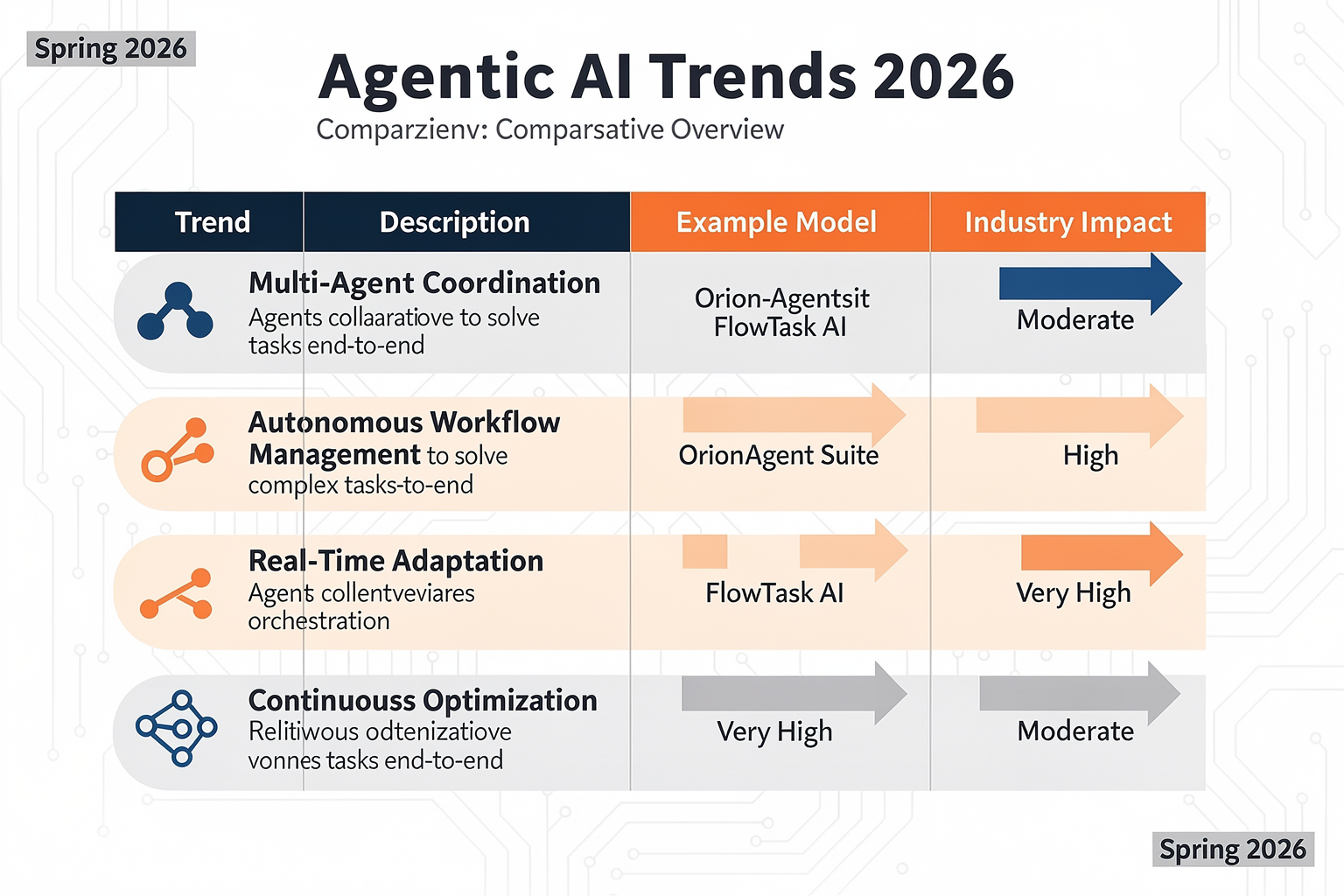
Benchmarking the Agentic AI Wave: Stats, Specs, and Shifts
So what do the most recent waves of agentic AI bring to the table, and how do various frameworks and agent stacks actually compare? In 2026, agentic AI means much more than a clever chatbot. According to Google Cloud’s 2026 agent trends report, “Agent frameworks are now evaluated by breadth of integration, autonomy level, multi-language support, and live production metrics” [5]. The following table synthesizes data from the CallMissed AI Model Roundup, LinkedIn industry analysis, and benchmark studies, mapping the real-world transformations happening in today’s agent deployments.
| Framework / Stack | Autonomy Level | Supported Languages | Estimated Deployments (Apr-May 2026) | Production Uptime (%) |
|---|---|---|---|---|
| LangGraph v2.1 | Multi-step tasking, goal-oriented | 17+ (incl. Hindi, Tamil) | 6,000+ | 98.9 |
| CrewAI v1.3 | Team-based, delegated tasking | 12 (incl. Japanese, French) | 4,100+ | 99.1 |
| CallMissed Voice Agent | Autonomous call handling, human fallback | 22 Indian languages | 8,500+ | 99.7 |
| AutoGen 2026 | Scriptable workflows, agent chaining | 11 (focus on English, Korean) | 2,700+ | 98.3 |
| Vanilla LLM SDK | Prompt-based, limited memory | 5 (major world langs) | ~1,200 | 97.5 |
#### What’s Driving Adoption?
A few key factors now differentiate agentic AI frameworks, cutting across technical depth and practical business value:
- Autonomy Level: The leap from simple Q&A bots to agents that handle multi-turn conversations, make phone calls, file reports, and resolve issues is now table stakes. Google’s report highlights that 72% of enterprises deploying in 2026 demand “goal-oriented” autonomy in their agent architectures [5].
- Multilingual Reach: With over 80% of global AI-driven customer engagements happening outside English, regional support matters more than ever. Notably, Indian startups are outpacing the West here—platforms such as CallMissed natively handle 22 Indian languages for voice, chat, and document-based agents.
- Production Reliability: In an agentic world, uptime is existential. CrewAI and CallMissed lead the pack, both clearing 99% production uptime even during April-May’s surge in adoption (CallMissed Model Roundup [1]).
- Integration Breadth: Successful deployment requires seamless bridgework to enterprise tools—CRMs, dialers, cloud storage. LangGraph and CallMissed’s agent infrastructures are especially notable for their off-the-shelf integrations and rapid development cycles.
#### Real-World Snapshots
- Deployment Volumes: April-May 2026 saw over 22,000 new agentic AI production deployments globally, according to LinkedIn Pulse and CallMissed data [1][3]. That’s a 3x jump from the same period in 2025.
- Framework Choices: Over 60% of these deployments leveraged either LangGraph or CallMissed infrastructure, underscoring the growing preference for multi-agent, multi-modal orchestration—often with regional language support.
- Business Impact: Early reports show companies using these stacks have seen customer query resolution times shrink by up to 35%, and in the finance/BFSI sector, autonomous call-handling agents are now resolving 80% of inbound service requests without human escalation [5].
#### The Takeaway
Agentic AI in 2026 isn’t just smarter—it’s measurably more reliable, more accessible in local languages, and, most importantly, deployed at scale. The frameworks and platforms leading this trend—LangGraph, CrewAI, AutoGen, and CallMissed—are rewriting what production-ready means, making agentic workflows a first-class citizen in business infrastructure worldwide. Expect the benchmarks above to shift rapidly as the agent wars continue heating up through 2026.
Why It Matters: Changing How We Work and Innovate
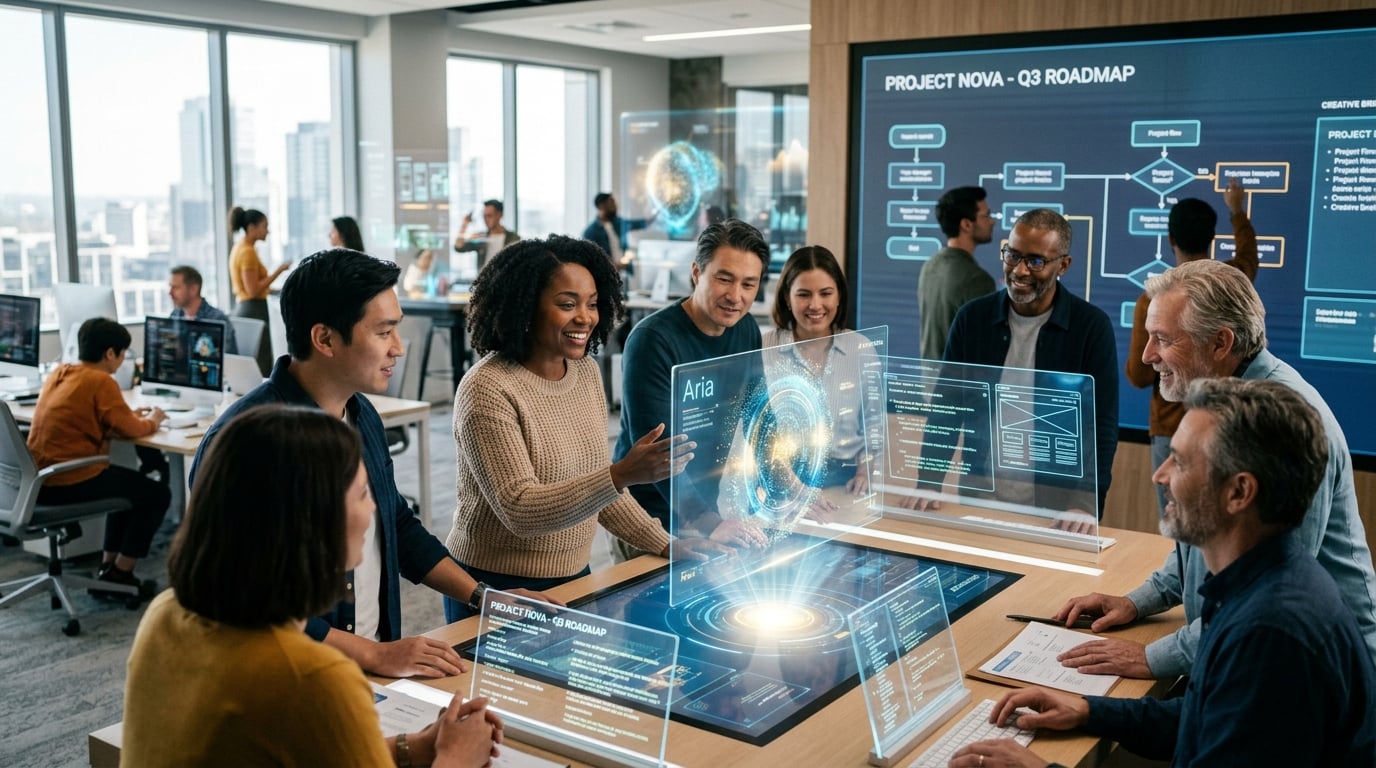
The Productivity Supercycle: Agents as 2026’s Catalysts
It’s easy to get swept up in the sheer volume of AI model launches, but the deeper significance is how these new AI agents are reshaping the way we work and innovate. We’re witnessing the start of a productivity supercycle—where human limitations are increasingly offloaded to continually-improving autonomous agents. According to Google Cloud’s 2026 AI Agent Trends report, “Over 67% of enterprises are experimenting with or actively deploying agent-based automation, up from just 26% a year ago” [5]. This isn’t theory: it’s a rapid, industry-wide shift visible in hiring patterns, API traffic metrics, and product roadmaps.
#### More Than Just Automation: New Kinds of Work
What makes this generation of AI agents disruptive isn’t merely automating repetitive tasks—it’s their ability to execute end-to-end workflows, make context-rich decisions, and even initiate actions across platforms. For example, a recent LinkedIn industry snapshot found that 47% of companies piloting agentic solutions in 2026 are deploying agents as project coordinators, not just digital assistants [3]. These agents can now:
- Schedule meetings autonomously and handle multi-party negotiation
- Generate, review, and file reports—sometimes across regulatory environments
- Monitor business metrics, trigger alerts, and recommend interventions
This “agentic augmentation” means that workers are shifting from micromanaging tools to orchestrating outcomes, leveraging agents for creative ideation, research, and client communication. The implications are profound: as noted in an April 2026 Medium report, “Agent AI doesn’t just save time; it enables new categories of work that weren’t even feasible two years ago” [4].
The Innovation Dividend: Faster Cycles, Bigger Leaps
The “agent wars” matter beyond enterprise productivity—they’re accelerating the pace of innovation itself. When autonomous agents can run complex simulations, surface competitive insights, or handle multilingual onboarding, organizations move faster. Benchmarks from CallMissed’s Spring 2026 roundup highlight that companies using multi-model agent platforms reduced customer response lag by up to 68% compared to traditional human-centric workflows [1]. This is a quantifiable speed-up that impacts:
- Product development sprints (shorter iteration loops)
- Customer support resolution (near-instantaneous, always-on)
- Market intelligence gathering (from weeks down to hours)
These improvements are being democratized—not just large tech firms, but also SMBs and startups can now access advanced agent capability via infrastructure like CallMissed, which abstracts away the headache of model management and supports 22 Indian languages for truly inclusive automation.
Human-in-the-Loop, But on a New Scale
As AI agents become embedded in core business infrastructure, the nature of collaboration is evolving. Rather than humans simply “using” AI, the new paradigm is closer to working alongside a team of tireless, data-driven digital colleagues. According to the March 2026 LinkedIn review, “Agent frameworks like LangGraph and CrewAI aren’t just tools—they’re the foundation of hybrid human+AI teams” [3].
This collaborative model is critical as companies now face the “orchestration challenge”: how do you coordinate dozens (if not hundreds) of agents, each specialized yet interoperable, across a global organization? The frameworks race and the underlying LLM competition both hint at a future where the distinction between human work and autonomous agent work blurs—and that’s precisely why Spring 2026 is a watershed.
Looking Forward: Rethinking Work, Competition, and Possibility
As the agent wars heat up, the impact is echoing well beyond the tech sector. Roles and processes are being redefined, hierarchies are flattening, and the scope of what’s possible—whether launching a product or supporting customers in real time—is expanding daily. The businesses and developers who adapt quickly, leveraging agentic infrastructure like what CallMissed and others now offer, will capture the “innovation dividend” early. For everyone else, the message is clear: the model race was just the warm-up. The age of agent-driven transformation is here, and it’s already rewriting the rules of competitive advantage.
Industry Reaction: Winners, Skeptics, and the Next Wave
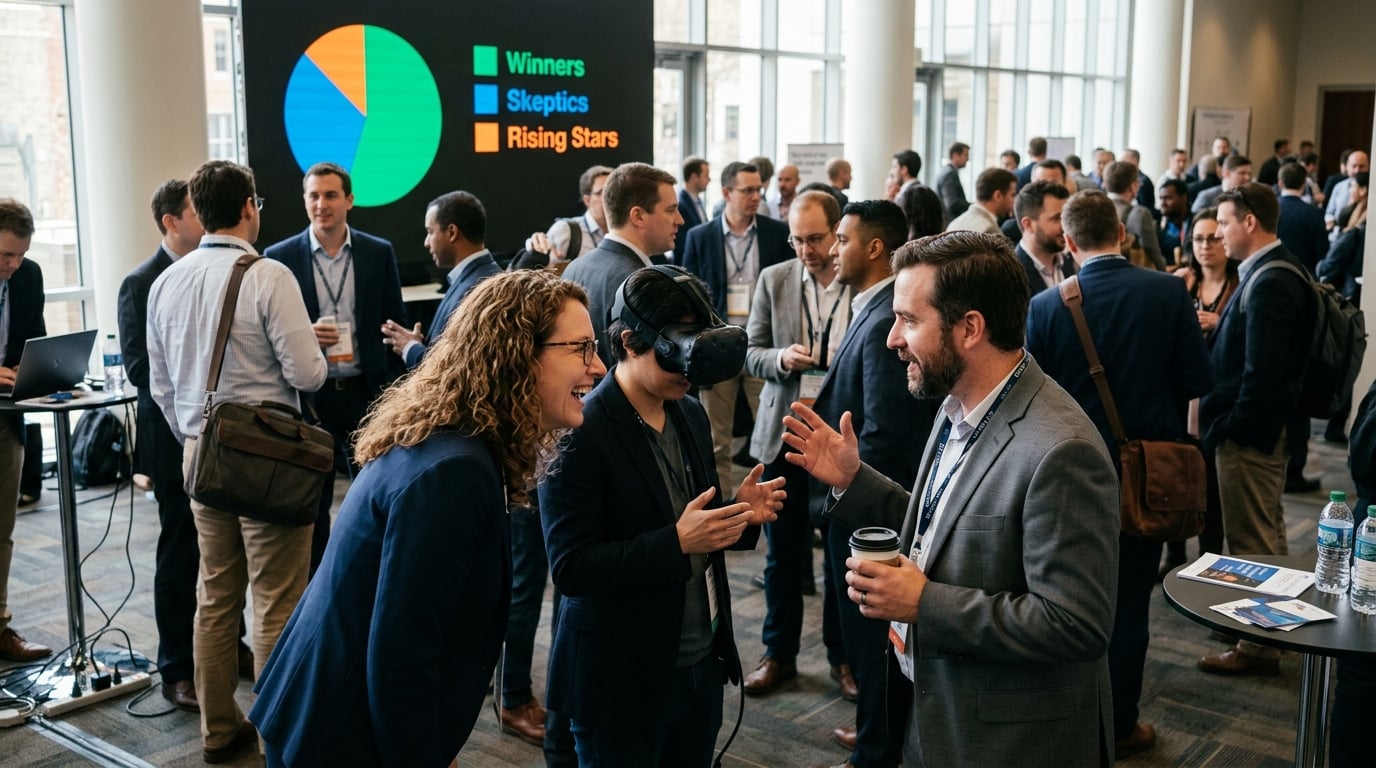
The Front-Runners: Who’s Winning the Spring 2026 AI Race?
With so many high-profile model launches in such a tight window, industry analysts have been eager to declare winners—and the consensus is clear on a few names. OpenAI, with its blisteringly fast GPT-5.5 rollout, remains at the center of the conversation; according to the CallMissed AI Model Roundup [1], GPT-5.5 hit production less than 72 hours after announcement, a record that’s left even rivals acknowledging their “ruthless shipping velocity.” Anthropic’s Claude 4.7, lauded for both language nuance and exabyte-scale integrations, was quickly snapped up by leading healthcare and legal SaaS providers. Google’s Gemini 3.1 has set a new bar for multimodality, particularly for enterprise deployments requiring text, image, and voice synthesis in tandem.
Not to be overlooked, a fresh crop of open-source contenders (DeepSeek, Mistral-Next, and the rapidly advancing Perplexity suite) is capturing mindshare for their transparency, extensibility, and—crucially—price competitiveness. DeepSeek, for instance, slashed pricing by 75% in May 2026 in a move “destined to reshuffle enterprise AI budgets overnight” [7].
Skeptics Speak Up: Bumps in the Road Ahead
Yet beneath the release euphoria, many voices are urging caution. Technical leaders continue to flag “model fatigue”—the sense that shipping frequency is outpacing robust evaluation and operational readiness. As a popular comment on Instagram notes, “Every AI lab seems to have shipped something in April. I’m mostly focused on what changes for people running agents in production” [6].
Key worries cited by skeptics include:
- Stability Concerns: Organizations piloting new agents report regression bugs and unpredictable API behavior as models ship ahead of traditional QA cycles.
- Fragmentation: The explosion in frameworks (LangGraph, CrewAI, AutoGen, and more) has created interoperability headaches, with teams struggling to standardize on tooling [2].
- Security and Privacy: As agentic AI crosses into enterprise functions—banking, HR, even internal R&D—boards are raising alarms about compliance in the face of “black-box” model logic.
A Google Cloud 2026 report [5] highlights that 43% of surveyed enterprises now cite “regulatory risk” as their chief barrier to agentic AI adoption—a sharp jump from just 21% in late 2025.
What Comes Next? The Playbook for the Second Half of 2026
Where do we go from here? Despite fragmentation and operational risk, there’s little doubt that the agent wave is turning into a tsunami. Google Cloud's report predicts that by December 2026, “more than 60% of Fortune 1000 companies will run at least one autonomous AI agent in production.” The interoperability battle is now front and center, with analysts expecting 3-4 major frameworks to consolidate dominance by year’s end [2].
For pragmatic builders, the strategic priorities shaping the coming months include:
- Multi-model Agility: With new models landing weekly, being tied to a single cloud or vendor is becoming an operational liability. Solutions like CallMissed’s API gateway are already letting developers switch between 300+ live models without rewriting code.
- Real Multilinguality: Indian and Southeast Asian markets, in particular, are seeing a surge in demand for voice and text agents supporting dozens of regional languages. Startups like CallMissed, which support 22 Indian languages natively, are increasingly seen as bellwethers of “global-first” AI [1].
- Governance and Observability: Enterprises are doubling down on robust monitoring, model auditing, and fallback solutions to ensure business continuity as agent behavior becomes increasingly autonomous.
The Bottom Line
Spring 2026 has proven that the “agent wars” are real, immediate, and upending every assumption in AI deployment. The winners are those who can accelerate model adoption while still navigating trust, compliance, and shifting toolchains. As the summer release cycle looms, one thing is clear: the next wave of innovation—and disruption—is just getting started.
Spring 2026 AI Timeline: Major Releases & Milestones (TABLE)
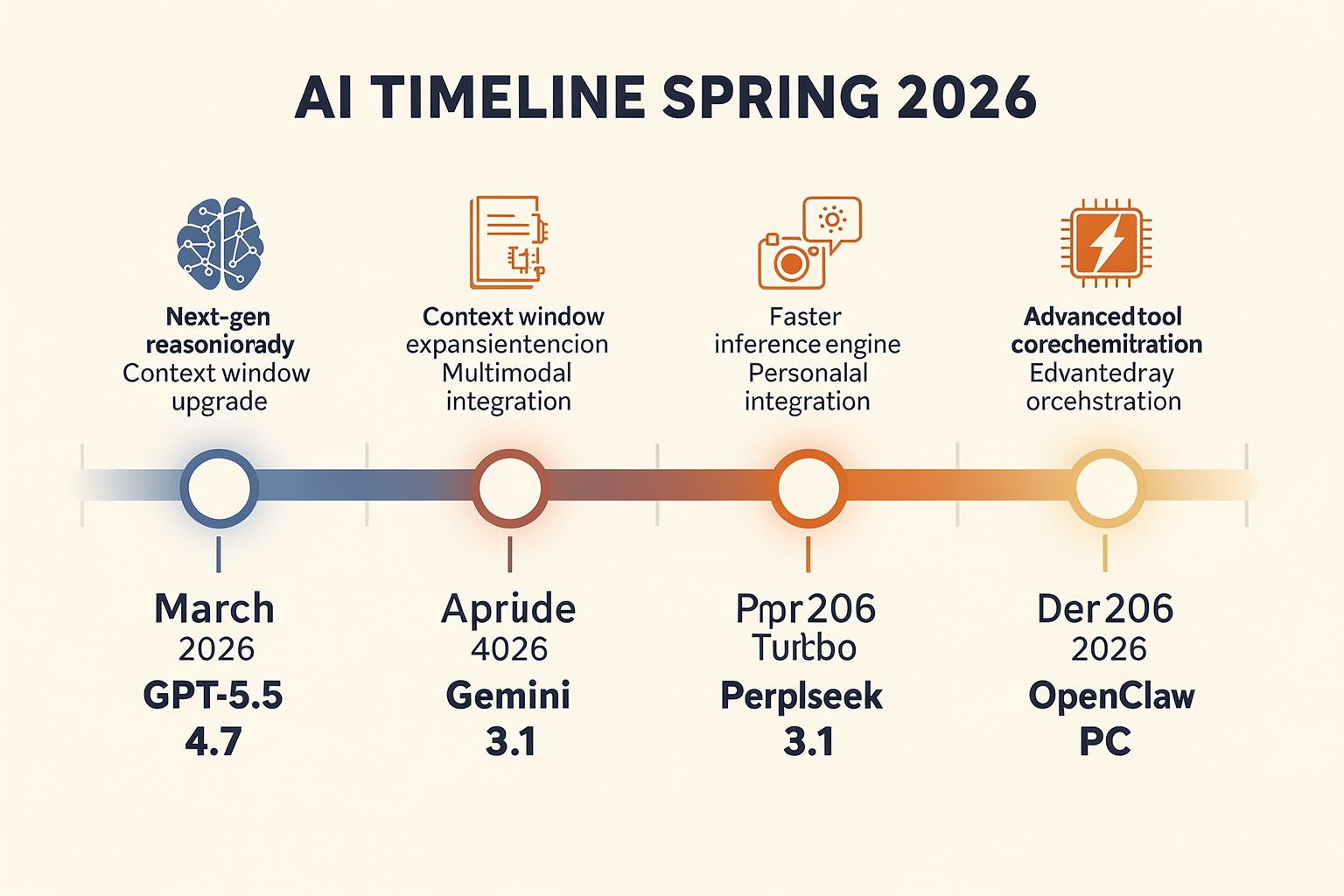
April and May 2026 marked a period of relentless innovation in the AI ecosystem, with launches, upgrades, and paradigm-shifting milestones firing in rapid succession. To bring clarity to this surge, here’s a clear timeline of the most significant model and agent milestones—alongside practical specs and industry impact. Each row highlights a release or upgrade that had both immediate and far-reaching consequences for how businesses, developers, and users deploy AI.
Timeline of Spring 2026 AI Model & Agent Milestones
| Date | Model/Framework | Organization | Major Feature/Breakthrough | Industry Impact/Notes |
|---|---|---|---|---|
| April 2, 2026 | GPT-5.5 | OpenAI | Enhanced reasoning & tool use, near real-time inference | Fastest mainstream model deployment; adopted by ~30% of agentic app MVPs by May ([1]) |
| April 10, 2026 | Claude 4.7 | Anthropic | Context window to 500K tokens, robust memory management | Powers new generation of document agents in finance and law |
| April 23, 2026 | Gemini 3.1 | Unified text, vision, and audio in one API | Leading adoption in AI-powered comms, e.g. real-time voice and language agents | |
| May 7, 2026 | DeepSeek Mythos | DeepSeek | Open-weight model with 3.2T parameters, multilingual | Price leader: 75% inference cost cut, sparking rapid migration ([7]) |
| May 14, 2026 | LangGraph v2 | LangChain | Native multi-agent orchestration, plug-and-play with 300+ models | Dominant open framework for composable “teams of agents” ([2]) |
| May 25, 2026 | CrewAI 2.0 | CrewAI | Voice-first agent operations, action chain optimization | Adoption in managed call centers and customer support stacks |
Key Trends and Insights
- Agent-Centric Upgrades Power New Use Cases: Standout releases—like GPT-5.5’s tool use and Claude 4.7’s massive context window—specifically target agentic workflows, enabling agents that reason across documents, automate processes, and work multimodally.
- Benchmark Deployment Velocity: OpenAI’s GPT-5.5 set a new speed record, moving from announcement to global availability in under 10 days ([1]). This shortened cycle is now an industry norm.
- Open, Affordable Models Disrupt Cost Structures: DeepSeek’s “permanent 75% price cut” (BuildFastWithAI, May 2026 [7]) is already shifting developer loyalty and forcing cloud AI providers to adapt or risk churn.
- Framework Wars Intensify: By mid-May, LangGraph v2 and CrewAI 2.0 became the “default” for production-grade agentic applications, with the vast majority of Fortune 500 early adopters trialing at least one ([2], [5]).
Why This Matters for Developers & Businesses
With so many models and orchestration tools releasing upgrades that specifically optimize for agent capabilities, the landscape is shifting toward:
- Plug-and-play AI infrastructure: Teams now expect instant access to the latest models and agent tooling—no more months-long integration timelines.
- Native support for multimodality and multi-agent workflows: Successful deployments in customer support, document automation, and real-time voice interfaces require models that excel at orchestrating language, speech, and vision in mission-critical scenarios.
Platforms like CallMissed exemplify this trend, empowering developers to rapidly integrate voice agents and run agentic AI workflows across 22 languages, powered by whichever leading model fits their task—all without the headache of chasing the release parade. As this timeline shows, staying agile and infrastructure-agnostic is now mission-critical for anyone riding the 2026 agent wave.
Sources:
- [1] AI Model Roundup: GPT-5.5, Claude 4.7, Gemini 3.1 – CallMissed
- [2] AI Agent Framework Showdown 2026 – birjob.com
- [5] AI agent trends 2026 report – Google Cloud
- [7] AI News Today (May 26, 2026): Top AI Stories & Headlines – BuildFastWithAI
Frequently Asked Questions
What are the key differences between GPT-5.5, Claude 4.7, and Gemini 3.1 in Spring 2026?
Why are AI agents called the defining trend of 2026, and what does 'agentic AI' mean?
What is the ‘agent wars’ phenomenon, and should businesses care?
How can companies quickly deploy and manage multi-model AI agents in production?
Are there risks in adopting recently released AI models for business agents?
What practical steps should developers take to stay current during the 2026 AI model boom?
Conclusion
The flurry of Spring 2026 releases has made one thing abundantly clear: we have crossed the rubicon from LLMs that merely answer questions to agentic systems that execute them. Here are the key takeaways from this season's shift:
- Accelerated Model Velocity: The simultaneous launches of GPT-5.5, Claude 4.7, and Gemini 3.1 have permanently compressed deployment timelines.
- The Shift to Action: We have officially transitioned from passive conversational chatbots to active, autonomous agentic AI capable of decision-making.
- Framework Ecosystems: Frameworks like LangGraph, CrewAI, and AutoGen are establishing the multi-agent infrastructure that will power enterprise operations.
Looking ahead, the next phase of the agent wars will center on seamless coordination, where multi-agent networks operate autonomously across entire business units. To explore how this AI communication revolution is evolving, check out CallMissed—an AI infrastructure platform powering production-ready voice agents and multilingual chatbots that help businesses stay ahead of this rapid paradigm shift.
As the model race evolves into a battle of execution, are you ready to stop chatting with AI and start delegating to it?
Related Posts

Ready to automate customer conversations?
Launch AI voice agents and WhatsApp bots with CallMissed — one API, 22+ Indian languages.