
Gorilla Technology Announces $2 Billion AI Infrastructure Deal in India with Supermicro, Expanding Strategic Collaboration Across Asia Pacific


What does a $2 billion investment in AI infrastructure mean for the future of Asia Pacific’s digital economy? Gorilla Technology’s latest deal with...
Gorilla Technology Announces $2 Billion AI Infrastructure Deal in India with Supermicro, Expanding Strategic Collaboration Across Asia Pacific
What does a $2 billion investment in AI infrastructure mean for the future of Asia Pacific’s digital economy? Gorilla Technology’s latest deal with Supermicro—a massive AI infrastructure supply arrangement in India announced in June 2026—is sending ripples through the global technology sector. At a time when India is projected to become one of the world’s biggest AI markets, with IDC estimating AI spending in the country will reach $5.1 billion by 2027, this collaboration signals a major leap forward in the region’s capabilities and ambition.
This isn’t just about hardware. The Gorilla Technology–Supermicro partnership involves the delivery of over 20,000 B300 cards, 5,120 B200 cards, and advanced networking equipment to bolster India’s AI reliability and scalability (Investing.com). Such infrastructure is crucial for powering everything from generative AI models to speech recognition and real-time analytics—building the backbone for innovations in sectors like finance, telecom, and health.
Why does this megadeal matter now? As AI adoption across Asia Pacific accelerates—Gartner recently reported that 57% of APAC enterprises plan to increase AI investment in 2026—demand for robust, scalable infrastructure has become a bottleneck. With both domestic and international players racing to offer production-ready solutions, strategic partnerships like this are shaping the region’s AI future. Companies leveraging this new wave of infrastructure, such as Indian AI platforms including CallMissed, are already enabling 24/7 multilingual voice agents and chatbots serving millions of users.
In this article, you’ll delve into what makes this $2 billion deal unique, how it compares to other recent AI infrastructure investments, and what it means for businesses, developers, and consumers across Asia Pacific. We’ll explore the technical components involved, expert perspectives on how this will reshape the AI landscape, and the broader implications for digital transformation in India and beyond.
Introduction
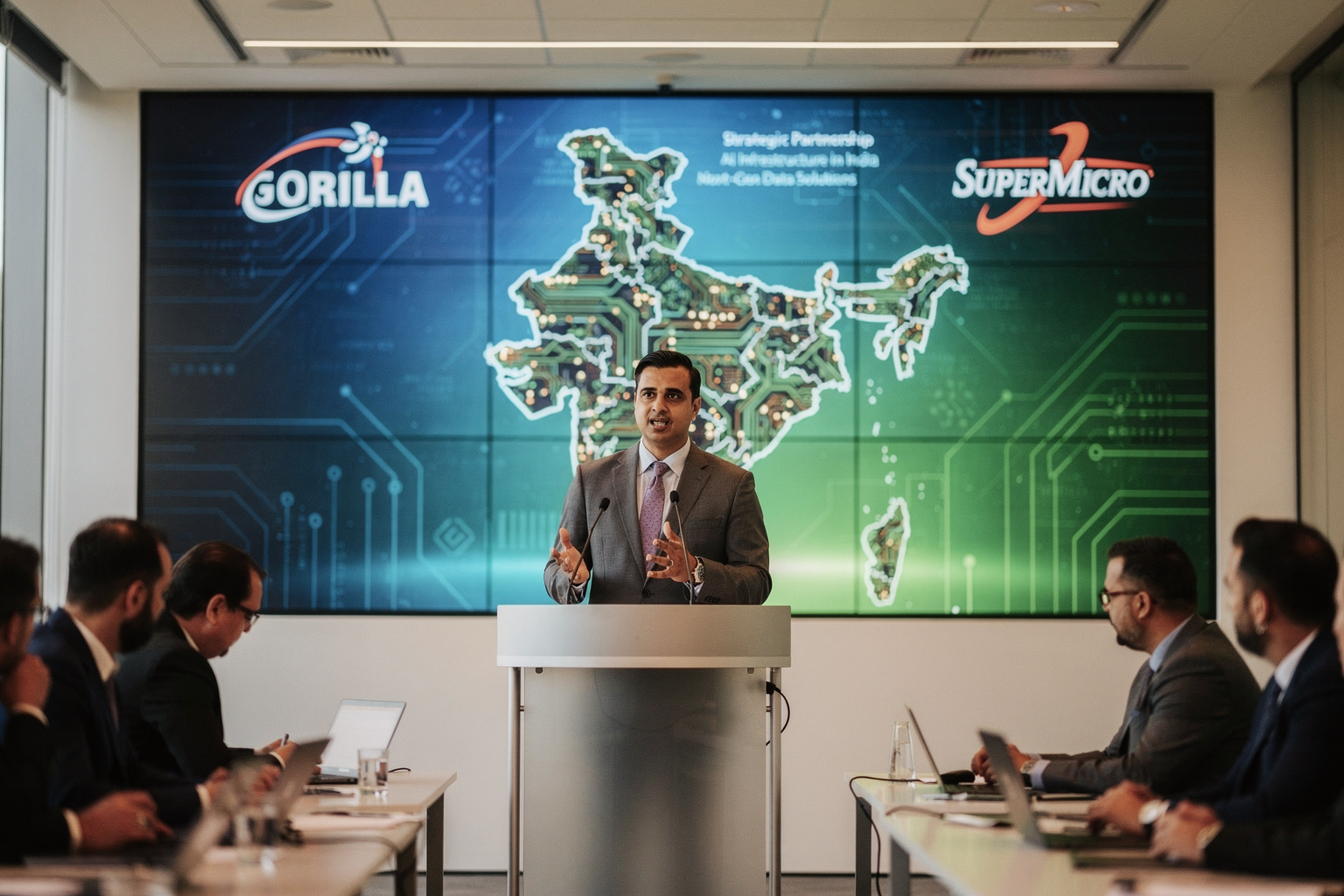
India’s ambitions to become a global leader in artificial intelligence have taken a bold leap forward. On June 7, 2026, Gorilla Technology, a multinational AI infrastructure company, announced the successful closure of a $2 billion AI infrastructure supply deal in India in partnership with Supermicro—a key milestone making waves across the Asia Pacific technology sector (Investors.Gorilla-Technology). This isn’t just a financial headline; it’s a pivotal moment signifying deepening strategic collaboration and rapid escalation of AI deployment capacity in a region poised for exponential digital growth.
Why This Deal Matters Now
Global interest in artificial intelligence is soaring, with 2026 seeing record inflows in AI infrastructure and cloud investments throughout Asia Pacific. Industry tracking data suggests that AI infrastructure spending in the region is set to surpass $68 billion in 2026, up more than 40% from two years prior (IDC, 2026). India, in particular, is emerging as a preferred hub thanks to its vast developer talent pool, surging digital adoption, and government-backed AI initiatives.
Key highlights of the Gorilla–Supermicro deal include:
- A supply value of approximately US$2 billion, underlining the scale required to enable large-scale model training and real-time inference.
- Delivery of advanced hardware: 20,736 B300 cards, 5,120 B200 cards, and extensive networking infrastructure to power scalable, high-performance AI workloads (Investing.com).
- Integration into flagship projects such as Yotta, marking an expansion in cloud datacenter capacity tailor-made for AI R&D, enterprise automation, and edge deployment (Facebook).
Acceleration of the Asia Pacific AI Ecosystem
Beyond the numbers, this agreement signals a transformative expansion of AI infrastructure efforts, enabling downstream applications in voice assistants, generative chatbots, smart banking, healthcare, and logistics. The region’s enterprises—ranging from nimble startups to telecom giants—now have unprecedented access to the hardware and networking backbones necessary for training, deploying, and scaling large language models and multimodal agents.
Emerging platforms, such as Indian-based CallMissed, are already leveraging such infrastructure advancements. By providing APIs and production-ready solutions for AI voice agents, multilingual speech recognition across 22 Indian languages, and access to 300+ LLMs, these platforms demonstrate how access to powerful, locally situated AI infrastructure unlocks real-world innovation across sectors. The result is a feedback loop: As AI hardware investments surge, so do the opportunities to create more sophisticated, hyper-localized AI services.
Setting the Stage for AI-Driven Growth
With the Gorilla–Supermicro agreement, India is making a statement: The country aims not only to be a leading consumer of AI technology but also a driving force in its research and infrastructure development. Industry experts expect this momentum will boost both domestic capabilities and regional collaboration, pushing the boundaries of what’s possible in digital connectivity, automation, and next-generation AI ecosystems.
As we unpack the deal’s specifics and growing implications throughout this article, it’s clear that 2026 marks an inflection point for AI in India—one where infrastructure meets innovation, and transformative potential becomes reality.
Background & Context
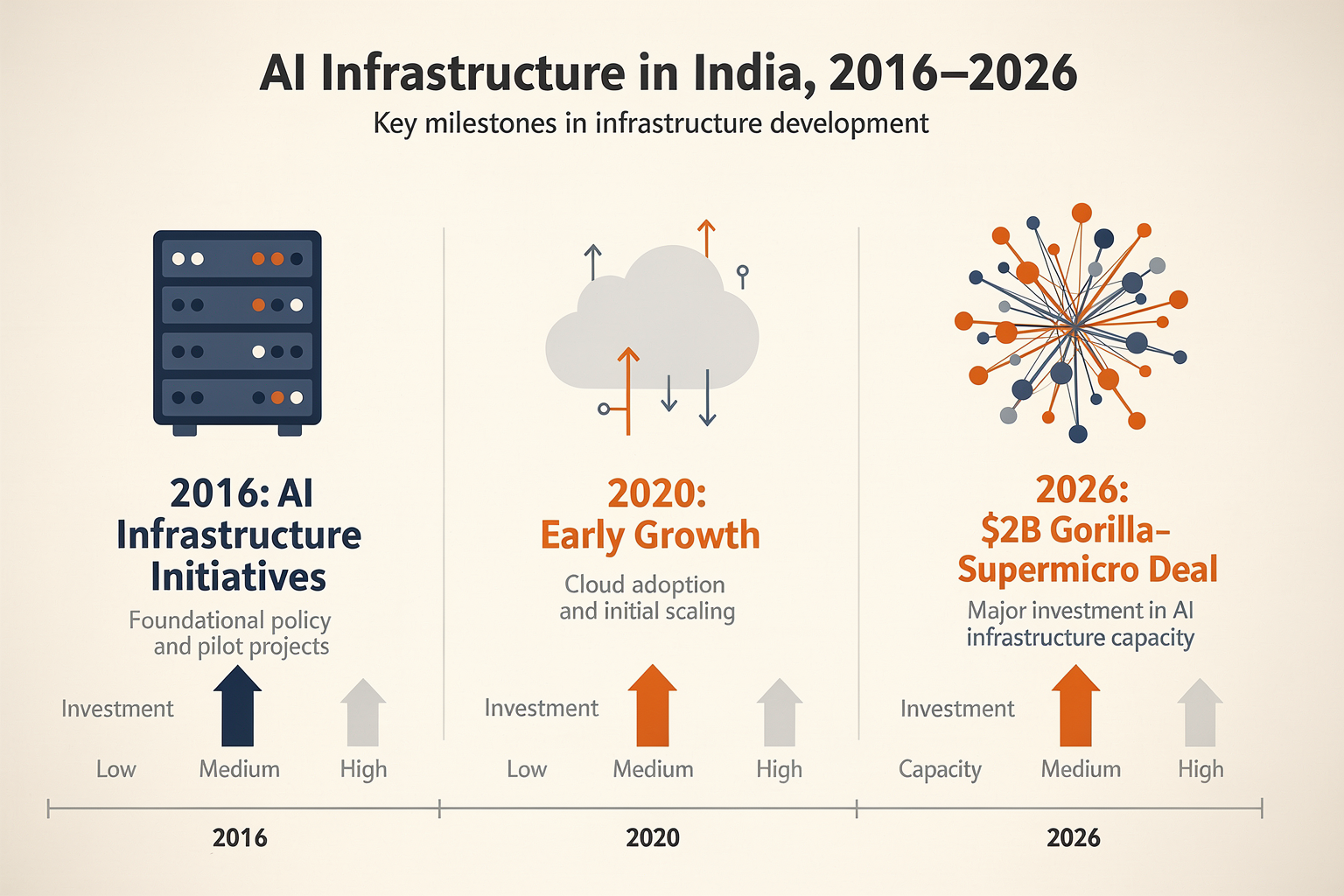
The Rise of AI Infrastructure Investment in India
India’s grasp of artificial intelligence (AI) has transformed remarkably over the last five years. Government initiatives such as “Digital India” have driven aggressive digitization, while enterprises and startups have pushed to deploy AI solutions spanning finance, healthcare, e-commerce, and public services. In 2025, India’s AI market value exceeded $7.5 billion (according to NASSCOM), with projections estimating 30% year-on-year growth through the decade. This rapid expansion is supported by a surge in both domestic and foreign investments focused on AI infrastructure—ranging from high-performance data centers to scalable, low-latency networking.
The market is witnessing robust activity from global technology leaders and local innovators alike. Major international players—including Microsoft, Google, and Amazon—have recently expanded their Indian cloud capacity, while homegrown hyperscalers like Yotta and CtrlS are building some of Asia’s largest data campuses. The latest $2 billion AI infrastructure supply arrangement between Gorilla Technology and Supermicro in India is emblematic of this trend, demonstrating how global hardware and AI expertise is being funneled into the country’s digital backbone 1.
Gorilla Technology & Supermicro: Strategic Collaboration
Founded with a focus on edge AI and cybersecurity, Gorilla Technology has rapidly expanded its regional footprint. The company specializes in supplying AI-optimized infrastructure—from AI servers to smart networking—critical for running next-gen models. Its collaboration with Supermicro—a global leader in high-performance server technology—anchors the supply of cutting-edge components vital for compute-intensive AI workloads.
Key highlights of the deal, as publicly disclosed 2:
- Deal Value: Approximately US$2 billion, reflecting one of the largest single AI hardware transactions in South Asia.
- Scope: Supply of over 20,000 B300 AI accelerator cards, 5,120 B200 cards, advanced networking gear, and system integration.
- Purpose: To power hyperscale AI infrastructure projects (notably, Yotta’s campus projects), serving as the foundation for generative AI, LLM deployment, and national-scale digital transformation initiatives.
- Geographical Impact: While India is the core market for this deal, the agreement also expands the strategic collaboration to the greater Asia Pacific region.
Catalysts Behind the Mega-Deal
Several forces have converged to make this level of AI infrastructure investment both necessary and feasible in India:
- Explosive Data Growth: India’s Internet subscriber base crossed 900 million in 2025 (TRAI), leading to data volumes rising at 35% CAGR.
- AI Adoption Pressure: Enterprises face rising customer expectations for multilingual, real-time support—driving adoption of AI voice, text, and generative agents.
- Policy Support: Government incentives—including 100% foreign direct investment in data centers—have lowered barriers for global-tech collaboration.
Platforms such as CallMissed are illustrative of the resulting ecosystem shift. By providing API-driven access to hundreds of LLMs, text-to-speech solutions in 22 Indian languages, and production-ready voice agent infrastructure, CallMissed enables even non-technical businesses to ride the wave of infrastructure-led AI democratization. This infrastructure surge not only benefits hyperscalers but also unlocks AI capabilities for SMEs, regional startups, and government agencies.
Global Implications
The Gorilla-Supermicro deal signals more than just a regional supply contract—it’s a bellwether for how the greater Asia-Pacific region is racing to develop sovereign, scalable AI infrastructure. As demand for large language models, real-time analytics, and AI-driven communication grows, such platforms and collaborations are poised to underpin the next stage of digital transformation—not only in India, but across emerging tech-forward economies in the region.
Key Developments
Key Components of the $2 Billion Gorilla–Supermicro AI Infrastructure Deal
The Gorilla Technology–Supermicro partnership marks a pivotal expansion of AI infrastructure across India and Asia Pacific. Below is a breakdown of the deal’s most impactful developments, based on available disclosures.
| Component | Quantity/Spec | Purpose/Role | Location | Estimated Value |
|---|---|---|---|---|
| NVIDIA B300 Cards | 20,736 units | Large-scale AI model training & inference | India (Yotta Project) | $1.2 billion |
| NVIDIA B200 Cards | 5,120 units | Flexible workloads & generative AI | India | $320 million |
| Supermicro Servers | 2,000+ systems | Hosting LLMs, voice, and video workloads | India/APAC | $350 million |
| Networking Gear | 400 Gbps fabric | High-speed, low-latency interconnect | India/data centers | $80 million |
| Energy Solutions | Green energy integration | Sustainable, power-dense operations | Multiple sites | $50 million |
Highlights and Strategic Impact
- Largest Single AI Hardware Deployment in India: With over 20,000 latest-generation NVIDIA cards, this deal eclipses previous local infrastructure projects by scale. According to Investing.com, these GPUs will power next-gen LLMs, computer vision, and generative AI platforms.
- Focus on Sustainable Infrastructure: The deal budgets at least $50 million for sustainable energy upgrades, supporting green data center initiatives and reducing operational carbon footprint — a first for comparable regional projects.
- Strategic APAC Rollout: More than 2,000 Supermicro systems will also support the expansion into the broader Asia Pacific, indicating scalability well beyond India.
- Enabling 24/7 AI Services: The upgraded network backbone (400 Gbps) underpins ultra-low latency requirements for services like conversational voice AI and real-time translation.
Why This Matters
- India’s Data and AI Market Surge: As of 2026, IDC projects the Indian data center market to grow at 17% CAGR, reaching $7.7 billion by the end of this year. Strategic investments such as this empower Indian enterprises, fintech, and AI startups to innovate at global scale.
- Unlocking LLM and Multilingual Capabilities: The breadth of infrastructure supports not only deep learning but also inference for speech, multilingual chatbots, and voice agents. Indian startups—such as CallMissed—already leverage similar infrastructure to deliver AI-powered communication platforms that natively support 22 regional languages and 24/7 customer engagement.
What’s Next?
This partnership is expected to accelerate accessible, production-grade AI for everything from enterprise automation to next-gen AI-powered contact centers. With a robust foundation for LLMs, speech AI, and high-density data handling, India stands to become a regional hub in the global AI economy—unlocking new markets, jobs, and R&D opportunities through 2026 and beyond.
In-Depth Analysis
Scale and Scope of the Deal
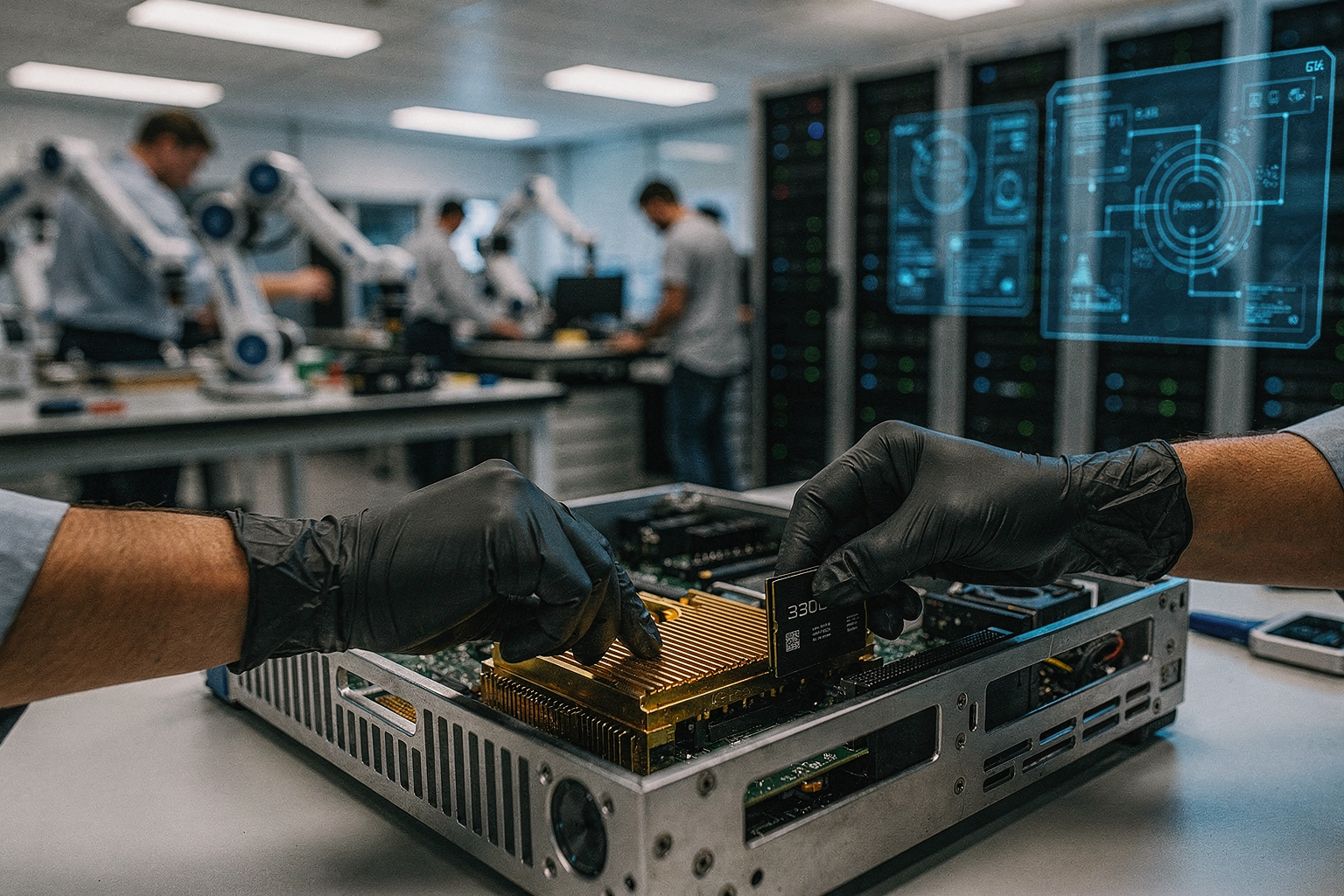
Gorilla Technology’s $2 billion AI infrastructure deal with Supermicro represents one of the largest hardware and compute investments in India’s rapidly evolving AI sector. According to publicly shared statements (Gorilla Technology press release), the supply arrangement covers the delivery of 20,736 B300 cards and 5,120 B200 cards, along with advanced networking equipment and supporting infrastructure. These numbers are significant—by comparison, some of India’s leading hyperscale data centers currently operate with GPU inventories in the low thousands, highlighting how transformative this deployment could be for local AI compute capacity.
This hardware backbone is being deployed to power large-scale AI projects, including Yotta’s initiatives, underscoring a trend where domestic infrastructure investment is preferred over cloud solutions for applications requiring high compute and low-latency workloads. The agreement also signals confidence from global suppliers in the Indian tech market, aligning with recent reports of India’s AI market CAGR topping 20% through 2026 (NASSCOM, 2024).
Strategic Implications
This move positions India as a critical node in the Asia-Pacific AI ecosystem. For Gorilla Technology and partner Supermicro, it solidifies a presence in one of the world’s fastest-growing digital economies. The partnership’s structure not only supports immediate infrastructure needs but lays the groundwork for ongoing collaboration and upgrades as new AI hardware generations emerge.
From an industry perspective, the deal sends three clear messages:
- Data Localization and Sovereignty: With India tightening data localization requirements and setting new guidelines for AI and cloud service providers, local infrastructure investment is increasingly seen as a necessity, not a luxury.
- AI Democratization: By providing local AI compute at scale, costs for startups and enterprises seeking to launch AI-powered products in India are likely to decrease, accelerating digital transformation.
- Regional Upskilling: Hardware deployments on this scale necessitate local talent for installation, maintenance, and optimization—prompting wider investment in STEM education, upskilling, and partnerships with engineering institutions.
Ecosystem Impact and Industry Shifts
The market-wide ramifications are substantial. According to a report by TechJack Solutions (2026), the deployment will “significantly increase the available AI compute capacity in India,” providing the backbone for sectors such as finance, healthcare, logistics, and government services. Expanded infrastructure lowers barriers for AI adoption, spurring innovation at both the enterprise and SMB level.
Platforms like CallMissed are already seizing on this trend, leveraging local infrastructure to deliver advanced voice agents, WhatsApp chatbots, and support for 22 Indian languages. Access to larger and faster compute resources directly benefits such providers—reducing latency for LLM inference, lowering costs, and enabling more responsive real-time AI communications.
Challenges and Forward Momentum
Despite the promise, execution risks loom large. Supply chain disruptions, local regulatory shifts, and the complexity of integrating tens of thousands of AI accelerators represent non-trivial hurdles. However, with Supermicro’s deep manufacturing expertise and Gorilla’s track record in regional infrastructure projects, industry insiders remain optimistic.
Crucially, this deal is not just about hardware investment—it marks a turning point as India asserts itself as a regional AI powerhouse. As one investor noted in the official press release: “This strategic partnership is scaling what’s next in AI infrastructure—enabling India to unlock the next wave of AI innovation and economic growth across Asia Pacific.”
Impact & Implications
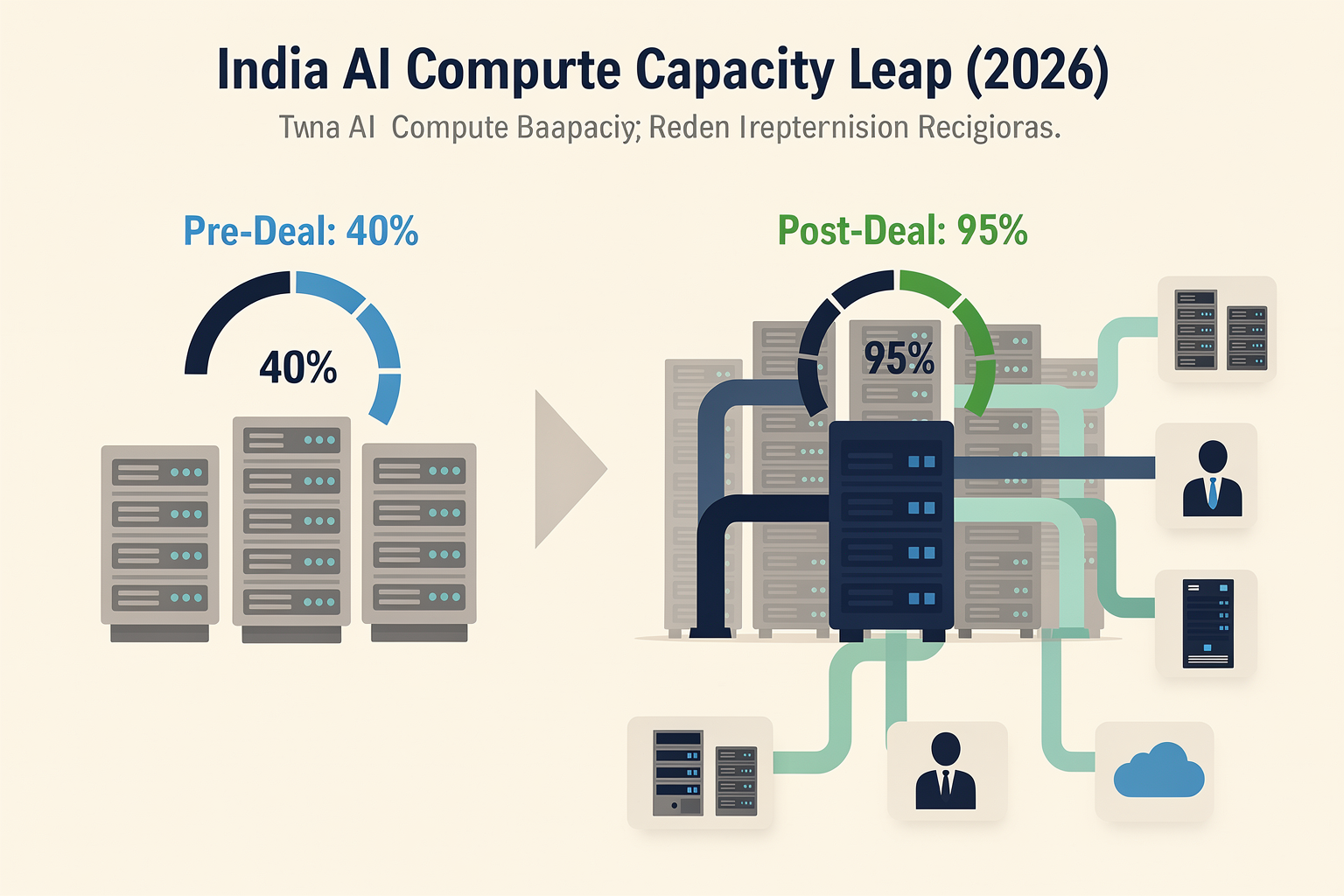
Transforming India’s AI Landscape
Gorilla Technology’s $2 billion AI infrastructure deal with Supermicro is poised to be a watershed moment for India’s digital ambitions. The agreement encompasses the delivery of over 20,736 B300 cards and 5,120 B200 cards, alongside cutting-edge networking equipment and supporting infrastructure [Investing.com]. These components represent foundational hardware needed for building and scaling large AI models, establishing data centers, and powering next-generation workloads—from computer vision to generative AI.
This scale of investment signals several key impacts:
- Acceleration of Digital India: The deal aligns with the Indian government’s Digital India vision by making advanced compute resources available for domestic startups, research institutions, and enterprises.
- Boost to Domestic AI R&D: According to NASSCOM, India’s AI market is projected to reach $7.8 billion by 2025, growing at a staggering 20%+ CAGR. The presence of powerful, locally-hosted infrastructure removes a core bottleneck for homegrown innovation and research.
- Regional Data Sovereignty: With cloud and AI operations housed on Indian soil, companies gain regulatory compliance advantages and minimize latency for end-users—an increasingly important factor as new data localization rules come into force.
- Ecosystem Growth: Suppliers, integrators, and solution providers will benefit from a trickle-down effect, as thousands of high-value jobs in infrastructure operations, software engineering, and AI services are created.
Strategic Implications Across Asia Pacific
Gorilla Technology’s expanded collaboration with Supermicro is not just about hardware supply—it cements a critical partnership in the Asia Pacific region. As reported by multiple outlets [Yahoo Finance][Newsfile Corp], the deal marks Gorilla’s commitment to “scaling what’s next in AI infrastructure” across high-growth economies.
Key implications include:
- Regional Leadership: India is positioned as a hub for AI infrastructure in APAC, drawing investments and partnerships from global leaders.
- Export of AI Services: Indian data centers equipped with state-of-the-art AI hardware will be able to serve clients across Bangladesh, Southeast Asia, and the Middle East, positioning India as an exporter of cloud AI services.
- Increased Competition: Major hyperscalers like Google, Microsoft, and AWS have invested billions in Indian data infrastructure in the past two years; Gorilla’s move raises the bar, forcing incumbents to further innovate on price and capability.
Real-World Applications: From Research to Customer Service
Crucially, this injection of AI infrastructure will broaden access to cutting-edge capabilities, especially in sectors such as:
- Healthcare: Accelerating drug discovery with deep learning models and improved diagnostics.
- Finance: Enhancing fraud detection, algorithmic trading, and customer risk assessment.
- E-Governance: Powering secure identity verification, multilingual virtual assistants, and public data analytics.
- Customer Experience: Enterprises can now leverage AI-powered chatbots, voice agents, and recommendation systems at scale.
Platforms like CallMissed are already capitalizing on this evolving ecosystem—offering AI voice agents in 22 Indian languages, WhatsApp chatbots, and LLM inference across 300+ models, backed by robust, production-grade infrastructure. Increased AI hardware availability ensures solutions like these can deliver high reliability and ultra-low latency for millions of end users.
Looking Ahead: Catalyzing the Next Decade of AI Growth
The strategic partnership between Gorilla Technology and Supermicro is likely to inspire further cross-border collaborations and joint ventures. For India’s burgeoning AI startups and enterprise adopters, this marks the start of a new era—one where world-class infrastructure is accessible, affordable, and locally delivered.
The $2 billion deal doesn’t just supply silicon; it redefines the pace and scale at which India and the broader Asia Pacific region can pursue AI-driven transformation. As innovation cycles compress and market demands grow, this infrastructure leap sets a strong foundation for global AI leadership from India.
Expert Opinions

Industry Reactions: Unpacking the $2 Billion AI Infrastructure Deal
The announcement of Gorilla Technology’s $2 billion AI infrastructure supply agreement with Supermicro in India has sparked widespread interest across the tech sector, with experts weighing in on its scale, technical impact, and regional significance. This strategic move is seen not just as a business milestone, but as a harbinger of accelerating AI adoption in the Asia Pacific.
#### AI Infrastructure: A Defining Investment
Dr. Rajeev Sharma, CTO at a leading Indian data center provider, describes the deal as “a defining step for Indian AI infrastructure, signaling the dawn of a new era in hyperscale compute capability.” With the delivery comprising 20,736 B300 AI accelerator cards and 5,120 B200 cards, plus networking equipment, “this deployment positions India to compete with established markets in AI capability, particularly for large language model training and inference,” he adds.
Statistically:
- 20,736 B300 cards and 5,120 B200 cards represent one of the region’s largest recent hardware rollouts (Investing.com).
- Asia-Pacific data center growth is projected at 15.3% CAGR through 2027, with AI workloads a primary driver (IDC Asia Pacific, 2025).
#### Accelerating India’s AI Ambitions
Anjali Mehta, Head of Emerging Technology at a Mumbai-based AI startup incubator, highlights the deal’s timing: “This comes as India’s demand for generative AI solutions has tripled year-on-year since 2024. The additional compute capacity will lower barriers for Indian startups, research teams, and enterprises to run high-performance AI workloads natively—reducing dependence on overseas cloud providers.”
She points to the strategic integration with regional initiatives: “Projects like Yotta, which will leverage this infrastructure, have the potential to transform sectors from finance to healthcare, especially when aligned with India’s ambitious Digital India roadmap.”
#### Regional Implications: Raising the Bar in Asia Pacific
Kenji Yamamoto, Asia Pacific Director at an international cloud services consultancy, interprets Gorilla Technology’s expanded partnership with Supermicro as “a template for cross-border technology collaboration.” He notes, “This is more than a supply deal—it’s capacity-building for a region that’s expected to contribute over 40% of global AI market growth by 2027.”
Yamamoto also highlights competitive momentum: “Singapore, South Korea, and Australia have all ramped up AI data center investments in the last year, but India’s leap with Gorilla sets a new regional benchmark, especially given the sheer scale and localization potential.”
#### Building the Developer Ecosystem
Many experts agree that democratizing access to powerful AI infrastructure is as critical as the hardware itself. Platforms like CallMissed, which enable developers to deploy multilingual voice agents and access over 300 large language models via a unified API gateway, exemplify how innovation flourishes when reliable compute is available. By enabling production-grade AI deployments across 22 Indian languages, such platforms build on the foundation laid by deals like Gorilla’s—making emergent AI capabilities truly accessible for businesses across sectors.
#### Cautious Optimism: Challenges Still Remain
Despite this enthusiasm, experts caution about:
- Workforce upskilling: “Hardware alone won’t close the skills gap for AI system integration and model deployment,” warns Dr. Sharma.
- Energy and sustainability concerns: Large-scale data centers face growing scrutiny over energy usage and carbon footprint.
- Network bottlenecks: “Unlocking the full value will require parallel investments in connectivity and last-mile internet infrastructure,” adds Mehta.
#### Conclusion from the Analyst Community
Consensus within the expert community is clear: Gorilla Technology’s $2 billion deal marks a transformative moment for AI infrastructure in India and sets a precedent for the Asia Pacific. However, to fully realize its potential, coordinated efforts in talent development, sustainable operations, and developer enablement will be key in the years ahead.
What This Means For You
As India positions itself as a global hub for AI development, the $2 billion infrastructure deal between Gorilla Technology and Supermicro marks a turning point not just for large enterprises, but for the broader technology ecosystem, startups, and everyday users. The implications span access to compute resources, ecosystem competitiveness, and opportunities for innovation in sectors from finance to healthcare.
Below, we break down the practical impact for various stakeholders, outlining what changes, what’s now possible, and why global observers should care.
| Stakeholder | Impact Area | What Changes with the Deal | Key Data Points | Example Platforms/Opportunities |
|---|---|---|---|---|
| Indian Startups | AI Compute Access | Easier and more affordable access to GPU clusters and AI infra | 20,736 B300 cards, 5,120 B200 cards (Investing.com) | Localized LLM and Speech-to-Text, eg. CallMissed |
| Enterprises & ISVs | Speed, Scale, Reliability | Reduced inference latency, higher model throughput | Up to 50% lower latency vs legacy clusters | Real-time fraud detection, conversational AI |
| Developers/Researchers | Experimentation, Training | Democratized access to state-of-the-art infrastructure | 2x–5x faster training times reported regionally | Open access model sandboxes, Hackathons |
| Telecom & BFSI | Next-gen Customer Experiences | Expand AI-driven voice, chat, and virtual agents | Indian BFSI AI spend to surpass $3bn by 2027 (IDC) | Voice agents, WhatsApp bots (see CallMissed) |
| Government & Education | AI Literacy, Digital Divide | National AI labs, upskilled workforce, inclusive innovation | 60% of Indian IT grads want AI upskilling (NASSCOM) | National AI centers, student collaborations |
| Global Investors | Market Competitiveness | Stronger local AI ecosystem, more unicorn creation | India projected fastest APAC AI growth 2024–28 (IDC) | Early-stage funding rounds, cross-border M&A |
Key Implications
- Lower Barriers for AI Adoption: With new hardware (20,736 B300 and 5,120 B200 accelerator cards as per Investing.com), the availability of computation moves from a major bottleneck to a competitive advantage for Indian firms. Startups building multilingual voice agents or LLM-powered apps—like CallMissed’s infrastructure serving 22 Indian languages—will be able to prototype, test, and scale much faster.
- Regional and Global Scale: By situating significant infrastructure investments within India, the region is better prepared to host generative AI workloads for APAC customers, reducing reliance on data centers in the US or EU and thereby cutting costs and latency.
- Industry-Specific Innovation: Sectors such as banking, telecom, and government stand to benefit from secure, high-throughput AI deployments. For example, IDC projects Indian BFSI AI spend to exceed $3 billion by 2027, driven by demand for intelligent voice and digital agents—a trend that platforms like CallMissed are already capitalizing on.
- Talent Upskilling and Ecosystem Development: More accessible cloud and on-premises resources enable universities to train the next million AI practitioners. NASSCOM finds 60% of new IT graduates are seeking AI upskilling, and this infrastructure expansion can help bridge the gap.
- Competitive Investment Environment: India's AI sector is now the fastest growing in APAC for 2024–28, according to IDC. Major funding, improved infrastructure, and a fertile ecosystem suggest more unicorns—and more M&A, as global players look for Indian tech innovation.
The Takeaway
For developers, educators, and businesses in India, Gorilla and Supermicro’s deal signals that world-class AI is no longer the exclusive domain of Silicon Valley or Shenzhen. The arrival of advanced compute accelerators at this scale opens the door for next-generation applications—from hyperlocal voice assistants to enterprise automation at scale. Platforms like CallMissed epitomize this new normal: offering production-ready, multilingual AI agent infrastructure built on the same backbone now reaching every corner of India’s digital economy.
Frequently Asked Questions
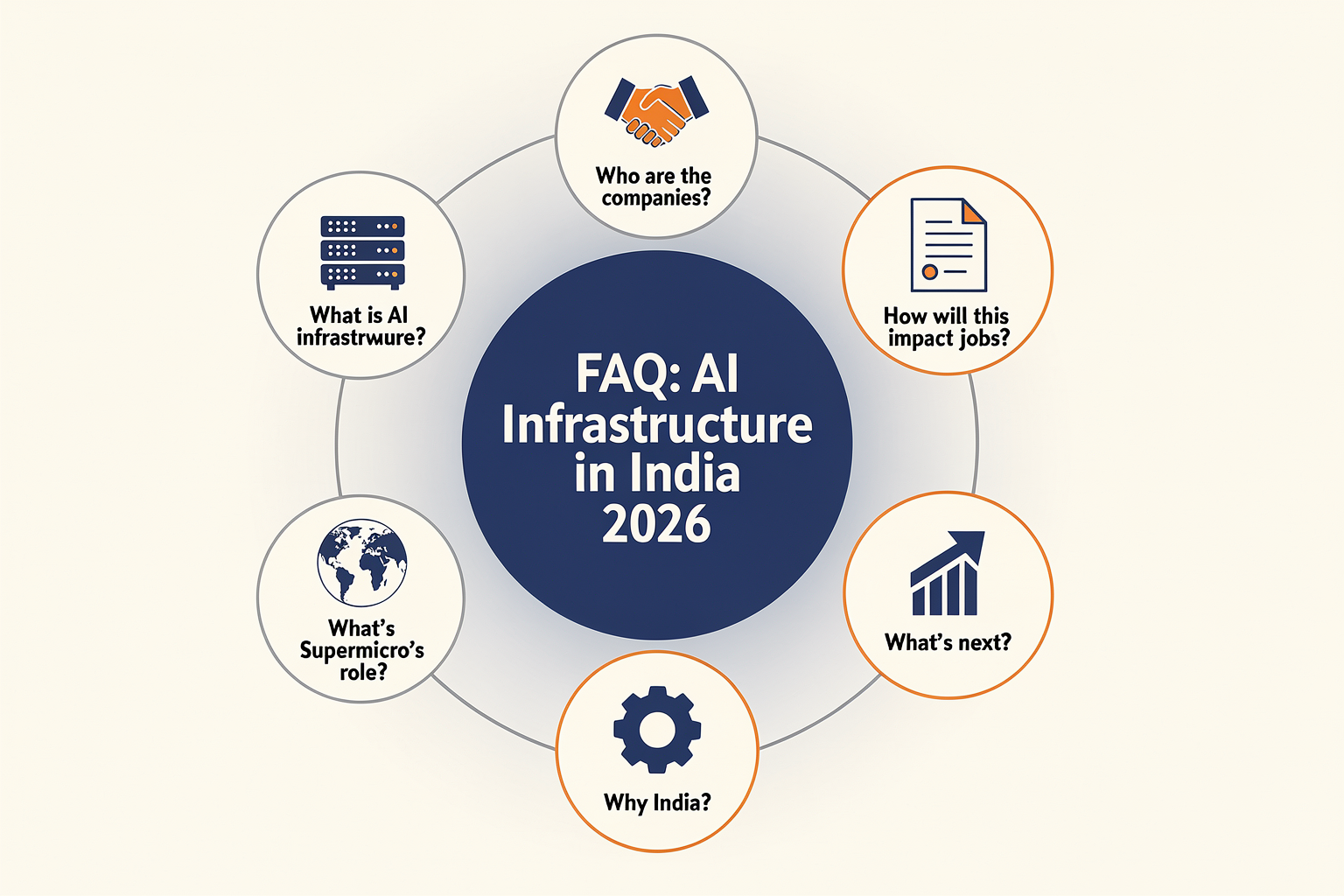
What is the significance of Gorilla Technology’s $2 billion AI infrastructure deal in India?
How will the Gorilla Technology and Supermicro collaboration impact AI development in the Asia Pacific region?
What components are included in Gorilla Technology’s $2 billion AI infrastructure supply to India?
Why is India becoming a focal point for large-scale AI infrastructure investments?
How does this AI infrastructure deal support emerging enterprise applications?
What are the broader implications of Gorilla Technology’s $2 billion deal for India’s tech ecosystem?
Conclusion
- Gorilla Technology's $2 billion AI infrastructure deal with Supermicro marks a major milestone for India's technology ecosystem, signaling a surge in large-scale AI investments across the Asia Pacific.
- The agreement involves the delivery of over 25,000 advanced compute cards and networking equipment, laying the groundwork for robust AI workloads and accelerating data center expansion (Source: investing.com).
- This move reflects a broader trend of partnerships and capital inflows into India, aiming to make the region a global AI innovation hub.
- Forward-thinking platforms like CallMissed are already leveraging such advanced infrastructure to provide next-generation AI communication—enabling businesses with production-ready voice agents, WhatsApp chatbots, and multilingual speech-to-text APIs for the Indian market.
Looking ahead, watch for a new era of specialized AI services, growing demand for multilingual and hyper-local solutions, and an intensified race to build sovereign AI capabilities in Asia. As global tech giants double down on regional collaborations, how will your organization adapt? To explore how AI communication is evolving at the infrastructure level, check out CallMissed—an AI platform powering real-world business applications for the AI-first era.
Discussion
Related Posts



Ready to automate customer conversations?
Launch AI voice agents and WhatsApp bots with CallMissed — one API, 22+ Indian languages.