

VW, Mercedes Supplier Pushes AI Agents to the Next Level: Automotive Edge Intelligence


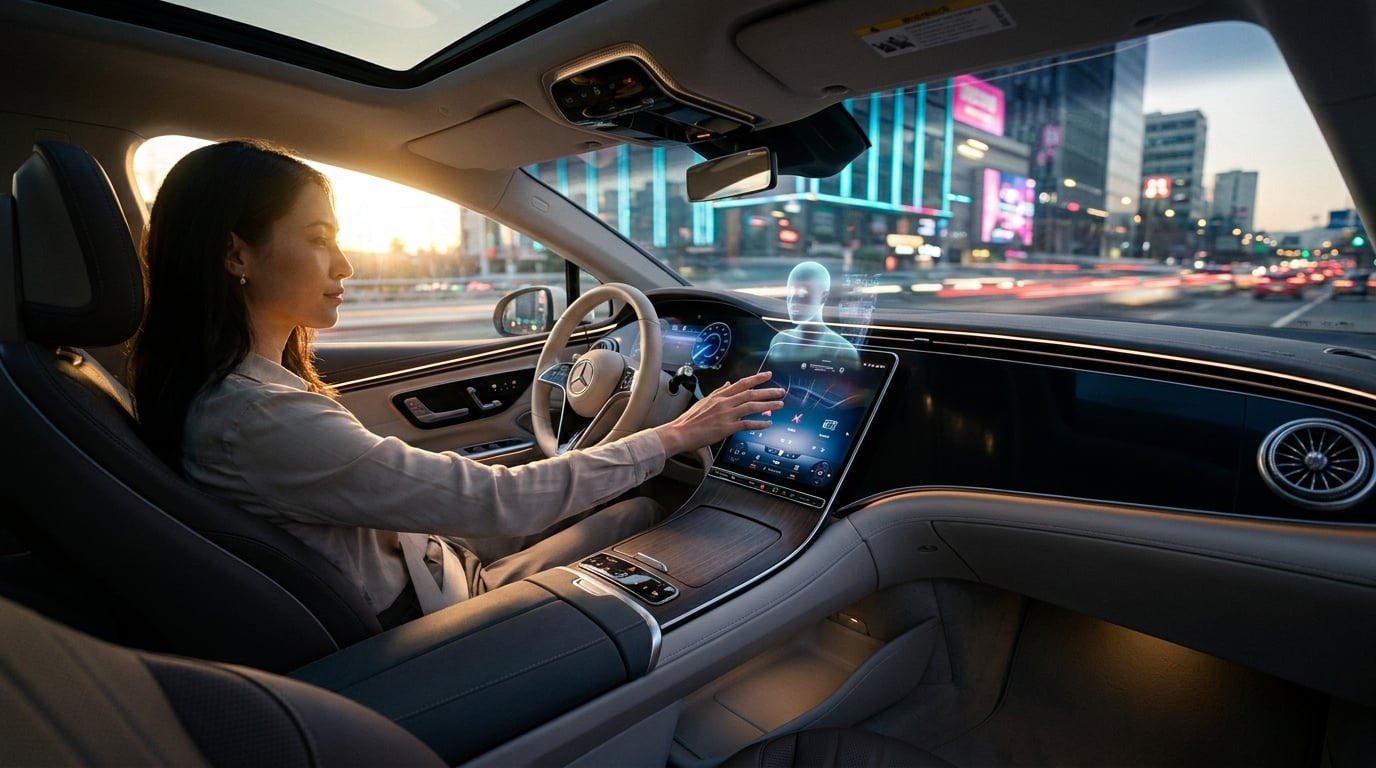
Did you know that your next car might realize you are running late for a crucial board meeting, automatically dial you into the call, and brief you on the...
VW, Mercedes Supplier Pushes AI Agents to the Next Level: Automotive Edge Intelligence
Did you know that your next car might realize you are running late for a crucial board meeting, automatically dial you into the call, and brief you on the agenda—all without relying on a spotty cellular connection or sending your private conversations to the cloud? This is no longer a concept car fantasy. As tier-1 suppliers and automakers race to redefine the in-cabin experience, Automotive Edge Intelligence is rapidly moving from theoretical R&D directly onto the highway.
The shift toward hyper-localized, offline AI is accelerating at breakneck speed. Voice technology pioneer Cerence AI—a key supplier to automotive giants like Volkswagen and Mercedes-Benz—has recently teamed up with Microsoft to push in-car AI agents to the next level. By running highly optimized neural models "at the edge" directly on the vehicle's onboard computers, these systems bypass the latency and connectivity issues that have historically plagued cloud-dependent voice assistants. The urgency is clear: Volkswagen is already going all-in on this architecture, announcing a massive rollout of fully onboard, locally run agentic AI in new vehicles starting in the second half of 2026 to maintain its competitive edge in tech-forward markets like China.
This breakthrough matters right now because it represents a fundamental paradigm shift in human-machine interfaces. We are rapidly transitioning away from basic, command-and-control voice menus toward proactive, "agentic" partners that can autonomously solve complex problems in real-time. Just as advanced communication platforms like CallMissed enable enterprises to deploy ultra-low latency, multilingual AI voice agents that seamlessly manage customer workflows, the automotive sector is proving that next-generation voice agents must be deeply integrated, context-aware, and incredibly fast to be truly viable.
In this post, we will explore how this new wave of Automotive Edge Intelligence actually works, examine the massive technical and privacy advantages of running LLMs locally, and analyze what this means for the future of software-defined vehicles (SDVs).
Introduction

For over a decade, in-car voice control was little more than a frustrating exercise in memorizing rigid command templates. Drivers had to speak in precise, robotic phrases just to adjust the air conditioning or navigate to an address. Today, however, the automotive industry is undergoing a massive paradigm shift. Powered by breakthroughs in Large Language Models (LLMs) and edge computing, global automotive supplier Cerence AI—which services industry titans like Volkswagen and Mercedes-Benz—is pushing AI voice agents into a new era of proactive, zero-latency intelligence.
At the heart of this revolution is a move away from simple voice search and toward true agentic AI. Instead of waiting for a user command, modern in-car agents leverage context, real-time vehicle data, and edge-processing power to anticipate driver needs.
The Drive Toward "Edge" Intelligence
One of the primary roadblocks for advanced AI in vehicles has always been connectivity. Relying entirely on the cloud for real-time speech processing introduces latency and risks complete system failure in areas with poor cellular reception. To solve this, Cerence AI has introduced an in-car voice solution that runs directly "at the edge"—meaning the AI models process data locally on the vehicle's onboard computer.
Partnering with Microsoft, Cerence is building Software-Defined Vehicle (SDV) architectures that do not require a smartphone connection to deliver deep assistant features. This collaboration yields highly practical, automated workflows:
- Proactive Scheduling: The in-car assistant can monitor your calendar, remind you of an upcoming meeting, and automatically dial you into the conference call as you drive.
- Contextual Awareness: By processing vehicle diagnostics and environmental data locally, the AI agent can offer real-time recommendations without compromising driver privacy or relying on active cloud connections.
A Global Race for In-Cabin Agents
This technological leap is not happening in a vacuum; it is a critical battleground for global market share. At the IAA Mobility conference, Cerence's Chief Technology & Product Officer, Nils Schanz, highlighted how these deep integrations are redefining the driver-vehicle relationship, emphasizing a "connected, not distracted" philosophy.
Major automakers are moving rapidly to deploy these technologies:
- Volkswagen: Under the leadership of CEO Oliver Blume, VW is accelerating its global strategy with a massive push in China. Starting in the second half of 2026, Volkswagen will begin rolling out fully onboard, locally run agentic AI across its new mass-market vehicles in the region to integrate deeply with the local innovation ecosystem.
- Mercedes-Benz: Alongside Cerence's edge solutions, Mercedes has integrated Google’s generative AI technologies to power smart sales assistants and optimize customer service operations.
The Unified Future of Voice Infrastructure
The rapid evolution of automotive AI highlights a broader trend across all industries: the demand for low-latency, context-aware, and highly reliable voice interactions. Whether navigating a busy highway or managing customer inquiries, users expect AI to behave like an intelligent human partner rather than a static software menu.
While automotive suppliers build highly specialized edge systems for the road, modern enterprises face a similar challenge in scaling voice experiences across customer touchpoints. This is where advanced AI communication platforms step in. Infrastructure providers like CallMissed are bringing this same level of sophisticated, agentic capability to businesses worldwide. By offering an integrated suite of voice agents, multilingual Speech-to-Text APIs (supporting 22 Indian regional languages natively), and a multi-model API gateway supporting over 300 LLMs, CallMissed enables companies to build and deploy production-ready voice systems that are as natural, responsive, and reliable as the advanced AI cockpit of a luxury vehicle.
Background & Context
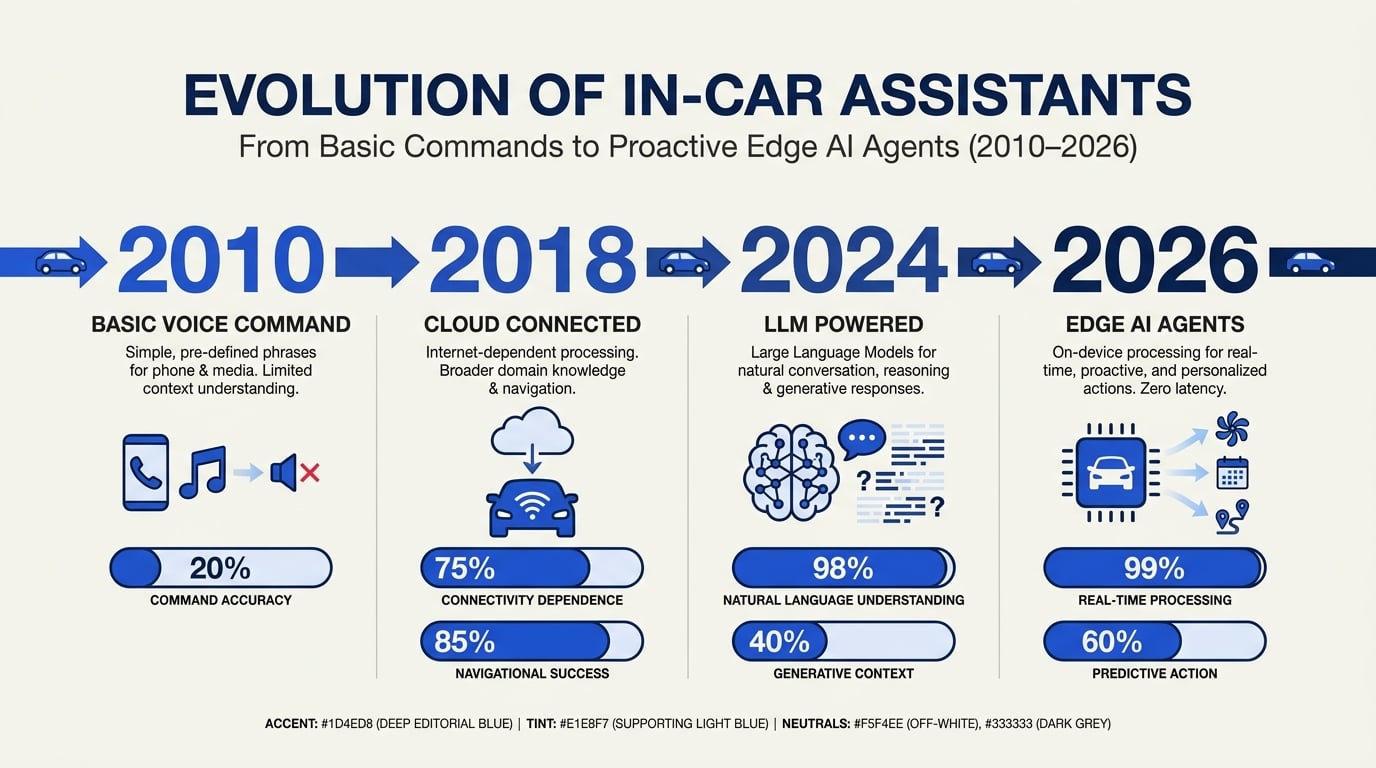
The Evolution of In-Car Voice Assistants
For years, in-car voice control was restricted to rigid, pre-programmed menu commands. Drivers could adjust the temperature or set a navigation destination, but only if they used precise, scripted phrasing. Furthermore, these systems were heavily dependent on stable cellular connections; if a vehicle entered a tunnel or a remote area with poor coverage, the voice assistant would fail entirely.
Today, the automotive industry is undergoing a massive paradigm shift. Led by tier-one software suppliers like Cerence AI, car manufacturers are transitioning from simple voice-command tools to fully cognitive, proactive AI agents. The key breakthrough is edge-based processing. By running these advanced artificial intelligence models "at the edge"—directly on the vehicle’s localized hardware rather than relying solely on the cloud—automakers can offer lightning-fast response times, absolute data privacy, and continuous offline functionality.
The Cerence and Microsoft Alliance
At the center of this technological leap is Cerence AI, the primary voice and conversational AI supplier for global automotive giants such as Volkswagen (VW) and Mercedes-Benz. To push AI agents to the next level, Cerence partnered with Microsoft to integrate advanced Large Language Model (LLM) capabilities directly into the software-defined vehicle (SDV) ecosystem.
This partnership introduces a highly proactive, contextual in-car experience. Rather than waiting passively for a wake word, the joint assistant operates as an active agent:
- Meeting Integration: The AI can review a driver's calendar, remind them of an upcoming meeting, and automatically dial in.
- Phone-Free Connectivity: It establishes secure connections and executes complex communication tasks natively through the vehicle, completely bypassing the need to tether a smartphone.
- Safety-First Design: This "connected, not distracted" approach was a key focus at the IAA MOBILITY 2025 exhibition, where Cerence’s Chief Technology & Product Officer, Nils Schanz, demonstrated how edge-based cognitive agents reduce cognitive load and keep drivers' eyes on the road.
A Global Race for Agentic AI
This integration is part of a broader, hyper-competitive scramble to build smarter, conversational vehicles. Automakers are realizing that in-car AI is a primary differentiator for modern consumers:
- Volkswagen's China Strategy: VW is aggressively localized. Under the direction of Volkswagen Group CEO Oliver Blume, the company is rolling out fully onboard, locally run agentic AI in its Chinese vehicle lineup starting in the second half of 2026 to better integrate with the region's rapid tech adoption.
- Mercedes-Benz and Google: Mercedes-Benz is parallelly expanding its digital assistant capabilities by embedding Google’s AI to enhance both the smart sales experience inside the cabin and automated customer service workflows.
- Early Pioneers: Mapping and location technology pioneer TomTom also joined the race early, introducing its own conversational in-vehicle AI agent back in January 2024.
This massive shift toward intelligent, voice-first interfaces in the automotive world mirrors a broader trend across all customer-facing industries. As vehicles become autonomous communication hubs, businesses worldwide are adopting similar architectures. For enterprises looking to build these capabilities outside of the cabin, platforms like CallMissed offer production-ready voice agent infrastructure. With support for 22 Indian languages and a multi-model LLM gateway, CallMissed enables companies to deploy the same caliber of highly responsive, multilingual voice agents to handle complex customer interactions seamlessly.
Key Developments (TABLE)
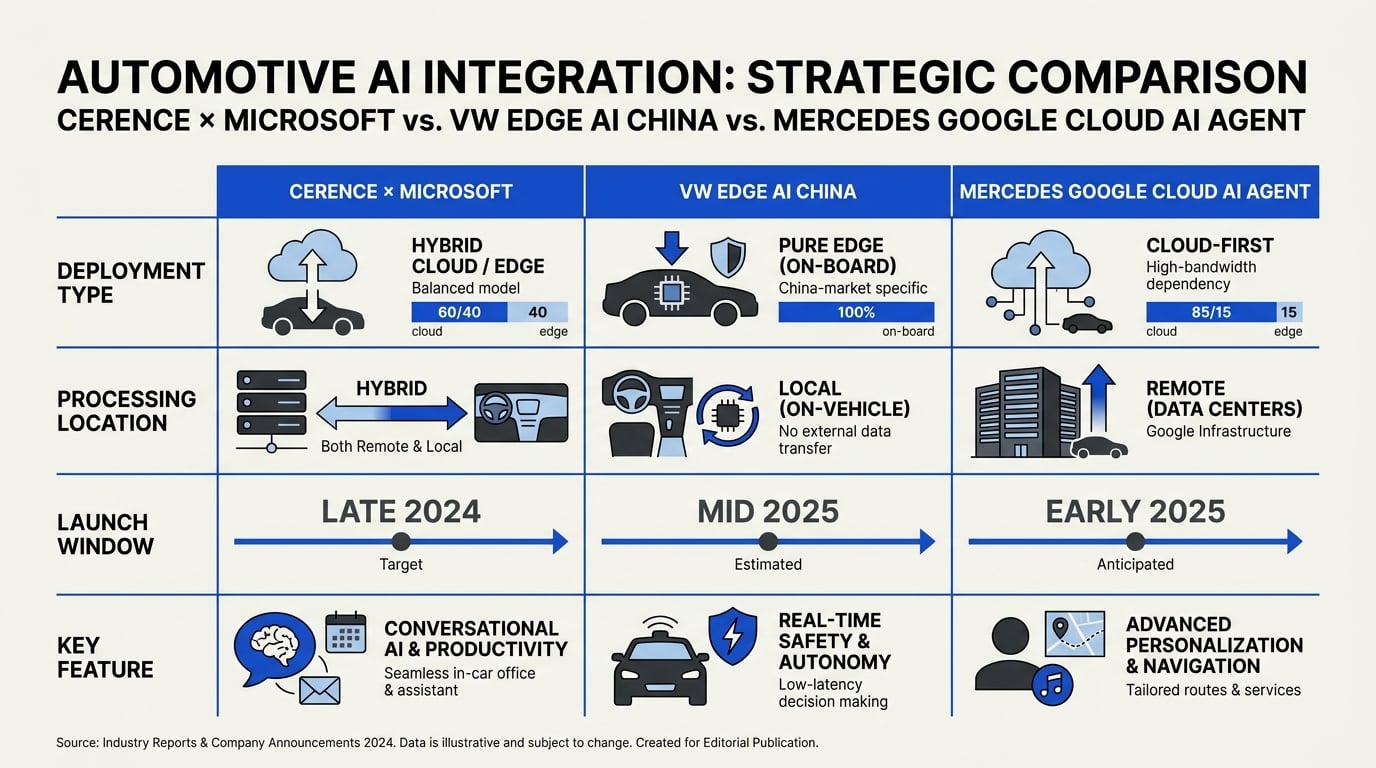
The automotive landscape is undergoing a massive paradigm shift. No longer satisfied with simple, rigid voice commands, leading manufacturers are embedding highly sophisticated AI agents directly into the vehicle's cockpit. This represents a leap from reactive systems to proactive, agentic assistants that can anticipate driver needs, manage schedules, and operate flawlessly without an active internet connection.
At the forefront of this movement is Cerence AI, a key supplier to automotive giants like Volkswagen and Mercedes-Benz. At the IAA MOBILITY event, Cerence's Chief Technology & Product Officer, Nils Schanz, showcased how their collaboration with Microsoft is pushing these boundaries. By leveraging on-device processing—often referred to as running "at the edge"—these new systems allow drivers to access advanced calendar syncs, join meetings, and dictate messages without relying on their smartphones or cloud connectivity.
Comparative Breakdown of Next-Gen Automotive AI Initiatives
To understand how the leading players are deploying this technology, the table below outlines the key developments, target timelines, and core technological focuses across the industry:
| Initiative / Partnership | Key Players | Target Timeline | Core Technology & Focus |
|---|---|---|---|
| Edge-Run Voice Assistant | Cerence AI & Microsoft | Immediate (2025/2026) | Localized, "at the edge" voice control; direct meeting connection with no phone required. |
| Onboard Agentic AI | Volkswagen Group | H2 2026 (starting Q3) | Local agentic AI integrated into China-market vehicles to deliver low-latency UX. |
| Google AI Customer Journey | Mercedes-Benz & Google | Ongoing | Smart sales assistants and automated customer service voice workflows. |
| In-Vehicle Conversational AI | TomTom | Launched (Jan 2024) | Natural dialog-driven navigation and vehicle interaction system. |
The Push for Edge Computing in the Cockpit
The transition to edge computing is critical for safety and user experience. As Volkswagen Group CEO Oliver Blume highlighted during VW's strategic push in China, integrating fully onboard, locally run agentic AI into mass-market vehicles is essential to stay competitive. Running AI models locally removes latency, eliminates dead zones in cellular coverage, and guarantees data privacy—a paramount concern for modern drivers.
This dual focus on low-latency execution and natural language processing is not unique to the automotive sector. Just as car manufacturers are moving processing to the edge to ensure split-second response times, enterprise communication platforms are optimizing their infrastructures for similar efficiency. For instance, platforms like CallMissed allow developers to deploy production-ready voice agents powered by a multi-model gateway of over 300 LLMs and advanced Speech-to-Text APIs. Whether it is a car assistant predicting your next turn or an enterprise voice agent resolving a support ticket in one of 22 regional languages, the underlying goal remains the same: eliminating friction through instantaneous, context-aware conversational AI.
From Distraction to Seamless Productivity
Ultimately, these developments aim to achieve a "connected, not distracted" driving experience. By allowing AI agents to handle complex cognitive tasks—such as parsing emails, drafting replies, or coordinating navigation based on calendar events—drivers can keep their hands on the wheel and their eyes on the road, ushering in a new era of software-defined vehicles.
In-Depth Analysis

The Shift from Cloud-Dependent Voice to Localized Edge AI
The integration of artificial intelligence in automotive cockpits is undergoing a fundamental architectural pivot. For years, in-car voice assistants were glorified interfaces for cloud-based search engines, plagued by latency and dead zones. The breakthrough engineered by Cerence AI—a critical software supplier to automotive giants like Volkswagen and Mercedes-Benz—lies in pushing agentic AI "to the edge."
By running sophisticated language and voice models locally on the vehicle’s onboard hardware, automakers can bypass the latency of cellular networks. This transition is critical for Volkswagen’s aggressive strategy to regain market share in China. Under the leadership of VW Group CEO Oliver Blume, the company is rolling out these fully onboard, locally run AI "agents" in Chinese production vehicles starting in Q3 2026.
The benefits of edge-based AI agents include:
- Zero Latency: Immediate voice processing and action execution without waiting for cloud round-trips.
- Uninterrupted Offline Functionality: Critical navigation, climate control, and vehicle diagnostic assistance remain active even in tunnels or remote areas with no reception.
- Enhanced Data Privacy: Sensitive user conversations and driver data are processed locally within the vehicle's hardware ecosystem rather than being transmitted to external servers.
The Microsoft-Cerence Synergy and the Software-Defined Vehicle (SDV)
The collaboration between Cerence AI and Microsoft illustrates how the automotive industry is rethinking the Software-Defined Vehicle (SDV). Unveiled in detail by Cerence’s Chief Technology & Product Officer Nils Schanz, this partnership introduces proactive, contextual agents that operate independently of a driver's smartphone.
Instead of requiring a physical phone connection via Apple CarPlay or Android Auto, the vehicle's native OS directly manages complex scheduling and communications. The system can proactively remind a driver of an upcoming Microsoft Teams meeting and automatically connect them to the audio stream.
This level of deep, proactive integration requires a massive orchestration of real-time speech-to-text (STT), natural language processing, and text-to-speech (TTS) pipelines. It mirrors a broader trend across the tech landscape, where businesses are moving away from rigid, command-based interfaces toward fluid, multi-modal AI agents. For enterprises looking to build similarly responsive, multi-turn conversational agents outside the automotive space, communication infrastructure platforms like CallMissed offer the underlying APIs—including a multi-model gateway with access to 300+ LLMs—to deploy ultra-low latency voice agents that handle complex user workflows natively.
Overcoming the Localization and Integration Barrier
As automakers rush to deploy these technologies, localization remains the ultimate battleground. Volkswagen's heavy integration into the Chinese innovation ecosystem for its Q3 2026 rollout proves that a one-size-fits-all AI agent does not work. Voice agents must adapt not only to unique local software ecosystems (such as WeChat or Baidu in China) but also to regional dialects and cultural nuances.
This challenge is highly comparable to the enterprise communication sector. Deploying effective voice technology requires robust multilingual infrastructure. While automakers build custom stacks for regional vehicular markets, platforms like CallMissed solve this localization challenge for global enterprises by offering production-ready Speech-to-Text APIs supporting 22 Indian languages alongside global dialects. Whether navigating a highway in a software-defined Mercedes or interacting with a virtual customer support agent, the future of voice depends on AI that understands the local context instantly.
Impact & Implications
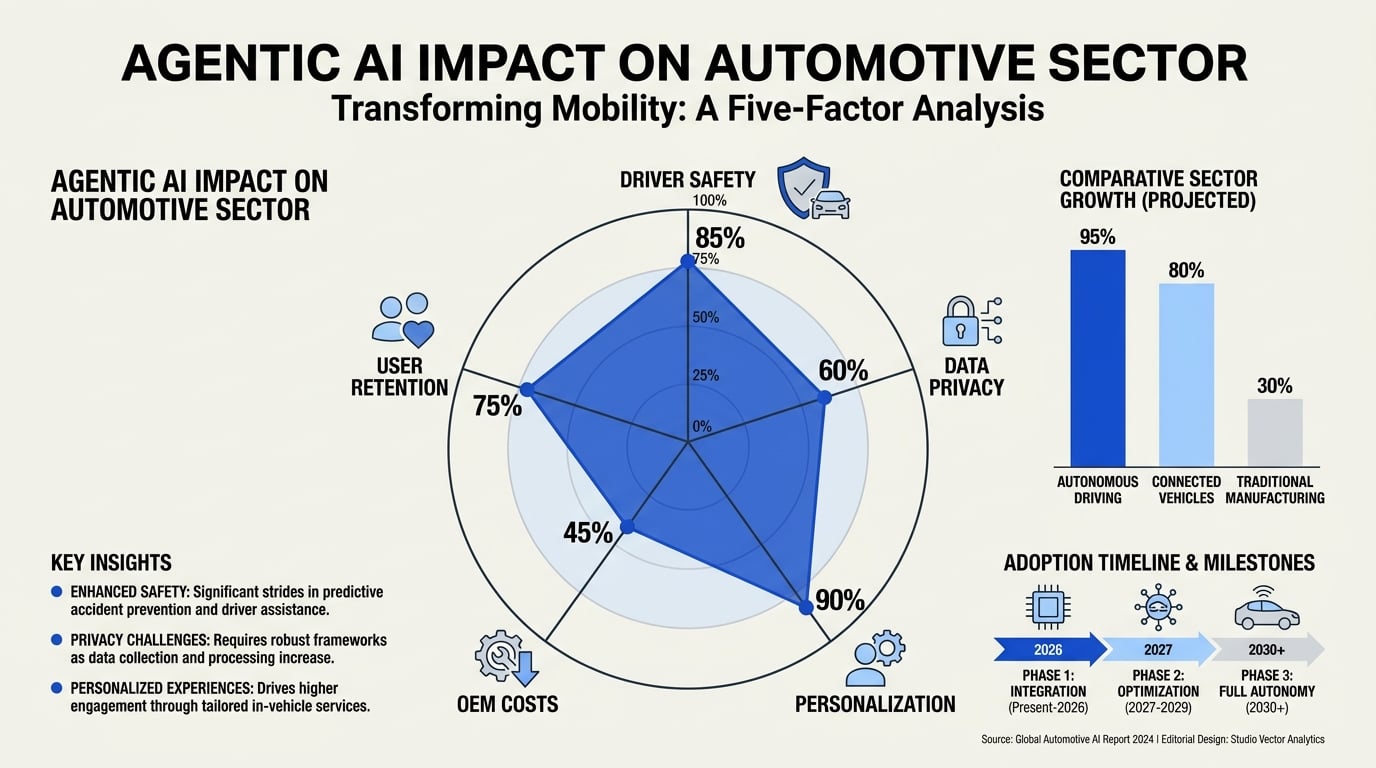
The transition from basic voice control to proactive, edge-based AI agents marks a major paradigm shift in both automotive design and consumer expectations. By moving processing power directly onto local hardware, suppliers like Cerence and automakers like Volkswagen are redefining the relationship between humans and machines.
Redefining the Software-Defined Vehicle (SDV)
Historically, in-car voice systems acted as passive command-and-control interfaces—interpreting simple instructions like "turn up the AC" or "play radio." The emergence of agentic AI changes this dynamic. Supported by partnerships like the one between Cerence and Microsoft, these systems act as active cognitive copilots.
- Proactive Engagement: Instead of waiting for a prompt, the AI proactively reviews calendars, reminds drivers of upcoming meetings, and automatically connects them to calls.
- Phone-Free Autonomy: By integrating deeply with the vehicle’s telemetry, these agents operate independently of connected smartphones, making the Software-Defined Vehicle (SDV) a self-contained digital ecosystem.
This shift reflects a broader global trend where intelligent voice is becoming the primary user interface. While automakers build custom operating systems for the road, enterprises in other sectors are undergoing a parallel transformation. For instance, platforms like CallMissed are enabling businesses to deploy production-ready voice agent infrastructure, bringing this same level of low-latency, conversational intelligence to customer service and operations without the need for complex, proprietary hardware.
Accelerating the Edge AI Revolution
Running AI "at the edge"—meaning computations are performed locally on the vehicle's onboard computer rather than in the cloud—carries massive operational benefits:
- Zero-Latency Interactions: Critical for driving safety, edge AI eliminates the lag associated with sending voice data to remote cloud servers and waiting for a response.
- Offline Reliability: Drivers retain full access to navigation, vehicle controls, and productivity tools even when traveling through cellular dead zones.
- Data Privacy: Processing voice data locally alleviates growing consumer anxieties regarding data privacy, as sensitive conversational details never have to leave the vehicle.
Navigating Global Competitive Pressures
The race to deploy onboard AI agents is also a geopolitical battleground, particularly in the hyper-competitive Chinese automotive market. Volkswagen Group CEO Oliver Blume has aggressively accelerated VW’s China strategy, targeting a rollout of onboard, locally run agentic AI in mass-market vehicles starting in the second half of 2026.
With domestic Chinese EV manufacturers setting a rapid pace for digital cabin innovation, global legacy brands like VW and Mercedes-Benz are fighting to retain market share. The companies that succeed will be those that successfully merge physical engineering with highly responsive, localized AI capabilities, transforming the car from a mere mode of transportation into an intelligent personal assistant.
Expert Opinions
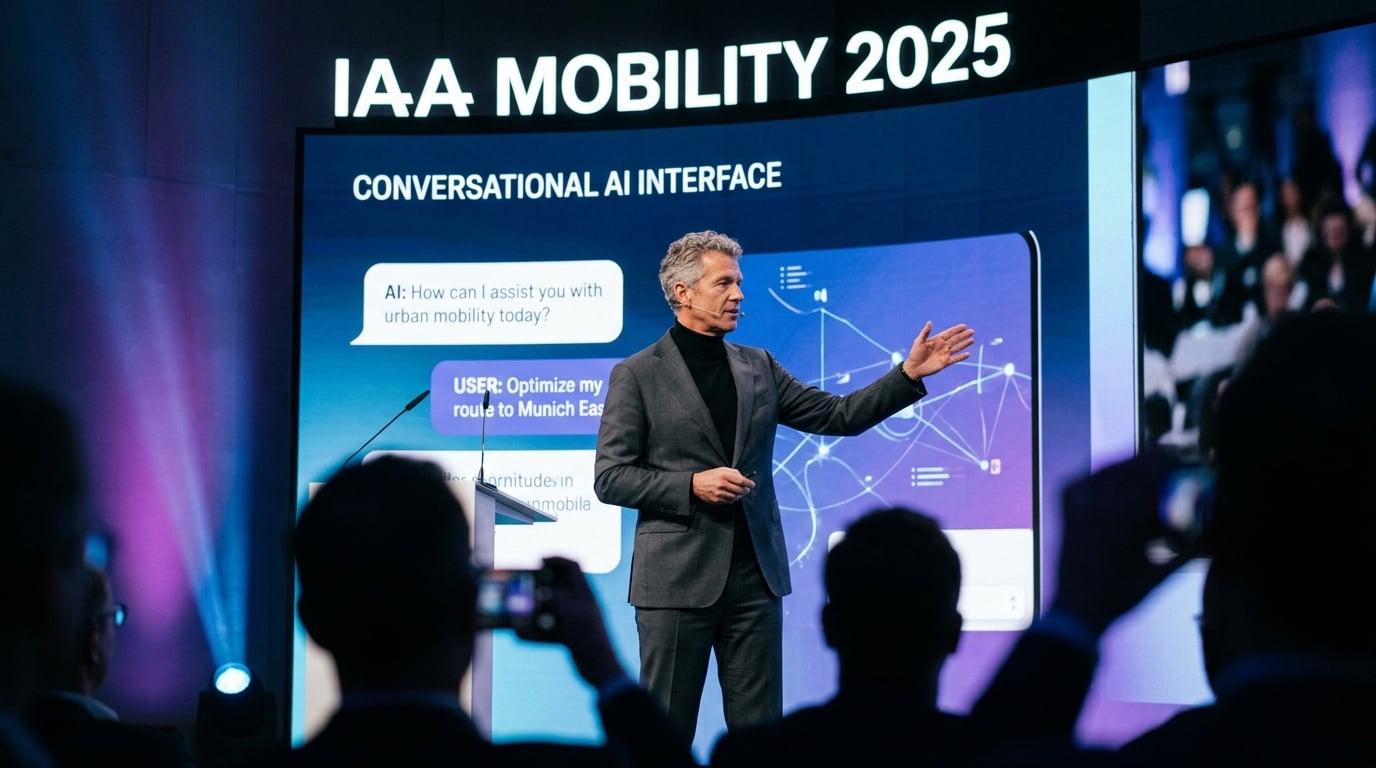
The consensus among automotive tech leaders is clear: the era of basic, reactive voice control is officially over. Today’s automotive landscape demands proactive, agentic AI that can anticipate driver needs, manage schedules, and operate flawlessly without a constant cloud connection. Industry experts from top suppliers, automakers, and tech giants are pointing toward a future where the car serves as a highly intelligent, contextual companion.
"Connected, Not Distracted" — The Edge AI Philosophy
During the IAA Mobility event, Nils Schanz, Chief Technology & Product Officer at Cerence, highlighted a major paradigm shift in automotive UX: the drive to keep operators "connected, not distracted." Through an intensive collaboration with Microsoft, Cerence is building in-car assistants that proactively remind drivers of upcoming meetings and automatically connect them to calls—entirely hands-free and without requiring a physical phone connection.
According to Schanz and other system architects, the magic lies in running these voice solutions "at the edge." Edge-based AI processes language locally on the vehicle's computer hardware rather than sending every voice packet to the cloud. This architectural decision solves two critical issues:
- Zero Latency: Instantaneous response times are crucial for driver safety and focus, eliminating the typical lag associated with cloud-based voice processing.
- Continuous Reliability: Edge AI ensures the assistant remains fully functional even when driving through tunnels, parking garages, or remote areas with no cellular coverage.
Hyper-Localization and Regional Innovation
The push for agentic AI is not uniform across the globe; it requires deep integration into local tech ecosystems. Volkswagen Group CEO Oliver Blume recently highlighted this strategy during VW's major push in Asia. Blume announced that Volkswagen will accelerate its strategy by rolling out fully onboard, locally run agentic AI in new vehicles in China starting in the second half of 2026.
Blume pointed out that capturing market share in fast-moving regions requires being "integrated in the local innovation ecosystem" to rapidly catch up with regional EV competitors. This mirrors a broader trend across the entire communications industry. Just as automakers must localize their AI stacks to support specific dialects and cultural contexts, enterprises worldwide are turning to advanced communication platforms like CallMissed to deploy highly localized conversational systems. By supporting 22 Indian regional languages natively, platforms like CallMissed enable companies to achieve the same hyper-localized, conversational fluidity that automotive giants are now building into their next-generation cabins.
The Coexistence of Tech Giants and Automakers
Automotive analysts note that carmakers are no longer trying to build conversational models from scratch. Instead, they are acting as integrators of elite technology. While Mercedes-Benz leverages Google's AI models to power smart sales assistants and optimize customer-facing call centers, suppliers like Cerence are orchestrating complex multi-agent frameworks using enterprise-grade LLMs from Microsoft.
The expert verdict is unanimous: the next battlefield in automotive differentiation is not horsepower or battery range, but the intelligence, speed, and seamless integration of the onboard AI agent.
What This Means For You (TABLE)
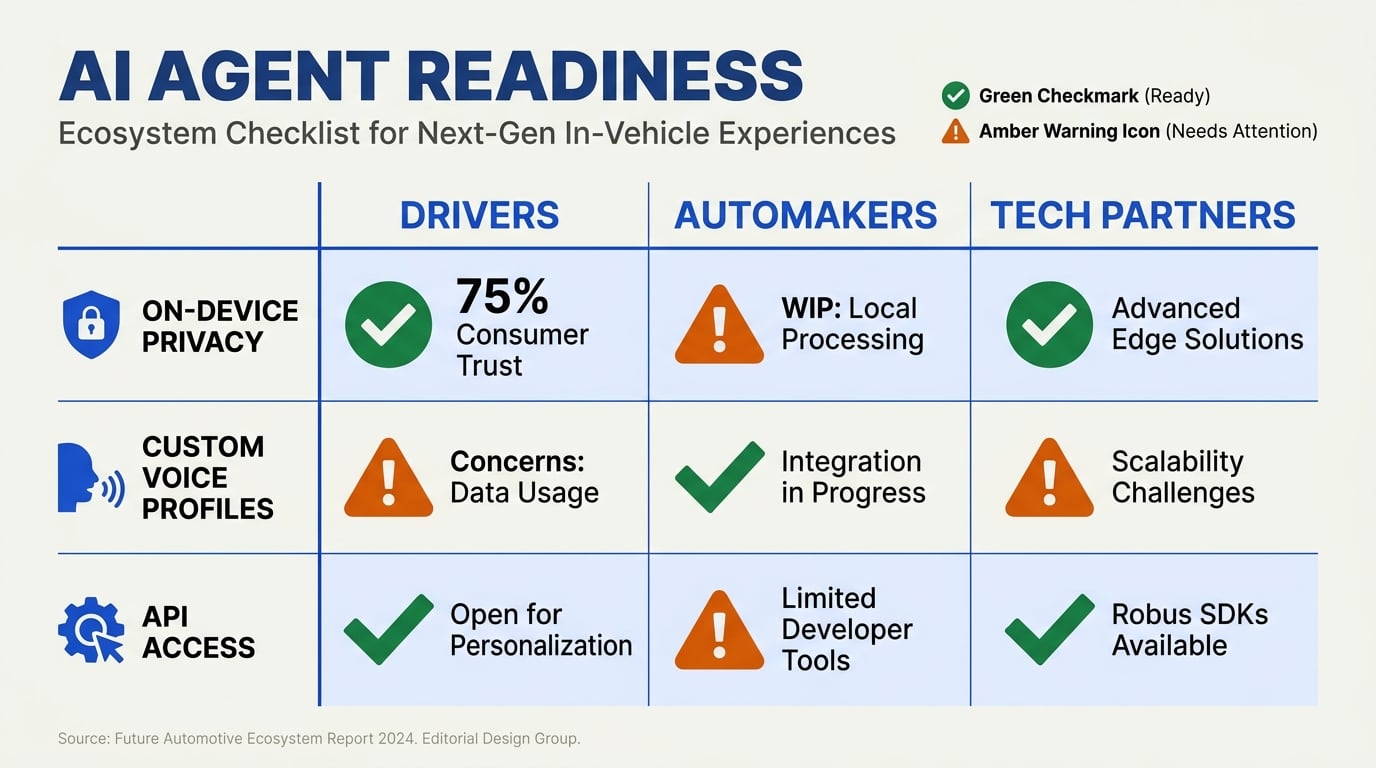
The evolution of voice technology from static, command-and-control interfaces to fully autonomous, edge-enabled systems is a massive leap forward. Whether you are a driver navigating rush hour or a business executive optimizing customer operations, this shift to "agentic" AI means interactions are becoming proactive, context-aware, and highly reliable.
To help visualize how this transformation impacts daily use cases, the table below compares traditional voice assistants with the next-generation agentic systems being deployed by industry leaders like VW and Mercedes-Benz.
| Feature | Legacy Voice Assistants | Next-Gen Edge AI Agents | Core User/Business Benefit |
|---|---|---|---|
| Execution Environment | Cloud-dependent (requires constant active internet) | Hybrid/Edge-First (runs locally on onboard hardware) | Zero-latency response; works flawlessly in connectivity dead zones |
| Behavioral Pattern | Reactive (only responds to explicit voice cues) | Proactive (anticipates meetings, calendars, and routes) | Seamless hands-free coordination; dramatically reduced cognitive load |
| Dialogue Flow | Rigid, pre-programmed templates & exact-match commands | Natural, multi-turn conversational LLM-driven reasoning | Highly intuitive communication; no user training required |
| Localization & Language | Limited to a few standard default dialects | Hyper-localized (supports dozens of regional languages natively) | Democratized access across diverse, global user bases |
The Proactive Paradigm Shift
Historically, in-car voice tech required manual triggers and rigid phrases. The collaboration between Cerence AI and Microsoft completely upends this static model. Instead of you having to manually check your calendar and dial a number while driving, the next-gen agentic system actively monitors your schedule, anticipates an upcoming meeting, and automatically initiates the connection safely. This marks a transition from simple voice command systems to genuine, autonomous assistants that understand context and intent.
The "Edge" Advantage and Offline Continuity
Volkswagen’s planned rollout in China, starting in the second half of 2026, highlights the technical foundation of this upgrade: moving agentic AI to the edge. By running smaller, highly optimized Large Language Models (LLMs) directly on local vehicle hardware, automakers eliminate the latency and security vulnerabilities of cloud-only systems. This local execution ensures absolute data privacy and guarantees that your AI assistant remains fully operational even when driving through tunnels, parking garages, or remote areas with no cellular reception.
Bringing Agentic Power to Your Business
The sophisticated architecture driving these automotive breakthroughs—characterized by low-latency voice pipelines, multi-turn dialogue memory, and robust local-to-cloud flexibility—is no longer exclusive to global car manufacturers.
For organizations looking to implement similar capabilities, platforms like CallMissed make it possible to deploy enterprise-grade voice agents without automotive-scale development budgets. Using CallMissed’s production-ready voice agent infrastructure and Speech-to-Text APIs, businesses can build highly responsive conversational agents that support 22 regional Indian languages. This allows companies to deliver the same seamless, low-friction, and highly contextual communication experience to their customers that premium drivers are now experiencing on the road.
Frequently Asked Questions
Who is the key supplier pushing in-car AI agents to the next level?
How do automotive AI agents function without an active smartphone connection?
When will Volkswagen deploy these advanced AI agents in its vehicles?
What role does Microsoft play in the development of Cerence's in-car AI assistants?
How is Mercedes-Benz applying AI technology beyond in-vehicle voice assistants?
Why are major global carmakers racing to build smarter in-car AI agents?
Conclusion
The automotive industry’s shift toward edge-based AI agents marks a major milestone in how we interact with technology on the move. Key takeaways include:
- Edge-First Innovation: Led by suppliers like Cerence AI and Microsoft, next-generation in-car voice agents are moving to the edge, drastically reducing latency and operating without cellular dependence.
- Rapid Global Rollouts: Major manufacturers like Volkswagen are prioritizing onboarding AI agents, with high-profile vehicle rollouts scheduled to begin in the second half of 2026.
- Proactive Capabilities: Vehicles are evolving from passive tools to proactive multi-taskers that manage schedules, sync calendars, and support drivers hands-free.
Moving forward, watch for how this localized edge intelligence redefines real-time voice experiences beyond the driver's seat and sets a new benchmark for other hardware-integrated technologies. To explore how AI communication is evolving, check out CallMissed — an AI infrastructure platform powering voice agents and multilingual chatbots for businesses.
As autonomous AI agents transition from our vehicles to our everyday workflows, is your business ready to embrace the voice-first revolution?
Related Posts

Ready to automate customer conversations?
Launch AI voice agents and WhatsApp bots with CallMissed — one API, 22+ Indian languages.