

Listen at Scale: How Sarvam, EkStep, and AI4Bharat Are Revolutionizing Multilingual Voice AI in India



Did you know that a single AI initiative managed to hold natural, two-way voice conversations with over 50 lakh (5 million) Indian citizens across 20...
Listen at Scale: How Sarvam, EkStep, and AI4Bharat Are Revolutionizing Multilingual Voice AI in India
Did you know that a single AI initiative managed to hold natural, two-way voice conversations with over 50 lakh (5 million) Indian citizens across 20 different organizations in just 31 days? This is not a futuristic concept; it is the real-world impact of "Listen at Scale," a groundbreaking joint initiative by homegrown AI pioneer Sarvam AI, the EkStep Foundation, and AI4Bharat. By shifting public outreach from rigid, one-way channels like automated IVR calls and SMS blast messages to highly interactive, structured conversations, this project is fundamentally redefining how technology serves the masses.
Why does this matter so much right now? India is home to over 1.4 billion people speaking hundreds of languages and dialects, yet the vast majority of digital services remain locked behind English-centric, text-heavy interfaces. For millions of citizens, reading complex text notifications or navigating clunky keypad menus presents a significant barrier to accessing essential services. The deployment of highly contextual multilingual voice AI agents offers an elegant solution: allowing citizens to speak naturally, ask questions, and receive instant, structured assistance in their native tongues. This is a massive leap forward for digital inclusion, proving that sovereign, Indian-language AI can perform reliably at population scale.
This massive shift toward voice-first experiences is rapidly gaining traction across the tech ecosystem. For instance, innovative platforms like CallMissed are already enabling businesses to ride this wave, offering production-ready voice agent infrastructure alongside APIs that natively support Speech-to-Text in 22 regional Indian languages.
In this post, we will explore the inner workings of the "Listen at Scale" initiative and how it achieved its massive reach in record time. You will learn about the collaborative technology stack built by Sarvam, EkStep, and AI4Bharat, the critical role of localized Indian-language data, and how multilingual voice AI is laying the groundwork for the next generation of conversational governance and customer experience across India.
Introduction
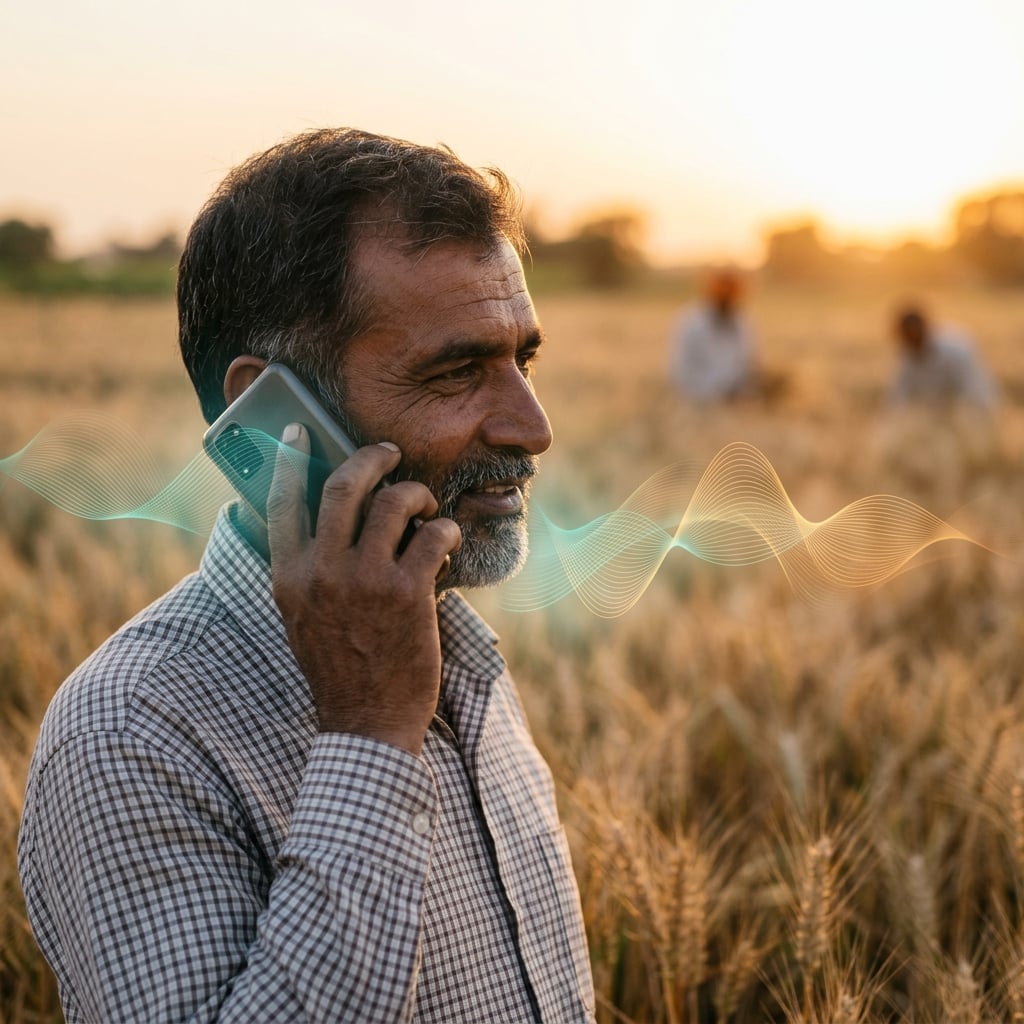
Imagine attempting to reach 50 lakh (5 million) people across India, gather their feedback, and conduct structured, two-way conversations with them—all within just 31 days. Historically, accomplishing this would require army-sized call centers or relying on ineffective, one-way SMS broadcasts and rigid Interactive Voice Response (IVR) menus that users routinely ignore. Today, a landmark collaboration is proving that artificial intelligence can solve this outreach challenge at a sovereign, population scale.
This is the real-world impact of "Listen at Scale," a joint initiative launched by homegrown AI pioneer Sarvam AI, the EkStep Foundation, and the generative AI research lab AI4Bharat. By deploying highly advanced multilingual voice AI agents across 20 diverse organizations, this consortium has initiated a profound shift in how public and private entities interact with Indian citizens.
For a country of over 1.4 billion people speaking hundreds of languages and dialects, digital-first solutions have long suffered from a text-heavy, English-centric bias. Millions of citizens face barriers when navigating complex smartphone apps or reading text notifications. Voice is the most natural, democratic interface for human communication. However, until recently, voice systems lacked the low latency, dialect comprehension, and cost-effectiveness required to handle real-time, unstructured Indian conversations.
The "Listen at Scale" project directly addresses this gap. By leveraging Sarvam’s specialized AI models trained extensively on Indian-language datasets, the initiative enables natural, localized voice interactions across 11 regional languages. These voice agents do not simply broadcast pre-recorded statements; they actively listen, comprehend intent, and structure the incoming data in real-time. This represents a massive leap forward for digital inclusion, proving that voice-first technology can perform reliably under intense real-world demand.
This dramatic shift toward conversational, voice-first experiences is not limited to public outreach; it is actively reshaping the enterprise landscape. As organizations realize the power of voice-driven engagement, platforms like CallMissed are helping bridge the gap for businesses. By offering production-ready voice agent infrastructure, access to hundreds of LLMs, and Speech-to-Text APIs supporting 22 Indian languages, such platforms enable enterprises to easily build and deploy their own localized voice systems.
In this article, we will delve deep into this historic deployment. We will explore the collaborative technology stack powering "Listen at Scale," the architectural breakthroughs required to handle millions of calls, and how multilingual voice AI is laying the groundwork for the next generation of conversational governance and customer experience across India.
Background & Context
For decades, mass public communication in India has relied on two primary channels: bulk SMS campaigns and automated Interactive Voice Response (IVR) calls. While these methods are highly scalable, they suffer from extremely low engagement rates. SMS broadcasts are often ignored due to literacy barriers or language mismatches, while rigid, keypad-based IVR systems offer a frustrating user experience that fails to capture any qualitative feedback.
In a country where hundreds of millions of citizens navigate daily life primarily through speech, these text-heavy and rigid systems create a massive digital divide. This fundamental bottleneck is what brought together Sarvam AI, the EkStep Foundation, and AI4Bharat. They recognized that to truly serve the public, technology must be capable of listening at the same scale that it broadcasts.
A Powerful Coalition for Sovereign AI
The "Listen at Scale" initiative is built on a unique collaboration between three pioneers of India's digital ecosystem, each bringing a crucial piece of the technical and operational puzzle:
- Sarvam AI: As a full-stack sovereign AI platform, Sarvam develops foundational generative AI models tailored specifically for Indian-language data. Their expertise lies in building low-latency speech-to-text, translation, and conversational models optimized for regional nuances.
- EkStep Foundation: Co-founded by Nandan Nilekani, Rohini Nilekani, and Shankar Maruwada, EkStep excels in building open, population-scale public digital infrastructure, ensuring that technological solutions are accessible, inclusive, and highly impactful.
- AI4Bharat: This generative AI research lab at IIT Madras has been instrumental in creating the open-source datasets, tools, and models required to capture the immense linguistic diversity of the Indian subcontinent.
By combining Sarvam's commercial-grade model deployment, EkStep's population-scale design philosophy, and AI4Bharat's state-of-the-art research, the coalition successfully developed voice agents capable of conducting natural, two-way conversations across 11 major Indian languages.
Shifting from Monologue to Dialogue
The core philosophy of "Listen at Scale" is to turn passive notifications into active, structured dialogues. When an organization initiates outreach, the citizen receives a call from an AI agent that speaks their regional dialect. Instead of forcing the user to navigate a clunky keypad menu, the AI allows them to speak freely.
The voice agent processes the spoken language in real-time, understands the context and intent, and responds dynamically. Crucially, the system converts these unstructured verbal conversations back into clean, structured data that organizations can analyze and act upon.
This technological paradigm is not just for public sector initiatives; it is rapidly transforming the commercial landscape. For businesses looking to implement similar solutions, platforms like CallMissed offer the necessary production-ready infrastructure. With APIs that natively support Speech-to-Text across 22 Indian languages, CallMissed enables companies to easily deploy highly contextual voice agents that scale effortlessly, bringing the power of natural language interaction to customer support, feedback collection, and operations nationwide.
Key Developments (TABLE)
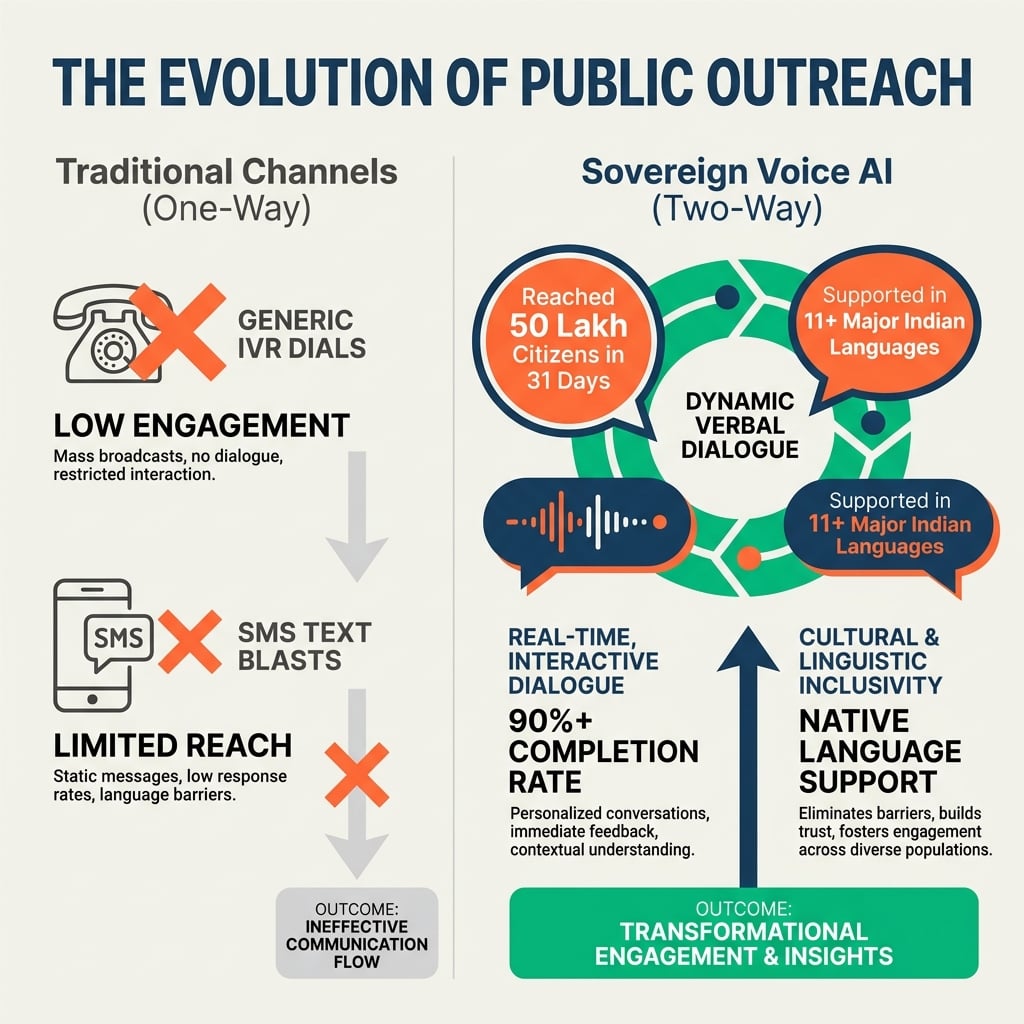
To appreciate the impact of the "Listen at Scale" initiative, it is essential to look at the architectural and operational developments that made this massive deployment possible. By combining the linguistic research of AI4Bharat, the governance-scale deployment experience of the EkStep Foundation, and the cutting-edge generative AI models developed by Sarvam AI, the consortium successfully addressed three of India’s most persistent digital bottlenecks: linguistic diversity, low-bandwidth infrastructure, and high user friction.
A Unified Sovereign Technology Stack
The foundational layer of this initiative relies on Sarvam AI’s specialized models trained heavily on localized, sovereign Indian-language data. Unlike generic global models that struggle with regional accents, mixed-language speech (like "Hinglish"), and noisy background environments, this stack was built from the ground up for Indian realities. Supporting native interactions across 11 major Indian languages, the AI agents managed to register and interpret natural, spoken feedback with unprecedented accuracy.
This sovereign push mirrors a broader trend across the Indian tech ecosystem. To deploy these systems effectively, enterprises are increasingly turning to robust communication platforms. For instance, infrastructure providers like CallMissed are simplifying this transition by offering production-ready APIs with Speech-to-Text support across 22 regional Indian languages alongside native LLM inference interfaces. This allows developers to quickly build and iterate on voice solutions without rebuilding the complex underlying speech infrastructure.
Benchmarking the Breakthrough: Old vs. New Outreach
To understand how revolutionary this approach is compared to legacy communication methods, we can examine the structural shifts in how public and private organizations engage with Indian citizens:
| Parameter | Legacy Outreach (IVR & SMS Blasts) | "Listen at Scale" AI Voice Agents | Practical Impact on Citizens |
|---|---|---|---|
| Interaction Flow | Rigid, one-way broadcasts or button-press DTMF menus | Natural, bidirectional voice conversations | Higher trust and interactive engagement |
| Language Accessibility | Mostly text-heavy English/Hindi, posing a barrier | Conversational speech in 11+ regional languages | Deep digital inclusion for non-literate populations |
| Scale & Velocity | High broadcast numbers, but dismal engagement rates | 50 lakh (5 million) citizens engaged in just 31 days | Unprecedented speed of active data collection |
| Data Actionability | Binary, shallow responses (e.g., "Press 1 for Yes") | Structured, multi-turn synthesis of voice inputs | Rich, qualitative feedback parsed into databases |
| System Adaptability | Monolithic configurations requiring manual recoding | Dynamically tuned prompts and contextual routing | Agile deployment across 20+ diverse organizations |
Structured Data from Unstructured Speech
One of the most significant technological triumphs of this project is the ability to extract highly structured, actionable insights from raw, unstructured voice recordings. When citizens speak naturally, they do not speak in database-friendly formats. The "Listen at Scale" stack uses state-of-the-art Natural Language Processing (NLP) to parse, tag, and categorize complex feedback in real time. For the 20 participating organizations, this meant that millions of spoken words were instantly converted into clean, categorized datasets, transforming raw civic voices into organized, programmatic action.
In-Depth Analysis
Solving the Multilingual Scale Problem
Deploying conversational AI in India presents a unique set of challenges that Western-centric models cannot solve. Indian speech is highly diverse, filled with local dialects, varying accents, and the frequent blending of English with regional tongues (such as Hinglish). Furthermore, real-world voice deployments must contend with background noise and low-bandwidth mobile networks.
To overcome these hurdles, the "Listen at Scale" initiative deployed specialized models trained directly on localized Indian-language datasets. By supporting 11 regional Indian languages natively, the voice agents bypassed literacy barriers, allowing users to converse naturally. Rather than forcing citizens to adapt to technology, the technology adapted to the citizen, recognizing colloquial phrasing and intent with high precision.
From One-Way Broadcasts to Active Listening
For decades, public and private outreach in India relied on one-way dissemination tools: automated outbound dialing (OBD), robocalls, and mass SMS broadcasts. These methods suffered from abysmal engagement rates, with most users hanging up or ignoring texts.
The partnership between Sarvam, EkStep, and AI4Bharat flipped this paradigm by introducing structured, two-way voice conversations. Instead of pushing information, these agents actively listened to the user's responses, asked clarifying questions, and recorded feedback in a structured format.
- Context-Aware Turn-Taking: The agents could handle natural pauses and interruptions, preventing the frustrating "robot-talking-over-human" loop common in legacy IVR systems.
- Nuance Parsing: By utilizing AI4Bharat’s state-of-the-art speech recognition, the system accurately captured sentiment and intent across diverse demographics.
- Instant Data Structuring: Unstructured spoken audio was translated and synthesized into clean, actionable data points for the 20 participating organizations in real-time.
The Infrastructure Challenge: Latency and Concurrency
To reach 50 lakh (5 million) citizens in just 31 days, the project required an underlying infrastructure capable of handling massive concurrent call volumes with sub-second latency. A voice agent feels unnatural if there is a delay of more than 1.5 seconds between the user finishing their sentence and the AI responding.
Achieving this required a tightly integrated pipeline: high-speed Speech-to-Text (STT), localized Large Language Model (LLM) processing, and ultra-fast Text-to-Speech (TTS) generation. This massive undertaking highlights why robust communication infrastructure is so critical.
For enterprise developers looking to deploy similar systems, building this stack from scratch is incredibly complex. This is why platforms like CallMissed have become essential. By offering production-ready voice agent infrastructure, unified LLM inference across more than 300 models, and native STT support for 22 Indian languages, CallMissed allows companies to replicate this level of deep multilingual engagement without having to manage the underlying GPU orchestration and telecom integrations themselves.
By solving these latency and language barriers at scale, the "Listen at Scale" initiative has set a new benchmark for what sovereign, voice-first AI can accomplish in a highly diverse society.
Impact & Implications

Bridging the Digital and Linguistic Divide
The successful deployment of the "Listen at Scale" initiative represents a massive leap forward for digital inclusion. Historically, India’s digital revolution has been text-heavy and English-centric, effectively excluding a vast portion of the population that is either non-literate or prefers regional dialects. By shifting the paradigm from rigid, one-way push notifications to fluid, two-way conversational AI, this partnership proves that technology can adapt to people, rather than forcing people to adapt to technology.
The social and operational implications are profound:
- Democratic Access to Services: Citizens can now inquire about welfare schemes, agricultural updates, or healthcare services using their natural spoken language, instantly democratizing critical information.
- Structured Qualitative Data at Scale: Organizations no longer have to rely on binary "press 1 for yes" inputs or expensive manual surveys. Instead, they can gather nuanced, structured qualitative feedback from millions of users in real time.
- Scalable Public Trust: Conversational AI in a user's native tongue fosters a sense of trust and accessibility that automated robotic IVR voices or English text messages never could.
A Blueprint for Sovereign AI Globally
On a technical level, this milestone serves as a powerful case study for sovereign AI platforms worldwide. It demonstrates that building localized, domain-specific models trained on native linguistic data is not just a theoretical pursuit, but a highly viable production strategy.
Western-centric Large Language Models (LLMs) often struggle with token efficiency, contextual nuances, and high latency when translating and processing Indic languages. By using models trained specifically on Indian-language data, the "Listen at Scale" initiative proved that localized architectures can outperform generalized models in cost-efficiency and performance—even when managing complex, real-time voice interactions for 50 lakh citizens.
Democratizing Voice AI for the Enterprise
The success of this deployment sends a clear signal to the commercial sector: multilingual voice AI is ready for enterprise-grade applications. Businesses across banking, retail, and logistics can leverage these identical architectural principles to automate complex customer journeys without losing the personal touch of regional languages.
For businesses looking to replicate this success, building this infrastructure from scratch is no longer a bottleneck. Platforms like CallMissed are already bridging this gap by offering robust, production-ready AI communication infrastructure. By integrating CallMissed’s multi-model API gateway, commercial enterprises can easily access over 300+ LLMs and leverage high-accuracy Speech-to-Text APIs across 22 Indian languages. This allows businesses to deploy their own highly localized, context-aware voice agents with minimal latency and maximum cost-efficiency.
Ultimately, the implications of this deployment stretch far beyond India's borders. It establishes a repeatable framework for how developing, multilingual nations can deploy AI to drive social equity and economic growth simultaneously.
Expert Opinions
A Shift from Broadcasting to Listening
The architects of the "Listen at Scale" initiative emphasize that the project’s true breakthrough is sociological as much as it is technological. Leaders at the EkStep Foundation point out that for decades, public communication in India has been a one-way street dominated by bulk SMS blasts and rigid, automated IVR calls. Experts agree that this "broadcasting" model fundamentally fails to capture the nuances of public sentiment.
By deploying multilingual voice agents, the initiative successfully shifted the paradigm toward structured, two-way conversations. According to project coordinators, the ability to "listen" at a scale of 50 lakh (5 million) citizens across 20 diverse organizations in just 31 days proves that voice AI is no longer a luxury tool, but a foundational pillar of modern digital public infrastructure.
Sovereign Technology for Diverse Dialects
From a technical standpoint, researchers at AI4Bharat and the founders of Sarvam AI highlight the critical importance of sovereign, localized AI models. Generic global LLMs often struggle with the acoustic diversity, code-mixing (such as mixing Hindi and English), and distinct regional dialects prevalent across India. To solve this, the consortium focused on three key areas:
- Native-Language Training: Sarvam's AI models are trained extensively on Indian-language datasets, allowing them to support 11 languages natively during the initial phase of the rollout.
- Low Latency & Cost-Efficiency: Standard global models often introduce high API latency and prohibitive token costs for Indian languages. Localized sovereign pipelines drastically reduce these hurdles, making real-time, population-scale voice conversations economically viable.
- Robust Voice Pipelines: Advanced Speech-to-Text (STT) and Text-to-Speech (TTS) models ensure that even users with basic mobile devices and varying accents can be understood clearly in real-world acoustic environments.
Democratizing Voice Technology for Enterprises
Industry analysts view this successful deployment as a watershed moment for commercial adoption. The consensus is clear: if voice AI can reliably handle high-stakes public sector outreach at a massive scale, it is more than ready to transform customer engagement in the private sector.
However, scaling these capabilities requires accessible infrastructure. This is where the broader ecosystem is stepping in to bridge the gap. While research labs pave the way with open benchmarks, platforms like CallMissed are democratizing access for businesses. By providing production-grade voice agent infrastructure and APIs that natively support Speech-to-Text in 22 regional Indian languages, CallMissed allows enterprises to quickly deploy similar, highly localized conversational agents without needing to build complex AI pipelines from scratch.
Ultimately, experts agree that the "Listen at Scale" campaign has set a new benchmark. It has proved that when technology is designed to speak the language of the people, digital exclusion begins to vanish, paving the way for a more conversational, inclusive future.
What This Means For You (TABLE)
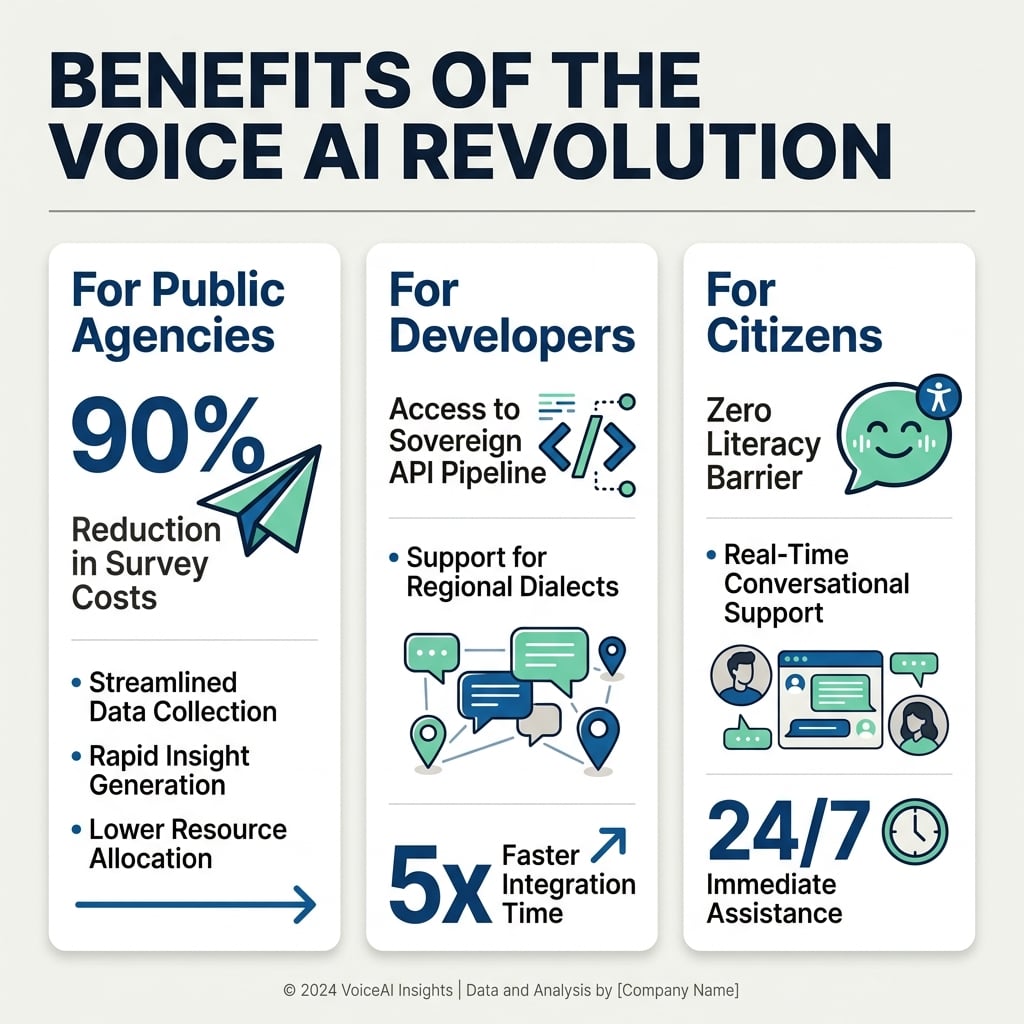
The scale and speed of the "Listen at Scale" project aren't just impressive benchmarks for public governance—they represent a massive paradigm shift for how businesses, developers, and public organizations interact with people across India. By transforming cold, unresponsive communication channels into dynamic, regional conversations, this initiative offers a blueprint for the future of customer and civic engagement.
Whether you are an enterprise looking to improve customer retention, a public sector entity driving civic programs, or a developer building local-first applications, transitioning from archaic systems to multilingual voice AI unlocks unprecedented capabilities. For organizations seeking to deploy these systems today without building the underlying technology from scratch, platforms like CallMissed offer pre-built voice agent infrastructure, providing immediate access to over 300+ LLMs and Speech-to-Text APIs supporting 22 regional Indian languages natively.
To help you visualize how this transition directly affects your organizational operations, the table below compares the limitations of traditional communication against the capabilities of modern, AI-driven multilingual voice solutions.
| Capability | Traditional Outreach (IVR & SMS) | AI Multilingual Voice (Sarvam, EkStep) | Strategic Business Impact |
|---|---|---|---|
| Interaction Flow | One-way broadcasts, SMS blasts, or rigid, push-button IVR menus. | Natural, structured, real-time two-way voice conversations. | Drastically increases user response rates and active digital engagement. |
| Language Support | Highly limited, often restricted to English, Hindi, or basic text scripts. | Native speech support across 11 to 22 regional Indian languages. | Bridges the literacy gap, enabling true digital inclusion for all citizens. |
| Deployment Velocity | Weeks of manual setup, hardware provisioning, and hardcoded scripts. | Rapid deployment at population scale (e.g., 50 lakh citizens in 31 days). | Accelerates time-to-market and slashes operational overhead. |
| Data Quality | Minimal data captured (mostly binary keypresses or simple delivery receipts). | Structured, rich qualitative feedback analyzed instantly by AI models. | Provides actionable, real-time insights to optimize public services or products. |
| Integration Setup | Siloed telecom lines requiring complex, proprietary hardware. | Modern, cloud-based API integrations and multi-LLM gateways. | Allows developers to deploy and update conversational agents dynamically. |
Key Takeaways for Enterprises and Developers
- Democratizing Access Through Voice: In a country where reading and writing regional scripts can still present barriers to accessing digital services, voice remains the ultimate equalizer. By allowing users to speak naturally in their local dialects, you remove the friction inherent in traditional digital interfaces.
- Moving from "Push" to "Listen": Historically, organizations pushed information out (via bulk SMS alerts) with zero expectation of hearing back. Multilingual voice AI turns communication into an active listening tool, helping you gather and synthesize thousands of structured user feedback points in minutes.
- Scalable Sovereignty: Utilizing models optimized specifically for Indian languages, accents, and cultural contexts ensures high semantic accuracy. Developers can leverage robust voice agent infrastructure—such as the developer-friendly APIs provided by CallMissed—to scale these highly localized conversational agents across the subcontinent with minimal latency and high cost-efficiency.
Frequently Asked Questions
What is the "Listen at Scale" initiative by Sarvam AI, EkStep, and AI4Bharat?
How does multilingual voice AI improve digital inclusion in India?
Which Indian languages are supported by the Sarvam and AI4Bharat collaboration?
How do voice AI agents differ from traditional IVR systems?
Can private enterprises deploy similar multilingual voice AI systems for customer engagement?
What role does AI4Bharat play in developing voice technologies for India?
Conclusion
The "Listen at Scale" initiative marks a historic turning point in digital outreach, proving that voice-first technology can successfully bridge India’s linguistic divide. Key takeaways include:
- Interactive Outreach at Scale: Shifting from rigid, one-way channels like SMS and IVR to structured, two-way voice conversations.
- Fostering Digital Inclusion: Empowering millions of citizens to bypass English-centric, text-heavy barriers by speaking naturally in their native languages.
- Sovereign Infrastructure Success: Demonstrating that localized, Indian-language AI models can perform reliably at a true population scale.
Moving forward, expect to see voice-first interfaces transition from specialized public sector deployments into standard, everyday customer experiences across commercial industries. To explore how this AI communication revolution is evolving and how your business can adopt it, check out CallMissed—an AI communication infrastructure platform powering next-generation voice agents and multilingual chatbots. How will your organization adapt to a world where voice is the ultimate interface?
Related Posts



Ready to automate customer conversations?
Launch AI voice agents and WhatsApp bots with CallMissed — one API, 22+ Indian languages.