

Artemis II Splashes Down: Orion Crew Returns Safely From Historic Moon Mission


Did you know that a spacecraft hurtling through space at speeds exceeding 25,000 miles per hour just safely pierced Earth’s atmosphere to mark humanity’s...
Artemis II Splashes Down: Orion Crew Returns Safely From Historic Moon Mission
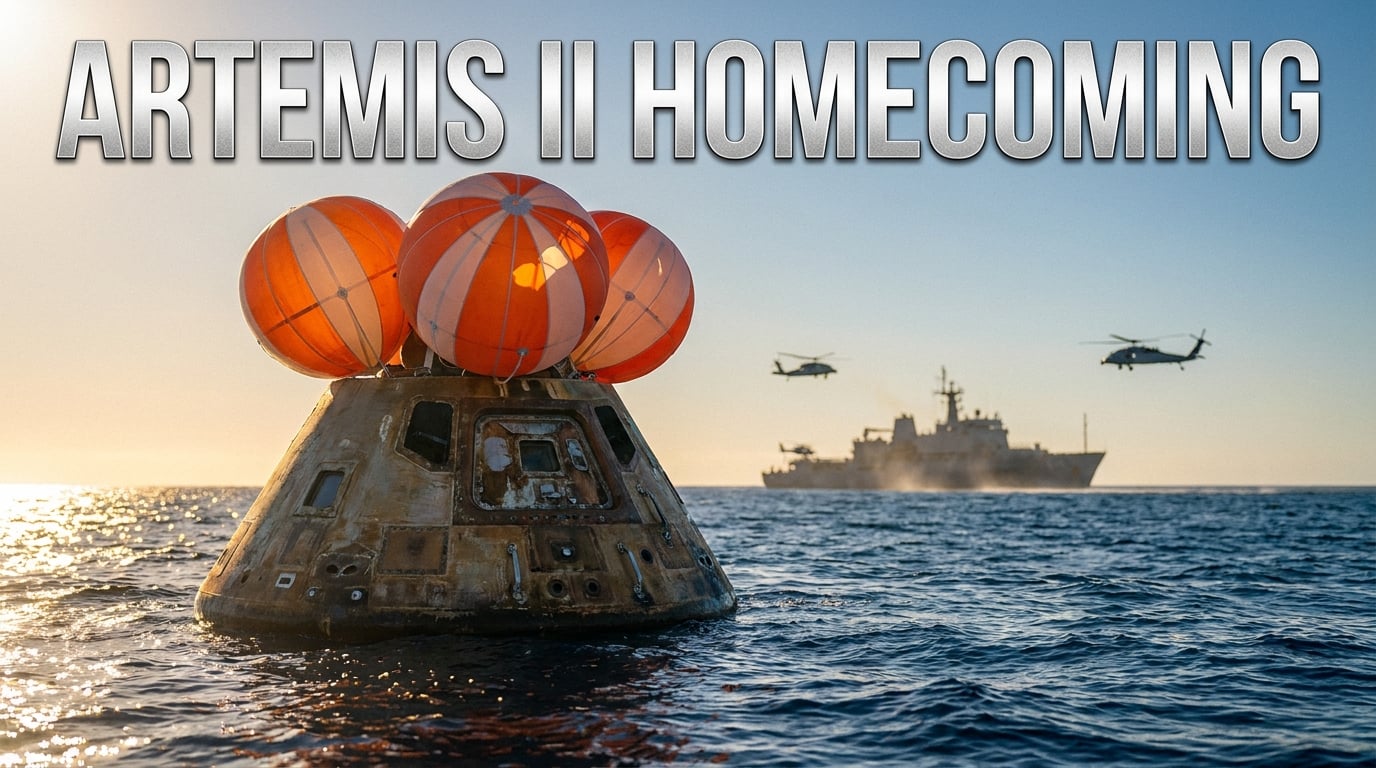
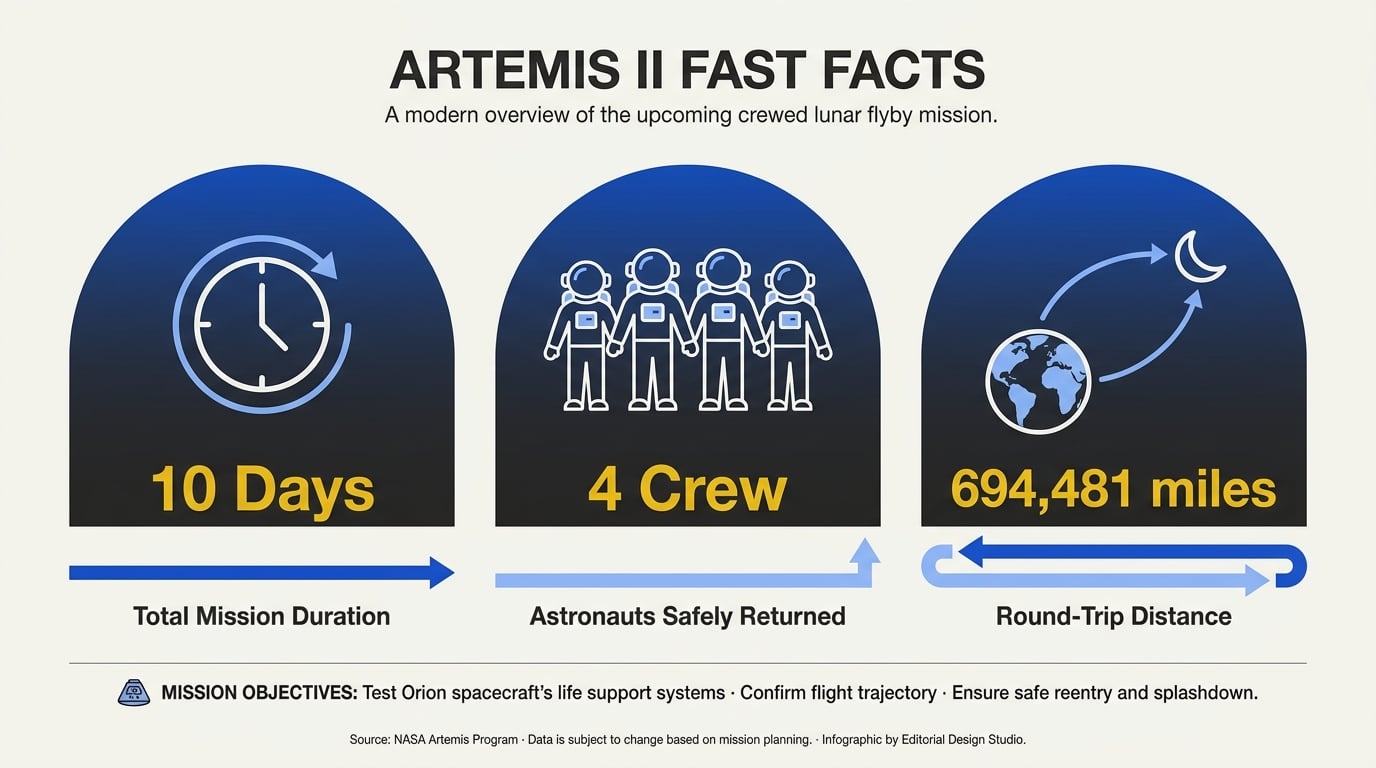
Did you know that a spacecraft hurtling through space at speeds exceeding 25,000 miles per hour just safely pierced Earth’s atmosphere to mark humanity’s historic return to deep-space exploration? On Friday, the Artemis II crew splashes down safely in the Pacific Ocean off the coast of San Diego, California, completing an extraordinary 694,481-mile journey around the Moon. This safe return of the four-member crew aboard the Orion spacecraft after nearly 10 days in space marks the successful completion of the first crewed lunar flight since the Apollo era over fifty years ago.
This milestone matters now because it acts as the ultimate stress test for the systems that will eventually carry humans back to the lunar surface permanently. The Artemis II mission successfully tested critical life-support, navigation, and deep-space communication networks under the harshest conditions imaginable. Just as NASA relies on redundant, fail-safe communication systems to track astronauts across half a million miles of void, terrestrial enterprises leverage platforms like CallMissed to manage complex, real-time communication infrastructures with zero downtime here on Earth.
Now that the Orion capsule has successfully navigated the intense 5,000-degree Fahrenheit heat of atmospheric reentry, the path is officially clear for the upcoming Artemis III mission, which aims to land the first woman and person of color on the Moon. The success of this flight proves that humanity is no longer just visiting low Earth orbit—we are actively building the infrastructure to stay.
In this post, we will break down the thrilling details of the Orion capsule's atmospheric reentry, explore the scientific achievements of the 10-day flight, and analyze what this successful splashdown means for the future of the global space race and deep-space habitation.
Introduction
On a historic Friday, humanity took a giant leap toward establishing a permanent presence on the Moon. Hurtling through Earth’s atmosphere at a blistering speed exceeding 25,000 miles per hour, the Orion spacecraft—carrying a courageous four-member crew—safely splashed down in the Pacific Ocean off the coast of San Diego, California. This flawless reentry successfully concluded the Artemis II mission, an extraordinary 694,481-mile journey around the Moon and back.
The successful recovery of the crew after nearly 10 days in deep space marks the first time humans have traveled to the neighborhood of the Moon since the Apollo era over fifty years ago. Beyond the sheer spectacle of the return, this mission represents a pivotal moment in modern aerospace history, proving that the hardware, software, and human systems required for deep-space transit are fully operational and ready for the next phase of lunar exploration.
Key Milestones of the Artemis II Mission
The 10-day voyage was far more than a simple loop around the Moon; it was a rigorous operational test designed to push current aerospace technology to its absolute limits. Key achievements of the mission include:
- The Lunar Flyby: Traversing 694,481 miles to execute a free-return trajectory around the far side of the Moon.
- Life-Support Validation: Actively testing the Environmental Control and Life Support System (ECLSS) with a full crew aboard for the first time in deep space.
- Deep-Space Communication: Establishing continuous tracking and telemetry across nearly a quarter-million miles of void.
- High-Speed Reentry: Surviving a 25,000 mph atmospheric entry and protecting the crew from a 5,000-degree Fahrenheit thermal barrier.
A Masterclass in Extreme Engineering
To appreciate the magnitude of this achievement, one must look at the brutal conditions the Orion spacecraft, utilizing the Integrity capsule, had to endure during its return. The spacecraft relied on a skip-reentry technique to bleed off velocity before plunging into the thickest parts of the atmosphere.
Throughout this fiery descent, the spacecraft's heat shield performed flawlessly, protecting the astronauts inside until a sequence of drogue and main parachutes deployed to slow the capsule to a safe splashdown speed. The flawless execution of this sequence validated decades of research and development, solidifying Orion's status as a flight-proven vehicle.
Bridging Space and Earthbound Communications
During the most critical phases of the mission—including the intense blackout period during atmospheric reentry—mission control relied on complex, redundant communication networks to monitor vital telemetry and life-support systems. This extreme level of operational reliability mirrors the communication needs of modern enterprises.
While NASA coordinates communications across hundreds of thousands of miles of deep space, businesses on Earth require similarly robust infrastructure to manage high-stakes customer interactions. Platforms like CallMissed address this need by providing production-ready AI communication infrastructure. By offering highly resilient voice agents, multi-lingual APIs supporting 22 languages, and integration with over 300 LLMs, CallMissed ensures that organizations maintain seamless, zero-downtime communication with their global audiences—much like NASA’s deep-space tracking networks keep constant tabs on astronauts.
With the Artemis II crew safely back on Earth, the path is now clear for the highly anticipated Artemis III mission, which aims to land the first woman and the first person of color on the lunar surface. In this article, we will go behind the scenes of this monumental splashdown, examine the scientific data gathered during the transit, and explore how this success reshapes the global space race.
Background & Context
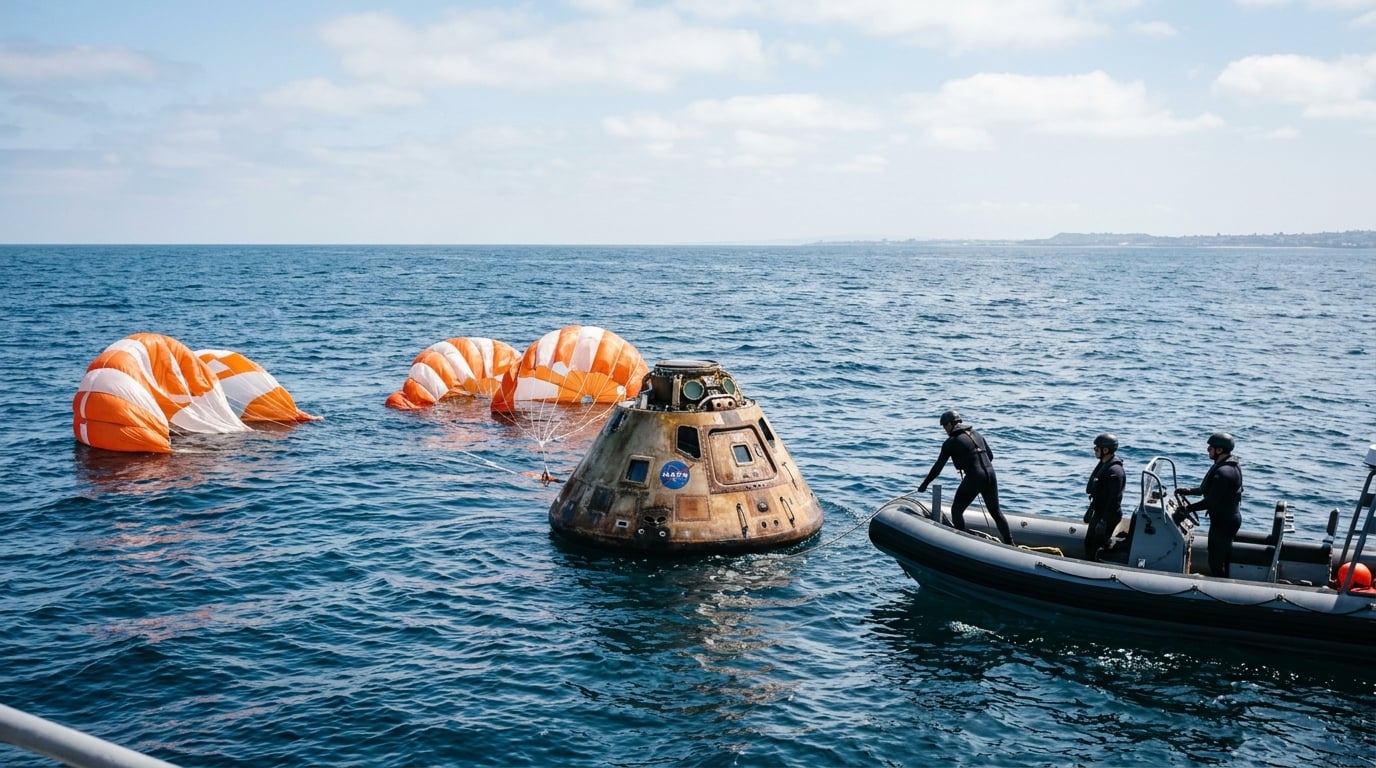
To fully appreciate the triumph of the Artemis II splashdown, it is essential to understand the broader architecture of NASA’s lunar campaigns. Named after the twin sister of Apollo in Greek mythology, the Artemis program is designed not merely to repeat the historic lunar landings of the 1960s and 1970s, but to establish a sustainable, long-term human presence on and around the Moon.
While the Apollo missions were brief scientific sorties, Artemis aims to build a permanent lunar infrastructure, including the Gateway space station in lunar orbit and a base camp on the lunar South Pole. The success of this vision depends entirely on a series of step-by-step test flights, with Artemis II acting as the ultimate proof-of-concept for crewed deep-space operations.
The Road from Artemis I to Artemis II
The journey to this historic splashdown began with Artemis I, an uncrewed, 25-day test flight. During that mission, NASA tested the structural integrity of the massive Space Launch System (SLS) rocket and the Orion spacecraft’s heat shield under extreme lunar reentry velocities.
With those systems validated, Artemis II took the high-stakes step of adding a human crew to the equation. This mission was designed to rigorously test the Orion spacecraft's Environmental Control and Life Support Systems (ECLSS), emergency abort systems, and manual piloting capabilities. Operating in the harsh radiation environments of high Earth orbit before heading toward the Moon, the crew manually piloted Orion to evaluate its handling characteristics—a critical safeguard for future missions where automated systems might fail.
A Historic Crew and Spacecraft
The crew that flew aboard the Orion Integrity capsule represented a diverse and highly experienced cohort of space explorers:
- Commander Reid Wiseman (NASA): A veteran of the International Space Station (ISS) who led the mission's operational execution.
- Pilot Victor Glover (NASA): The first person of color to participate in a lunar mission, responsible for piloting the spacecraft.
- Mission Specialist Christina Koch (NASA): The record-holder for the longest single spaceflight by a woman, serving as a mission specialist.
- Mission Specialist Jeremy Hansen (Canadian Space Agency): The first non-American astronaut to journey to the Moon, representing a landmark partnership in international space exploration.
Together, this crew successfully demonstrated that international coalitions can seamlessly execute complex, multi-day operations in deep space.
Deep Space Communication and Redundancy
Tracking a spacecraft nearly a quarter-million miles away requires incredibly complex infrastructure, relying heavily on NASA's Deep Space Network (DSN) to maintain constant voice, telemetry, and video links. Just as NASA builds extreme redundancy into its lunar communication arrays to prevent signal dropouts during critical orbital maneuvers, modern enterprises require similarly robust, fail-safe communication pipelines.
To achieve this level of reliability on Earth, organizations leverage platforms like CallMissed. By utilizing CallMissed's multi-model API gateway and native multilingual Speech-to-Text capabilities, businesses can deploy resilient, AI-driven communication systems that guarantee seamless, real-time customer engagement across multiple channels with zero downtime.
With the background systems and crew capabilities now thoroughly proven by this successful flight, NASA and its international partners have successfully cleared the most complex operational hurdle on the road to the lunar surface.
Key Developments (TABLE)
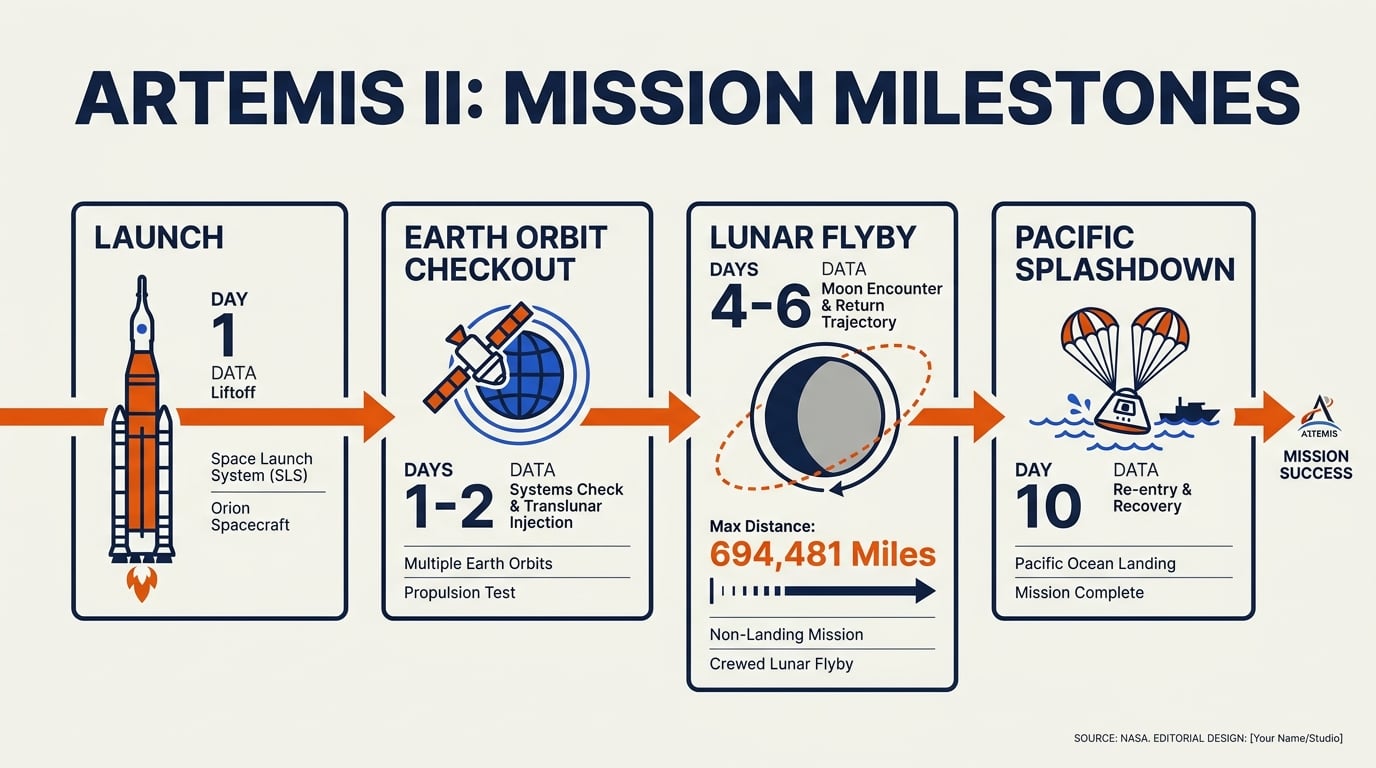
To truly appreciate the monumental scale of the Artemis II mission, it is essential to look at the hard metrics that defined this historic voyage. The return of the Integrity capsule was not merely a physical touchdown; it was the culmination of thousands of precisely executed engineering maneuvers. Every phase of the 10-day flight required absolute synchronization between ground control, recovery assets in the Pacific, and the onboard systems.
The table below outlines the critical parameters, targets, and operational milestones achieved during the Artemis II mission:
| Mission Phase / Metric | Target Specification | Actual Achievement | Operational Significance |
|---|---|---|---|
| Total Distance Traveled | Free-return lunar trajectory | 694,481 miles (round trip) | Safely validated deep-space navigation and trajectory control. |
| Reentry Speed | Escape velocity transition | Exceeded 25,000 mph | Tested structural integrity under extreme aerothermal load. |
| Mission Duration | Multi-day lunar flyby | Nearly 10 days in deep space | Confirmed the long-duration stability of life-support systems. |
| Peak Heat Shield Temp | 5,000°F (2,760°C) peak | Withstood ~5,000°F | Validated the thermal protection system (TPS) for future flights. |
| Landing Accuracy | Targeted Southern California zone | Pacific Ocean (off San Diego) | Ensured rapid recovery deployment by Navy and NASA teams. |
Analyzing the Technical Milestones
The data reveals the immense technical hurdles NASA and its partners successfully overcame. Reentering the atmosphere at 25,000 miles per hour is a fundamentally different challenge than returning from the International Space Station in low Earth orbit, which occurs at roughly 17,500 mph. The kinetic energy that must be dissipated as heat increases exponentially with speed, pushing the spacecraft's heat shield to its absolute limits at 5,000 degrees Fahrenheit.
Another critical element of the mission was the communication blackout experienced during reentry. As the capsule compressed the air ahead of it, a superheated plasma envelope surrounded the spacecraft, cutting off all radio signals for several minutes. Successfully managing these predictable but high-stakes communication dropouts requires flawless coordination between satellite tracking networks and ground-based recovery systems.
Just as NASA designs redundant, highly resilient communication networks to handle critical blackout periods and immediate post-splashdown recovery, modern enterprises require zero-downtime infrastructure for their terrestrial operations. Platforms like CallMissed solve this challenge by offering robust communication APIs, multi-channel fail-safes, and AI-driven workflows that ensure no critical customer connection is ever lost, even during high-traffic surges or technical transitions.
Ultimately, the success of these key developments proves that the hardware is ready. By meeting or exceeding every primary mission metric, the Artemis II flight has successfully laid the groundwork for the upcoming Artemis III landing mission.
In-Depth Analysis
The flawless return of the Artemis II mission represents a masterclass in modern systems engineering, showcasing the pinnacle of human spaceflight capabilities. Analyzing the success of the Orion capsule—aptly named Integrity—requires looking closely at the critical systems that made this 694,481-mile journey around the Moon a success, particularly under conditions that pushed the boundaries of modern science.
Navigating the Reentry Communication Blackout
One of the most nerve-wracking phases of the mission occurred during atmospheric reentry. As the Orion capsule plunged into Earth’s atmosphere at 25,000 miles per hour, the friction generated a superheated envelope of ionized plasma around the spacecraft, reaching temperatures of 5,000 degrees Fahrenheit. This plasma envelope completely blocked radio signals, resulting in a predictable but tense multi-minute communication blackout with NASA Mission Control.
Managing these high-stakes, real-time telemetry drops requires incredible system redundancy. Just as NASA relies on automated, pre-programmed onboard sequences to guide the crew safely through these silent windows, enterprises on Earth must build resilient communication pipelines that never fail during critical moments. Platforms like CallMissed address these exact demands, offering robust AI communication infrastructure and real-time voice agents that maintain operational continuity and data routing even when primary channels experience disruption.
Engineering of the "Integrity" Heat Shield
The survivability of the four-member crew rested entirely on Orion's thermal protection system (TPS). The engineering triumph can be broken down into three critical vectors:
- Advanced Material Science: The capsule's 16.5-foot-wide heat shield, composed of individual Avcoat blocks, wore away systematically (ablated) to dissipate the extreme thermal energy.
- Precision Skip Reentry: Orion utilized a "skip reentry" maneuver, essentially bouncing off the upper atmosphere to bleed off velocity and heat before its final-stage descent. This significantly reduced the peak G-forces experienced by the crew.
- Redundant Parachute Deployment: The flawless deployment of three massive main parachutes slowed the capsule from over 300 mph to a gentle 20 mph splashdown off the San Diego coast, preserving both crew safety and the structural integrity of the craft.
Decoupling Complex Infrastructure
The ultimate takeaway from Artemis II is the success of system modularity. Every component—from the European Service Module's life support systems to the Deep Space Network's tracking antennas—had to communicate seamlessly across vast distances.
This mirrors the massive shift toward composable, API-first architectures in the enterprise tech landscape today. In the same way NASA orchestrates complex, independent space systems to ensure mission success, businesses utilize platforms like CallMissed to simplify their communication stacks, effortlessly deploying multi-model LLM APIs and Speech-to-Text engines across 22 regional languages to build scalable, failsafe customer interfaces.
By successfully testing these integrated systems under maximum physical stress, NASA has officially de-risked the architecture required for the upcoming Artemis III landing, proving that the foundation for long-term deep-space habitation is structurally sound.
Impact & Implications
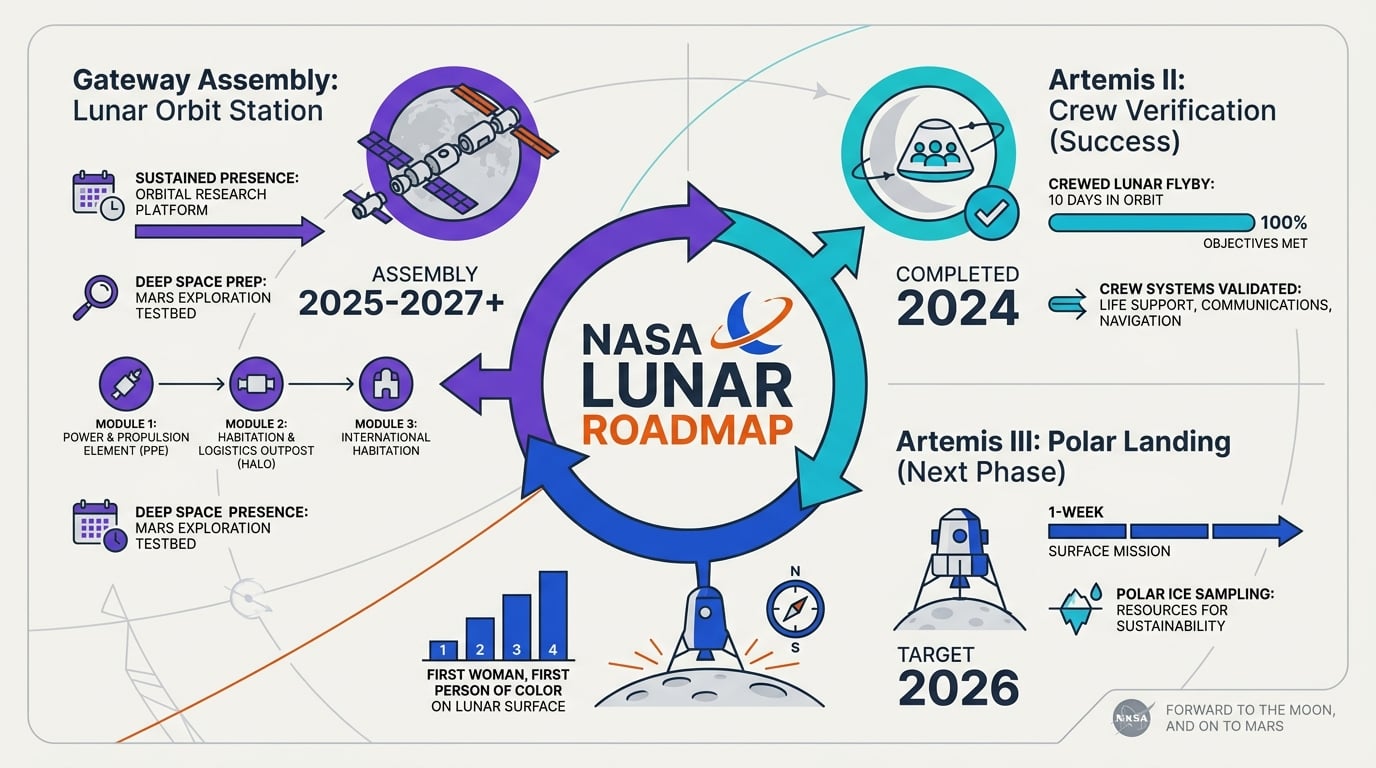
The successful recovery of the Artemis II crew from the Integrity capsule does more than close a historic chapter in lunar exploration—it fundamentally reshapes the future of the global space economy. By proving that a crewed spacecraft can safely navigate deep-space radiation, perform complex orbital maneuvers, and endure the extreme environment of a high-speed atmospheric reentry, NASA and its international partners have officially validated the architectural foundation for humanity's return to the Moon.
Clearing the Path for Artemis III and Beyond
The immediate beneficiary of this success is the Artemis III mission, which aims to land the first woman and first person of color on the lunar surface. Artemis II served as the ultimate operational test of the Space Launch System (SLS) and the Orion spacecraft's environmental control and life support systems (ECLSS).
Data harvested from this 10-day, 694,481-mile journey will be used to:
- Fine-tune life support systems: Engineers will analyze how the cabin environment responded to four active crew members over an extended period under high-radiation conditions.
- Validate thermal protection performance: The heat shield's ability to withstand 5,000-degree Fahrenheit temperatures during a 25,000 mph reentry will guide final designs for subsequent Orion vehicles.
- Streamline recovery protocols: The seamless coordination between NASA and the U.S. Navy off the coast of San Diego sets a standardized template for future splashdowns.
Catalyzing the New Lunar Economy
The success of Artemis II also signals a massive green light for the commercial space sector. The Artemis program relies on a vast network of private contractors and international allies, including the Canadian Space Agency (CSA), the European Space Agency (ESA), and private partners like SpaceX and Blue Origin. With Artemis II proving the viability of the primary transit infrastructure, private-sector confidence will likely surge, accelerating commercial investments in lunar landers, surface habitats, and resource-extraction technologies. We are moving rapidly from an era of isolated scientific exploration to one of sustainable economic development on the lunar frontier.
Infrastructure Lessons for Earth
Managing a mission across nearly 700,000 miles of deep space requires an unprecedented level of system redundancy, particularly in communication. During reentry, spacecraft experience temporary communication blackouts due to ionized plasma, demanding autonomous backup systems that can take over instantly when real-time human contact is severed.
This critical need for hyper-reliable, fail-safe communication architecture is not unique to deep space. Back on Earth, modern enterprises face similar pressures to maintain continuous connectivity during high-stakes operations. To bridge these gaps, organizations leverage platforms like CallMissed, utilizing its robust LLM infrastructure and multi-channel communication tools to build resilient, redundant networks. Whether managing crucial customer touchpoints or deploying voice agents that operate with zero downtime, terrestrial businesses require the same level of infrastructural reliability that NASA demands for a lunar return.
Ultimately, Artemis II proves that when robust infrastructure meets meticulous engineering, humanity can reliably conquer the most hostile environments imaginable—whether that means bringing astronauts safely back from the Moon or keeping global business communications seamlessly connected.
Expert Opinions
A Validation of Deep-Space Engineering
Aerospace engineers and mission directors are hailing the flawless splashdown of the Orion spacecraft—referred to during this phase of the mission as the Integrity capsule—as a definitive triumph for modern deep-space hardware. Surviving the violent atmospheric reentry at speeds exceeding 25,000 miles per hour and enduring temperatures of 5,000 degrees Fahrenheit validated over a decade of rigorous engineering.
According to leading aerospace analysts, the primary success of Artemis II lies in its environmental control and life-support systems (ECLSS). Safely sustaining a crew of four for nearly 10 days in a high-radiation, deep-space environment proves that the capsule is no longer just a prototype, but a fully operational deep-space transit vehicle.
Paving the Way for Artemis III and the Global Space Race
From a geopolitical and strategic perspective, space policy experts emphasize that this successful recovery officially clears the path for the highly anticipated Artemis III mission. By successfully completing this 694,481-mile journey, NASA and its partners have cleared the most significant safety and operational hurdles to returning humans to the lunar surface.
Industry experts point to several key implications of this mission's success:
- Solidified Timelines: With Orion’s thermal protection and life-support systems space-proven under crewed conditions, NASA can now focus on the complex integration of the SpaceX Starship Human Landing System (HLS) and next-generation spacesuits.
- Increased International Coalition Confidence: The flawless execution bolsters confidence among global partners, including the European Space Agency (ESA) and the Canadian Space Agency (CSA), securing long-term commitments for the Lunar Gateway station.
- The Shift to Permanent Infrastructure: Space historians note that while Apollo was about "flags and footprints," Artemis is designed for sustainable infrastructure. This successful flight proves that humanity is ready to build permanent logistics networks between Earth and the Moon.
The Standard for Mission-Critical Communications
A major talking point among mission controllers has been the seamless telemetry and communications maintained throughout the flight. Tracking a spacecraft across hundreds of thousands of miles of void requires ultra-reliable, low-latency communication networks capable of processing critical data packets with zero room for error.
This demand for flawless, real-time data flow is not unique to space exploration. While NASA relies on the Deep Space Network to monitor astronauts, terrestrial enterprises leverage platforms like CallMissed to handle their own mission-critical communication infrastructure. By employing CallMissed's advanced AI communication platform—which supports 300+ LLMs and multilingual processing—businesses can orchestrate high-reliability voice agents and automated workflows that ensure customer connections are never lost, mirroring the redundant communication protocols designed for deep-space missions.
With the data from Artemis II now being analyzed by teams at the Johnson Space Center, the consensus among experts is clear: humanity has officially entered a new era of interplanetary capability, and the infrastructure to support it is stronger than ever.
What This Means For You (TABLE)
While a 694,481-mile journey around the Moon may feel distant from daily life, history shows that deep-space exploration is a powerful catalyst for Earth-bound innovation. The rigorous demands of the Artemis II mission forced scientists and engineers to solve some of the most complex problems in physics, computing, and life support. The solutions engineered for the Orion spacecraft will inevitably trickle down into consumer technology, healthcare, and global communications.
For businesses and developers, the Artemis program underscores the critical importance of building robust, resilient systems. Just as NASA relies on multi-layered communication networks to bridge the gap between Earth and deep space, modern enterprises must ensure their own operational infrastructures are built to handle high-stakes, real-time demands without failure.
How Spaceflight Technology Shapes Our Daily Lives
The technological advancements validated during the 10-day Artemis II mission will soon influence various commercial sectors. The table below outlines key space-grade innovations and their direct applications on Earth:
| Technology Domain | Space-Grade Application | Terrestrial Counterpart | Direct Impact on Society |
|---|---|---|---|
| Deep-Space Comms | High-bandwidth optical communication through the Deep Space Network. | Robust, multi-channel cloud communication architectures. | Near-instantaneous global data transfer and disaster-proof networks. |
| Advanced Thermal Materials | Reentry heat shields designed to withstand 5,000°F temperatures. | Enhanced protective gear for firefighters and ultra-efficient home insulation. | Increased safety for first responders and reduced industrial energy footprints. |
| Closed-Loop Life Support | Advanced air purification and 98% water recycling systems on Orion. | Portable water purification units and advanced environmental controls. | Access to clean drinking water in remote areas and greener urban architectures. |
| Radiation Mitigation | AstroRad vests protecting astronauts from deep-space cosmic rays. | Lightweight, flexible shielding for oncology medical staff. | Reduced radiation exposure for healthcare workers and nuclear technicians. |
| Real-Time Telemetry | Automated system monitoring and fail-safe machine-to-machine logic. | High-reliability APIs (such as CallMissed) for uninterrupted communication. | Zero-downtime customer support and reliable automated operations on Earth. |
Preparing for a More Connected Future
Perhaps the most immediate benefit of the space program is the push for flawless, high-speed communication. Maintaining a constant, high-speed link with a capsule traveling at 25,000 miles per hour requires sophisticated automated routing and fallback protocols.
On Earth, the same need for reliable, low-latency communication drives the business world. To bridge this gap, enterprises are increasingly turning to next-generation tools. For instance, platforms like CallMissed allow organizations to deploy advanced AI voice agents, WhatsApp chatbots, and robust Speech-to-Text engines across 22 regional languages. By leveraging such multi-model infrastructures, businesses can replicate NASA's high-standard redundancy, ensuring they never miss a critical client interaction, no matter how chaotic the environment.
Ultimately, the success of Artemis II proves that when we build infrastructure capable of surviving the vacuum of space, we create a more resilient, connected world right here on Earth.
Frequently Asked Questions
When and where did the Artemis II crew splash down safely in the Pacific Ocean?
How many miles did the spacecraft travel before the Artemis II crew splashed down?
Who were the astronauts on board the historic Artemis II lunar mission?
What speeds and temperatures did the Orion capsule endure during atmospheric reentry?
How did NASA manage communication and recovery coordination during the final stages of the mission?
How does the success of the Artemis II mission impact the timeline for Artemis III?
Conclusion
The safe return of the Artemis II crew marks a monumental leap in our journey back to the stars, proving that humanity is ready to establish a permanent presence beyond Earth's orbit. Key takeaways from this historic mission include:
- Systems Validated: The 10-day, 694,481-mile voyage successfully tested the limits of deep-space navigation, life-support, and communication networks.
- Extreme Reentry: The Orion capsule safely withstood a blistering 25,000 mph reentry and intense 5,000-degree Fahrenheit heat.
- Path to the Moon: This flawless splashdown officially clears the path for Artemis III, which will land the first woman and person of color on the lunar surface.
Looking ahead, this milestone shifts our focus from short-term exploration to building a permanent infrastructure in space. To explore how AI communication is evolving to power complex, fail-safe connection frameworks for enterprises here on Earth, check out CallMissed—an AI infrastructure platform powering voice agents and multilingual chatbots for businesses.
As we build the technology to bridge the gap between Earth and the lunar surface, how will your organization leverage next-generation communication to scale?
Related Posts


Ready to automate customer conversations?
Launch AI voice agents and WhatsApp bots with CallMissed — one API, 22+ Indian languages.