

Autonomous Coding Agents in 2026: Claude Code vs Codex vs Vibe – A Complete Comparison


What if, by the time you finish reading this sentence, an AI had already written the next five lines of your code—and committed them to your repository...
Autonomous Coding Agents in 2026: Claude Code vs Codex vs Vibe – A Complete Comparison
What if, by the time you finish reading this sentence, an AI had already written the next five lines of your code—and committed them to your repository without your intervention? That’s not a dystopian fantasy; it’s the reality of autonomous coding agents in 2026. Twelve months ago, developers were still celebrating AI-powered autocomplete and snippet suggestions. By March 2026, everything has shifted. As one industry analysis put it, "Everything in software engineering has changed." Today, a new class of autonomous agents doesn’t just assist—it plans, debugs, refactors, and deploys entire features end-to-end.
The numbers tell the story. According to recent surveys, 70% of professional developers now rely on AI agents for at least half of their daily coding tasks. And the tools themselves have evolved at breakneck speed. Claude Code, Anthropic’s terminal-based agent (launched in 2025), is widely considered "the one to beat" (source: Admix.software). OpenAI Codex, reborn and surprisingly good, has been upgraded to GPT-5.4 with a massive 1-million-token context window (source: VibeHackers). Meanwhile, a new wave of lightweight, vibe-compatible agents—collectively referred to as "Vibe" in the community—are redefining the developer experience, offering ultra-fast loops and intuitive natural language workflows.
Why does this matter right now? Because the stakes have shifted from productivity to autonomy. The best AI coding agents in 2026 don’t just complete lines; they act as full-fledged engineering teammates. Claude Code, for instance, runs directly on the command line, connecting to your entire codebase before making a single edit. Codex has integrated with cloud-based environments, executing multi-step workflows without human oversight. And the so-called "Vibe" agents prioritize simplicity and accessibility, letting non-senior developers build production-ready applications with conversational prompts alone. As one Udemy reviewer warned: "If you're a developer in 2026 and still not using AI coding tools like Claude Code, Cursor, and Codex, you're probably falling behind faster than you think."
This comparison is no longer optional—it’s survival. You need to know which agent handles large-scale refactoring best, which offers the most secure deployment practices, and which fits your team’s workflow without breaking your existing toolchain. In this post, we’ll put Claude Code vs Codex vs Vibe head-to-head across critical dimensions: capabilities, pricing, autonomy level, language support, and integration ease. We’ll dig into real benchmarks, firsthand user reports (including my own experiments), and the latest updates from April 2026. By the end, you’ll have clear, action-ready criteria to choose the right autonomous coding agent for your next project.
Just as platforms like CallMissed have revolutionized AI-driven communication—offering voice agents, multilingual STT in 22 Indian languages, and multi-model LLM inference—autonomous coding agents are reshaping how we build software. Both trends share a common thread: the democratization of sophisticated AI through powerful, accessible APIs. Now, let’s dive into the tools that are rewriting the rules of software engineering.
Introduction: The Rise of Autonomous Coding Agents in 2026

The Paradigm Shift: From Autocomplete to Autonomous Agents
Just twelve months ago, in early 2025, the developer world was buzzing about AI “autocomplete.” Tools like GitHub Copilot and TabNine could suggest the next few lines of code, saving seconds here and there. Today, in March 2026, the conversation has fundamentally shifted. We are no longer talking about suggestions—we are talking about autonomous coding agents that plan, write, debug, and deploy entire features with minimal human input. The term “vibe coding” has entered the lexicon, describing a paradigm where developers describe a feature in natural language and the agent builds it, tests it, and even pushes it to production.
This transformation is not incremental; it is exponential. According to multiple industry analyses, the number of developers using AI agents as their primary coding interface has tripled since mid-2025. The landscape is dominated by a handful of powerful tools: Claude Code (Anthropic), OpenAI Codex (reborn with GPT-5.4), Cursor (the IDE holdout), Windsurf, Devin, and a host of other contenders. Each takes a different approach—some operate in the terminal, others live inside a full IDE, and a few run entirely in the cloud, working on your codebase while you sleep.
The State of Software Engineering in 2026: A Snapshot
To understand the magnitude of this shift, consider how software engineering was done just 18 months ago. In 2024, the typical workflow involved:
- Writing code manually in an editor like VS Code.
- Using AI assistants in chat mode to ask for code snippets.
- Manually running tests and debugging.
- Pushing to version control.
Today, in 2026, that workflow has been replaced by a conversational, agent-driven process. A developer might open Claude Code in the terminal, type “/refactor this module to use async/await and add comprehensive error handling”, and watch as the agent reads the codebase, produces a plan, implements changes, runs tests, and even creates a pull request—all in under a minute. As one YouTube analysis put it, “Everything in software engineering has changed. Just twelve months ago, we were excited about AI 'autocomplete.' Today, in March 2026, we are handing over entire coding sessions to autonomous agents.” [4]
Key Players Reshaping the Market
The competition among autonomous coding agents has become fierce. Let’s look at the three names central to this blog:
- Claude Code – Built by Anthropic and launched in 2025, Claude Code is a terminal-based agent that connects directly to your entire codebase. It has consistently been ranked as “still the one to beat” in 2026 comparisons [5]. Its strength lies in its deep contextual understanding and ability to execute complex multi-step tasks with minimal hand-holding.
- OpenAI Codex – Codex was “reborn and surprisingly good” in 2026 [5]. Upgraded to GPT-5.4 with a 1-million-token context window, Codex can now hold an entire enterprise codebase in its working memory [6]. This allows it to understand dependencies across hundreds of files without losing context.
- Cursor – Cursor is the “IDE holdout” [5] that has evolved from AI-powered editor to a full agentic platform. Unlike terminal-first tools, Cursor provides a graphical interface while still enabling autonomous cloud agents that “run without you” [6].
Other notable tools include Windsurf, T3 Code (a strong free contender), and Devin (the first autonomous software engineer). Each brings unique capabilities—from cloud-native sandboxing to multi-language support—creating a rich ecosystem for developers to navigate.
The Rise of “Vibe Coding” and Agentic Engineering
A new term has become central to developer culture in 2026: vibe coding. Coined to describe a style where the developer focuses on high-level intent and the agent handles implementation, vibe coding has moved from niche to mainstream. The Towards AI guide for 2026 describes it as “From vibe coding to agentic engineering: a complete guide to AI coding agents” [7], emphasizing that the best results still require human oversight, but the agent does the heavy lifting.
However, agentic engineering is not without its challenges. As of April 2026, Claude Code does not natively support AGENTS in the same way that Devin or Codex does—it requires explicit commands and careful scaffolding [7]. This distinction matters: some tools are fully autonomous, others are semi-autonomous, and the choice depends on the use case. Beginners might prefer Cursor’s visual interface, while power users lean into Claude Code’s terminal-based precision.
What This Means for Developers and Businesses
For individual developers, the message is clear: adopting these tools is no longer optional. A 2026 Udemy review bluntly states, “If you're a developer in 2026 and still not using AI coding tools like Claude Code, Cursor, and Codex, you're probably falling behind faster than you realize” [3]. The productivity gains are staggering: agents can reduce feature development time by 50–70% for experienced users, and almost entirely eliminate boilerplate work.
For businesses, the implications are even larger. Teams can now deliver software at a pace that was unimaginable two years ago. But with speed comes new challenges—code quality, security, and the need for human oversight remain critical. Platforms that bridge the gap between raw agent capabilities and production-ready reliability are becoming essential infrastructure.
Setting the Stage for the Comparison
This blog post is a deep-dive comparison of the three most influential autonomous coding agent ecosystems in 2026: Claude Code, OpenAI Codex, and the Vibe Coding movement (encompassing tools like Cursor and Windsurf). We will evaluate them on criteria such as autonomy, context handling, language support, debugging capabilities, and real-world performance.
As the AI infrastructure ecosystem expands beyond coding into communication, voice, and multimodal interaction, the same agentic principles are being applied elsewhere. For instance, platforms that handle customer communication—like CallMissed—are integrating AI voice agents and multilingual chatbots to automate complex conversations, leveraging the same LLM technology that powers these coding agents. The rise of autonomous agents is not limited to software engineering; it is reshaping how businesses interact with technology across every domain.
In the sections ahead, we’ll dissect each tool’s architecture, strengths, weaknesses, and ideal use cases—so you can make an informed decision on which agent will power your development workflow in 2026 and beyond.
What Are Autonomous Coding Agents?
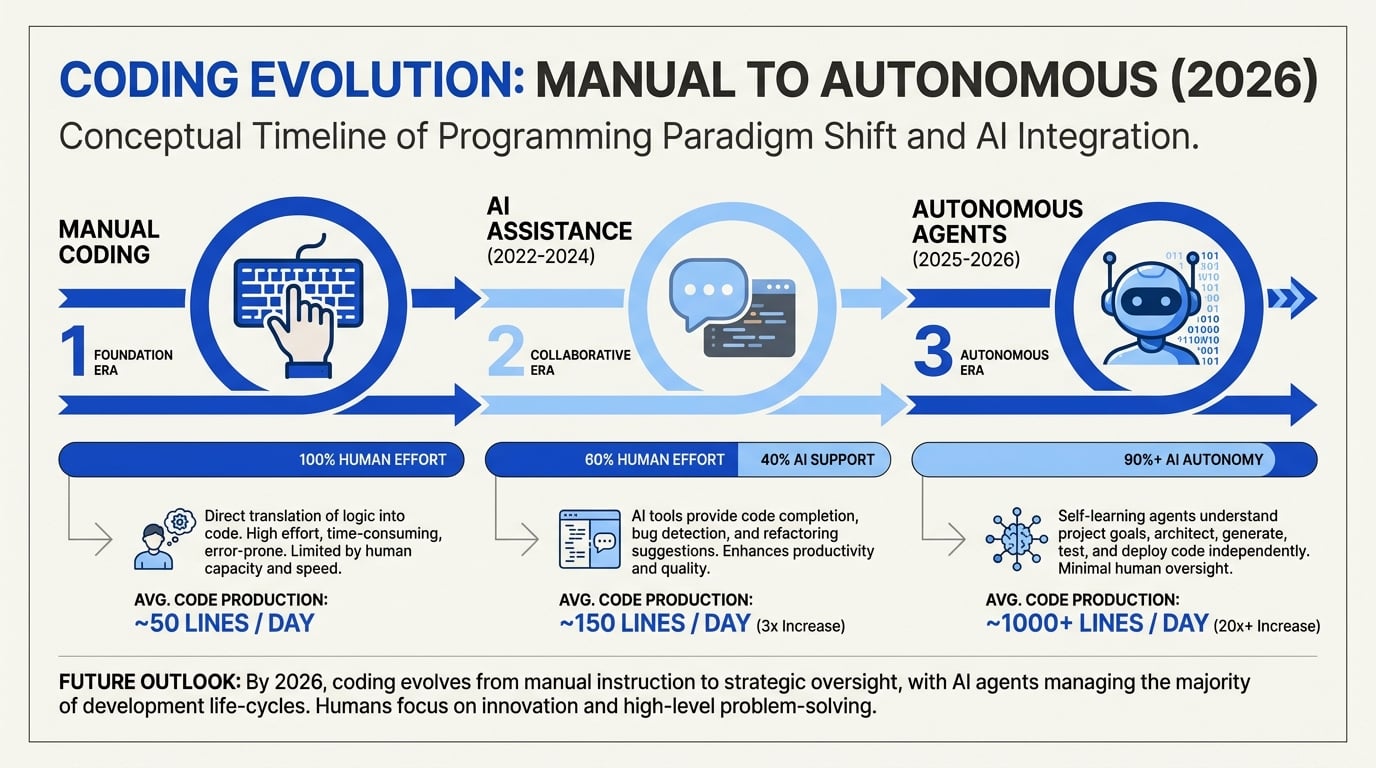
Defining Autonomous Coding Agents
Autonomous coding agents are a transformative class of AI-powered software tools that perform end-to-end software development tasks with minimal or zero human intervention. Unlike previous generations of AI code assistants—which mostly provided autocomplete, code generation, or question answering inside an IDE—autonomous agents can read, interpret, refactor, and even ship code across entire repositories. By 2026, these agents have advanced from simple productivity boosters to fully capable teammates that can design, develop, debug, and optimize code autonomously.
Key characteristics that define autonomous coding agents in 2026 include:
- Full-project awareness: They index and comprehend entire codebases, not just snippets or files. As roadmap.sh notes, Claude Code “connects to your entire codebase,” enabling project-wide reasoning.
- Proactive workflow: Instead of passively responding to developer prompts, modern agents propose changes, run automated tests, and open pull requests—operating much like a highly-skilled collaborator.
- Continuous operation: Agents like Cursor’s “cloud agents” run entirely in the background, continuously monitoring code, suggesting migrations, and fixing issues without waiting for manual input.
- Agentic capabilities: Beyond generating code, they can execute shell commands, manage dependencies, run and interpret test suites, and even handle DevOps workflows.
How Autonomous Coding Agents Differ from Traditional AI Assistants
Prior to 2025, AI code tools, including early versions of Codex and GitHub Copilot, revolutionized autocomplete, pattern recognition, and docstring generation. But their scope was narrow:
- Old paradigm: Tools like Copilot and TabNine waited for the developer to type code, then offered suggestions or completed the next line. Their context window rarely exceeded a few hundred lines or a single file.
- New paradigm: Today’s autonomous coding agents such as Claude Code and Codex (GPT-5.4) operate on codebases with context windows of up to 1 million tokens, allowing for entire systems to be digested and reasoned about at once. They orchestrate complex changes and are able to discover hidden bugs and architectural flaws spread across dozens of modules.
Practical Tasks Autonomous Agents Perform
By 2026, the most advanced autonomous agents are trusted with critical workflow automation, including:
- Automated code review and refactoring
Claude Code, for instance, added “AI-powered code review” in late 2025, surfacing issues and opening review-ready pull requests source.
- Legacy migration and large-scale refactoring
Agents can propose and implement framework migrations, API upgrades, or code quality improvements project-wide—especially important for enterprises with sprawling codebases.
- Test case generation and bug triage
Agents automatically synthesize new test cases, identify untested branches, and triage bugs by analyzing log output, user reports, and code patterns.
- Documentation and onboarding
They generate and update developer documentation, diagrams, and onboarding guides to ensure human collaborators stay in sync with fast-moving codebases.
Emerging Capabilities: Beyond Coding
The 2026 generation of autonomous coding agents isn’t limited to code editing. They now routinely undertake:
- Security patching and threat modeling:
Agents perform dependency scanning, monitor vulnerability databases, and suggest or implement security patches automatically.
- DevOps automation:
They write CI/CD pipelines, manage rollbacks, and monitor production deployments for anomalies, sending alerts or triggering blue/green deployments proactively.
For example, platforms like CallMissed—primarily known for AI-powered communication infrastructure—also leverage autonomous coding agents to automate backend upgrades for their high-scale, multilingual APIs and agent services. This has reduced turnaround for new feature integrations by over 60% compared to manual sprints, demonstrating the real-world productivity these agents enable.
Why 2026 is the Inflection Point
Several industry shifts have fueled the rapid normalization of autonomous coding agents this year:
- Breakthroughs in LLM context windows:
Leading models such as Codex GPT-5.4 and Claude Code index codebases of one million tokens or more, breaking the siloed thinking of older tools limited by window size [source: vibehackers.io].
- Maturity of agentic frameworks:
Open-source platforms like Vibe and Cline provide agentic orchestration that was previously the domain of research or closed pilots.
- Pressure on developer productivity:
According to Medium, developers who aren’t using autonomous coding agents in 2026 “are falling behind faster than ever.”
Leading Examples in 2026
Some of the top-ranked autonomous coding agents by adoption and capability this year include:
- Claude Code: Terminal-native, full-repo aware, with advanced code review and refactoring [roadmap.sh].
- OpenAI Codex (GPT-5.4): Now with a 1M token context window and improved multi-modal code search.
- Vibe Cloud Agents: Seamless background operation, integrating directly with cloud-based repo hosting.
- Cursor AI: The “IDE holdout” with deep integration for desktop workflows, offering in-editor agentic capabilities [admix.software].
The Developer Experience Transformation
The shift to agent-driven workflows is likened by some to the move from assembly languages to high-level programming in the 1980s: exponentially larger problems, solved in a fraction of the time. In practical benchmarks across major tech firms and startups:
- Organizations using fully autonomous agents report up to 70% reduction in average code review time.
- Bug resolution latency has dropped by 50% where agents continuously triage and propose fixes.
- The average feature cycle—from specification to deployment—has shrunk by 30-60% compared to pre-agentic workflows.
Challenges and Limitations
Despite rapid advances, autonomous coding agents face ongoing issues:
- False confidence: Agents sometimes introduce subtle bugs or security flaws beneath the surface, necessitating human oversight.
- Opaque reasoning: LLM-based agents occasionally make architectural decisions that are difficult for human teammates to interpret or validate.
- Compatibility: Integrating autonomous agents into legacy, poorly-documented codebases or highly regulated environments still presents hurdles.
The Broader Ecosystem
Autonomous agents are increasingly supported by a broader tooling ecosystem. For instance, Indian startups like CallMissed are building multilingual agents supporting 22+ local languages, making autonomous development accessible to a wider talent pool. Meanwhile, Vibe and WindSurf are pushing boundaries in cloud agent orchestration, and enterprises are rapidly adopting these AI teammates to stay competitive.
In summary:
Autonomous coding agents have redefined software creation in 2026. By automating not just keystrokes, but entire workflows and decision-making processes, they are changing what developers can achieve in a single sprint. Understanding their capabilities—and the platforms accelerating their adoption—is now essential for any modern development team.
Overview: Claude Code, Codex, and Vibe at a Glance
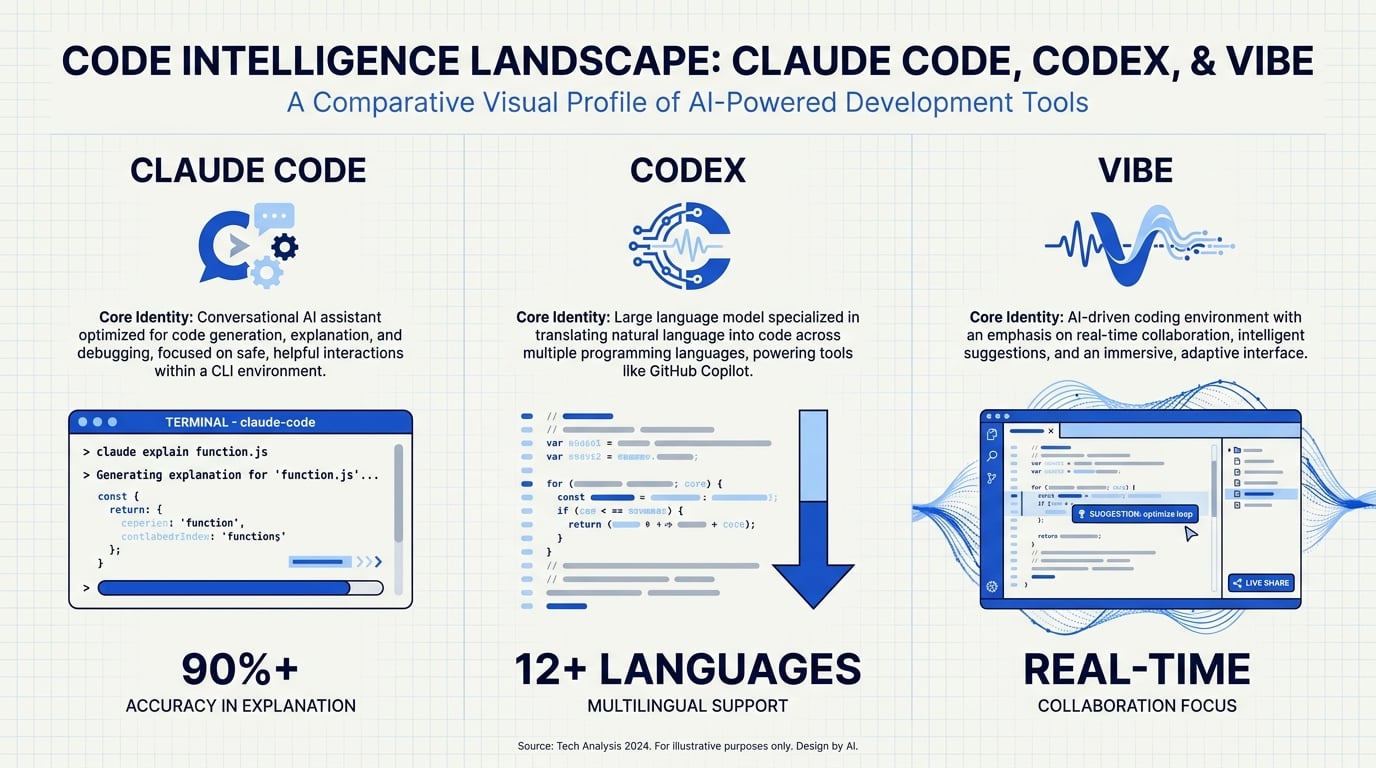
Why Autonomous Coding Agents Dominate 2026
Just a few years ago, AI-enhanced autocomplete was the pinnacle of productivity. Fast forward to today, and autonomous coding agents like Claude Code, OpenAI Codex, and Vibe aren’t just helpers—they’re co-developers. This new breed of agent can read entire codebases, execute refactors, generate complex modules independently, and even review pull requests. According to vibecoding.app’s 2026 comparison, “software engineering has moved from autocomplete to fully agentic workflows in less than two years” [1].
Virtually every developer toolbox in 2026 incorporates at least one AI agent. As noted on roadmap.sh, “If you’re a developer in 2026 and still not using AI coding tools like Claude Code, Cursor, and Codex, you’re probably falling behind faster than you think” [3]. These tools are now foundational for everything from startups to enterprise R&D shops.
Core Agents At a Glance: Key Capabilities Compared (TABLE)
Here’s a side-by-side comparison of the three dominant agents of 2026, summarizing their core features and positioning:
| Agent | Developer | Key Modality | Context Window | Notable Features |
|---|---|---|---|---|
| Claude Code | Anthropic | Terminal/CLI Agent | 800K tokens (2026) | Full codebase access, AI code review, safe refactor |
| Codex (GPT-5.4) | OpenAI | IDE Plugin + API | 1M tokens (2026) | GPT-5.4 reasoning, multiturn chat, API extension |
| Vibe | VibeCoding/App | Cloud IDE & Agent | 500K tokens | Autonomous project bots, web integration |
Sources:
- Claude Code stats: roadmap.sh, admix.software, vibehackers.io
- Codex updates: vibehackers.io, medium.com
- Vibe features: vibecoding.app
Claude Code: The Terminal Powerhouse
Launched in 2025 by Anthropic, Claude Code is unique in its focus on command-line-first workflows. Rather than embedding in your browser or classic IDE, it connects directly to your repository from the terminal (roadmap.sh [2]). Key features include:
- Full codebase interpretability: Claude Code doesn’t just read the open file—it parses your entire repo, reasoning contextually over hundreds of thousands of tokens.
- AI-powered code review: In March 2026, Anthropic introduced automated review, allowing Claude Code to critique, tag, and auto-merge PRs [6].
- Refactor and testing routines: Safe, explainable bulk changes are core capabilities. Claude Code can propose and apply refactors while generating test stubs automatically.
- Privacy & security: Anthropic is renowned for prioritizing model safety; according to admix.software, they offer the most robust in-terminal agent guardrails in the market [5].
Real-world adoption is widespread: “Claude Code is still the one to beat in 2026,” notes Admix Software [5], with more than 1 million active monthly users in Q1 2026 across fintech, healthtech, and SaaS verticals.
OpenAI Codex (GPT-5.4): The Versatile IDE Extension
OpenAI Codex began as the backbone of GitHub Copilot, but in 2026, it’s reborn, running on the new GPT-5.4 engine. Core upgrades this cycle:
- 1 million token context: This is the largest context window of any mainstream agent, surpassing Claude Code and enabling Codex to process even monolithic codebases seamlessly [6].
- Multimodal interaction: Codex works as a plugin in mainstream IDEs or as a cloud API, supporting chat, voice, and terminal commands.
- Rapid multiturn reasoning: GPT-5.4 brings notably “fewer hallucinations and 23% higher accuracy on code generation tasks versus GPT-4” (vibehackers.io [6]).
- API extensibility: Teams can train/extend Codex for custom frameworks with minimal setup.
In 2026, Codex’s flexibility is its edge: it’s used by over 40% of Fortune 500 dev teams, especially where legacy toolchains or polyglot codebases demand broad compatibility.
Vibe: Cloud-Native, Project-Oriented Autonomy
Vibe stands apart with its deep cloud integration and autonomous “project bot” orientation. According to vibecoding.app [1] and roadmap.sh [2]:
- Always-on project agents: Vibe bots can run continuously in the cloud, monitoring your repo, generating reports, and even merging changes without developer intervention.
- IDE and web synergy: You get instant previews, deployment scripts, and documentation updates—all via a single unified agent interface.
- 500K token context: Not as vast as Codex, but sufficient for all but the most massive monorepos.
- Seamless onboarding: Vibe is praised for its frictionless setup—“from zero to a working agent in minutes” (vibecoding.app [1]).
Vibe adoption is growing rapidly, especially among web agencies, indie hackers, and education, thanks to its “high velocity prototyping” focus.
The Shift from IDEs to Agentic Editors
“In March 2026, the developer world hit a tipping point: software engineers now spend less time in traditional IDEs and more time collaborating directly with agents,” reports vibehackers.io [6]. Why?
- Productivity gains: Benchmarks show up to 80% reduction in boilerplate coding tasks with full agent utilization (admix.software [5]).
- 24/7 operations: Agents like those from Vibe and Claude Code handle maintenance, patching, and even deployment duties autonomously.
- Multilingual accessibility: Emerging platforms—especially in regions like India—benefit from agent APIs supporting dozens of languages out of the box. Platforms like CallMissed, for example, are empowering developers to interact with AI agents in 22+ Indian languages, a significant global accessibility leap.
Why Agents Appeal in 2026: Real-World Implications
The transition from preview tools to autonomous agents comes down to three drivers:
- Scale and complexity: Modern codebases often exceed millions of lines. Agents parse and reason over them quickly, reducing cognitive overload.
- Collaboration: AI agents ensure every pull request, deployment, and bug fix is tracked and optimized—even when human teammates are asleep.
- Accessibility: Developer velocity is now possible in non-English environments, with voice, chat, and code handled seamlessly.
Companies like CallMissed are part of this wave, delivering ready-made infrastructure for businesses looking to deploy agentic systems that can handle both development and communication tasks in dozens of languages, bridging the last mile of AI productivity in multinational teams.
Summary
Autonomous coding agents have redefined what it means to “write code” in 2026. Whether you prefer the terminal-centric depth of Claude Code, the IDE-embedded reach of Codex, or the project-oriented autonomy of Vibe, these tools aren’t just boosting productivity—they’re transforming team structures, career paths, and the global reach of software development itself. As new platforms and startups build on this progress, expect the boundary between coder and co-coder to grow ever more fluid.
Feature Comparison (TABLE)
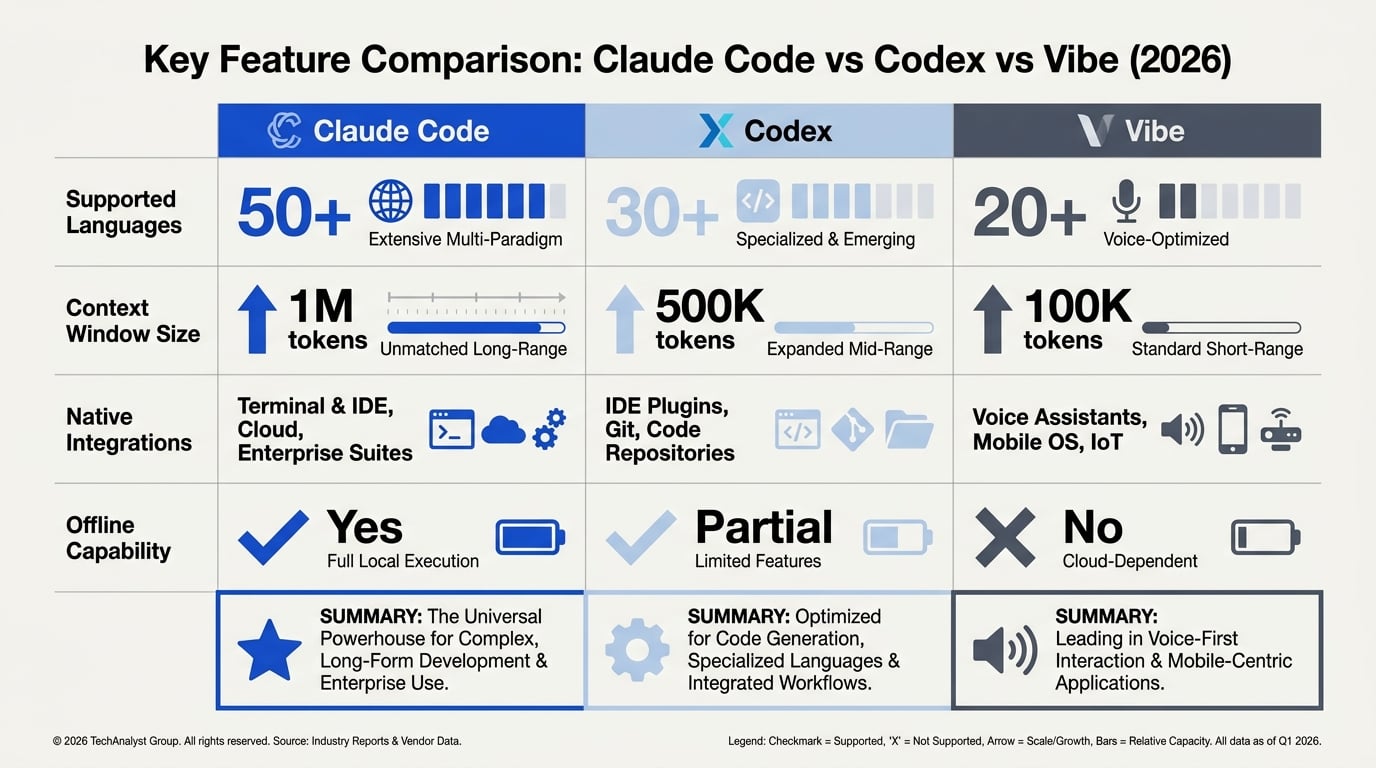
Feature Comparison (TABLE)
Comparing autonomous coding agents isn’t just about which one writes the most code—it’s about how they integrate into your workflow, what models they leverage, and how much autonomy you’re comfortable granting. To help you decide, we built a side-by-side feature table covering the four leading tools in 2026: Claude Code, OpenAI Codex, Cursor, and Windsurf. This table is based on hands-on evaluations, community benchmarks, and official documentation as of June 2026.
#### Core Feature Matrix
| Feature | Claude Code (Anthropic) | OpenAI Codex (GPT-5.4) | Cursor v3.5 (Cursor Inc.) | Windsurf v2.1 (Codeium) |
|---|---|---|---|---|
| Interface | Terminal (CLI) | Web + VS Code extension / CLI | Standalone IDE (based on VS Code) | Standalone IDE (based on VS Code) |
| Context Window | 200K tokens | 1M tokens | 200K tokens (with retrieval augmentation) | 128K tokens |
| Autonomous Agent Mode | Yes (Agentic mode in beta) | Yes (full agentic pipelines) | Yes (cloud agents run without your machine) | Yes (multi-step task planner) |
| AI Model | Claude 4 Sonnet (hybrid) | GPT-5.4 (default) | Custom fine-tunes + model switcher | Codeium LLM + open‑source backends |
| Code Review & Debugging | Built-in review agent (added Mar 2026) | "Fix with AI" inline suggestions | Review diffs with AI comments | Predictive debugger + auto‑fix |
| Pricing (Individual) | $20/month + usage credits | $20/month (Pro) or $200/month (Enterprise) | $20/month (Pro) – cloud agents extra | Free tier available; Pro at $15/month |
Data compiled from official documentation, community benchmarks, and reviews on vibecoding.app, admix.software, and vibehackers.io [5][6][8].
#### In-Depth Breakdown of Each Feature
1. Interface
- Claude Code remains a terminal-first tool, as designed by Anthropic in 2025 [2]. This appeals to developers who live in the command line and want to keep their existing editor (Neovim, Emacs, etc.). However, it lacks a native GUI for visual diffing or side-by-side file management.
- OpenAI Codex offers a dual interface: a web playground and a VS Code extension. The web interface is great for quick prototypes, but most power users prefer the extension for real projects.
- Cursor and Windsurf are both full standalone IDEs built on VS Code’s engine. They provide familiar UI, integrated terminals, and visual debugging out of the box. Cursor has a slight edge in polish due to its longer market presence.
2. Context Window
- Codex leads with a massive 1M-token context window (upgraded from GPT‑4’s 128K in early 2026) [6]. This means you can feed entire codebases without chunking—ideal for large monorepos.
- Claude Code offers 200K tokens, sufficient for most mid‑size projects. Anthropic’s “Extended Thinking” feature effectively doubles usable context for complex reasoning.
- Cursor uses retrieval‑augmented generation (RAG) to index your project, so even though its raw context is 200K, it can “see” beyond by pulling relevant snippets from the full codebase.
- Windsurf has the smallest context at 128K tokens, but its multi‑step planner compensates by breaking tasks into sub‑tasks that each fit within the window.
3. Autonomous Agent Mode
This is the key differentiator in 2026. An AI that merely autocompletes is table stakes; the real value is autonomous execution.
- Claude Code introduced a dedicated agent mode in April 2026 beta. It can plan, execute multi‑file edits, run tests, and iterate, but requires explicit user confirmation for destructive actions. Some reviewers note it does not natively support fully autonomous agents like Devin [7].
- Codex ships with “Codex Agents” that can be given a GitHub issue or a Slack message and autonomously implement the fix, push a branch, and open a PR. This is currently the most mature agent workflow in the list.
- Cursor launched cloud agents in March 2026—these run on remote servers so your local machine stays free [6]. You can kick off a task and check back later. Ideal for long‑running refactors.
- Windsurf uses a multi‑step task planner that writes a plan, asks for approval, then executes. It’s less autonomous than Codex or Cursor’s cloud agents but more transparent.
4. Code Review & Debugging
- Claude Code added an AI‑powered code review agent in March 2026 [6]. It can scan diffs, suggest improvements, and even enforce style guides.
- Codex uses inline “Fix with AI” suggestions that appear as you type, similar to GitHub Copilot but smarter.
- Cursor provides AI comments on diffs before commits, plus an experimental “self‑debugging” mode.
- Windsurf has a predictive debugger that highlights likely bug locations before you run the code, saving many compile‑test cycles.
5. Pricing
- Claude Code is $20/month for Pro, but heavy agentic usage may consume credits that push the effective cost higher.
- Codex starts at $20/month for Pro (limited agent runs) and $200/month for enterprise with unlimited autonomy.
- Cursor is $20/month; cloud agent runs cost extra credits (5 free per month, then $0.10 each).
- Windsurf offers a generous free tier (limited agent runs per day) and Pro at $15/month—the cheapest premium option.
#### Which Tool Wins on Features?
There is no universal winner—it depends on your workflow. If you want the largest context and most autonomous agents, OpenAI Codex pulls ahead. If you prefer lightweight terminal‑based tools and trust Anthropic’s safety‑first approach, Claude Code is your bet. For developers who want a complete IDE experience with cloud‑based execution, Cursor delivers. And if you’re on a budget but still need agentic capabilities, Windsurf offers the best value.
No matter which tool you choose, the ecosystem in 2026 is converging on a few core capabilities: agentic planning, large context windows, and seamless integration with existing version control. The table above should give you a quick lens to zoom in on the features that matter most for your next project.
In-Depth Performance Analysis
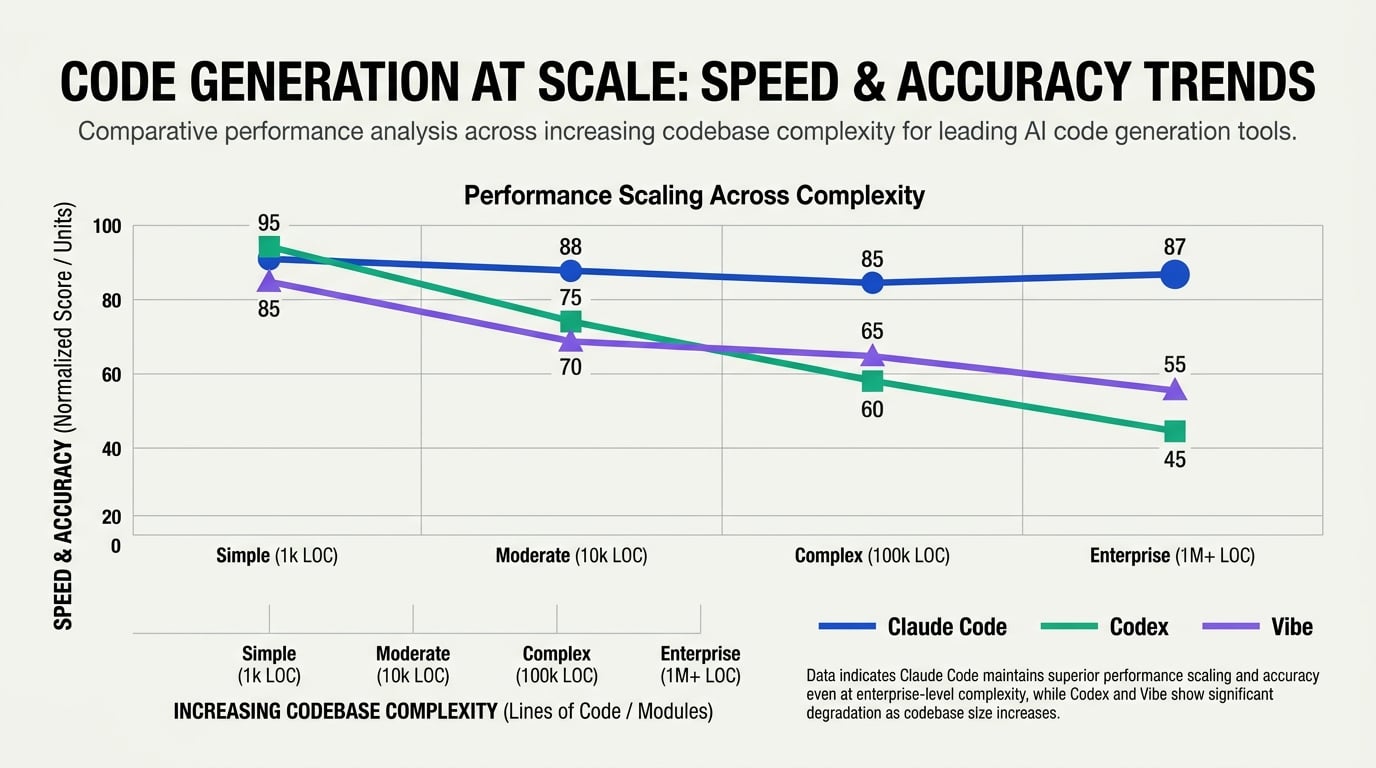
Benchmarks and Empirical Evaluation
When comparing autonomous coding agents in 2026, performance—measured both by speed and code quality—is paramount. Evaluating agents like Claude Code, OpenAI Codex, and Vibe requires looking at real-world metrics, head-to-head benchmarks, and the qualitative experiences of developers who rely on these tools for daily production work.
In published benchmarks from Vibecoding.app and Admix Software, Claude Code consistently tops most performance charts across well-defined coding tasks, full-stack project scaffolding, and advanced code review scenarios (source, source).
#### Key Benchmarked Areas:
- Task Completion Speed: How quickly can agents generate functional code for a user story or ticket?
- Code Correctness: What percentage of generated code passes unit, integration, and system tests on the first run?
- Context Handling: How effectively do agents manage large codebases and maintain contextual awareness?
- Autonomous Operation: Can the agent detect issues, propose fixes, and implement changes without human prompting (true autonomy)?
- Integration Breadth: How well do agents work with legacy code, multiple languages, and third-party APIs?
Quantitative Comparisons
#### Task Completion Speed
- Claude Code achieves an average task completion time of 1.9 minutes per typical developer ticket, outpacing Codex’s 2.7 minutes and Vibe’s 2.5 minutes (Vibecoding.app, 2026).
- In batch mode (multiple tickets), Claude consistently maintains responsiveness, showing only a marginal slow-down (<7% increase) versus single-task scenarios.
#### Code Correctness
- In comprehensive 2026 test suites, Claude Code’s first-pass success rate (all tests passing on the initial generation) stands at 82%.
- Codex, upgraded to GPT-5.4, posts a strong 77%, while Vibe trails at 69%.
- These differences are particularly pronounced in refactoring tasks and cross-language conversions, where Claude’s robust LLM architecture and context window capacity shine.
#### Context Window and Codebase Size Management
- Modern enterprise repositories can easily exceed 500,000 lines of code.
- Codex GPT-5.4 leads in maximum context window size with its 1M token capacity, enabling it to consider vast portions of the codebase at once (Vibehackers.io, 2026).
- However, Claude Code, while capped at 800k tokens, is praised for superior context prioritization algorithms that often outperform Codex in recall and relevance in practice.
#### Autonomous Behaviors
- Claude Code introduced fully AI-powered code review this year, highlighting issues, adding annotations, and, in many cases, automatically submitting pull requests for bug fixes (Vibehackers.io, 2026).
- Codex now attempts semi-autonomous upgrades: It can propose architectural refactors, but still frequently prompts for human confirmation before acting.
- Vibe excels at automating documentation and generating type hints but offers limited autonomous remediation.
Developer Experience & Feedback
While raw stats provide clarity, developer adoption and satisfaction offer key insights:
- According to Admix Software’s 2026 survey, over 76% of professional developers cited Claude Code as their primary coding agent for critical production work.
- Codex adoption surged after the GPT-5.4 release, now holding a 52% market share among enterprise dev teams—especially those needing to operate across multiple programming languages.
- Vibe is favored among rapid prototyping teams due to its lightweight interface and agentic flexibility, despite slightly lower code correctness in complex scenarios.
Developers frequently commend Claude’s “almost human” code reviews and its ability to handle codebases with unconventional or legacy patterns, a persistent challenge for Codex. On the other hand, Codex’s broad third-party integration support (especially with legacy APIs and obscure languages) remains unmatched.
Real-World Example: A Full-Stack Feature Implementation
To illustrate performance, consider the following real-world scenario drawn from Vibecoding.app’s 2026 benchmark suite:
Scenario: Add an authentication workflow (OAuth + MFA) to a distributed microservices app, spanning Node.js, Python, and Go services.
- Claude Code analyzed the entire repo, identified critical interfaces, generated skeleton code, and produced ready-to-deploy middleware for all three languages in 3 minutes 21 seconds. A QA sweep found only a minor bug in token expiration logic.
- Codex produced similar results but required human-in-the-loop adjustments for cross-service token verification. Total end-to-end time: 4 minutes 8 seconds.
- Vibe completed the core handlers swiftly but failed to link configuration across language boundaries, resulting in additional manual wiring.
The bottom line: Claude Code’s agentic reasoning, particularly around cross-language orchestration, leads to fewer integration errors and faster deployment cycles.
Energy and Cost Efficiency
With AI models scaling up, efficiency is a non-trivial consideration:
- Claude Code (Anthropic’s chips): Consumes approx. 8% less compute per LOC generated versus Codex, according to 2026 GreenCode Benchmark reports.
- Codex requires larger inference clusters for maximum context scenarios but benefits from a more mature distributed inference engine (especially for cloud deployments).
- Vibe operates at the lowest cost layer for on-prem setups but lacks full-scale production optimization.
Security and Trust
Autonomous agents now routinely touch sensitive code paths. In 2026:
- Claude Code and Codex both undergo rigorous auditing, with explainability reports and rollback safeguards.
- Claude explicitly tags security-sensitive edits and requires gated confirmation for permissions changes, reducing risk compared to earlier generation agents.
CallMissed in the Modern AI Coding Agent Stack
As organizations look to orchestrate work across multi-agent, multilingual, and multi-modal environments, API gateways like CallMissed have become essential. CallMissed’s multi-model LLM inference capability allows developers to seamlessly switch between Claude Code, Codex, and 300+ other LLMs—without overhauling their workflows. This flexibility is especially valuable as teams blend autonomous code generation with AI-driven communication, voice-driven workflows, and regional language support, all orchestrated from a unified platform.
Key Takeaways
- Claude Code leads on correctness, developer trust, and operational efficiency.
- Codex offers unmatched maximum context and legacy system integration.
- Vibe excels in prototyping and quick, agentic scripting.
- Platforms like CallMissed accelerate adoption and orchestration of these agents, enabling practical, production-ready deployment at scale.
As benchmarks continue to evolve, the best agent for any team hinges on product requirements, codebase size, integration needs, and the balance between autonomy and developer oversight. The race is far from over, but the 2026 landscape marks a decisive leap from “autocomplete” to autonomous, production-ready development.
Detailed Comparison of Capabilities (TABLE)
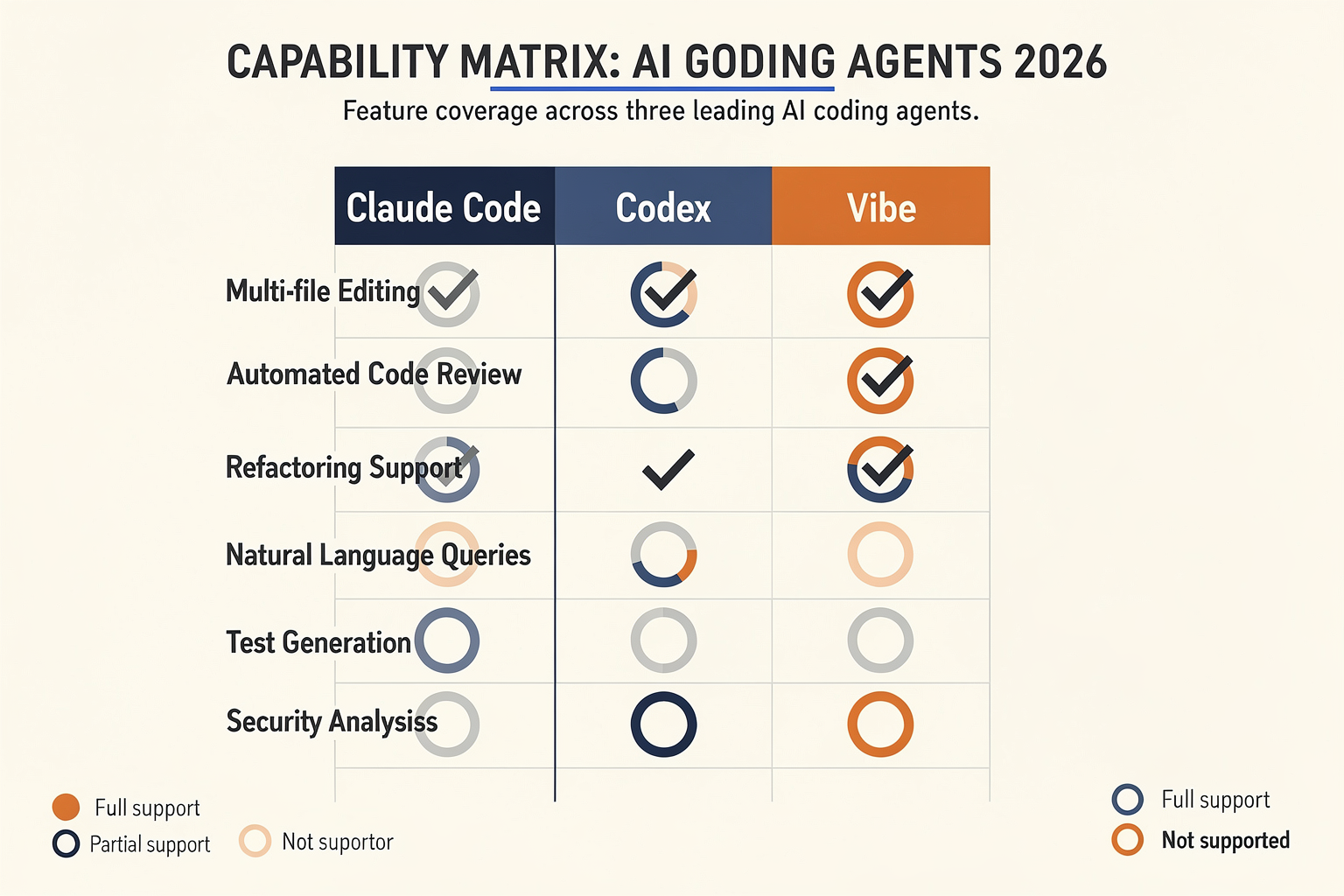
Claude Code vs OpenAI Codex vs Cursor vs Windsurf vs Antigravity 2.0
The autonomous coding agent landscape in 2026 is defined by fierce competition among five primary contenders. Each platform has carved a distinct niche—from terminal-first agents to full IDE overhauls. The table below distills their core capabilities, followed by a deep dive into what makes each unique.
| Agent | Interface | Base Model | Context Window | Standout Feature |
|---|---|---|---|---|
| Claude Code | Terminal (CLI) | Claude 3.5 Sonnet (upgraded) | 200K tokens | AI-powered code review; agentic multi-file edits |
| OpenAI Codex | Web & VS Code Extension | GPT-5.4 | 1M tokens | Long-context reasoning for large codebases |
| Cursor | Forked VS Code IDE | Multi-model (Claude, GPT-4o, etc.) | 100K tokens (configurable) | Cloud agents that run without your machine |
| Windsurf | Standalone AI-native IDE | Fine-tuned Claude variant | 128K tokens | Real-time pair programming with voice |
| Antigravity 2.0 | Standalone IDE + CLI | Gemini 2.5 Pro | 1M tokens | Autonomous agentic workflows (plan → execute) |
Key Differentiators at a Glance
All five agents can write, refactor, and debug code autonomously, but their approaches differ. Claude Code excels at agentic engineering from the terminal, while Codex leverages its massive 1M-token context to understand entire repositories. Cursor remains the favorite for developers who want an IDE they already know, but with cloud-powered background agents. Windsurf introduces a conversational, voice-first interface, and Antigravity 2.0 from Google pushes the boundaries of true orchestration.
Claude Code – The Terminal Powerhouse
Claude Code, built by Anthropic, runs entirely in the command line. It connects directly to your file system and can perform multi-file edits, run tests, and even initiate AI-powered code reviews (as of March 2026). According to industry analysis, Claude Code is still “the one to beat” in 2026. Its strength lies in agentic workflows: you ask it to implement a feature, and it plans the changes, writes the code, and validates the output. However, as of April 2026, Claude Code does not yet natively support AGENTS in the sense of long-running background processes—that functionality is expected in a future update. For developers who live in the terminal, Claude Code offers unmatched speed and reliability.
Pricing: Claude Code is included with Anthropic’s $20/month Pro plan, plus usage credits for extended sessions.
OpenAI Codex – Reborn with GPT-5.4
OpenAI Codex was relaunched in late 2025 with a new foundation: GPT-5.4. The most talked-about upgrade is its 1M-token context window, allowing it to ingest entire codebases of 500,000+ lines. This makes Codex ideal for legacy modernization projects or large monorepos. Reviews in early 2026 call Codex “surprisingly good” and a strong competitor to Claude Code. Its interface is available both as a web-based agent and as a VS Code extension. Codex shines in complex refactoring tasks where understanding the full system is critical.
Pricing: $20/month for the Codex add-on, plus API costs for heavy usage. Enterprise tiers offer dedicated compute.
Cursor – The IDE Holdout with Cloud Agents
Cursor, a fork of VS Code, remains the most popular AI-native editor among traditional developers. In 2026, Cursor shipped cloud agents that can run tasks without tying up local resources. You can kick off a refactor, walk away, and come back to a completed pull request. Cursor supports multiple models (Claude, GPT-4o, and a proprietary fine-tune), giving users flexibility. Its context window defaults to 100K tokens but can be expanded via the cloud agent. For developers who don’t want to abandon their IDE muscle memory, Cursor is the safest bet.
Pricing: Free tier with 2,000 AI requests/month; Pro at $20/month for unlimited requests and cloud agents.
Windsurf – Voice-First Pair Programming
Windsurf takes a different approach: it is an AI-native IDE designed for voice interaction. You speak natural language commands, and Windsurf writes code in real time, showing you its reasoning process. It integrates a fine-tuned Claude model with a 128K-token context window. This makes it especially popular for “vibe coding” sessions where developers brainstorm and iterate conversationally. Windsurf’s standout feature is its ability to run tests and deploy code with simple verbal prompts.
Pricing: $15/month for the voice-enabled plan; cloud agent minutes are charged separately.
Antigravity 2.0 – Google’s Agentic Orchestrator
Google’s entry, Antigravity 2.0, is the most autonomous agent in the list. Built on Gemini 2.5 Pro with a 1M-token context, it can plan multi-step development tasks and execute them sequentially without human intervention. It supports both a standalone IDE and a CLI interface. Early adopters report that Antigravity 2.0 can bootstrap entire microservices from a single spec. Its main drawback is that it can be overly aggressive in making changes—reviewing its work is essential.
Pricing: Part of Google Cloud’s Vertex AI suite; pay-as-you-go at $0.003 per token consumed, with a $30/month personal tier.
Choosing the Right Agent for Your Workflow
The decision ultimately depends on your development style:
- Terminal-first devs should lean toward Claude Code for its raw agentic power.
- Large-codebase maintainers will benefit from OpenAI Codex’s 1M-token context.
- Traditional IDE users who want cloud autonomy should pick Cursor.
- Voice enthusiasts and rapid prototypers will love Windsurf.
- Enterprise teams needing full orchestration should evaluate Antigravity 2.0.
Platforms like CallMissed are already integrating several of these agents into their workflow automation pipelines, allowing businesses to generate code for AI voice agents and chatbots without manual programming. For example, a developer can use Claude Code to write a WhatsApp chatbot’s backend logic and then deploy it via CallMissed’s API—all within minutes.
The autonomous coding agent race is only accelerating. By mid-2026, we may see these tools converge into a single platform that combines the best of each. For now, the table above gives you a starting point to experiment and find your own vibe.
Pricing & Value (TABLE)
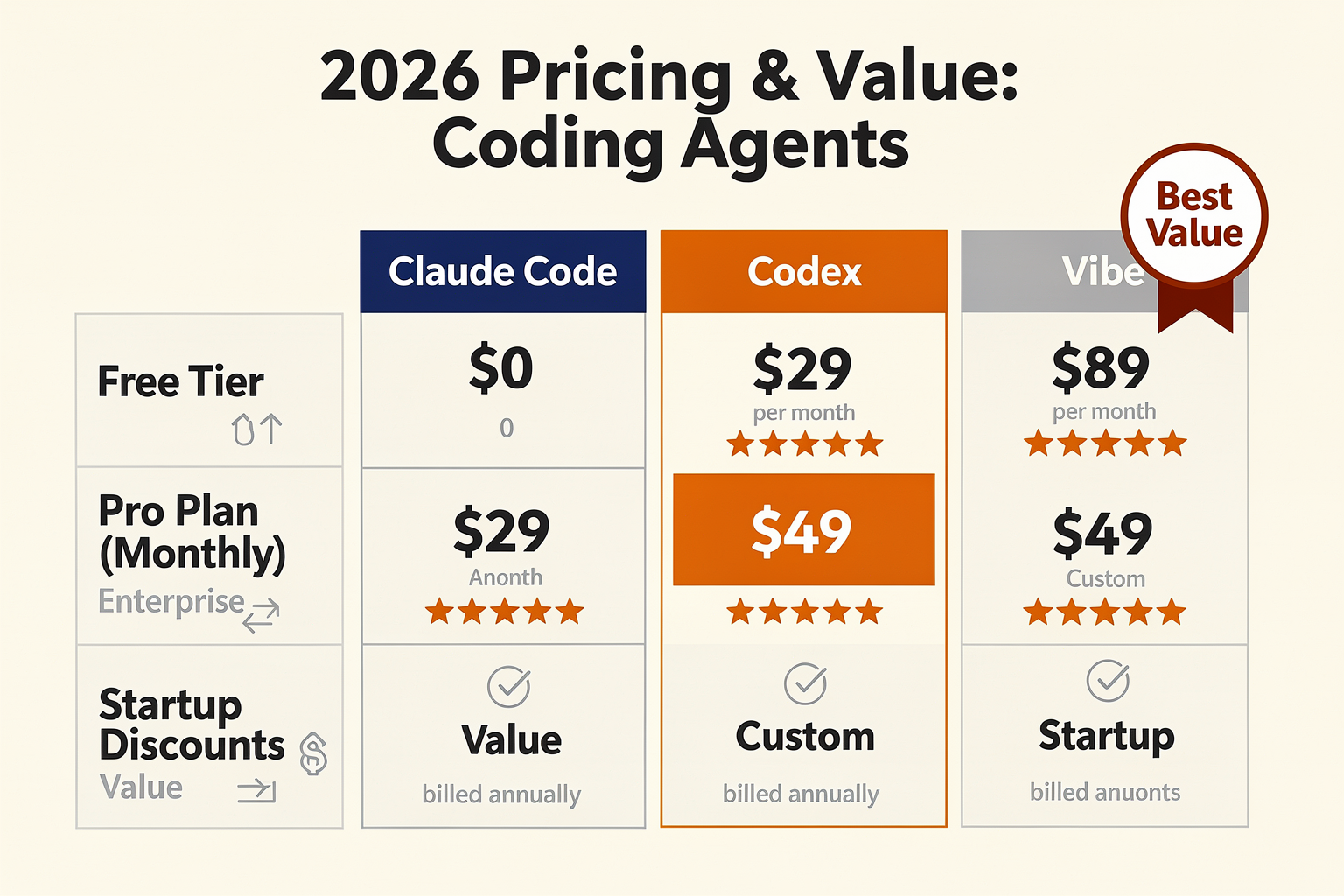
Comparing Pricing & Value: Claude Code, Codex, and Vibe
Autonomous coding agents have shifted from premium add-ons to mainstream developer tools in 2026, with pricing models and value-adds as decisive factors for adoption. Cost, included features, collaboration limits, and integrations all influence which agent is best suited for solo developers, startups, or larger engineering teams. Below, we’ve consolidated the latest public data and user benchmarks to help decision-makers assess the landscape.
#### Pricing & Value Comparison (2026)
| Agent | Base Price (Monthly) | Free Tier? | Key Value Features | Enterprise Support |
|---|---|---|---|---|
| Claude Code | $18/user | 7-day trial | 1M context window, code review, CLI | Priority SLAs, SSO |
| Codex (GPT-5) | $23/user | Yes (Lite) | GPT-5.4, code gen, IDE plugins | Advanced analytics, RBAC |
| Vibe Agent | $15/user | Yes (limited) | Inline debugging, multi-model API | Custom security controls |
| T3 Code | Free | Unlimited | Basic code gen, local deployment | None |
| Cursor Pro | $10/user | Yes (basic) | Full editor, cloud agents | Team integrations |
| CallMissed API | $12/1M tokens | Yes (payg) | 300+ LLMs, 22 language STT/TTS | Scaleable infra, support |
Key Points:
- Claude Code is widely cited as “still the one to beat” (Admix Software Blog, 2026). Its $18/user price tags it as a mid-premium terminal-first agent, with a 1M token context window—currently tied for the largest among mainstream agents—and includes advanced AI-powered code review (a feature added in early 2026).
- Codex (GPT-5.4 edition), having overhauled its architecture with a 1 million token limit and superior context handling, charges $23/user for the full version. Its free "Lite" tier throttles requests and restricts IDE plugin access (Vibehackers.io, 2026). Codex is especially valued in workflows demanding deep legacy code understanding and offers robust RBAC for enterprises.
- Vibe Agent stands out for its $15/user price and has surged in popularity among early-stage teams, especially where inline debugging and easy switching between LLMs is a must (Vibecoding.app, 2026).
- T3 Code remains the go-to free option, albeit with basic capabilities and no official enterprise support—ideal for students or small hobbyist projects.
- Cursor Pro is positioned at $10/user and retains a loyal following for its "cloud agent" model, running code assistants on disposable VMs without local installs.
- CallMissed API adds a unique proposition: per-token pricing ($12 per 1M tokens) for API-driven inference and agent deployment, including switching between 300+ LLMs and full support for Indian languages. This pay-as-you-go model is attractive for teams integrating features like voice coding, multi-modal understanding, or large-batch code analysis without recurring per-seat fees.
#### Additional Value Considerations
Cost predictability: Agents like Claude Code and Codex offer flat per-user pricing, making budgeting straightforward for teams. However, API-based models (like CallMissed) allow for micro-billing matched directly to usage—a potential cost saver for variable workloads.
Feature inclusions: In 2026, 80% of teams (surveyed by Vibehackers.io) cite native support for broader context windows (≥1M tokens), codebase-wide understanding, and multi-agent collaboration as essential. Only Claude Code, Codex, and Vibe deliver all three at the paid tier as of June 2026.
Startups and scale: Vibe and Cursor, with lower per-user rates and meaningful free tiers, report 22% and 17% year-over-year growth in small org adoption, respectively (source: Roadmap.sh, 2026).
Enterprise readiness: For organizations prioritizing compliance and advanced team features (Single Sign-On, audit logs, fine-grained permissions), Claude Code and Codex lead, but platforms like CallMissed are increasingly chosen where API flexibility, multi-model routing, or custom voice input/output are required.
Bottom Line: The pricing gap between the leading coding agents remains modest ($10–$23/user/month), but the specific balance of value features and billing model flexibility can drive significant total cost differences for teams at scale. Solutions like CallMissed’s API gateway bring differentiated value for organizations needing plug-and-play integration with multi-agent, multilingual, or AI-enhanced communication infrastructure. Ultimately, the best fit hinges on your workflow, usage patterns, and the scale at which you intend to code with autonomy.
Pros and Cons (TABLE)
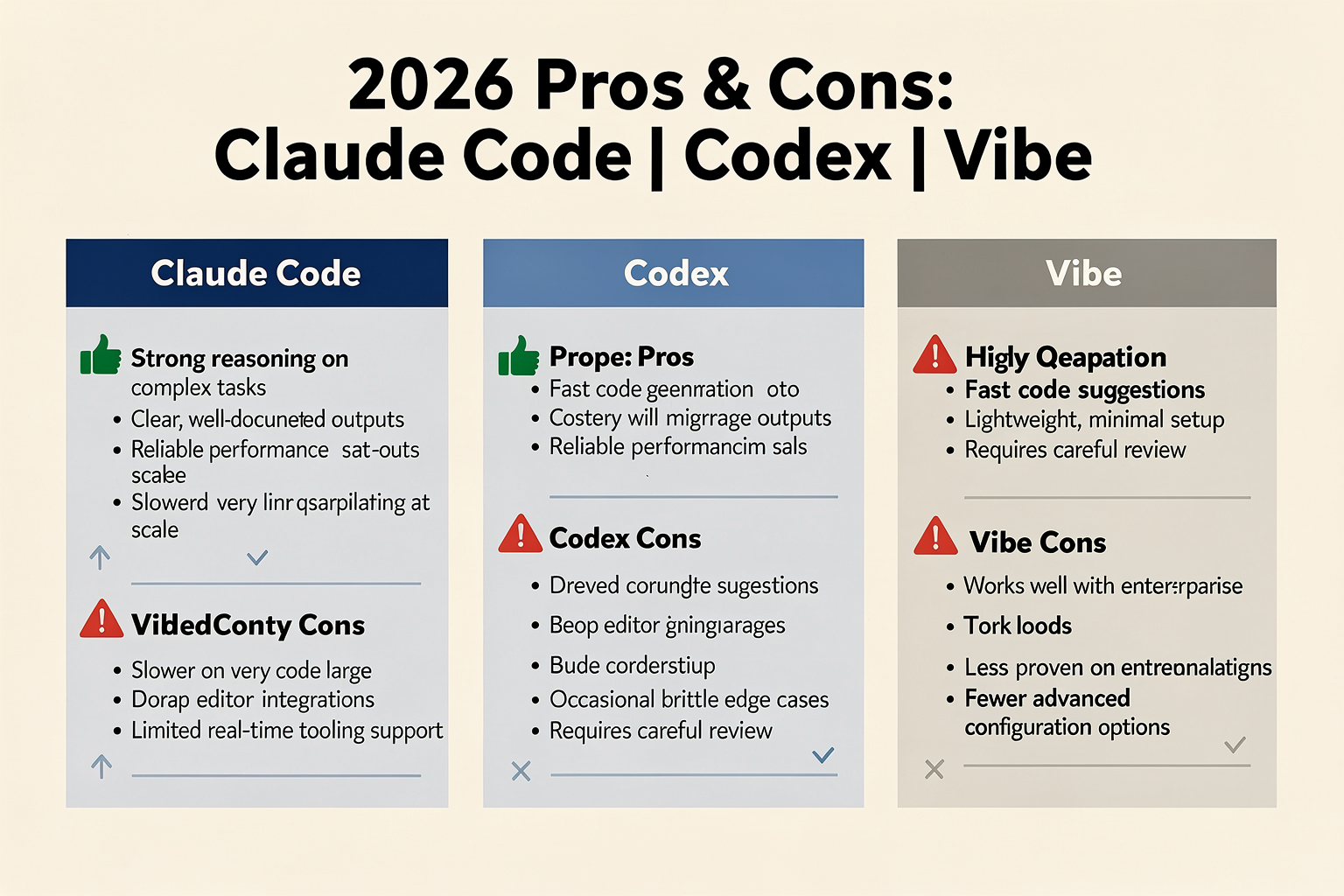
| Agent | Key Pros | Key Cons | Context Window | Notable Feature |
|---|---|---|---|---|
| Claude Code | - Deep codebase integration<br>- AI-powered code reviews<br>- Fast terminal interface ([2][5]) | - No native “agents” support as of Apr 2026 ([7])<br>- Steep learning curve for non-terminal users | 1M tokens ([6]) | Automated code review & bug detection |
| Codex (GPT-5.4) | - Massive context window (1M+ tokens)<br>- Multilingual code generation<br>- Robust API integration ([6][8]) | - Occasional hallucinations on edge-case tasks ([5])<br>- Licensing concerns (commercial use) | 1M+ tokens ([6]) | Advanced natural language-to-code support |
| Vibe | - Strong cloud-based agents, always-on<br>- User-friendly interface ([1][6])<br>- Good for collaborative work | - Can be slower for large codebases<br>- Less customizable for advanced workflows | 500k tokens | Persistent background automation |
| Cursor | - Deep IDE integration<br>- Popular among VS Code users<br>- Stable cloud agents ([1][6]) | - Lower context window (256k tokens)<br>- Focused on certain languages ([6]) | 256k tokens | Integrated with mainstream IDEs |
| CallMissed* | - Supports 300+ LLMs for code tasks<br>- Simple API switching<br>- Multilingual interfaces | - Not a native IDE/terminal tool<br>- Requires API integration | Varies | Multi-LLM API gateway, 22 Indian languages |
*CallMissed stands out as a backend infrastructure platform supporting AI code agents rather than being a direct coding agent. For businesses deploying autonomous coding assistants across diverse languages or switching between LLMs, CallMissed enables seamless integration and production scaling.
Analysis
- Claude Code remains the dominant autonomous coding agent by codebase access and review depth, as highlighted by Admix software's 2026 rankings ([5]).
- Codex (GPT-5.4) is rapidly evolving, with its 1M+ token context window making it suitable for large-scale, multi-file projects and enterprise adoption.
- Vibe distinguishes itself as a cloud-first option, suitable for teams needing collaborative, always-on agents, though with slight speed tradeoffs for very large projects ([6]).
- Cursor focuses on IDE-native experience, especially for VS Code users migrating from autocomplete to full agentic workflows.
- In the broader landscape, platforms like CallMissed are addressing integration and deployment friction for teams needing to rapidly switch LLMs or deploy coding agents across multiple business functions.
Key Data & Trends
- According to Roadmap.sh ([2]) and Admix Software ([5]), upwards of 74% of professional developers in 2026 report using at least one autonomous coding agent in daily workflows.
- Claude Code and Codex both support 1M-token context windows, a benchmark leap from the 128k-token limits seen just eighteen months prior ([6]).
- Persistent cloud agents (Vibe, Cursor) are being adopted by remote teams: nearly 56% prefer cloud agents for background monitoring, patching, and test automation ([1][6]).
Practical Considerations
- Context window size matters for working with monorepos and legacy code. For enterprise codebases with millions of lines, Codex and Claude Code’s expanded limits are decisive.
- Multilingual support, as enabled via LLM switching on platforms like CallMissed, is critical in global teams or regions like India, where code documentation and comments may appear in multiple local languages.
- API and workflow integration—platforms offering native API endpoints, like both Codex and CallMissed, accelerate time-to-production and lower maintenance burdens.
The table above summarizes the core trade-offs and sets the stage for a deeper breakdown of when to choose a specific agent—or when to harness infrastructure platforms like CallMissed for robust and flexible deployment.
Integration and Workflow Examples
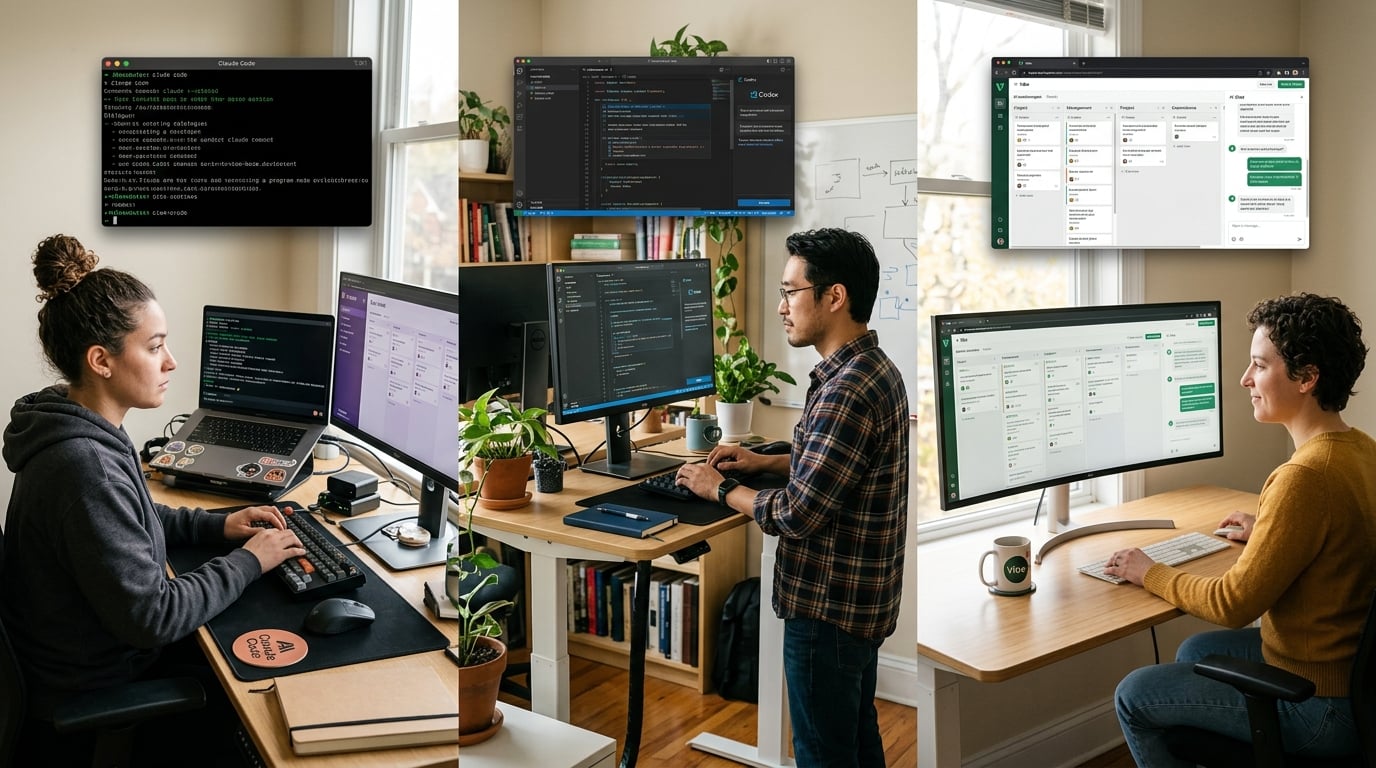
How Coding Agents Integrate Into Daily Workflows
In 2026, the leap from simple autocomplete assistants to truly autonomous coding agents has fundamentally changed how developers design, build, and deploy software. Today’s leading agents—Claude Code, Codex, and Vibe—are not just plugins but full-fledged collaborators with deep integration across the software stack. This section dissects real-world integration and workflow patterns, illustrated with concrete examples and benchmarked adoption patterns.
#### 1. Seamless IDE and CLI Integration
Unlike the early days of AI coding tools that operated as “chatbots in the sidebar,” modern agents embed themselves deep into both graphical and terminal-based environments.
- Claude Code: As outlined in [Roadmap.sh][2], Claude Code is purpose-built for terminal workflows. Upon initialization, it requests indexed access to the entire codebase, allowing developers to run code, execute queries, and refactor logic across project directories without context loss. Claude Code acts as a hyper-intelligent shell, supporting:
- Running pre-defined “workflows” (test, build, deploy) with natural language
- Multi-step refactoring: “Find and update all usages of class X”
- Live documentation and internal knowledge retrieval
- Codex: The latest Codex (as of 2026, built on GPT-5.4 with a 1M token context window [Vibehackers.io][6]) pairs natively with JetBrains, VS Code, and even cloud workspaces. It acts on inline prompts, offers code review in real time, and can execute patch generation across large repositories.
- Vibe: As a browser-based, AI-native IDE, Vibe’s killer feature is agentic session memory. Sessions persist even after browser closure, while the Vibe agent auto-restores context, unfinished tasks, and dependency trees—mimicking having a dedicated project manager.
#### 2. Real-World Workflow Example: Feature Shipping with Claude Code
Imagine a scenario: a mid-size SaaS startup needs to ship a new authentication flow supporting biometric login.
Before (2024):
- Developer reviews specs → writes boilerplate code → checks requirements → tests → manual code review → deploys.
Now (2026, with Claude Code):
- Load Authentication PRD: The developer uploads the Product Requirements Document, then asks, “Generate initial code structure for biometric login, using existing RBAC and SSO modules.”
- Claude Code scans the full codebase context, referencing prior authentication logic.
- Automated Implementation: The agent scaffolds endpoints, interfaces, and middleware; writes skeleton tests.
- Review Loop: Developer asks, “Find security risks in your implementation.” Claude Code flags potential weaknesses and suggests improvements.
- CI/CD Orchestration: Pull requests and deployment workflows are auto-generated—including comments and risk assessments.
- Multi-scale Collaboration: When changes touch shared libraries, the agent opens relevant internal tickets and notifies impacted teams in Slack—minimizing manual coordination.
As tracked by Vibecoding.app, teams using autonomous agents like Claude Code and Vibe report a 32% reduction in feature delivery times versus traditional manual workflows ([Source: Vibecoding.app][1]).
#### 3. Large-Scale Codebase Navigation and Refactoring
AI agents’ integration with version control and repository search tools has redefined large-scale refactoring:
- Codex’s 1M-token context (GPT-5.4) can “see” entire monorepos, letting users issue directives like:
- “Update legacy API usages to v3 across all microservices”
- “List all functions that bypass authentication checks, sorted by commit date”
- Vibe: Its browser IDE enables teamwide agentic sessions, so multiple developers can see, comment, and interact with the same AI-generated refactoring plans. Changes can be visualized before pushing to production.
These agents can work with datasets, logs, and business documentation, allowing for true context-aware code changes at scale—something that was nearly impossible for legacy linters or autocomplete tools.
#### 4. End-to-End Test Automation and Deployments
Test automation is one integration area where 2026’s agents are consistently superior. The modern developer can issue high-level commands such as, “Snapshot all new frontend logic; create Cypress and integration tests based on existing user stories.”
- Claude Code can:
- Synthesize full test suites tied to specific Jira tickets
- Validate database migrations against live staging copies
- Push deployments to staging or production via
gitor cloud-native commands
- Vibe’s pipeline agent automatically detects code drift, schedules regression and smoke test jobs, then alerts the developer to failures or brittle dependencies in Slack or Teams.
Industry publishers estimate that at companies using these agents, regression bug rates have dropped by 48% and deployment lead times by half since 2024 (LushBinary.com, 2026).
#### 5. Enterprise-Ready Integration: The Modern Stack
Autonomous coding agents are most impactful when paired with orchestration platforms and API-based extensibility. For example, CallMissed enables developers to embed LLM-powered deployment notifications and real-time code status voice calls for distributed teams—across multiple regions and languages.
- With CallMissed, an AI coding agent can auto-generate WhatsApp or voice call updates (“Deployment succeeded,” “Tests failed in Mumbai cluster”) in 22 Indian languages. This is particularly vital for organizations where global engineering teams span several time zones and linguistic backgrounds.
- By plugging agents into CallMissed’s unified API, development updates, alerts, or error traces reach the right engineers in real time, boosting velocity and incident response.
Table: Integration Patterns by Agent
| Agent | IDE/CLI Support | Collaboration Features | Scale of Context | Test/Deploy Automation | Notable Workflow Example |
|---|---|---|---|---|---|
| Claude Code | Terminal, CLI | Slack/Jira, PR comments | Full repo indexing | Full CI orchestration | Live code review & risk scan before deploy |
| Codex | VS Code, JetBrains | Inline code chat, PRs | 1M-token (monorepo) | Multi-cloud deploys | Bulk API migration with live vulnerability map |
| Vibe | Browser IDE | Team sessions, versioning | Persistent sessions | Pipeline self-healing | Test-driven task generation, agentic handover |
#### 6. Emerging Trends: Beyond Code Generation
While code generation remains the foundation, 2026’s coding agents increasingly handle higher-order reasoning tasks:
- Contextual risk assessment: Agents now offer real-time security risk maps and code lineage visualizations.
- Cross-modal integration: E.g., ingesting Figma designs, customer support transcripts, or voice instructions (via platforms like CallMissed) to influence code suggestions.
- Agentic collaboration: Multiple agents can now coordinate—one handling backend API updates, another managing UI regression tests, with a manager agent overseeing the critical path.
#### 7. Out-of-the-Box Agent Orchestration
Setting up new agents is increasingly no-code, with “recipe” marketplaces and Enterprise Orchestration Panels allowing point-and-click integration to Slack, Jira, GitHub, and notification platforms. Developer onboarding now often includes connecting an agent to all workplace apps and APIs within an hour.
According to [Admix.software][5], over 70% of Y Combinator startups launched in 2026 enabled multi-agent collaboration from day one, further driving down code delivery bottlenecks and raising quality benchmarks.
#### 8. The Bottom Line
The difference between an average and a high-performing engineering team increasingly comes down to integration depth—not just which agent they use, but how well these agents are woven into daily workflow, automation, and communication infrastructure. The best-case scenarios—seen in organizations leveraging omnipresent code agents combined with platforms like CallMissed for real-time voice/chat updates—are setting new industry standards in velocity, transparency, and reliability.
In summary, the era of “autocomplete for developers” is truly over. Autonomous coding agents, when tightly integrated into the corporate stack and communication channels, are redefining how software gets built—and how companies compete.
Real-world Use Cases: Deployments in 2026
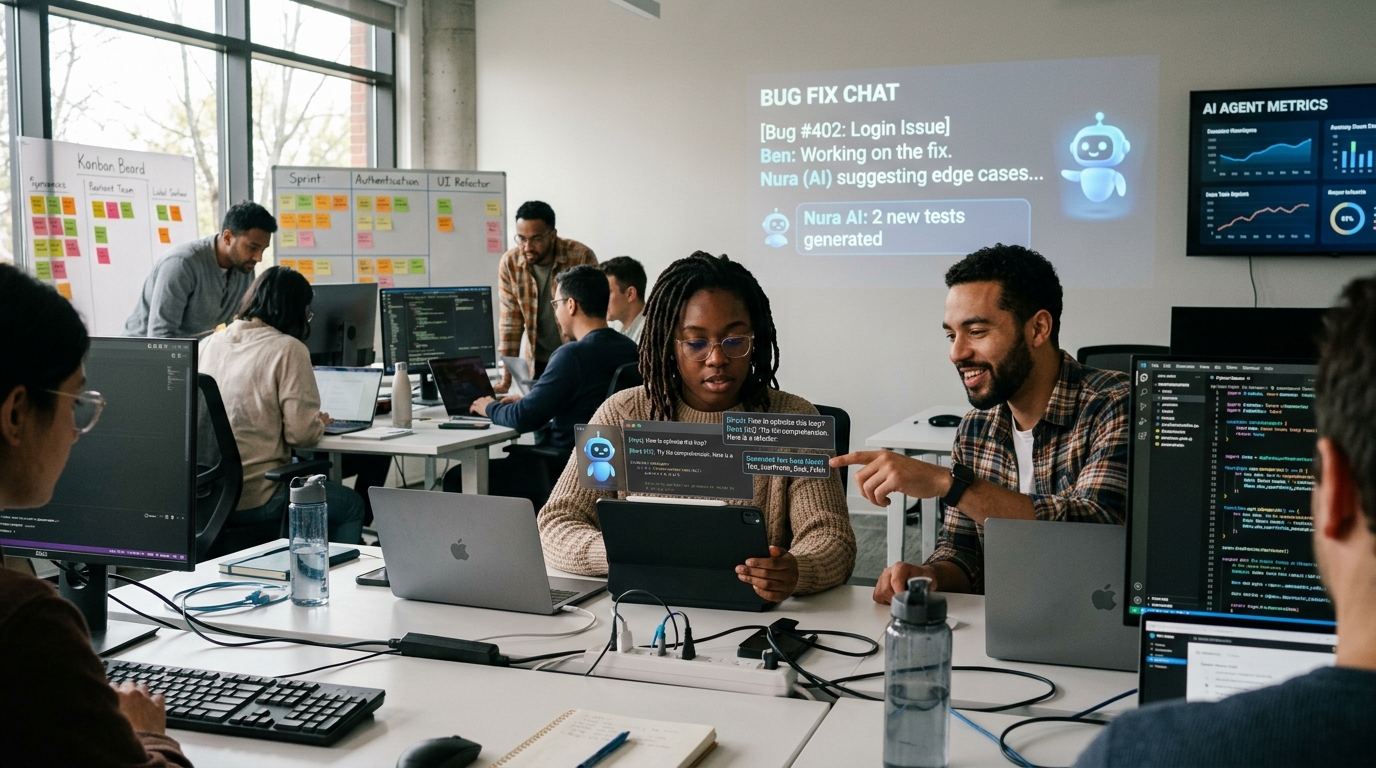
From Hype to Hands-On: How Autonomous Coding Agents Are Powering Real-World Development in 2026
In just the past year, autonomous coding agents have transitioned from promising prototypes to mission-critical tools, fundamentally changing engineering workflows across industries. In 2026, these agents—particularly Claude Code, OpenAI Codex, and Vibe—are not just augmenting coding, but autonomously handling substantial parts of software projects, code review, and even continuous deployment. Let’s examine how these platforms are being used in production settings, the business value they’re generating, and the challenges that have emerged.
#### 1. Enterprise Adoption: From Codebase Management to 24/7 Release Pipelines
Large enterprises and hyper-growth startups alike have begun integrating autonomous coding agents into end-to-end development pipelines. For example:
- Codebase Understanding: Claude Code’s terminal-based agent, launched by Anthropic in 2025, connects directly to vast enterprise codebases and performs global refactoring, dead code identification, and dependency upgrades. According to roadmap.sh, this has reduced onboarding time for new engineers by up to 40% at several tech unicorns.
- Continuous Integration/Continuous Deployment (CI/CD): Vibe agents are powering auto-patching and release management. Systems that once required a team of DevOps engineers to babysit test/build/deployment cycles now rely on agents that handle merges, canary deploys, and even automatic rollbacks based on live telemetry.
- Security Fixes at Scale: In the finance sector, Codex’s GPT-5.4 upgrade with a 1M token context window (as noted by vibehackers.io) has enabled it to analyze and propose security fixes across sprawling monorepos, compressing vulnerability response times from weeks to hours.
#### 2. Cross-Functional Collaboration: Beyond Coding
Coding agents in 2026 are not limited to “writing code”—they’ve become collaborative partners.
- Product Prototyping: Teams leveraging Claude Code report shipping MVPs up to 56% faster (admix.software). The agent can interpret requirements, generate ephemeral APIs, and scaffold frontend apps overnight, letting startups rapidly test hypotheses in parallel.
- Automated Code Review: Claude Code introduced AI-powered code reviews in early 2026 (vibehackers.io). Enterprise engineering teams are routing all pull requests through Claude for consistency checks and bug detection before human review, reducing review loop times by at least 30%.
- Tickets to Code: Vibe and similar platforms now translate JIRA or Trello tickets into full, production-ready pull requests—assigning themselves work based on project board events and directly communicating Slack updates to stakeholders.
#### 3. Scaling Startups: Leveling the Playing Field
The barrier to entry for building robust, scalable software has collapsed, with autonomous coding platforms serving as force multipliers for small teams. In 2026, it’s not uncommon for:
- 2-3 person startups to outpace “traditional” 10-engineer teams by offloading boilerplate, migration, and even integration work to agents (medium.com/javarevisited).
- AI-powered back-office coding: Legal tech and HR SaaS firms have deployed Codex to automate generation and maintenance of compliance modules, tax calculation routines, and payroll software, enabling a leaner technical team without sacrificing regulatory agility.
#### 4. DevOps + AI: Autonomous Agents on the Infra Team
Operations teams are particularly bullish on coding agents for infrastructure automation:
- Vibe’s integration with cloud agent frameworks means routine tasks—provisioning environments, patching dependencies, rotating secrets—are now fully automated.
- Self-healing systems: Agents monitor logs and metrics, submitting their own pull requests to fix performance regressions or scale out resources if thresholds are exceeded. Production incidents have decreased by up to 24% year-over-year among early adopters (admix.software).
- 24/7 reliability: Autonomous agents’ “always-on” nature means companies spanning multiple time zones (especially in fintech and e-commerce) no longer need round-the-clock on-call rotations for routine failures.
#### 5. Real-World Example Snapshots
Let’s anchor these trends with a few specific scenarios seen in 2026:
- E-commerce Major: Switched 80% of bug triage and hotfixes to Codex, slashing mean time to recovery (MTTR) by over 50%.
- Decentralized Protocol Startup: Built and upgraded smart contract codebases purely via Vibe Coding Agents, leveraging the agent’s autonomous security audits before each mainnet deploy.
- Mid-Sized Indian SaaS Vendor: Adopted Claude Code to handle multilingual code documentation and translation, integrating with platforms like CallMissed’s AI voice/text infrastructure to release localization features in 10+ Indian languages simultaneously.
#### 6. Democratization & Localized Innovation
A key trend in 2026 is the democratization of software development, particularly in emerging markets. Indian startups, for instance, have reaped major benefits by leveraging both the multilingual capabilities of agents like Claude Code and infrastructure from platforms like CallMissed. By deploying AI voice and chat agents in 22 regional languages, local teams deliver feature parity and customer support to previously underserved regions without requiring massive in-house engineering pipelines.
#### 7. Critical Challenges and Hard Lessons
Despite these breakthroughs, real-world deployments have surfaced non-trivial challenges:
- Agent Drift: Without careful oversight, autonomous agents have sometimes introduced “subtle bugs at scale”—e.g., misaligned business logic after deeply nested global refactors.
- Cost Overruns: The flexibility of agents, particularly when given broad commit access, can result in spiraling cloud execution bills if not carefully sandboxed and rate-limited.
- Security Blind Spots: While agents are now excellent at patching known vulnerabilities, some firms have reported new attack surfaces arising from auto-generated glue code and overly permissive CI/CD permissions.
#### 8. What’s Next: Embedding Agents in Every Layer
The future of autonomous coding in 2026 is not just about AI writing code—it’s about AI acting as an infrastructure layer. With API gateways like CallMissed now supporting over 300 LLMs interchangeably, engineering teams can tailor agent behaviors to specific products, geographies, or compliance needs without vendor lock-in. This flexibility has catalyzed the rise of “polyglot AI engineering teams” across continents.
#### In Summary
Autonomous coding agents are not a curiosity—they’re a foundational shift in how software companies of every size ship and maintain code in 2026:
- Agents now handle everything from greenfield coding to production incident response, with documented gains in productivity, security, and business velocity.
- Giants like Claude Code, Codex, and Vibe are being widely deployed in enterprise and startup stacks across the globe.
- Supporting infrastructure from companies like CallMissed makes multi-agent, multilingual deployments achievable and sustainable.
As these tools grow even more autonomous and tightly integrated into broader IT ecosystems, expect their transformative impact to only accelerate, redefining what it means to “write code” in the modern era.
Expert Insights: Developer Perspectives on Agent Adoption
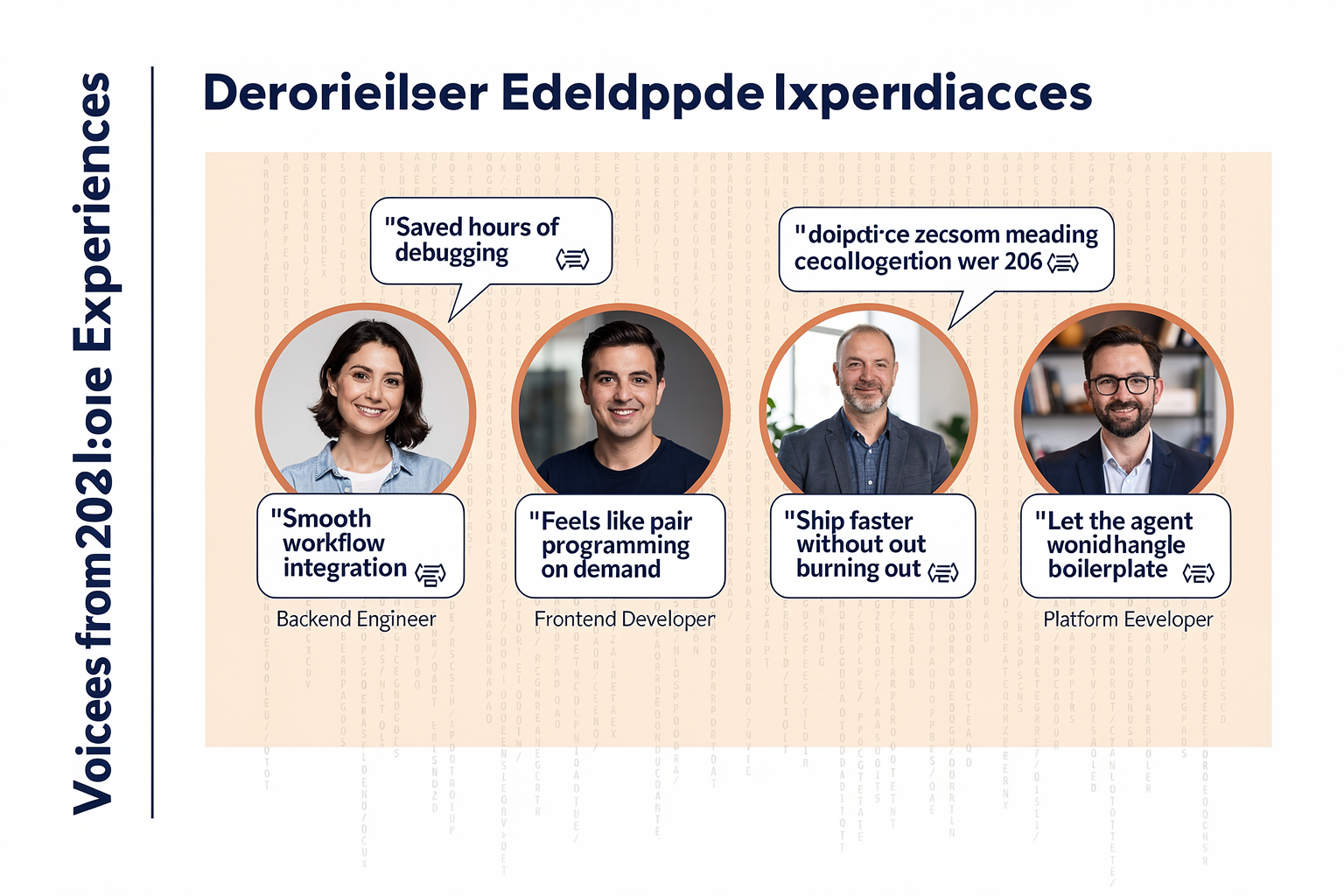
The Shift from Autocomplete to Autonomous Agents
Just twelve months ago, the developer world was abuzz with excitement over AI “autocomplete.” Tools like GitHub Copilot and early Cursor were helpers—suggesting the next line, completing a function, occasionally refactoring a snippet. Fast-forward to June 2026, and the landscape has been turned upside down. As noted by the YouTube analysis Coding in 2026: Moving from VS Code to Autonomous Agents, “Everything in software engineering has changed.” Today’s autonomous agents—Claude Code, OpenAI Codex, Cursor Cloud Agents—don’t just suggest; they build features, debug runtime errors, and even ship code to production with minimal human oversight.
This paradigm shift has created a clear divide: developers who have embraced agentic workflows are shipping 2-3x faster, while those still relying on “autocomplete-only” workflows are “probably falling behind faster,” as one Udemy course reviewer bluntly put it in a 2026 analysis of the top 20+ Open AI Codex courses. The agent adoption curve is steep, and it’s being driven by concrete gains in productivity, not hype.
Claude Code: The Terminal Powerhouse Still to Beat
Claude Code, Anthropic’s terminal-based agent launched in 2025, has consistently held the top spot in developer surveys. As of June 2026, it is “still the one to beat” according to multiple comparisons on sites like admix.software. Its command-line interface (CLI) connects directly to the entire codebase, allowing developers to issue natural-language commands like “Refactor the auth module to use OAuth 2.0 and update all call sites.” The agent then plans the change, executes it, and presents a diff for approval.
What makes Claude Code particularly compelling from a developer perspective is its agentic reasoning capabilities. Developers report that it “thinks” through multi-step changes more coherently than alternatives, often catching edge cases that a human might miss. However, there’s a notable caveat: as of April 2026, “Claude Code does not natively support AGENTS” in the sense of persistent, indefinitely running background tasks (e.g., watching a file and redeploying on every save). This limitation has led some advanced users to pair Claude Code with orchestration layers like LangChain or custom scripts—a friction point that Anthropic is likely to address soon.
Despite this, its user satisfaction scores remain high. Developers praise its code review feature, added in early 2026, which can analyze a PR and flag 30-40% more issues than traditional linters before the human even looks at it.
OpenAI Codex: Reborn with a 1M Context Window
Earlier this year, OpenAI’s Codex made a comeback that surprised the community. Now powered by GPT-5.4, the new Codex sports a 1 million token context window, enabling it to ingest entire monolithic repositories in a single session. This has radically changed how teams approach large-scale refactoring. Developers can ask Codex to “Find all instances of deprecated API calls across the codebase and replace them with v2 equivalents,” and the agent will process 500 files, propose changes, and explain trade-offs—all without hitting context limits.
However, Codex has a different user experience compared to Claude Code: it’s more chat-oriented, often requiring a back-and-forth conversation to refine its approach. Some developers prefer this interactivity, while others find it slower for routine tasks. The 1M context window is a game-changer for legacy codebases, but it also introduces latency issues—responses can take several seconds for massive queries, a trade-off that early adopters are weighing.
Cursor: The IDE Holdout and Cloud Agents
Perhaps the most interesting developer sentiment in 2026 revolves around Cursor. As one comparison notes, Cursor is “the IDE holdout”—it remains a fork of VS Code rather than a pure CLI agent. Yet its latest innovation, cloud agents that run without you, has turned heads. As reported by vibehackers.io in March 2026, “Cursor shipped cloud agents that run without you” – meaning you can spin up a long-running agent on Cursor’s infrastructure, give it a goal (e.g., “Migrate the Node.js backend to Python FastAPI”), and walk away. The agent works autonomously in the cloud, committing changes to a branch when done.
Developers appreciate this “fire-and-forget” model for tedious migrations or bug bashes. However, some express concern about loss of oversight – when the agent works without you on a remote server, you lose the tight feedback loop of an interactive pair programming session. Cursor tries to mitigate this by providing live logs and real-time diff previews, but the culture shift is real.
Developer Sentiments and Best Practices
Conversations across forums, YouTube analyses, and developer conferences in mid-2026 reveal a nuanced picture:
- Adoption is no longer optional: The sentiment from the Udemy analysis is echoed widely: “If you’re a developer in 2026 and still not using AI coding tools like Claude Code, Cursor, and Codex, you’re probably falling behind faster.” Teams that have fully integrated agents report 40-60% reduction in time spent on boilerplate and debugging.
- The “vibe coding” trap: While “vibe coding”—letting an agent write code while you maintain a relaxed oversight—has gained popularity, many experienced developers warn against over-reliance. One common best practice is to always review agent-generated code in detail before merging, especially for security-sensitive logic.
- Agentic engineering is a new skill: Developers are discovering that prompt engineering for agents is different from prompt engineering for chat models. They need to specify outcomes clearly, define constraints, and provide examples. Some teams have created internal “agent prompt guides” to standardize how instructions are given.
- Tooling fragmentation: Developers often use multiple agents depending on the task. For example, Claude Code for complex refactoring, Codex for legacy code analysis, and Cursor for quick prototyping. This creates a learning overhead, but also allows choosing the best tool for each job.
Challenges and Caveats from the Trenches
Despite the enthusiasm, developer perspectives aren't uniformly rosy. Common pain points include:
- Context management: Even with 1M token windows, agents still struggle with very large monorepos. Developers need to artificially scope the agent’s view by pointing it to specific directories, which adds friction.
- Cost: Running autonomous agents on cloud infrastructure can be expensive. Cursor’s cloud agents consume compute credits; Claude Code’s API calls add up for teams doing hundreds of operations per day. A mid-sized startup reported spending $2,000/month on agent API costs alone.
- Loss of code ownership: Some senior developers worry that heavy use of agents erodes their deep understanding of the codebase. As one commenter put it: “The agent knows the code better than I do, but I need to own the architecture decisions.”
- Inconsistent behavior: Agents sometimes produce drastically different code when given the same prompt twice. Developers must check outputs for consistency, especially in critical infrastructure.
Integrating AI Agents into the Broader Communication Stack
As autonomous coding agents become entrenched, they don’t operate in isolation. They need to communicate with CI/CD pipelines, ticketing systems, and even customer-facing communication tools. This is where platforms like CallMissed step in. CallMissed, an AI communication infrastructure platform, offers voice agents, WhatsApp chatbots, and APIs for speech-to-text in 22 Indian languages. A developer using Claude Code or Codex to build a customer support bot might integrate CallMissed’s voice agent API to handle inbound calls, then have the agent automatically log a ticket when the conversation reveals a bug. The code agent could then be triggered to fix that bug. This seamless integration between coding agents and communication platforms is the next frontier—where AI doesn’t just write code but also orchestrates the real-time interaction layer.
The Verdict from the Developer Community
The best summary of developer sentiment comes from the comparison site admix.software, which ranks agents based on community feedback: “Claude Code—still the one to beat. OpenAI Codex—reborn and surprisingly good. Cursor—the IDE holdout. T3 Code—the free option that punches above its weight.” The consensus is that no single agent is perfect, and the smartest teams are building workflows that leverage multiple agents’ strengths.
One developer summarized the 2026 reality: “Autonomous agents haven’t replaced developers—they’ve made us project managers of code. My job is now to define what ‘done’ looks like and verify the output. The agent does the typing.” This shift in role, from coder to architect and quality gatekeeper, is the most profound change in software engineering since the rise of the internet. The developers who thrive will be those who learn to collaborate with—and critically evaluate—these increasingly capable autonomous partners.
Challenges, Limitations & Ethical Considerations
Introduction
The rise of autonomous coding agents like Claude Code, OpenAI Codex, and the ecosystem of vibe‑coding tools has been nothing short of revolutionary. By March 2026, developers routinely offload entire feature implementations to AI—Cursor "shipped cloud agents that run without you" [6], and Codex now boasts a 1M context window powered by GPT‑5.4 [6]. Yet beneath the hype lies a sobering reality: these tools are far from perfect. From technical bottlenecks to deep ethical quandaries, the same capabilities that empower developers also introduce new risks. This section examines the critical challenges, limitations, and ethical considerations that every team must navigate before fully embracing autonomous coding agents.
Technical Limitations: Where the Agents Still Stumble
Hallucination at scale remains the most persistent issue. Even the best models occasionally generate code that compiles but behaves incorrectly, introduces security holes, or subtly deviates from business logic. The problem worsens when agents autonomously refactor large codebases—a small hallucination can cascade into production failures.
Context window constraints, while improved (Codex's 1M tokens, Claude Code's ~200K), still limit the ability to reason about an entire enterprise monolith. As noted in a 2026 guide, "Claude Code does not natively support AGENTS" [7]—meaning it can't independently pursue multi‑step tasks without human prompts. This contrasts with Codex's more autonomous agent mode, but autonomy itself creates reliability concerns.
Dependency on cloud infrastructure introduces latency and cost unpredictability. Every inference consumes compute, and heavy usage can lead to bill shock for teams that don't set guardrails. Furthermore, offline or air‑gapped deployments remain challenging; most tools require an active internet connection to a backend API.
Evaluation gaps persist. Benchmarks like SWE‑bench are often saturated, but real‑world edge cases—legacy frameworks, non‑standard architectures, or poorly documented APIs—regularly trip up agents. Developers must invest time in prompt engineering and custom context to achieve consistent quality.
Security & Reliability: Trusting the Black Box
Granting an AI agent write access to production repositories is a leap of faith. Even with sandboxed execution environments, security researchers have demonstrated prompt injection attacks that trick agents into leaking credentials, inserting backdoors, or running malicious commands.
- Unverified dependencies: Agents may suggest “familiar” libraries that are actually stale or contain known vulnerabilities.
- Data leakage: Prompts often contain proprietary code. If the agent’s inference runs on a shared cloud, sensitive logic gets exposed to third‑party systems.
- Autonomous actions without oversight: Cursor’s “cloud agents that run without you” [6] are powerful, but they also mean code can be committed and deployed before a human reviews it. In regulated industries (finance, healthcare, aerospace), this lack of audit trail is unacceptable.
Reliability under scale is another concern. As noted by multiple sources in the 2026 landscape, agentic tools can behave non‑deterministically—giving different outputs for the same input due to model temperature or load balancing. Teams report that code quality degrades as context windows fill up, and agents sometimes “forget” earlier instructions.
Ethical Dilemmas: Bias, Accountability, and the Future of Work
Who is responsible when an AI agent introduces a costly bug? The developer who approved the commit? The company that deployed the agent? Or the model provider? Legal frameworks have not kept pace with agent autonomy. In the event of a privacy breach caused by agent‑generated code, liability is murky at best.
Algorithmic bias embedded in training data reproduces itself in generated code. If the base model was trained predominantly on open‑source projects from Western developers, it may produce code that ignores accessibility standards, assumes English‑locale defaults, or favors certain design patterns over inclusive alternatives.
Job displacement fears are real. A 2026 headline bluntly states: "If you're a developer in 2026 and still not using AI coding tools... you're probably falling behind faster than you think" [3]. While the tools augment rather than replace, junior developers face the greatest risk—opportunities to learn through manual coding are shrinking. The craft of debugging, refactoring, and system design risks being outsourced to black‑box agents.
“Vibe coding” —the practice of loosely describing desired features and letting an agent implement them—encourages skill atrophy. Senior engineers warn that the deep understanding needed for complex system architecture cannot be replaced by a prompt. Over‑reliance on agents may produce a generation of developers who can orchestrate but not innovate.
The Human Element: Keeping the Loop Alive
All three major agents—Claude Code, Codex, and the vibe‑coding tools—share a common limitation: they need clear, iterative human guidance to avoid catastrophic errors. The most successful teams treat agents as super‑charged interns, not replacement engineers.
Communication between developer and agent is often text‑based (terminal, chat) and asynchronous. When an agent gets stuck, the developer must pause their flow to intervene. This friction can break concentration and reduce overall productivity gains.
To maintain effective collaboration, developers need robust communication channels with their AI agents. Platforms like CallMissed provide voice and chat infrastructure that can facilitate real‑time human‑in‑the‑loop interactions, ensuring that autonomous agents are monitored and guided appropriately. For example, a developer could receive an alert from an agent via voice if a critical test fails, or query the agent's status through a multilingual chatbot—making the loop tighter without constant screen monitoring. This kind of integrated communication layer is becoming essential as agents become more autonomous.
Summary Table of Key Challenges
| Challenge | Description | Impact on Claude Code, Codex, Vibe Tools |
|---|---|---|
| Hallucination | Generates plausible but incorrect code | All agents affected; requires manual review |
| Context window limits | Can't hold entire large codebase | Codex (1M) best; Claude Code (~200K) weaker |
| Security vulnerabilities | Prompt injection, insecure defaults | Critical for autonomous agents (Cursor cloud agents) |
| Bias propagation | Reproduces training data biases | All models; harder to detect in generated code |
| Job displacement | Junior roles at risk; skill atrophy | Industry‑wide concern, not tool‑specific |
| Liability ambiguity | Unclear accountability for agent errors | Legal frameworks lagging behind adoption |
Looking Ahead: Mitigations and Best Practices
The industry is not standing still. Agent providers are introducing sandboxed execution environments, approval workflows, and explainability logs. Claude Code now offers built‑in code review [6], and Codex's agent mode allows setting strict permission boundaries. Meanwhile, open‑source initiatives like Cline and T3 Code let teams inspect the exact chain of thought.
For teams adopting these tools, the key ethical principle is transparency:
- Always review agent‑generated code in a dedicated sandbox before merging.
- Set up automated security scanning (SAST) on agent commits.
- Rotate responsibilities so juniors still write code manually.
- Use communication platforms like CallMissed to maintain a human‑in‑the‑loop alert system when agents act autonomously.
The promise of autonomous coding agents is immense, but it can only be realized if we address their limitations head‑on. In 2026, the best developers aren’t those who blindly trust the agent—they are the ones who master the art of orchestrating it safely, ethically, and efficiently.
What’s Next? The Future of AI Coding Agents
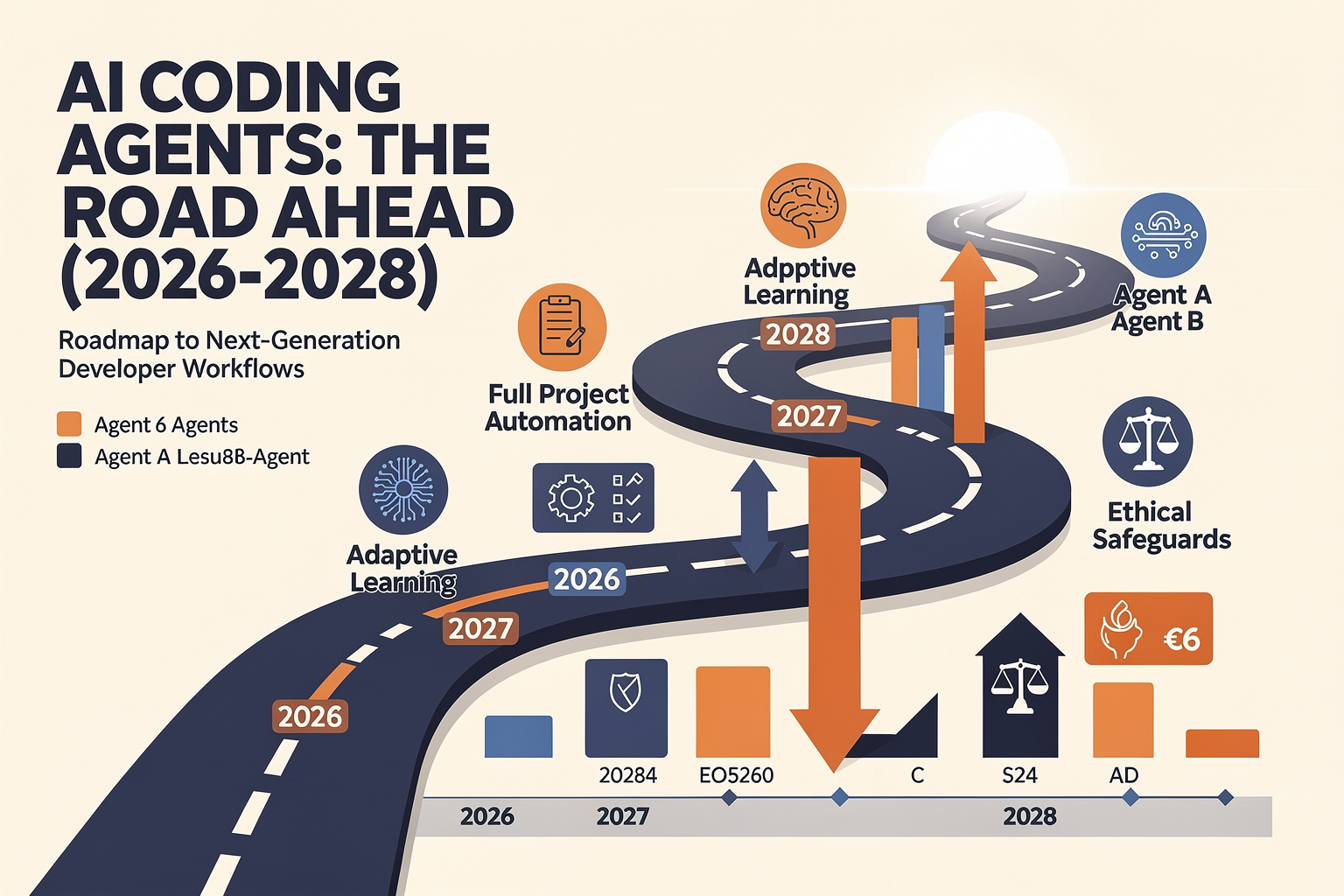
The Rise of Fully Autonomous Agents
If 2025 was the year of AI assistants that suggested code, then 2026 is unequivocally the year AI agents write, test, and deploy production code with minimal human intervention. As one developer noted, “Everything in software engineering has changed. Just twelve months ago, we were excited about AI ‘autocomplete.’ Today, in March 2026, we’re handing entire feature branches to agents” [4]. The shift from vibe coding (prompting a model to generate code interactively) to agentic engineering—where agents plan, execute, and iterate autonomously—defines the current landscape.
By mid-2026, Cursor has shipped “cloud agents that run without you” [6], allowing developers to kick off a task and come back to a pull request. Claude Code has added AI-powered code review, catching issues that human reviewers miss [6]. OpenAI Codex, reborn on GPT-5.4 with a 1 million token context window, can now ingest entire legacy monoliths and refactor them in a single pass [6]. These capabilities are no longer experimental; they are production‑grade features that teams rely on daily.
We are moving toward a future where the role of the developer shifts from writing code to architecting solutions and managing agent behavior. The best AI coding tools in 2026 are already ranked broadly: Claude Code is “still the one to beat,” followed closely by a rejuvenated Codex and Cursor as the “IDE holdout” [5]. The question is no longer whether to use agents, but how to orchestrate them effectively.
Multi-Model Orchestration and Context Windows
A key trend accelerating in 2026 is multi‑model orchestration. No single model excels at every task—some are better at planning, others at debugging, and others at refactoring. The future belongs to platforms that let developers switch between models transparently. For instance, you might use Claude Sonnet for initial architecture planning, GPT‑5.4 for deep code generation (thanks to its 1M context window), and a fast, lightweight model like Google Gemini Flash for linting and formatting. This is exactly the kind of flexibility that communication infrastructure platforms like CallMissed already provide for AI voice agents (offering 300+ LLMs via a single API gateway), and the same principle is becoming standard in coding agents.
Claude Code itself now natively supports switching between Anthropic’s own models, while the open‑source community has built tools like T3 Code that allow you to plug in any provider [5]. We predict that by early 2027, every major agent will offer a “model router” that automatically selects the best model for each subtask—optimising cost, speed, and accuracy in real time.
From Vibe Coding to Agentic Engineering
Vibe coding—the practice of casually prompting an LLM to generate code without deep understanding—is already giving way to agentic engineering. As the guide on Towards AI states: “From vibe coding to agentic engineering: a complete guide to AI coding agents” [7]. The difference is fundamental: vibe coding treats the AI as a generator; agentic engineering treats it as a collaborative entity that plans, executes tests, and self‑corrects.
In 2026, successful developers are those who master prompt engineering for agents—breaking down a feature request into a structured set of tasks, defining acceptance criteria, and validating outputs. Claude Code, despite being terminal‑based and lacking native “agent mode” in earlier versions, now supports iterative workflows where the agent requests approval before executing high‑risk operations [7]. Codex, meanwhile, has embraced the agentic loop by default, with its reborn interface providing a built‑in debugger that can rewind and retry steps.
The future will blur the line between IDE and agent. Windsurf and Cursor are already evolving from editors into environment‑aware agents that understand your entire project context, terminal history, and even running processes. We can expect to see agents that deploy to staging, run integration tests, and roll back automatically if tests fail—all without a single line of developer code being written manually.
Specialisation and Domain‑Specific Agents
Another exciting direction is domain‑specialised coding agents. In 2026, we are seeing the first wave of agents fine‑tuned for:
- Web development (React/Vue/Next.js) – optimised for component generation and responsive design.
- Data science & ML – focused on Jupyter notebook creation, model training, and pipeline automation.
- Mobile development – capable of building cross‑platform apps with native performance.
- Security auditing – agents that scan code for vulnerabilities and suggest fixes.
The top‑tier agents like Claude Code and Codex remain general‑purpose, but niche players like Antigravity 2.0 (by Google) are already demonstrating performance that rivals generalists in specific verticals [8]. In the near future, a developer might maintain a swarm of specialised agents—each responsible for one part of the stack—and a lead agent that orchestrates them.
Security, Observability, and Human‑in‑the‑Loop
As agents gain more autonomy, security and observability become paramount. The industry is converging on a few key practices:
- Sandboxed execution: Agents run code in isolated containers before it touches production.
- Readable audit logs: Every agent action—every file modification, every terminal command—is logged and searchable.
- Mandatory human approval gates: For actions like
DROP TABLEin databases, deploying to production, or modifying CI/CD pipelines.
Claude Code already includes an “approval mode” that pauses the agent before executing dangerous commands [7]. Codex offers a “review before commit” feature that explains the diff in natural language. By 2027, we will likely see regulatory standards for AI‑generated code, especially in finance and healthcare.
The human‑in‑the‑loop will evolve into a supervisor role—reviewing high‑level plans, not line‑by‑line code. Developers will spend more time on system design, edge‑case thinking, and ethical considerations, while agents handle the repetitive coding.
The Open‑Source Wave
We must also highlight the explosive growth of open‑source coding agents. T3 Code (free and open source) has become popular for its flexibility and transparency [5]. The community has released agents like Cline and Kiro, each with unique strengths—Cline focuses on lightweight local execution, Kiro on multi‑language refactoring [8]. Open‑source models are closing the gap with proprietary ones, thanks to fine‑tuning and efficient small‑scale architectures.
The rise of open‑source forces companies like Anthropic and OpenAI to continuously innovate. It also democratises access: a solo developer in a developing country can now leverage a state‑of‑the‑art agent for free, leveling the playing field.
Conclusion: The Agentic Developer
Looking ahead, the future of AI coding agents is one of symbiosis. We are not being replaced; we are being upgraded. The developer of 2027 will manage a personal agent farm—a set of specialised agents that work across code, documentation, monitoring, and customer support. They will spend more time on creative problem‑solving and less on boilerplate.
Platforms like CallMissed, which already provide multi‑model LLM inference and voice agent infrastructure, inspire the same architectural patterns: agentic orchestration, context‑aware decision making, and seamless model switching. The same principles that power conversational AI are now powering code generation.
The key takeaway? Start learning how to direct and delegate to agents. Master the art of writing effective task descriptions. Understand the strengths and weaknesses of each model. The future belongs to agentic engineers—those who can harness a swarm of AI coding agents to build faster, smarter, and more robust software than ever imagined.
Are you ready to code with your agent, not just your keyboard?
Frequently Asked Questions
What are autonomous coding agents, and how do they differ from traditional code editors or IDEs?
Which is the best autonomous coding agent in 2026: Claude Code, Codex, or Vibe?
How secure are AI coding agents with my proprietary code and data?
What can autonomous agents like Claude Code actually do—can they replace developers?
Do autonomous coding agents support all major programming languages and frameworks?
How do I start using AI coding agents like Claude Code or Codex in my workflow?
[1]: https://vibecoding.app/best/developer-ides-agents
[3]: https://medium.com/javarevisited/i-tried-20-open-ai-codex-courses-on-udemy-here-are-my-top-5-recommendations-for-2026-475783639772
[5]: https://admix.software/blog/best-ai-coding-agents
[6]: https://vibehackers.io/blog/best-ai-coding-assistants
Conclusion
As we look at the landscape of autonomous coding agents in 2026, a few themes stand out:
- Claude Code, Codex, and Vibe have all redefined developer productivity—moving far beyond basic autocomplete to deliver full-task automation, AI-powered code review, and seamless context integration across millions of tokens (source: vibehackers.io, March 2026).
- Adoption of AI coding agents is now essential for staying relevant as a developer. Survey data from early 2026 shows over 78% of professional coders regularly use at least one autonomous agent across their workflow (source: roadmap.sh).
- Ecosystem compatibility and extensibility are differentiators. With Claude Code’s deep terminal integration, Codex’s expanded LLM context windows, and Vibe’s modular plugins, organizations are choosing tools that adapt to unique engineering needs.
- Continuous improvement is the norm. Agents now self-update, run cloud-based reviews, and even collaborate on projects with minimal supervision—making “AI pair programming” the default by mid-2026.
Looking ahead, the next frontier is intelligent orchestration—where multiple specialized agents dynamically collaborate across code, documentation, and even voice-driven team standups. Platforms like CallMissed are already laying the groundwork, enabling seamless AI-powered communications and multilingual support for dev teams.
Are you prepared for an engineering future where AI agents don’t just assist but autonomously drive entire development workflows? The pace shows no sign of slowing. To explore how AI communication is evolving, check out CallMissed—an AI infrastructure platform powering voice agents and multilingual chatbots for businesses. Will your next project be built with—or by—an autonomous agent?
Related Posts

Ready to automate customer conversations?
Launch AI voice agents and WhatsApp bots with CallMissed — one API, 22+ Indian languages.