
The Latest AI Breakthroughs in Structural Biology: Protein Binder Design and Conformational State Prediction


Did you know that most proteins in your body are not rigid structures, but dynamic, shape-shifting nanomachines that must constantly transition between...
The Latest AI Breakthroughs in Structural Biology: Protein Binder Design and Conformational State Prediction
Did you know that most proteins in your body are not rigid structures, but dynamic, shape-shifting nanomachines that must constantly transition between multiple physical states to keep you alive? For decades, predicting even a single static shape of a protein was considered one of biology’s greatest challenges—a hurdle famously cleared by DeepMind’s AlphaFold 2. However, in 2026, structural biology is moving far beyond static snapshots. We are currently witnessing a massive paradigm shift from merely observing nature to actively engineering it. The latest AI breakthroughs in structural biology: protein binder design and conformational state prediction are emerging as the twin engines of this new era, representing what researchers call the next "AlphaFold moments."
This evolution matters right now because it marks the transition of biotechnology from a discovery science into a scalable engineering discipline. According to recent insights published in Nature's Communications Biology, AI-guided design platforms are now capable of generating de novo protein binders—entirely new molecules designed from scratch to lock onto specific therapeutic targets with high real-world hit rates. Concurrently, breakthrough models are successfully predicting multiple conformational states, allowing scientists to see how proteins bend, open, and close in real-time. This dual capability is a game-changer for medicine; instead of blindly targeting a static protein, researchers can now design smart drugs that block a protein only when it transitions into a disease-causing state.
Unlocking these complex biological secrets requires massive computational orchestration and highly specialized AI models. Just as structural biologists rely on complex multi-model architectures to predict dynamic molecular states, modern enterprises are leveraging unified platforms like CallMissed to orchestrate their own advanced AI workflows, showing how multi-model infrastructure is reshaping everything from biotechnology to global communications.
In this article, we will unpack how these twin AI breakthroughs work, analyze the state-of-the-art models driving the field forward, and explore how designing custom protein binders is set to revolutionize therapeutic development and personalized medicine.
Introduction: Beyond Static Structures in Structural Biology
When DeepMind’s AlphaFold 2 debuted, it represented a monumental breakthrough in structural biology, successfully predicting the single, most stable folded forms of protein domains. This historic milestone solved a 50-year-old grand challenge in science. However, as structural biology enters its next major AI revolution in May 2026, researchers are realizing that solving a single static snapshot of a protein is only the beginning.
In vivo, proteins are not rigid, unyielding structures. Instead, they are dynamic molecular machines that constantly shift, bend, and transition through multiple shapes—known as conformational states—to perform their biological functions. To design effective therapeutics, cure complex diseases, or build synthetic enzymes, scientists must look beyond static snapshots. This realization has catalyzed two emerging "AlphaFold moments" that are currently redefining the boundaries of biophysics: de novo protein binder design and conformational state prediction.
These twin frontiers represent a massive paradigm shift in how we approach structural biology:
- Conformational State Prediction: Moving from a single ground-state prediction to mapping the entire kinetic ensemble of a protein. This allows researchers to visualize how a protein moves, how it transitions between active and inactive states, and how to target transient, previously "undruggable" pockets.
- De Novo Protein Binder Design: Transforming protein engineering from a slow, trial-and-error laboratory process into a highly scalable, digital discipline. Using generative AI, researchers can now design synthetic proteins engineered to bind tightly and specifically to target molecules with unprecedented real-world hit rates.
The computational scale required to model these biological systems is immense, requiring highly sophisticated multi-model orchestration. This mirrors the infrastructure shifts seen in other demanding technology sectors. For instance, just as enterprises rely on advanced communication platforms like CallMissed to effortlessly coordinate hundreds of specialized LLMs and multi-modal APIs for real-time voice and text operations, modern structural biology relies on complex computational pipelines—such as Boltzmann Labs' BioEmu—to orchestrate massive, multi-dimensional biophysical datasets.
According to recent publications in Nature and Communications Biology, these AI-guided design platforms are rapidly maturing into production-ready pipelines. We are transitioning from merely observing nature's machinery to programming it. This article will delve deep into how these new AI architectures work, examine the benchmarks proving their real-world efficacy, and explore how they are paving the way for an entirely new era of precision medicine and synthetic biology.
Background & Context: The Road from AlphaFold 2 to Structural Dynamics
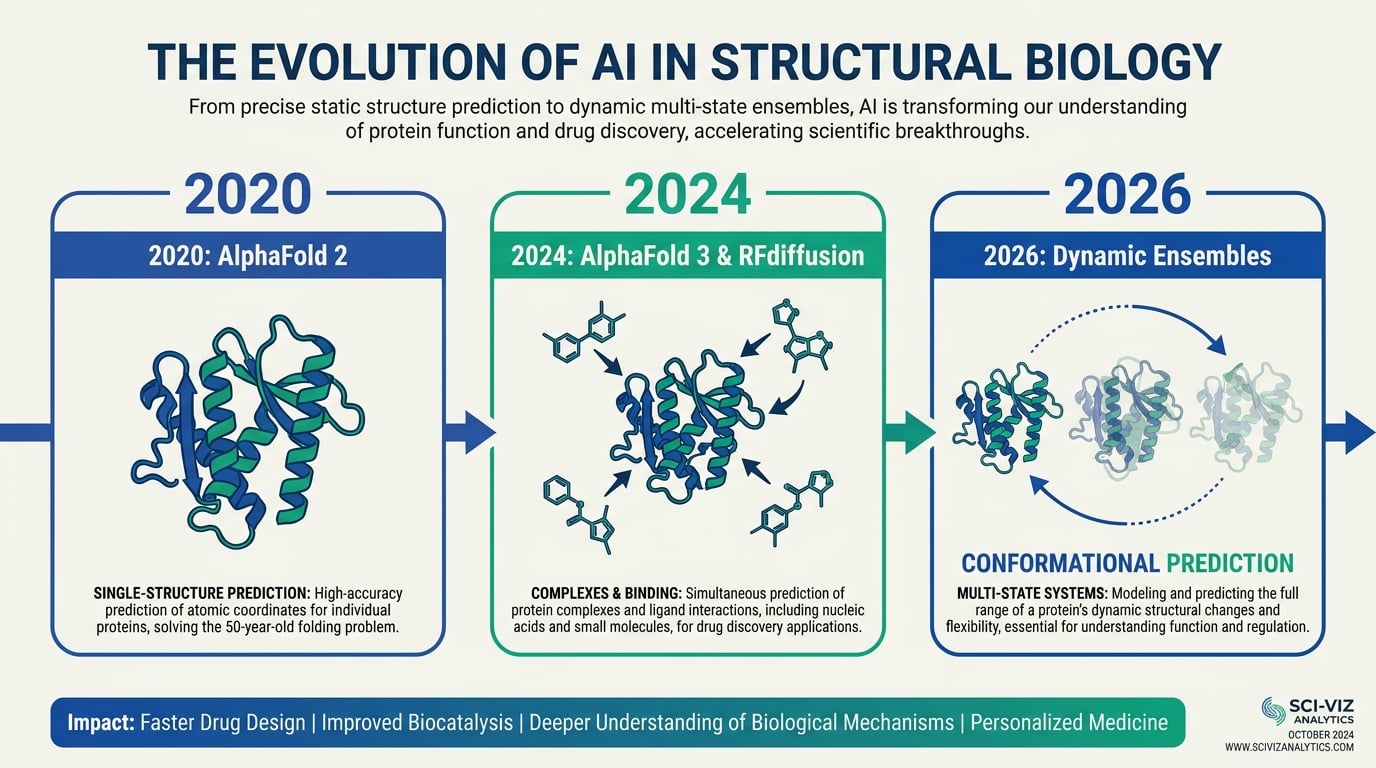
The launch of DeepMind’s AlphaFold 2 in 2020 marked a historic milestone in computational biology, effectively solving the 50-year-old "protein folding problem." By leveraging deep learning architectures to predict the most stable, ground-state folded structures of protein domains directly from amino acid sequences, AlphaFold 2 transformed drug discovery and molecular biology overnight. However, as structural biologists quickly realized, solving for a single static structure is only the first step in understanding the complex machinery of life.
Beyond Static Snapshots: The Need for Structural Dynamics
In living organisms, proteins are not rigid, frozen shapes. Instead, they act as dynamic nanoscale machines, continuously shifting between different conformational states to carry out biological functions, transmit cellular signals, or bind to other molecules.
- Static limitations: While AlphaFold 2 excelled at predicting a single, highly stable state, it struggled to capture the transient transition states, active/inactive conformations, or disordered regions that dictate real-world drug interactions.
- Biological realities: Effective therapeutics often require targeting a specific, non-dominant conformational state of a disease-associated protein, a task that traditional static models could not consistently achieve.
This critical gap has catalyzed a major AI paradigm shift. As highlighted in Nature Communications Biology, structural biology is moving rapidly beyond static predictions toward mapping full conformational ensembles and engineering entirely novel interactions from scratch.
The Rise of De Novo Protein Binder Design
In parallel to predicting dynamic states, researchers have pivoted from analyzing existing proteins to designing entirely new ones. De novo protein binder design aims to engineer artificial proteins that can bind to specific target molecules—like viral spike proteins or cancer receptors—with surgical precision.
- From discovery to engineering: Historically, finding binder proteins relied on slow, laboratory-heavy screening methods like yeast display or phage display.
- Scalable hit rates: Modern AI-guided design platforms are transforming this process into a scalable engineering discipline, drastically improving physical "hit rates" (the percentage of AI-designed proteins that successfully bind to target molecules in real-world wet labs).
This shift from static observation to dynamic creation requires massive computational pipelines, blending generative AI models, structural refinement networks, and high-throughput physical validation. Just as structural biologists rely on robust, multi-stage computation to model complex molecular interactions, modern enterprises across industries require highly orchestratable AI systems to manage their data flows. For example, platforms like CallMissed address this structural complexity in business operations by offering robust multi-model LLM gateways and high-performance communication infrastructure, proving that the future of AI—whether in biological modeling or enterprise workflows—lies in seamless, multi-faceted orchestration.
As the industry marches into this next phase of the AI revolution, the integration of conformational state prediction and precision binder design is poised to make molecular engineering as programmable as software development.
Key Developments in Protein Design and State Prediction
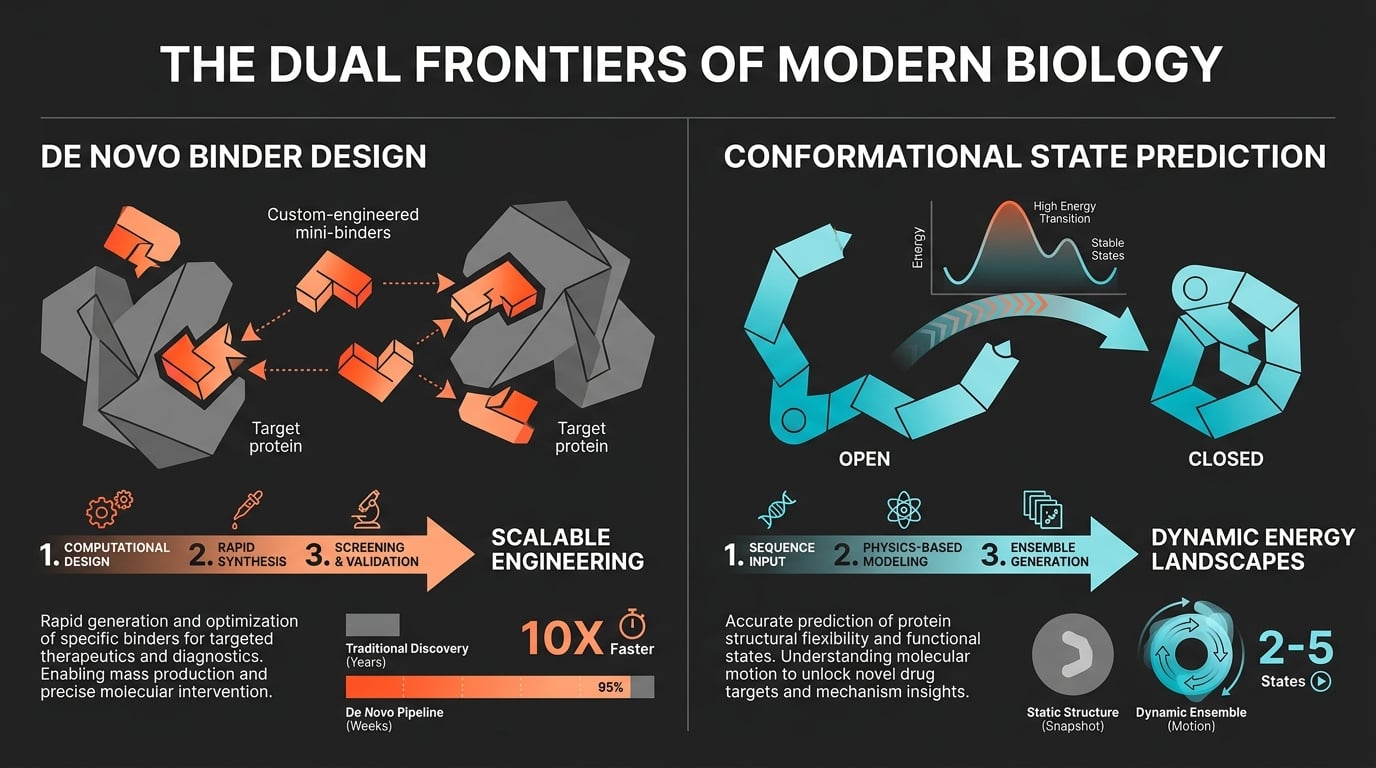
The transition from analyzing static protein structures to engineering active macromolecular systems marks the dawn of structural biology’s second AI revolution. While DeepMind's AlphaFold 2 solved the 50-year-old protein folding challenge by predicting the single, most stable thermodynamic state of a protein domain, therapeutic reality is far more complex. Proteins are dynamic, shifting shape to perform vital cellular functions, and modern drug discovery demands tools that can design entirely new binders from scratch (de novo) while predicting these multi-state structural transitions.
To understand how these technologies are reshaping biotechnology, we must examine the specific computational breakthroughs driving this paradigm shift:
| Focus Area | Representative Technologies | Core Objective | Real-World Impact |
|---|---|---|---|
| Static Structure Prediction | AlphaFold 2, RoseTTAFold | Predict the single most stable, folded form of protein domains | Established a baseline library of 3D structures for nearly all known proteins. |
| De Novo Binder Design | RFdiffusion, ProteinMPNN | Generate novel protein sequences that bind precisely to target hotspots | Transforms drug discovery into a scalable, high-hit-rate engineering discipline. |
| Conformational State Prediction | BioEmu, AlphaFold 3, ESM3 | Map transition states and multiple dynamic conformations of a single protein | Unlocks targeting of "undruggable" transient protein states in diseases like cancer. |
| Protein Language Modeling | ESM-2, ProGen | Learn evolutionary rules from billions of protein sequences | Allows researchers to "write" functional, synthetic proteins using generative AI. |
The Two "AlphaFold Moments"
The current scientific consensus highlights two impending computational milestones that are redefining the boundaries of medicine:
- De Novo Protein Binder Design: Traditionally, discovering a protein binder (like an antibody) required screening massive, natural libraries—a process akin to finding a needle in a haystack. Today, AI-guided design platforms are transforming protein binder development into a scalable engineering discipline. By defining target "hotspots" on a pathogen, researchers use diffusion models to generate custom protein binders with high-affinity hit rates on the first try.
- Conformational State Prediction: Proteins are dynamic molecular machines. A single protein can exist in multiple active, inactive, or intermediate states. Predicting how a protein bends, twists, and transitions between these states—rather than just its static "resting" pose—allows pharmacologists to design drugs that lock proteins in specific functional states to halt disease progression.
Scalable AI Orchestration in Science and Enterprise
Managing these multi-state, multi-variable biological pipelines requires immense computational orchestration. Much like structural biologists rely on complex ensembles of diffusion models, sequence predictors, and physical simulations to solve molecular puzzles, modern enterprises require agile AI infrastructure to manage their operational workflows.
For organizations looking to deploy advanced AI solutions, platforms like CallMissed provide the necessary high-performance infrastructure. Just as biophysics platforms coordinate multiple specialized neural networks, CallMissed enables seamless API orchestration, allowing developers to switch between 300+ LLMs and advanced Speech-to-Text pipelines to handle multi-faceted communication tasks. This robust orchestration ensures that whether a team is analyzing genomic sequences or scaling enterprise operations, their AI infrastructure remains highly adaptive and production-ready.
In-Depth Analysis: The Mechanics of AI-Driven Binder Design and Molecular Physics
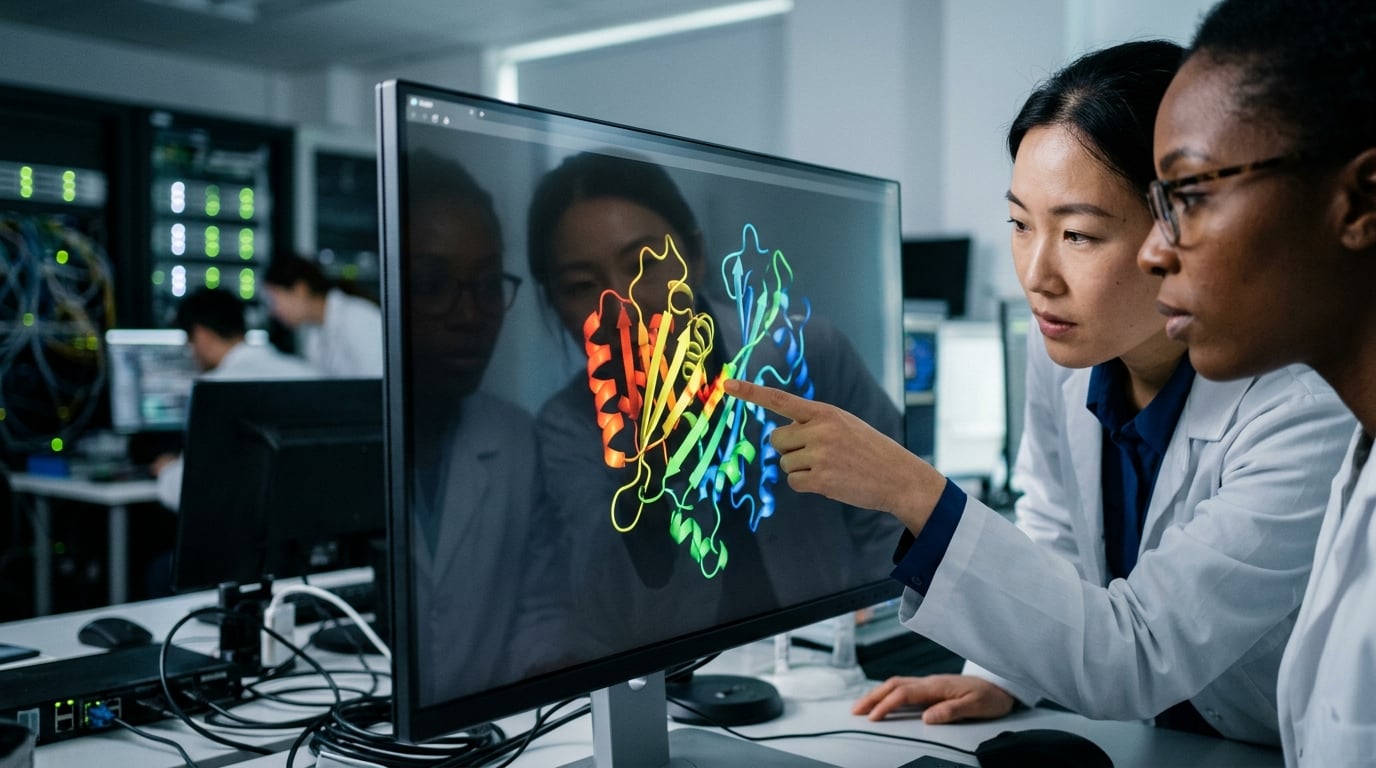
From Structure Prediction to Active De Novo Design
While DeepMind's AlphaFold 2 represented a historic breakthrough by predicting the single "most stable folded forms of protein domains," biology is fundamentally dynamic [1]. In 2026, the paradigm is shifting from predicting existing structures to de novo binder design—the creation of entirely new, custom proteins engineered to interact with specific therapeutic targets [2].
The mechanics of this process rely on precise geometric target engagement. Rather than relying on random trial-and-error, generative AI models construct a complete protein complex from scratch. The algorithm’s primary objective is to position a synthetic, functional motif so that it is precisely engaged at a pre-specified hotspot location on the target molecule [6]. By calculating target-receptor complementarities, these platforms have successfully turned protein binder development into a scalable engineering discipline with high real-world hit rates [2, 5].
The Physics of Conformational State Prediction
Proteins are not rigid structures; they are shape-shifting molecules that transition between multiple active, inactive, and intermediate states. Understanding these movements is critical because a drug might only bind to a protein when it is in a specific, transient shape.
Modern AI architectures, such as BioEmu, are bridging deep learning with molecular physics to predict the entire ensemble of conformational states rather than just a static snapshot [7]. This approach allows researchers to:
- Map Thermodynamic Landscapes: Determine how frequently a protein transitions between different structural states.
- Target Transient Pockets: Identify hidden "druggable" binding sites that only open up during specific structural transitions.
- Enforce Target Inactivation: Design binders that physically lock a disease-causing protein into its inactive conformation, preventing it from signaling.
By blending thermodynamic principles with deep generative modeling, these systems calculate the energy barriers of molecular movement. This eliminates the need for computationally exhausting traditional Molecular Dynamics (MD) simulations, which previously took months to run on supercomputers.
Orchestrating Multi-Model Workloads
Designing a functional binder requires a complex sequence of computational steps. Researchers must orchestrate a pipeline of specialized models: one to generate the initial binder backbone, another to optimize amino acid sequences (co-design), and a third to run conformational state simulations to verify the binder's stability.
Managing this massive, high-throughput flow of structured data mirrors the developer challenges found in other advanced AI fields. For example, just as enterprise communication infrastructure platforms like CallMissed rely on multi-model LLM gateways to dynamically route diverse tasks to the most efficient model, computational biologists rely on specialized pipeline orchestrators to route molecular data seamlessly between generative diffusion models and structural validation frameworks. This unified, multi-model approach ensures that newly generated binders are not just theoretical concepts, but biochemically viable candidates ready for wet-lab synthesis.
Impact & Implications: Accelerating Drug Discovery and Vaccine Development
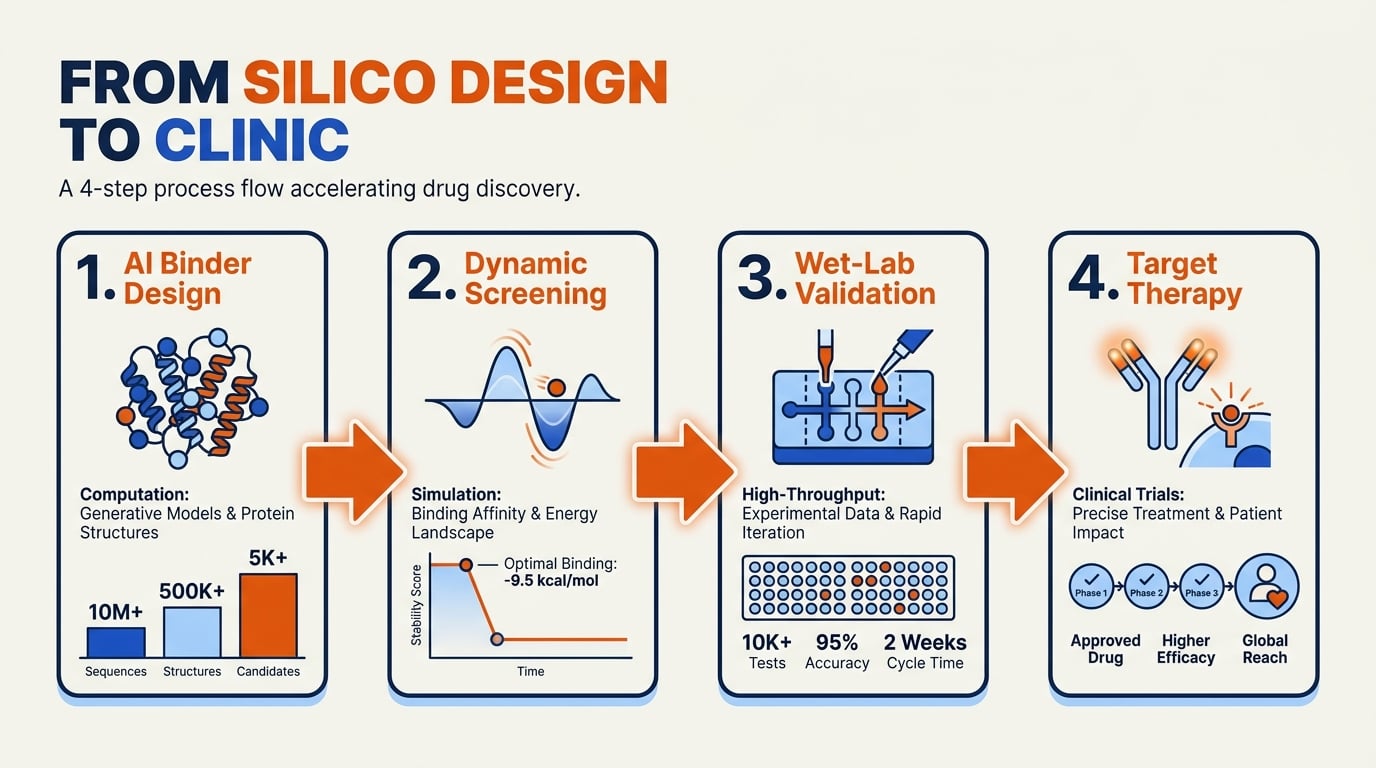
The transition of structural biology from an observational science to an active, programmable discipline marks a watershed moment in modern medicine. By combining de novo protein binder design with accurate conformational state prediction, researchers are bypassing decades of trial-and-error laboratory screening, fundamentally altering how we combat disease.
Redefining the Drug Discovery Pipeline
Historically, identifying a viable drug candidate took up to five years of high-throughput screening, followed by grueling optimization phases. With AI-guided structural biology, this process is being compressed into weeks.
- Targeting "Undruggable" Proteins: Over 80% of therapeutic protein targets have historically been deemed "undruggable" because they lack stable binding pockets. Predicting diverse conformational states allows researchers to identify transient "pockets" that only open during specific molecular movements, creating targeted therapies for previously untreatable cancers and neurodegenerative diseases.
- High Hit Rates: Instead of screening random chemical libraries, researchers use generative AI to design binders tailored to fit precise target geometries. According to recent 2026 reports, these AI-guided platforms are yielding unprecedented hit rates in real-world biological assays, turning drug discovery into a highly predictable, software-driven design cycle.
Revolutionizing Vaccine Architecture
Vaccine development relies on presenting a stable pathogen antigen to the immune system. However, viral proteins often change shape rapidly, shielding their vulnerable sites.
- Motif-Targeted Binders: AI models can now programmatically position functional motifs at specific hotspots on a carrier scaffold. This allows for the engineering of highly stable, synthetic immunogens that force the immune system to generate highly specific neutralizing antibodies.
- Rapid Pandemic Response: Rather than waiting to isolate and culture natural viral variants, researchers can computationally model a novel pathogen's spike protein conformations and design custom binders within days of sequencing, slashing vaccine formulation timelines.
A Scalable Engineering Discipline
This computational leap is transitioning molecular biology into a scalable engineering discipline. Just as modern software platforms like CallMissed enable enterprises to orchestrate complex workflows—by dynamically routing tasks across 300+ LLMs and automating operations—structural biology is building its own programmable infrastructure. In this new paradigm, researchers do not simply search for drugs; they write the code to compile them.
As these AI-designed molecules transition from digital blueprints to physical clinical trials, the downstream demand for operational efficiency will skyrocket. The acceleration of drug discovery will necessitate equally rapid systems to manage global clinical trials, coordinate patient feedback across languages, and handle massive volumes of research inquiry—operational hurdles where communication platforms like CallMissed's multilingual voice agents and chat APIs will play a vital role. By removing the traditional bottlenecks of both molecular design and clinical operations, the journey from computational hypothesis to life-saving treatment is poised to become faster, cheaper, and more precise than ever before.
Expert Opinions: What the Scientific Community Says About the 'Next AlphaFold Moments'
The release of AlphaFold 2 was widely celebrated as a watershed moment for structural biology, successfully predicting the most stable, folded forms of protein domains. However, as the scientific community navigates the landscape of 2026, the consensus among structural biologists is that static structure prediction was merely the opening act. Researchers are now pointing toward two distinct "next AlphaFold moments" that will truly revolutionize therapeutics and biotechnology: de novo protein binder design and conformational state prediction.
Redefining the 'AlphaFold Moment' for the Dynamic Proteome
According to structural biology experts, including researcher Luciano Abriata in recent Nature commentaries, the initial breakthrough of predicting static protein folds is giving way to a much more complex challenge: predicting how proteins move and interact in real-world biological environments.
- Static vs. Dynamic: While AlphaFold 2 excelled at finding the single lowest-energy, stable folded state, proteins in vivo are highly dynamic machines that shift between multiple structural conformations.
- The Multi-State Challenge: Predicting these alternative conformational states is critical because therapeutic agents often need to target specific, transient shapes that a protein assumes only during active signaling.
Transitioning to a Scalable Engineering Discipline
In parallel, the scientific community is observing a fundamental shift in how protein binders are created. Recent literature in PubMed highlights that AI-guided design platforms are successfully transforming protein binder development from a trial-and-error laboratory process into a scalable engineering discipline.
The true benchmark of success in this new era is no longer just computational accuracy, but "real-world hit rates" against therapeutic targets. Rather than relying on traditional, slow-paced screening of natural antibodies, researchers can now generate entirely de novo binders customized to lock onto specific molecular hotspots.
This shift from isolated, single-purpose AI models to highly coordinated, multi-model workflows mirrors broader technological trends in scalability. For example, just as enterprise-grade communication infrastructures like CallMissed enable developers to seamlessly coordinate and scale complex AI workloads across 300+ diverse LLM models, structural biologists are now building unified pipelines that link structure prediction, binding affinity simulation, and molecular dynamics into a single automated engine.
Overcoming the Validation Bottleneck
Despite the immense optimism surrounding tools like BioEmu and advanced diffusion-based generators, experts urge caution regarding physical validation. Key opinions from structural biologists emphasize three critical priorities:
- Wet-Lab Synergy: Computational designs must be rapidly synthesized and tested in vitro to validate true binding affinity.
- Ensemble Modeling: The future lies in predicting "conformational ensembles"—populations of various shapes a protein can adopt—rather than a single consensus structure.
- Target Selectivity: AI must not only design a binder that attaches to a target but also ensure it does not cross-react with off-target proteins, mitigating potential side effects early in the drug discovery pipeline.
By moving beyond static snapshots, the scientific community is unlocking the ability to program biology with predictable, functional precision, paving the way for targeted therapeutics designed entirely from first principles.
What This Means For You: Practical Biotech Applications
The transition of structural biology from a descriptive science to a predictive, scalable engineering discipline is reshaping the biotechnology landscape. While the original breakthrough of AlphaFold 2 successfully predicted the static, thermodynamic ground state of proteins, the current wave of AI innovations in protein binder design and conformational state prediction allows scientists to design functional therapeutics from scratch.
This technological leap unlocks unprecedented capabilities across drug discovery, diagnostics, and synthetic biology. Rather than relying on trial-and-error screening or animal immunization to find therapeutic candidates, biopharma companies can now target specific "hotspot" regions on disease-associated proteins using de novo designed binders. Furthermore, by predicting the transition pathways between different conformational states, researchers can design drugs that selectively stabilize active or inactive protein forms, particularly for notoriously challenging targets like G-protein coupled receptors (GPCRs).
Below is a detailed breakdown of how these dual AI breakthroughs are being applied practically across the biotech and healthcare sectors:
| Application Area | Core AI Breakthrough | Practical Biotech Impact | Current Development Status |
|---|---|---|---|
| Oncology Therapeutics | De novo binder design targeting functional hotspots | Directly blocks oncogenic receptors without requiring complex animal immunization. | Active pre-clinical pipelines; transitioning to IND-enabling studies. |
| Small Molecule Screening | Conformational state prediction (e.g., GPCR dynamics) | Screens molecules against specific active/inactive states, reducing off-target toxicities. | In silico lead optimization and molecular docking phases. |
| Point-of-Care Diagnostics | High-affinity custom protein binders | Rapid development of stable, synthetic biosensors for emerging viral and bacterial pathogens. | Prototyping and early clinical validation. |
| Epitope-Focused Vaccines | Motif-transplantation and binder design | Designs immunogens that present vulnerable viral motifs directly to the immune system. | Antigen design phase and immunogenicity testing. |
| Biocatalysis & Green Chem | Bio-emulation of enzyme transition states | Engineers highly efficient enzymes for waste degradation and industrial chemical synthesis. | Industrial pilot programs and laboratory directed evolution. |
Accelerating Drug Discovery Pipelines
By combining binder design with dynamic state prediction, biotech firms can compress the traditional 5-to-7-year pre-clinical drug discovery phase down to mere months. Designing binders computationally achieves high-affinity hit rates that far outpace physical high-throughput screening. This shifts the bottleneck of drug development from candidate generation to candidate validation and operational execution.
Streamlining Global Biotech Operations
With computational designs yielding hundreds of promising candidates simultaneously, managing the massive influx of wet-lab validation data, clinical trial logistics, and international researcher collaboration requires seamless coordination. This is where advanced digital infrastructure becomes critical.
For instance, clinical-stage biotech enterprises are utilizing communication platforms like CallMissed to automate clinical trial outreach, using AI-driven voice agents to gather patient feedback and coordinate global trials across 22 regional languages natively. Furthermore, by leveraging CallMissed's multi-model LLM inference APIs, research teams can run intelligent document processing pipelines that rapidly parse biochemical patent filings and assay reports, keeping global R&D teams aligned in real time as they scale their AI-designed pipelines.
Frequently Asked Questions
What is the significance of the latest AI breakthroughs in protein binder design and conformational state prediction?
How does AI-driven protein binder design differ from traditional antibody discovery methods?
Why is predicting conformational state dynamics such a major challenge for AI in structural biology?
How do multi-state conformational predictions impact the development of targeted therapeutics?
What role does advanced computing and API infrastructure play in scaling these structural biology models?
What are the next major milestones expected in AI-guided protein binder design and conformational state prediction?
Conclusion
The transition from predicting static protein folds to simulating active, dynamic state manipulation marks a monumental leap in biotechnology. As structural biology enters this next AI-driven revolution, several key themes emerge:
- Dynamic Prediction: Moving beyond AlphaFold 2, models now capture multiple conformational states, vital for understanding active drug targets.
- Scalable Engineering: De novo binder design has matured from computational theory to a high-yield, predictable engineering discipline.
- Translational Impact: Real-world hit rates against therapeutic targets are skyrocketing, slashing early-stage drug discovery timelines.
In the coming years, we can expect these models to scale from individual proteins to simulating entire cellular pathways. As AI continues to democratize scientific innovation, businesses must prepare for a future where computational intelligence designs therapeutic solutions on demand. To explore how advanced AI infrastructure is reshaping other complex domains, check out CallMissed — an AI communication platform powering voice agents and multilingual chatbots that keep enterprises ahead of the technological curve.
Are we ready for the era of fully customized, silicon-designed medicine?
Discussion
Related Posts



Ready to automate customer conversations?
Launch AI voice agents and WhatsApp bots with CallMissed — one API, 22+ Indian languages.