
OpenAI Delays GPT-5.6 Public Launch: US Government Demands Early Access to Frontier AI



What if the next major leap in artificial intelligence is deemed too powerful for the public to access without government clearance? On June 26, 2026,...
OpenAI Delays GPT-5.6 Public Launch: US Government Demands Early Access to Frontier AI
What if the next major leap in artificial intelligence is deemed too powerful for the public to access without government clearance? On June 26, 2026, this scenario became reality when OpenAI announced it was officially delaying the full public launch of its highly anticipated frontier model, GPT-5.6, at the direct request of the United States government. Instead of a broad commercial rollout, the model will now debut only as a highly restricted, limited preview, with Washington demanding early access to inspect the model's capabilities and potentially vetting commercial access on a customer-by-customer basis.
This unprecedented intervention marks a definitive turning point in the relationship between Silicon Valley and national security agencies. As frontier AI models rapidly approach human-level reasoning, governments are no longer content to regulate after the fact; they want to see, test, and gatekeep the technology before it ever reaches the public. For enterprises and developers who have spent months preparing their pipelines for the next generation of GPT, this delay highlights a new era of "sovereign AI" where geopolitical friction directly dictates product release cycles.
While the industry grapples with these shifting access dynamics, businesses are realizing they cannot rely on a single, gatekept provider. Communication infrastructure platforms like CallMissed are helping organizations mitigate these regulatory bottlenecks by offering API gateways that seamlessly connect to over 300 alternative LLMs, ensuring that customer-facing voice agents and automated workflows remain agile and uninterrupted when frontier models face unexpected regulatory hurdles.
In this post, we will unpack the critical details surrounding the OpenAI Delays GPT-5.6 Public Launch, analyze why the US Government Demands Early Access to Frontier AI, and explore the long-term implications this regulatory shift will have on global AI development, enterprise strategy, and the race for artificial general intelligence.
Introduction

In a landmark moment for the global artificial intelligence landscape, OpenAI announced on Friday, June 26, 2026, that it is deferring the broad public rollout of its highly anticipated frontier model, GPT-5.6. This decision comes directly at the request of the United States government, signaling an unprecedented level of federal intervention in commercial AI deployment. Instead of the rapid, open-access rollouts that characterized previous model generations, the U.S. government is actively seeking early, privileged access to frontier AI systems before they are made available to the general public.
This development marks a fundamental shift in the relationship between Silicon Valley's leading AI labs and Washington. According to reports from Reuters, the public launch of GPT-5.6 will be scaled back to a highly controlled, limited preview. Rather than a standard, friction-free API release, the model's initial distribution will be heavily restricted, with the government reportedly coordinating with OpenAI to approve access on a customer-by-customer basis.
A New Era of National Security Vetting
The U.S. government's push to inspect and regulate frontier AI before public deployment highlights a growing consensus among policymakers: advanced LLMs are now viewed as critical dual-use technologies with massive national security, economic, and geopolitical implications. The primary drivers behind this strategic deferral include:
- Pre-Release Risk Assessment: Enabling federal agencies to stress-test the model for hazardous capabilities, including cyber warfare, biochemical threats, and critical infrastructure vulnerabilities.
- Establishment of Sovereignty: Establishing a precedent where the state, rather than private corporations, holds the final say on when and how "frontier-class" models are introduced to the global market.
- Vetted Distribution Frameworks: Implementing strict regulatory frameworks for advanced AI access to prevent foreign adversaries from leveraging state-of-the-art American technology.
What This Means for Enterprises and Developers
For enterprises, startups, and developers who have built their product roadmaps around the assumption of continuous, friction-free LLM upgrades, this delay is a major wake-up call. The era of relying on a single, centralized AI provider for cutting-edge capabilities is facing sudden regulatory headwinds.
To navigate this new landscape, businesses must prioritize architectural flexibility. Forward-looking communication infrastructures are already adapting to this reality. For instance, platforms like CallMissed—which provides a multi-model API gateway supporting over 300+ LLMs alongside multilingual Speech-to-Text and AI voice agents—enable organizations to seamlessly pivot between alternative high-performance models without rewriting their core codebase. If a frontier model like GPT-5.6 is delayed, restricted, or subjected to lengthy vetting processes, developers utilizing multi-model architectures can dynamically route workloads to other available sovereign or open-source models, ensuring business continuity.
As the boundaries of frontier AI continue to expand, the intersection of national security and private innovation will dictate the speed of technological adoption. The deferral of GPT-5.6 is not just a temporary delay; it is the blueprint for how future frontier models will be governed, evaluated, and deployed globally.
Background & Context

On Friday, June 26, 2026, Reuters reported a landmark shift in the deployment of generative artificial intelligence: OpenAI announced a delay in the full public launch of its next-generation frontier model, GPT-5.6. This decision was made at the direct request of the United States government, marking a major escalation in federal oversight of private-sector AI developers.
Instead of the immediate, wide-scale release typical of previous model iterations, OpenAI will now introduce GPT-5.6 through a highly restricted, limited preview. Under this newly established framework, access to the frontier model will be approved on a customer-by-customer basis, giving federal authorities unprecedented visibility into early-stage enterprise adoption.
The Push for Government Pre-Vetting
This development highlights a growing trend where the U.S. government seeks to review and test the capabilities of highly powerful AI models before they are made accessible to the public. This proactive stance is driven by several key factors:
- National Security Safeguards: Frontier models like GPT-5.6 possess advanced reasoning and coding capabilities that federal agencies worry could be leveraged for malicious cyber operations or infrastructure disruptions.
- Systemic Risk Mitigation: Regulators are increasingly concerned about the deployment of autonomous systems in critical sectors without rigorous, independent vulnerability testing.
- Voluntary Compliance vs. Regulation: Currently, the U.S. government lacks a formal legislative mandate to force AI companies to hand over their models prior to release. However, major players like OpenAI are choosing to cooperate voluntarily to maintain strategic alignment with federal policymakers.
Business Implications of Frontier Bottlenecks
For enterprises and developers planning their product roadmaps around the release of GPT-5.6, this sudden delay underscores a critical risk: reliance on a single, centralized model provider. When a flagship model's public rollout is restricted or deferred due to regulatory or geopolitical pressures, businesses can face immediate operational bottlenecks.
This unpredictability is why modern tech architectures are rapidly shifting toward multi-model redundancy. Infrastructure platforms like CallMissed help businesses mitigate these rollout risks by offering a unified API gateway that connects to over 300+ alternative LLMs. If a highly anticipated model like GPT-5.6 is delayed or limited to a select group of government-approved clients, developers utilizing CallMissed can seamlessly pivot their workflows to other top-tier open-source or proprietary models without undergoing extensive code rewrites.
As the boundary between national security and commercial AI continues to blur, operational agility and multi-model flexibility will remain essential for businesses seeking to deploy AI-driven communication agents safely and reliably.
Key Developments
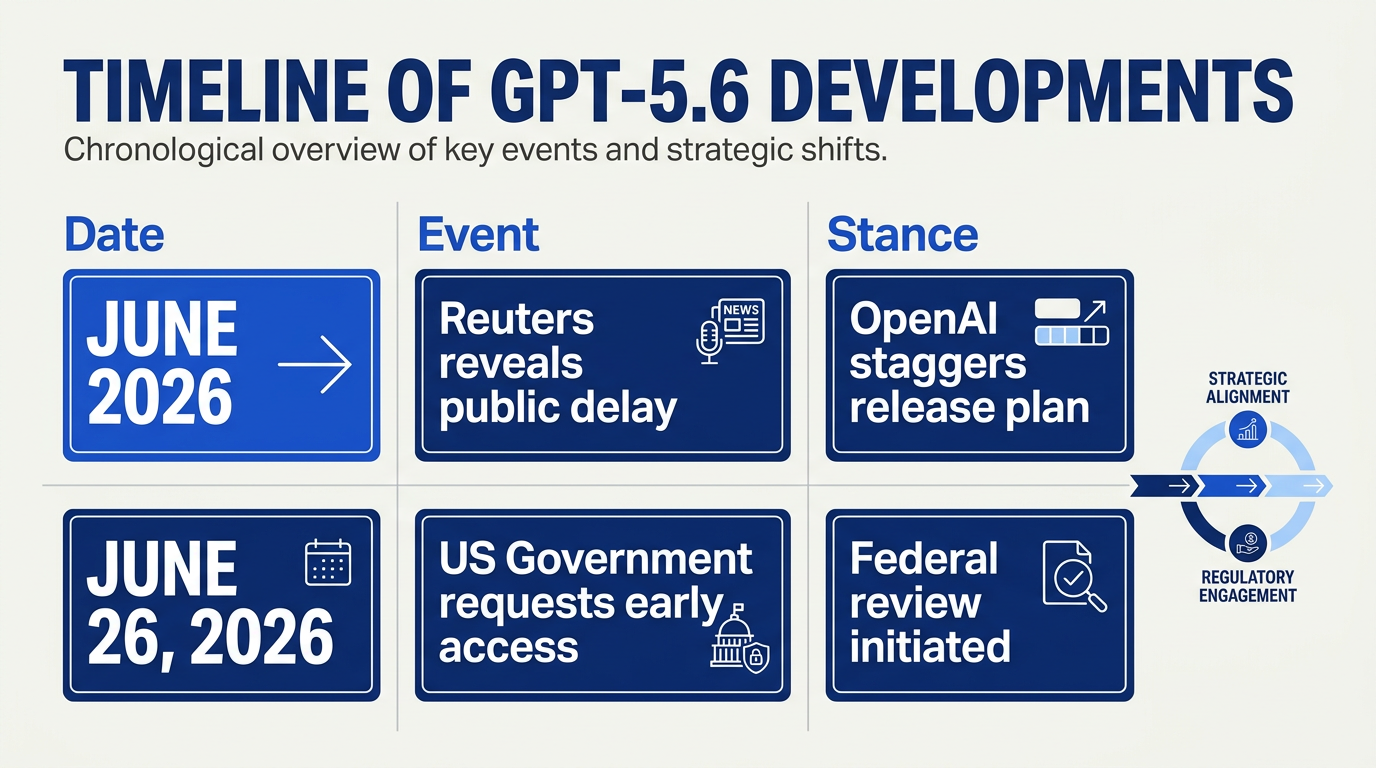
The decision by OpenAI to halt the widespread public launch of its highly anticipated GPT-5.6 model marks a watershed moment in the intersection of commercial AI development and state-level regulatory oversight. Prompted by a direct request from the United States government, OpenAI is shifting from its historically open developer-first release model to a highly restricted, heavily vetted deployment phase.
The following table outlines the key developments of this unprecedented intervention:
| Development | Stakeholder | Key Action / Detail | Strategic Impact |
|---|---|---|---|
| Deferred Public Rollout | OpenAI | Postponed the full public launch of its upcoming GPT-5.6 model. | Shifts commercial timelines for next-generation AI deployments globally. |
| Federal "Early Access" | US Government | Demanded pre-release, hands-on vetting of frontier models before public deployment. | Highlights growing state intervention in commercial AI safety protocols. |
| Restricted Preview Strategy | OpenAI & US Regulators | Restricting GPT-5.6 release to a closed, highly scrutinized preview. | Access is approved on a customer-by-customer basis, heavily limiting scale. |
| National Security Alignment | Tech Regulators | Shifting voluntary commitments into soft-enforced pre-screening practices. | Signals a permanent structural change in how "frontier" AI is treated as dual-use tech. |
The New Vetting Reality: Customer-by-Customer Approval
Historically, frontier AI models were released in open beta or via public API keys almost immediately following safety red-teaming. However, under the new framework requested by Washington, OpenAI will deploy GPT-5.6 only within a limited preview. Crucially, the US government intends to approve access on a customer-by-customer basis, effectively vetting who can build on top of this advanced cognitive infrastructure.
This move reflects an evolving consensus among policymakers that next-generation models possess capabilities that could pose systemic risks if deployed without oversight. For enterprise developers, this translates to predictable friction, longer approval pipelines, and a highly fragmented access landscape.
Navigating Model Fragmentation and Delays
As governments tighten control over flagship frontier models, businesses are realizing they cannot rely solely on a single AI provider. A restricted rollout of GPT-5.6 means enterprises must remain agile, diversifying their AI stacks to avoid platform lock-in and vendor bottlenecks.
This is where multi-model orchestrators become indispensable. Solutions like CallMissed’s multi-model API gateway allow organizations to seamlessly route workflows across more than 300 alternative Large Language Models (LLMs). When a highly anticipated flagship model faces sudden regulatory delays or access restrictions, developers can instantly shift production tasks to other high-performing open-source or proprietary alternatives without rewriting their underlying application code.
A Structural Shift in Frontier AI Releases
The deferral of GPT-5.6 suggests that the era of immediate, global rollouts for "frontier" AI is coming to a close. We are entering a dual-track market:
- Regulated Frontier Models: Highly capable models reserved for vetted enterprises and state-approved use cases under strict sovereign surveillance.
- Accessible Production Models: Highly optimized, slightly smaller open and closed models that power day-to-day business automation.
For organizations building on AI, adapting to this split market requires building robust, model-agnostic systems that can swap models dynamically as geopolitical and regulatory winds shift.
In-Depth Analysis
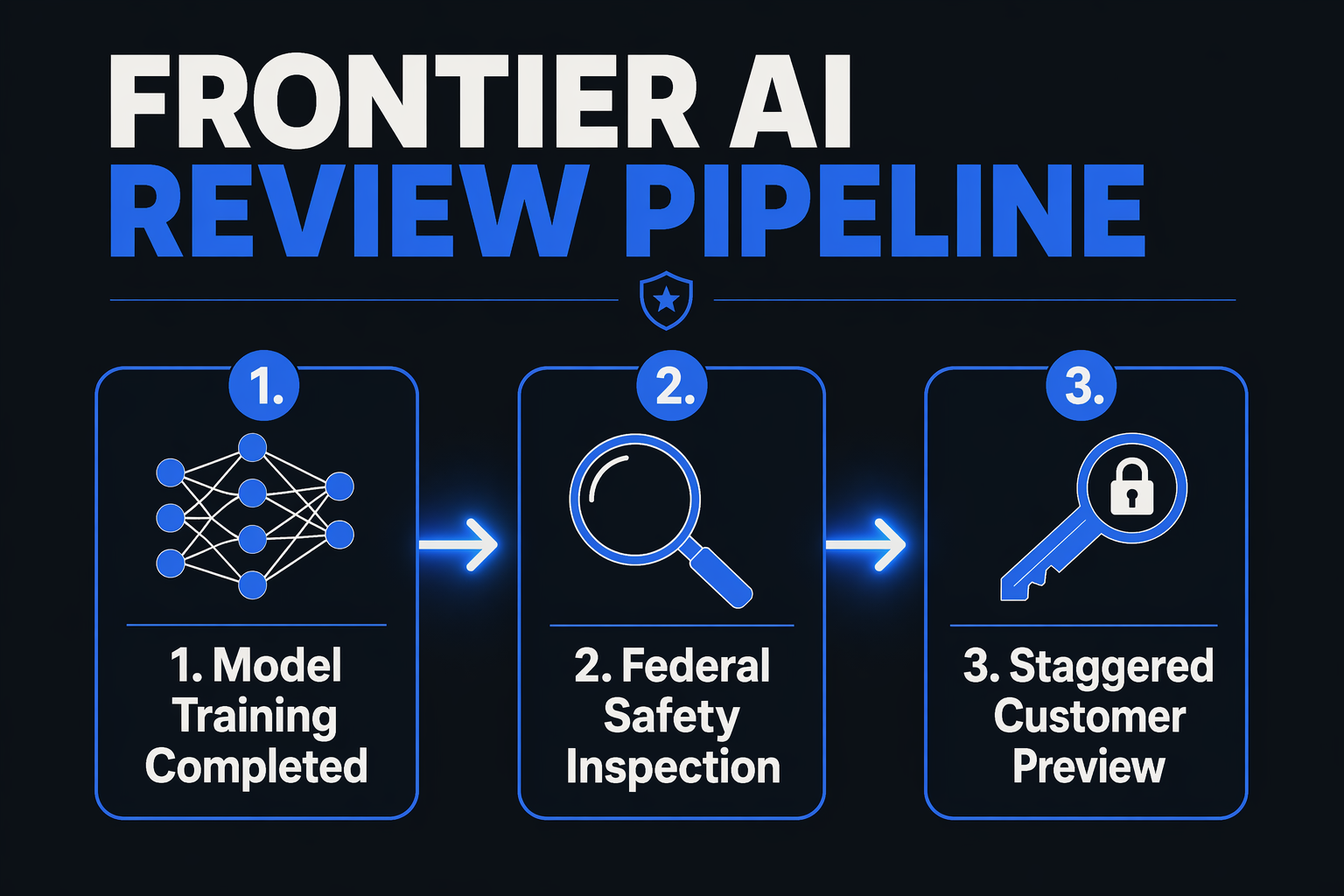
The decision to delay the public rollout of GPT-5.6 marks a fundamental shift in the deployment of generative AI. By complying with the U.S. government’s request to defer the release, OpenAI is signaling a new era of state-monitored frontier AI development. This move highlights several critical dynamics shaping the future of artificial intelligence governance, national security, and enterprise adoption.
1. The Pre-Screening of Frontier AI
For the first time, the U.S. government is actively intervening in the deployment timeline of commercial AI systems before they reach the public. Rather than relying on voluntary safety commitments or post-launch compliance, federal agencies are seeking early access to evaluate potential national security, cybersecurity, and systemic risks associated with GPT-5.6. This proactive vetting process indicates that the state-of-the-art capability threshold has crossed into a territory where sovereign nations view AI model releases as matters of geopolitical defense rather than simple product launches.
2. A Restricted "Customer-by-Customer" Release
Instead of the standard, instant-access API release that characterized previous GPT iterations, GPT-5.6 will reportedly launch only as a limited preview. Under this framework:
- Government Approval: The U.S. government will play a direct role in approving which commercial customers are allowed to access the model.
- Vetted Use Cases: Enterprises seeking access will likely face stringent background checks to ensure their use cases align with safety guidelines.
- Controlled Access: This gated rollout prevents rapid, unchecked propagation of the model's advanced capabilities, limiting access to highly trusted partners.
3. Implications for Enterprise AI Strategy
For businesses and developers, this regulatory gatekeeping introduces unprecedented operational uncertainty. Relying on a single AI provider or waiting indefinitely for gated frontier models like GPT-5.6 can stall enterprise innovation cycles. Consequently, forward-thinking organizations are shifting toward multi-model redundancy to de-risk their operations.
To navigate this fragmented landscape, developers are increasingly turning to flexible infrastructure providers. For example, platforms like CallMissed help enterprises maintain operational agility by offering a unified LLM gateway with access to 300+ models. If a primary frontier model becomes restricted, delayed, or subject to geopolitical bottlenecks, developers using CallMissed can seamlessly switch their core workflows—such as automated customer voice agents or multilingual WhatsApp chatbots—to alternative high-performing open-source or proprietary models without modifying their underlying application architecture.
4. The Geopolitical AI Race
Ultimately, the bottleneck surrounding GPT-5.6 is driven by strategic competition. As the U.S. strives to maintain its technological lead over global rivals, ensuring that domestic frontier models do not inadvertently expose vulnerabilities or leak critical capabilities is a paramount concern. However, this raises a vital question: will domestic vetting slow down the pace of American innovation, or will it establish a safer framework that fosters long-term institutional trust? For now, the era of unimpeded, open-access frontier AI is officially transitioning into a landscape of sovereign oversight.
Impact & Implications

The decision by OpenAI to defer the public rollout of GPT-5.6 marks a watershed moment in the relationship between Silicon Valley and Washington. By limiting the model’s launch to a highly restricted, customer-by-customer approved preview at the request of the U.S. government, the AI industry is entering a new era of state-influenced deployment.
A Shift in Sovereign AI Oversight
This delay signals a profound transition from voluntary safety pacts to active government intervention in frontier AI rollouts. For the first time, a major commercial AI release is being bottlenecked not by technical hurdles, but by national security and regulatory vetting.
- Precedent for Future Releases: This move sets a benchmark for other AI giants like Anthropic and Google. Any subsequent breakthrough model will likely face similar government-mandated early access and auditing periods.
- Market Access Restrictions: With the U.S. government approving access on a case-by-case basis, startups, global enterprises, and international developers face deep uncertainty regarding when—or if—they can integrate GPT-5.6 into their production pipelines.
The Imperative for Multi-Model Redundancy
For enterprise leaders, this delay highlights the danger of relying on a single AI provider. Organizations that built their product roadmaps entirely around the imminent public release of GPT-5.6 must now rapidly pivot.
- De-risking AI Architecture: To avoid vendor lock-in and regulatory bottlenecks, businesses are shifting toward multi-model systems.
- Agility Over Single-Model Dominance: Using an array of specialized, open-source, or highly available proprietary models is becoming the industry standard.
This is where robust AI communication infrastructure becomes crucial. Platforms like CallMissed address this shifting landscape directly; their multi-model API gateway allows developers to access over 300+ LLMs, enabling businesses to seamlessly route queries to alternative high-performing models when access to specific frontier models is delayed or restricted by federal oversight.
Real-World Operational Impact
While frontier models like GPT-5.6 face regulatory friction, businesses still require immediate, scalable solutions to handle customer-facing applications.
- Immediate Action Over Speculation: Companies cannot afford to pause their AI roadmaps while waiting for federal clearance of new models. They are instead turning to production-ready infrastructure that delivers immediate value.
- Localization and Voice: The demand for highly specialized voice agents and regional language support is growing independently of raw LLM reasoning breakthroughs. For instance, CallMissed enables organizations to deploy automated voice agents and chatbots utilizing highly localized Speech-to-Text models supporting 22 Indian languages, ensuring operational continuity regardless of global regulatory shifts.
Ultimately, the GPT-5.6 deferral proves that the future of enterprise AI will not be won by waiting for the next massive, monolith model, but by building resilient, adaptable infrastructure that can pivot instantly.
Expert Opinions
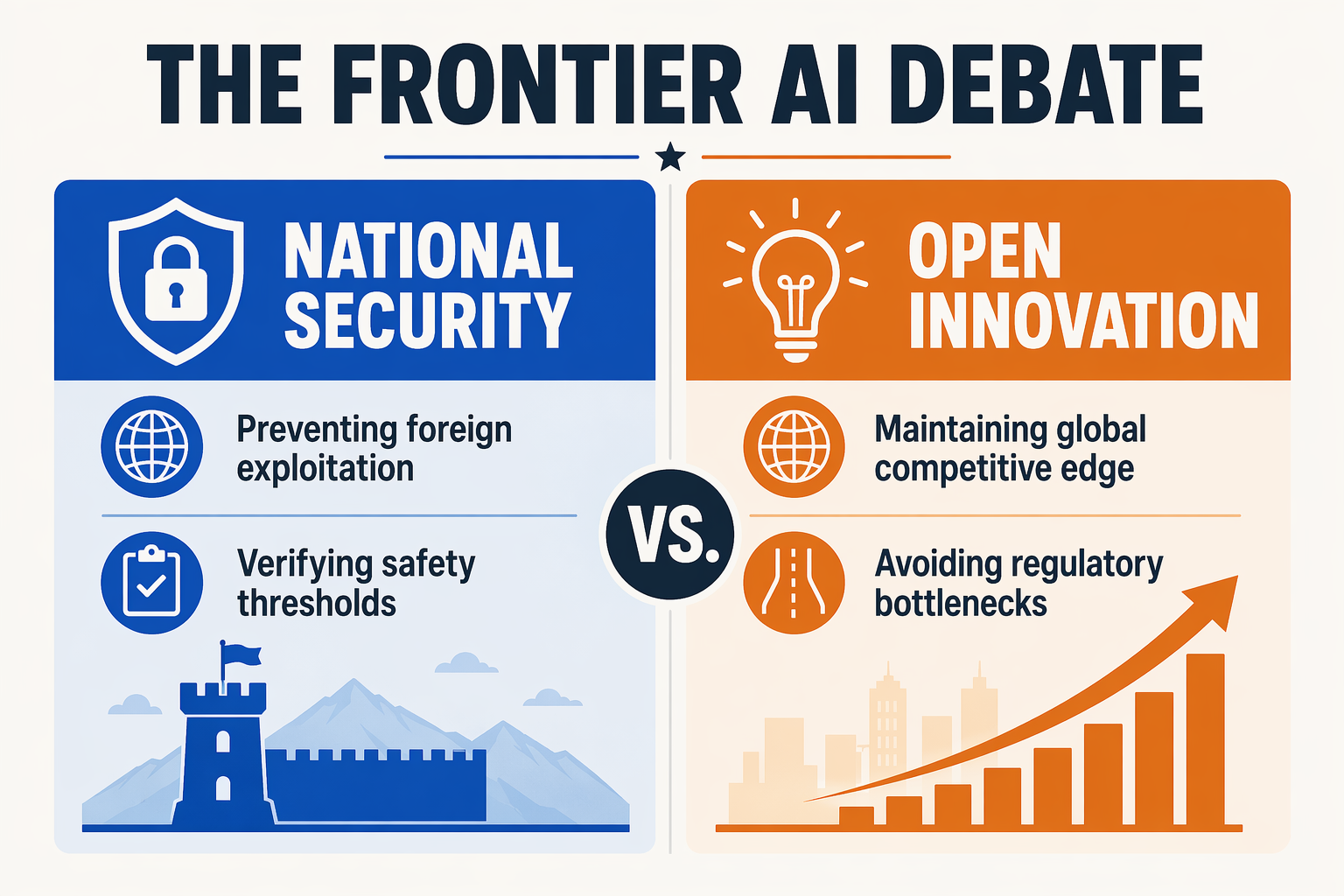
A Shift from Permissionless Innovation to State-Vetted AI
Industry analysts view OpenAI's decision to defer the public launch of GPT-5.6 on June 26, 2026, as a historic turning point in technology regulation. For years, the artificial intelligence sector operated on a model of rapid, public-facing iterations. However, this sudden pivot at the request of the U.S. government indicates that national security concerns now supersede commercial launch timelines.
According to cybersecurity and AI policy experts, the government’s push to evaluate frontier models before they reach the public is motivated by several core national security dimensions:
- CBRN Risks: Assessing the potential capabilities of GPT-5.6 to assist in the creation of chemical, biological, radiological, or nuclear threats.
- Autonomous Cyberwarfare: Identifying whether the model's advanced reasoning could be utilized to discover zero-day exploits or automate cyberattacks against critical infrastructure.
- Proprietary Safeguards: Preventing highly sensitive underlying weights or advanced capabilities from being reverse-engineered or exfiltrated by foreign adversaries.
Security researcher Lukasz Olejnik highlighted that the restricted rollout of GPT-5.6—limiting access strictly to a government-approved, customer-by-customer basis—marks a massive transition. This high-security vetting process mimics defense-grade technology export controls rather than standard software-as-a-service (SaaS) distribution models.
The Developer Dilemma: Redundancy and Multi-Model Architectures
For developers and enterprise leaders, the highly restricted nature of GPT-5.6 raises immediate concerns about operational stability and access equity. If the industry's most advanced models are gated behind rigorous, case-by-case government reviews, businesses cannot afford to build their entire software stack around a single, highly regulated API.
Tech architects argue that this bottleneck will accelerate the transition toward resilient, multi-model architectures. Platforms like CallMissed, which provides an AI communication infrastructure with a unified LLM inference API supporting over 300+ models, are becoming essential in this new landscape. By utilizing multi-model gateways, enterprises can seamlessly deploy voice agents and WhatsApp chatbots while maintaining the flexibility to fall back on other high-performing, accessible models if frontier engines like GPT-5.6 are delayed, restricted, or subject to sudden regulatory bottlenecks.
Voluntary Cooperation vs. Hard Regulation
Legal experts have highlighted a critical structural paradox in the current U.S. approach. Despite the aggressive push for early access, the federal government currently lacks a firm, statutory legal mandate to force private AI labs to hand over their models prior to public release.
- Voluntary Compliance: OpenAI's deferral is seen as a cooperative gesture aimed at maintaining geopolitical alignment and regulatory goodwill, rather than a response to a formal legal injunction.
- Informal Precedents: Analysts warn that voluntary compliance today will become the standard expectation tomorrow, creating an informal federal gatekeeping mechanism for all subsequent frontier models.
- Global Fragmentation: While U.S. labs face delays due to federal vetting, international competitors in less regulated jurisdictions may continue to release uncensored frontier models, potentially accelerating global fragmentation in AI capabilities.
Ultimately, the consensus among experts is clear: the era of immediate, permissionless public access to the absolute cutting edge of LLM technology has ended. Moving forward, the most advanced AI will be treated as dual-use, national security-critical infrastructure.
What This Means For You
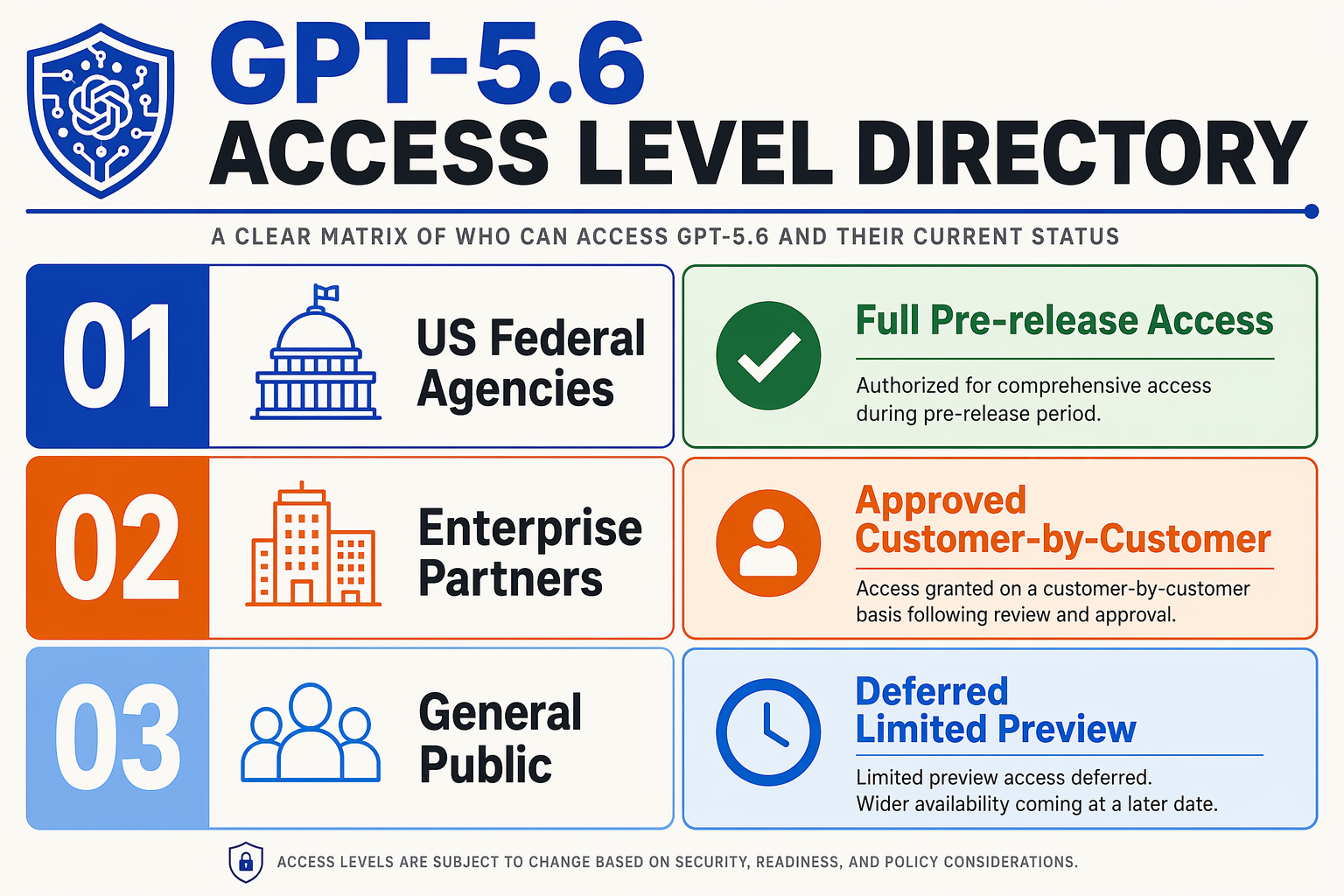
The sudden postponement of OpenAI's GPT-5.6 public rollout marks a defining moment in the AI industry. With the U.S. government requesting a limited preview and implementing a customer-by-customer vetting process, the era of frictionless, instant access to frontier AI models is drawing to a close. For businesses, developers, and tech leaders, this shift requires an immediate reassessment of product roadmaps and infrastructure.
Navigating the Bottleneck: Immediate Actions for Businesses
With the federal government stepping in to review frontier models before public deployment, organizations can no longer build products that depend entirely on the immediate release of the next major LLM. The threat of regulatory delays means that "waiting for GPT-5.6" is no longer a viable business strategy. Instead, engineering teams must optimize their current systems using highly capable, widely available models.
To help you navigate this transition, we have broken down the specific impacts, risks, and strategic next steps for various stakeholders:
| Stakeholder Group | Impact of GPT-5.6 Delay | Key Risk | Recommended Action |
|---|---|---|---|
| Enterprise Leaders | Delayed access to advanced reasoning and autonomous workflows. | Competitive stagnation and stalled AI transformation projects. | Optimize existing workflows using GPT-4o, Claude 3.5 Sonnet, or Gemini 1.5 Pro. |
| AI Developers | Pipeline uncertainty; waiting for highly restricted "limited preview" access. | Severe vendor lock-in and brittle software architecture. | Transition to model-agnostic application frameworks to decouple code from a single provider. |
| Startups & Builders | Slowed time-to-market due to potential customer-by-customer vetting processes. | Inability to secure early access compared to massive tech incumbents. | Benchmark and build on high-performing open-weight alternatives like Llama 3 or Mistral. |
| Compliance Officers | Increased scrutiny regarding national security, data sovereignty, and AI safety. | Non-compliance with emerging governmental AI vetting frameworks. | Establish formal internal AI governance committees to monitor federal compliance guidelines. |
Strategic Diversification: The Multi-Model Solution
This regulatory shift underscores a fundamental truth: relying on a single AI provider is a major operational vulnerability. If your entire product infrastructure is tied to OpenAI’s release cycle, geopolitical and regulatory bottlenecks become your bottlenecks.
To mitigate these pipeline disruptions, forward-looking engineering teams are pivoting toward hybrid and multi-model strategies. Platforms like CallMissed are playing a critical role in this transition. By offering a unified infrastructure that includes an LLM gateway with access to over 300+ models, CallMissed allows businesses to build robust, agile systems. If GPT-5.6 remains locked behind governmental review processes, developers using the platform can instantly route tasks to other high-performing models—such as Anthropic's Claude or open-source weights—without changing a single line of core application code.
Ultimately, the delay of GPT-5.6 is a wake-up call. The future of enterprise AI deployment belongs to those who build with flexibility, resilience, and multi-model agility in mind.
Frequently Asked Questions
Why did OpenAI decide to delay the GPT-5.6 rollout?
How can developers and enterprises access the OpenAI GPT-5.6 model?
What does the U.S. government hope to achieve by delaying the public launch of GPT-5.6?
Will GPT-5.6 be available internationally, such as in India or Europe?
What is a "frontier AI model," and how does it relate to the GPT-5.6 rollout delay?
Is there an official release date for the full public rollout of GPT-5.6?
Conclusion
- Sovereign Gatekeeping: The U.S. government's demand for early access to GPT-5.6 marks a major shift toward state-level vetting of frontier AI models before public deployment.
- Restricted Rollouts: Rather than a broad public launch, GPT-5.6 will release in a limited preview, requiring careful oversight and customer-by-customer approvals.
- National Security Precedence: Geopolitical and safety alignments are now actively delaying commercial release cycles for cutting-edge generative AI.
Moving forward, watch for whether this intervention sets a permanent precedent for how other labs release their future systems. As access to cutting-edge frontier models becomes increasingly gated, maintaining an agile, adaptable AI tech stack is more critical than ever. To explore how AI communication is evolving amid these shifts, check out CallMissed—an AI communication infrastructure platform powering voice agents and multilingual chatbots that helps businesses deploy robust AI systems today, without relying on single-provider rollouts.
Will government gatekeeping of frontier models secure our digital future, or will it bottleneck the next wave of enterprise innovation?
Discussion
Related Posts



Ready to automate customer conversations?
Launch AI voice agents and WhatsApp bots with CallMissed — one API, 22+ Indian languages.