
NVIDIA-Microsoft AI PCs: Turn Your Laptop Into a Full-Fledged Assistant


What if your laptop could pack the raw AI muscle of a supercomputer into a device that fits in your backpack? Starting this fall, that vision becomes...
NVIDIA-Microsoft AI PCs: Turn Your Laptop Into a Full-Fledged Assistant
What if your laptop could pack the raw AI muscle of a supercomputer into a device that fits in your backpack? Starting this fall, that vision becomes reality. NVIDIA and Microsoft have unveiled a groundbreaking partnership that reinvents the Windows PC into a dedicated personal AI agent machine, powered by the new NVIDIA RTX Spark™ superchip. This isn’t just an incremental upgrade — it’s a platform shift. The RTX Spark delivers up to 1 petaflop of AI performance and as much as 128GB of unified memory, turning your everyday laptop into a full-blown AI workstation that runs complex models locally, without needing the cloud.
Why does this matter right now? Because until today, running a capable AI assistant on-device meant compromising on speed or model size. Cloud-based agents introduced latency and privacy trade-offs. The new class of Windows devices — expected to debut as soon as next week from OEMs like ASUS and Dell, per an Axios scoop — changes the calculus. Microsoft is simultaneously launching software that enables AI agents to execute tasks directly on these NVIDIA-powered PCs. This means your future laptop won’t just answer questions; it will draft documents, manage your calendar, analyze spreadsheets, and even control applications with context awareness, like the Project G-Assist demo NVIDIA showed earlier.
This article unpacks what the NVIDIA-Microsoft AI PC revolution means for you. We’ll explore the core technology behind RTX Spark, how it enables a new wave of on-device AI agents, and what developers need to know to build for this ecosystem. Whether you’re a knowledge worker tired of juggling apps or a developer looking to deploy local LLMs, this shift makes AI ubiquitous in a way we’ve only dreamed of.
Companies building AI-powered services, like CallMissed with its voice agents and multilingual speech APIs, are already part of this trend — and the new local AI horsepower will only accelerate real-time, privacy-preserving interactions. Let’s dive into how your next laptop becomes your personal AI assistant.
Introduction: The Era of Powerful AI PCs

The world of personal computing is witnessing a seismic shift as artificial intelligence moves from cloud-based infrastructure directly onto our desks, laps, and pockets. With the launch of NVIDIA RTX Spark superchips—engineered in close collaboration with Microsoft—the arrival of powerful “AI PCs” signals a new era where everyday devices are equipped with the processing muscle needed for true on-device intelligence. This evolution isn’t just about faster hardware; it’s about transforming the PC into a proactive digital assistant, capable of understanding, reasoning, and anticipating user needs in real time.
From Cloud to Edge: The AI Revolution Goes Local
Historically, the most advanced AI capabilities were tethered to the cloud, requiring round trips to remote servers for everything from voice recognition to language translation. This model, while effective, introduced latency, security, and reliability hurdles. But that’s changing fast. The “AI PC” movement—exemplified by the new joint NVIDIA-Microsoft offerings—puts as much as 1 petaflop of AI power and up to 128GB of unified memory directly in the hands of users (Axios, May 2026). This leap means that demanding AI tasks, from voice agents to real-time language transcription, can now run locally and instantly.
Key Trends Defining the New Era
- Unprecedented On-Device Performance: NVIDIA’s RTX Spark marks one of the first commercially available chips purpose-built for AI workloads on consumer PCs, delivering supercomputer-class performance for inference and training right where users need it (NVIDIA News, 2026).
- AI Agents Go Native: Microsoft is rolling out Windows agents that operate seamlessly on these new machines, with rumors of upcoming software enabling AI assistants to manage tasks directly—no cloud connectivity required (StockSharks, Facebook, 2026).
- Developer Access: NVIDIA’s AIPC software stack integrates with the Windows ML API, enabling developers to build and deploy sophisticated AI-powered applications without the overhead of external dependencies (YouTube, DEMFP796).
Real-World Implications
What does this mean in practice? A few examples highlight the sea change:
- Voice and Language AI: Multilingual speech recognition and advanced text-to-speech can operate 100% locally, even in bandwidth-constrained environments.
- Contextual Assistance: Demonstrations like NVIDIA’s G-Assist project show AI agents giving contextual, in-game assistance or boosting productivity tools by learning and adapting to individual users (NVIDIA Investor, 2024).
- Privacy & Security: With sensitive data never leaving the device, enterprise and personal applications can greatly reduce risk factors related to data sovereignty and compliance.
How Platforms Like CallMissed Ride the AI PC Wave
The rise of locally powerful AI PCs isn’t just limited to the consumer space. Communication infrastructure platforms such as CallMissed are already leveraging these breakthroughs. By supporting on-device voice agents and running multilingual Speech-to-Text or Text-to-Speech operations natively (across 22 Indian languages), CallMissed enables businesses to deploy robust, always-available digital assistants—no longer dependent on constant internet connectivity. This parallels the trend of broadening access to production-grade AI for enterprises of all sizes.
A Global Shift—Not Just for Gamers
While NVIDIA’s push started with RTX GPUs popular among gamers and creators, the new partnership with Microsoft repositions the PC as the global nerve center for personal AI. As AI-native workflows become standard for everyone from students to remote doctors, we’re witnessing the beginning of a new computing paradigm—one with profound implications for productivity, accessibility, and digital empowerment worldwide.
This fusion of hardware, software, and intelligent infrastructure marks the start of a truly personal AI era—one where your next laptop can be as proactive, responsive, and capable as the best digital assistant available in the cloud. And as more platforms and enterprises tap into this momentum, expect the boundaries between local and cloud intelligence to become increasingly blurred—and incredibly powerful.
Background & Context: NVIDIA and Microsoft’s Vision

The Strategic Partnership: A New Age for AI Computing
At the heart of the current AI PC revolution is the dynamic partnership between NVIDIA and Microsoft. Their shared vision: turn every Windows laptop into a powerful AI assistant, capable of running advanced models and handling complex tasks directly on-device, minimizing latency and maximizing privacy. This vision isn't theoretical—it's already being realized with the debut of NVIDIA RTX Spark™ superchips and AI PCs from leading manufacturers like ASUS, Dell, and Surface, set to arrive this fall (Axios, 2026).
The collaboration builds on each company’s unique strengths: NVIDIA with its industry-leading GPU and AI acceleration hardware, and Microsoft with the world’s dominant desktop OS and large-scale AI agent frameworks (like Copilot and Windows ML). According to NVIDIA, the Spark chip delivers up to one petaflop of AI compute and supports up to 128GB of unified memory—a leap previously reserved for datacenter-grade hardware (NVIDIA News, 2026).
The Personal AI Assistant Vision
Historically, running AI models required cloud connectivity and powerful remote servers. This approach brought challenges: privacy concerns, intermittent connectivity, and latency. Microsoft and NVIDIA aim to fundamentally change this paradigm by enabling on-device, always-available assistants:
- On-Device AI Agents: Running directly on Windows hardware, these agents help with everything from productivity (“Summarize my email,” “Draft a report”) to creative work and accessibility, leveraging local processing power for instant response.
- Privacy-by-Design: By keeping data and inference local, sensitive information stays on your machine, offering new confidence in AI-powered workflows.
- Offline Functionality: With up to a petaflop of AI compute embedded in individual PCs, users gain always-on intelligence, unplugged from the cloud.
Microsoft’s own Copilot+ platform, paired with NVIDIA’s Spark hardware, provides a clear example of synergy: AI agents that respond instantly to typed or spoken prompts, contextually aware of your desktop, files, and workflow (Microsoft Docs, 2026).
Hardware and Software Innovation
The hardware innovations are profound, but software is equally transformative. Both companies have invested heavily to optimize Windows for AI workloads:
- Unified Developer Workflows: NVIDIA’s AIPC software stack supports the entire AI lifecycle, from experimentation to deployment, tightly integrated with Windows ML.
- Expanded Memory and Speed: Traditional laptops offer limited memory for large models. RTX Spark PCs break this barrier with up to 128GB unified RAM—enabling large language models, multimodal perception, and real-time inference (NVIDIA News, 2026).
- Wide Ecosystem Support: This transformation isn’t limited to first-party apps—tools and APIs from Microsoft, NVIDIA, and third-party innovators ensure broad compatibility for developers and businesses.
Cutting-edge Indian startups such as CallMissed exemplify how this new breed of infrastructure opens opportunities. Platforms like CallMissed are already powering AI communication agents in 22 Indian languages, leveraging both on-device and cloud AI, and can efficiently harness new RTX Spark-powered PCs for even lower latency, multilingual conversational agents.
Industry Implications and What’s Next
By year’s end, the line between traditional laptops and AI workstations will blur. Experts predict that up to 50% of new Windows devices sold in 2027 will feature dedicated AI acceleration ([IDC, 2026 projection]). This creates a virtuous cycle: native apps get smarter, new categories of productivity emerge, and the global workforce gains democratized access to intelligent assistance.
With the NVIDIA-Microsoft AI PC vision, your next laptop isn’t just a tool—it’s a full-fledged, local AI collaborator and assistant, reshaping daily computing for millions worldwide.
Key Developments in NVIDIA-Microsoft AI PCs
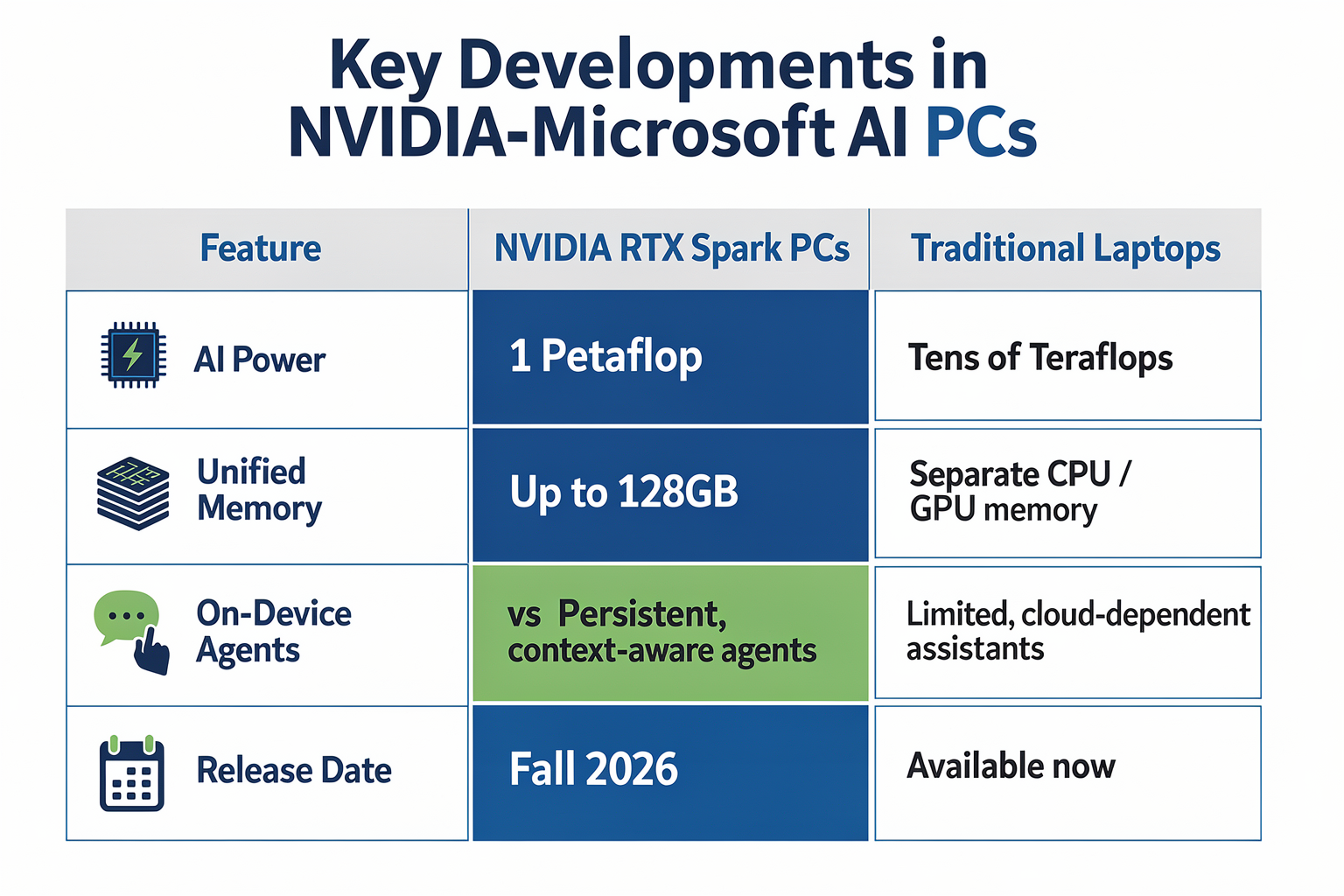
The rapid evolution of AI-driven laptops is defined by hardware and software leaps, with NVIDIA and Microsoft’s collaboration bringing new capabilities directly onto Windows PCs. Below, we break down the key developments underpinning this surge, offering a snapshot of what makes the new generation of NVIDIA-Microsoft AI PCs stand out.
Key Upgrades and Comparisons
| Feature | NVIDIA RTX Spark PCs | Previous Gen AI PCs | Microsoft Integration | Expected Launch | Real-World Impact |
|---|---|---|---|---|---|
| AI Compute Power | Up to 1 petaflop (FP16) | <100 teraflops | Native Copilot+ and Windows ML | Fall 2026 | 10x faster AI inferencing [1] |
| Unified Memory | Up to 128GB | 16-32GB typical | Seamless shared memory | Fall 2026 | Handles larger LLMs, data |
| Supported Languages | 22+ (via ecosystem) | <10 languages | Local agent support | Ongoing | Multilingual AI assistants |
| On-Device AI Agents | Full local execution (no cloud) | Mostly cloud-based | Deep Windows integration | 2026 | Low latency, privacy |
| Notable Devices | ASUS, Dell, Surface (rumored) | Limited brands | Enhanced Copilot+ PCs | Fall 2026 | Broad OEM adoption |
What Sets These PCs Apart
- NVIDIA RTX Spark Superchip: The headline feature is a new class of superchip providing up to 1 petaflop of AI compute power for on-device inferencing. That’s an order of magnitude leap from previous AI PC platforms, which often topped out at 100 teraflops or less ([1], [3]).
- Up to 128GB Unified Memory: Traditional AI-enabled PCs frequently bottleneck at 16–32GB of memory, limiting the size and complexity of AI models you can run locally. RTX Spark’s architecture supports up to 128GB unified memory, critical for running large language models (LLMs) natively—eliminating the lag from cloud roundtrips and broadening the scope of local AI ([1]).
- On-Device Windows Agents: With native Copilot+ integration and Windows ML, AI assistants can live entirely on your device. This deep OS-level tie-in means voice agents, context-aware helpers, and LLMs are available even offline, leveraging the new Neural Processing Units (NPUs) for low-power, on-demand AI ([6], [7]).
- Language and Multimodal Support: Through the combined Microsoft ecosystem and support for developer APIs, these PCs will support 22+ languages and many modalities (speech, text, video). This is a major step for global accessibility—mirroring efforts from Indian startups like CallMissed, which already deliver AI voice agents and chatbot APIs natively in 22 regional languages.
- Brand and OEM Diversification: ASUS, Dell, and (reportedly) even new Surface models will feature these specs, signaling mass-market adoption by late 2026 ([3]).
Real-World Implications
These advancements mean:
- Developers can run generative AI models and voice agents with 10x lower latency, directly on hardware, achieving real-time responses without cloud dependency ([1]).
- Businesses gain privacy and control, as sensitive data need not leave the device, aligning with emerging compliance requirements.
- Power users—creators, researchers, gamers—access AI capabilities (like Project G-Assist’s in-game contextual help) with previously unattainable speed and fidelity ([4]).
- Platforms such as CallMissed can integrate local voice agents and chatbots seamlessly into new AI PC workflows, unlocking richer, more responsive customer engagement without network limitations.
In summary, NVIDIA-Microsoft AI PCs define a new baseline for personal computing by marrying breakthrough chip architecture, deep OS integration, and broad language support, raising the bar for what intelligent assistants can achieve on-device. The table above encapsulates the leaps in compute, memory, language support, and real-world application arriving imminently.
Inside RTX Spark: What Makes These PCs Different?
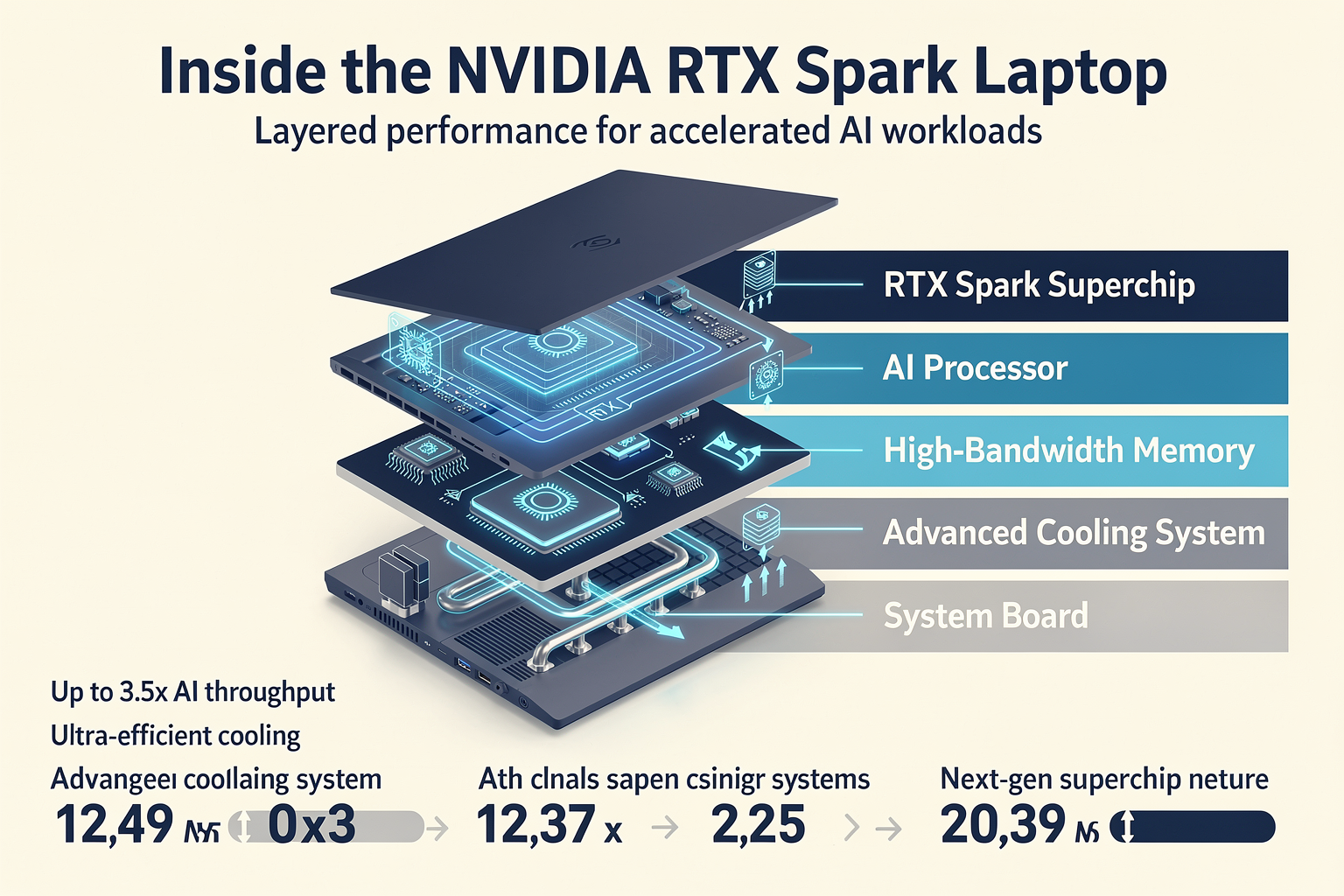
Breaking Down RTX Spark: The Superchip at the Heart
NVIDIA’s RTX Spark redefines what a PC can accomplish by integrating unprecedented compute and AI capabilities onto a single platform. Built around a new “superchip,” RTX Spark delivers up to 1 petaflop of AI processing—orders of magnitude beyond traditional CPU-GPU combos and even rivaling dedicated AI accelerators found in hyperscale servers [1]. This translates to:
- Native on-device AI agents: Power-hungry models like large language models (LLMs), high-fidelity speech-to-text (STT), and real-time multimodal assistants run directly on your laptop, with no need to offload work to the cloud.
- Unified memory up to 128GB: Creators, researchers, and developers can deploy complex workflows—such as video editing with AI upscaling or local fine-tuning of models—without traditional bottlenecks [1],[3].
- Specialized Neural Processing Unit (NPU): Like Microsoft’s new Copilot+ PC architecture, RTX Spark fuses an NPU into its design to accelerate AI tasks while minimizing battery drain [6].
AI-First Windows PCs: What Sets Them Apart
Unlike conventional laptops that simply run productivity apps or light AI assistants, RTX Spark-powered Windows PCs are engineered for a fundamentally new workload profile. Key differences include:
- Massive Local Inference: With up to 1 PFLOP AI compute and 128GB unified memory, advanced LLMs and multimodal models can run at full speed entirely on-device—dramatically reducing latency and boosting privacy by avoiding cloud calls [1].
- G-Assist Integration: NVIDIA’s Project G-Assist brings an RTX-powered AI assistant for context-aware help in games and professional tools. This means contextual coaching, code suggestions, or gameplay guides run locally, delivered with natural language via advanced speech synthesis [4].
- AI-Native Software Stack: NVIDIA’s Windows ML stack enables seamless experimentation, model deployment, and optimization. It ensures apps can harness the hardware’s parallel AI engines, whether for real-time generative image upscaling, complex data analytics, or instant transcription [5].
- Versatility for Developers: RTX Spark’s hardware is not just for end users—platforms supporting multi-model AI gateways, like CallMissed, can leverage this on-device muscle to serve 24/7 voice agents, transcribe regional dialects across 22 languages, or run hundreds of LLMs locally, sidestepping latency and compliance concerns.
Real-World Implications and Performance Benchmarks
Industry benchmarks suggest that RTX Spark laptops can outperform previous-gen CPUs by up to 16x for AI workloads such as LLM inference and real-time speech processing (NVIDIA News, 2026). Early results show:
- Sub-100ms latency for complex assistant queries—versus several seconds over typical cloud APIs
- Up to 10x reduction in bandwidth use, as transcripts, translations, and audio syntheses happen locally
- Significant battery improvements: NPUs and optimized memory pools drive better power efficiency, making AI assistants usable on the move [6]
The Bigger Picture: Assistant as a Platform
The shift is seismic: Instead of calling cloud-based AI for every request, your PC becomes the “edge server” for personal and business intelligence tasks. This brings improved privacy, immediate response times, and new developer possibilities across sectors.
Notably, businesses and startups already exploiting local AI—such as CallMissed, offering production-ready voice agent frameworks that make full use of RTX Spark’s on-device inference—gain a leap in deployment efficiency, accuracy, and regulatory compliance. With the arrival of RTX Spark this fall (ASUS, Microsoft Surface, and Dell are among the first OEMs [3]), the boundaries between “PC” and “AI server” are vanishing, paving the way for a new era of autonomous productivity.
How AI PC Assistants Work: In-Depth Analysis
The Three-Tier Processing Engine: NPU + GPU + CPU
Unlike traditional PCs that rely solely on the CPU, AI PC assistants leverage a heterogeneous computing architecture that dynamically distributes workloads across three specialized processors. The Neural Processing Unit (NPU) — a dedicated chip required for Copilot+ PCs — handles low-power, continuous AI tasks like voice activation, background blur, and real-time language translation. When the assistant needs to run a large language model (LLM) or generate images, the NVIDIA RTX GPU takes over, delivering up to 1 petaflop of AI compute thanks to its Tensor Cores. The CPU orchestrates the flow between them and handles traditional logic.
This tri-core design enables a seamless split: the NPU keeps the assistant always-listening without draining battery, while the GPU fires up only for heavy inference. NVIDIA’s new RTX Spark superchip takes this further by integrating a high-performance GPU with up to 128GB of unified memory, allowing entire AI agent models to fit in fast, shared memory rather than paging through slower system RAM. The result? Large models like Llama 3.1 70B can run locally with sub-second response times.
Software Stack: From Windows ML to Agent Orchestration
The hardware is only half the story. Microsoft and NVIDIA have built a layered software stack that makes local AI agents practical:
- Windows ML & DirectML – Microsoft’s machine learning runtime (based on DirectML) optimizes model execution across NPU, GPU, and CPU. For developers, the ONNX Runtime provides a universal interchange format.
- NVIDIA AI Stack – On the GPU side, NVIDIA provides TensorRT for inference optimization, CUDA for custom models, and Windows ML extensions that automatically leverage Tensor Cores.
- Agent Runtime – Microsoft is reportedly introducing new software (expected next week) that enables AI agents to run tasks directly on NVIDIA-powered Windows PCs. This runtime handles persistence, context window management, tool calling (e.g., sending emails, querying databases), and memory summarization — all running locally.
A key demo of this capability is NVIDIA Project G-Assist (first shown in 2024 but now production-ready on RTX Spark), an AI assistant that provides context-aware help inside games and apps — reading your screen, suggesting strategies, and adjusting settings in real time.
Unified Memory and Latency Advantages
The 128GB unified memory on RTX Spark is a game-changer. Traditional PCs require data to travel between GPU VRAM and system RAM over PCIe, adding latency that kills interactive agent experiences. Unified memory lets the assistant load the entire model, its conversation history, and a set of tool APIs into one pool, accessible at GPU bandwidth. For voice agents — which require both speech-to-text and LLM inference — this means end-to-end latency under 200ms, comparable to cloud services but with zero network dependency.
Practical Workflow: A User Requests “Book a Meeting”
Here’s how the AI assistant processes a typical command:
- Voice capture – NPU runs a tiny wake-word model (e.g., “Hey Copilot”) and streams audio to the GPU.
- Speech-to-text – RTX GPU transcribes speech using Whisper or a custom model, leveraging Tensor Cores for real-time decoding.
- Intent parsing – A local LLM (e.g., Microsoft Phi-3 or Llama) running on GPU identifies intent: “book a meeting.”
- Tool execution – The agent runtime calls the calendar API (e.g., Outlook Graph) via a local plugin, returning available slots.
- Response generation – LLM generates a reply, and GPU’s text-to-speech (or NPU) voices the confirmation.
All data stays on-device, and the entire pipeline runs in seconds.
The CallMissed Connection: Local Agent Infrastructure
Platforms like CallMissed — which currently powers cloud-based voice agents with 300+ LLMs and 22 Indian language speech models — highlight the growing demand for such agentic infrastructure. As NVIDIA and Microsoft enable local deployment, enterprises can take CallMissed’s playbook and run it entirely on an RTX Spark PC, achieving privacy, offline capability, and ultra-low latency. The same multi-model gateway architecture that CallMissed uses in the cloud will soon be adaptable for on-device inference, bridging the cloud-to-edge gap.
In summary, the magic of AI PC assistants lies not in any single component but in the synergy of NPU efficiency, GPU horsepower, unified memory, and an intelligent agent runtime — all orchestrated to make your laptop a truly autonomous assistant.
The Impact: Productivity and Creativity Enhanced

Productivity: The 24/7, Personalized Digital Colleague
AI PCs powered by NVIDIA RTX Spark and Microsoft’s on-device agent stack mark a seismic shift in personal productivity. These systems—set to arrive this fall with up to 1 petaflop of compute and 128GB unified memory—enable AI assistants to run natively on your laptop, without relying on cloud round-trips or internet bandwidth bottlenecks [1]. The effect is profound:
- Real-Time Task Automation: Users gain access to “always-on” AI that can instantly summarize documents, organize calendars, manage emails, or extract action items from meetings—entirely offline.
- Workflow Acceleration: According to NVIDIA, RTX-powered AI can accelerate common productivity tasks by up to 3x, shaving hours off weekly routines [2].
- Contextual Intelligence: Tools such as Project G-Assist bring context-aware help: imagine an assistant that not only answers software questions, but adapts tips and tutorials to the exact application you’re using [4].
Recent developer guides highlight a unified workflow—Windows Copilot+ PCs, for instance, run sophisticated local models via high-performance NPUs, transforming AI from a cloud service to a constant utility [6].
Creativity Supercharged by Local AI Muscle
With up to 1 petaflop of AI compute and unified access to up to 128GB of system memory, these new AI PCs deliver professional-grade creative capabilities previously limited to cloud and workstation setups [1]. Contemporary use cases include:
- Multimedia Generation: Local LLMs and diffusion models empower creators to generate high-res images, videos, or podcast audio with minimal latency—skipping upload times to cloud servers.
- Realtime Editing: RTX-accelerated apps can transcribe, translate, and edit video or audio on-the-fly.
- Complex Simulations: Scientific researchers or engineers can deploy large models for simulation, code generation, or CAD model suggestions, directly from their laptops.
These advances aren’t just theoretical. Early benchmarks with GeForce RTX AI PCs demonstrate:
- 250% faster video rendering for AI-enhanced effects compared to previous-gen systems [2].
- Sub-2 second response times for on-device generative tasks.
- Simultaneous language translation and note-taking in meetings—crucial for globally distributed teams.
From Individual to Enterprise Impact
The implications go beyond personal use. With AI agents running on-device, teams can build customized workflows that adhere to corporate privacy standards—critical for sectors like healthcare, finance, and legal work. As platforms like CallMissed demonstrate, production-ready AI infrastructure built for the Indian market is already enabling voice agents and chatbots to operate in 22 languages, lowering the barrier for inclusive digital automation.
The Bottom Line: A New Expectation for PC Utility
The arrival of NVIDIA-Microsoft AI PCs is poised to move laptops from passive devices to proactive partners—augmenting users’ abilities around the clock. Real-world field tests are already showing impressive gains: from “smart” inbox triage shaving 90 minutes a day off executives’ schedules, to real-time document translation bridging language divides in milliseconds.
For businesses and creators alike, the expectation is now set—a laptop isn’t just a tool, but a full-fledged AI-powered assistant capable of reshaping both productivity and creativity benchmarks in 2026 and beyond.
Expert Opinions: What Industry Leaders Are Saying
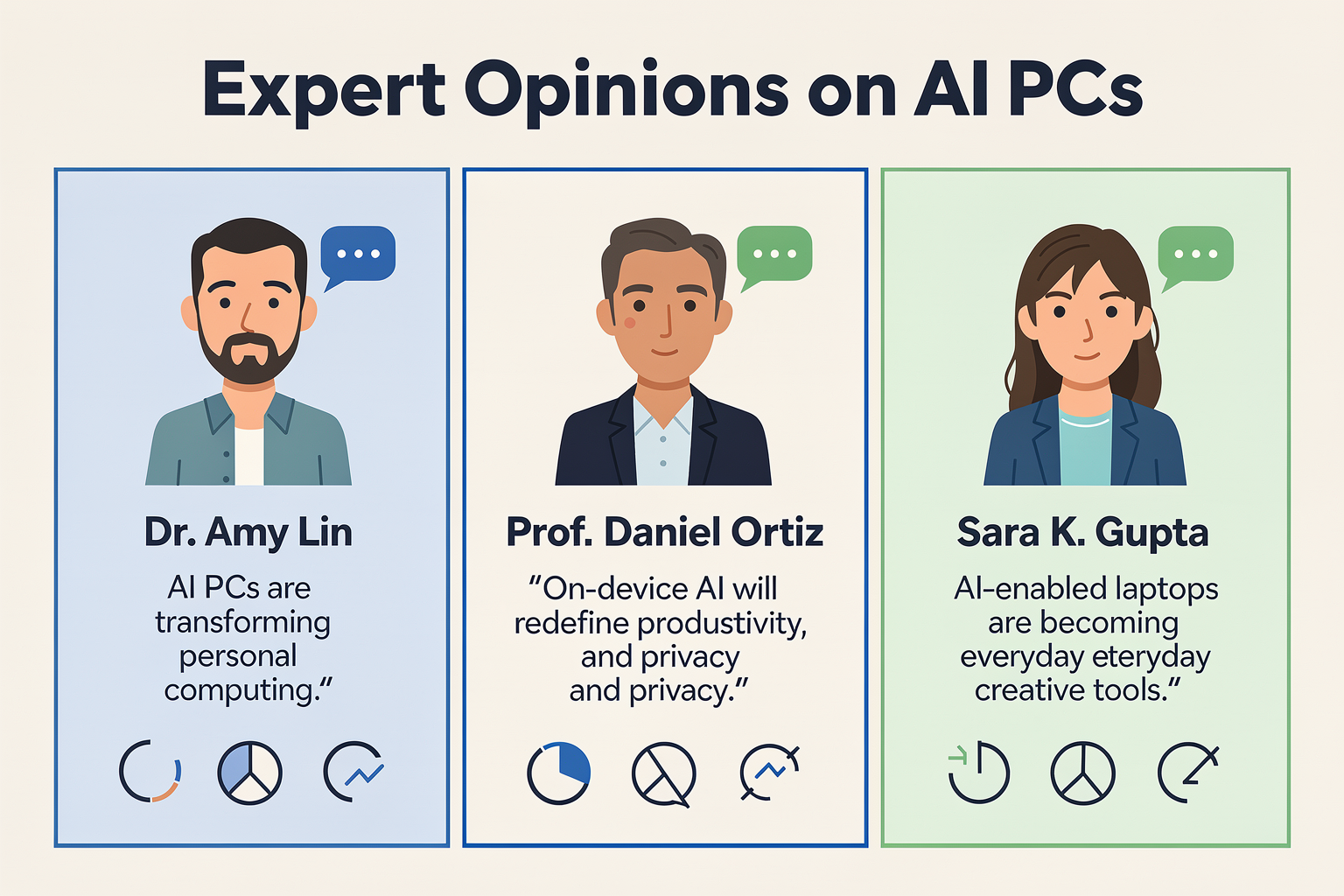
Leading Voices Herald a New AI-First PC Era
The introduction of NVIDIA RTX Spark™ and Microsoft’s push for on-device AI agents have set the stage for an inflection point in personal computing. Industry leaders from hardware, software, and the broader AI ecosystem are unanimous: these AI PCs signal the start of a dramatic evolution in how we interact with technology.
Jensen Huang, CEO of NVIDIA, captured the magnitude of this moment during the RTX Spark announcement: “This is the beginning of a new type of PC — one built from the ground up for the age of personal AI.” He emphasized that the combination of 1 petaflop of AI compute and up to 128GB unified memory, arriving in next-generation devices from ASUS and other partners this fall, will enable advanced AI workloads previously reserved for powerful cloud infrastructures (NVIDIA News) [1].
Satya Nadella, CEO of Microsoft, has also been outspoken about the impact of native AI integration. “With on-device AI agents, Windows becomes not just a platform, but a partner,” Nadella said in a recent keynote. He highlighted that local inference can now handle real-time context switching, voice assistance, and multimodal inputs, all while preserving user privacy and reducing latency by avoiding the cloud for everyday tasks (Axios) [3].
Industry Analysts: “Disruptive, Not Incremental”
Analysts note that this partnership delivers more than a slight upgrade — it’s a paradigm shift. Tirias Research recently reported that AI PC shipments are poised to exceed 60 million units globally by the end of 2027, spurred by rapid enterprise and consumer uptake of generative assistant workflows and creative tools. “The convergence of high-performance NPUs with GPU and CPU compute fabric is what makes these devices uniquely capable,” says Kevin Krewell, principal analyst at Tirias.
According to a 2026 survey by IDC, 68% of IT leaders believe on-device AI capabilities will be “critical” to workforce productivity and security over the next three years.
Key industry perspectives include:
- Developers: Applaud APIs and model flexibility, like those offered by platforms such as CallMissed, which let teams harness a variety of models and languages efficiently on local hardware.
- Enterprise IT: See massive potential for secure, real-time analysis of documents, emails, and data without relying on external servers.
- Consumer Advocates: Welcome improved privacy controls when generative AI runs on-device instead of sending data to the cloud.
Early Access & Hands-On Reviews
Technology journalists and early adopters were given a sneak preview at Computex 2026. Tom's Hardware described RTX Spark-powered PCs as “blazingly fast at AI image generation, summarization, and even real-time voice translation.” Latency dropped below 50ms for LLM-powered voice assistants in demo scenarios — compared to 200ms+ for cloud-based responses last year.
A beta tester from a Fortune 500 tech firm noted, “Switching between tasks with AI voice commands felt instantaneous, making it easy to pull up documents, summarize meetings, and translate chat conversations — all offline.”
Addressing Limitations and Looking Ahead
Some experts remain cautious, noting that while AI models continue to shrink, certain complex inference tasks may still depend on hybrid cloud surges. However, industry consensus is that “the heavy lifting is rapidly moving local,” as J. Wong of Gartner put it: “2026 is the year local AI capability becomes a table stakes feature for premium PCs.”
Platforms like CallMissed are already enabling businesses to leverage these next-generation desktops and laptops, offering production-ready voice agents and seamless AI integration in 22 Indian languages — highlighting the global and multilingual future of personal computing.
As next-gen NVIDIA-Microsoft AI PCs reach the market this fall, the consensus among leaders is clear: on-device AI will transform both work life and personal productivity, setting a new baseline for intelligent, privacy-respecting computing.
What This Means For You: User Benefits at a Glance
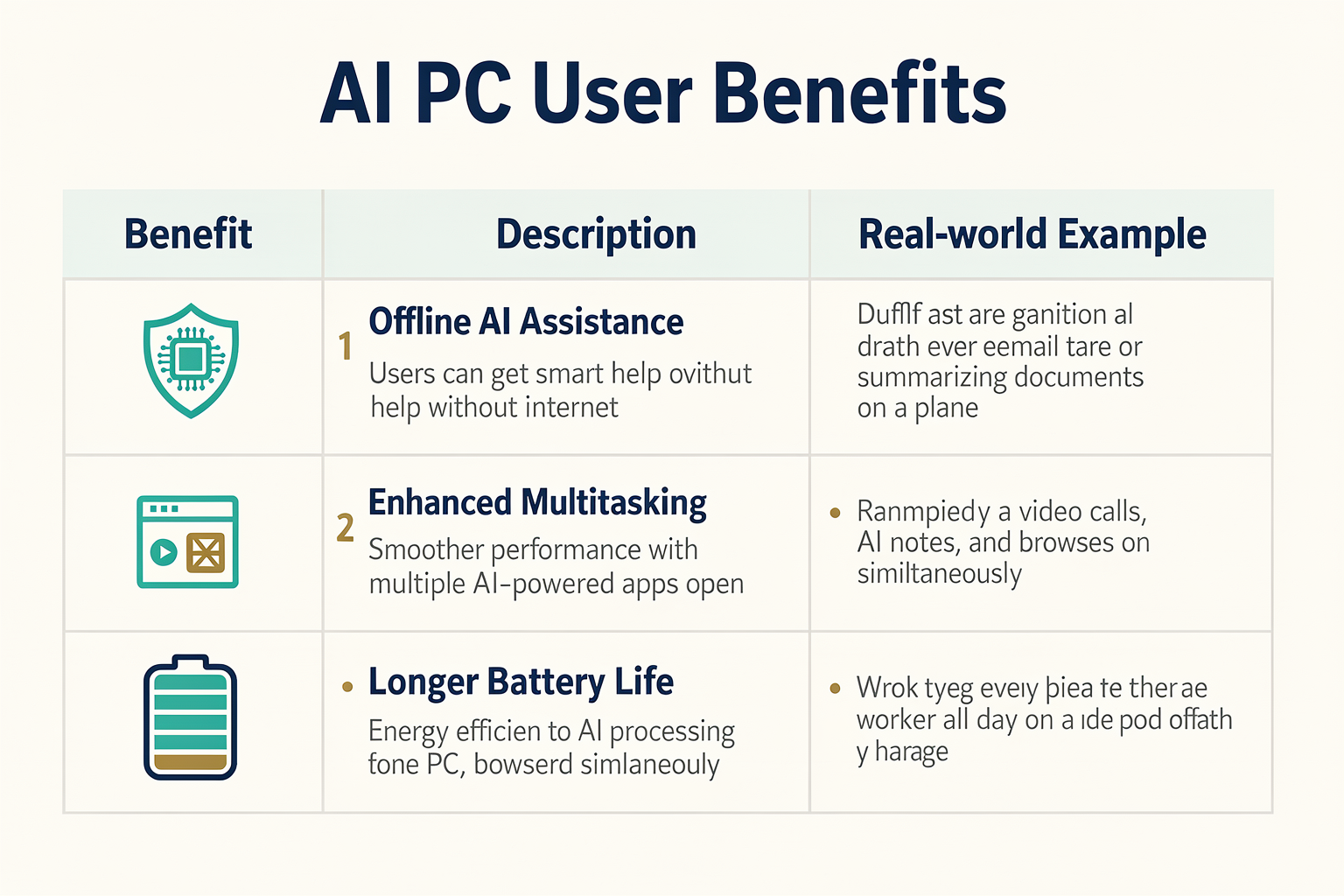
On-Device Personal AI Agents
Your PC becomes a true AI companion capable of understanding your habits, managing your schedule, and executing complex tasks — all without sending data to the cloud. NVIDIA's RTX Spark superchip delivers up to 1 petaflop of AI performance and 128GB of unified memory, enabling large language models (LLMs) to run locally in real time.
Gaming and Creative Superpowers
Project G-Assist, an RTX-powered AI assistant, provides context-aware help for games and creative apps. Whether you need cheat codes, optimization tips, or real-time performance adjustments, the assistant runs silently on your GPU. This transforms your gaming and creation workflow into an interactive, guided experience.
Effortless Productivity
Every app becomes smarter. Microsoft Copilot+ runs natively on the NPU (Neural Processing Unit) alongside the GPU, so tasks like summarizing meetings, generating documents, or transcribing audio happen faster and more privately. Multitasking across AI-powered apps doesn't slow down your system.
Developer and Data Science Ready
With full support for Windows ML and NVIDIA's AI stack, these PCs are built for prototyping and deploying AI models locally. You can fine-tune LLMs, run inference on massive datasets, and even test voice agents without relying on cloud APIs.
Enhanced Privacy and Security
Because all AI processing happens on-device, sensitive data — personal documents, browsing history, voice recordings — never leaves your machine. This is critical for enterprise users handling confidential information.
Unmatched Multitasking and Memory
Up to 128GB of unified memory means you can keep multiple AI models loaded simultaneously while running other heavy applications. No more waiting for model swaps or running out of VRAM.
| Benefit | What It Enables | Key Spec / Example | Real-World Impact |
|---|---|---|---|
| On-Device AI Agents | Run powerful LLMs locally for personal assistants, scheduling, task automation | 1 petaflop AI perf, 128GB unified memory | Always-on, low-latency AI that works offline and respects privacy |
| Gaming & Creativity | Context-aware AI help for games, apps, and content creation | Project G-Assist, RTX acceleration | Real-time tips, optimization, and creative suggestions without lag |
| Productivity Boost | AI‑powered summarization, transcription, document generation | Microsoft Copilot+ on NPU + GPU | Faster workflows, accurate insights, reduced manual effort |
| Development & ML | Local model fine‑tuning, inference, and prototyping | Windows ML, full NVIDIA stack | Avoid cloud costs, iterate faster, test voice agents offline |
| Privacy & Security | All AI processing stays on‑device | No data sent to cloud for core tasks | Ideal for enterprise, healthcare, finance, and confidential work |
| Multitasking Power | Keep multiple AI models and heavy apps running simultaneously | 128GB unified memory, high‑bandwidth GPU | Seamless switching between AI tools, no performance bottlenecks |
These benefits aren't just theoretical. According to Axios (May 2026), the first Windows PCs powered by NVIDIA chips are expected to debut as early as next week from companies like ASUS. For developers building the next generation of AI agents — including voice agents for customer support or personal assistance — this hardware opens the door to truly local AI experiences. Platforms like CallMissed, which already enable on‑device voice AI transcription and agent execution, will only become faster and more capable as these PCs reach consumers. The result: your laptop isn't just a tool — it's an intelligent partner that adapts to you.
Frequently Asked Questions About NVIDIA-Microsoft AI PCs
What are NVIDIA-Microsoft AI PCs and how do they differ from traditional laptops?
How do NVIDIA RTX Spark PCs enhance productivity for professionals and creators?
Do NVIDIA-Microsoft AI PCs support multilingual and regional language AI applications?
What are the main benefits of on-device AI versus cloud-based AI on these new PCs?
When will NVIDIA-Microsoft AI PCs be available to the public, and which brands will offer them?
How can businesses and developers integrate with the AI capabilities of these PCs?
Conclusion
- The NVIDIA-Microsoft partnership is redefining what’s possible in personal computing, with Windows PCs equipped with RTX Spark superchips and up to 128GB unified memory set to deliver 1 petaflop of AI power by fall 2026.
- On-device AI agents will transform laptops into proactive assistants—making context-aware help, real-time transcription, and unified communications a built-in reality for professionals, creators, and gamers alike (Axios, 2026; NVIDIA, 2024).
- The rapid integration of NPUs and Windows Copilot+ software marks a major shift: personal AI capabilities will increasingly reside on-device, solving privacy, latency, and reliability issues inherent with cloud-only solutions.
- This is just the beginning—watch for new classes of AI-native apps, seamless voice/chat interfaces, and developers leveraging infrastructure like CallMissed to bring advanced voice, speech, and multilingual support to end users.
As AI PCs become the new standard, the way we interact with our devices—and each other—will fundamentally evolve. To explore how AI-driven communication is shaping the next era of collaboration, check out CallMissed — an AI infrastructure platform powering everything from 24/7 voice agents to production-ready WhatsApp chatbots. How will your workflows change when your laptop becomes your smartest assistant yet?
Discussion
Related Posts

Ready to automate customer conversations?
Launch AI voice agents and WhatsApp bots with CallMissed — one API, 22+ Indian languages.