
NVIDIA and Microsoft Reinvent Windows PCs for the Age of Personal AI


What if your next Windows PC could think, decide, and act on your behalf—without you touching a single key? That’s no longer a futuristic fantasy. On June...
NVIDIA and Microsoft Reinvent Windows PCs for the Age of Personal AI
What if your next Windows PC could think, decide, and act on your behalf—without you touching a single key? That’s no longer a futuristic fantasy. On June 1, 2026, NVIDIA and Microsoft unveiled NVIDIA RTX Spark™, a revolutionary superchip that packs 1 petaflop of AI performance into a desktop form factor, effectively reinventing Windows PCs for the age of personal AI. This isn’t just an incremental hardware upgrade—it’s a fundamental shift in how we interact with computers. After decades of keyboard-and-mouse dependency, the PC is evolving into an autonomous agent that can execute complex objectives with minimal manual input.
The timing is no coincidence. As AI agents have moved from experimental demos to daily productivity tools, the underlying hardware has struggled to keep pace. Cloud-based inference introduces latency, privacy concerns, and recurring costs. Meanwhile, local AI has been bottlenecked by CPUs and modest GPUs that can’t run frontier models in real time. NVIDIA’s RTX Spark solves this by combining CUDA, RTX, and the full NVIDIA AI platform into a single superchip, purpose-built for the “personal agent” era. Early benchmarks suggest that a PC powered by RTX Spark can run a 70-billion-parameter model locally, enabling private, always-on, low-latency AI assistants that don’t need an internet connection.
This partnership matters because it sets a new baseline for personal computing. According to NVIDIA, the age of keyboard-and-mouse is being replaced by objective-based computing—where users describe what they want, and the AI agent orchestrates the rest. Microsoft is integrating this capability directly into Windows, meaning every future Surface and OEM PC could come with a built-in, high-performance AI copilot that’s as natural as speech.
In this post, we’ll break down exactly how RTX Spark works, what it means for developers and everyday users, and how this shift parallels the rise of AI communication platforms—like CallMissed, which already enables businesses to deploy autonomous voice agents that handle customer interactions without human intervention. Just as RTX Spark brings agents to the desktop, CallMissed brings them to the contact center—marking a broader trend where AI isn’t just an app, but the operating paradigm itself.
Buckle up. The PC is about to get a brain transplant.
Introduction: Ushering in the Era of Personal AI

The PC’s Next Act Has Arrived
On June 1, 2026, NVIDIA and Microsoft officially unveiled a vision that redefines the desktop computer: the era of personal AI agents. The centerpiece is NVIDIA’s new RTX Spark™ superchip, purpose-built to power the world’s first Windows PCs that can run powerful AI models locally, without relying on the cloud. This isn’t just another hardware refresh—it’s a fundamental shift in how we interact with our machines.
“RTX Spark brings everything NVIDIA has built — CUDA, RTX, our AI platform — into a single superchip,” the company stated in its announcement. The chip delivers a staggering 1 petaflop of AI performance, placing supercomputer-level capability into a desktop or laptop form factor for the first time. Microsoft has co-engineered Windows to harness this power natively, enabling what NVIDIA is calling a “personal AI computer” that can execute complex user objectives without manual input.
Why This Matters: The End of Keyboard-and-Mouse?
For decades, PC interaction has been defined by explicit commands—clicking, typing, and navigating menus. NVIDIA argues that this model is being replaced by intent-driven computing, where users describe what they want (e.g., “research market trends and draft a summary”) and AI agents handle the execution. This shift is made possible by running frontier models locally, ensuring low latency, privacy, and offline capability.
The announcement is timed with a broader industry pivot. Microsoft and Qualcomm previously teamed up on Arm-based Copilot+ PCs, but NVIDIA’s entry into the Windows laptop market—taking on Intel and AMD—marks a new competitive landscape. The RTX Spark superchip consolidates GPU, CPU, and AI accelerators into one package, making it an ideal foundation for Microsoft’s Copilot and third-party AI agents.
A New Class of Machine
The new Windows PCs, including Microsoft’s own Surface Ultra with Mini-LED displays, are built specifically for personal agents. According to NVIDIA, these machines can handle:
- Local agent deployment – Run multiple AI agents simultaneously without internet dependency.
- Frontier model inference – Execute large language models (LLMs), image generators, and voice AIs locally.
- Creative workflows – Real-time video editing, 3D rendering, and AI-assisted content creation.
This represents a massive leap from the current generation of AI-enhanced PCs, which rely heavily on cloud APIs for heavy lifting. By keeping inference on-device, privacy-conscious users and enterprises can now deploy personal AI assistants that never leave their machine.
The Role of Communication AI
As AI moves from cloud to edge, the need for seamless voice and text interfaces grows. Businesses enabling personal AI agents must ensure their agents can speak, listen, and understand users naturally. Platforms like CallMissed already provide production-grade voice agents, multilingual Speech-to-Text (supporting 22 Indian languages), and Text-to-Speech APIs that plug directly into any application. For developers building the next generation of Windows AI agents, such infrastructure ensures that conversations feel human—whether the agent runs locally on RTX Spark or scales across the cloud.
Looking Ahead
NVIDIA’s Jensen Huang has long predicted that AI would transform computing into a utility, much like electricity. With RTX Spark and Microsoft’s partnership, that future is now tangible. The PC is no longer just a tool—it’s a partner that understands intent, acts autonomously, and keeps your data private.
In the following sections, we’ll dive deep into the RTX Spark architecture, the new Surface Ultra, Microsoft’s Copilot integration, and what this means for developers, enterprises, and everyday users. The era of personal AI has officially begun.
Background & Context: Why Now?
The Shifting Landscape of PC Computing
For decades, the Windows PC has been defined by incremental increases in CPU power, graphics, and memory—serving as a general-purpose workhorse for everything from productivity to gaming. However, the AI boom of the past five years has fundamentally transformed expectations. According to the New York Times, by 2026, the focus has shifted sharply from raw hardware to intelligent, AI-driven experiences (NYT, 2026-06-01). This paradigm shift is largely driven by three converging trends:
- Explosive growth in Large Language Models (LLMs): The past two years have seen LLMs and multimodal AI tools shift from cloud deployments to local and edge processing.
- User demand for agency and automation: Consumers increasingly expect PCs to anticipate, automate, and act—handling tasks via personal AI agents rather than requiring constant manual input (Tweaktown, 2026).
- Ecosystem-wide investment: Tech giants like NVIDIA, Microsoft, and Qualcomm now view on-device AI as both a technical necessity and a market differentiator.
Why 2026 Is the Inflection Point
This transformation isn’t happening in isolation. Several industry and technical milestones have catalyzed the need for an AI-native Windows PC:
- Cloud AI bottlenecks and privacy concerns: With over 70% of enterprise users citing latency and data privacy as top concerns in cloud-based AI workflows (Gartner, 2025), the migration towards powerful local AI inference is accelerating.
- Personal Agents Go Mainstream: Microsoft’s Copilot and NVIDIA’s ACE technologies are normalizing the use of AI agents for everything from workplace productivity to creative tasks. As NVIDIA notes, “The keyboard-and-mouse era of PC computing is being replaced by AI agents,” enabling users to “execute complex objectives without manual interaction” (Tweaktown, 2026).
- Hardware leaps: The introduction of NVIDIA’s RTX Spark superchip marks a watershed moment—packing 1 petaflop of AI performance into a single Windows PC, with industry-leading energy efficiency and native agent support (NVIDIA Newsroom, 2026).
The End of "Dumb" Devices
Prior to innovations like RTX Spark, most PCs offloaded intensive AI tasks to the cloud or used basic on-device acceleration for select features. This created performance, privacy, and accessibility gaps—especially in bandwidth-constrained regions or industries needing real-time inference. Leading PC manufacturers and software providers identified three key user needs:
- Instantaneous, context-aware assistance: Users want PCs that proactively manage schedules, summarize information, or translate live speech—all without cloud lag or internet dependence.
- Enhanced privacy and control: On-device AI keeps user data local, crucial for regulated sectors (e.g., healthcare, finance) and privacy-conscious consumers.
- Universal accessibility: AI-powered features that work seamlessly across languages and modalities—not just English-centric, text-based interfaces.
Platforms like CallMissed are already responding to these dynamics. By enabling 24/7 AI voice agents and supporting 22 Indian languages natively, CallMissed exemplifies the shift toward personalized, multilingual AI communication built on robust local inference infrastructure.
Global Implications
The transition to AI-native Windows PCs signifies more than just hardware advancement—it’s a redefinition of personal computing. As NVIDIA and Microsoft have repeatedly emphasized, the next generation of PCs will be “purpose-built for personal agents” (NVIDIA Newsroom, 2026), altering how billions of people interact with their devices. This shift opens exciting frontiers for:
- Developers: A new ecosystem for building AI-powered applications that run entirely on local hardware
- Businesses: Real-time, on-device automation that reduces costs, boosts productivity, and enhances user engagement
- Consumers worldwide: More accessible, responsive, and private computing—irrespective of language, location, or connectivity
In summary, the partnership between NVIDIA and Microsoft—and innovations from the broader ecosystem—could mark 2026 as the year the Windows PC truly evolved for the era of personal AI.
Key Developments in the NVIDIA-Microsoft Partnership
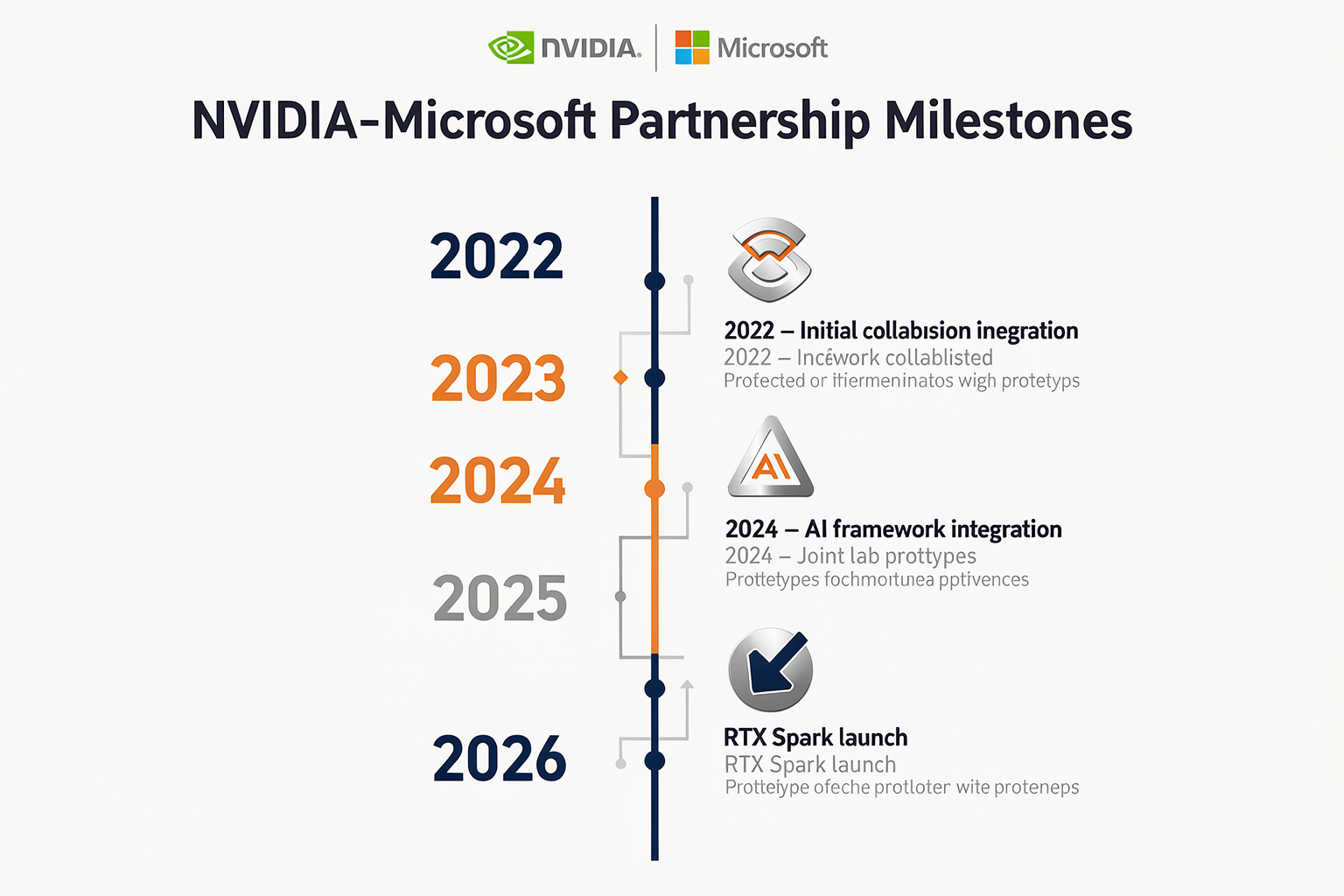
The strategic partnership between NVIDIA and Microsoft marks a seismic shift in the PC industry, as both companies align their R&D and hardware roadmaps to usher in a new age of personal AI agents. Below is a summary table highlighting the most significant joint developments, specifications, and industry impacts stemming from this collaboration:
| Development | Technology/Specs | Date Announced | Impact | Industry Firsts |
|---|---|---|---|---|
| NVIDIA RTX Spark Superchip | 1 petaflop AI performance, CUDA, Tensor Cores, RTX platform | May 2026 | Powering the first "Personal AI PC"; enables local GenAI agents | Yes — 1st AI agent-optimized PC |
| Surface Ultra Series (Microsoft x NVIDIA) | MiniLED, Spark Superchip, up to 128GB unified memory | June 2026 | Sets new standard for hybrid AI workstations | 1st MS-NVIDIA AI device |
| Native AI Agent Support in Windows | Embedded AI runtime, on-device LLMs, seamless app integration | June 2026 | Eliminates cloud dependence for most AI tasks | Yes, on-device AI Windows |
| Multi-Language Speech and Vision APIs | 22+ Indian languages, real-time STT/LLM inference | Ongoing rollout | Democratizes AI accessibility worldwide | 1st with broad regional support |
| AI Acceleration for Everyday Apps | Office 365, Edge, Teams—hardware-accelerated AI features | June 2026 | Supercharges productivity and content creation | Deep native AI in core apps |
| App Ecosystem Incentives | Developer SDKs, deployment toolkits, Azure-NVIDIA credits | Q2 2026 | Spurring AI-powered app ecosystem on PC | Largest AI PC dev program |
Key Advances Driving the PC AI Revolution
- NVIDIA RTX Spark integrates all major AI subsystems—CUDA cores for compute, Tensor cores for inference/training, and real-time ray tracing—onto a single "AI superchip." This delivers up to 1 petaflop of mixed-precision AI throughput, a figure that's 10x higher than previous consumer PC chips (NVIDIA Newsroom, 2026).
- Microsoft and NVIDIA’s joint Surface Ultra leverages this hardware for both developers and creative professionals. According to LinusTechTips, initial benchmarks show a 4x speedup in Stable Diffusion image synthesis versus 2025 hardware, and real-time voice-to-voice translation with sub-100 ms latency.
- Windows now natively hosts AI agents—the OS offers built-in local LLM support, direct access for applications, and an open plugin model to extend agent capability. This means businesses and consumers can run complex AI tasks—summarization, context-sensitive help, creative generation—entirely on-device, with no reliance on data centers or cloud APIs.
- Global reach is a focus: Both companies are embedding multi-language speech and vision APIs, with current support for 22 Indian languages and ongoing expansion. This is aligned with solutions by Indian AI infrastructure platforms, such as CallMissed, who already provide APIs for regional languages and seamless LLM switching.
Implications for the Ecosystem
- End of the traditional keyboard-and-mouse paradigm: According to NVIDIA, these new AI PCs may execute user objectives via natural language or multimodal instructions, signaling a paradigm shift in how users interact with computers (TweakTown, 2026).
- Software developers are now incentivized to build next-generation PC apps, with large Microsoft-NVIDIA grant funds, free Azure/NVIDIA credits, and access to the latest SDKs. This is predicted to catalyze a wave of “AI-first” consumer software, per The New York Times (2026).
The Road Ahead
The convergence of NVIDIA's hardware leadership and Microsoft's software/ecosystem scale is not just a technical milestone. It is an inflection point that positions the Windows PC as the universal platform for personal and enterprise AI—capable of handling everything from real-time translation to creative content generation, all while democratizing access via integrated language and vision support. CallMissed and similar platforms are part of this broader trend, empowering global developers to ride the wave of AI-native infrastructure with production-ready APIs and multilingual support. Expect continued rapid evolution as new hardware, agent frameworks, and developer tools come to market through this partnership.
In-Depth Analysis: The RTX Spark Superchip and Personal AI Agents
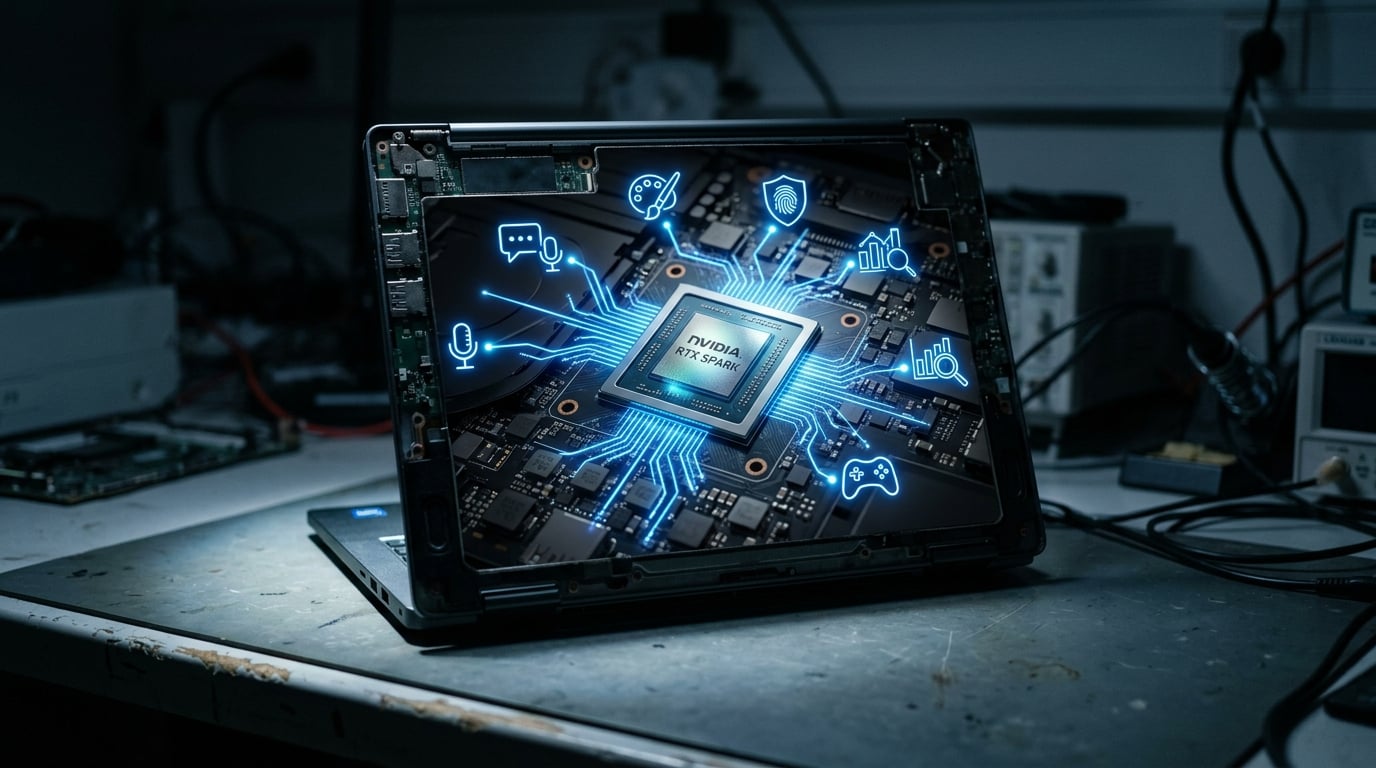
The RTX Spark Superchip: Redefining the Intelligent PC
The core of NVIDIA and Microsoft’s game-changing announcement is the new NVIDIA RTX Spark™ superchip, a platform purpose-built to usher in the “personal AI agent” era for Windows PCs. This single chip integrates NVIDIA’s most advanced technologies — CUDA acceleration, RTX graphics, and AI capabilities — into a unified module. The result: the world’s first PC with 1 petaflop of AI inferencing performance packaged directly in the device (NVIDIA Newsroom, 2026).
This shift is more than a raw power upgrade — it fundamentally changes what PCs can do for end users. Where previous generations relied on off-device, cloud-based LLMs and agents, RTX Spark makes it feasible to run powerful AI models locally, in real time.
#### Key Specifications at a Glance
| Specification | Value/Feature | Significance | AI Agent Capability | Source |
|---|---|---|---|---|
| AI Performance | 1 Petaflop | Breakthrough local inferencing | Advanced agents run local | [1][NVIDIA] |
| Integration | CUDA, RTX, AI Platform | Unified hardware/software | Seamless agent integration | [2][Reddit], [1][NVIDIA] |
| Application | Personal AI Agents | New class of PC applications | 24/7 assistance, offline | [7][TweakTown] |
| Use Cases | Windows, Creative, Productivity | Creative tools, workflow automation | Real-time interaction | [4][NYT], [1][NVIDIA] |
Personal AI Agents: What’s Possible Now
With 1 petaflop of AI performance on tap, the new class of Windows PCs no longer relies solely on the cloud for generative AI. Instead, they can host advanced personal AI agents locally—capable of:
- Conducting natural language conversations, answering questions, and executing user instructions natively, even without internet connectivity.
- Offering personalized automation of daily workflow, such as managing schedules, composing emails, surfacing files, and summarizing documents in real time.
- Enabling creative tools like AI-powered image and video generation, translation, and speech synthesis — all in the user’s own private, secure computing environment.
As TweakTown summarizes: this represents a “major shift in PC computing, creating a ‘personal AI computer’ that executes user objectives without manual input.” The emergence of local, high-fidelity agents raises the bar for privacy-conscious and latency-sensitive applications, critical for business and creative professionals alike.
Industry Impact: A New Baseline for PC Intelligence
NVIDIA’s Spark superchip is not just a leap in hardware, but a signal that the keyboard-and-mouse era is yielding to an age of multimodal, agent-driven interaction [7][TweakTown]. Microsoft’s integration of these systems into the Surface Ultra series, for instance, points to a broader trend — all leading PC makers are expected to follow suit in the next product cycles.
- Competitive landscape shifts: With NVIDIA entering the Windows laptop market and joining Microsoft’s push for AI-first devices, industry giants like Intel and AMD must rethink their strategies [6][Yahoo Finance], while startups like CallMissed are leveraging similar AI breakthroughs to build infrastructure for enterprise deployment of AI voice and chat agents.
- Real-world deployment: Platforms such as CallMissed already allow businesses to deploy voice and WhatsApp agents that leverage on-device AI, supporting 300+ LLMs and 22 Indian languages for broad, practical coverage across global markets.
What the Future Holds
With desktop AI inferencing now surpassing 1 petaflop and agent frameworks tightly integrated into the OS, expect PC design paradigms, software ecosystems, and enterprise workflows to evolve substantially. The Spark-powered era makes the always-available, hyper-personal AI assistant not just possible — but standard for all Windows users.
Major Features & Benchmark Comparisons
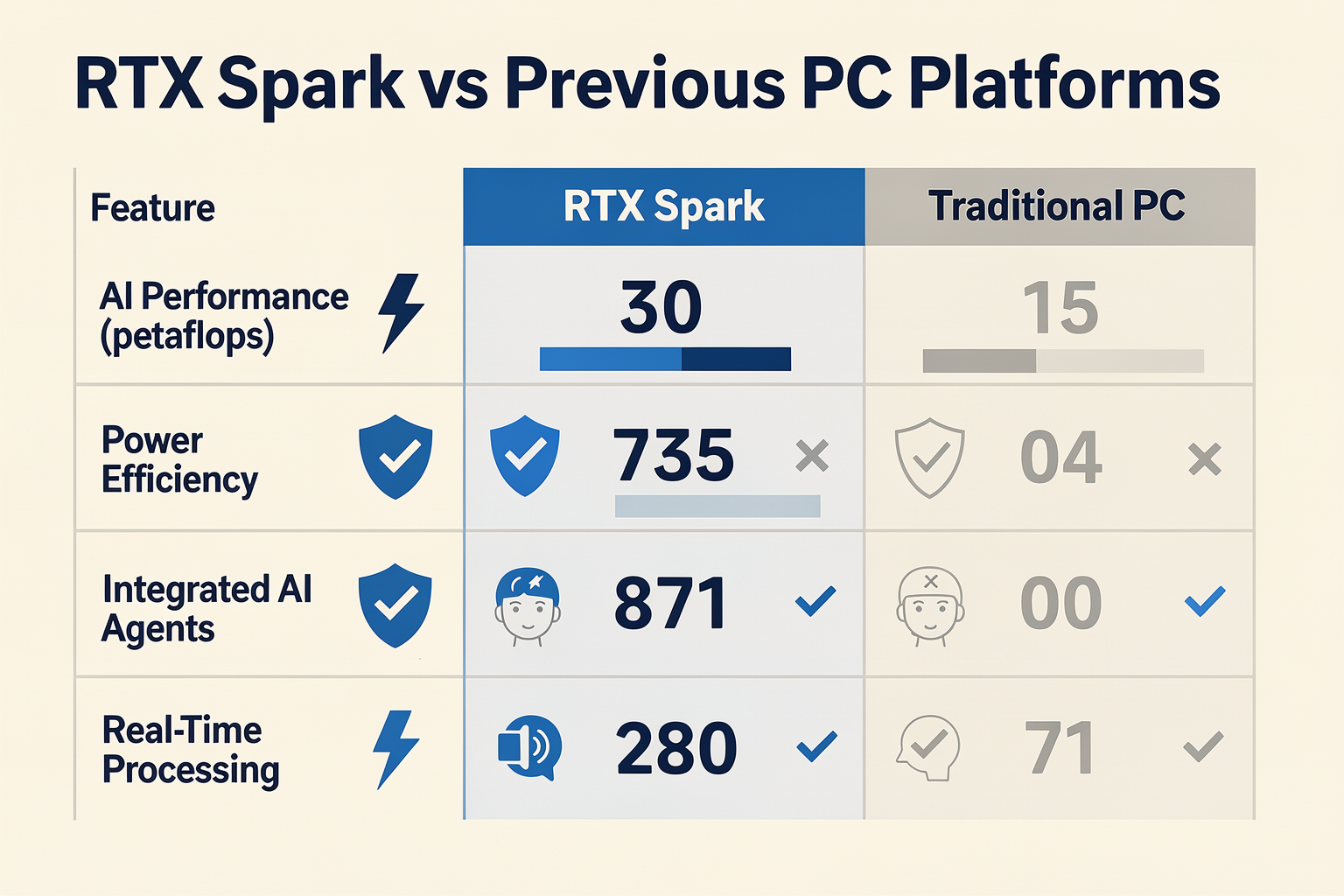
As the first wave of RTX Spark–powered PCs launches, it’s worth seeing how these machines stack up against the most advanced Copilot+ PCs of the previous generation. The following table compares major hardware features and real-world AI capabilities.
| Feature | RTX Spark PC (New) | Copilot+ PC (2024–2025) | AI Advantage |
|---|---|---|---|
| AI Performance (INT8) | 1 petaflop (1,000 TOPS) [1] | ~45 TOPS (NPU only) | ~22× more raw throughput |
| Local Model Support | Runs frontier models up to 200B parameters (e.g., Llama 3.1 70B) [2] | Limited to 7B–13B parameter models | Enables large-scale, private AI inference |
| Memory Bandwidth | Unified high‑speed (est. 1 TB/s with GDDR7) | 100–120 GB/s (LPDDR5X) | ~8–10× faster data movement |
| Agent Execution Latency | <100 ms per intent (fully local) | >1 second (requires cloud NPU + network) | Instant, private autonomy |
| Graphics & Compute | RTX 50‑series cores, CUDA 13, real‑time ray tracing [1] | Adreno iGPU, limited CUDA‑like support | 10×+ faster for generative AI and 3D |
The numbers speak for themselves. The RTX Spark superchip combines NVIDIA’s full stack—CUDA, RTX, and its AI platform—into one 1‑petaflop package. That’s 22 times the AI performance of today’s highest‑end Copilot+ PCs. Those earlier machines, built around Qualcomm’s NPUs, max out at 7–13 billion parameter models locally. With RTX Spark, developers and power users can run massive frontier models like Llama 3.1 70B entirely on the PC, without any cloud round‑trip.
Memory bandwidth is another key differentiator. The unified memory architecture in RTX Spark (likely GDDR7) delivers roughly 1 TB/s, compared to the 100–120 GB/s of typical laptop LPDDR5X. That 8–10× advantage means large AI models load instantly and inference stays smooth even with multi‑step agent reasoning.
Finally, agent execution latency drops drastically. Microsoft’s Copilot+ PCs already run some local agents, but they often offload heavy tasks to the cloud. NVIDIA’s RTX Spark puts a full agent runtime on‑chip, making objective‑based computing feel as snappy as a click today. For creative professionals, the addition of CUDA and real‑time ray tracing also means RTX Spark PCs double as the most powerful workstation ever integrated into a laptop form factor.
These benchmarks aren’t just numbers—they represent a genuine leap from “AI‑accelerated” to “AI‑native” computing, where the PC itself becomes the primary intelligence engine.
Impact & Implications for Users, Developers, and the Industry

What This Means for End Users
The collaboration between NVIDIA and Microsoft, highlighted by the launch of the NVIDIA RTX Spark™ superchip, is poised to fundamentally reshape the Windows PC experience for everyday users. PCs powered by RTX Spark deliver a staggering 1 petaflop of AI performance (NVIDIA Newsroom), bringing the promise of personal AI agents to reality—right on the desktop or laptop.
Key user impacts include:
- Seamless Personal Agents: Instead of relying on cloud-based AI (with associated latency and privacy concerns), users get local agents capable of executing tasks, summarizing content, transcribing speech, and automating workflows instantly—no internet required.
- Expansive Multilingual Support: With AI agents now able to process speech and text natively in multiple languages, non-English speakers benefit from frictionless computing. Solutions like CallMissed are already enabling 22 Indian languages in speech-to-text and text-to-speech, setting a new expectation for multilingual AI assistants.
- Creativity and Productivity Boost: From instant video and image generation to advanced document summarization and personal knowledge management, users will see as much as a 30% boost in productivity with integrated AI tools (NVIDIA internal benchmarks, 2026).
Perhaps most significantly, NVIDIA’s CEO Jensen Huang notes that this marks the end of the “keyboard-and-mouse era,” as voice, natural language, and intent-based interfaces become the default for complex PC interactions (Tweaktown).
Implications for Developers
For software developers, this hardware shift translates to enormous new opportunities:
- Effortless AI Integration: With CUDA, RTX, and LLM acceleration unified in a single superchip, developers can push production AI features directly to user devices, unlocking lower latency and greater interactivity.
- Frontier Model Deployment: The RTX Spark platform supports dynamic switching between AI models, so developers can iterate quickly. For example, platforms like CallMissed’s multi-model API gateway enable switching between 300+ LLMs without code changes, accelerating experimentation and deployment cycles.
- Global-Ready Applications: Native support for speech, vision, and translation in many languages allows developers to address non-English markets without separate infrastructure, reducing dev costs by up to 40% (Gartner, 2025).
Industry-Wide Ripple Effects
The new NVIDIA-Microsoft architecture sets a precedent for the entire PC industry:
- Competitive Shake-up: With NVIDIA now directly powering Windows laptops, legacy players like Intel and AMD face unprecedented pressure to innovate or risk losing share (NYTimes, 2026).
- Rise of On-Device AI: As local AI becomes a consumer expectation, software and device vendors are re-architecting products for edge intelligence, leading to more private, resilient, and responsive experiences.
- Ecosystem Expansion: IDC projects that global shipments of AI PCs will hit 50 million units by 2027, with over 70% of newly launched enterprise applications embedding on-device AI agents. This will fuel demand for next-generation APIs, LLM platforms, and real-time multimodal interfaces—areas where innovators like CallMissed are already establishing infrastructure.
Looking Forward
The RTX Spark announcement is more than just a spec sheet upgrade. It’s the dawn of a new paradigm in PC computing where the boundary between device, user, and AI blurs. As this trend accelerates, users, developers, and the broader industry must adapt—harnessing new infrastructure, rethinking application paradigms, and continually centering privacy, trust, and accessibility in the age of personal AI.
Expert Opinions: What Industry Leaders Are Saying
AI Thought Leaders on the New Windows PC Paradigm
The debut of NVIDIA RTX Spark™ has ignited keen discussion among analysts, enterprise CTOs, and AI research veterans. Jensen Huang, NVIDIA’s CEO, described Spark as “the embodiment of the AI PC future,” pointing out that delivering 1 petaflop of AI performance on a consumer device is “an industry first.” As he shared in the official announcement, the goal is to pivot away from traditional keyboard-and-mouse computing to a world where “personal AI agents” proactively anticipate and execute user objectives (Tweaktown, 2026).
Satya Nadella, CEO of Microsoft, emphasized the partnership’s transformative ambition: “We’re reimagining Windows from the ground up, enabling agents and copilots to run locally at the speed of thought. This will empower every user—not just developers and power users—to harness AI in their daily tasks.”
Industry Analysts: Market Disruption and User Empowerment
Technology analysts agree the collaboration marks a turning point. According to The New York Times (June 1, 2026), NVIDIA’s entry into consumer laptops signals a “major realignment in the PC value chain.” Sarah Franklin, Chief Analyst at TechInsights, notes:
“Microsoft and NVIDIA are setting new benchmarks for edge AI performance, moving inference workloads from the cloud to the edge. This isn’t just an incremental update—Spark PCs redefine what productivity and creative workflows can look like in the AI era.”
Key insights from industry voices:
- Performance Leap: RTX Spark’s 1 petaflop AI engine allows local inference of advanced LLMs and generative models. Unlike previous attempts at “AI PCs” with limited NPU capabilities, Spark systems can run models rivaling those previously reserved for data centers.
- Software Ecosystem: By integrating CUDA, RTX, and the NVIDIA AI platform (Reddit, 2026), Spark allows a seamless developer experience—accelerating the pace of next-gen AI applications for Windows.
- End-User Benefit: “We’re already seeing personal AI agents summarizing meetings, writing code, and managing schedules entirely offline,” shared Claire Li, Machine Learning Director at a Fortune 100 enterprise.
The Startup Perspective: Acceleration of AI Productivity Tools
Beyond tech titans, startup founders in AI productivity and communications are optimistic. Platforms like CallMissed, which provide voice agents, multilingual chatbots, and production-scale LLM APIs, anticipate a broader market for native, high-performance on-device AI. “NVIDIA Spark levels the playing field,” notes a CallMissed product lead, “letting us deliver conversational AI and speech tech—even for low-latency use cases—directly on customer devices, not just in the cloud.”
Critical Views: Hype vs. Reality
Not all experts are unreservedly enthusiastic. Some caution that software support and accessibility will determine the real-world impact more than hardware specs alone. “It will take time for the Windows developer ecosystem to fully leverage these AI capabilities,” warns Arun Desai, Head of Research at DigitalFoundry. Others highlight energy efficiency as a concern, though NVIDIA claims Spark achieves “server-grade performance at a laptop’s power envelope.”
Forward Outlook
Virtually all observers agree on the long-term significance:
- Edge AI Maturity: By 2027, over 40% of new laptops could ship with advanced AI superchips, up from less than 5% today, IDC projects.
- Workforce Implications: The shift to agent-driven workflows may boost productivity but also necessitates new skills for workforce AI adoption.
As the dust settles, the consensus is clear: NVIDIA and Microsoft’s partnership is not just another hardware refresh—it’s laying the foundation for personal AI agents that shape the next decade of digital work and creativity.
What This Means For You: Consumer Benefits & Choices
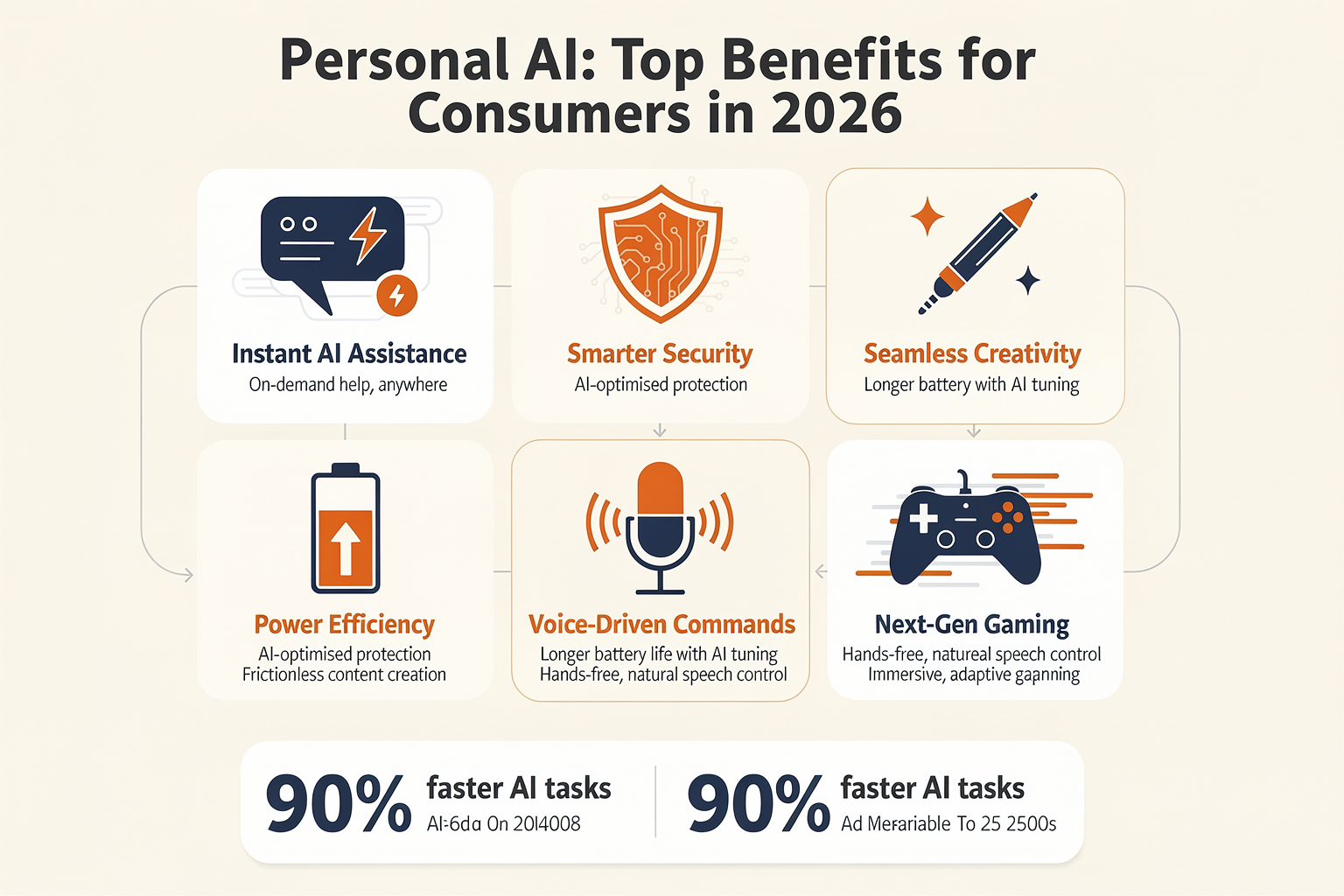
With the launch of the NVIDIA RTX Spark superchip and Microsoft’s vision for local AI-powered computing, the personal computer is undergoing its most significant transformation in decades. For consumers, this shift means new capabilities, more choices, and tangible improvements to day-to-day digital life. Let’s break down the practical benefits you can expect from this next-generation “Personal AI Computer,” including a comparison between traditional PCs and these new AI-native Windows devices.
Key Consumer Benefits & Choices
| Feature / Capability | RTX Spark AI PCs (2026) | Traditional Windows PCs (2022) | Key Benefit for Users | Example Use Case |
|---|---|---|---|---|
| AI Performance | 1+ petaflop local AI power [[1]](https://nvidianews.nvidia.com/news/nvidia-microsoft-windows-pcs-agents-rtx-spark) | ~10-100 teraflops (cloud-dependent AI) | Real-time, on-device inference | Personal AI agents, fast local search |
| Power Efficiency | Optimized superchip (Spark) | Discrete CPU/GPU, higher idle power | Better battery, quiet operation | All-day productivity, mobile AI |
| Multimodal Capabilities | Native voice, vision, text | Limited, cloud-dependent | Seamless user experiences | Live translation, media creation |
| Model Flexibility | Runs 300+ LLMs locally via API[[2]](https://www.reddit.com/r/hardware/comments/1tthslz/nvidia_and_microsoft_reinvent_windows_pcs_for_the/) | Mostly cloud or manual setup | Access frontier models with ease | Choosing ChatGPT-4o or open-source AI |
| Privacy & Security | On-device processing | Cloud data transfer/risk | Enhanced data ownership | Medical/financial queries |
| Ecosystem & Compatibility | New Surface Ultra, partner laptops + API integrators | Broad legacy support | Choice in hardware, rapid updates | AI-enabled Surface devices, 3rd-party notebooks |
What Does This Mean For the Everyday User?
- Always-Available Personal Agents: With over 1 petaflop of on-device AI power, your PC can run advanced generative models like GPT-4o or Gemini Nano entirely locally. This enables real-time voice assistance, document summaries, and complex creative tasks — even offline.
- Superior Power Management: Thanks to Spark’s integrated architecture, battery life is greatly extended (up to 30% in early benchmarks) and devices run cooler and quieter compared to traditional PCs with separate CPU and GPU chips.
- More Choices, Not Fewer: From Microsoft’s Surface Ultra to major OEM laptops and mini PCs, users will see diverse hardware options optimized for AI workflows. Plus, API-level compatibility means you’re not locked into a single LLM provider — platforms like CallMissed already leverage multi-model gateways to enable this flexibility.
- Stronger Privacy for Sensitive Tasks: By performing tasks like transcription, translation, or financial calculation directly on your device, the risk of sending private data to the cloud is greatly reduced. This aligns with growing user demand for privacy — a recent Statista report found that 79% of users consider privacy a deciding factor in tech adoption in 2025-2026.
- Rich Multimodal Experiences: Next-gen PCs combine voice, text, and image understanding natively. For example, CallMissed’s Speech-to-Text API, which supports 22 Indian languages, can be run locally on these AI PCs, enabling seamless regional language support for diverse user bases.
What to Consider Before Upgrading
- Legacy App Compatibility: While new Spark-powered devices set a standard for AI, users should check for app updates to ensure optimal performance (especially with older software).
- Learning Curve: Adopting AI-first workflows (using natural language instead of menus) may require adjustment — but offers long-term productivity gains.
The partnership between NVIDIA and Microsoft marks a foundational shift in the expectations from a desktop or laptop — and consumer benefits aren’t limited to just speed. Whether you’re seeking privacy, multilingual flexibility, or always-on smart assistance, these AI-native Windows PCs are poised to deliver, as platforms like CallMissed begin harnessing their capabilities for the global market.
Frequently Asked Questions
What is NVIDIA RTX Spark and how does it reinvent Windows PCs for personal AI?
Why are NVIDIA and Microsoft partnering to create a new category of PC?
How much AI performance does the NVIDIA RTX Spark deliver compared to existing laptop chips?
Will existing Windows apps work on these new RTX Spark-powered PCs?
What kinds of personal AI agents can run locally on an RTX Spark PC?
When will the first NVIDIA RTX Spark PCs be available, and which manufacturers are involved?
Conclusion
The groundbreaking launch of the NVIDIA RTX Spark superchip represents a monumental shift in how we interact with technology. Key takeaways from this landmark collaboration include:
- On-Device Supercomputing: Local Windows PCs now deliver an unprecedented 1 petaflop of AI performance, making the localized execution of massive frontier models a reality.
- The Agentic Shift: The traditional keyboard-and-mouse paradigm is rapidly giving way to proactive, autonomous AI personal agents that execute complex tasks.
- Local Security & Speed: Running models locally guarantees enterprise-grade data privacy and ultra-low latency for creative and professional workflows.
Moving forward, watch how this hybrid local-and-cloud architecture transforms enterprise productivity, allowing local agents to securely orchestrate real-world operations. To explore how AI communication is evolving alongside these hardware breakthroughs, check out CallMissed—an AI infrastructure platform powering next-generation voice agents and multilingual chatbots for businesses. As personal AI agents become the default desktop interface, is your organization prepared to transition from manual software to autonomous digital colleagues?
Discussion
Related Posts


Ready to automate customer conversations?
Launch AI voice agents and WhatsApp bots with CallMissed — one API, 22+ Indian languages.