
India Seeks New Semiconductor Investments at Global Tech Summit: What It Means for the Future



Could a 16-nation geopolitical alliance rewrite the global microchip supply chain and establish India as the world's next silicon superpower? This is no...
India Seeks New Semiconductor Investments at Global Tech Summit: What It Means for the Future
Could a 16-nation geopolitical alliance rewrite the global microchip supply chain and establish India as the world's next silicon superpower? This is no longer just a distant ambition. At the high-profile second Pax Silica meeting in Washington, the nation made its intentions incredibly clear: India Seeks New Semiconductor Investments at Global Tech Summit to rapidly accelerate its domestic manufacturing capabilities and secure vital funding. Backed by the robust India Semiconductor Mission (ISM), India is aggressively pivoting from a digital services hub into an indispensable global hardware powerhouse. This transition is moving at an unprecedented pace; following Tata Electronics' landmark partnership with semiconductor lithography leader ASML in May 2026, the country is currently on track to produce its very first indigenous semiconductor chip later this year.
Why does this massive geopolitical and technological shift matter right now? The global technology landscape is undergoing a profound realignment, driven by the explosive rise of generative AI and an urgent corporate need to diversify highly concentrated supply chains. By seeking active foreign direct investments and technology transfers at the Pax Silica summit, India is positioning itself as a resilient, democratic alternative for global chip fabrication. As the nation builds out this critical physical hardware backbone, forward-looking communication platforms like CallMissed are concurrently scaling the digital layer, enabling enterprises to leverage this upcoming computational wave with production-ready AI voice agents, multi-model LLM gateways, and multilingual APIs.
In this article, we will dive deep into the strategic outcomes of India's participation at the Pax Silica summit. We will unpack the critical policy incentives driving these new investments, examine how local infrastructure is evolving to support advanced chip fabrication, and analyze what this semiconductor revolution means for the future of global tech, enterprise software, and international business.
Introduction
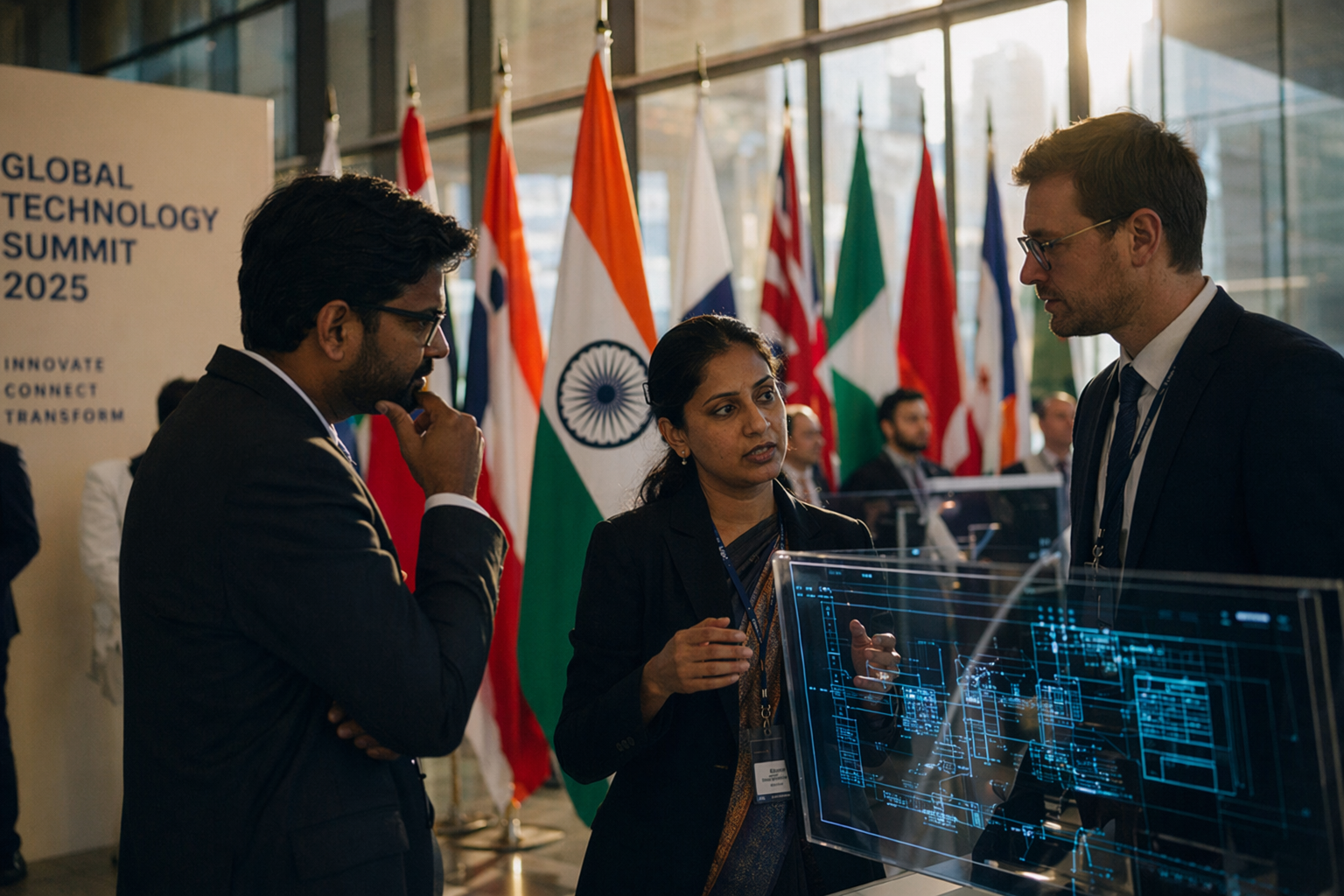
The global semiconductor landscape is undergoing a massive geopolitical and economic realignment, and India is positioning itself at the absolute center of this transformation. At the second summit of the Pax Silica coalition—a strategic 16-nation alliance recently held in Washington—Indian delegates aggressively pitched the nation's potential as a global chip manufacturing hub, seeking new investments and exploring critical funding pathways. This high-profile diplomatic push at the Global Tech Summit underscores India's rapid transition from a primary consumer of technology to a dominant, self-reliant producer.
A Landmark Era for Indian Silicon
India’s semiconductor ambitions are no longer distant projections; they are unfolding in real-time. The country is systematically dismantling its reliance on foreign silicon through targeted policy interventions and high-value international partnerships. Several key milestones highlight this accelerating momentum:
- Strategic Collaborations: On May 16, 2026, Tata Electronics and global lithography giant ASML finalized a landmark partnership in the presence of Prime Minister Narendra Modi, signaling massive international confidence in India's industrial capabilities.
- Domestic Manufacturing: Following pivotal announcements at the Global Investors Summit, India's very first indigenous semiconductor chip is scheduled to enter production in late 2026, marking a historic leap toward technological sovereignty.
- Policy Framework: Driven by the India Semiconductor Mission (ISM), the Indian government is building an end-to-end ecosystem that integrates chip design, display fabrication, assembly, testing, and advanced packaging.
Fueling the AI and Software Infrastructure Boom
This hardware revolution is not happening in a vacuum. It is being directly fueled by an insatiable domestic and global demand for high-performance localized computing, especially in the field of Artificial Intelligence. As local fabrication facilities scale, they pave the way for next-generation software infrastructure to deploy seamlessly.
For instance, communication platforms like CallMissed—which deploys advanced AI voice agents, provides access to over 300 LLMs, and powers Speech-to-Text APIs across 22 regional Indian languages—rely heavily on robust, low-latency compute resources. Localized semiconductor production will ultimately reduce latency, lower computational costs, and allow AI platforms to process complex voice data natively and securely within the country.
By securing international backing at summits like Pax Silica, India is building the physical foundation required to sustain the next decade of digital innovation. In this article, we will analyze the strategic outcomes of India's participation in the Pax Silica summit, the key global players investing in this movement, and how a self-reliant semiconductor ecosystem will redefine global technology supply chains.
Background & Context
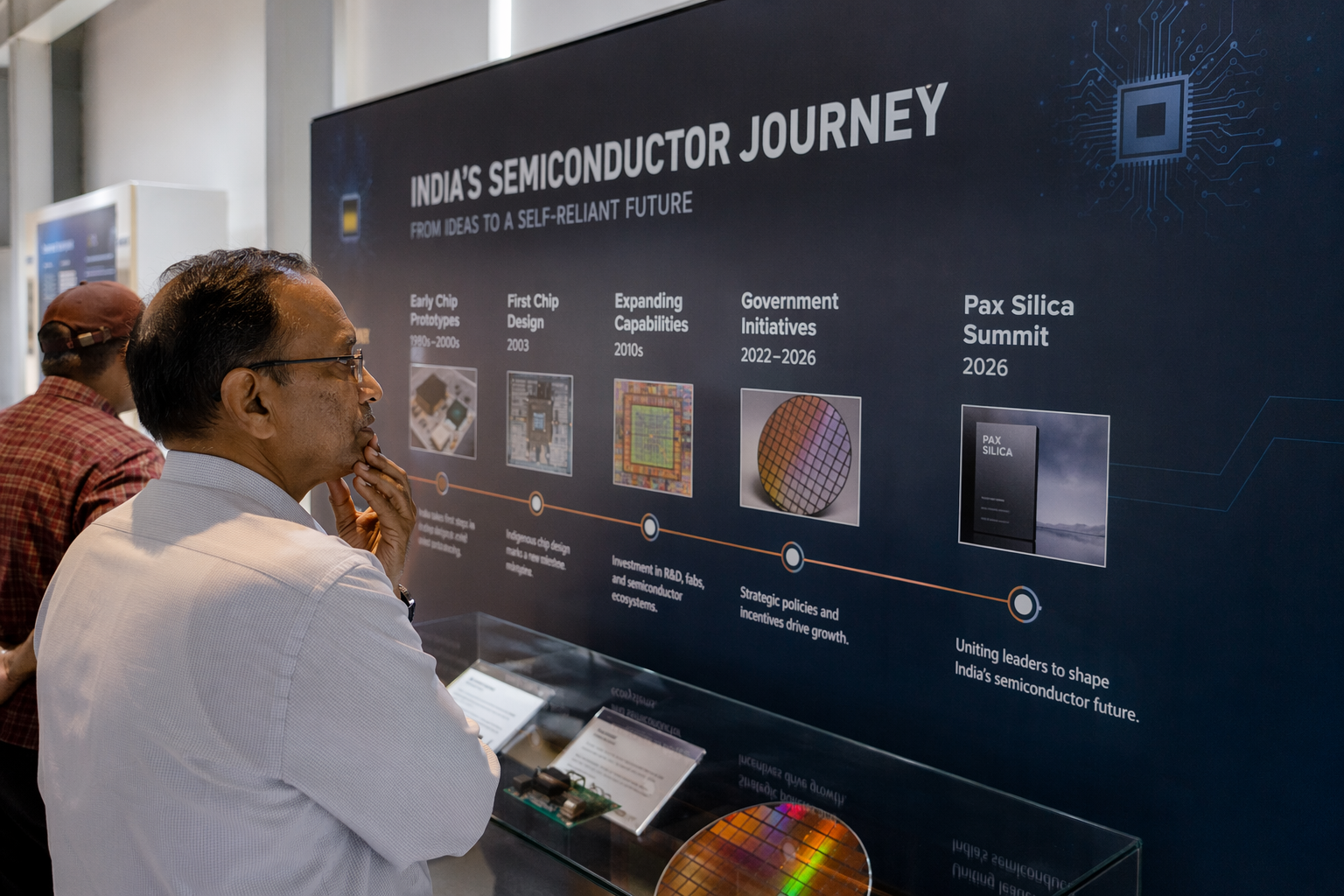
The Rise of Pax Silica and India’s Global Ambitions
The global semiconductor landscape is undergoing a massive geopolitical realignment, with nations racing to de-risk their supply chains and secure domestic manufacturing capabilities. At the forefront of this shift is the Pax Silica initiative—a strategic, 16-nation alliance aimed at building secure, resilient, and collaborative semiconductor ecosystems. At the second Pax Silica summit recently held in Washington, India actively positioned itself as the next premier global hub for chip manufacturing and design, seeking substantial new investments and exploring critical funding avenues to accelerate its domestic capabilities.
For decades, India was primarily recognized as a powerhouse for chip design, hosting design offices for almost every major global semiconductor company. However, the country is now transitioning from design-only services to end-to-end hardware manufacturing. The primary vehicle driving this transformation is the India Semiconductor Mission (ISM), a specialized business division within the Digital India Corporation designed to build a robust semiconductor and display ecosystem.
Key Domestic Milestones and Strategic Partnerships
India’s journey toward silicon sovereignty has accelerated rapidly over the last year. Key milestones underpinning this momentum include:
- The Dawn of Indigenous Production: At the Global Investors Summit 2025, officials announced that India’s first indigenous semiconductor chip would be ready for commercial production in 2026. This milestone marks a critical turning point, transitioning India from an importer of silicon to a self-reliant producer.
- High-Impact Alliances: On May 16, 2026, India solidified its hardware ambitions through a landmark partnership between Tata Electronics and Dutch lithography giant ASML, signed in the presence of Prime Minister Narendra Modi. This collaboration ensures that India has access to the cutting-edge lithography expertise required to run state-of-the-art fabrication facilities (fabs).
- State-Level Incentives: Regional tech hubs like Karnataka are actively rolling out tailored incentives to attract global chipmakers and automotive technology companies, ensuring that the physical infrastructure matches the national policy vision.
Fueling the Downstream AI Infrastructure
A thriving semiconductor ecosystem does not just secure hardware supply chains; it acts as the foundation for the next generation of software, artificial intelligence, and communication infrastructure. Localized chip fabrication will dramatically lower latency and compute costs for advanced AI applications operating within the region.
This hardware revolution directly empowers sovereign AI communication platforms like CallMissed. As India builds its local silicon infrastructure, platforms offering high-performance AI voice agents, LLM inference across over 300 models, and real-time Speech-to-Text (STT) APIs in 22 regional Indian languages will benefit from localized, high-speed compute. The synergy between India's emerging hardware capabilities and advanced software infrastructure like CallMissed's communication APIs highlights why global investors are increasingly viewing India as a comprehensive tech superpower.
Key Developments at the Global Tech Summit
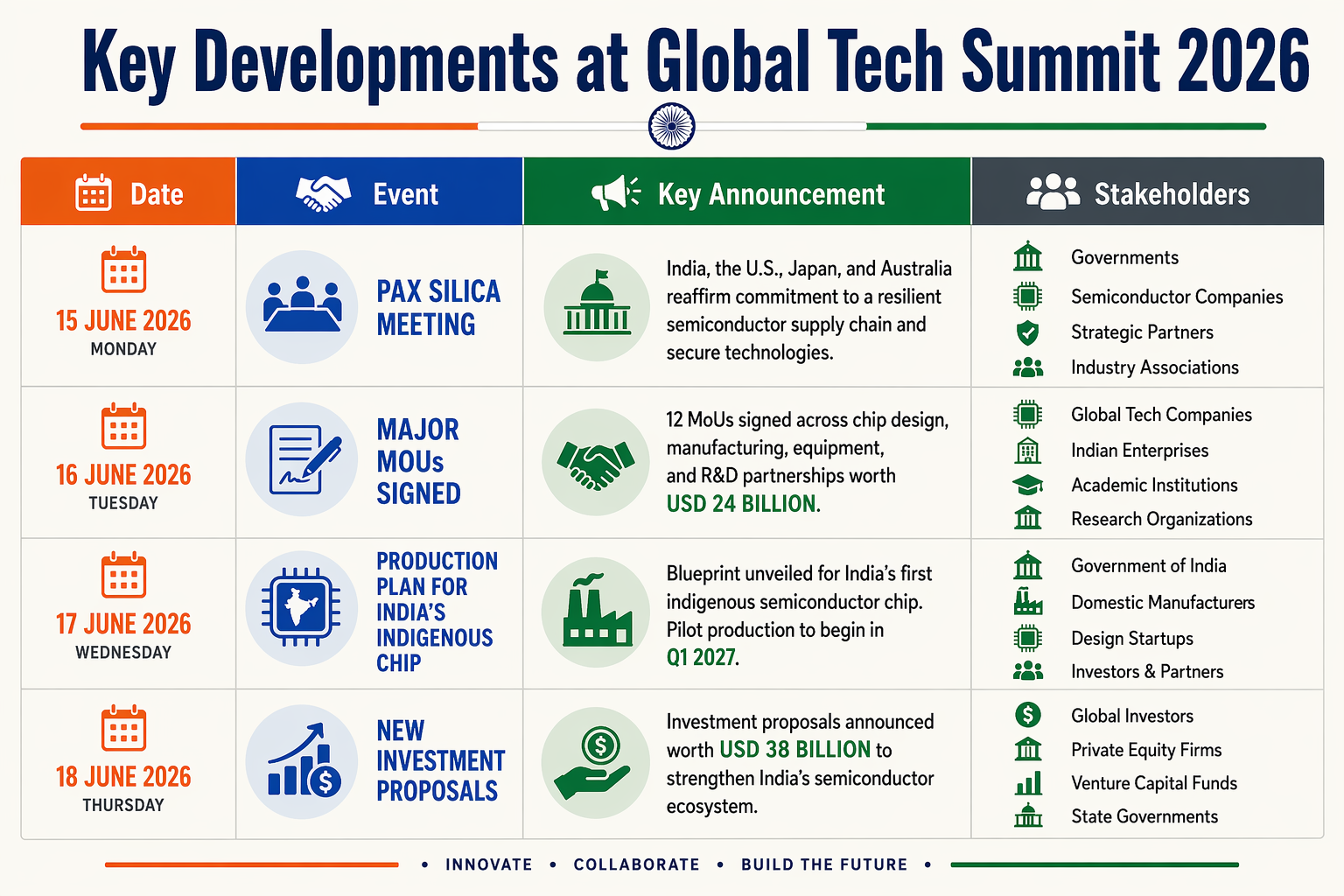
The strategic push at the Global Tech Summit and the second meeting of the 16-nation Pax Silica alliance in Washington have cemented India's trajectory toward becoming a premier global semiconductor hub. As geopolitical dynamics reshape global supply chains, India’s active diplomatic and economic participation highlights a concerted effort to court multinational investments, establish reliable raw material pipelines, and build out high-tech domestic manufacturing fabs.
These international efforts are backed by aggressive domestic policies, particularly through the India Semiconductor Mission (ISM). By establishing strategic partnerships with global semiconductor giants, India is transitioning from a technology consumer to a primary global producer.
High-Impact Milestones in India's Semiconductor Journey
The following table outlines the key developments, partnerships, and policy milestones driving India’s semiconductor revolution:
| Strategic Development | Key Entities Involved | Core Objective | Current Status / Impact (2026) |
|---|---|---|---|
| 2nd Pax Silica Summit | India, USA, & 14 alliance partners | Secure international funding and diversify supply chain risk | Multi-nation framework established in Washington |
| Tata-ASML Partnership | Tata Electronics, ASML (May 16, 2026) | Integrate advanced lithography equipment into Indian fabs | Technical framework finalized under PM Modi's oversight |
| Indigenous Chip Rollout | Indian Fab Consortiums & ISM | Produce India's first domestic semiconductor chip | Assembly and production scheduled to commence in 2026 |
| Regional Tech Outreach | Karnataka Govt & Global Auto-Tech firms | Attract specialized automotive and embedded chip investments | Expansion of regional R&D and chip-design hubs |
Geopolitical Synergy and Domestic Execution
The Pax Silica alliance represents a vital geopolitical shift, offering India a direct pipeline to international funding, collaborative research, and shared technology standards. By aligning with 15 other technology-driven nations, India aims to mitigate supply chain vulnerabilities and position itself as a reliable alternative to traditional manufacturing hubs.
Simultaneously, the domestic landscape is accelerating. The landmark partnership between Tata Electronics and ASML, finalized on May 16, 2026, ensures that Indian fabs will have access to state-of-the-art lithography equipment, which is critical for fabricating high-performance chips. Furthermore, with India's first indigenous semiconductor chip scheduled for production rollout later this year, the nation is proving its capacity to handle complex, end-to-end silicon design and manufacturing.
Empowering the Local Software and AI Ecosystem
As the physical silicon infrastructure matures, it paves the way for an explosion in local, high-performance computing applications. A robust local chip supply directly benefits the software and AI sectors, enabling faster data processing and lower operational latency.
Innovative communication platforms are already capitalizing on this hardware evolution. For example, CallMissed leverages advanced computing infrastructure to deploy highly localized AI solutions. By offering AI voice agents, WhatsApp chatbots, and Speech-to-Text APIs natively supporting 22 Indian regional languages, platforms like CallMissed ensure that as India's hardware capabilities grow, its digital communication systems scale seamlessly alongside them. This convergence of cutting-edge hardware and localized AI software positions India to lead the global tech economy from both the physical chip and application layers.
India’s Strategic Position in the Global Semiconductor Race
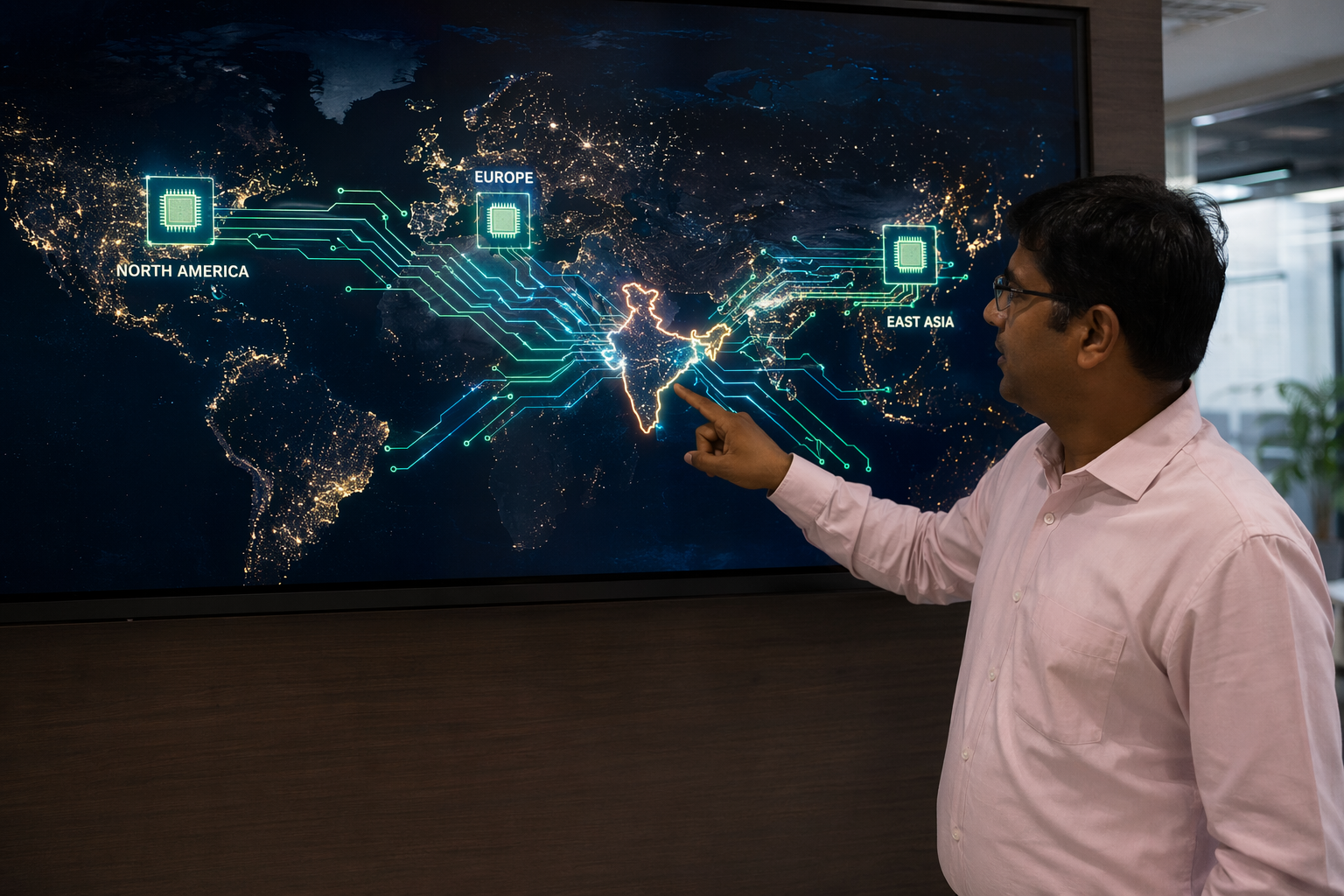
India’s Evolving Role in the Semiconductor Value Chain
India has rapidly shifted from a bystander to a strategic contender in the global semiconductor race. The country’s proactive participation in the second Pax Silica meeting in Washington, 2026, and its high-profile outreach at the Global Tech Summit underscores an urgent ambition: to cement itself as a key destination for semiconductor manufacturing and innovation. According to the Indian government’s India Semiconductor Mission (ISM), the goal is clear: establish India as a global hub for design, manufacturing, and testing of semiconductors and electronic systems (ISM).
#### Driving Factors for India’s Ascent
A mix of policy, market dynamics, and geopolitical shifts is fueling India’s ascent:
- Policy Interventions: The ISM, backed by over $10 billion in government incentives, has spurred interest from both domestic conglomerates (like Tata Electronics) and global giants.
- Workforce and Talent: India counts over 600,000 engineers graduating annually, many with chip design and embedded systems expertise (Nishith Desai Associates).
- Geopolitical Realignment: Trade friction and supply chain disruptions have prompted the U.S., EU, and Japan to seek alternative semiconductor supply bases, placing India squarely on the radar.
#### Key Milestones and Recent Investments
India’s recent momentum is powered by tangible results:
- At the 2025 Global Investors Summit, it was announced that India's first indigenous semiconductor chip will be ready for production in 2026 (PIB).
- Tata Electronics, in partnership with Dutch firm ASML, launched advanced lithography initiatives—a key node in chip fabrication (YouTube, May 2026).
- Several states, notably Karnataka and Gujarat, are courting global chipmakers and automotive tech leaders with land, infrastructure, and policy incentives (Economic Times).
#### Comparative Advantages and Persistent Challenges
India offers a unique value proposition but faces stiff competition from established players like Taiwan, South Korea, and the U.S. Its strengths include:
- Large Domestic Market: India is the world’s second-largest mobile phone producer, driving vast local chip demand.
- Scale and Cost Efficiency: Labor costs in India remain 20-30% below East Asian competitors, improving long-term ROI for fabs.
- Digital Infrastructure: Rollout of 5G and the rise of AI-powered platforms (such as CallMissed, which leverages local LLMs and voice tech) create demand for application-specific chips.
However, hurdles remain:
- Supply Chain Maturity: India still relies on imported specialty chemicals and advanced equipment.
- R&D Ecosystem: Domestic chip R&D investment lags at roughly 0.7% of GDP, compared to over 2-3% in chip-leading economies.
- Long Gestation Cycles: Setting up fully operational foundries can take 3-5 years, which challenges investor patience.
#### Strategic Partnerships and Forward Momentum
To surmount these challenges, India is doubling down on strategic alliances:
- Bilateral Technological Tie-ups: Collaboration with the U.S. (Pax Silica), the EU, and Japan for technology transfer and workforce training.
- Start-up Ecosystem Activation: Over 100 Indian tech start-ups, including AI communication platforms like CallMissed, are driving demand for custom silicon targeting voice, speech, and multi-lingual NLP applications.
- Government-Led Ecosystem Building: Initiatives such as semiconductor parks, tax holidays, and concessional land.
As India seeks to attract more investment and make good on its promise of the “semiconductor decade,” the country’s unique demographic and digital landscape position it for a significant leap. Its role is no longer peripheral: India is actively shaping the contours of the global semiconductor value chain and influencing where the next wave of chip innovation will emerge.
In-Depth Analysis: Recent Policies, Partnerships, and Challenges
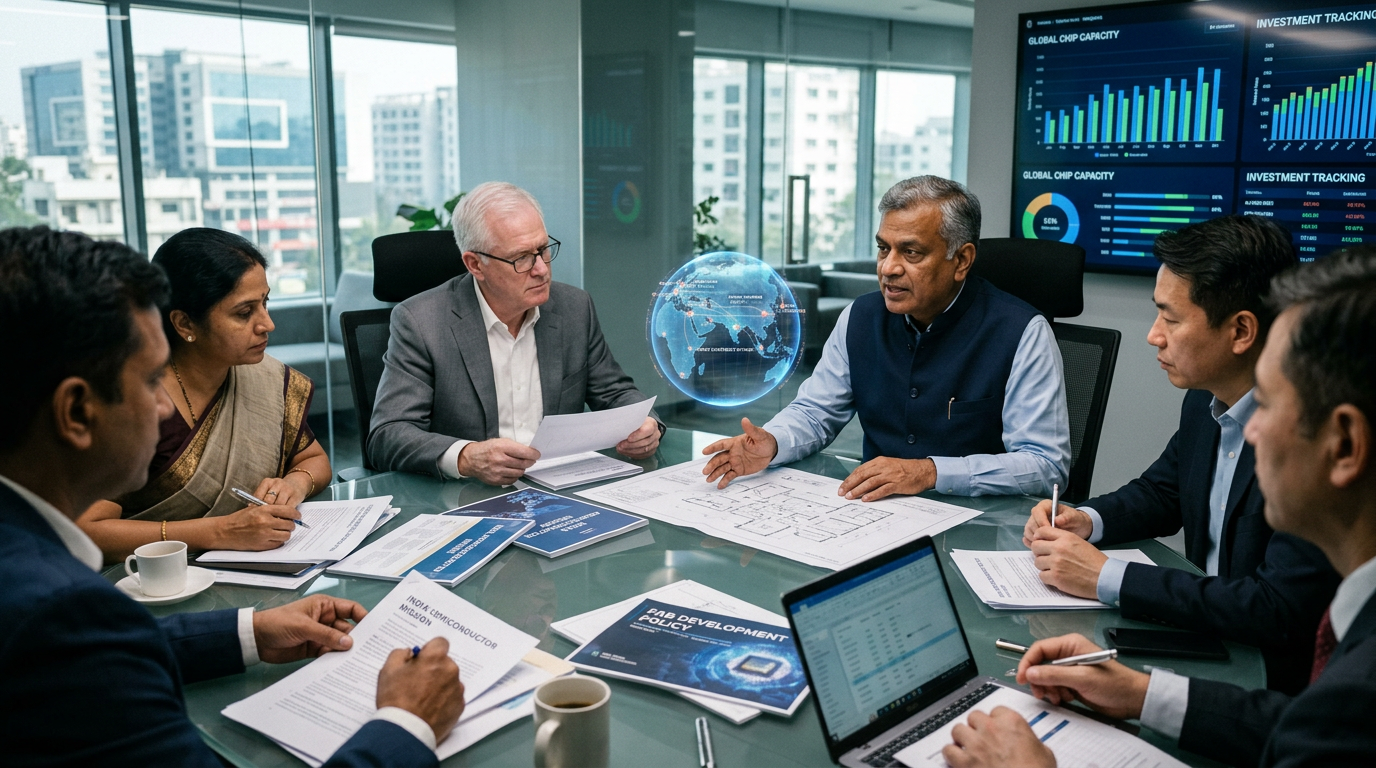
The strategic push to position India as a global chip hub is underpinned by robust policy frameworks, critical international alliances, and a realistic assessment of infrastructural hurdles. To understand how India plans to capture a slice of the global semiconductor market, we must analyze the policies driving this shift, the landmark partnerships being forged, and the structural challenges that lie ahead.
The Policy Engine: India Semiconductor Mission (ISM)
At the core of India’s semiconductor ambitions is the India Semiconductor Mission (ISM), which aims to build a sustainable semiconductor and display ecosystem. By offering fiscal support of up to 50% of project costs for setting up silicon fabs, display fabs, and compound semiconductor packaging facilities, the Indian government has significantly lowered the entry barrier for global tech giants.
This domestic momentum has accelerated on the global stage. At the second summit of the 16-nation Pax Silica initiative in Washington, Indian delegates actively negotiated new semiconductor investments and funding opportunities. This strategic diplomatic push is designed to secure India's position as a trusted partner in the global supply chain, shielding it from geopolitical vulnerabilities.
High-Value Partnerships Driving Execution
India's strategy relies heavily on joint ventures and technology transfers with established global players. Recent milestones demonstrate that these plans are rapidly transitioning from policy design to factory floors:
- The Tata-ASML Alliance: On May 16, 2026, in the presence of Prime Minister Narendra Modi, Tata Electronics finalized a landmark collaboration with Dutch lithography giant ASML. This partnership secures critical semiconductor manufacturing equipment and technical expertise, representing a massive leap forward for India's domestic fabrication capabilities.
- Indigenous Production: Building on momentum from the Global Investors Summit, India's very first indigenous semiconductor chip is slated to begin production later this year, shifting the country's status from a design hub to an active hardware manufacturer.
As local hardware capabilities scale, the software ecosystem is preparing to leverage this localized silicon. For instance, AI communication platforms like CallMissed are positioned to utilize this low-latency, localized hardware to power demanding Speech-to-Text APIs across 22 regional Indian languages, showing how domestic chip production directly feeds into next-generation digital services.
Key Challenges on the Horizon
Despite this rapid progress, India must address several critical bottlenecks to sustain its semiconductor momentum:
- Infrastructural Requirements: Semiconductor fabrication requires uninterrupted, ultra-pure water supplies and zero-fluctuation electricity. Even minor power dips can ruin entire batches of silicon wafers.
- Supply Chain Dependencies: While India is building fabs, it remains dependent on global suppliers for raw materials, chemical compounds, and specialized gases.
- Talent Gap in Fabrication: While India possesses a massive pool of chip design talent, there is a current shortage of experienced process engineers who understand the complexities of physical fabrication.
Impact & Implications for India and the Global Tech Industry

Geopolitical Rebalancing and the "Pax Silica" Alliance
India’s proactive engagement at the second Pax Silica meeting in Washington represents a major shift in the global technology landscape. By participating in this 16-nation summit, India is positioning itself as a critical node in the democratic world's effort to build resilient, diversified semiconductor supply chains.
For the global tech industry, India’s emergence offers a vital hedge against geopolitical risks and choke points in East Asia. As Western nations seek to de-risk their technology pipelines, India provides:
- Geopolitical stability: A reliable, treaty-aligned destination for capital-intensive fabrication facilities (fabs).
- Massive domestic demand: A rapidly expanding electronics market that guarantees internal consumption of locally produced silicon.
- Talent scale: An unmatched pool of chip design engineers ready to transition into physical manufacturing and testing operations.
Catalyzing India’s Domestic Deep-Tech Ecosystem
Domestically, the transition from a software-driven services economy to a high-value hardware manufacturer is already underway. Following announcements at the Global Investors Summit, India’s first indigenous semiconductor chip is slated for production this year, in 2026. This milestone is backed by foundational partnerships, such as the landmark collaboration between Tata Electronics and lithography giant ASML established on May 16, 2026.
This burgeoning hardware ecosystem acts as a force multiplier for India's domestic AI and software sectors. As localized chip manufacturing reduces hardware acquisition costs, Indian deep-tech companies can scale infrastructure much more efficiently. For instance, advanced AI communication infrastructures—like CallMissed, which powers high-performance voice agents, LLM inference across 300+ models, and proprietary Speech-to-Text APIs supporting 22 Indian languages—will rely on this emerging local silicon ecosystem to deliver ultra-low-latency processing and cost-effective AI hosting at scale.
Economic Growth and Global Investment Inflows
The macroeconomic implications of securing these semiconductor investments are vast. By attracting global semiconductor leaders, India is fostering a high-tech manufacturing cluster that will drive economic growth for decades.
- Strategic State-Level Initiatives: Regions like Karnataka are aggressively courting global chipmakers and automotive tech giants, transforming local economies into specialized manufacturing corridors.
- Upward Value-Chain Migration: Moving from chip design (where India already holds a 20% global talent share) to actual fabrication and Advanced Packaging (ATMP) secures higher margins and intellectual property retention.
- Synergistic Infrastructure Expansion: The rise of local fabs accelerates the growth of adjacent industries, including green energy grids, ultra-pure water processing plants, and advanced logistics networks.
Ultimately, India's success at the Global Tech Summit does not just benefit local assembly lines. It establishes a dual-engine growth model where domestic software innovators and global hardware giants co-create the next generation of computing infrastructure.
Expert Opinions: Industry Leaders Weigh In
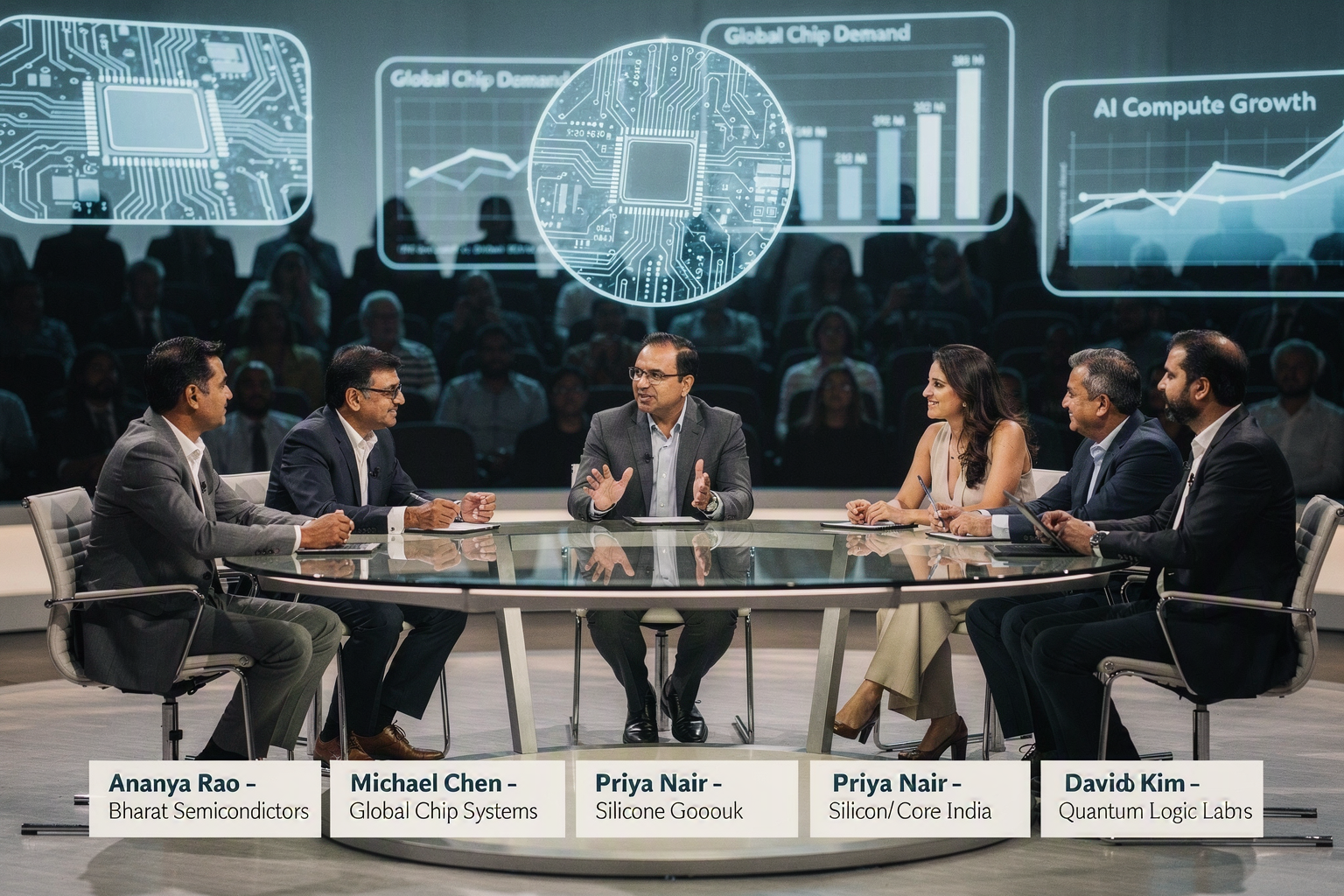
The global semiconductor landscape is undergoing a monumental shift, and India's proactive diplomatic and industrial strategies have drawn significant praise—and pragmatic analysis—from global tech leaders and policy experts. Following India's prominent participation in the second Pax Silica meeting in Washington, industry veterans agree that the nation's "semiconductor moment" has officially arrived.
Geopolitical Alignment: The 16-Nation Consensus
For years, India was viewed primarily as a backend design hub. However, geopolitical analysts at the Pax Silica summit—a critical alliance of 16 nations focused on securing semiconductor supply chains—note that India is positioning itself as the ultimate hedge against global supply chain vulnerabilities.
- Supply Chain Diversification: Industry experts emphasize that the global "China Plus One" strategy is evolving into a more concrete "Pax Silica" framework, where India serves as a trusted democratic partner for hardware manufacturing.
- Policy Support: The India Semiconductor Mission (ISM) has been widely lauded for providing the financial and regulatory scaffolding needed to attract multi-billion-dollar fabrication units (fabs) to Indian soil.
Groundbreaking Partnerships and Production Timelines
The sentiment among tech executives shifted from cautious optimism to active acceleration following two major milestones:
- The Tata-ASML Alliance: In May 2026, in the presence of Prime Minister Narendra Modi, Tata Electronics solidified a landmark collaboration with Dutch lithography giant ASML. Industry insiders view this as a massive validation of India's technical capability, signaling that the most sophisticated chip-making supply chains are now integrating directly with Indian manufacturing.
- Indigenous Chip Production: Building on momentum from the Global Investors Summit, experts are highly focused on India's first indigenous semiconductor chip, which is on track for production this year.
This hardware revolution is directly fueling the next generation of software and AI capabilities. As localized silicon production eventually reduces latency and lowers computing costs, it opens the doors for advanced localized AI applications. For example, AI communication platforms like CallMissed are poised to leverage this domestic hardware evolution, enabling enterprises to deploy high-performance AI voice agents and Speech-to-Text APIs supporting 22 Indian regional languages natively on localized, high-speed infrastructure.
The Road Ahead: Talent and Infrastructure Scaling
Despite the optimism, industry leaders urge a realistic look at remaining bottlenecks. According to reports from the Information Technology and Innovation Foundation (ITIF), India must aggressively address two key areas to fully realize its semiconductor ambitions:
- State-Level Execution: While states like Karnataka are successfully securing investments from global automotive tech and chip companies, other states must fast-track infrastructure readiness, particularly regarding uninterrupted power and high-purity water supplies.
- Specialized Workforce Development: To run advanced fabs, India needs to rapidly transition its massive pool of software engineers into VLSI (Very Large Scale Integration) and hardware engineering specialists.
Ultimately, experts agree that while the initial phase relied heavily on government incentives, the long-term success of India's semiconductor ecosystem will depend on sustained private-sector partnerships and domestic demand.
What This Means for You: Opportunities & Takeaways
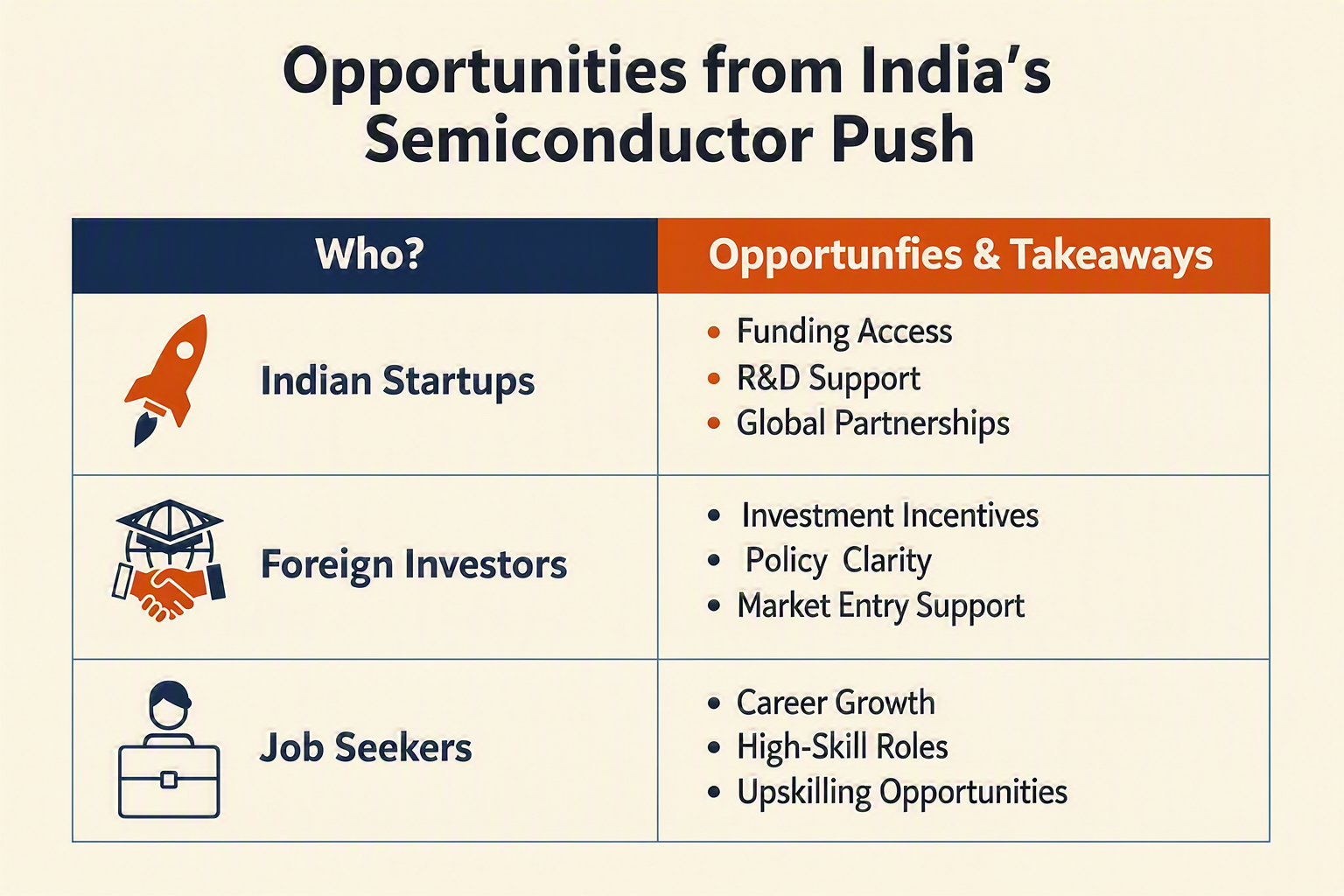
India’s aggressive play at the second Pax Silica meeting in Washington represents a monumental shift for the global technology supply chain. By actively courting semiconductor investments at this 16-nation summit, India is fast-tracking its transition from a software-outsourcing hub to a sovereign hardware and deep-tech powerhouse.
For enterprise leaders, startup founders, and software developers, this hardware revolution unlocks tangible opportunities. As localized chip manufacturing comes online, the marginal cost of computing, IoT deployment, and edge-AI execution is projected to plummet.
Below is a breakdown of how different sectors can strategically align with India's semiconductor roadmap to capitalize on these emerging opportunities:
| Stakeholder Group | Core Opportunity | Driving Policy / Event | Strategic Action |
|---|---|---|---|
| AI & DeepTech Startups | Low-latency local processing and cost-effective custom silicon. | First indigenous chip production starting this year (2026). | Optimize software for edge-AI and localized hardware architectures. |
| Global Tech Enterprises | Diversified supply chain and massive co-funding incentives. | India Semiconductor Mission (ISM) & Pax Silica bilateral deals. | Establish joint ventures (similar to Tata Electronics' landmark partnership with ASML). |
| Hardware & IoT Devs | Massive reduction in component import reliance and custom SoC design. | Domestic OSAT (Outsourced Semiconductor Assembly and Test) expansion. | Shift physical prototyping and manufacturing pipelines to Indian clusters (e.g., Karnataka). |
| Infrastructure Platforms | High-growth market for scalable cloud, voice, and LLM APIs. | Government-backed push for localized, sovereign digital public infrastructure. | Integrate multi-tenant AI pipelines that natively support regional demographics. |
Capitalizing on the Hardware-Software Convergence
The establishment of domestic chip fabs is not just a victory for hardware engineers; it is a catalyst for software innovation. With domestic semiconductor assembly and manufacturing scaling rapidly under the ISM, developers can design highly optimized, specialized software without worrying about supply chain bottlenecks.
- Leveraging Edge AI: With local chips powering smart devices, developers should transition heavy cloud-dependent architectures to edge-native deployments.
- Expanding Multilingual Tech: The next billion internet users in India require applications built in regional languages. Hardware efficiencies will make running heavy models locally on mobile devices highly feasible.
Building the Sovereign AI Layer
As India secures the physical foundation of the tech ecosystem through summits like Pax Silica, the immediate challenge shifts to the software layer. True digital sovereignty requires hardware and software to advance in tandem.
While the physical fabs are constructed, forward-thinking enterprises are already deploying high-performance software infrastructure to match this scale. For example, platforms like CallMissed bridge this gap by providing production-ready voice agent infrastructure. By offering access to over 300 LLM models via an efficient inference gateway alongside specialized Speech-to-Text APIs supporting 22 Indian languages, CallMissed enables businesses to build highly localized conversational AI today that will run seamlessly on India's indigenous silicon tomorrow.
Frequently Asked Questions
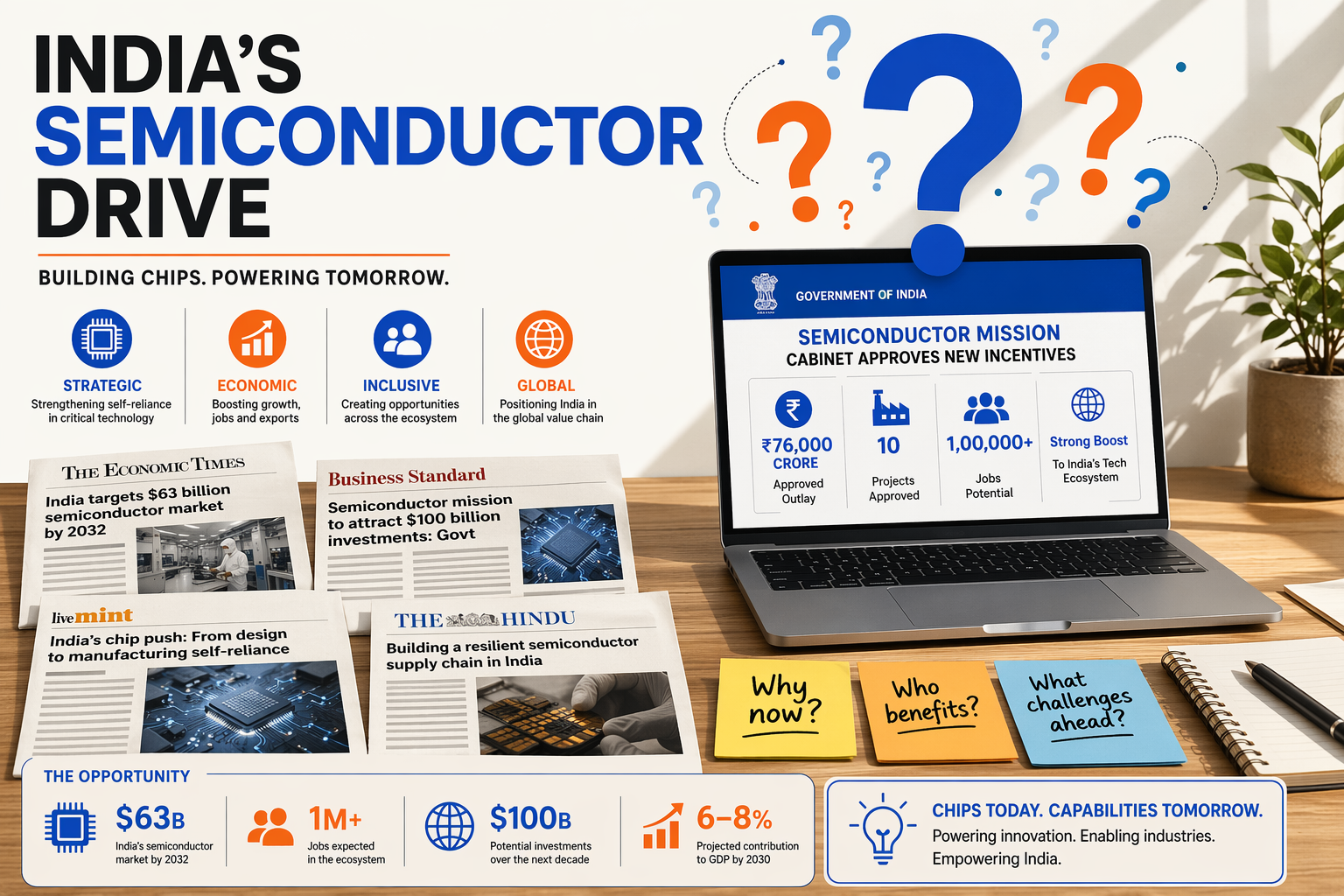
Why is India seeking new semiconductor investments at the Global Tech Summit in 2026?
What is the significance of the Pax Silica Summit for India’s semiconductor ambitions?
How close is India to manufacturing its own semiconductor chips?
What are the main challenges India faces in becoming a global semiconductor hub?
How will new semiconductor investments impact India's tech industry and startups?
What government initiatives support India’s semiconductor investments and ecosystem?
Conclusion
- India’s participation at the second Pax Silica summit and Global Tech Summit underscores its intent to become a key player in the global semiconductor ecosystem, strengthening partnerships with 16 major economies.
- The announcement of India’s first indigenous semiconductor chip, set for production this year, signals rapid progress in local innovation and government-backed initiatives like the India Semiconductor Mission.
- States such as Karnataka are actively courting global investors, aiming to position India as an electronics manufacturing hub amid growing demand for advanced chips in sectors like automotive and consumer tech.
- As global supply chains realign, India’s focus on attracting chip manufacturing investment is set to shift industry dynamics, bringing new opportunities—and challenges—for tech businesses and talent.
Looking ahead, the most significant developments to watch will be the scale and speed of new fab investments, the emergence of local design talent, and how closely India integrates into global supply networks by 2027. As AI-powered communication and automation become ever more integral to digital transformation, platforms like CallMissed provide a glimpse into how domestic tech can leverage semiconductor advances to power multilingual bots, voice agents, and LLM-driven solutions for business. The question now isn’t just whether India will attract investment, but how it will shape the next decade of semiconductor and AI innovation. Are you ready for the transformation?
Discussion
Related Posts



Ready to automate customer conversations?
Launch AI voice agents and WhatsApp bots with CallMissed — one API, 22+ Indian languages.