
How Much Protein Should We Really Be Eating? Five Things to Know


Did you know that despite the multi-billion-dollar wellness industry telling you to double down on powders, shakes, and meat-heavy diets, you might...
How Much Protein Should We Really Be Eating? Five Things to Know
Did you know that despite the multi-billion-dollar wellness industry telling you to double down on powders, shakes, and meat-heavy diets, you might already be eating far more protein than your body can actually use? In an era dominated by fitness influencers hawking endless supplements and shifting federal dietary guidelines, protein has been elevated to a near-mythic status. This has left millions of health-conscious individuals caught between hyper-optimized gym culture and clinical reality, leading Stanford Medicine nutrition experts to step in to separate hype from science.
The confusion lies in the gap between the bare minimums and optimal intake. According to Harvard Health and the American Heart Association, the Recommended Dietary Allowance (RDA) for a healthy adult is a modest 0.8 grams of protein per kilogram of body weight (or 0.36 grams per pound)—amounting to just 56 grams a day for the average sedentary man and 45 grams for the average woman. Yet, the Mayo Clinic points out that acceptable protein intake can safely account for anywhere from 10% to 35% of your total daily calories. This massive variance has sparked intense debate over what constitutes a truly healthy diet.
With nutrition clinics and dietary specialists facing a massive surge in patient inquiries about these confusing standards, many modern practices are deploying AI voice agents from platforms like CallMissed to automatically handle patient FAQs, triage consultation requests, and streamline appointment bookings.
Whether you are trying to build muscle, lose weight, or simply maintain your vitality as you age, understanding your body's true macronutrient demands is crucial. In this guide, we will cut through the marketing noise and look at the clinical data. Here are five essential things you need to know to answer the burning question: How much protein should we really be eating?
Introduction
Walk into any grocery store today, and you will find protein-fortified cookies, high-protein waters, and chips boasting elevated macronutrient profiles. The multi-billion-dollar wellness industry, coupled with fitness influencers preaching hyper-optimized diets, has elevated protein to a near-mythic status. We are told to double down on powders, shakes, and meat-heavy meal plans to build muscle, lose weight, and combat aging. Yet, according to Stanford Medicine nutrition experts and clinical data, you might already be eating far more protein than your body can actually use.
This discrepancy has left millions of health-conscious individuals caught between gym-culture hype and clinical reality. To understand how much protein we truly need, we have to look closely at the gap between baseline dietary guidelines and optimal intake.
The Baseline: What the Science Recommends
According to Harvard Health and the American Heart Association (AHA), the Recommended Dietary Allowance (RDA) for a healthy adult is surprisingly modest:
- 0.8 grams of protein per kilogram of body weight (or 0.36 grams per pound).
- This translates to just 56 grams a day for an average sedentary man and 45 grams a day for an average sedentary woman, based on standard healthy body weights.
- Similarly, the British Heart Foundation (BHF) recommends a daily target of 0.75 grams per kilogram of body weight for adults maintaining a healthy weight.
These RDA numbers do not represent an "optimal" ceiling; rather, they are defined as the minimum amount of nutrient intake required to prevent muscle wasting and meet basic nutritional requirements in a sedentary individual.
The Gray Area of Nutrition
The real confusion arises when we look at acceptable dietary ranges rather than strict minimums. The Mayo Clinic points out that acceptable macronutrient distribution ranges allow protein to account safely for anywhere from 10% to 35% of your total daily calories. On a standard 2,000-calorie daily diet, that equates to a massive range of 50 to 175 grams of protein (or 200 to 700 calories).
This vast spectrum is why the debate persists. If you are an active individual, an aging adult trying to prevent age-related muscle loss, or someone recovering from injury, your needs will naturally drift toward the higher end of that 10% to 35% threshold.
Meeting the Demand for Clarity
As public confusion over these varying dietary standards reaches an all-time high, nutrition clinics, dietitians, and metabolic wellness centers are facing an unprecedented volume of patient inquiries. To address this surge without overwhelming administrative staff, forward-thinking practices are integrating conversational AI. Advanced platforms like CallMissed enable clinics to deploy automated AI voice agents and multilingual chatbots. These tools seamlessly handle common patient FAQs regarding macronutrient calculations, triage initial intake assessments, and automate appointment bookings—ensuring patients receive immediate, accurate guidance while dietitians focus on direct clinical counseling.
Whether you want to build lean mass, shed body fat, or simply maintain your vitality as you age, understanding your body’s true biological demands is essential. In this guide, we will cut through the marketing noise, analyze the latest clinical evidence, and outline five essential facts you must know to answer the ultimate question: How much protein should you really be eating?
Background & Context
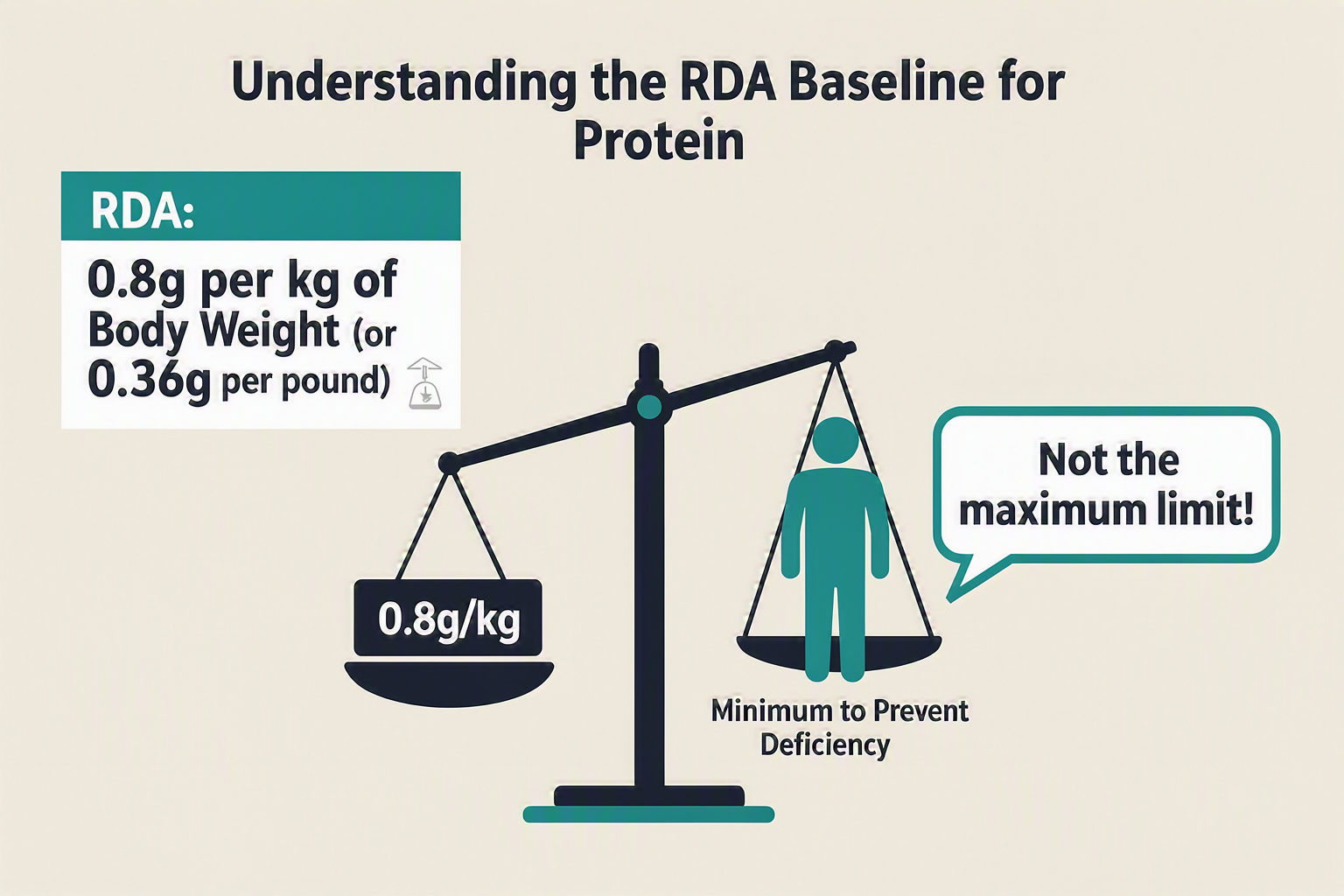
To understand why protein has become the focus of such intense debate, we must first look at how dietary guidelines are established and what they actually mean. Many consumers mistake the Recommended Dietary Allowance (RDA) as a target for optimal health. In reality, the RDA is defined by the National Academy of Medicine as the minimum amount of a nutrient you need to avoid getting sick—not the specific amount required to thrive, build muscle, or maximize metabolic performance.
The Origin of the RDA: Preventing Deficiency
The baseline standard of 0.8 grams of protein per kilogram of body weight (or roughly 7 grams of protein for every 20 pounds of body weight) was originally established to prevent muscle wasting and clinical deficiency in the vast majority of healthy individuals. For an average sedentary adult, this is a relatively low bar to clear.
However, global dietary organizations view these baselines through slightly different lenses:
- United States: The American Heart Association (AHA) and Harvard Health support the standard baseline of 0.8 g/kg per day for adults aged 18 and older.
- United Kingdom: The British Heart Foundation (BHF) recommends a slightly lower baseline of 0.75g per kg of body weight per day. This equates to roughly 56g/day for men (based on an average weight of 75kg) and 45g/day for women (based on an average weight of 60kg).
- Special Populations: Organizations like MD Anderson Cancer Center emphasize that baseline requirements must scale upward for growing children, pregnant or lactating individuals, and patients recovering from illness.
The Caloric Gap: 10% vs. 35%
The real confusion begins when we transition from absolute minimums to the Acceptable Macronutrient Distribution Range (AMDR). According to the Mayo Clinic, protein can safely account for anywhere from 10% to 35% of your total daily calories.
When we look at the math for a standard 2,000-calorie daily diet, this range yields a massive discrepancy:
- At the 10% lower limit: You would consume 200 calories from protein, which equals 50 grams (averaging close to the standard RDA).
- At the 35% upper limit: You would consume 700 calories from protein, which translates to a massive 175 grams per day.
This wide, government-approved window is exactly where the wellness and supplement industries have capitalized. By promoting the upper limit (35%) as the "ideal" standard, marketing campaigns have convinced average consumers that more is always better.
Managing the Influx of Dietary Confusion
Because these numbers are highly dependent on individual factors like activity level, age, and metabolic health, healthcare providers are experiencing a surge in patient inquiries. To handle this influx of repetitive questions without sacrificing clinical time, forward-thinking medical practices and wellness clinics are leveraging platforms like CallMissed. By deploying specialized, multilingual AI voice agents, clinics can instantly answer common patient FAQs about dietary guidelines and seamlessly triage complex cases to registered dietitians.
Understanding this background helps us see that the "right" amount of protein is not a fixed universal number, but a dynamic range tailored to your unique lifestyle.
Key Developments
As the landscape of nutritional science evolves, understanding the distinct benchmarks set by leading global health authorities is essential. The core challenge for most health-conscious individuals is that dietary recommendations are not one-size-fits-all. Different organizations use slightly different metrics—some based on absolute body weight, others on a percentage of daily caloric intake—to define what is "enough."
To clarify this confusion, we have compiled the key guidelines from the world's most reputable medical institutions. This comparative analysis highlights how recommended intake spans a wide spectrum depending on whether the goal is preventing basic nutrient deficiency or optimizing general metabolic health.
Comparative Analysis of Global Protein Guidelines
| Health Authority | Recommended Metric | Est. Daily Intake (75kg Adult) | Primary Clinical Focus |
|---|---|---|---|
| Harvard Health & AHA | 0.8 g/kg of body weight (0.36 g/lb) | ~60 grams | Prevention of dietary deficiency in sedentary adults |
| Mayo Clinic | 10% to 35% of total daily calories | 50 – 175 grams (based on 2,000 kcal/day) | Flexible energy balance and metabolic health |
| British Heart Foundation | 0.75 g/kg of body weight | ~56 grams | Cardiovascular wellness and maintaining a healthy weight |
| National Academy of Medicine | 0.8 g/kg of body weight (or ~7g per 20 lbs) | ~60 grams | Baseline macronutrient standard for general populations |
| MD Anderson Cancer Center | 0.8 g/kg baseline (increases with clinical need) | Varies (scaled upward for recovery) | Cellular repair, immune defense, and tissue maintenance |
Navigating the Discrepancies
This clinical variation explains why consumers often feel overwhelmed. A sedentary 75kg (approx. 165 lbs) adult looking at Harvard Health guidelines might target a modest 60 grams of protein daily. However, if that same individual follows the upper limit of the Mayo Clinic’s caloric percentage recommendation (35% of a 2,000-calorie diet), their daily intake could safely climb to 175 grams.
This massive 115-gram delta is where the wellness industry thrives, capitalizing on the high end of the spectrum to market unnecessary supplements. In reality, most clinical experts agree that while the RDA of 0.8 g/kg is a sufficient baseline floor to prevent illness, the optimal amount for active individuals lies somewhere in the middle of these institutional benchmarks.
Because navigating these shifting standards requires highly personalized calculations, modern wellness clinics and nutritionists are facing an unprecedented volume of patient inquiries. To handle this influx efficiently, forward-thinking practices are integrating advanced AI communication infrastructure. By utilizing platforms like CallMissed, clinics can deploy custom AI voice agents and WhatsApp chatbots that instantly resolve common questions about protein baselines and intake calculations. This allows human practitioners to focus on designing deeply customized medical nutrition therapies rather than repeating basic dietary math over the phone.
In-Depth Analysis
To truly understand our dietary needs, we must look beyond daily totals and examine how the human body processes protein in real-time. A critical piece of this nutritional puzzle is the biological limit of protein absorption. Many consumers believe that consuming a 60-gram protein shake in one sitting yields double the muscle-building benefits of a 30-gram meal. However, clinical research reveals a strict metabolic ceiling on Muscle Protein Synthesis (MPS).
The Per-Meal Absorption Limit
The human body does not have a specialized storage compartment for excess protein. Unlike carbohydrates and fats, which can be stored for later use, surplus amino acids are rapidly processed.
- The 30-Gram Ceiling: Multiple clinical trials show that muscle protein synthesis peaks at approximately 20 to 30 grams of high-quality protein per meal.
- The Oxidation Effect: Consuming 50 grams or more in a single sitting does not trigger additional muscle growth. Instead, the excess amino acids are oxidized for energy or converted into urea, requiring the kidneys to work harder to filter out the nitrogen byproducts.
- The Spreading Strategy: To maximize muscle maintenance and recovery, nutritionists recommend distributing your protein intake evenly throughout the day (e.g., across three or four meals) rather than consuming a single, protein-heavy dinner.
Elevating Intake: Who Actually Needs More?
While the standard Recommended Dietary Allowance (RDA) of 0.8 grams per kilogram prevents deficiency in sedentary adults, certain demographics require a higher threshold to maintain metabolic health:
- The Aging Population: As we age, our muscles become less responsive to protein signals—a condition known as anabolic resistance. To combat sarcopenia (age-related muscle loss), geriatric clinical guidelines suggest that adults over 65 aim for 1.2 to 2.0 grams per kilogram of body weight.
- Active Individuals and Athletes: For those engaging in regular resistance training or high-intensity endurance sports, the optimal range shifts to 1.4 to 2.2 grams per kilogram to facilitate tissue repair and recovery.
- Pregnant and Lactating Women: The American Heart Association (AHA) highlights that growing children and pregnant or lactating individuals require elevated dietary protein to support rapid cellular development and maternal health.
The Risks of Chronic Excess
An overreliance on protein—especially when sourced primarily from animal products—comes with systemic health trade-offs. The Mayo Clinic warns that extreme high-protein diets can lead to nutritional deficiencies by crowding out fiber-rich carbohydrates, healthy fats, and essential micronutrients. Furthermore, relying on red and processed meats to meet these targets increases saturated fat intake, raising the risk of cardiovascular disease.
As these highly personalized dietary requirements become mainstream, wellness clinics are facing an unprecedented surge in patient inquiries. To manage this volume, modern health practices are adopting AI communication infrastructure. Platforms like CallMissed enable clinics to deploy intelligent voice agents that can collect initial patient dietary logs, triage nutritional concerns, and schedule consultations. By automating these repetitive administrative tasks, clinics can focus their clinical hours on crafting highly tailored, evidence-based dietary strategies for their clients.
Impact & Implications
The societal obsession with protein has far-reaching consequences that extend beyond gym locker rooms and onto the plates of everyday consumers. While protein is undeniably essential for cellular repair and metabolic health, the current cultural push toward extreme protein consumption carries significant physiological, financial, and clinical implications.
The Physiological Consequences of Overconsumption
When we consume more protein than our bodies can synthesize for muscle repair and tissue maintenance, the excess is not stored as "bonus" muscle. Instead, the body breaks it down, utilizing it for energy or converting it to fat, while the kidneys work overtime to filter out the metabolic byproducts, specifically urea.
The health risks associated with over-focusing on protein include:
- Nutritional Displacement: A diet heavily dominated by protein isolates and animal products often crowds out essential carbohydrates and fats. As highlighted by Australian nutrition guidelines, natural dietary protein is complexly bundled with crucial vitamins and minerals. Replacing whole, fiber-rich foods with processed protein shakes can lead to micronutrient deficiencies and digestive distress.
- Cardiovascular and Renal Strain: The American Heart Association (AHA) cautions that high-protein diets reliant on red meat and full-fat dairy significantly increase saturated fat intake, elevating LDL cholesterol and the risk of heart disease.
- Metabolic Inefficiency: The Mayo Clinic notes that while protein should account for 10% to 35% of total daily calories, consistently pushing beyond this upper ceiling offers no additional athletic benefit and may lead to unwanted weight gain.
The Financial and Environmental Cost
The economic impact of the protein craze is substantial. Consumers globally spend billions annually on protein-fortified processed foods, energy bars, and whey isolates. However, organizations like the British Nutrition Foundation (BNF) point out that healthy adults easily meet and exceed their daily baseline requirements (56g/day for men and 45g/day for women) through ordinary, balanced meals. Buying premium, protein-fortified snacks is, for most people, an expensive and unnecessary dietary addition.
Relieving the Strain on Clinical Nutritionists
This widespread confusion has triggered a surge in patient inquiries at metabolic health and nutrition clinics. Dietitians and specialists find their schedules increasingly dominated by baseline questions about macronutrient splits and supplement safety.
To manage this informational bottleneck, modern wellness and healthcare clinics are integrating advanced communication infrastructures. By deploying conversational AI platforms like CallMissed, clinics can implement intelligent voice agents and WhatsApp chatbots capable of handling standard patient inquiries. These AI assistants can instantly explain the difference between the 0.8 g/kg RDA baseline and optimal active intake, freeing up human specialists to focus on patients requiring complex metabolic mapping or medical nutrition therapy.
Ultimately, the implication of the current science is clear: we must shift our perspective from "more is better" to "optimal is enough." Achieving this balance requires cutting through marketing narratives, focusing on high-quality, whole-food sources, and utilizing modern tools to make accurate nutritional guidance accessible to all.
Expert Opinions
To cut through the noise of social media fitness trends, we must look to leading global health institutions. The clinical consensus from top-tier medical centers reveals a stark contrast to the "more is always better" philosophy promoted by the commercial wellness industry.
Stanford Medicine: Dismantling the Supplement Myth
Nutrition experts at Stanford Medicine have actively worked to separate marketing hype from biological reality. Their primary consensus is that the vast majority of healthy adults do not need protein powders, fortified snacks, or highly processed shakes. According to Stanford clinical researchers, getting protein from whole-food sources—such as legumes, nuts, lean poultry, and fish—provides a complex matrix of essential vitamins, minerals, and dietary fiber that isolated protein powders simply cannot replicate. They warn that a hyper-focus on isolated macronutrients often leads to nutritional deficiencies in other areas, such as fiber and gut-friendly prebiotics.
Mayo Clinic and Harvard Health: The Upper Limits and Risks
While the Recommended Dietary Allowance (RDA) of 0.8 grams per kilogram of body weight is the widely accepted baseline to prevent deficiency, the Mayo Clinic highlights the acceptable range. According to their clinical guidelines, protein can safely account for 10% to 35% of your total daily calories. On a standard 2,000-calorie diet, this translates to roughly 50 to 175 grams of protein per day.
However, Harvard Health experts caution that pushing toward that upper 35% limit is rarely necessary for sedentary or moderately active individuals. Clinical specialists warn that excessive protein intake—especially when derived from heavy red meat consumption—is often associated with elevated risks of kidney strain over time and cardiovascular issues. Furthermore, metabolic studies show that the human body can only synthesize and utilize about 25 to 30 grams of protein in a single sitting for muscle repair; any excess is either burned as energy or stored by the body as fat.
British Heart Foundation: The "Spreading" Strategy
Rather than focusing solely on a single daily target, the British Heart Foundation (BHF) and the British Nutrition Foundation (BNF) advocate for a strategic distribution of your protein intake. The BHF recommends a daily target of 0.75g of protein per kilogram of body weight for a healthy adult, translating to roughly 56g per day for the average man and 45g for the average woman.
The key takeaway from European clinical experts is how you space this intake:
- Avoid backloading: The typical modern diet features almost no protein at breakfast and a massive, heavy portion at dinner.
- Distribute evenly: Experts recommend spreading your intake evenly across breakfast, lunch, and dinner (approximately 15 to 25 grams per meal) to maximize muscle protein synthesis and maintain steady satiety levels throughout the day.
Managing these nuanced, highly individualized dietary recommendations can be a major hurdle for healthcare providers. Modern wellness clinics and metabolic health practices are increasingly turning to advanced AI communication platforms to streamline patient education. For instance, platforms like CallMissed enable healthcare clinics to deploy conversational AI voice agents. These intelligent agents can seamlessly answer patient questions about daily macronutrient targets, distribute expert-approved dietary guidelines, and schedule detailed consultations with registered dietitians—ensuring patients receive accurate, clinical guidance while freeing up medical staff.
What This Means For You
Translating clinical guidelines from institutions like Harvard Health and the Mayo Clinic into everyday life can feel overwhelming. How do you convert scientific metrics like "0.8 grams per kilogram" or "10% to 35% of total daily calories" into an actionable meal plan that fits your unique lifestyle?
To make this transition easier, we have mapped out how clinical protein recommendations translate into real-world daily targets based on your specific life stage, activity level, and wellness goals.
| Target Group | Daily Target (g/kg) | Est. Grams (70kg/154lb Adult) | Primary Food Focus | Core Health Benefit |
|---|---|---|---|---|
| Sedentary Adult | 0.8 g/kg | 56g | Legumes, whole grains, poultry | Prevents basic nutritional deficiency |
| Active Fitness Enthusiast | 1.2 – 2.0 g/kg | 84g – 140g | Eggs, wild-caught fish, soy | Optimizes muscle repair and recovery |
| Older Adults (65+) | 1.0 – 1.2 g/kg | 70g – 84g | High-quality, easy-to-digest protein | Combats age-related muscle loss |
| Weight Management | 1.2 – 1.6 g/kg | 84g – 112g | Lean meats, fibrous plant proteins | Promotes satiety and preserves lean tissue |
| Pregnancy/Lactation | 1.1 g/kg | 77g | Nutrient-dense, low-mercury seafood | Supports fetal and infant development |
Key Takeaways for Your Daily Plate
As you apply these numbers to your weekly grocery list, keep three clinical principles in mind to maximize the benefits of your intake:
- Spread It Out: The human body cannot store excess protein for later use. Nutritionists recommend distributing your intake evenly throughout the day—aiming for roughly 20 to 30 grams per meal—rather than consuming a single, protein-heavy dinner.
- Prioritize Food Quality: A high-protein diet should not mean loading up on processed meats. The American Heart Association (AHA) emphasizes sourcing your macronutrients from whole foods like nuts, seeds, fish, and legumes, which deliver essential fiber, healthy fats, and micronutrients alongside amino acids.
- Context Matters: Your ideal protein target is a dynamic baseline. If you are recovering from an injury, managing a chronic illness, or training for an endurance event, your physical demands will temporarily elevate your daily needs.
Navigating these customized health requirements often leads to a wave of questions for local health practitioners and nutrition clinics. To manage the growing demand for dietary consultations and personalized guidance, modern wellness practices are increasingly adopting AI-driven communication infrastructure.
For instance, platforms like CallMissed enable healthcare providers to deploy advanced AI voice agents that handle routine patient inquiries about dietary guidelines, pre-screen consultation candidates, and automate appointment scheduling. This ensures that patients receive instant, accurate, and structured support while clinicians focus on delivering personalized, hands-on care.
By matching your daily protein intake to your actual activity levels and health status, you can bypass expensive, overhyped marketing trends and support your body's true biological needs.
Frequently Asked Questions
How much protein should we really be eating on a daily basis?
When calculating how much protein we should really be eating, does the source of protein matter?
What is the maximum percentage of daily calories that should come from protein?
How do I know if I am eating too much protein?
Should older adults eat more than the standard Recommended Dietary Allowance (RDA) for protein?
How are modern nutrition clinics managing the surge of patient questions regarding these dietary guidelines?
Conclusion
Navigating the loud wellness industry requires anchoring our daily diets in clinical science rather than marketing hype. To optimize your personal nutrition and cut through the confusion, keep these key takeaways in mind:
- Understand the baselines: Recognize that the RDA is a modest 0.8 grams per kilogram of body weight (0.36 grams per pound) for a healthy adult.
- Acknowledge safe variance: Your daily protein can safely span anywhere from 10% to 35% of your total calories depending on your specific lifestyle.
- Prioritize clinical science: Focus on actual physiological needs rather than the hyper-optimized trends pushed by fitness influencers.
Looking ahead, personalized, data-driven nutrition will continue to replace one-size-fits-all dietary advice, allowing individuals to target their exact metabolic needs. As medical practices and wellness clinics adapt to guide patients through these shifting health standards, modern communication tools are keeping pace. To explore how AI communication is evolving to help businesses manage client inquiries, check out CallMissed — an AI infrastructure platform powering voice agents and multilingual chatbots.
Are you ready to let clinical reality, rather than marketing trends, shape your plate?
Discussion
Related Posts



Ready to automate customer conversations?
Launch AI voice agents and WhatsApp bots with CallMissed — one API, 22+ Indian languages.