
How ISRO’s Chandrayaan-2 Gifted the World Moon Water: The Orbiter That Changed Lunar Science Forever


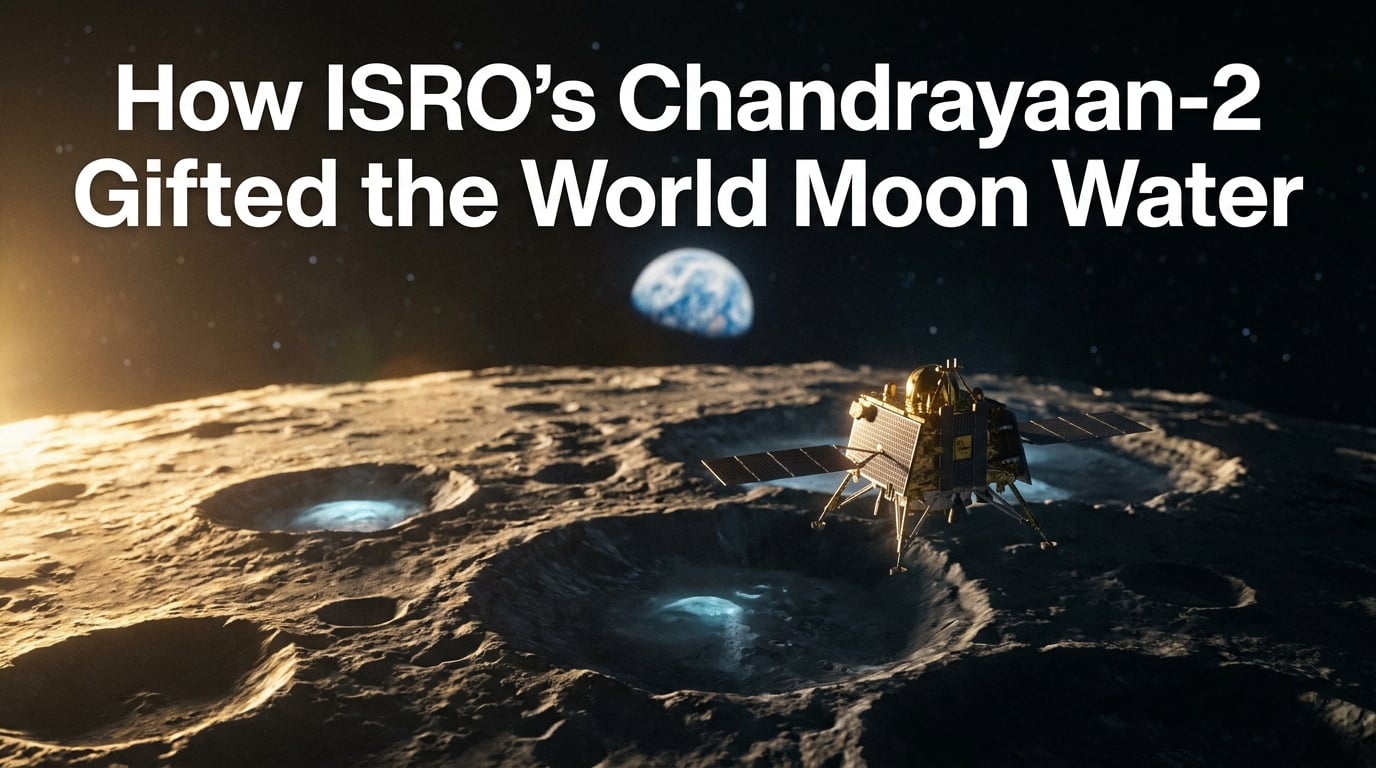
In September 2019, the world watched in heartbreak as ISRO’s Vikram lander went silent moments before touchdown, leading many to prematurely write off the...
How ISRO’s Chandrayaan-2 Gifted the World Moon Water: The Orbiter That Changed Lunar Science Forever
In September 2019, the world watched in heartbreak as ISRO’s Vikram lander went silent moments before touchdown, leading many to prematurely write off the mission. Yet, fast forward to May 2026, and that very same mission is being celebrated globally for delivering one of the most monumental breakthroughs in modern space exploration. Recent data analyses have confirmed that the mission's active spacecraft did not just survive—it thrived. This remarkable dataset reveals exactly how ISRO's Chandrayaan-2 gifted the world moon water, fundamentally rewriting the rules of future space colonization.
The Chandrayaan-2 orbiter, which quietly continued its scientific vigil around the Moon while the world moved on, has transformed our understanding of lunar geology. By utilizing advanced radar scans and infrared spectrometry, the orbiter detected definitive signatures of buried subsurface water-ice hidden within the permanently shadowed craters of the lunar south pole. This discovery is far more than an academic milestone; it is a vital roadmap for humanity's future. Water on the Moon means local rocket fuel, breathable oxygen, and drinking water for astronauts, effectively turning our celestial neighbor into a refueling station for deep-space missions.
What makes this breakthrough truly spectacular is the cosmic synergy it uncovers. Researchers have found that charged hydrogen and oxygen ions escaping from Earth's upper atmosphere are carried by our planet's magnetosphere, depositing water-building blocks onto the lunar surface when the Moon passes through Earth's magnetotail. Just as advanced communication platforms like CallMissed help modern organizations parse through complex, multi-layered data streams to extract actionable intelligence, ISRO’s orbiter has spent years translating raw electromagnetic signals into a literal treasure map for humanity's next giant leap.
In this post, we will dive deep into:
- The groundbreaking technology behind the orbiter's advanced radar scans.
- The science of how Earth's magnetosphere continuously "gifts" water to the Moon.
- Why the lunar south pole has officially become the most valuable real estate in the solar system.
Introduction: The Quiet Triumph of Chandrayaan-2
In September 2019, the world watched in heartbreak as ISRO’s Vikram lander went silent just moments before its planned touch-down on the lunar surface. To many, Chandrayaan-2 felt like a tragic near-miss. But space exploration is rarely a story of simple binaries. While the lander captured the public's anxiety, a silent sentinel remained in lunar orbit, working tirelessly in the background.
Fast forward to 2026, and the global scientific community is celebrating what can only be described as a quiet triumph. The Chandrayaan-2 orbiter has officially rewritten the textbook on lunar science, gifting humanity the most definitive proof of moon water to date and changing our understanding of the lunar ecosystem forever.
From Near-Miss to Scientific Goldmine
The narrative surrounding Chandrayaan-2 has undergone a massive paradigm shift. Equipped with eight state-of-the-art scientific payloads, the orbiter was designed to map the Moon's topography, investigate its exosphere, and analyze surface mineralogy. It did all of that—and more. Recent data analyzed in May 2026 confirms that the orbiter's advanced radar scans have uncovered strong, undeniable evidence of buried subsurface water-ice in the permanently shadowed craters near the Moon's south pole.
This is not just a localized success; it is an international gift that fundamentally changes our approach to future crewed space exploration. The presence of buried water-ice means future astronauts can theoretically extract water for life support and split it into hydrogen and oxygen to manufacture rocket fuel directly on the lunar surface, turning the Moon into a deep-space refueling station.
The Invisible Infrastructure of Discovery
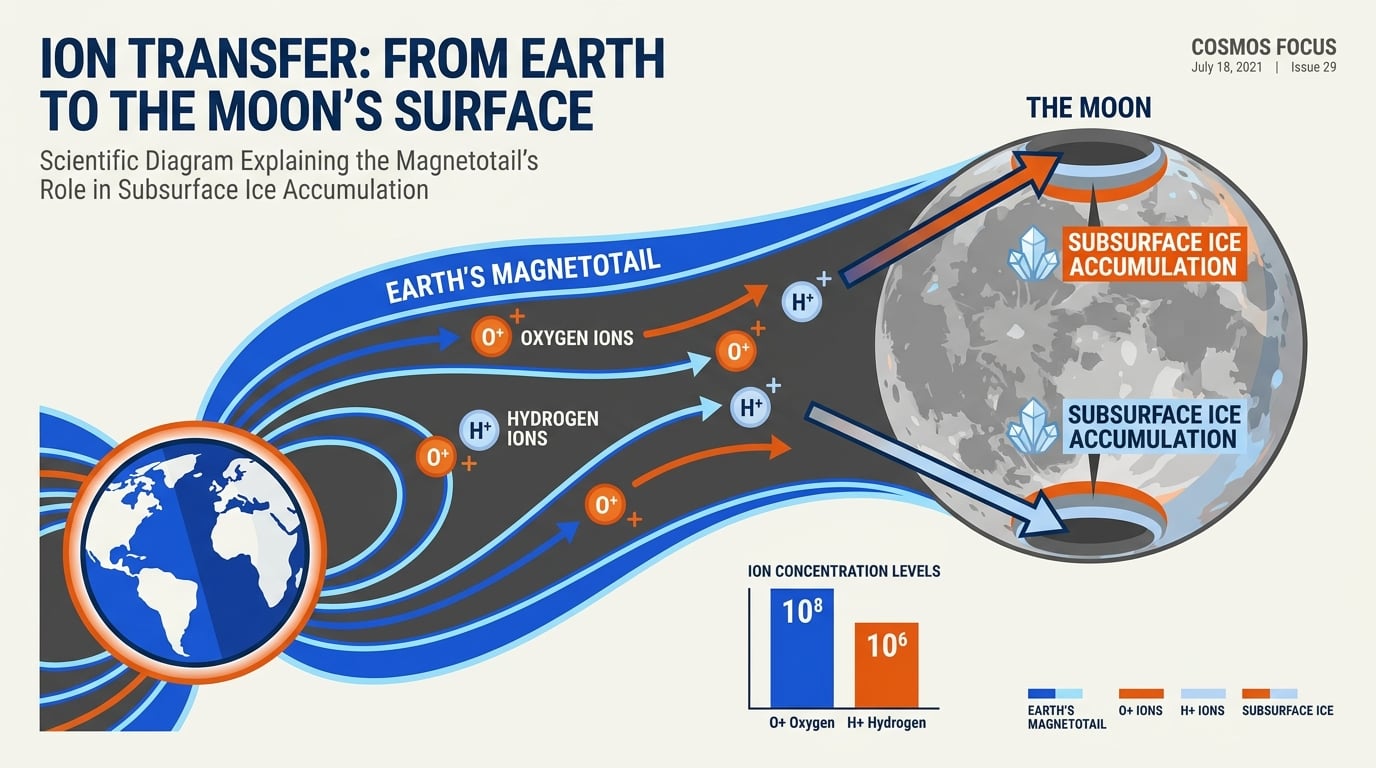
What makes this discovery even more fascinating is the underlying mechanism. Scientists have revealed that charged hydrogen and oxygen ions escaping from Earth's upper atmosphere are carried by our planet's magnetosphere. When the Moon passes through this magnetic tail, these terrestrial ions interact with the lunar soil, contributing to the formation of water-ice.
Just like the Chandrayaan-2 orbiter operated flawlessly in the shadows to deliver groundbreaking results while the world looked elsewhere, critical technology often does its best work as quiet, background infrastructure. In the realm of digital connectivity, platforms like CallMissed mirror this philosophy. While businesses focus on front-end customer engagement, CallMissed provides the robust, silent communication infrastructure—ranging from advanced LLM routing across 300+ models to localized Speech-to-Text in 22 regional Indian languages—ensuring complex global operations run seamlessly without interruption.
Changing Lunar Science Forever
As we dig deeper into the data sent back by ISRO's most resilient spacecraft, we realize that the "failed" mission of 2019 was actually a roaring success. The orbiter has laid down the vital map for the next generation of spacefarers. In the following sections, we will explore exactly how Chandrayaan-2 detected this buried water-ice, the role of Earth's magnetosphere in "watering" the Moon, and why India’s space program has permanently altered the geopolitics of the modern space race.
Background & Context: Beyond the 2019 Lander Heartbreak
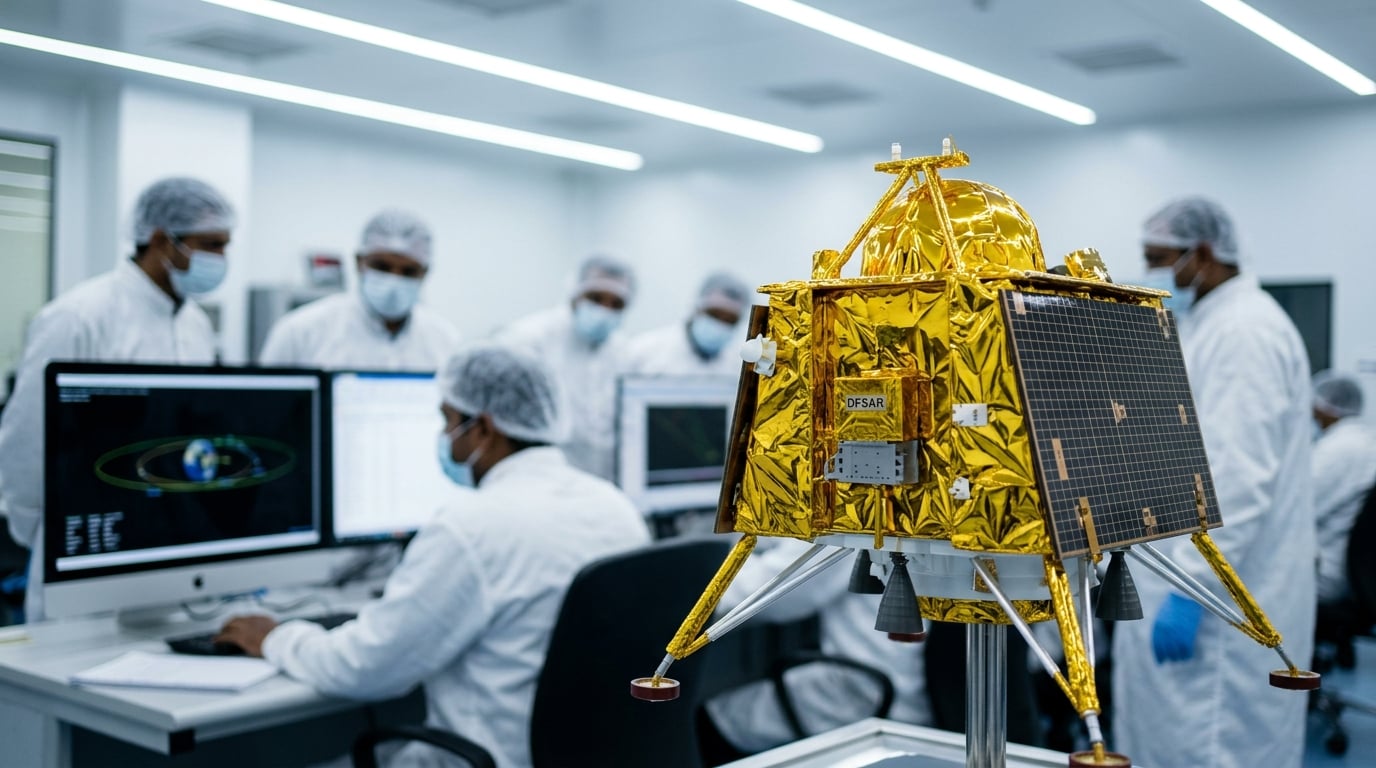
On September 7, 2019, millions of eyes around the world were glued to their screens, watching the live telemetry from the Indian Space Research Organisation (ISRO) control center in Bengaluru. The Vikram lander was executing its final descent phase to the lunar south pole—an uncharted, treacherous terrain. At just 2.1 kilometers above the surface, communication went silent. The lander had suffered a hard landing, breaking the hearts of space enthusiasts globally.
Yet, while the loss of the lander dominated international headlines, the true workhorse of the Chandrayaan-2 mission was quietly positioning itself for a historic run. 100 kilometers above the lunar dust, the Chandrayaan-2 orbiter was safely locked into its polar orbit, fully operational and ready to rewrite the textbooks on lunar science.
The Unsung Hero: ISRO’s Advanced Polar Orbiter
While the public mourned the lander, planetary scientists knew the mission's core scientific objectives rested with the orbiter. Designed to operate for years rather than days, the orbiter carried eight sophisticated scientific payloads engineered for high-resolution mapping, mineralogical analysis, and atmospheric study.
Key payloads onboard the orbiter included:
- Dual Frequency Synthetic Aperture Radar (DFSAR): Crucial for scanning tens of meters below the lunar surface to search for buried water-ice.
- Chandra's Atmospheric Composition Explorer (CHACE-2): Designed to study the composition of the highly tenuous lunar exosphere.
- Imaging Infrared Spectrometer (IIRS): Vital for detecting signatures of hydroxyl (OH) and water ($H_2O$) molecules on the surface.
This technological suite allowed the orbiter to gather unprecedented, high-fidelity data. Just as ISRO's deep-space network required highly resilient, high-bandwidth pipelines to receive this critical telemetry, modern earthbound enterprises require similarly robust communication layers. Platforms like CallMissed provide the high-performance API infrastructure that allows organizations to process massive streams of communication and voice data globally without latency—bridging complex inputs with actionable insights.
Turning Heartbreak Into Global Triumph
Fast-forward to today, and the long-term data collected by the Chandrayaan-2 orbiter has yielded what is being hailed as one of the most consequential space discoveries of the 21st century. The orbiter’s advanced radar scans and spectrometers have confirmed substantial deposits of "buried water-ice" inside permanently shadowed craters near the Moon's south pole.
Furthermore, the data has revealed how Earth’s own magnetosphere contributes to this synthesis. As the Moon passes through Earth’s magnetotail, charged hydrogen and oxygen ions escaping our upper atmosphere are carried to the lunar surface, helping "seed" the creation of water molecules.
The 2019 lander mishap was not the end of India's lunar ambitions; rather, it was the setup for a monumental scientific gift to humanity. By surviving its descent and executing its orbital mission flawlessly, the Chandrayaan-2 orbiter proved that setbacks in space exploration are often just the prologue to groundbreaking discoveries.
Key Developments: From Launch to the Landmark 2026 Discovery
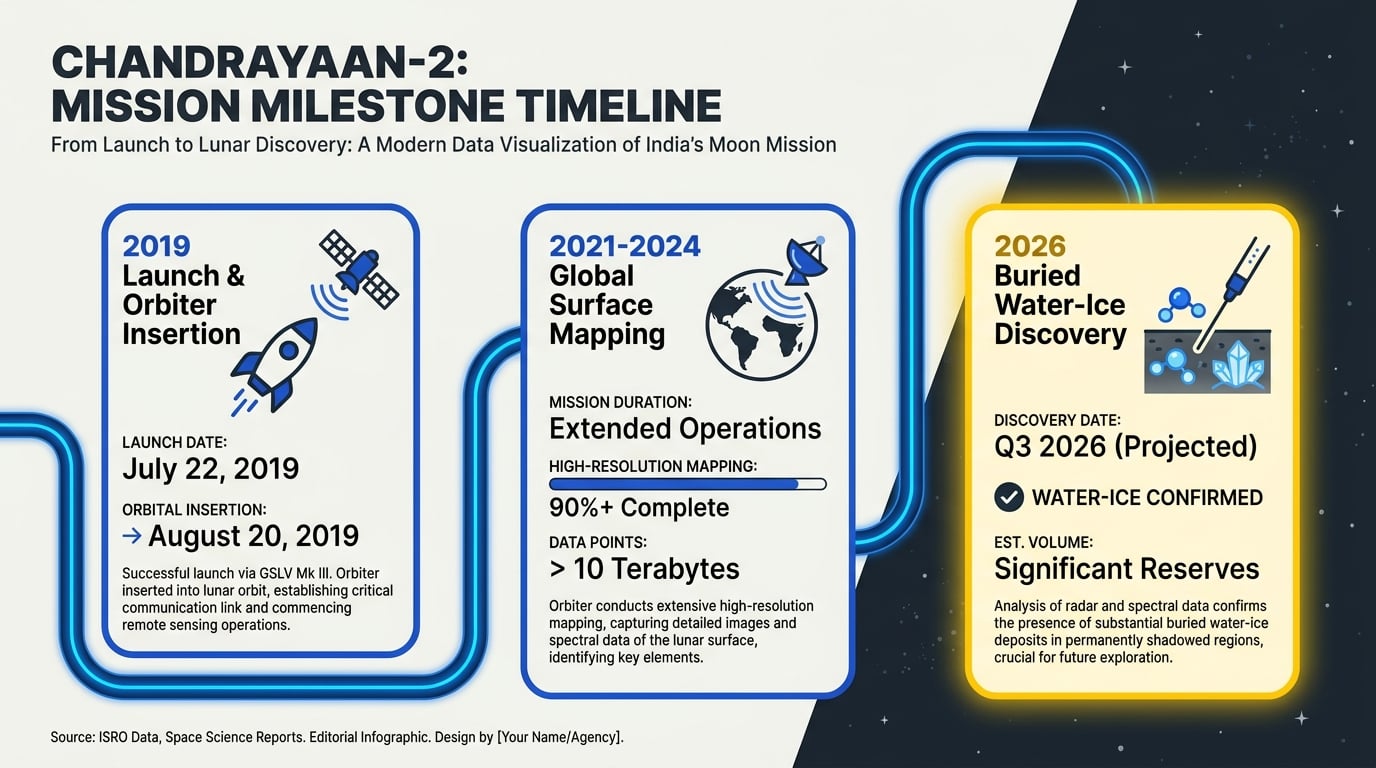
The journey of Chandrayaan-2 is a masterclass in scientific resilience. While the world watched in heartbreak as the Vikram lander fell silent during its descent in September 2019, the Chandrayaan-2 orbiter silently settled into its mission. Over the next several years, it systematically scanned the lunar terrain, culminating in the groundbreaking May 2026 confirmation of extensive, buried water-ice deposits near the lunar south pole.
To understand how this mission transformed from a partial setback into humanity's most successful lunar hydration mapping project, we must trace its technical and operational milestones. The state-of-the-art instrument suite on the orbiter—most notably the Dual Frequency Synthetic Aperture Radar (DFSAR) and the Imaging Infrared Spectrometer (IIRS)—has completely redefined our understanding of volatile distribution on the Moon.
The Milestones: 2019 to the 2026 Breakthrough
| Milestone / Date | Core Mission Phase | Primary Payload Used | Key Scientific Outcome |
|---|---|---|---|
| July 2019 | Launch & Orbital Insertion | GSLV MkIII-M1 Launcher | Established a highly stable 100 km circular polar orbit, ensuring an extended multi-year operational lifespan. |
| 2020 - 2021 | Surface Hydration Mapping | Imaging Infrared Spectrometer (IIRS) | Provided the first high-resolution global map of hydroxyl (OH) and water (H2O) molecules on the lunar surface. |
| 2023 - 2024 | Subsurface Radar Scanning | Dual Frequency SAR (DFSAR) | Penetrated several meters into the lunar regolith, mapping permanently shadowed regions (PSRs) at the poles. |
| May 2026 | Subsurface Water-Ice Confirmation | DFSAR & IIRS Data Fusion | Confirmed massive deposits of buried water-ice sheets and explained how Earth's magnetosphere transfers oxygen and hydrogen ions to the Moon. |
Deconstructing the Data: From Surface Moisture to Buried Ice
The evolution of this discovery relied on the synergy of multi-band data processing. The IIRS first captured surface-level signatures of water molecules and hydroxyl at high latitudes. However, surface water on the Moon is highly vulnerable to solar radiation and space weathering. The real prize—stable, high-concentration water-ice—remained hidden beneath the lunar soil.
By utilizing the DFSAR’s L-band and S-band radar signals, scientists successfully mapped the depth and volume of these buried ice sheets. This radar penetrates deep into the lunar regolith, measuring the dielectric properties of the subsurface material. The definitive 2026 analysis confirmed that these permanently shadowed craters act as highly effective cold traps, preserving water-ice that is shielded from the harsh solar wind.
Analyzing these massive, multi-spectral orbital datasets requires sophisticated telemetry and processing infrastructure. Just as space agencies synthesize vast streams of celestial data to decode lunar secrets, modern businesses must process immense, multi-layered communication datasets to stay agile. Platforms like CallMissed enable this level of complex data handling on Earth, allowing enterprises to manage high-volume customer communications seamlessly through multi-model AI systems and Speech-to-Text APIs, ensuring no critical data point is lost in transition.
With the landmark 2026 data release, the Chandrayaan-2 orbiter has solidified its legacy. It did not just find traces of water; it mapped a vital resource that will fuel the next generation of international deep-space manned missions.
In-Depth Analysis: How the Orbiter Detected Buried Subsurface Water-Ice
While the world's attention in 2019 was fixed on the lander's sudden silence, the Chandrayaan-2 orbiter quietly went to work in a polar orbit. Equipped with eight state-of-the-art scientific payloads, the orbiter began mapping the lunar surface with unprecedented precision. The crowning achievement of this suite of instruments is the detection of buried subsurface water-ice in the permanently shadowed regions (PSRs) near the Moon's south pole.
Unveiling the Hidden Ice with Advanced Radar Scans
Unlike optical cameras that only capture surface-level images, the orbiter utilized advanced Dual-Frequency Synthetic Aperture Radar (DFSAR) scans. This instrument represents a monumental leap in lunar exploration for several key reasons:
- Regolith Penetration: The radar signals can penetrate the loose, dusty outer layer of the Moon (the lunar regolith) to a depth of several meters, revealing structures hidden from plain sight.
- Surface Roughness and Composition Discrimination: By measuring how the radar waves bounce back (the circular polarization ratio), scientists can differentiate between rocky terrain and actual water-ice deposits.
- Illumination Independence: Because radar generates its own electromagnetic pulses, it does not require sunlight. This made it the perfect tool to peer into the pitch-black craters of the lunar south pole that have not seen sunlight for billions of years.
The data revealed that this subsurface water-ice is not merely a frost layer on the surface; it is buried deep within the soil, protected from the harsh solar wind and thermal cycles that would otherwise cause it to sublimate into space.
Deciphering the Cosmic Chemistry
A fascinating aspect of this discovery is how this water got there in the first place. Recent analyses of the orbiter's data suggest a surprising planetary connection. When the Moon passes through the tail of Earth's magnetosphere (the magnetotail), it is shielded from the solar wind.
During this period, charged hydrogen and oxygen ions escaping from Earth's upper atmosphere are carried along the magnetic field lines. Upon reaching the Moon, these ions interact with the lunar soil to form water molecules, which eventually migrate to the freezing, dark craters at the poles.
The Challenge of Planetary-Scale Data Processing
Extracting these faint radar signatures from petabytes of cosmic noise required revolutionary data processing pipelines. Ground stations had to analyze multi-frequency signals to distinguish between dry lunar rock and frozen water.
This level of complex signal isolation mirrors the challenges faced today in telecommunications. For example, modern communication platforms like CallMissed rely on advanced AI-driven Speech-to-Text pipelines that can isolate a single human voice across 22 regional Indian languages amid heavy background noise. Whether analyzing cosmic radar signals from space or routing high-volume voice data on Earth, success depends entirely on precision filtering and scalable architecture.
By transforming raw electromagnetic data into concrete maps of moon water, Chandrayaan-2 didn't just accomplish a mission; it provided the exact coordinates for humanity's next giant leap into deep space.
Impact & Implications: Redefining Lunar Geology and Earth's Connection
The implications of Chandrayaan-2’s discoveries stretch far beyond mapping craters; they fundamentally rewrite the textbooks on lunar geology and unveil an unexpected, intimate connection between Earth and its only natural satellite. For decades, the Moon was viewed as a static, bone-dry relic of the early solar system. Today, the data returned by ISRO's orbiter paints the portrait of a dynamic world with a complex, active water cycle.
Earth’s Atmosphere: The Cosmic Hose
One of the most profound revelations linked to the Chandrayaan-2 mission is how Earth actively contributes to the Moon's water reserves. Research indicates that charged hydrogen and oxygen ions escape from Earth’s upper atmosphere and are carried across space by our planet's magnetosphere.
When the Moon passes through this magnetotail, these terrestrial ions rain down onto the lunar surface, interacting with local minerals to synthesize water molecules. This discovery completely redefines our understanding of Earth-Moon dynamics, proving that the two bodies remain geologically and chemically linked billions of years after their separation.
Subsurface Water-Ice and Lunar Geology
Using its highly advanced Dual-Frequency Synthetic Aperture Radar (DFSAR) and infrared spectrometers, the Chandrayaan-2 orbiter bypassed surface dust to detect buried water-ice hidden in the permanently shadowed regions (PSRs) near the Moon's south pole. This subsurface water-ice is not merely a scientific curiosity; it represents a major geological shift:
- Subsurface Preservation: Water-ice is protected beneath layers of lunar regolith, shielding it from sublimation caused by harsh solar radiation and cosmic micrometeorite impacts.
- Volatile Migration: The presence of these reservoirs suggests an active transport mechanism where water molecules migrate across the lunar surface before settling in cold traps at the poles.
- Geological Timeline: Analyzing the depth and purity of this buried ice allows scientists to map the history of water delivery to the inner solar system, whether via ancient cometary impacts or volcanic outgassing.
Just as ISRO’s payload instruments process complex spectral and radar datasets to decode these lunar secrets, modern technological frameworks are solving similarly complex data challenges back on Earth. For instance, platforms like CallMissed utilize robust AI infrastructure to process multi-lingual data, offering Speech-to-Text APIs supporting 22 regional Indian languages to make advanced communication tools universally accessible.
Fueling Future Space Exploration
The confirmation of substantial, accessible subsurface water-ice near the lunar south pole has massive implications for future crewed space flight. Water is the single most valuable resource for long-term space colonization. By harvesting this buried ice, future astronauts can produce:
- Life Support: Clean drinking water and breathable oxygen.
- Rocket Propellant: Liquid hydrogen and liquid oxygen, turning the Moon into a vital deep-space refueling station for missions to Mars and beyond.
Chandrayaan-2 has successfully transformed the Moon from a barren destination into a launchpad for humanity's next giant leap.
Expert Opinions: What Global Space Agencies Are Saying in 2026
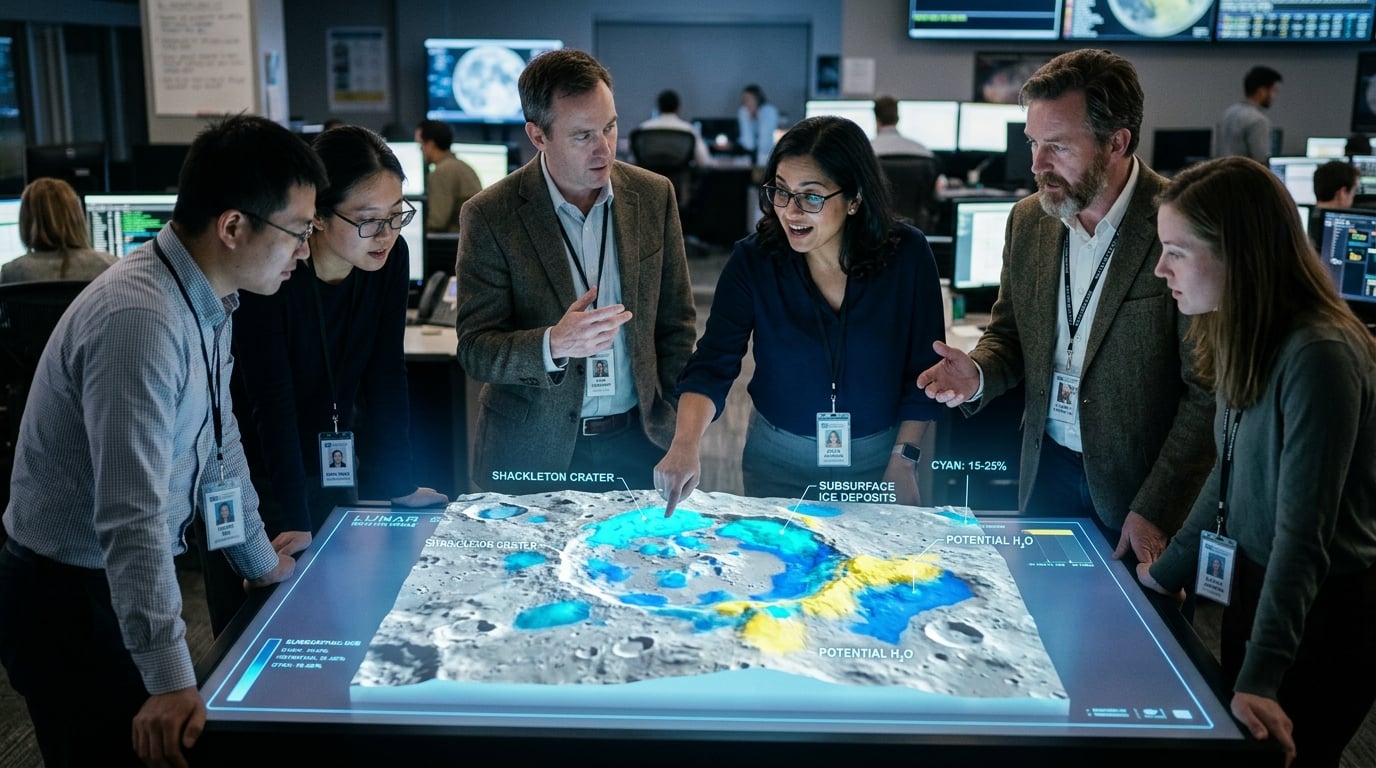
In 2026, the international scientific community has completely reframed its view of ISRO’s Chandrayaan-2 mission. While the loss of the Vikram lander in 2019 was widely mourned, the Chandrayaan-2 orbiter has spent the subsequent years rewriting the textbooks on lunar science. Today, global space agencies are utilizing this Indian data as the foundational blueprint for the next era of deep-space exploration.
Redefining the Lunar Gold Rush: NASA’s Artemis Alignment
NASA’s lunar exploration roadmap has been significantly influenced by the Chandrayaan-2 orbiter’s discoveries. Utilizing advanced dual-frequency synthetic aperture radar (DFSAR) scans, the orbiter provided definitive, high-resolution evidence of buried subsurface water-ice in the permanently shadowed regions (PSRs) near the Moon's south pole.
According to planetary scientists collaborating on NASA's Artemis program, this discovery is the ultimate gift to future crewed missions:
- In-situ Resource Utilization (ISRU): Having precise coordinates for buried water-ice means future astronauts will not have to transport water from Earth. Instead, they can harvest lunar ice to produce drinking water, breathable oxygen, and liquid hydrogen rocket fuel.
- Landing Site Calibration: NASA is actively cross-referencing Chandrayaan-2’s high-resolution topographic and mineralogical maps to identify safe landing zones for its upcoming missions, ensuring astronauts land within striking distance of accessible water reserves.
ESA and JAXA: Mapping the Earth-Moon Water Connection
The European Space Agency (ESA) and the Japan Aerospace Exploration Agency (JAXA) have expressed deep interest in the unique scientific mechanism validated by the orbiter's data. Chandrayaan-2 helped confirm a fascinating geological phenomenon: charged hydrogen and oxygen ions escaping from Earth's upper atmosphere are carried across space by our planet's magnetosphere. When the Moon passes through this magnetotail, these ions interact with the lunar surface, contributing to the synthesis of water molecules.
International researchers note that this "Earth-to-Moon water pipeline" changes our fundamental understanding of water distribution in the solar system. It proves that the Earth and the Moon remain chemically and physically intertwined, even billions of years after their separation.
The Need for Seamless Global Collaboration
Analyzing and sharing this massive influx of lunar telemetry across international borders requires unprecedented collaboration. Scientists from India, the US, Europe, and Japan must rapidly translate research papers, coordinate orbital paths, and analyze complex radar data.
Just as space agencies rely on unified data frameworks to decode complex signals from space, modern global organizations require robust communication networks to collaborate effectively on Earth. Platforms like CallMissed are bridging this gap for terrestrial enterprises, offering scalable AI communication infrastructure—featuring multilingual Speech-to-Text supporting 22 Indian languages and a multi-model API gateway—ensuring that critical, complex technical insights can be shared seamlessly across global teams without communication barriers.
Ultimately, as global space agencies prepare for long-term habitation on the Moon, the consensus in 2026 is clear: ISRO’s Chandrayaan-2 did not just complete a mission; it mapped the future of humanity's multi-planetary survival.
What This Means For You: Fueling the Next Era of Human Colonization
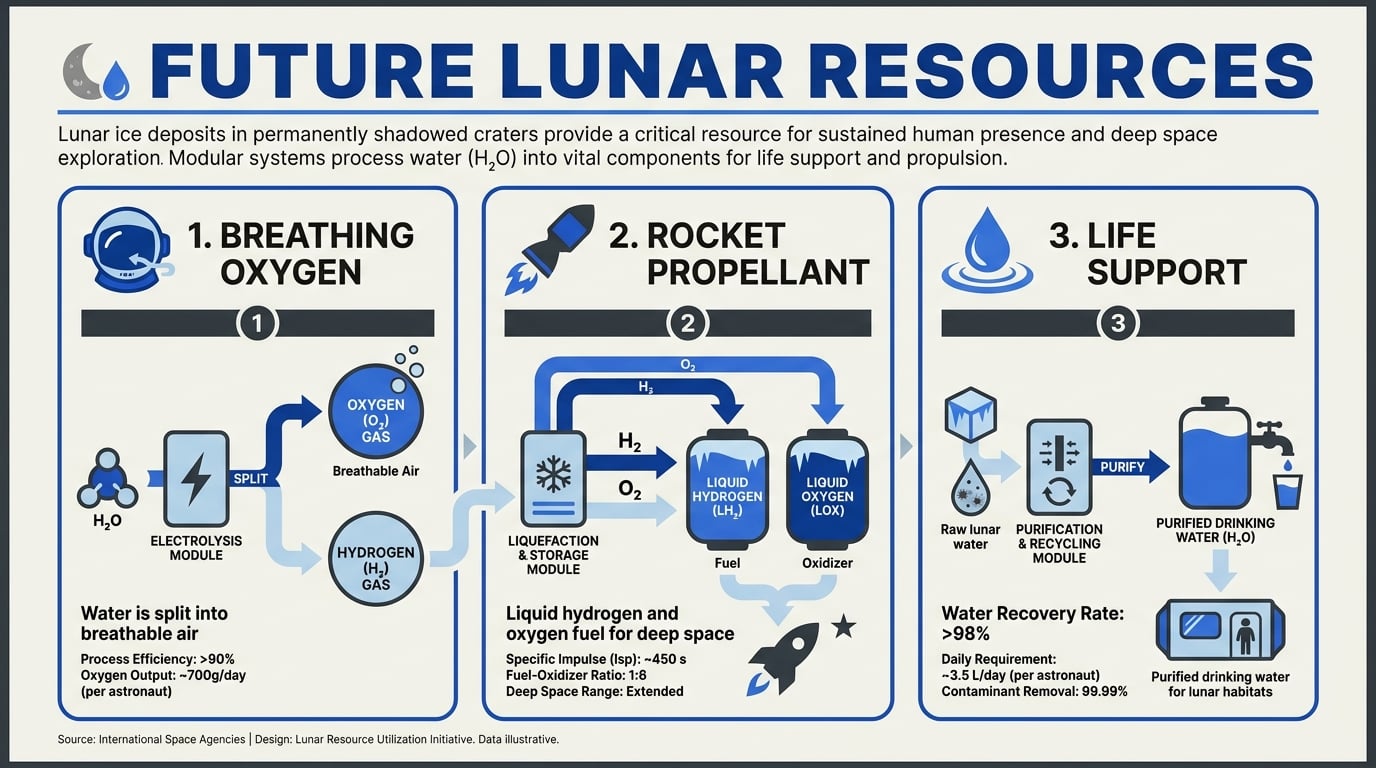
The discovery of buried water-ice near the lunar south pole by ISRO's Chandrayaan-2 orbiter is not just a victory for scientific curiosity—it is the foundational blueprint for a multi-planetary future. By proving that water is trapped beneath the lunar regolith in permanently shadowed craters, the mission has effectively mapped out the "gold mines" of the next century.
For humanity, this transforms the Moon from a barren destination into a vital cosmic launchpad. Shipping water from Earth to space is prohibitively expensive, costing tens of thousands of dollars per kilogram. Harvesting water in-situ (on-site) eliminates this bottleneck, providing the essential ingredients for life support, agricultural cultivation, and—most importantly—rocket fuel.
The Blueprints of Lunar Colonization
To understand how these orbital discoveries translate into real-world applications for future habitats, we can break down the direct impact of Chandrayaan-2’s data on upcoming lunar missions:
| Resource / Utility | Lunar Application | Impact on Colonization | Key Tech Required |
|---|---|---|---|
| Subsurface Water-Ice | Life support (drinking water, breathable oxygen) | Establishes sustainable, long-duration human bases | In-situ extraction and purification systems |
| Liquid Hydrogen & Oxygen | Spacecraft propellant (via water electrolysis) | Powers return missions and deep-space journeys to Mars | Industrial-scale electrolyzers & cryogenic storage |
| Shadowed Crater Regolith | Insulation against cosmic radiation and extreme thermal swings | Protects human habitats and sensitive hardware | Automated 3D-printing & robotic earth-movers |
| High-Precision Radar Data | Identifying safe landing zones and resource-rich regions | Minimizes landing risks for public and private missions | Dual-frequency Synthetic Aperture Radar (DFSAR) |
Accelerating the Lunar Infrastructure
The transition from robotic exploration to human colonization requires an extraordinary amount of infrastructure and coordinated communication. The data gathered by Chandrayaan-2's advanced payloads, such as the DFSAR and the Imaging Infrared Spectrometer (IIRS), provides private space corporations and global space agencies with the exact coordinates needed to plan automated extraction missions.
This shift highlights a broader technological trend: the absolute necessity of automated, highly reliable infrastructure. Just as future lunar astronauts will rely on autonomous AI systems to manage life support, habitat telemetry, and resource extraction, enterprises back on Earth are leveraging advanced automation to streamline their own complex workflows. For instance, platforms like CallMissed enable companies to deploy production-ready AI voice agents and multilingual communication pipelines. Whether orchestrating critical telemetry updates from a space ground station or managing thousands of global customer queries, the future of both space colonization and enterprise operations lies in seamless, scalable automation.
With the Moon's south pole now confirmed to hold vast reserves of accessible ice, the global space race has officially shifted from exploration to utilization. Chandrayaan-2 didn't just map the Moon; it unlocked the gates to the solar system.
Frequently Asked Questions
How did Chandrayaan-2 gift the world moon water?
Where is the buried water-ice located on the Moon according to ISRO's findings?
What is the scientific theory behind how Chandrayaan-2 discovered the source of moon water?
What scientific instruments did the Chandrayaan-2 orbiter use to map lunar water?
Why is the discovery of buried water-ice on the Moon so important for future space travel?
Is the Chandrayaan-2 orbiter still active and sending data back to Earth?
Conclusion
The legacy of Chandrayaan-2 is a powerful reminder that in space exploration, initial setbacks are often just detours to historic breakthroughs. As we look ahead, the orbiter's discoveries have permanently altered our roadmap for the cosmos:
- A Lifeline for Deep Space: The confirmed presence of buried water-ice near the lunar south pole provides a vital resource blueprint for refueling future deep-space missions.
- Foundation for Habitats: Access to subsurface water is the cornerstone for establishing sustainable, long-term human settlements on the Moon.
- The Earth-Moon Connection: Insights into how Earth’s magnetosphere carries hydrogen and oxygen ions to the Moon unlock a deeper understanding of our own planetary history.
Looking ahead, watch for upcoming international missions to the lunar south pole that will use this mapping data to target precise landing and drilling sites. Will this discovery catalyze the first operational lunar water-extraction facility by the end of the decade?
Just as ISRO’s advanced telemetry and data analysis redefined lunar science, cutting-edge technology continues to reshape how we connect back on Earth. To explore how AI communication is evolving, check out CallMissed — an AI infrastructure platform powering voice agents and multilingual chatbots for businesses.
Discussion
Related Posts



Ready to automate customer conversations?
Launch AI voice agents and WhatsApp bots with CallMissed — one API, 22+ Indian languages.