
GPT-5.6 vs Claude Opus 4.8: Benchmarks, Pricing & Verdict


GPT-5.6 vs Claude Opus 4.8 compared after launch: pricing, cost per task, benchmarks, context windows, coding results, and the best model for each use case.
GPT-5.6 vs Claude Opus 4.8: Benchmarks, Pricing & Verdict
As of July 10, 2026, both contenders are launched: Anthropic released Claude Opus 4.8 on May 28, and OpenAI released the GPT-5.6 Sol, Terra, and Luna family on July 9. The decision is now based on production evidence, pricing, documented limits, and workload-specific testing—not preview speculation.
The clearest trade-offs are measurable. Claude Opus 4.8 provides a confirmed default 1-million-token context window and costs $5 per million input tokens and $25 per million output tokens. GPT-5.6 Sol costs $5 input and $30 output per million tokens; OpenAI also offers the lower-cost Terra and faster Luna tiers. A published Terminal-Bench 2.1 comparison reports 88.8% for GPT-5.6 Sol and 78.9% for Claude Opus 4.8, but benchmark results depend on the harness, tools, settings, and number of attempts.
There is no universal winner. GPT-5.6 Sol is the stronger candidate when its reported terminal and coding performance maps to the workload; Claude Opus 4.8 is attractive for very large-context tasks and high-output workloads because its headline output rate is $5 lower per million tokens. Teams should run the same prompts, tools, retries, and scoring rules across both before choosing.
This post compares the launched models using release dates, verified pricing and context limits, published benchmark data, vendor claims, and a practical production bake-off framework.
Introduction
Answer first: In the legacy GPT-5.6 vs Claude Opus 4.8 matchup, test GPT-5.6 Sol first for coding, terminal, and computer-use workloads, while Claude Opus 4.8 is the stronger first test for 1M-token context and output-heavy tasks. There is no universal winner: the clearest direct result covered here is Terminal-Bench 2.1, where GPT-5.6 Sol scored 88.8% versus 78.9% for Claude Opus 4.8, but one benchmark does not establish overall superiority.
This comparison is now historical. Anthropic launched Claude Opus 5 on July 24, 2026, superseding Opus 4.8 as its newest Opus model. If you are selecting a model today, compare GPT-5.6 Sol with Opus 5 rather than limiting your evaluation to Opus 4.8. See the current-generation comparison: Claude Opus 5 vs GPT-5.6 Sol.
As of July 28, 2026, the headline API pricing is:
- GPT-5.6 Sol: $5 per 1 million input tokens and $30 per 1 million output tokens.
- Claude Opus 4.8: $5 per 1 million input tokens and $25 per 1 million output tokens.
- Claude Opus 5: $5 per 1 million input tokens and $25 per 1 million output tokens.
Claude’s listed output-token price is approximately 16.7% lower than GPT-5.6 Sol’s, while all three models have the same listed input-token price. However, token rates alone do not determine production cost. Tool calls, retries, latency, success rate, token consumption, and human review all affect the cost of completing a task.
GPT-5.6 vs Claude Opus 4.8: Short Verdict
- Coding and terminal work: Test GPT-5.6 Sol first, primarily because of its 88.8% Terminal-Bench 2.1 score versus 78.9% for Claude Opus 4.8.
- Computer-use workflows: Test GPT-5.6 Sol first; OpenAI reports 62.6% on OSWorld 2.0.
- Browsing and web-research agents: GPT-5.6 Sol is a reasonable first candidate based on OpenAI’s reported 92.2% BrowseComp result, although this article does not include a directly comparable Claude Opus 4.8 score.
- 1M-token document analysis: Test Claude Opus 4.8 first because Anthropic documents a 1M-token context window by default.
- Output-heavy workloads: Claude Opus 4.8 has the lower listed output-token price at $25 per million, compared with $30 per million for GPT-5.6 Sol.
- New deployments: Add Claude Opus 5 to the evaluation because it is the current Opus generation.
- Production choice: Select the model that delivers the highest success rate and lowest total cost on your own workload under matched test conditions.
Compact Decision Table
| Requirement | Model to test first | Evidence |
|---|---|---|
| Coding and terminal tasks in the legacy comparison | GPT-5.6 Sol | 88.8% vs 78.9% on Terminal-Bench 2.1 |
| Computer-use workflows | GPT-5.6 Sol | OpenAI reports 62.6% on OSWorld 2.0 |
| Browsing and web-research agents | GPT-5.6 Sol | OpenAI reports 92.2% on BrowseComp; no direct Opus 4.8 comparison is presented here |
| 1M-token context | Claude Opus 4.8 | Anthropic documents a 1M-token context window by default |
| Output-heavy workflows | Claude Opus 4.8 | $25 vs $30 per 1M output tokens |
| New agentic and coding deployments | Also evaluate Claude Opus 5 | Current Opus model with 1M context and 128k maximum output |
| Lowest production cost | Benchmark all current candidates | Total cost depends on task success, tokens, retries, tools, latency, and review |
Why GPT-5.6 vs Claude Opus 4.8 Is Now a Legacy Comparison
Claude Opus 5 is a new model, not a renamed version of Opus 4.8. Anthropic positions it for long-running agentic and coding workflows and lists:
- $5 per 1 million input tokens
- $25 per 1 million output tokens
- 1M-token context window
- 128k maximum output
These specifications make Opus 5 relevant for coding agents, extended autonomous workflows, large-document analysis, and tasks requiring unusually long responses. They do not retroactively alter the Opus 4.8 benchmark results recorded in this article.
Accordingly, the original GPT-5.6 vs Claude Opus 4.8 findings remain useful as a historical comparison, but they should not be treated as evidence that GPT-5.6 Sol would achieve the same benchmark margin against Opus 5. A current purchasing decision requires direct GPT-5.6 Sol vs Opus 5 testing or genuinely comparable current-generation benchmark results.
What the Benchmarks Do—and Do Not—Prove
The 88.8% vs 78.9% Terminal-Bench 2.1 result supports making GPT-5.6 Sol the first candidate for terminal work in the GPT-5.6 vs Claude Opus 4.8 comparison. It does not prove that GPT-5.6 Sol is better for every workload, nor does it establish an equivalent advantage over Claude Opus 5.
OpenAI’s reported 92.2% BrowseComp and 62.6% OSWorld 2.0 scores also support testing GPT-5.6 Sol for browsing and computer-use agents. These are vendor-published results, and this article does not present directly comparable Claude Opus 4.8 results for those benchmarks.
Benchmark performance can change with the:
- System prompt and supplied context
- Harness and scoring rules
- Tools and permissions
- Token budgets and timeouts
- Retry policy
- Sampling and model settings
- Repository or environment state
For a fair production evaluation, run each candidate with identical conditions and compare task success, total cost per completed task, latency, reliability, tool-use accuracy, retry frequency, and human-review burden.
Practical Verdict
For the historical GPT-5.6 vs Claude Opus 4.8 matchup, start with GPT-5.6 Sol for coding, terminal, browsing, and computer-use tasks. Start with Claude Opus 4.8 for 1M-token analysis and output-heavy workflows, where its documented context window and lower output-token rate are relevant advantages.
For decisions made after July 24, 2026, do not evaluate Opus 4.8 alone. Compare GPT-5.6 Sol directly with Claude Opus 5, especially for long-running agents, coding workflows, large-context tasks, and high-output applications. The best production setup may also route different workloads to different models rather than forcing every task through a single default.
Background & Context
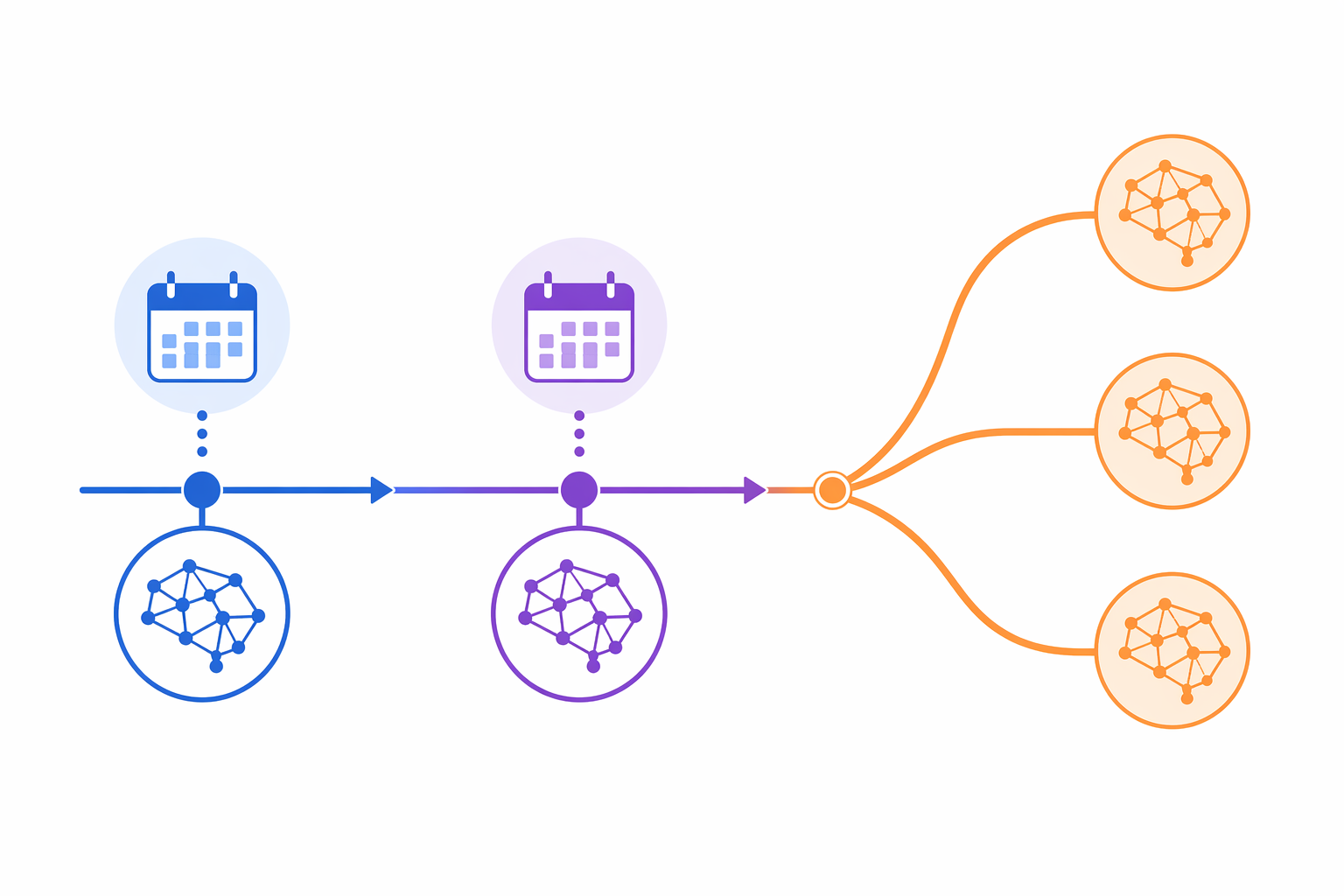
Anthropic released Claude Opus 4.8 on May 28, 2026, positioning it as a high-capability model for complex agentic coding, enterprise knowledge work, research, analysis, and other long-running workflows. Its strengths are particularly relevant when a task requires a large working context, substantial output, repeated tool use, or careful execution across many steps.
OpenAI followed with the public launch of the GPT-5.6 family on July 9, 2026. GPT-5.6 is therefore no longer a preview product: developers can compare its published specifications, pricing, availability, and production behavior with Claude Opus 4.8 rather than relying solely on prerelease claims.
GPT-5.6’s Three-Tier Model Family
OpenAI launched GPT-5.6 in three tiers intended to address different performance, latency, and cost requirements:
- GPT-5.6 Sol: The flagship tier, aimed at demanding reasoning and agentic workloads.
- GPT-5.6 Terra: A lower-cost tier intended to balance capability and production economics.
- GPT-5.6 Luna: The fastest and lowest-cost tier, designed for high-volume or latency-sensitive tasks that do not require flagship-level performance.
This structure gives developers the option to match model cost and speed to the workload instead of routing every request through the most capable—and usually most expensive—tier.
OpenAI reports that GPT-5.6 Sol achieves 92.2% on BrowseComp and 62.6% on OSWorld 2.0. Those figures are official OpenAI-reported results, not neutral, universally reproducible rankings. Benchmark outcomes can change materially with the evaluation harness, prompting strategy, tool definitions, browsing environment, task sampling, retry policy, and scoring procedure. Third-party comparisons with Claude Opus 4.8 should therefore be read as evidence from a particular setup, not as a definitive statement that one model is better at every task.
Opus 4.8’s Place in the Claude Lineup
Claude Opus 4.8 builds on Claude Opus 4.7 and remains a serious alternative to GPT-5.6 Sol for demanding production work. Its appeal is not limited to benchmark scores: large-context tasks, codebases or document collections that must remain available throughout a workflow, and jobs that generate substantial amounts of structured output can make Claude a strong fit. As with GPT-5.6, actual results depend on the tools, prompts, context-management strategy, and application workflow surrounding the model.
The practical comparison is therefore broader than a single benchmark leaderboard. Teams should measure cost per completed task, not only token price; end-to-end latency, including tool calls and retries; tool reliability and recovery from failed actions; output quality; and the amount of human review required before work can be accepted. A cheaper or faster model may be the better choice if it completes routine tasks reliably, while a more capable model may be more economical when it reduces retries, escalation, or manual correction.
GPT-5.6 Sol may be the stronger choice for some reasoning and agentic workloads, while Terra or Luna may offer better production economics for less demanding or latency-sensitive applications. Claude Opus 4.8 may be preferable for particular large-context, output-heavy, or sustained coding workflows. Neither the official OpenAI results nor third-party benchmark comparisons establish a universal winner; buyers should test representative tasks using the same prompts, tools, context limits, retry rules, and acceptance criteria they will use in production.
Source note: Release dates, product positioning, tier descriptions, and the 92.2% BrowseComp and 62.6% OSWorld 2.0 figures are attributed to OpenAI’s official GPT-5.6 launch materials and system card. Claude Opus 4.8’s release information and model positioning are based on Anthropic’s official announcement and documentation. Any comparative rankings or performance conclusions drawn from third-party tests should be treated as harness-dependent and should not be presented as official claims by either provider.
Key Developments
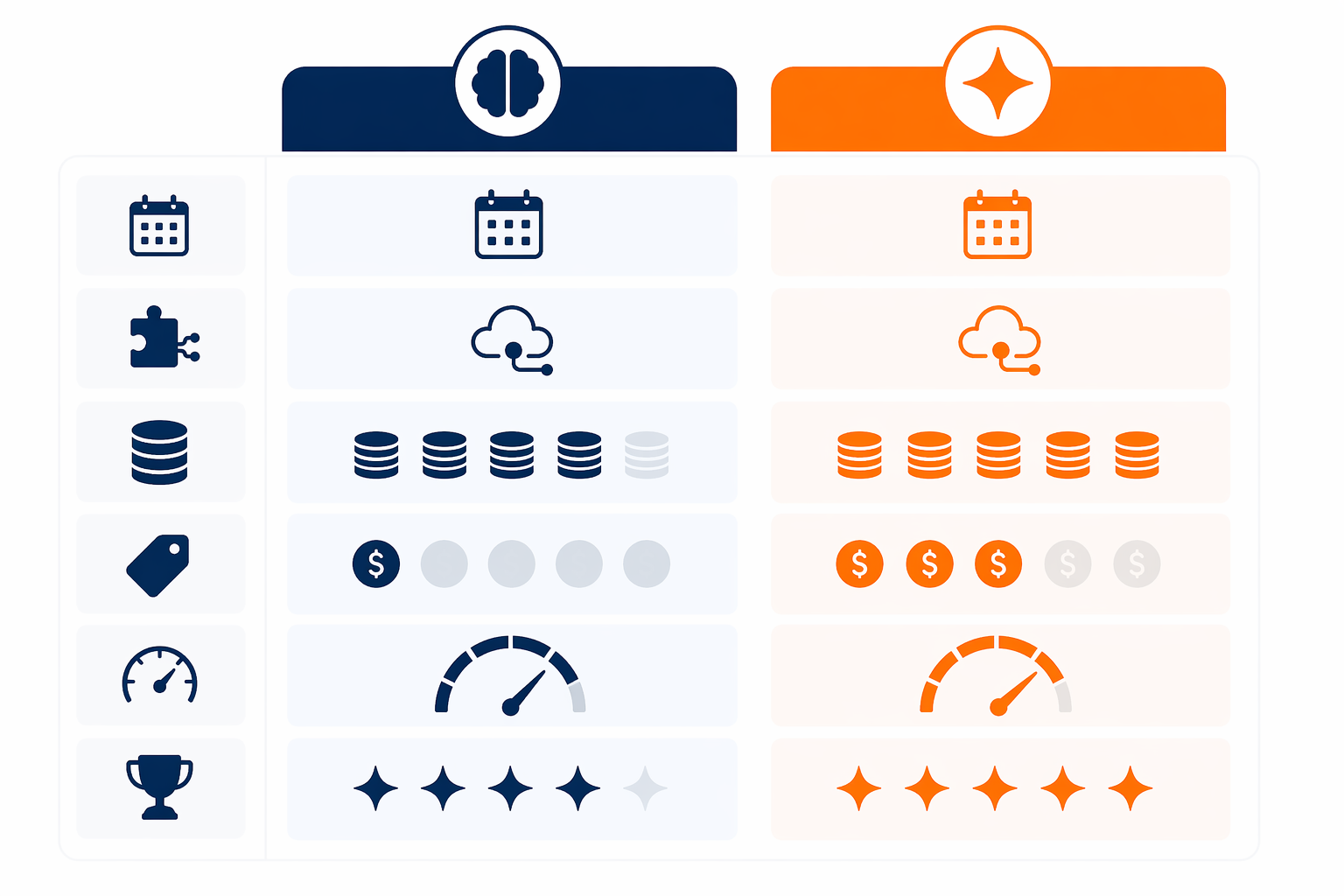
OpenAI’s GPT-5.6 family is now post-launch, so the comparison can focus on confirmed model lineups, pricing, and documented limits rather than preview reports.
| Feature / Metric | Anthropic Claude Opus 4.8 | OpenAI GPT-5.6 |
|---|---|---|
| Release Date | May 28, 2026 | July 9, 2026 |
| Model Lineup | Claude Opus 4.8 | GPT-5.6 Sol, Terra, and Luna |
| Availability | Available through supported Anthropic products and API access | Launched; tier and API availability may depend on account access and selected model |
| Input Price per 1M Tokens | $5 | $5 for Sol; check current pricing for Terra and Luna |
| Output Price per 1M Tokens | $25 | $30 for Sol; check current pricing for Terra and Luna |
| Context Window | 1 million tokens by default | Check the selected GPT-5.6 tier/API documentation |
| Maximum Output | 128,000 tokens | Check the selected GPT-5.6 tier/API documentation |
| Vendor Positioning | Anthropic’s flagship Opus model for demanding reasoning, coding, agentic, and enterprise workloads | A tiered OpenAI model family, with Sol positioned as the premium option and Terra/Luna serving different capability and cost requirements |
Pricing shown above reflects standard per-token rates for the specified models. Cached-input, batch-processing, fast-mode, enterprise, and other specialized pricing can differ. Consult the current Anthropic and OpenAI pricing pages before estimating production costs.
Analyzing the Architectural Divergence
The comparison is no longer between an available Claude model and an unconfirmed GPT preview. Both model generations have launched, shifting the decision toward documented limits, tier selection, workload performance, and total operating cost.
- GPT-5.6 offers a tiered lineup: Sol, Terra, and Luna give OpenAI customers multiple deployment options rather than a single model configuration. Teams should verify the context window, maximum output, availability, and pricing for the specific tier selected instead of applying Sol’s specifications or rates to the entire family.
- Claude Opus 4.8 has clearly documented long-context limits: Anthropic documents a default 1-million-token context window and up to 128,000 output tokens, making capacity planning more straightforward for large-document analysis and long-running workflows.
- Input prices align, but output prices do not: Sol and Opus 4.8 both list $5 per million input tokens, while Sol costs $30 per million output tokens compared with $25 for Opus 4.8. Output-heavy applications should account for that difference rather than treating the two models as price-matched.
- Headline rates are not the full cost model: Cache utilization, batch processing, fast-mode usage, tool calls, and enterprise agreements can materially change effective costs. Production evaluations should use each vendor’s latest pricing documentation and representative workload traces.
For businesses evaluating both ecosystems, the practical approach is to benchmark Claude Opus 4.8 against the appropriate GPT-5.6 tier using real prompts, tool configurations, latency requirements, and output volumes. Platforms like CallMissed can support multi-model routing, helping teams direct each workflow to the model that offers the strongest balance of capability, reliability, and cost.
In-Depth Analysis

This comparison uses post-launch reports and published results, but benchmark scores should not be treated as interchangeable. Results can change with the harness version, agent scaffold, tool permissions, compute limits, retry policy, prompt, and grading method. A model that leads one benchmark may not lead a production workflow.
Coding and Terminal Performance
A published 2026 comparison reports GPT-5.6 Sol at 88.8% on Terminal-Bench 2.1, compared with 78.9% for Claude Opus 4.8. On that specific terminal-based agent evaluation, the result favors Sol for repository navigation, shell use, debugging, and multi-step implementation.
These are reported results, not an independently reproduced CallMissed test. They should not be generalized to all coding tasks unless the original environment is matched. Terminal-Bench performance also does not directly measure code-review quality, architectural judgment, security, or the ability to work within a team’s internal development process.
Anthropic reports that Claude Opus 4.8 was the only model to complete every case end-to-end on its Super-Agent benchmark. That finding indicates strong workflow completion and instruction persistence in Anthropic’s evaluation, but Super-Agent is vendor-run. Its tasks, tools, grading criteria, and agent configuration may reward different capabilities from Terminal-Bench 2.1.
For coding agents, measure more than whether the model produces plausible code. A useful agent should select the right files, use tools safely, recover from failures, run appropriate tests, explain unresolved issues, and finish within the permitted scope.
Total Cost per Completed Task, Not Just Token Price
Token pricing is only one component of production cost. A lower-priced request can become more expensive if the model needs more retries, generates longer reasoning traces, makes additional tool calls, or requires substantial human correction. Conversely, a higher-priced model may be more economical when it completes a task correctly on the first attempt.
The surfaced Artificial Analysis comparison reports GPT-5.6 Sol at approximately $1.04 per task and about 10% cheaper than Claude Opus 4.8 Max in that analysis. This should be read as an analysis-specific task-cost estimate, not a universal price comparison or an independently reproduced CallMissed result. The figure depends on the analyzed task mix, token usage, tool calls, success definition, and pricing assumptions. Confirm the underlying Artificial Analysis methodology and current provider rates before using it for budgeting.
Track at least:
- Input, output, and reasoning tokens
- Tool calls and execution charges
- Retries, failed runs, and abandoned attempts
- Time spent reviewing or correcting output
- Latency and infrastructure costs
- The percentage of tasks completed without human intervention
The most useful figure is cost per accepted completed task, calculated from the same workload and success criteria for both models.
Long-Context Document Work
Claude Opus 4.8 is a strong candidate for long-context work involving legal agreements, financial records, policy libraries, and large technical collections. A large context window can reduce document-splitting overhead, but capacity alone does not guarantee reliable retrieval or reasoning.
Test whether the model can locate small decisive details, reconcile conflicting passages, preserve citations, identify missing evidence, and avoid inventing conclusions. Evaluate long documents with questions whose answers are distributed across the context rather than concentrated near the beginning or end.
GPT-5.6 Sol should be tested on the same corpus. Terminal-agent results do not establish long-document recall, evidence attribution, or consistency across hundreds of pages. For both models, document ordering, retrieval quality, chunking, prompt structure, and available tools can materially affect the outcome.
Availability and Model Tiers
OpenAI positions the GPT-5.6 family across multiple performance and cost tiers. Its published positioning describes Luna as approaching GPT-5.5’s peak performance at less than half the estimated cost and Terra as exceeding GPT-5.5 at a lower cost. These are vendor-reported claims, not independent CallMissed measurements and not direct cost-performance comparisons with Claude Opus 4.8.
Do not assume that every named tier is available through every API, plan, region, or integration. Before selecting a model, verify the provider’s current documentation for access, rate limits, context limits, tool support, batch or caching options, deprecation policy, and pricing. Availability should be recorded as part of the evaluation because a model that cannot be provisioned reliably is not a practical production choice.
Decision Matrix
| Requirement | Initial choice | Why | What to verify |
|---|---|---|---|
| Shell-heavy coding and repository tasks | GPT-5.6 Sol | Reported Terminal-Bench 2.1 advantage | Pass rate, test success, safe tool use, and recovery |
| End-to-end agent workflows | Claude Opus 4.8 | Anthropic reports complete Super-Agent cases | Reproducibility on the team’s tools and acceptance tests |
| Long documents and evidence review | Test both | Context size does not prove retrieval accuracy | Recall, citations, contradiction handling, and omissions |
| Lowest completed-task cost | Measure both | Artificial Analysis reports Sol at about $1.04 per task and roughly 10% below Opus 4.8 Max in its analysis | Actual tokens, retries, review time, and success rate |
| Multiple budget and performance levels | GPT-5.6 family, if provisioned | OpenAI describes several tiers | Current access, limits, pricing, and quality at each tier |
| Latency-sensitive interactive work | Benchmark both | Per-token cost does not determine response speed | Time to first token and end-to-end completion time |
This matrix is a starting hypothesis, not a universal ranking. The right choice may differ by task type, reliability target, and operating constraints.
How to Run a Fair Bake-Off
Use a fixed, representative task set containing coding, document, tool-use, and failure-recovery cases. Keep the following identical wherever the platforms allow:
- System instructions, user prompts, input files, and success criteria
- Repository state, tool schemas, permissions, network access, and execution limits
- Context ordering, retrieval results, temperature or equivalent settings, and timeout rules
- Test commands, graders, and definitions of completion
Run each task multiple times and randomize model order where possible. Record successful completion, functional correctness, factual errors, instruction violations, unsafe actions, missing citations, and human correction time. For agents, distinguish “produced an answer” from “completed and verified the task.”
Report median and percentile latency, including time to first token, tool-execution time, and end-to-end completion. Calculate token usage and total cost per accepted task, including retries, failed runs, tool charges, and review overhead. Preserve prompts, model identifiers, dates, settings, and logs so the comparison can be repeated after model or pricing changes.
A fair bake-off should end with a workload-specific recommendation—such as routing terminal tasks to one model and document review to another—rather than treating a single benchmark score or list price as a complete verdict.
Impact & Implications

With both GPT-5.6 and Claude Opus 4.8 now launched, enterprise teams no longer need to make deployment decisions around previews or rumored capabilities. The practical question is which model—and, in OpenAI’s case, which tier—best matches each workload.
Claude Opus 4.8’s default 1-million-token context window makes it especially attractive for repository-scale code analysis, large legal archives, lengthy research corpora, and other tasks where preserving extensive context is essential. GPT-5.6 instead offers tiered Sol, Terra, and Luna options, giving engineering and procurement teams more explicit cost-performance choices. Sol targets the most demanding work, while Terra and Luna provide alternatives for tasks that do not justify the flagship tier’s cost or latency.
The result is not a single-model verdict. Enterprises should route workloads according to context requirements, reasoning quality, latency, reliability, and total cost rather than selecting one default model for every application.
The $30 vs. $25 Output-Cost Difference
At headline API rates, both GPT-5.6 Sol and Claude Opus 4.8 cost $5 per million uncached input tokens. Output pricing differs: Sol costs $30 per million output tokens, while Opus 4.8 costs $25 per million.
For example, a workload consuming 10 million uncached input tokens and 2 million output tokens would cost:
- GPT-5.6 Sol: $50 for input plus $60 for output, or $110 total.
- Claude Opus 4.8: $50 for input plus $50 for output, or $100 total.
This comparison excludes caching, tool use, batch discounts, platform fees, and other deployment costs. The difference may appear modest for one run, but it becomes material across output-heavy agent workflows operating at production scale. Conversely, a lower-priced model can become more expensive overall if it requires repeated attempts, produces unnecessarily long answers, or needs more human review.
Procurement teams should therefore evaluate cost per successful task, not only cost per token. GPT-5.6’s Sol/Terra/Luna lineup also creates an opportunity to reserve Sol for the hardest requests while routing routine work to a less expensive tier.
Workload-Specific Routing and Fallbacks
The strongest production architecture is likely to be a governed, multi-model system rather than a permanent commitment to one flagship model. Common routing criteria include:
- Context size: Route very large documents or repositories to Opus 4.8 when its default 1M context materially reduces chunking and retrieval complexity.
- Task difficulty: Use GPT-5.6 Sol or Opus 4.8 for high-stakes reasoning, while assigning simpler classification, extraction, and summarization tasks to Terra, Luna, or another lower-cost model.
- Output volume: Account for Sol’s higher output rate when serving verbose, code-generating, or multi-step agentic workloads.
- Latency and availability: Maintain fallback models for rate limits, regional outages, elevated latency, or provider-specific failures.
- Risk level: Apply stricter model selection, review, and approval controls to regulated or consequential decisions.
Fallback behavior should be designed deliberately. Switching models can change formatting, tool-call syntax, refusal behavior, answer length, and reasoning quality. A fallback that merely returns a response is not necessarily one that preserves the application’s intended behavior.
Vendor Lock-In, Benchmark Drift, and Migration Readiness
Supporting multiple providers reduces vendor lock-in, but only when the application layer is genuinely portable. Teams should separate provider-specific APIs from business logic, standardize tool schemas where possible, and avoid relying unnecessarily on proprietary prompt features.
Migration tests should cover more than headline accuracy. Before changing models or tiers, engineering teams should replay representative production tasks and compare:
- Structured-output and tool-call validity
- Task completion and retry rates
- Latency and token consumption
- Hallucination, citation, and refusal behavior
- Safety-policy consistency
- Downstream business outcomes
Benchmark leadership can drift as providers update models, evaluation sets become saturated, and real-world workloads change. Public benchmark scores are useful screening signals, but they should not replace continuously maintained internal evaluations based on actual traffic.
Governance and Observability Become Core Infrastructure
More capable models do not eliminate operational risk. Enterprises still need approval boundaries, access controls, data-retention policies, human escalation paths, and auditable records for sensitive workflows. Safety behavior should be tested by task and deployment context rather than assumed from a model’s general positioning.
Observability is equally important. Production systems should track model and version, routing decisions, input and output tokens, cache usage, latency, tool calls, retries, fallback frequency, validation failures, and estimated cost. These measurements allow teams to detect quality regressions, benchmark drift, unexpected spending, and differences between providers.
The broader implication of GPT-5.6 and Claude Opus 4.8 is architectural: model selection is becoming a dynamic engineering and procurement discipline. Organizations that combine workload-specific routing, clear governance, robust observability, fallback capacity, and repeatable migration testing will be better positioned than those that standardize permanently on a single frontier model.
Expert Opinions

OpenAI’s announcement, “Introducing GPT-5.6,” presents three models optimized for different priorities. GPT-5.6 Sol is positioned as the flagship for the most demanding reasoning and agentic workloads. Terra is described as a capable, lower-cost option for broader production use, while Luna is positioned as the fastest and most economical model for high-volume or latency-sensitive tasks. These descriptions reflect OpenAI’s intended product segmentation, not an independent ranking against competing models.
Anthropic’s “Introducing Claude Opus 4.8” positions Opus 4.8 as its premium model for complex agentic coding and enterprise work. Anthropic highlights a default 1-million-token context window and uses the term “Super-Agent” to characterize the model’s ability to manage extended, multi-step tasks involving tools, large codebases, and substantial business context. That label should be understood as Anthropic’s own product claim rather than an independently established model category.
How to Interpret Vendor Evidence
Official model cards, technical reports, and launch benchmarks are useful for understanding intended use cases, context limits, pricing tiers, and performance under disclosed test conditions. However, results published by OpenAI and Anthropic are vendor-produced evidence. Differences in prompting, tool access, inference settings, benchmark selection, and scoring can make headline numbers difficult to compare directly.
For enterprise buyers, the most reliable approach is to treat these materials as a starting point and then run representative evaluations using real workloads. Factors such as accuracy, latency, cost, tool reliability, security requirements, and failure recovery may matter more than a single benchmark score. Based on the vendors’ own positioning, Opus 4.8 is aimed at high-complexity coding and enterprise-agent tasks, while the GPT-5.6 family offers separate flagship, cost-efficient, and speed-focused deployment options. Neither positioning alone establishes an overall winner.
What This Means For You
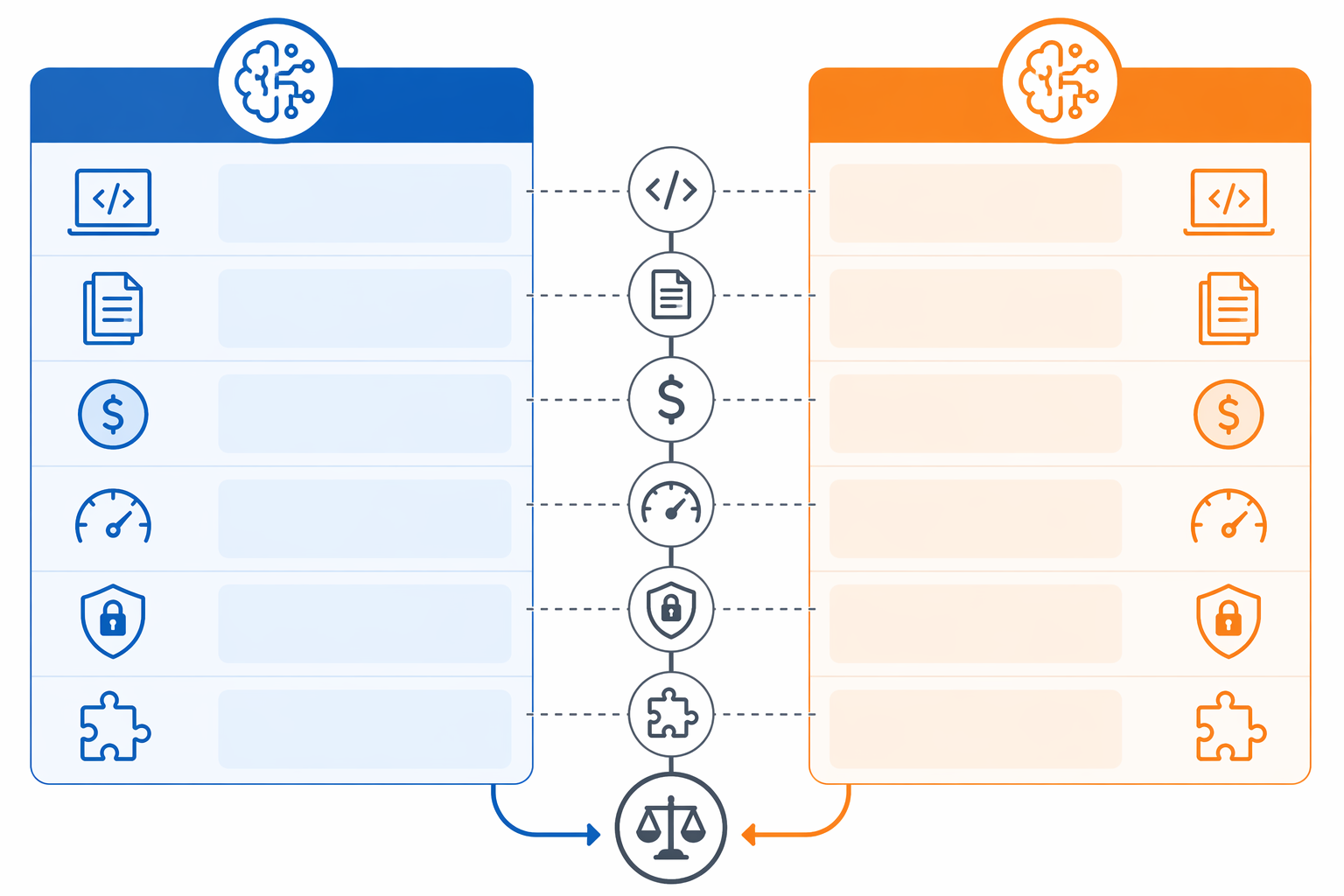
The practical question is not which lab leads overall, but which model delivers the best task-level quality, latency, reliability, and total cost in your production environment. Treat GPT-5.6 Sol, Terra, and Luna as separate candidates rather than as one upgrade—and compare each with Claude Opus 4.8 only where their capabilities map to the workload.
Post-Launch Selection Matrix
| Use Case | Best Starting Candidate | Why | What to Validate Before Deployment |
|---|---|---|---|
| Terminal and coding agents | GPT-5.6 Sol vs Claude Opus 4.8 | Sol’s reported Terminal-Bench lead makes it a strong candidate for shell-heavy agents, repository work, debugging, and tool-driven coding. A benchmark lead does not guarantee better performance in your codebase. | Task completion, regression rate, command safety, tool-call accuracy, retries, runtime, and cost per accepted change |
| Million-token document analysis | Claude Opus 4.8 | Opus 4.8 is the clearer starting point when default access to a 1M-token context window is central to the workflow. | Effective recall across the full context, citation accuracy, omission rate, latency, file limits, and whether long-context access varies by API tier |
| High-output workloads | Claude Opus 4.8, with Sol as a quality challenger | Opus 4.8’s lower headline output-token price can matter for long reports, code generation, document transformation, and other output-heavy tasks. | Total cost per completed artifact, output limits, truncation, verbosity control, editing required, and batch or caching discounts |
| Latency-sensitive tasks | GPT-5.6 Terra or Luna | The smaller GPT-5.6 tiers are the logical candidates to explore when responsiveness matters more than maximum reasoning depth. | Median and p95 latency, time to first token, streaming behavior, concurrency limits, timeout rate, and quality under short response budgets |
| Budget-sensitive general work | GPT-5.6 Terra or Luna vs current low-cost model | Terra and Luna may offer better economics for classification, extraction, summarization, support drafts, and routine automation, depending on tier pricing and task difficulty. | Verify current pricing, rate limits, context limits, output limits, and feature availability in OpenAI’s latest documentation; then measure cost per successful task |
| Regulated or high-stakes workflows | Claude Opus 4.8 and GPT-5.6 Sol in a controlled bake-off | Neither model should be selected from a general benchmark alone. Auditability, consistency, policy controls, and failure handling matter more than a small aggregate score advantage. | Citation fidelity, reproducibility, data handling, regional requirements, refusal behavior, error severity, logging, and human-review performance |
| Teams avoiding vendor lock-in | Model-agnostic architecture with at least two validated providers | Frontier performance, pricing, quotas, and availability can change. Separating model access from application logic preserves negotiating power and makes migrations less disruptive. | Prompt portability, structured-output compatibility, tool schemas, fallback behavior, observability, evaluation coverage, and provider-specific dependencies |
Sol should receive the most attention where its reported terminal-agent performance directly maps to the task. Opus 4.8 remains a strong default for workloads that need a 1M-token context window or generate enough output for its lower headline output price to materially affect costs. Terra and Luna are cost-and-speed candidates, not automatic replacements; confirm their current tier pricing, limits, and supported features in OpenAI’s documentation before making projections.
Five-Step Production Bake-Off
- Build a representative task set. Use real, permissioned production examples covering routine requests, difficult edge cases, long inputs, tool failures, and safety-sensitive scenarios.
- Define pass/fail gates first. Set minimum thresholds for correctness, groundedness, structured-output validity, p95 latency, reliability, security, and compliance before reviewing price.
- Run blinded, repeated comparisons. Test the same prompts, tools, context, and output constraints across models. Repeat non-deterministic tasks and use human reviewers who do not know which model produced each answer.
- Measure completed-task economics. Include input and output tokens, retries, tool calls, latency, failed runs, human correction time, and operational overhead—not merely the advertised token rate.
- Roll out progressively. Begin with shadow traffic or a small A/B cohort, monitor failure categories, retain a tested fallback, and expand only after the model meets the predefined gates under production load.
Compact Decision Rule
Choose the lowest-total-cost model that clears your required quality, p95 latency, reliability, and governance thresholds.
If two models clear those gates, prefer the one with simpler operations and fewer retries. If neither does, keep the current system or route only the specific tasks each model handles reliably. The durable advantage comes from maintaining portable prompts, evaluations, tool definitions, logging, and fallbacks—not from making an all-or-nothing commitment to one model family.
Frequently Asked Questions
Is GPT-5.6 launched?
Is Claude Opus 4.8 available?
Which is cheaper in the GPT-5.6 vs Claude Opus 4.8 comparison?
Which model has the larger confirmed context window?
Which model is better for coding in the GPT-5.6 vs Claude Opus 4.8 matchup?
What do Sol, Terra, and Luna mean in GPT-5.6?
Are GPT-5.6 Sol and Claude Opus 4.8 benchmark scores directly comparable?
Does Terminal-Bench 2.1 decide the GPT-5.6 Sol vs Opus 4.8 matchup?
Which should an enterprise choose in the GPT-5.6 vs Claude Opus 4.8 comparison?
Conclusion

As of July 27, 2026, there is no universal winner in the GPT-5.6 vs Claude Opus 4.8 comparison. The right choice depends on your workload, deployment requirements, and budget:
- Choose GPT-5.6 for tier flexibility and terminal-heavy workloads: Its model family offers multiple performance and cost profiles, while GPT-5.6 Sol is the stronger option for workflows aligned with its reported Terminal-Bench 2.1 result.
- Keep Claude Opus 4.8 for proven deployments and historical comparisons: In a GPT-5.6 vs Claude Opus 4.8 evaluation, Opus 4.8 remains relevant when existing integrations are stable, long-context support matters, or teams need continuity with earlier benchmark results.
- Include Claude Opus 5 in new procurement decisions: Teams considering a new Anthropic deployment should compare Opus 5—not only Opus 4.8—with the appropriate GPT-5.6 tier.
- Run a controlled bake-off: Test representative prompts, tools, latency requirements, failure criteria, and total token and tool costs before committing. A workload-specific test is more useful than treating GPT-5.6 vs Claude Opus 4.8 as a single benchmark contest.
Ultimately, the best model depends on reliability, migration risk, context needs, latency, and total budget—not one headline benchmark.
Discussion
Related Posts



Ready to automate customer conversations?
Launch AI voice agents and WhatsApp bots with CallMissed — one API, 22+ Indian languages.